
BEYOND VAN GOGH’S YELLOW
When you think of Vincent van Gogh, many colours come to mind and yellow is one of them. His thick, expressive layers of paint, his iconic sunflowers, and the golden wheatfields of southern France almost let you feel the summer breeze and smell the fields. Van Gogh painted out of a deep need to understand and express his emotions. He used layers of paint to work through his thoughts, not just to create beauty. In many ways, his paintings were a search for light: from the dark, heavy tones of his early works to the bright, expressive colours he embraced in France. There, his intense brushstrokes and vibrant palette reflected the thoughts and feelings unfolding in his mind.
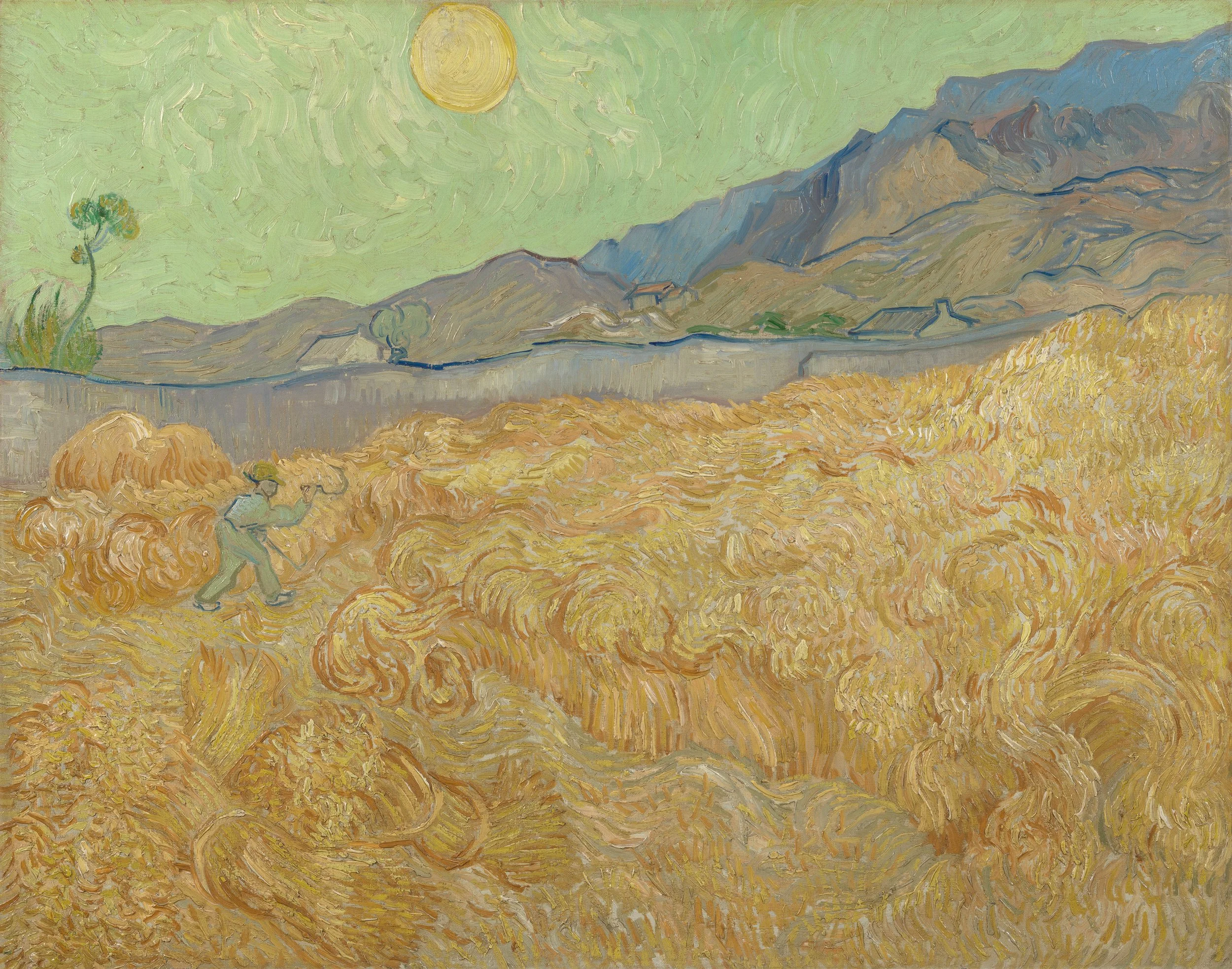
left: Wheatfield with a reaper, 1889
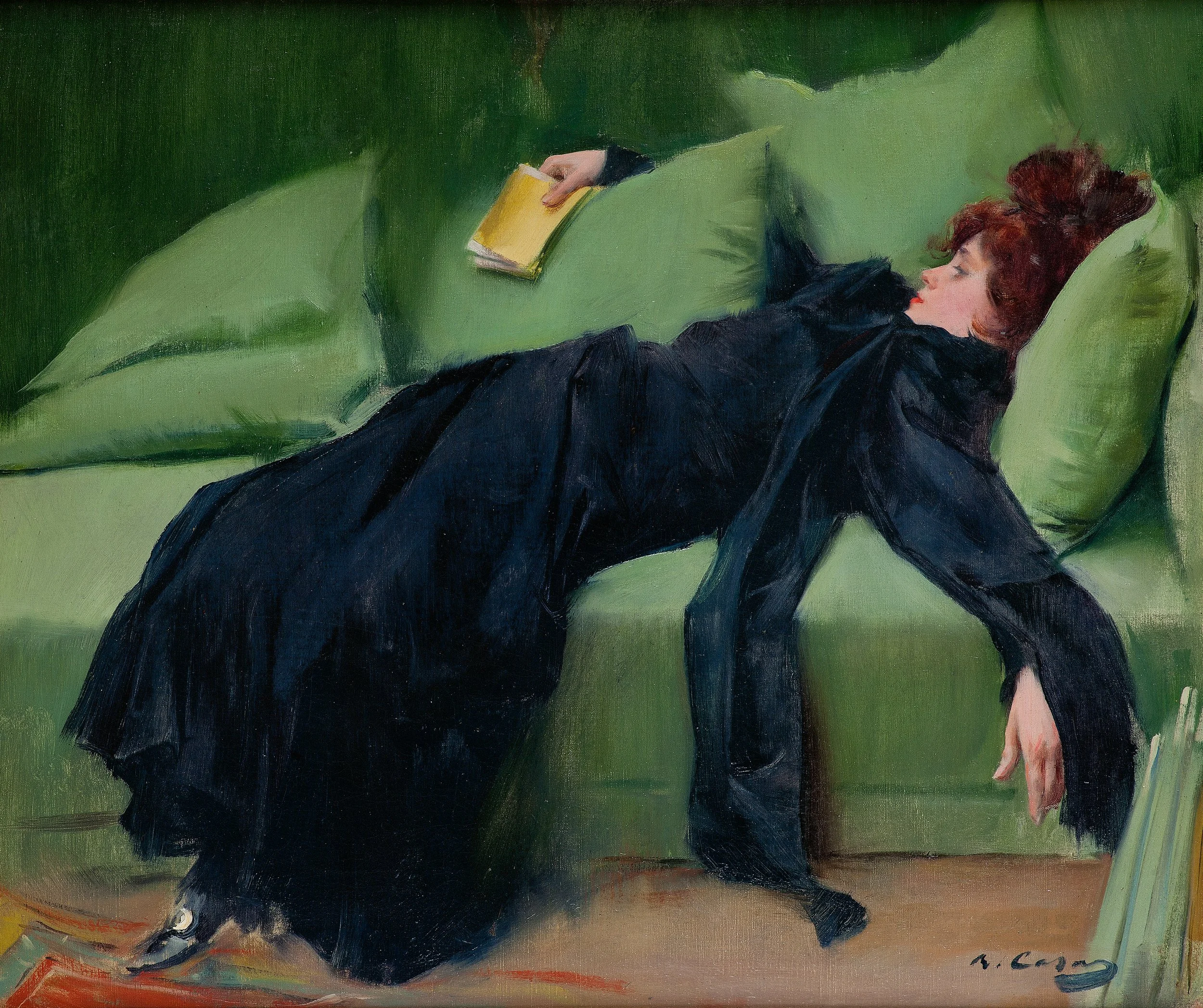
right: Decadent Young Woman, After the Dance, Ramon Casas, 1899
That yellow was important to Van Gogh you can see in the words of his friend and fellow artist Emile Bernard, who wrote shortly after Van Gogh’s death: “It was his favourite colour, as you may remember, the symbol of the light he sought in hearts and in his artworks.” But this exhibition isn’t just about Van Gogh. Yellow: Beyond Van Gogh’s Colour explores how yellow has been used and understood over time in art, fashion, music, and literature. Visitors are invited to think about: what is yellow, what does it mean? The exhibition makes you think about how we see colour. In the end, colour is simply light, and we are the ones who give it meaning. What are we really seeing?
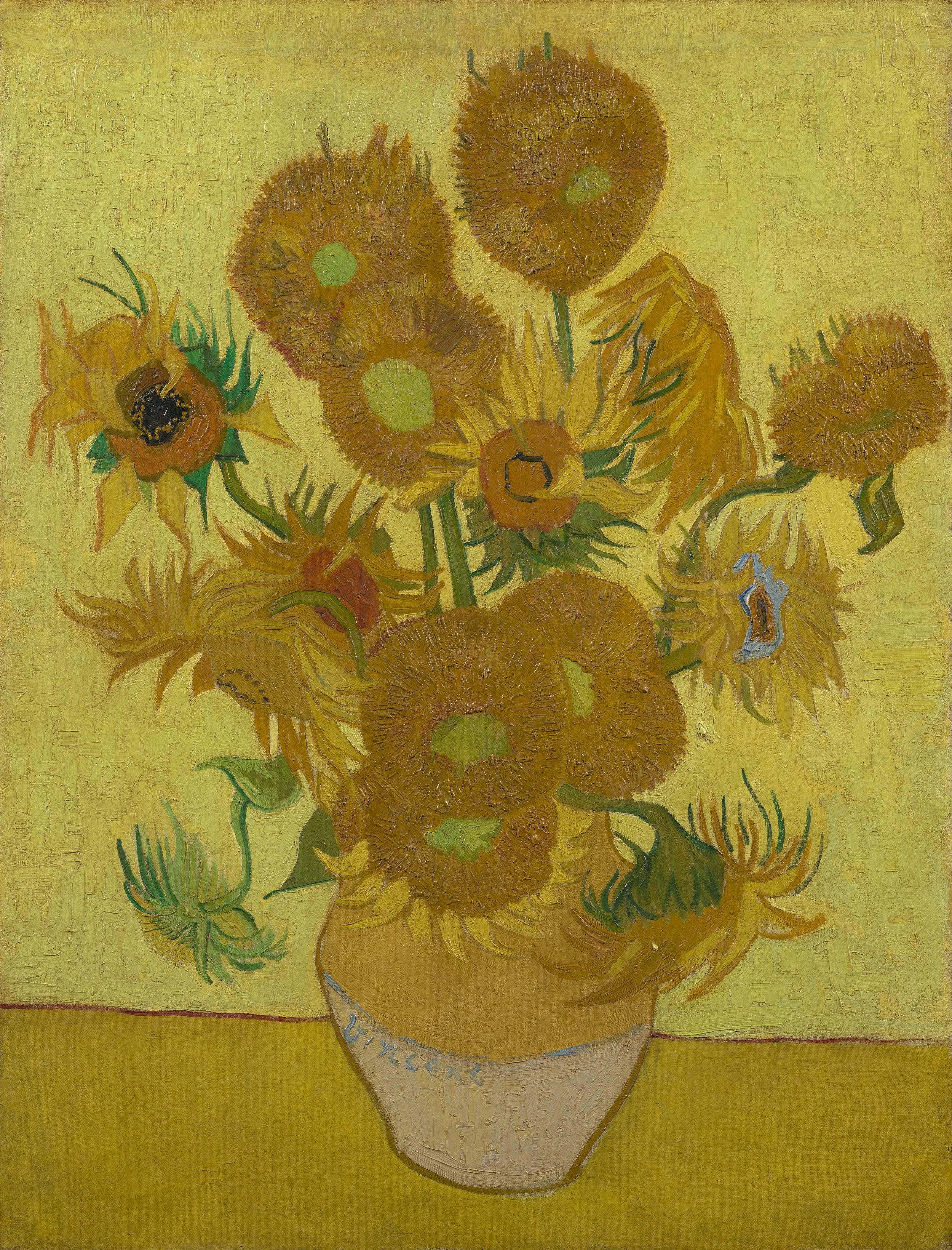
Van Gogh Sunflowers, 1889
The exhibition opens with Van Gogh’s iconic Sunflowers, 1889, but quickly moves beyond to explore art from the period between 1850 and 1920. At first, yellow symbolised light and warmth, but by the late nineteenth century, it also represented rebellion and independence. Small yellow books appear in paintings, referencing the bright covers of French novels considered modern — and sometimes scandalous. Readers of these books were seen as forward-thinking or rebellious. In London, the avant-garde magazine The Yellow Book carried the same spirit. When Oscar Wilde was arrested in 1895, he reportedly had a copy with him.
But beyond just looking back, the exhibition also brings yellow into the present. Visitors are invited to experience the colour in unexpected ways. Questions like “What does yellow smell like?” And how does it sound? with music created by students and teachers from the Conservatorium Amsterdam, designed specifically for the artworks. The goal is not just to see yellow, but to experience it.
Another artist strongly connected to the colour yellow is Olafur Eliasson. With his iconic installation The Weather Project (2003) at the Tate Modern, visitors stood beneath the glow of a huge artificial sun, bathed in warm yellow light. The work encouraged people to slow down and linger, and it changed how many people experienced modern art.
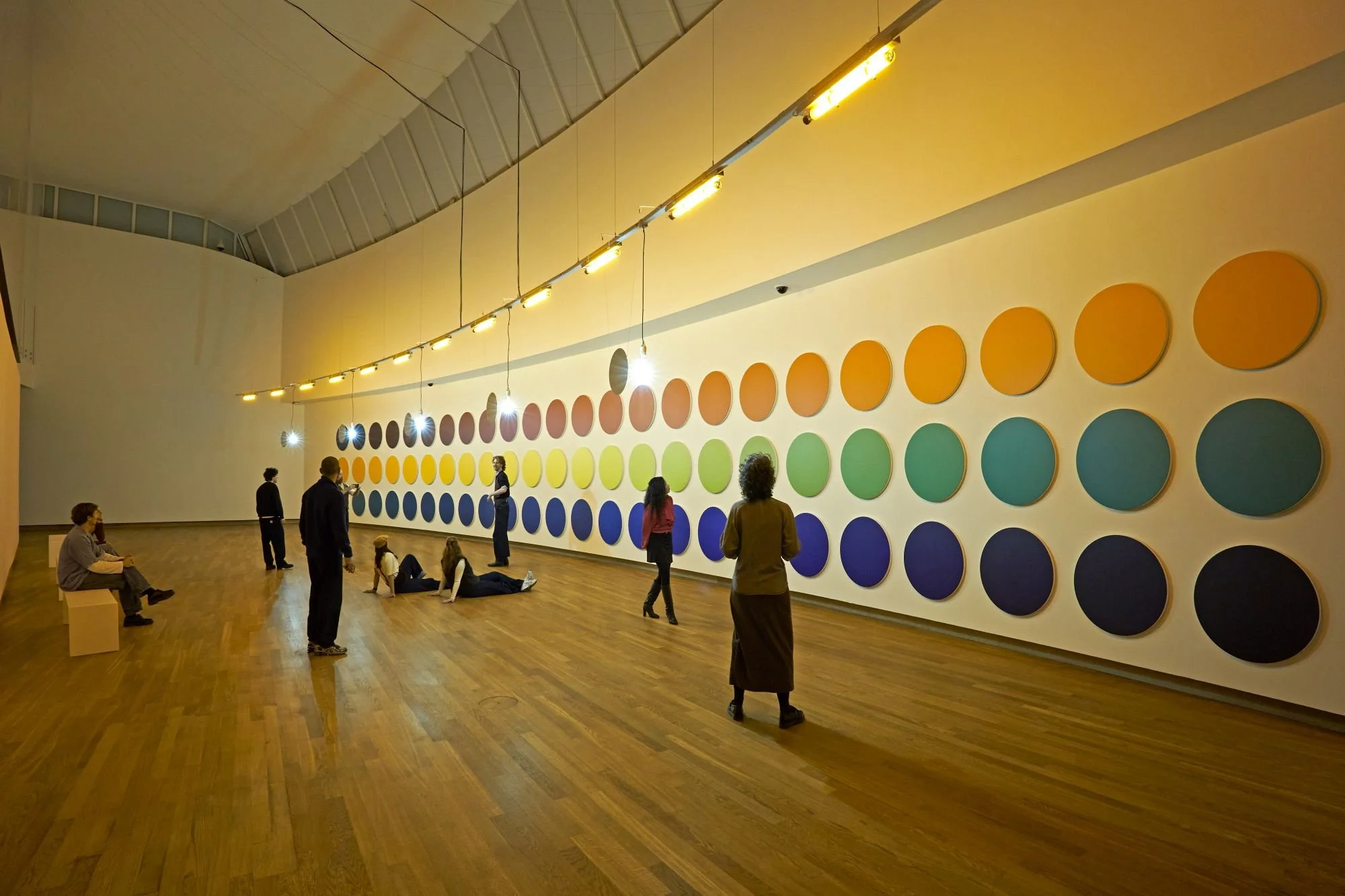
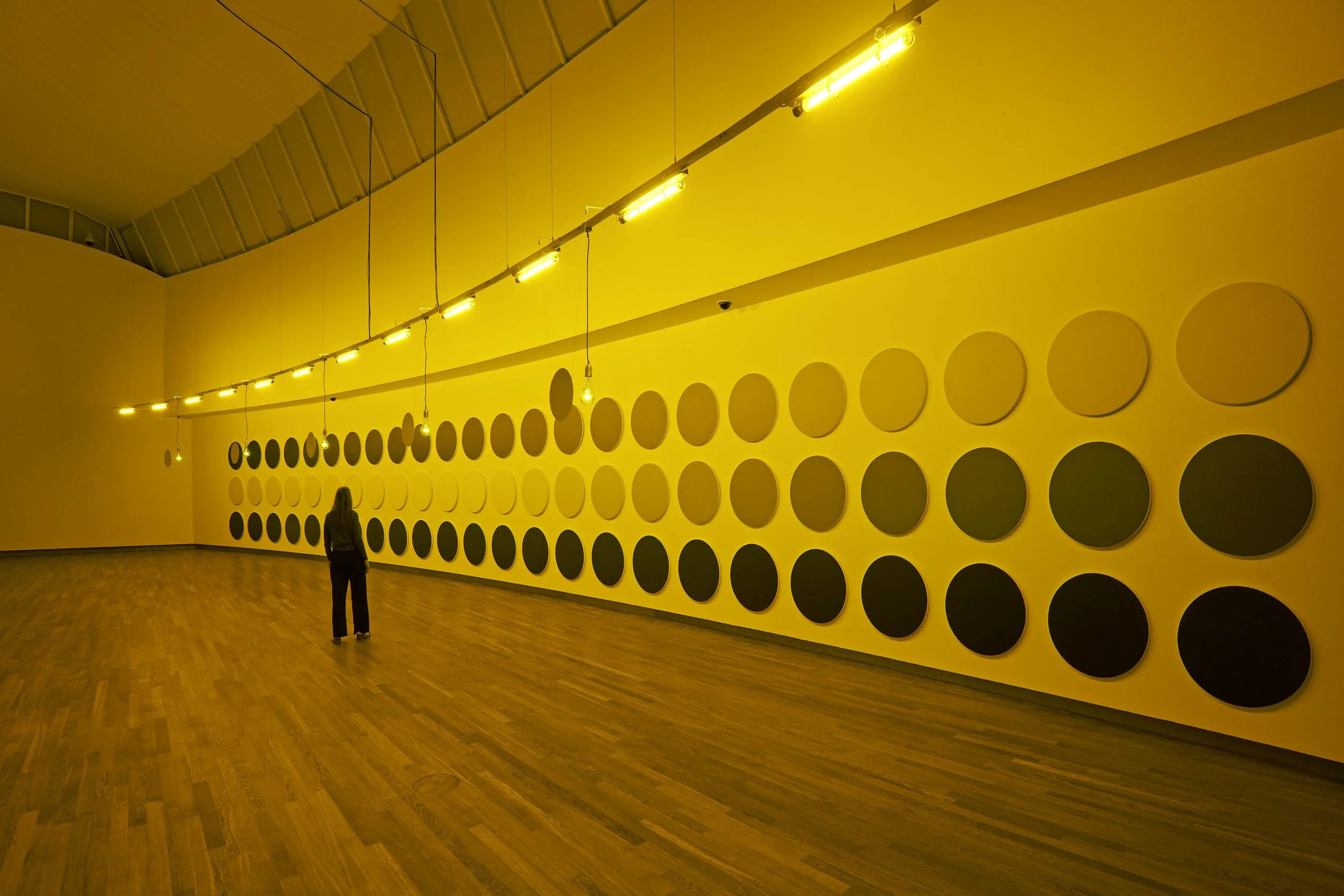
visitors looking at the artwork of Olafur Eliasson in the exhibition. Van Gogh Museum, photography: Michael Floor
Now, in Amsterdam, visitors can experience something similar. In this exhibition, Eliasson invites people to reconsider what yellow actually is. As he puts it: “Why are we so obsessed with what is rational, what is real, what is logistically possible? Maybe we should try to see something we can’t see.”
In the exhibition room upstairs, Eliasson combines Colour Experiment No. 78 (2015) with the mono-frequency lamps from his 1997 work Room for One Colour. Seventy-two round colour panels are arranged on the wall in different shades. At first, they appear bright and evenly divided. But if you stay for a moment, the light shifts from white to yellow and the coloured circles lose their colour and turn into shades of black and white. The installation plays with your perception and shows how much colour depends on light. It also makes you want to stay longer, watching what happens and noticing how your brain reacts to the change. For a moment, your senses feel slightly confused, as if your eyes are trying to catch up with what is happening.
In the other room, there is a work with no explanation: Who Is Afraid Yellow Flower Ball (2006). You see a large tripod topped with a big ball of mirrors and lights. At first, it feels chaotic, but the arrangement strangely feels geometrically ordered. As you move around it, the mirrors and lights shift and transform, revealing and concealing patterns that were previously invisible. Eliasson playfully reminds us that perception is never fixed. The work only comes alive when you move, look, and let your senses fully engage.
Yellow. Beyond Van Gogh’s Colour is on view until the 17th of May 2026.