interview by NIA TOPLOVA
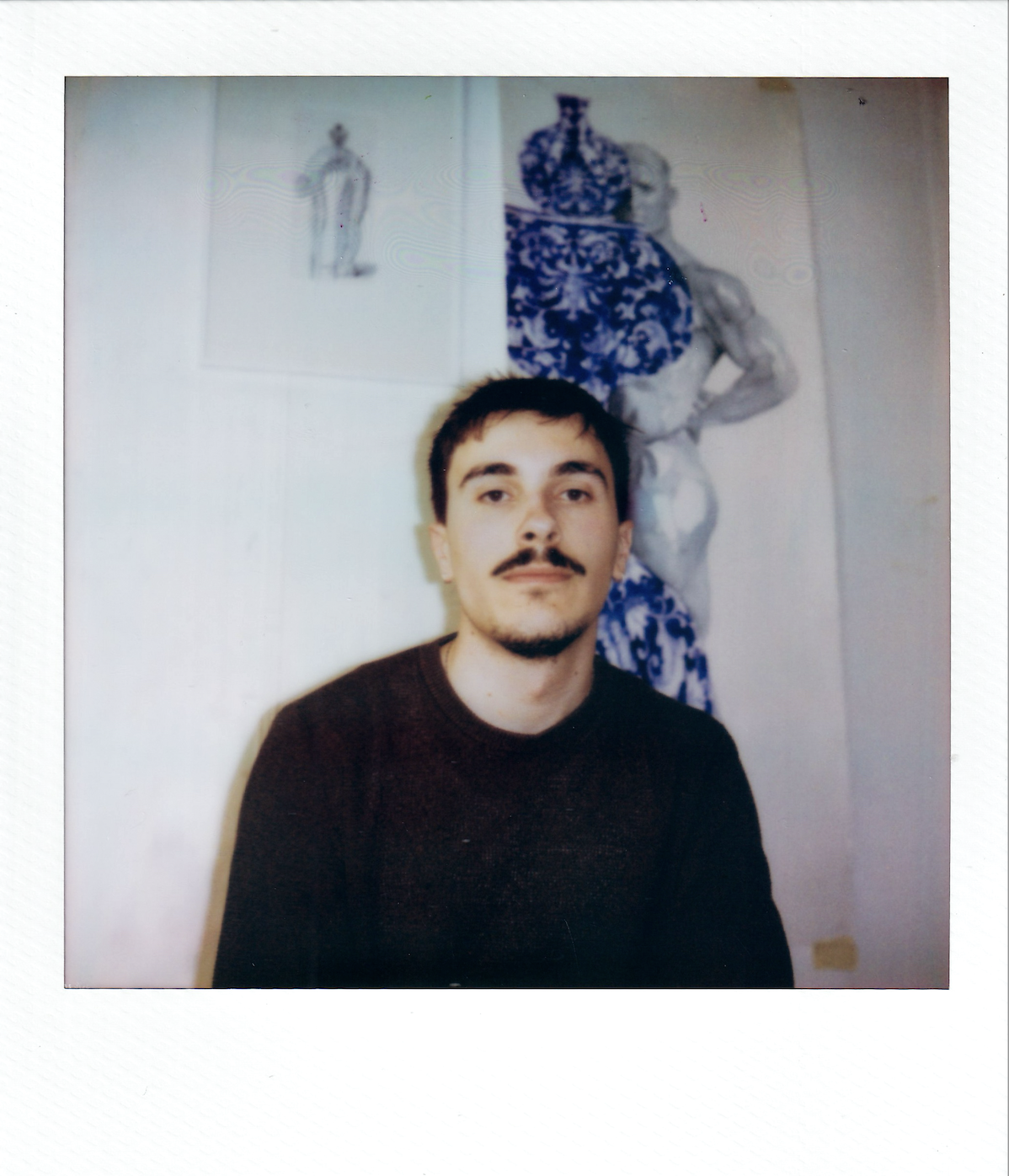
Albanian multidisciplinary artist DOMINIK GEGAJ has rediscovered a long lost feeling of intimacy through nature, pursuing his longing for artistic expression by painting his sentiments in watercolour. Born in 2005 and raised in Salzburg after his family emigrated from Kosovo during the 1999 war, he spent his early years searching for solace.
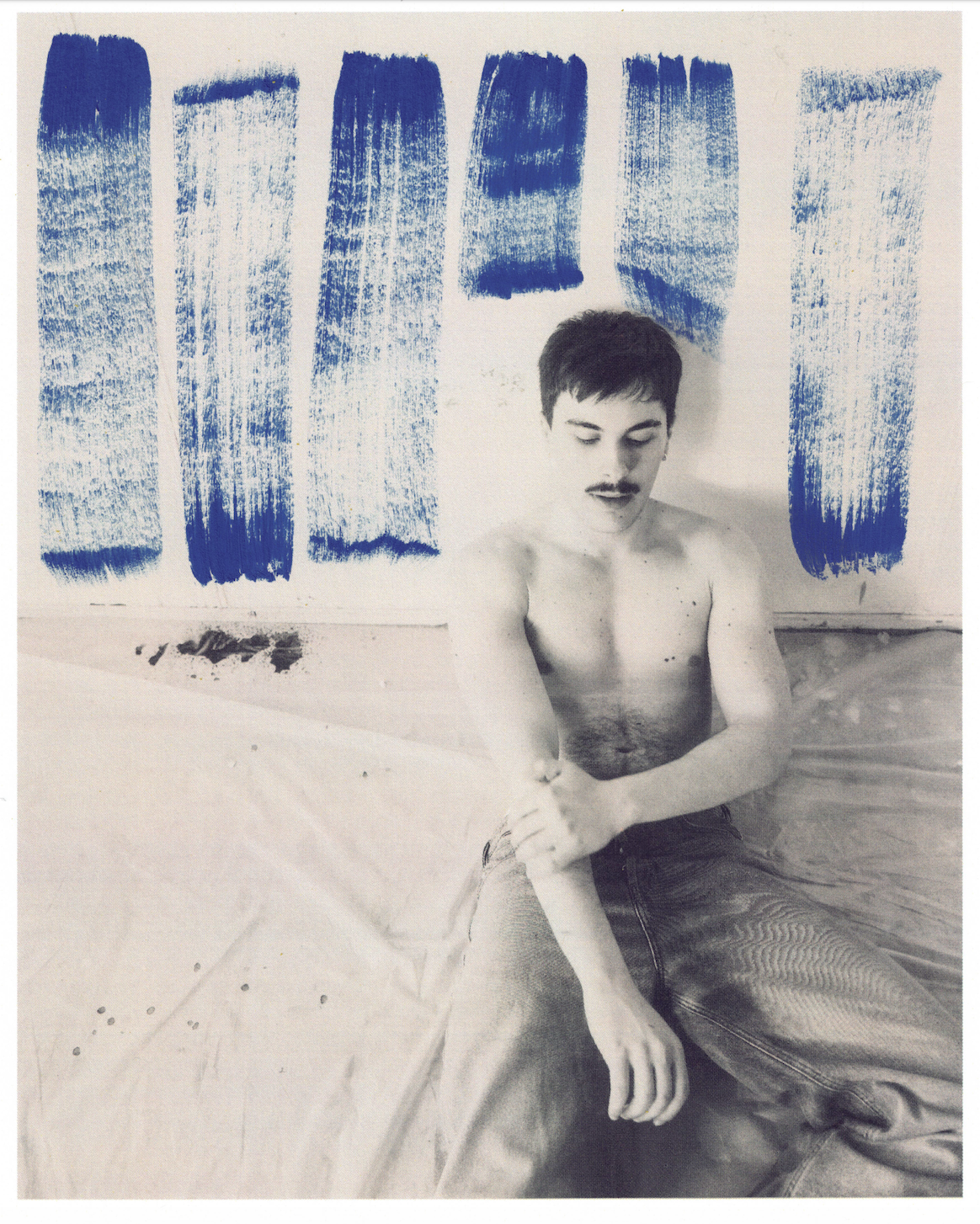
“I find it fascinating how nature left such an immense sense of love in my imagination as a young child. Whether it was dipping my feet in cold water, studying the close-up images of GEORGIA O’KEEFFE’s paintings, or the smell of a nectarine elevating me into a creative state. There is definitely an imprint of this hidden, closeted period of time where I would seek intimacy in the crevices of nature, which would only really show itself in my paintings and performances after my coming out. It certainly felt like the weight of a new life chapter that I would have to do justice to with a more vibrant blue, something that has an elevated soul and can morph into different attributes in my artistic expression. It becomes a petal, many more petals, a storm of leaves, a garden growing out of the cold blue past.”
photography by LÂN PHILIPP
As a central element in your work, water carries emotional connotations related to your sources of inspiration, but it also has a literal presence through the watercolours you work with. How does water represent both comfort and freedom for you, and do you see these two ideas as ultimately intertwined?
Growing up, I was fascinated by the attributes of water, the scale of it. From the sensation of a comforting shower to the intense storms I witnessed from my cosy bedroom to the liminal, endless ocean that gave me my first perception of true scale and fear. The concept of the ocean felt both bigger and somehow more graspable than the actual universe as a kid.
I started working with watercolour, being more drawn towards the physics of it. I liked that I didn’t have full control over it. It started to evolve into a relationship between me and the medium itself. One thing I admire about water, or nature in general, is that you don’t feel lonely. To me, it felt like a third parent teaching me to build patience and resilience.
A lot of people have told me they don’t like working with watercolour, and I think it’s because we have to put ourselves beneath the medium. It tells us the answers and creates its beauty on its own. We don’t need to intervene all the time. And that may be uncomfortable for many because it requires a lot of trust in it and, therefore, in oneself.
You’ve mentioned studying the close-up images of Georgia O’Keeffe’s paintings as a source of inspiration. Which other artists have influenced or informed your practice?
Georgia is a figure who left a deep imprint on me recently when I studied her work and watched documentaries about her. It was one of those moments where I’ve known a name for years but only later took the time to actually get to know her. I am not going to summarise her work, because a few sentences cannot do justice to her incredible presence. My influences have mostly been artists who have gone through similar hurdles as me, making me feel safe and like I’m on a parallel path, with shared values as a young artist.
YAYOI KUSAMA is another artist whose boldness in life is fuel for my ideas and allows me to think bigger than my present. Funny enough, returning to Georgia, Yayoi actually wrote Georgia O’Keeffe a letter saying she wanted to move to New York. She couldn’t even really speak English and was living in Japan, yet Georgia answered her, and that was her sign to set foot in NYC. Something about that interaction really made me envision pursuing a life where you encounter all your fears.
I first heard about Yayoi in high school on a random page in art class. Her look was striking, and I wrote her whole biography for my final school project. The way she scaled her work into infinity made me think again of our primary senses, inspiring me to go beyond just painting and explore installations, performances and breaking down watercolour into its core elements: water, pigment and paper.
I notice a sense of connection between your Morphing Perception and the spirit of MARLENE DUMAS’s work. Is this a reference you consciously engage with?
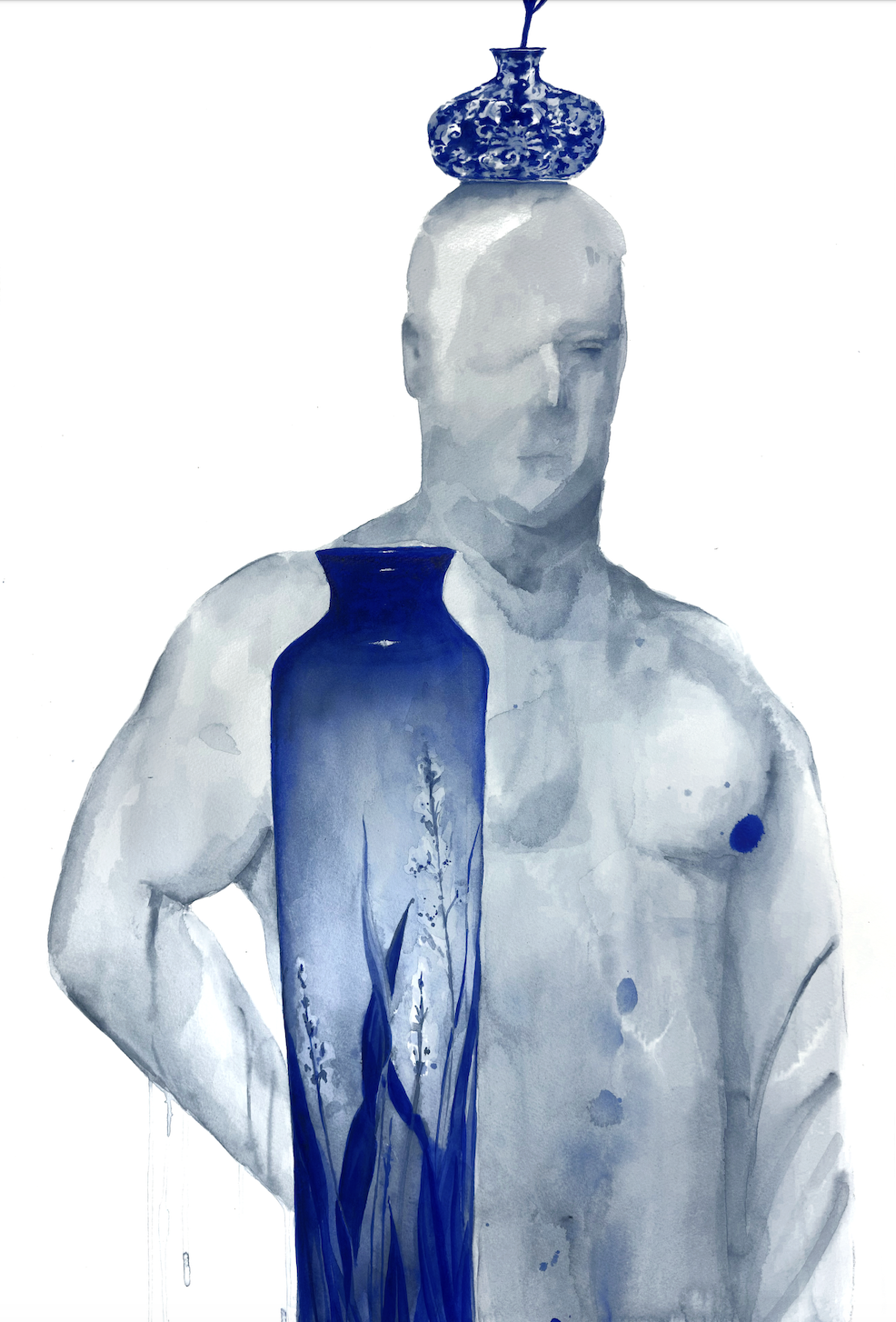
Marlene Dumas, from what I feel, places the ink so intentionally, giving the fluid its own freedom instead of trying to force it into place. I think she and I — even though I haven’t known her work for long — share a mutual agreement: we don’t ask what benefit the water gives us but rather what we can give to the water, to the art.
There is a permission I have to ask of the medium by taking a more conversational approach. I set the impulse, and just like a cascading waterfall, it creates its own crevices. If you look closer at her work and mine, you see tiny fractals forming as the water disperses and evaporates, a sort of time-freeze of water captured by the pigment. Patterns of nature exist at every scale, and I love that particular attribute of water.
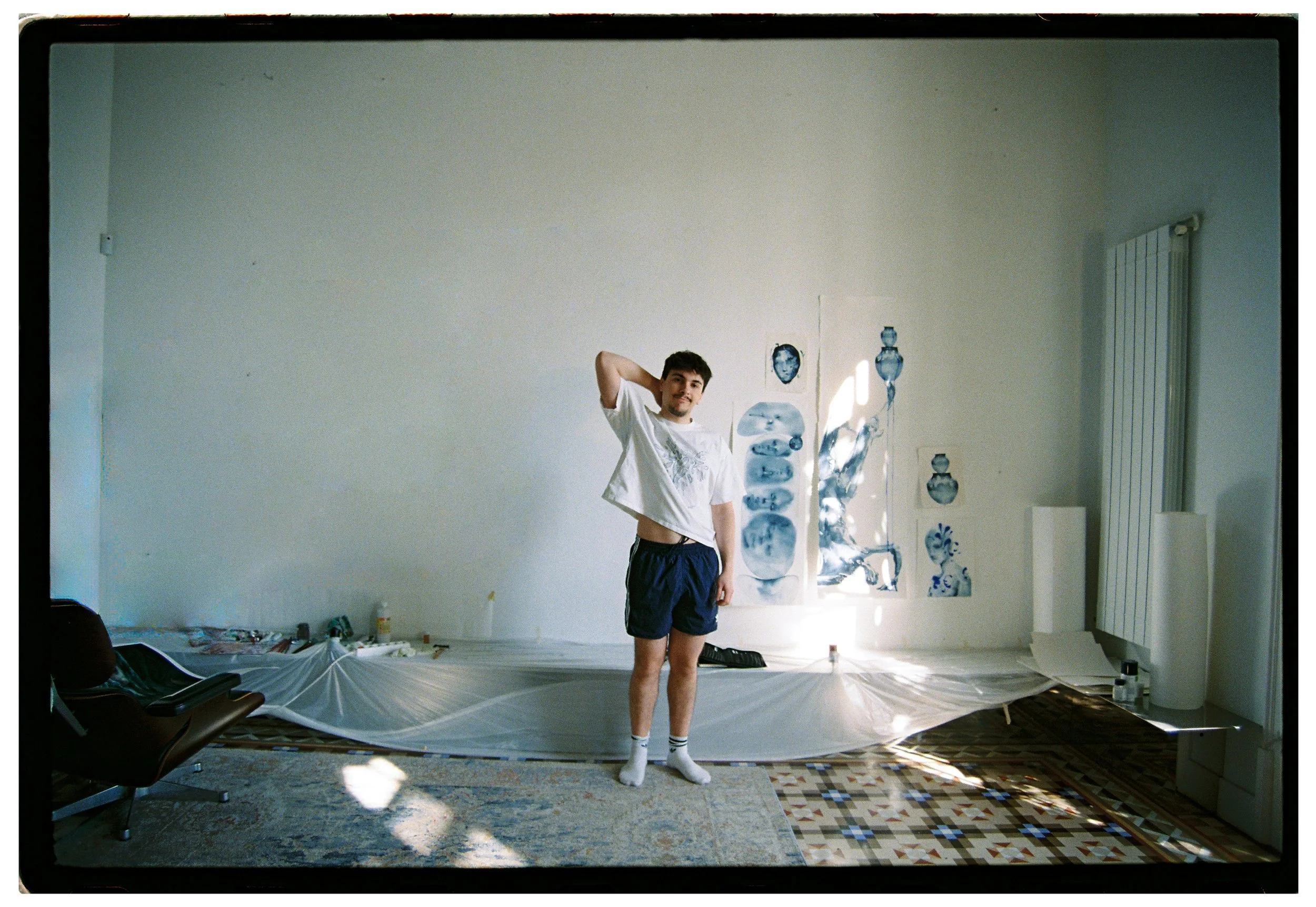
photography by CAMILA COURREGES
Can you take us through your creative process, both mentally and technically?
When it comes to my mental process, every time I try to explain it, even to myself, I trip over my own thoughts, because where do I begin to trace the start of a creative thought? I sort of jump and plunge out of it at the most unexpected times. But what all my creative processes have in common is an evolution, a digestion of an emotion, thought or question that I never try to answer, choosing instead to give it the room it needs.
Perhaps an easier way to think of it is not what I’m trying to create, but who I am speaking to. It can be an unexplainable feeling, but when you know you are reaching the people you want to reach, it feels validating and there is a sense of vulnerability I can share with society without speaking.
Has this process evolved or changed over time, and if so, in what ways?
Looking back, I realise my creative process was a lot more egoistic when I was younger. First, it was mostly about learning the technicality of it, and then I just painted on whatever impulses I had, without giving much thought to a broader concept. I think that stage was necessary, and I respect that period of my thinking. At a certain point, it became a bit of a repetitive behaviour that I wanted to push beyond. That was one of the main reasons I started scaling up in size, exploring different mediums of presentation, writing, and reviewing my work.
The core element of water remains, but with each year, it feels more grounded to me. It has matured through conversations with artists, collectors and professors, as well as through visiting exhibitions and just letting people be more involved in my life and actually caring about critique and opinions. Reflecting on my previous creations really changed the way I approach my work now.
Do directing, animating and painting satisfy different artistic impulses for you, and how would you describe those differences?
Across all these mediums, my impulse feels very familiar. It is a sort of longing for an explanation of scenarios I cannot classify rationally. It is often driven by my childhood, where I didn’t always have a sense of safety in my upbringing, so I would reclaim that safety in the sandbox of art, seeing the canvas as my universe and a comfort to regulate my intense emotions.
I think the main difference across these mediums is the communities. Apart from painting, I daydream about dancing to a song, playing a piano concerto in front of a hall, playing a gig in a pub on my electric guitar or executing a big project as an art director. These are all fantasies in my brain and worlds that I enjoy dreaming about. It is so interesting because the way the art world is structured feels almost conservative, where painters don’t interact with dancers, dancers with musicians, or musicians with painters as often as I would hope. Perhaps it is a fear of the unknown. I’m not sure.
I love imagining myself as different characters. Embracing these different roles is what allows me to enjoy life and meet incredible people. Meanwhile, I am able to fuse two mediums together and create something fresh and new.
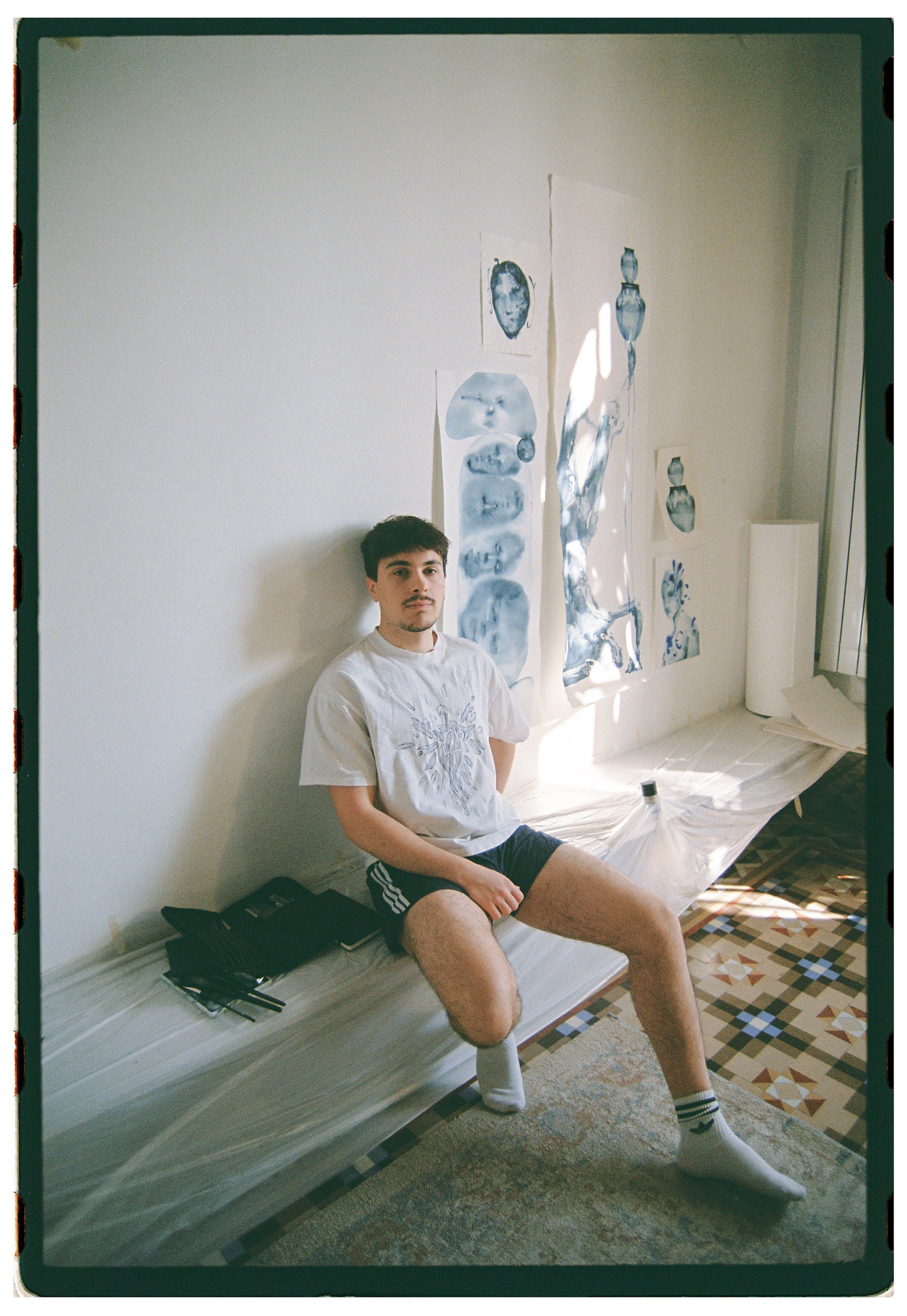
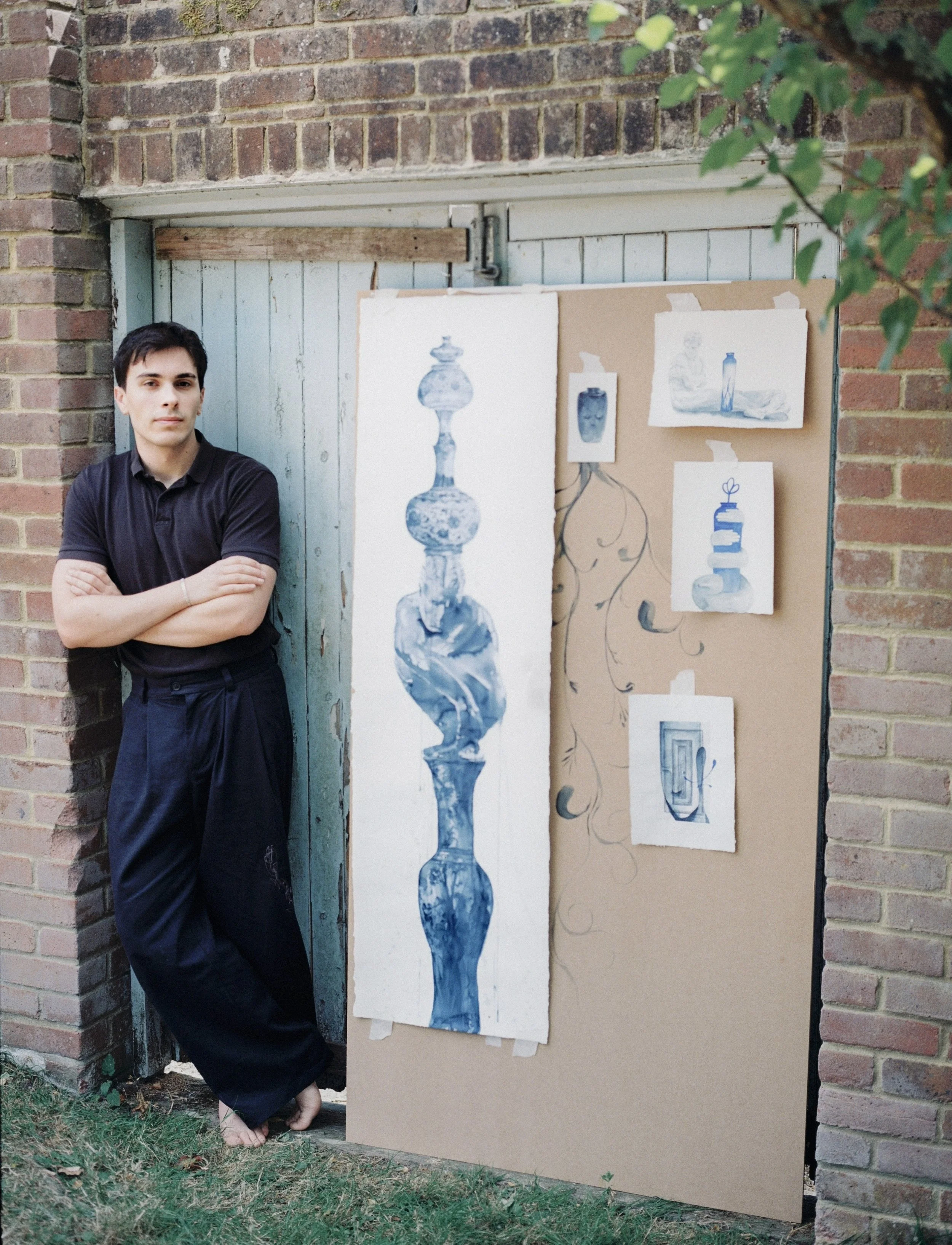
In what ways did moving to Paris influence your practice?
In Paris, what I noticed is that you are in close proximity to so many people who are also interested in art, and that brings me real comfort. I get a sense of chaos, youth and exploration, where each week allows for a different way to experience life. Especially in my 20s, I think it is a great way to explore my identity and find out what I like and what I don’t. My work takes far more steps now, with a lot more planning, and considering bigger ideas is something this city really allows for. In a way, I feel much calmer in Paris, because there is always something going on every day. So, you never really miss out — even if you decide to take it slow in this city.
In some of your works, the use of watercolour is defined and intentional, while in others it seems to be led mainly by instinct. Which approach gives you more artistic freedom?
For me, freedom is defined by the instinct I can allow myself within a framework. I see it as a golden cage. If I know I have a certain limitation, such as choosing just one colour or one medium, my brain has an overview of the situation, which then allows me to be truly intuitive within those bounds. But, if I were to choose one approach, it would definitely be instinct. While the intentional and rational approach is based on my cognitive thinking, the instinctive approach has a soul. It holds my heart, which is something I can clearly see when I look at my own work.
Is there an emotion or experience you still find difficult to translate into paint?
Joy is a state that I find very hard to conceptualise in my work. I don’t mean to say that I’m a depressed artist who just paints melancholy. I’m quite the opposite. I am very happy with my life and with being able to show my vulnerable, dark side. There is certainly a childhood aspect to it, where I would find an escape by expressing deep emotions on paper, and that is still present to this day.
Whenever I feel joy, I don’t have the urge to paint. I am truly enjoying my life in the present, surrounded by great people. It is a part of my life reserved only for me and my own. Perhaps I don’t want this side to be in my art because it is sacred, something meant to be enjoyed and allowed to pass as it is. Sadness, depressive periods and melancholy are slow and thick in their presence, and I have built a way to move on from them by letting them out in my art as a cathartic expression.
My work was really dark back in my childhood, but I grew, I learned, and it feels a lot more settled and nuanced now. That deep expression results in a later joy that doesn’t need to be presented a second time.
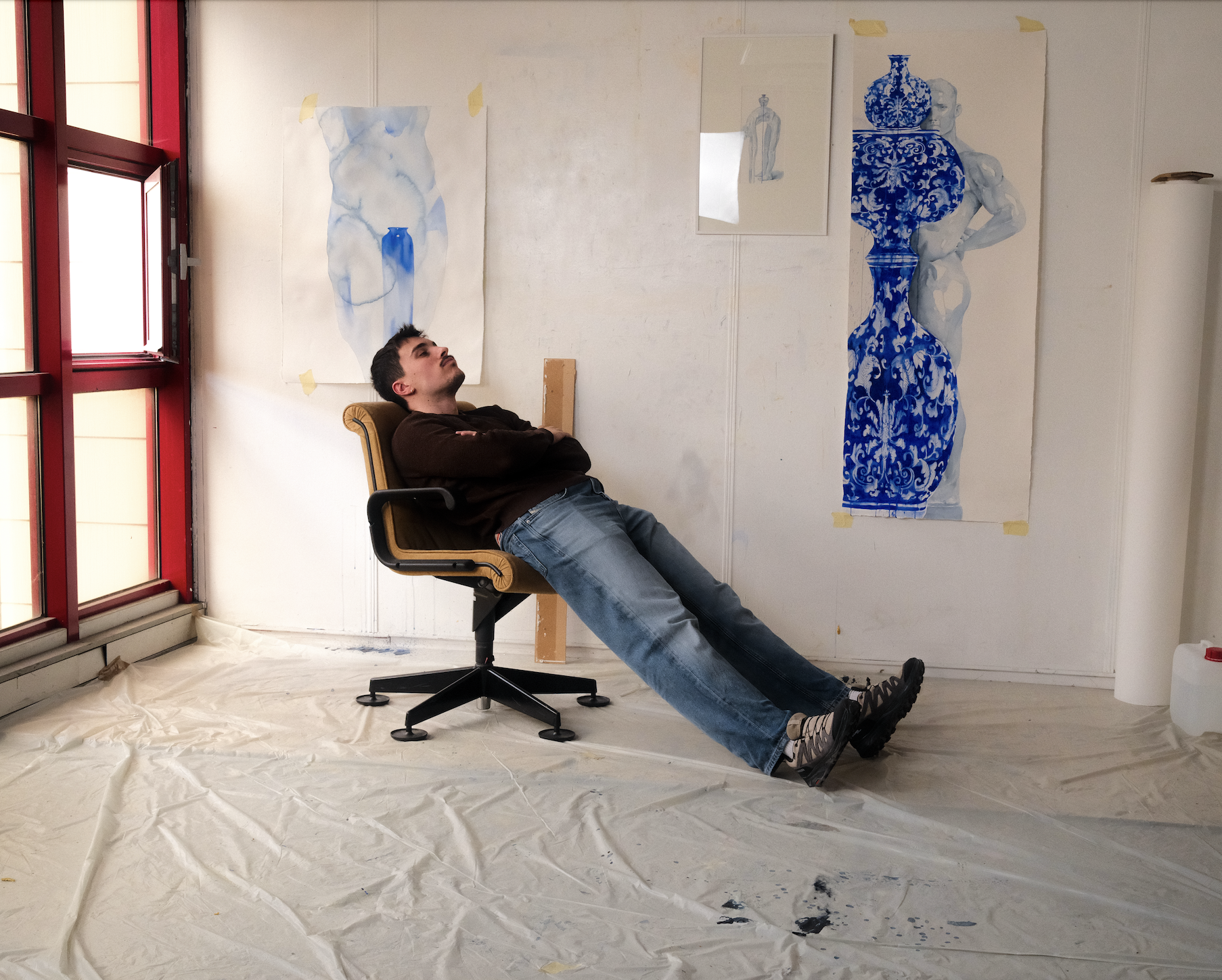
photography by NICHOLAS CORDEIRO
The use of the colour blue in your work has transformed from cold to increasingly vibrant over time, reflecting your personal journey as well. What does the next chapter of the colour blue look like for you?
I am often asked if I ever get tired of blue. Again, it goes back to my philosophy of working with less and being satisfied with it. Blue sort of blended itself in. It doesn’t speak out loud, so it is almost like my version of black and white, if you will. The indigo has almost a grey note to it, to the point where I forget I’m even working with blue.
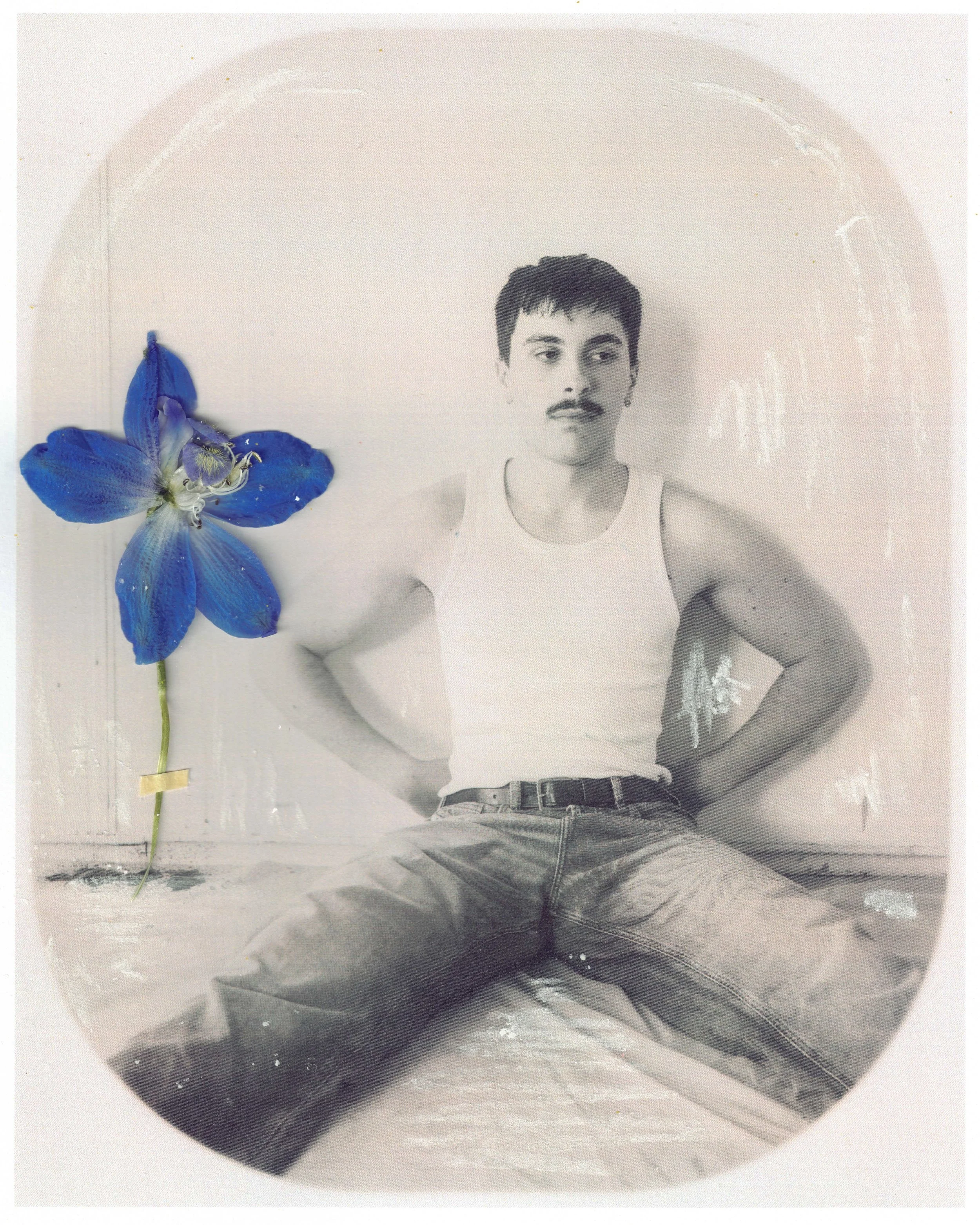
Adding a different hue like ultramarine blue — which I did once I came out to my family — felt youthful, and my work blossomed. That is the beauty of setting limits. Once you slightly shift the rules, the effect is so striking, and it makes the concept feel much more intentional. I always find new ways to explore this colour, and I think the next chapters will definitely stay grounded in that, but I do see myself slightly changing the dynamics and being open to experimentation when the time comes.