
FROM WOMEN’S SURVIVAL UNDER CURRENT SOCIAL CONDITIONS OF SEXUAL VIOLENCE TO A FREE WORLD
words by TIANA DE HASETH
To put it simply: the current reality of women has been a painful and ongoing struggle against gender-based violence. To wake up as a woman and encounter public discourse on social media surrounding gang rape is to be confronted once again with the vulnerability that patriarchal societies continue to impose upon women's bodies. The emotions of grief, anger, fear, and — at times — even hopelessness that come with this, are not just a single responses to violence, but also reflections of a society in which women's safety, autonomy, and dignity remain debated.

image via PINTEREST
Among the most recent reason for outrage is a Cornell university student, going by the alias Jane Doe, who reportedly endured a seven hour sexual assault involving seven men at the Chi Phi fraternity house. The case has raised disturbing questions about the relationship between gender, institutional responsibility, and the social conditions that allow sexual violence to occur. After filing a cilvil lawsuit, Jane Doe's voice has finally begin to receive public attention. Yet the gravity of her experience extends beyond the pursuit of justice, making us confront the patriarchal norms that got us to this conversation in the first place.
We all know a Jane Doe, or perhaps we are Jane Doe. According to a EU Agency for fundamental rights survey, one out of three women have experienced gender-based violence and one in six women have experienced sexual violence or/and rape, in their adulthood. These statistics are the reality and consequences women have to face in a society where their safety is uncertain.
If not all men understand the deep-embedded misogyny they are raised with, it gives us no choice but to confront how our society fuels these type of men with power enough to act on these form of violence. Because, this is not only about sex and consent but also about power. The power men use to degrade women through the act of rape to give power to each other and the model of masculinity where men perform to gain power and validation from the patriarchy itself.
The notion of power is important in this discourse. Michel Foucault says that “power doesn’t only come through law or institutions, but also through the norms we inherit, misogyny we normalise, behaviours we excuse and the hierarchies we learn to accept as natural.” The patriarchy survives through male leaders that decide what women can and or cannot do with their bodies, and the lack of safety for women that tends to be normalised rather than worked upon.
And what is left for women is to wonder how to protect themselves in a society that constantly fails to provide them with a sense of safety to the point that even fashion reacts to the current state of being a woman. Imagine that — fashion itself has been offering different forms of protection for women to defend themselves in case of violence.
From Riverpeace’s Rhoglo Blade Heels, designed as an armour to empower women, and Invi’s bracelets that use scent as a non-violent self-defense to keychains and anti- stabbing undervest. The enduring gender-based violence women face will continue to shape how we live, move and dress, becoming a problem where women have to adapt to this reality, instead of living in a society that helps us prevent it.
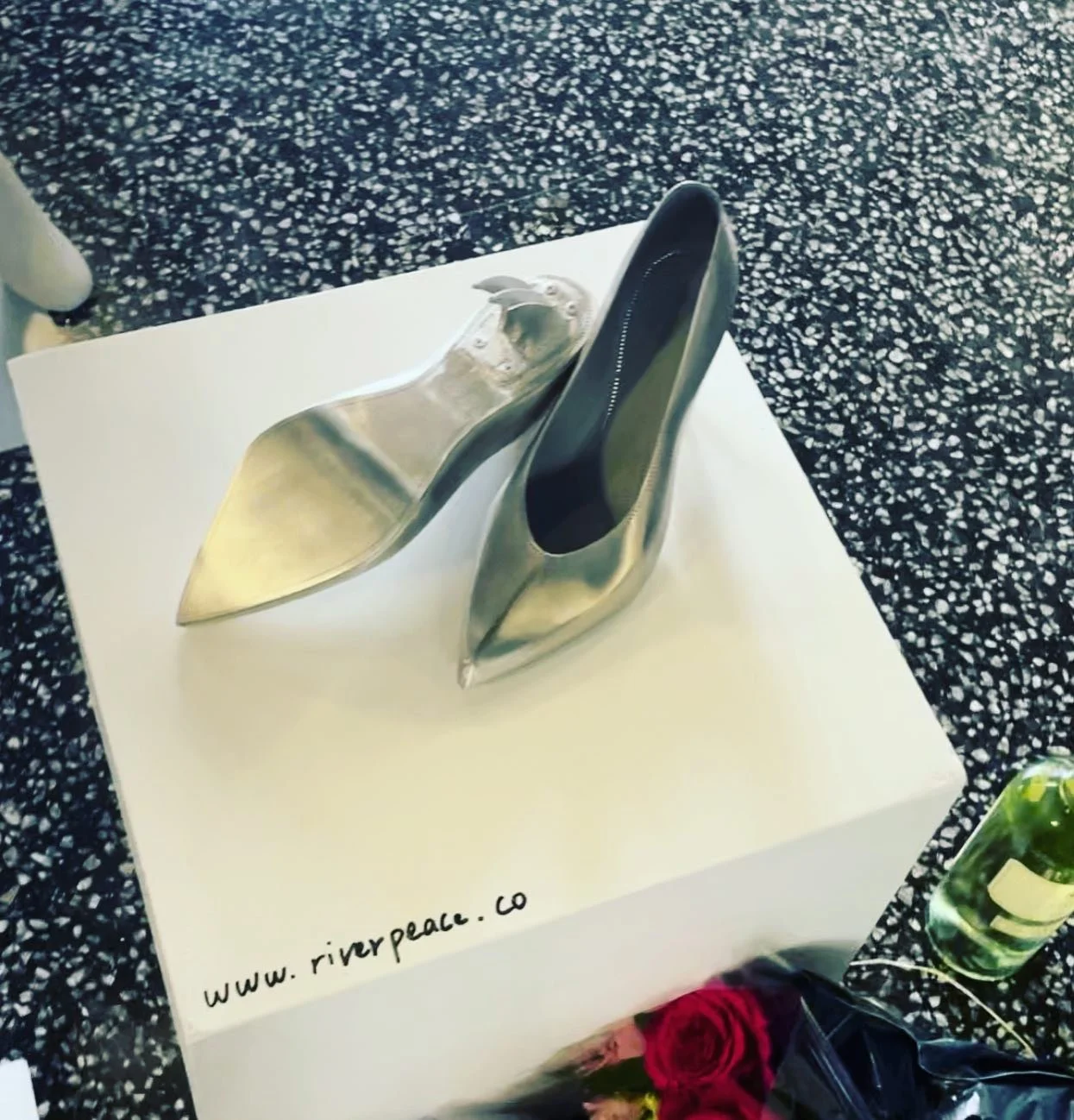
image courtesy of RIVERPEACE
Despite this, the discourse surrounding gender-based violence has been necessary to wake up those around us still in denial, and challenge the silence around women’s experiences. If anything, most women have been supporting one another, building communities around shared experiences and solidarity. Womanhood, community, and awareness offer hope, and also reminds us that we are not alone, even when we’re in fear.
I believe this hope will extend beyond solidarity and bring a future where women do not have to carry protection when they leave the house, because the goal is not for women to protect themselves in a dangerous society, but rather for us to build a society that ensures that the world is no longer dangerous to them. A world where women can run freely, live without fear and walk at night with confidence.
Change begins when we stop asking women what they could or should have done differently in order to protect themselves, and start asking what we can do to prevent these violences from happening in the first place. This can only happen through educational and political institutions that take survivors and reports seriously, justice systems that hold rapists accountable and communities that do not normalise violence. At the end of the day, safety should not be a privilege that women have to beg for, it’s a fundamental right they (and everyone else) should receive.
