
MAKE ART UGLY AGAIN!
words by AYA SOFIA OPPENBERG
editor MAREK BARTEK
With every update pushing us closer to the seamless and soulless, the new luxury is work that carries bruises, fingerprints, and the weight of whoever made it.
If it walks like a duck and it quacks like a duck, it’s probably not a duck.
Every week there seems to be yet another software update sneaking AI into our daily routines, speeding us further into this frictionless, hyper-polished reality we never consciously agreed to. Animals, faces, sunsets, Sora-Jake Paul doing pilates, even Renaissance paintings; all of it suddenly appears smoother, cleaner and more technically “correct” than anything a human could produce on a tired Tuesday night with too much caffeine and too little faith in humanity.
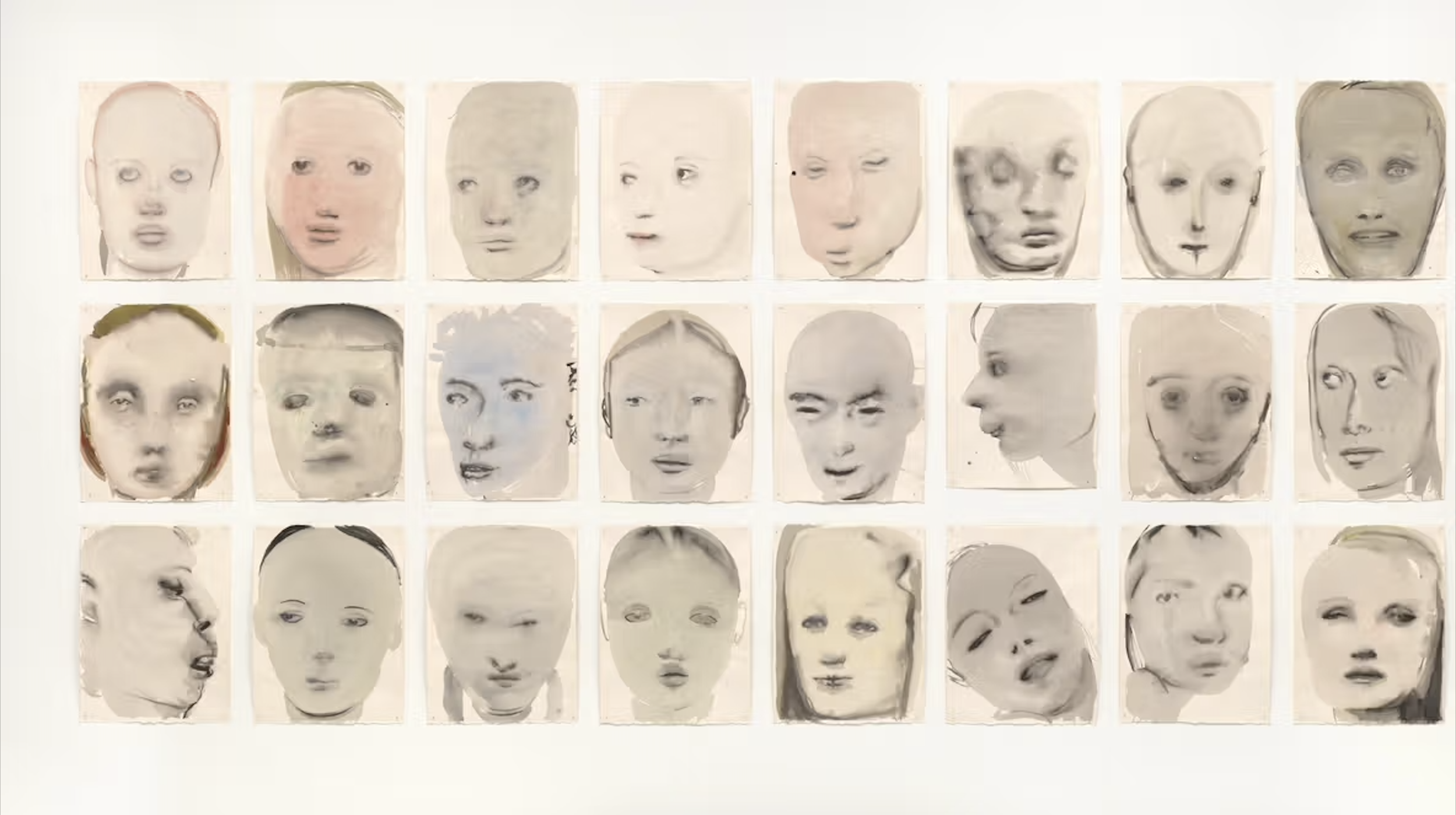
Marlene Dumas
Chlorosis (Love sick), 1994
image courtesy of MoMA
But the more seamless everything becomes, the more I yearn: where’s the passion? Why don’t we crave the small human hesitations that make creative work feel inhabited? The bruise behind a brushstroke, the wobble in a line, the migraine that accidentally birthed the best paragraph of your life?! AI doesn’t desire, doubt, overthink, ruin something and tries again, or decides in a way that only makes sense because the artist was a little unwell that day. It produces images and text without having lived in the body that expression comes from.
What we get instead isn’t a simulacrum or even an imitation; it’s more like a ghost print: something that mimics the surface so perfectly it almost fools us, until we realise there’s nothing underneath to meet us halfway. Everything an AI touches is, by default, stripped into numbers, flattened into data, translated into a grid of RGB values before it can be recombined into something “new.” The nuance and context we understand instinctively (the things you can’t measure or encode) simply fall out of the frame. The Mona Lisa becomes data; Da Vinci’s hesitation becomes irrelevant.
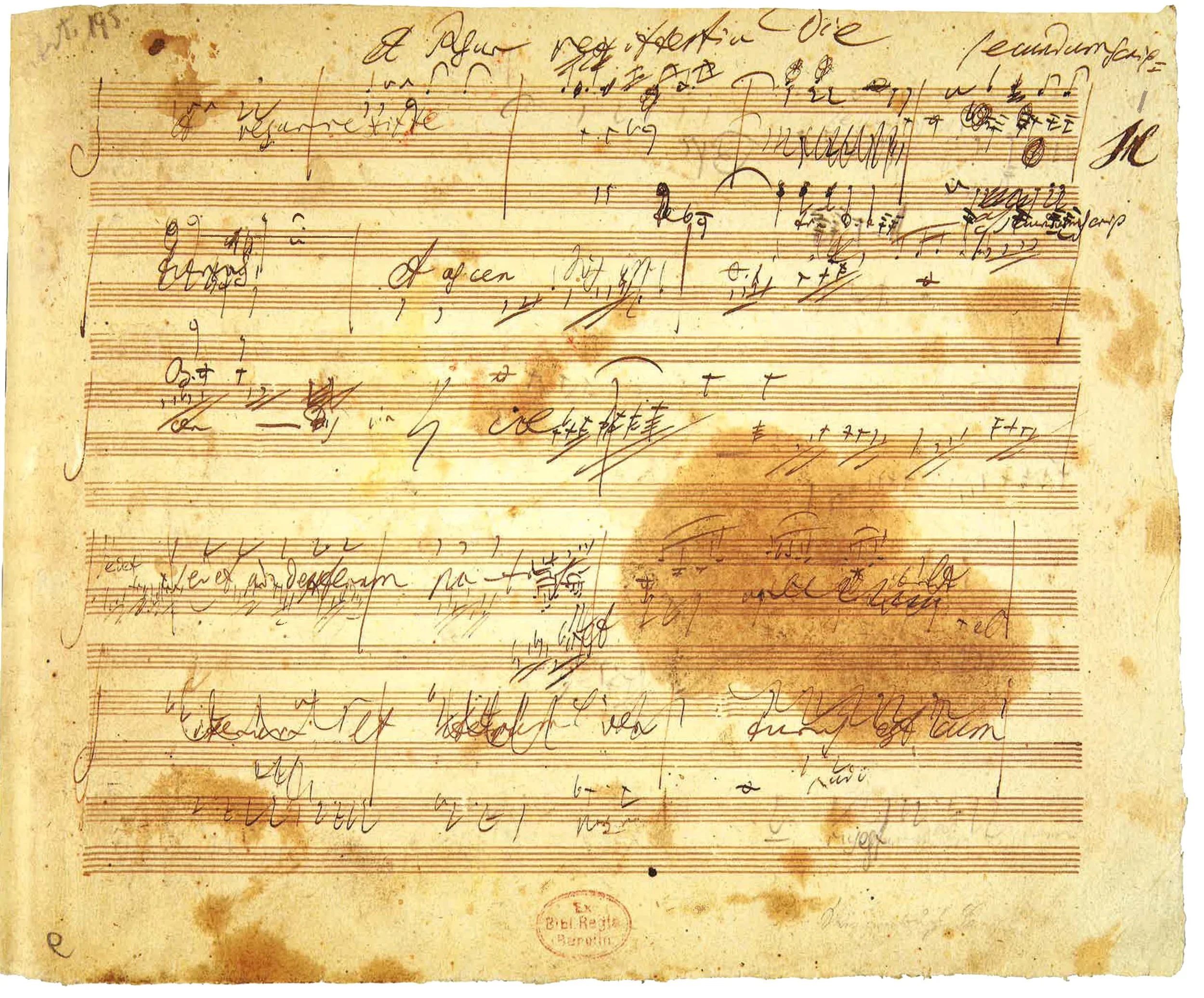
Beethoven’s Sketchbook for the Missa solemnis and the Piano Sonata in E Major, Opus 109.
image courtesy of University of Illinois
It’s no wonder, then, that culturally we’re drifting back toward imperfection, a collective recoil. You see it in the return of finstas, the BeReals, and the picsart Lana Del Rey covers. These things matter to us, because they’re not aesthetically flawless, and they remind us that you can just relax, make stuff, and show things, without having to be immaculate.
The Japanese understood this long before we caught up. Wabi-sabi treats cracks, chips and asymmetries not as flaws but as forms of truth; traces of time, use, accidents and care. A bowl repaired with gold holds more emotional weight than one that never broke, because it acknowledges everything that happened to it. AI can reproduce the gold with perfect precision, but it will never understand the break that made the repair meaningful.
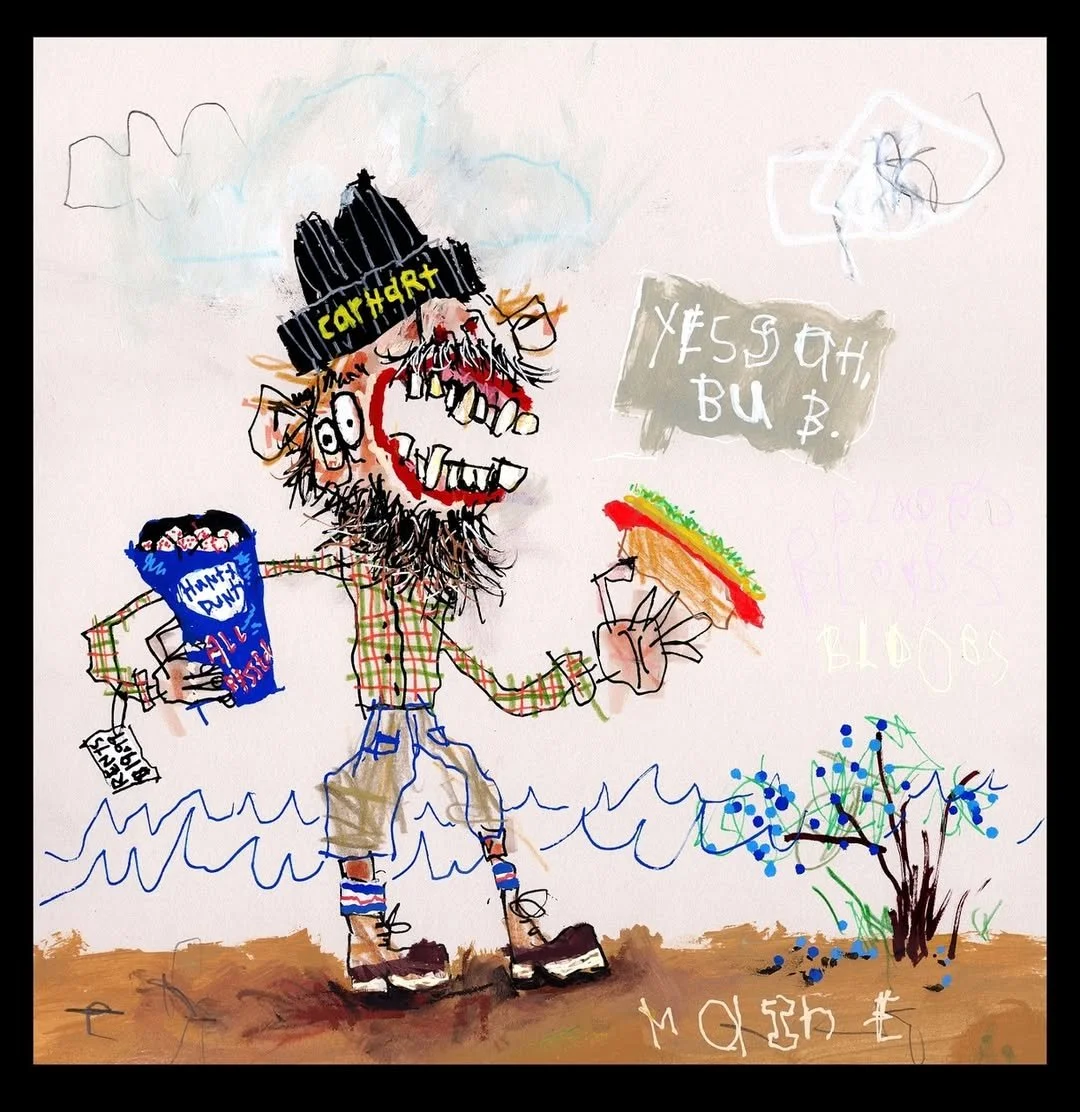
Lewis Rossignol️️️️
Mainer, 2025
image via instagram @lewisrossignol
And so we arrive at this strange cultural threshold where perfection has never been easier, but rarely is inspiring. I’m not worried about AI replacing artists any time soon; what concerns me more is the possibility that it dulls our taste, that it flattens our appetite for the slightly off-kilter, the badly-timed, the messy draft.
If meaning comes from friction, vulnerability and risk, then creativity should never be optimised (disclaimer: AI done creatively is still creative, but that’s another article).
So here’s the only manifesto I have right now: make art ugly again! Keep it crooked, impulsive and too human to be mistaken for something machine-made. Bring back that slight feeling of embarrassment when looking back at something you made three years ago.
Passion, dare I say, is the only answer!