
WHAT’S “IN” AT MILAN DESIGN WEEK 2026
words by SARA BRAJKO
Milan Design Week 2026 revealed a quiet shift beneath its usual spectacle. Alongside bold concepts and technological experimentation, a return to material, craft, and process began to take hold. Across installations by leading houses and designers, luxury was redefined through slowness, precision, and the enduring presence of the handmade.
THE CRAFT CORE
Walking through Milan Design Week 2026, I noticed a powerful shift toward something more grounded. While everyone seems to be racing toward AI-driven speed, I was drawn to a different energy, an appreciation of the craftsmanship that has been embedded in Italian culture for generations. With this, it represented a story; it wasn't just about the final product, but a slower, more deliberate rhythm of creation.
The Missoni exhibition was a perfect example of this. Instead of just showing finished luxury goods, they pulled back the curtain on the entire process. They set up a massive, industrial-scale knitting machine which turned the mechanics of production into a live performance, showing exactly how their textiles are made.
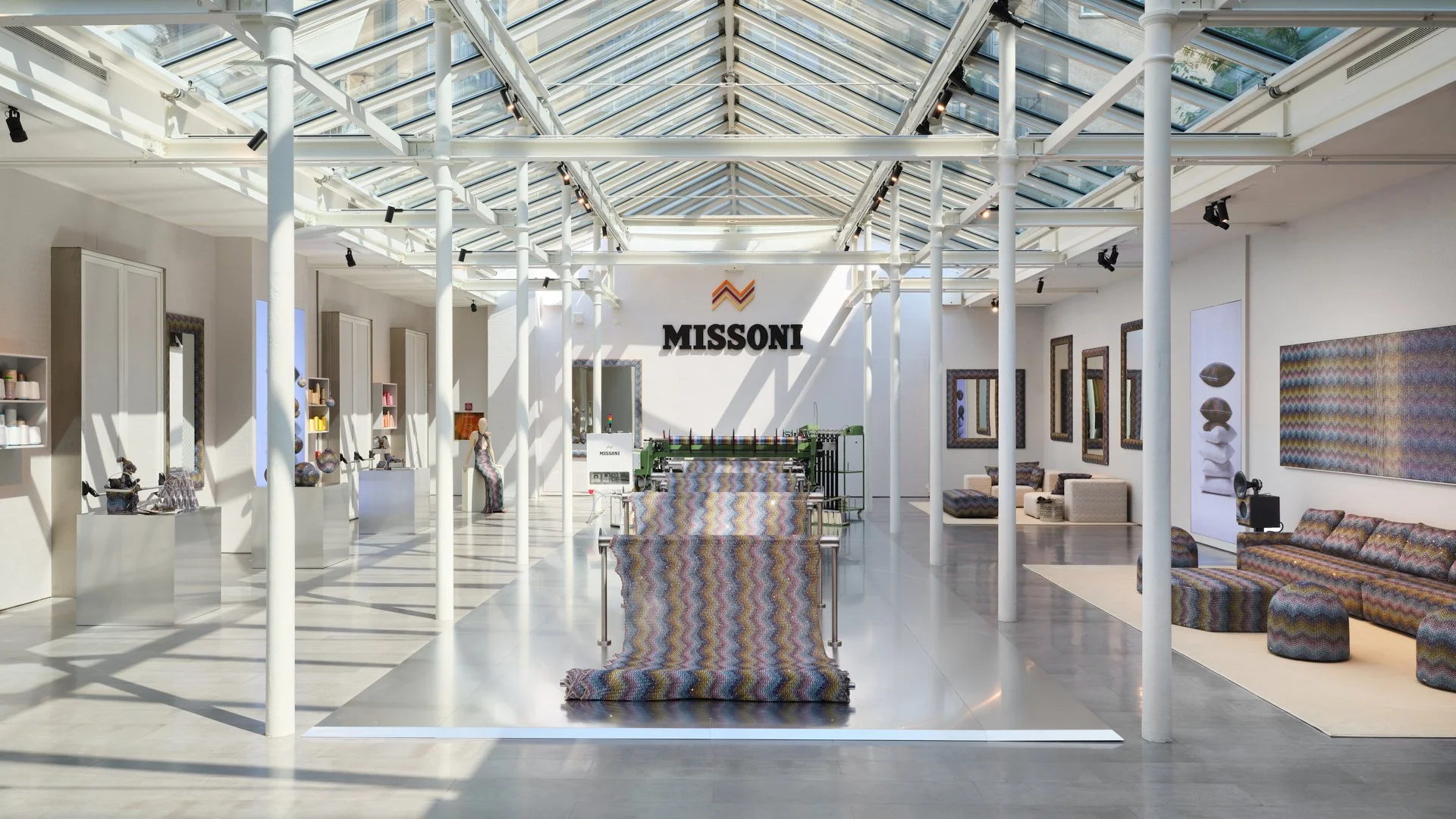
image courtesy of MISSONI
This same spirit of historical reverence continued with Loro Piana, which presented a series of case studies honoring a culture of excellence rooted in fabric and craft. Stepping into the Sceneries exhibition, I was transported to the poetic landscapes of Valsesia, the house's ancestral home since 1924. The installation beautifully captured a precise art of living, where the seasonal rhythms of the mountains and the spirit of outdoor life, from vintage car rallies to alpine sports, unfolded as a vivid panorama of a history deeply rooted in its place of origin.
The highlight was a masterful exploration of luminosity: raised linear cords, hand-embroidered onto a soft cashmere base and coated in aluminum foil to create a metallic contrast that shifted with the light. Requiring a staggering 1,000 hours of manual labor, the piece was a breathtaking testament to a house where luxury is measured not just in material, but in the immense passage of time.
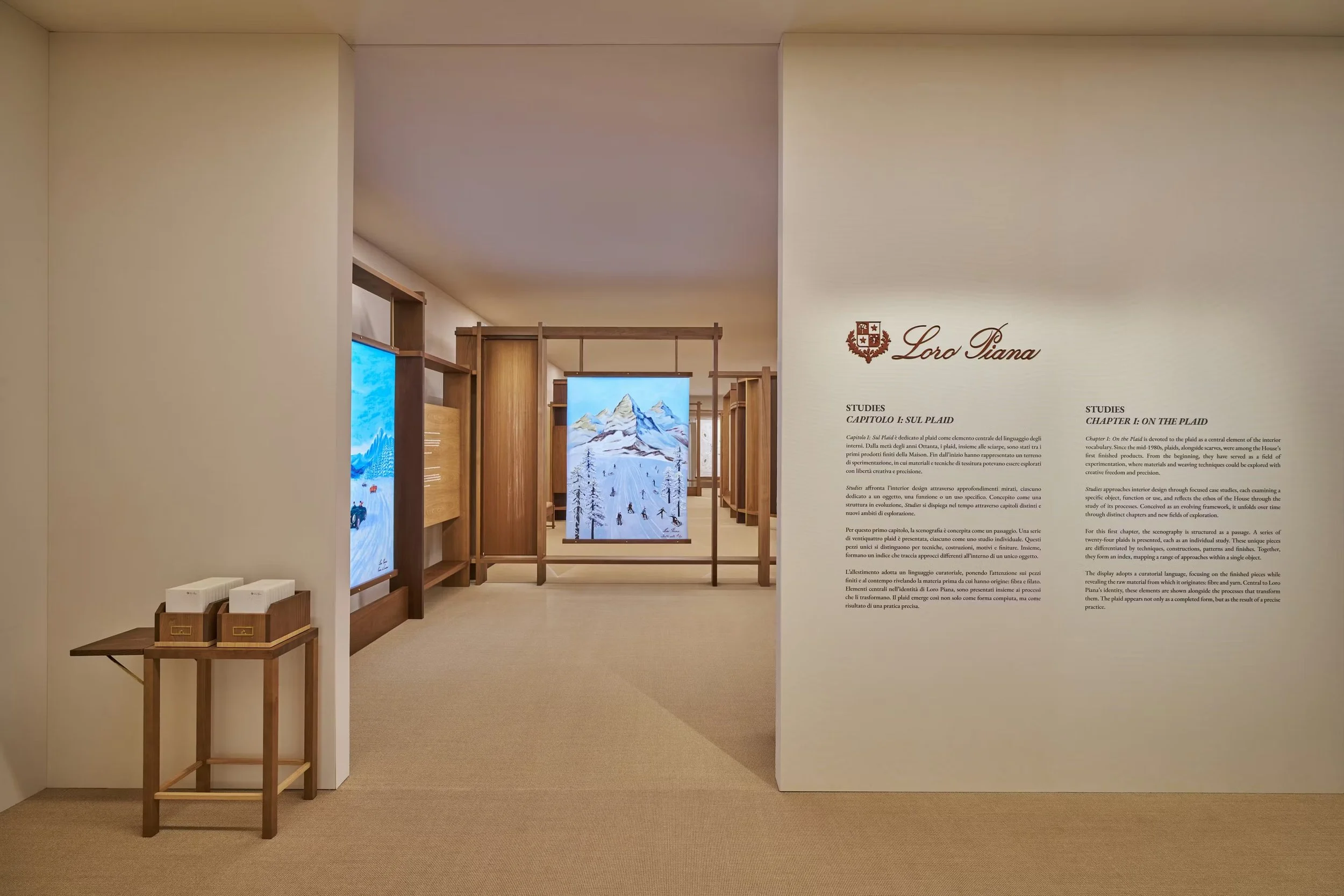
image courtesy of LORO PIANA
RAW PERMANENCE
Across the city’s most visionary installations, marble and alabaster were stripped of their cold, museum-like reputations and reimagined as a vital architectural language, one that keeps us grounded in an increasingly ephemeral world.
The exploration of light and weight continued with Studioutte, where floor-to-ceiling backlit alabaster panels transformed walls into glowing, ethereal surfaces, bridging the gap between raw earth and atmospheric warmth. This immersion reached its peak in the collaboration between architect Hannes Peer and Margraf. By envisioning a home entirely clad in marble and onyx, where the stone was left matte and porous, they turned the material into a total environment.
In these spaces, stone became more than just a surface; it became a tactile reminder of our need for permanence. Whether as a massive platform or a delicate wall sconce, these natural materials offered a sense of weight and ritual, grounding us in the enduring "intelligence of the hand" amidst a fast-paced world.
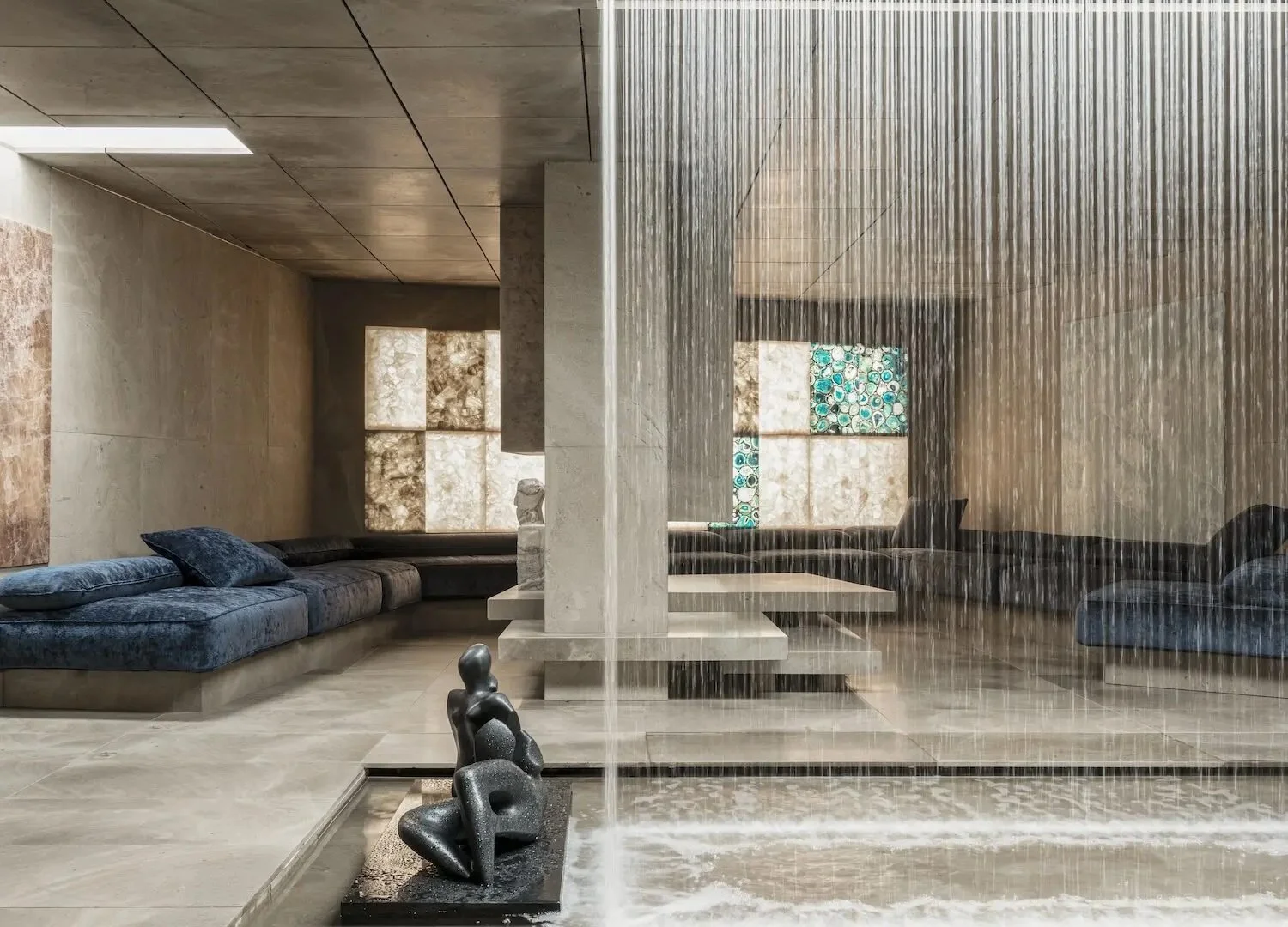
image courtesy of STUDIOUTTE
This dialogue between stone and spirit found its most poetic expression at Hermès, where the artisan’s gesture was elevated to a form of quiet worship. Within the collection, the Stadium d’Hermès dining table meticulously crafted in marble marquetry by British designers Edward Barber and Jay Osgerby stood as a masterpiece of symbolic weight.
Its sweeping figure-of-eight shape, evoking the powerful curve of a horse’s back or the focused geometry of a racetrack, serves as more than just an aesthetic feat; it is a profound representation of our return to nature. By translating these organic, equestrian silhouettes into the permanence of stone, Hermès reminds us that grounding ourselves in the tactile world is a necessary ritual.
Across the week, the message was clear: there is a collective desire to reconnect with the act of making. By positioning design as an act of contemplation, these houses reminded us that the most forward-thinking innovations often come from a deep respect for the basics.
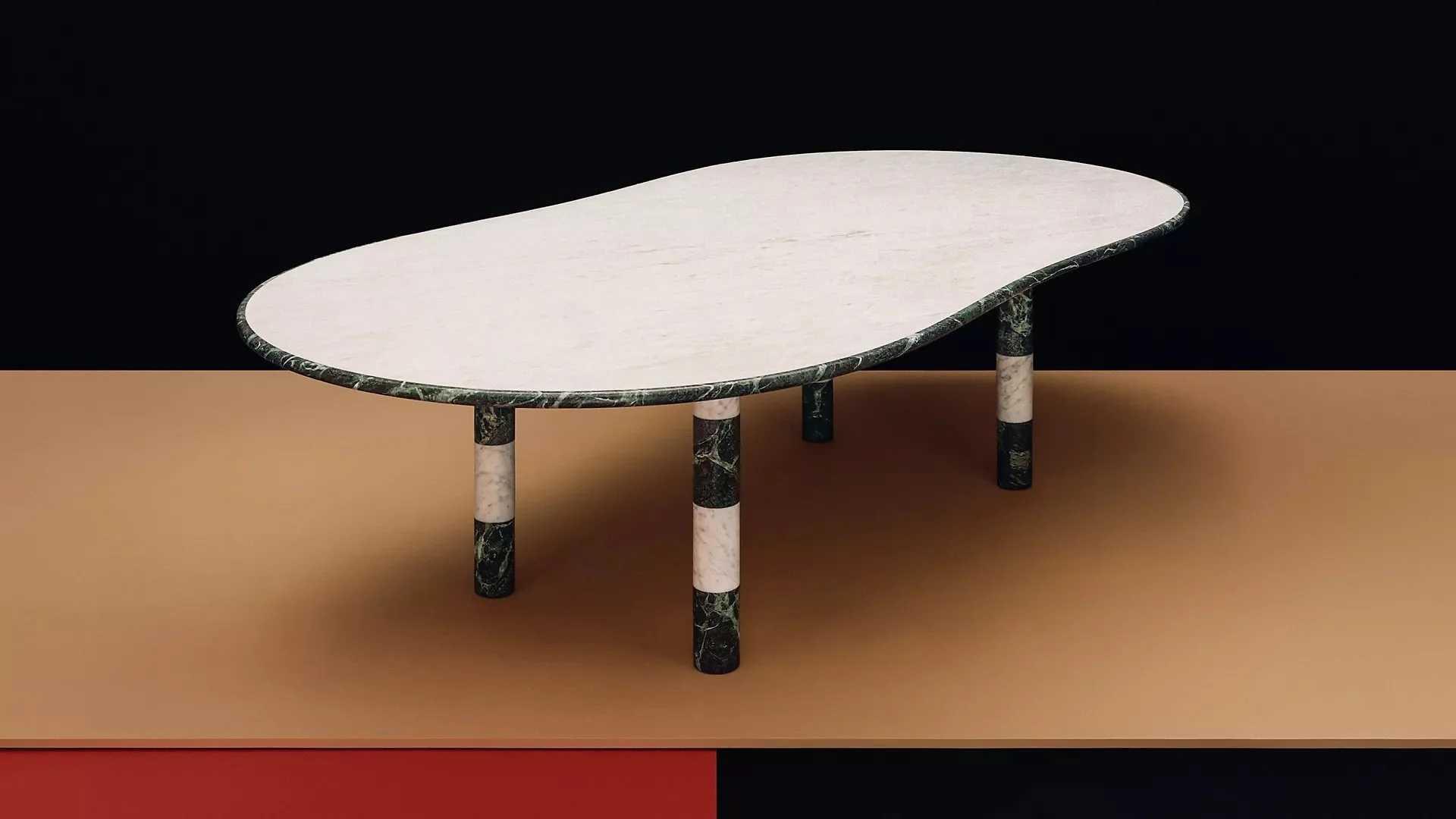
image courtesy of HERMÈS