
words by ELISABETH BERGER WALDENEGG
At this year’s Frieze London, seven established artists each chose a peer for a solo presentation. Two of the chosen artists — Vienna-based painter Paul Robas and South African sculptor Unathi Mkonto — talk about their work and about what it means to be picked by another artist rather than by the market.
An art fair is a long chain of decisions. A committee decides which galleries get in, the galleries decide which artists to bring, and collectors decide what goes home with them. Often the question behind all of it is what will sell. Craft, talent and what sets an artist apart can easily come second.
Artist-to-Artist changes who gets the first say. At Frieze London, held from 14 to 18 October in The Regent’s Park, seven solo presentations were chosen by established artists, each nominating a peer whose work they think deserves more attention. So what does it mean to be chosen by an artist? Does it change how the work is seen, and how it sells?
The section started in 2023, and this was its fourth edition. Since 2025 it has been supported by Tiffany & Co., which gives each participating gallery a bursary towards its presentation. This year — among others — Yinka Shonibare chose Unathi Mkonto (Goodman Gallery), and Louise Giovanelli chose Paul Robas (Alice Amati).
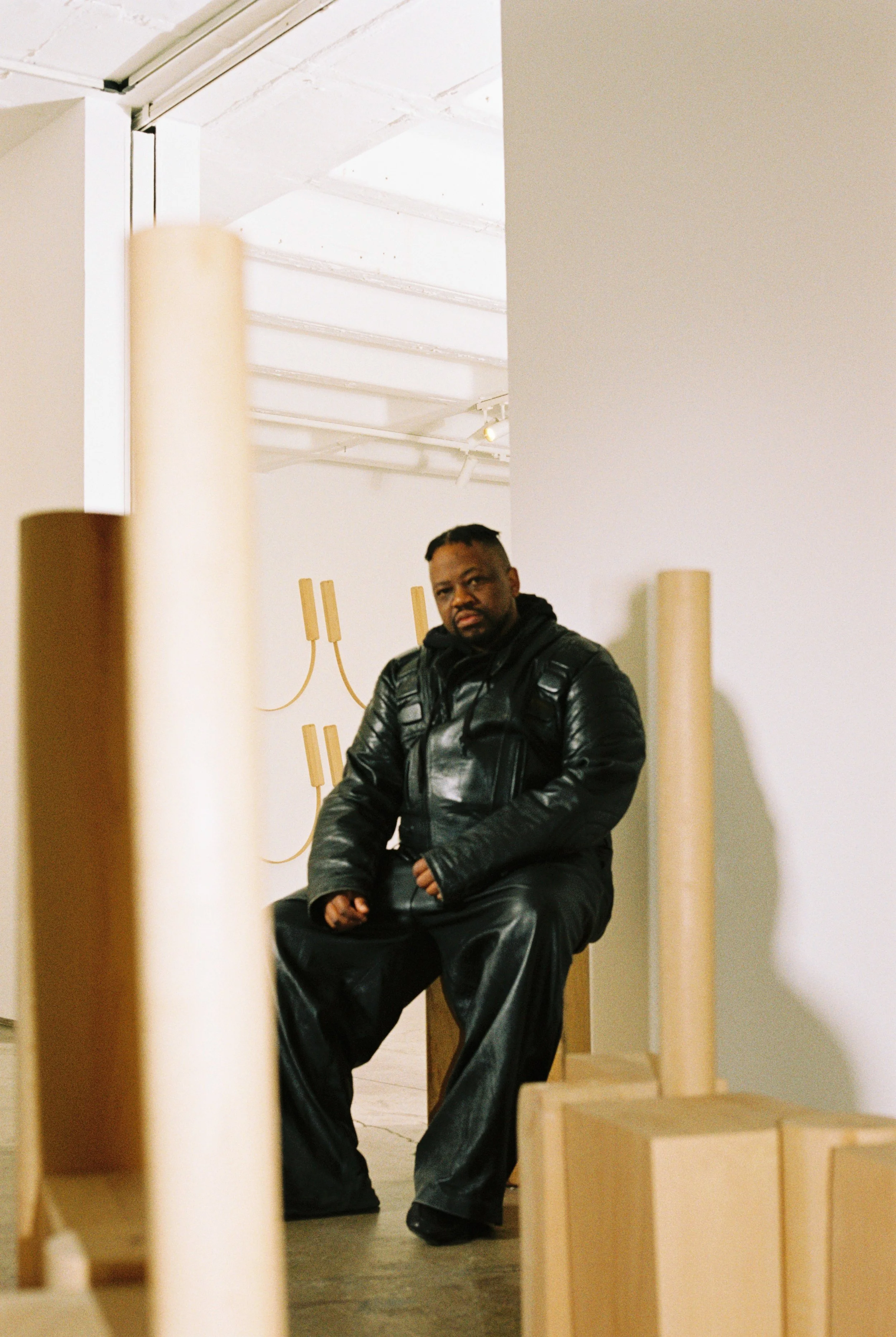
portrait of UNATHI MKONTO, photography by ANDILE BUKA
Johannesburg is hundreds of kilometres from the sea but Mkonto has given it a coastline anyway. Born in Peddie in the Eastern Cape in 1982 and based in Cape Town, he is both a self-taught artist and an architecture graduate. His booth grew out of his summer show at Goodman Gallery Johannesburg, If Joburg had a beach, who would go?: bent, slanted forms in beechwood, installed together as one field.
“It’s also about who gets the access, as everyday South Africans have to be at work,” he says. “This is a result of spatial apartheid. People were pushed out of the city, and that experience has shaped the living conditions and inequality in South Africa.”
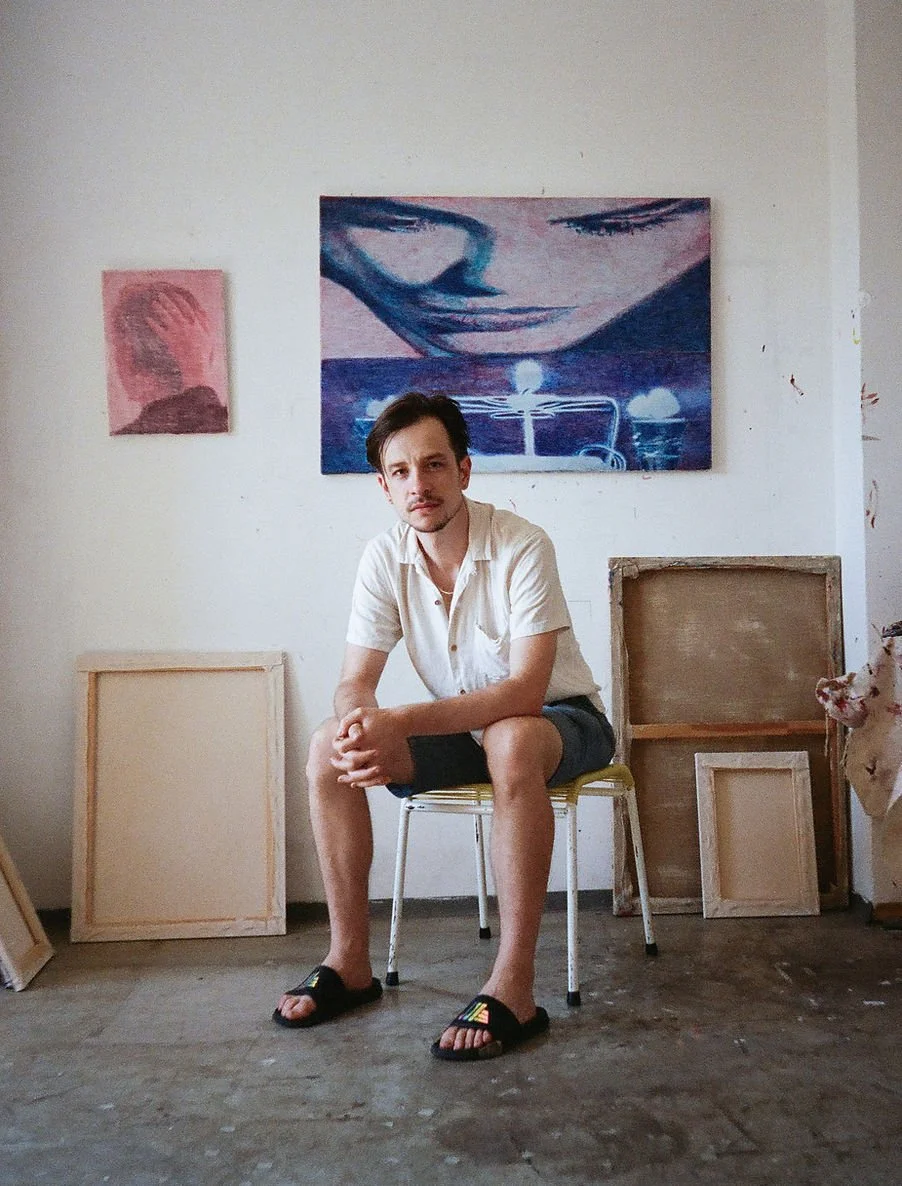
portrait of PAUL ROBAS, image courtesy of ALICE AMATI
Meanwhile, at the booth of Paul Robas, he describes his presentation as a film strip: the same format repeated, with the viewer free to start anywhere. Born in Romania in 1989, he studied in Cluj-Napoca and at the Academy of Fine Arts Vienna, where he still lives. His paintings start from found photographs, edited digitally and then worked over by hand. “I try to evoke this feeling of recollection, not necessarily in a nostalgic way, but often with a sense that it’s just out of reach,” he says.
Louise Giovanelli, the Manchester-based painter best known for her glowing paintings of stage curtains, is an old friend of Robas and had visited his studio before. “Artists might have more insight into another artist’s work. I personally felt there was a greater sense of familiarity and less pressure, as she already knew my work,” says Robas. Mkonto and Shonibare, on the other hand, knew each other’s work from a distance. “It felt like Yinka was looking for someone who works differently from him, but was close to him in the pursuit of creating language. There’s not one way to tell stories from the continent.”
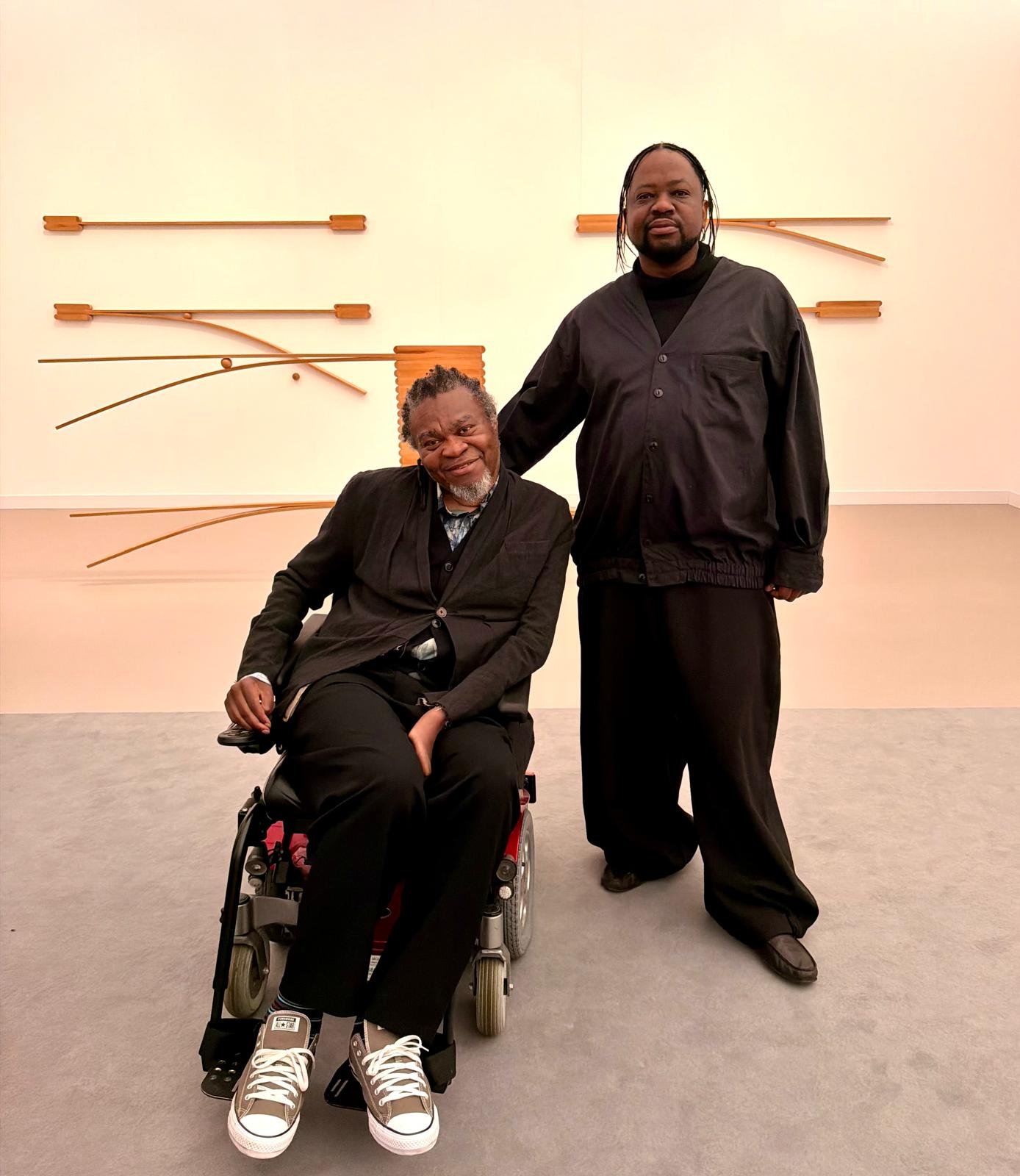
YINKA SHONIBARE and UNATHI MKONTO, image courtesy of GOODMAN GALLERY
Despite both having different relationships with their sponsors, they agree that this initiative is about being recognised for how they work, not for how well the work might sell. “I think that is the point of the Artist-to-Artist section: to introduce the work of someone less known without the incentive of selling as the main driver,” Robas continues, “this allows for a more authentic presentation and more freedom.” He was able to present a whole series, which ultimately allowed for the stand to feel “more like a show than a traditional booth”. Giovanelli’s name also brought people who like her work, “or painting in general”, which made talking to visitors “more interesting”, he says.
But it’s not just the nominated artists — Goodman Gallery, too, recognises that Shonibare’s nomination brought Mkonto’s work to “an exceptionally broad international audience” and gave him a chance to speak directly with curators, collectors and writers.
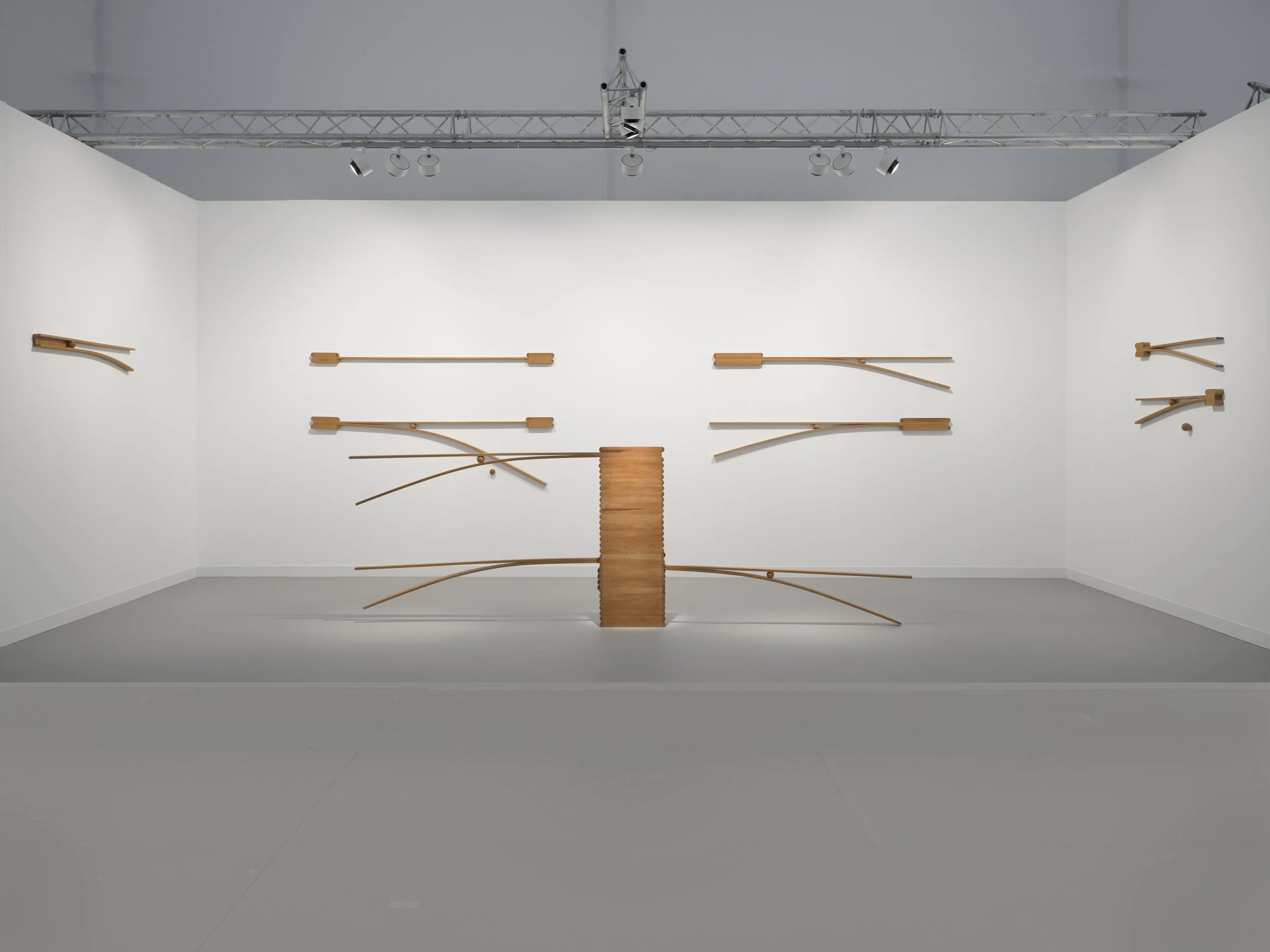
UNATHI MKONTO, Artist-to-Artist, 2026. Installation view, Frieze London
image courtesy of the artist and GOODMAN GALLERY
photography by STEPHEN WHITE & CO.

PAUL ROBAS, Artist-to-Artist, 2026. Installation view, Frieze London
image courtesy of the artist and ALICE AMATI
photography by TOM CARTER
So does it feel better to be chosen by an artist? Mkonto admits that “being nominated by another artist does feel special,” but at the same time, he doesn’t think it takes the market out of the fair: “I think a fair will always be that. It’s different from a gallery. The focused section of the fair gives artists more platform to tell their story; but it really is up to the artists to run that.” Robas doesn’t want to play one against the other either. “I think the galleries are also important.” But the values are clearly different: time, conversation, and the chance to look closely at a whole body of work before asking the price.
Artist-to-artist has faced some criticism, as well. The obvious concern is that artists pick people they already know, keeping the recognition within familiar circles. But galleries, curators and collectors also tend to choose people they already know, and in Robas’s case, the nomination came out of a studio visit and years of conversations about painting.
With that in mind, open criticism of the section was hard to find. Reviews were mostly warm, and Artsy counted Mkonto’s booth among the ten best of the fair. You could call it networking, artists putting forward people they know and admire, with a famous name to help open the door. But that is how a lot of careers start anyway: someone who believes in your work and says so out loud. For buyers, that backing counts. When an artist like Shonibare or Giovanelli stands behind a peer, it reads as an endorsement from someone who knows exactly what it takes to make the work. Whether they pick for talent, a shared language or simply friendship is hard to tell from the outside. What the section challenges is the order — it gives the work a chance to capture people’s attention before the talk turns to price.

PAUL ROBAS Overcast, 2026
Acrylic, oil, ink and encaustic on linen
11 3/4 x 15 3/4 in 30 x 40 cm
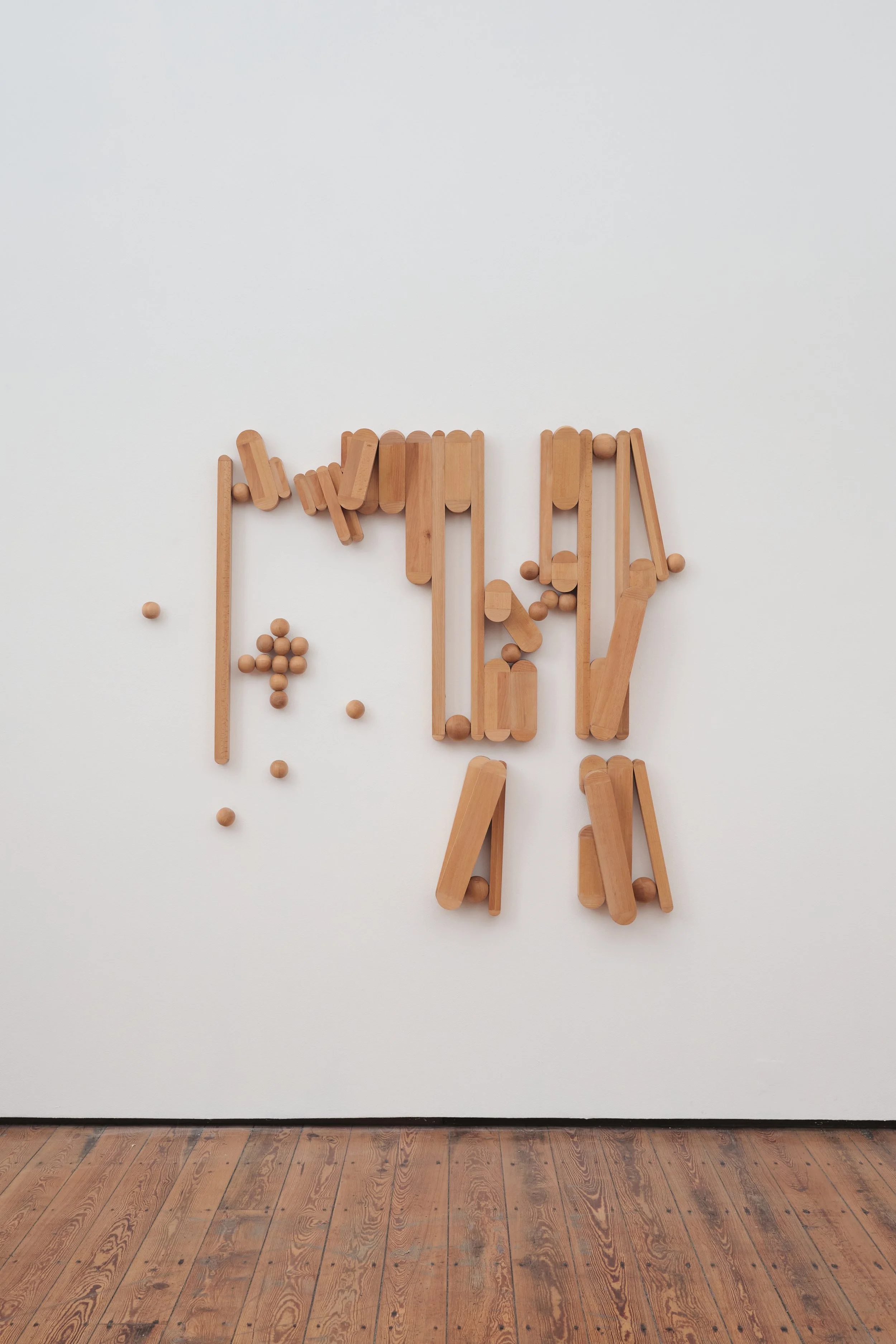
UNATHI MKONTO, Ground level fruit and veg, 2025
Steamed beech wood wall sculpture
Work: 180 x 160 x 12 cm (70.9 x 63 x 4.7 in.)
Maybe it comes down to trust: when one artist vouches for another, people take it seriously. “People might trust such a collaboration more and give it a closer look,” Robas says. The choice was made without the market in mind, and still, the market followed. Alice Amati, at Frieze London for the first time, sold out its booth on the VIP day. Goodman sold out Mkonto’s presentation before he won the Nicoletta Fiorucci Foundation Prize. It comes with £10,000, shared with the Yinka Shonibare Foundation, and a commission for 2027.
Asked whom they would nominate, Mkonto named the South African artist Simnikiwe Buhlungu, and Robas the Romanian painter Nicolae Romanițan. If the section keeps passing the choice on like that, it answers part of the question in Mkonto’s title: not only who gets to go, but who gets to decide.