
BRACE YOURSELVES: SKINNY PANTS ARE OFFICIALLY BACK!
editor MAREK BARTEK
After the mass-societal break-up with skinny pants around 2020, it felt almost therapeutic to move on. The COVID-era TikTok awakening made us switch to wide legs and silhouettes that prioritised comfort and freedom of exhaling over sex appeal. And yet, if we’re being honest, we never truly let skinny pants go. The likes of Prada, Celine and Dior just kept on refining the silhouette season after season — maybe not the ultra-tight versions, but sharper, cleaner iterations that managed to get rid of the fashion-desperate connotations.
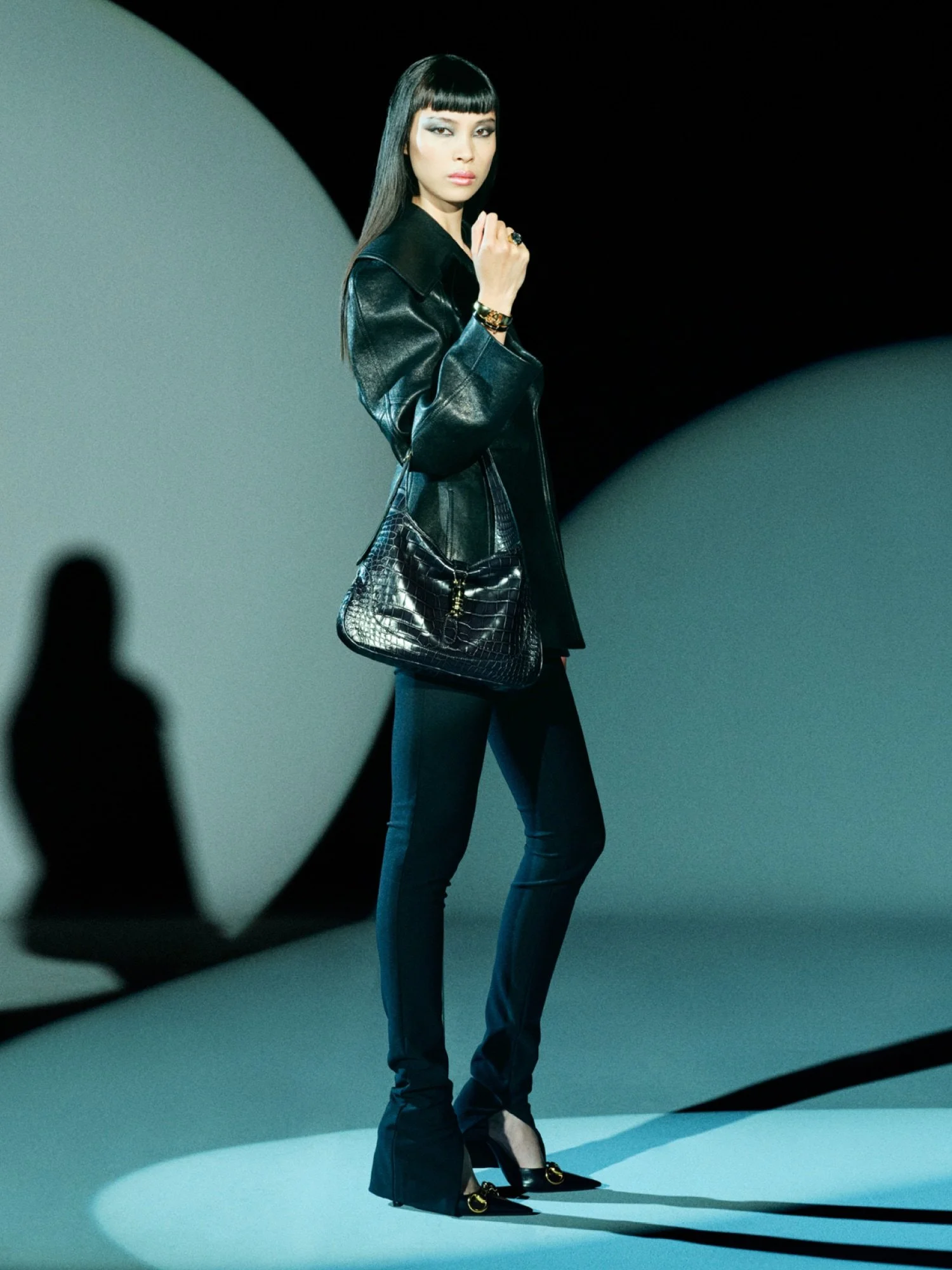
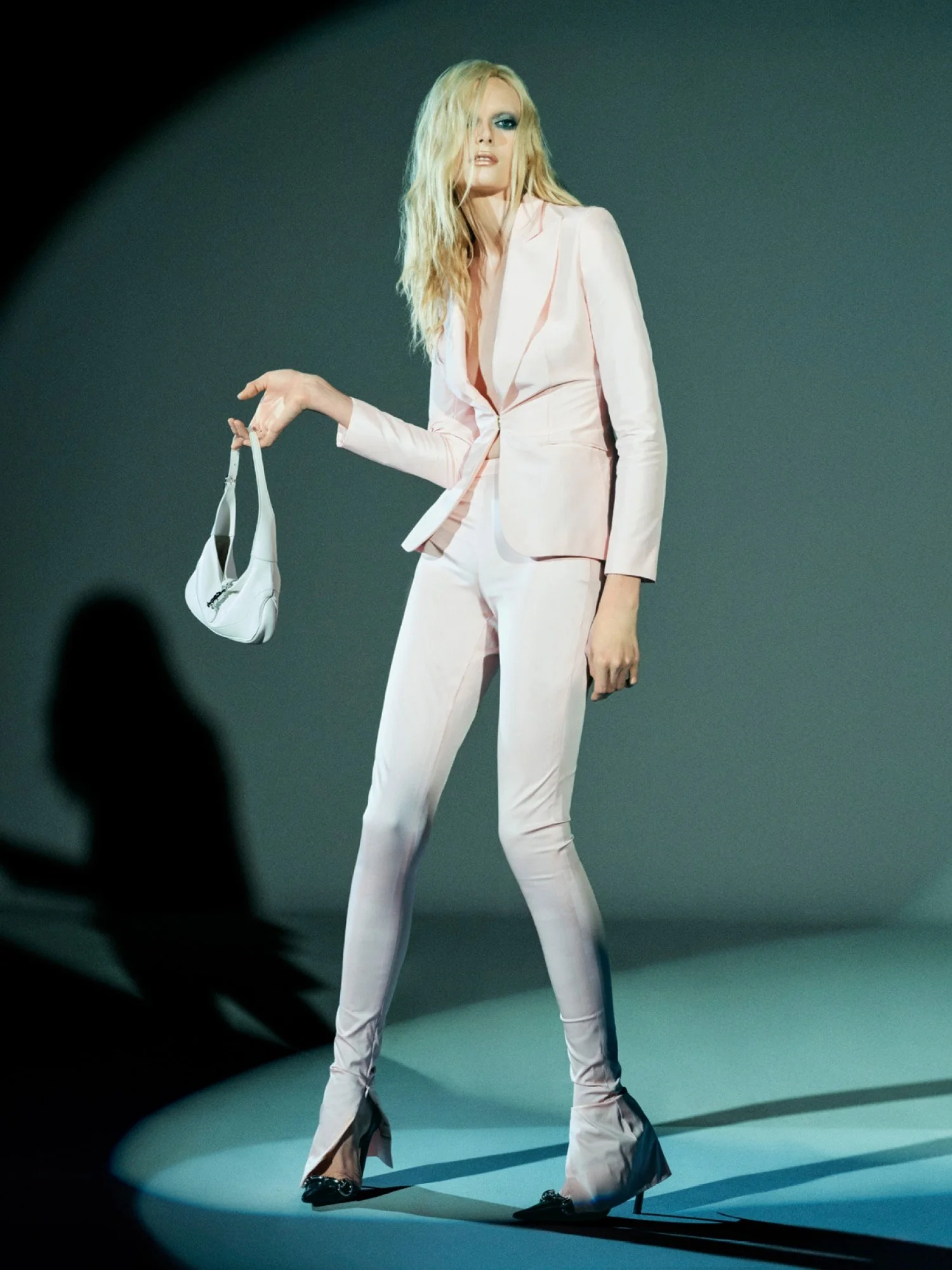

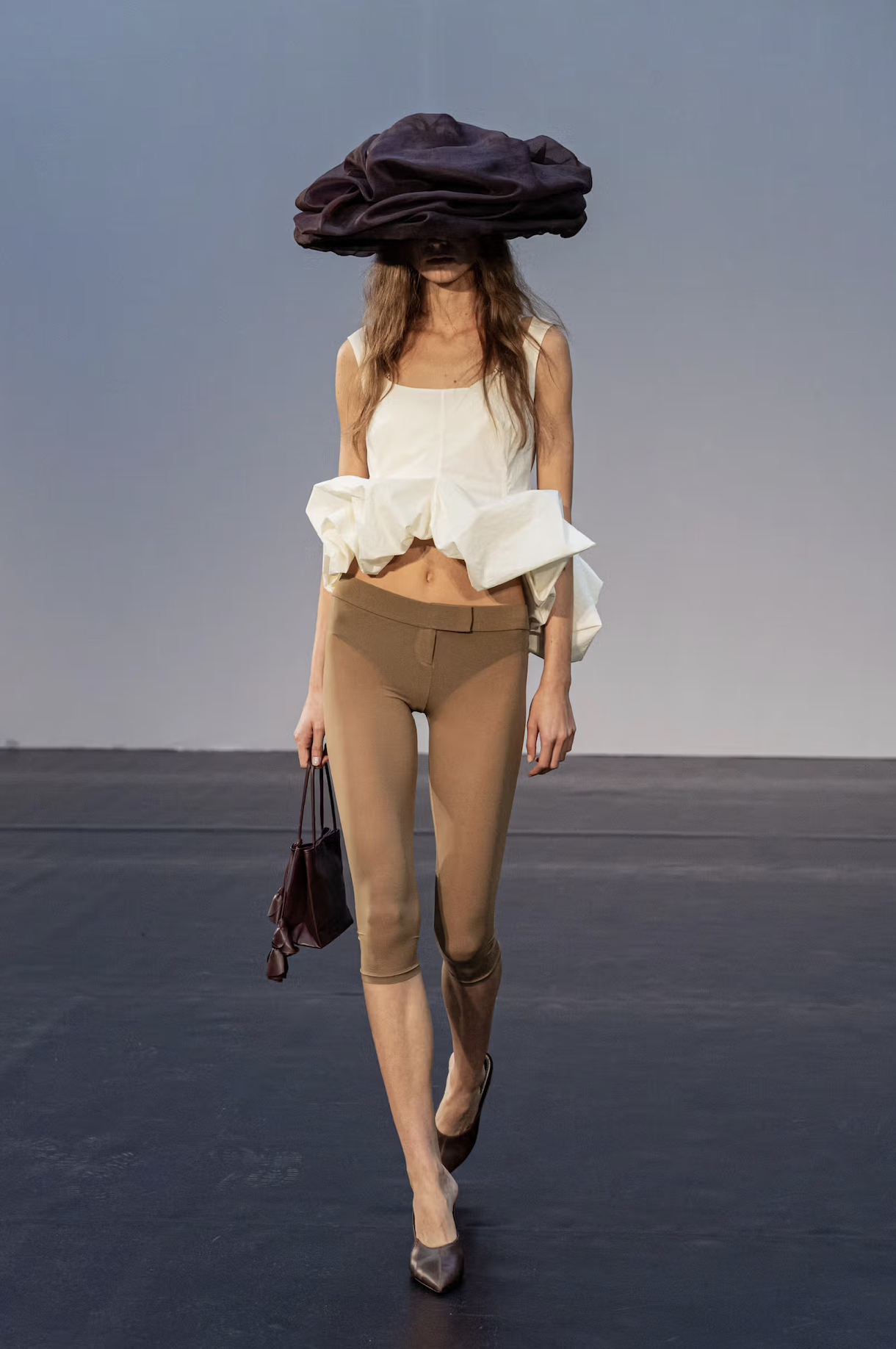
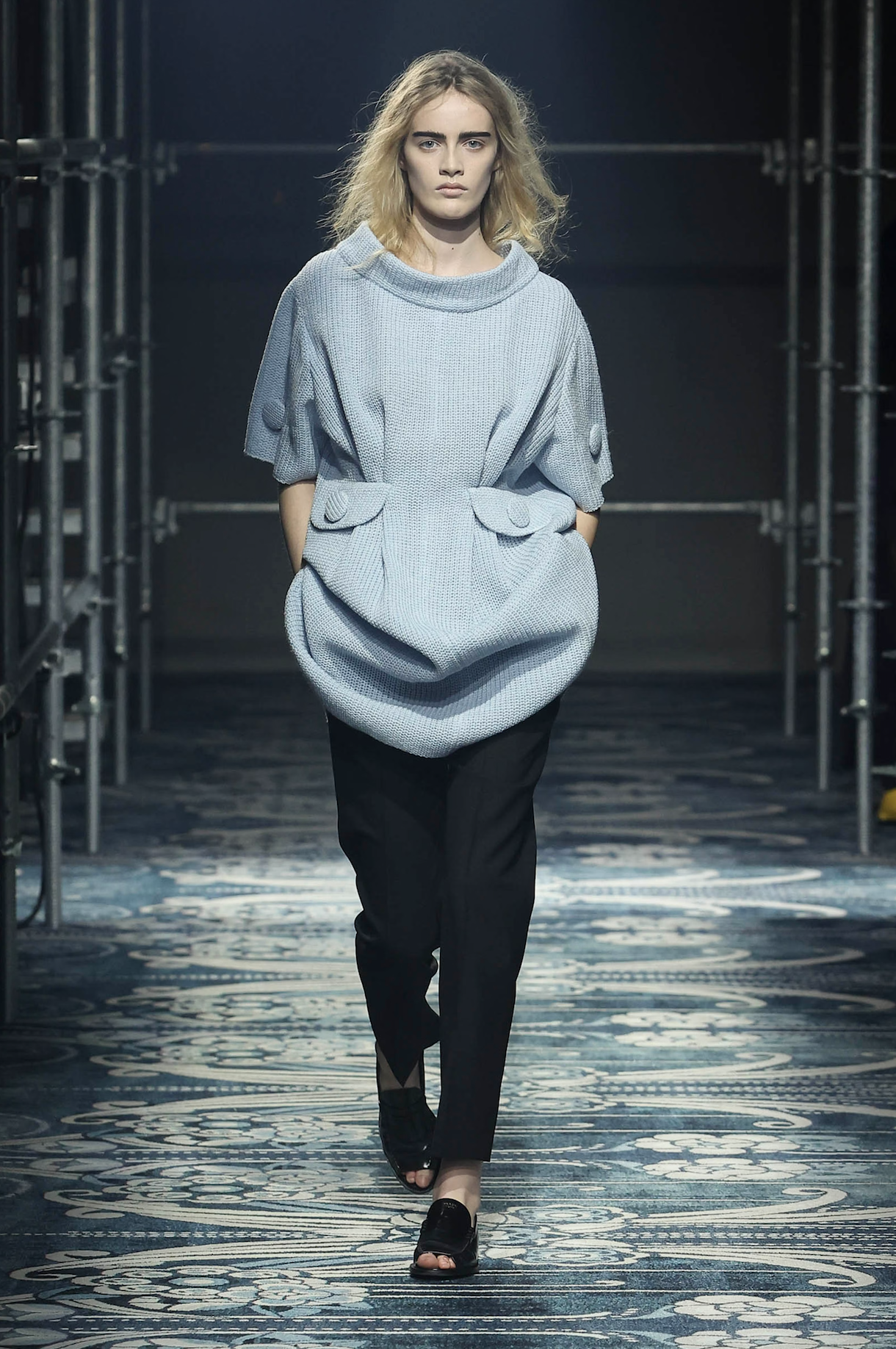
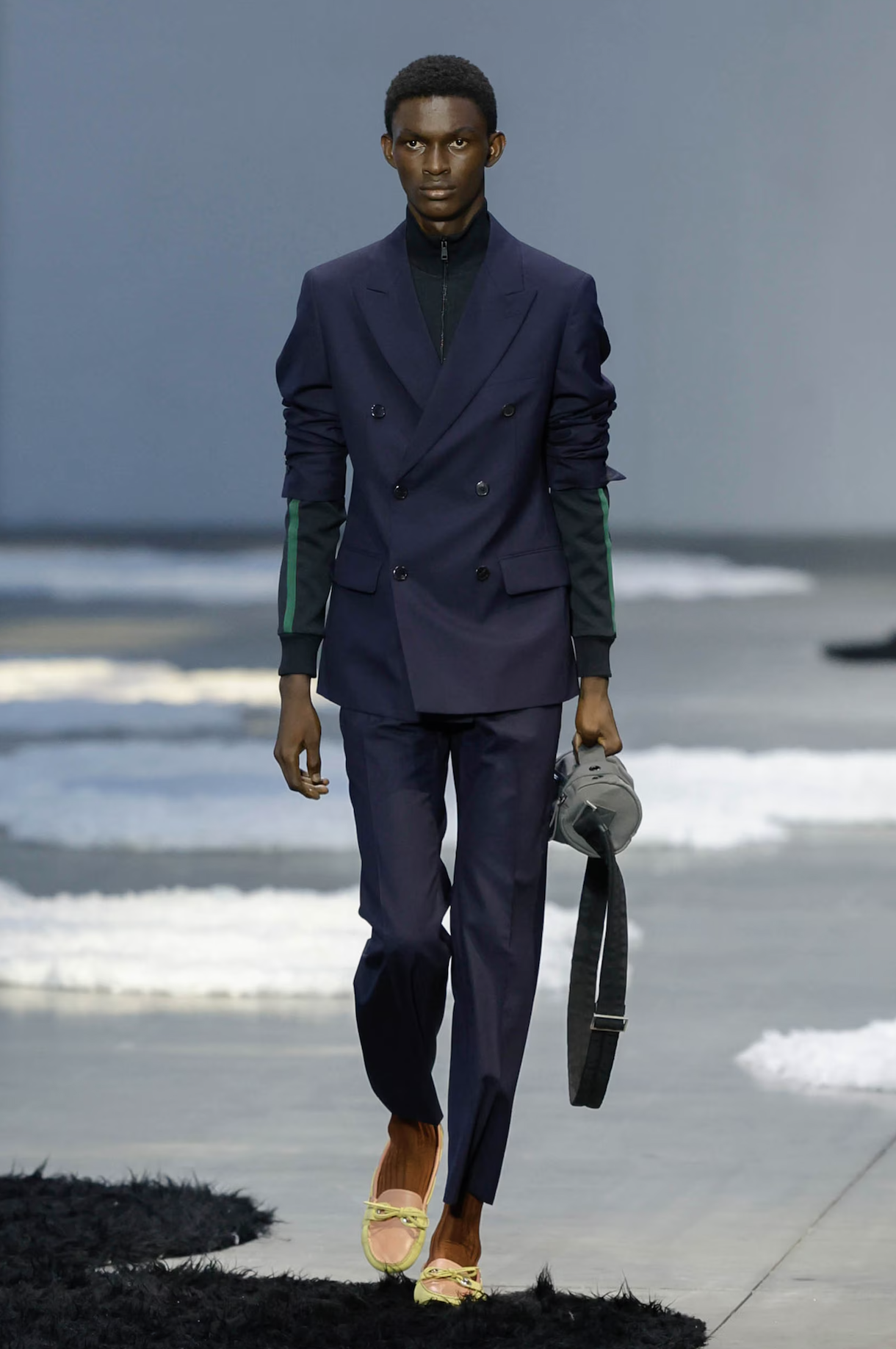
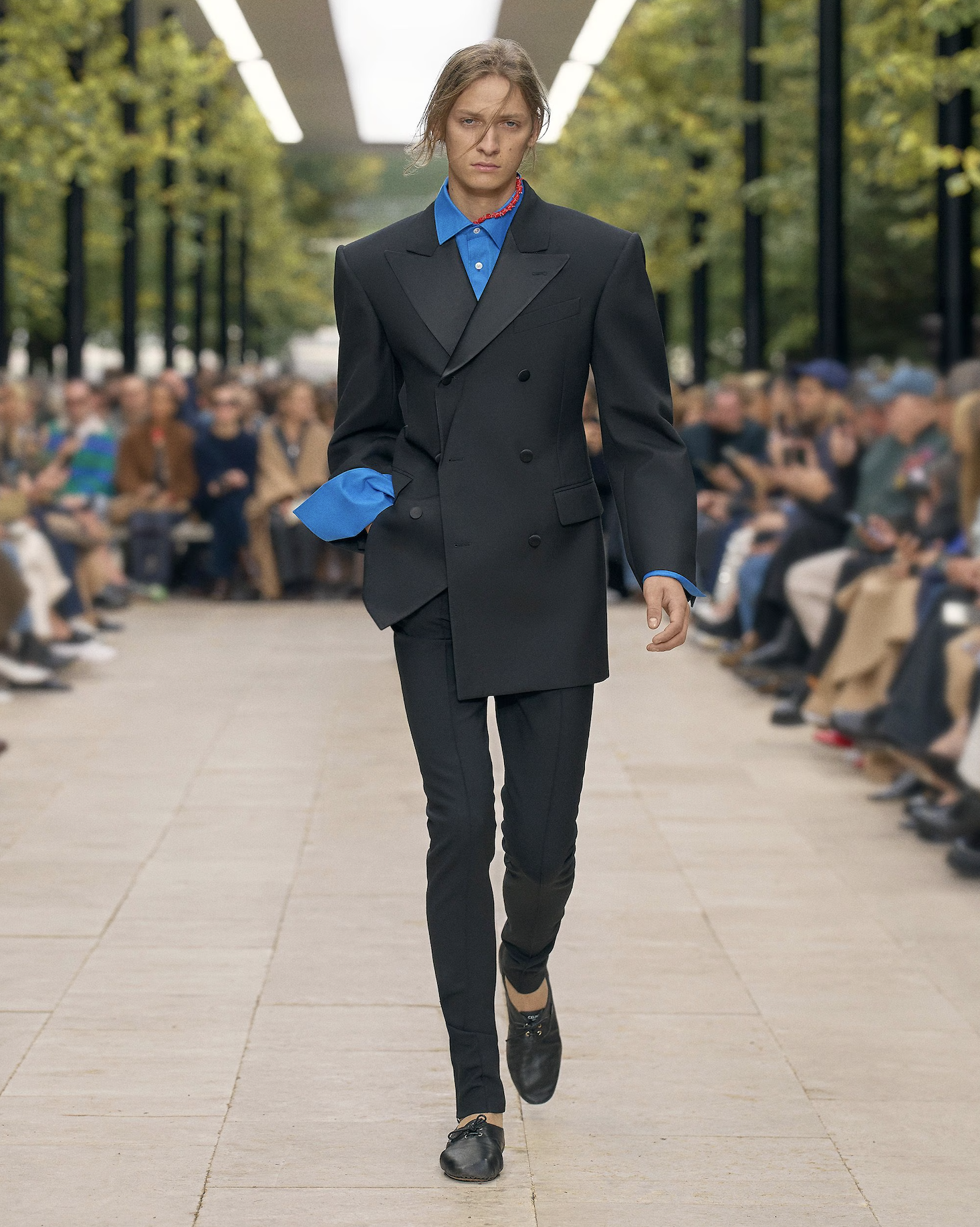
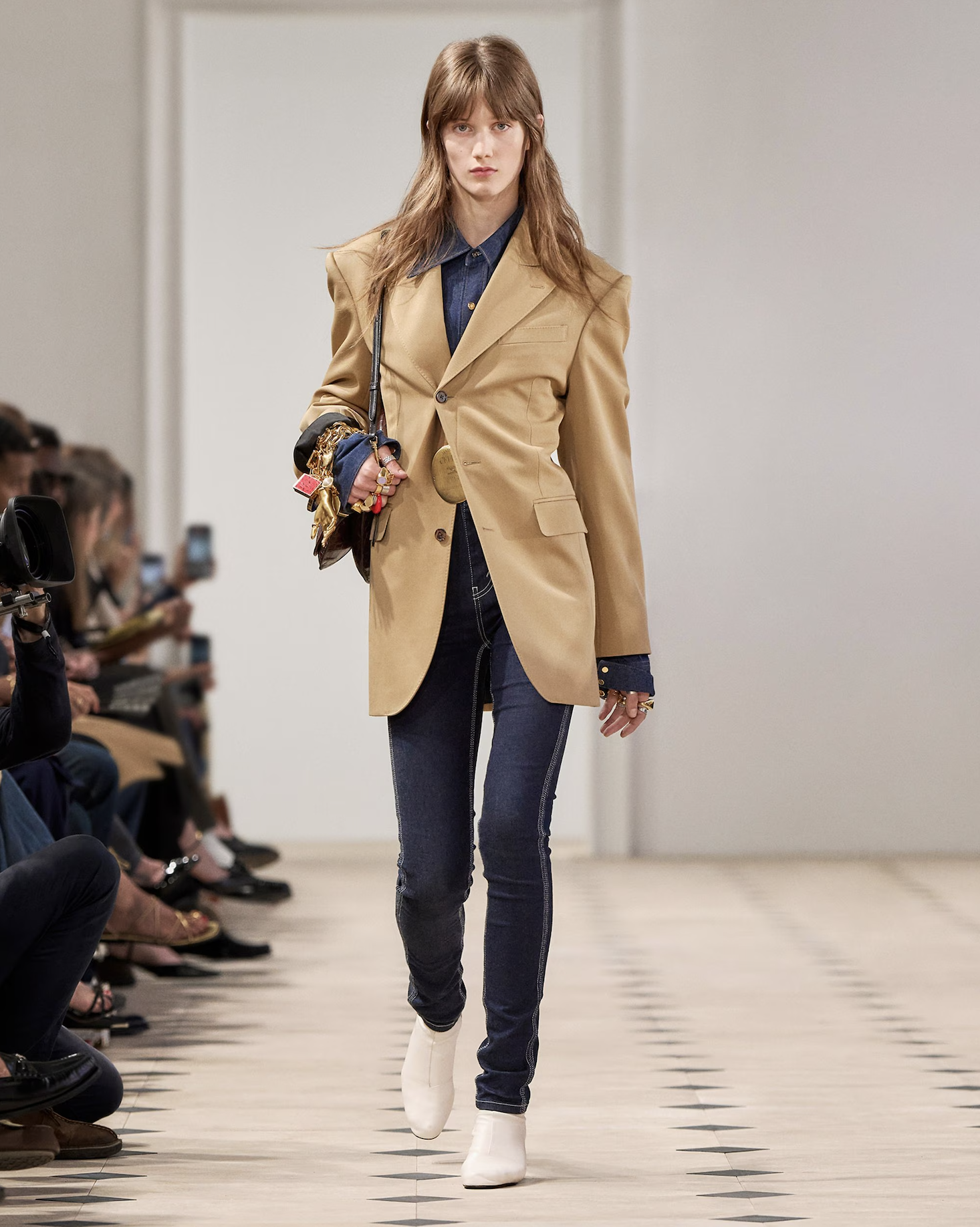
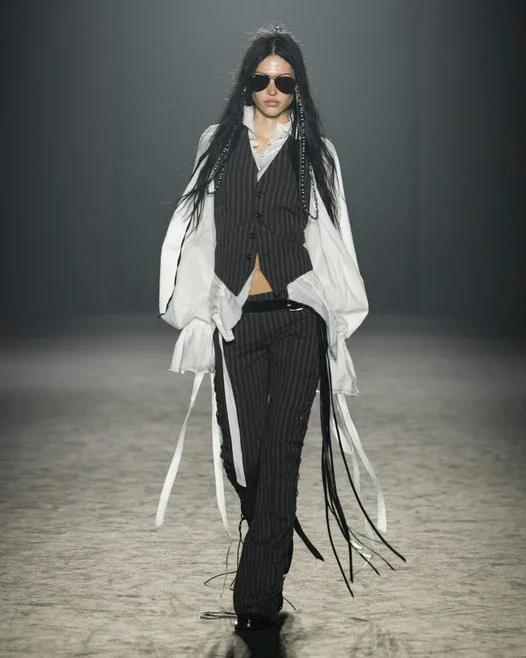
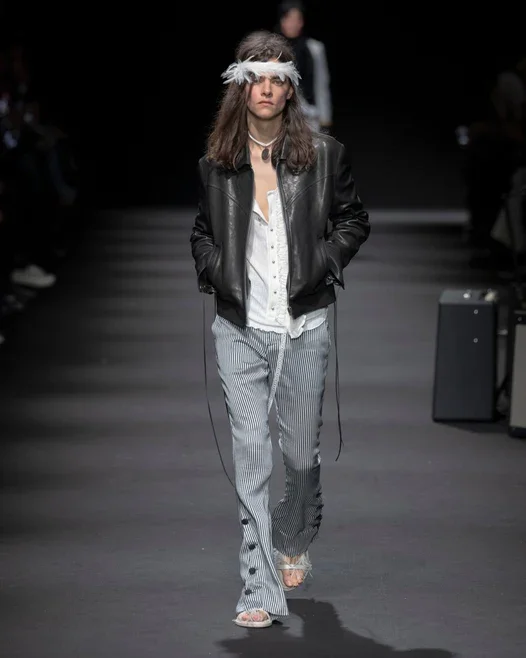
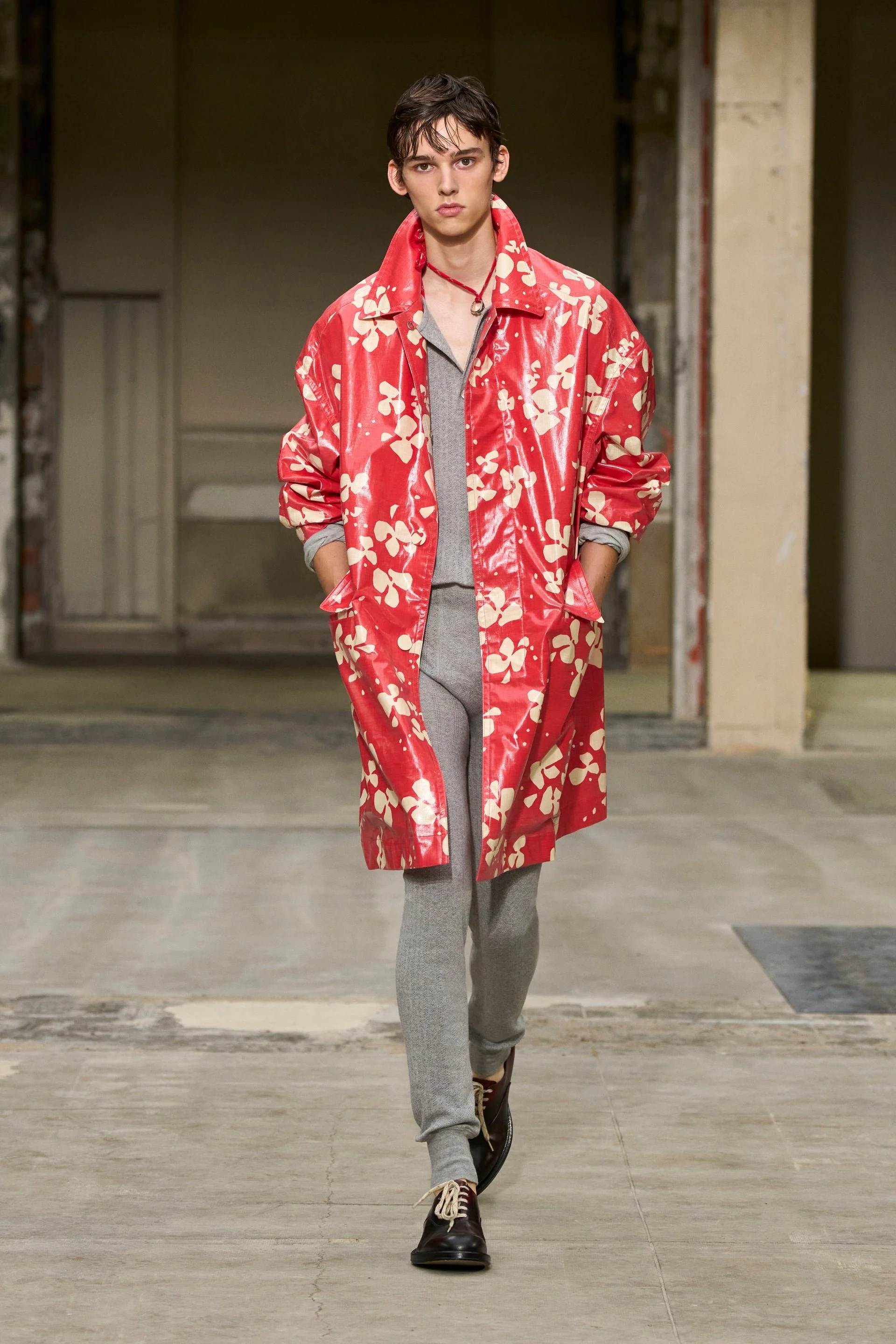
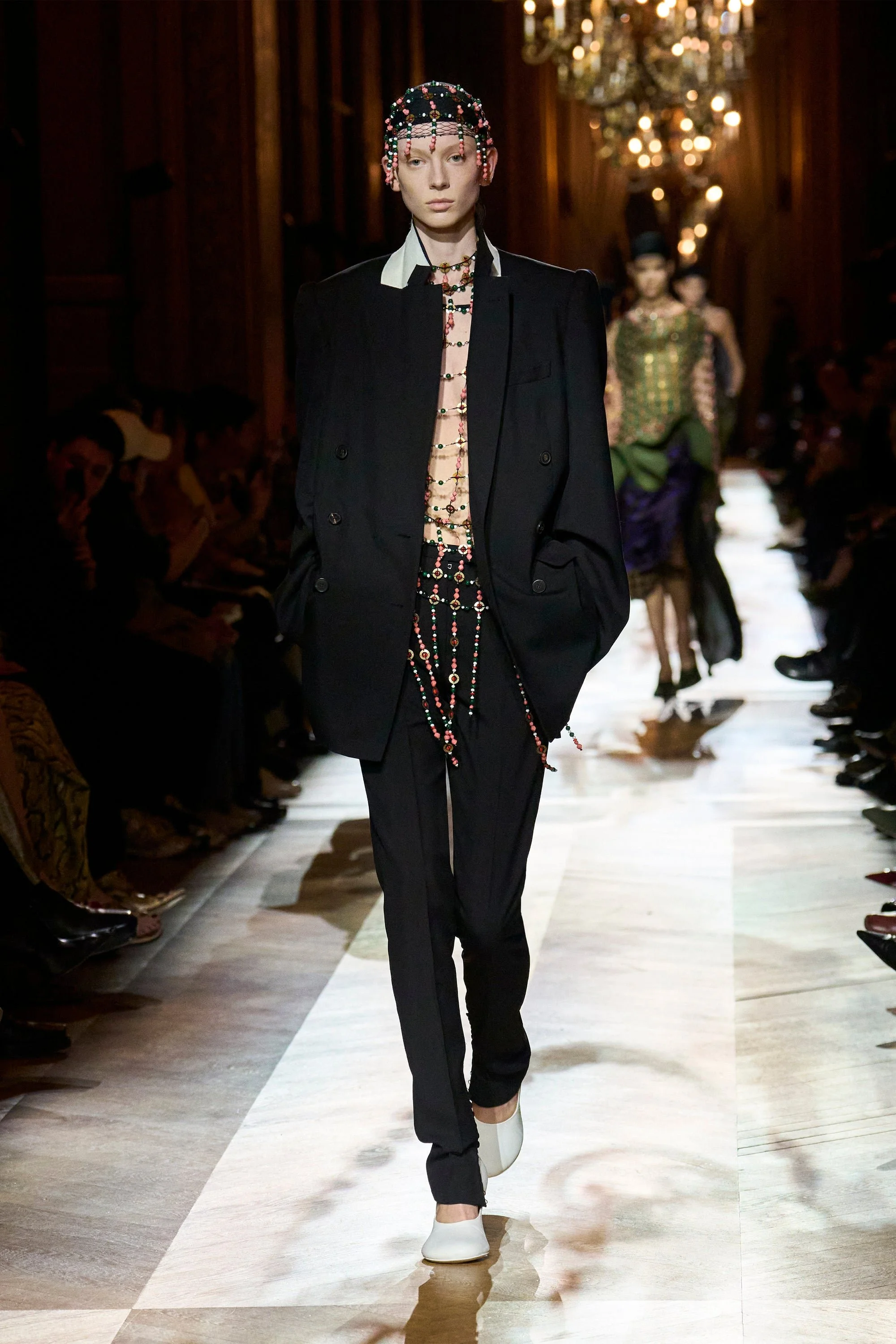
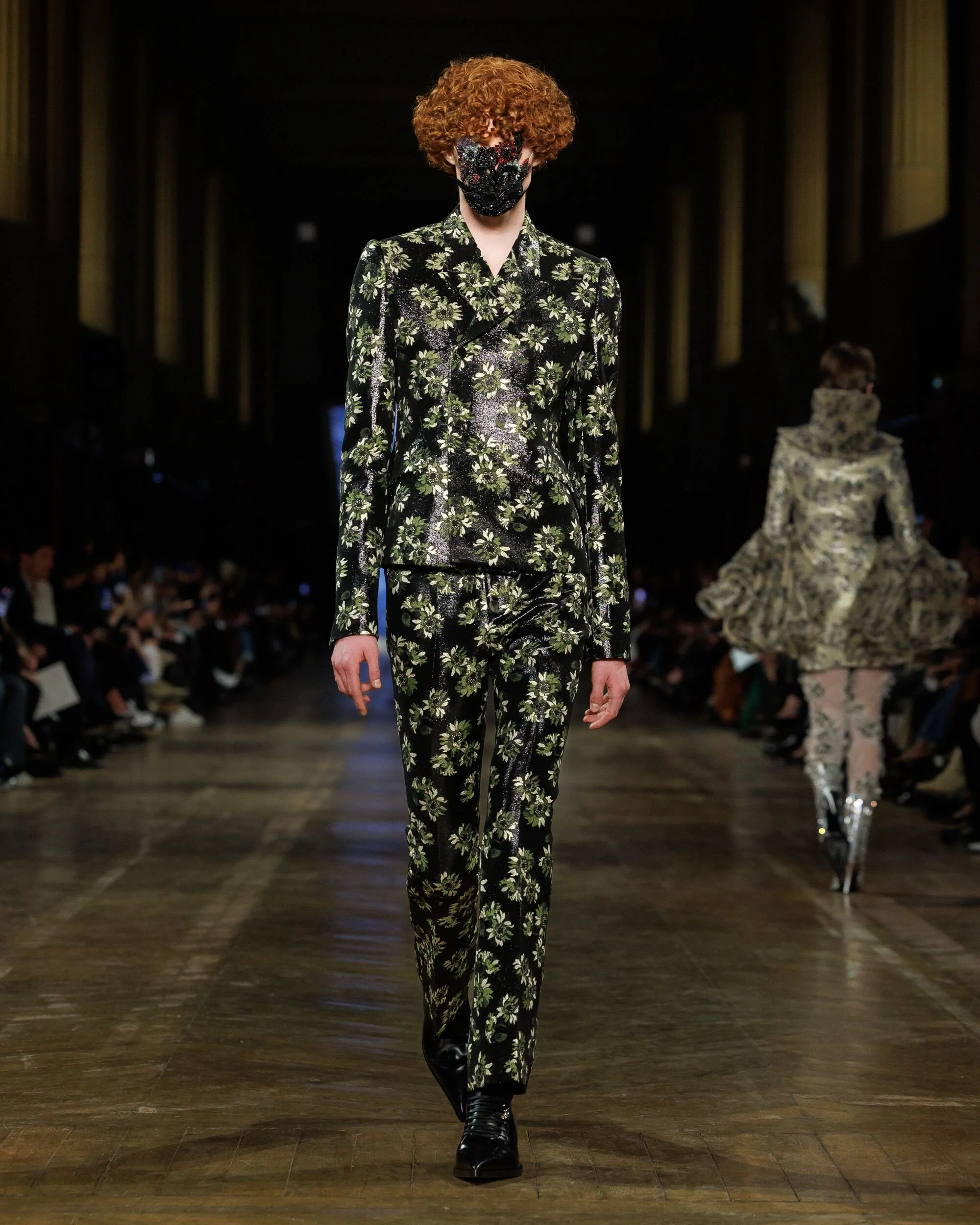
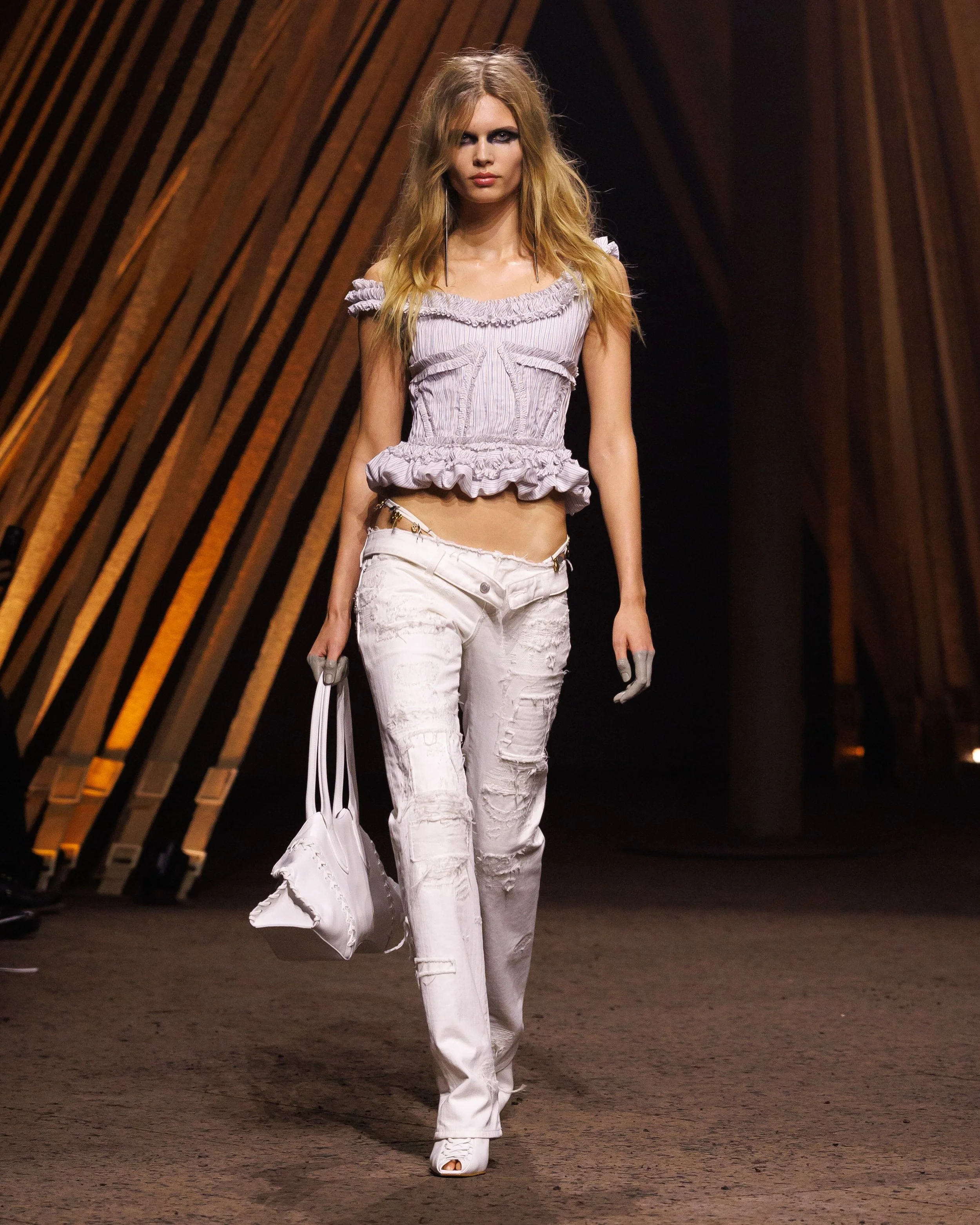
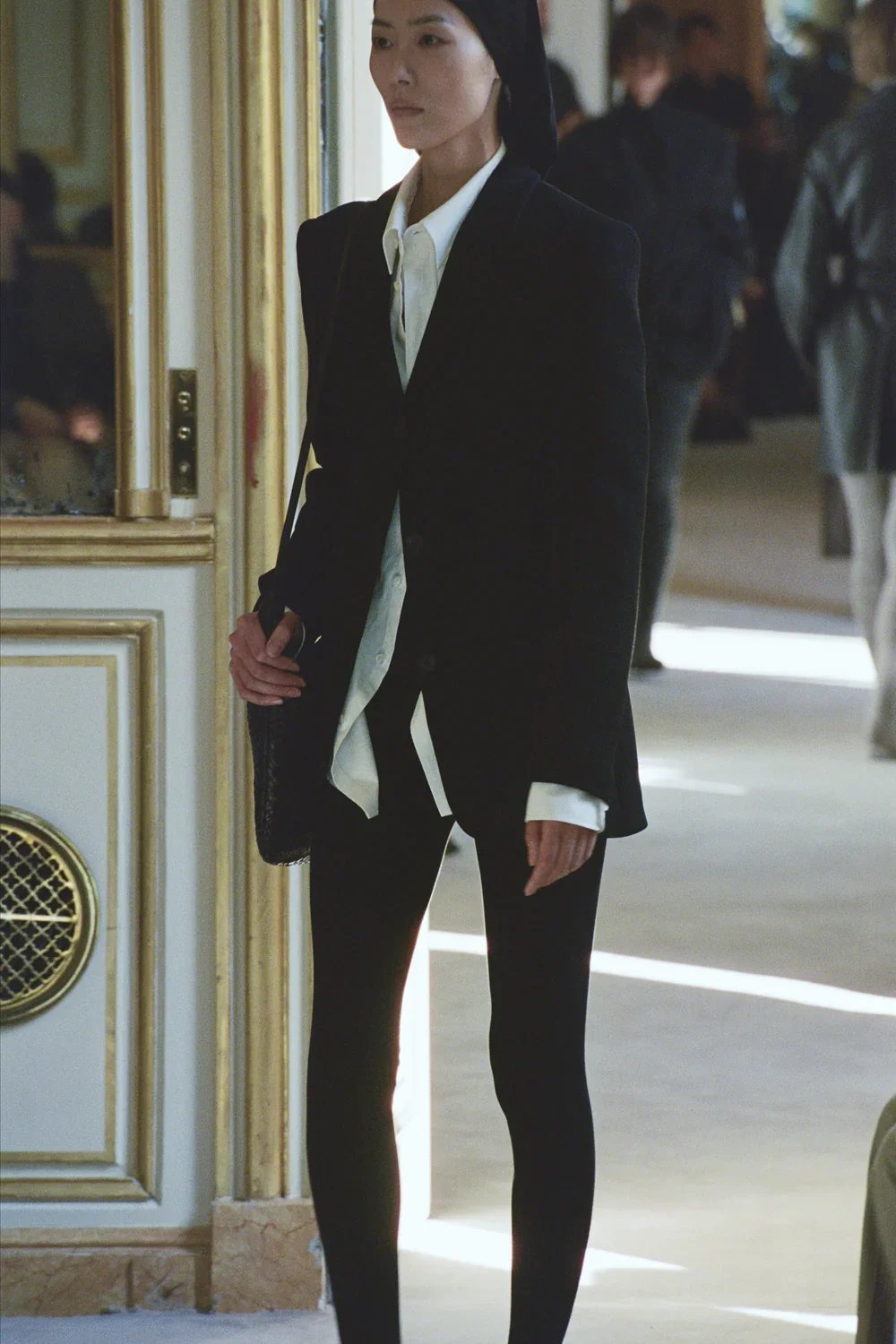
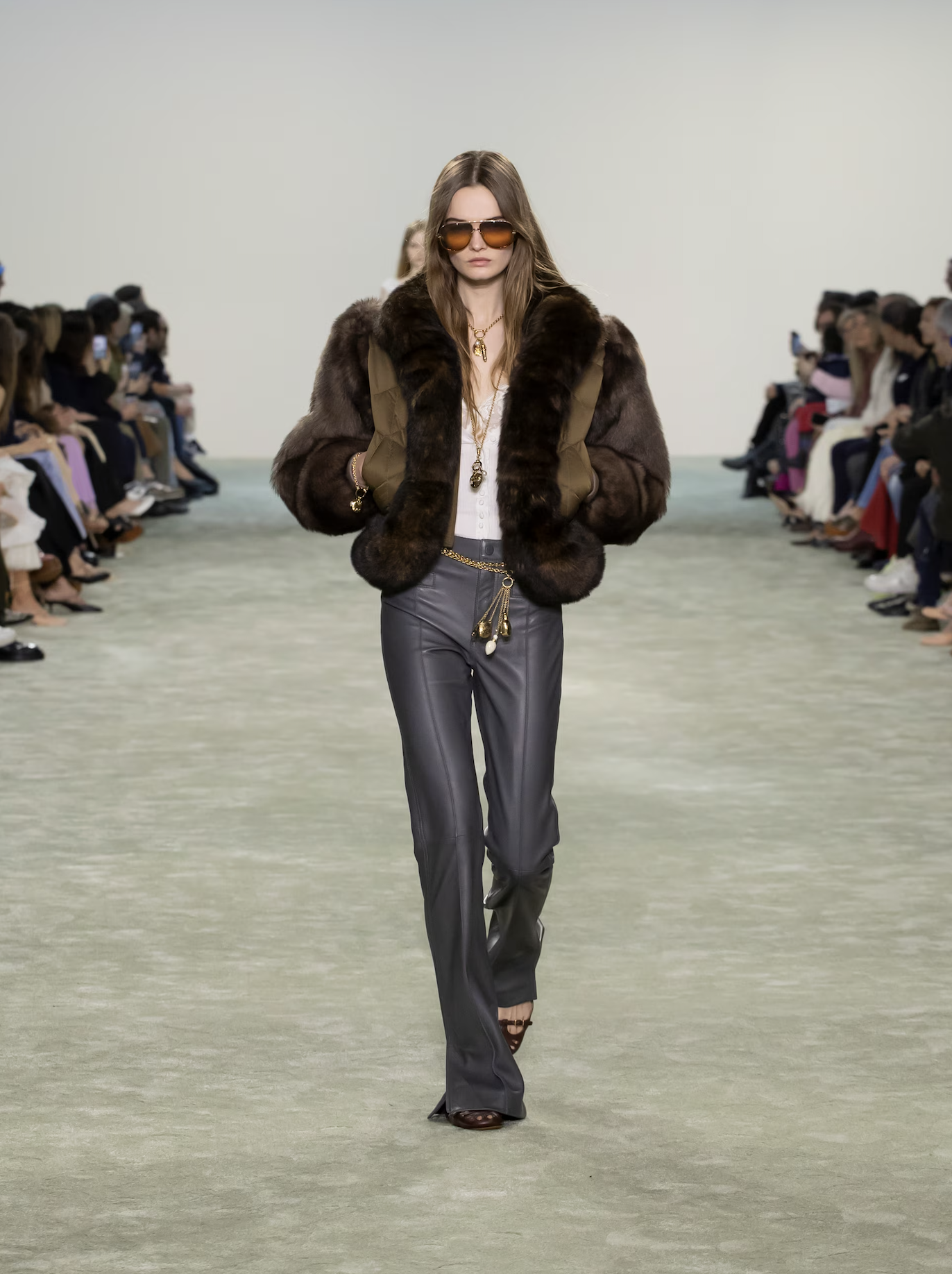
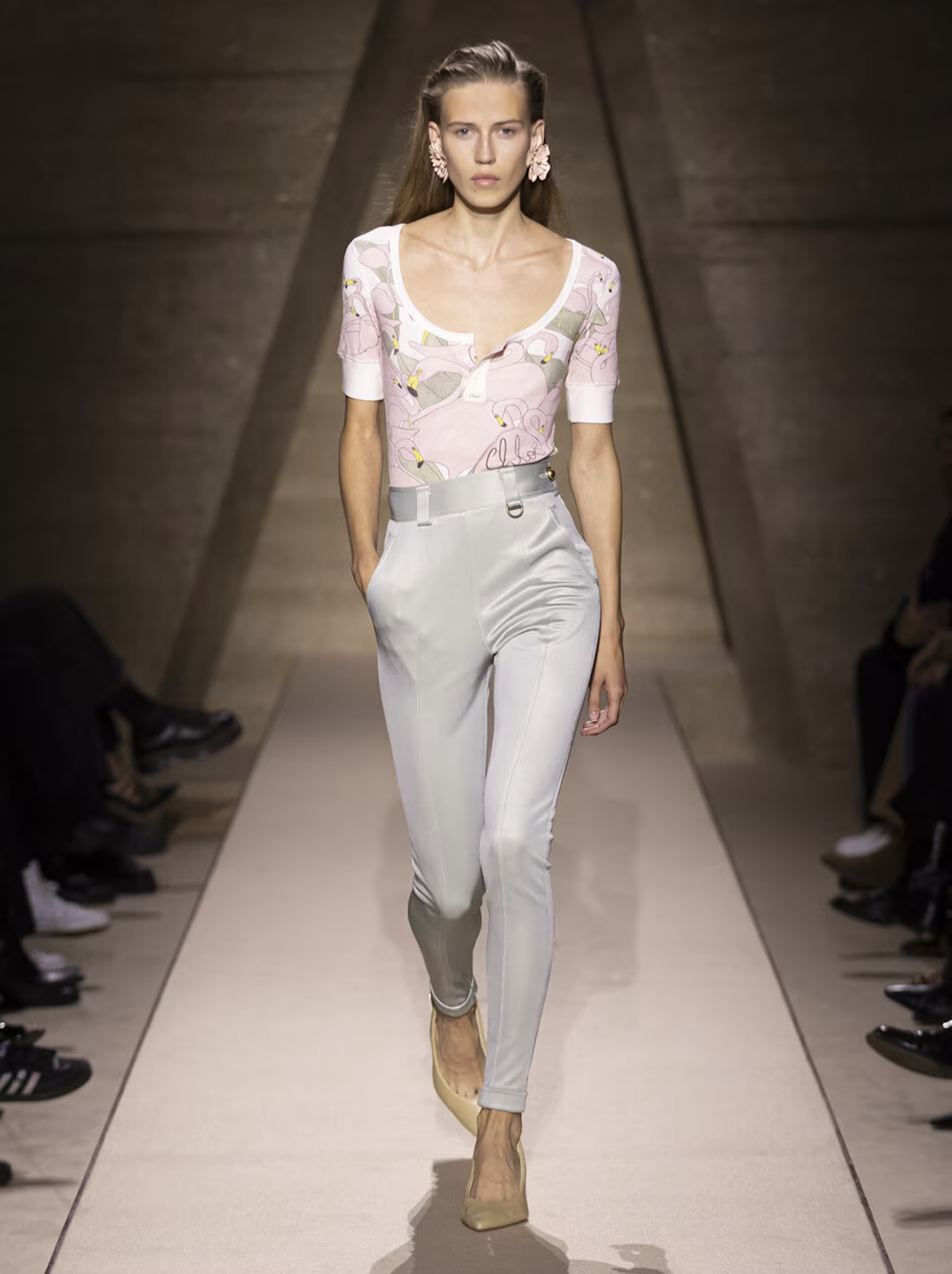
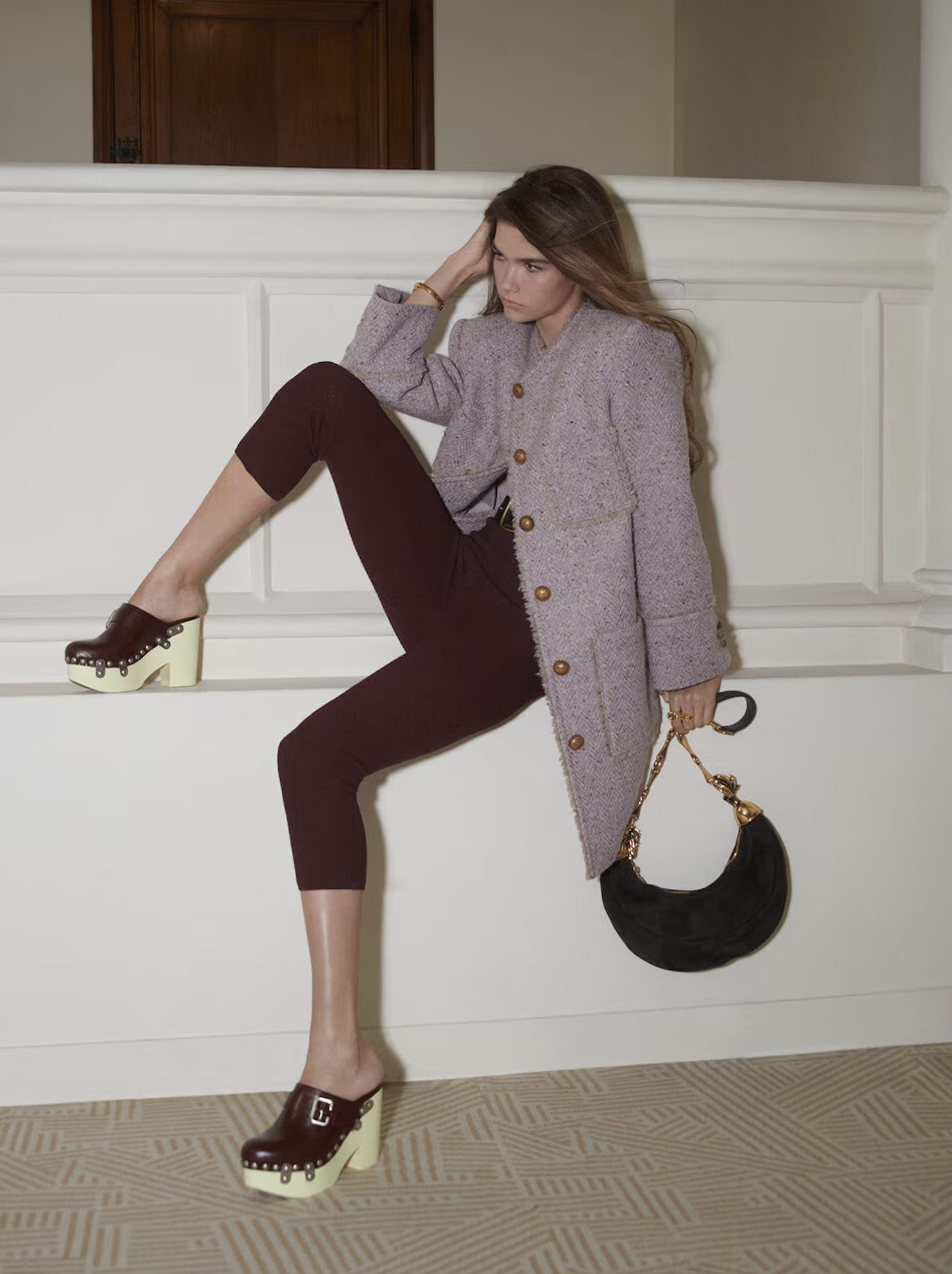
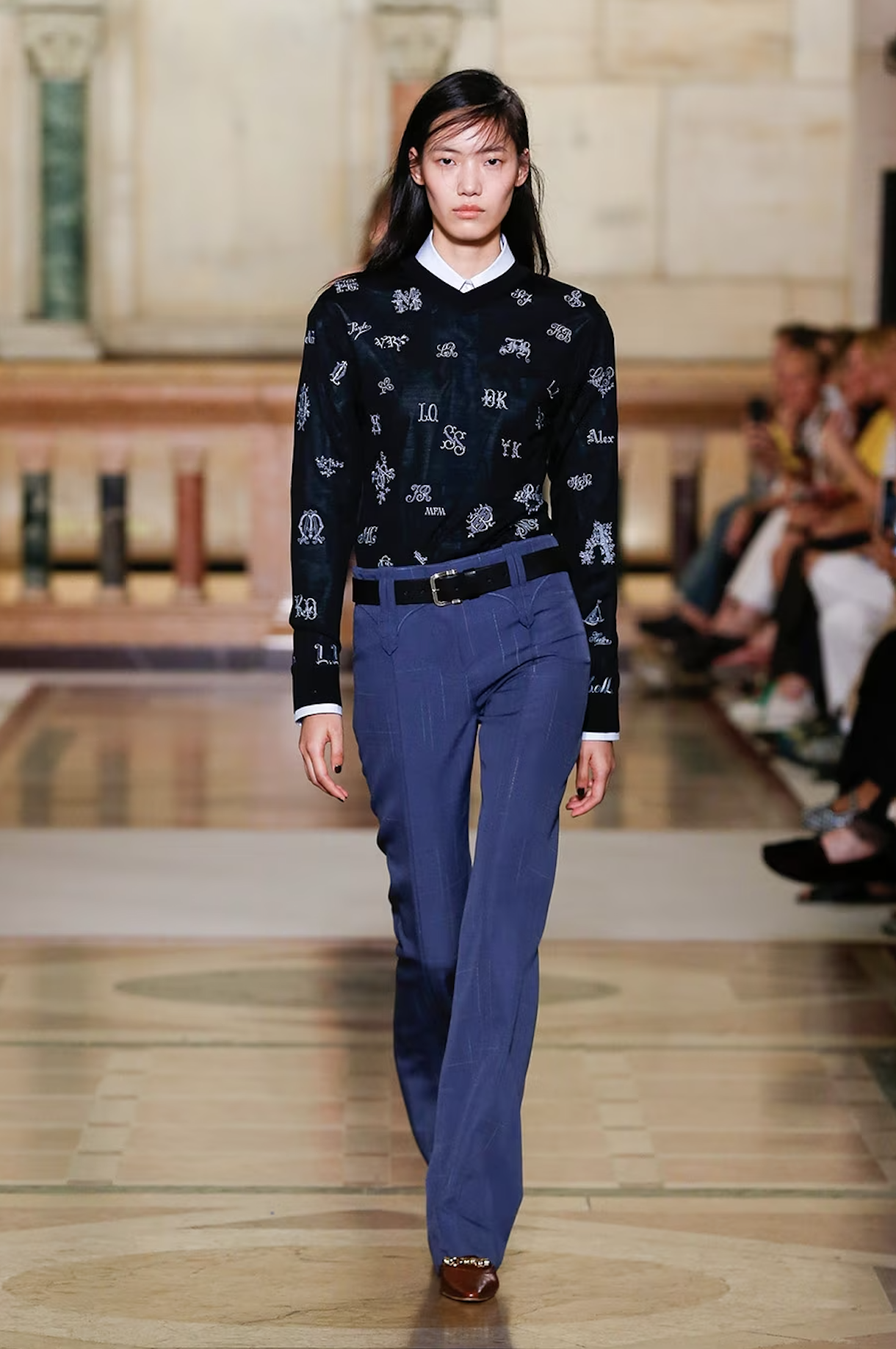
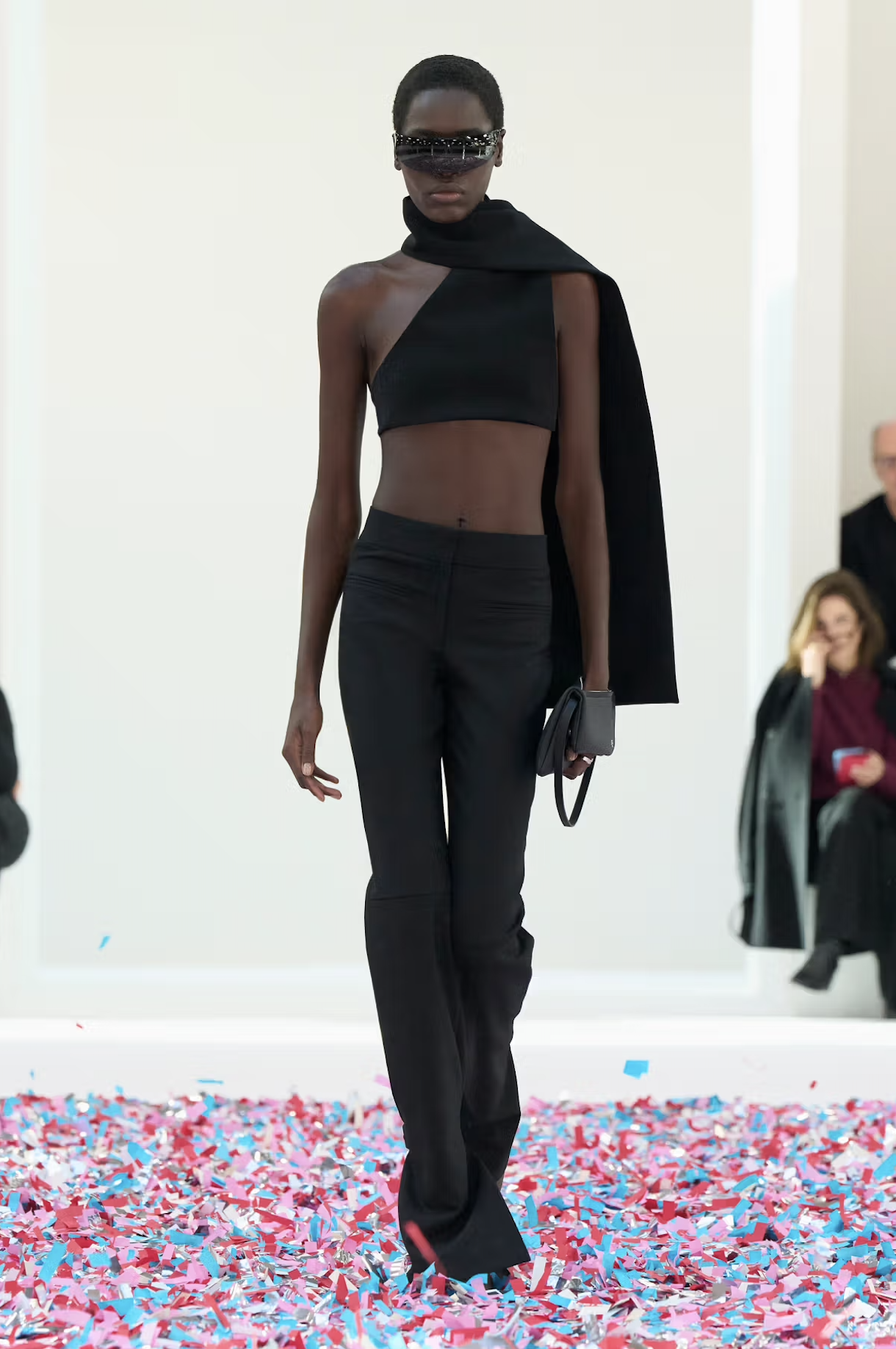
images courtesy of GUCCI, MAGDA BUTRYM, PRADA, CELINE, ANN DEMEULEMEESTER, DRIES VAN NOTEN, MCQUEEN, THE ROW, CHLOÉ, TORY BURCH and COURRÈGES
What we’re seeing now isn’t a nostalgic relapse, but a correction. After years of oversized everything — the exaggerated, the slouchy, the intentionally undone — fashion seems ready to tighten its grip again. There’s also something undeniably post-ironic about their comeback. After being ridiculed for years, choosing skinny pants now feels almost rebellious. A refusal to follow the crowd and a reminder that personal style matters more than collective consensus.
And maybe the timing isn’t all that accidental. Looking at trend tendencies, slim silhouettes have a habit of resurfacing during moments of economic or social tension. They’re efficient, restrained, and visually controlled — less fabric, less excess, less “noise”. Where oversized dressing suggests ease and expansion, skinny pants communicate the opposite: discipline, intention and being put together.
There’s also an unspoken shift happening at body level. Ozempic and similar medications have been reshaping Hollywood, fashion, silhouettes — and with that shift comes a departure from the body inclusivity rhetoric that dominated the last decade. As thinness becomes medically attainable, the industry grows increasingly comfortable narrowing its visual range again. When “everyone can be skinny,” inclusivity loses its urgency, and what once required accommodation now assumes compliance. Inclusivity hasn’t been rejected; it’s simply been deprioritised.
But beyond trend cycles and TikTok debates, their return simply proves one thing: fashion never really says goodbye. It just waits until we’re ready to look again.