
BURBERRY AND 170 YEARS OF HERITAGE, RELEVANCE AND TRENCH
editor MAREK BARTEK
It was September 2012, and Christopher Bailey had just shown his Spring 2013 collection for Burberry. Colourful, metallic, with skinny wedges, and — of course — a great variety of trench coats. Cara Delevingne was in every show and campaign and Tom Odell’s Another Love was on the top of every chart. That was the first time I came across Burberry, and watched their runway show on YouTube. And since then, my admiration for the house only grew. Slowly, I would start trying to imitate the aesthetics of Burberry — I swapped my jeans for a pair of trousers, started wearing moccasins or leather boots, and eventually got a beige trench coat.
Burberry, to me, is a cultural movement rather than just a fashion brand. It sits somewhere between uniform and identity, between practicality and aspiration. And perhaps that’s exactly why, 170 years in, it still resonates.
Founded in 1856 by Thomas Burberry, the house began with a simple but radical idea that clothing should work with the wearer, not against them. The invention of gabardine in 1879 — a tightly woven, weather-resistant yet breathable fabric — changed outerwear forever. It offered protection without weight. It was innovative because it was created as a direct reflection of the way people actually lived. Explorers, officers, and civilians, all needed something reliable. Burberry delivered that, and in doing so, built a foundation that still defines the brand today.
The trench coat, introduced in the early 20th century, remains the clearest expression of that thinking. Designed for the realities of war, it was functional first — epaulettes, storm flaps, a belt that could be adjusted depending on movement. But over time, it grew into something much bigger, becoming a cultural phenomena and an indicator of a certain level of class. It adapted, softened, and became something else entirely, serving more as a projection than just a protection.
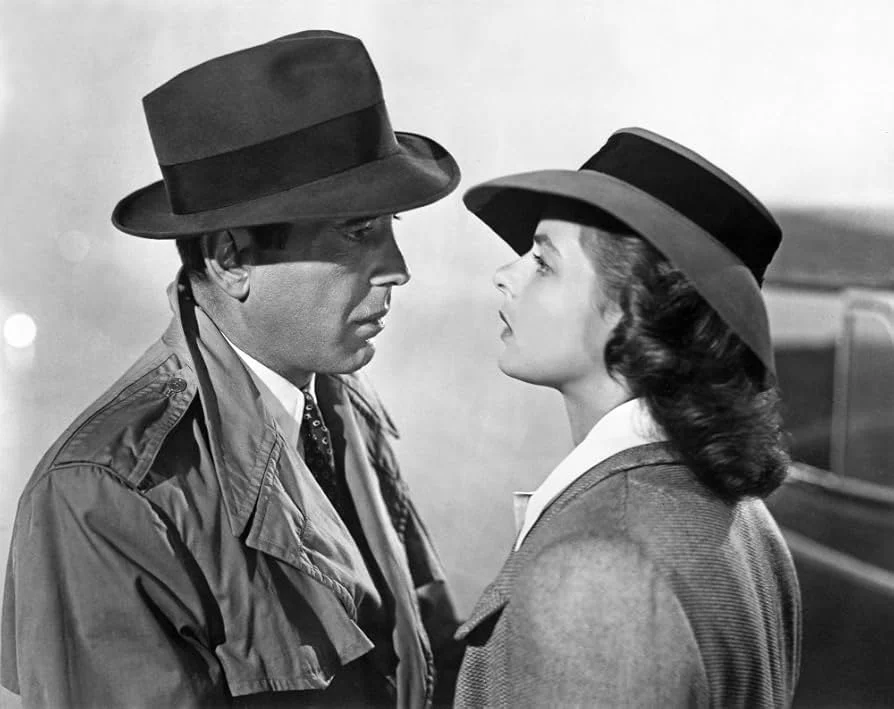
Ingrid Bergman and Humphrey Bogart in Casablanca (1942), via imdb.com
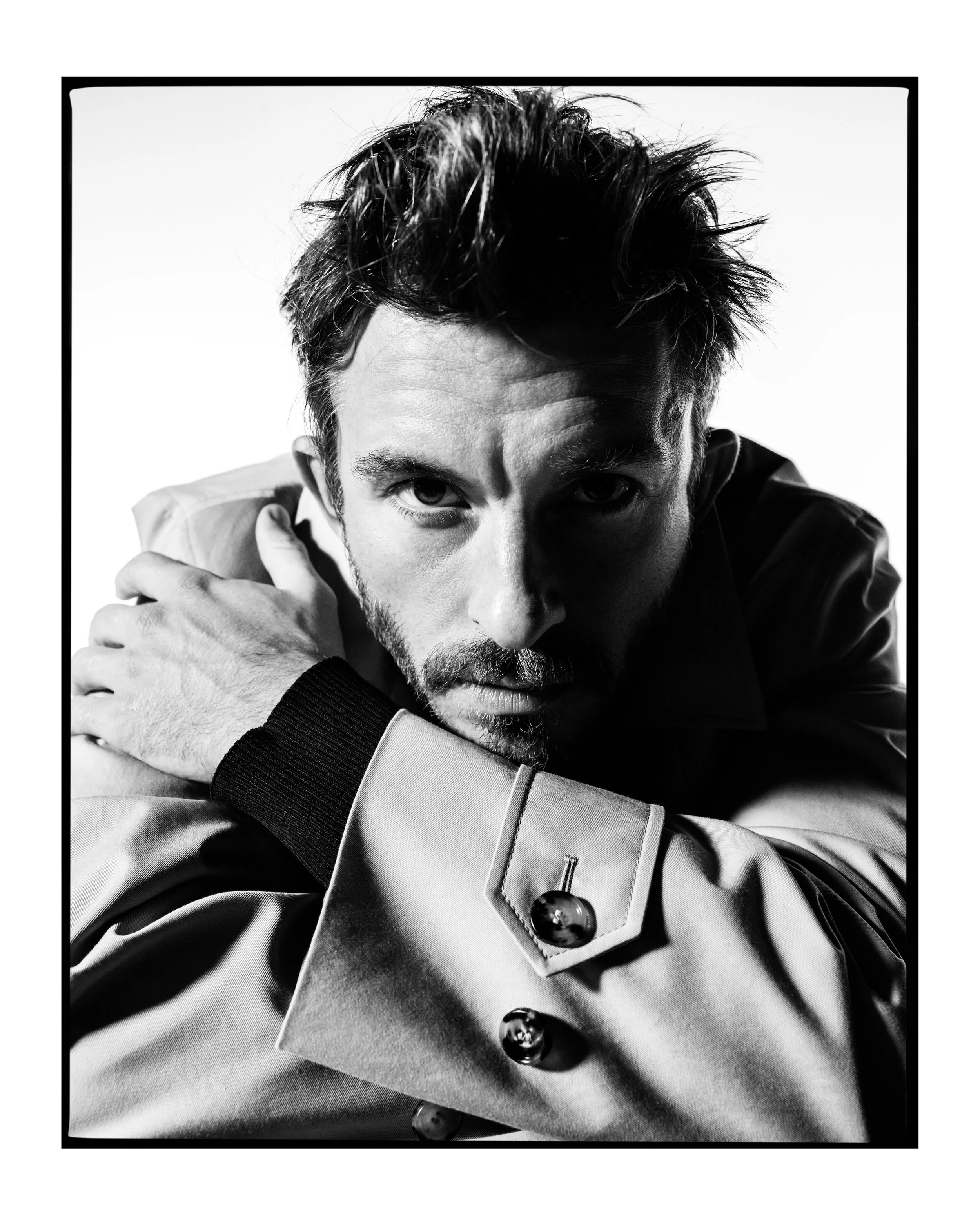
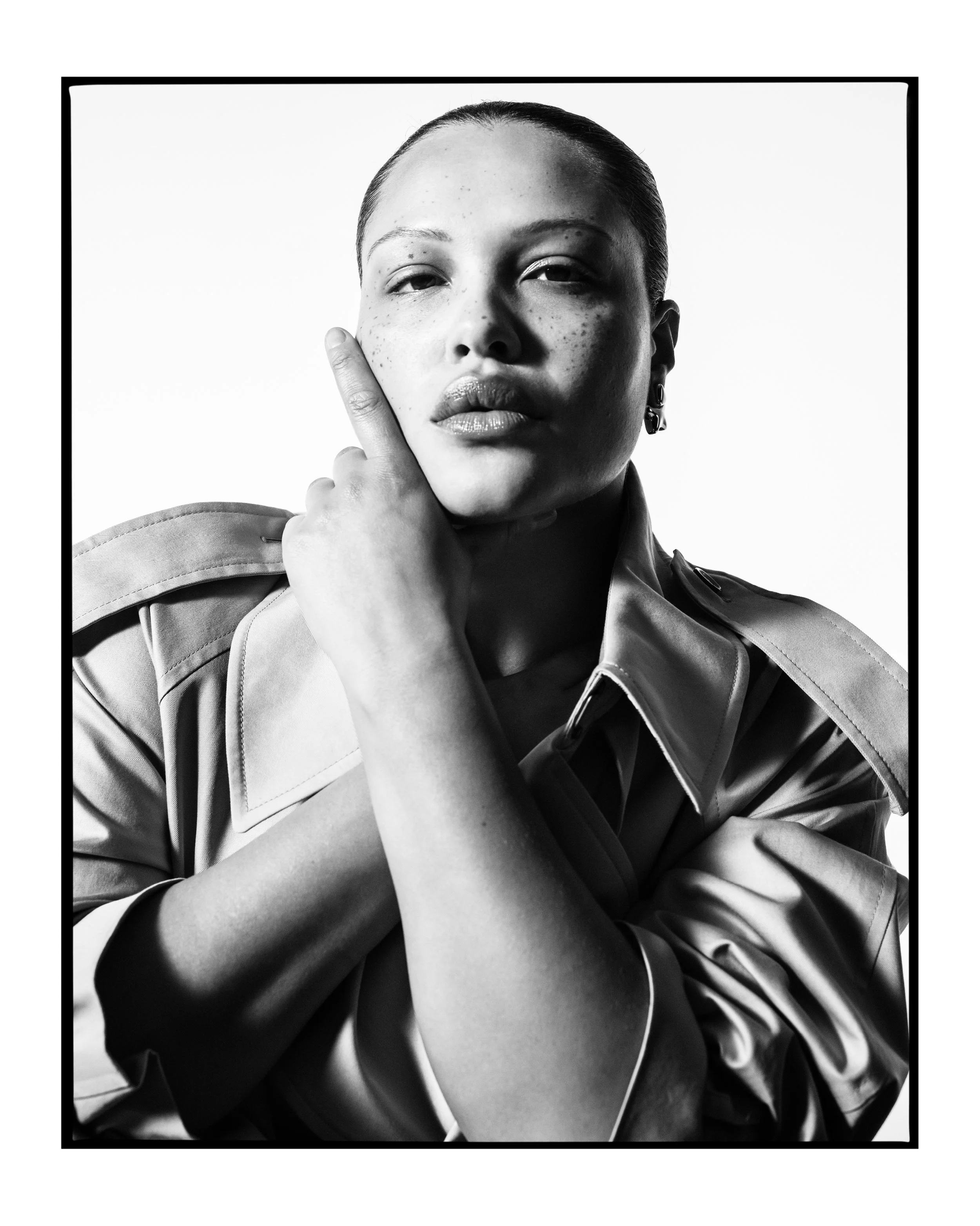
The newly launched campaign, The Trench: Portraits of an Icon, leans into exactly that duality, where trench is appreciated as both an object and symbol. Photographed by Tim Walker, the black-and-white portraits strip everything back. Worn with a collar turned up, a belt left loose, or even off-shoulder, the images capture that the same coat instinctively moulds based on the wearer. From Kate Moss to Little Simz, from actors to athletes, the campaign builds a cross-generational snapshot of culture, and a documentary film, set to music by Blur, extends that idea further, framing the trench within a version of modern Britain that feels open, creative, and chicly unpolished.

images courtesy of BURBERRY
It’s a smart move. Burberry’s strength, after all, has never been reinvention through rupture but a well-calculated, continuous evolution. It’s not always easy to balance the delicate scales of heritage and newness. The brand has moved through distinct eras: from heritage outfitter to the hyper-digital vision under Bailey, and to a period of recalibration. At times, it leaned too far; at others, not enough, but what kept it intact was the clarity of its core — the trench, the check, the idea of Britishness that feels both specific and exportable.
Since taking over as Chief Creative Officer, Daniel Lee has worked not on rewriting Burberry but sharpening what’s already there, and bringing it out to the light. There’s a noticeable shift towards texture, colour, and proportion — a slightly rawer, more tactile take on the brand’s codes, without straying too far out.



images courtesy of BURBERRY
Under Lee, the trench coat got a new life. It’s not a house relic, and it most certainly shouldn’t be treated like one. Subtle changes in volume, fabrication, silhouette make it feel fresh, yet recognisably Burberry. The Heritage Collection introduced as part of the anniversary reinforces this continuity with classic styles like the Kensington, Waterloo, and Chelsea, and joined by newer interpretations like the cropped Mayfair trench jacket. All produced in England, rooted in the same craftsmanship that built the brand in the first place.
The emphasis on making — on where and how things are produced — feels particularly relevant now. In an industry that often prioritises speed and profit, Burberry’s insistence on its manufacturing in Castleford and fabric development in Yorkshire feels almost rebellious. It reminds us that beneath the campaigns and casting, there’s still a product that has to perform — and yet, performance alone wouldn’t be enough.



images courtesy of BURBERRY
What keeps Burberry culturally present is its ability to attach itself to relevant moments. In 2012, that meant Cara Delevingne walking every show to a soundtrack you couldn’t escape. Today, it’s a more subtle kind of visibility. Rather than staging a grand retrospective, the focus is dispersed among campaign imagery, in-store installations, pop-ups across cities like London, Tokyo, Seoul, and New York, with the trench placed front and centre, but never in isolation — always alongside people and context.
That’s probably why Burberry still works today. Heritage isn’t treated like something fragile, or something that exists in a glass vitrine. It’s just there, built into the clothes, and left for people to use however they want.
Seventeen years later, not much has changed. I’m still smitten with Burberry, and the trench coat is still doing the same job of moulding according to people’s needs. Maybe that’s what heritage looks like now. Not something you protect, but something that eventually becomes your own.