
CARTIER LETS THE STONES SPEAK WITH ITS NEW HIGH JEWELLERY COLLECTION ‘LE CHŒUR DES PIERRES’
words by FRANCESCO PIZZUTI
It doesn’t come as a surprise to anyone that Cartier has always carried a certain mythology within the realm of high jewellery. While Cartier’s jewellery is incredibly precious and rare, with the almost surreal amount of craftsmanship it requires, it is also always about emotion first. Because yes, stones have a presence, a personality, a kind of vibration that can be felt, that asks to become something more than just a perfect object. With Le Chœur des Pierres, Cartier’s new High Jewellery collection, that idea becomes the entire language of the work, a connecting thread that runs across the whole collection. Everything begins with the stone, and everything returns to it.
all images courtesy of CARTIER
In French, chœur means chorus, while cœur, pronounced the same way, means heart. The title is poetic, holding in itself the collection’s tension. Moving between the chorus and heart, Cartier builds a collection about voices and feeling, where gemstones seem to sing individually while still belonging to a larger harmony. It is a beautiful concept because it avoids making the stones passive, elevating them from their mere decorative function; instead, they become the protagonists, the reason the design exists in the first place.
This first chapter includes more than 125 unique pieces and required over 85,000 hours of work, which already says something about the scale of the project. But the real power of the collection is the stone experts, jewellers, lapidaries, gem-setters and polishers who work together in constant dialogue, turning exceptional materials into pieces that feel alive. This is how Cartier manages to make virtuosity feel emotional and intimate.
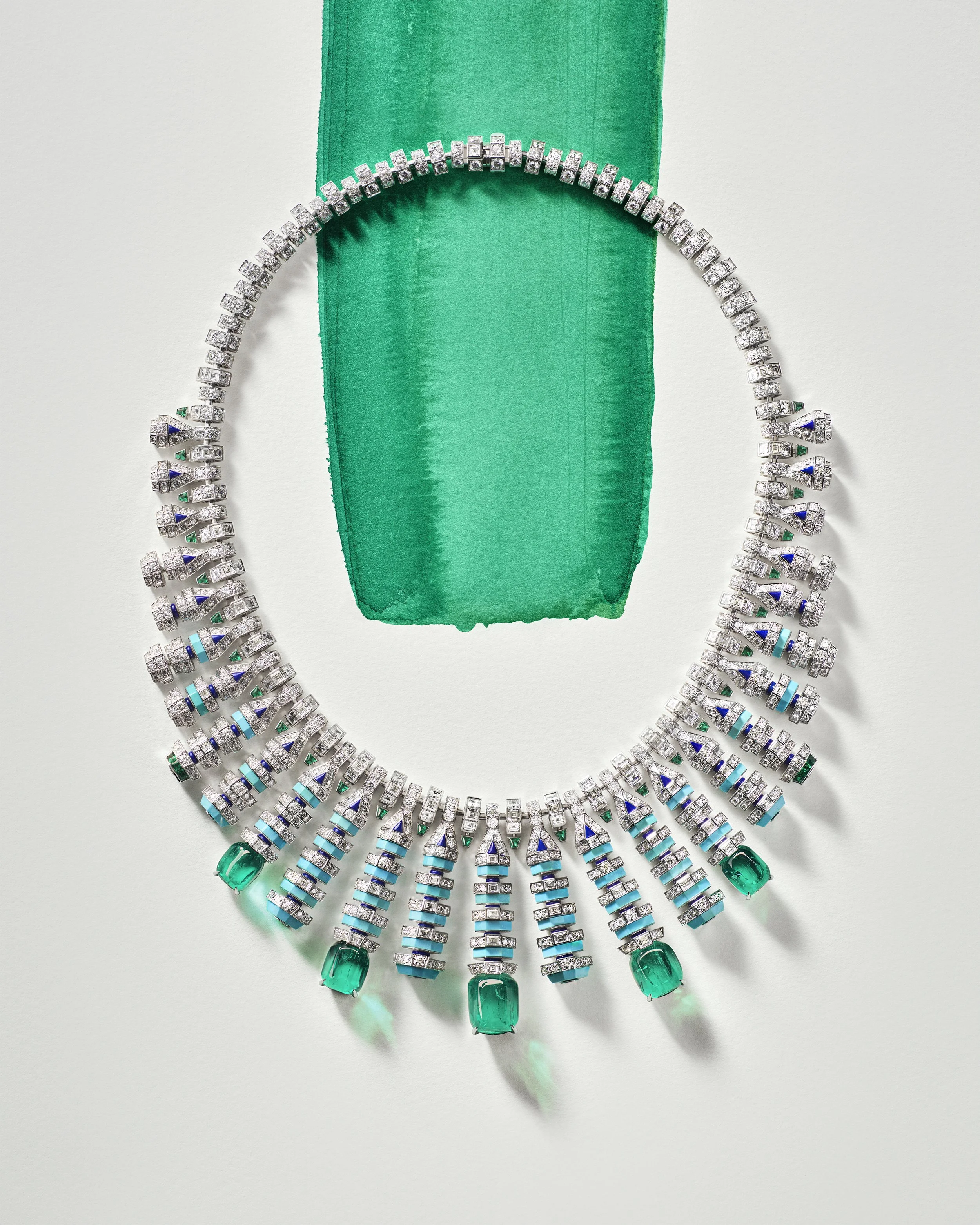
Colour is treated very sensually, making the collection a true feast for the eyes. The Olorra necklace begins with five Colombian emeralds weighing 40.67 carats, their intensity shaping the entire structure. Around them, turquoise, lapis lazuli and diamonds create Cartier’s iconic green-blue contrast. The necklace has rhythm, it appears almost in motion; radiant, precise, yet never cold
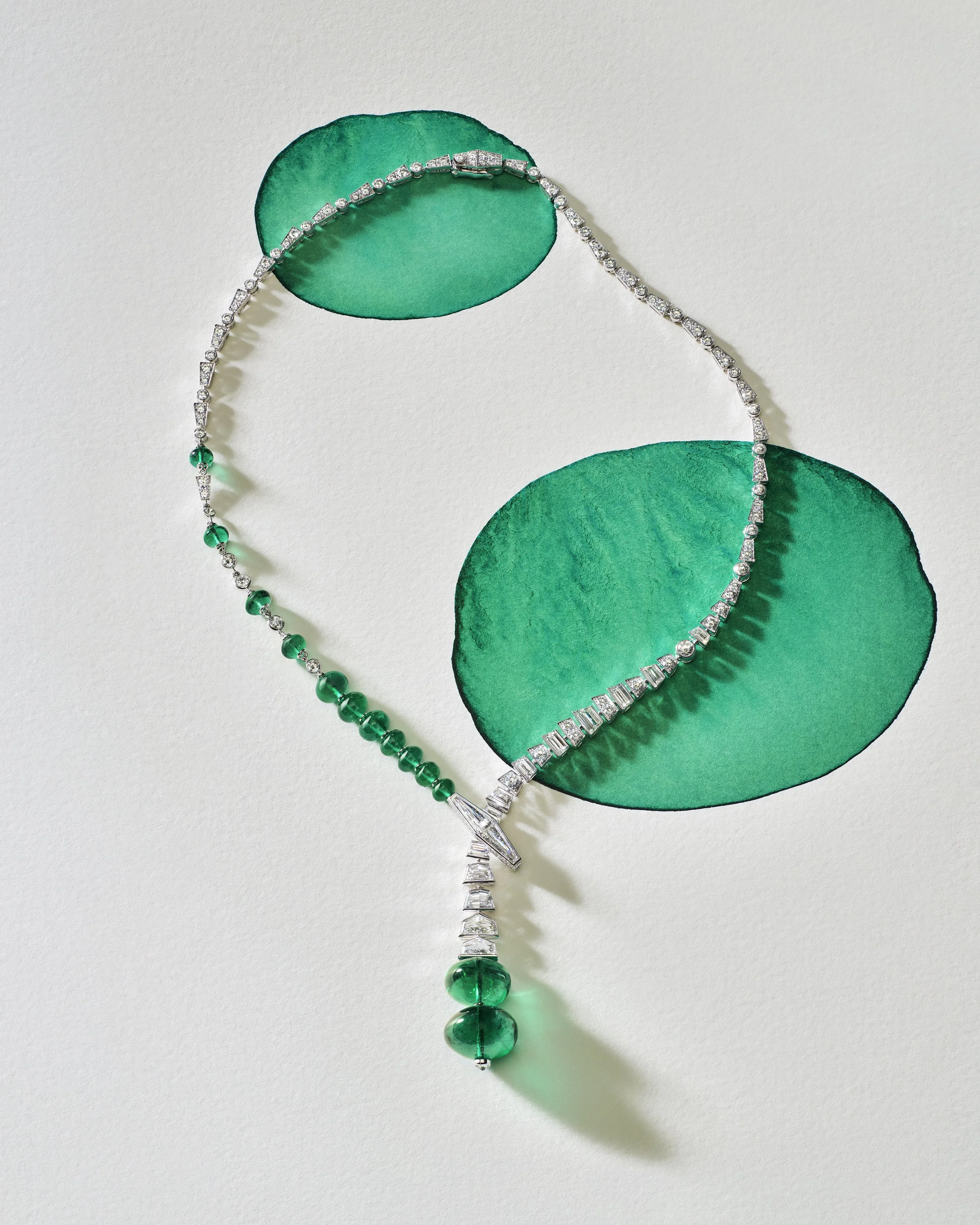
Elsewhere, Solenara takes a different route, perhaps quieter, we could say. Two emeralds, remarkable for their size and shape, sit within a line of gemstones; it is classic Cartier in the sense that nothing is overworked. The organic softness of the emeralds meets the geometry of diamonds, creating a dramatic tension that’s impossible to look away from.
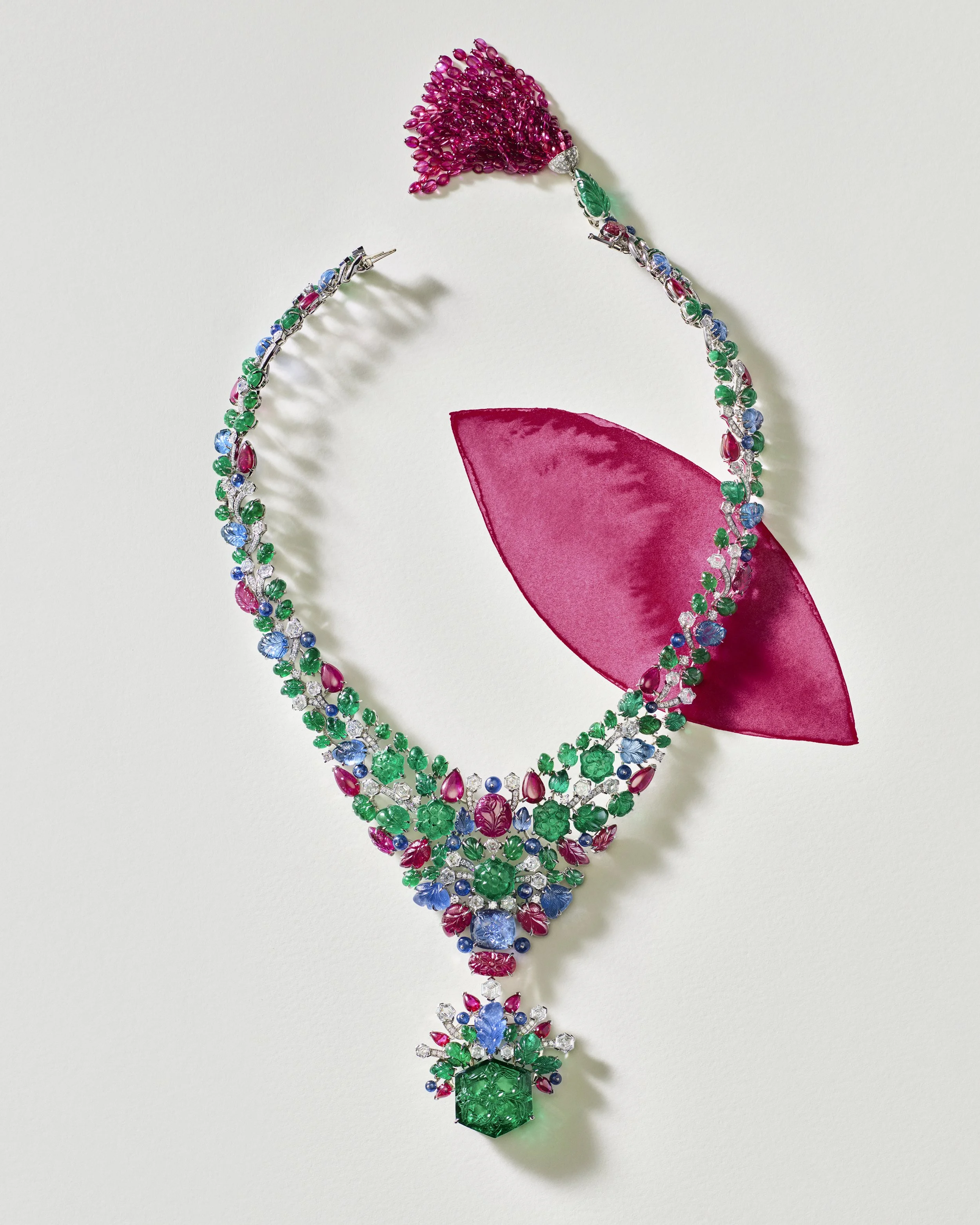
Then there is Tutti Kanya, perhaps one of the collection’s most exuberant expressions. Centred around a 30.33-carat engraved Zambian emerald, the necklace blooms with rubies, sapphires and emeralds carved into flowers, leaves and berries. It renews Cartier’s Tutti Frutti language, which has been part of the Maison’s vocabulary since the mid-1920s, but it goes beyond simple nostalgia, feeling lush and alive in its celebration of nature and colour.
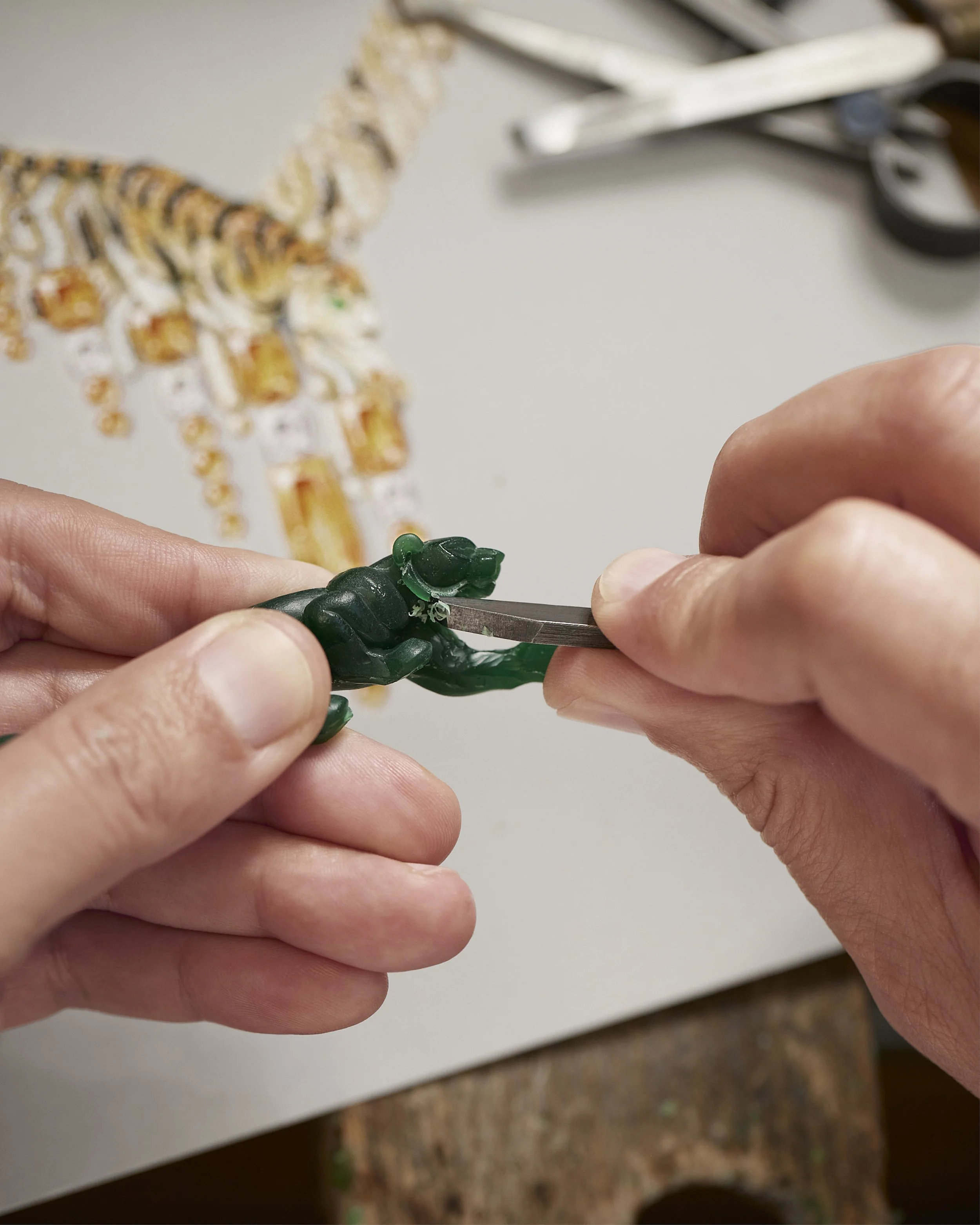
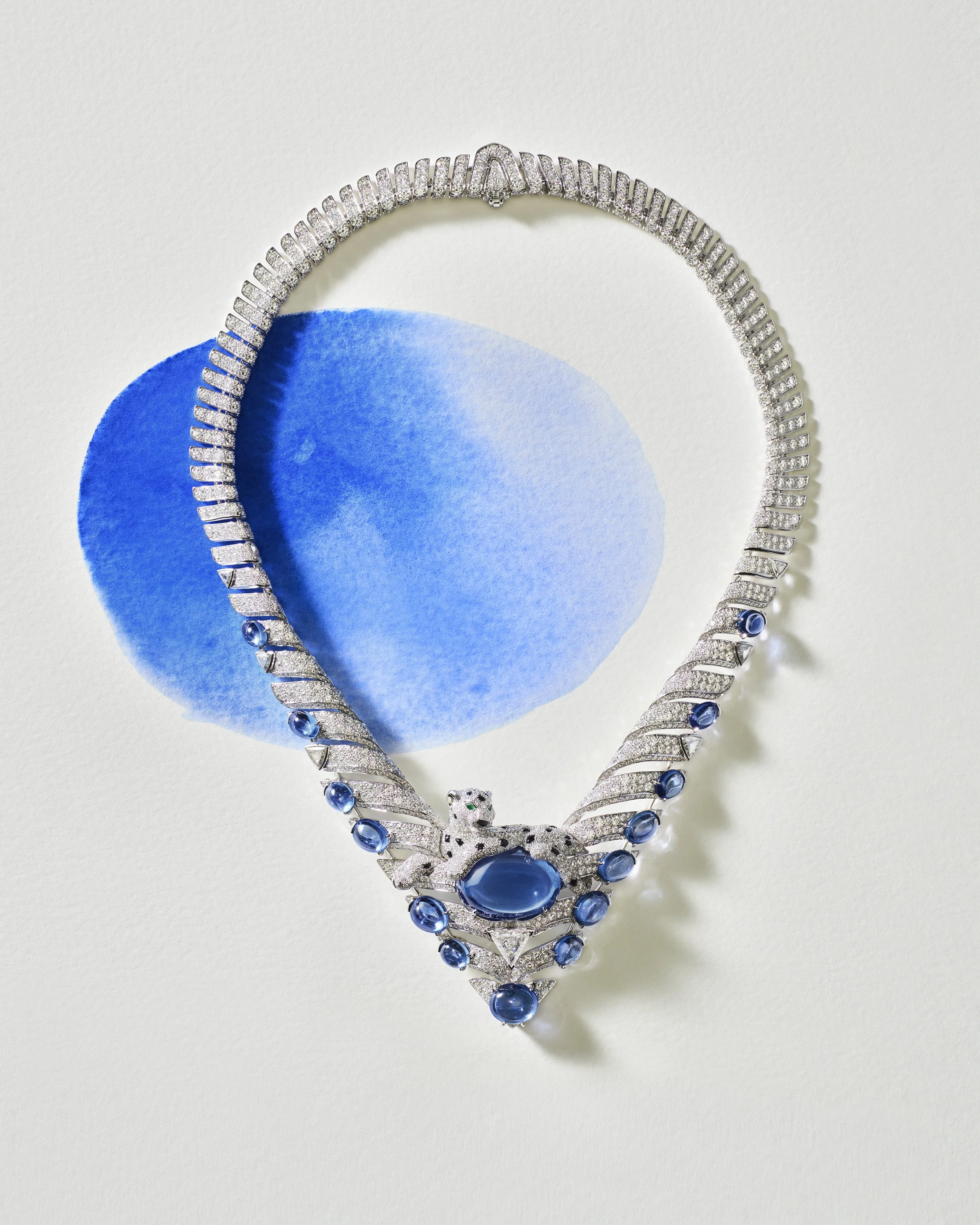
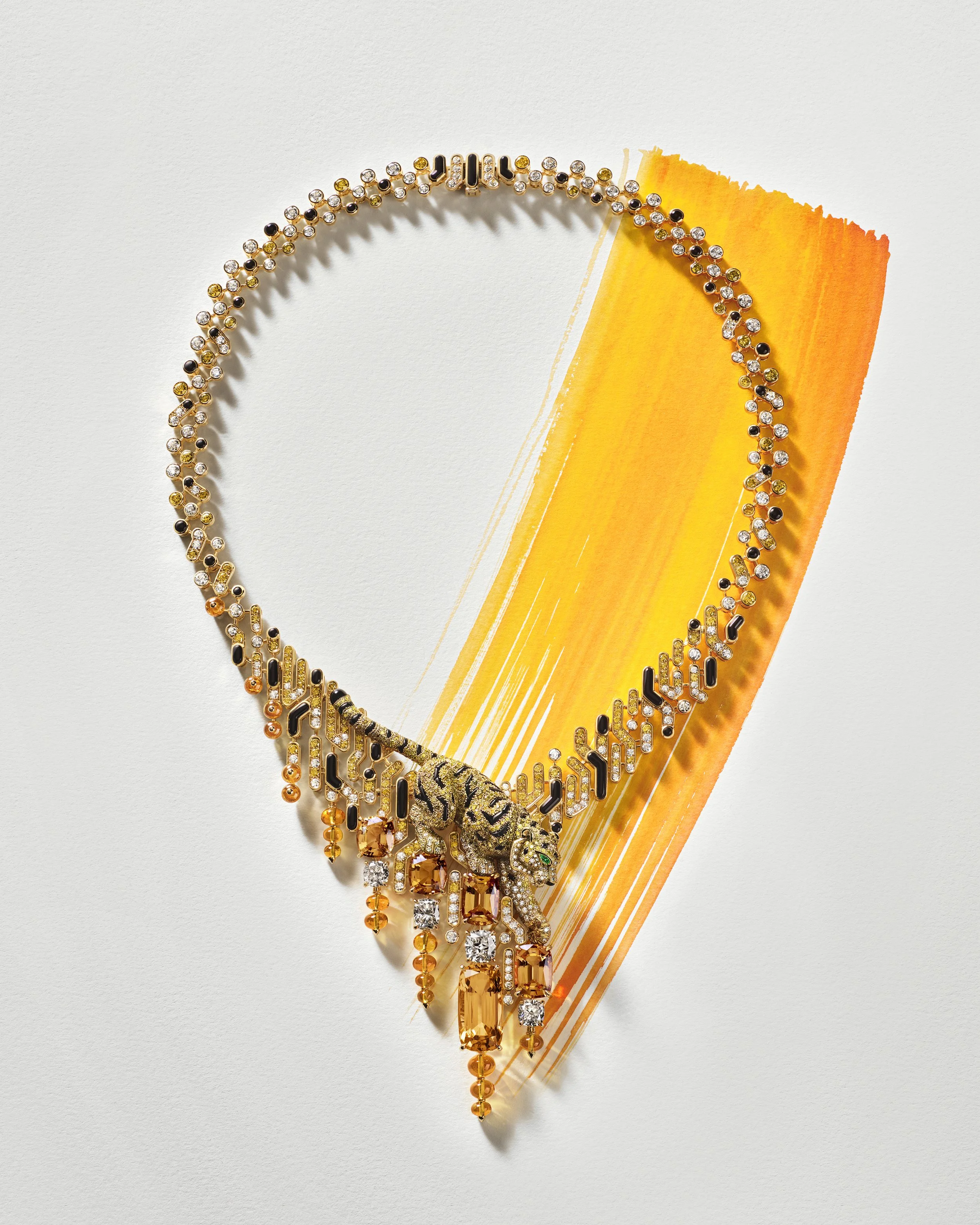
Cartier’s natural plethora certainly doesn’t stop here; In Haryma, the tiger moves through imperial topazes, garnets, onyx and diamonds; its body carved with an incredible sculptural precision that allows for a sense of movement to the point where the tiger looks like it could be jumping off the necklace at any given point. While the panther is Cartier’s eternal queen, the tiger here becomes another kind of icon, a warmer one. In Panthère Kentia, the Maison’s most legendary creature appears around a 50.13-carat cabochon-cut Ceylon sapphire, balancing organic curves with angular structures.
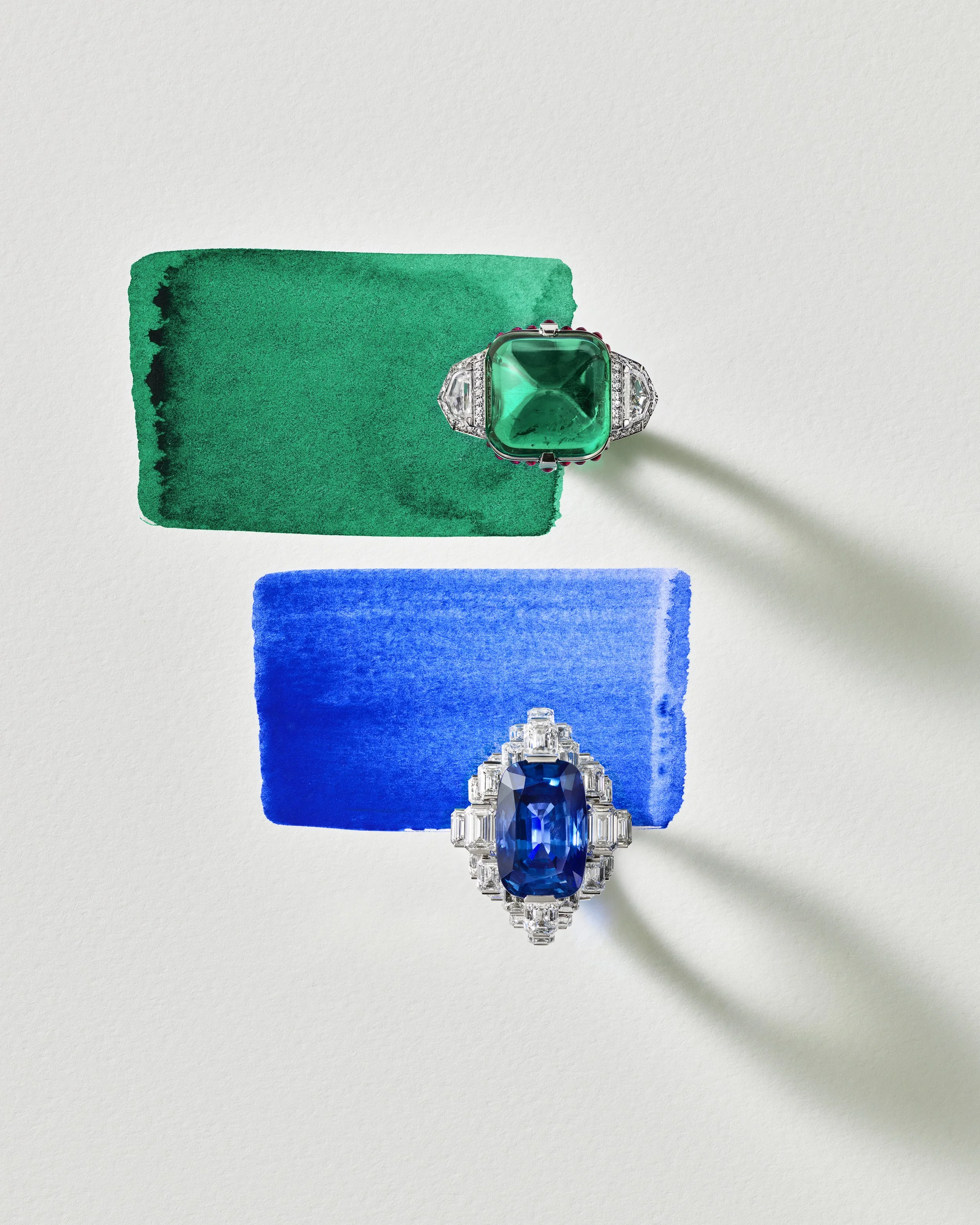
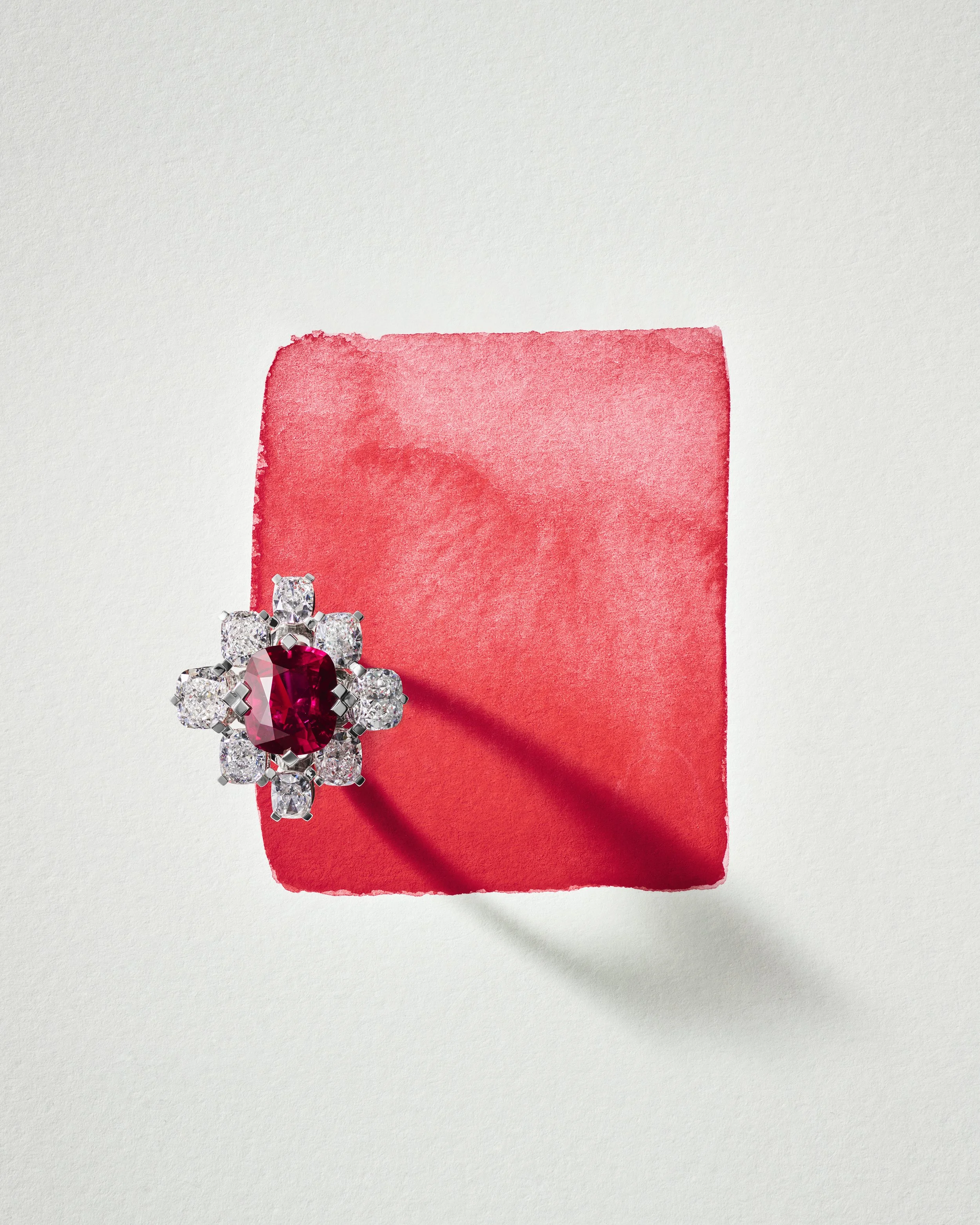
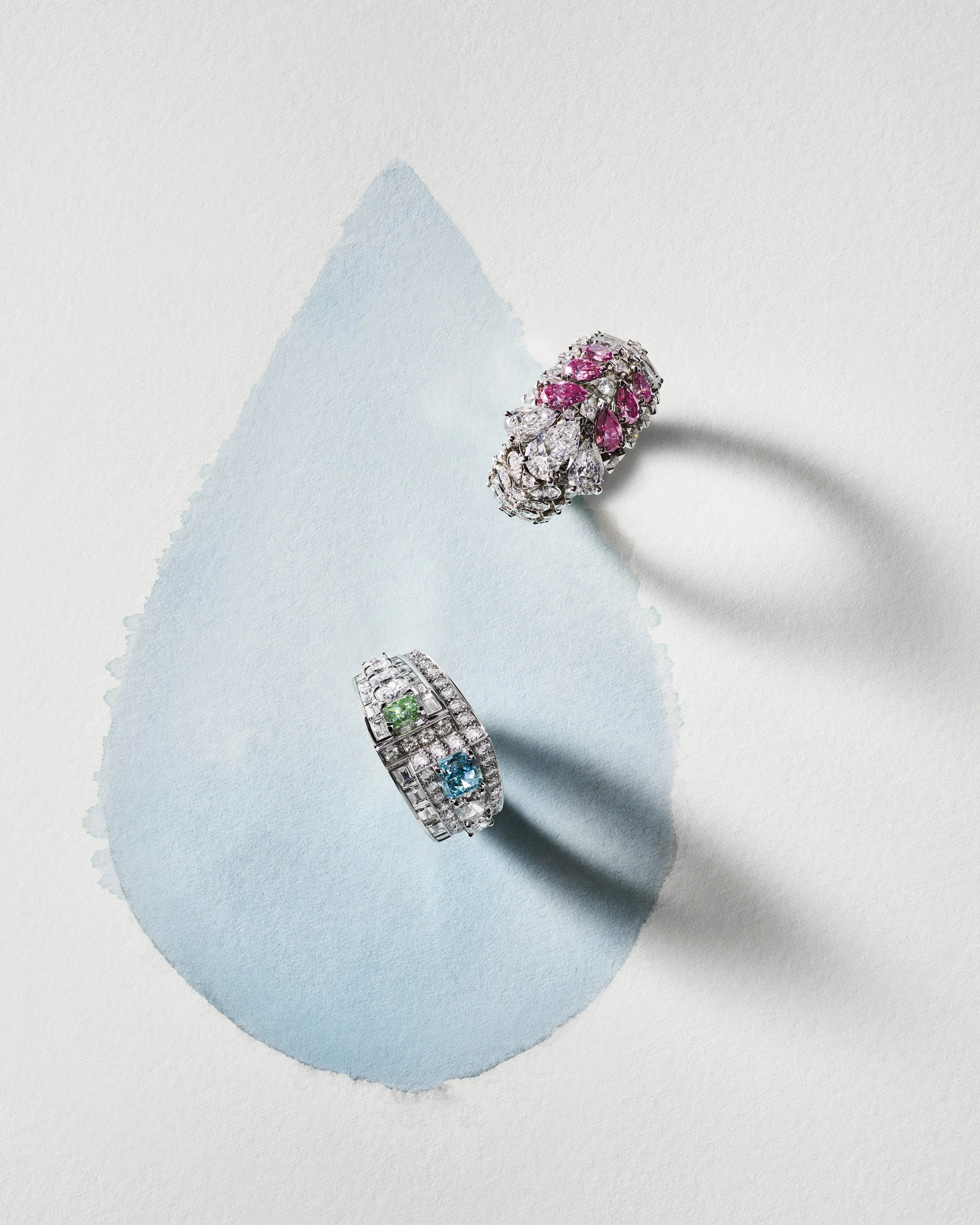
The rings continue this spectacular dialogue between stone and form. Tetraya frames a 20.24-carat sugarloaf-cut Colombian emerald with shield-cut diamonds and rubies, reviving Cartier’s green and red chromatic signature. Stratelia, with its 23.35-carat Madagascan sapphire, feels like a fragment of sky caught inside architecture. Tesselia centres on a 5.24-carat ruby from Mozambique, its setting opening like a corolla around the stone. It is as if each ring encloses its own miniature world.
All in all, what makes Le Chœur des Pierres a true work of art is its understanding of high jewellery as both spectacle and intimacy. There’s no denying that there are pieces of extreme rarity, yes, but they are also studies in emotion, movement, memory and desire. Gems have a voice, and through such an orchestral and alive collection, one can really see how Cartier listens to it.
