
HAUTE COUTURE WEEK FALL/WINTER 2026: DAY 1
SCHIAPARELLI
review by MAREK BARTEK
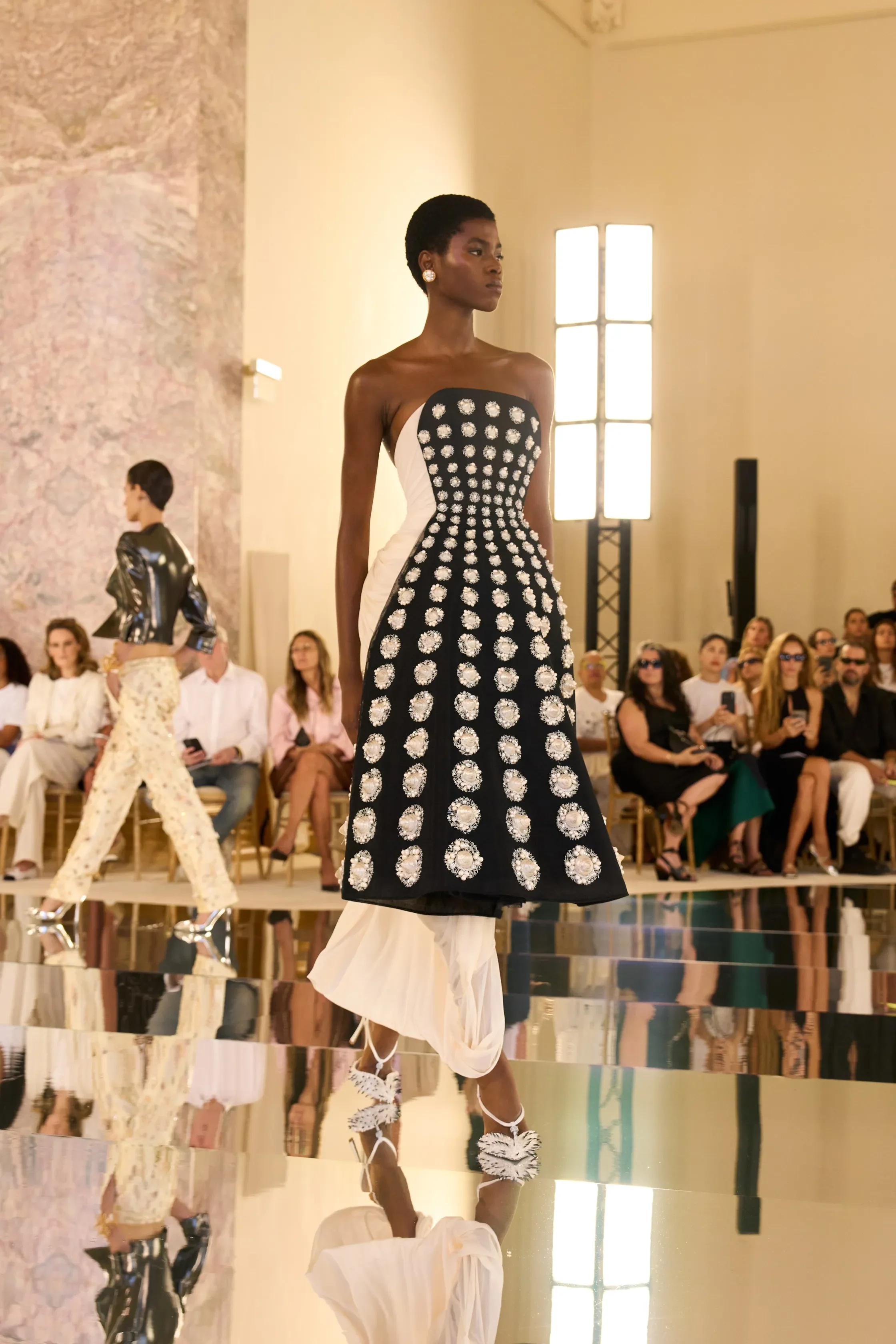
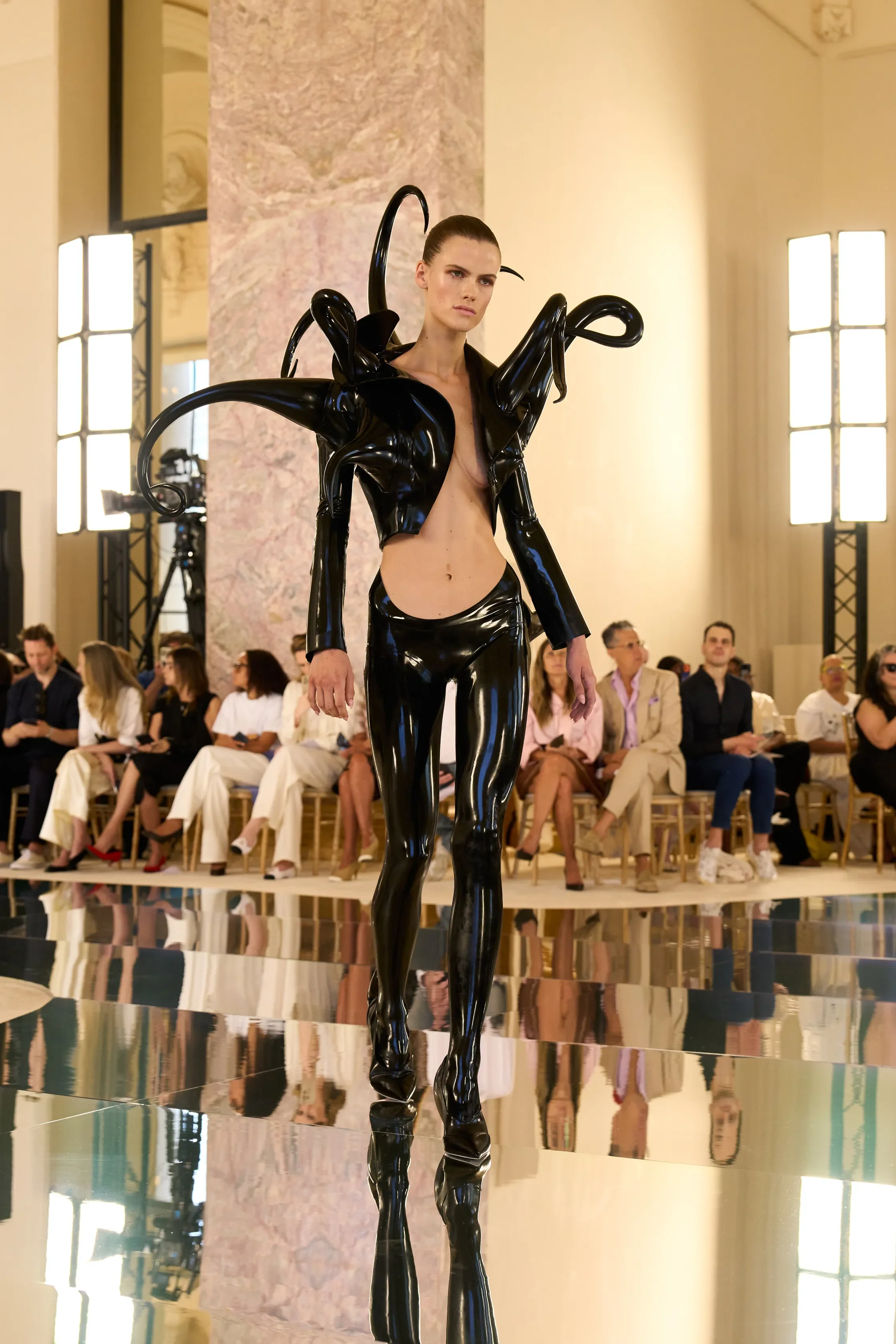
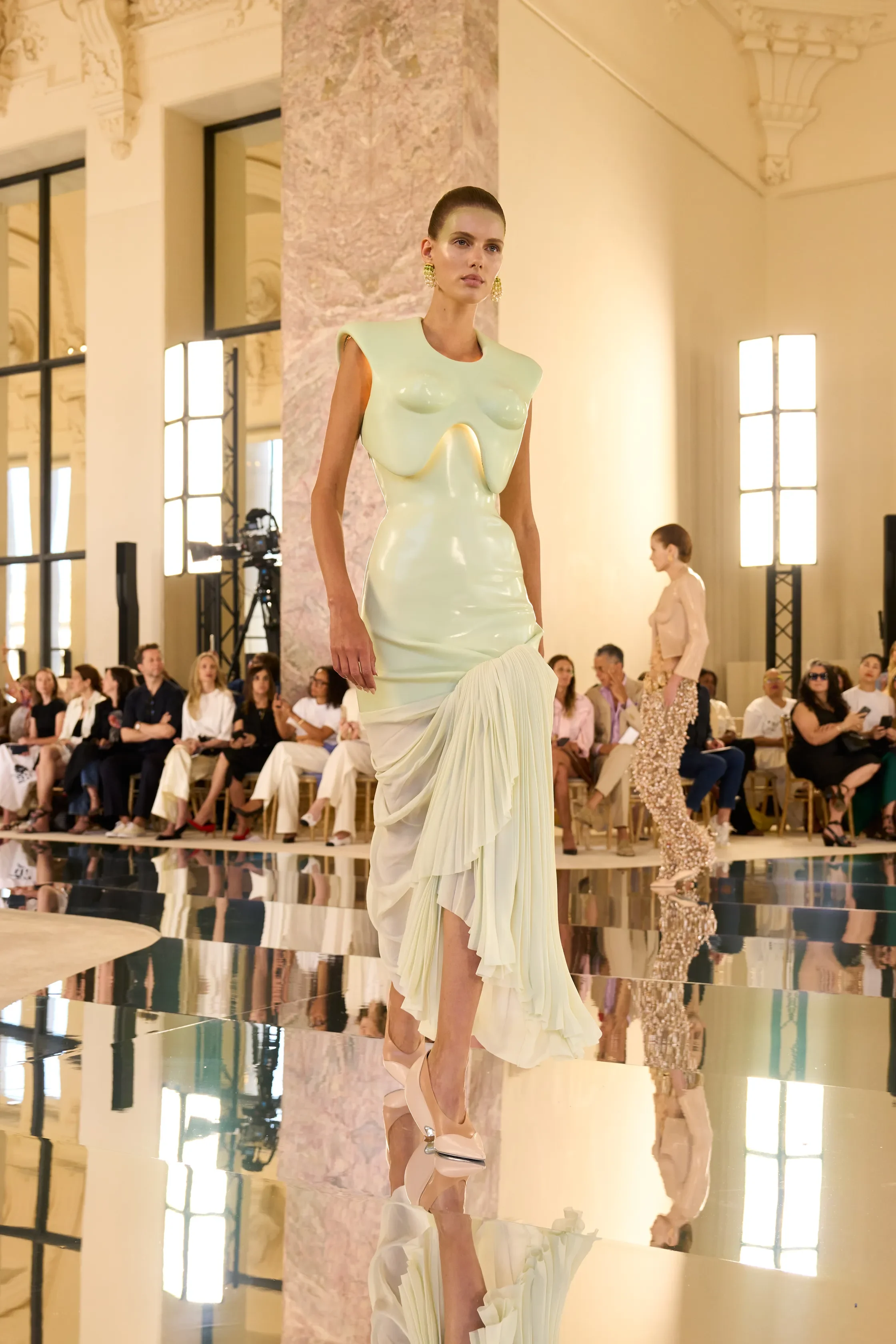
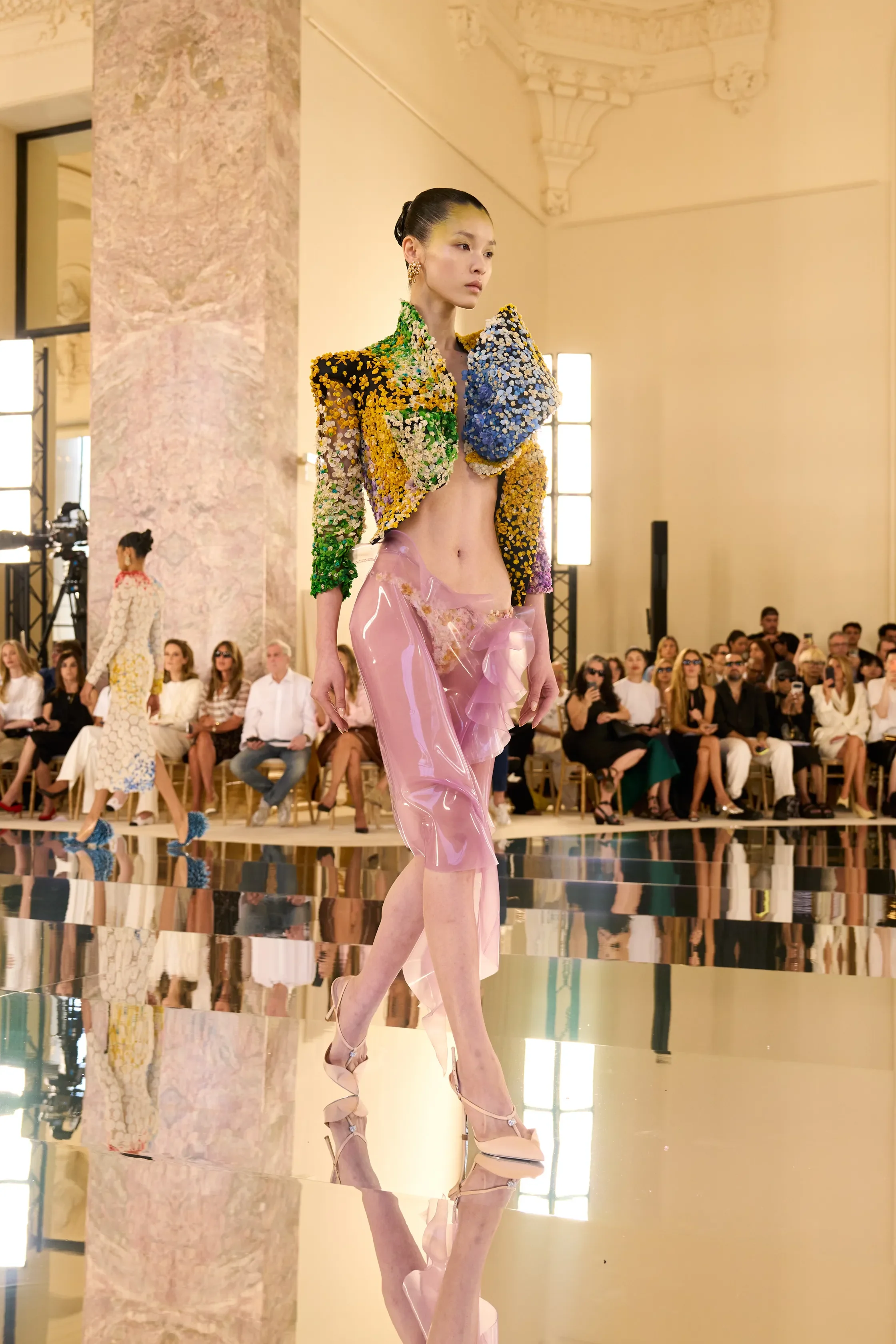
all images courtesy of SCHIAPARELLI
There’s something quite liberating about hearing a designer admit they had no idea what they were doing. After calling last season a breakthrough, Daniel Roseberry realised that trying to repeat success was the quickest way to lose it. Instead, he surrendered to what he called The Call of the Void — allowing uncertainty to shape Schiaparelli’s latest couture collection.
Uncertainty, in this case, doesn’t mean the lack of knowledge. Rather it paints a picture of roaming the waters that haven’t be explored before. Just when the collection seemed to settle into impeccably cut tailoring or an elegant draped gown, it would veer somewhere entirely unexpected. A glossy black jacket looked as though it had been poured directly onto the body. Silicone corsets mimicked human skin with unsettling accuracy. Latex tentacles curled around shoulders, while sculptural bodices transformed models into creatures that seemed to belong into the depths of the sea or a science fiction film.
Yet despite all the experimentation, the collection never became a showcase for materials alone. In fact, what truly stood out was the craftsmanship required to convince us that those materials truly deserved their spot in haute couture in the first place. Beyond that, hand-embroidered florals, delicate pleating, intricate beading and featherwork served as a familiar reminder that every surreal idea still depended on centuries-old savoir-faire.
Roseberry also resisted relying too heavily on Schiaparelli’s greatest hits. Familiar house codes were present, but only in their reimagined forms. The iconic jackets became almost an accessory, while an archival evening dress resurfaced layered over a flowing ivory silhouette, giving a familiar silhouette an unexpected second life.
There were moments when the collection flirted with spectacle, sure, but unlike some previous seasons, they never felt like they existed purely for social media. Everything served the same idea: that the unknown can be frightening, but it can also be where the most interesting work begins. Through silencing the control freak within, Roseberry delivered one of his most confident couture collections to date.
IRIS VAN HERPEN
review by MAREK BARTEK
all images courtesy of IRIS VAN HERPEN
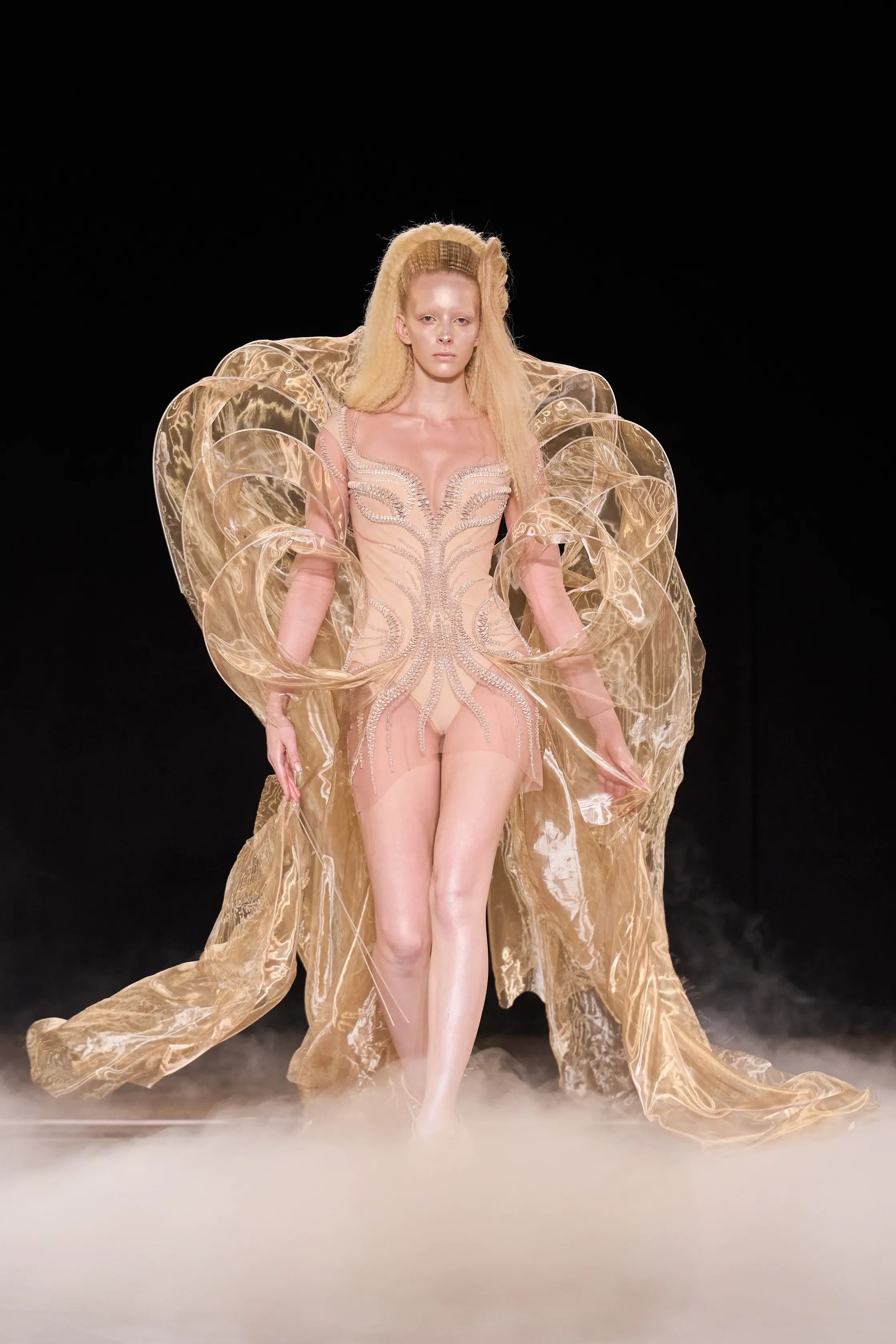
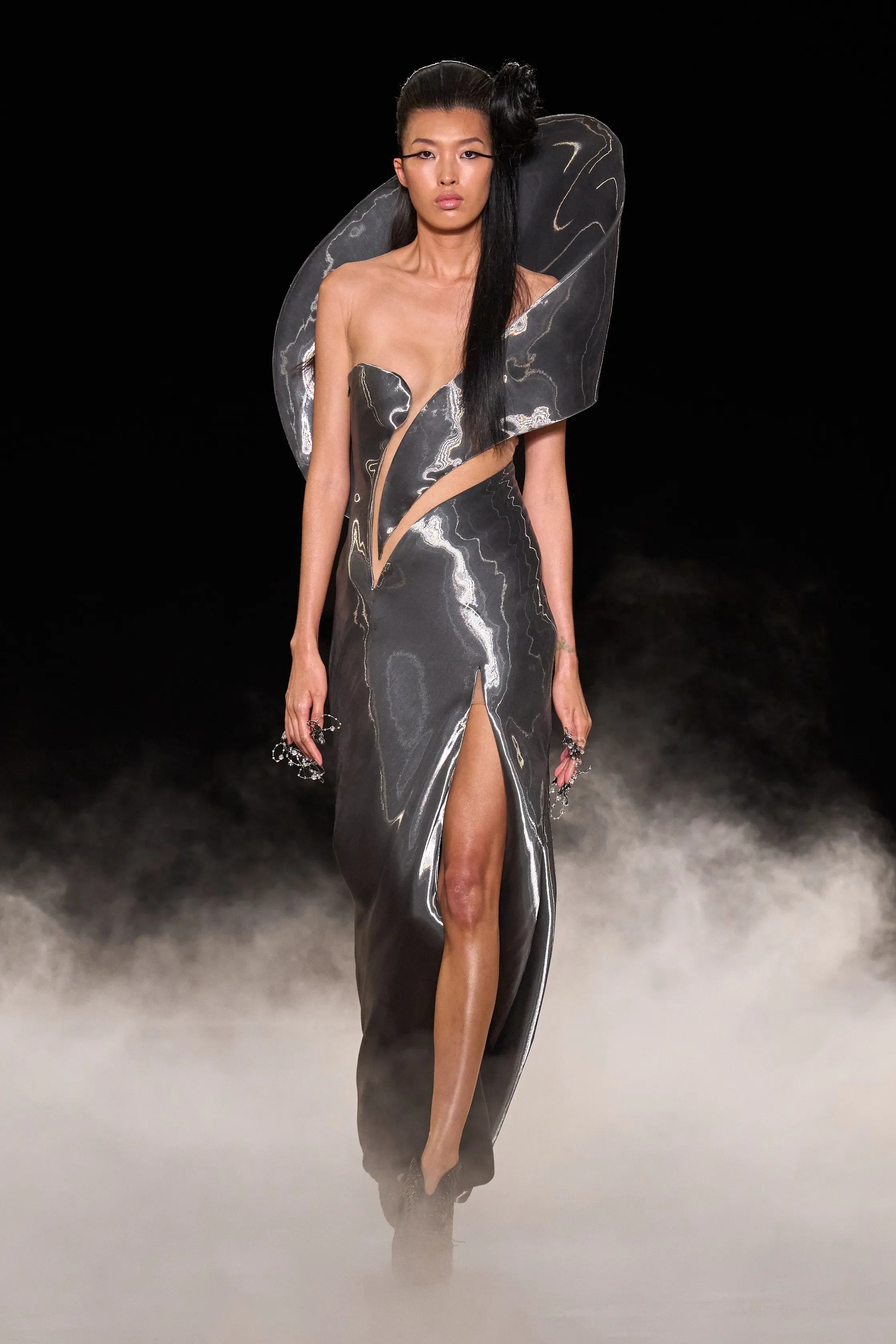
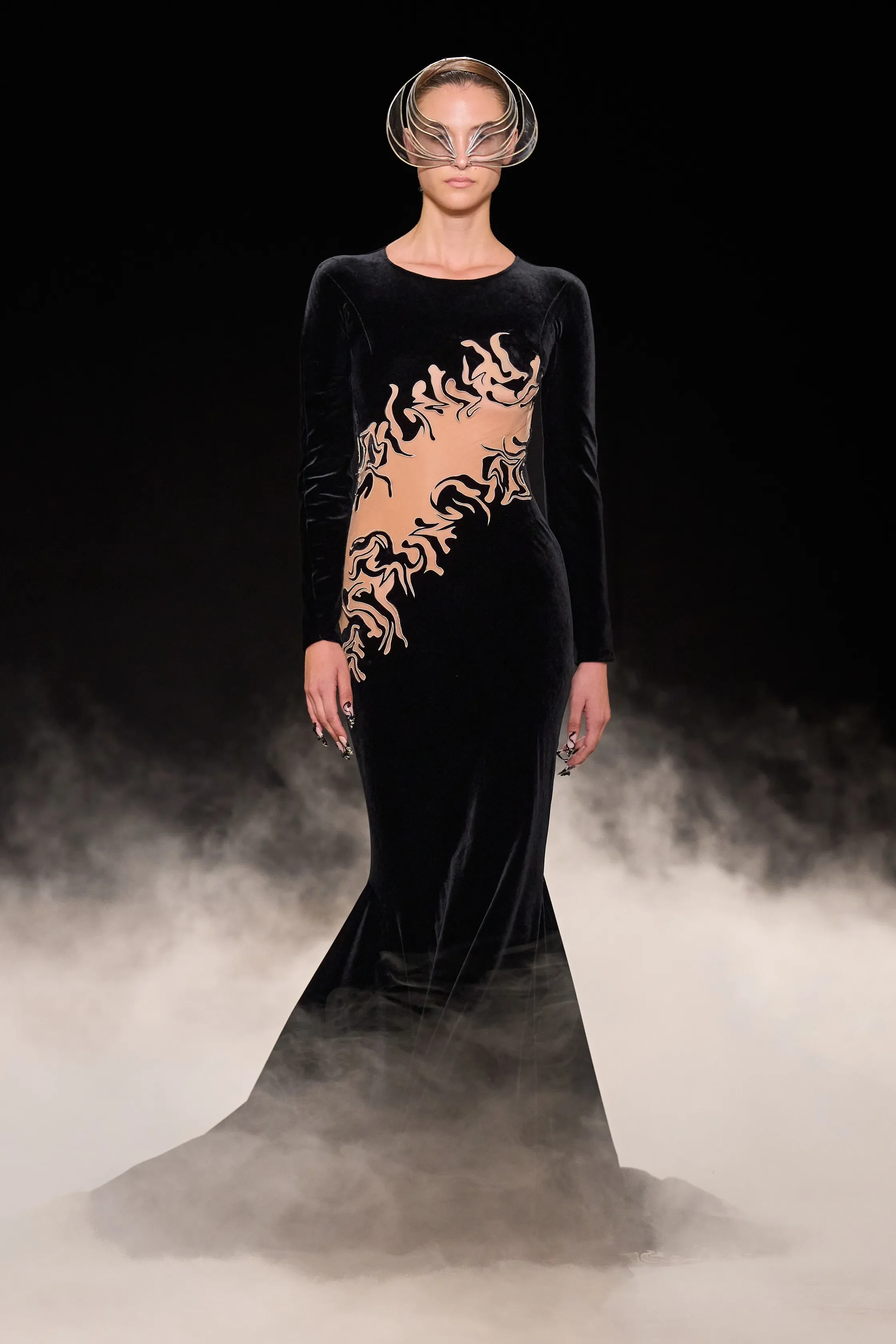
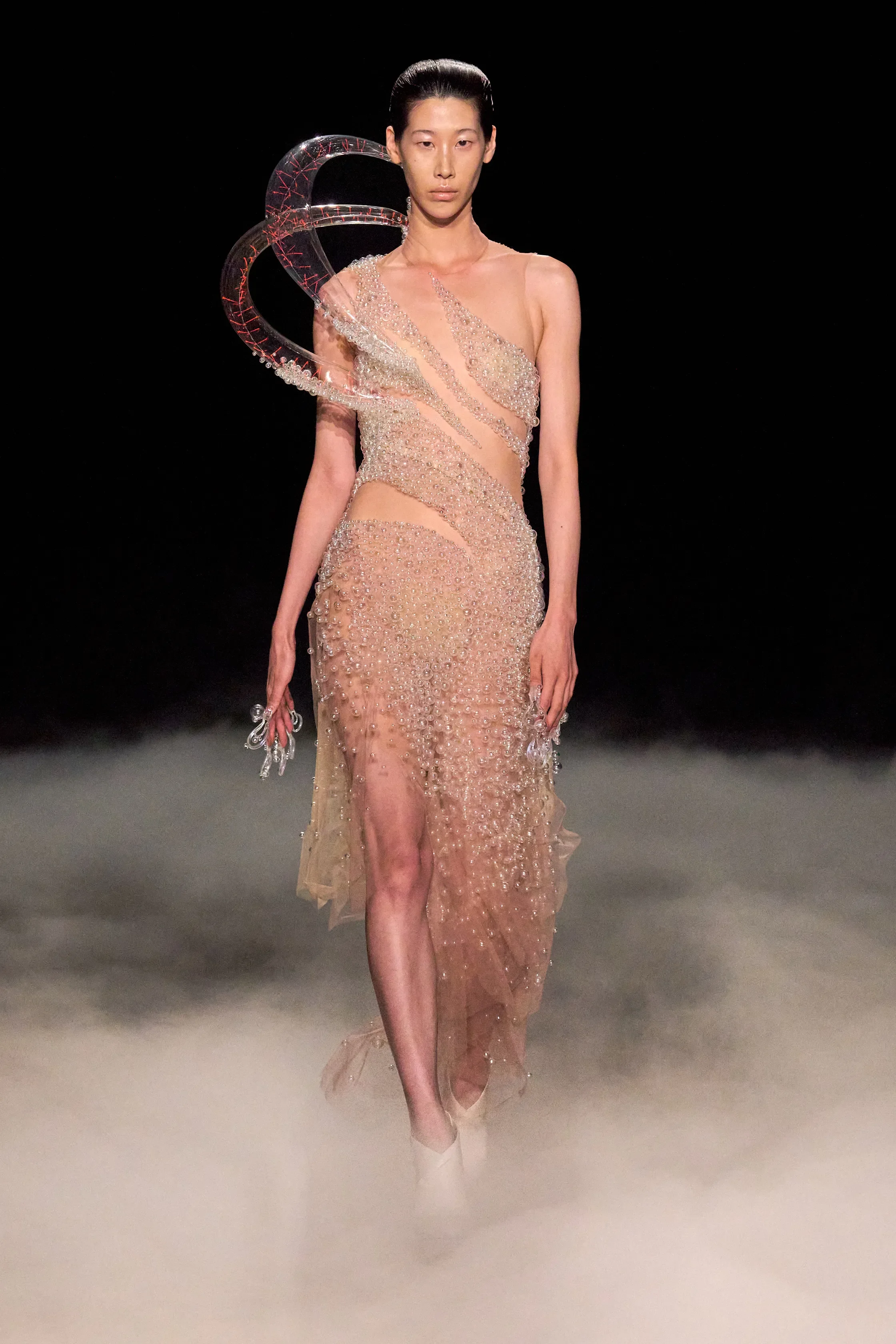
At an Iris van Herpen show, you quickly stop asking yourself how something was made, and you find yourself wondering whether it belongs to fashion at all.
This season, titled Sonic Starquakes, the Dutch designer looked beyond Earth, drawing inspiration from vibrating stars, cosmic energy and the invisible forces that shape the universe. It sounds impossibly abstract, yet the runway somehow turned those ideas into something tangible. Organza floated like liquid light, pleats rippled as though moved by an unseen current, and laser-cut velvet curled across the body like delicate tendrils growing in slow motion.
There were moments that felt almost extraterrestrial. Dresses dissolved into clouds of translucent tulle before reappearing as intricate constellations of embroidery. Others wrapped the body in swirling metallic structures. Silhouettes may have been dramatic, they never looked heavy. Everything seemed to hover just above ground and reality.
Of course, van Herpen saved her greatest surprise for the finale. Working with scientists and engineers, she became the first designer to integrate plasma into haute couture, creating a look that quite literally responded to energy. Encased within glass tubes arching around the shoulders, glowing strands of plasma transformed the dress into something alive. It wasn’t simply a technological achievement, but a reminder that couture still has the ability to surprise us.
In an era where fashion often looks backwards, van Herpen continues to move in the opposite direction. Rather than searching archives for inspiration, she searches laboratories, galaxies and the natural world, proving once again that imagination remains couture’s most valuable material. Watching her collections can sometimes feel more like stepping into the futuristic lab than simply attending a fashion show. And somehow, season after season, that future still feels full of wonder.
GEORGES HOBEIKA
review by MAREK BARTEK
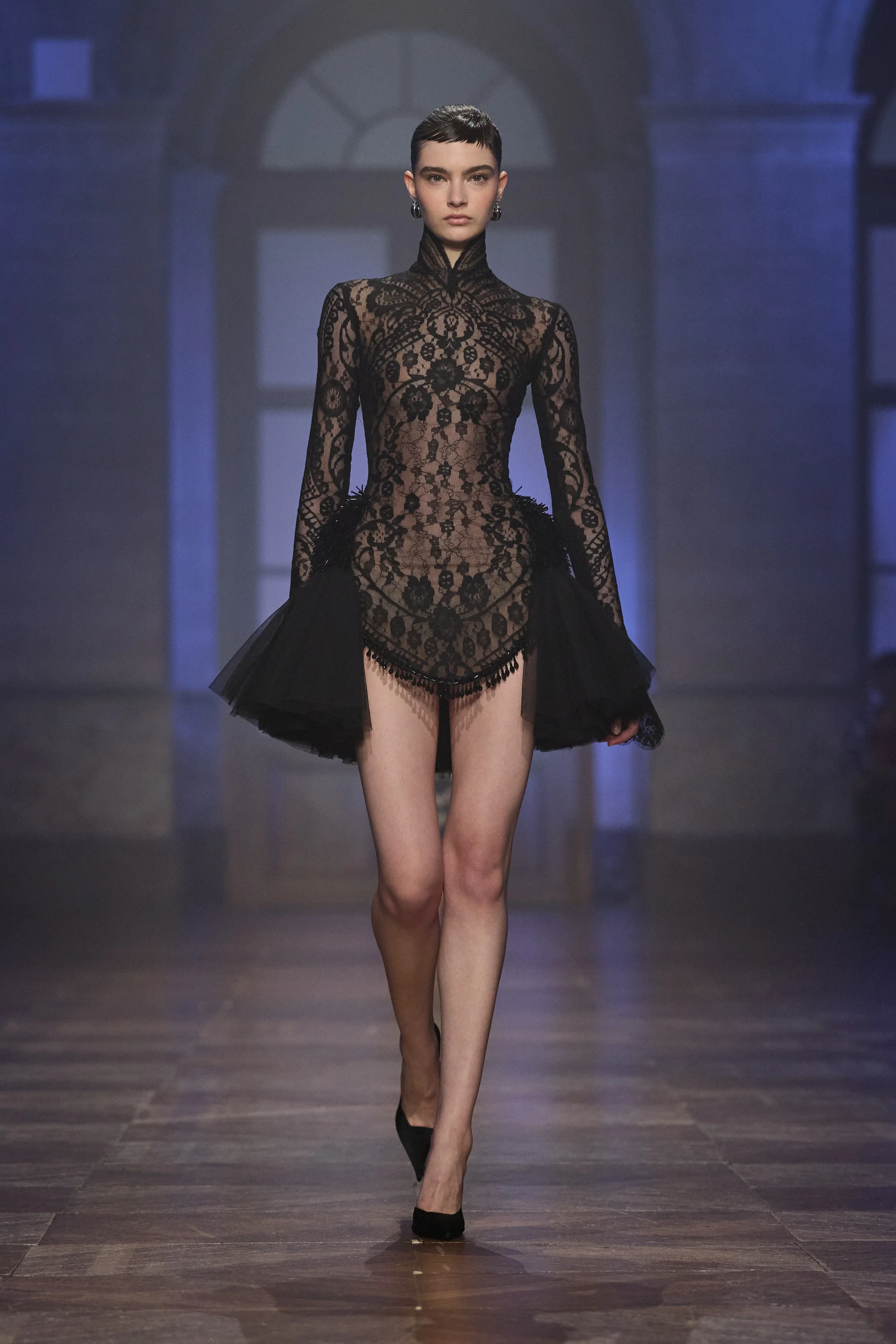
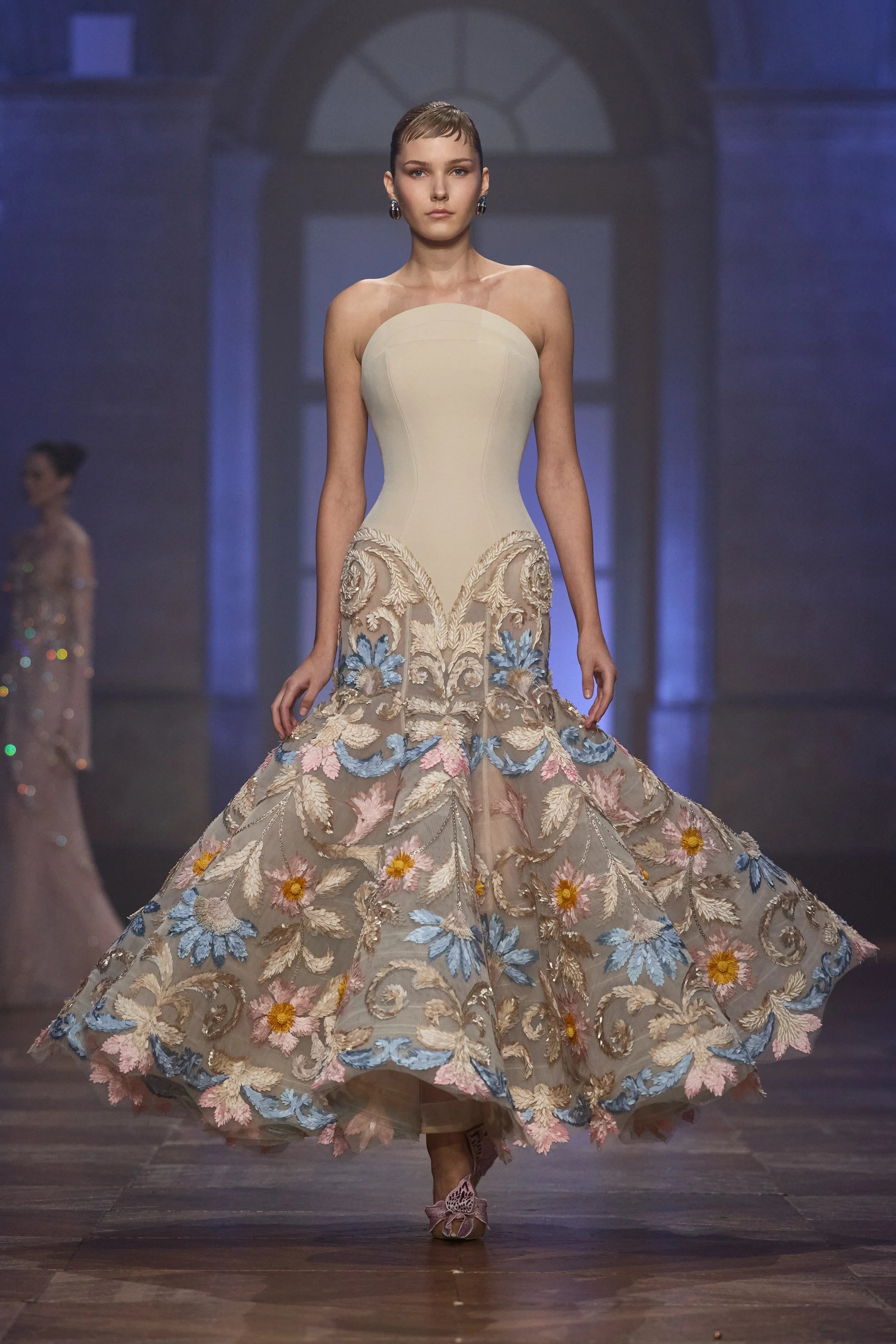
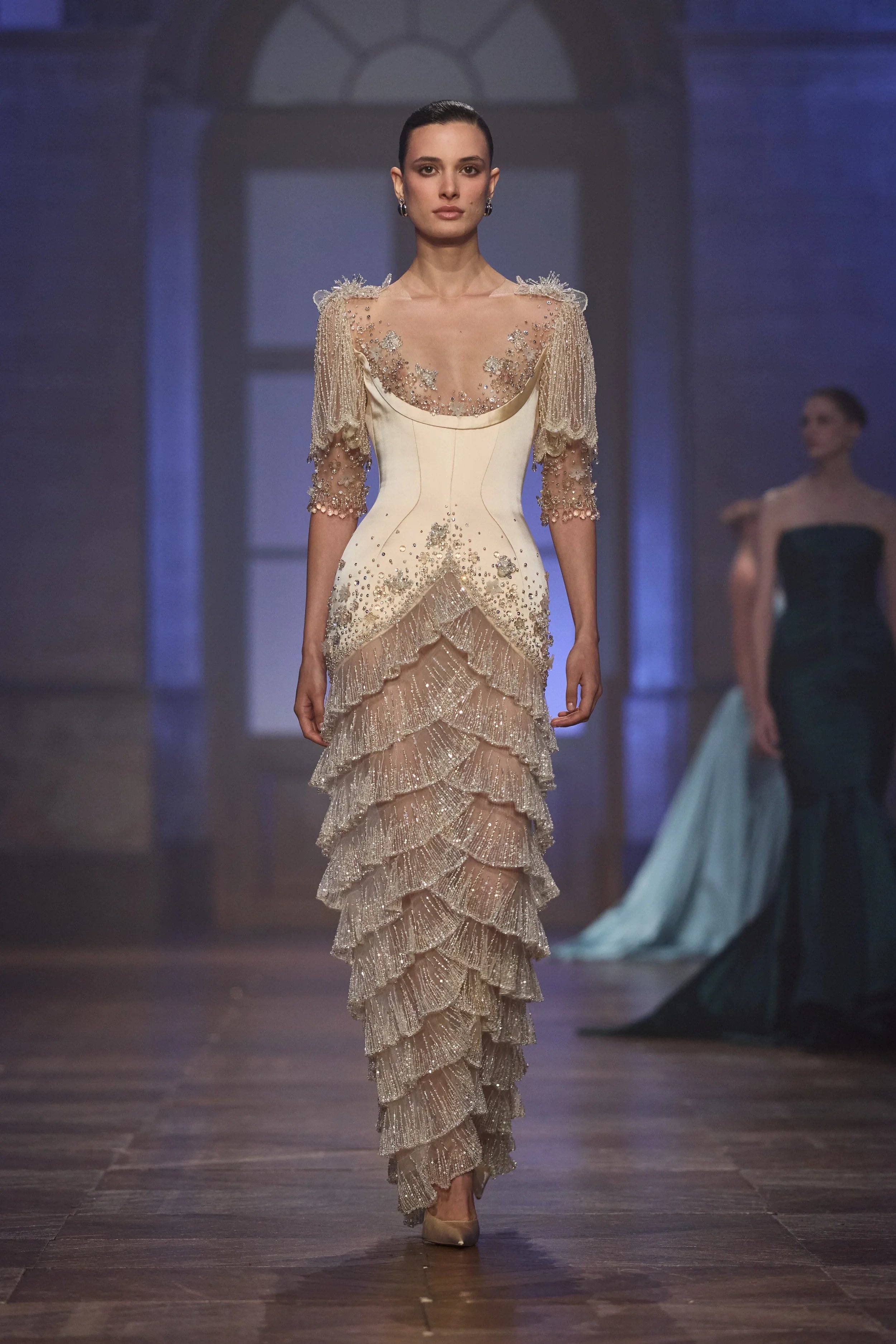
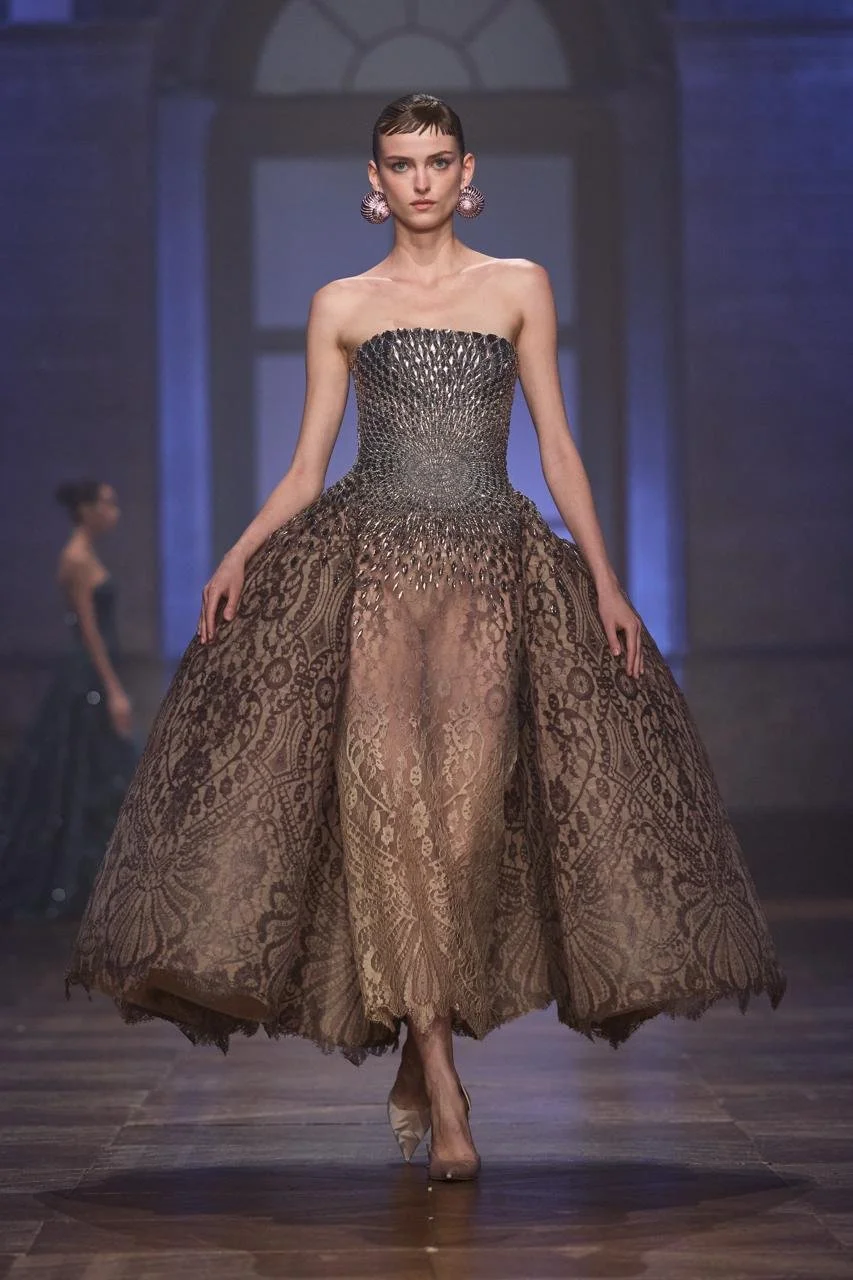
all images courtesy of GEORGES HOBEIKA
Some couture collections ask you to decipher a concept. Georges Hobeika’s simply invite you to admire the clothes.
Inspired by James McCrae’s poem Instructions Before Visiting Earth, Georges and Jad Hobeika set out to celebrate the privilege of experiencing beauty before we become too accustomed to it. While that poetic premise remained somewhat elusive on the runway, the craftsmanship spoke fluently enough on its own.
There was a reassuring confidence to the collection. Architectural corsets melted into fluid column gowns, lace dissolved into liquid-like embroidery, and crystal embellishments shimmered as though suspended beneath water. Blue emerged as the story’s dominant colour, shifting effortlessly from pale sky tones to deep ocean hues, interrupted by soft beiges, blush pinks and rich emerald greens.
Nothing here felt particularly revolutionary, nor did it seem interested in being. Instead, Hobeika refined the language the house already speaks so well. The corsetry was exceptional, jackets provided a polished counterpoint to the abundance of eveningwear, and intricate embroidery often became the garment itself rather than mere decoration. Tiny details — a crystal beetle here, an orchid there — added moments of unexpected charm without ever overwhelming the clothes.
Perhaps that’s exactly what made the collection work. Rather than hoping to cause a shockwave, Georges Hobeika focused on perfecting what has long defined the house.
DIOR
review by MAREK BARTEK
all images courtesy of DIOR
Second collections can be more revealing than first ones. The pressure of introducing yourself is gone, leaving room to show what kind of designer you actually intend to be. With his second haute couture collection for Dior, Jonathan Anderson let us know he definitely wasn’t interested in shocking us. If anything, he made things — for the lack of better word — demure, allowing Dior to breathe.
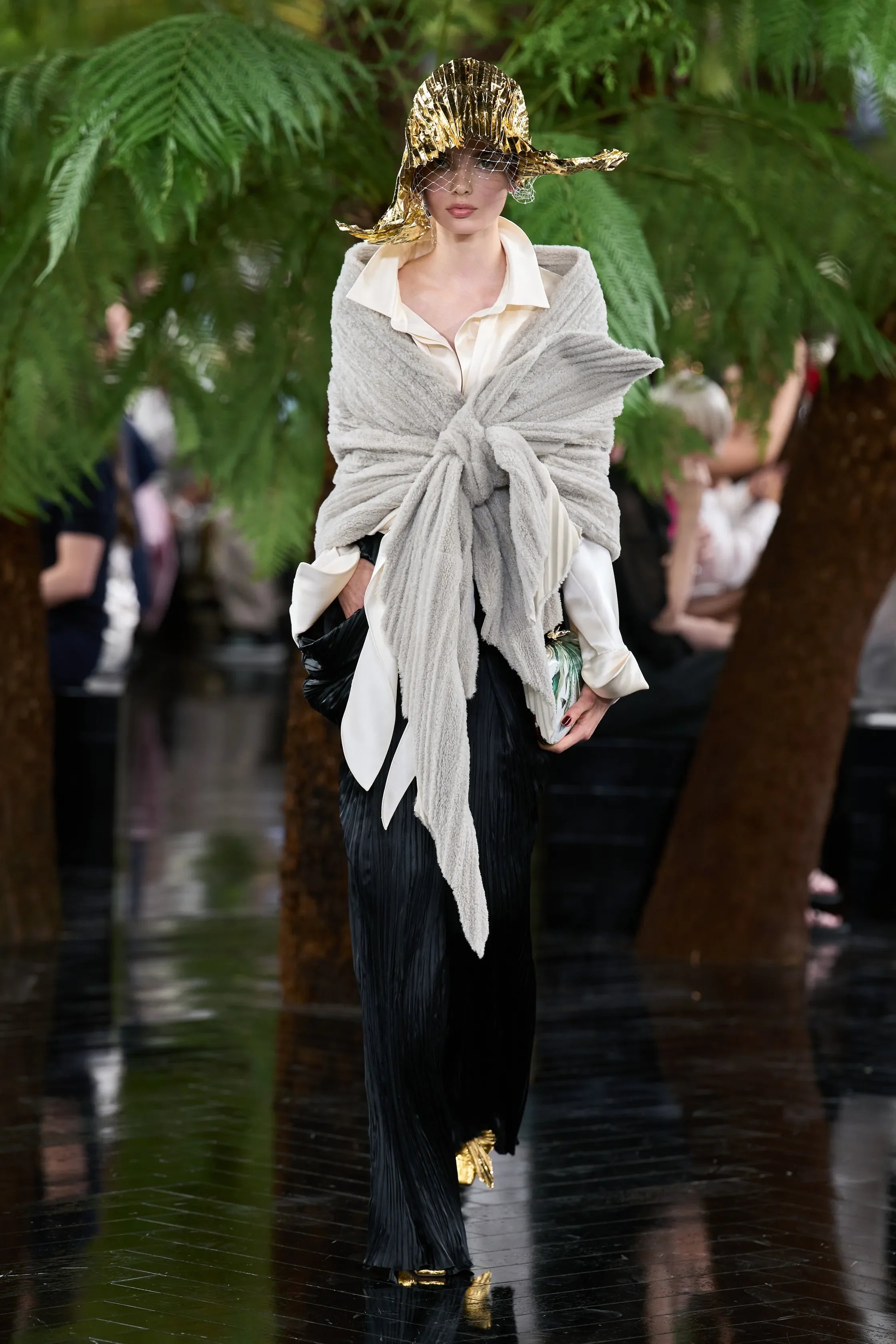
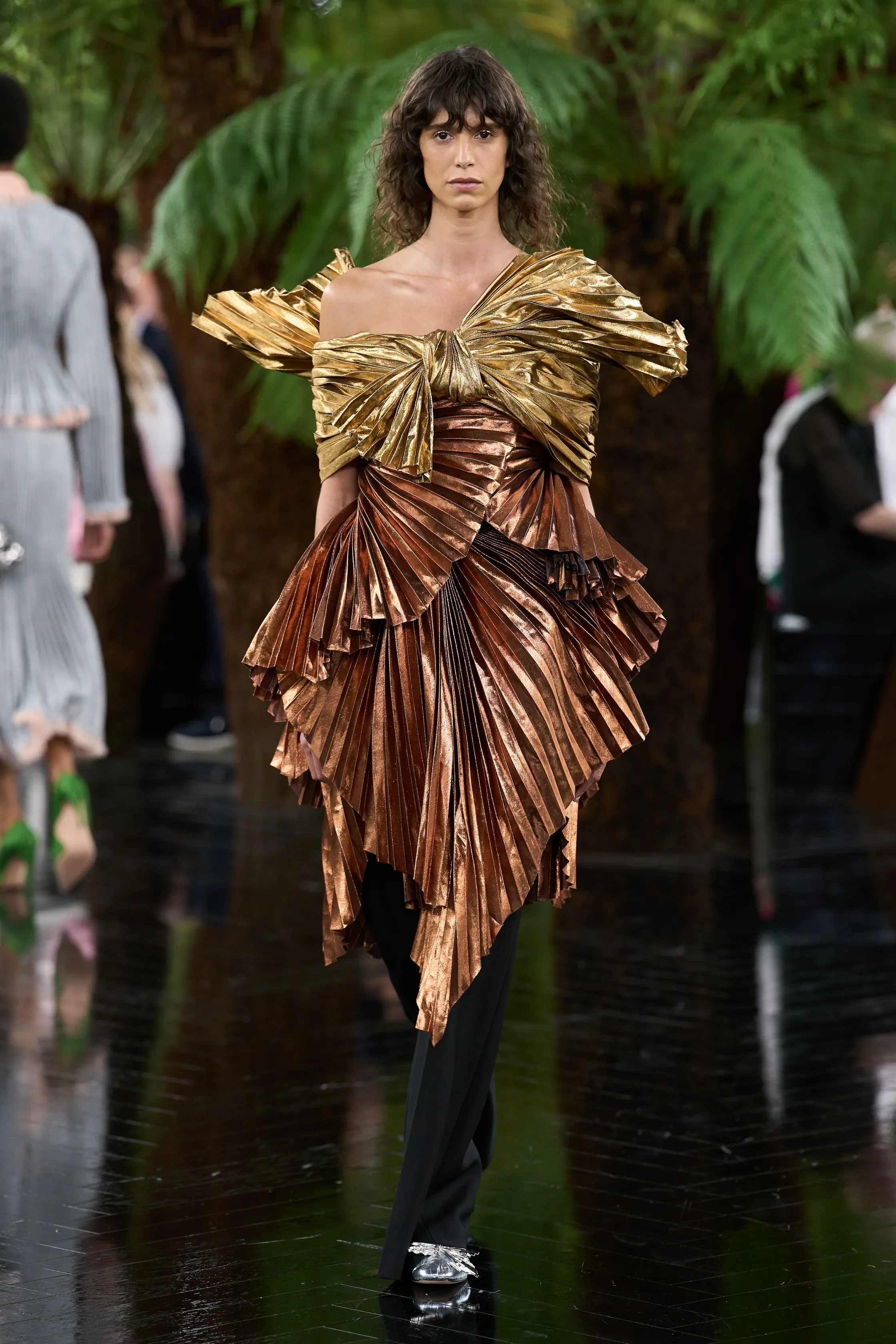
Gone was the rigid architecture often associated with the house’s couture. The famous Bar jacket hadn’t disappeared, but it had softened, almost melting into wrapped silhouettes, tied waists and fluid drapery. Checked wool behaved more like silk than suiting, silver pleats exploded into sculptural forms that felt weightless, and dresses twisted instead of being constructed around obvious corsetry.
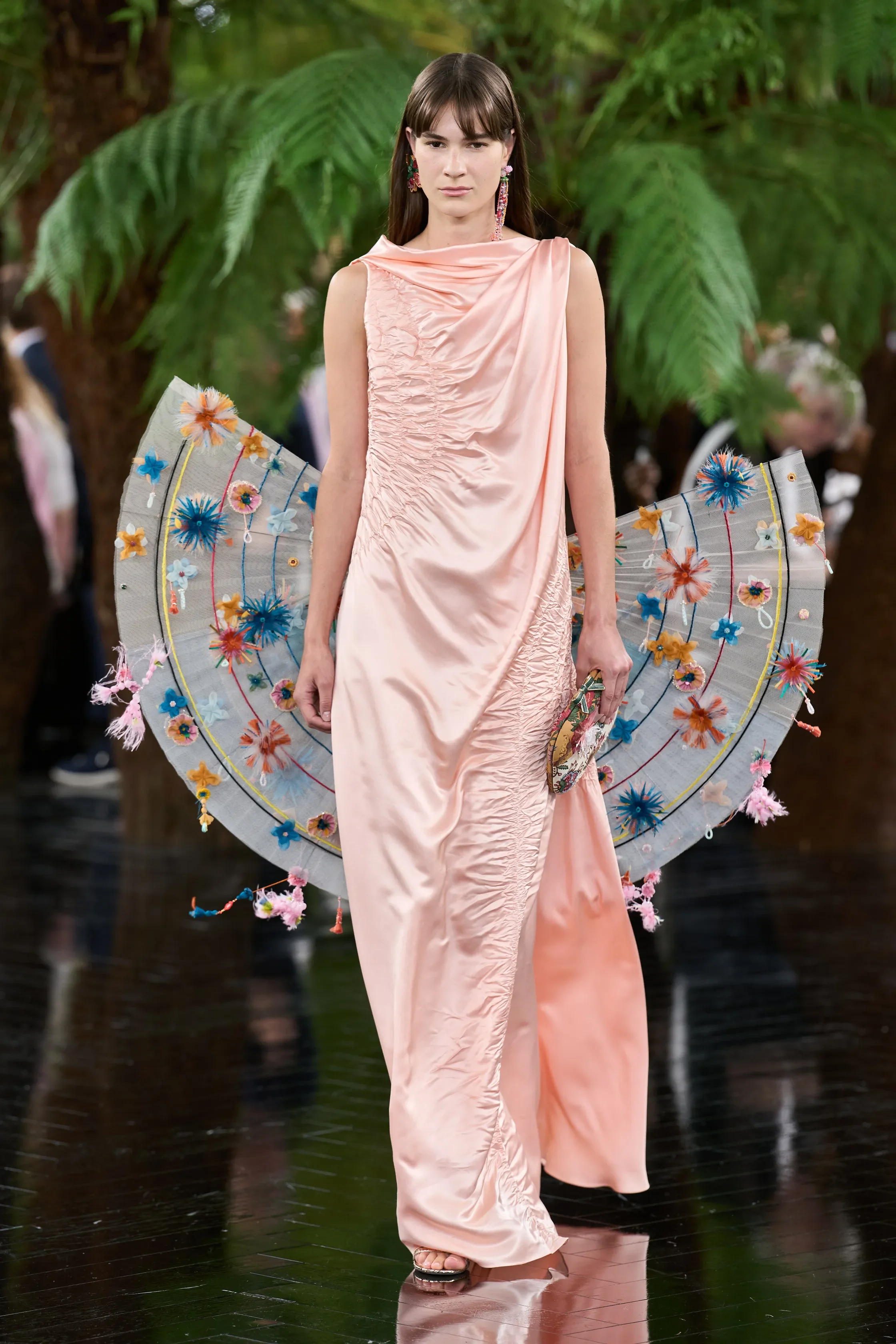
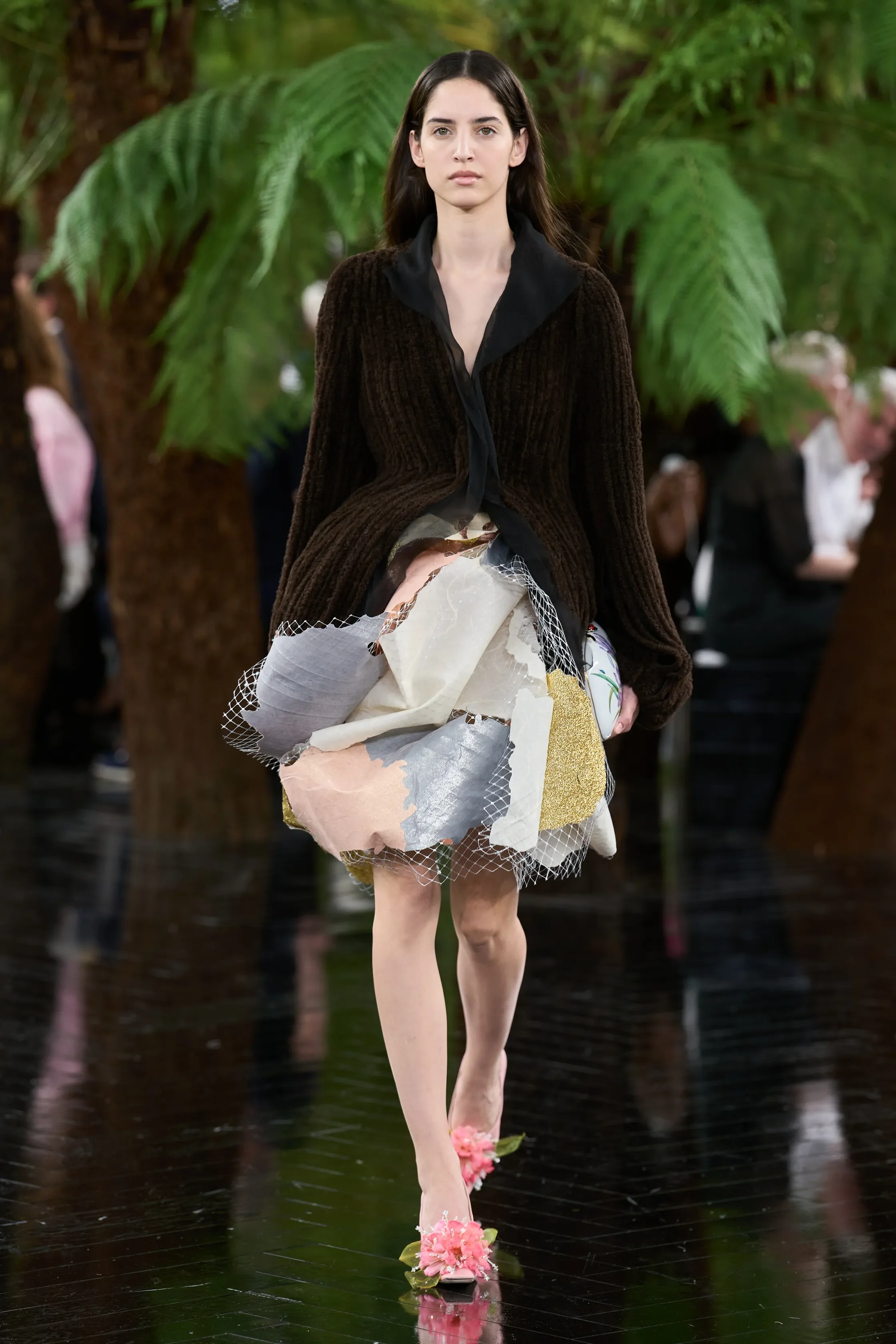
The influence of American sculptor Lynda Benglis was never simply decorative. Benglis’s work is visceral, physical, almost primal. It’s about molten materials, gravity, mass, things collapsing and reshaping themselves. Anderson borrowed her fascination with folding, knotting and manipulating materials into unexpected forms, translating sculpture into fabric through intricate hand-pleating, metallic finishes and draped constructions — but then he interrupted it with details that felt almost childlike. Pleated fans appeared as accessories and embellishments, tassels swayed from tailoring and eveningwear alike, while flowers bloomed from shoes almost as if they’d been picked moments before the show, acting as whimsical relief from the seriousness of the concept.
Antique Indian chintz appeared on Lady Dior bags, jewellery drew from traditional Indian craftsmanship, and floral embellishments referenced the contrasting landscapes of Gujarat and New Mexico that shaped Benglis’ artistic practice.
Anderson’s most radical gesture, however, wasn’t changing the Bar jacket or introducing a new silhouette. It was changing the relationship between the wearer and the clothes. Couture so often asks those who wear it to submit to it — to stand straighter, move slower, become part of the show. Here, the clothes seemed willing to meet us halfway. They twisted, draped and unfolded with movement rather than resisting it, making the wearer feel less like a mannequin and more like themselves.