
MILAN FASHION WEEK FALL/WINTER 2026: DAY 2
JIL SANDER
review by MARIA MOTA
all images courtesy of JIL SANDER
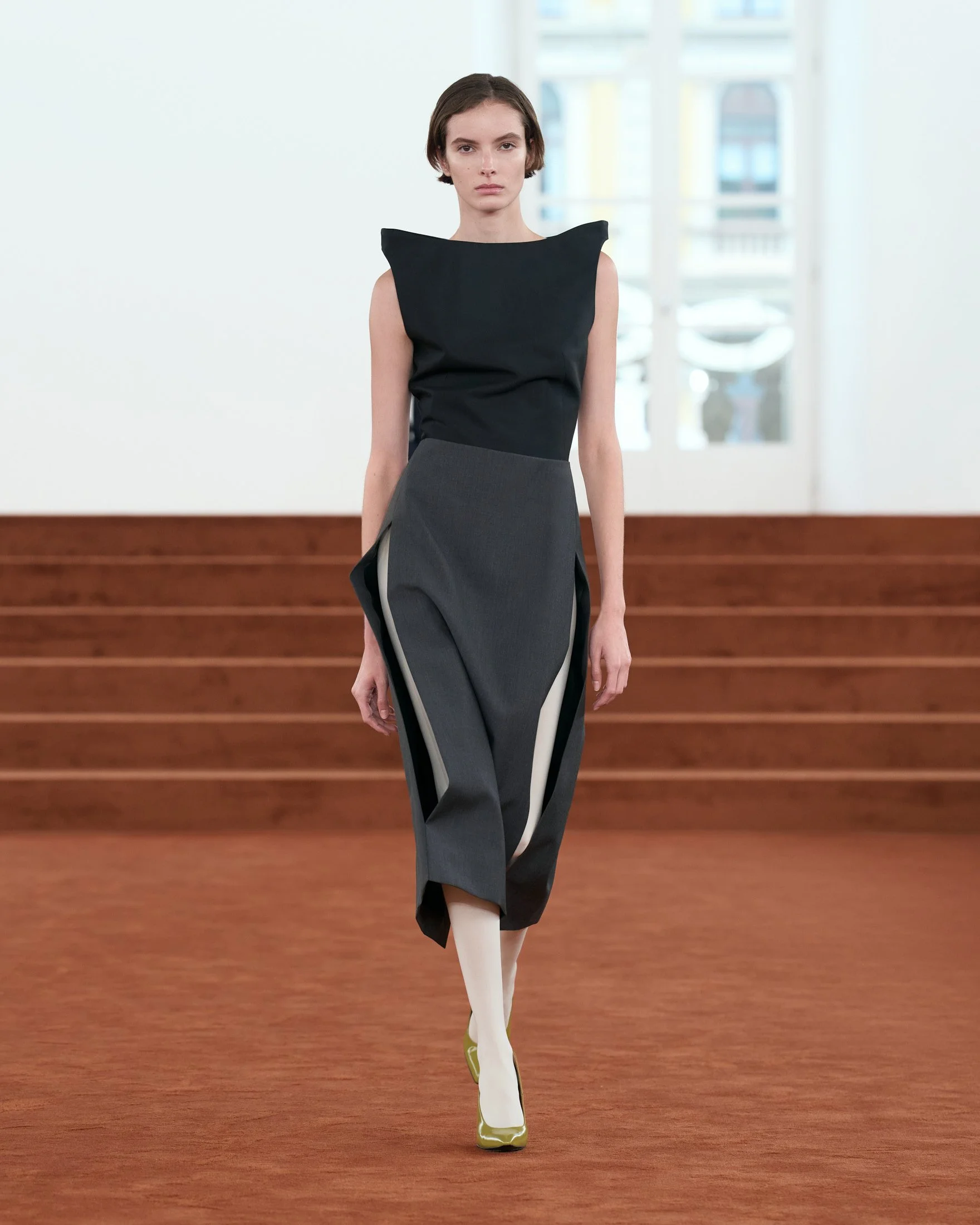
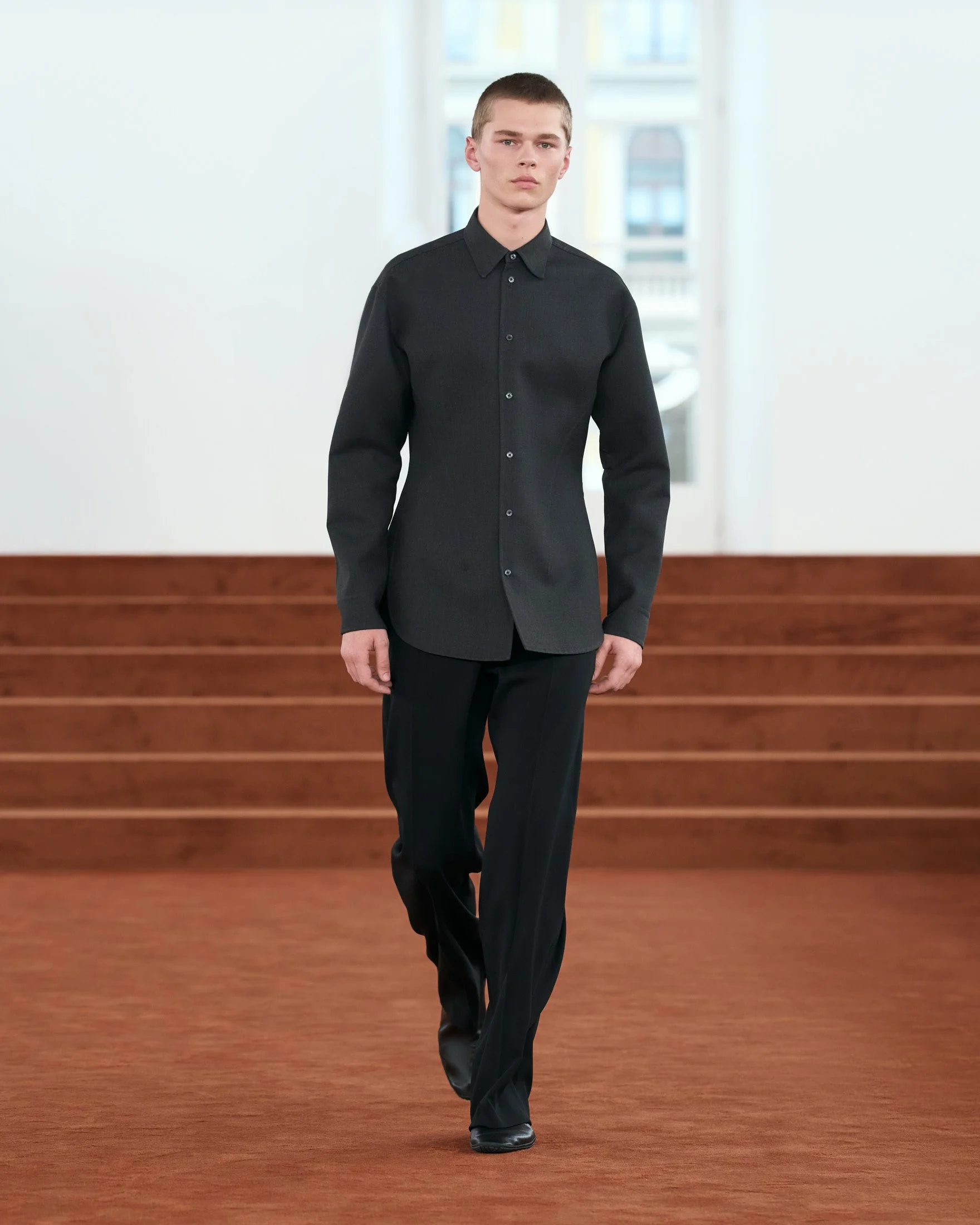
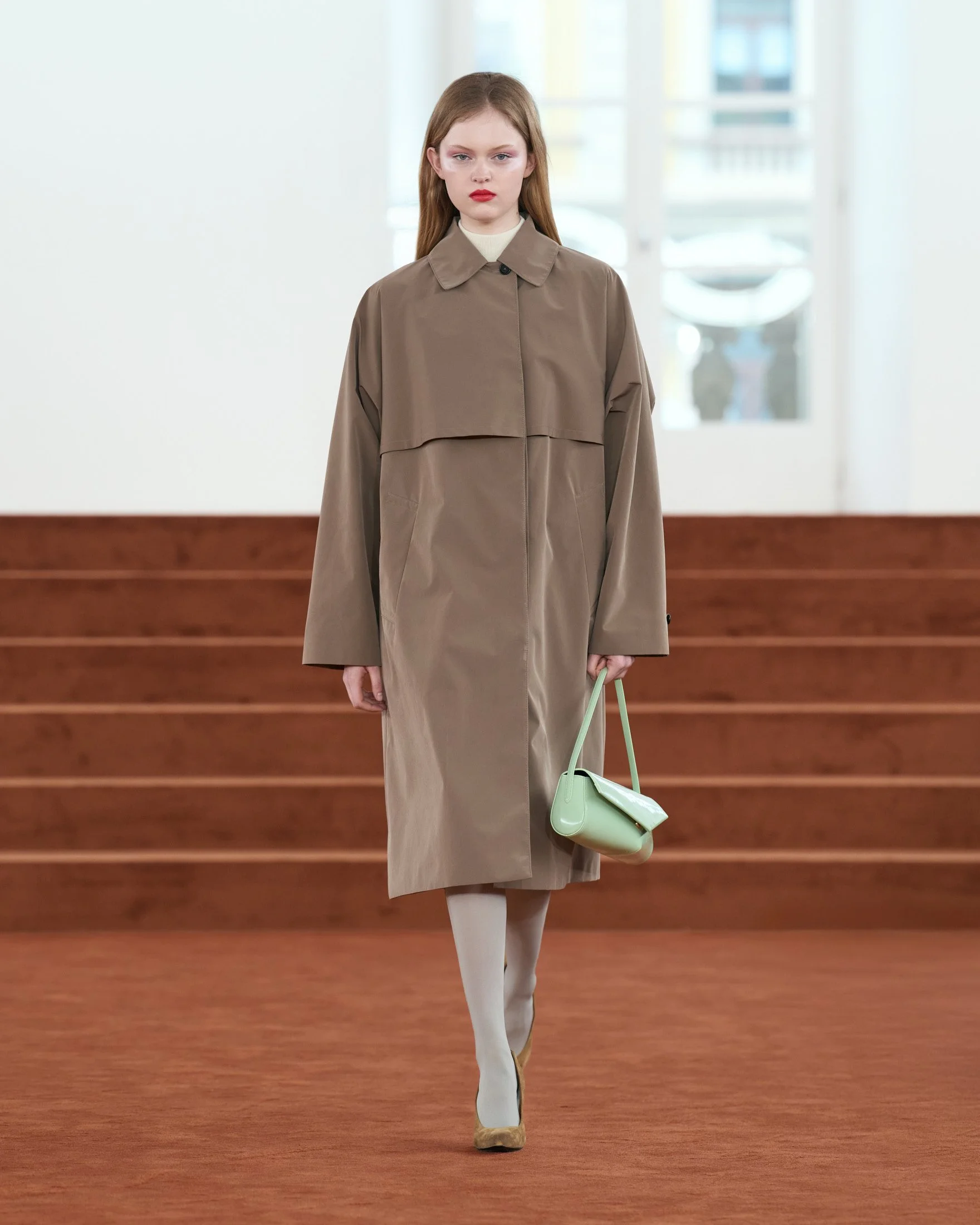
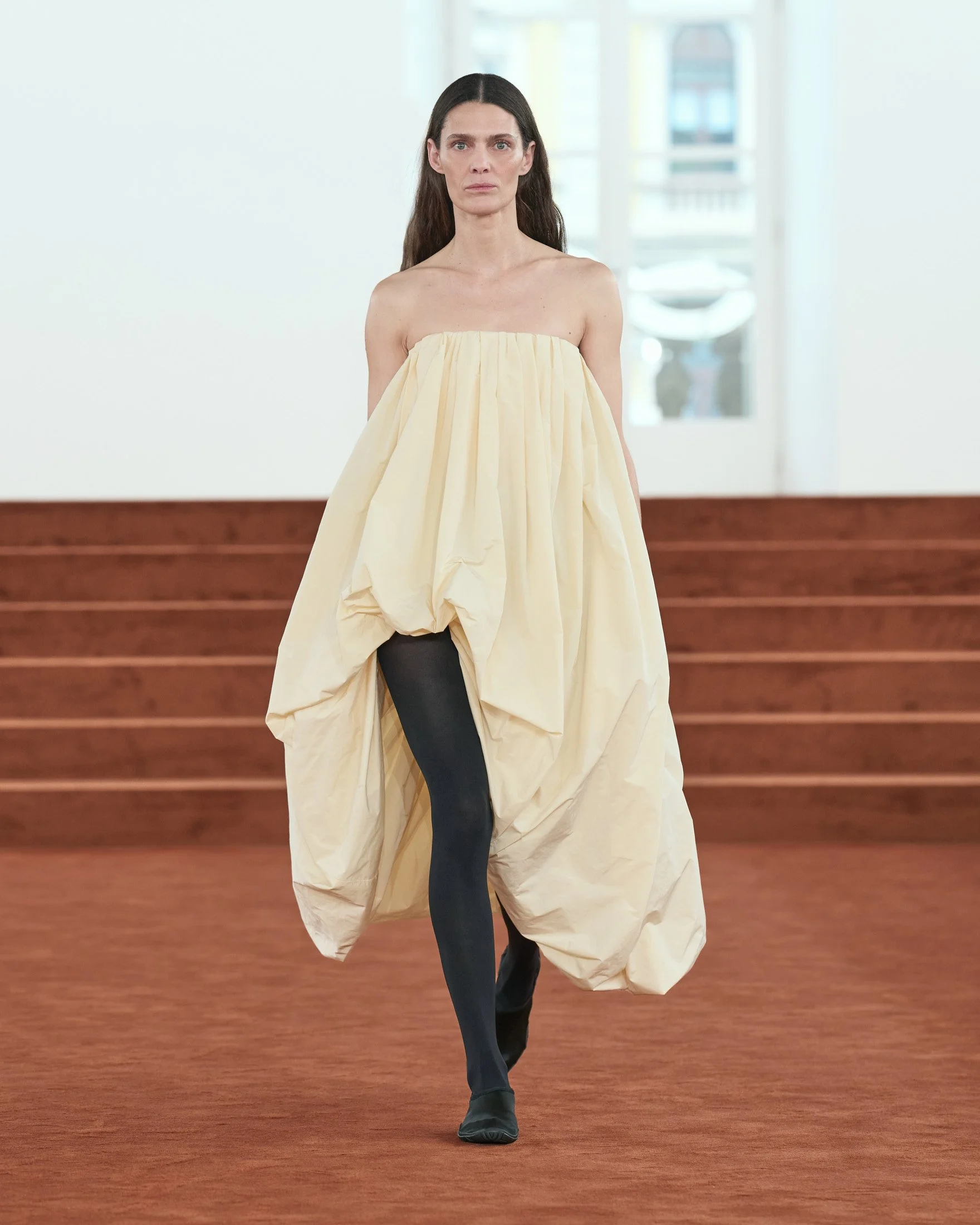
For FW26, Simone Bellotti wanted to translate the idea of home into the textures and feeling of the collection. Showing at the Jil Sander headquarters sharpened that intimacy. Bellotti returned to the house codes of essentials, tailoring, and razor-sharp minimalism, but this season he added some heat to the mix, too. A sensual charge ran softly under the surface.
Leather, in particular, was exquisite, delicate yet sharp. A leather coat-turned-dress curved open in the slightest slit, revealing only a whisper of skin. A dress that appeared to fall from the shoulders was, in fact, secured by a hidden bustier. Skirts in suiting wool were sliced at the sides, allowing movement to do the seducing. Here, Simone showed us how minimalism, at its most exacting, can also be profoundly sexy.
This tension between structure and release defined the mood. Silhouettes were slim and elongated, occasionally interrupted by moments of puffed volume, with upholstery references emerging in moulded hourglass shapes and padded textures. Decorative ruffles traced the side of trousers, and what appeared to be excess fabric burst through sleeves and necklines.
Details felt gently displaced. Collars shifted off centre, pockets drifted, shoulder lines lifted slightly away from the body, and a button was left undone. White stitches marked coats like quiet annotations, drawing attention to the craft. Hair was loose or loosely tied at the nape. The clothes hovered between dressing and undressing, unfinished yet entirely complete.
Colour peeked beneath the neutrals, deep blues, mint green, and lilac emerging from coats and accessories against the familiar black, brown, grey, and crème. Bellotti, who honed his eye at Bally, knows that shoes do more than anchor a look. Here, they were the quiet centre of attention, patterned and precise, the detail you returned to again and again.
ANTONIO MARRAS
review by ANOUK WOUDT
all images courtesy of ANTONIO MARRAS
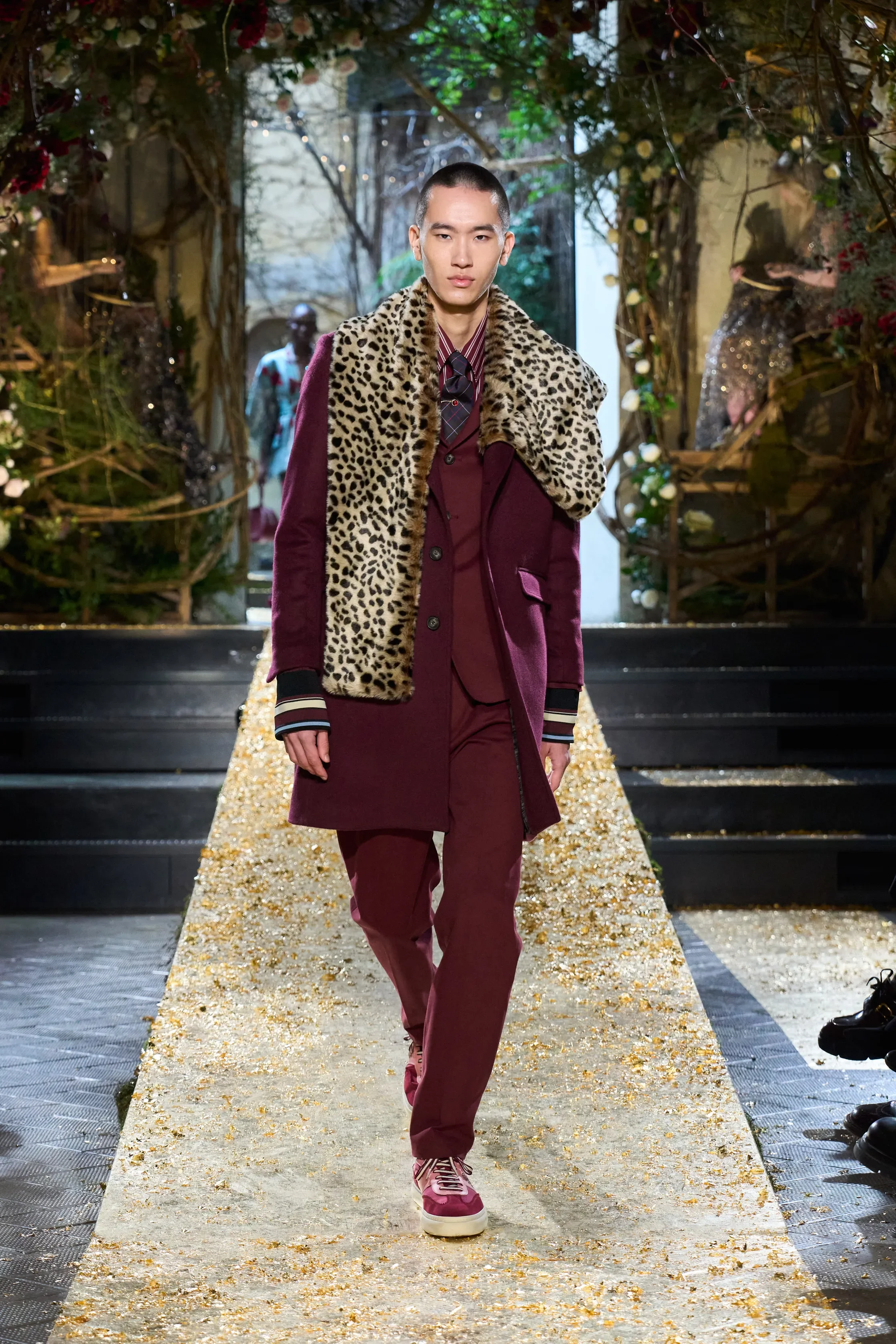
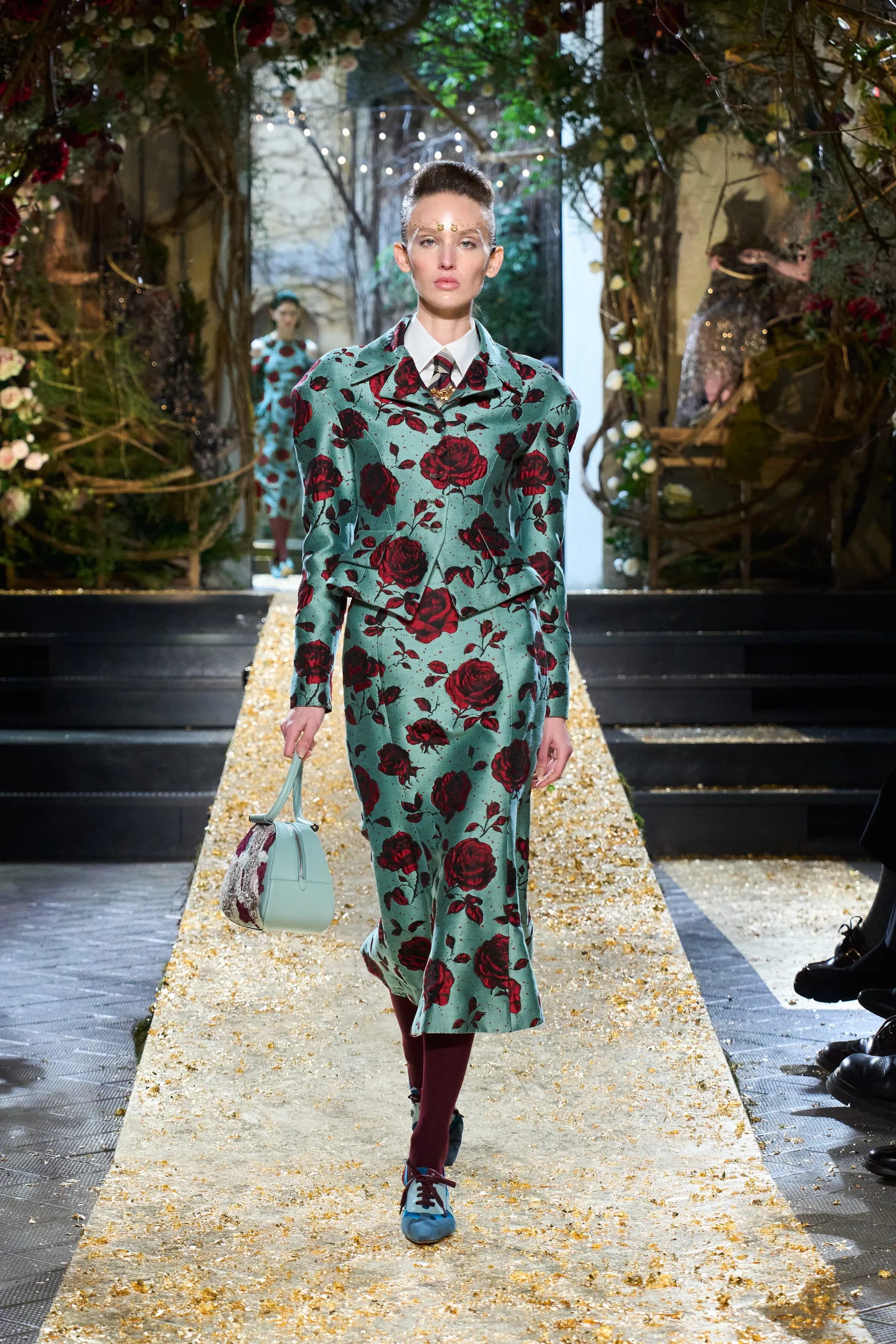
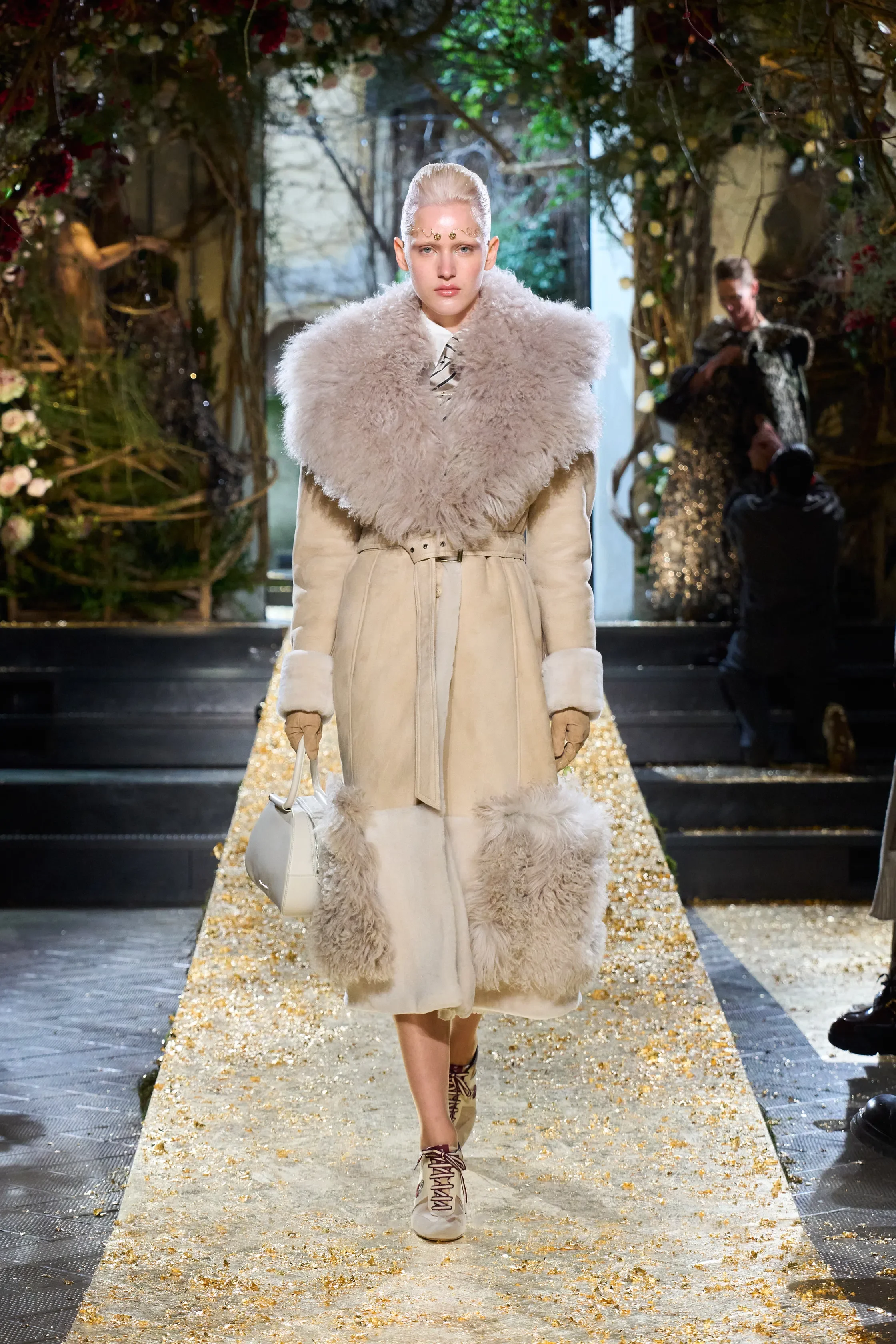
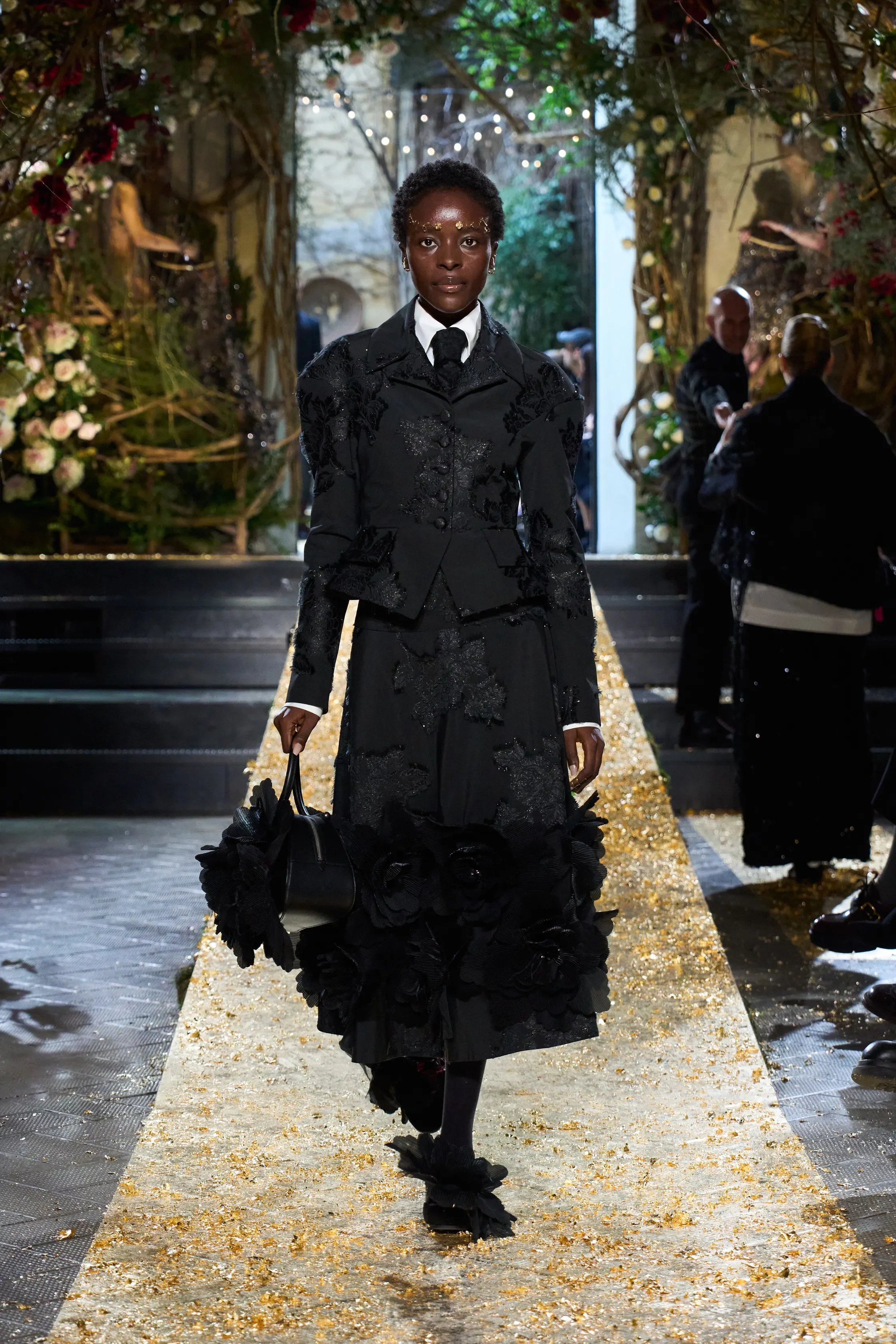
For his fall collection, Antonio Marras drew us into a thorny rose-covered fairytale, complete with a touch of romance. Transforming his Milan Headquarters into a mystical garden, the show’s intimate atmosphere instantly set the mood. Models swooned, interchanging in a delicate lover’s dance, often showcasing looks in duos.
Bright red roses and embroidered embellishments adorned every other look, with a distinct ferocity that breathed through delicate mesh and chiffons. With velvety cheetah prints, furs and gaudy dangling earrings that might’ve read as cheap to the modern eye, their existence was reimagined in a way that draped the looks in a warm regality. Laced up knee high boots also grabbed our attention, along with charmed bulbous bags that served as a perfect Birkenified accessory.
Through an expansive fifty runway looks, a range of characters were introduced, though this pails in comparison to Marras’ typical 100-look shows. Still, his narrative integrity rang true, accompanied by swells of classical orchestrations that stole you off into a folkloric realm. Completed by background models gracefully embroidering through shadowed branches and dainty gold facial ornaments in the form of flowers, this collection truly felt otherworldly.
FENDI
review by MAREK BARTEK
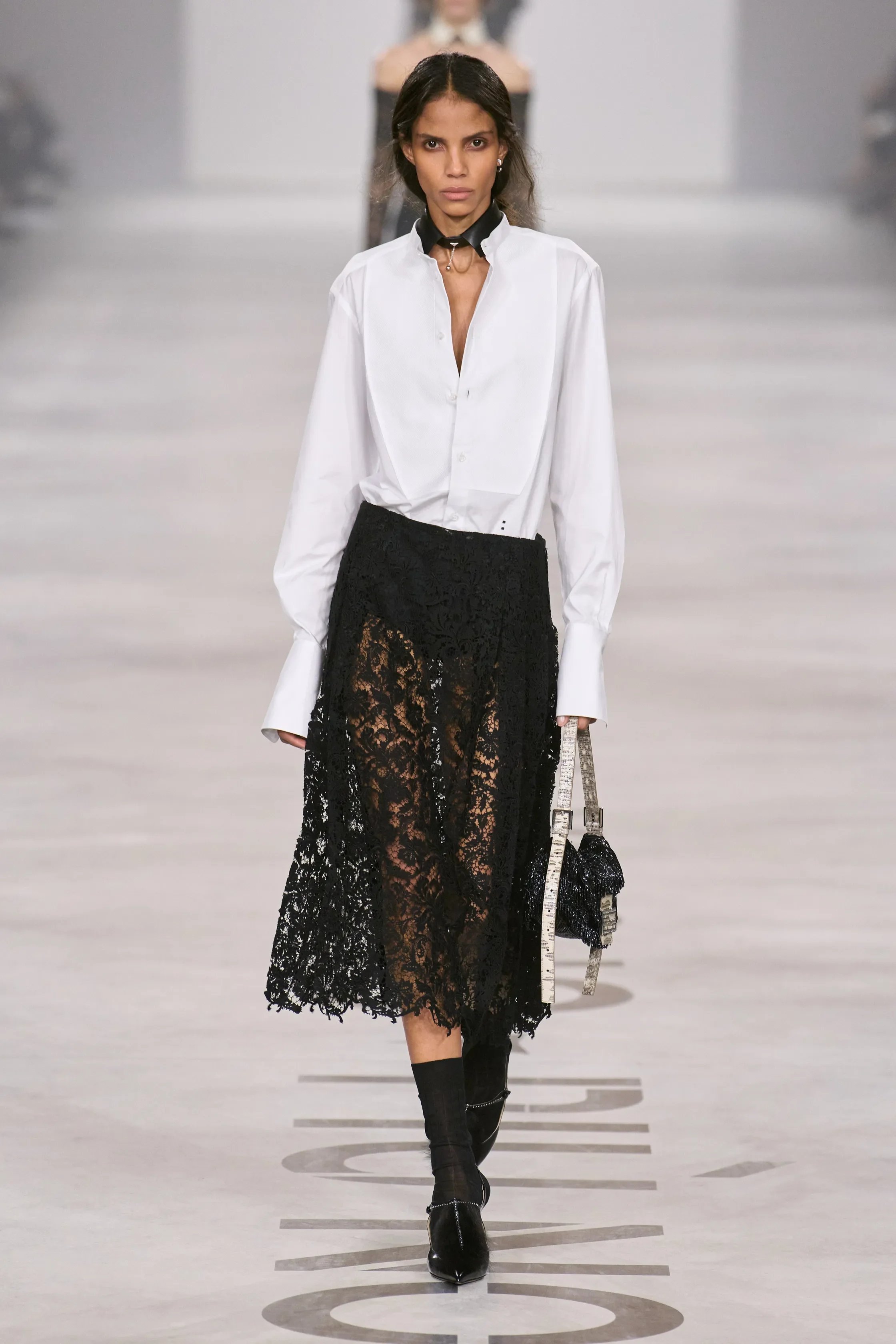
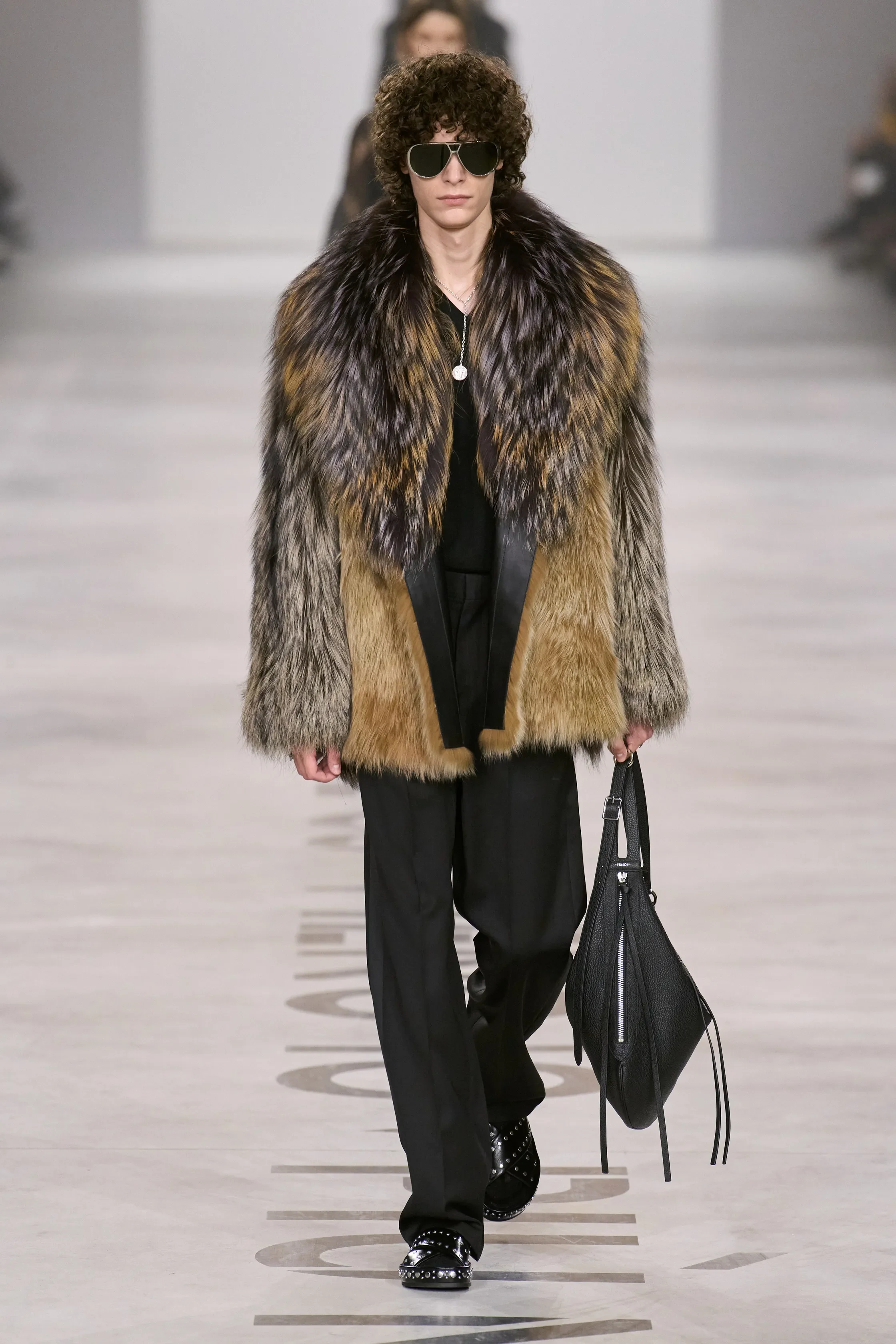
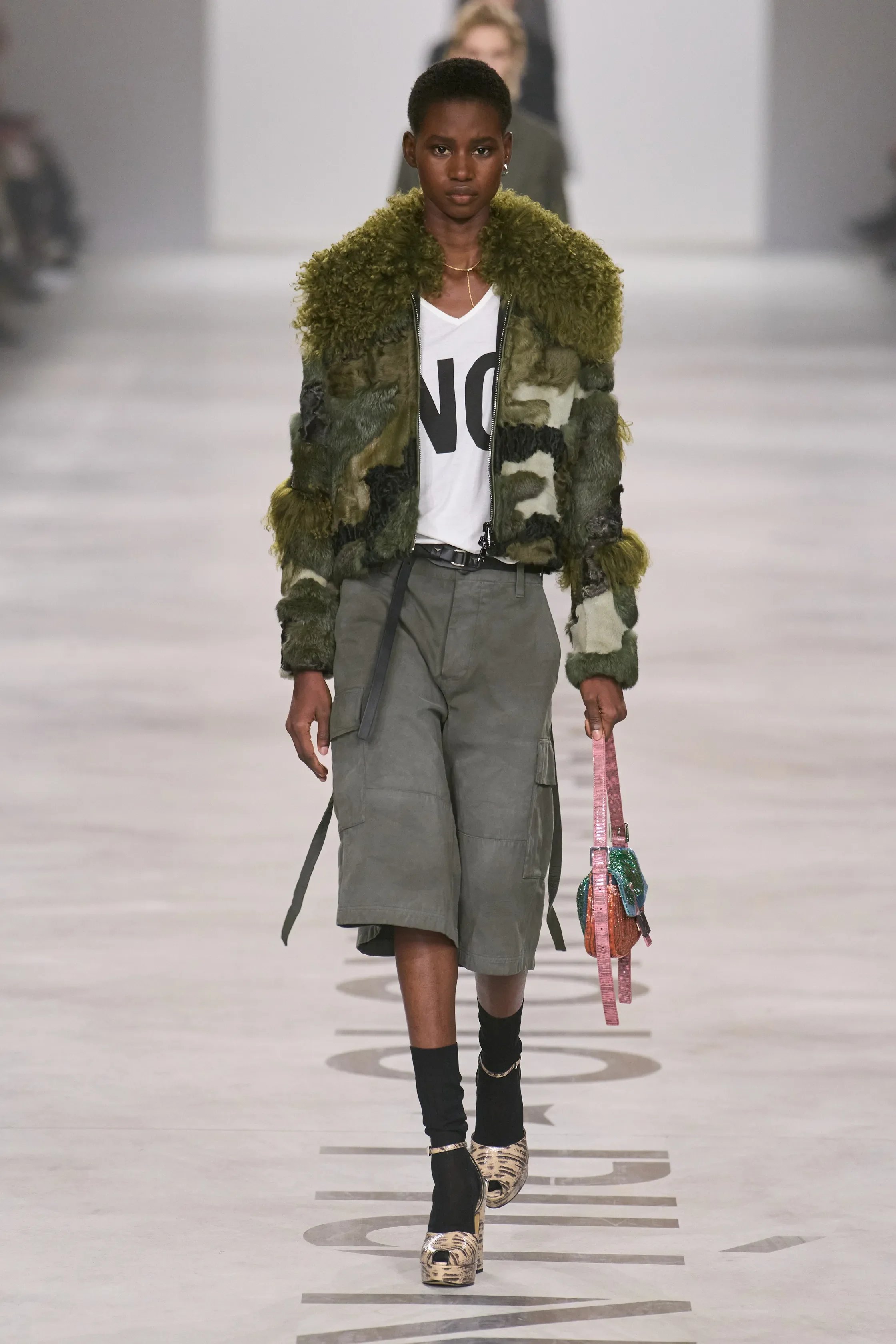
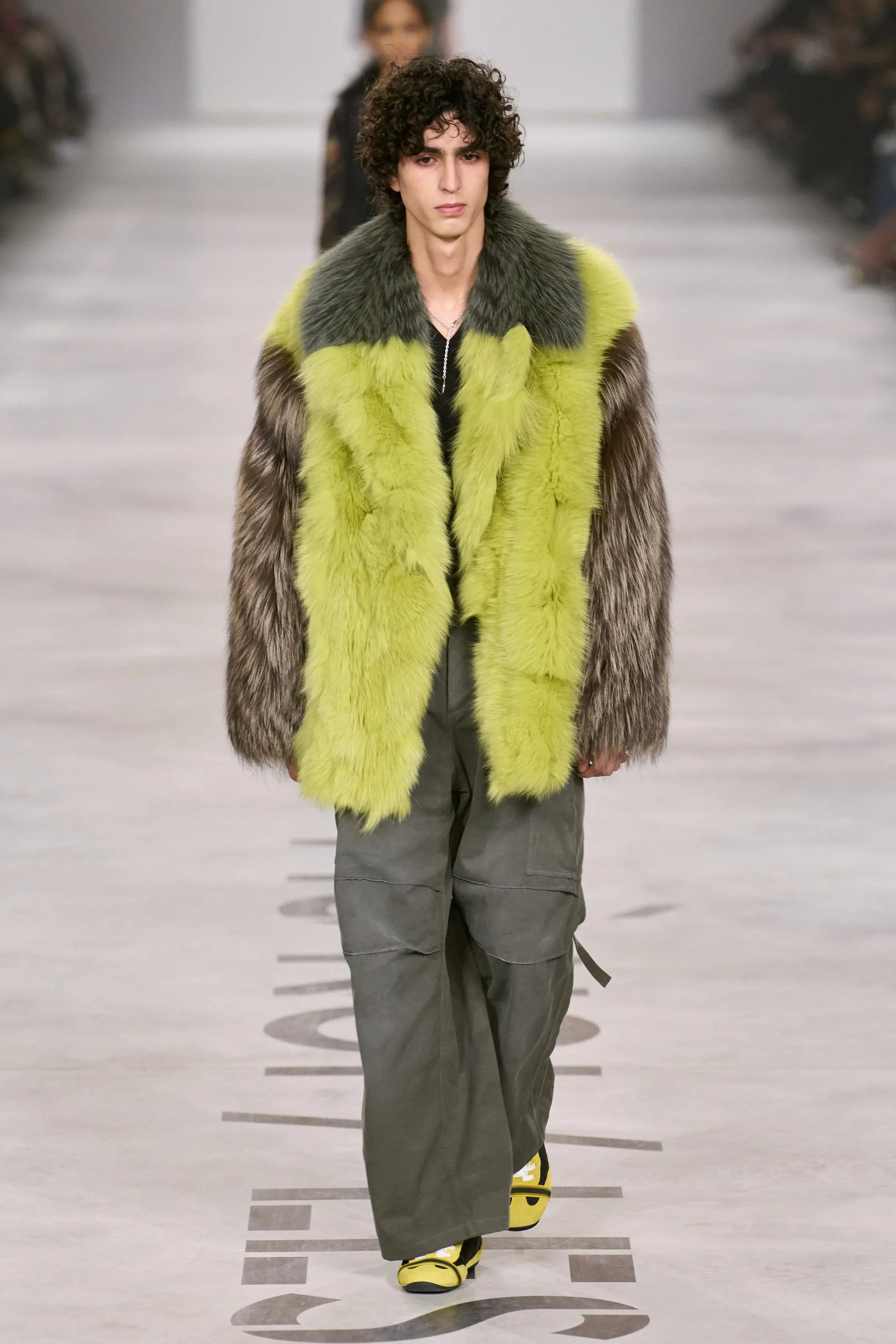
all images courtesy of FENDI
After nearly three decades, Maria Grazia Chiuri returns to Fendi as the successor to Silvia Venturini Fendi, and early this afternoon she presented her vision for the House. Chiuri, famed for her strongly feminist designs, looked to none other than the Fendi sisters as her starting point. In the 1940s, when women were rarely able to hold leadership roles, Fendi was managed by sisters Paola, Anna, Franca, Carla, and Alda, who helped expand the family business — eventually propelling it forward when they hired Karl Lagerfeld as creative director.
The name of the collection, Less I, More Us — visible as a stencil print at the venue — carried multiple references. As she admitted backstage: “They (the Fendi sisters) were my mentors. They gave me my career. And I felt part of their teamwork. I would like people to remember all that they created at Fendi.” Beyond the sisters, the title also commented on gender, merging women’s and men’s wardrobes into one — a bold and commendable move for a House of this scale; and the environmental side of fashion surfaced as well, with Chiuri reminding us of our collective responsibility to extend garment’s life cycle far beyond a single season. Restyling is always an option, even if it means deconstructing a fur jacket and restitching it into a new shape.
Though the message was communal, the collection itself felt distinctly MGC — highly reminiscent of her years at Dior. In true Chiuri fashion, the palette was toned down to black, midnight blue, and soft shades of beige. “I’m tired of looking at colours on Instagram. Fashion is not entertainment. Fashion is a job,” she said. And while yes, fashion may be a job, it is not a crime for it to be fun. That dark brown fur coat with bright red polka dots from FW25 suddenly seems so far away. We can’t help but wonder: where is the indulgence in textures, materials and cheeky details that used to make a Fendi show the sensory experience? The clothes this season are meant to be “easy to wear” — and while they are extremely wearable and chic, Chiuri’s Fendi feels cold and uncomfortably dominating.
That being said, if there is one thing no one can take away from Chiuri, it is her attention to detail and relentless pursuit of perfection. Her haute couture training at Dior clearly pushed her to be more confident with experimentation and it is apparent. From leather lace to fur collars to the overall precision of the fit, the collection is meticulously constructed, balancing craftsmanship with commercial awareness. Those zebra-print shoes will sell out in no time.
MISSONI
review by ANOUK WOUDT
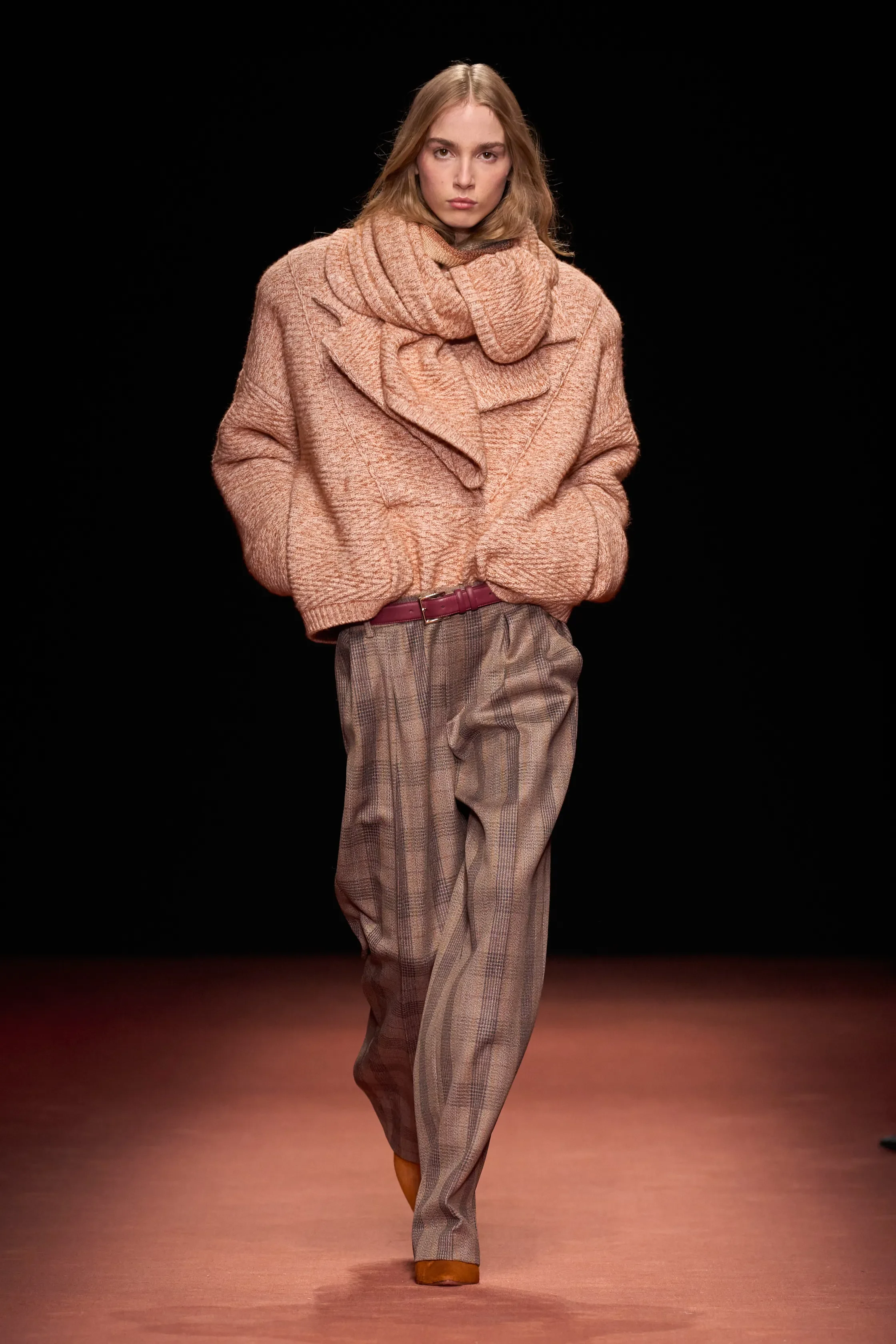
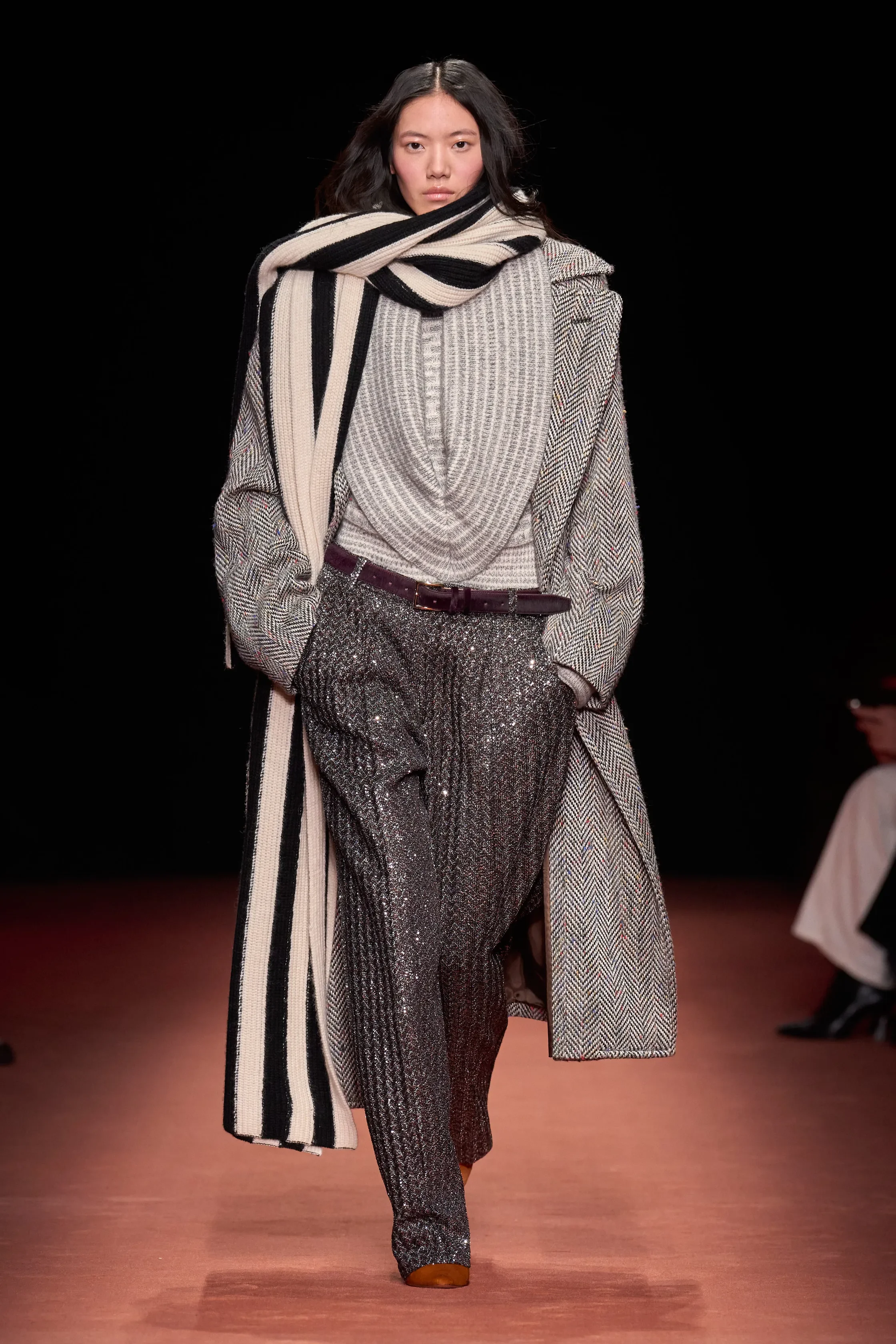
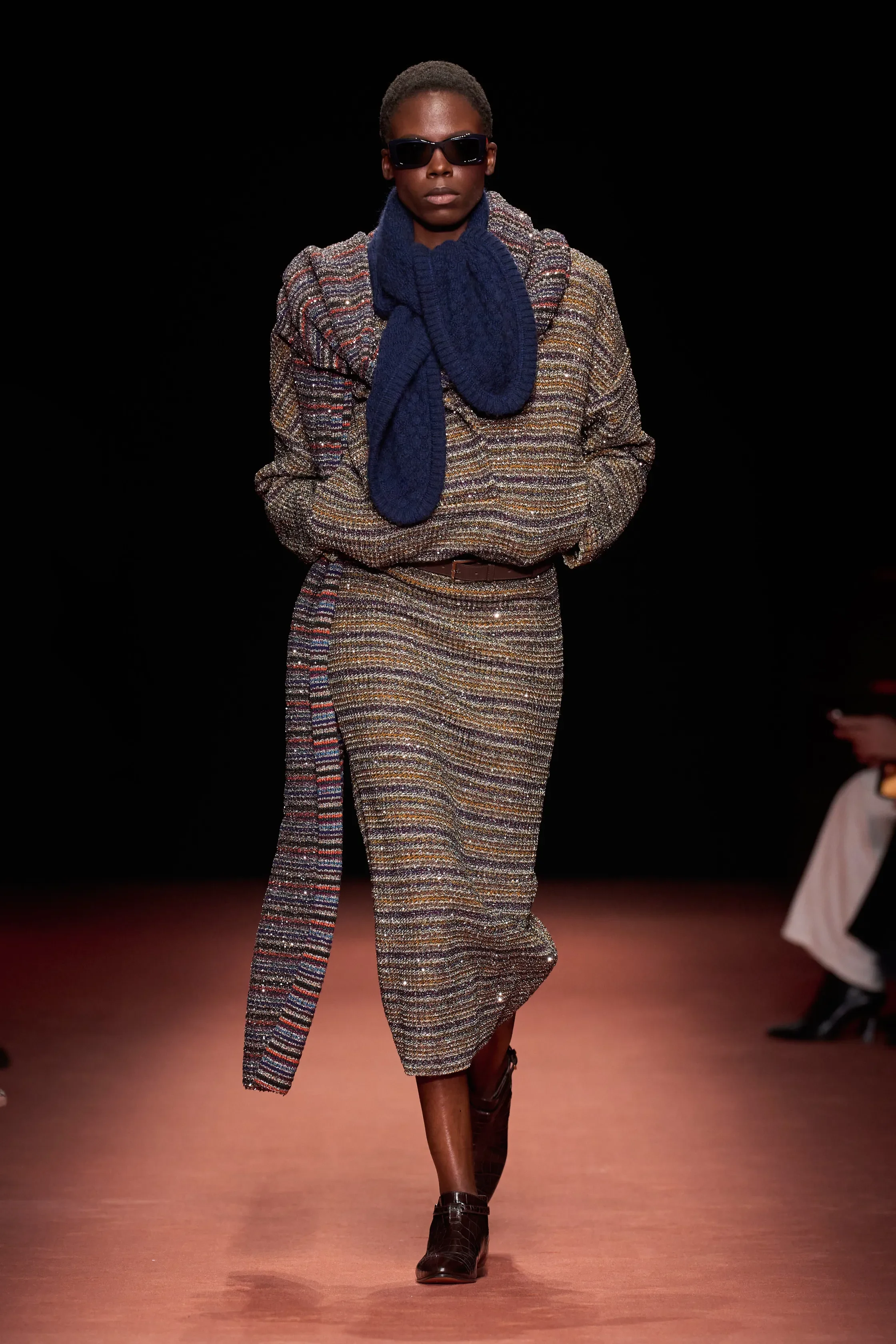
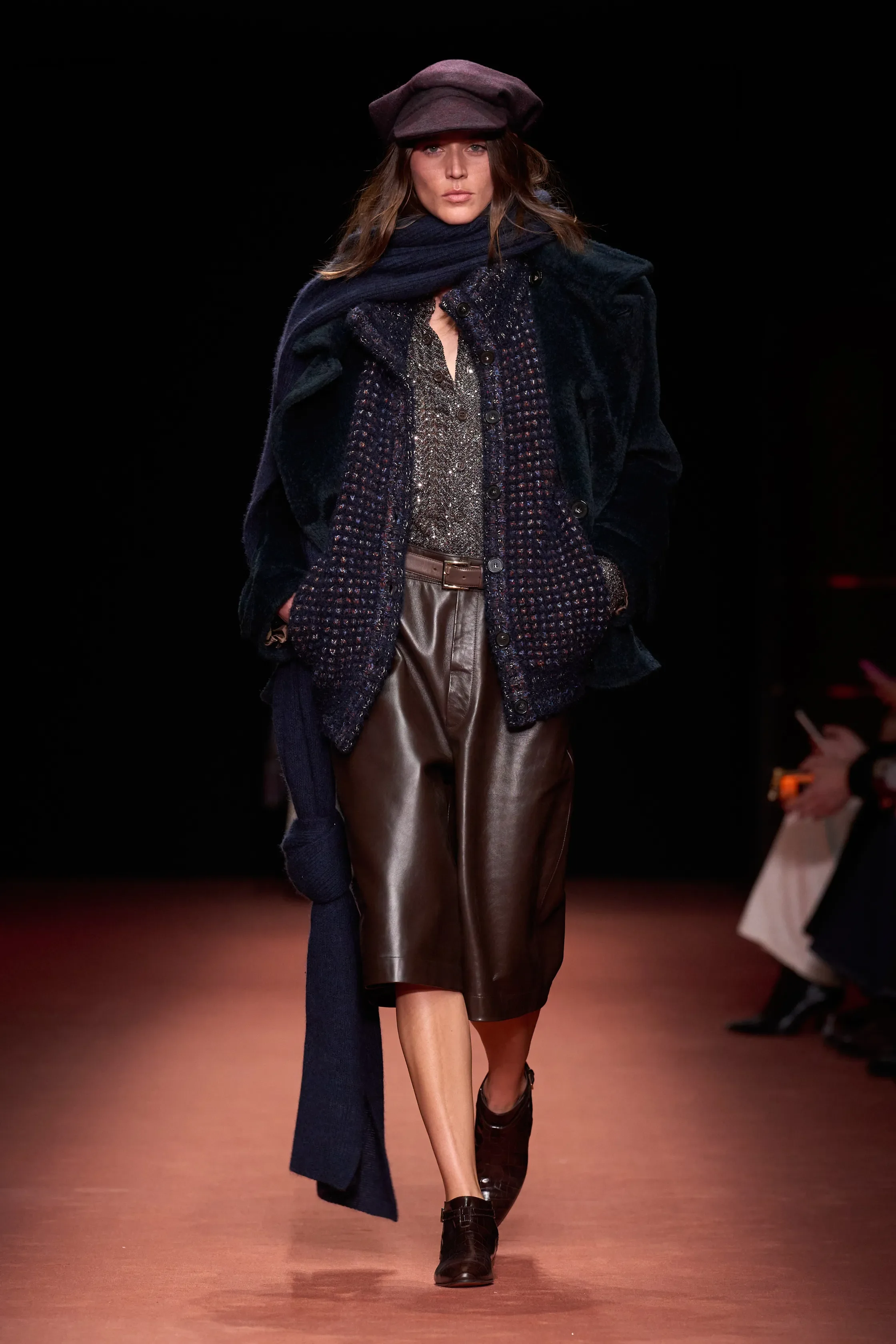
images courtesy of MISSONI
Glitters and patterns were definitely on the mood board for this season, creating a bold extension of the Missoni we know and love. Clashing stripes and plaid met shimmering trousers and bulbous coats, forming a subtly loud persona that invites the eye to linger.
With looks swaddled in burgeoning woolen scarves tangled amongst one another, a unique top-heavy silhouette emerges across the collection. Big-shouldered blazers and dropped waists only served to accentuate this, giving us full-on mob husband energy. In an attempt to break the visual stimulation, moments of monochrome paired with sharp heels breathed a much-needed air of elegance into the atmosphere. Through the layers of knits and belts overlapped in playful orchestration, each look exudes the elevated casualness that has become synonymous with the brand.
What really stood out to us, though, were those floppy newsboy-chic hats, adding an extra flourish that sets it apart from previous collections. Combined with the innate coziness of the collection, everything comes together to create a soft style punctuated by sudden, playful instincts– in quintessential Missoni fashion.
ONITSUKA TIGER
review by VERONICA TLAPANCO SZABÓ
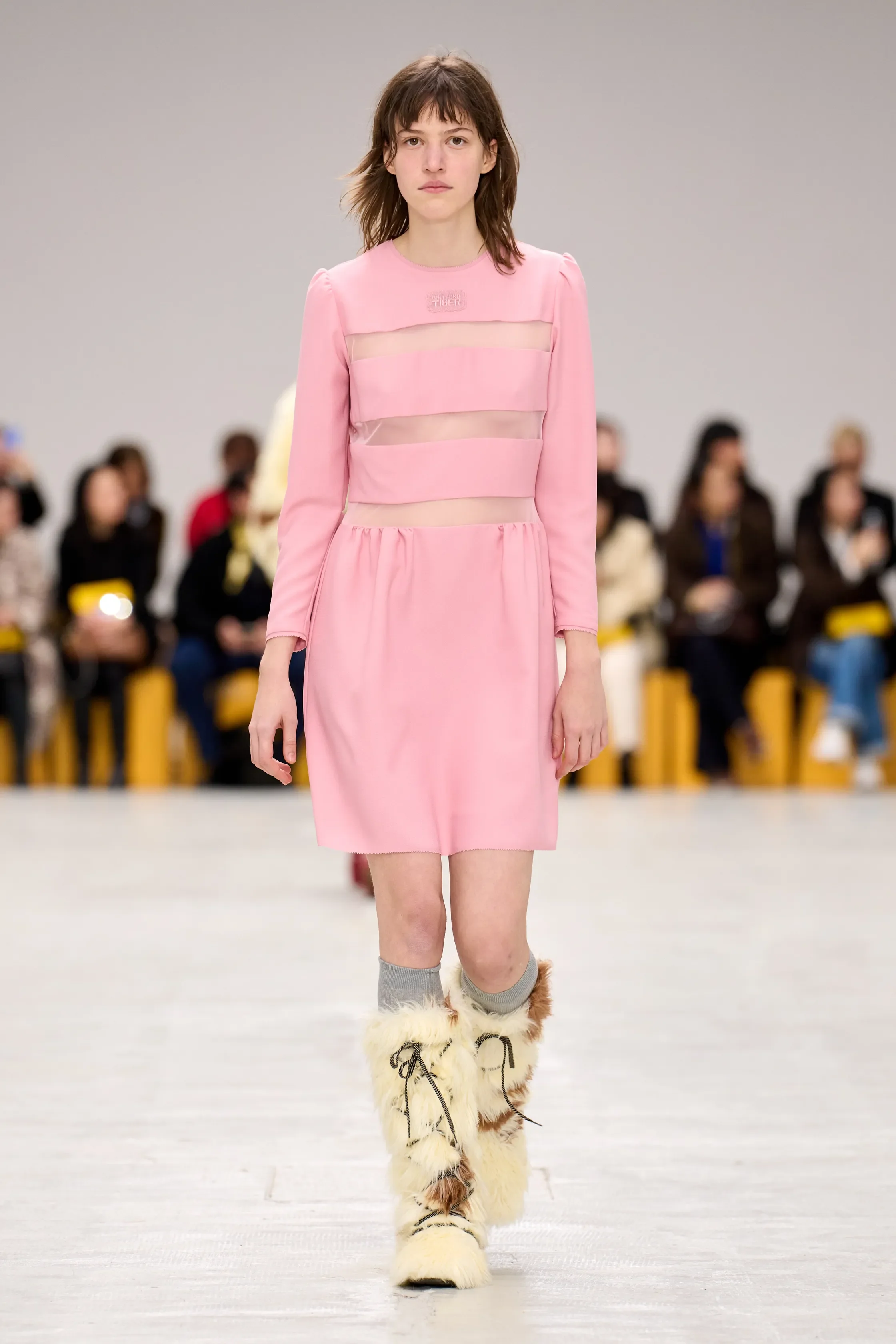
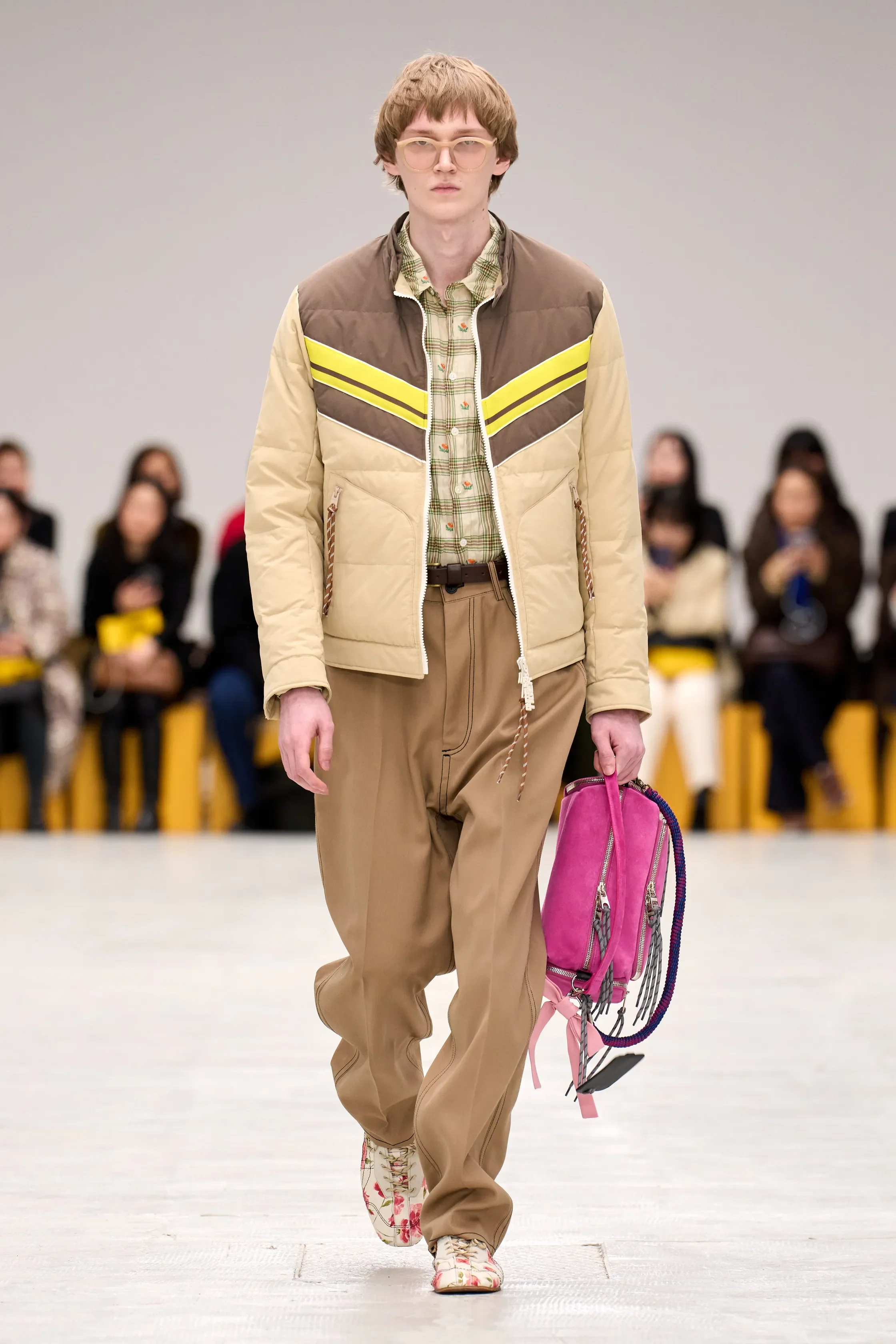
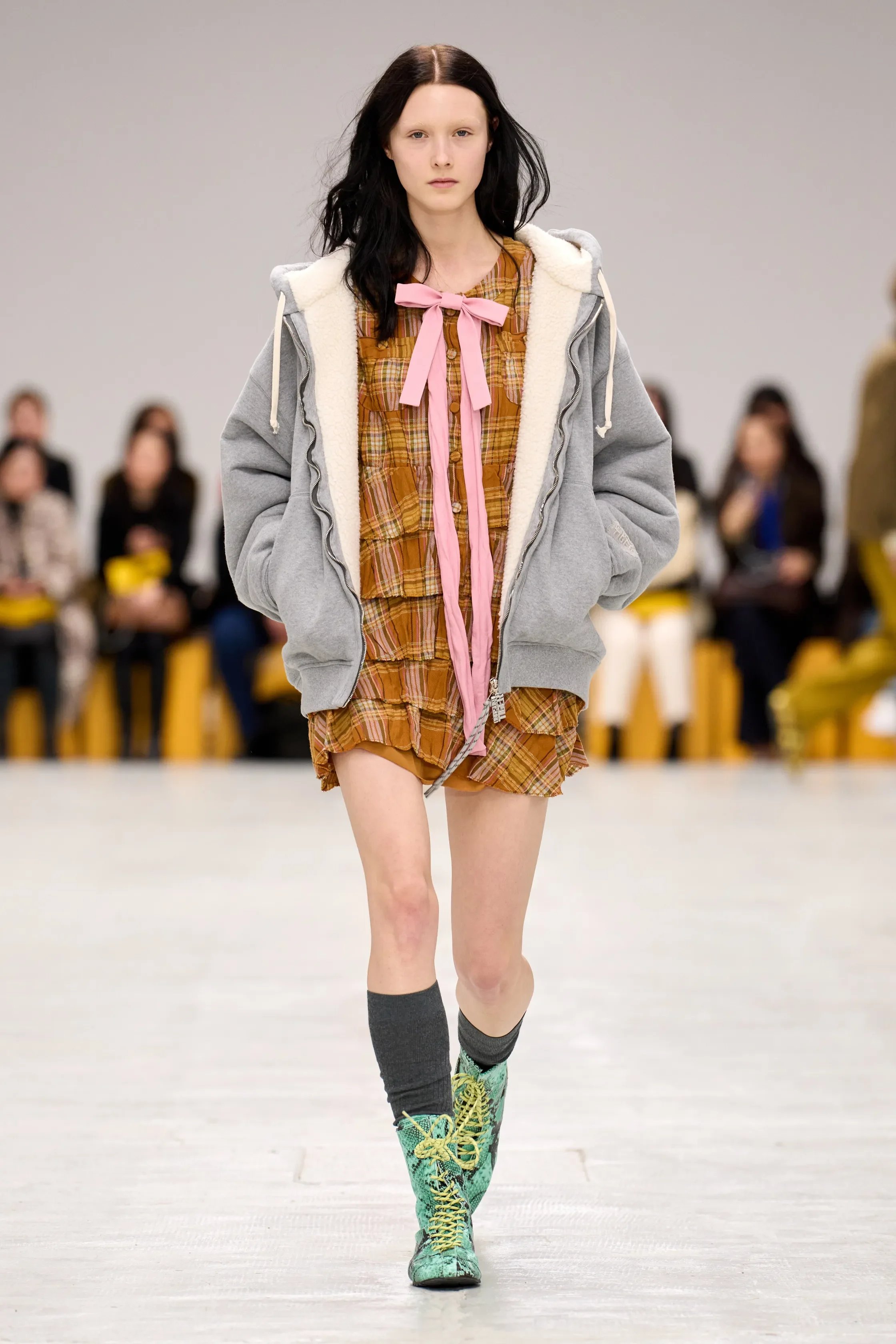
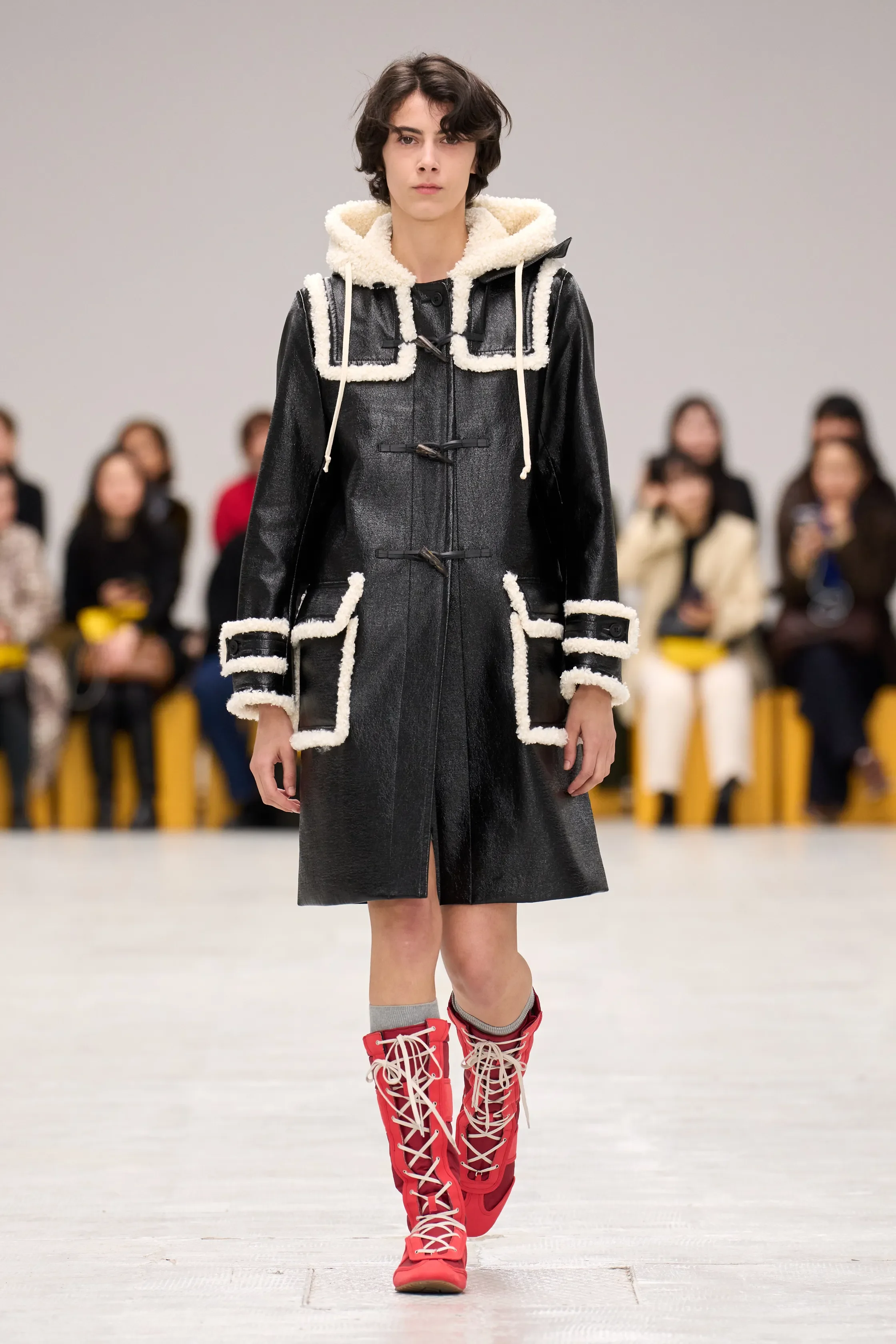
all images courtesy of ONITSUKA TIGER
It all started in a dimly lit, white columned space, bathed in the kind of glow that emanates from a crinkled paper lamp fitted with a pre-LED light bulb. A few four wheeled robots survey the room, before the starting signal begins: “Take it slow. Deep breath in. And gently breathe out. Allow your body to settle. Let your shoulders soften.”
Everything lit up and an electro thud set the opening look loose. A matching grey skirt suit, a quintessential Japanese pop culture code, was paired with a slingback kitten heel version of the Mexico 66 sneakers, of course fashioned with the Onitsuka Tiger stripes. The tall grey socks were swiftly followed by tall fluffy fur encased boots bulging from the feet, next to a polished pink sheer panel dress. It felt almost as though our eyes couldn’t help but dart to the shoes, as we most commonly encounter Onitsuka’s on the streets in their bright yellow form, and Andrea Pompilio leaned into this reflex by admittedly making the shoe the boldest point of colour in the outfit, allowing us to gaze upon the rest of the look second. The pops of pink multiplied as shoelace-like tassels dangled from all heights, serving as a visual manifestation of “Let your shoulders soften."
Oh, and the robots were around the entire time, with their position eventually changing to camera duty, conveniently positioned at shoe level. The collection as a whole did “gently breathe”, in its pastel kawaii shades, and the airy outerwear. There was a copious amount of leg shown for fall winter but honestly, with the 17 degrees we have just experienced, it might just be a timely adjustment to the changing weather...
N°21
review by MARIA MOTA
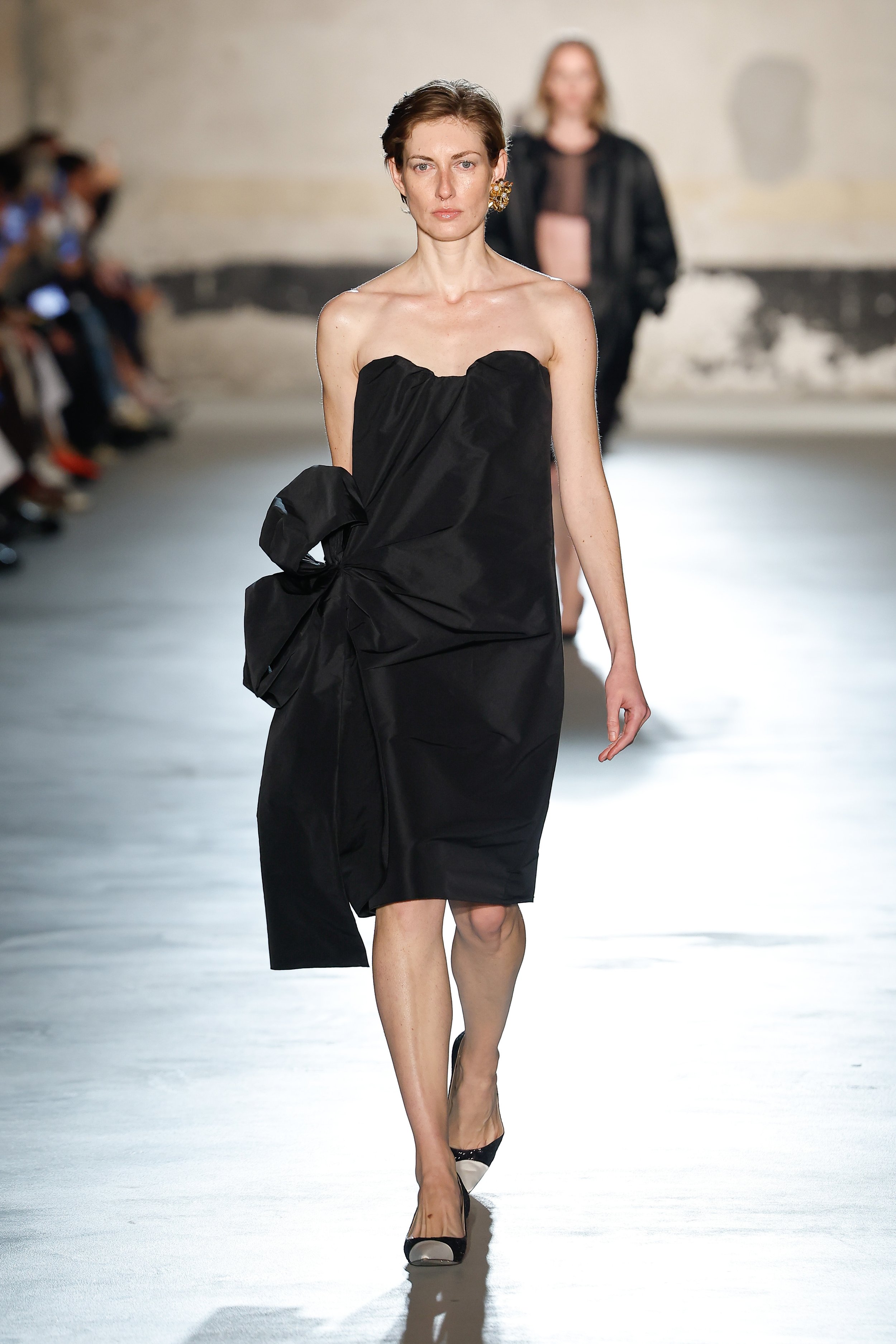
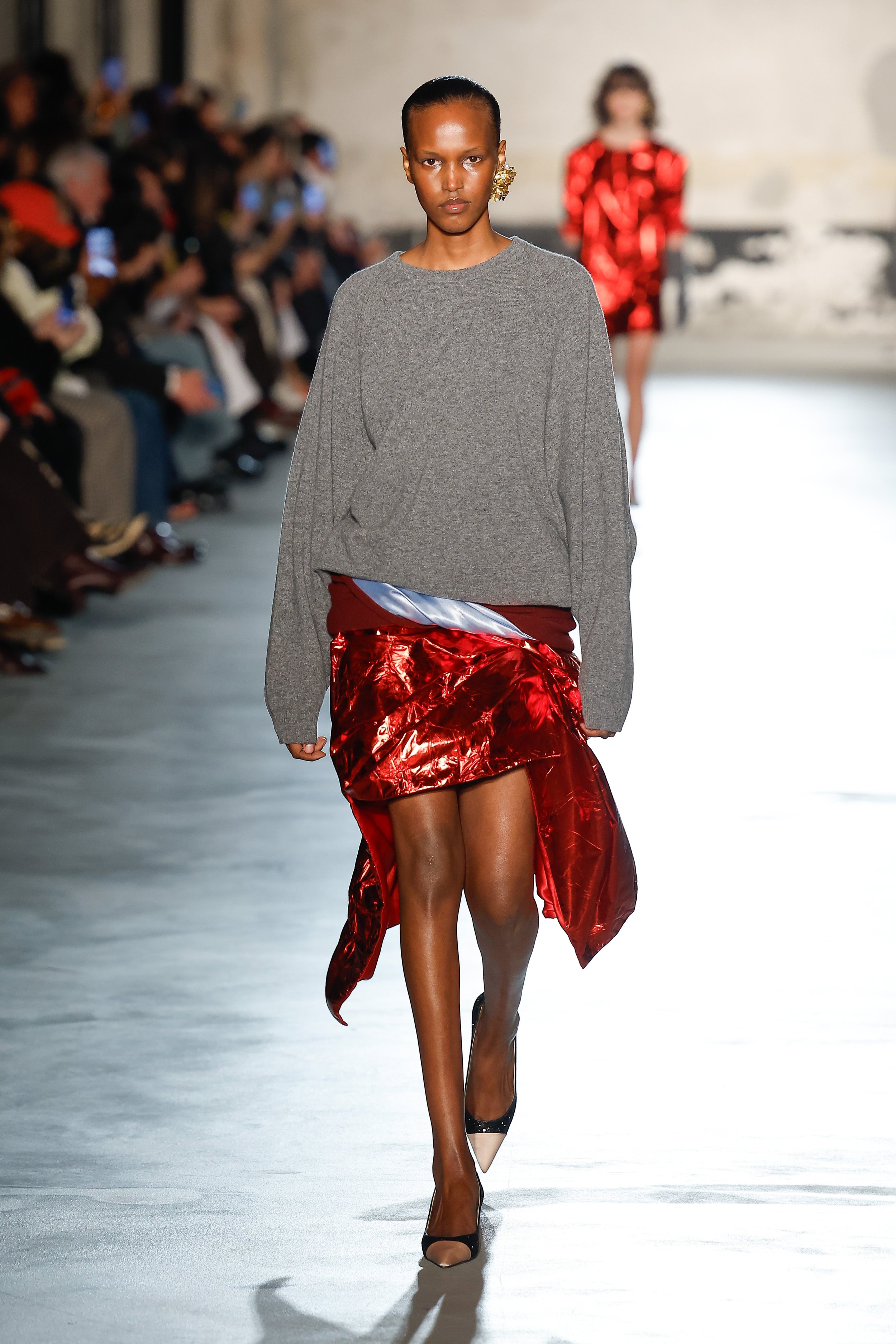
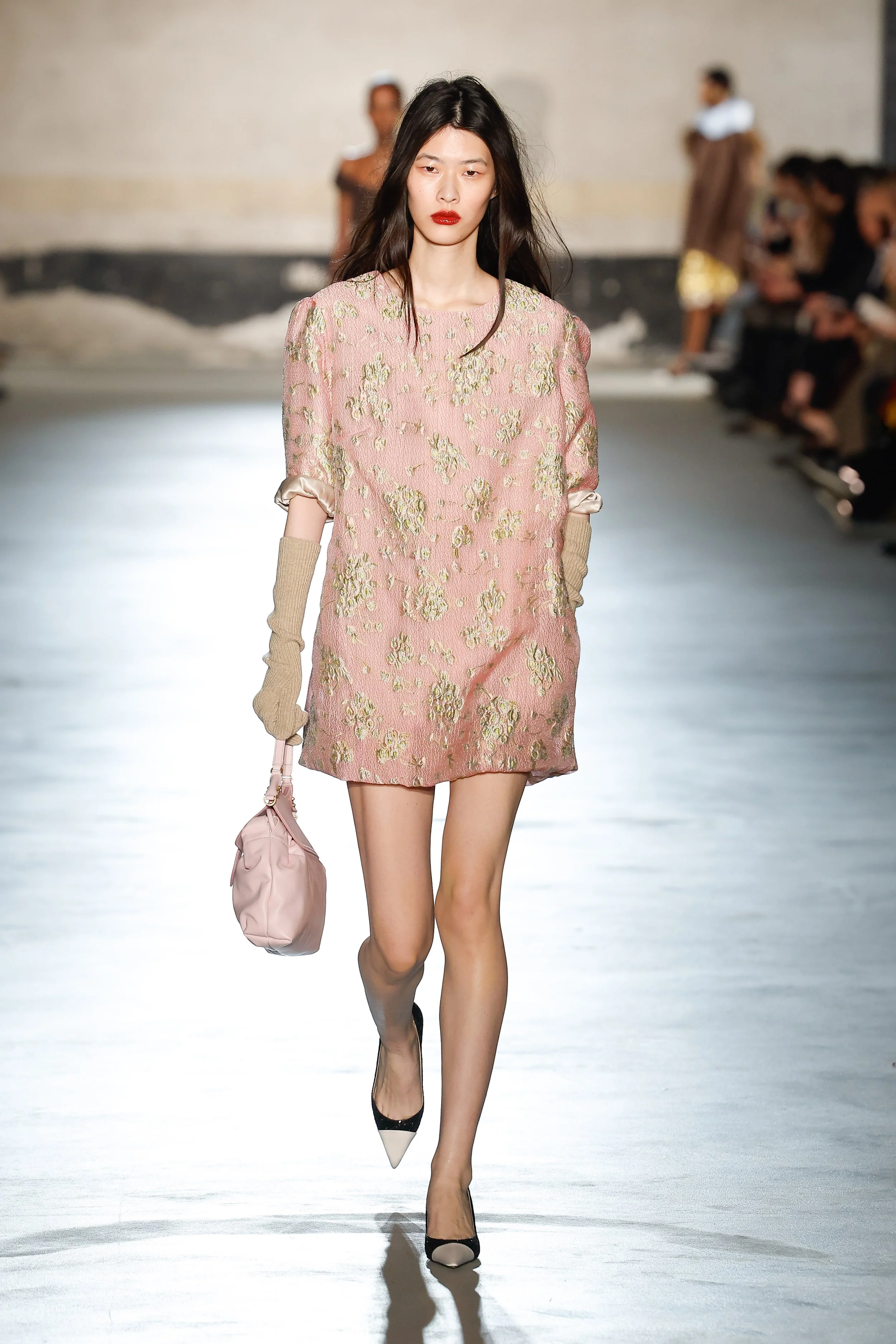
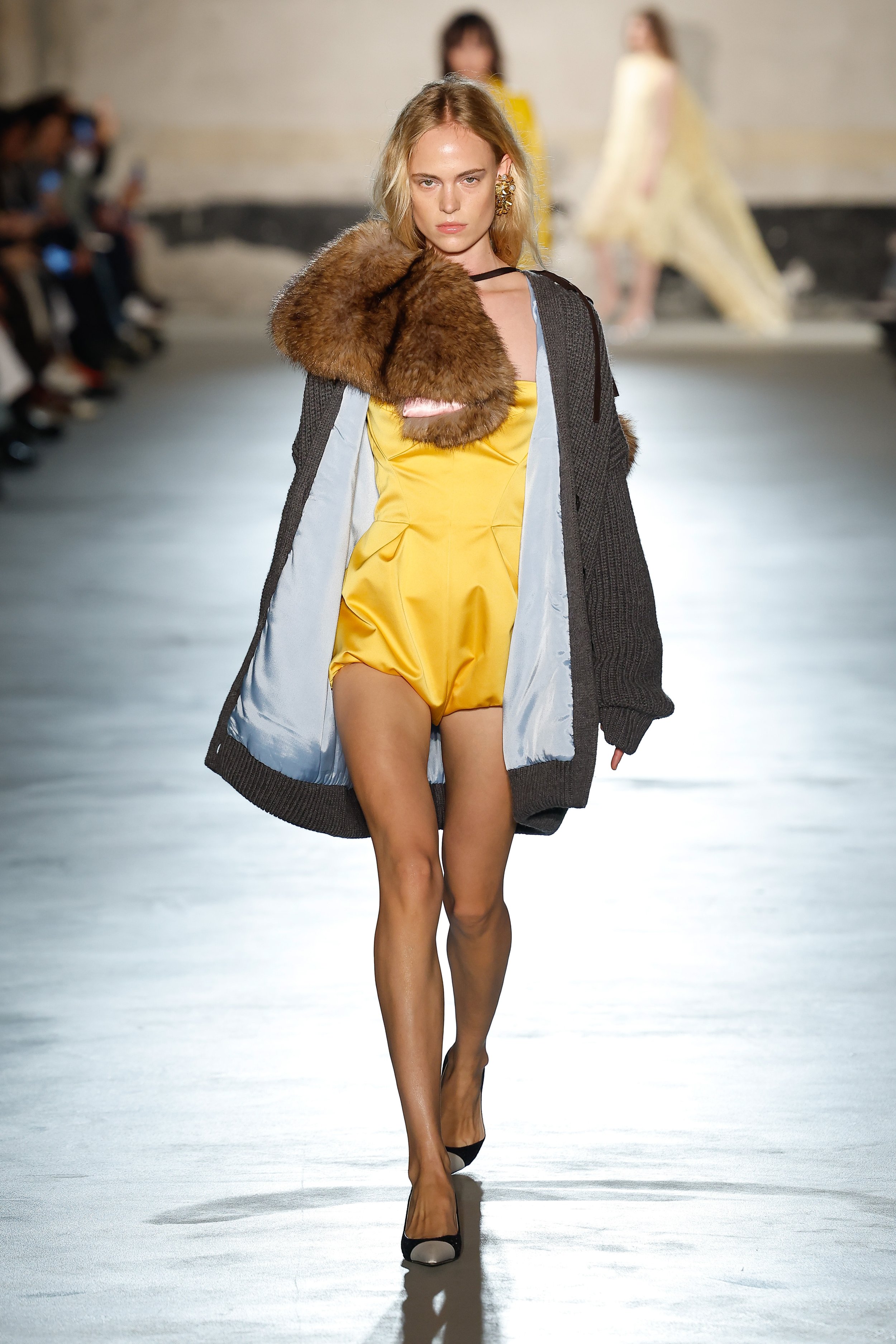
all images courtesy of N°21
Sometimes the ending is where it all begins, and at N21 FW26, Alessandro Dell’Acqua made that literal. The show opened with the finale, allowing the clothes to breathe before they spoke.
It began in noir, a muted palette that gradually softened as texture and colour emerged. Chiffon, lace, and wool layered softly. Shapes shifted across the runway, with balloon skirts, dropped waists, and puffer silhouettes adding volume and playfulness, while subtle flashes of colour crept in. Everyday pieces sat comfortably alongside celebratory ones. Jumpers you could live in, crisp white men’s shirts, and loose sweaters wrapped at the waist met sequins, bows, laminated-paper skirts, fur collars trimmed with pink satin, and lamé dresses. Contrast became cohesion, and silhouette and volume became toys in Dell’Acqua’s hands.
New shapes appeared constantly: balloon dresses, puffer-coat styles, dropped-waist constructions—pieces that were delicate yet assertive, casual yet evening-ready. The footwear, as always, stole the show. Sparkling, pointed heels with baby-blue and baby-pink tips, they anchored the looks with that signature N21 femininity.
ETRO
review by ELIANA CASA
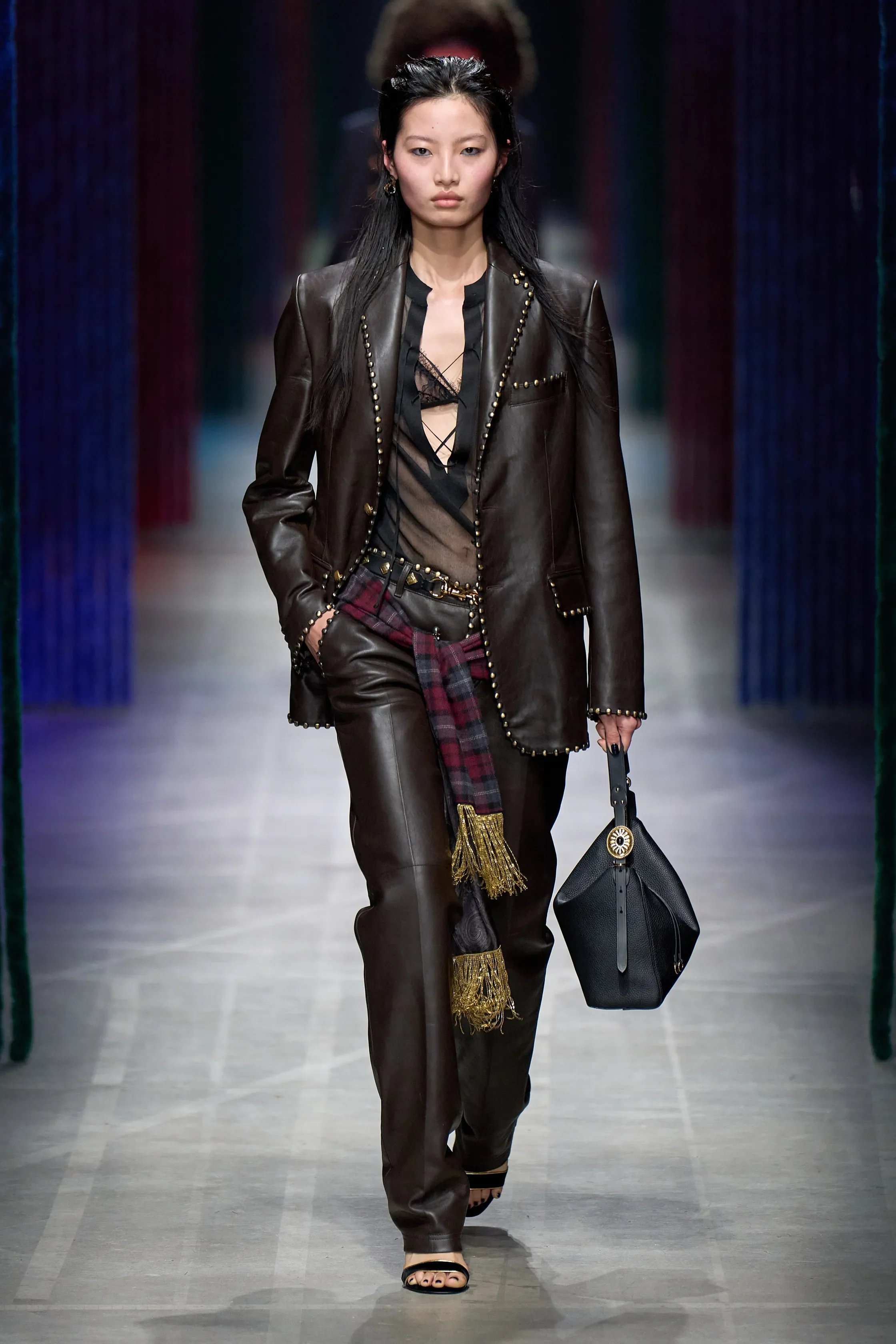
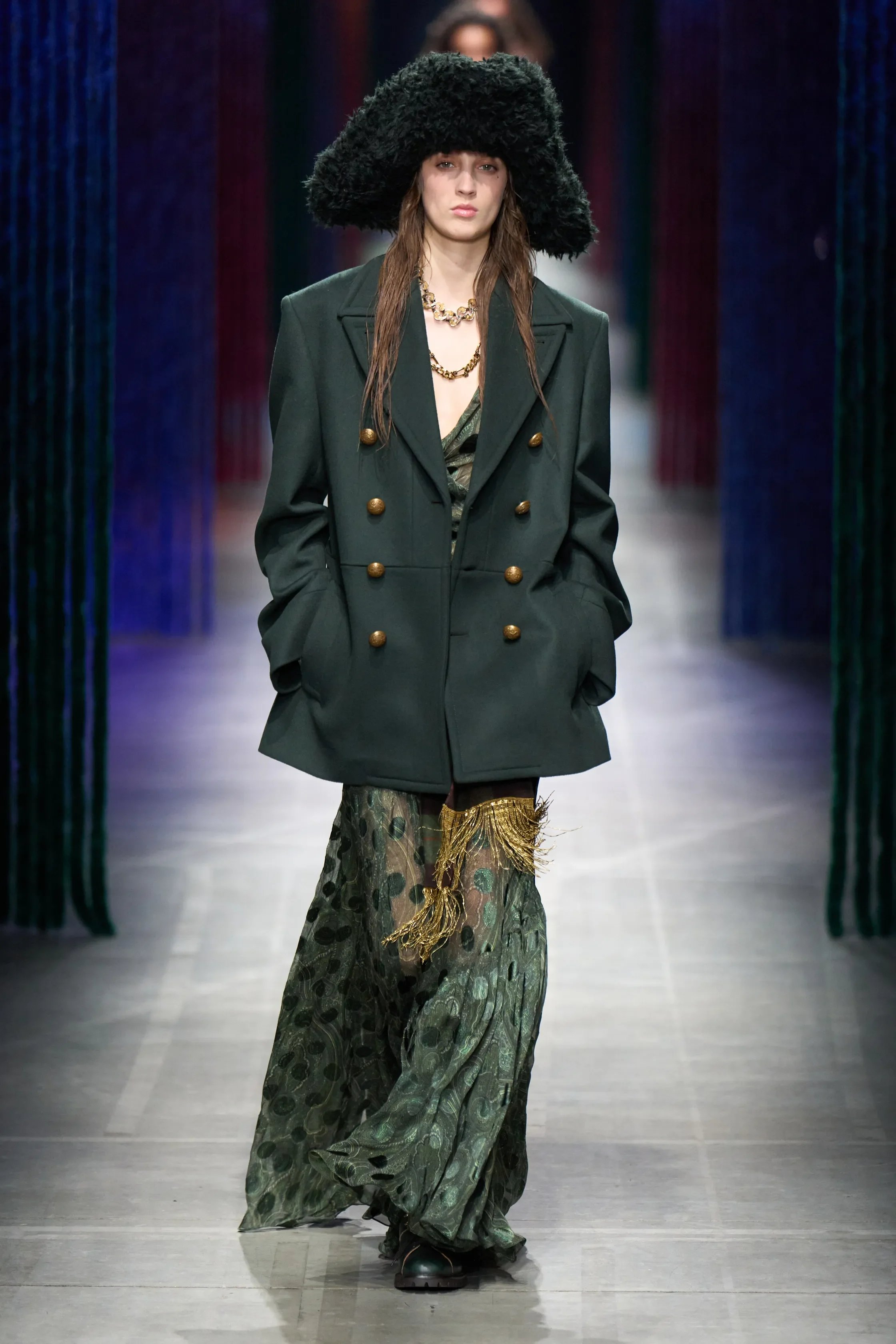
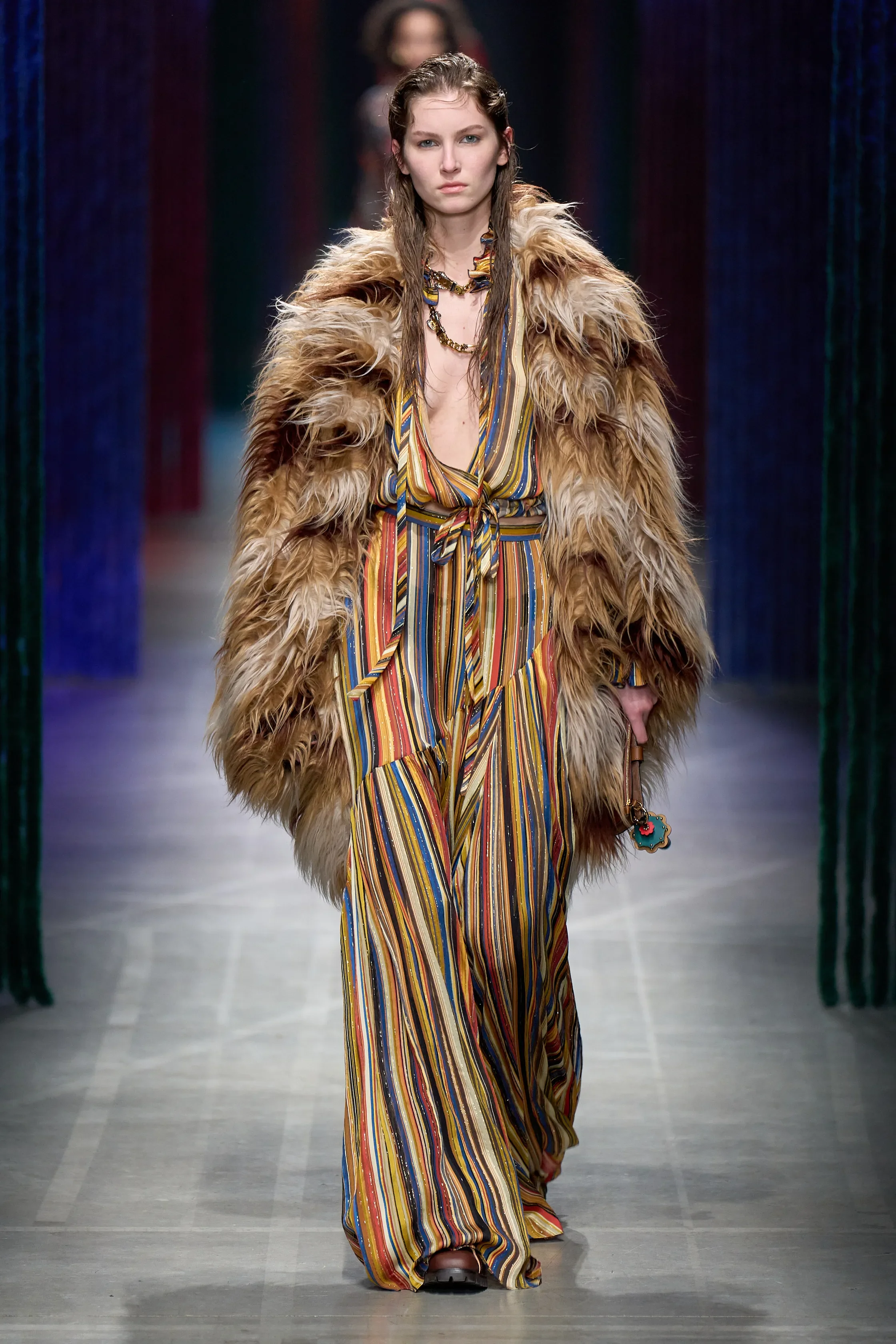
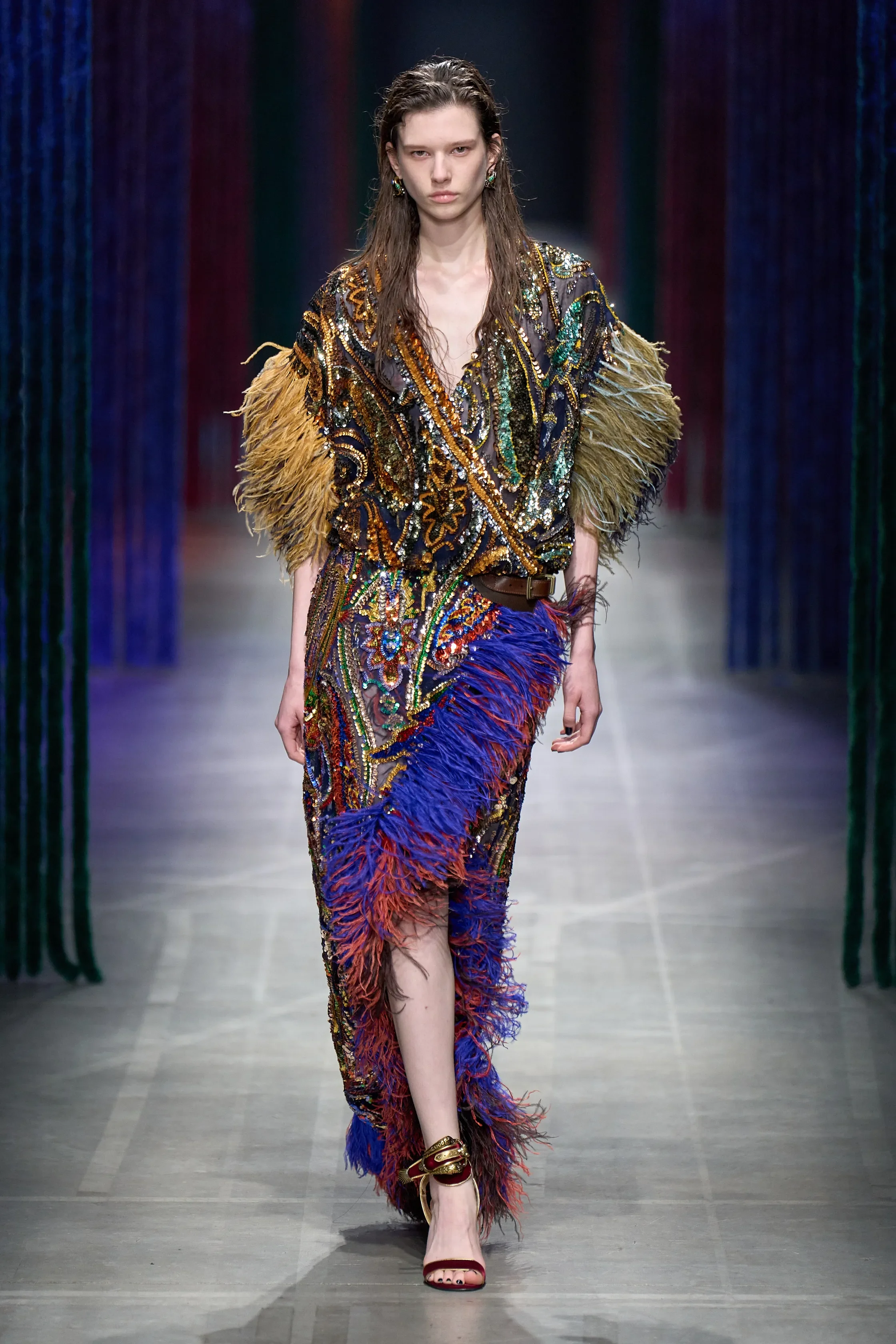
all images courtesy of ETRO
Marco De Vincenzo didn’t want to play it safe this season at Etro, or at least, that’s what we’d like to believe. For his FW26 collection, De Vincenzo once again translated the Etro vocabulary into a new palette and universe of textures, without turning his back on the past. The show opened with quieter looks, but as the music intensified to the notes of Italian electro-pop artist BLUEM, the collection unfolded into a maximalist explosion of colour, motifs, and texture - all typical of the brand’s DNA.
Military codes were reinvented through a series of long coats styled with leather pants, denim, and silk dresses, while oversized military jackets were juxtaposed with sheer dresses, hinting at a hidden sensuality. Tartan scarves abandoned the neck entirely, reappearing tied low across the hips of tailored trousers, while feathers surfaced not just on long coats but also traced the hems of dresses. Oversized pirate hats and sculpted corsets introduced a distinctly British inflection, in part romantic and theatrical, while the Birkenstock collab brought us back to the practical side of fashion. If the Etro woman leaned more bourgeois last year, today she is more rebellious than ever, and unafraid to let it show.
MM6 MAISON MARGIELA
review by FRANCESCO PIZZUTI
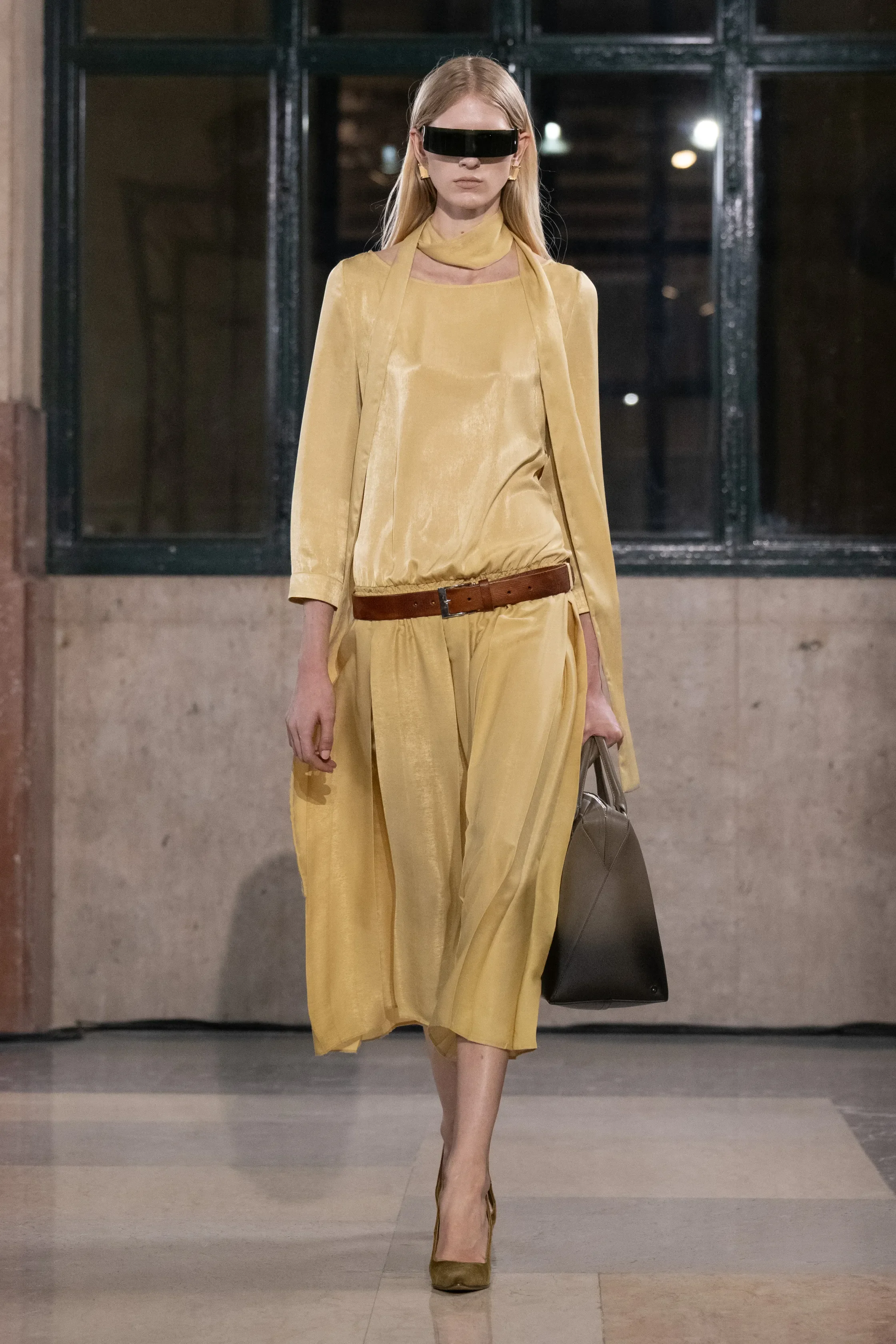
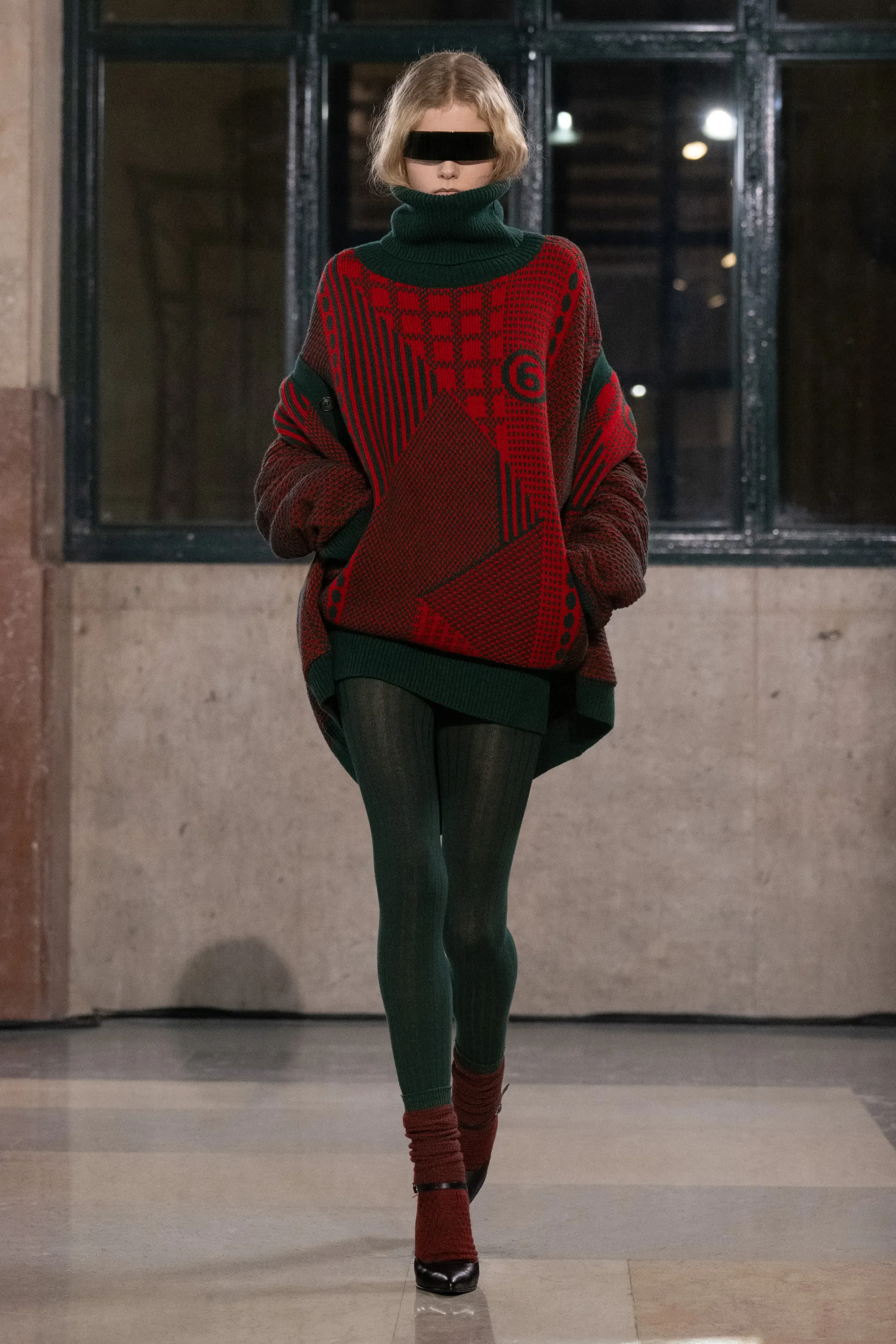
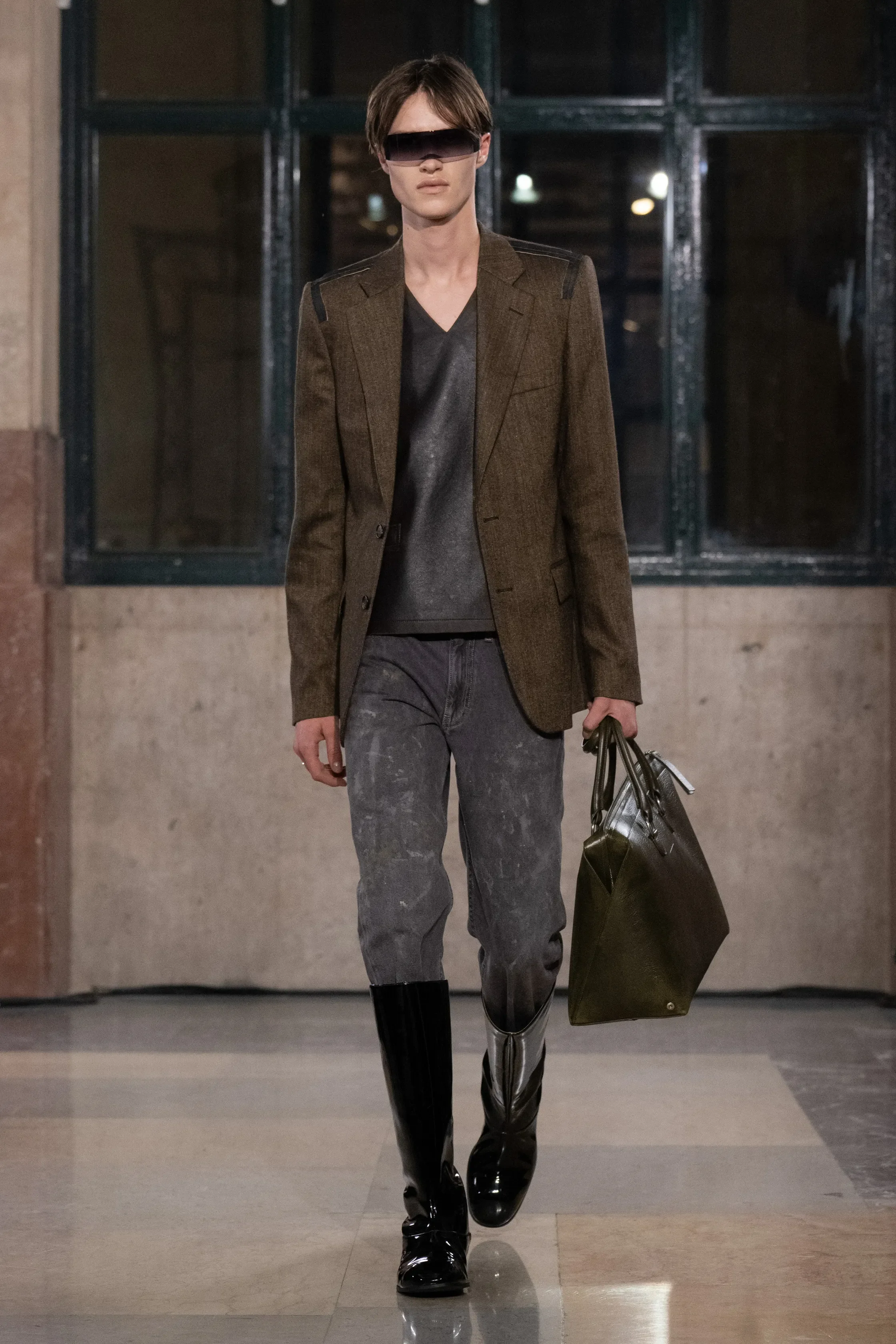
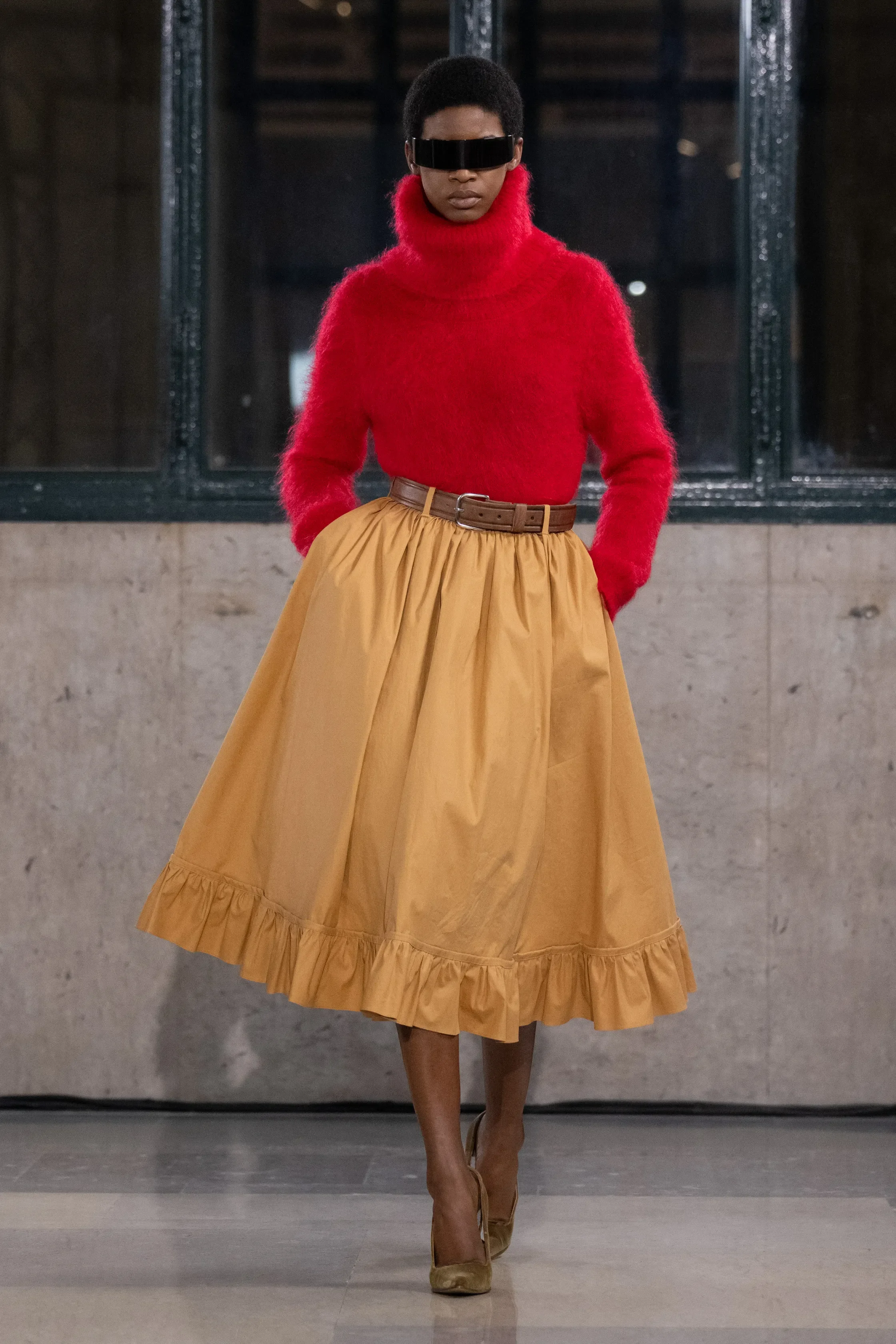
images courtesy of MAISON MARGIELA MM6
Movement drove the MM6 Maison Margiela Fall/Winter 26 show; that commuter flow of visibility and invisibility, where everything goes, until you take a closer look.
Taking place at the historic Stazione Milano Centrale, the models walked the marble pavement, some departing, some arriving. The train station here worked perfectly as a timeless place of transition, of normalcy — prompting the audience into that ordinary, routine feeling, to then slowly flip it, unravel it, and twist it. Mundane made fun.
Some garments just wanted to be what they are: checked shirts, the zip-up fleece, blazers, jean jackets, boots, and super-high pumps (arguably the harshest piece there). Other elements, upon further investigation, revealed abnormalities: pencil skirts happened to actually be backless, almost apron-like; perhaps just a cover, a visuality of the actual thing. V necks were exaggerated all throughout, in the sweaters, in the button-up dresses, where they opened till under the torso. Silhouettes then appeared elongated and smooth. Details like foldable hems on coats and pulled linings played with the show’s slow deconstruction of normalcy. This was also furthered by the unusual matching of the garments, where a tracksuit top could be tucked into a full skirt.
With a single black plastic strip slicing their eyes, rings with missing stones, and Bauletto bags of various sizes, the models passed by, knowing all the wheres and whens — just like the clothes they inhabited.