
MILAN FASHION WEEK FALL/WINTER 2026: DAY 4
TOD’S
review by ANOUK WOUDT
all images courtesy of TOD’S
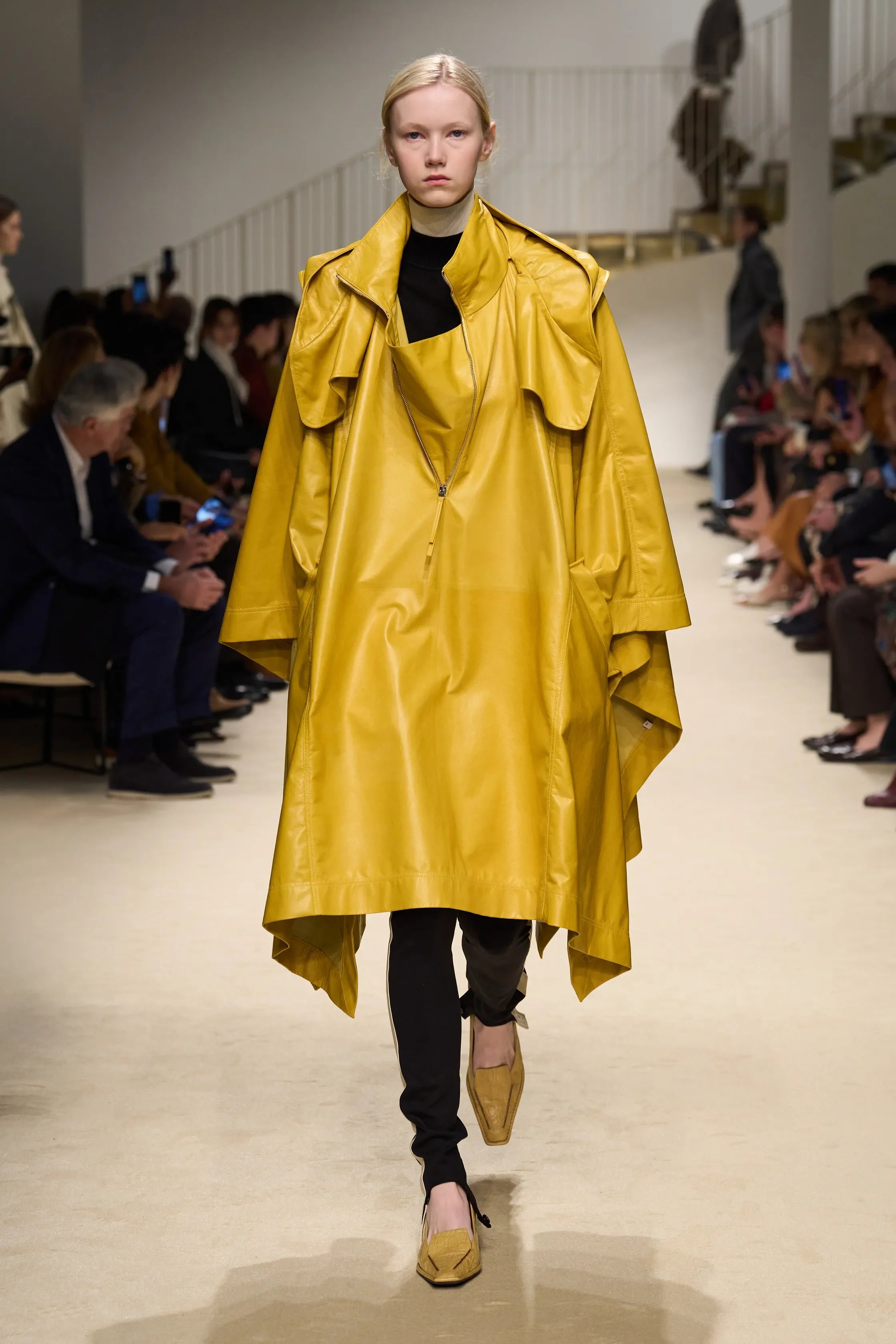
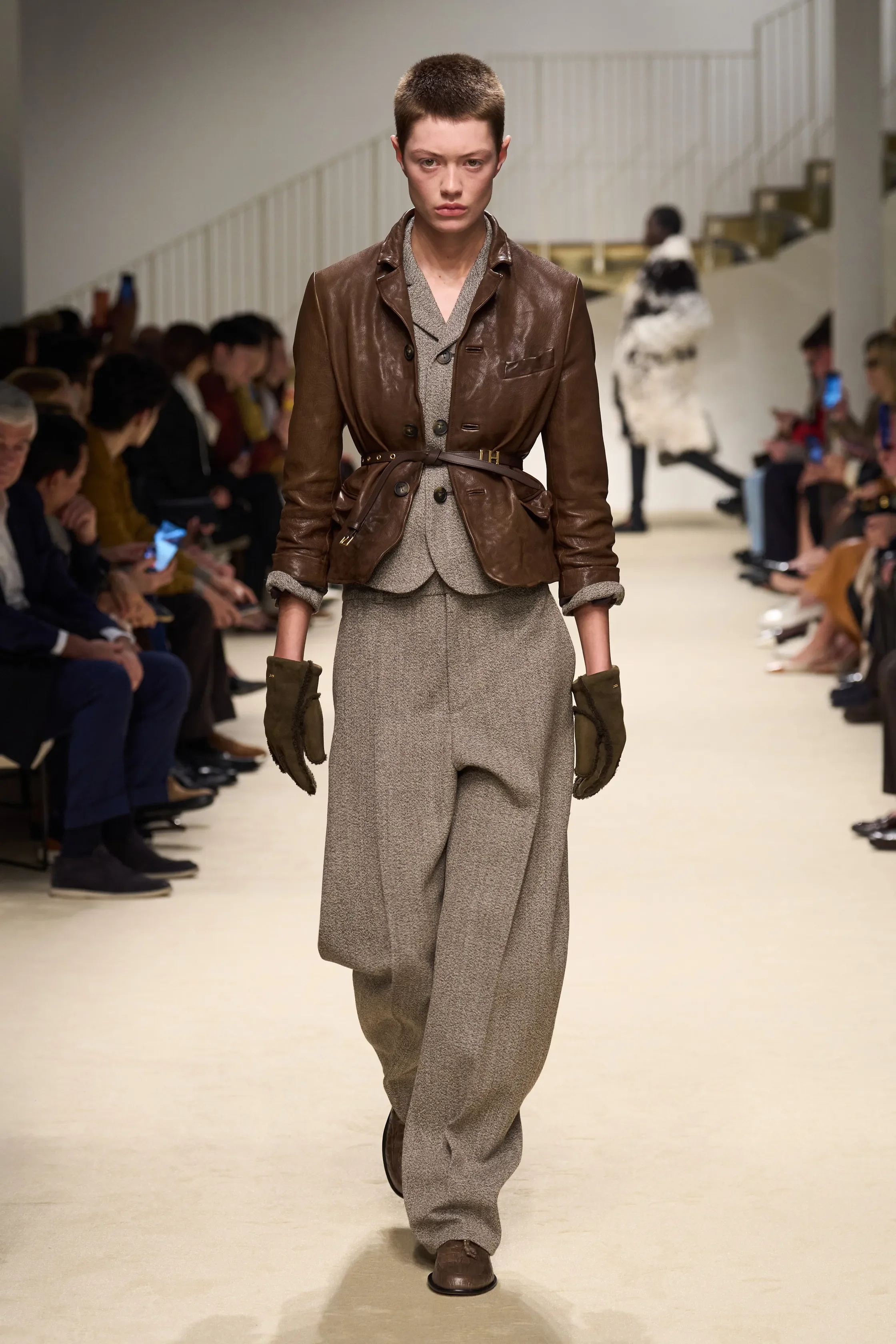
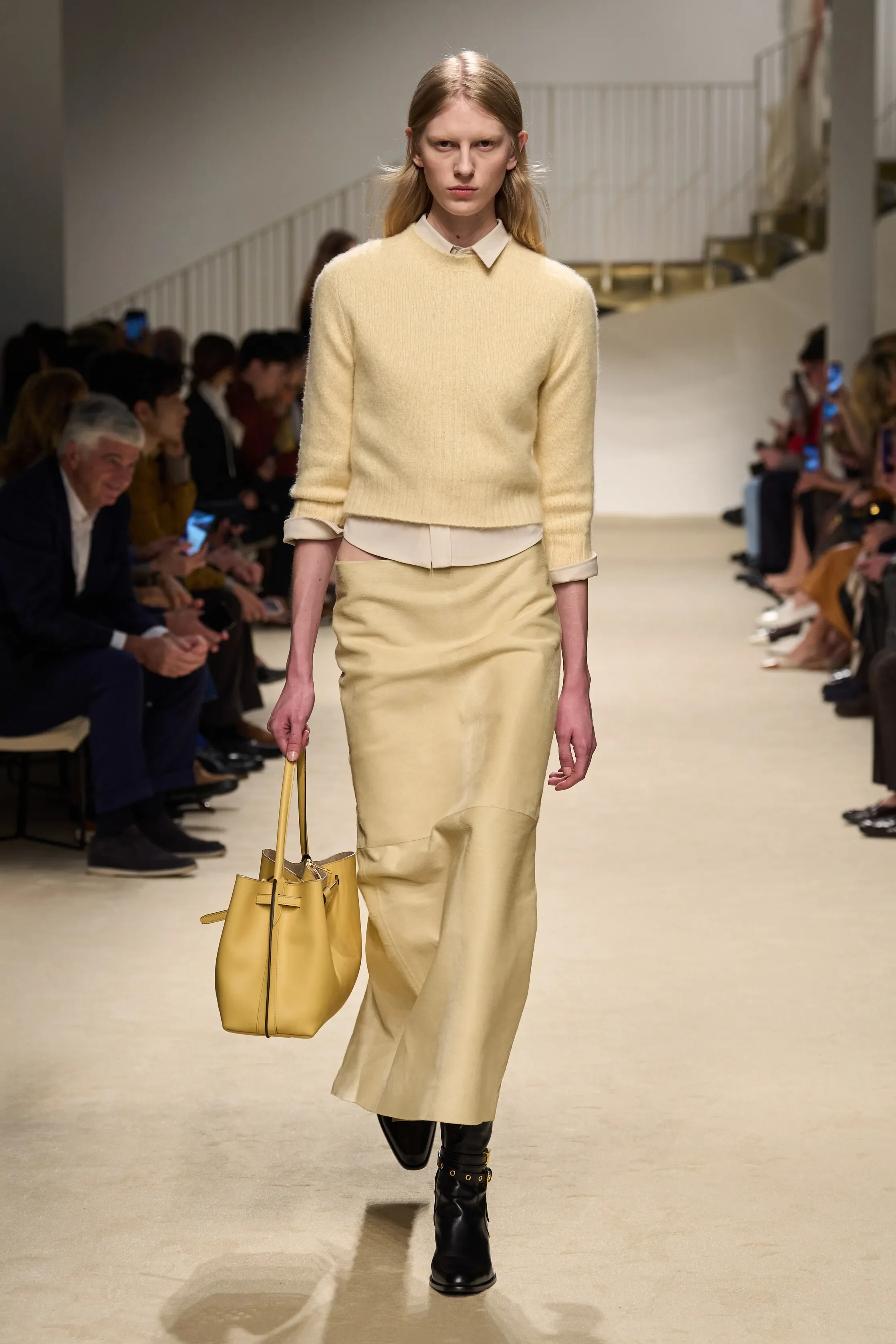
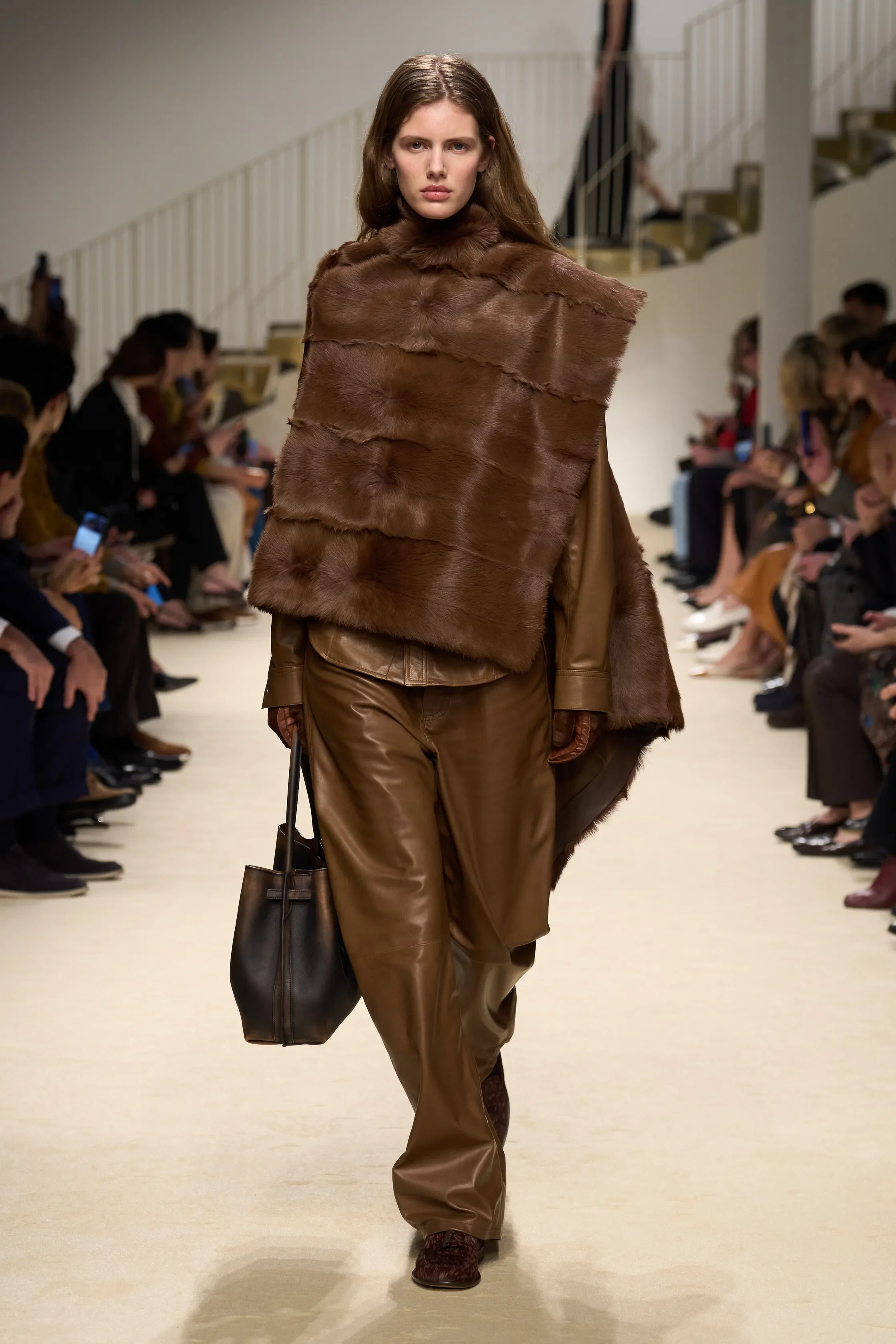
Through draping cloths and sharply cinched waists, Tod’s seems to be inching itself further and further outside of their comfort zone with this fall collection. Returning motifs from spring appeared in foulard-inspired dresses that are morphed into something a dash more free-spirited. Ruched silken necklines and a deeply open back gave a carefree elegance that stood out amongst their standard of unfussy luxury. Asymmetrically sharp triangular cuts also made an appearance across the runway, dedicating a newfound edge to wardrobe classics, although the skinny belts paired with neck scarves and long coats still presented us with a classic ‘sciura’ look. In true autumnal fashion, warm, earthy tones washed over everything, intercut with sterile black and white accents that maintained the pieces’ structure.
Refinement remains at Tods’ centre, with supple aged calfskins and high-quality leathers that gleamed in nearly every look. This played into the collection’s homage to Italian saddlery traditions, especially through the ponchos and strapped ankle boots that were perfectly on theme for this year of the horse. Bags and boots also put craftsmanship on full-display, reworked in forms that tested the boundaries of these natural materials. Accompanied by a delicate orchestration that evolved into Portishead’s The Rip, the music was the perfect touch to secure this collection a place in your mind.
MARCO RAMBALDI
review by AYA SOFIA OPPENBERG
all images courtesy of MARCO RAMBALDI
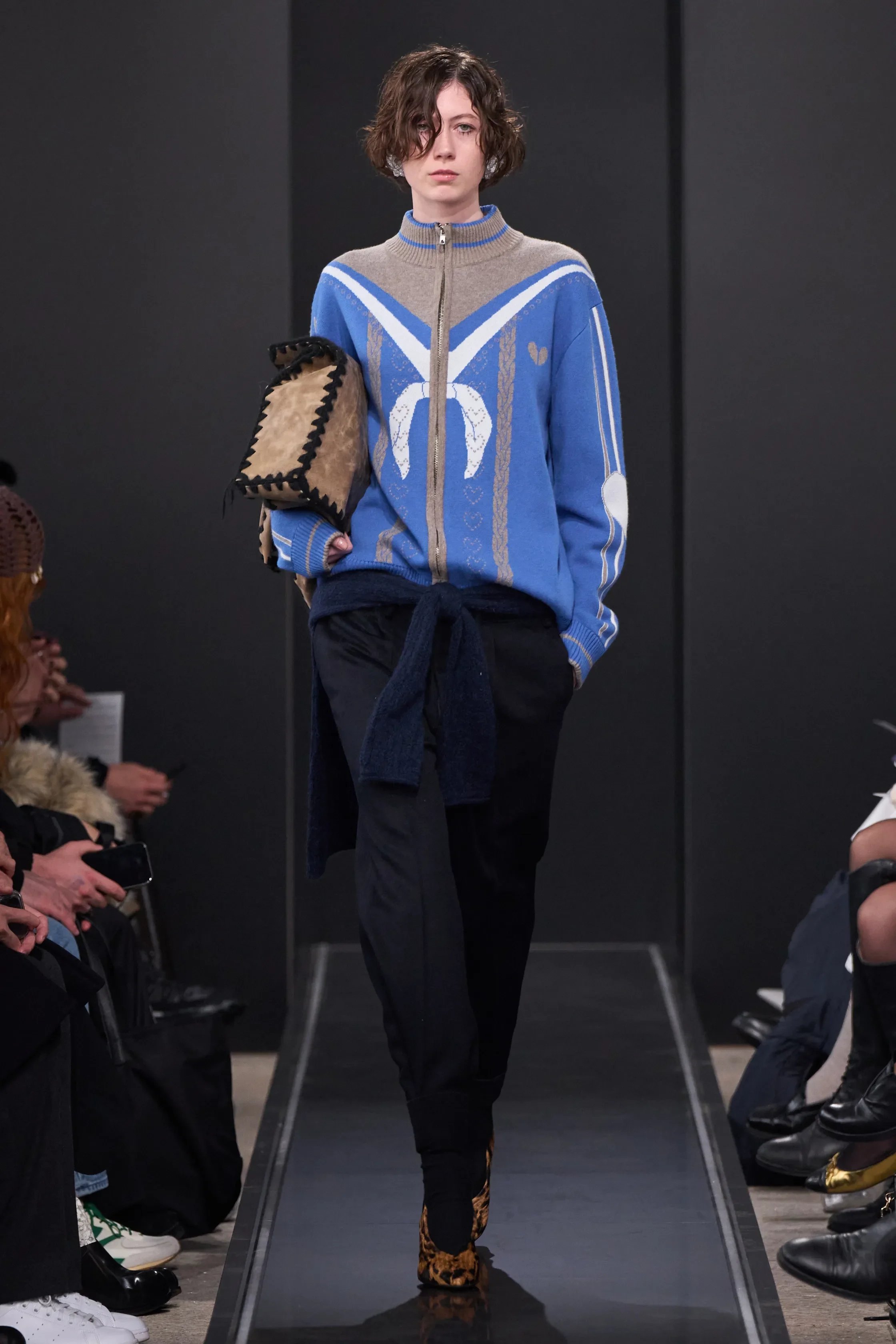
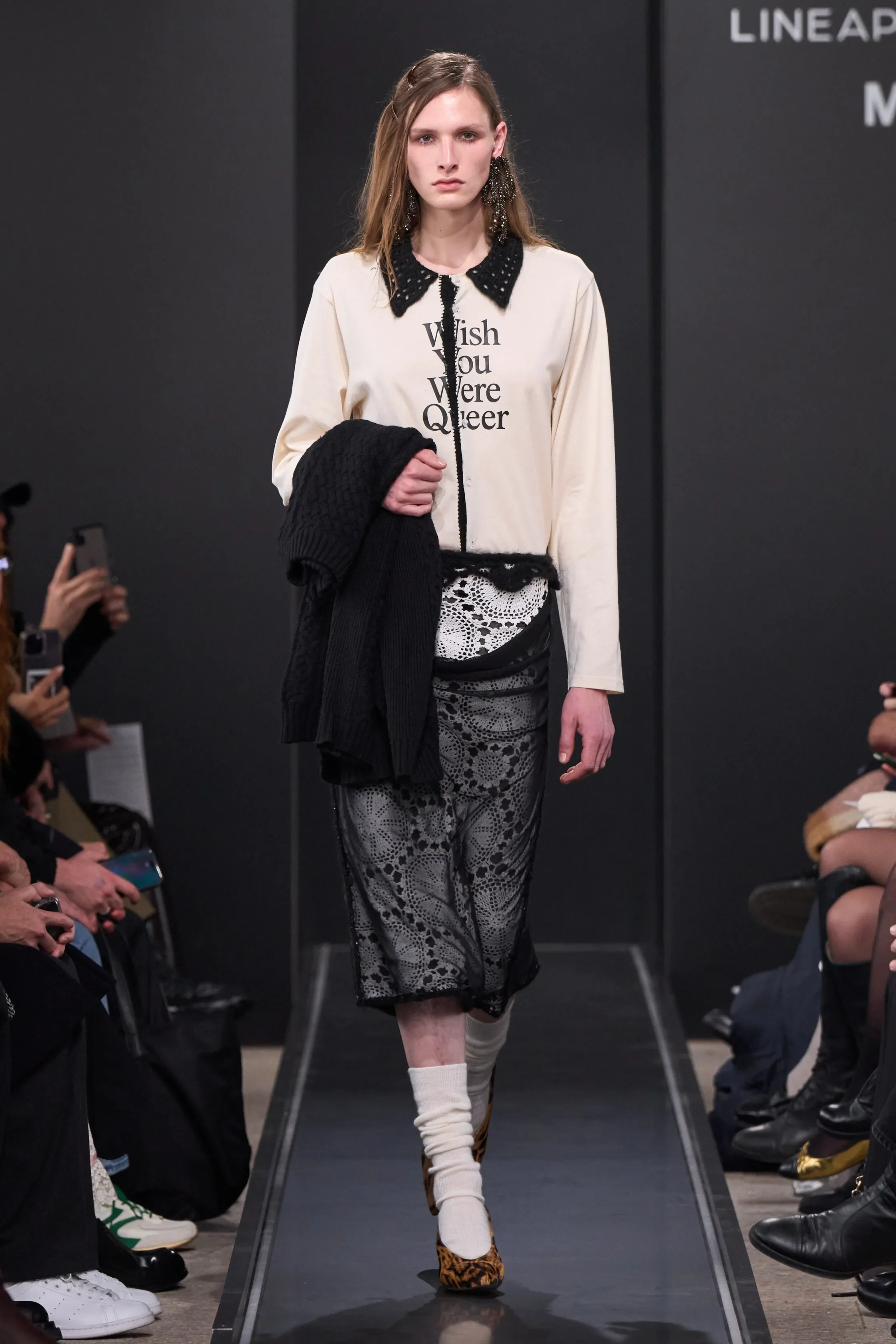
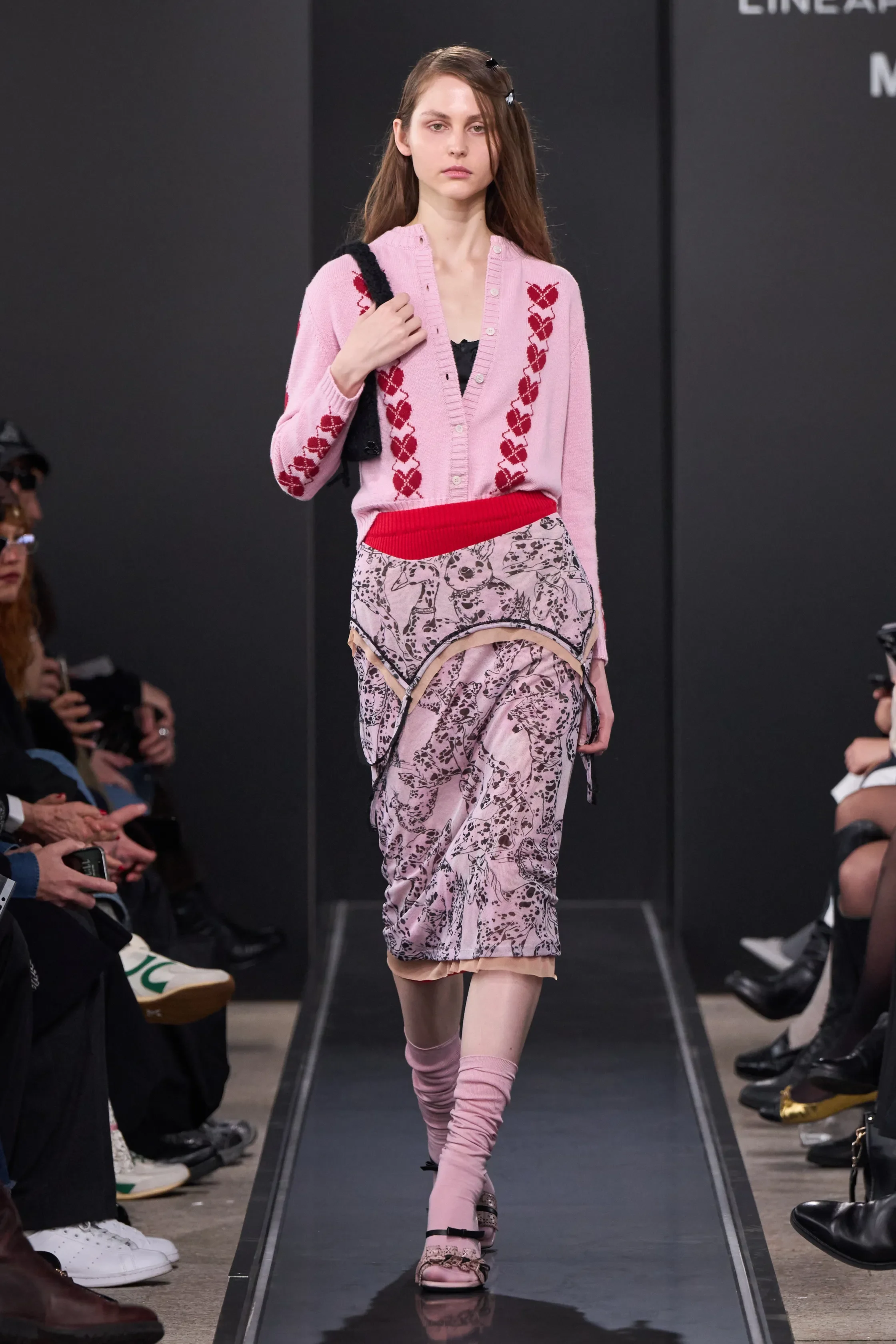
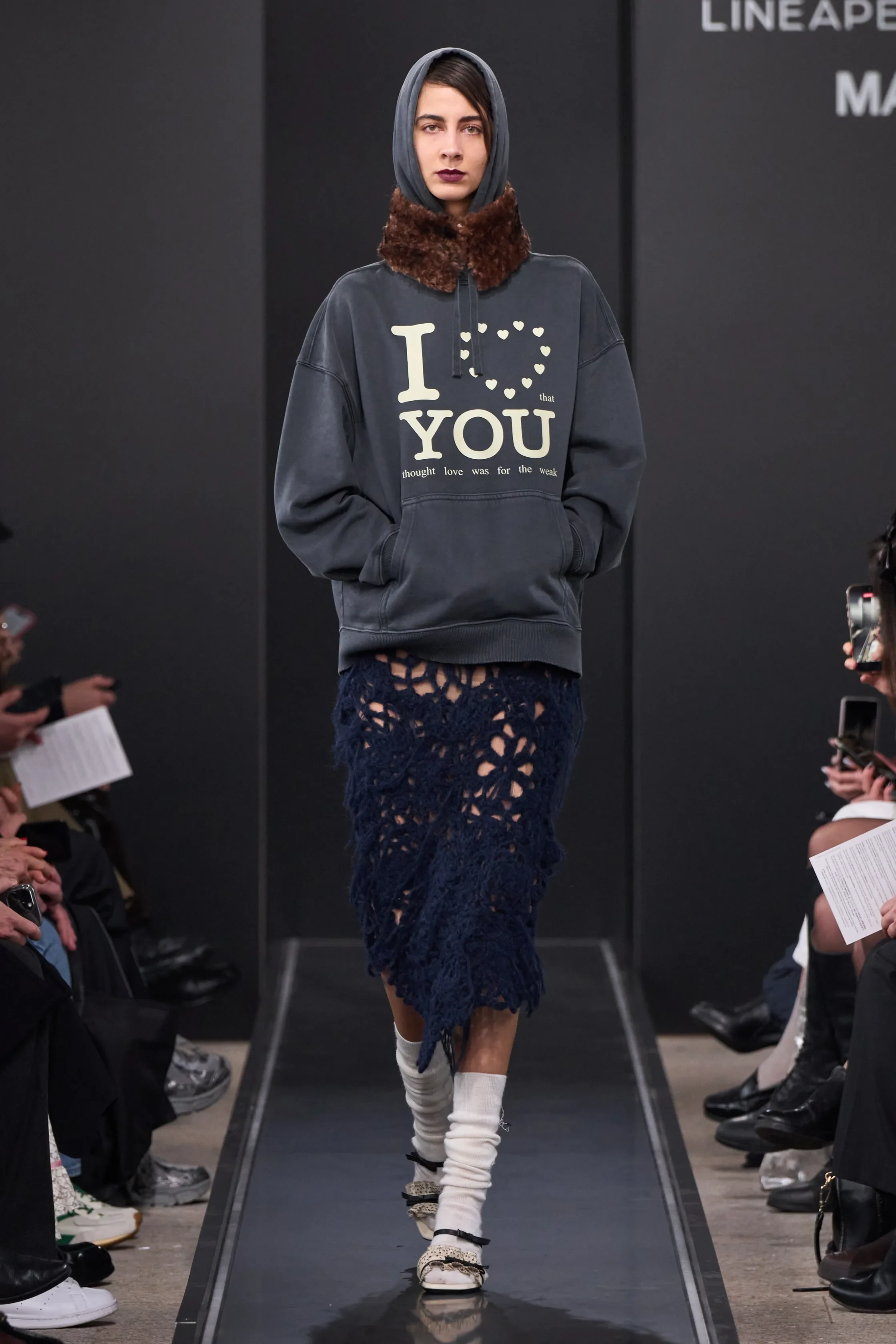
If you’ve never seen the Italian cult classic Fantozzi, imagine the most beautifully tragic, overworked accountant in a suit that’s perpetually two sizes too small for his existential dread. For FW26, Marco Rambaldi has taken inspiration from this specific brand of "everyman" awkwardness and invited it to a high-intellectual dinner party with Pasolini. How would it look if we take the sacred mundane, and turn it inside out? We all have an office uniform, a domestic knit, or a Sunday best, but Rambaldi isn't interested in the version of those clothes that makes it into the family photo. For this collection, we saw the internal architecture – the seams, raw edges, and quiet skeletons of the garments we wear to perform "adulthood."
It all felt like a deliberate act of sartorial oversharing; jackets and skirts were flipped to reveal their inner constructions, stripping away that polished "Made in Italy" facade to show the messy, human work underneath. The knitwear played a layered mind game – trompe-l’oeil twinsets that hid secret layers beneath their cardigans, as if mirroring the social masks we all put on just to get through a Tuesday. Even the animal prints had been downgraded from "predatory" to "domestic," with classic motifs morphing into a spotted Dalmatian fauna; delightfully unpretentious. Rambaldi gave us a wardrobe for the sentimental rebel, with the only way to honor a classic is to wear your heart on your sleeve.
SPORTMAX
review by FRANCESCO PIZZUTI
all images courtesy of SPORTMAX
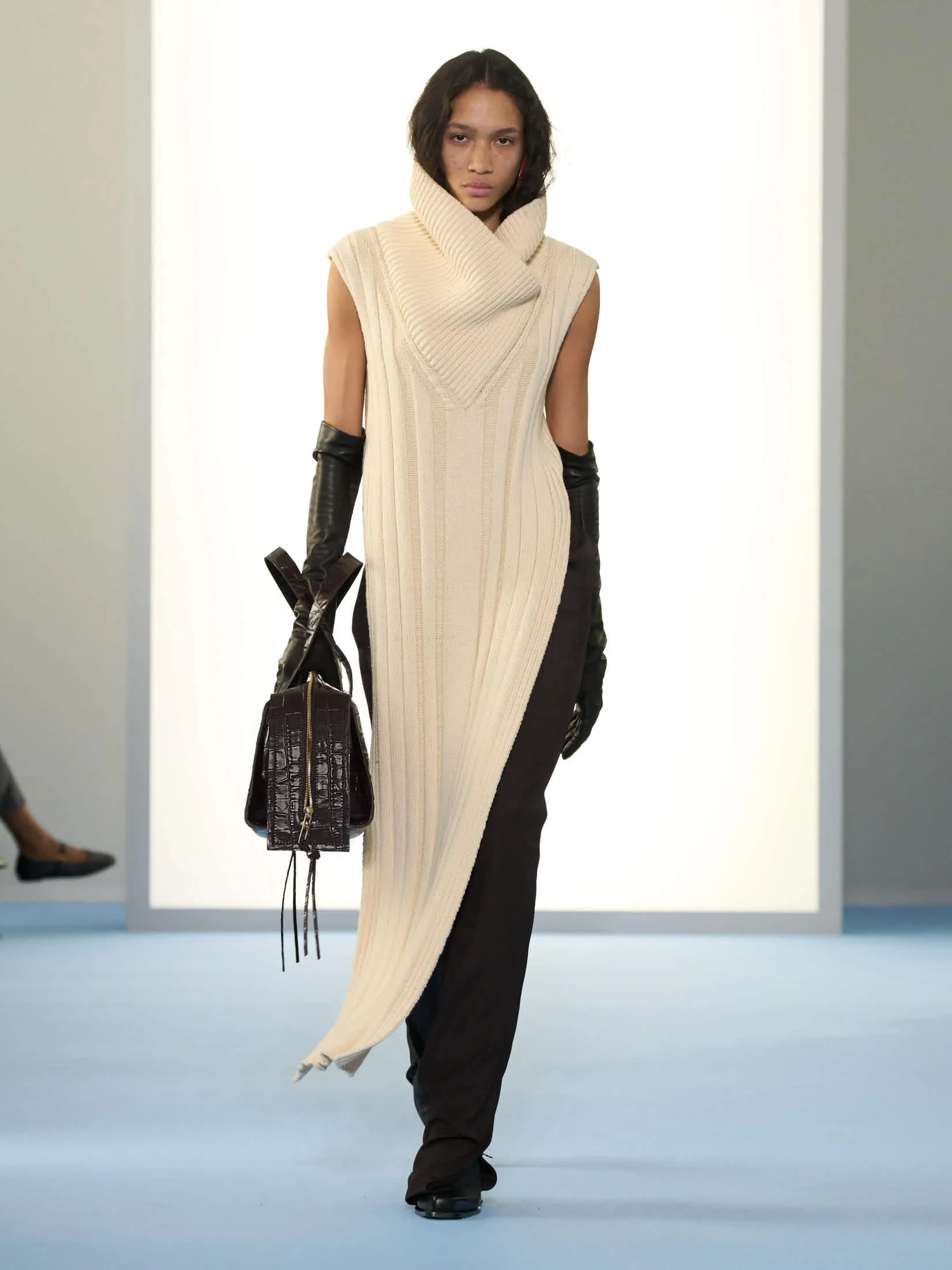
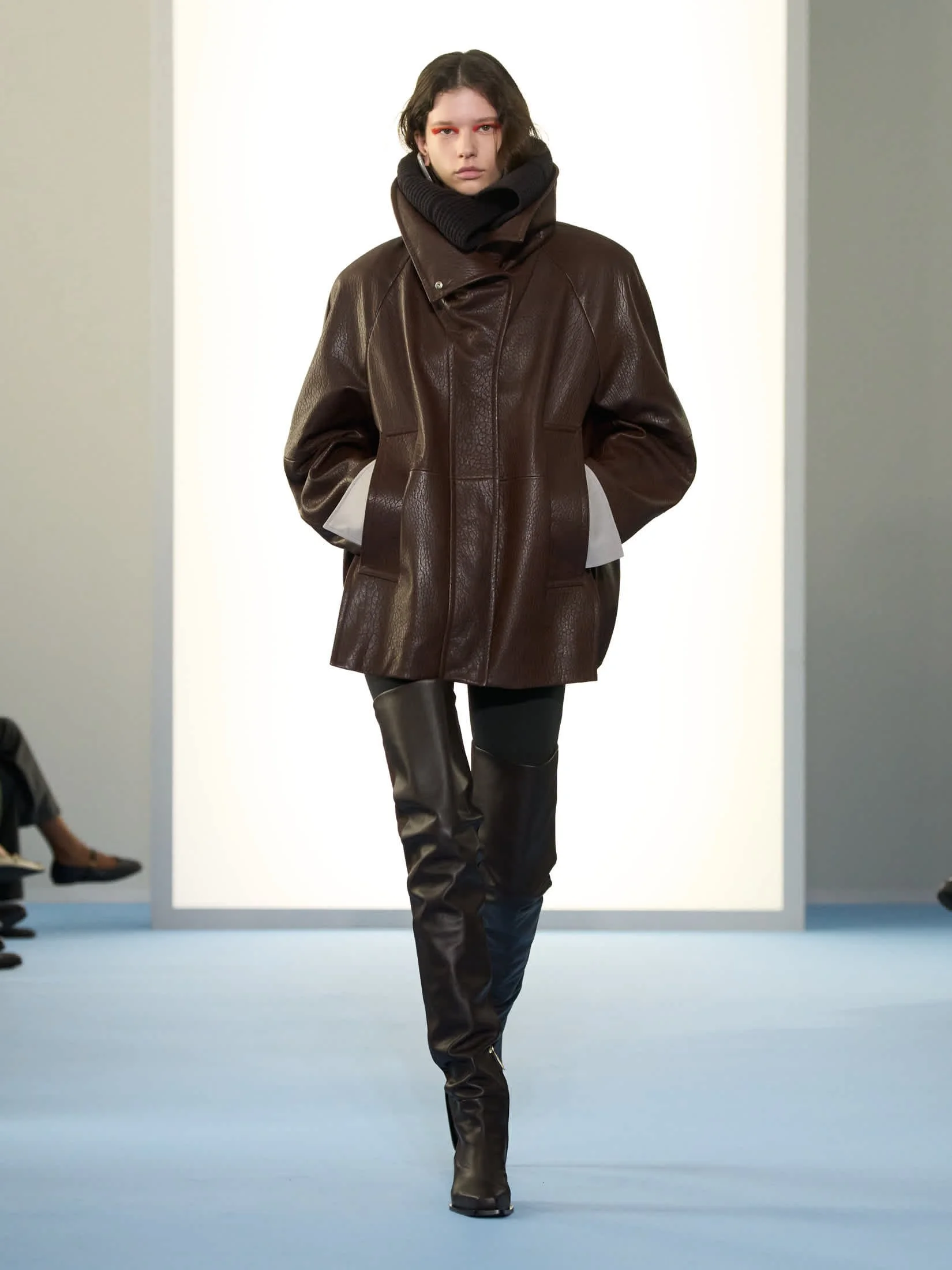
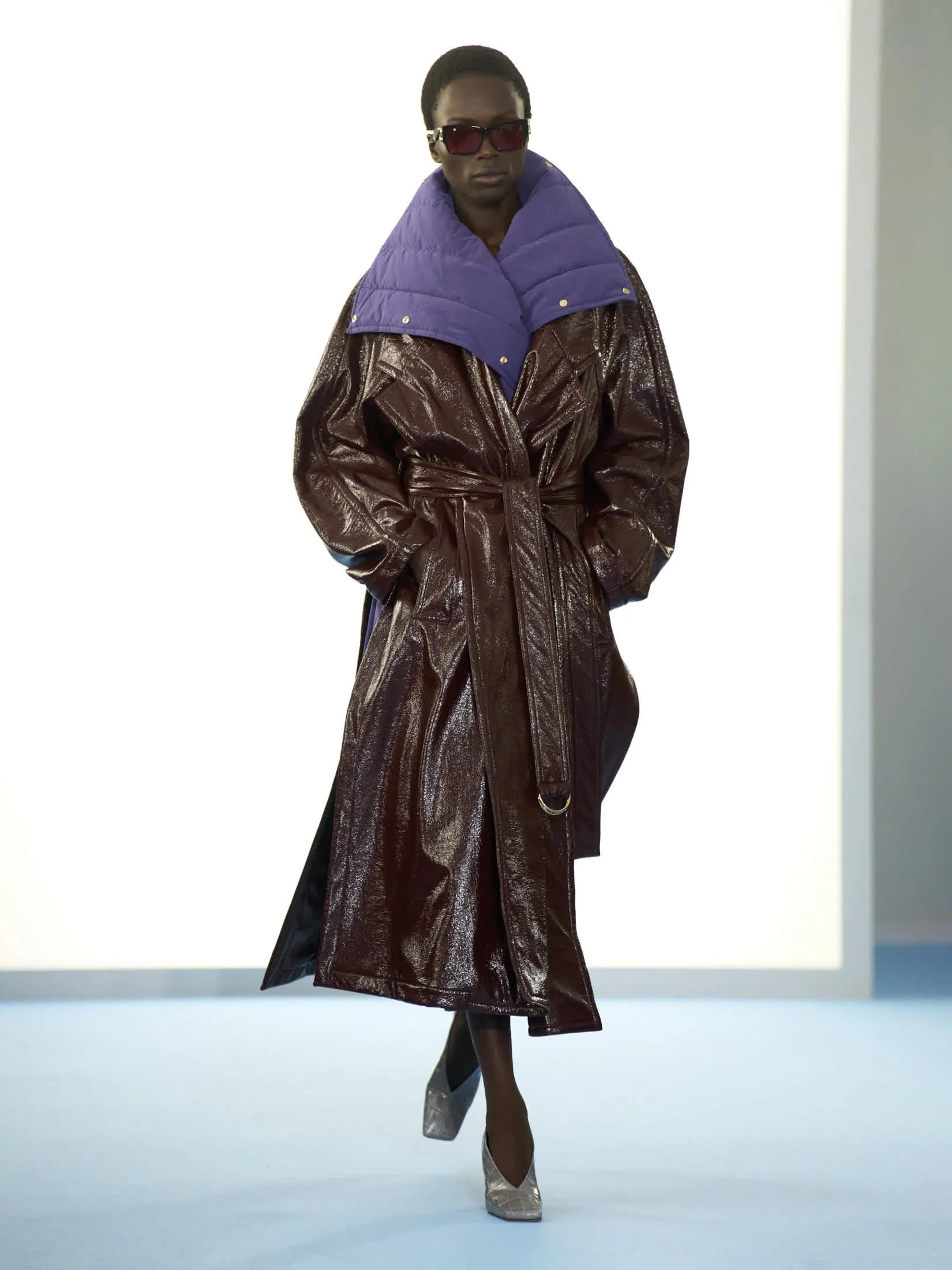
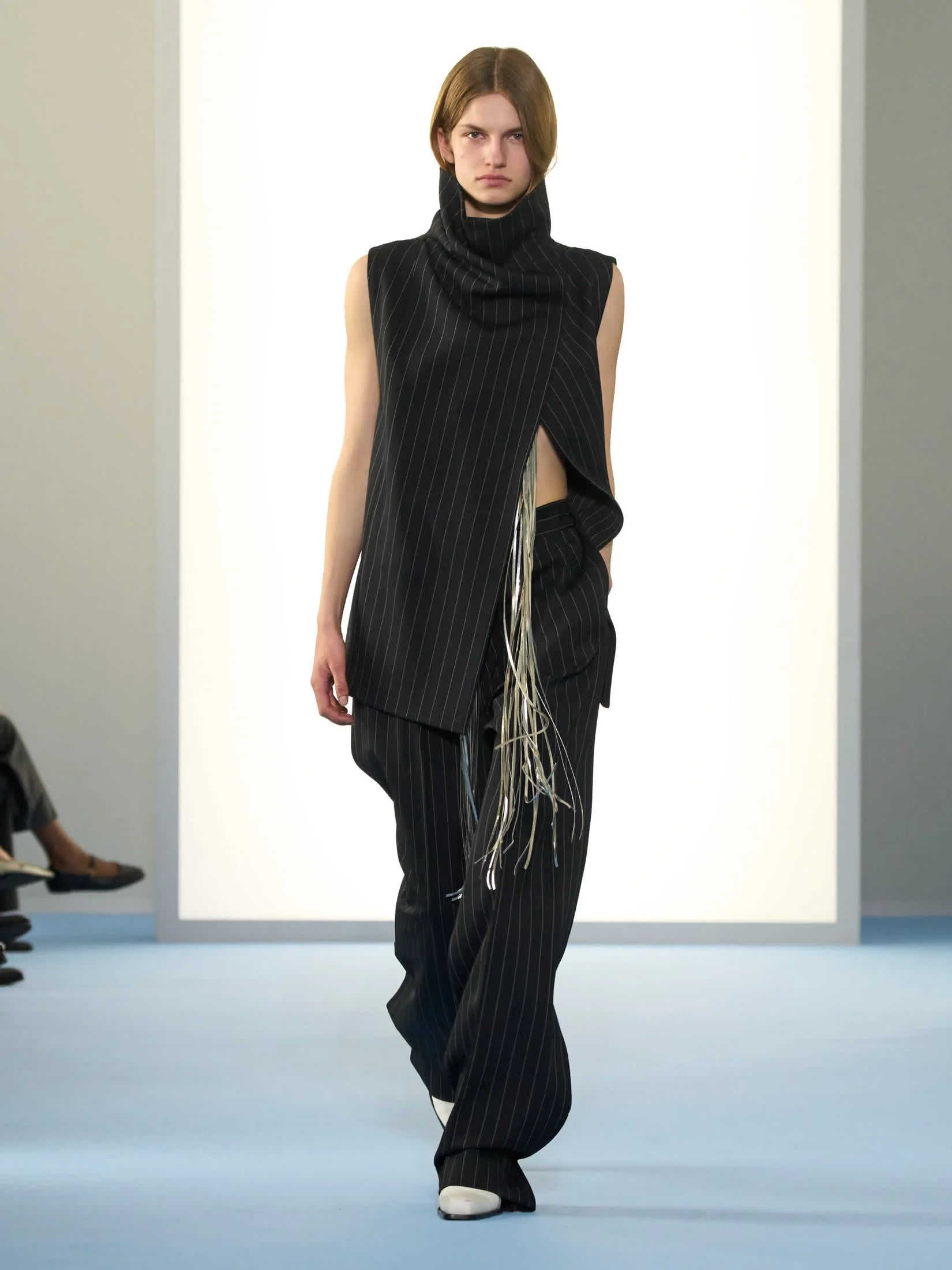
Sportmax stayed consistent for Fall/Winter 2026 with a collection that felt technical and tender, an exploration of structure softened by movement. The silhouettes were extremely fluid and dynamic, sporty elements were split, with coats and dresses cut open by decisive slits, both at the back and along the sides, allowing air to circulate and fabric to follow the body rather than constrain it. Jackets arrived with cape-like overlays and big, flipped-out collars, adding sculptural dimension but maintaining that soft wearability that marks the collection.
Dresses, light and flowy, with no seams in sight, took a no-frills approach before revealing their quiet complexity in motion. Side and back openings disrupted their surfaces, transforming stillness into flow. A knit mini dress blurred the line between undergarment and outerwear, embodying the collection’s interplay between high-coverage and exposure.
Accessories carried a subtle irony. Tiny bags were worn around the neck like necklaces, echoed by oversized earrings in similar proportions. Hard-shell clutches, shaped like rounded canteens, contrasted with the malleability of the garments, while softer leather bags grounded the looks in practicality. Above-the-knee leather boots sharpened the softness.
The palette stayed within earthy browns, beiges, whites, and blacks, every so often punctuated by flashes of orange — on eyeshadow, earrings, shoes, and bags — a true joy for the eyes. More synthetic textiles met natural wool and cotton, reinforcing Sportmax’s interplay between technology and nature, the classic and the avant-garde.
BLUMARINE
review by AYA SOFIA OPPENBERG
all images courtesy of BLUMARINE
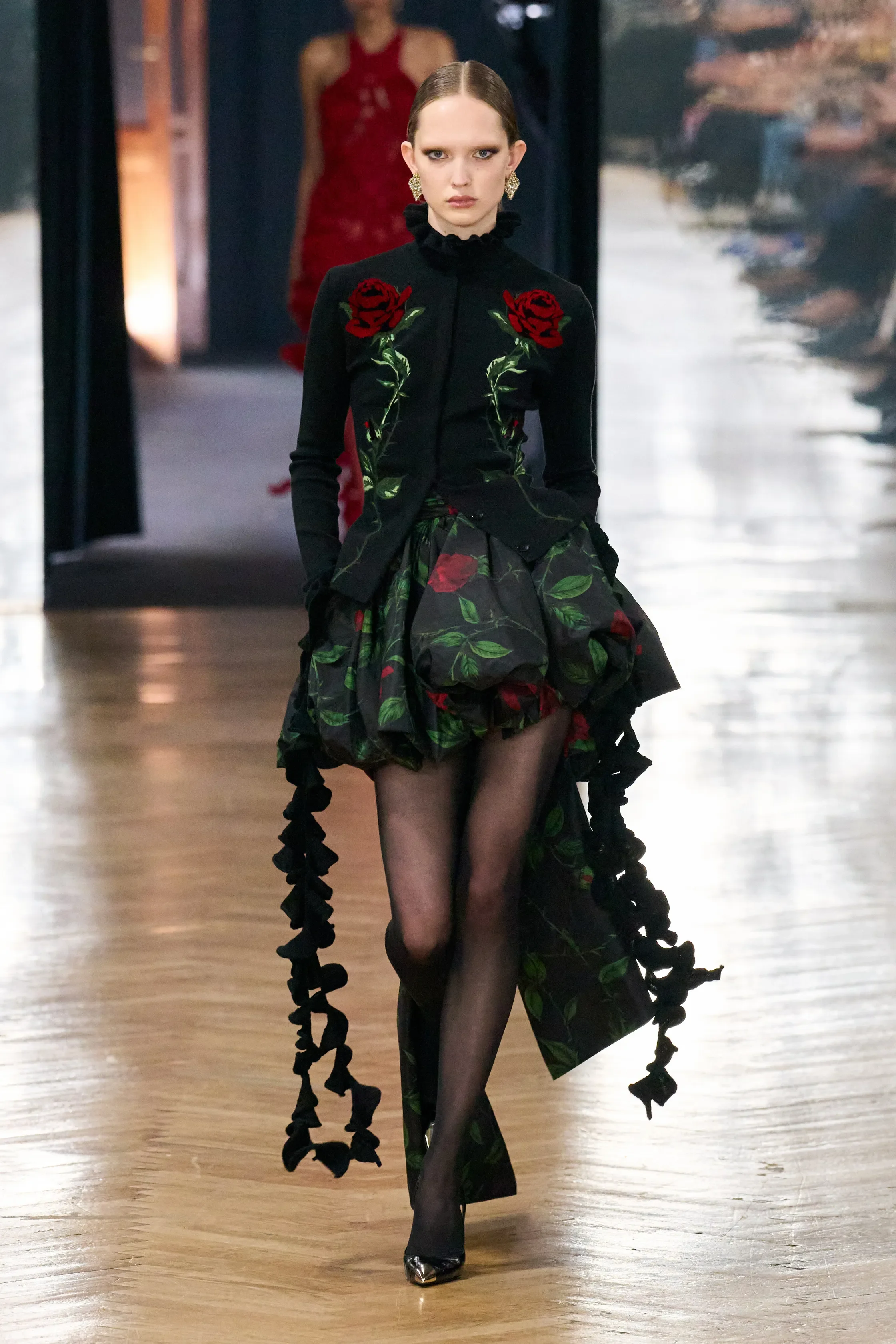
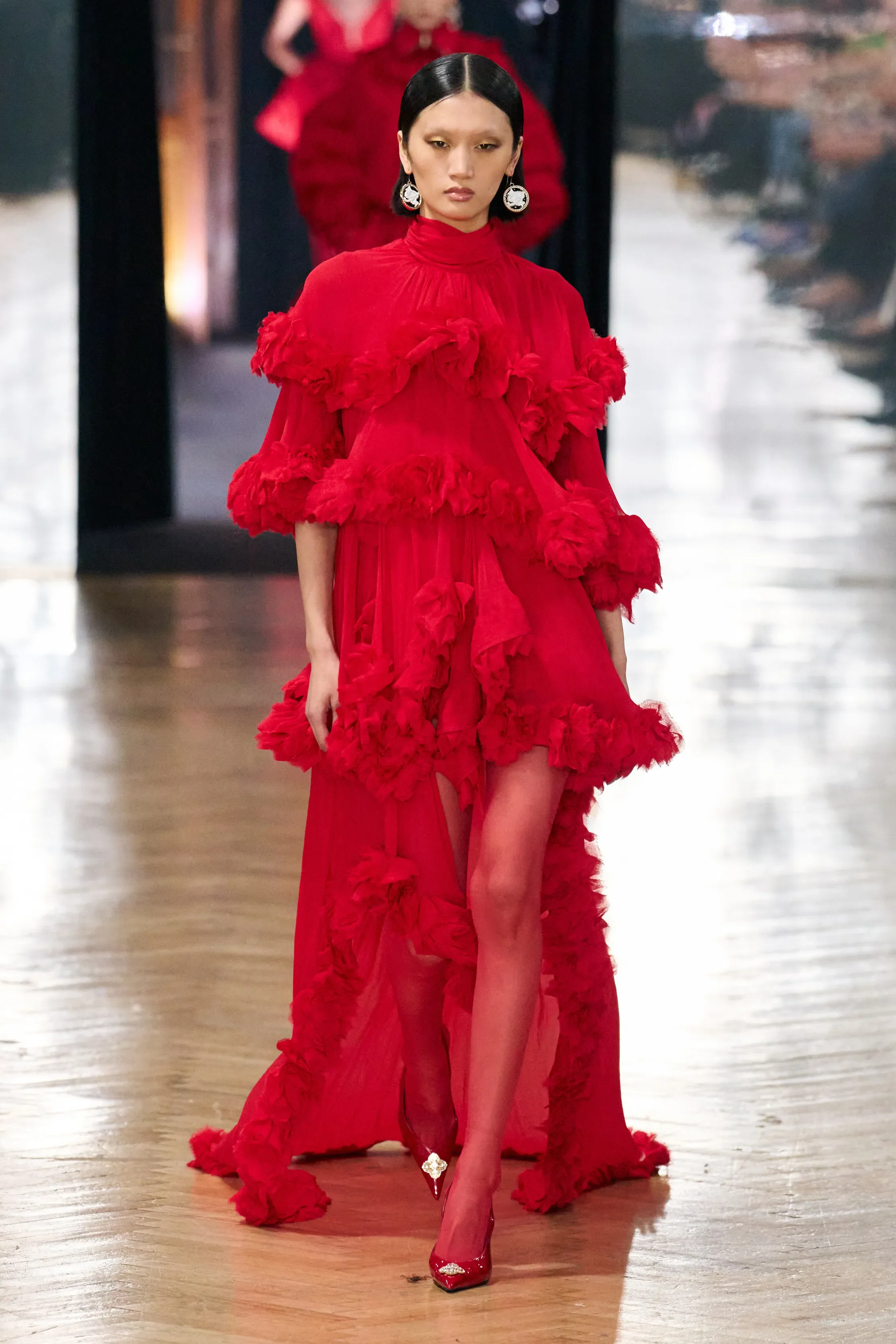
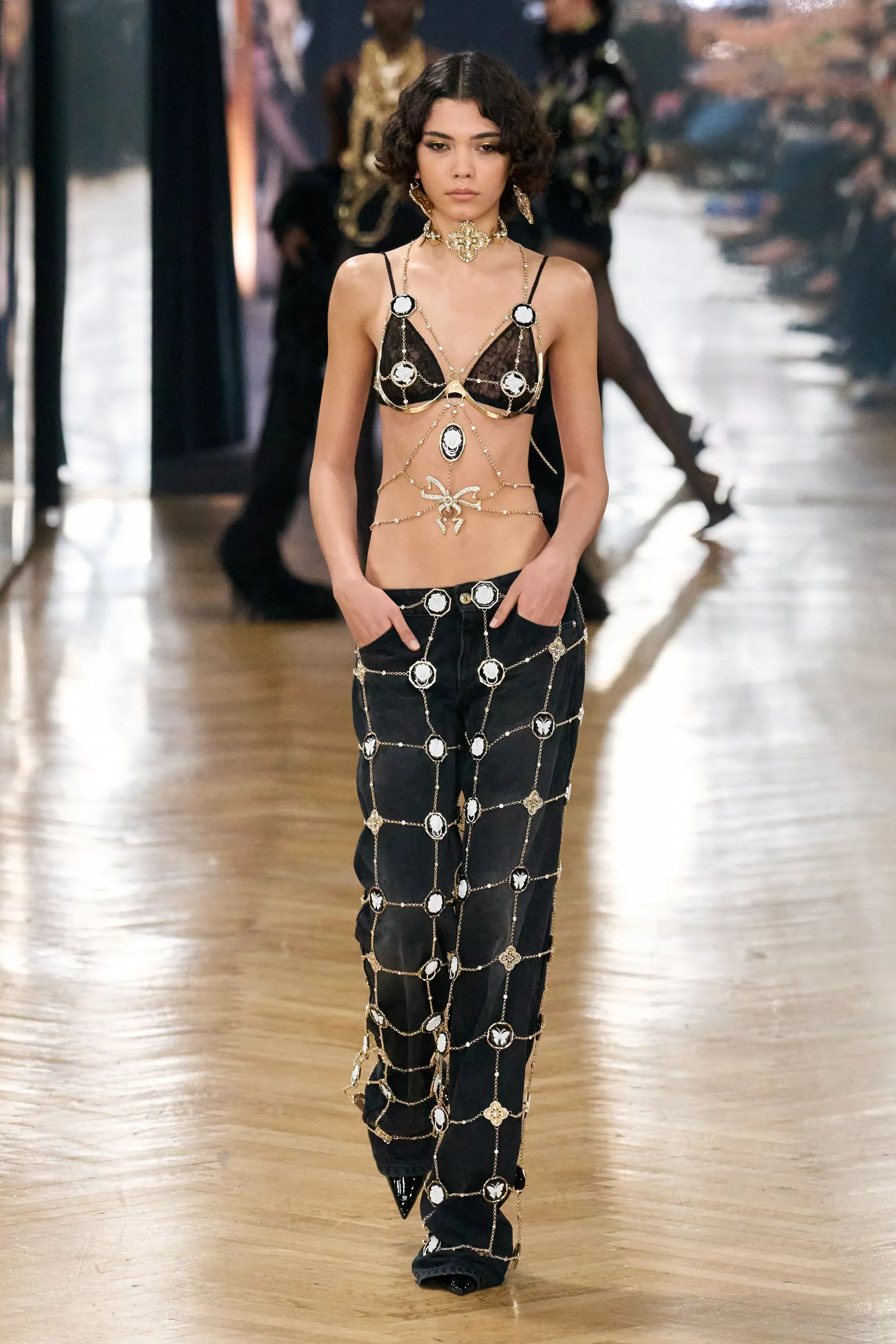
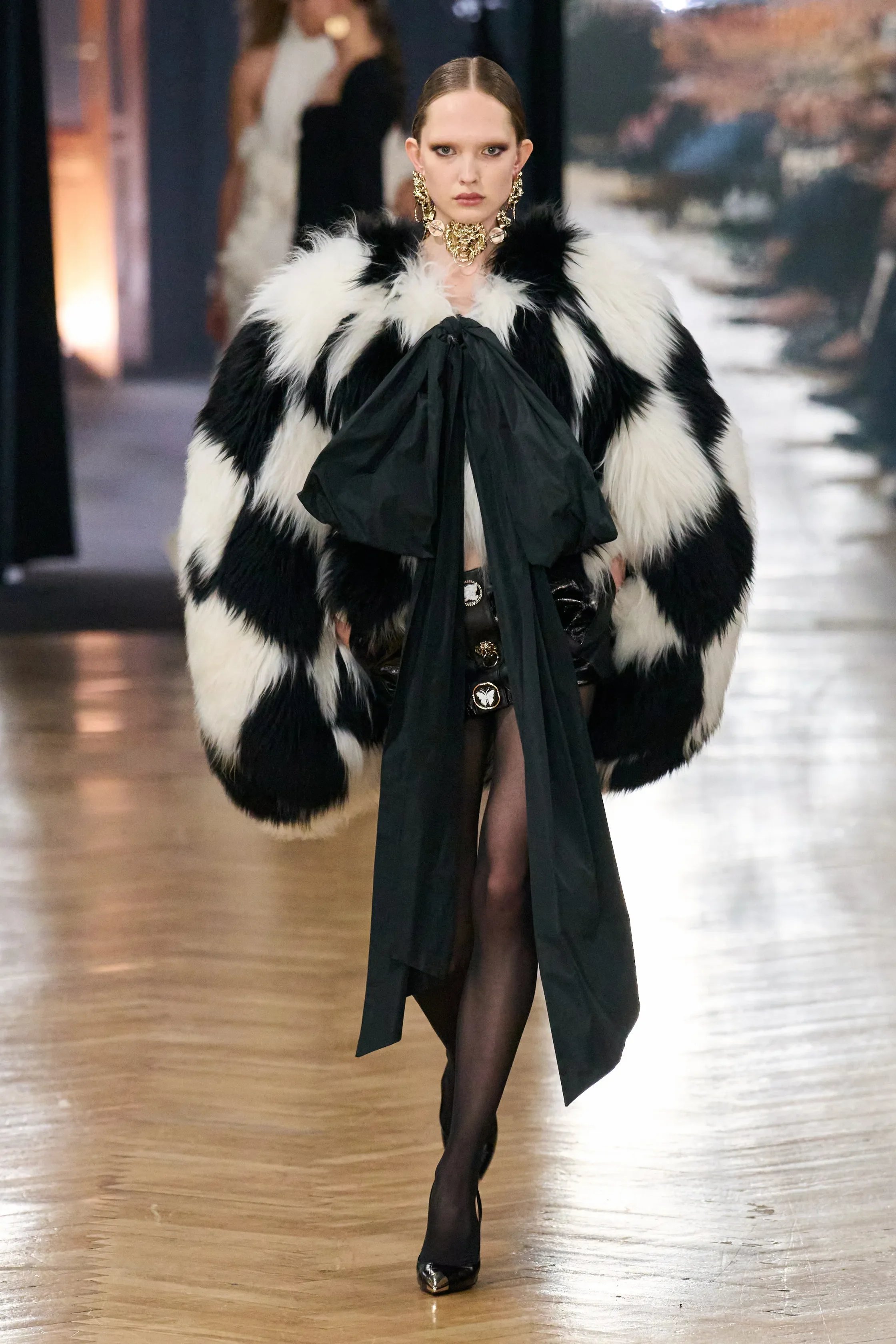
David Koma has successfully performed a Newtonian reboot on the house of Blumarine, stripping the brand’s signature romance of its sweetness and replacing it with a lethal, high-definition edge. Staged within a mirror-lined Salone dei Tessuti, the collection acted as a literal and metaphorical reflection of vanity, channeling the razor-sharp, predatory glamour of a Helmut Newton archive.
The brand’s signature rose was stripped of its traditional sweetness, appearing instead as 3D appliqués and bold prints on structured, mini-length silhouettes that demanded attention. Throughout the runway, there was a constant friction between vulnerability and control, evidenced by the pairing of delicate Chantilly lace minidresses with a biker-inspired leather suit. High-collars and raised basques (subtle nods to 18th-century paniers) provided a historical weight to the otherwise daring, modern cuts. The finale leaned into unapologetic decadence, featuring airy tulle trains and oversized furry stoles worn over lingerie and cascading gold chains. Between a lethal palette of black, blood red, and liquid silver, Koma successfully navigated the line between the sacred and the provocative, reclaiming Blumarine as the primary wardrobe for the woman who views her reflection as a tactical advantage.
GUCCI
review by AYA SOFIA OPPENBERG
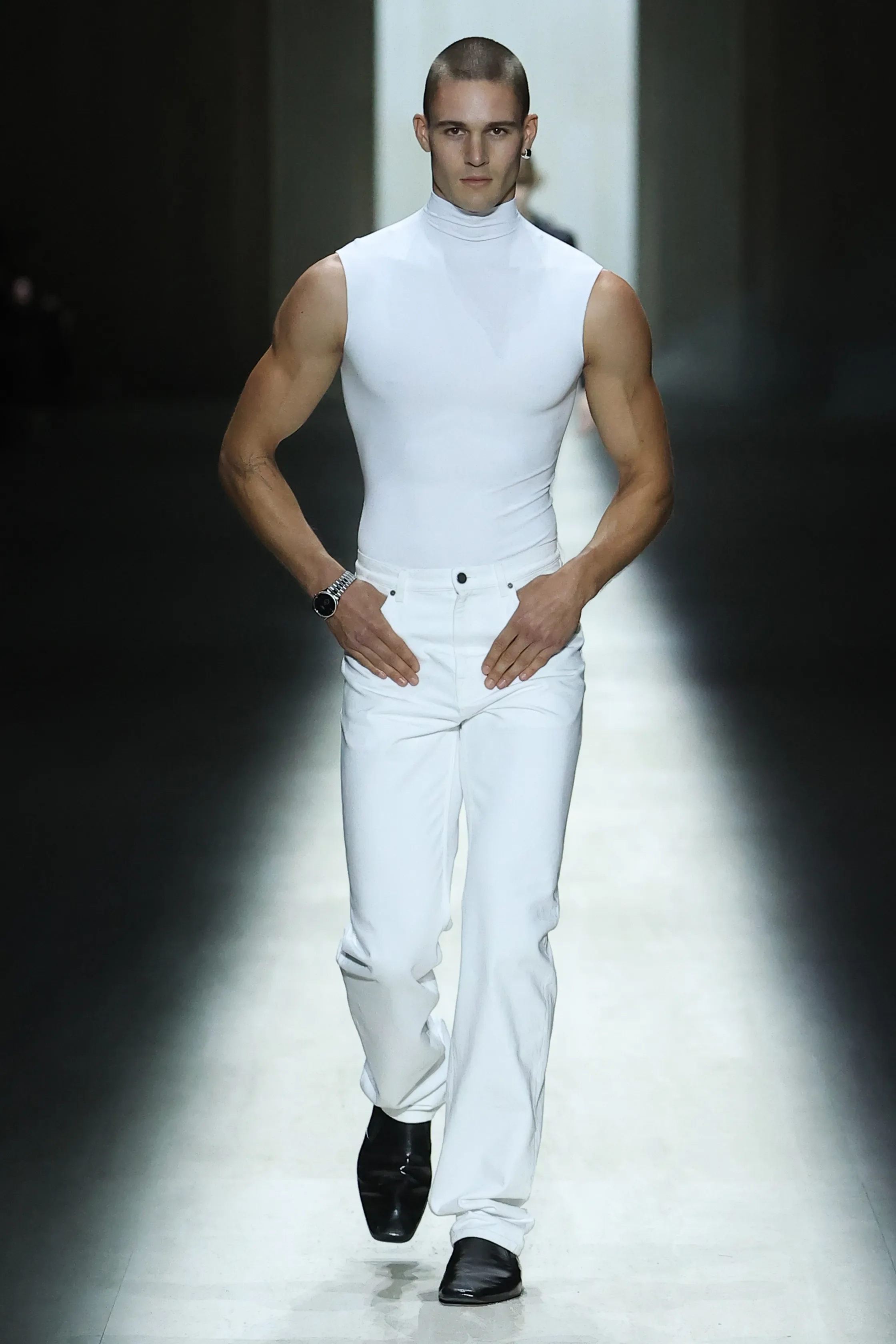
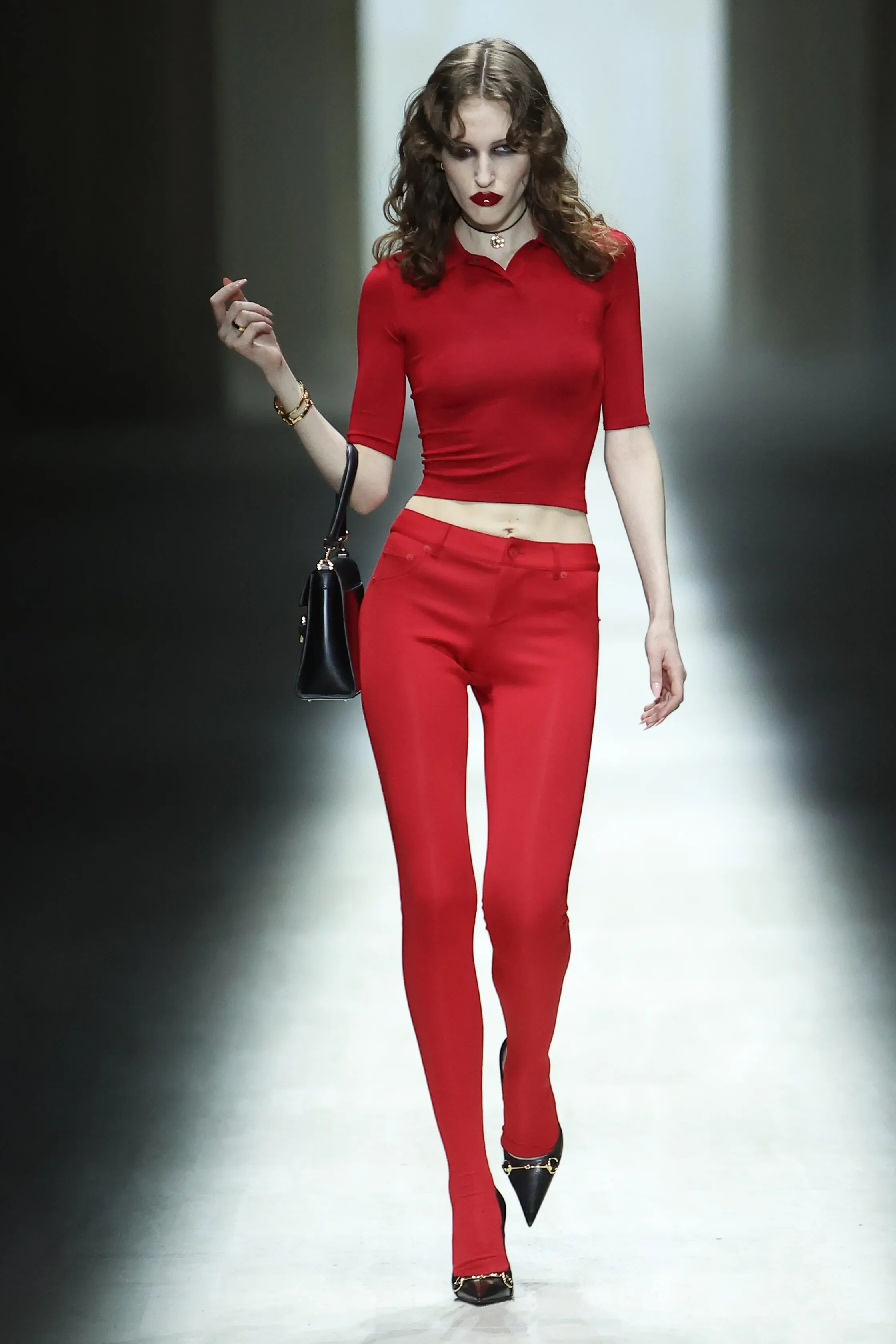
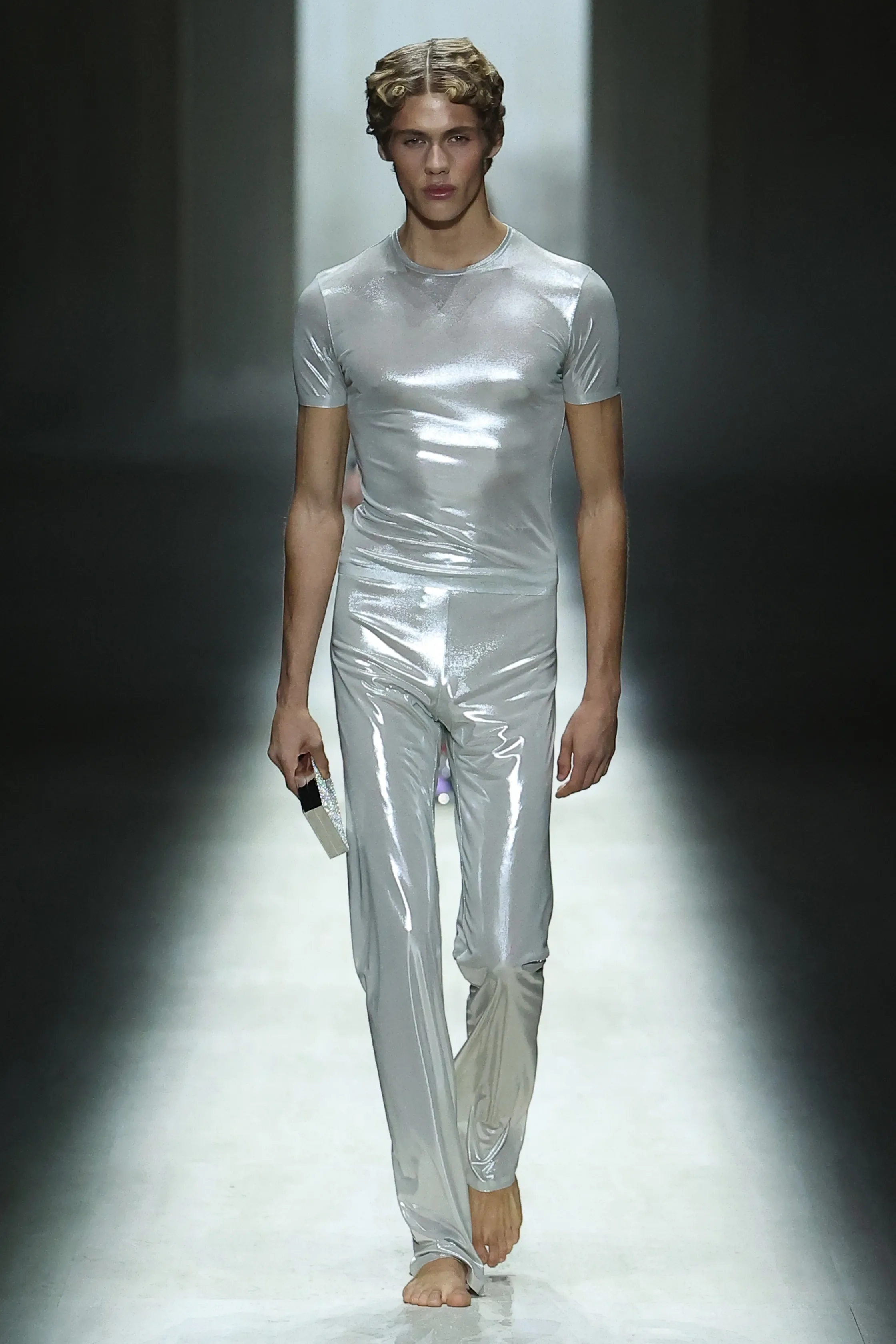
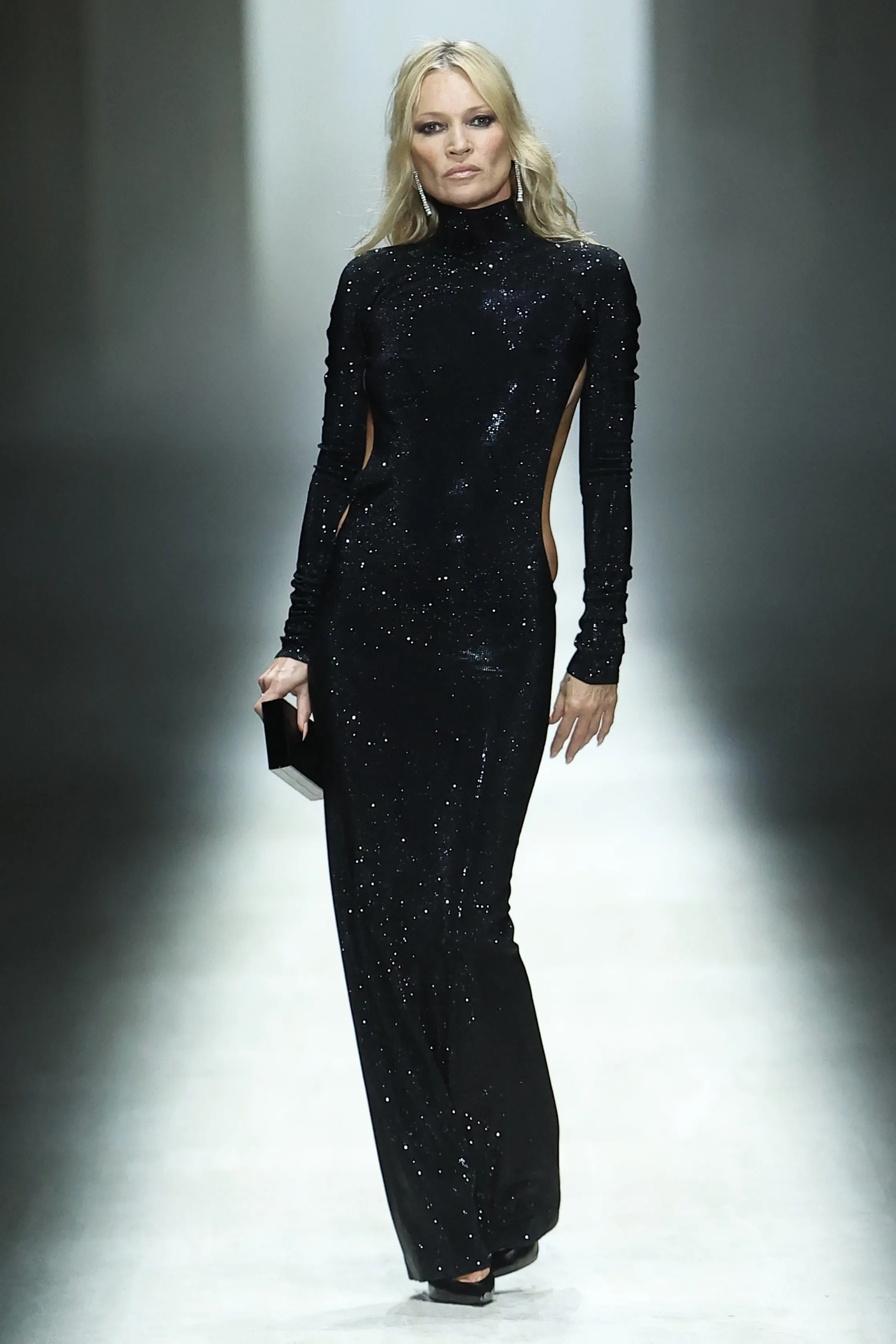
all images courtesy of GUCCI
"Not opposites, but lovers." That’s how Demna describes the relationship between heritage and fashion in his first collection for Gucci, which debuted today at Milan Fashion Week. As a cast of iconic, familiar faces struts down a runway constructed not of physical installations but of architectural light – accompanied by a rhythmic, pulsing soundtrack – the breath of the industry catches in its throat.
Writing this from the heart of the Renaissance, one recognizes that Demna has not merely studied the archives; he has walked through them until the dust of Scandicci and the grace of Botticelli became indistinguishable. This was ‘Gucci Primavera’ – a rebirth that traded the ironized "kitsch of the peripheries" for a softer, more translucent "Gucciness." It was a radical shedding of skin, an invitation to a house that felt suddenly, startlingly lighter: a dialogue, between the divine past and the pragmatic present.
The wardrobe of ‘Gucci Primavera’ functioned as a study in sartorial surrender. Demna moved away from the iron-clad structures of his past, opting instead for a "body-first" honesty that felt like a quiet riot against the over-constructed. The garments didn't just sit on the models; they clung, gossamer-thin and translucent, rendered in hosiery fabrics. Mundane white T-shirts seemed to be losing a battle with gravity, caught in a choreographed slide off the shoulders. Skintight slacks and logo belts acted as anatomical markers, tracing the sharp geography of hip bones and lean lines of thighs with a precision that made the surrounding marble statues (Hello, Uffizi) felt suddenly, clumsily heavy. This was a "coed" hedonism where gender was secondary to the raw architecture of the frame: a theme punctuated by the presence of the new digital vanguard, from Alex Consani to the distorted-rap disciples of Nettspend and Fakemink.
As the spotlights cut through the gloom (maybe a sharp, nostalgic flicker of the Ford era?), the atmosphere moved from observation to voyeurism. But it was the arrival of Kate Moss that anchored the fantasy. A shimmering vision of the archival erotic. In a gown defined by glittering cutouts and the defiant, vertical line of a whale-tail thong; her closing of the show anchored Demna’s new Gucci in a lineage of dangerous elegance. She was the bridge between Gucci’s predatory past and this new, soulful transparency.
In the quiet aftermath of the show, as the lights of the runway dim and the "lovers" of heritage and fashion retreat into the Milanese night, a lingering question haunts the darkened Palazzo: can a house built on maximalist spectacle survive on such a lean, translucent diet? Demna is betting that the modern consumer values the "feeling" of a garment over the noise of a logo, a gamble that risks alienating those who came to Gucci for the costume rather than the character. It is a radical stripping of the velvet curtains, exposing the brand to a visceral, perhaps vulnerable, new era.
Ultimately, this debut proves that the Renaissance is less a fixed point in history than a recurring tension between the sacred and the profane. Demna has successfully navigated the treacherous path between reverence and rebellion, but the true test lies in whether this soulful transparency can sustain the weight of a global empire. One thing, however, remains certain: Gucci is officially fun again.
MOSCHINO
review by VERONICA TLAPANCO SZABÓ
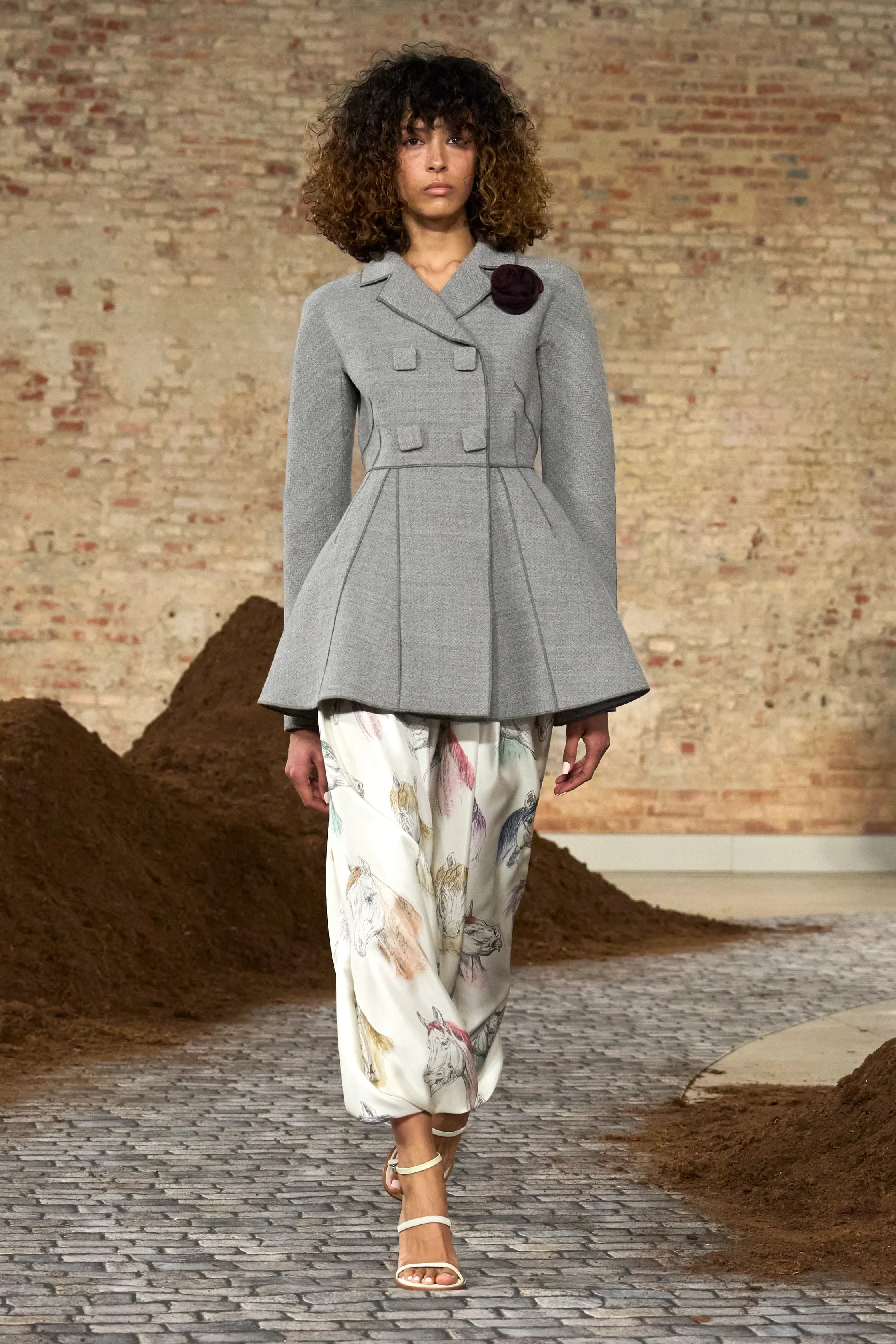
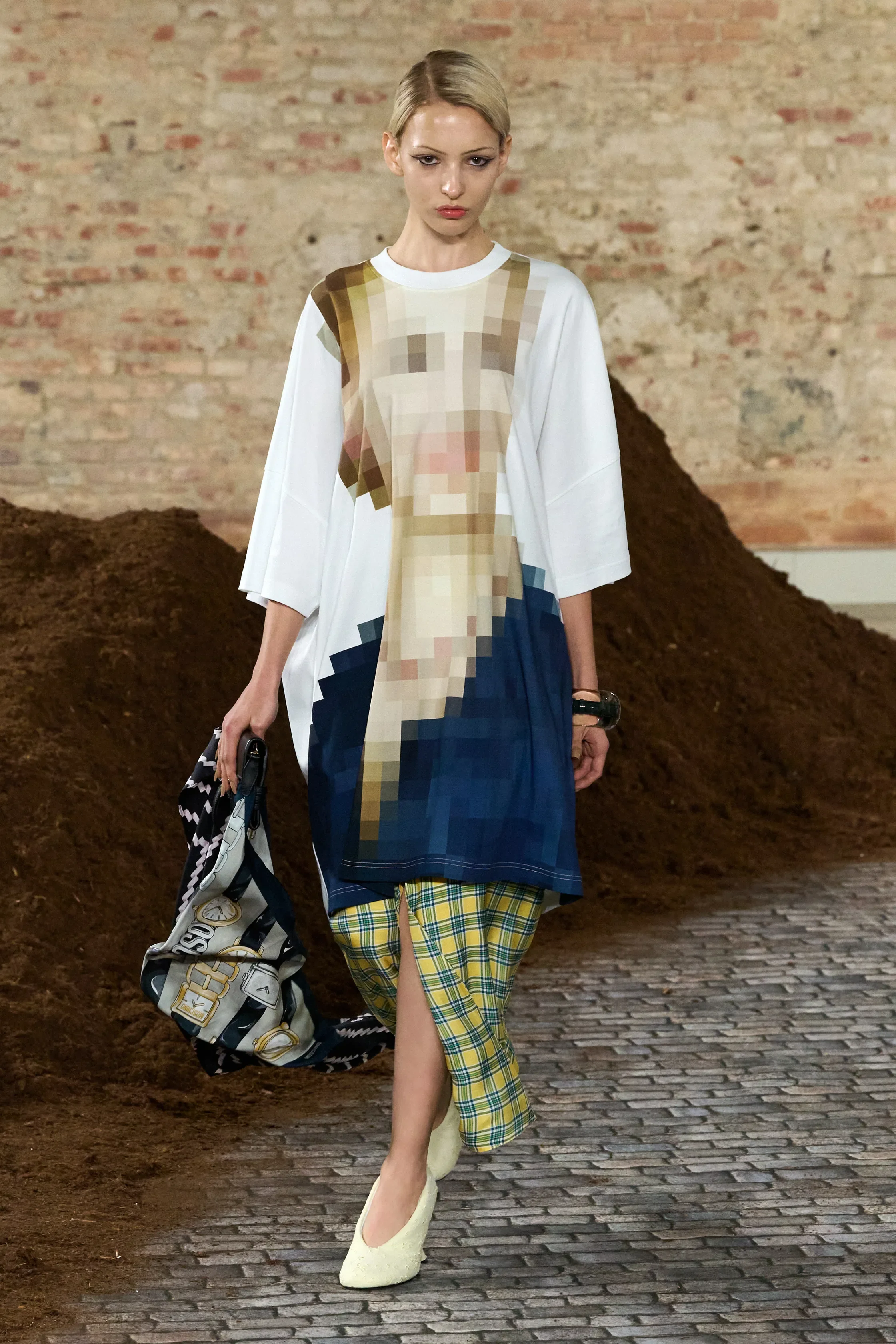
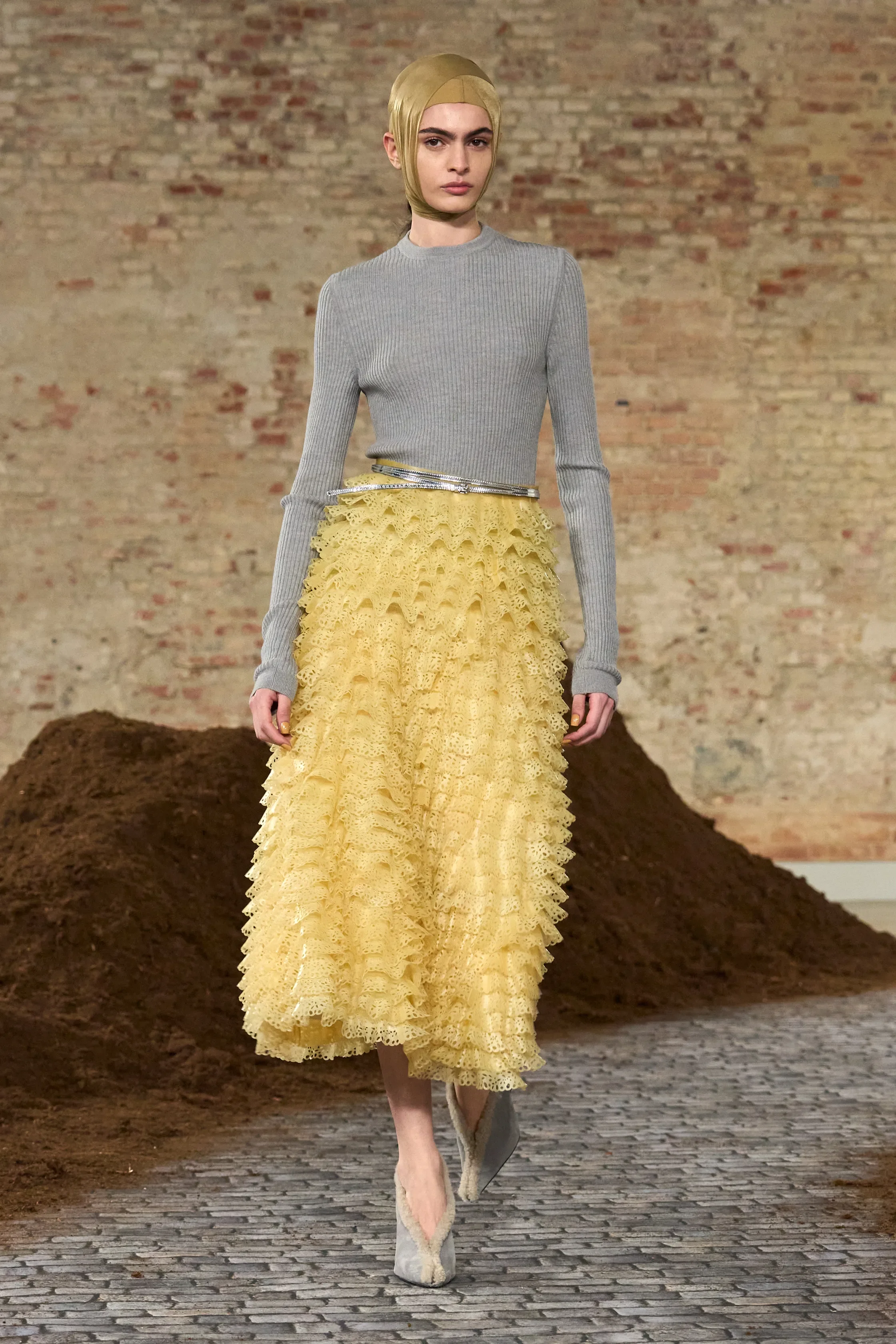
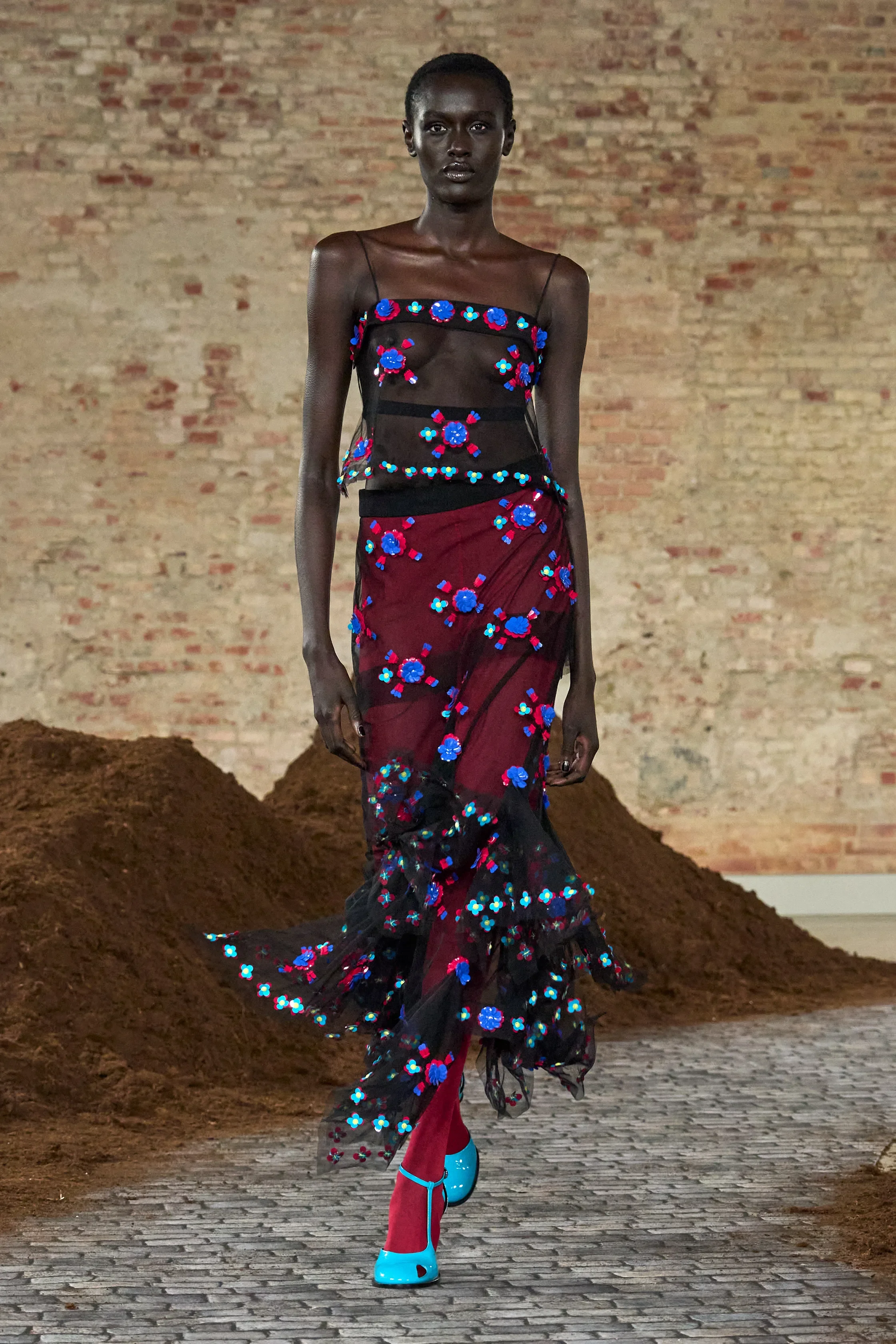
all images courtesy of MOSCHINO
Once you get comfortable around someone, that is when you can truly let them in. Let them into your past, your heritage, where you grew up. Essentially, what makes you, you. Adrian Appiolaza has now comfortably found his footing at Moschino, so much so that we can finally catch a glimpse of him in his designs. Terra is a recollection collection, in every sense of the word. This yearning for his Argentinian home is characterised by a childlike exaggeration of silhouettes that can only be attributed to the disfigurations of memory, a huge chocolate dipped churro clutch brings us back to a time when that paper bag demanded your entire arm’s strength to carry it and the giddy feeling it would procure. Other times memory is more opaque, and all that is left is a sequined saturated version of Buenos Aires’ Obelisco, still endowing it with a sheen that captures its monumentality. This sense of displacement and fragmented vision permeates the collection from a peep-toe tango shoe with its T-bar strap diagonally misplaced, to a top depicting a pixelated Evita Perón, a political icon canonised into a madonna by the Argentine working class.
Speaking of Evita, these codes and props also allude to the telenovela, or more widely, to the inner world of a Latino household. A retro landline phone appears as a handbag, the kind through which a lead character might hear of plot-twisting gasp-inducing news. There was also a decorative silver family photo frame turned handbag, ever present on any mantel or flat surface, eternalising every family vacation ever. The fork and spoon belt echoes the fancy silverware set reserved for special occasions and special guests only. A bus driver’s vintage ticket dispenser also makes an appearance, said to have come directly from Argentina. And before anyone emits the critique that Moschino is, essentially, an Italian entity and should remain as such, Appiolaza reminded us of Franco Moschino’s “open source” approach to design, which sits at the very genesis of the brand. Take the polka dots and flamenco references ingrained in Moschino’s visual language, those came from his Spanish boyfriend! Moschino has never geographically restrained itself with its references, in fact, it is known for never restraining itself at all!
GCDS
review by AYA SOFIA OPPENBERG
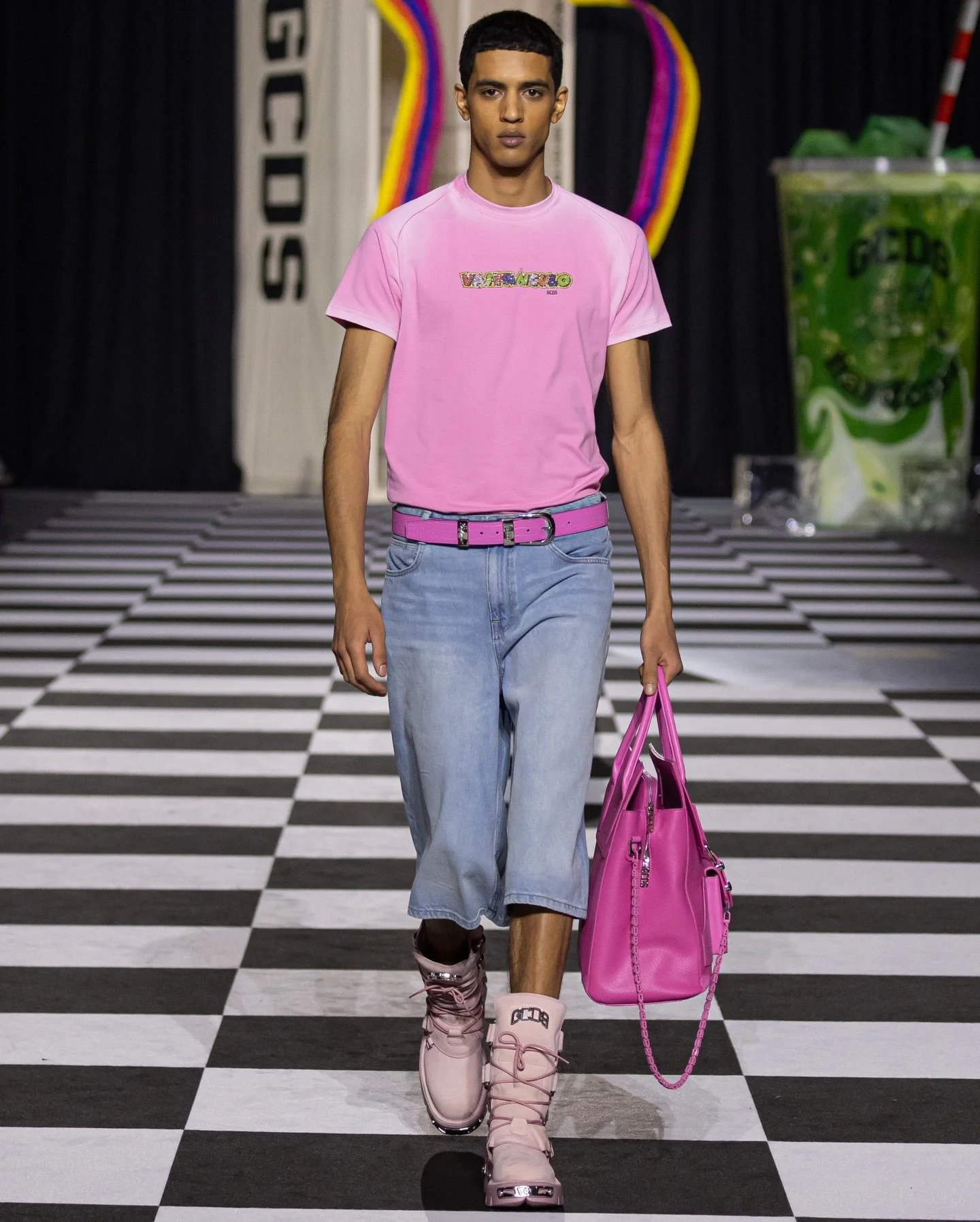
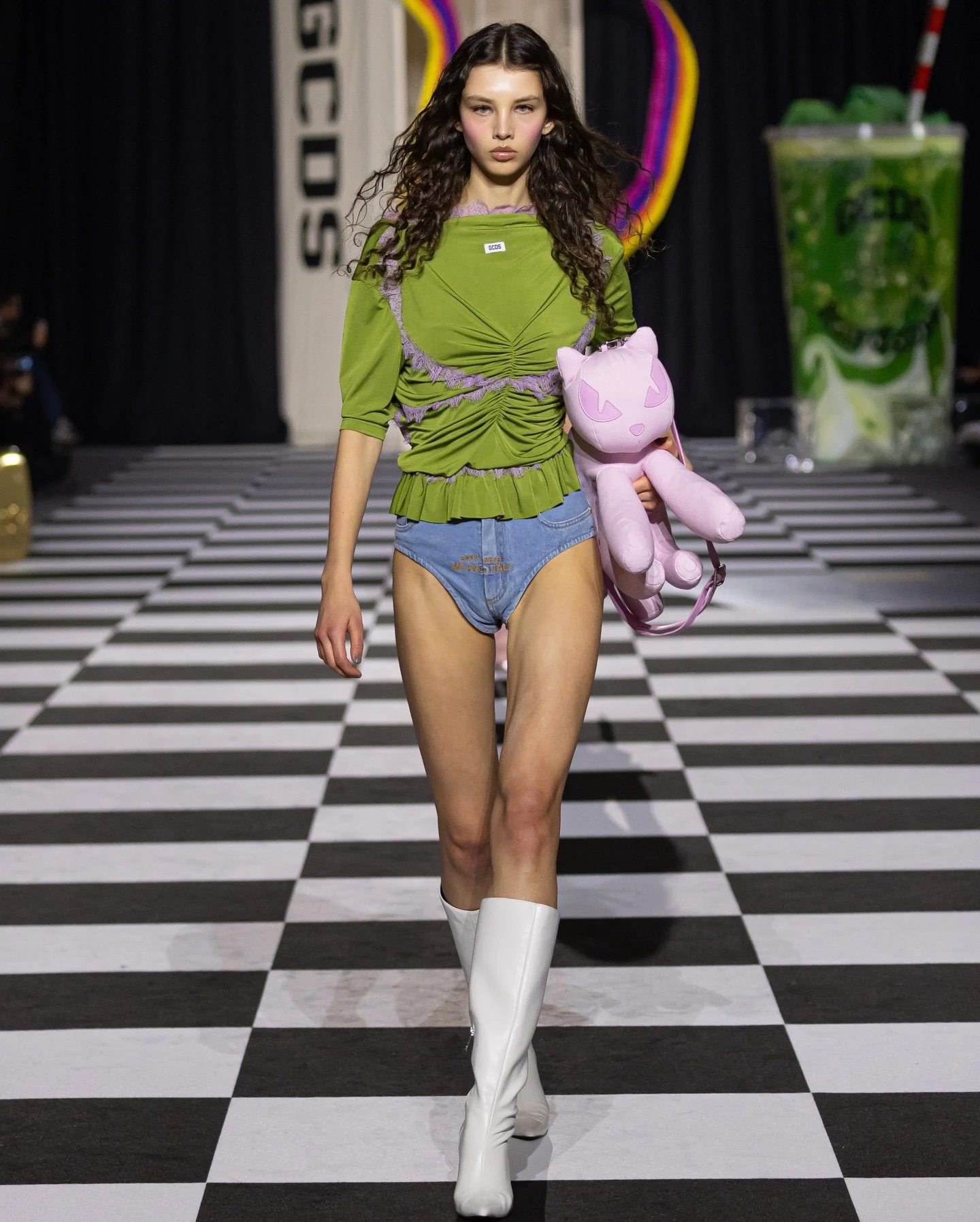
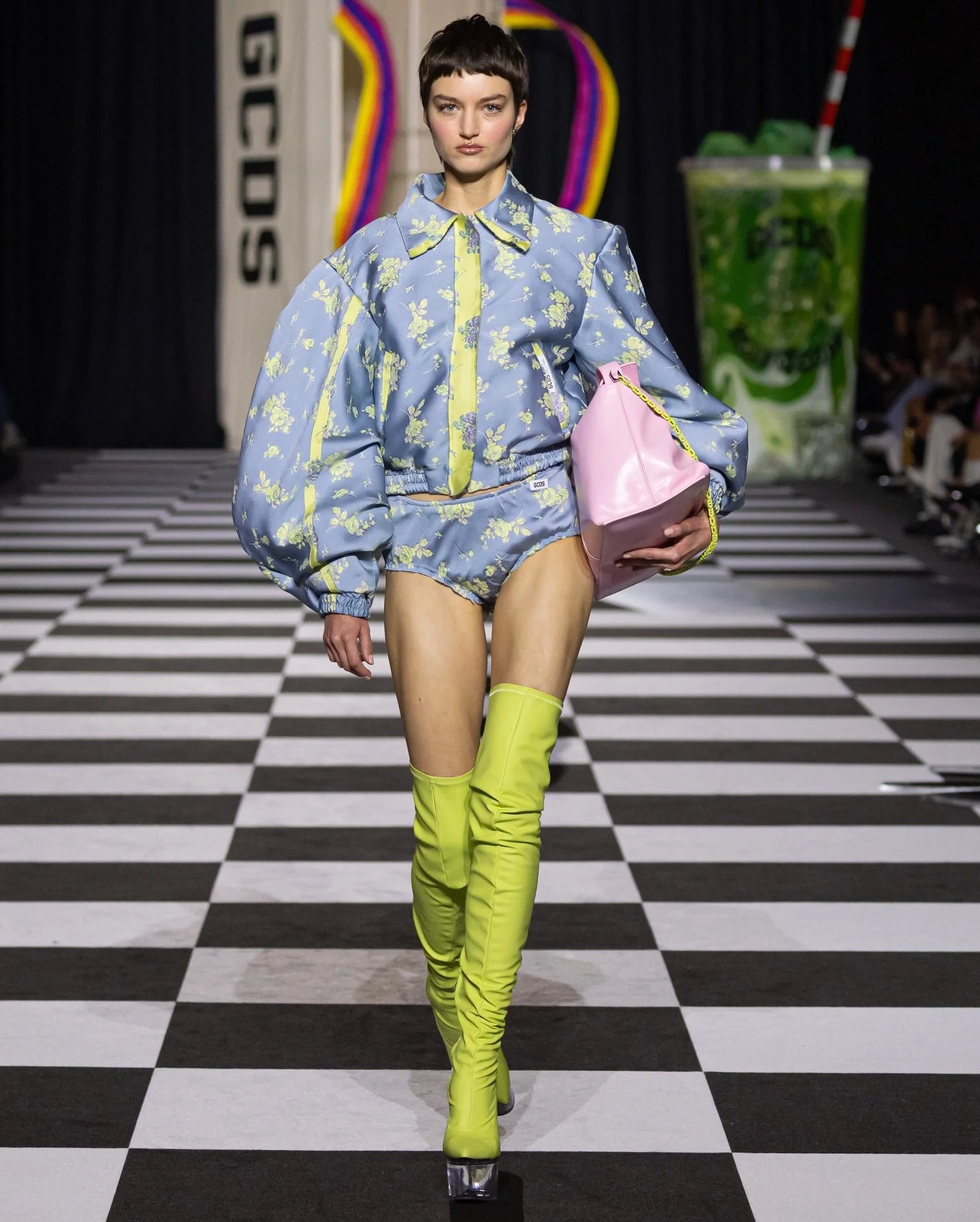
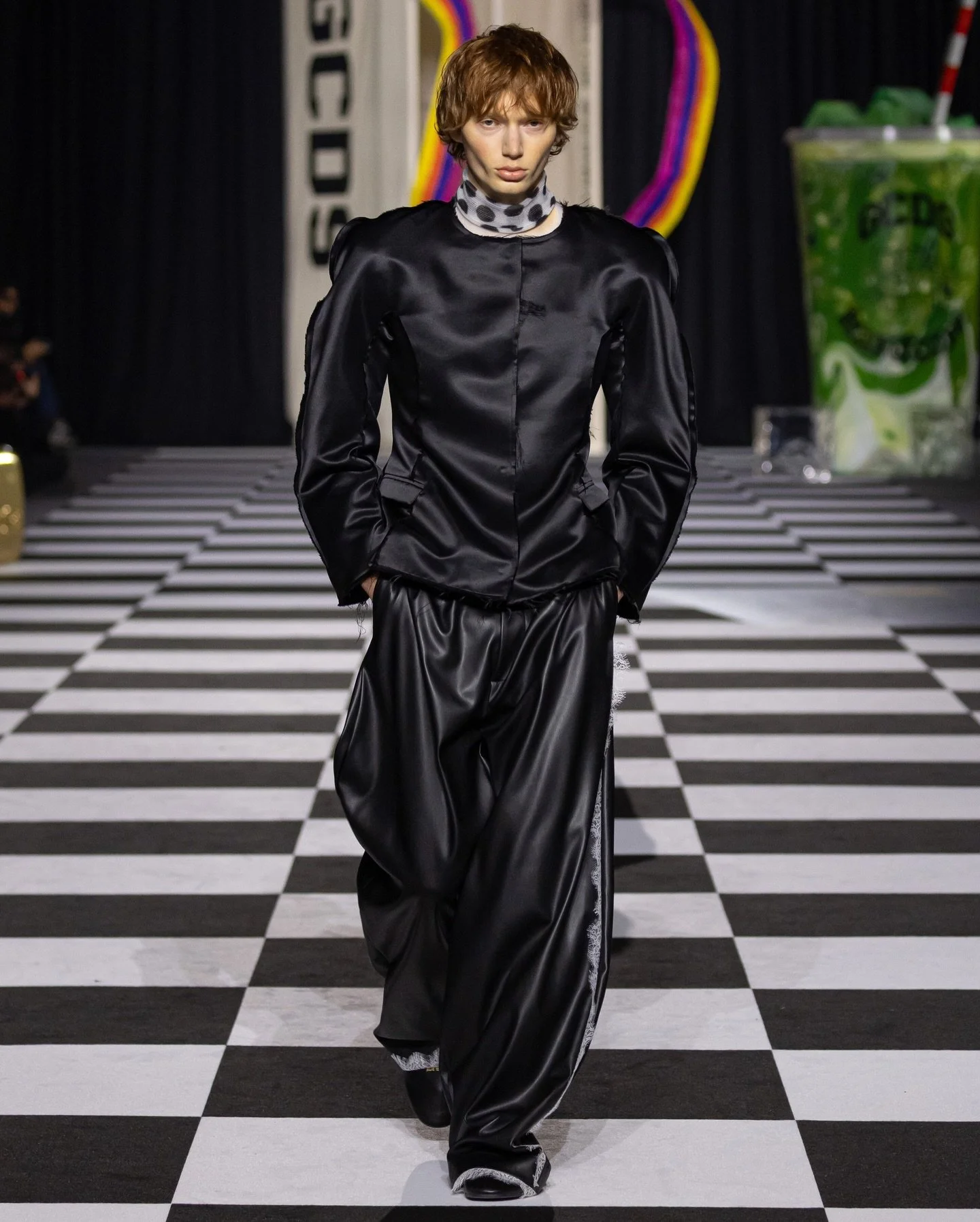
all images courtesy of GCDS
"What’s in my bag?" For Giuliano Calza’s tenth-anniversary show, the answer was a decade of pop-archaeology spilled across a handcrafted shopping mall. Transforming Milan’s Ice Palace into a temple of high-gloss irony, GCDS bypassed the dusty museum retrospective for something more… material: a giant designer shopping bag from which the brand’s universe – and its famous friends – literally emerged.
The collection was introduced with college-inspired nonchalance, which shifted into something more evolutionary, such as the bodysuits, with exaggerated, hyperbolic hips. Calza played with the concept of a ‘work in progress’, leaving seems deliberately raw and exposed at the collars (a poetic nod to the fact that, even after a decade, the GCDS story remains an open book).
From the gossamer-light printed minidresses to the high-speed Valentino Rossi collaboration, the collection moved with the hyper-synced energy of a Cobrah soundtrack. Calza’s genius lies in his refusal to treat "Made in Italy" with too much sobriety. It turns out, when you unpack a decade of a GCDS suitcase, the only thing missing is the luggage.