
MILAN FASHION WEEK MENSWEAR FALL/WINTER 2026: DAY 2
CHURCH’S
review by MAREK BARTEK
all images courtesy of CHURCH’S
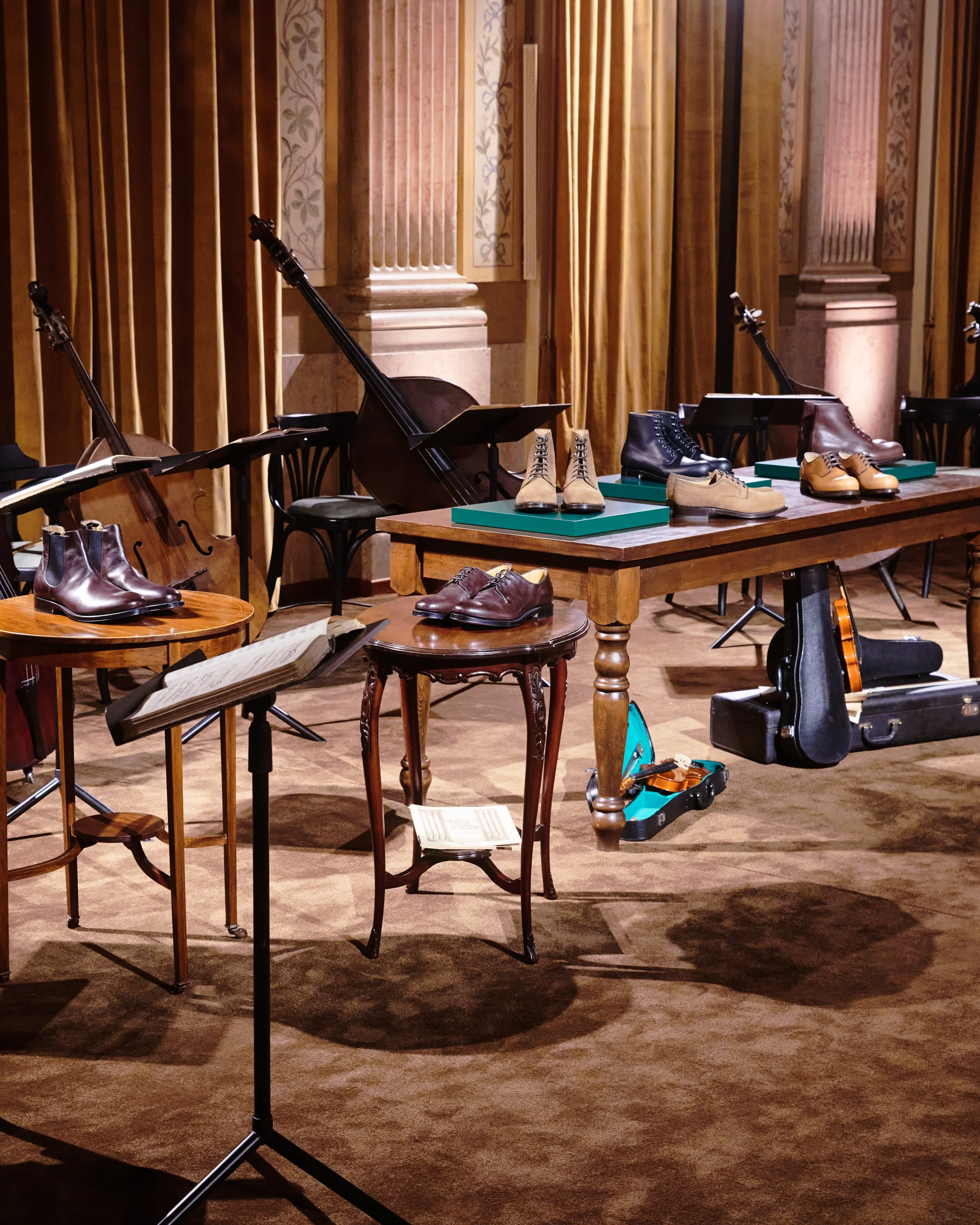
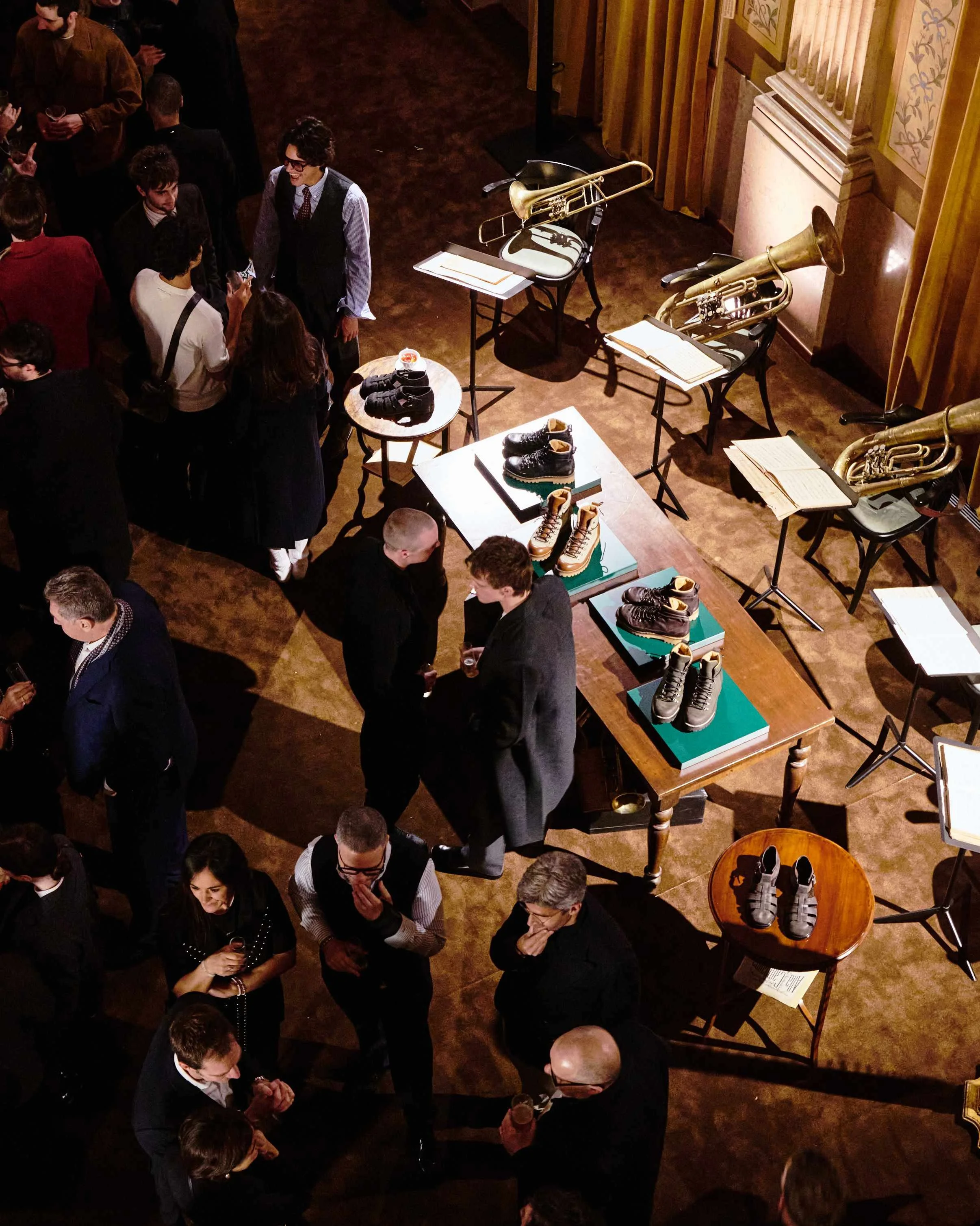
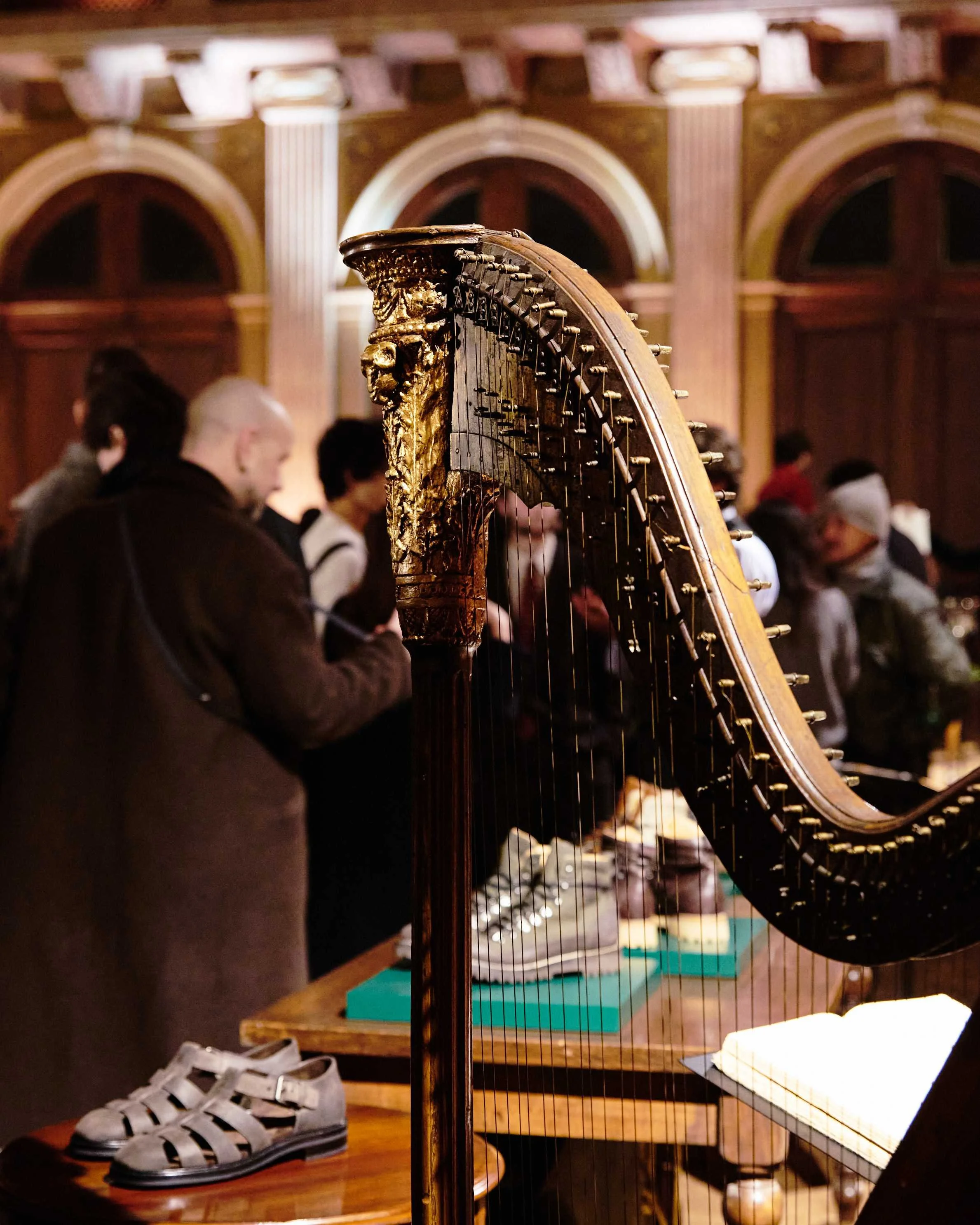
Church’s Autumn/Winter 2026 presentation took place inside Palazzo Barozzi, where the house framed its new collection through the language of music and craftsmanship. Rather than staging a conventional display, the space was shaped by a live sound programme, with musicians performing throughout the day.
The collection unfolded in three chapters. Sunday Morning reworked Church’s iconic sandal for winter, using waxed suede and wool tweeds that balanced comfort and unexpected elegance. The Regent line leaned into countryside references, with sturdy boots in reversed calf and sport suede, finished with visible stitching and raw edges that emphasised handwork.
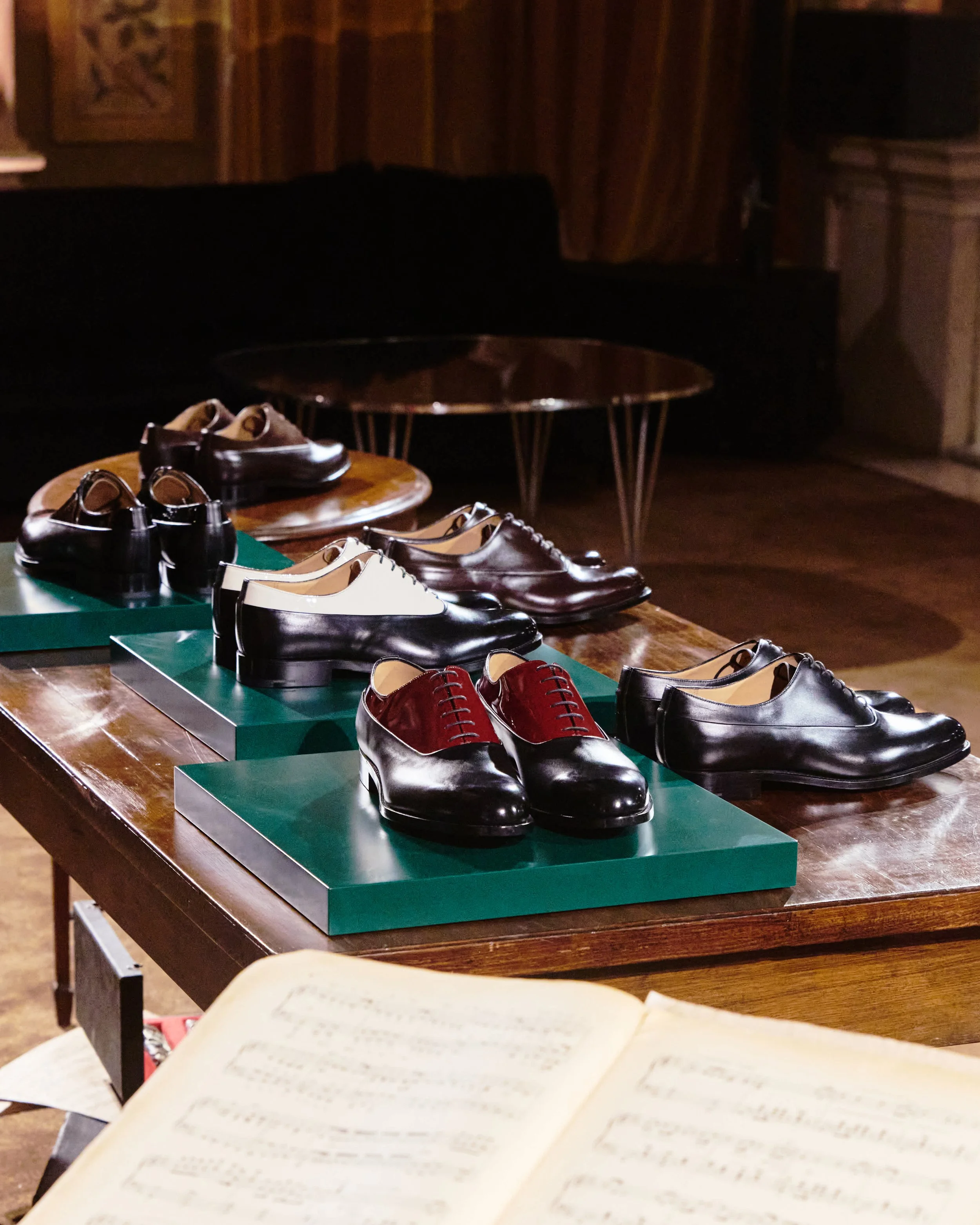
More formal proposals arrived through New Formal and Royal. Polished leathers and dual-toned soles refined the silhouettes without losing their classic character. Overall, the presentation focused on continuity. A collection grounded in brand’s heritage and craftsmanship with a vision of the future and reinvention.
SETCHU
review by MAREK BARTEK
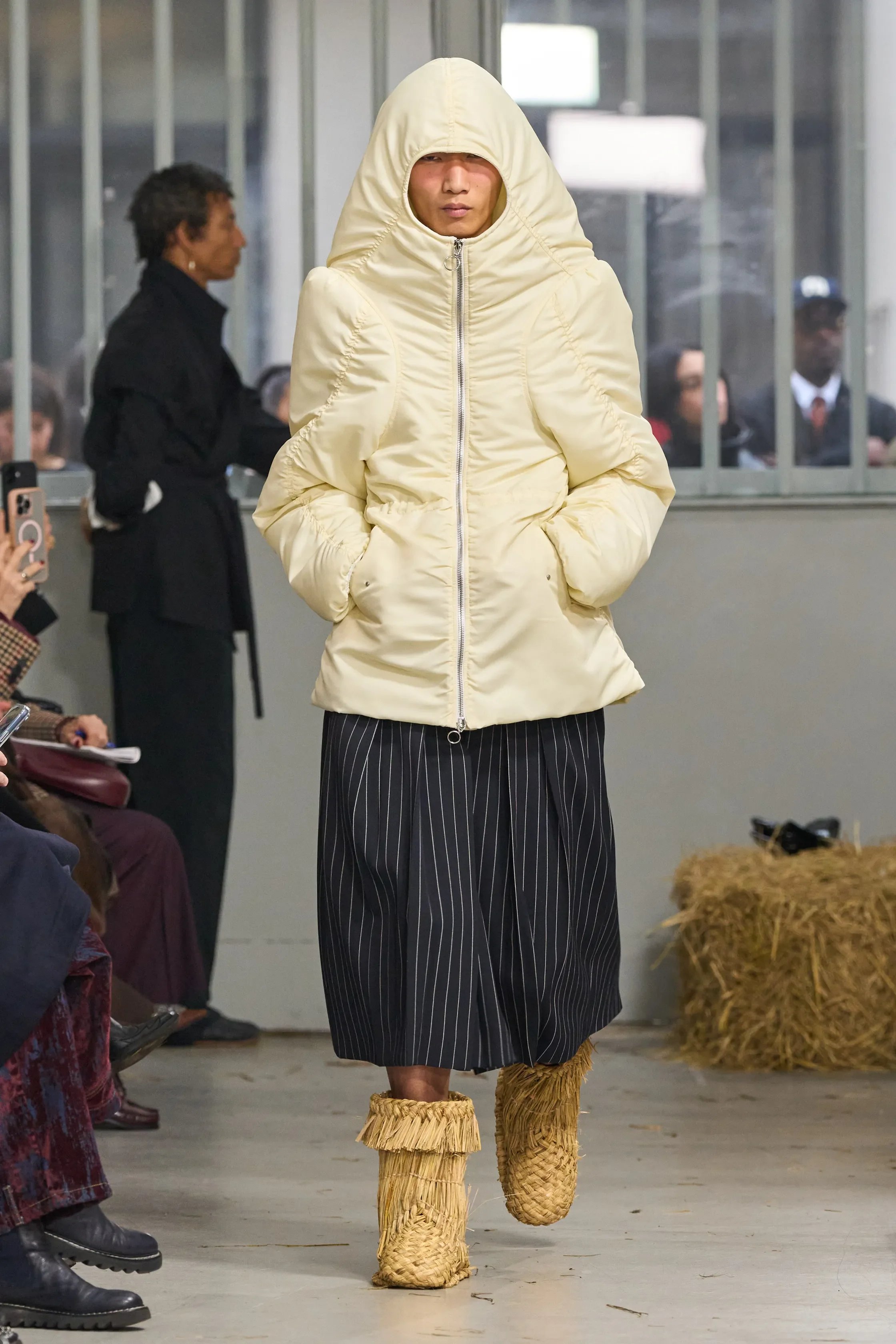
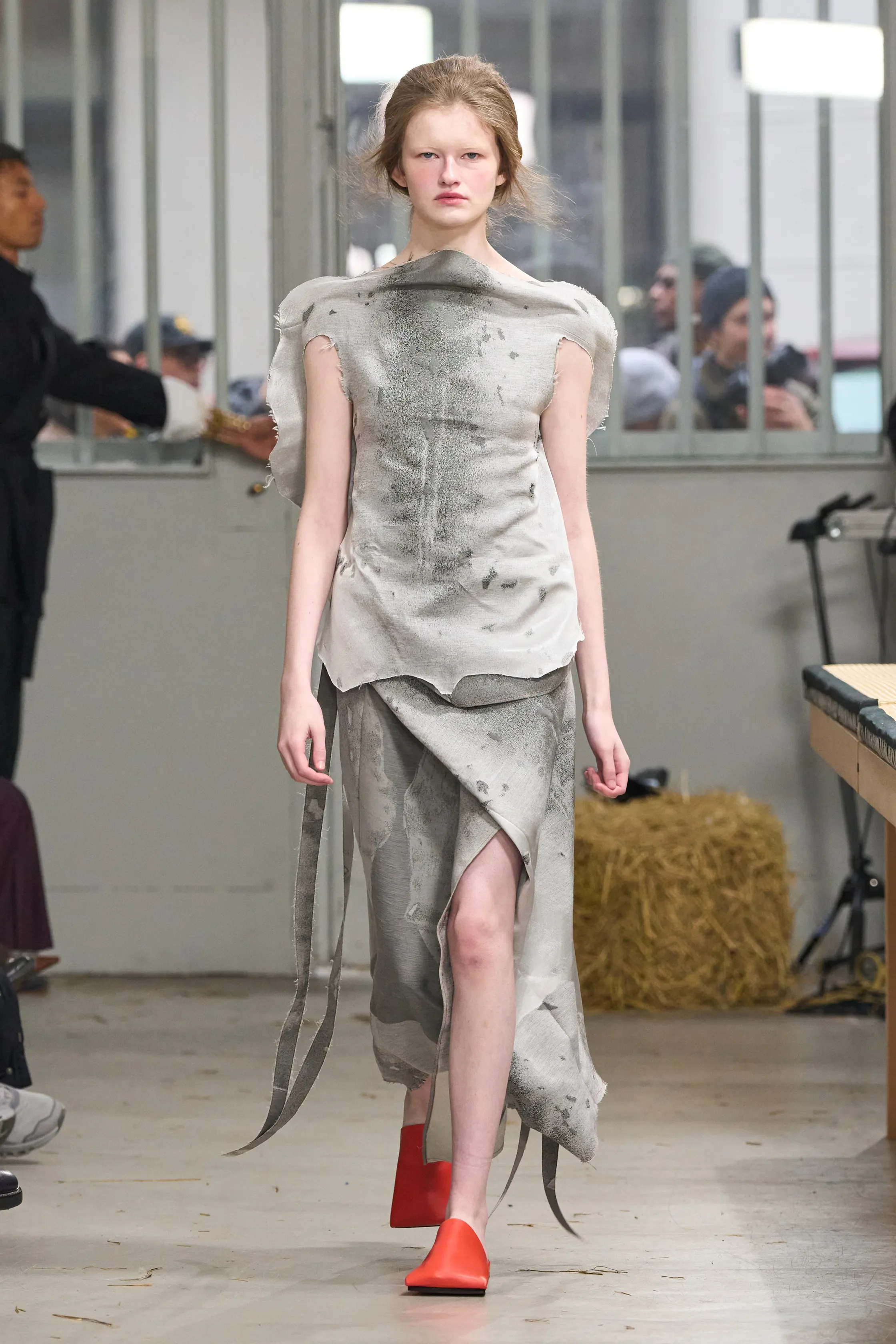
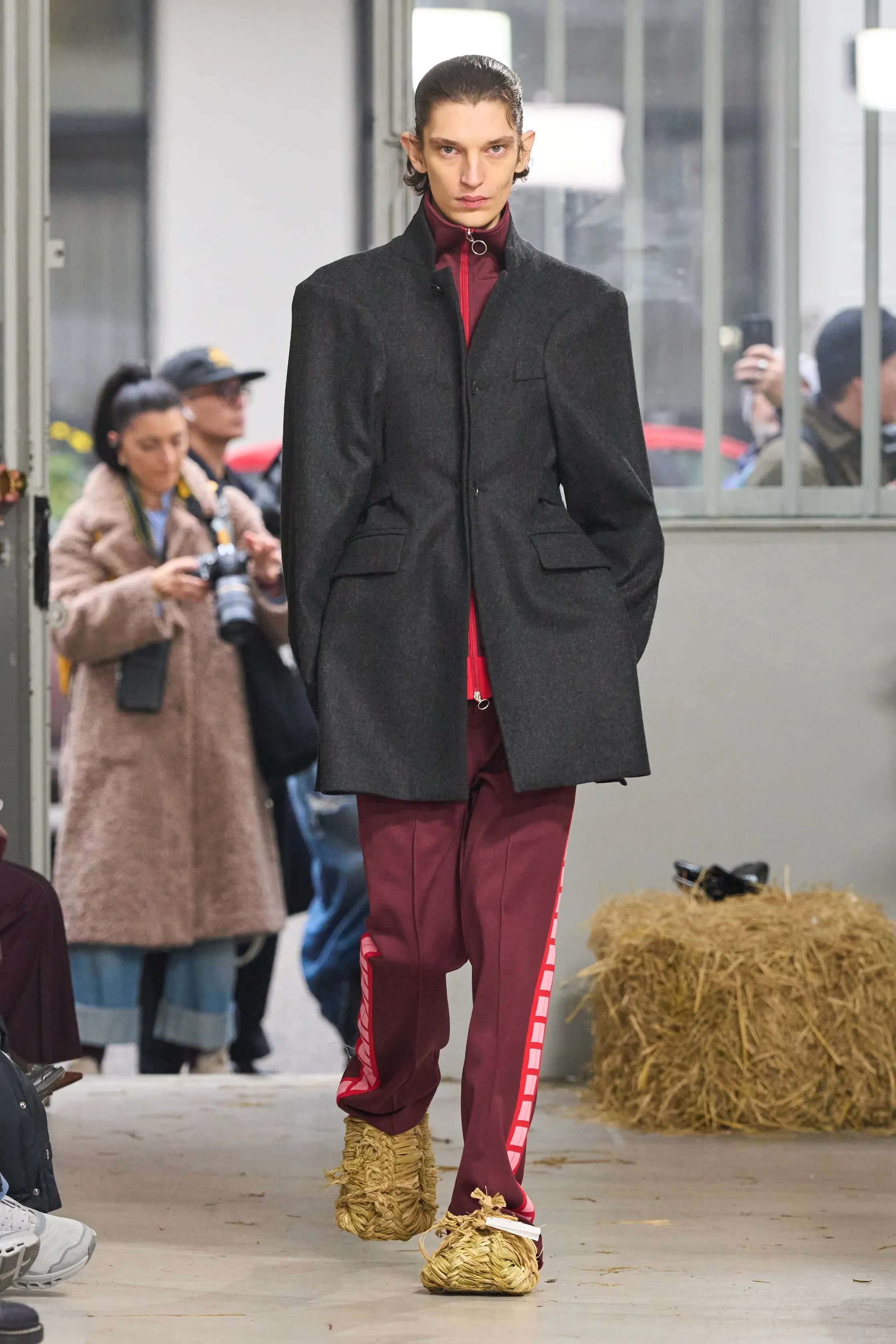
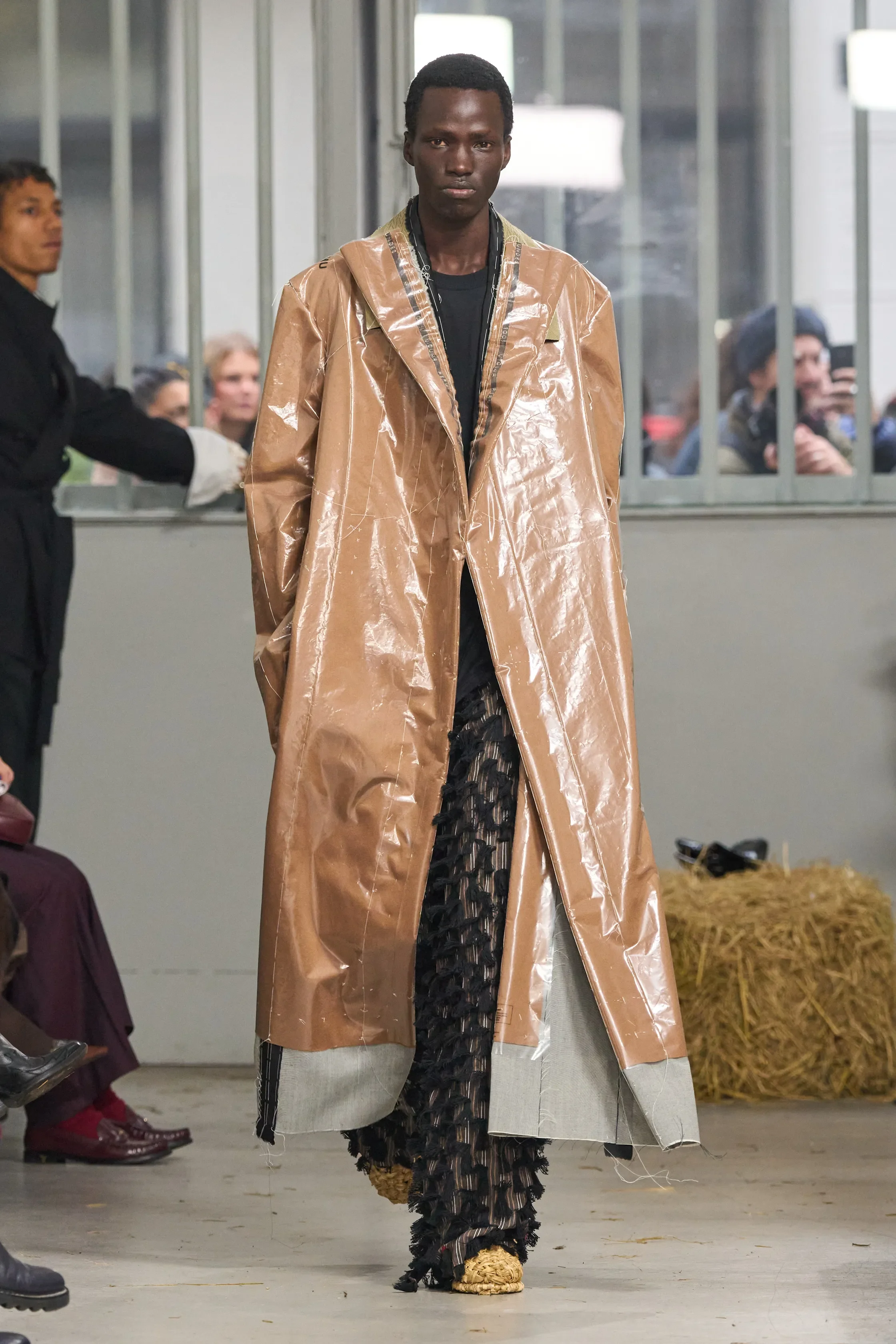
images via vogue.com
“I know Greenland is very in the news now, but I went there before this current trendy boom began.” With that, Satoshi Kuwata introduced Setchu’s Fall/Winter show in Milan. The collection drew from a recent fishing trip to Greenland, where harsh surroundings inform a focus on function, protection, and resourcefulness.
Visiting the Greenland National Museum in Nuuk, Kuwata was confronted with a different approach to design, where traditional Inuit garments are shaped by environment and need for survival. This key element was translated into Setchu’s design language through modular construction and multi-use pieces. Several looks could be folded, zipped, or reconfigured into bags, reinforcing Kuwata’s ongoing interest in adaptability and compact design.
Materials played an important role. Wool and silk jacquards were developed to resemble protective outer skins, while dense weaves and padded surfaces suggested insulation and durability. The silhouettes balanced softness and structure, combining Japanese pattern-cutting with British tailoring discipline. It was innovative, playful and meticulously executed — yet another solidification of why is Setchu one of the most exciting brands to look at.
DOLCE & GABBANA
review by NIA TOPALOVA
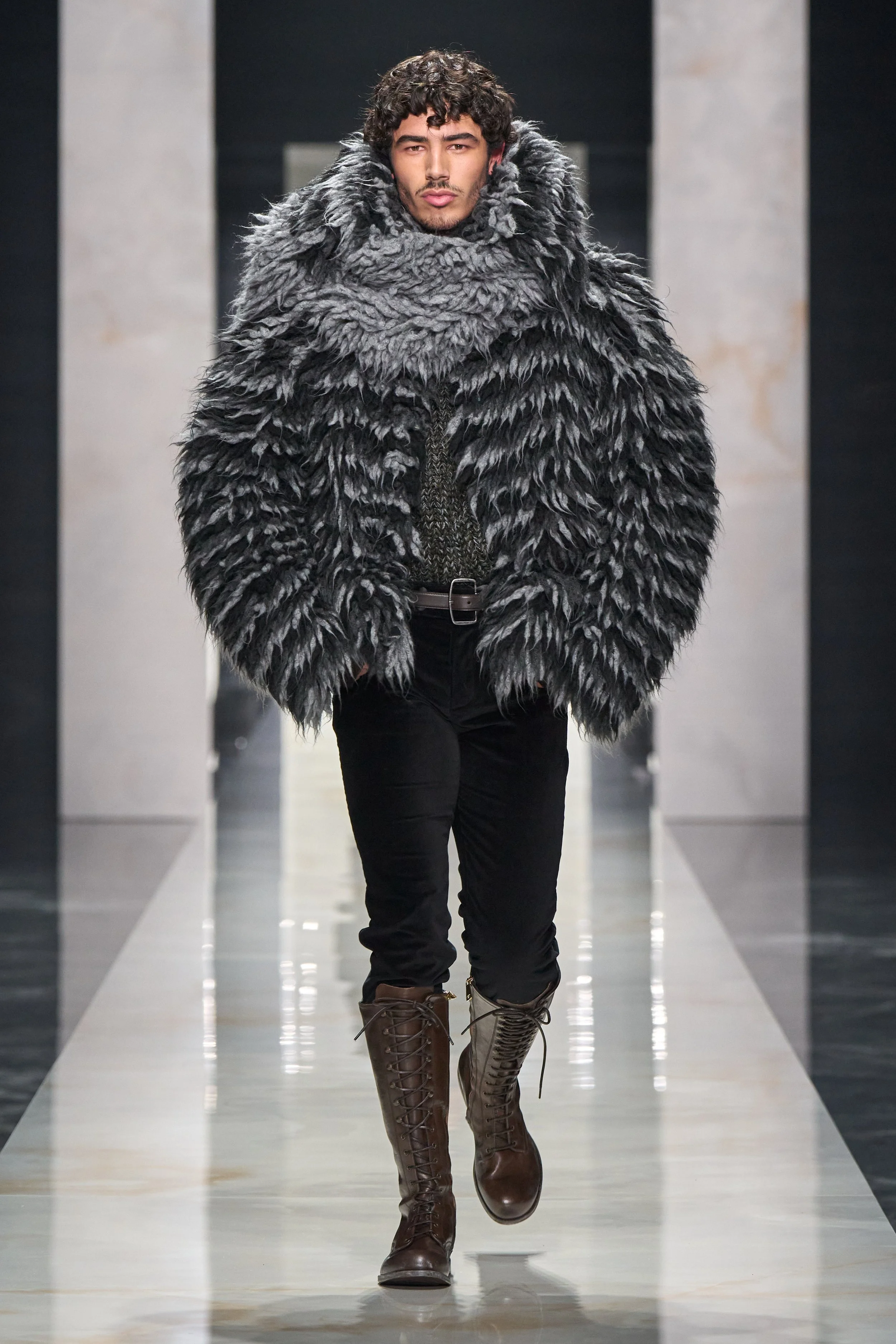
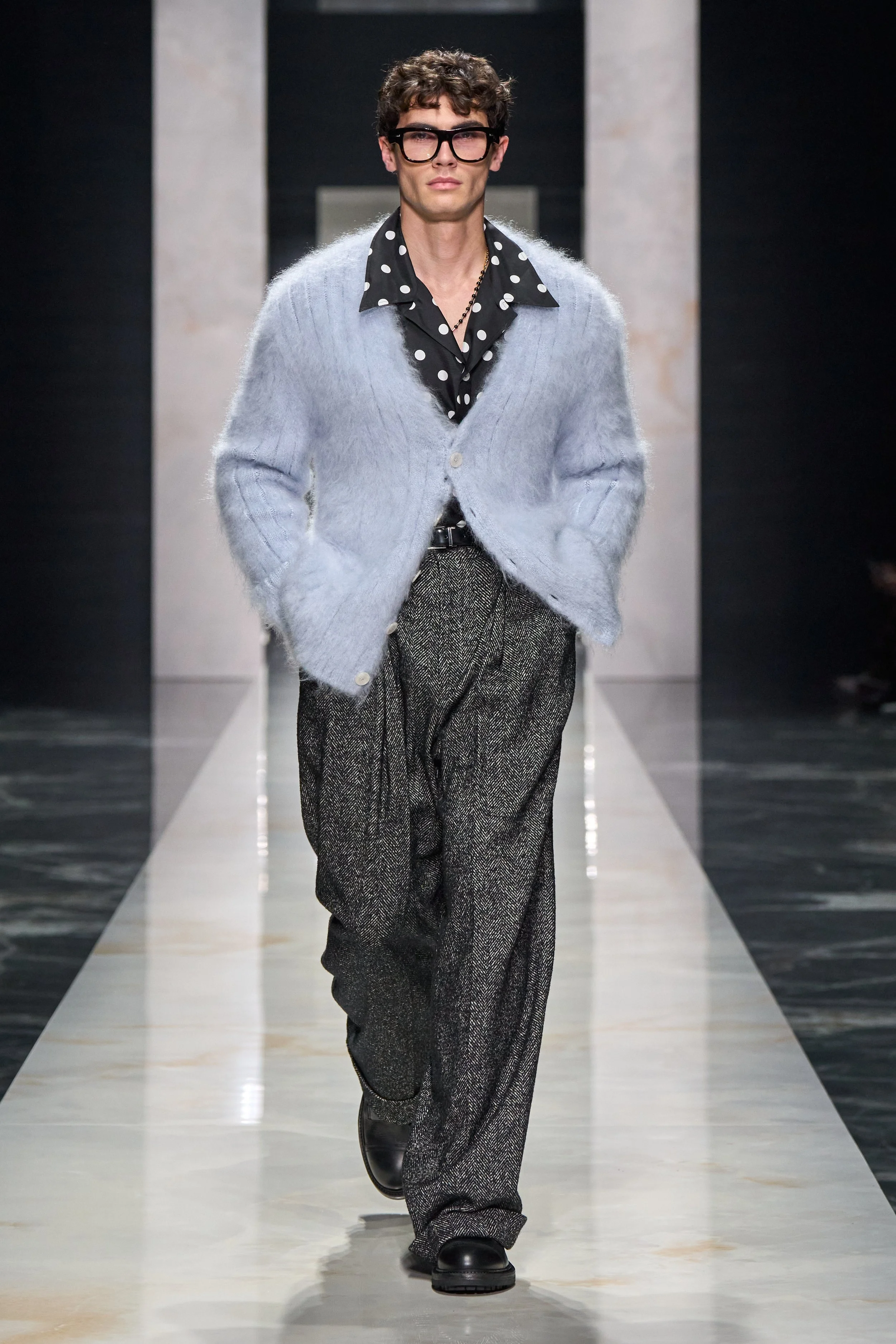
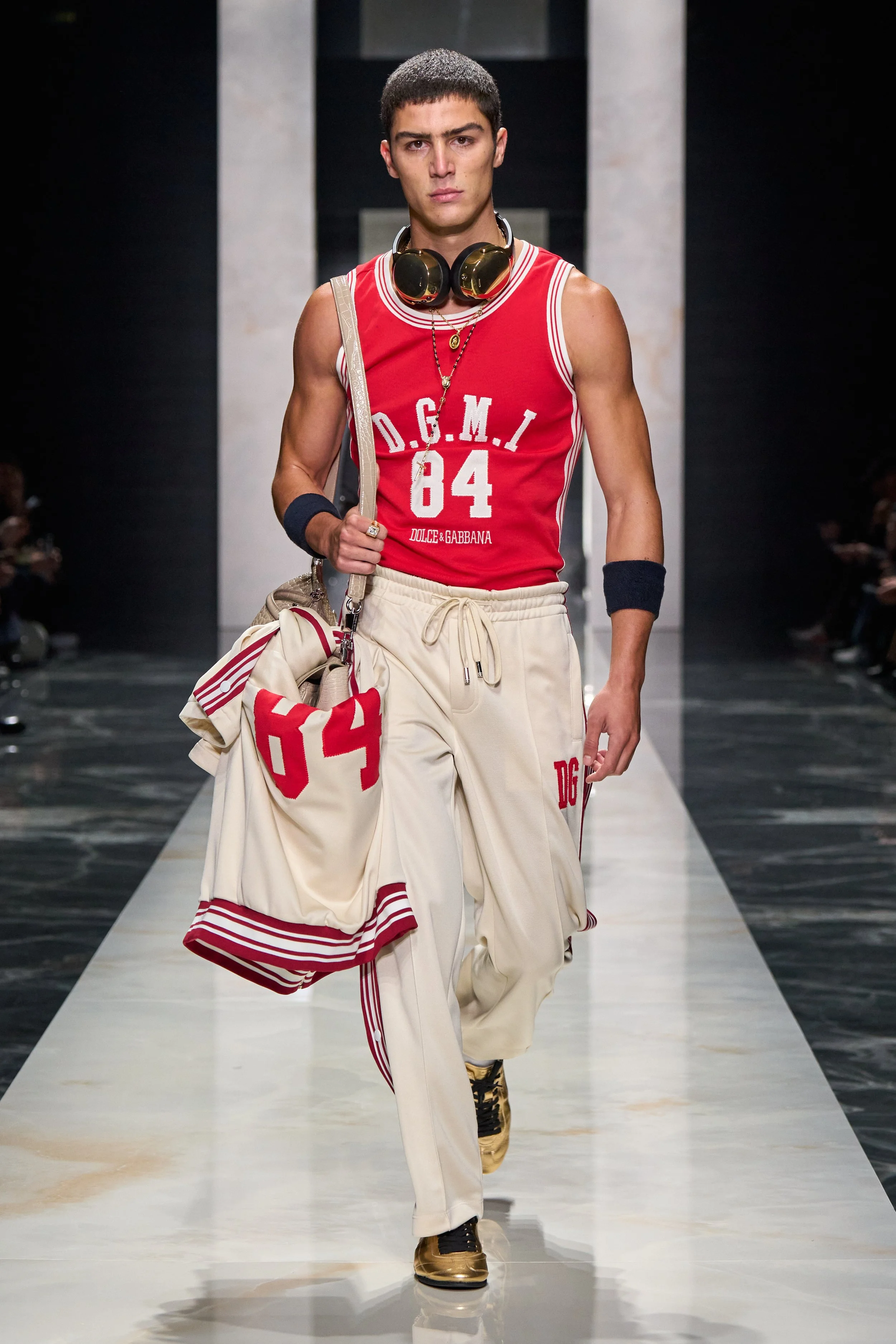
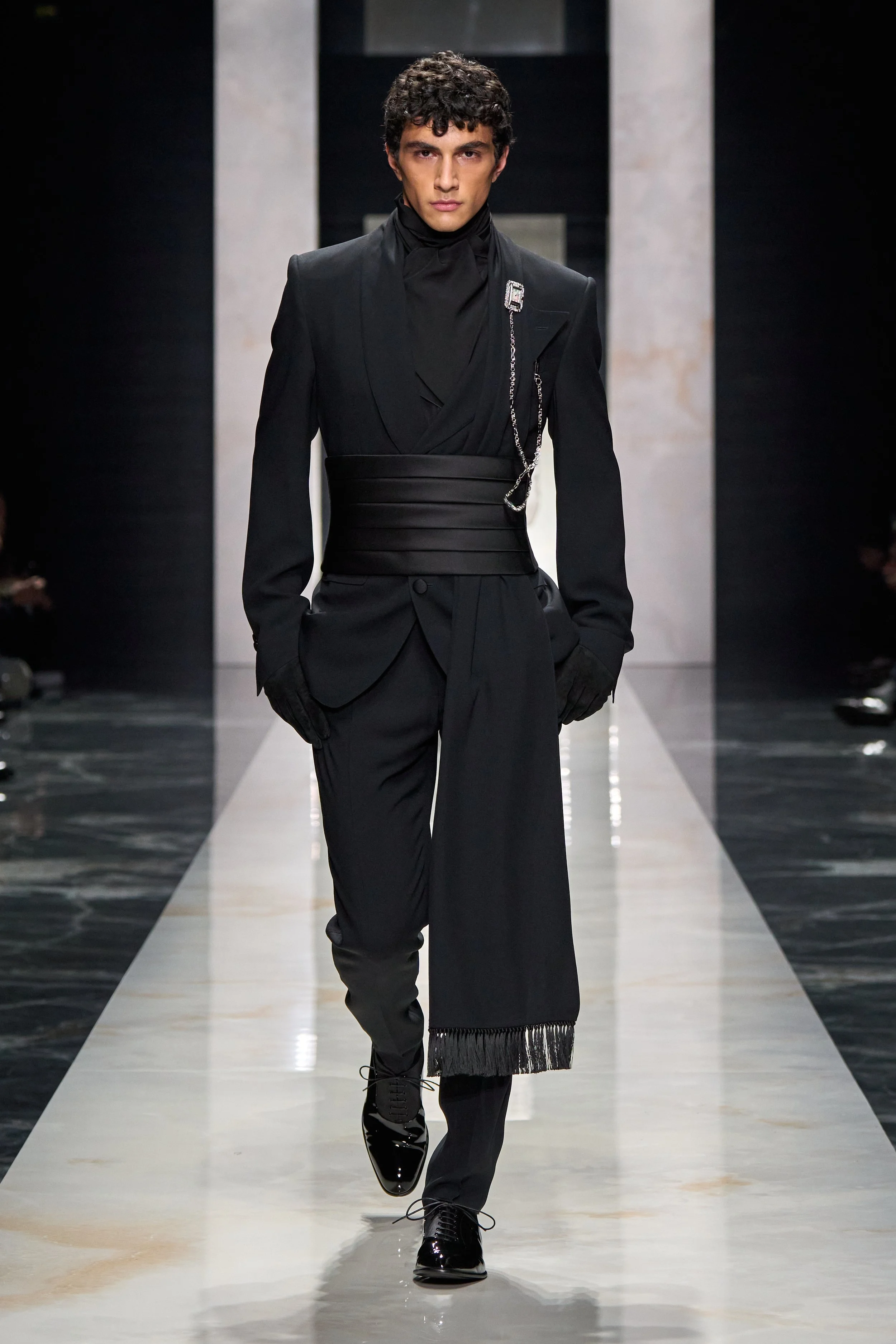
images courtesy of DOLCE & GABBANA
Tighten your seatbelts, ladies and gentlemen (especially gentleman): Dolce & Gabbana present “The Portrait of Man”.
This season is a deliberate manifesto of individuality through style, one so powerful that it finally returns its place as a central, essential element of menswear, bidding farewell to the homogenisation and uniformity, and reclaiming personal style as the ultimate act of expression. Although individuality was achieved impeccably in the clothing, one cannot help but wonder what was going on with the casting.
Many have criticised the Italian designers’ lack of diversity in casting, raising the question of whether the very notion of “individuality” failed to be delivered due to its own contradictions. Perhaps it is also worth asking whether Dolce & Gabbana’s creative intention was overlooked, and if homogeneity in casting was in fact intentional, emphasising a single recurring face and the many identities articulated through the clothing. Be that as it may, however deliberate the choice, it remains worth questioning with a right to raise critique, as it was even called “Fifty Shades of White” on the internet.
But beyond casting, what became increasingly clear was that although no two men carried the same essence in style, there was the undeniable Dolce & Gabbana je ne sais quoi in the way each of them occupied space. The designer duo accomplished something crucial: they remained deliberately removed from trend, allowing space for timeless elegance to assert itself over time.
Tailoring, as always, was at its finest and most assured, with shoulders, proportions and structure defining the character of each silhouette. Fabrics and textures did the rest. Deep velvets absorbed the light which further sculpted the silhouettes, evoking the emotional depth of Italian chiaroscuro; wool suits, double-breasted coats, and faux-fur trench coats gave weight, while matte silks added softness. Fitted leather jackets in combination of jeans or leather trousers added the much needed, anticipated bite.
Finally, we were summoned to think wisely, and choose our ultimate fighter of elegance: will it be the introspective thinker, the structured rationalist, or the visionary? Or perhaps you’d find more appealing the Mediterranean sensualist, or the restless romantic… I would, that much is certain, but that’s a story for another time.
PRONOUNCE
review by MAREK BARTEK
images via vogue.com
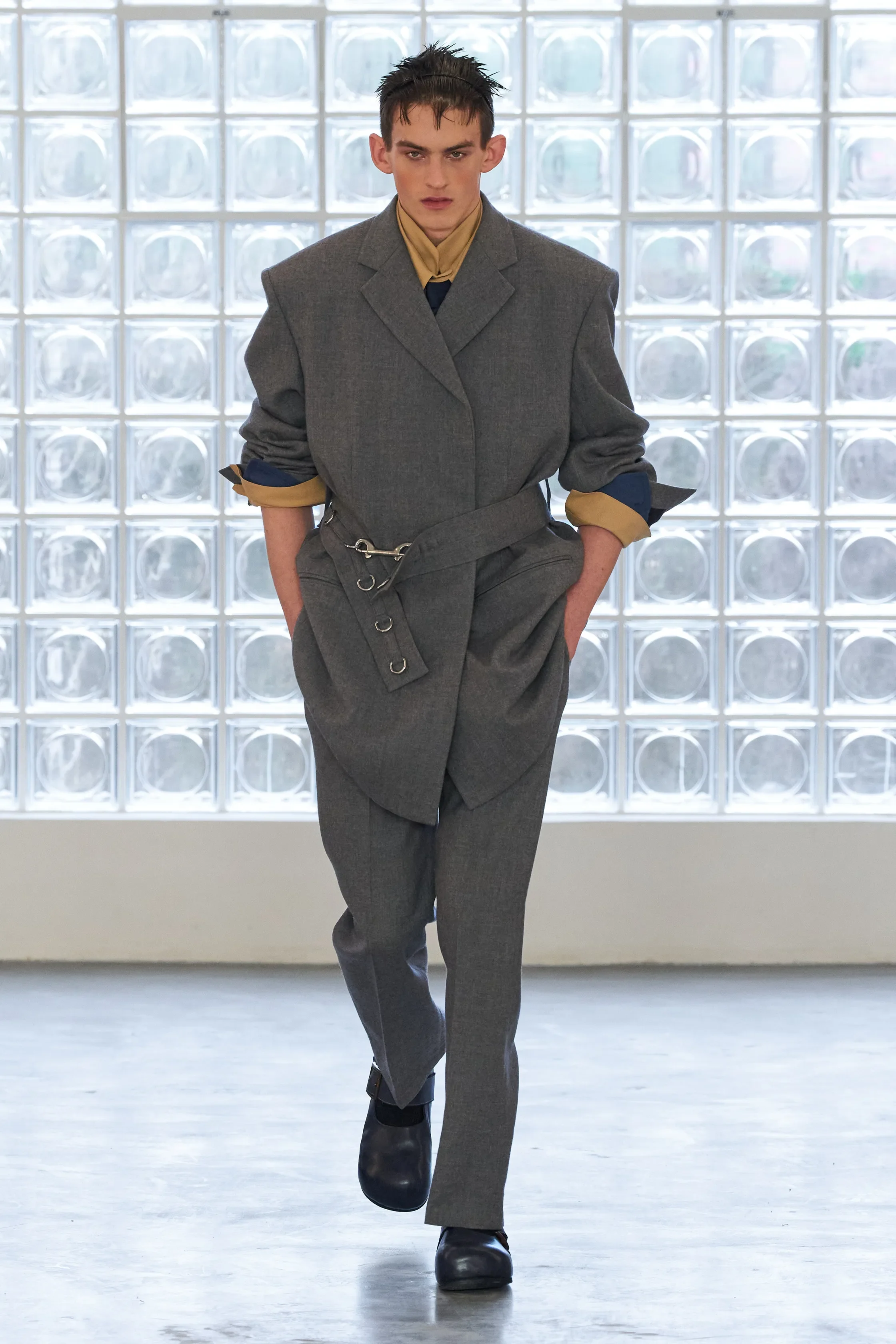
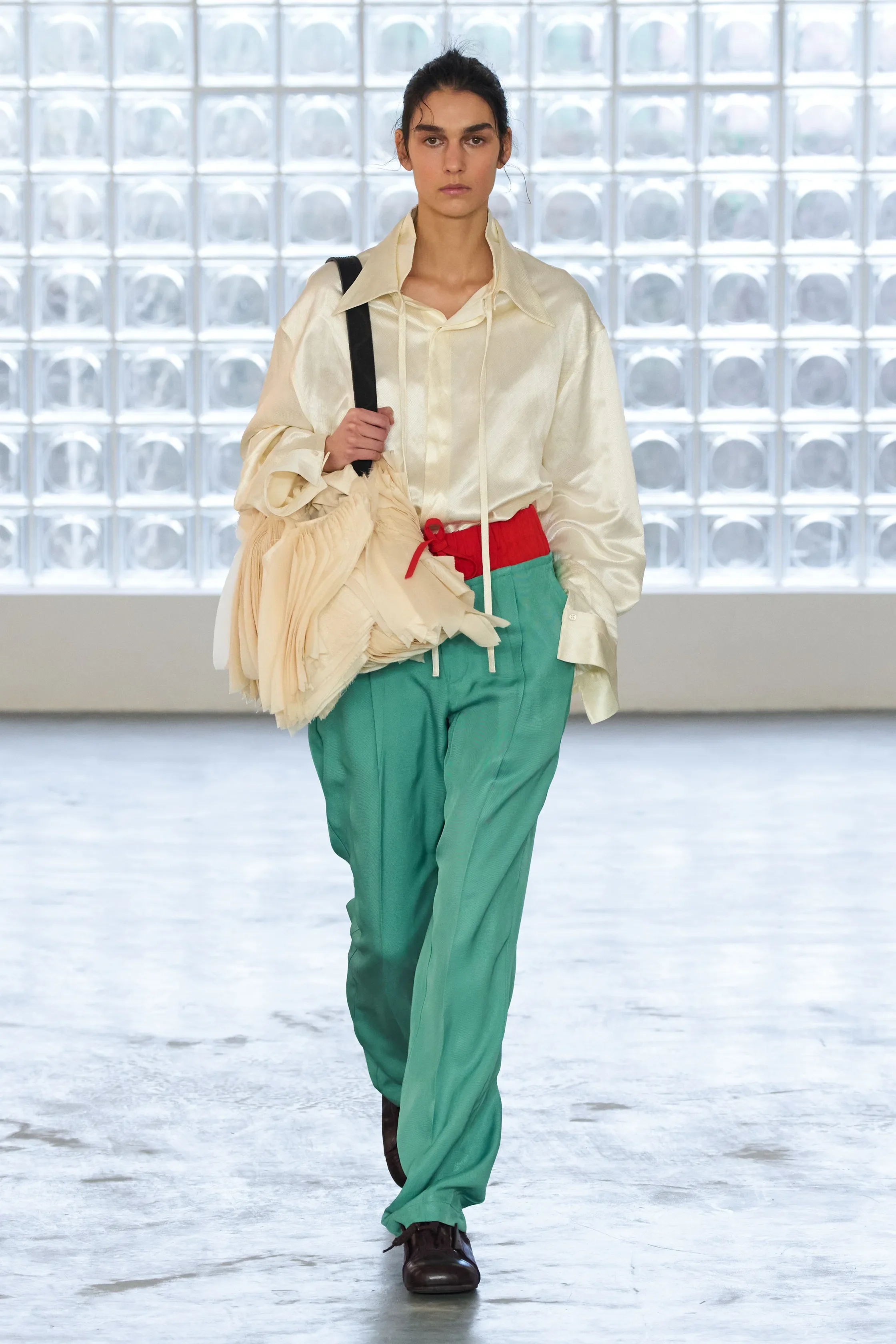
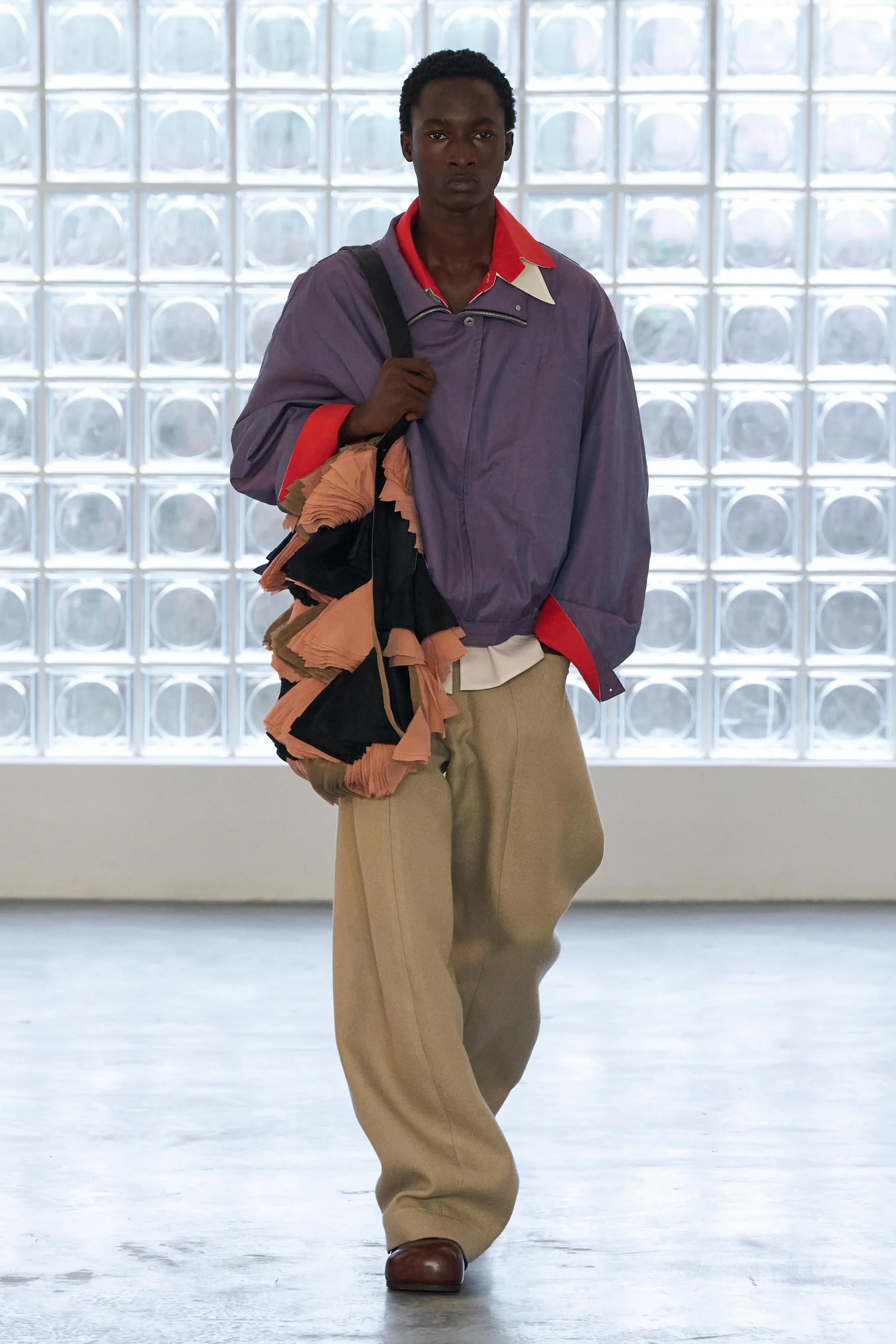
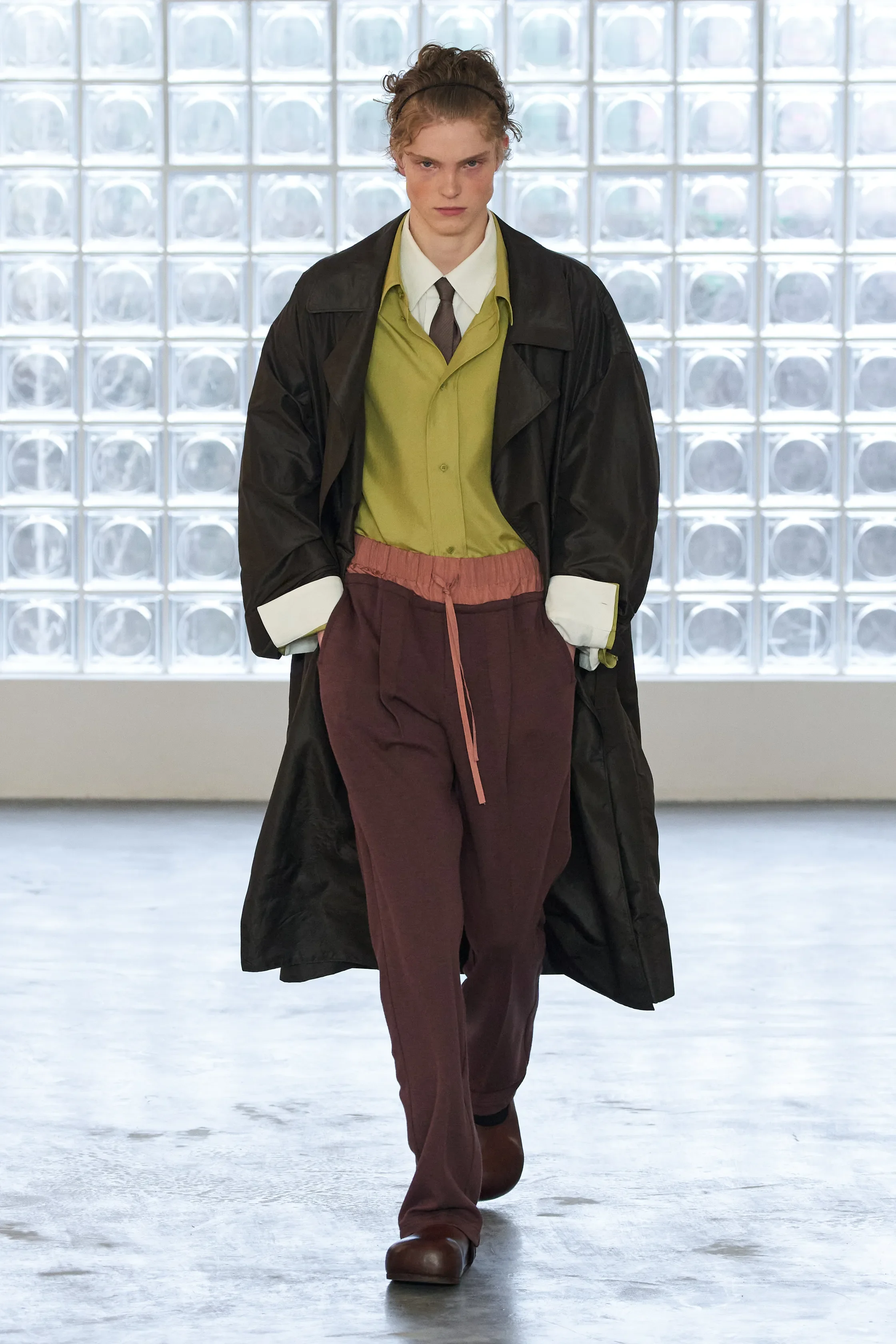
Pronounce’s Fall/Winter show in Milan marked a reflective moment for Jun Zhou and Yushan Li, ten years after founding the brand. Shown at Fondazione Sozzani, the collection felt more mature, with Milan’s influence visible in sharper tailoring, confident conceptualisation, and a very intentional colour palette.
Titled Wooden Pagoda, the collection was rooted in the Yingxian Pagoda in China — built without nails through an interlocking system and still standing after centuries. That structural logic translated directly into the garments, through layered construction, sculptural cuts, and a focus on balance, wearability, and longevity. Slender silhouettes and vertical lines echoed the architecture, while elongated blazers and coats with strong shoulders introduced a subtle 80s note.
The East–West dialogue remained central, not as contrast but as coexistence: Tangzhuang jackets alongside denim, silk treated like nylon next to rigid wool, tailoring softened by sportswear codes. Primary colours punctuated a restrained base, bringing rhythm without feeling distractive. It was a coherent statement on what the Pronounce wardrobe has become, and where it’s heading.
PAUL SMITH
review by NIA TOPALOVA
images courtesy of PAUL SMITH
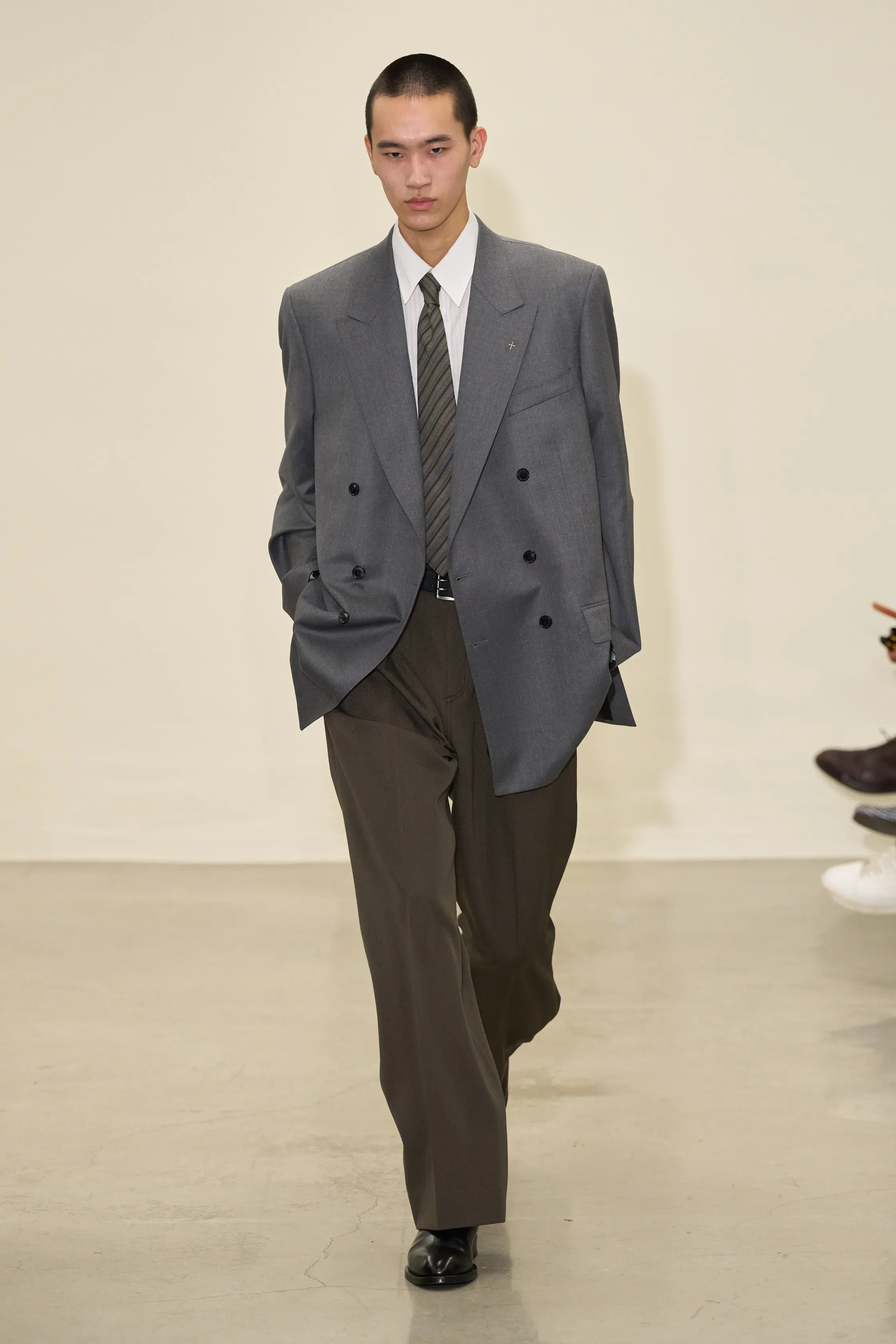
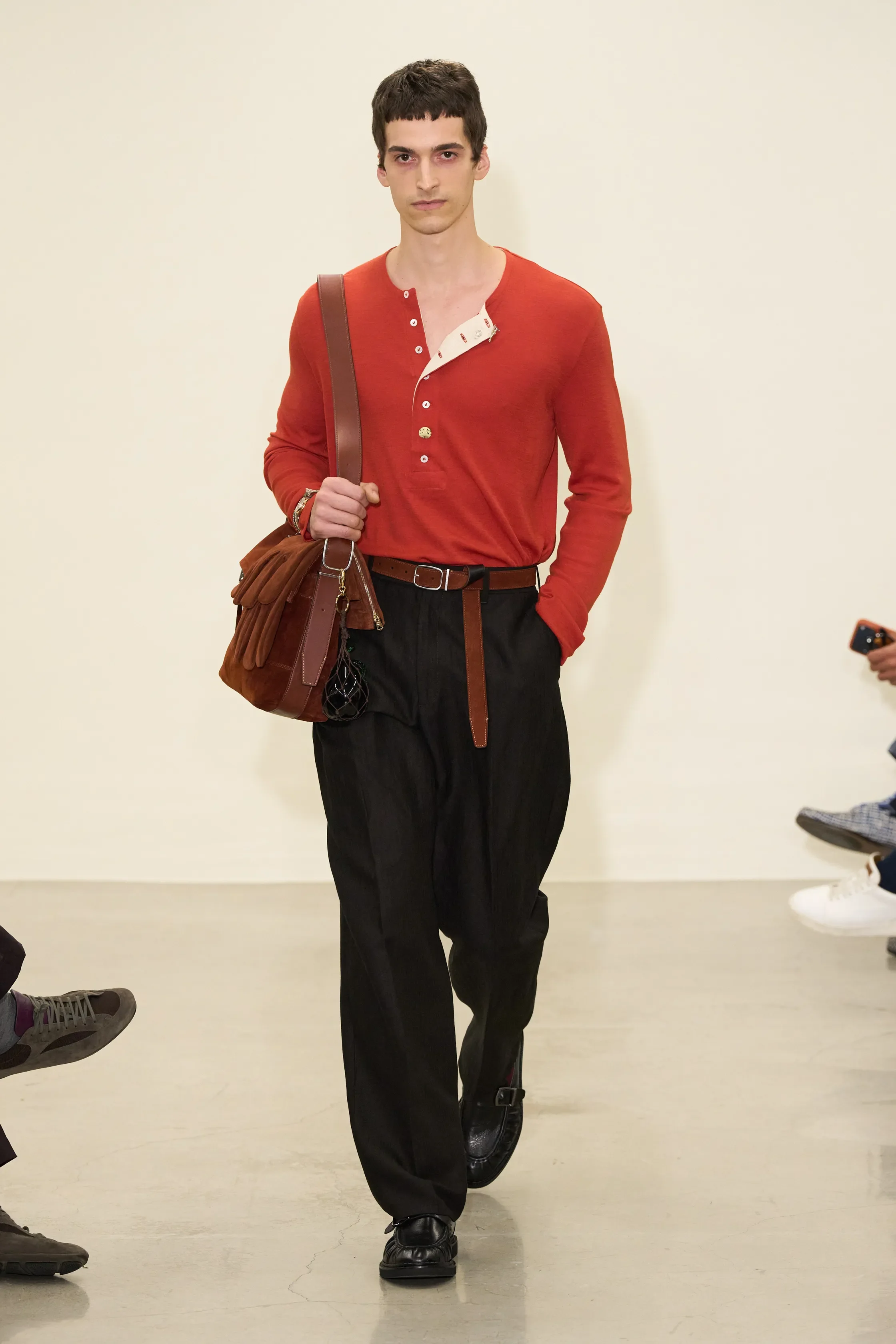
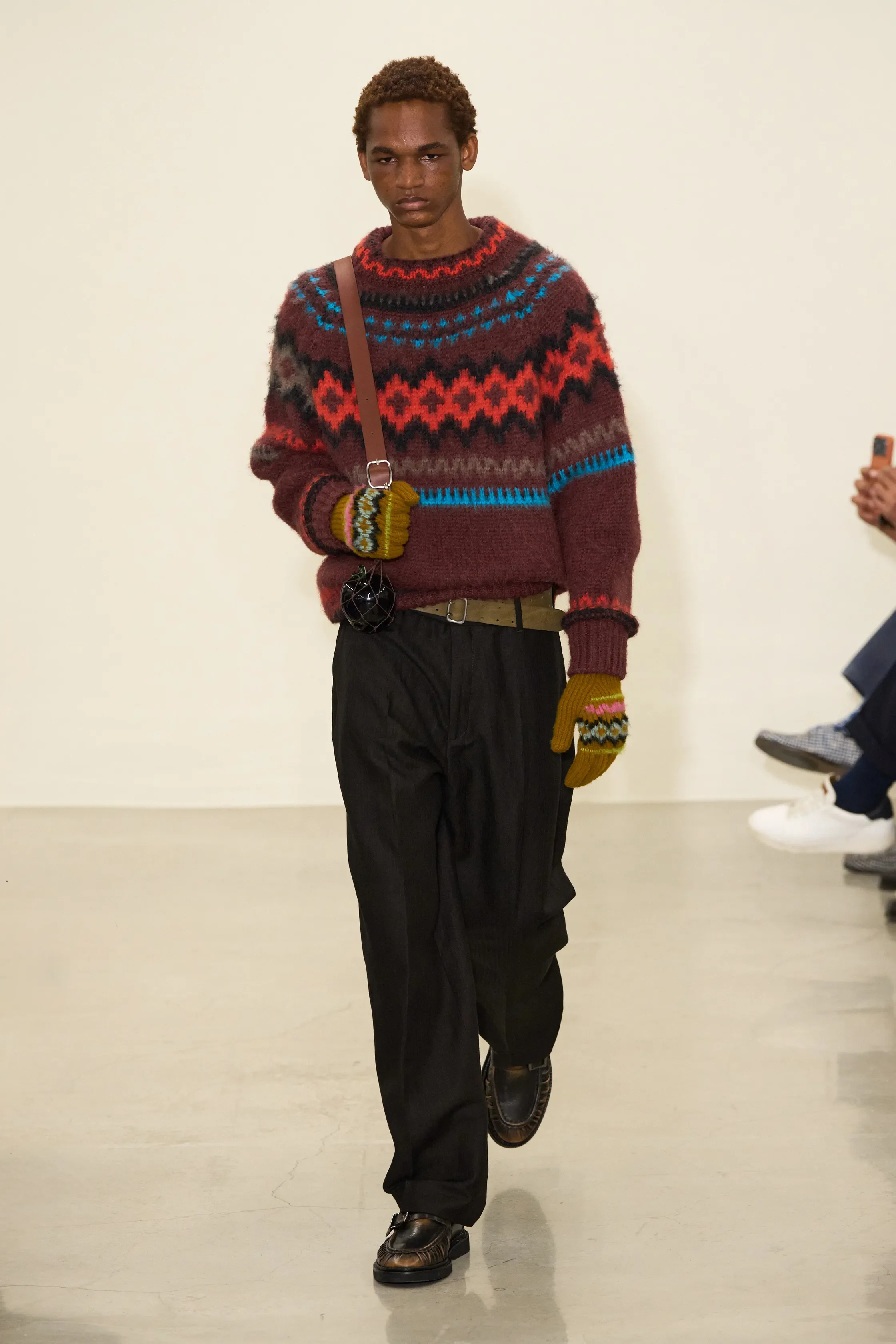
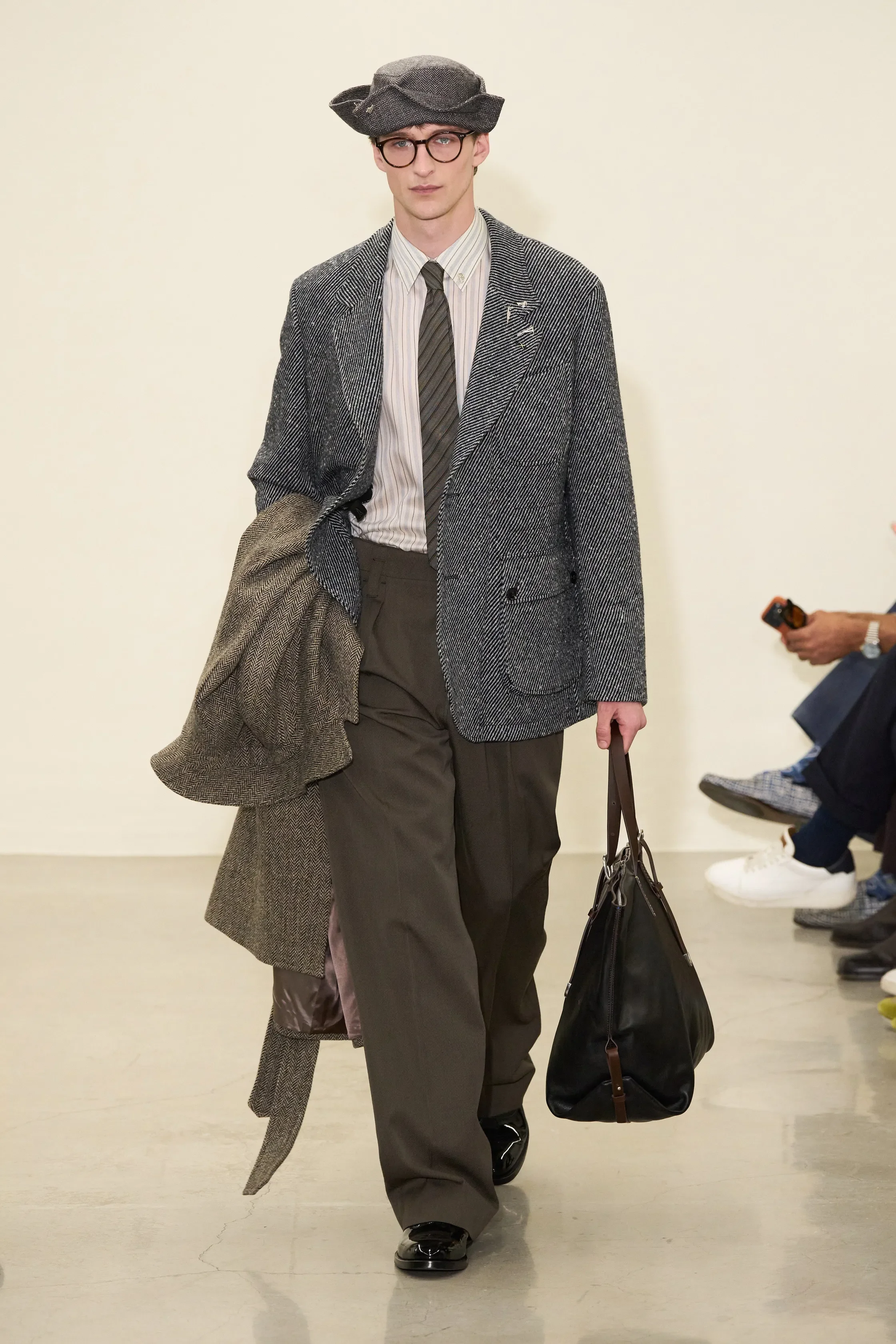
This season was shaped by memory, a careful excavation into fifty-five years of creation and five thousand garments, bringing back the spirit of the 1980s and 1990s - a period dear to Paul Smith. He takes us back even further, to 1977, the year of his first show, which opened in a friend’s apartment on Boulevard de Vaugirard, where guests had to ring the doorbell to get in. Years later, Smith still prefers a compact, intimate space to showcase his collections, rather than huge formats lacking personality.
With Sam Cotton as head of the men’s design, Smith gave way to “ fresh young eyes” introducing a modern perspective into the house’s DNA, honouring all the hard work done throughout the years. The result was a collection where each piece brought a reference that served purpose and meaning.
A recurring motif was what the house called “Magpie dressing” - assembling objects, garments, fragments from antique markets or even found in your mom’s drawers, letting the clothes carry personality and memory. Classic tailoring and archival cuts were loosened, layered, and rendered in a more relaxed proportion. Sweaters and blazers carried embroidery; patterns throughout the collection drew on the villas of the South of France and the idiosyncratic imagery the brand has long favoured.
Looking back and forward at once, the collection turns over the House’s history while opening a space for what comes next. Archive pieces and new designs coexist, signaling a significant shift in approach without erasing the past.