
NEW YORK FASHION WEEK SPRING/SUMMER 2027: DAY 4
ALTUZARRA
review by MAREK BARTEK
all images courtesy of ALTUZARRA
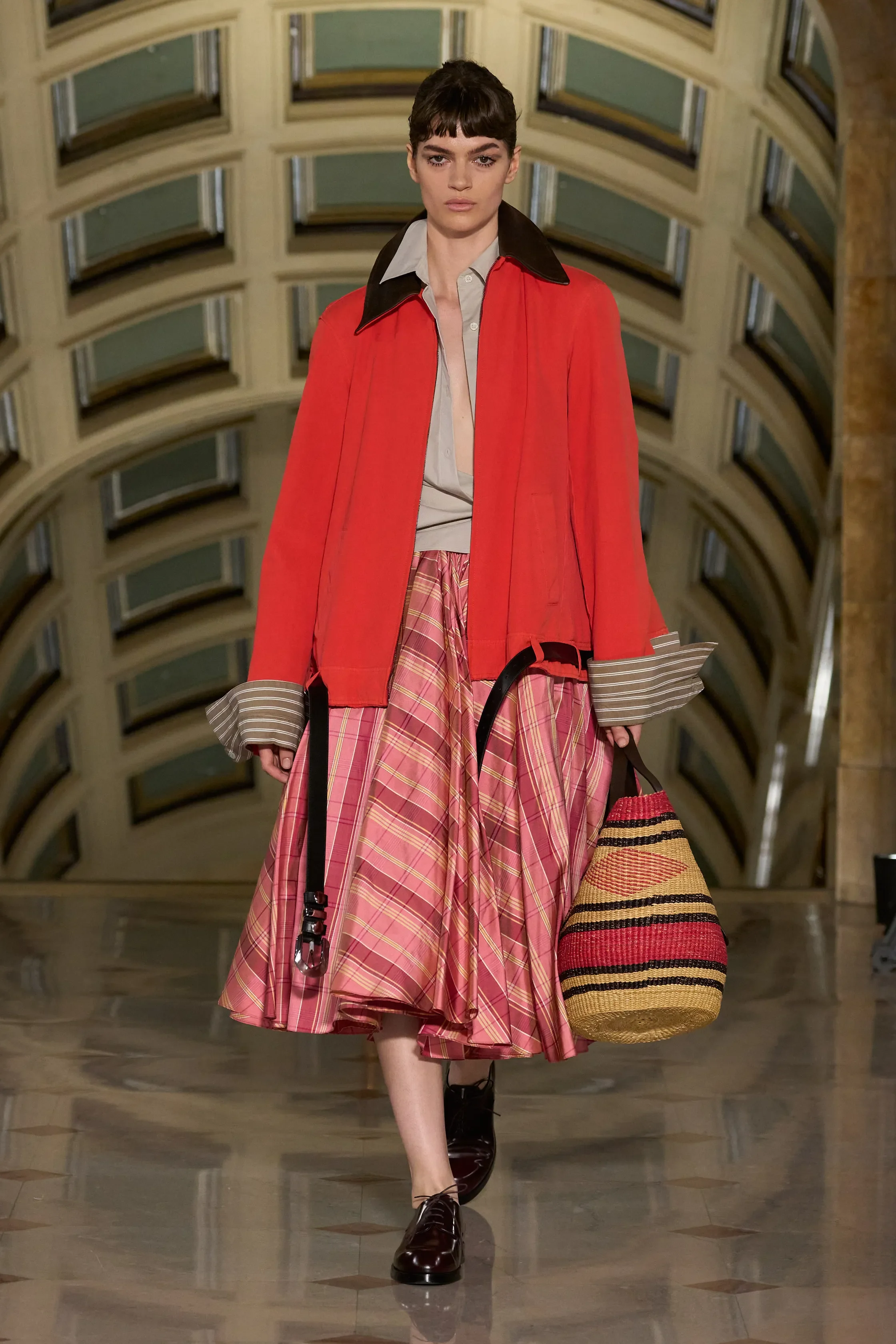
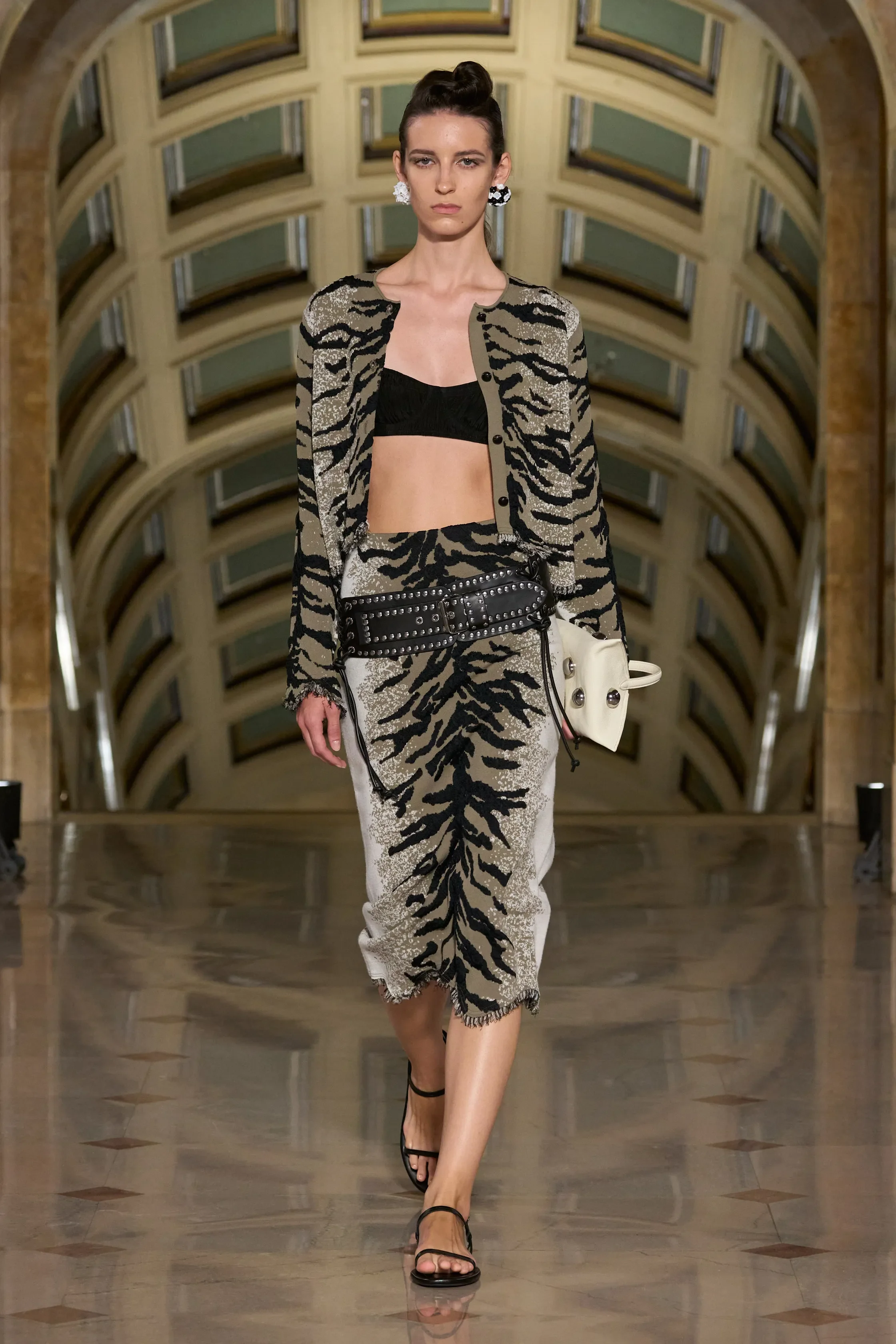
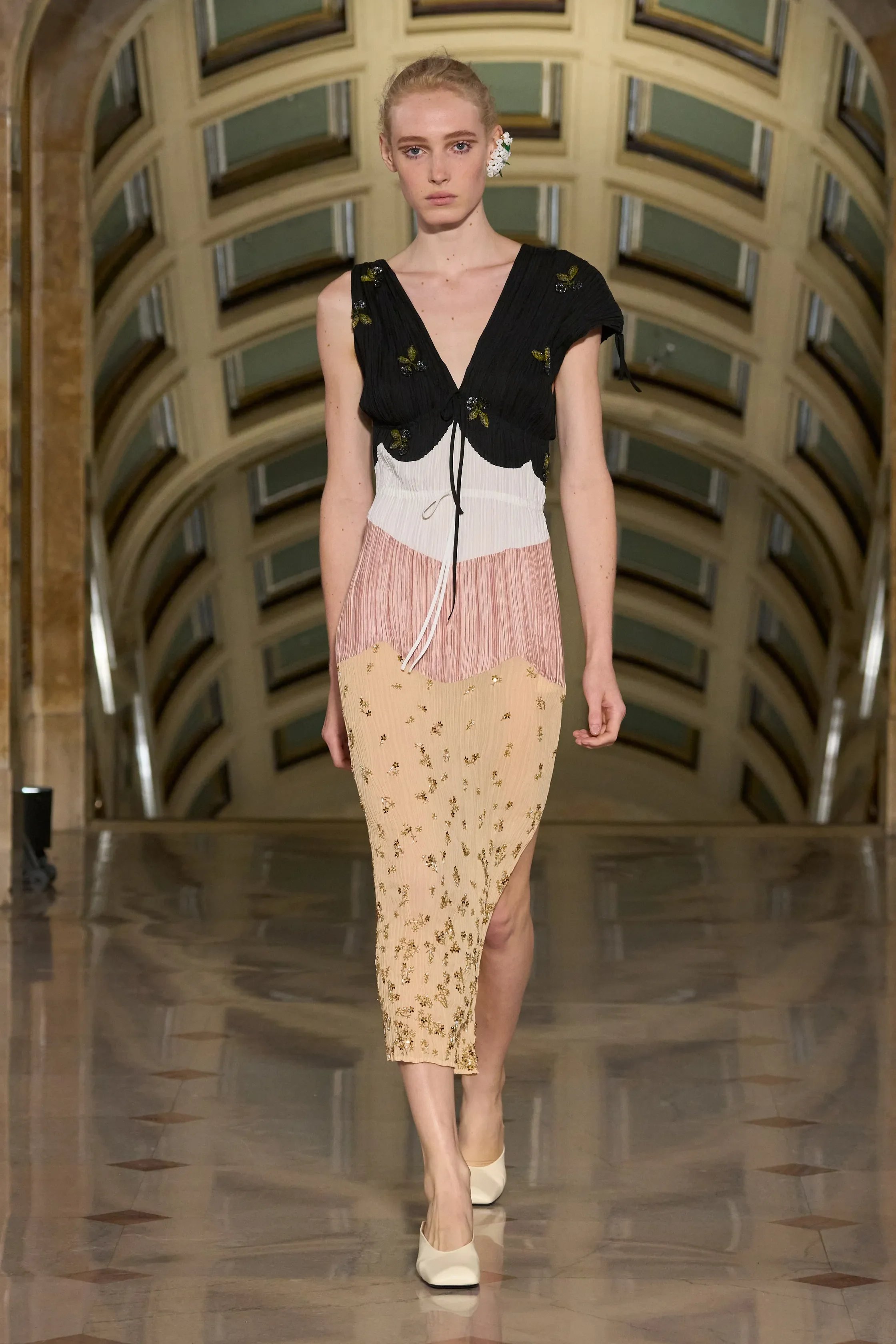
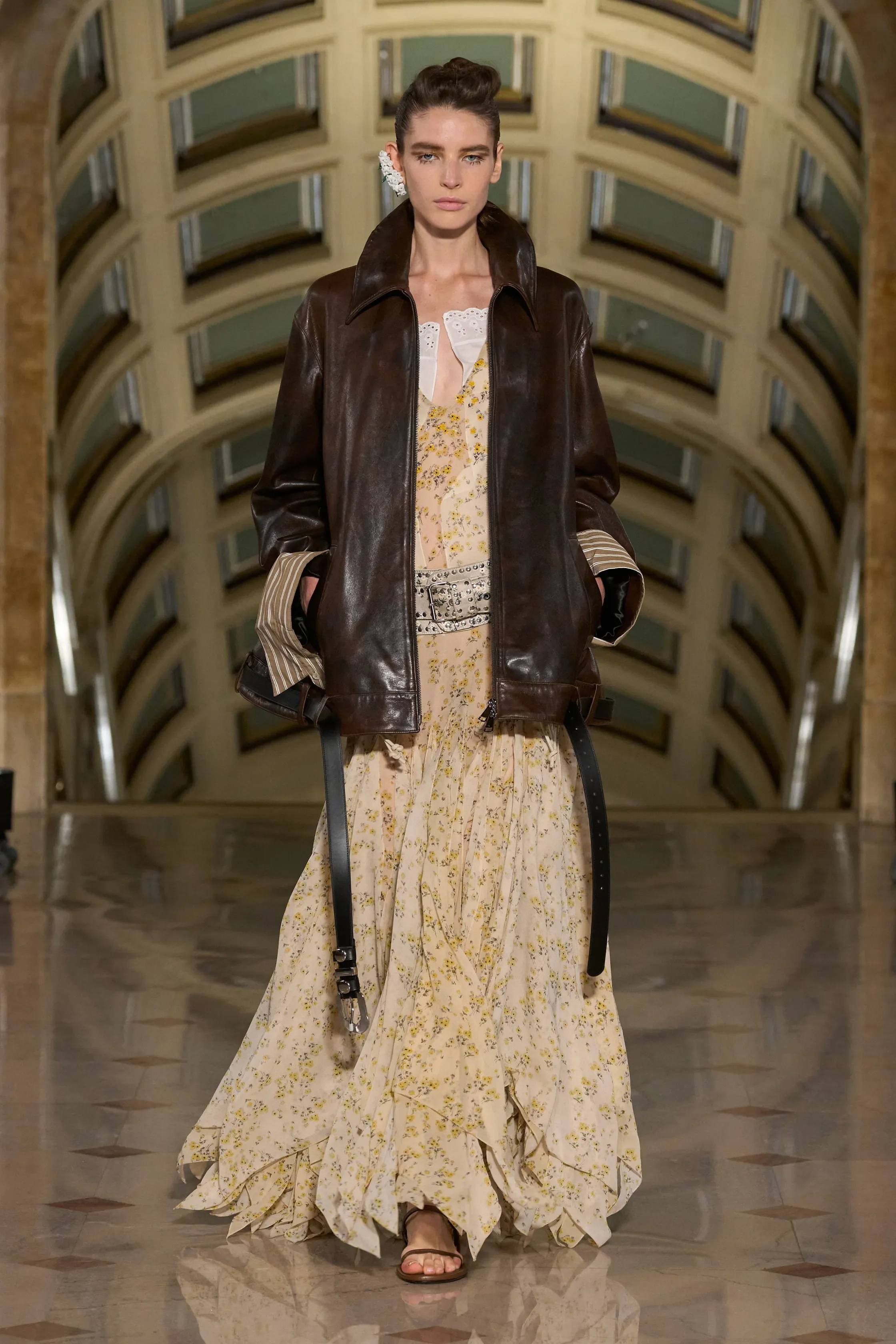
Joseph Altuzarra delivered one of New York Fashion Week's strongest collections, one that balanced emotion with an assured sense of wearability. Inspired by Casa Susanna — the photo archive documenting a community of cross-dressing men who gathered in the Catskills during the 1950s and '60s — the collection explored freedom of expression without turning into costume.
Instead, Altuzarra focused on contrasts of voluminous circle skirts and oversized leather biker jackets. Delicate slip dresses were grounded with chunky brogues, while broad-shouldered tailoring sat alongside fluid, embellished eveningwear. Throughout, masculine and feminine codes constantly overlapped, never competing but enriching one another. Prints, sequins and soft florals introduced a welcome burst of colour after several quieter seasons, yet the collection remained remarkably cohesive. Rather than chasing spectacle, Altuzarra found confidence in clothes that felt expressive, sensual and genuinely desirable. It was a collection that celebrated individuality while remaining rooted in a wardrobe women could imagine wearing long after the runway.
VETTESE
review by DONA TODOROVSKA
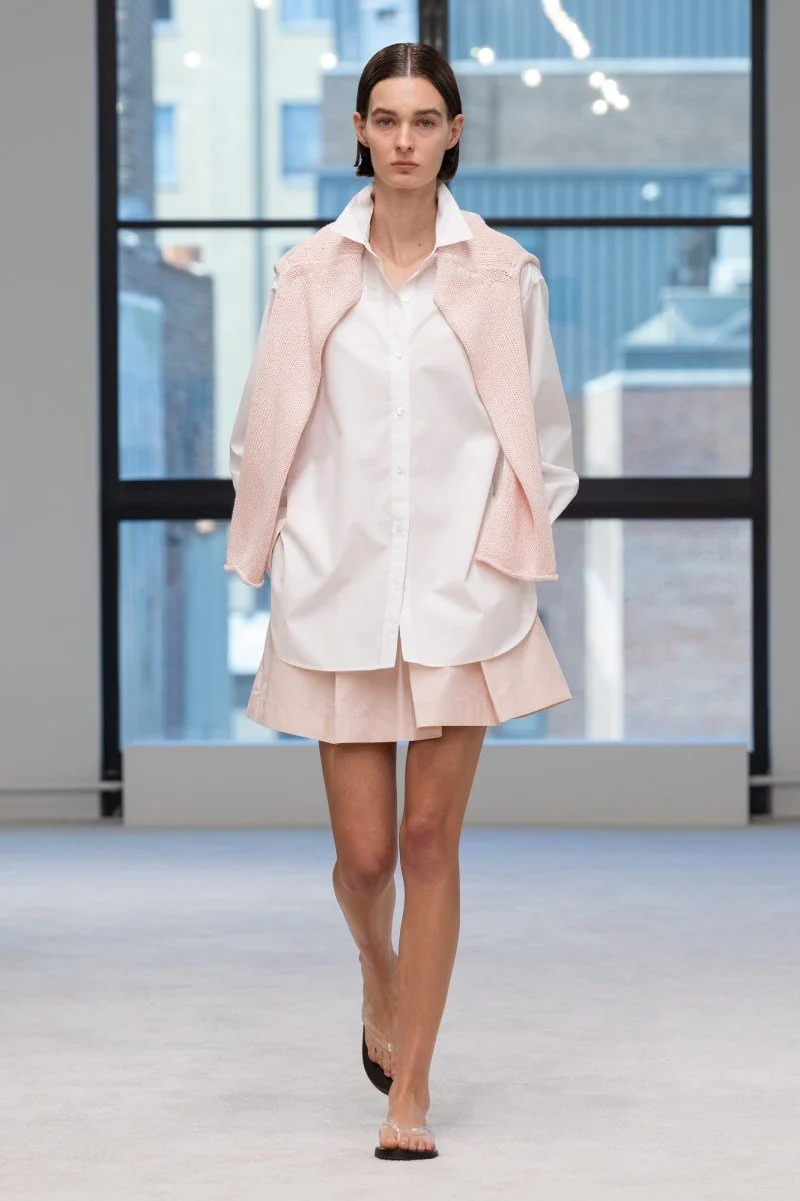
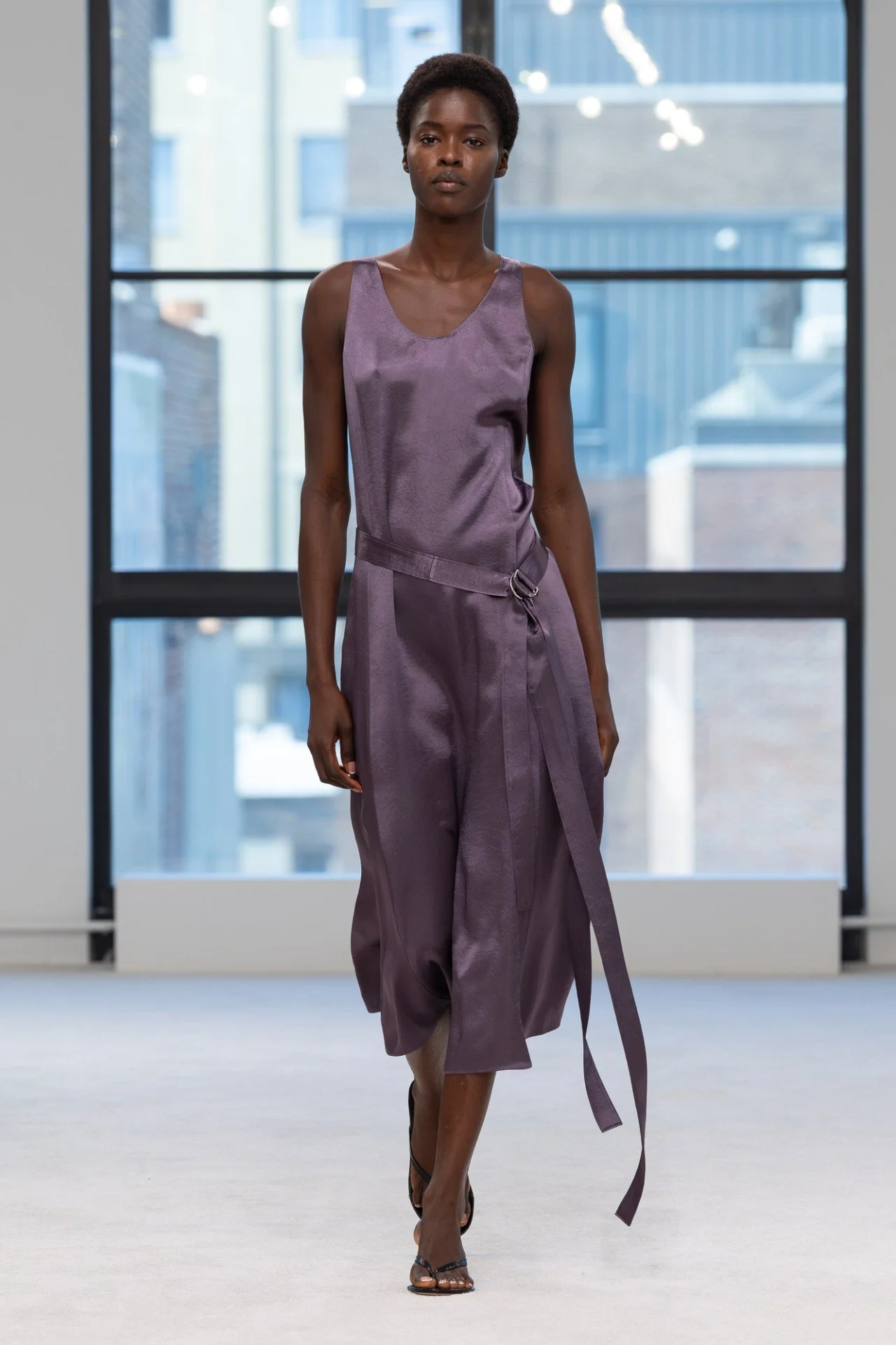
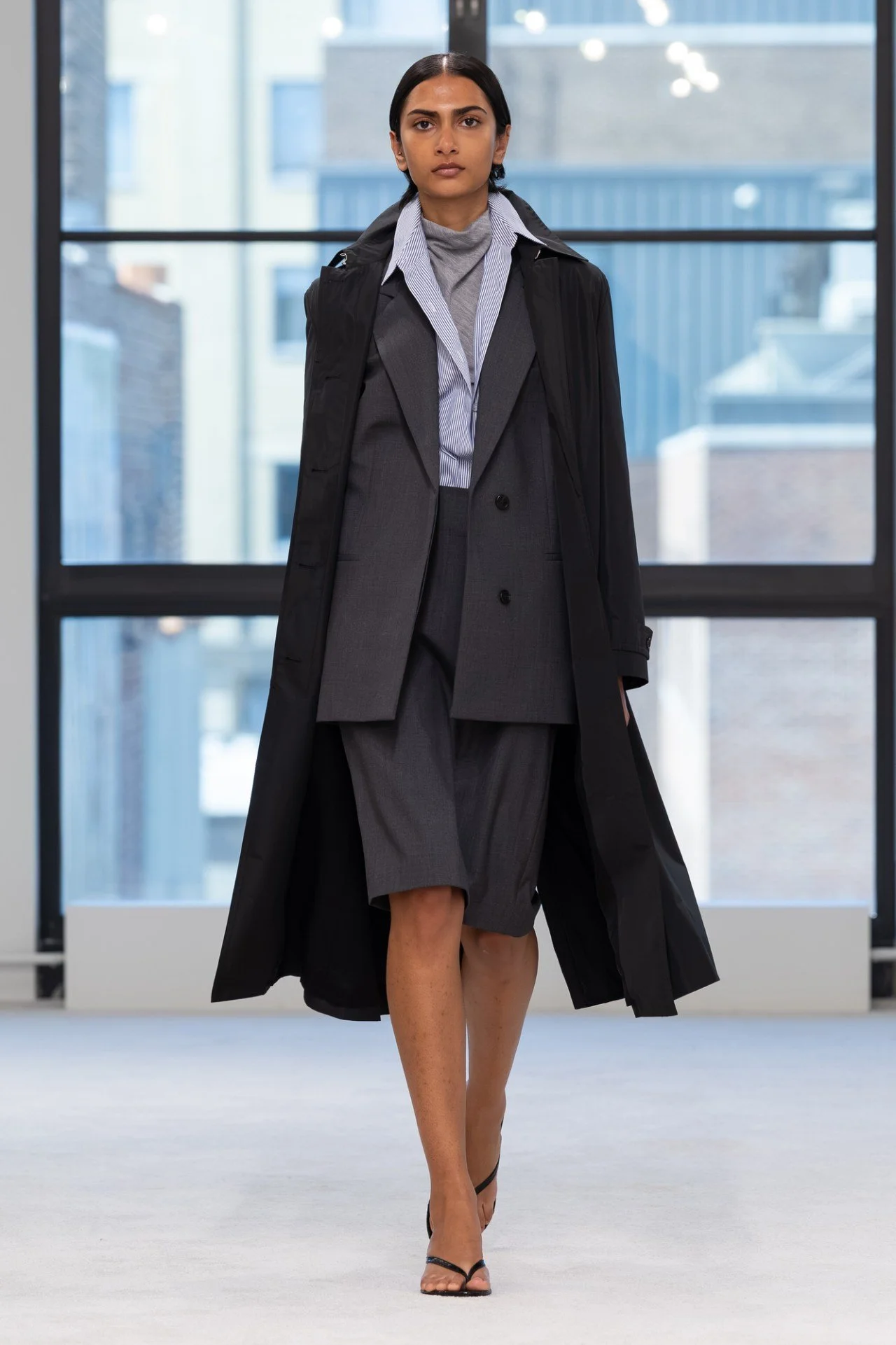
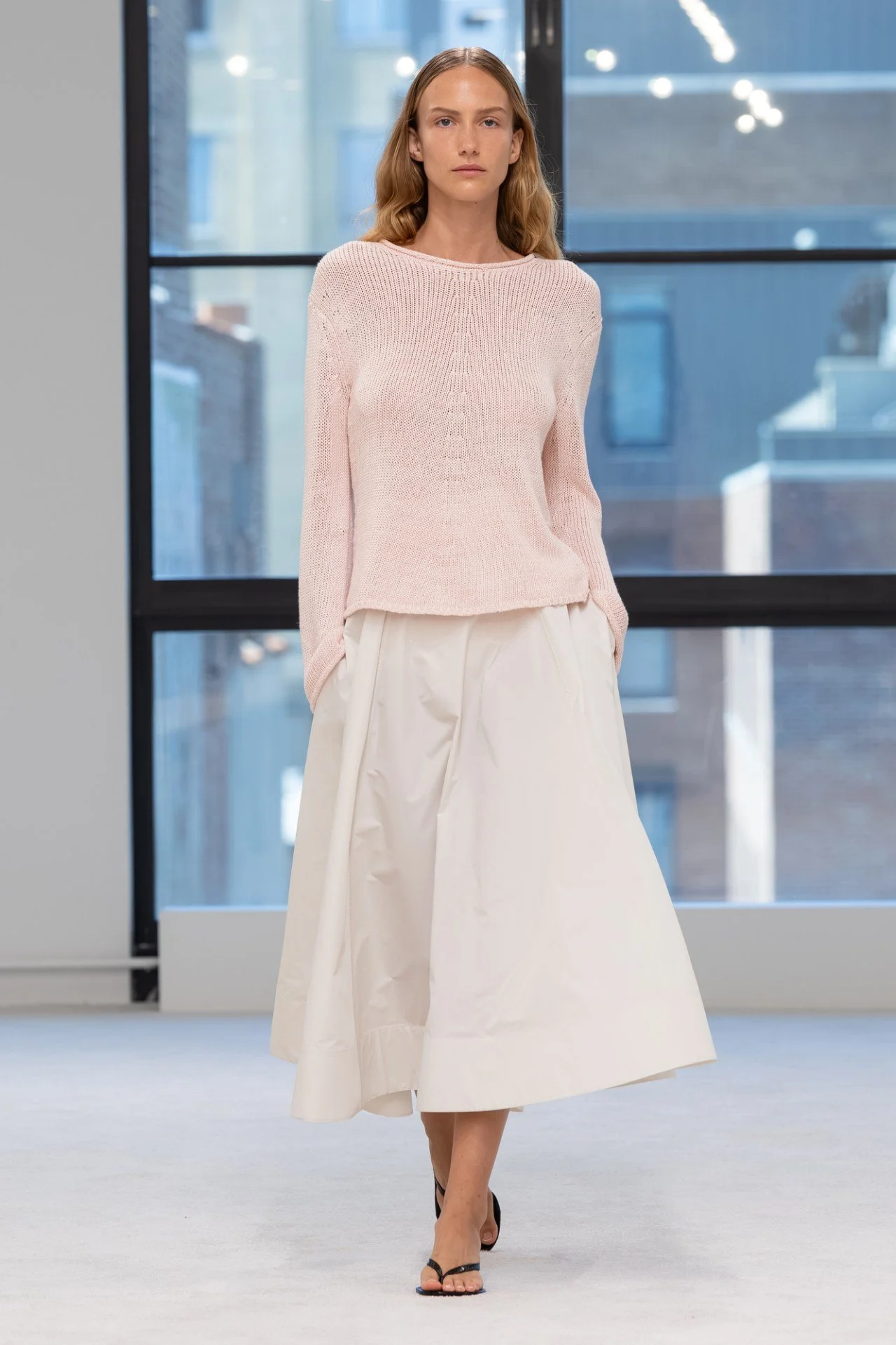
all images courtesy of VETTESE
Held at Gotham Hall in New York, the Vettesse SS27 show was rooted in Kari Vetesse’s Italian heritage combined with her California upbringing. Moving between the tensions of masculinity and femininity, Vettesse created unique sculptural shapes, corsetry, and body-conscious pieces.
Sculptured tops, mini bras, and plunging neck lines remained central throughout the collection, brought together with vivid red, pink, sky blue alongside sheer fabrics, and antique textiles. Lingerie-inspired pieces and voluminous, ballooned bottoms created an overtly feminine silhouette, while tailored masculine elements introduced a sharper counterpoint.
What felt distinctly new this season was the interchangeable and reversible approach to wearing the pieces, continuing Vettesse’s exploration of garments designed to be transformed and reinterpreted. The collection also introduced the brand’s first handbag derived, inspired by the signature hip corset and extended one of Vetesse’s defining silhouettes into an accessory.
CONNER IVES
review by MAREK BARTEK
all images courtesy of CONNER IVES
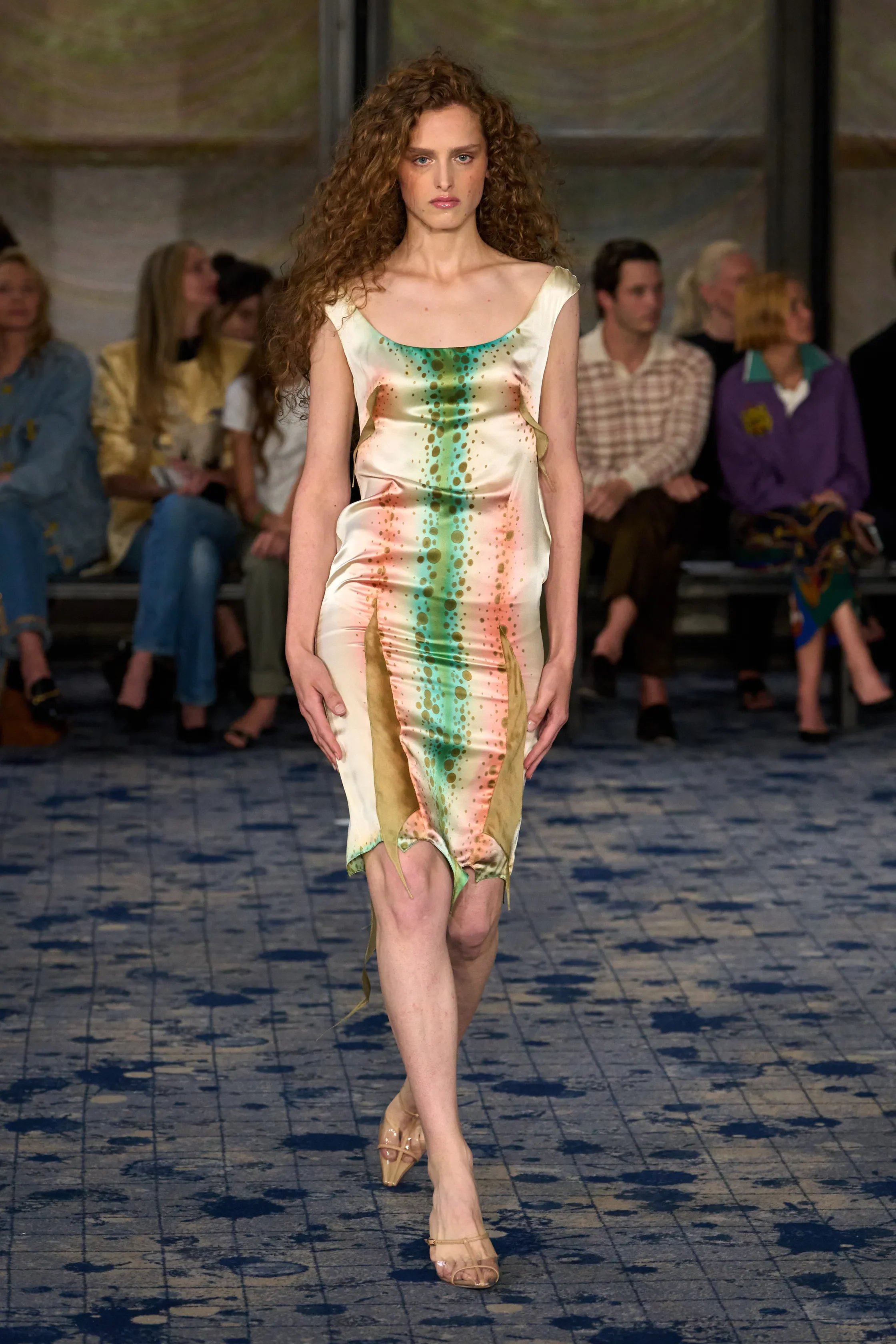
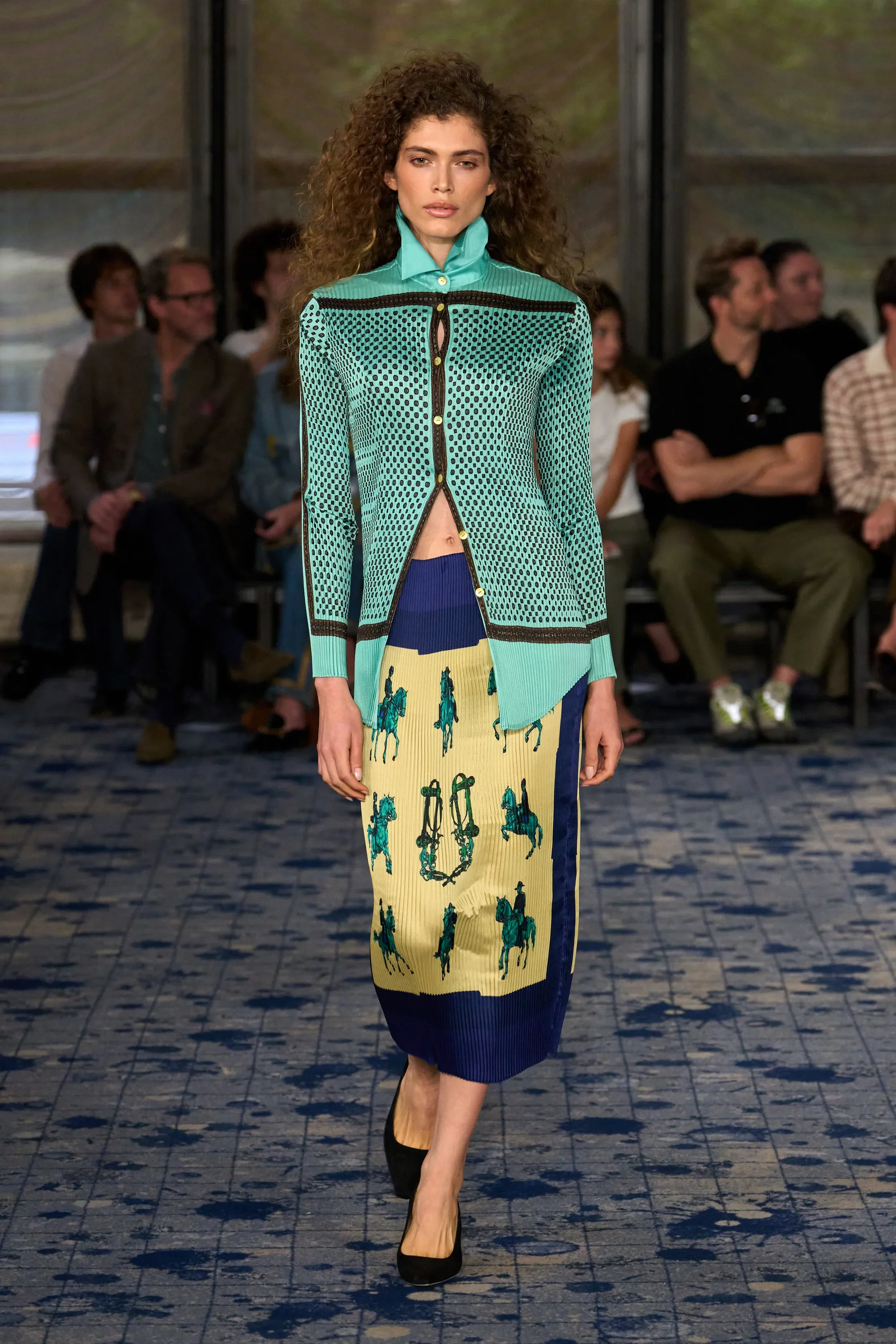
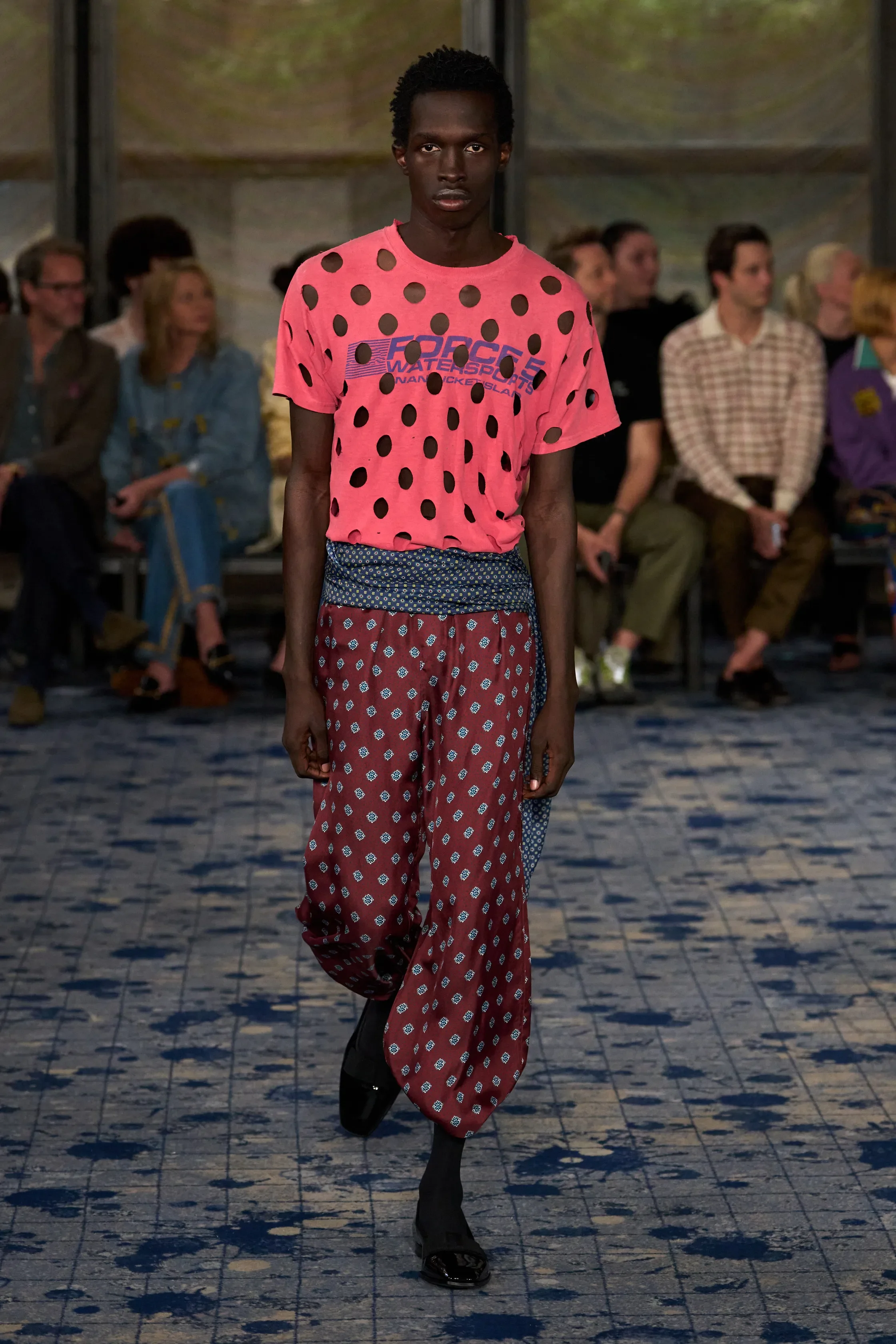
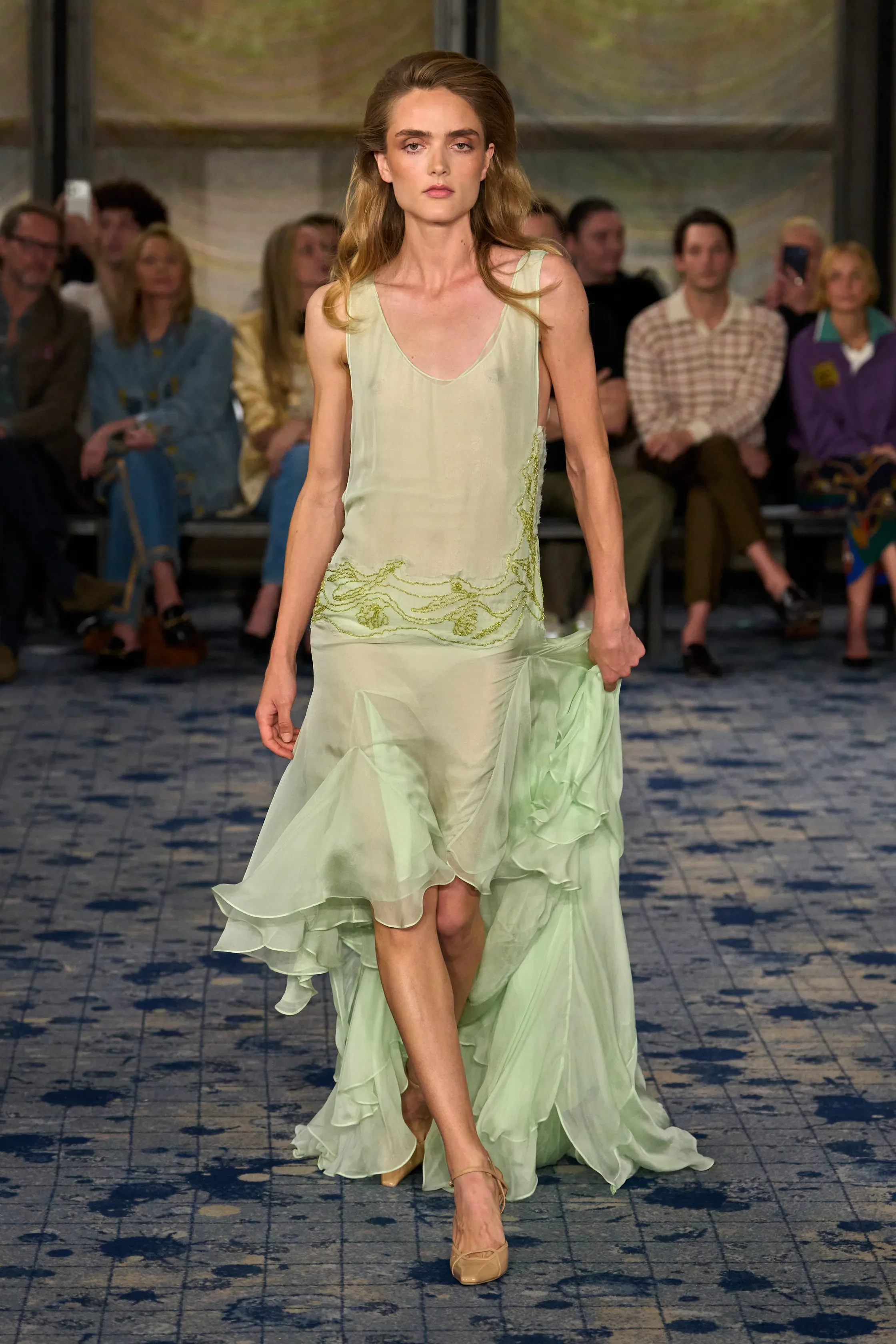
Conner Ives’ collection was one emotionally charged, one that embraced imperfection as part of its appeal. Drawing on American nostalgia through vintage florals, slogan T-shirts, embellished denim and bias-cut dresses, the collection shifted effortlessly between glamour and everyday dressing, united by a distinctly queer sense of joy.
Not every idea landed with equal conviction, and some looks felt overly reliant on styling, while a handful of silhouettes lacked the precision needed to fully support their ambition. Certain references — particularly the Western and matador-inspired moments — occasionally drifted too close to costume. There were also pieces that seemed to be carried more by the confidence of the models than by the strength of the garments themselves.
Yet those inconsistencies never overshadowed the collection's emotional pull. Ives has built a universe where beauty isn't always polished, and where clothes are allowed to feel slightly awkward, expressive and deeply personal. Rather than chasing perfection, he seems more interested in capturing identity in all its complexity. Even the exaggerated proportions and unconventional combinations, which divided opinion, felt less like styling exercises and more like reflections on what it means to exist outside conventional ideas of taste or belonging.
From the playful rugby shirts and oversized polos to the romantic slip dresses and intricately embroidered evening looks. The fish-scale prints introduced a welcome sense of experimentation, while the soundtrack of Annie Lennox and George Michael remixes amplified the collection's nostalgic optimism. A soft mint-green closing gown was etherial and a beautiful finale that will be hard to forget. It may not have been flawless, but it was heartfelt, flamboyant, queer, memorable and, above all, unmistakably Conner Ives.
TTSWTRS
review by ANOUK WOUDT
all images courtesy of TTSWTRS
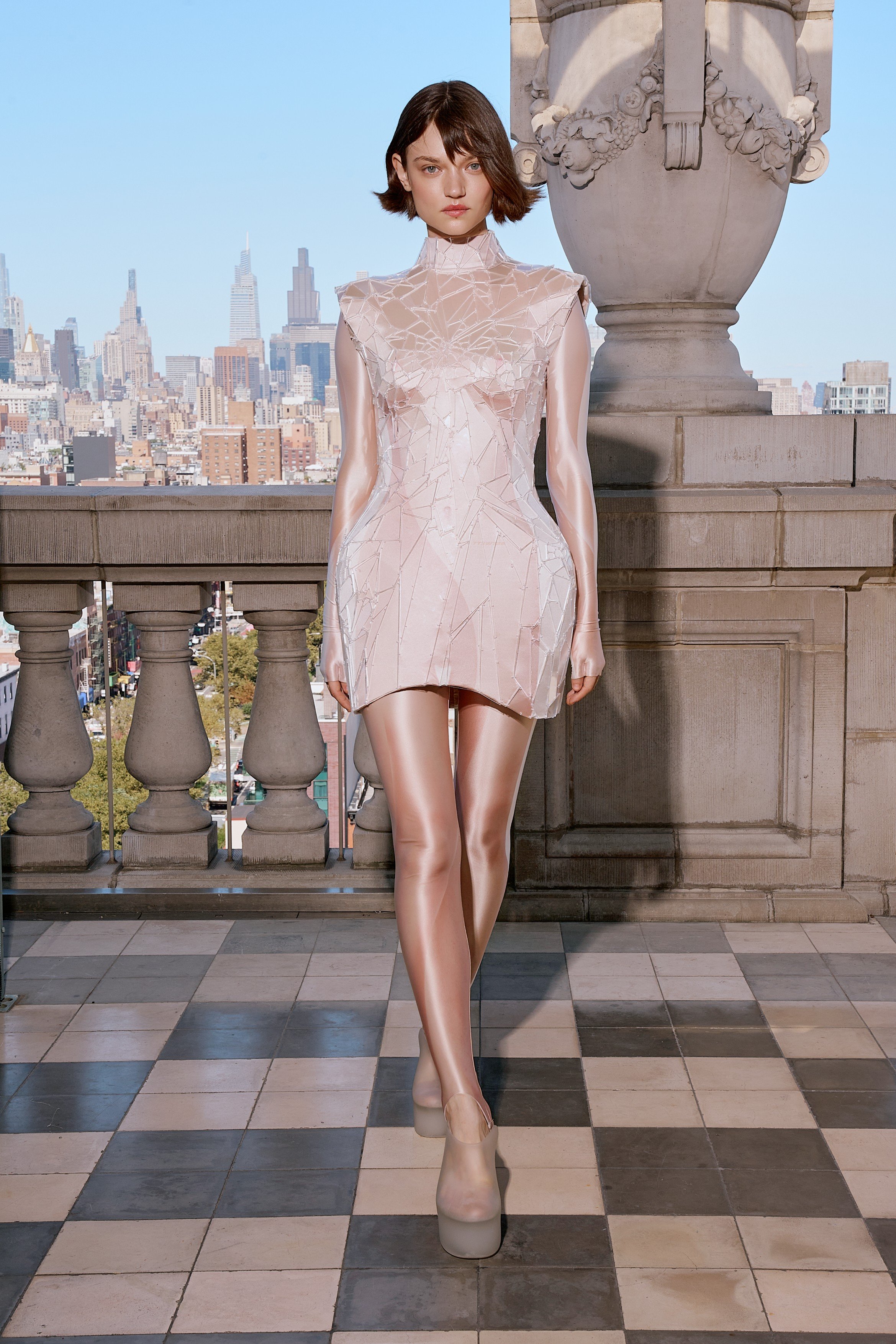
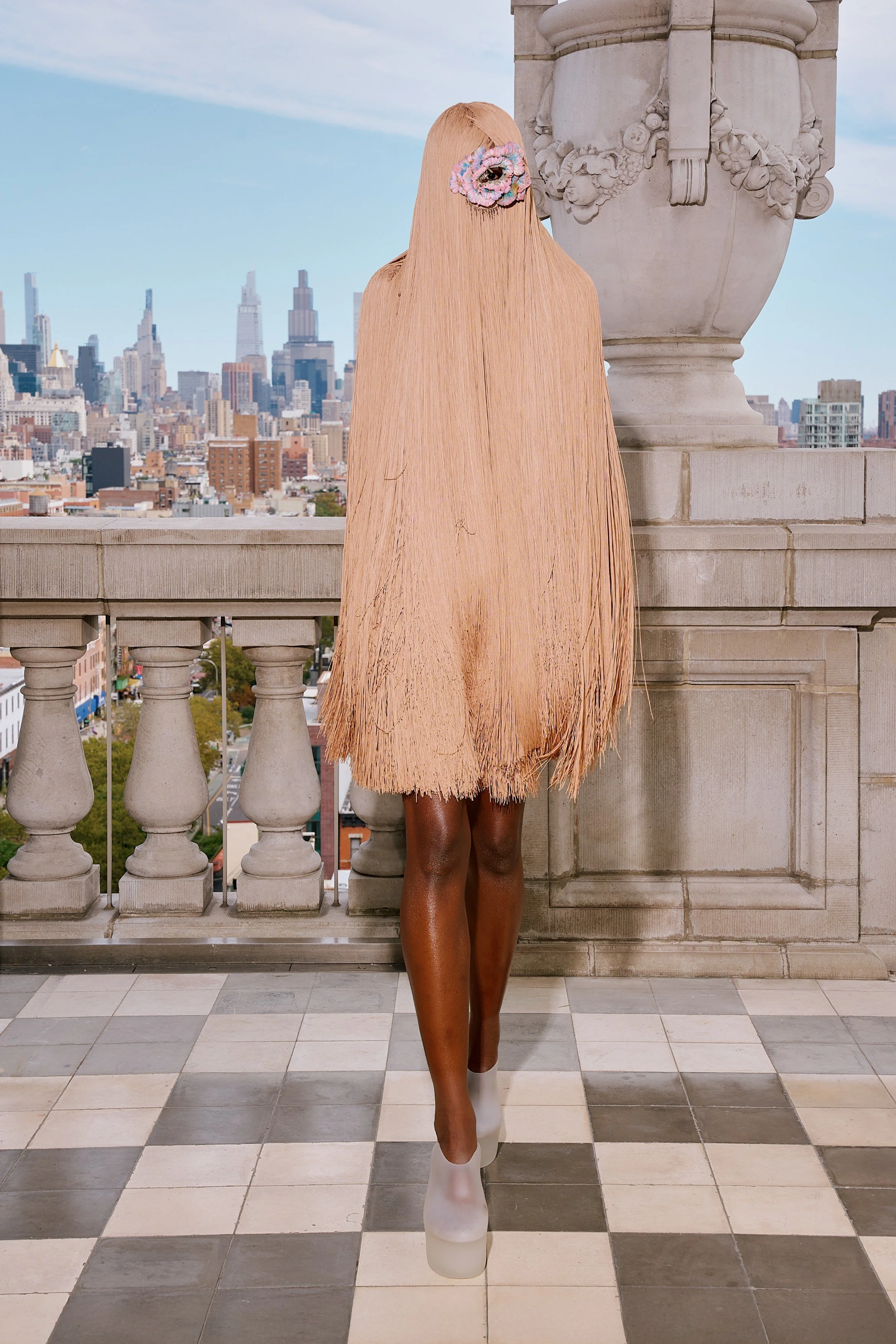
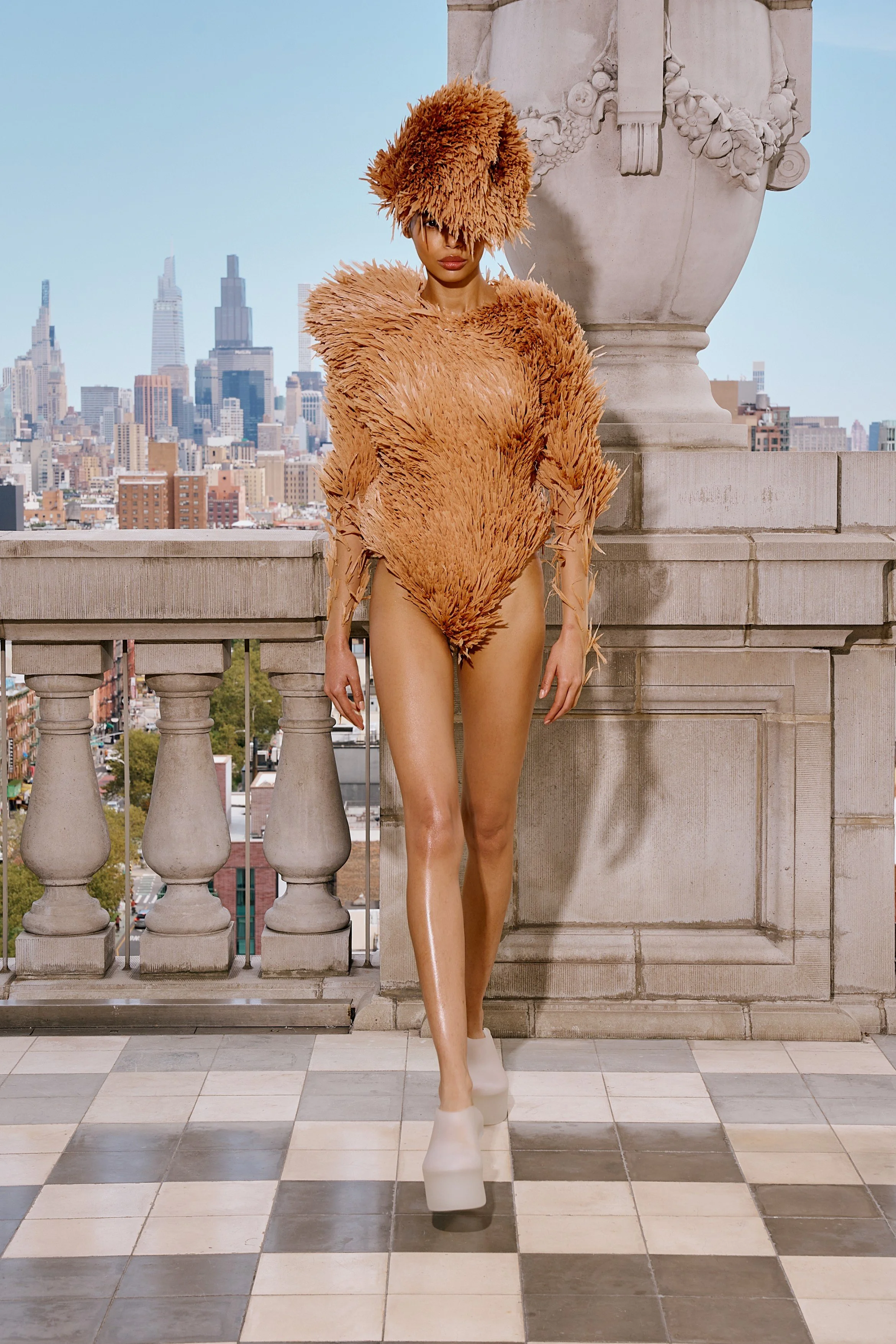
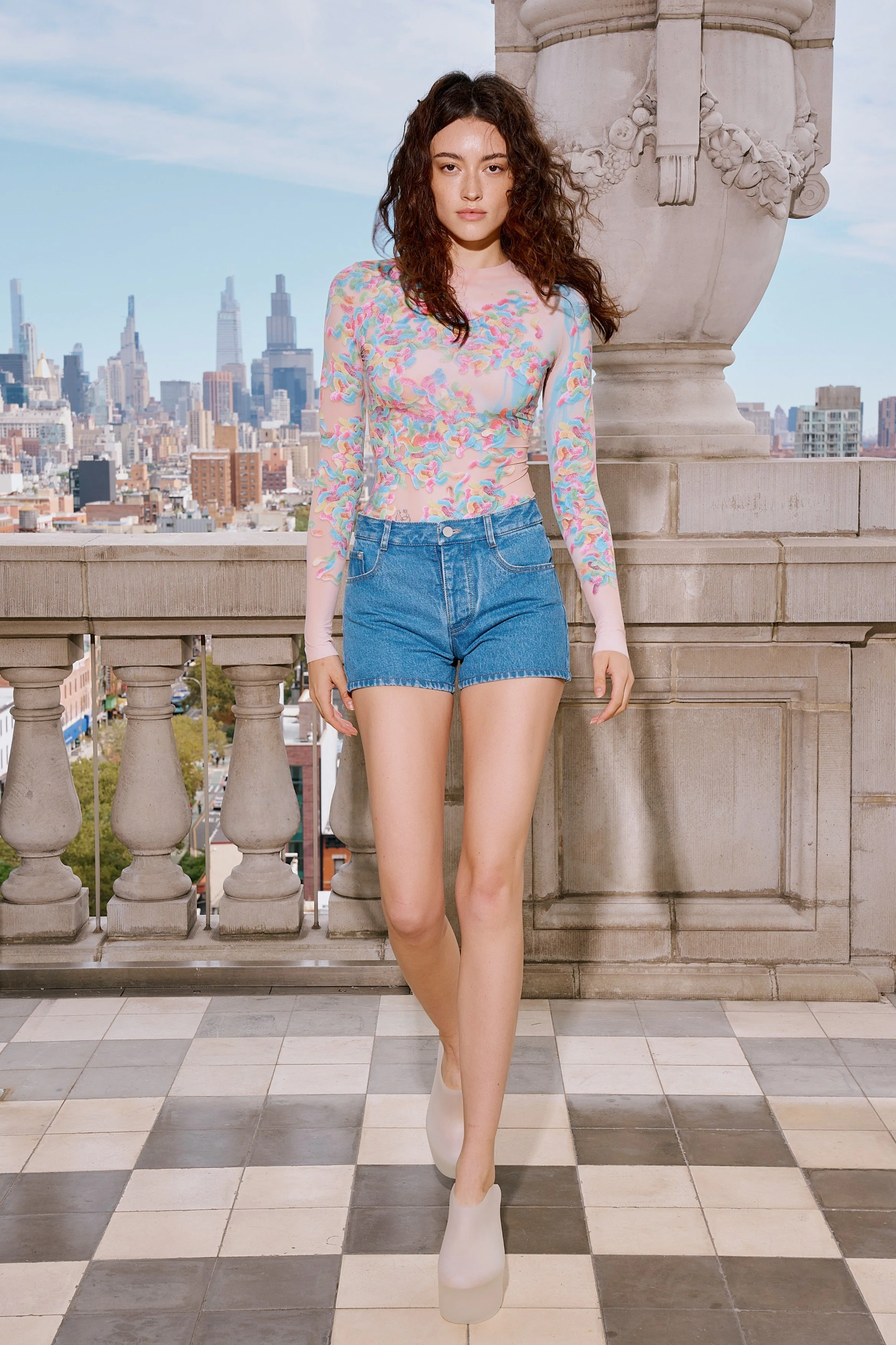
Instead of opting for your traditional runway, TTSWTRS displayed its SS27 collection on the rooftop of the Nine Orchard. Upon arrival, each guest received a ceremonial passport, signalling entry into an intriguing otherworld described only as Wonderland. Between ushered drinks and tiny fruit-shaped cakes, you’re met with a long dining table surrounded by models lining skyline views of the Lower East Side, each representing a look from the SS27 collection.
But this is no ordinary dining experience. Rather than serving food, each plate has a VR headset, beckoning you to truly step into the world of Wonderland. Headset on, we are shown a film developed with AI artist Katsukokoiso.ai. The story shifts between utopian and dystopian imagery, though always maintaining an eerie surrealism, as it shows a world beaten down by a disconnect from nature. But as nature is restored, the cynical images gradually dissipate, giving way to a bright, idyllic scene: Wonderland.
That same transformation is reflected in the collection. Acting as inhabitants of Wonderland, each look feels playfully intertwined with nature, weaving plant-like textures into anthropomorphic pieces. Petals, feathers and spore-like fibres transformed bodies into elements of a garden. With each distinct persona, TTSWTRS creates an eclectic cast of characters – the kind you’d readily expect to find wandering through Wonderland.
However, the most eye-catching look has to be “The Web”. Endless threads obscure a faceless figure, each fringe gracefully flowing behind her as she wades across the balcony. As if to let her femininity ring through her shapeless body, a hand-sculpted latex flower decorates what should be her head. Beside her, a porcelain bodice sends light ricocheting throughout the venue, each fragment pieced together to hit the midday sun at a slightly different angle. Another figure saunters in, covered in flamingo-pink plumage and a feathered headdress to match, representing nature’s fauna amid the flora.
Ultimately, Wonderland is a celebration of our lovely Mother Earth. In a world overrun by man’s grip, TTSWTRS reminds us to prioritise nature’s beauty even in the heart of a concrete jungle.
7 FOR ALL MANKIND
review by MAREK BARTEK
all images courtesy of 7 FOR ALL MANKIND
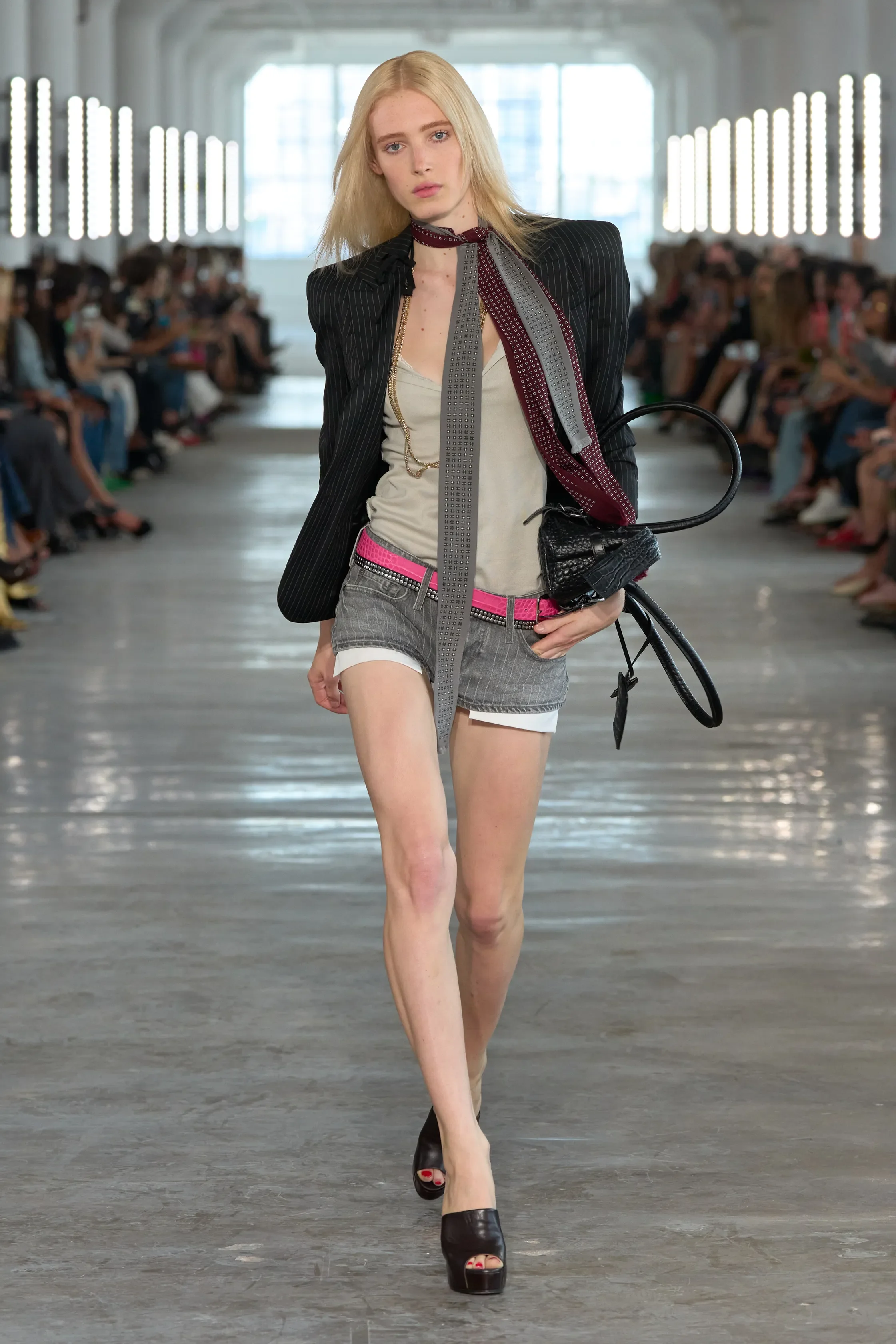
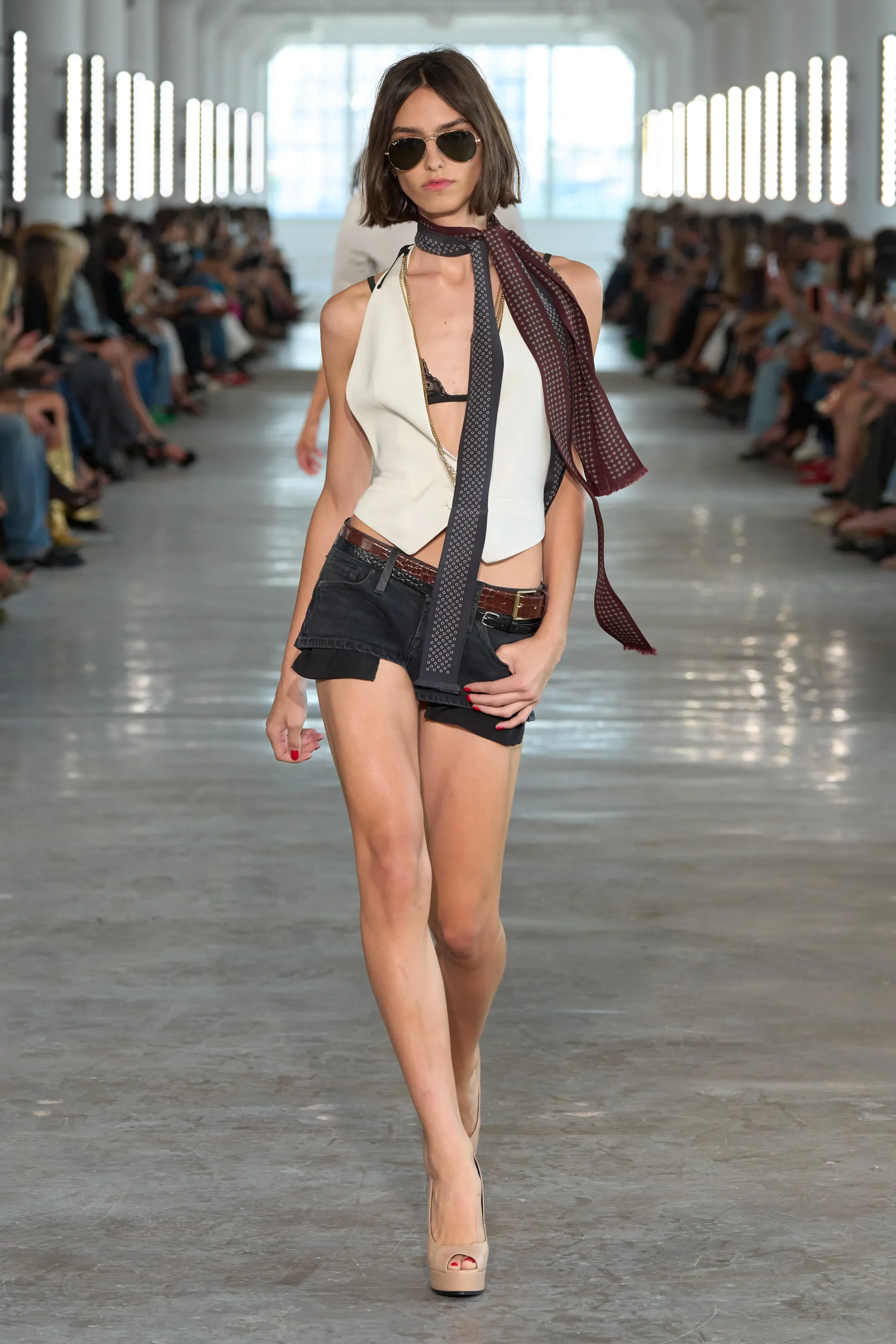
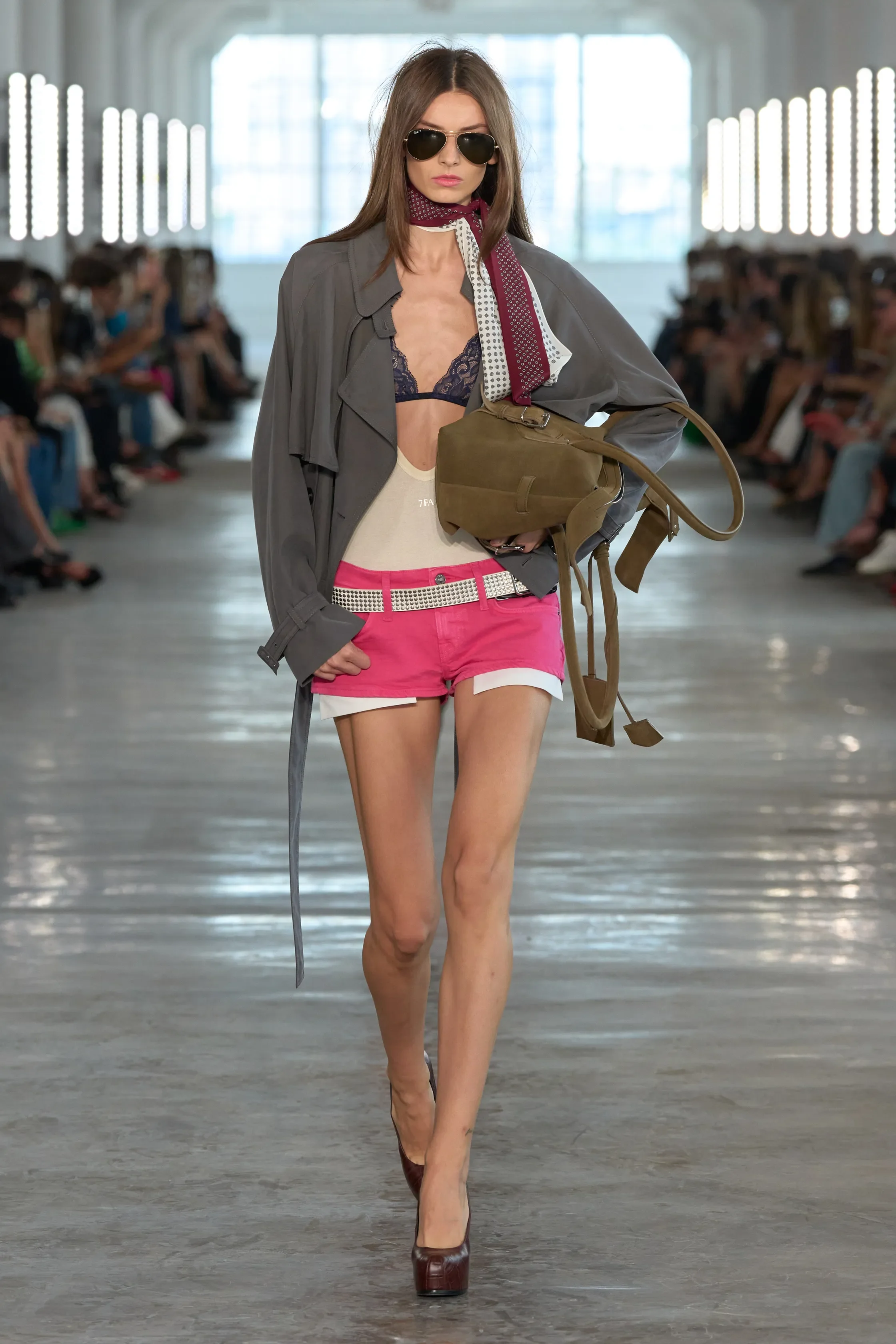
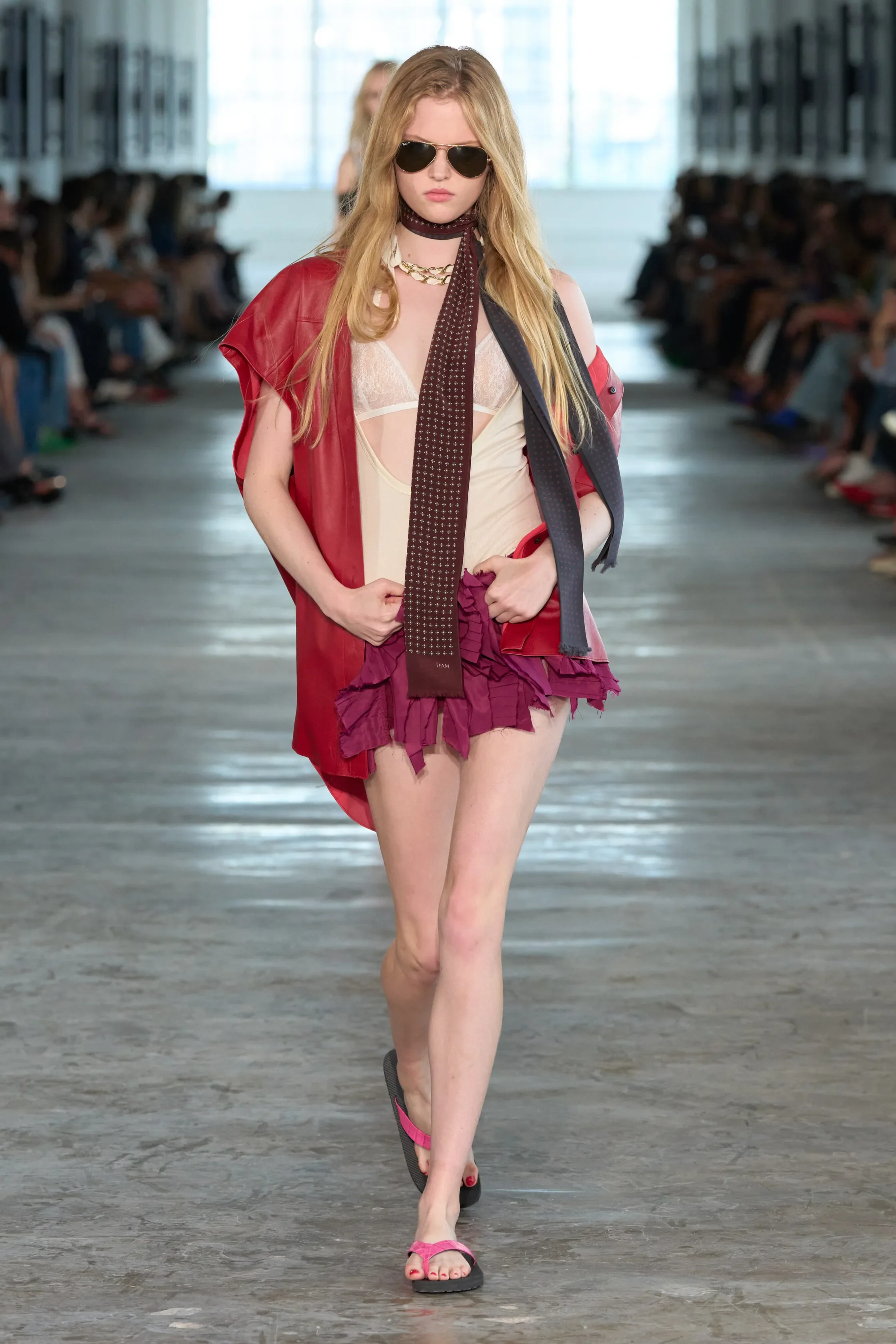
7 For All Mankind leaned unapologetically into the indie sleaze revival, with Nicola Brognano building a wardrobe that felt like a woman dressing after a long night out. Low-rise denim, tiny shorts, oversized leather jackets and slouchy scarves recalled the effortless cool of early-2000s Kate Moss, while oversized bags, stacks of necklaces and sky-high pumps completed the look. The styling was undeniably the collection's strongest asset.
At times, however, it leaned so heavily on nostalgia that individual pieces struggled to stand on their own. Many silhouettes felt intentionally familiar rather than reimagined, relying on the magnetic Y2K attitude more than innovation. Yet that was also precisely Brognano's point. It wasn't about reinventing denim, but about capturing a carefree way of getting dressed where proportions clash, layers pile up and nothing feels overly considered.
The result was a collection full of commercially appealing separates that many people will actually wear. The distressed denim, cropped tailoring and relaxed outerwear are likely to find an audience well beyond the runway, even if the styling itself remains more aspirational than practical. It may not have pushed fashion forward, but it perfectly captured the messy, confident spirit of indie sleaze's latest return.
TIBI
review by JOYCE ONUORAH
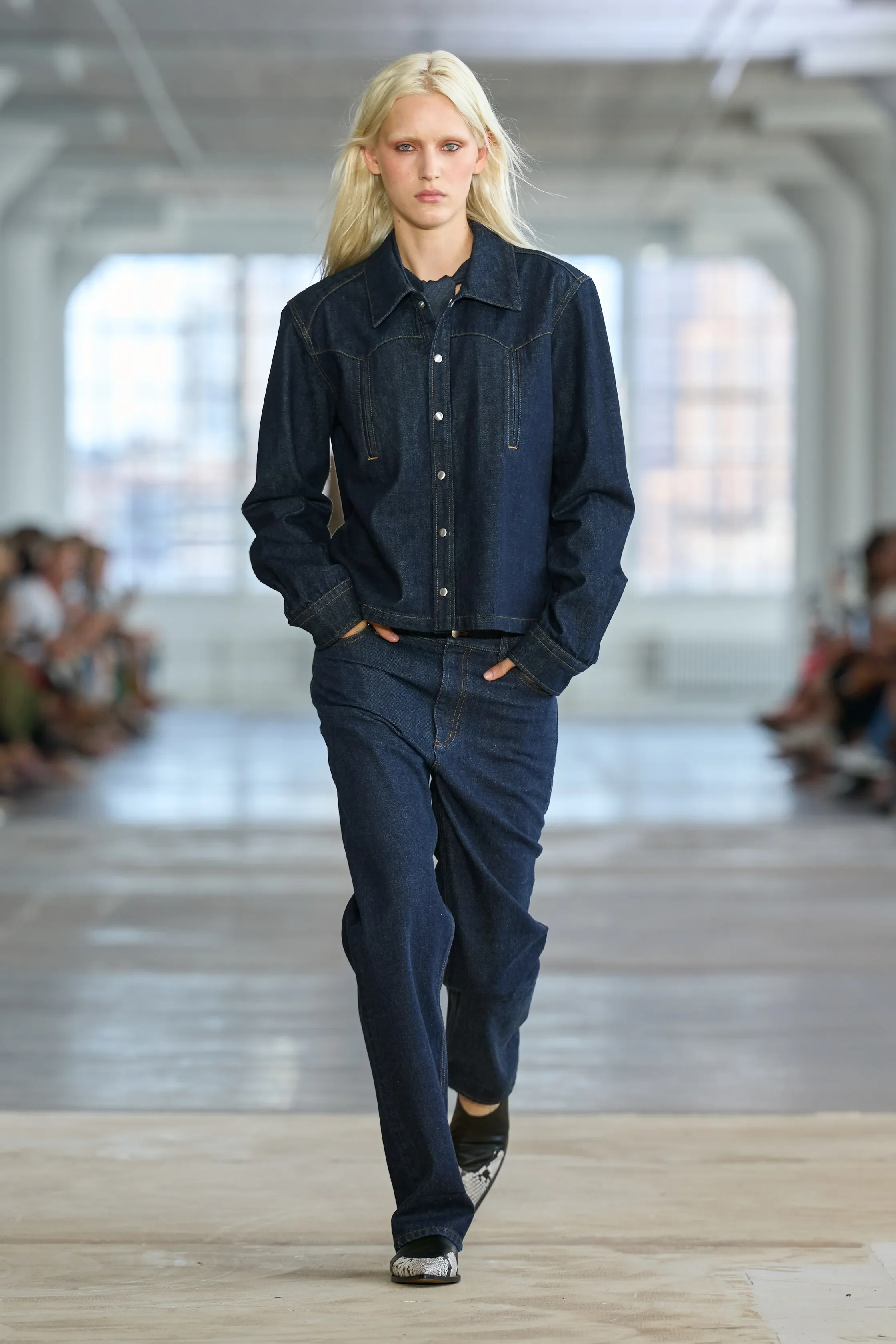
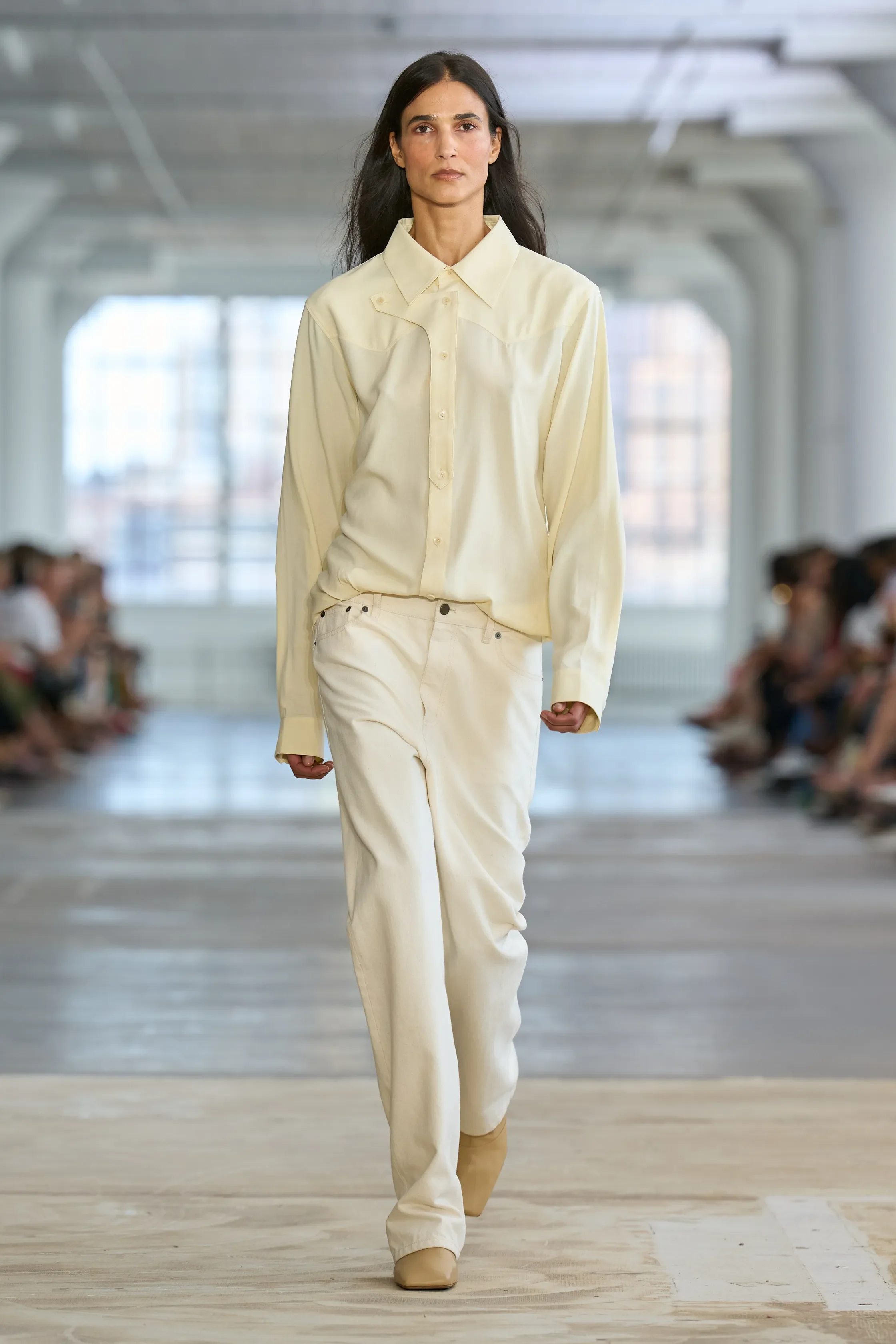
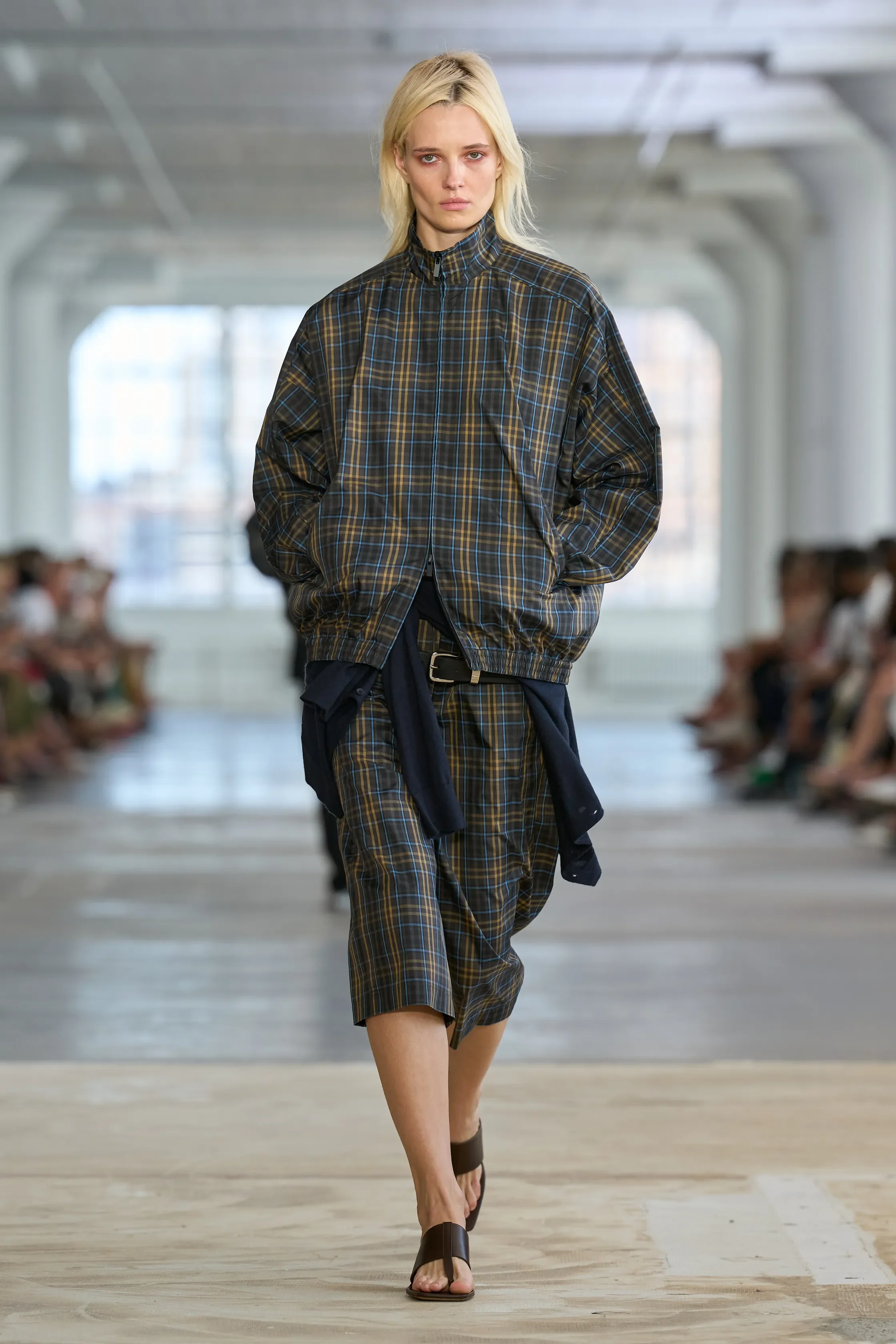
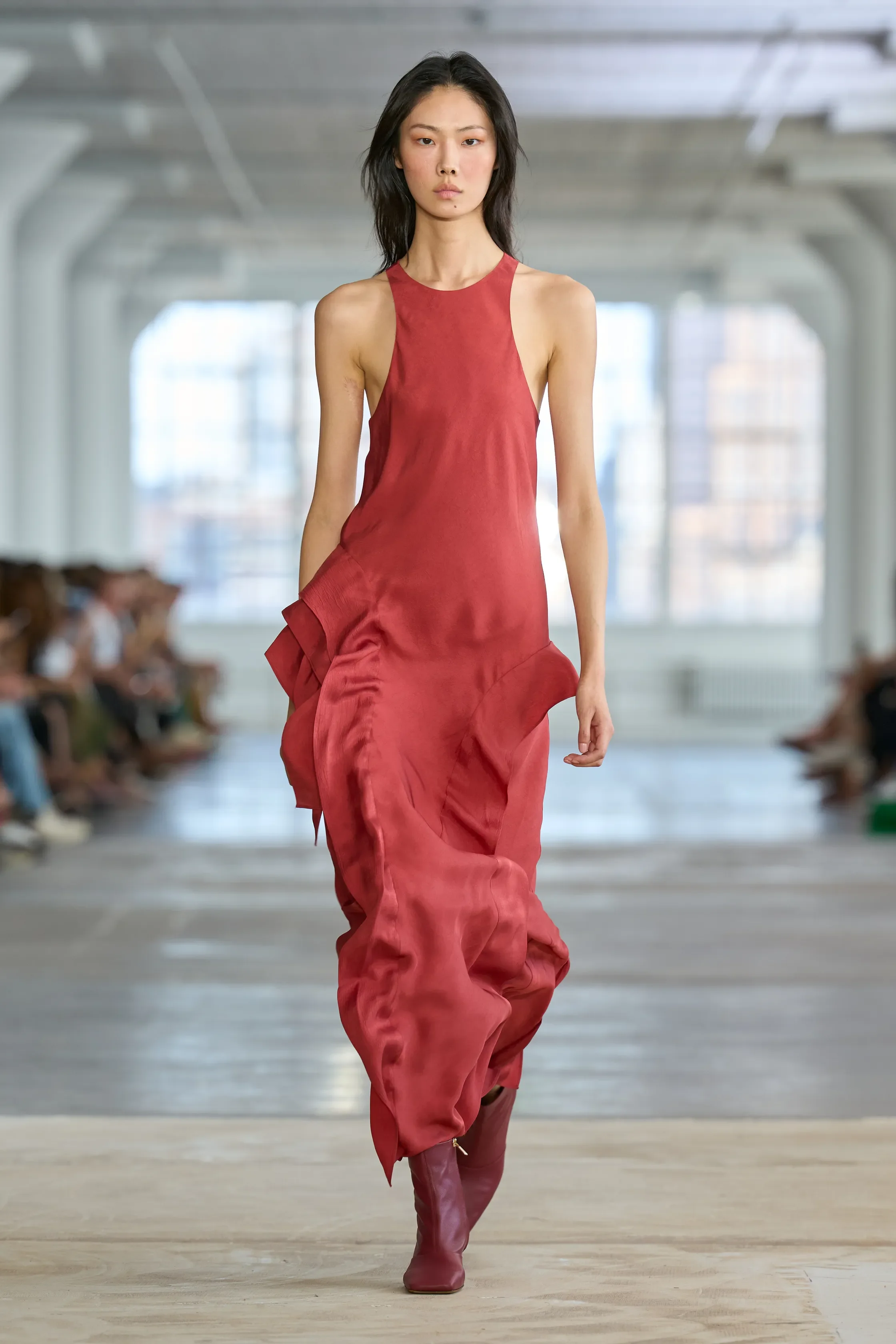
all images courtesy of TIBI
This season Tibi’s looked to Nashville for inspiration and drawing from the confidence of people who dress on their own terms. They focused less on reproducing a specific Southern wardrobe than translating that attitude through Tibi’s own practical, considered approach to dressing.
The collection played with familiar American references: western touches, relaxed proportions, embellished details, but kept continued to speak in Tibi’s language. Practical layering and easy separates prevented the references from becoming costume, while still inviting moments with sharper proportions and unexpected combinations. It was about the balance: pieces felt individual without looking overly styled, and decorative elements were offset by the functionality that has always been central to the brand.
There was contrast with more expressive pieces, paired with more straightforward staples. Creating looks that could move between dressed-up and everyday without losing their shape. Rather than chasing a polished idea of “good style” , Tibi focused on clothes that allowed for personal interpretation.
That approach feels especially relevant as Tibi approaches its 30th year. The collection doesn’t attempt to reinvent the brand, but to reinforce what has kept the brand a staple all of these years. Proportions, useful clothes, and the ability for the wearer to express their own individuality through Tibi.
PDF
review by ANOUK WOUDT
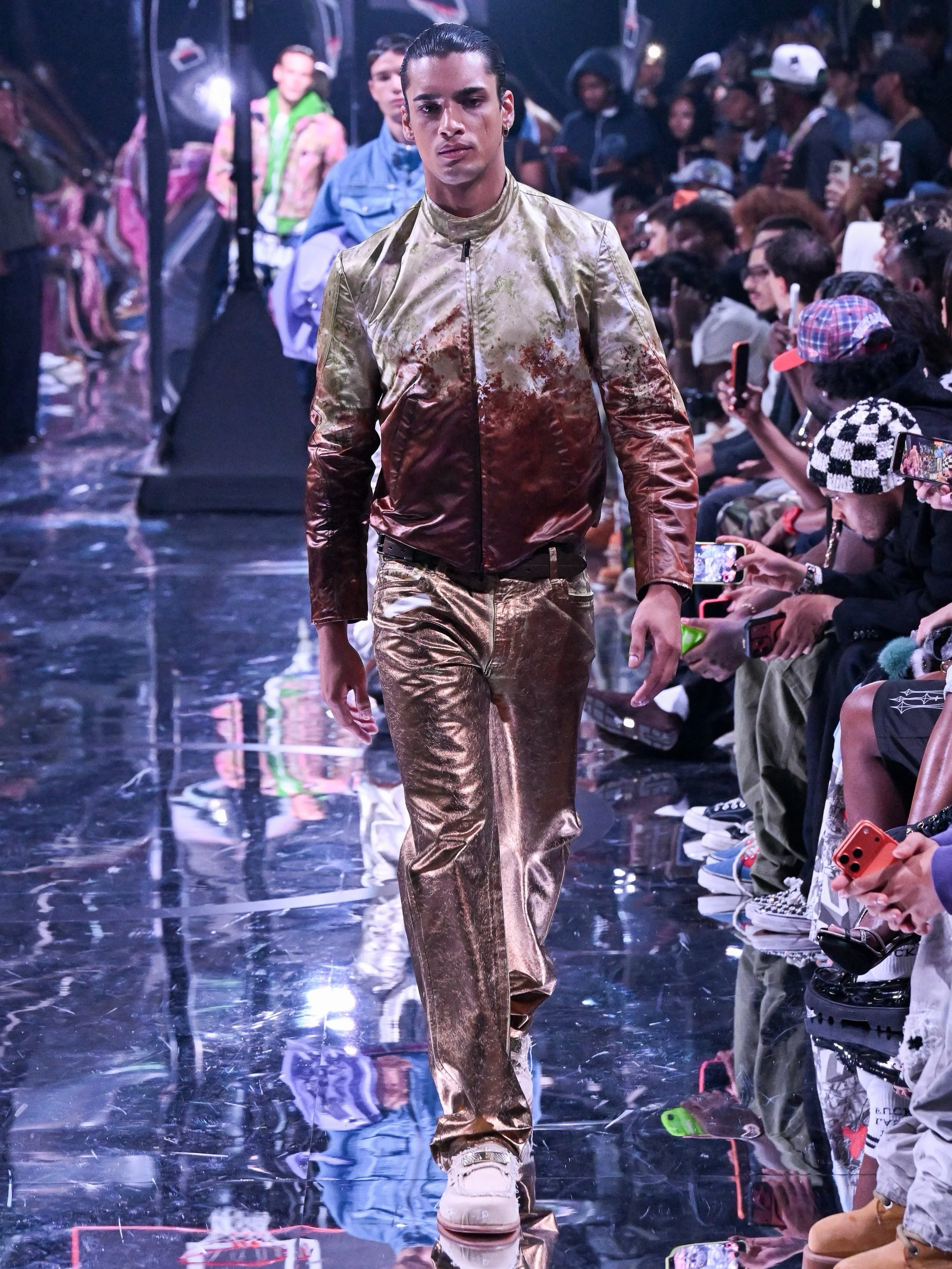
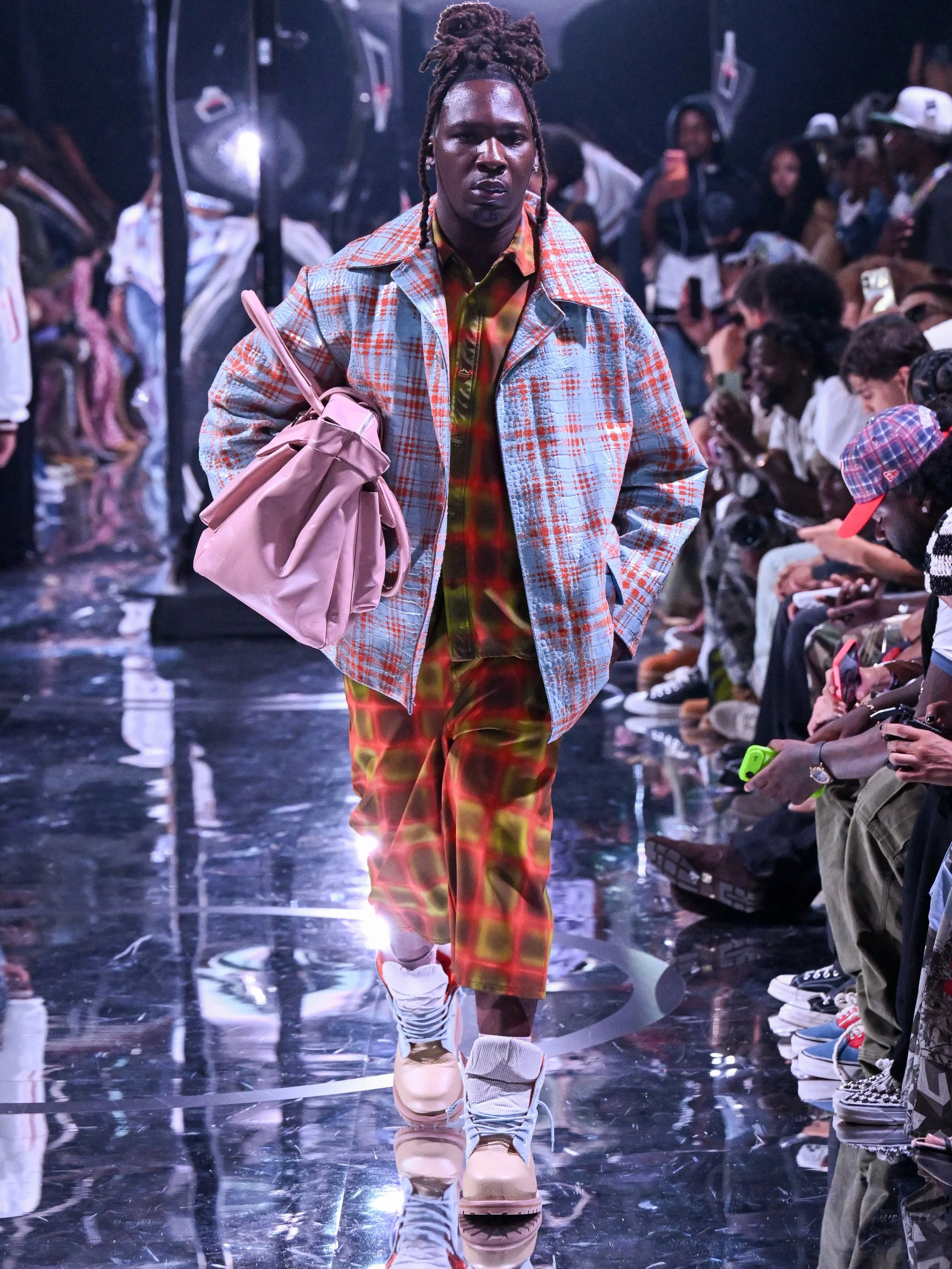
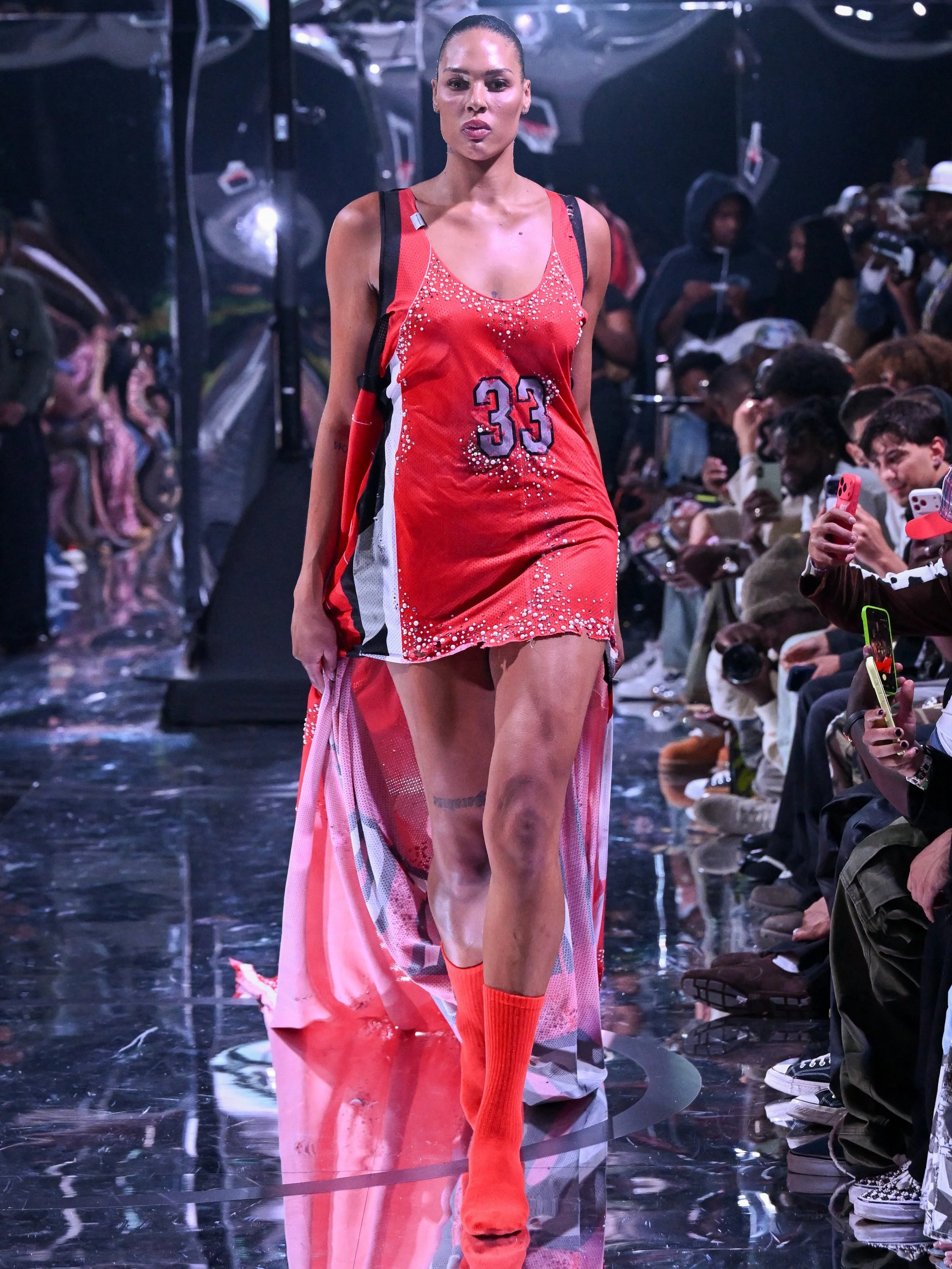
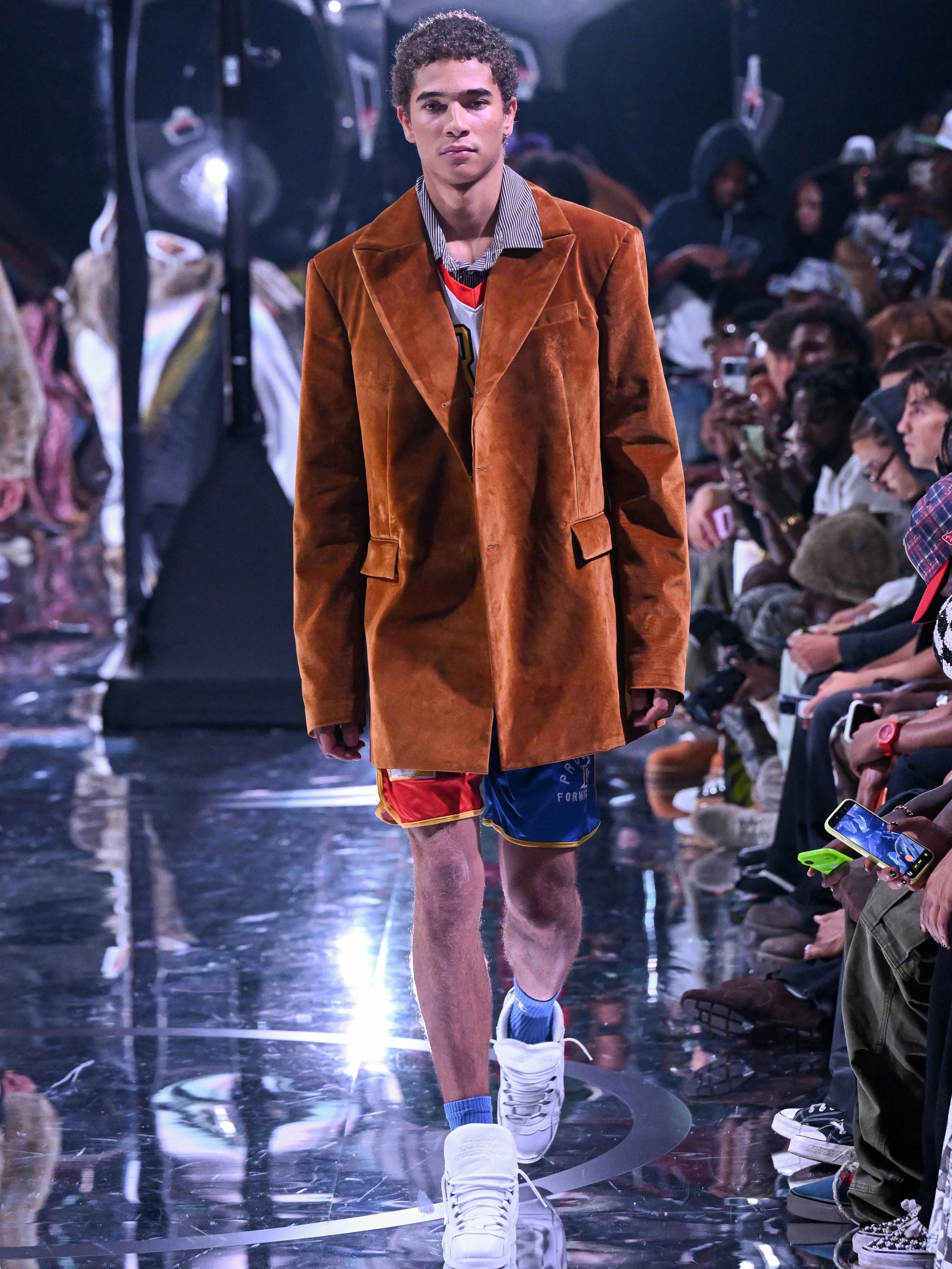
all images courtesy of PDF
Turning a basketball court into a runway, Domenico Formichetti’s SS27 collection put his usual athletic-based streetwear to the test. Aptly titled ‘Basketball as a cultural language’, the pieces alternated between jerseys and off-court streetwear looks, showcasing both the sport and its place within the cultural landscape.
Silhouettes were expectedly baggy, often pairing wide, slouched pants with a boxy, oversized jacket. Colours were bright and most definitely loud, with neons appearing as a recurring theme. Patterns were also pictured in excess, with plaids, checkers, camo, stripes, and snakeskin each making their respective appearance. Though the collection featured mainly menswear, a handful of womenswear looks made their debut, their silhouettes remaining practically identical to their male counterparts. Tying basketball to its inherent American prominence, flags and a distinct Americana spirit appeared across multiple looks, embodied by Letterman jackets and an excess of stars.
After each look was presented, the runway's hoops were finally put to use, with five models suddenly running out, basketballs in hand. Slam dunk after slam dunk, they jumped around the court before disappearing behind a curtain and allowing the final walk to ensue.
Basketball and fashion may not always intersect, but PDF proves there’s more overlap than meets the eye. Beyond the jerseys and basketball court, this SS27 collection shows just how much the sport has seeped into culture, translating its style into streetwear.
KIDSUPER PRESENTS THE PEOPLE'S RUNWAY
review by ANOUK WOUDT
all images courtesy of KIDSUPER
If there’s one thing to take away from this season’s KidSuper runway, it’s to never underestimate Colm Dillane’s ability to put on a show. Bringing back The People’s Runway for its second edition — and its first on the official NYFW calendar — founder Colm Dillane joined forces with Brooklyn Borough President Antonio Reynoso to spotlight five local rising designers. Hosted at the steps of Borough Hall, the show was open to the public, fostering not only community but a buzzing energy that instantly captured the heart and soul of Brooklyn.
After an energetic opening speech and a cascade of cheers, the five designers – Kuai Li of Quine Li, Laurel Tiange Fang of Laurel Blue, Moses Aina of Igbo-Sisun, Lamin Rey Jaiteh of Rey Jaiteh, and Roderick Reyes – each made their respective five-look NYFW debuts.
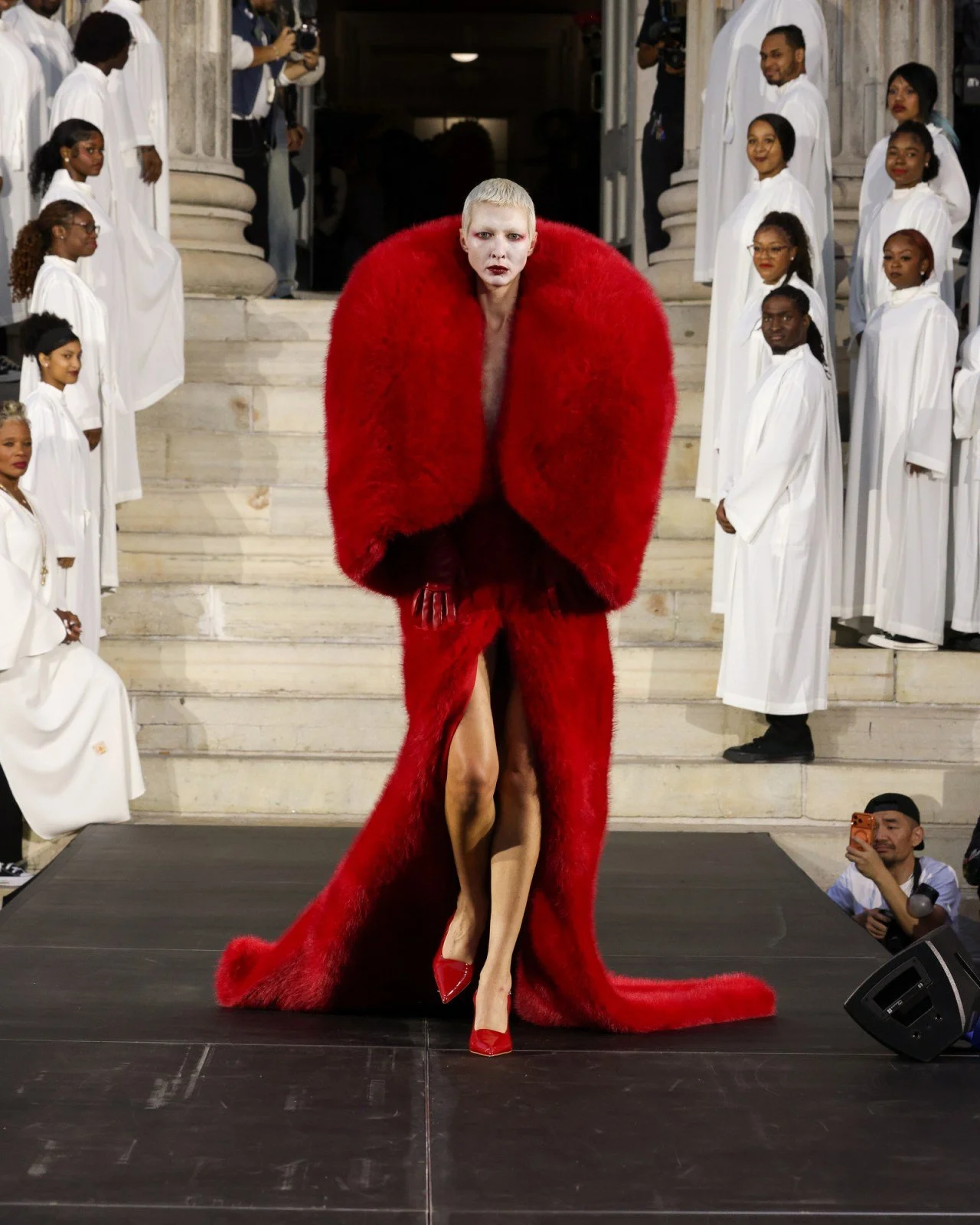
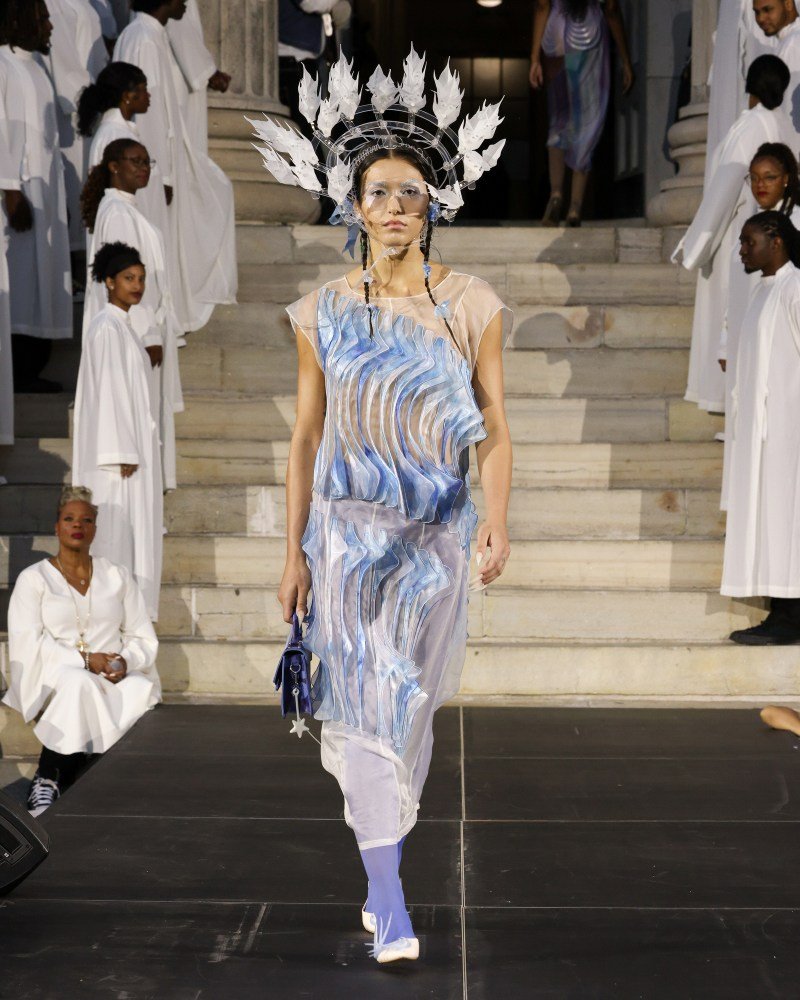
Kuai Li kicked things off with a dramatic red look followed by a lineup of silhouettes and textures far from human, closing with the apparition of a feathered, heart-shaped angel. Fang followed with looks drenched in fluidity, each piece dangling and swaying with the rhythm of the runway. Through glittering beads, shades of blue and crowning headpieces, they appeared like mermaids rising from the sea — before being interrupted by a dark, swishing gown made entirely of hair.
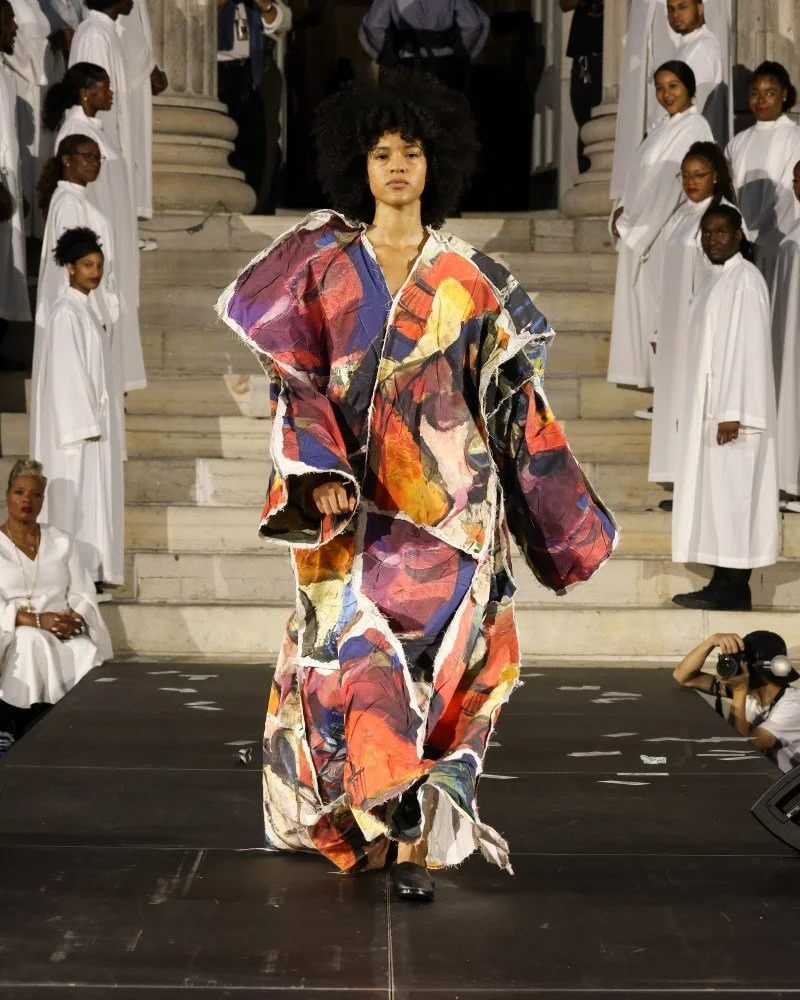
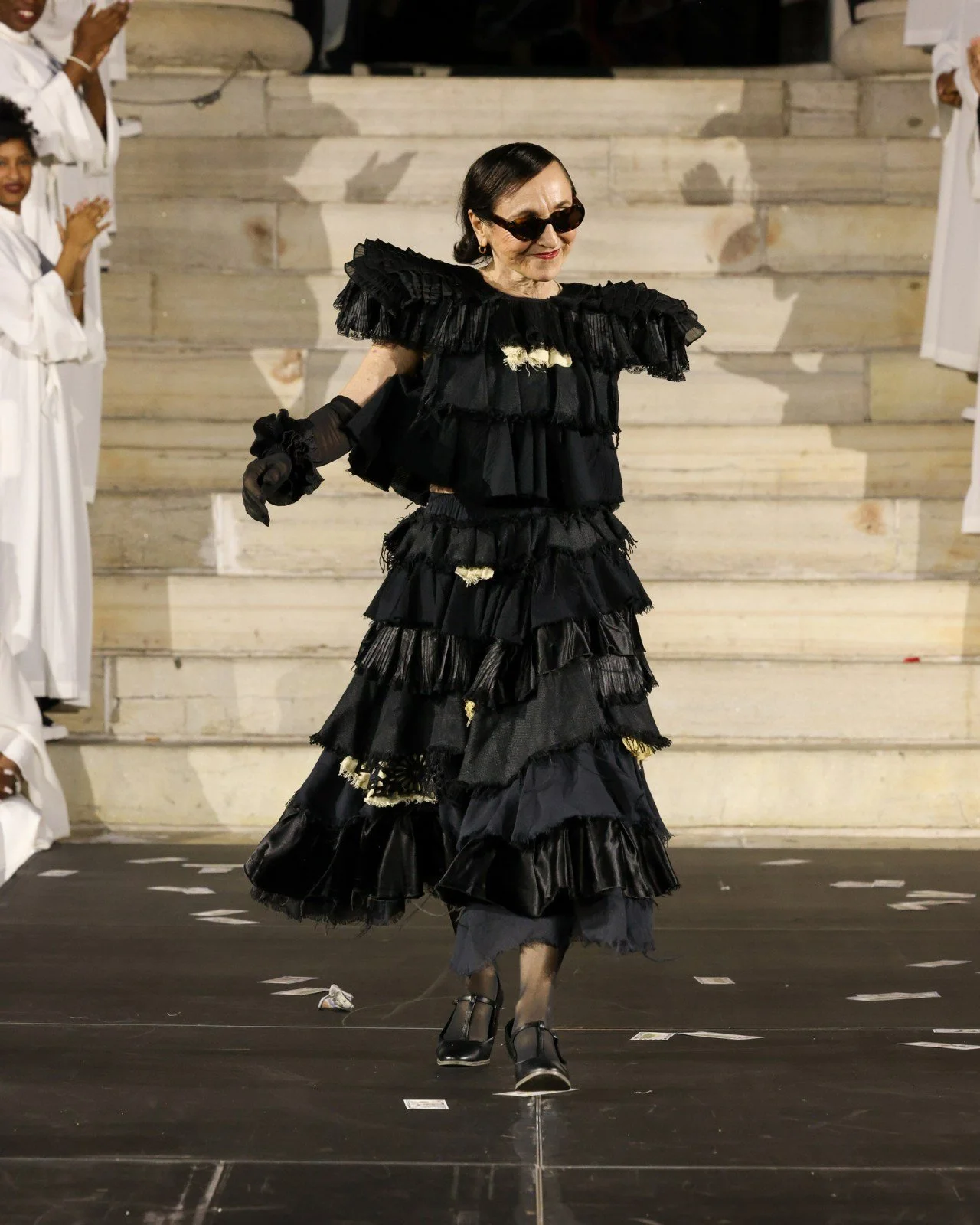
Moses Aina drew from African culture to create vivid, walking art pieces dotted with her signature sunflower motif, with Aina herself embodying the flower for her designer walk and honorary sixth look. Jaiteh followed with a collection centred on precise tailoring, creating elevated streetwear that balanced eccentricity with sophistication. Finally, Reyes took a more conceptual approach with his money-themed collection. Security tags, “sale” stickers, and dollar bills swarmed his looks, culminating in a finale that left a trail of money littered across the stage. Then came KidSuper’s own label, capped by a final walk from Dillane’s mom that instantly sent the crowd into cheers.
But the festivities don’t end there. Just when it seemed the show was over, Wyclef Jean took to the stage, serenading the crowd with his distorted guitar before welcoming Ms. Lauryn Hill to join him for an iconic Fugees reunion to the tune of Ready or Not. At this point, no one is seated. The whole crowd was dancing and singing, transforming a fashion show into something closer to a scene from the Caribbean Day Parade – ending this ode to Brooklyn in the most Brooklyn way possible.
KHAITE
review by MAREK BARTEK
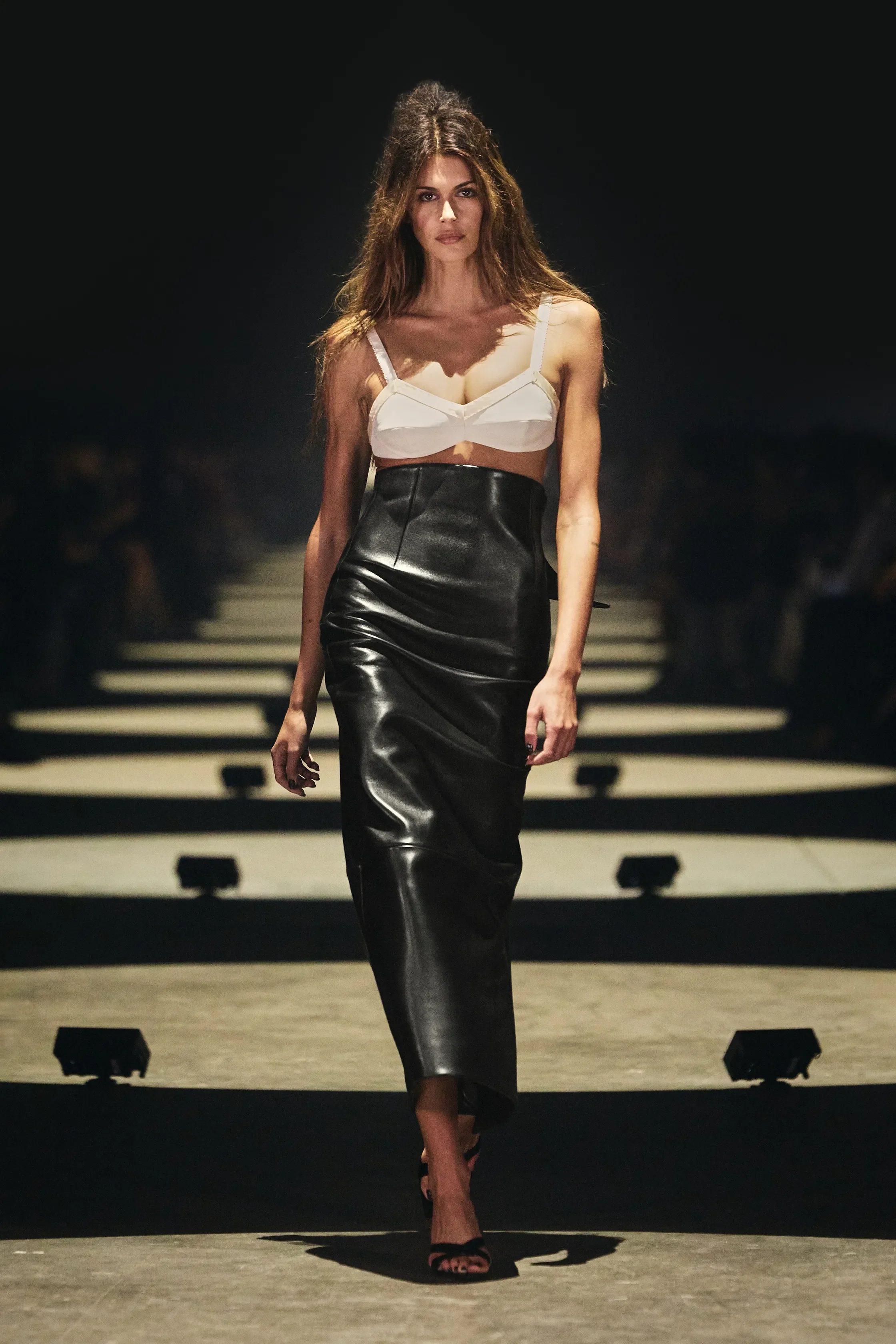
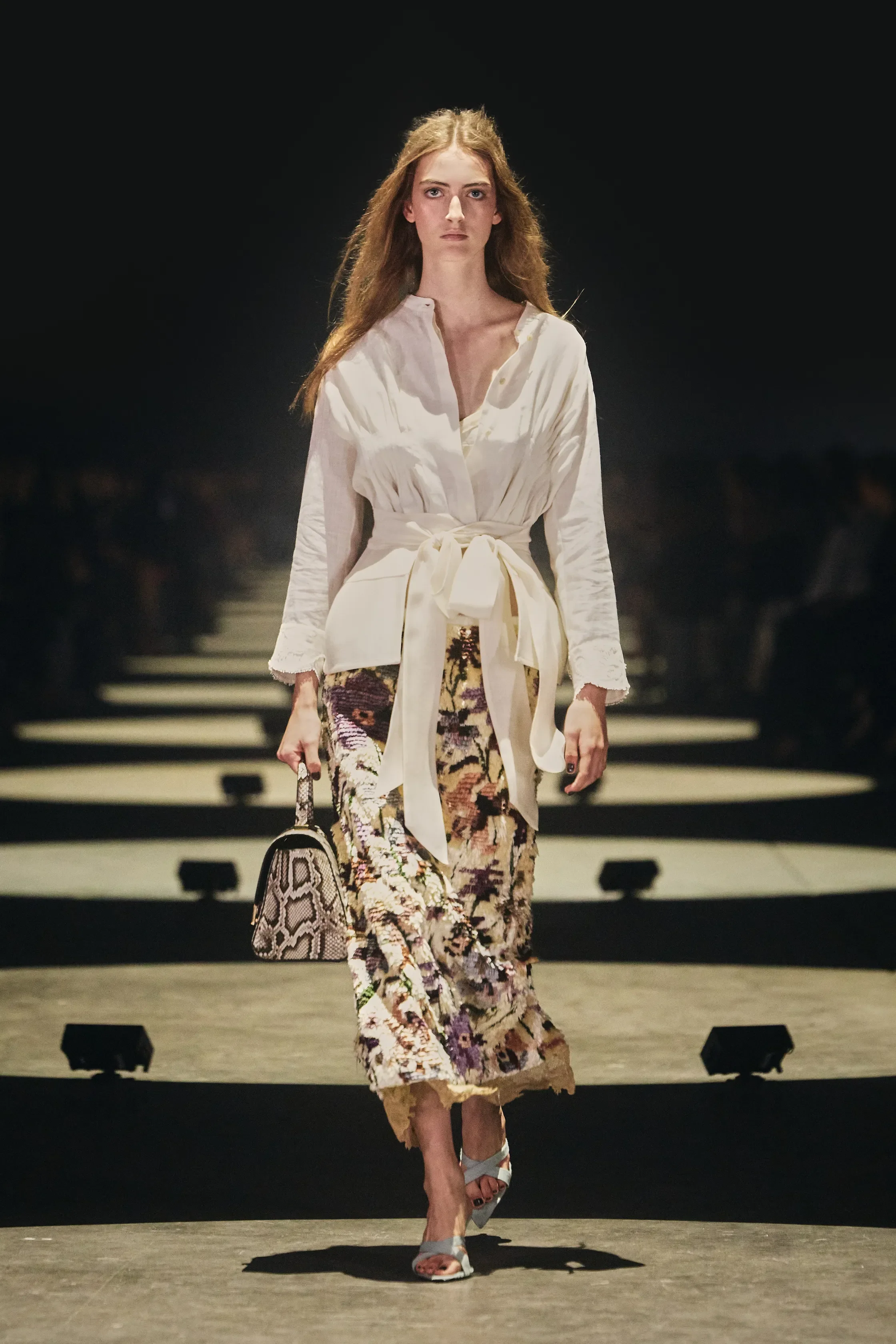
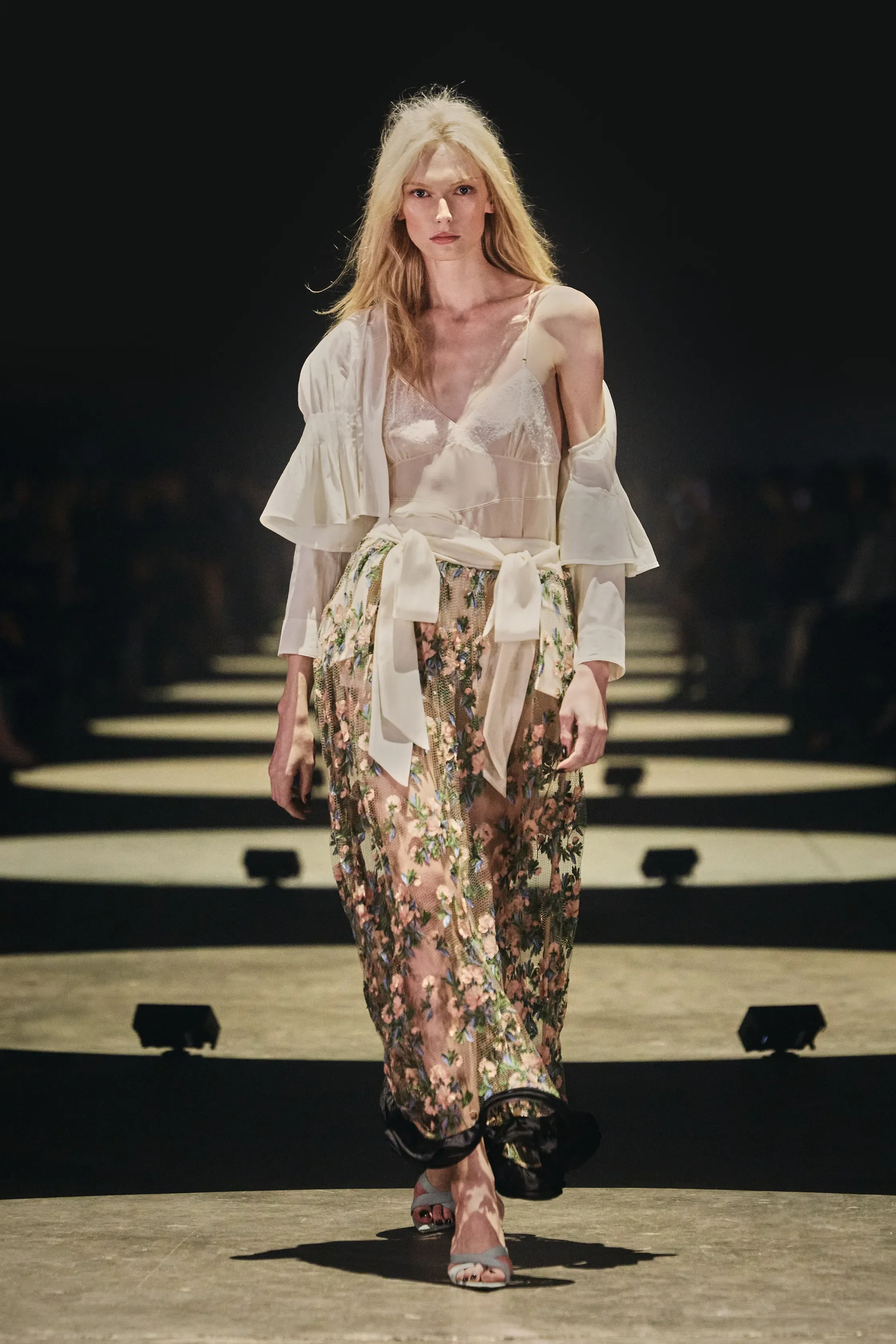
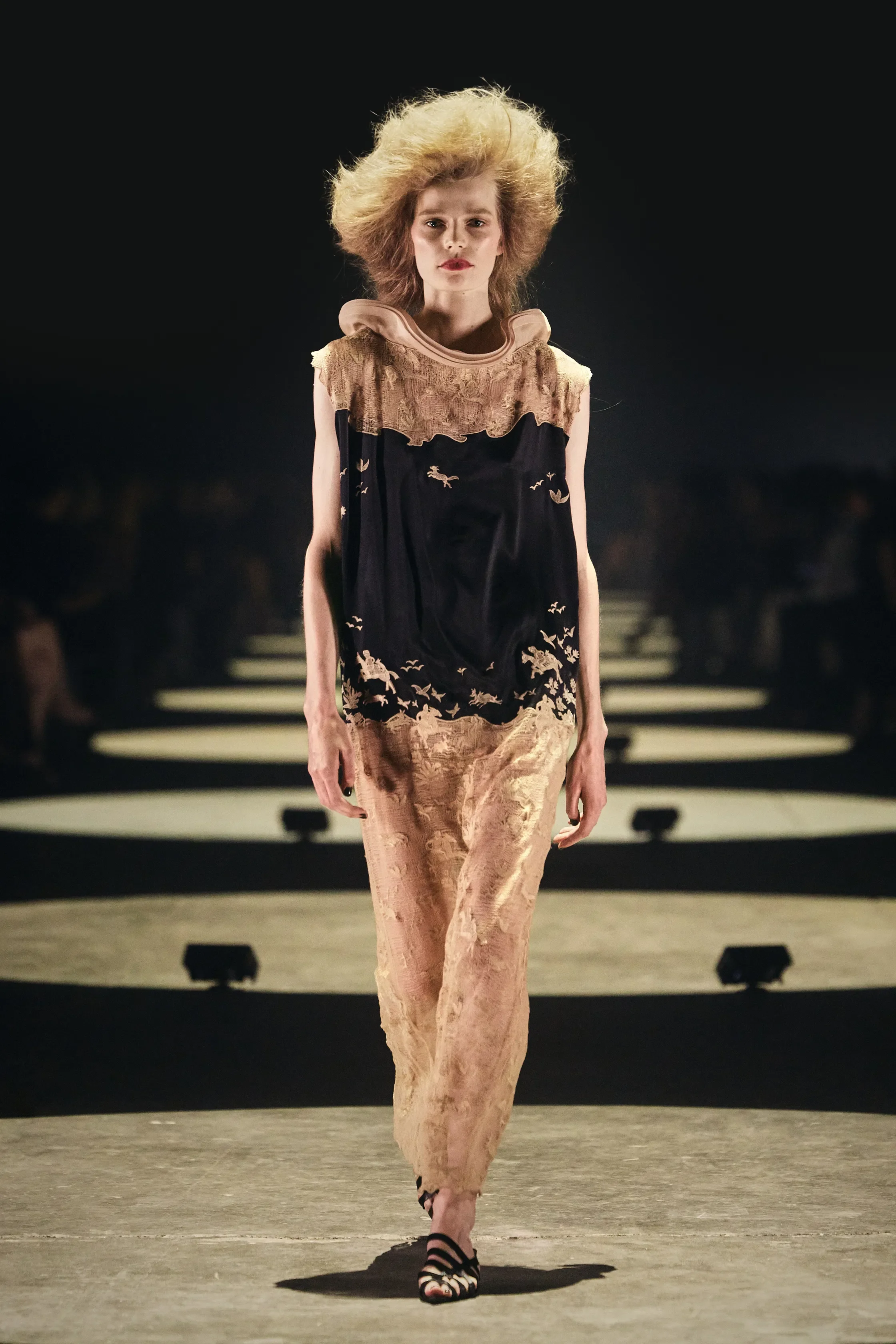
all images courtesy of KHAITE
Khaite softened its signature severity this season, replacing sculptural tailoring with sheer embroidered lace, lingerie-inspired dresses and softly ruffled silhouettes. Inspired by Venice and its faded grandeur, Catherine Holstein embraced romance over restraint, introducing a lighter, more decorative side of the brand.
The shift, however, felt somewhat uneven. While the floral lace dresses and delicate horsehair trims created moments of undeniable beauty, many looks lacked the sharpness and precision that have become Khaite's calling card. Some silhouettes drifted into familiar territory without adding much new, leaving parts of the collection feeling less focused than previous outings.
Still, there were flashes of what Holstein does best. The black leather separates retained the confidence Khaite is known for, while the sheer tailored evening suits offered a convincing evolution of the brand's minimalism. Rather than a misstep, the collection felt like an experiment that didn't always reach its full potential. Romantic, dreamy and beautifully executed in places, it ultimately lacked the strong point of view that has made Khaite one of New York's most consistently exciting labels.
ELENA VELEZ
review by DONA TODOROVSKA
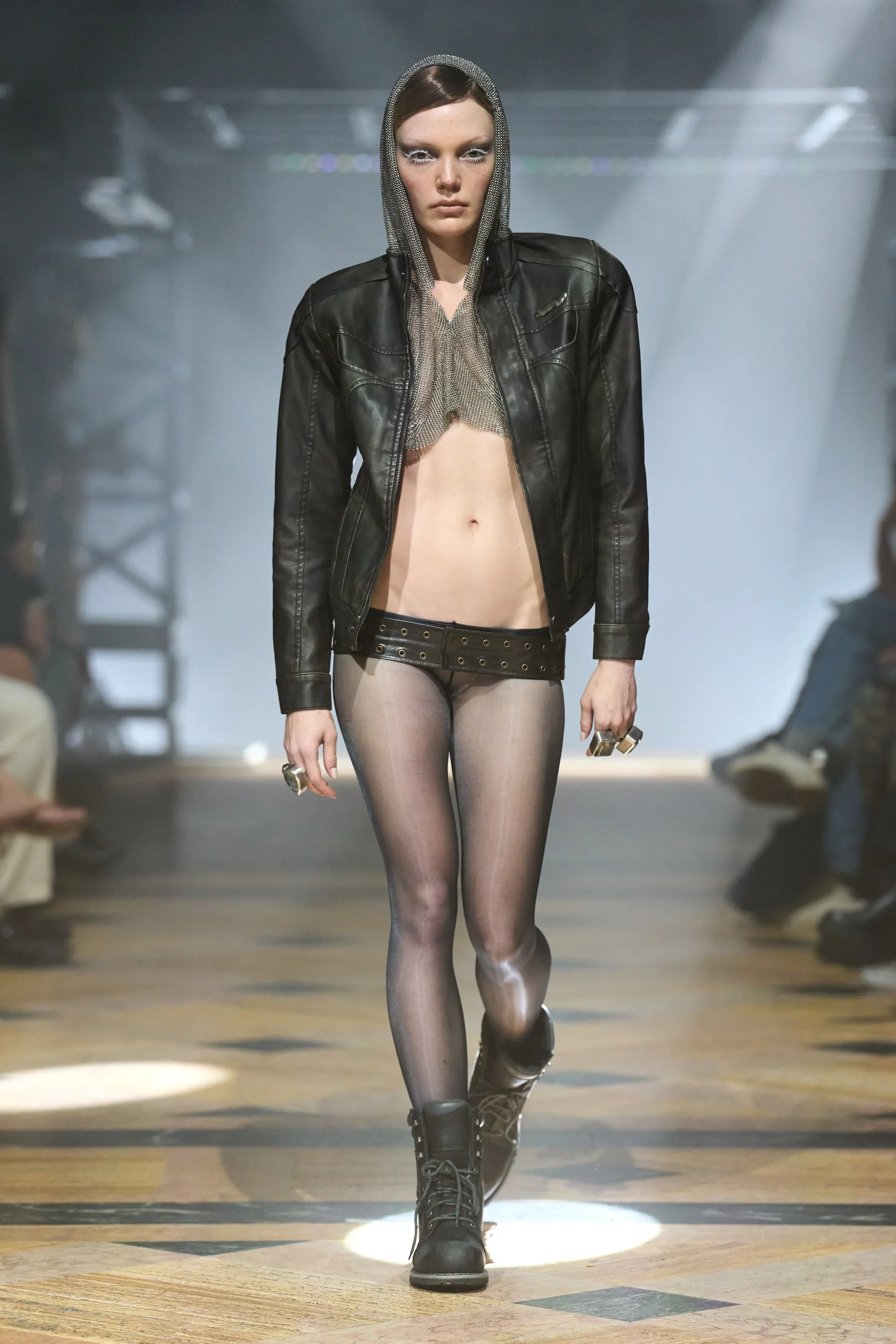
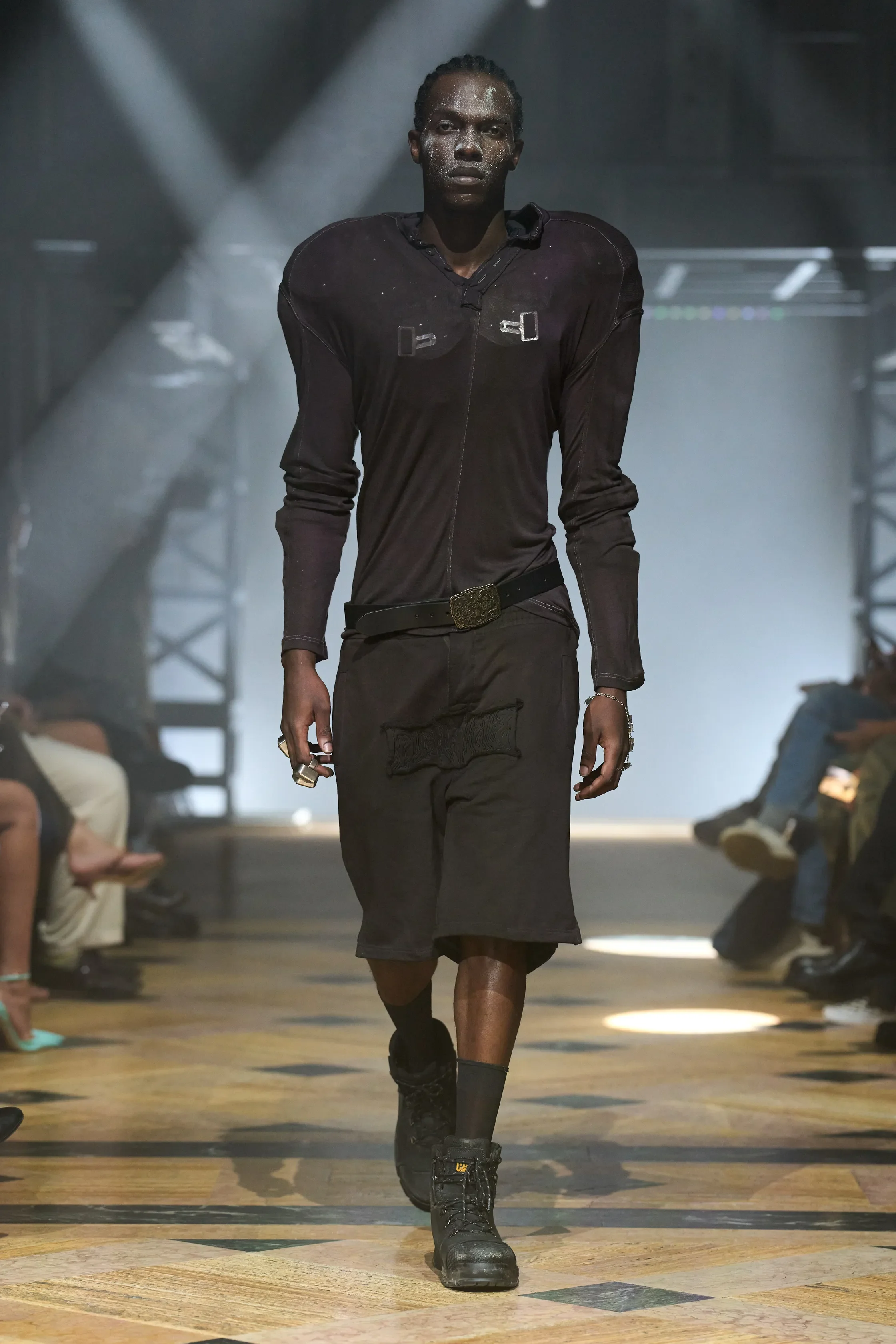
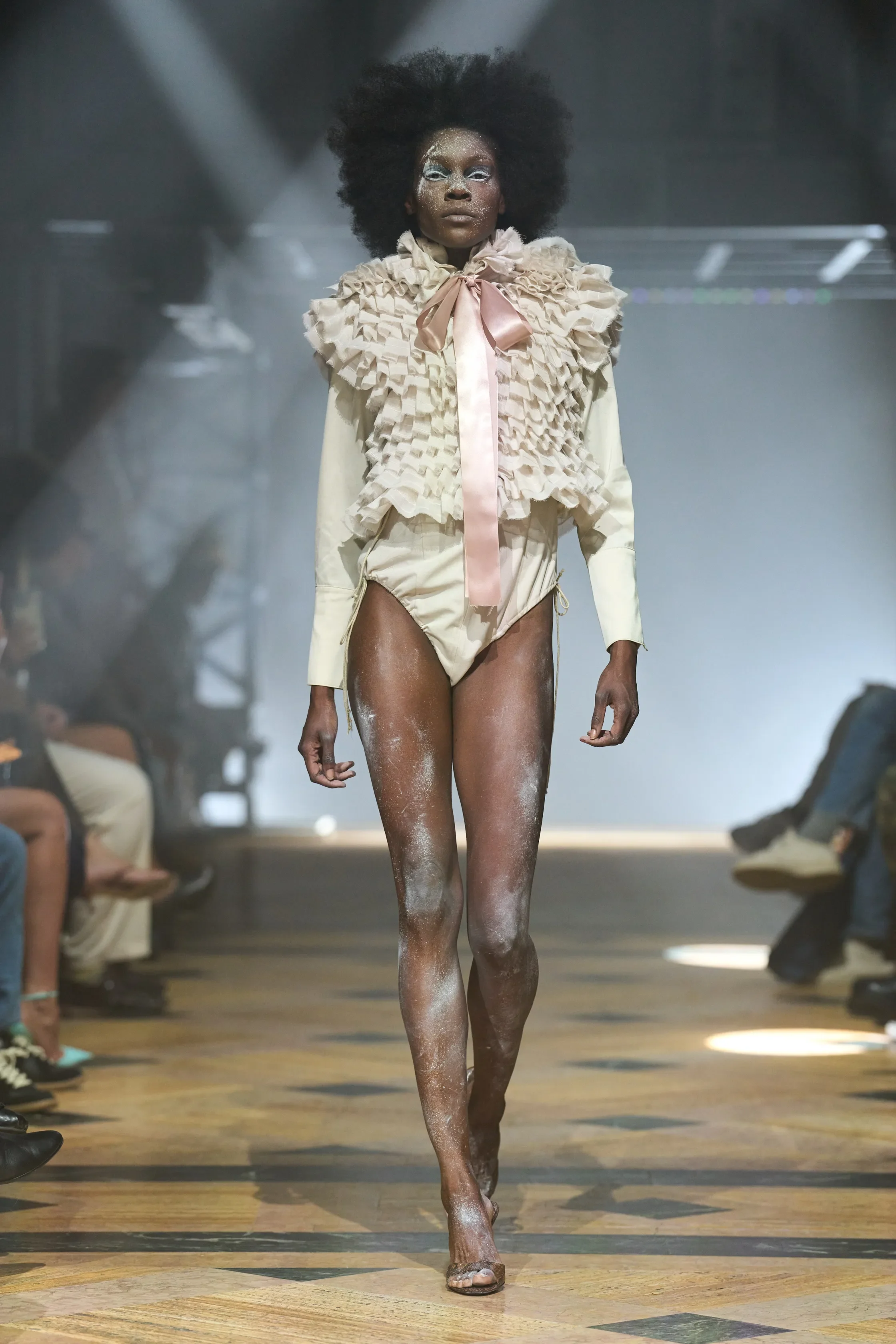
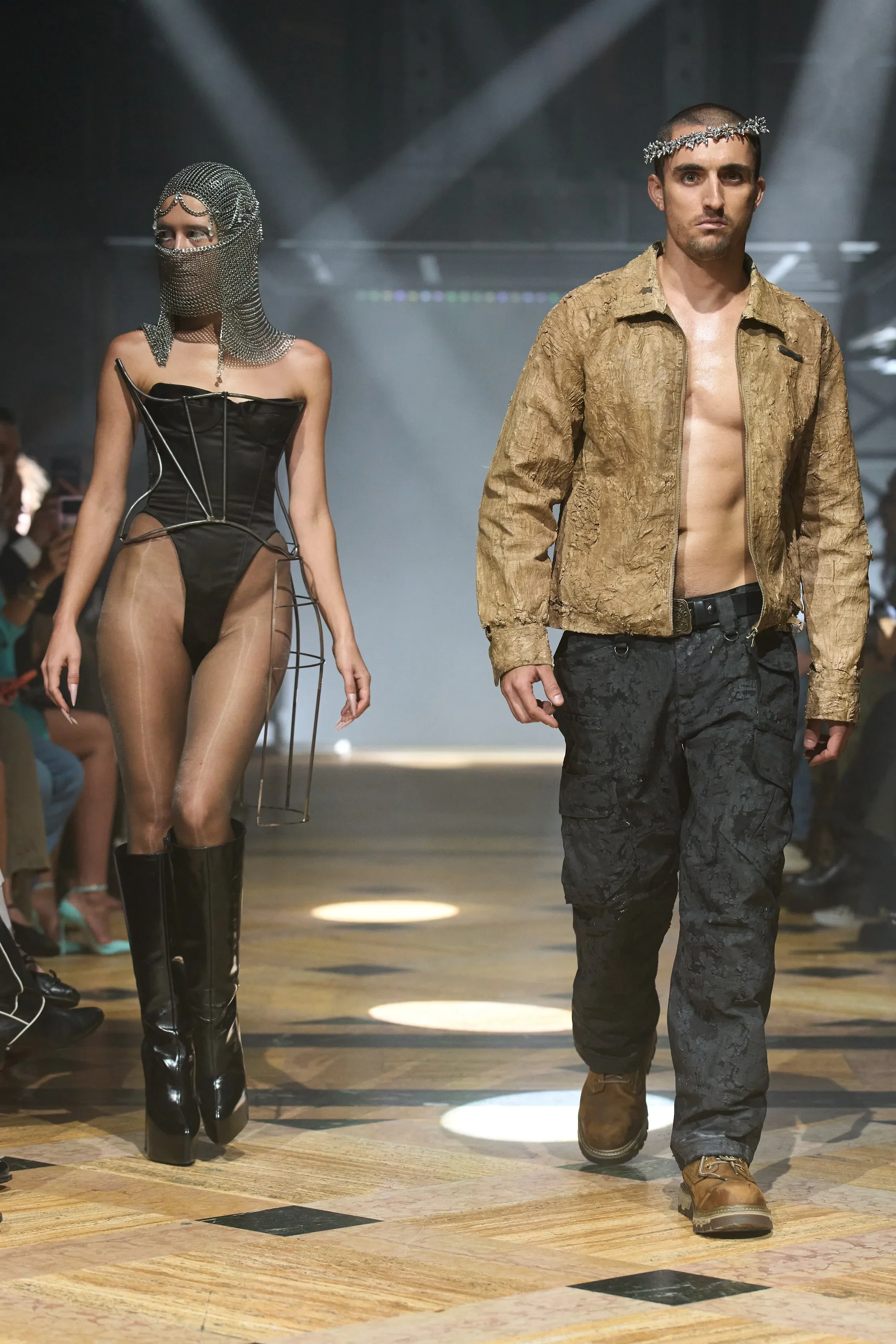
all images courtesy of ELENA VELEZ
A runway show from Elena Velez calls for more than attention to the singular looks presented on the runway. Velez carefully constructs a conceptual world that pushes viewers to confront the tensions and contradictions embedded within it. For SS27, titled SMITE, she continued this investigation through a collection centered on violence committed under the guise of righteousness steps away from the US Stock Exchange. Rather than offering a clear distinction between aggressor and victim, or good and evil, Velez leaves the audience with a more uncomfortable question: who gets to decide which is which?
That question of judgement extended beyond the clothes themselves and into the world Velez created around them. Their casting choice has long contributed to the sense that a Velez show operates outside the conventions of a traditional runway, bringing together personalities and figures who might otherwise seem incompatible. Notable figures such as John Kiriakou, former CIA agent whistleblower, and Angela Nikolau and Ivan Kuznetsov, who recently scaled the Empire State building, closed the show creating an atmosphere for the audience to not only confront the clothing, but also their assumptions about the people wearing them.
Visually, the collection brings together men’s workwear and tactile hardware alongside corsetry, exposed skin, and sheer hosiery. Velez presented garments that appear functional, but are ironically not fully functional. Moving away from the ‘wet look’ presented in previous seasons, Velez introduced crackled screenprints and weathered treatments that gave the collection a dry, eroded quality. The collection's questioning on righteousness felt most literal through religious references, which included imagery of Christ on the cross, introducing thoughts around sacrifice, suffering and faith into a collection probing the discourse around violence committed in the name of righteousness.
Ultimately, SMITE continues to carry Velez’s aggressively delicate signature, quietly asking the audience to detach from the need to understand every contradiction and instead find their own meaning within her world. As Erin Michels, who attended the show, reflected, “as the observer, we project our own stories on the moving art around us.” Perhaps the most fitting response to Elena Velez’s world is surrendering to what can be seen amidst the space between beauty and brutality.