
NEW YORK WEEK FALL/WINTER 2026: DAY 1
PROENZA SCHOULER
review by MAREK BARTEK
all images courtesy of PROENZA SCHOULER
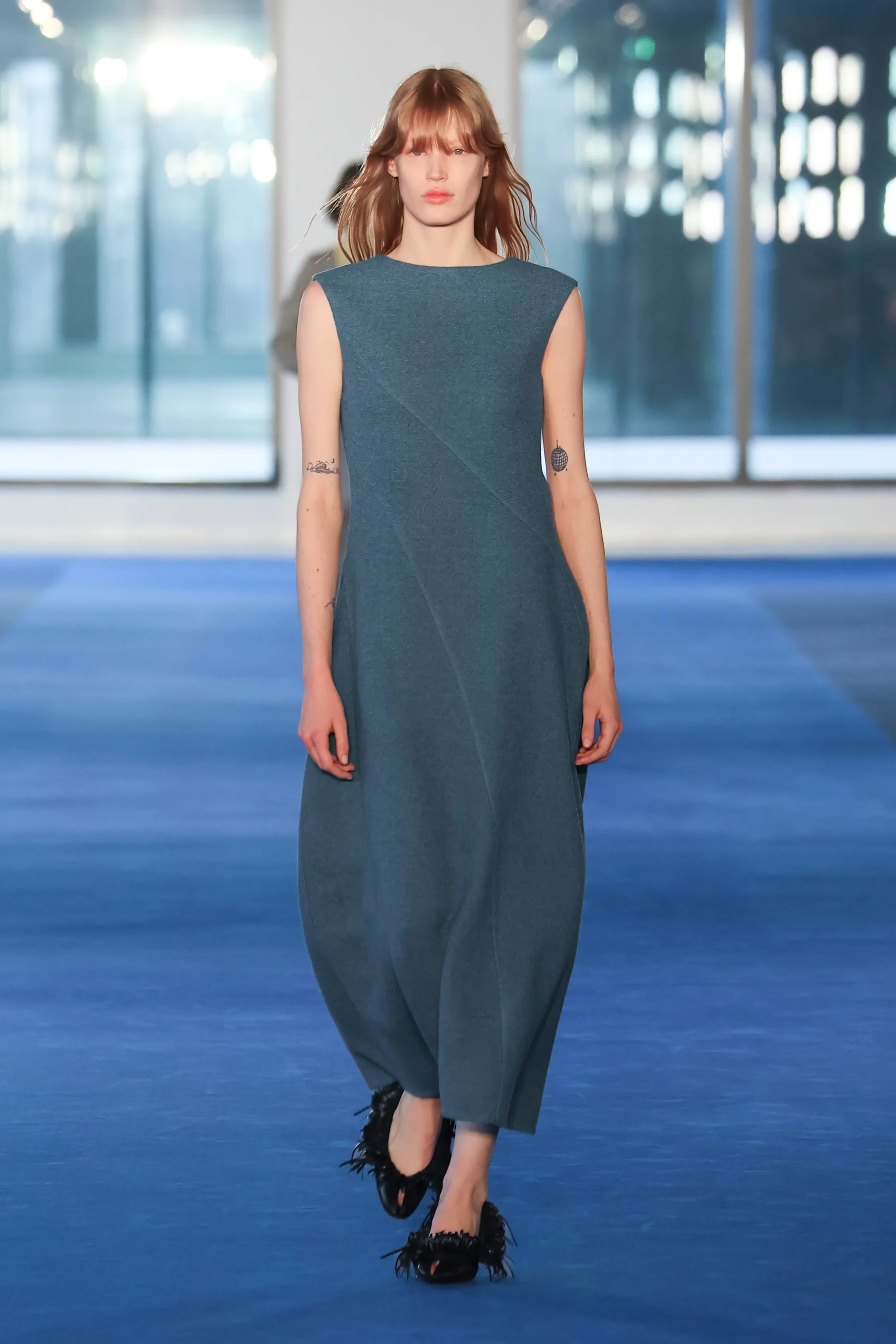
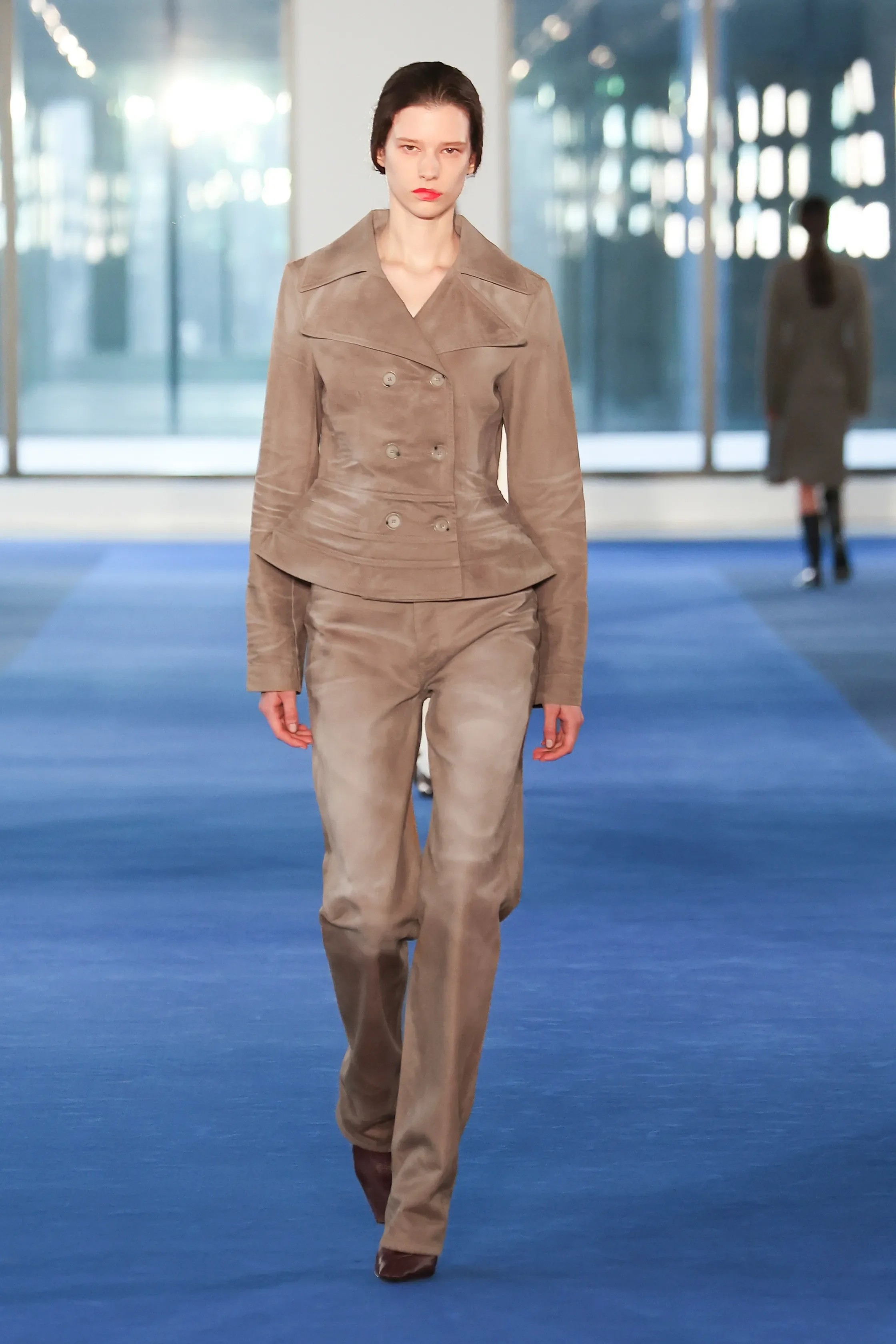
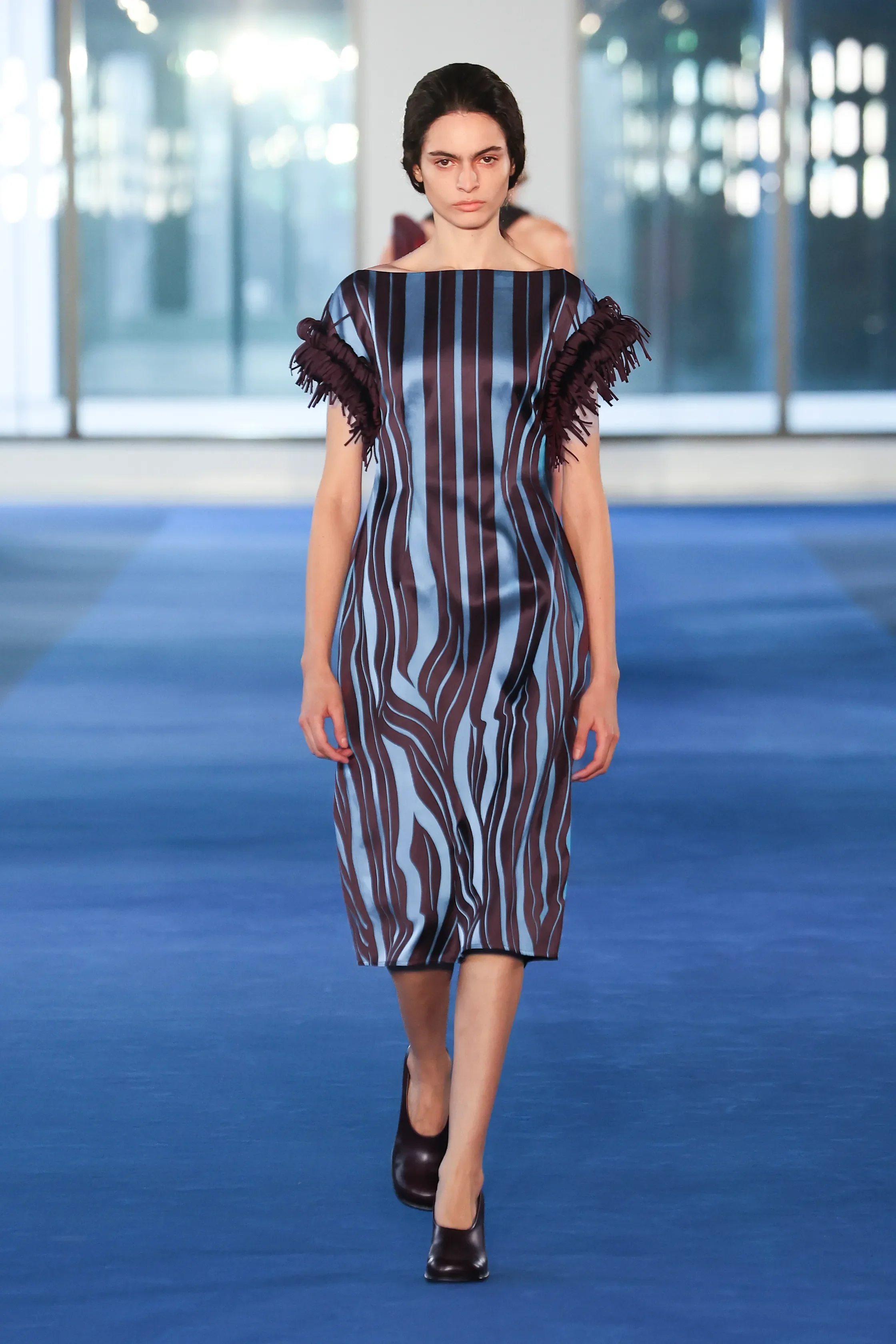
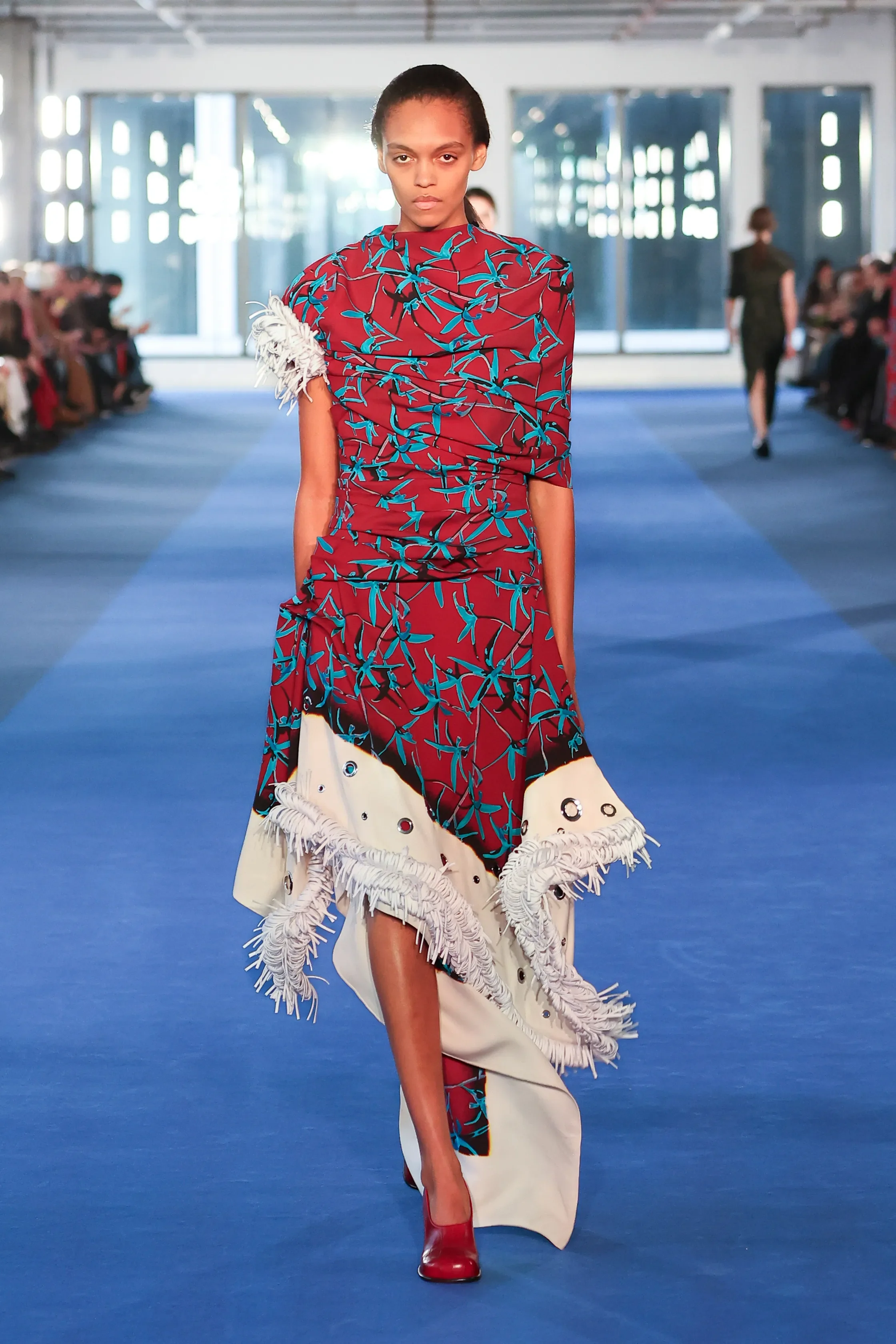
Rachel Scott’s first full collection arrived with a message that Proenza Schouler woman hasn’t changed — but she’s finally allowed to be human. “To the unknowing eye, she is put together, precise, deathly punctual,” the press release reads. “Today, she was in a rush.”
The tension of subtle imperfection ran through the clothes. Tailoring stayed sharp but softened at the edges: dresses lightly rumpled, buttons slightly misplaced, skirts twisting across the body as if fastened mid-stride. Truncated waists and elongated legs brought power without stiffness, while Donegal knits and compact matte viscose grounded the silhouettes in something tactile.
The collection’s real intrigue was in its surface language: crushed silk habotai, pleats interwoven into fabric, grommets interrupting clean lines. Night orchid imagery — manipulated, reworked, deliberately imperfect — captured the season’s core idea: precision, but with fingerprints. Accessories followed suit, revisiting familiar bags through mixed materials, and footwear sharpened into distorted square toes and elongated kitten heels.
Proenza is still polished — just no longer sealed behind glass. “I want to give her more texture and complexity and little peeks of eroticism, but it’s totally self authored,” Scott said backstage, and that she most definitely delivered.
COACH
review by MAREK BARTEK
all images courtesy of COACH
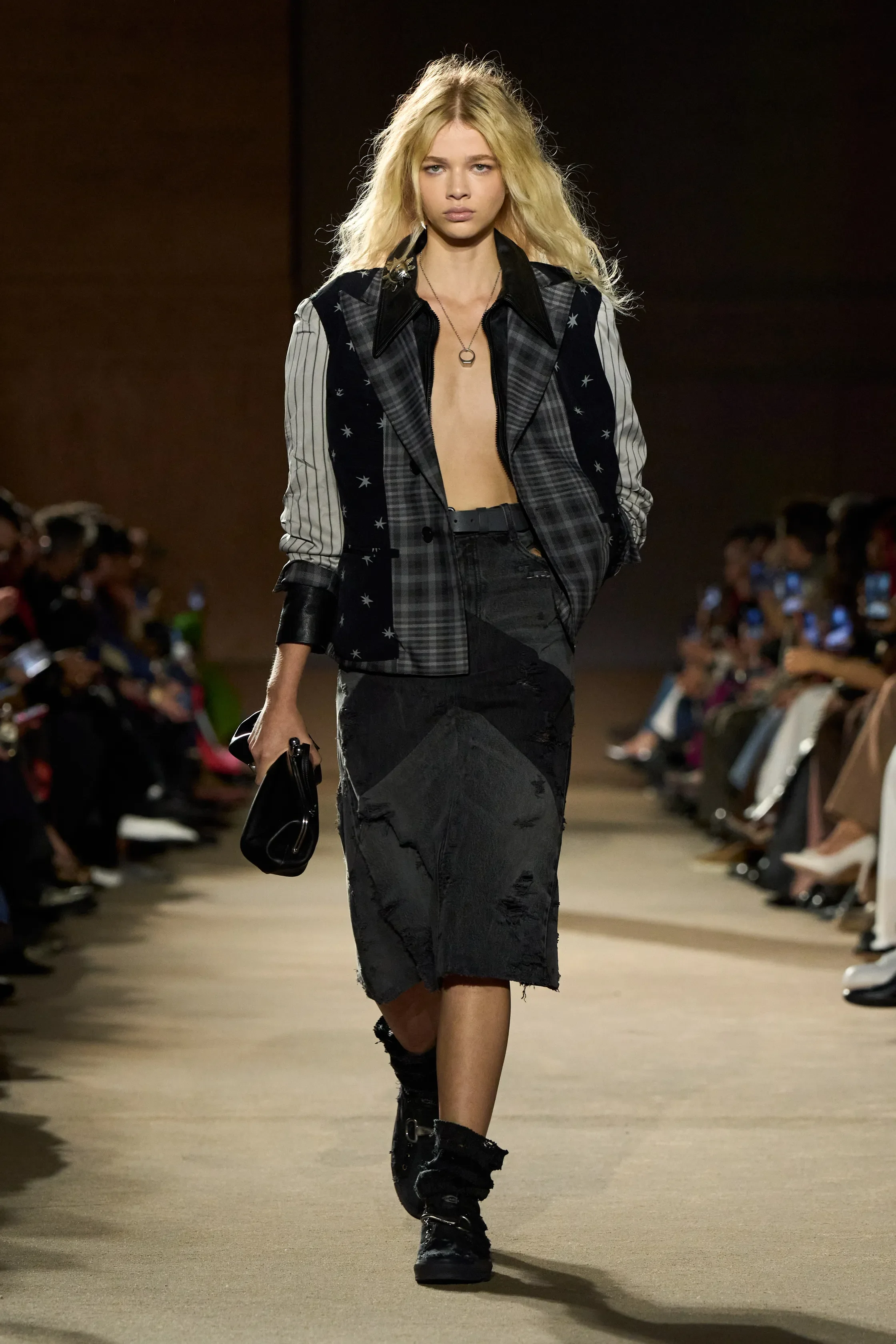
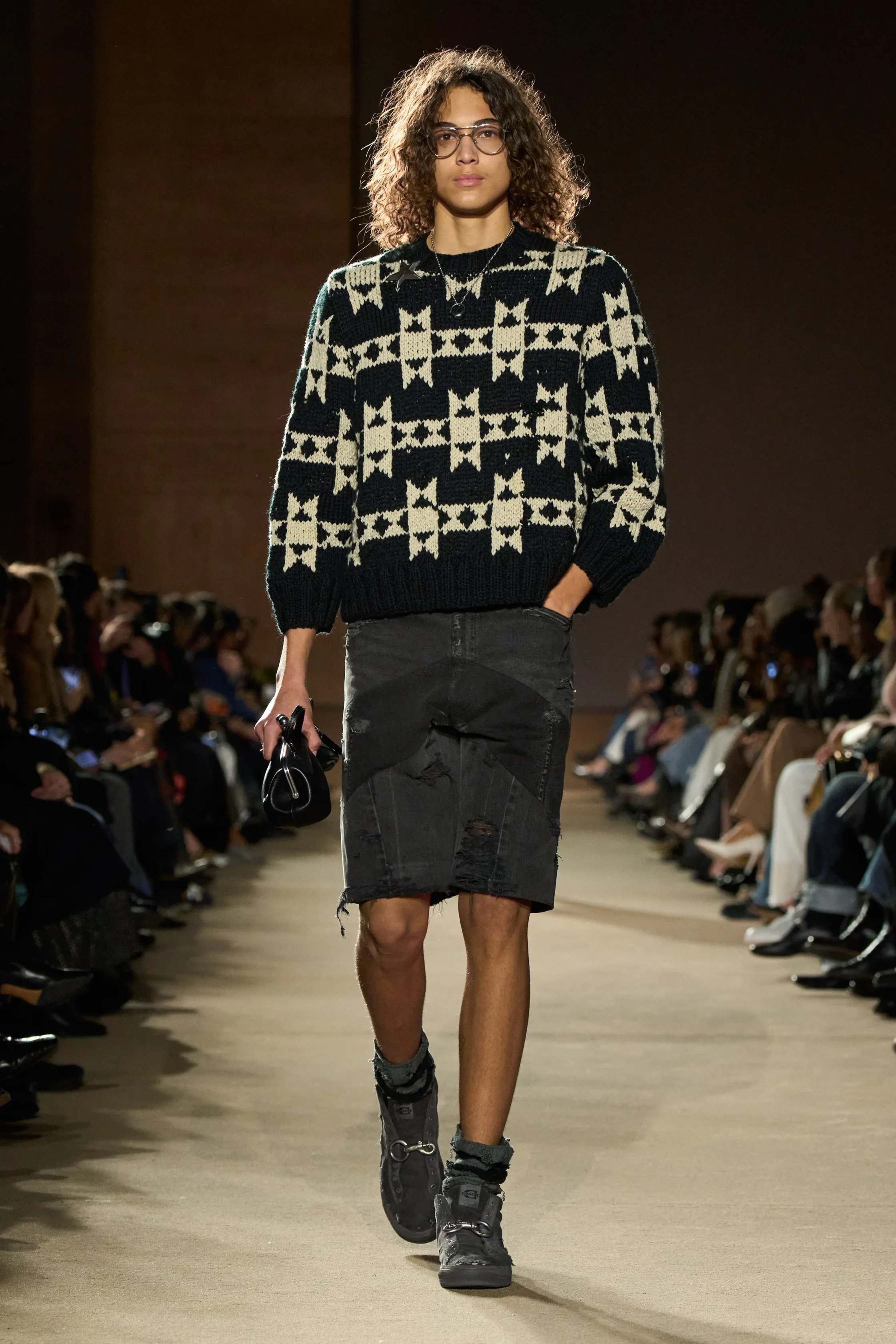
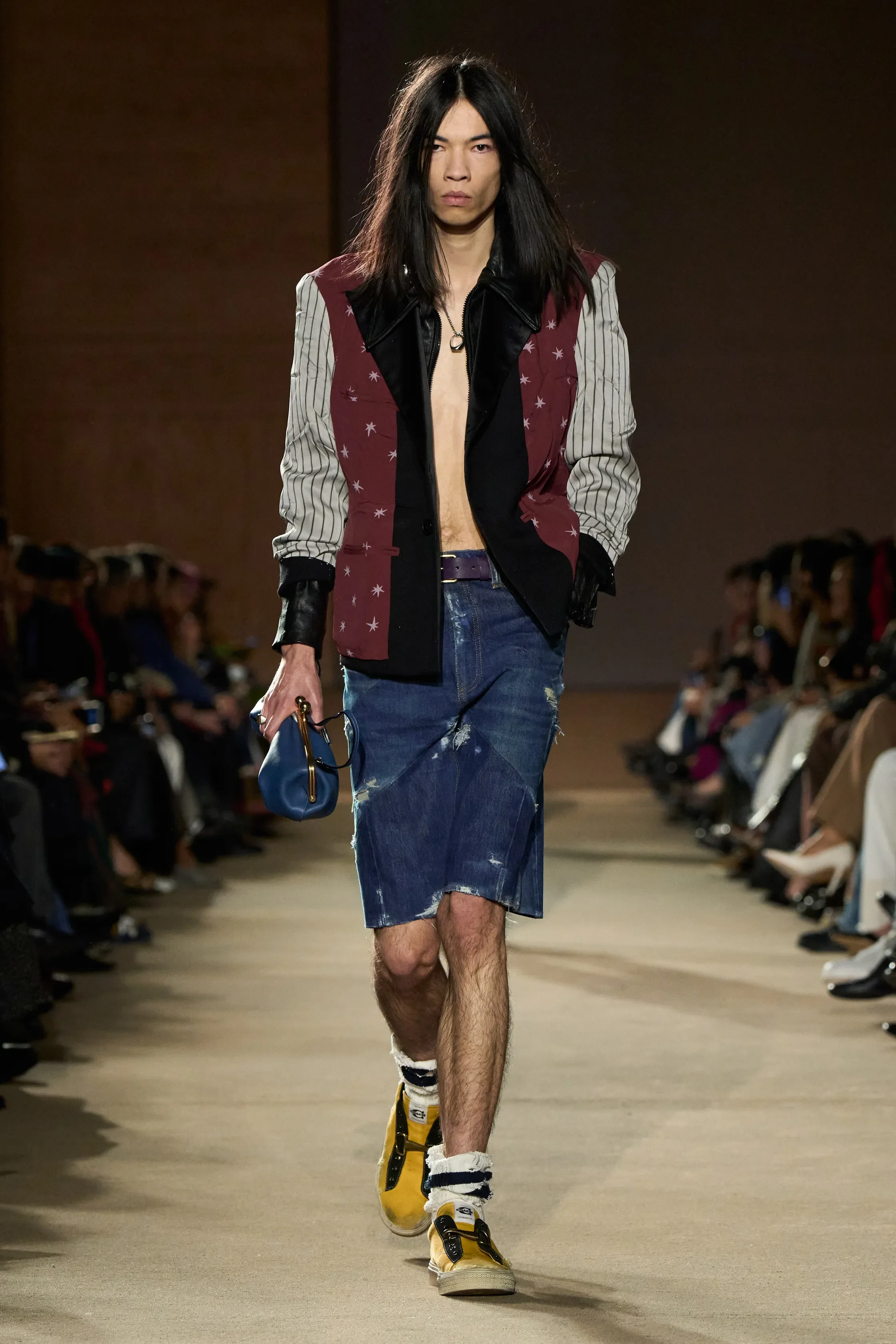
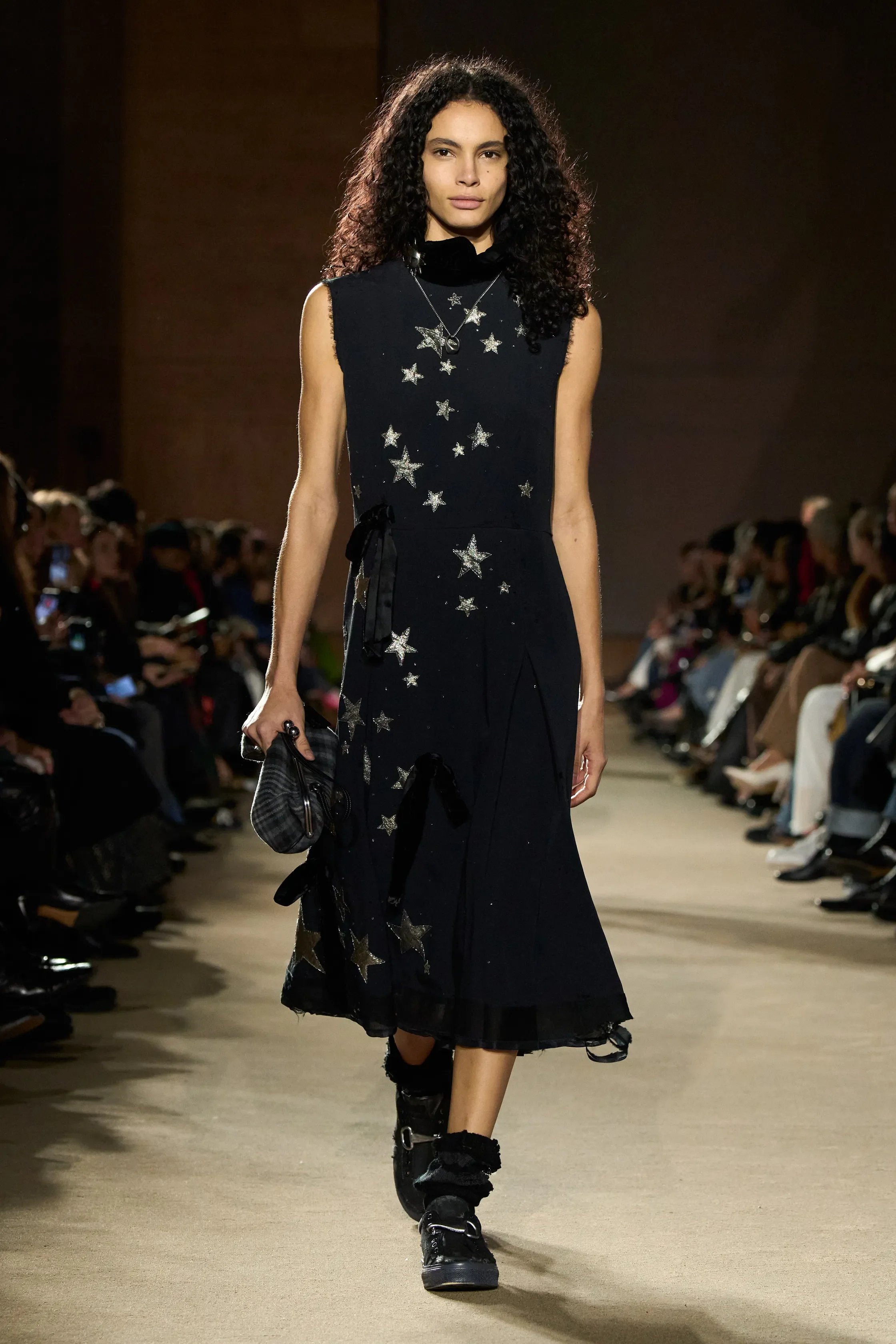
Coach Fall 2026 opened in dim light and an unexpectedly sombre mood, set to LCD Soundsystem’s American Dream. It was a curious contrast for a brand currently riding strong results, but Stuart Vevers was clearly building narrative. His moodboard pulled from classic Americana: a young Jodie Foster, a blonde California skateboarder, ’70s flares, and even The Wizard of Oz — a film he has watched every year since childhood.
After several New York-centric seasons, Vevers widened his gaze to the United States as an idea, while tightening the silhouette. “There was something about exploring the idea of America that felt like a move forward,” he explained at a preview. The collection leaned into youth culture and counterculture through slacker styling and distressed finishes: deconstructed plaid jackets mixed with lining fabrics, lace-trimmed dresses with Pilgrim collars, and knitwear stamped with eagles and quilt motifs.
Accessories did what Coach does best. Models carried silver East-West frame clutches, turn-lock messenger bags, and even playful heritage pieces made from a vintage football and baseball mitt. Sustainability also came into sharper focus. “Upcycling is something that we’re starting to do in a really meaningful way,” Vevers said, making wear, reuse and imperfection feel like the point of the new wave of luxury.
COLLINA STRADA
review by MAREK BARTEK
all images provided by COLLINA STRADA, courtesy of GO RUNWAY
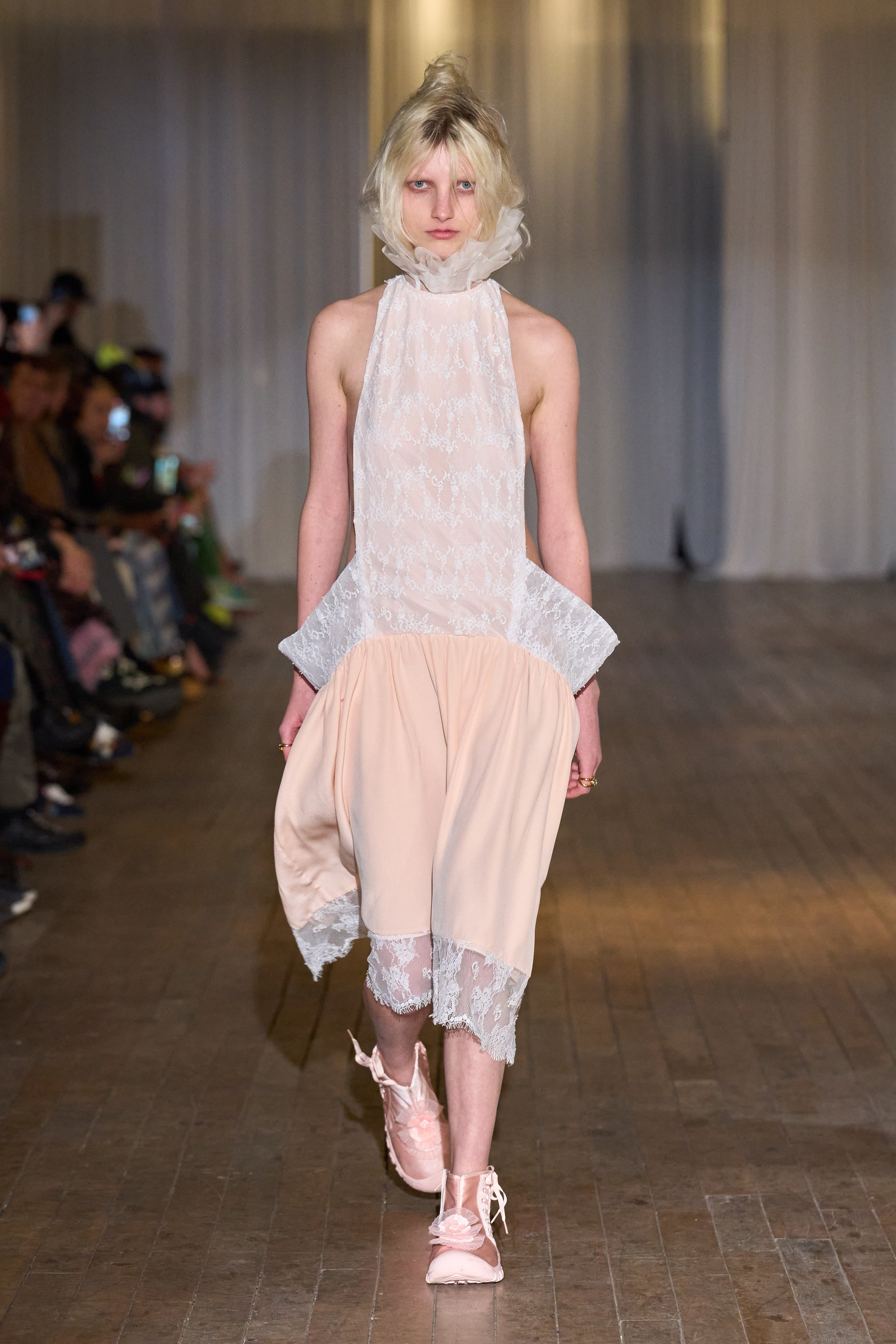
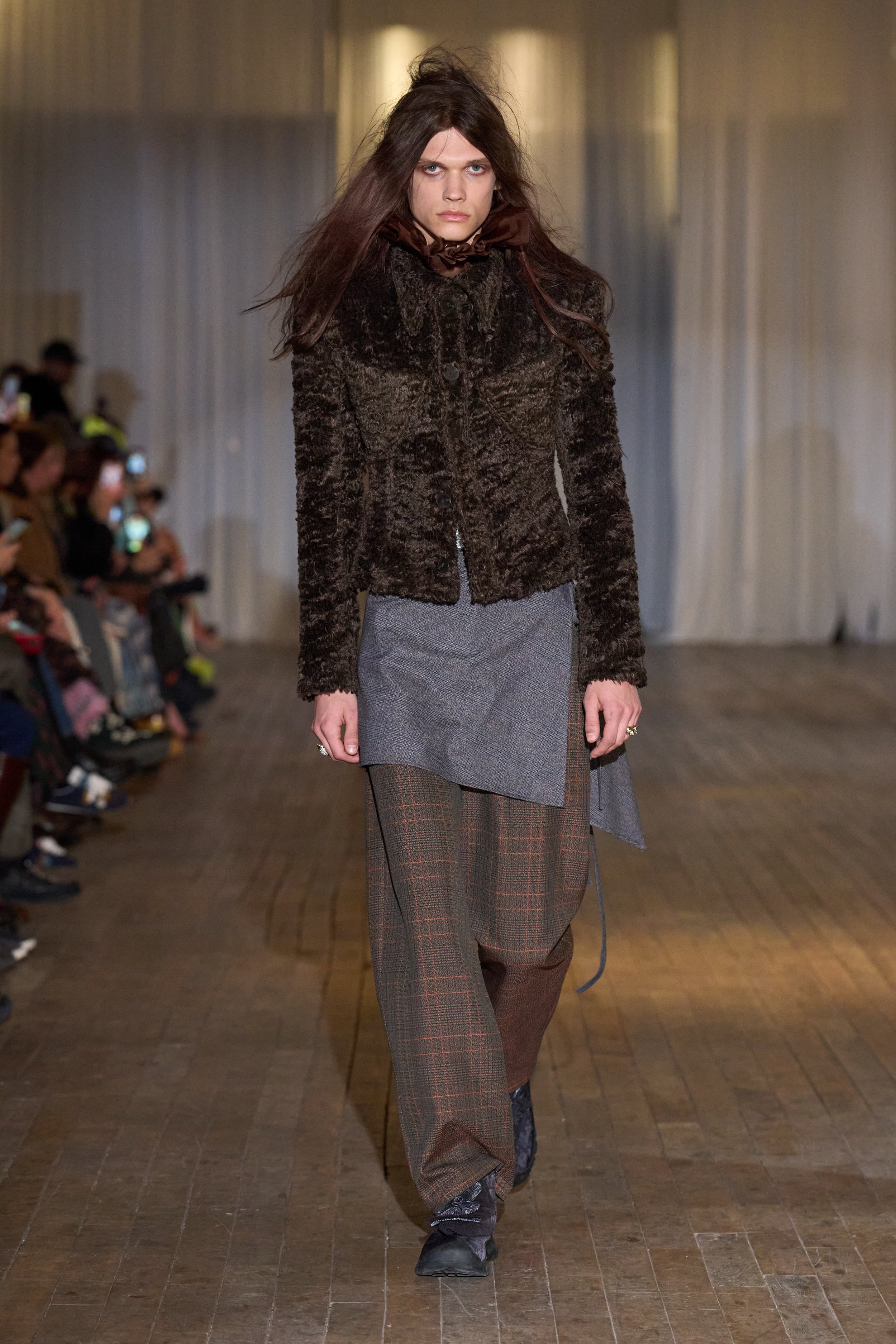
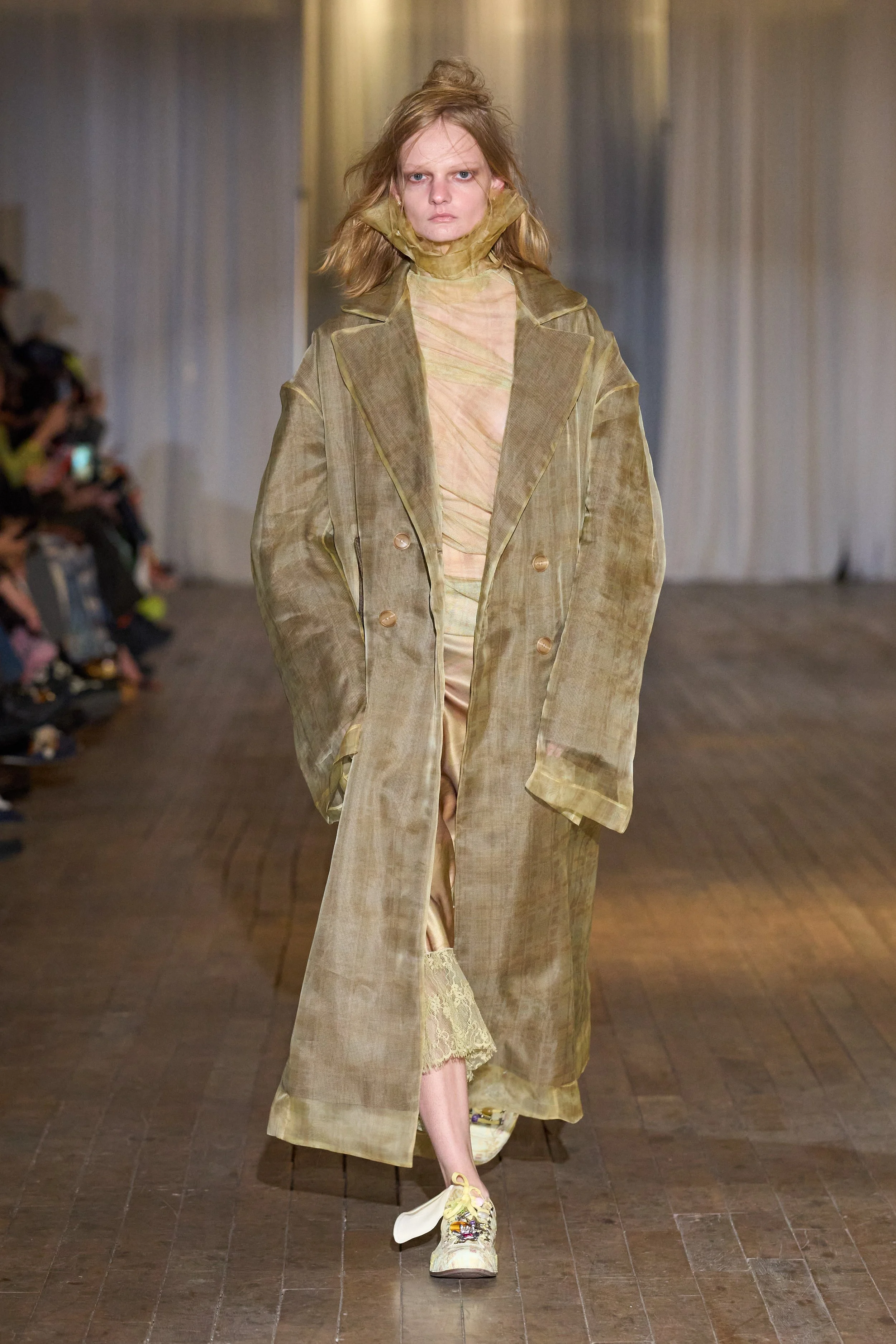
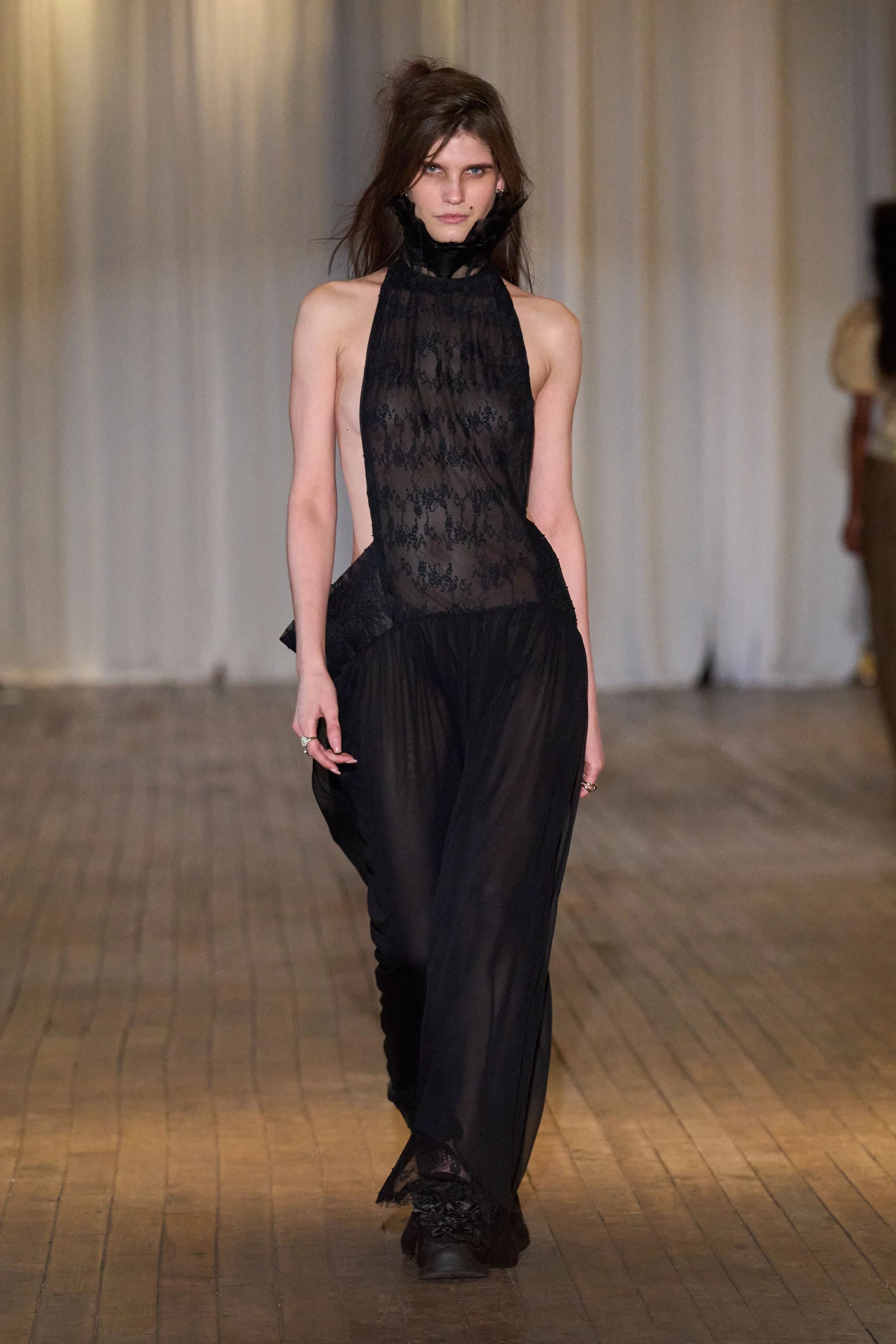
Hillary Taymour titled Collina Strada’s FW26 show The World Is a Vampire, and honestly, rightfully so. The collection leaned into gothic romance and end-times humour, wrapping its Collina girlies in sheer layers, satin-lined fantasy, and collars that rose in armour-like manner. “The world is a vampire, sipping slowly on our warmth and wonder,” the show notes read — and Taymour dressed for exactly that kind of emotional drain.
Victorian flourishes met club-kid styling: deadstock lace dresses, washed chiffon gowns, punky cargos, and flirty slips that felt intentionally wearable beneath all the theatrics. The palette stayed moody — chocolate, mauve, black — with the occasional icy softness, like a snow globe you’d rather live inside.
Sustainability wasn’t a side note but the punchline: “at least our fur is plant-based,” she wrote, introducing BIO FLUFF — a biodegradable faux fur alternative — proving Taymour can be both playful and sharp, even when the world bites back.
TORY BURCH
review by MAREK BARTEK
all images courtesy of TORY BURCH
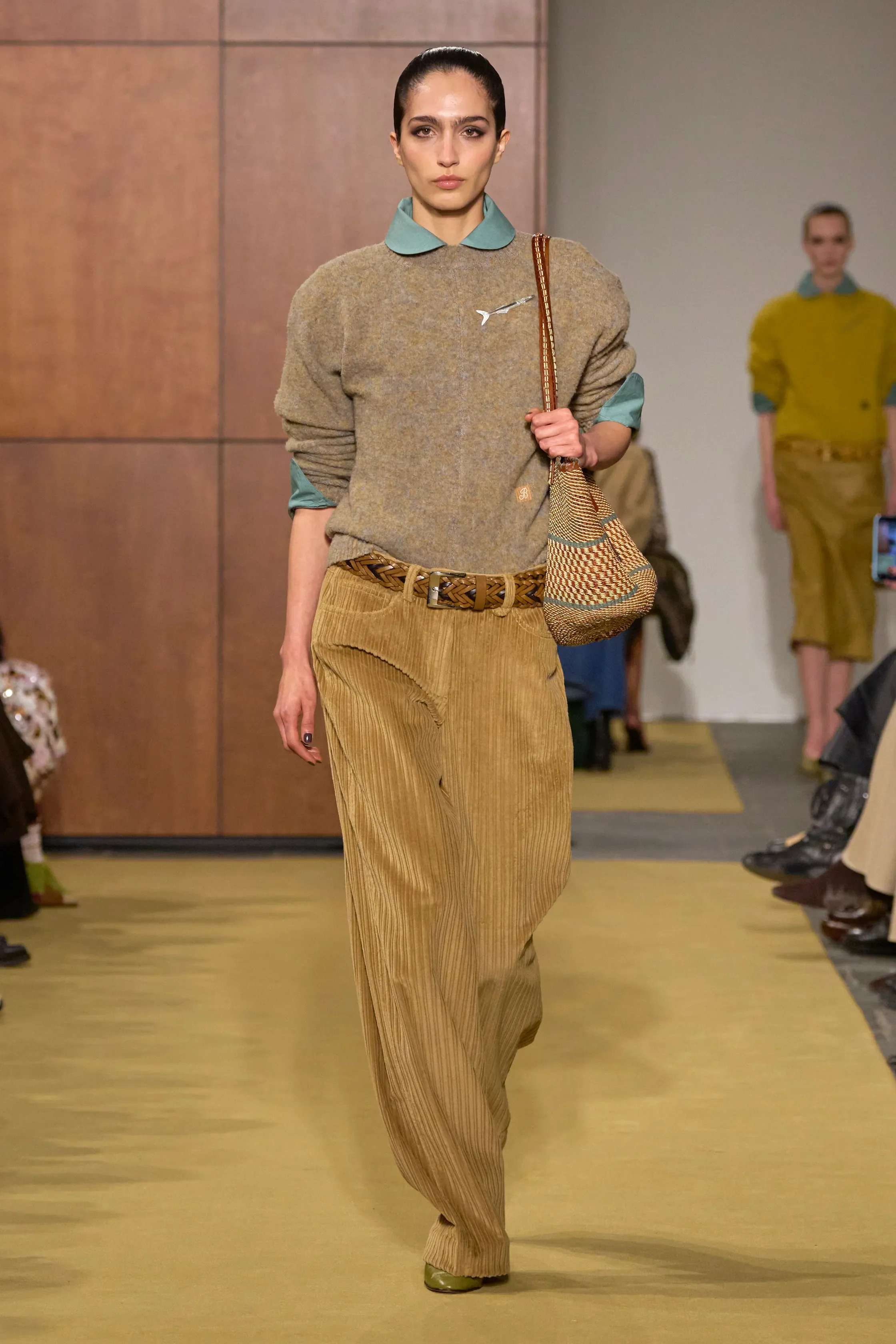
Tory Burch’s Fall collection wasn’t about escapism, but about returning to the things that feel steady. Backstage, she described her starting point as a simple question: “what endures?” In a season shaped by uncertainty, her answer came through in clothes that felt familiar, utilitarian, and yet elevated — including wide-wale corduroy trousers inspired by her father’s, worn with pushed-up sleeves and crisp, everyday ease.
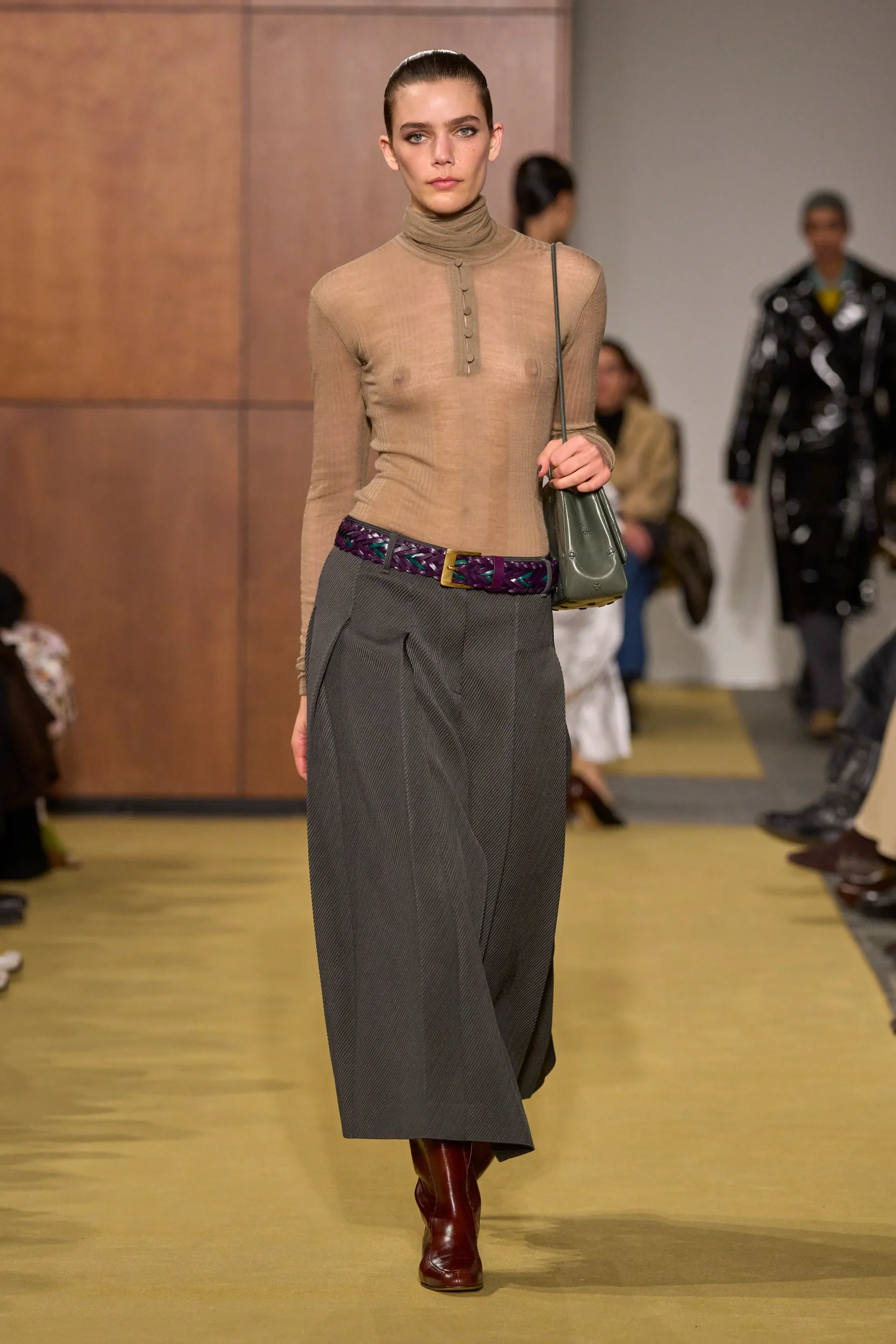
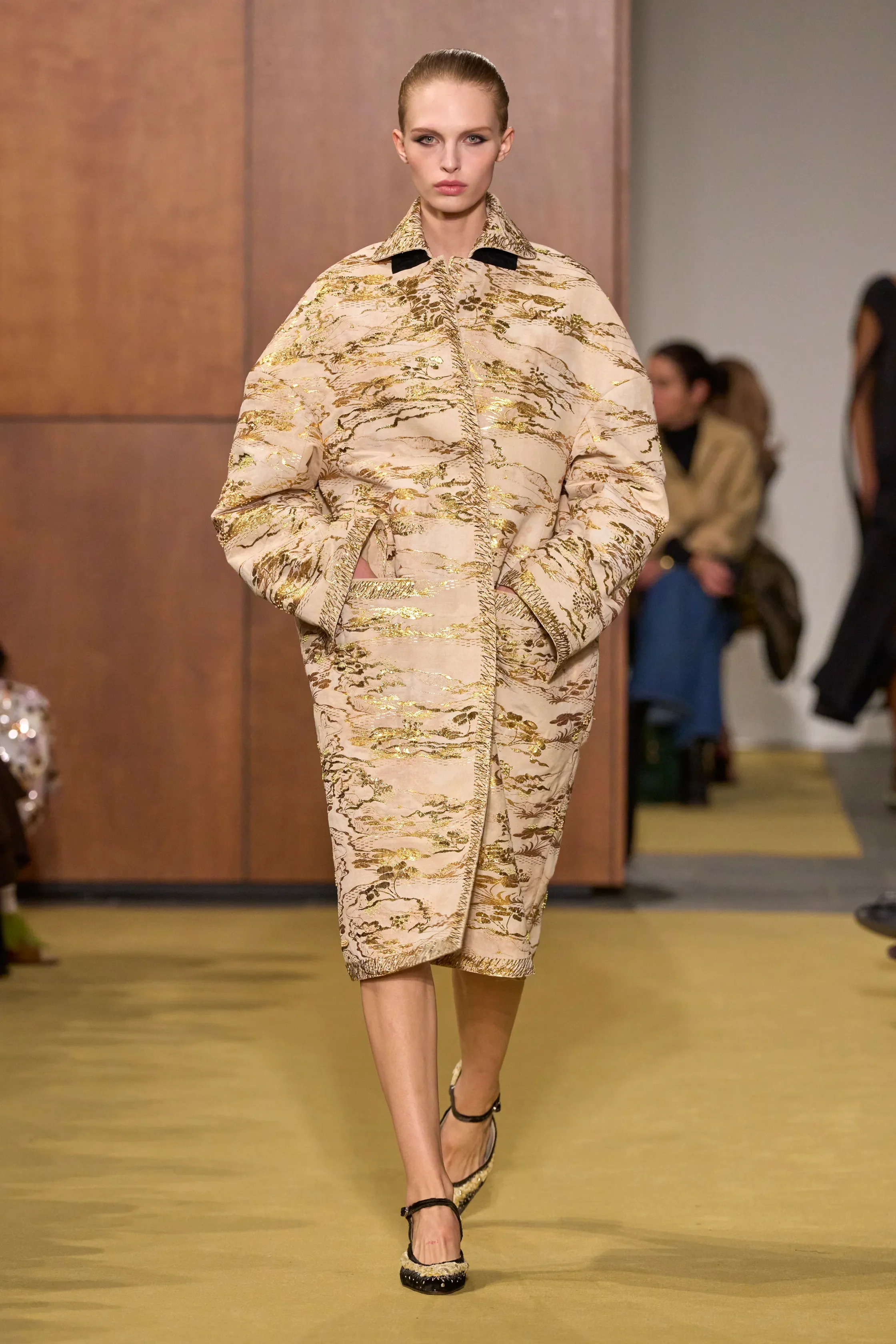
But the collection never slipped into basic. Burch’s talent lies in subtle upgrades: humble knits detailed with gold badla embroidery, cocoon coats cut from metallic-shot landscape jacquards, and accessories that carried personality without becoming costume. Silver fish pins, pendant necklaces, woven raffia-and-leather “Deadhead” bags, and embellished ankle-strap pumps added a touch of charm, while the woven leather belt continued its slow rise as an understated hero item.
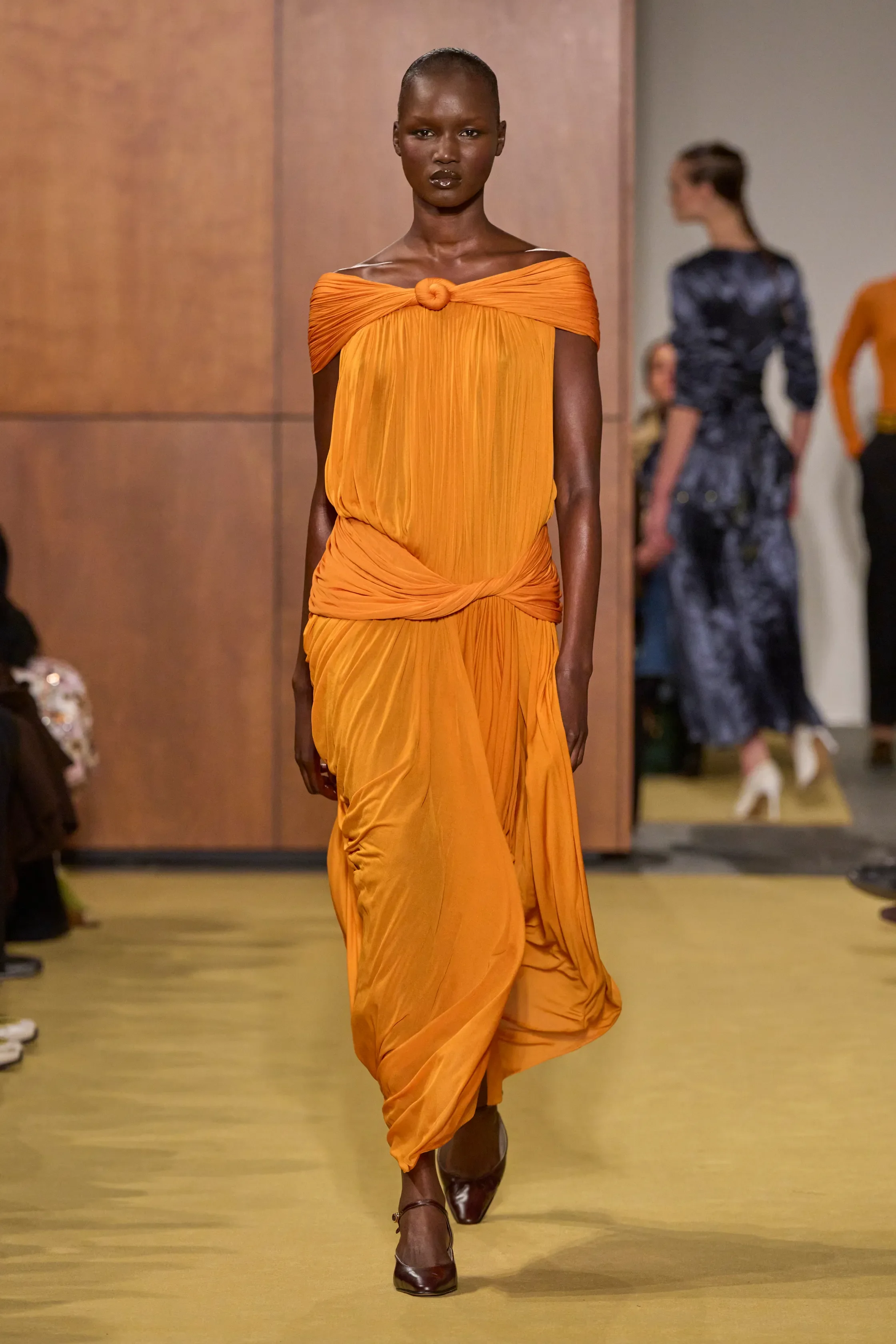
There was also a soft mid-century elegance running through the silhouettes, nodding to Bunny Mellon, from roomy shirtwaist dresses to stonewashed silk shifts cinched with bakelite-like belts. Not every idea landed — the deconstructed drop-waist flapper dresses felt slightly off-key — but the sheer ribbed knits brought everything back into the present. In Burch’s world, endurance doesn’t mean nostalgia. It means refinement and looking ahead.
MERUERT TOLEGEN
review by MAREK BARTEK
all images courtesy of MERUERT TOLEGEN
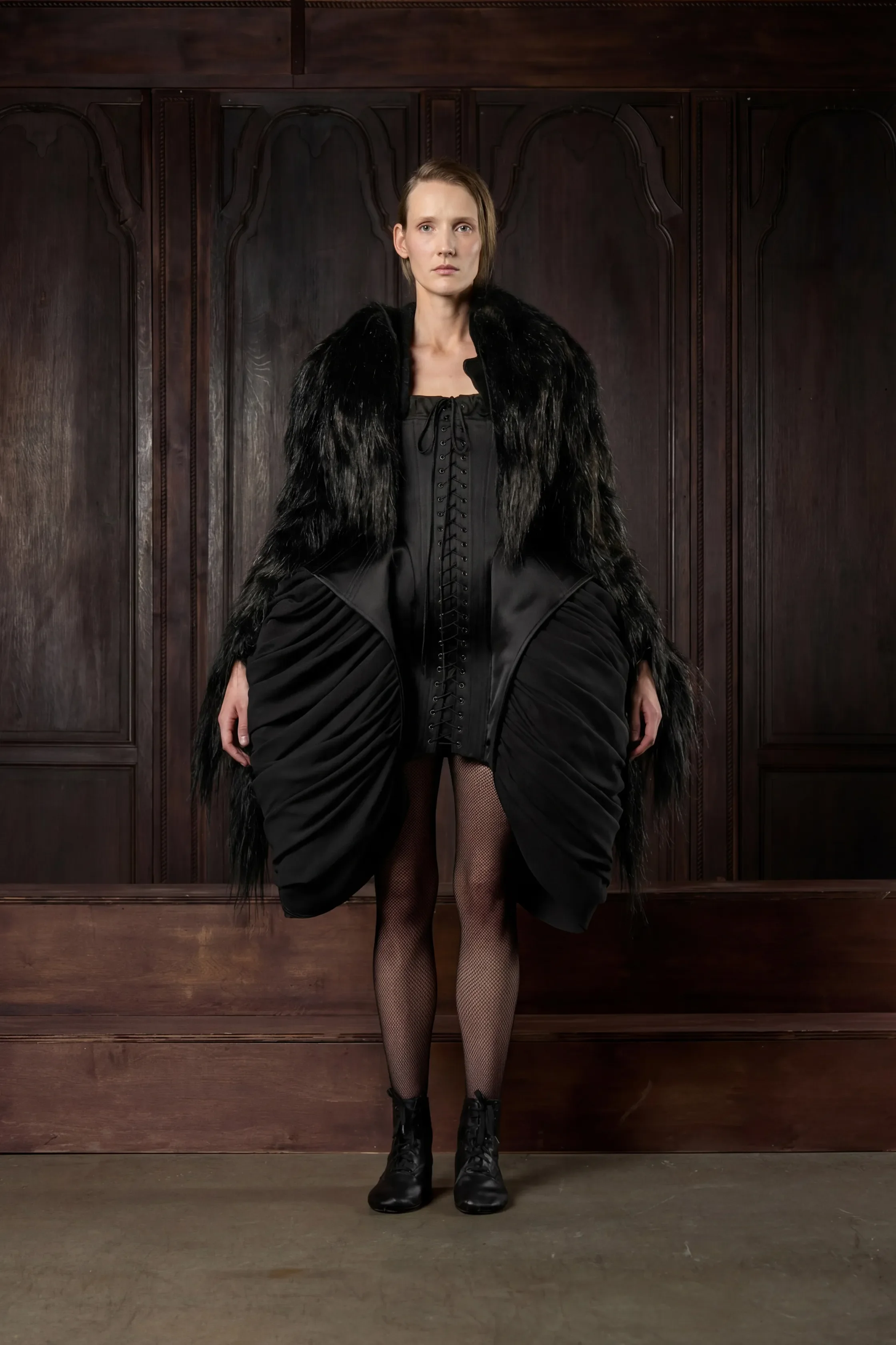
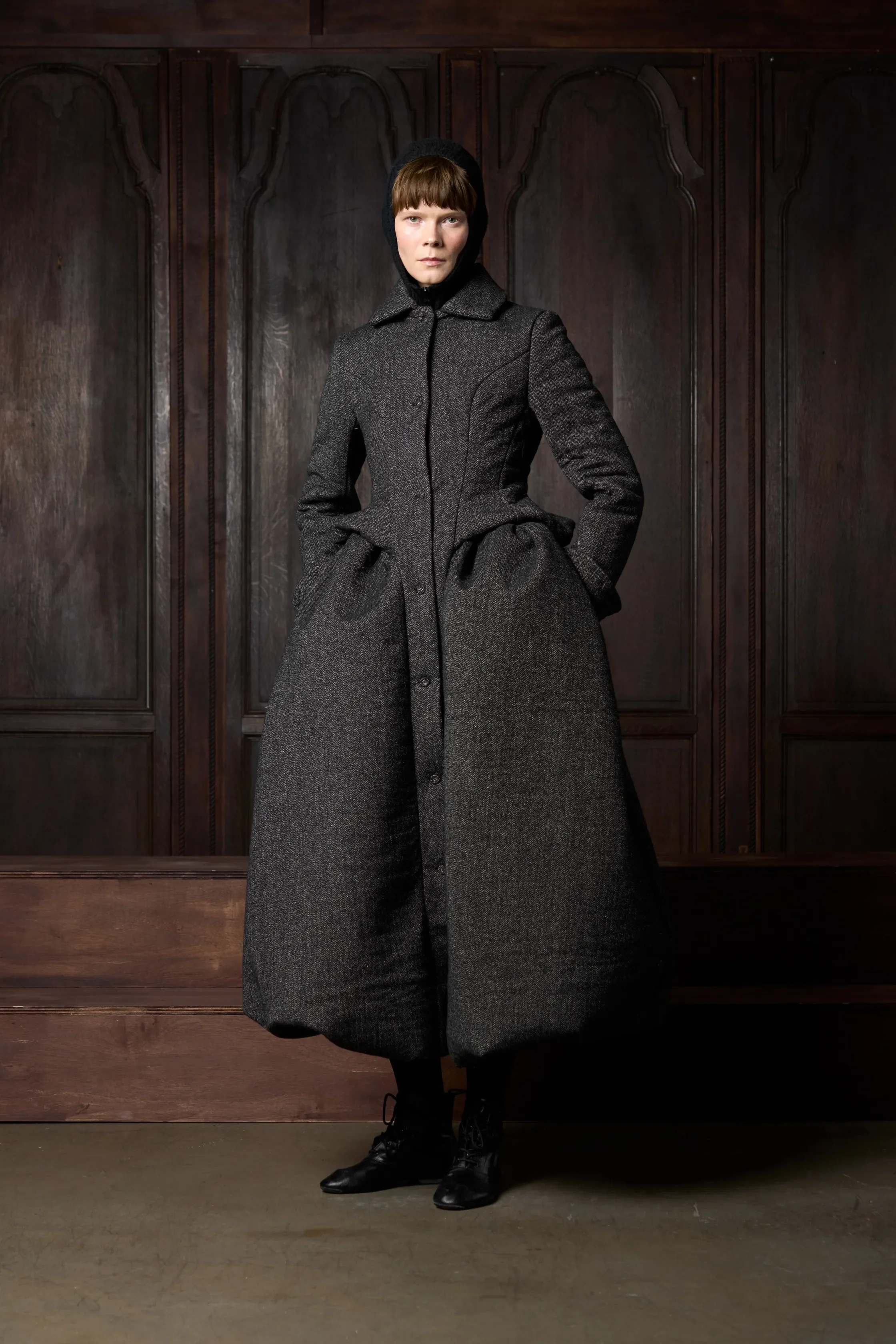
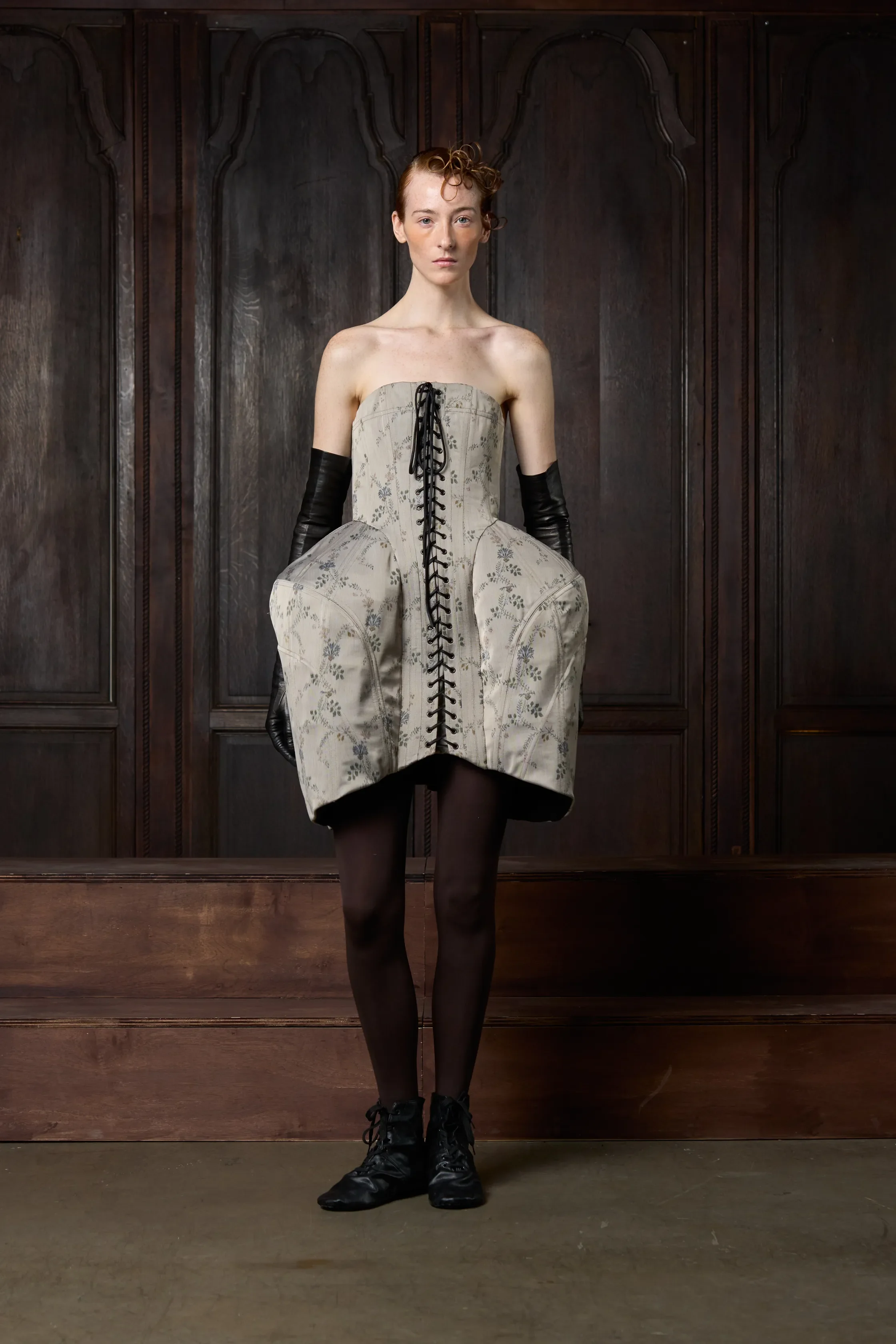
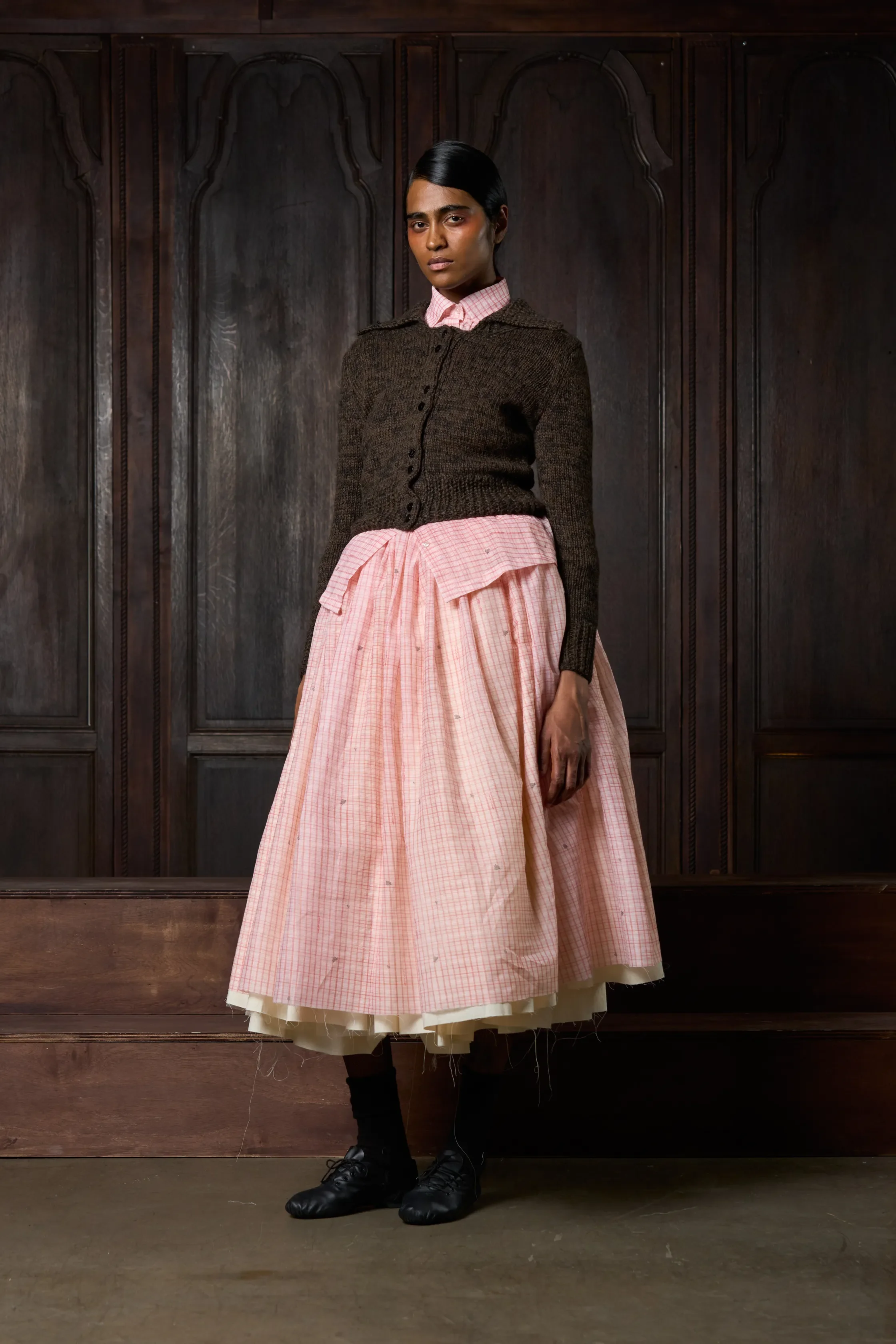
At Meruert Tolegen, atmosphere has always played an important role, and this season the designer leaned fully into it. Her SoHo boutique was transformed into a dimly lit presentation space where models moved slowly across raised platforms, accompanied by violinist Taisiya Losmakova performing fractured interpretations of Mozart and Bach. The setting felt almost theatrical, placing the garments firmly at the center of attention.
On the clothes themselves, Tolegen continued refining the sculptural silhouettes that have become her signature. Corseted dresses with pronounced hips nodded subtly to 18th-century panniers, though they appeared sharper and more deliberate than before. One standout look paired such a dress with a cropped jacket crafted from braided synthetic hair — an unexpected material that added texture and weight.
Elsewhere, softer garments carried more structure than in previous seasons. Knit sweaters, pussy-bow blouses, and wool herringbone pieces suggested a designer growing increasingly confident in her balance between drama and wearability. Tolegen’s vision is becoming clearer — and more assured.
JANE WADE
review by MAREK BARTEK
all images courtesy of JANE WADE
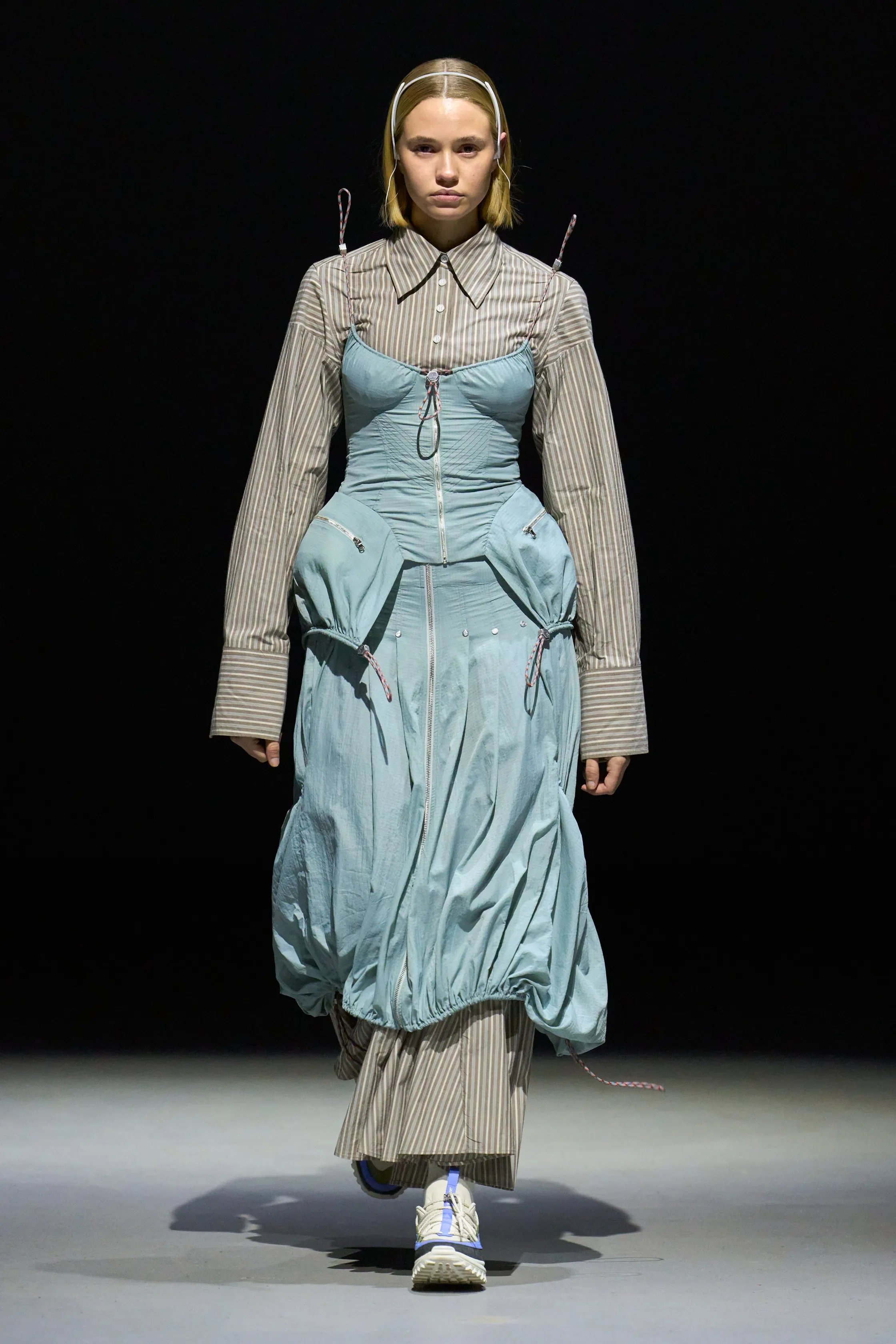
Jane Wade has never been subtle about her fascination with corporate life — but for FW26, she finally let it break. The collection, titled The Summit, played out like a stylish burnout fantasy: the moment someone closes their laptop for the last time, ignores the Slack pings, and disappears into the woods.
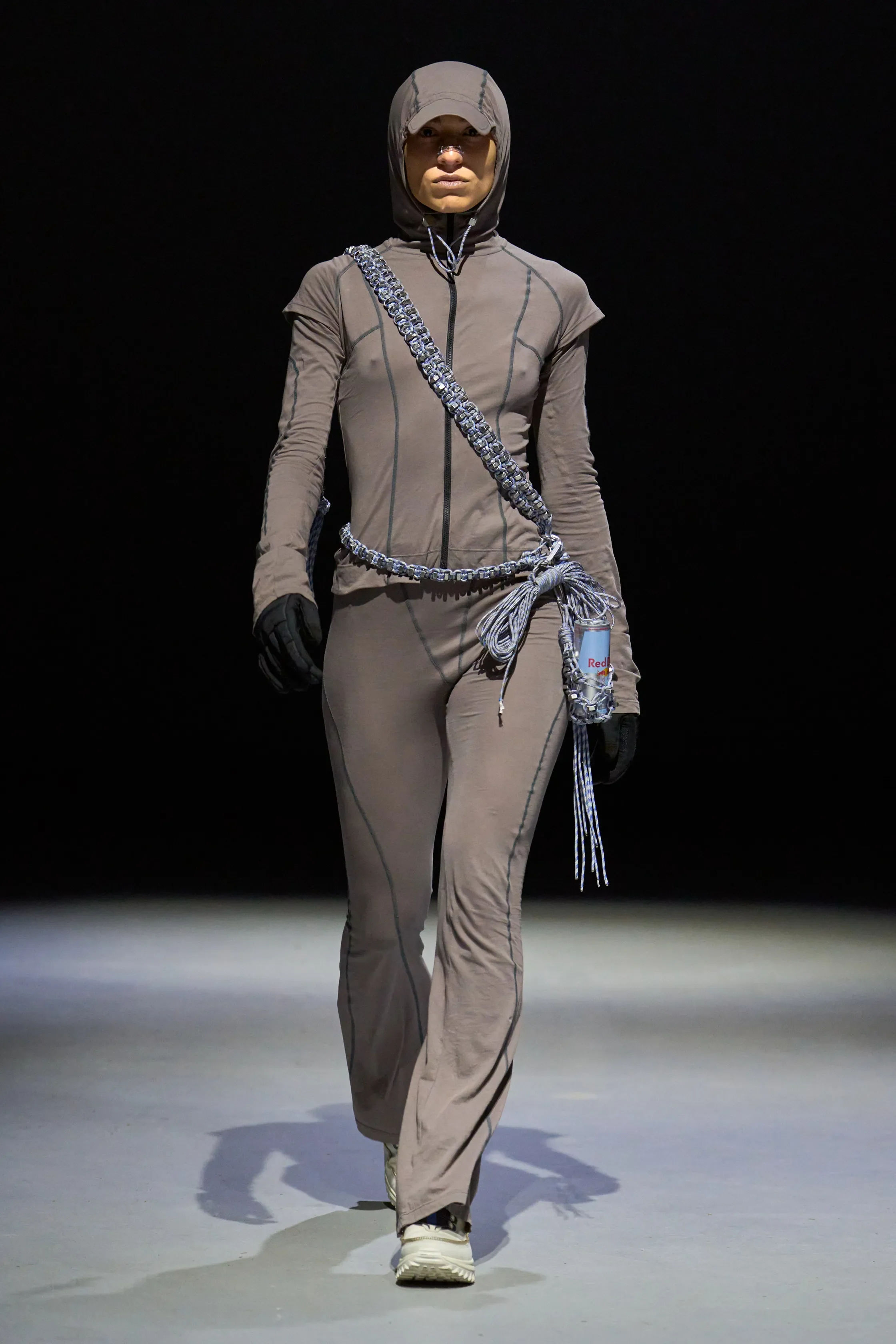
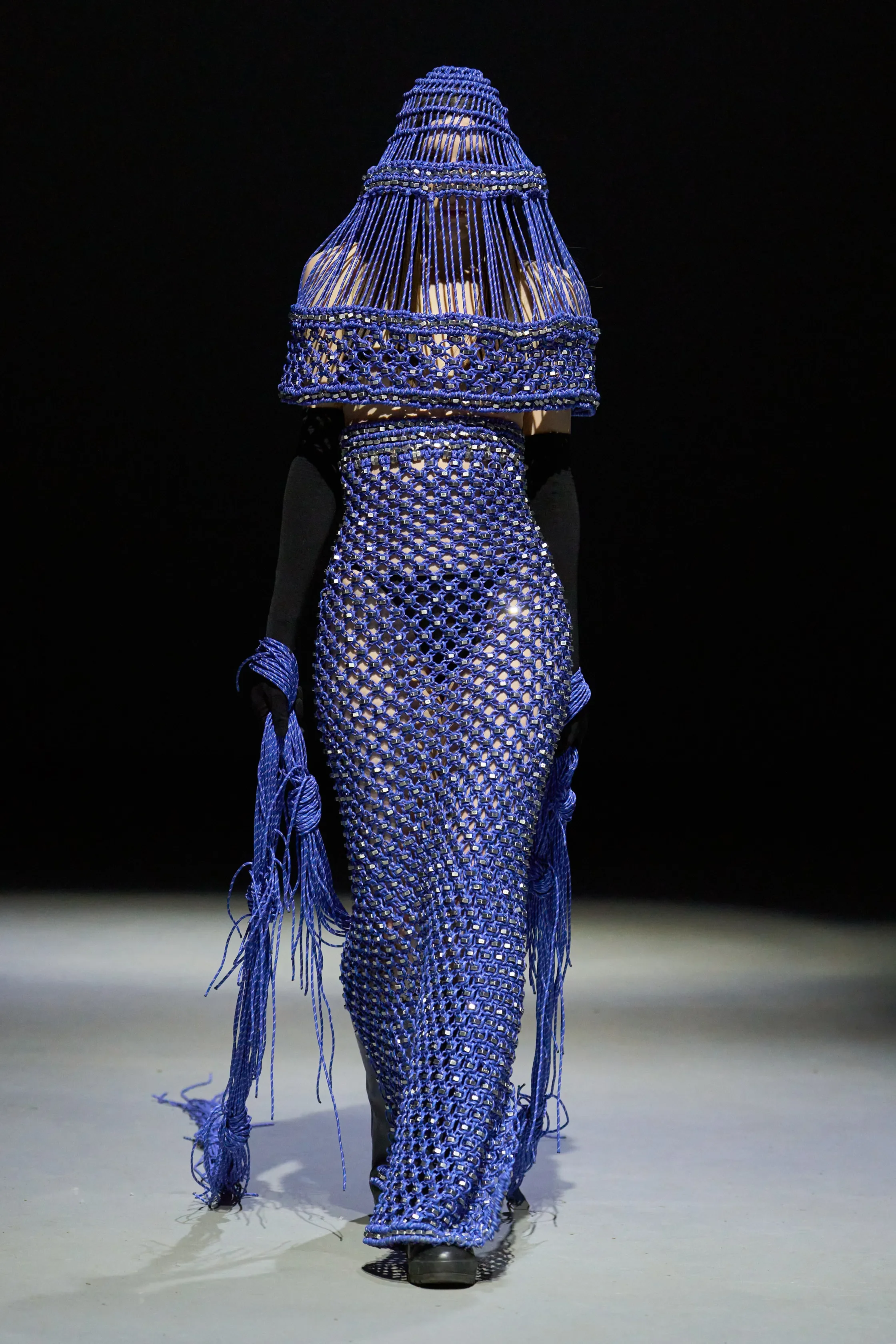
Staged in a Williamsburg warehouse turned into a mossy, tree-lined dreamscape, Wade’s runway felt like a corporate fever dream mid-transformation. “The Summit is this modern monument, a hero’s journey of a woman wanting to escape this corporate machine era,” she said backstage. The characters she meets along the way ranged from ski patrol types in sharp off-white outerwear to strange forest creatures in crocheted paracord gowns and sculptural headpieces.
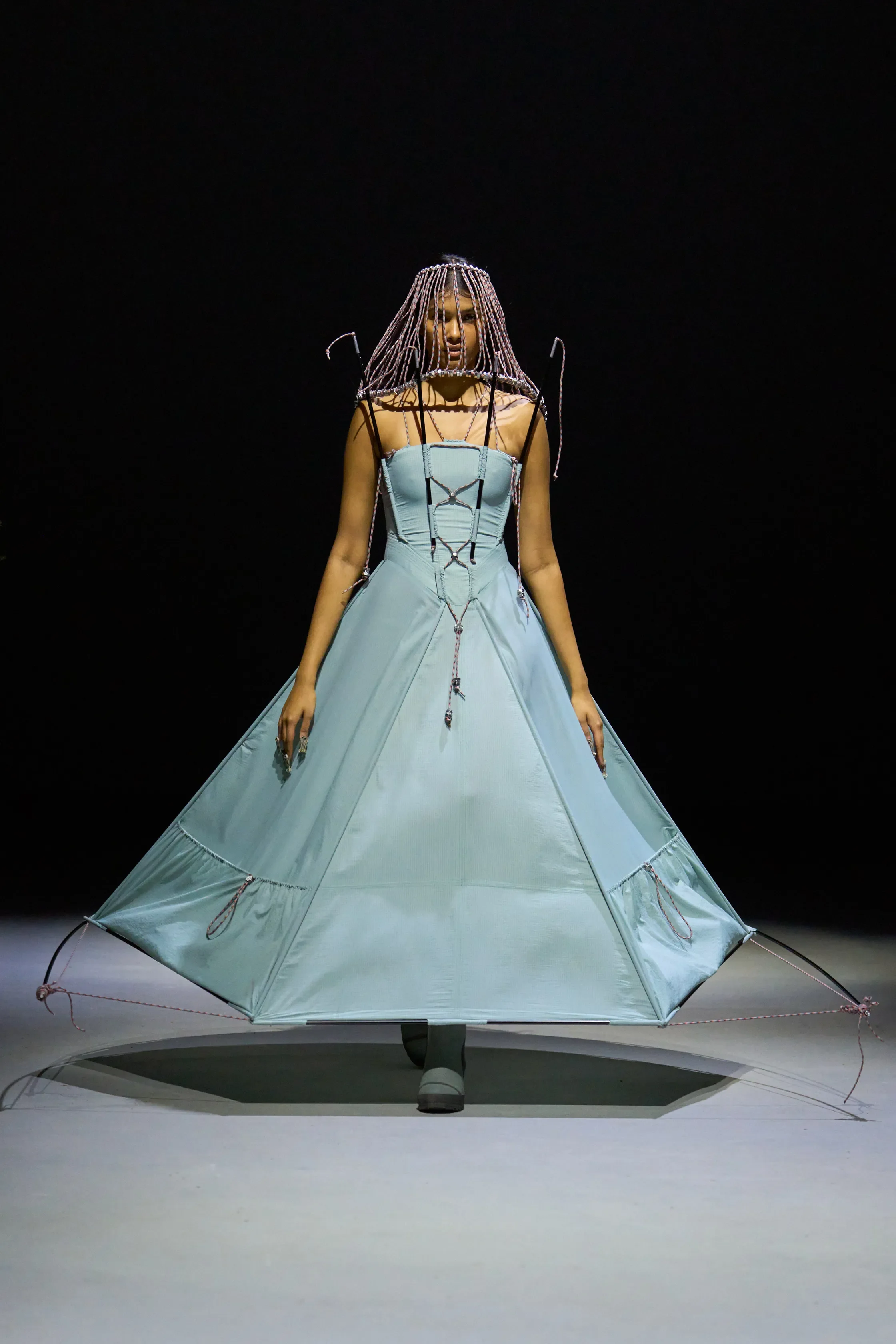
Material-wise, Wade expanded her world. Cotton poplin remained, but nylon and paracord brought a more technical edge. An aqua nylon dress, pulled and shaped by drawcords, was one of the strongest examples: functional, but still strangely sleek. Even the corsetry leaned outdoorsy, constructed with tentpole-like boning that blurred the line between tailoring and camping gear.
It was playful, sometimes bordering on absurd, but never generic. Wade’s corp-GORP universe is becoming sharper each season.