
PARIS FASHION WEEK FALL/WINTER 2026: DAY 1
WEINSANTO
review ANOUK WOUDT
all images WEINSANTO via tag-walk.com
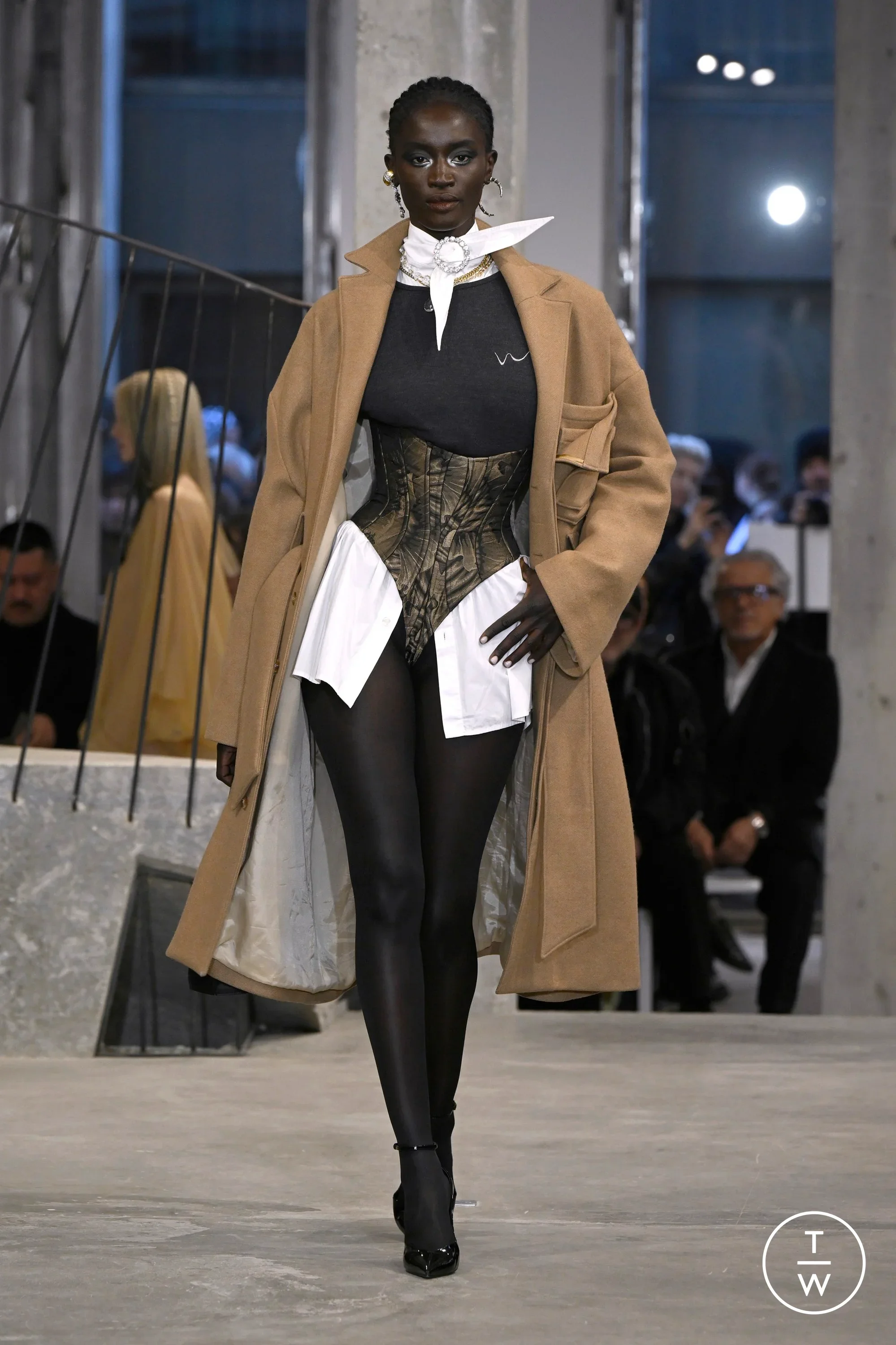
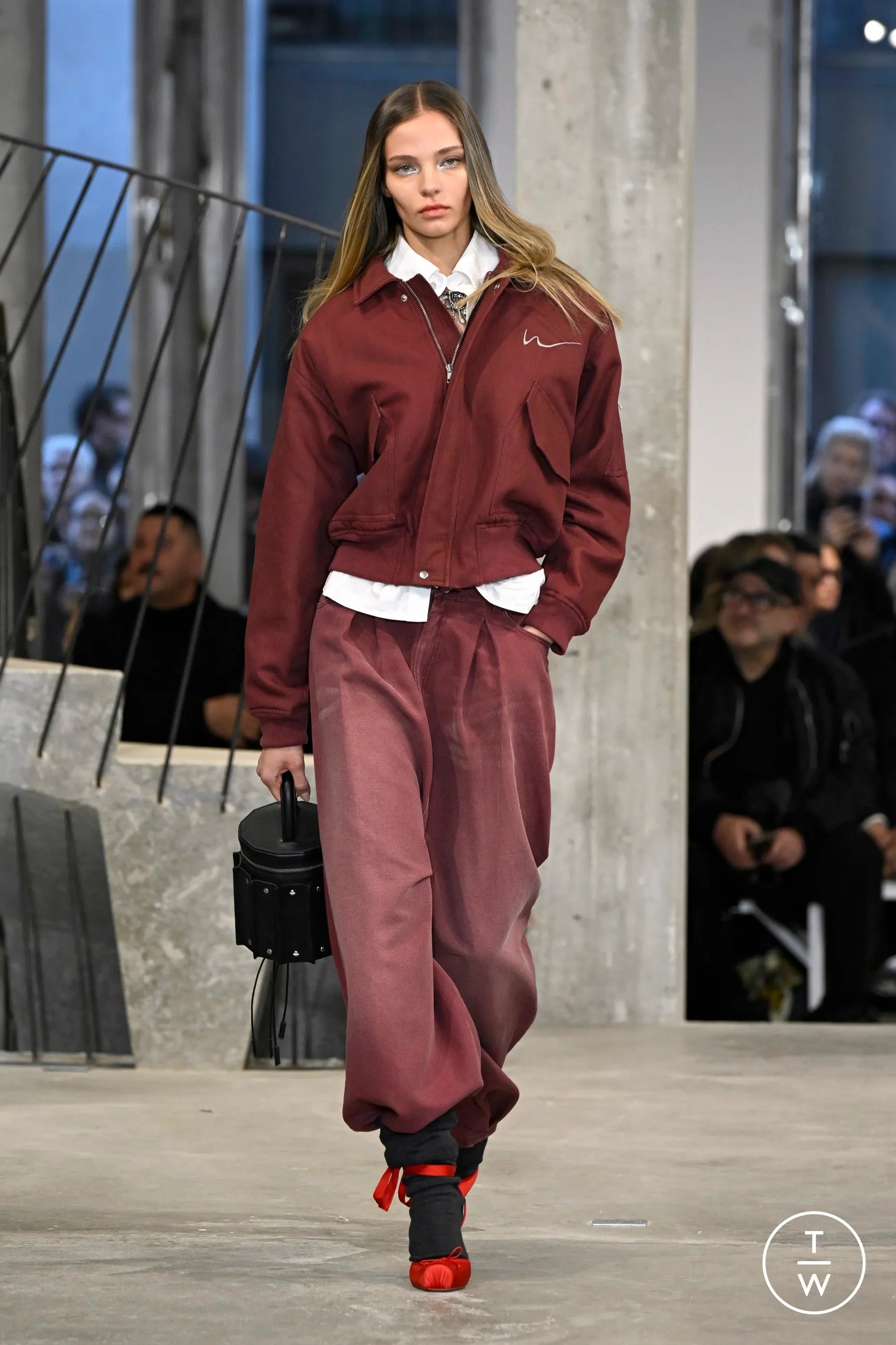
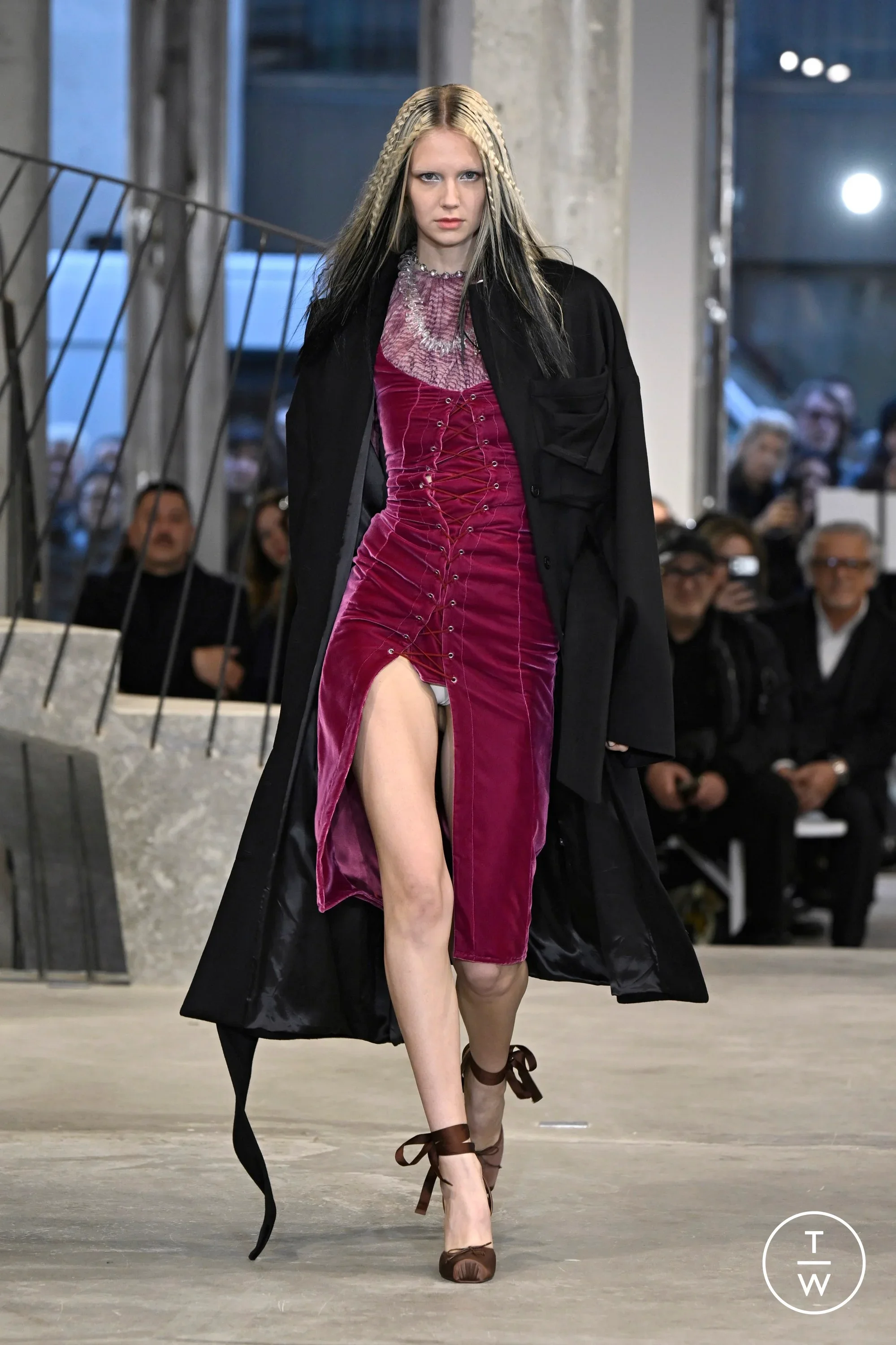
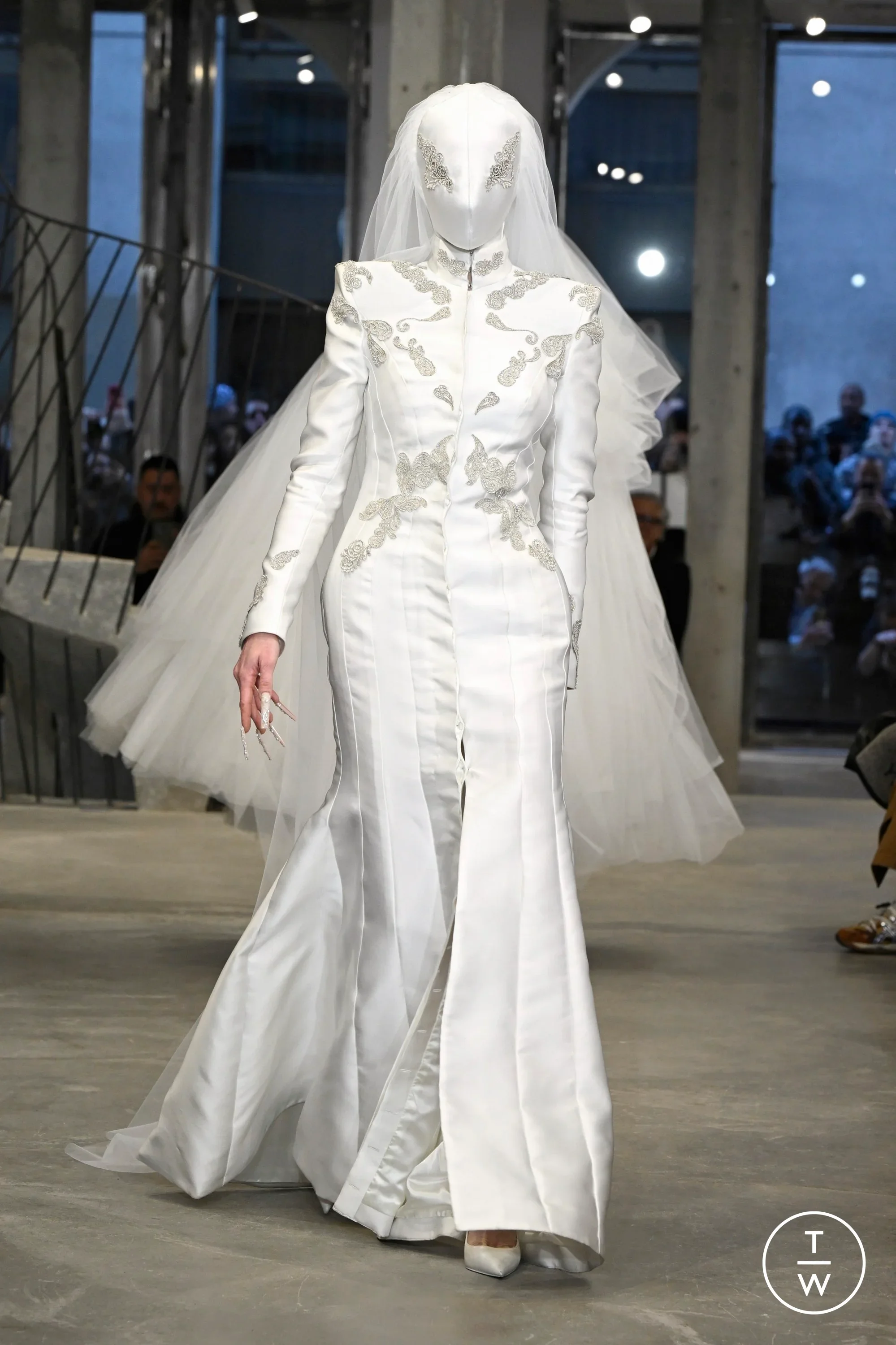
A unique phenomenon occurred while watching Weinsanto’s After Midnight, where you might’ve found yourself questioning if you accidentally stumbled into an arthouse strip tease. Starting with a calm yet distinctly alternative energy, a disruptive force suddenly broke through at the show’s halfway point. Slinking in with patent stilettos, a coated figure made a dramatic entrance, dropping their trench to reveal meshy sheer undergarments and gave a guest a lap dance. This performance intensified with the introduction of another sultry figure, engaging in moves that would’ve been just as fitting in a Berghain dark room. But what else could we expect from Victor Weinsanto? He’s a cabaret club kid and this collection serves as the perfect ode to swanky Parisian nights, in its elegance and its spectacle.
Corsets dominated the collection, melting feminine structures into edgy ravewear with details that would turn every mall goth’s head. Ending with an abrupt tulle flurry followed by a masked bride decorated in silver ornaments, the pieces circled back to the sophisticated airiness it had once invoked. This balance of intensity and elegance was central to Victor’s vision for the show, allowing us to join him on his nocturnal journey, from dirty martinis to even dirtier vodka Redbulls.
BURC AKYOL
review by FRANCESCO PIZZUTI

all images courtesy of BURC AKYOL
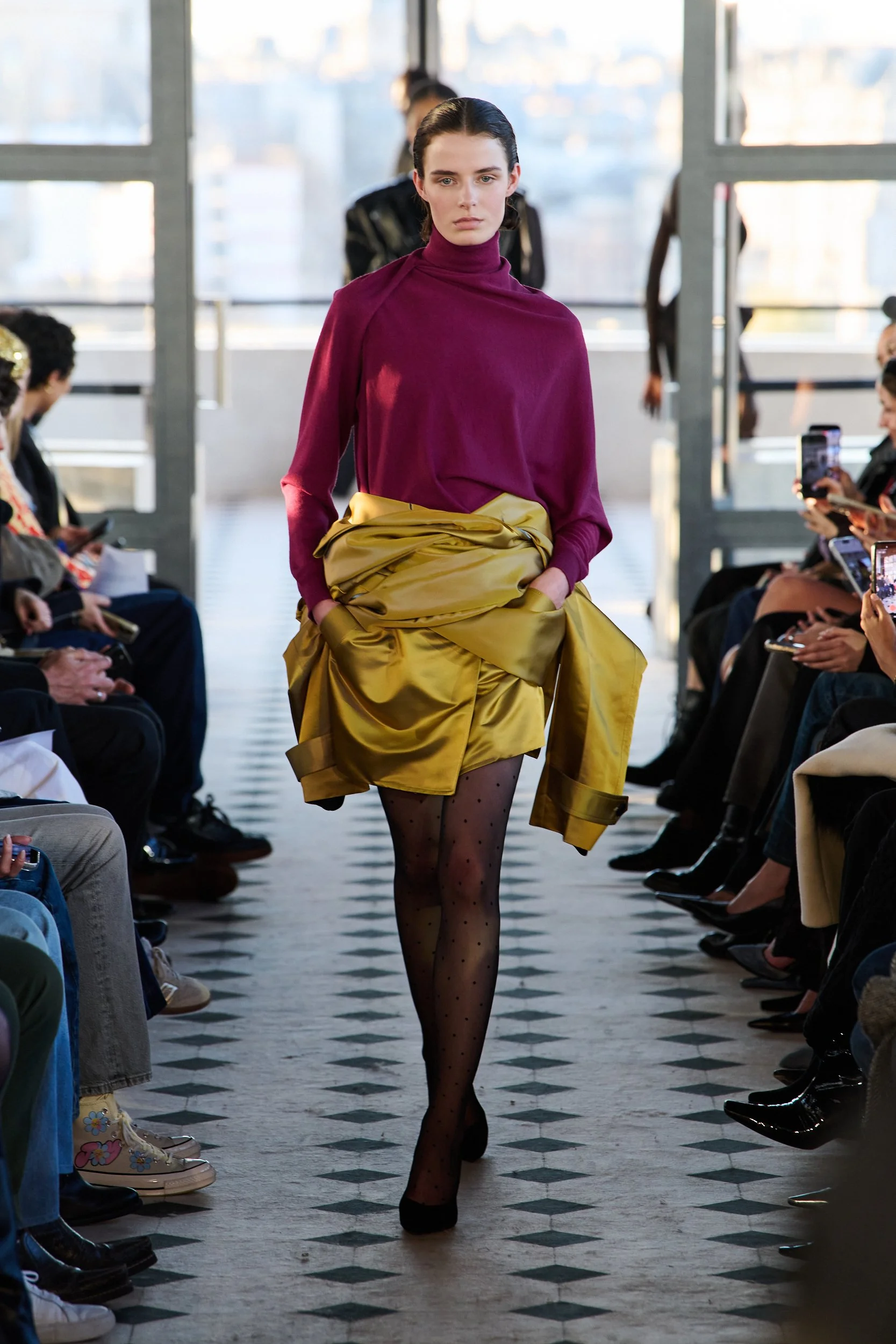
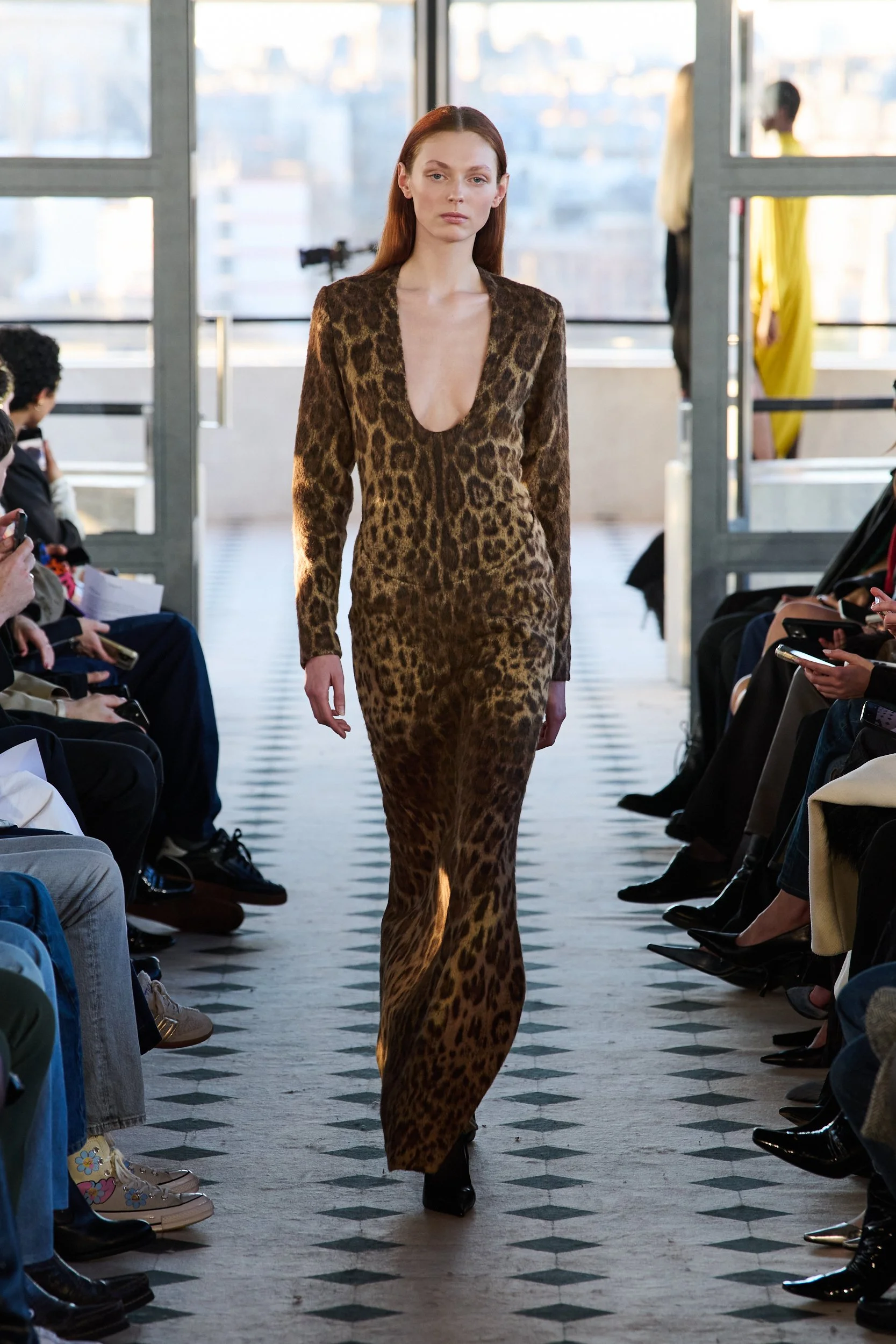
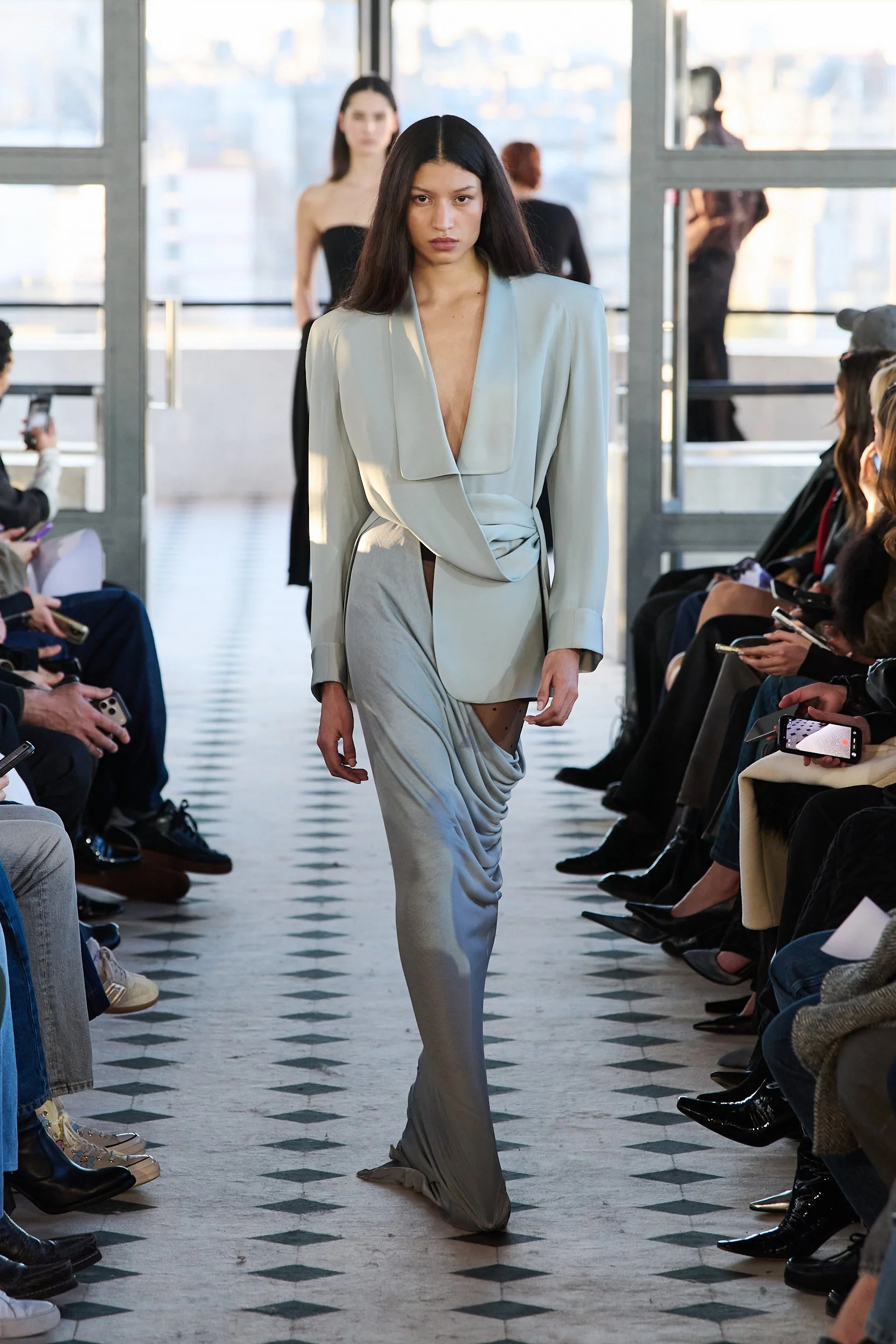
Clothes were pinned, pulled, weaved and swirled in Burc Akyol’s fall 26 show. The collection, titled La Collectionneuse is an ode to Paris — Akyol’s beloved city — to memories, in their fragility, in their resilience, to feelings that stick with oneself, that make their way into one’s identity, that become codes, and to the obsession with these codes.
The garments were at times tough, at times lighter, but always in movement, almost as if they only existed in that movement. A cropped coat twisted into a bow required a hand in the pocket, on the edge of undoing itself as one let go or stopped; elusive, like Paris.
The analogy, stated in the press notes, of strolling down Paris at dawn after a long night, was quietly felt throughout the collection. As clothes have lived through the night, they become evocative, they gain movement, their codes change, and they change who is wearing them, instilling freedom and a stronger sense of self. It’s like a way more chic walk-of-shame, or perhaps, a stride of pride.
The collection displayed confidence and freedom, with very wide shoulders and elongated necks. The signature element of this collection was these heavy strips of fabric that the clothes extended into from one side or the other. This was found in the cropped coats, where the strips were tied into a bow or twirled loosely around the torso, but also in lighter jackets and blazers, where they were left freer. Dresses and other garments were pulled in different directions, forming folds and shapes in the fabric that added to the Parisian eroticism.
JULIE KEGELS
review by FRANCESCO PIZZUTI
all images courtesy of JULIE KEGELS
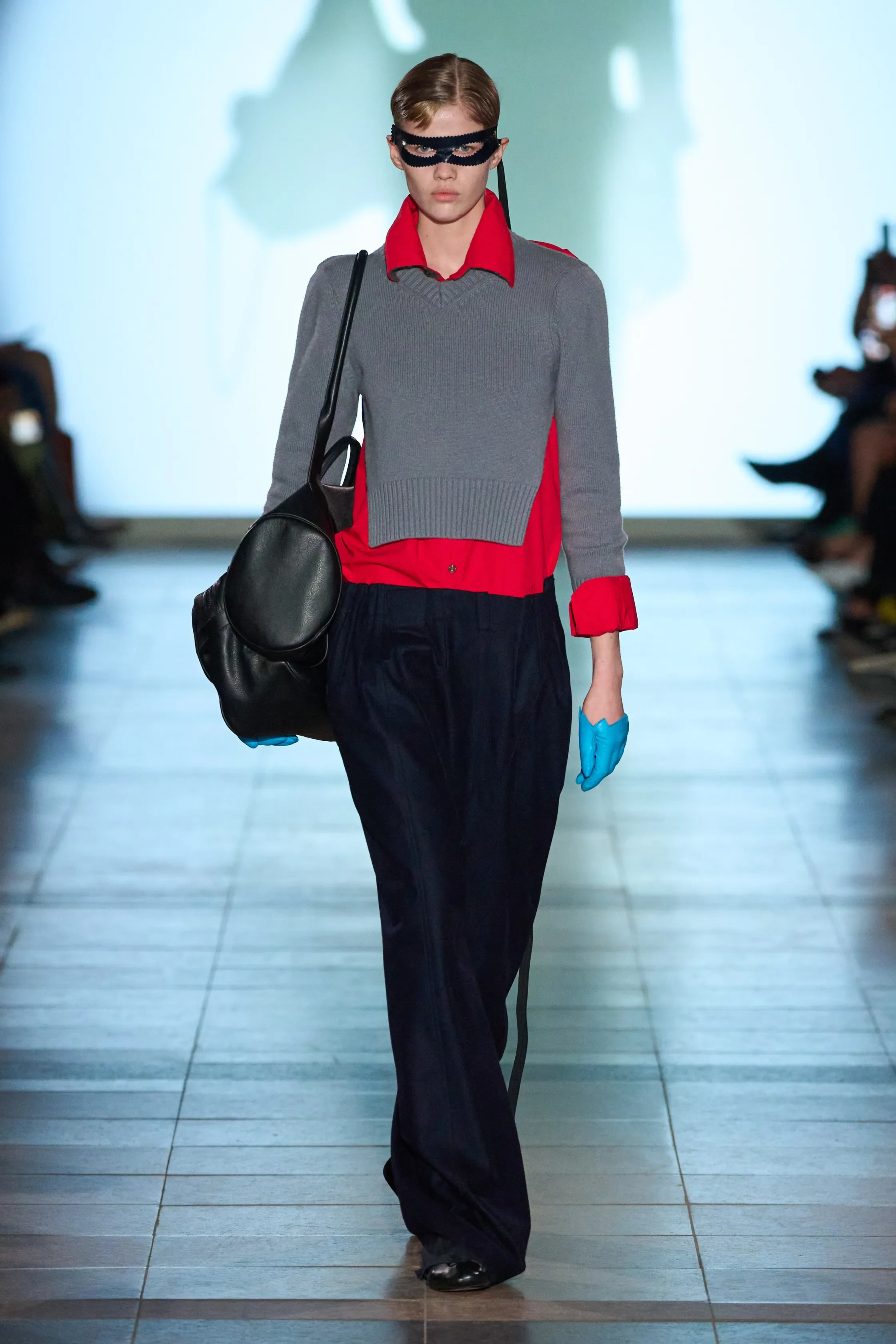
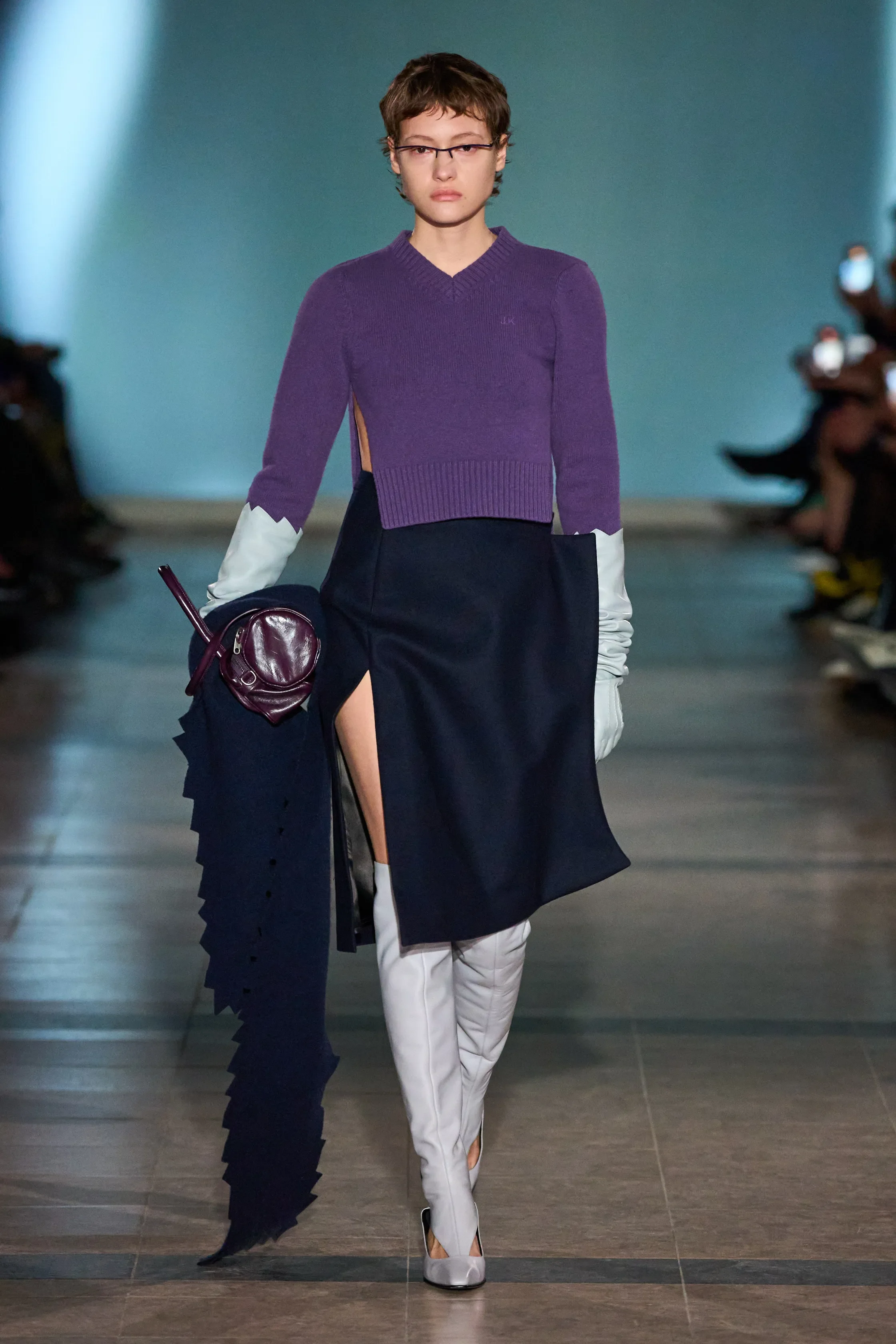
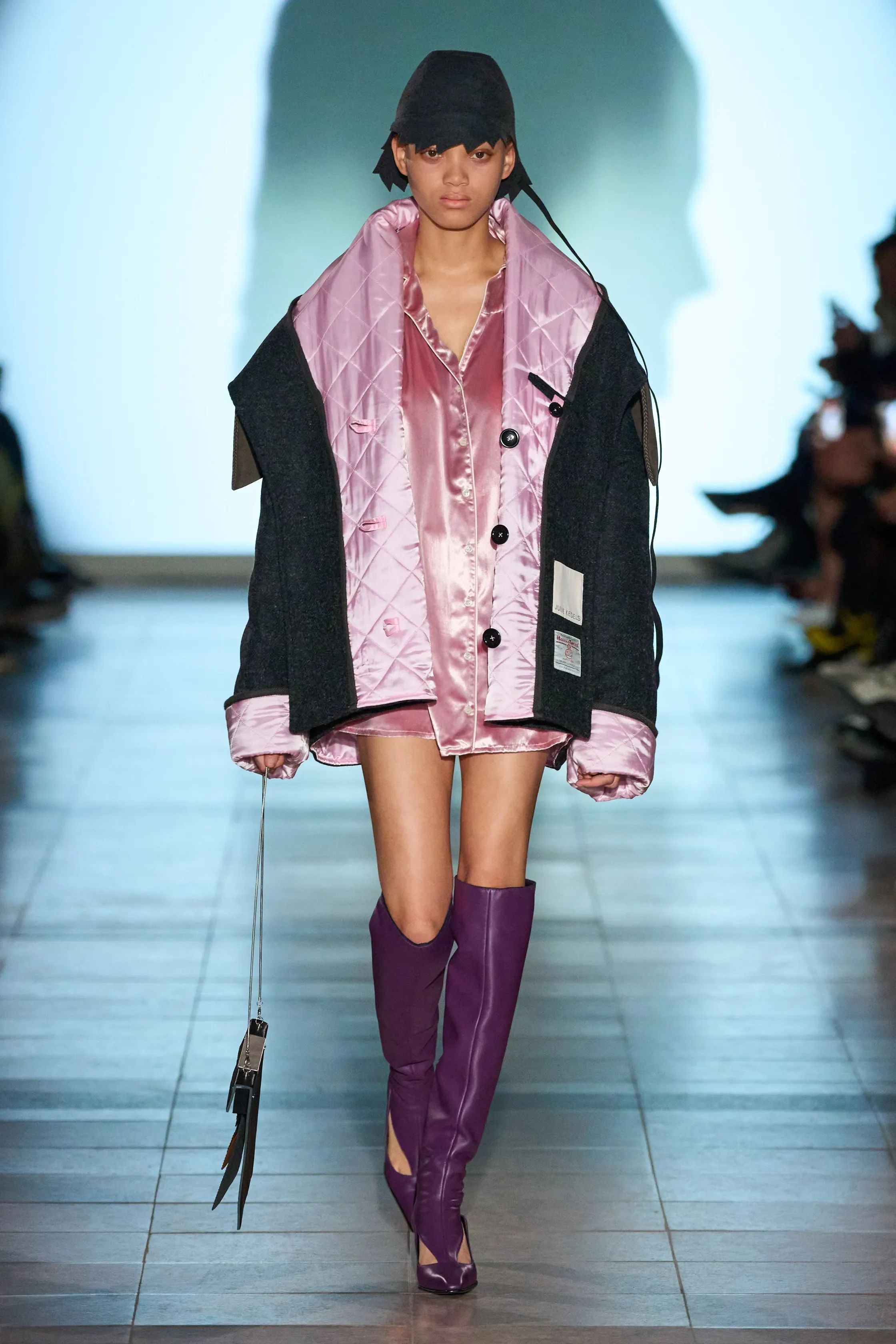
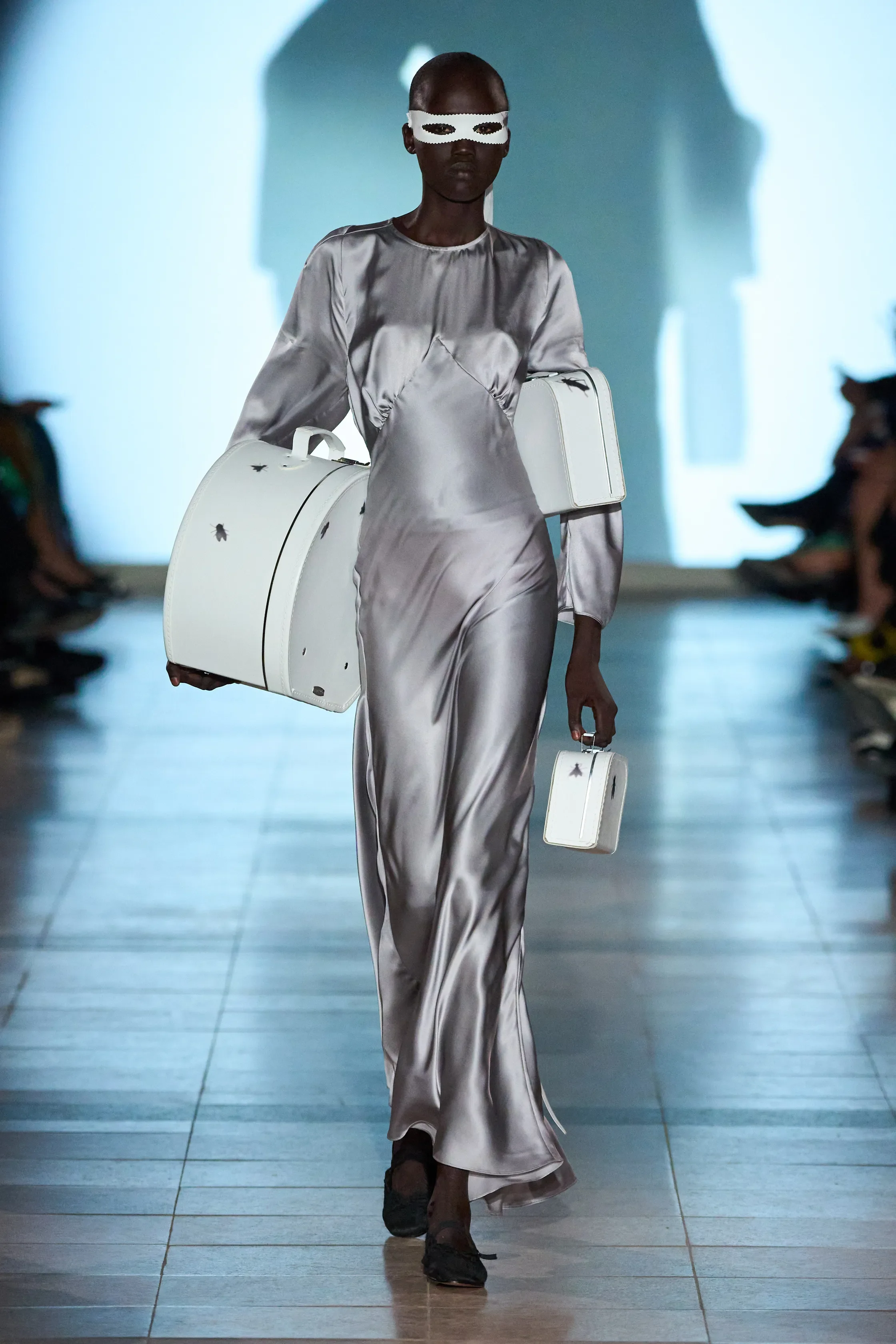
Fashion has often played with light and shadow, but Julie Kegels approached this relationship with unusual materiality this season. In her Fall ’26 show in Paris, she didn’t just cast shadows on the clothes; she constructed shadows and clothes around each other. Garments were engineered to resemble silhouettes themselves, creating a rupture between body and outline, between the nature of the piece and its external projection, highlighting their division, their contrast. The collection confronted the audience with the question: Who really is your shadow?
Models walked in front of projected shadow shapes, which, however, didn’t always align with the model’s actual movements. The effect was a clever visual reminder that perception is easy to manipulate, especially in a hyper-visible culture where self-editing has become intrinsic. Kegels cited the idea of aura as inspiration for this collection, nodding to Andy Warhol’s observation that everyone has one until they open their mouth.
One sequence was particularly sharp: a model came out in a white silk gown paired with an armful of white bags and hat boxes, with the following look — a grey tailored wool coat — echoing the exact silhouette of those accessories, sewn into the garment, so that both looks appeared identical in shadow.
Through the collection, the 26-year-old designer cleverly showed fashion’s ramifications at the point of contact between performance and vulnerability.
HODAKOVA
review by MAREK BARTEK
all images courtesy of HODAKOVA
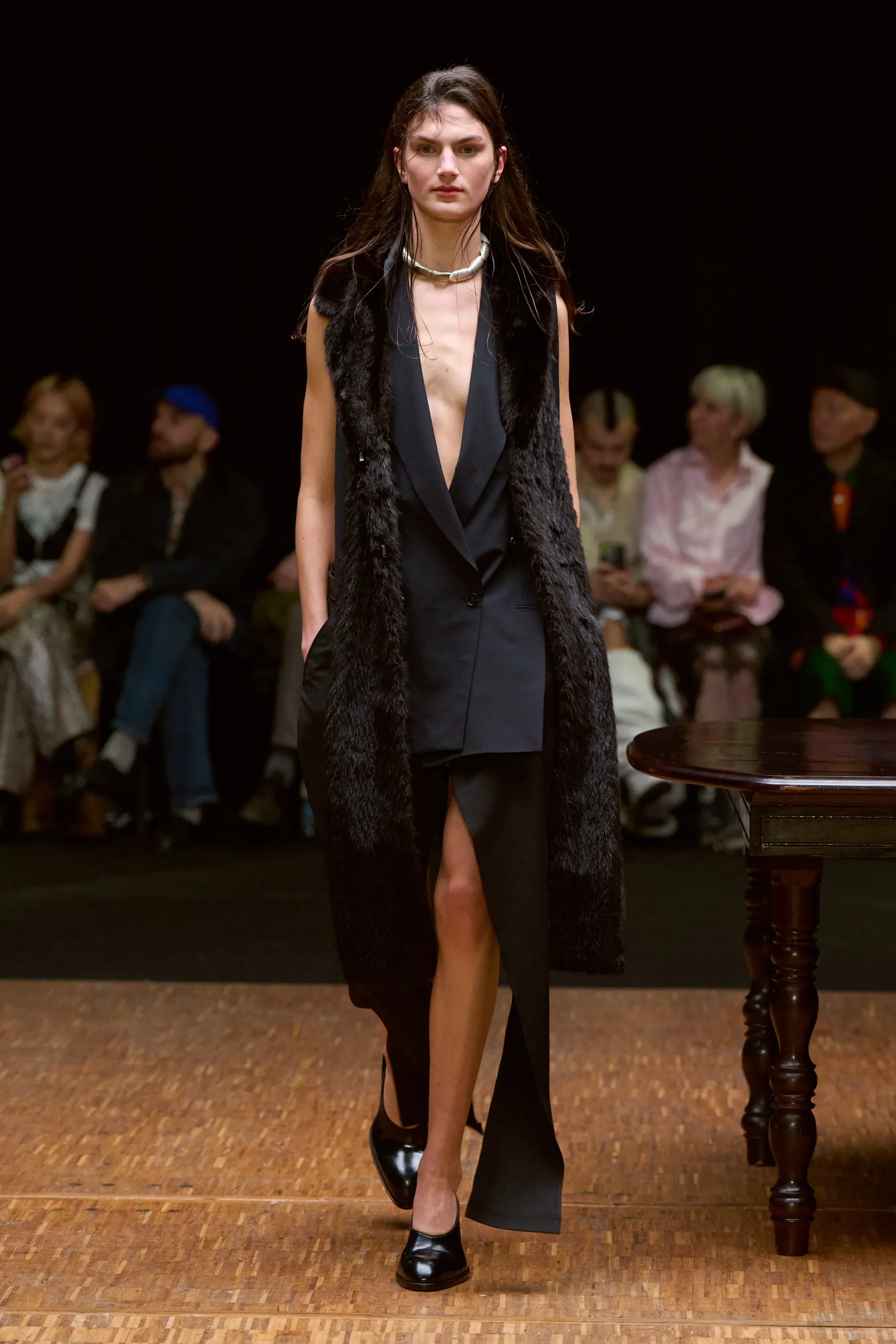
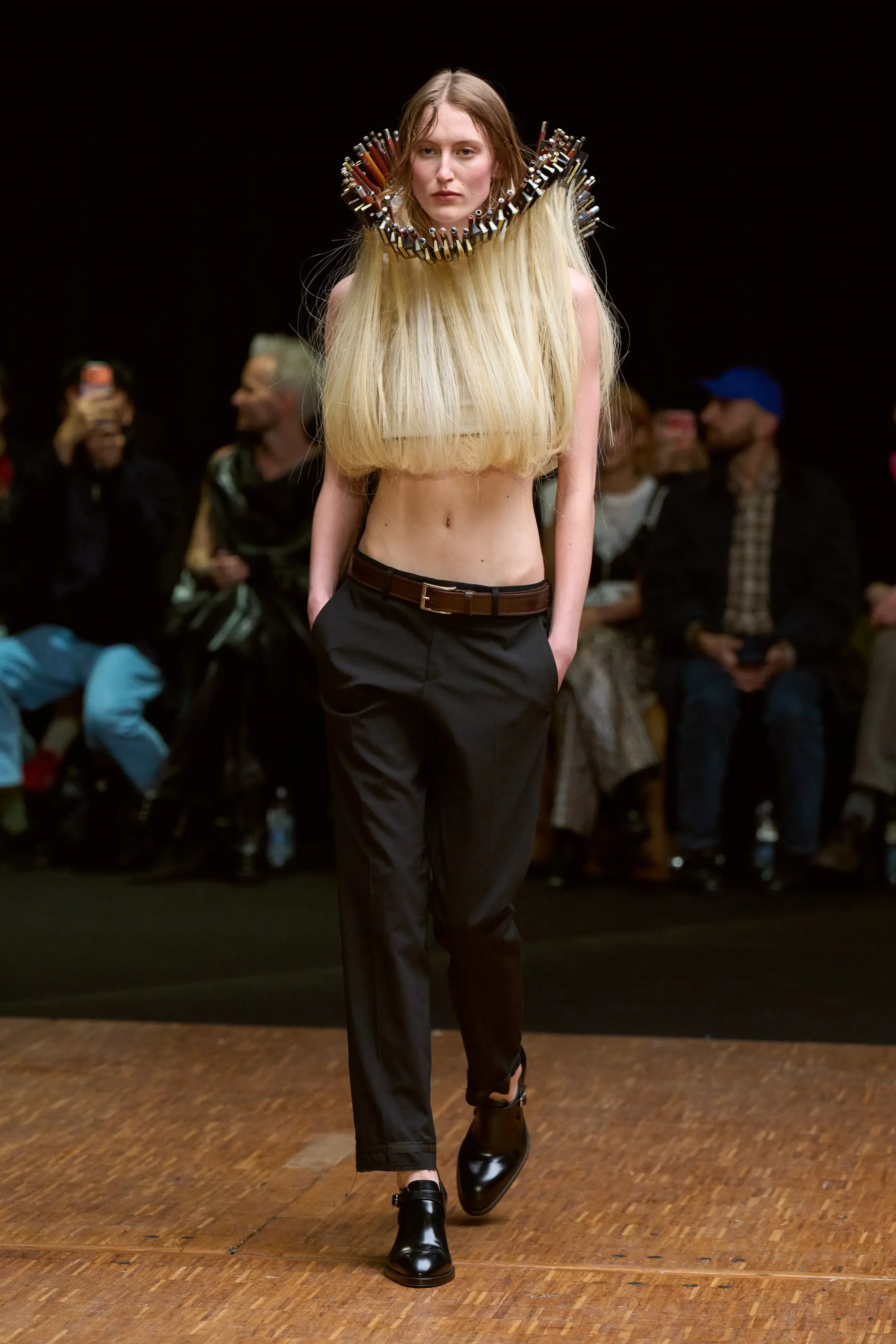
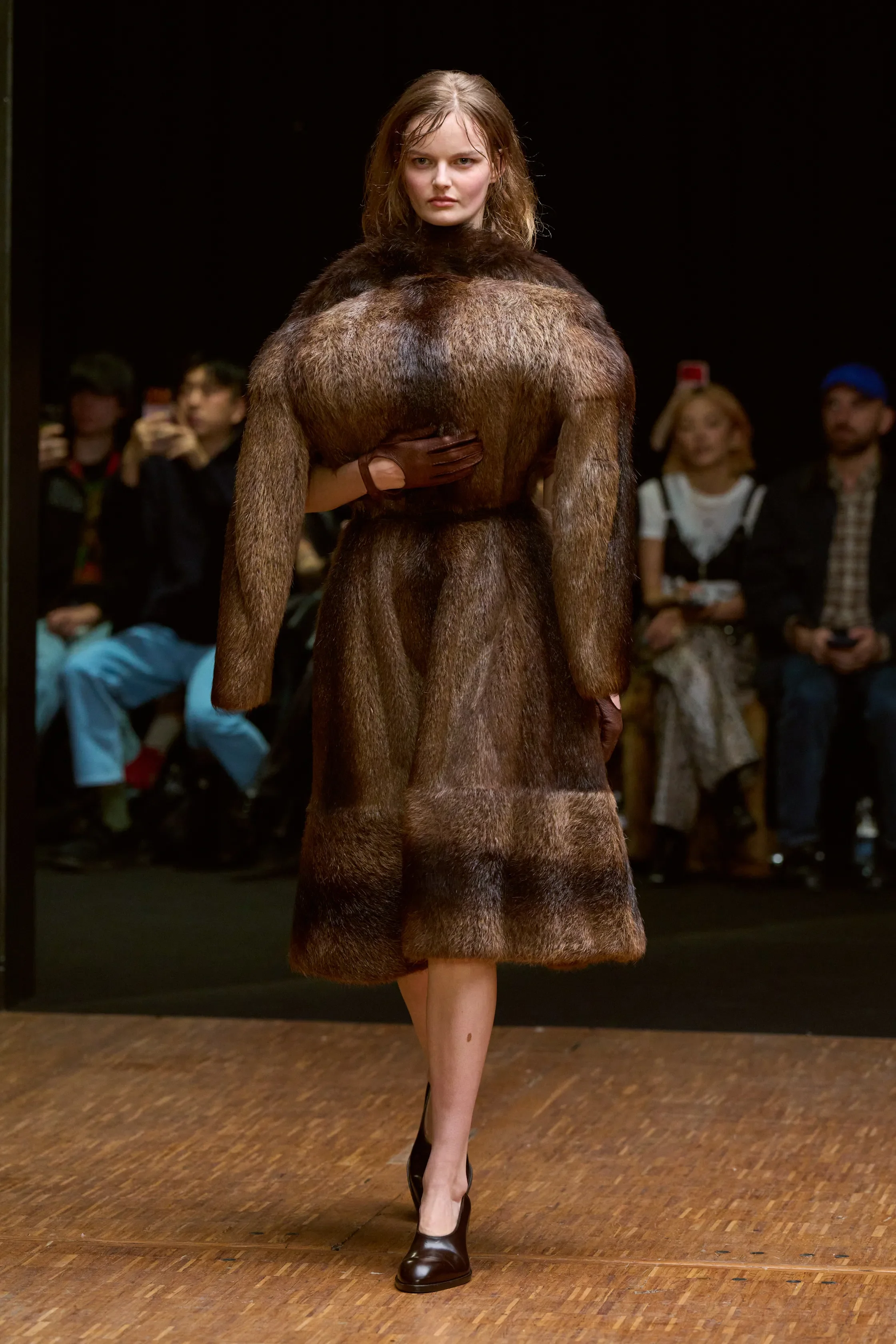
Ellen Hodakova Larsson approached this season with unusual directness. The Swedish designer has long worked with deconstruction and repurposed materials, but it seems that this time the focus shifted toward something more personal. She described the collection as autobiographical — a way of turning the lens inward — and the clothes reflected that idea through both construction and the exposure (of body, that is).
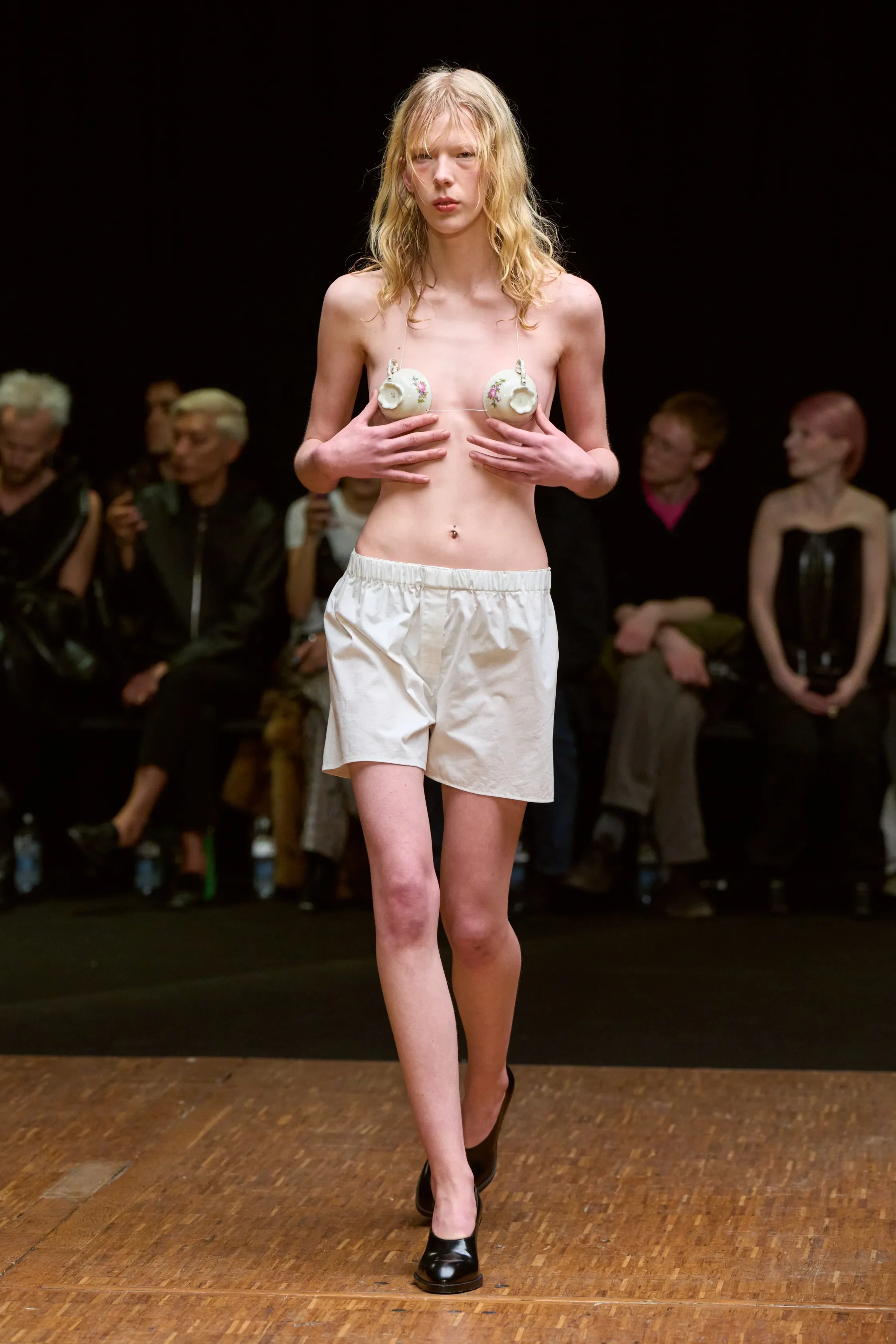
Several opening looks were built around an apron-like structure: coats cut open at the back, trousers worn low enough to reveal boxer waistbands. Though it could be mistaken for provocation, the gesture felt rooted in vulnerability, as if the garments were deliberately unfinished. Around this framework, Larsson continued her practice of transforming everyday objects into clothing. Teacups appeared as a small bra, rugs became capelets, and elements of furniture were integrated directly into the silhouettes. Elsewhere, horsehair violin strings traced the torso and met at the neck, transforming a musician’s tool into an unexpectedly elegant sartorial detail.
The show space reinforced the theme of domestic life, with models moving through a pared-back interior anchored by a long wooden table. Mirrors carried on the runway hinted at introspection rather than decoration, while white garments constructed from bedsheets suggested the quiet familiarity of private spaces.
As the collection progressed, shapes became more sculptural and less conventional, with bodies curving inward or appearing slightly burdened by the garments themselves. The show itself stands not only as a study of deconstruction, but a reflection on memory, personal history, and the objects that accumulate meaning over time.
VAQUERA
review by ANOUK WOUDT
all images courtesy of VAQUERA
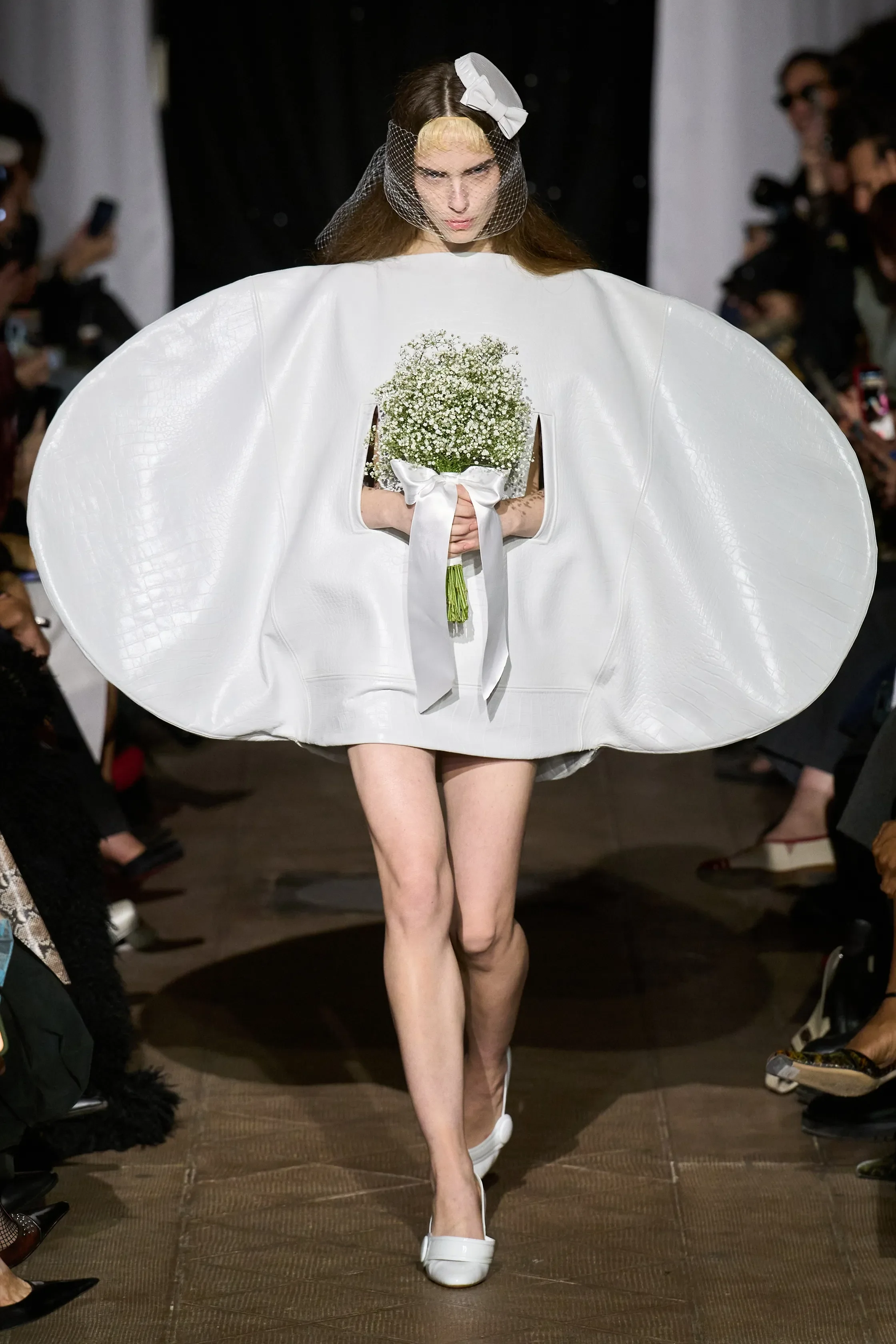
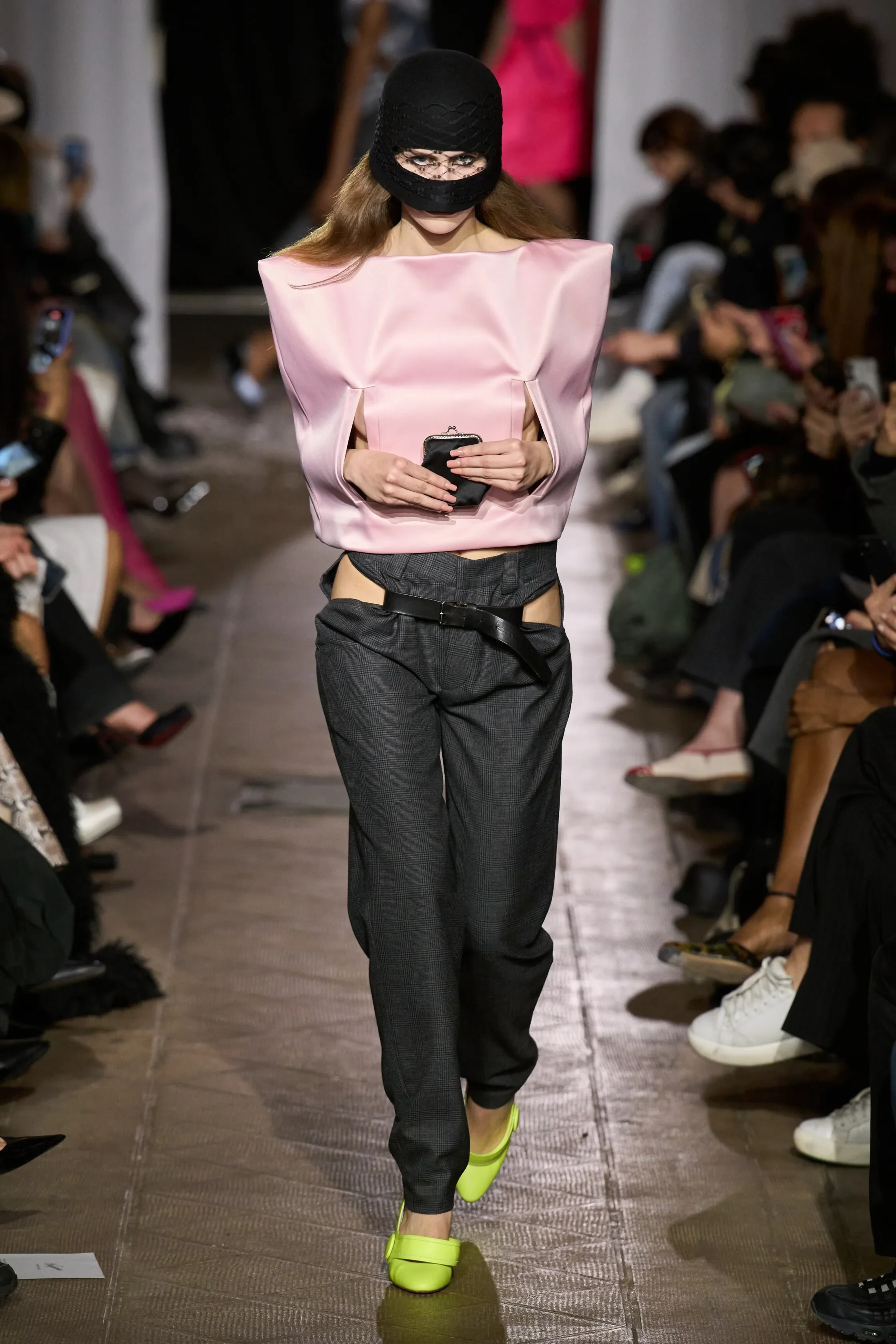
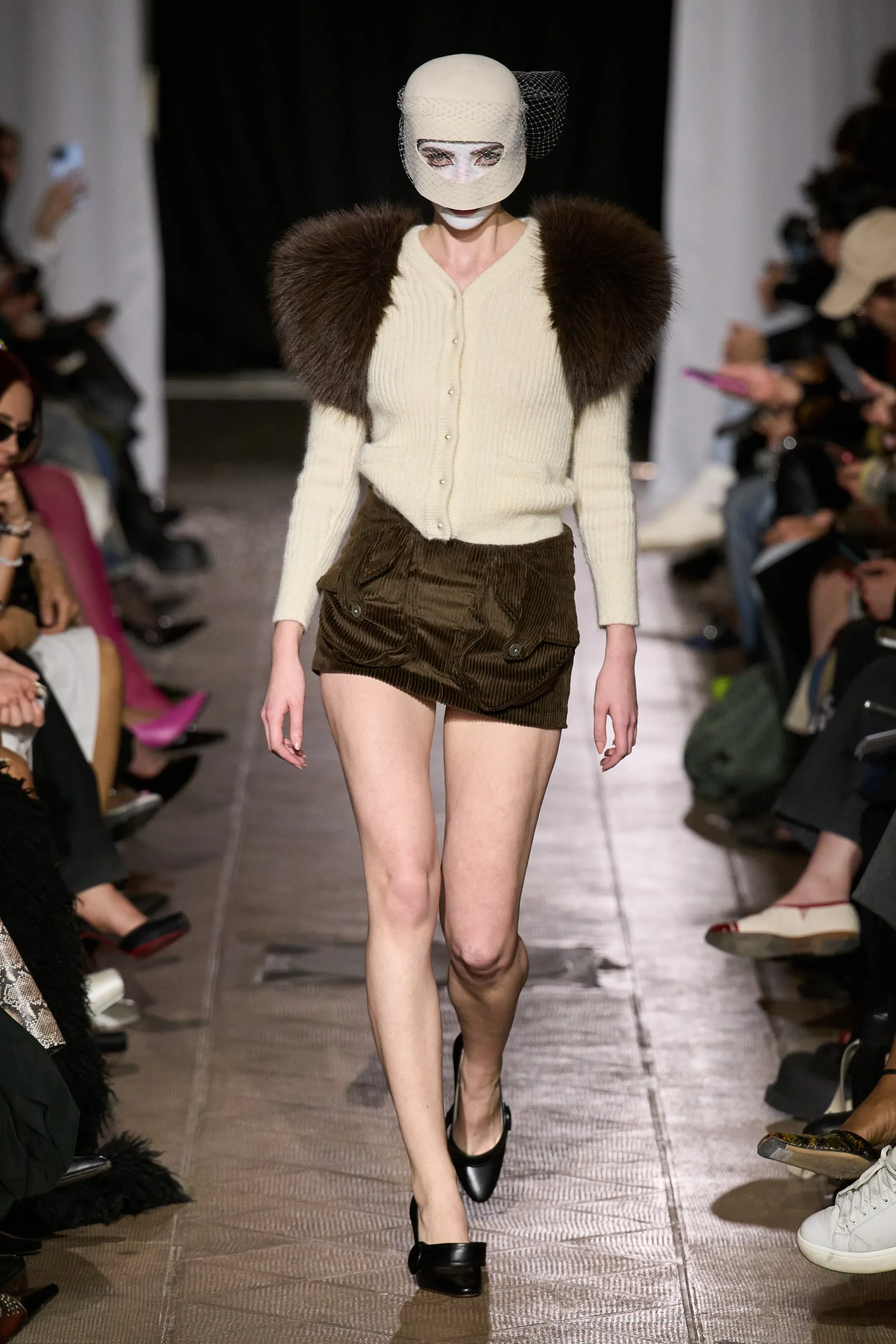
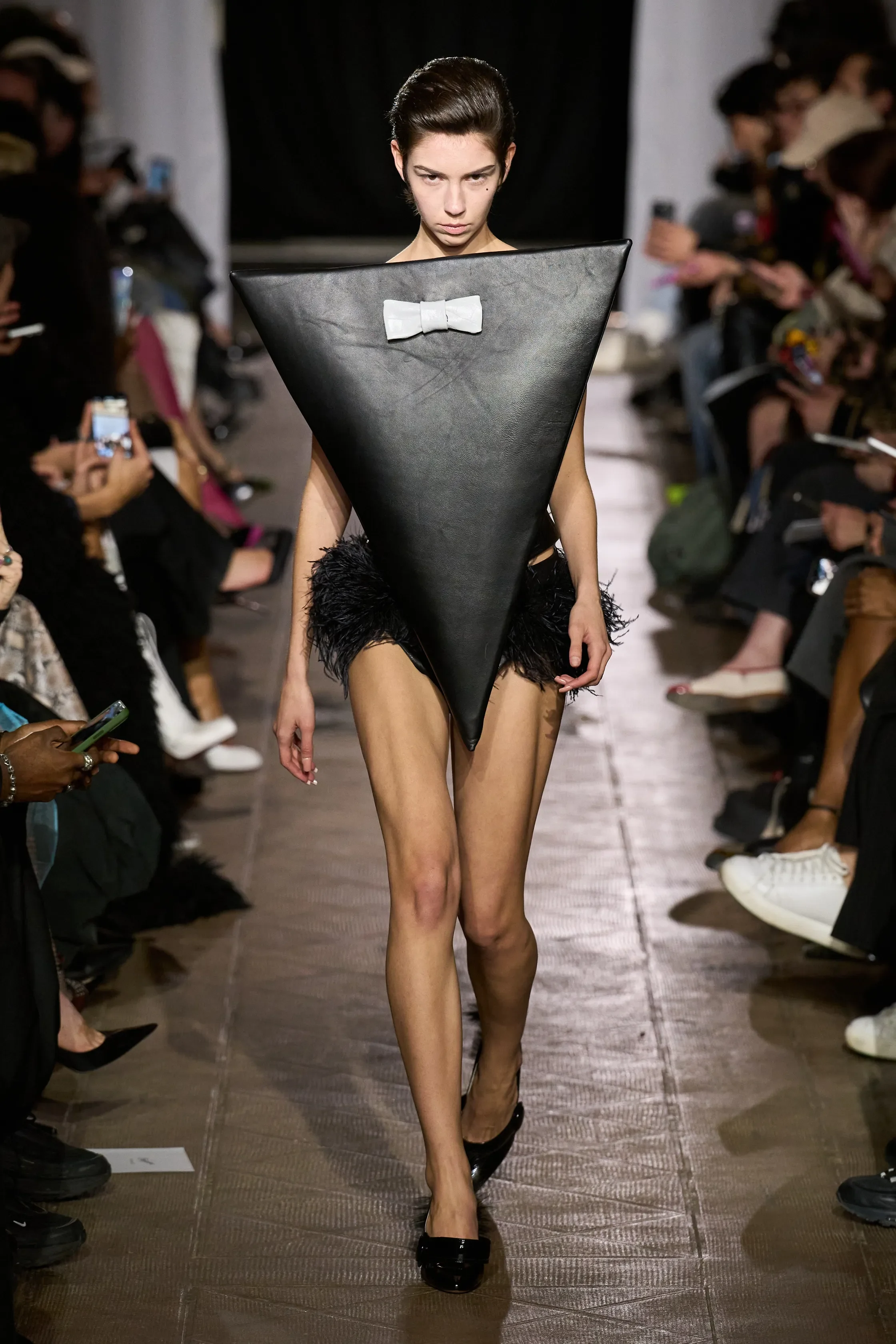
In the haunting chambers of a protestant église, Vaquera certainly turned heads with their fall 2026 collection. In an entrance surrounded by marital organ swells, the first look makes her way down the runway as a bride, complete with a bouquet and netted veil. However, the energy shifts immediately after, with the second look stomping in with a low-cut thong exposing bright green heart-shaped pubic hair, instantly becoming one of the most memorable looks of the night. From then on, chaos ensues, with silhouettes aggressively strutting out in all shapes and forms, as the background music swiftly intensifies.
Skin was definitely a key piece in this show, with looks circling full nudity and cutouts serving to expose inherent feminine curves. Inverted triangles and rectangles became wearable with slits that served both for function and provocation. Serving as the ideal accessories for pushing the boundaries even further, white–painted faces, helmet hats, and triangularly drooped sunglasses decorated looks. The clip-on money pieces paired with fluorescence also brought a certain trashiness that adequately matched the brand’s nonchalance.
A subtle irony lingers throughout the show. Its incessant exaggeration pushes it to a point approaching satire, but it never fully reaches it. Though irony is nothing new to the brand, this collection pushes past its usual playful graphics and taps into a more avant-garde alter ego; a change of pace that we absolutely love.