
PARIS FASHION WEEK FALL/WINTER 2026: DAY 2
ZOMER
review by VERONICA TLAPANCO SZABÓ
all images courtesy of ZOMER
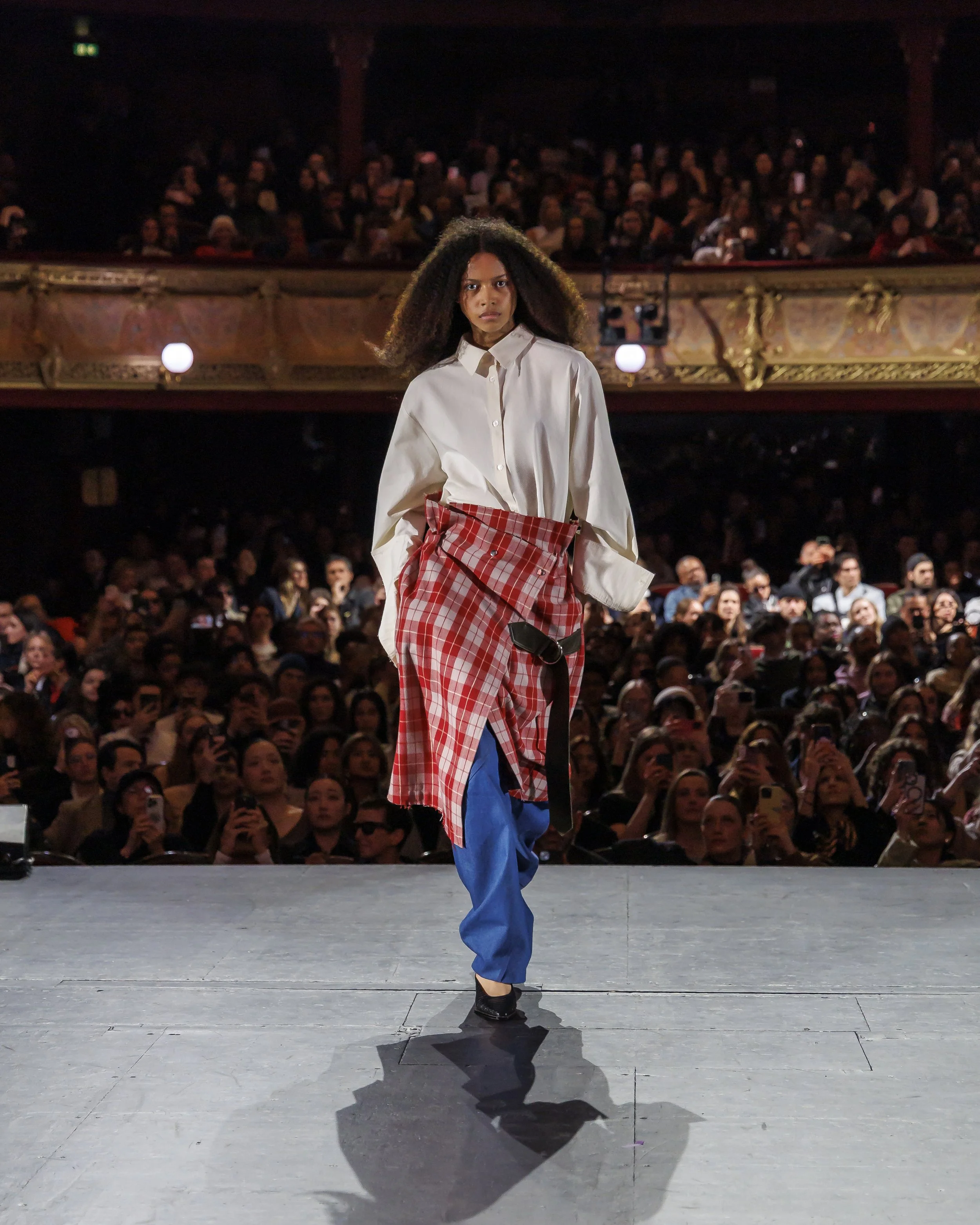
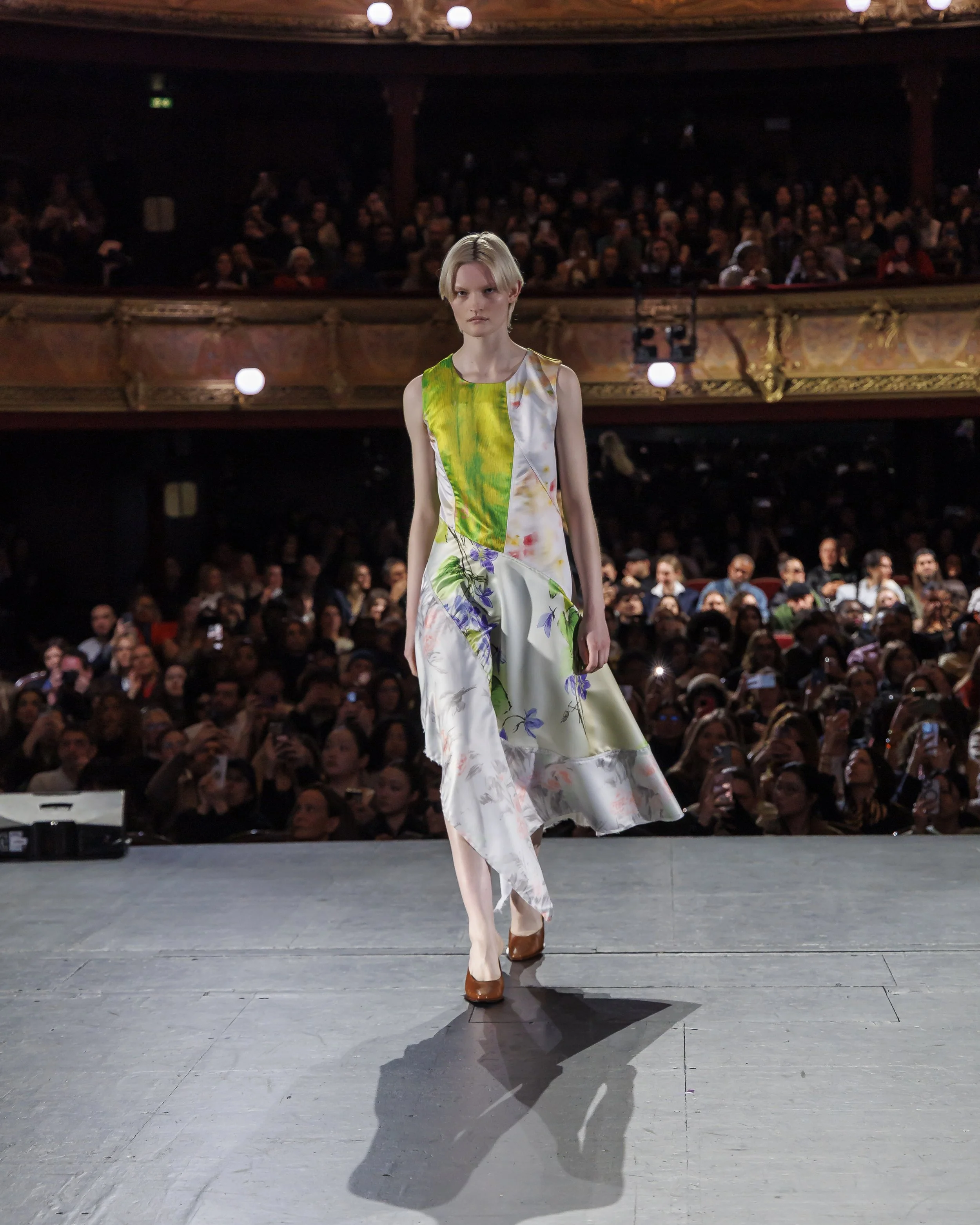
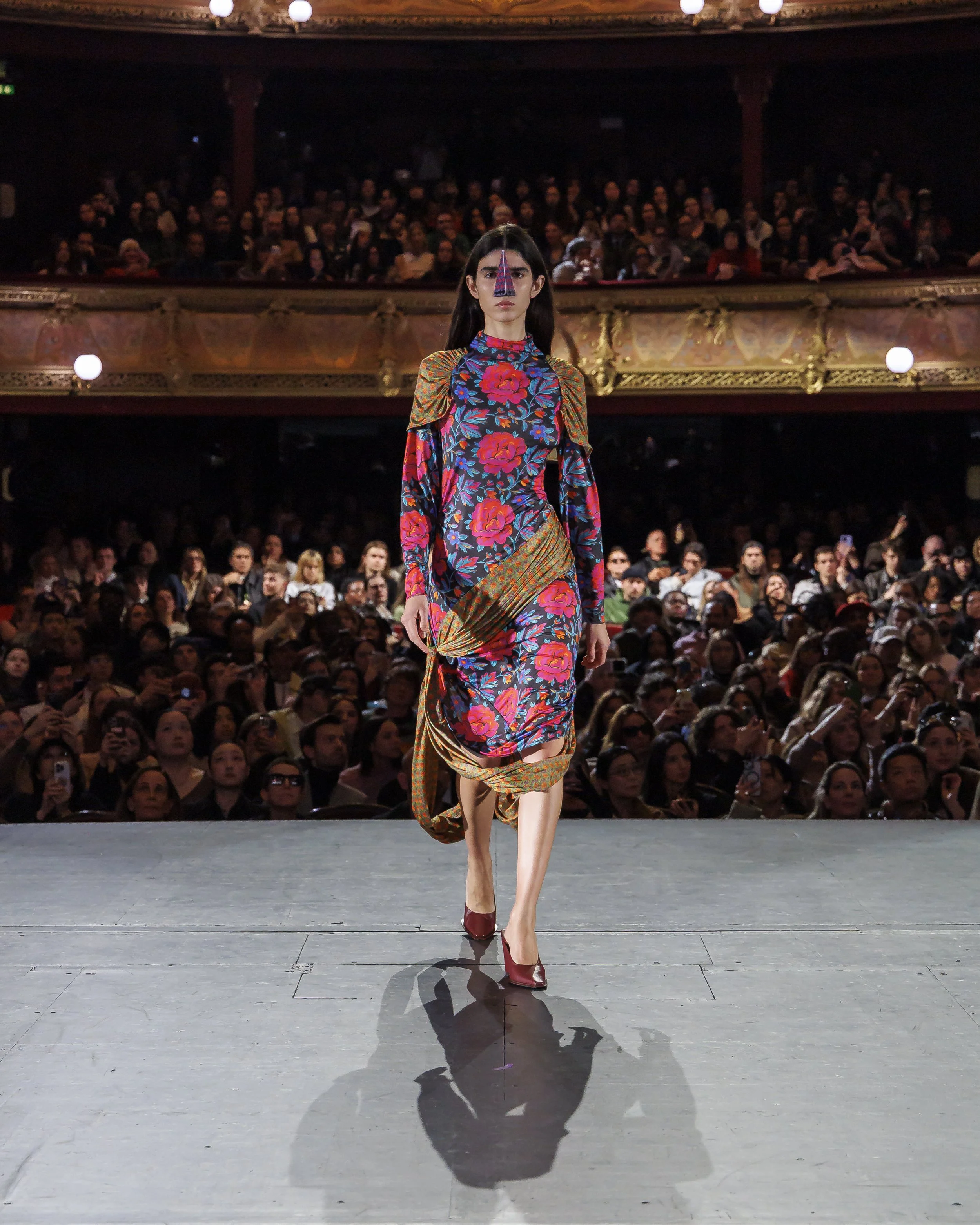
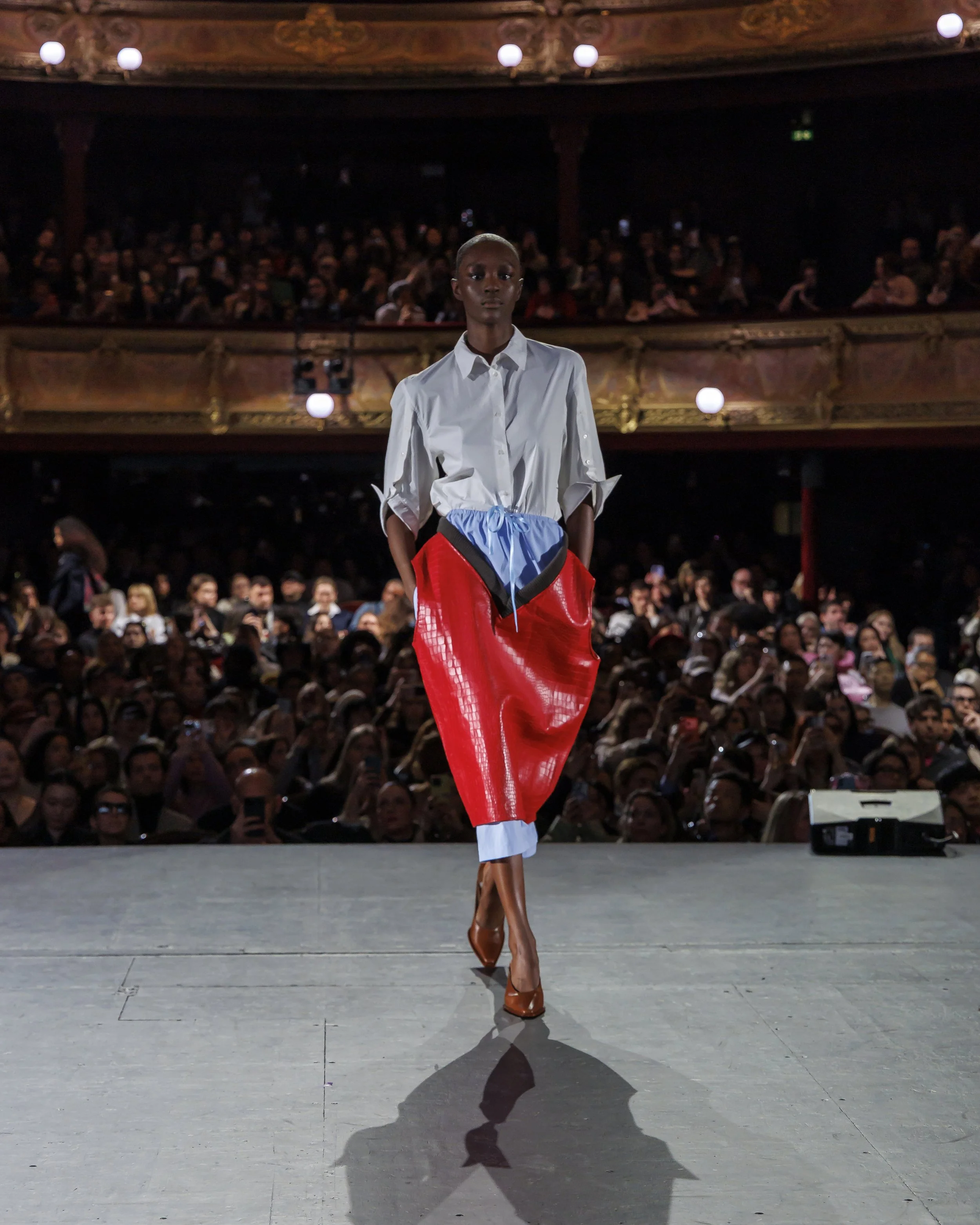
The arts have always intersected, and fashion perhaps most visibly so when it returns to its primordial form of the spectacle. This morning, at the storied Théâtre du Châtelet, Zomer welcomed not only the usual constellation of fashion personas but a wider public of devoted enthusiasts. There was something moving about seeing the doors opened so generously, to so many, courtesy of La Watch Party. The setting which is richly historical and very central, lent a certain gravitas to the collection, without weighing down the body, the garments brought with them a distinct breath of fresh air.
Tailoring was sharp, collars flicked upward, sleeves subtly flipped which only helped built the momentum of the collection. This wind of change was sweeping thought the room, as the models strutted through the red velvet seats that were shared by all. I also couldn’t help but wonder if there were any theatrical nods hidden in the designs… as certain skirts were manually suspended by chains, perhaps nodding to the mechanisms of stage curtains?
Then came a procession that felt almost ritualistic, dresses were swathed in toga-like drapery and models’ faces adorned with triangular embellishments. This “pyramid head” interlude then cemented the geometry through the final passages of the collection, in deep V-cuts and angled skirts. As for the grand finale, it was Lyas who emerged to close the show, rather than designers Danial Aitouganov and Imruh Asha. Flanked by hand-puppet versions of the duo, he revealed himself as the orchestrator of the entire happening, cue the clapping!
MARIE ADAM-LEENAERDT
review by ANOUK WOUDT
all images courtesy of MARIE ADAM LEENAERDT
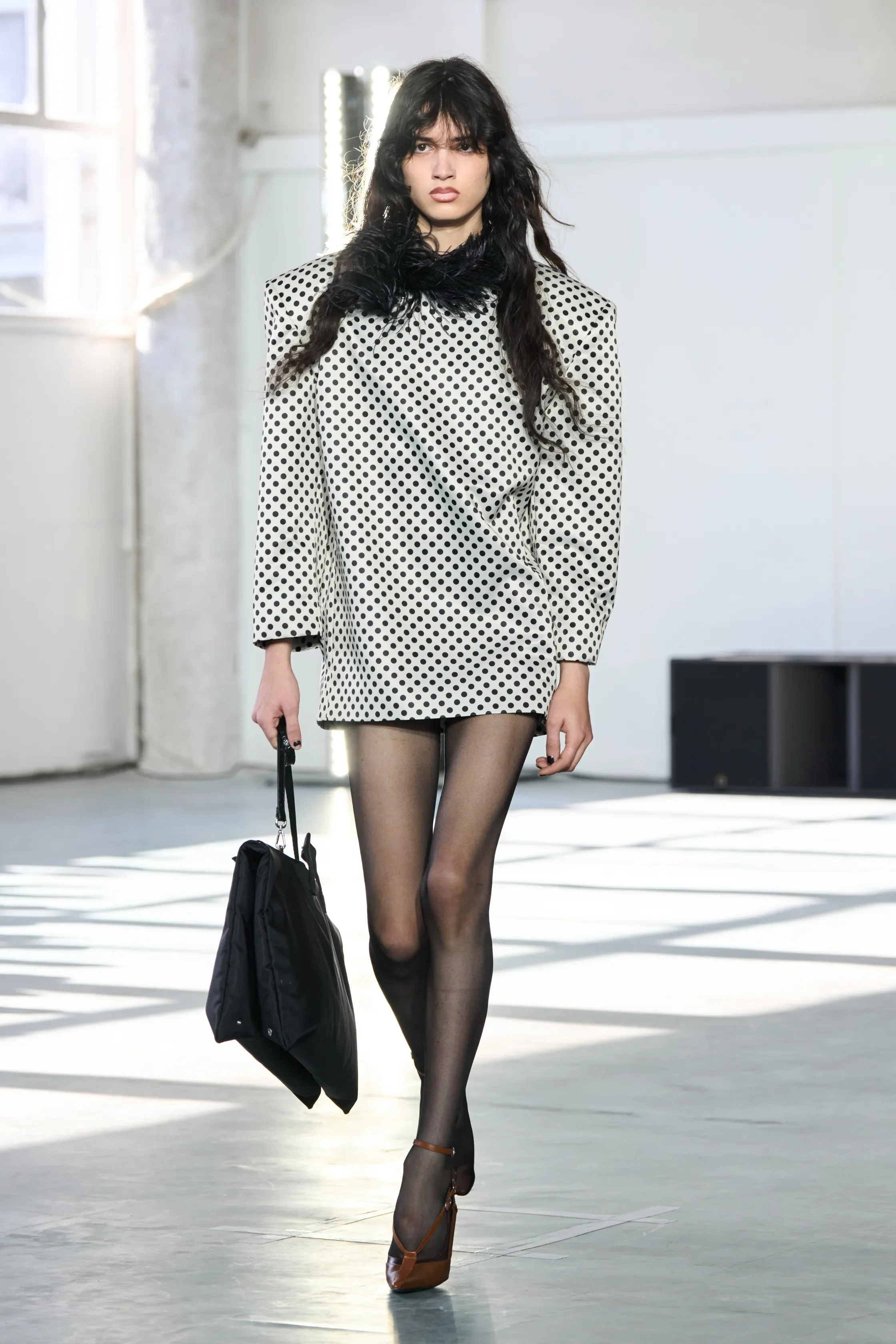
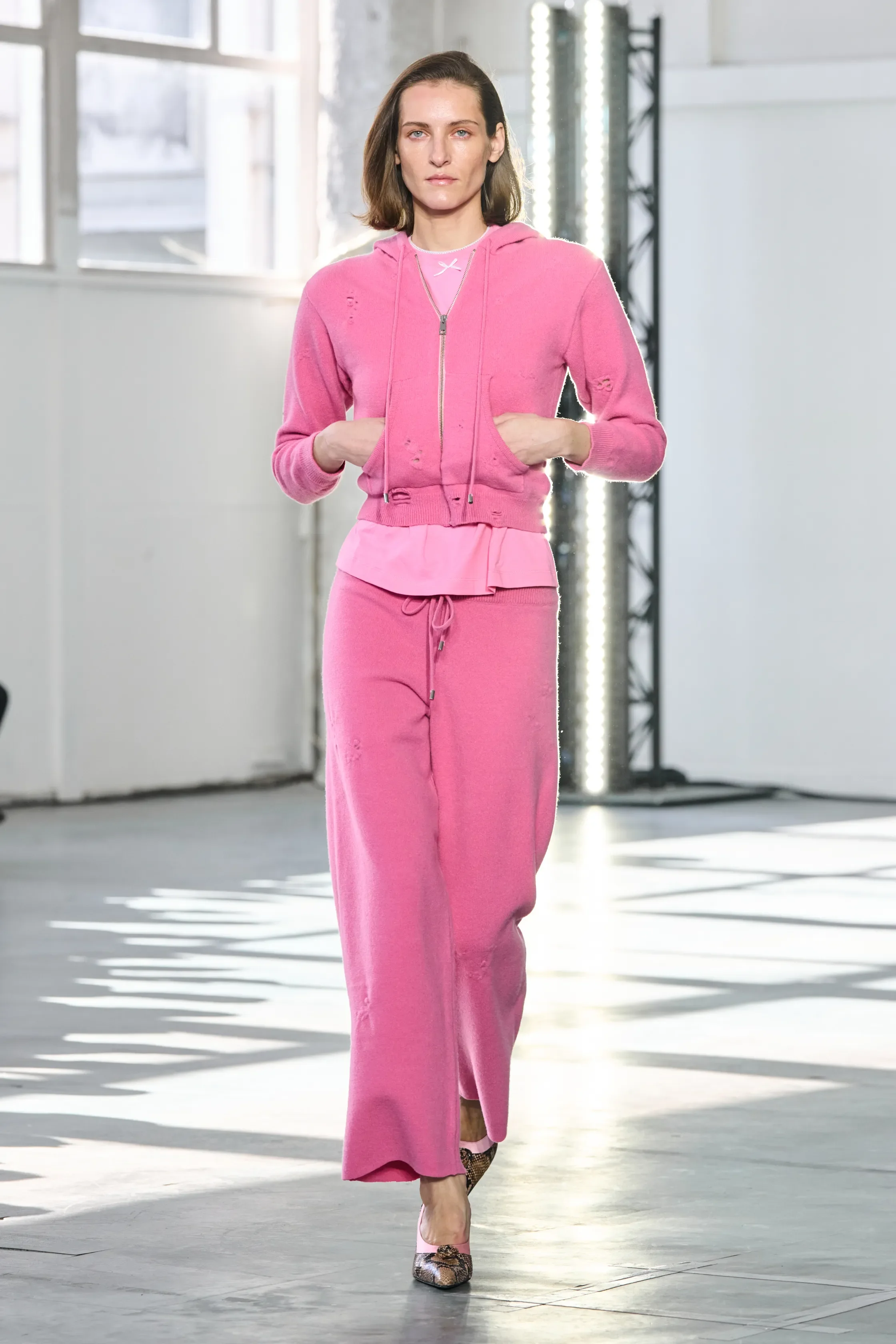
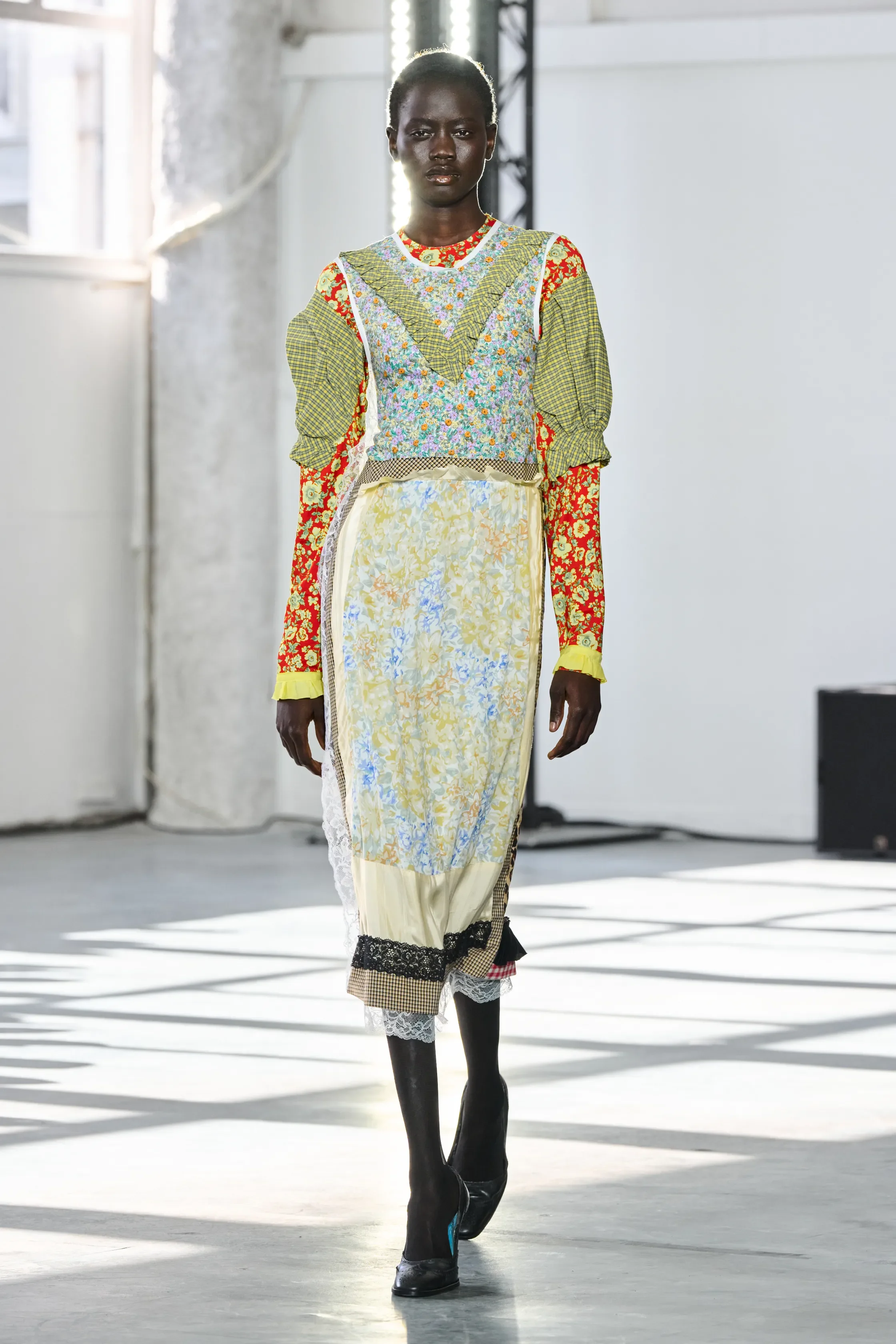
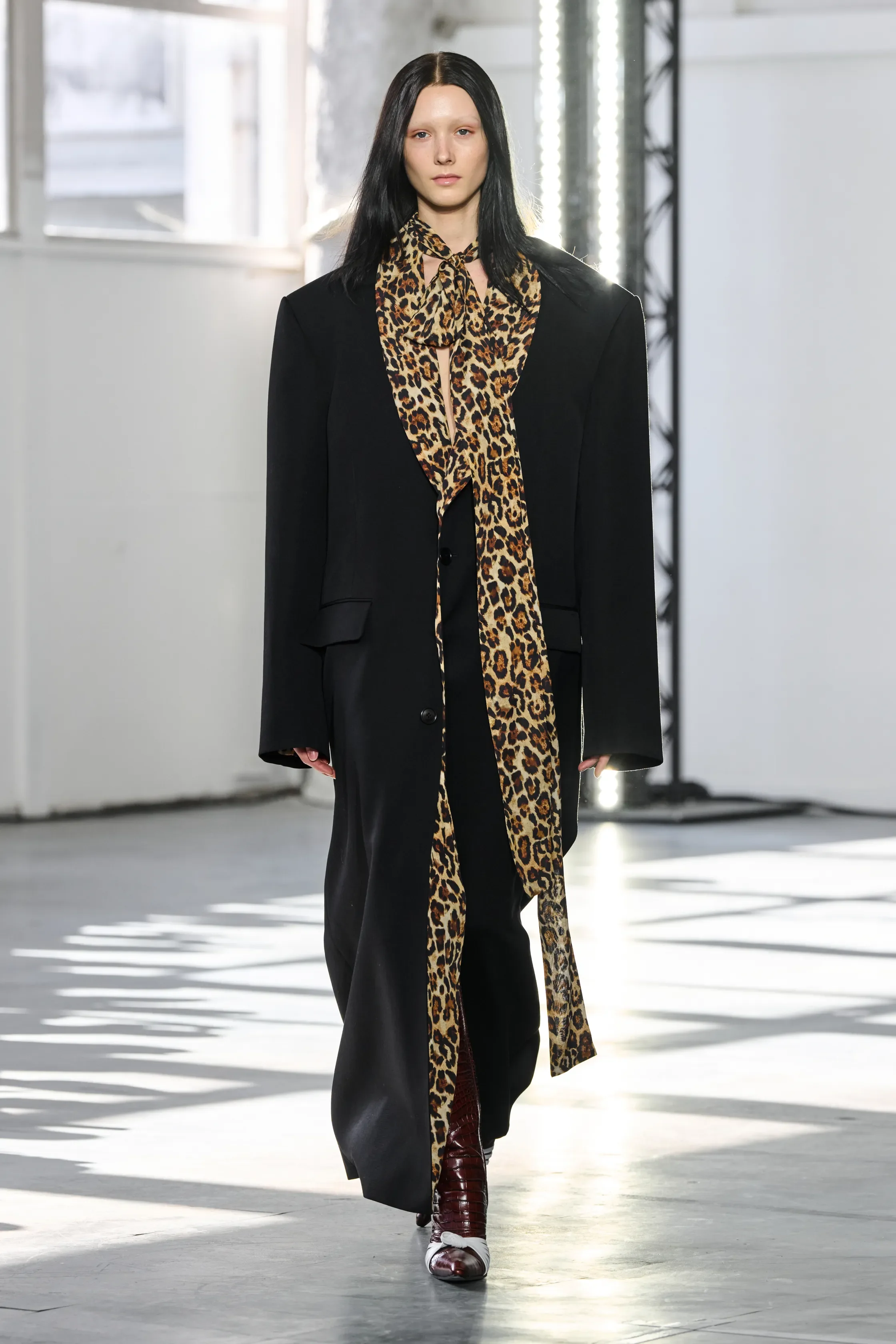
Giving us a chance to relive our princess daydreams, Marie Adam-Leenaerdt’s fall collection was all about giving in to your true inner girliness. High heels and feather boa-like details amongst a flashy print extravaganza made for a persona that resembled a grown-up Fancy Nancy — especially with the hot pink silk robe lined with an egregious leopard fur. Alas, as pink as it was, the colour palette also dipped into your average monotonous roulette of tans, greys, and blacks to offset and certainly not overwhelm. Neons also casually slipped in, catching you a bit off-guard, but always in the best way.
Almost every look was paired with a clacking heel, strutting down with pointed toes and a nasty arch, making footwear the centre of attention. The collection also seemed to pull inspiration from loungewear, with relaxed silhouettes draped amongst silky slips. Structure pulled through at times, breaking up the snooze, with boxy top-halves intercutting flowing skirts, or sometimes sheer stirrup tights– à la year of the horse.
This collection definitely brings a newfound whimsy to Marie Adam-Leenaedt’s identity, contrasting with her previous pieces that stayed a bit further from precaution, while still keeping her delicate air of femininity. Bandana-esque printed skirts appeared as an ode to her past work, while accentuating a subtle waning towards maximalism, forming a funky visual clash. Ending in a mermaid gown bunched in with a pillowy back bow, she closes with a signature cutesy sign-off.
MAITREPIERRE
review by ANOUK WOUDT

images courtesy of MAITREPIERRE, photographed by Dominique Maitre
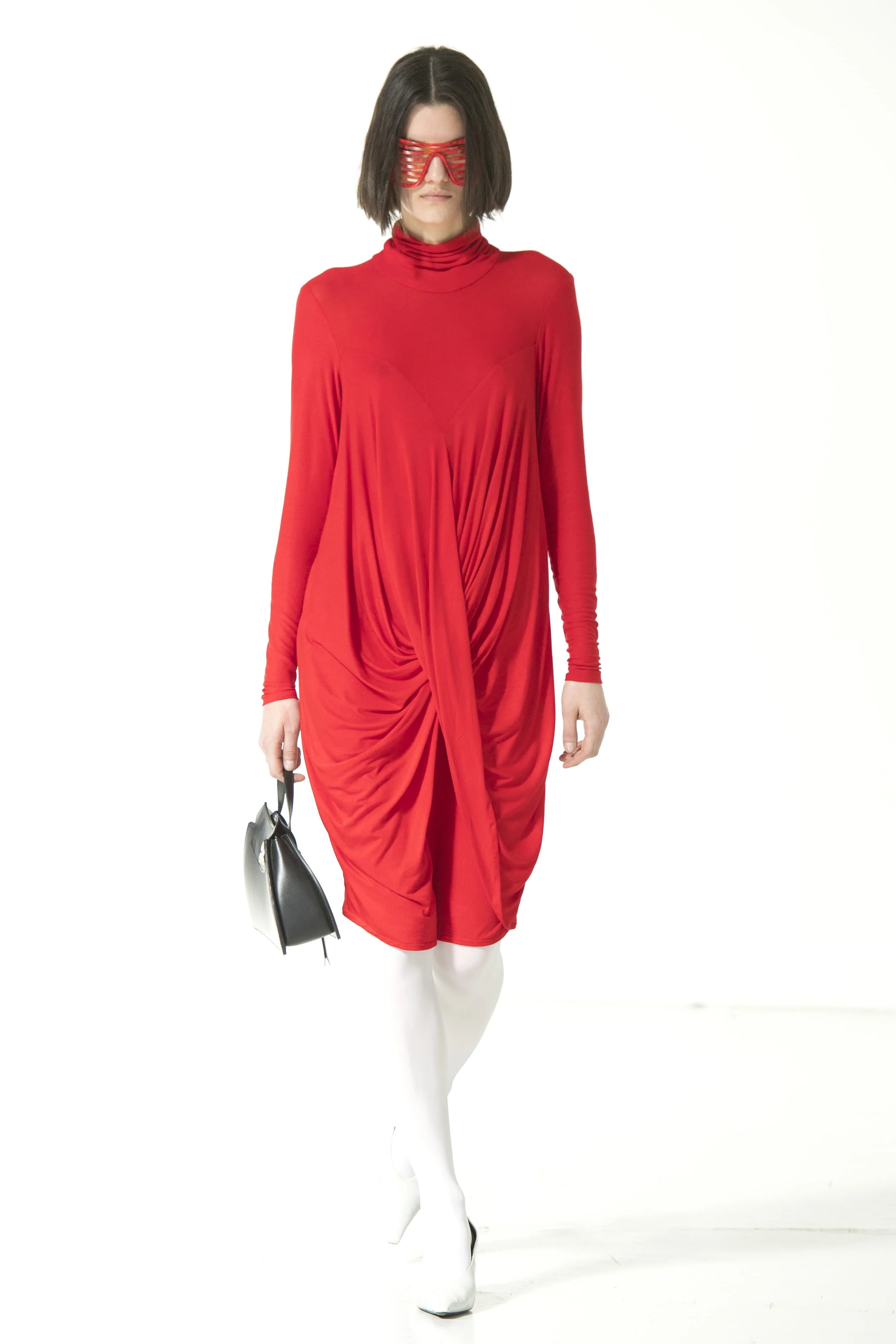
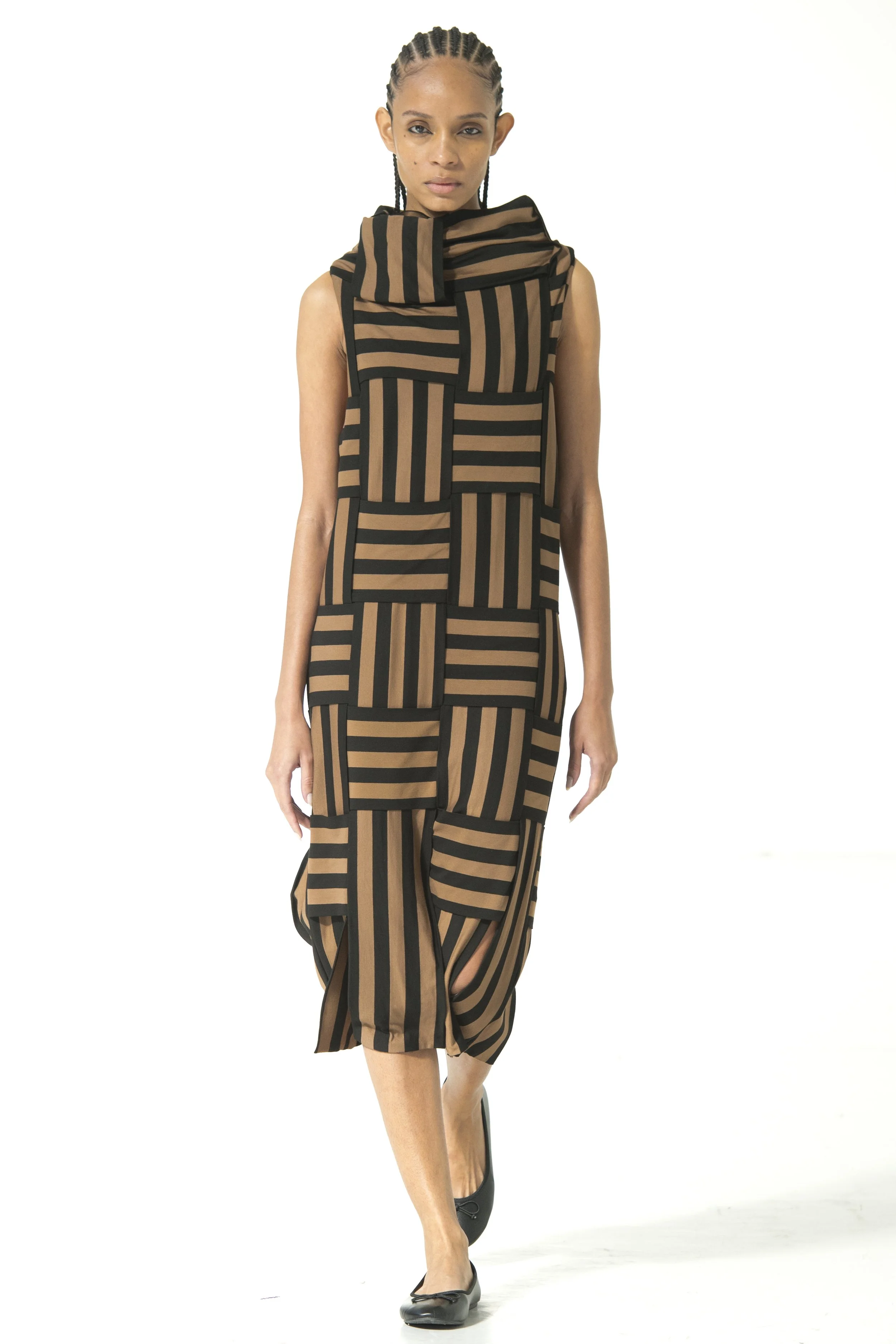
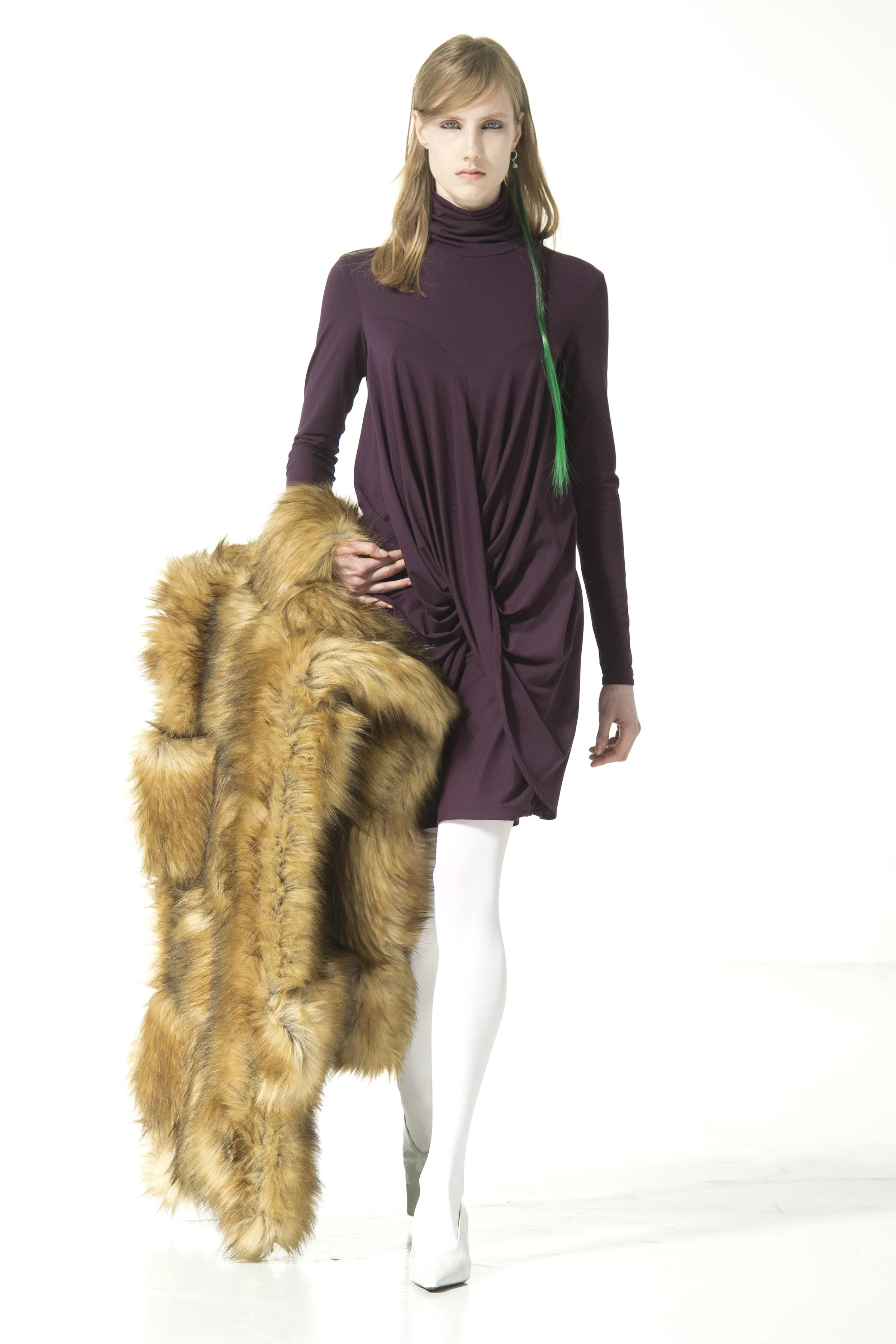
Crossroads by MAITREPIERRE demonstrates a warped version of people with whom you may have crossed paths on the daily. Stripes and weaving patchwork fabrics create the illusion of streets intersecting, guiding us through the myriad of characters that you can encounter in this hypothetical futuristic world. Chronicling the style of a stranger with an extra layer of retro-futurism, Maitrepieere cites Jean-Luc Godard’s sci-fi dabble Alphaville as a major inspiration for the collection. Neo-noir greys paired with bright tomato, chartreuse, and aubergine act as an ode to the ‘60s, contrasting its black-and-white filmography with the signature kitschy vibrancy of this era of fashion.
The entire collection is a play on mundanity, inviting us to escape the monotony of everyday and enter a dreamy alternative. Borrowing from the contemporary it-girl wardrobe favourites — peacoats, ballerinas, striped accessories, and colourful tights– he puts his own spin on trendiness stretching proportions and silhouettes to create something entirely unexplored. Hoodies are transformed into lengthened robes, with a classic streetwear-esque graphic plastered on the front. Dresses are laser-cut into bulbs of fringe or twisted into ruched surfaces. Accessories were crucial with single earrings hooked with neon dip-dyed hair extensions or oversized shutter shades providing an additional whimsical edge, firmly attaching the characters to this other world. Edgier than we have seen in his past work yet everlastingly erratic, this evolved identity suits the brand perfectly.
DIOR
review by MAREK BARTEK
all images courtesy of DIOR
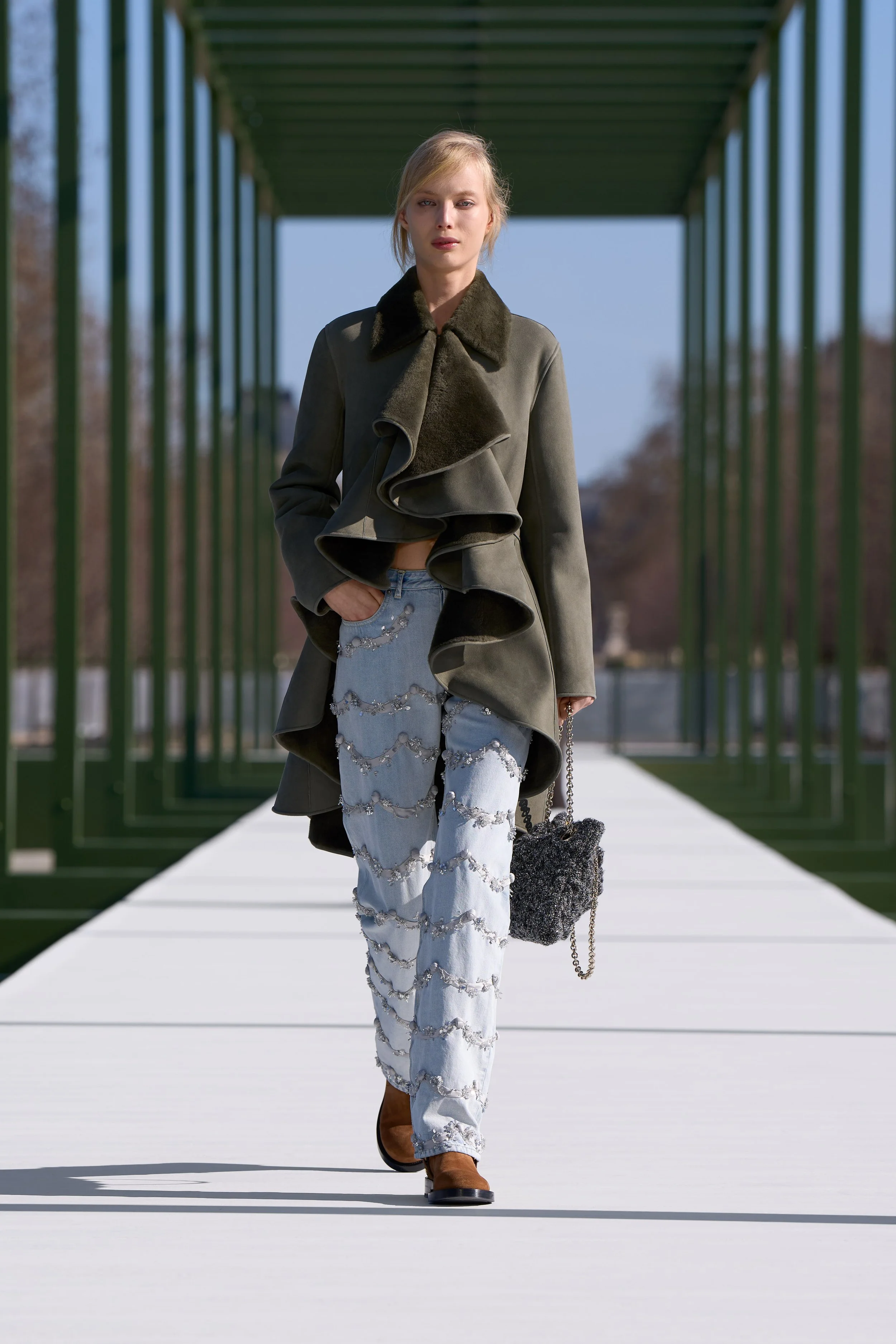
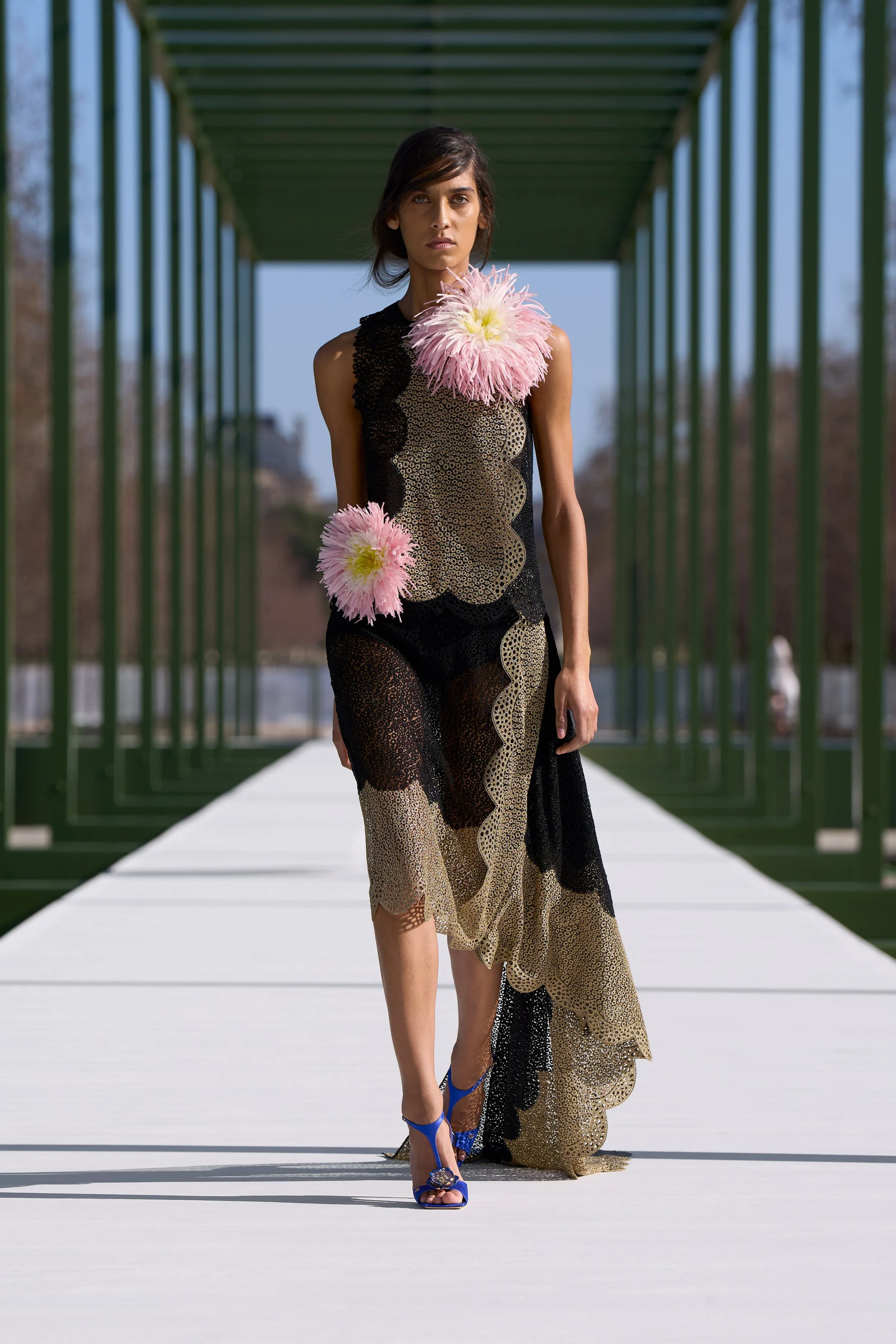
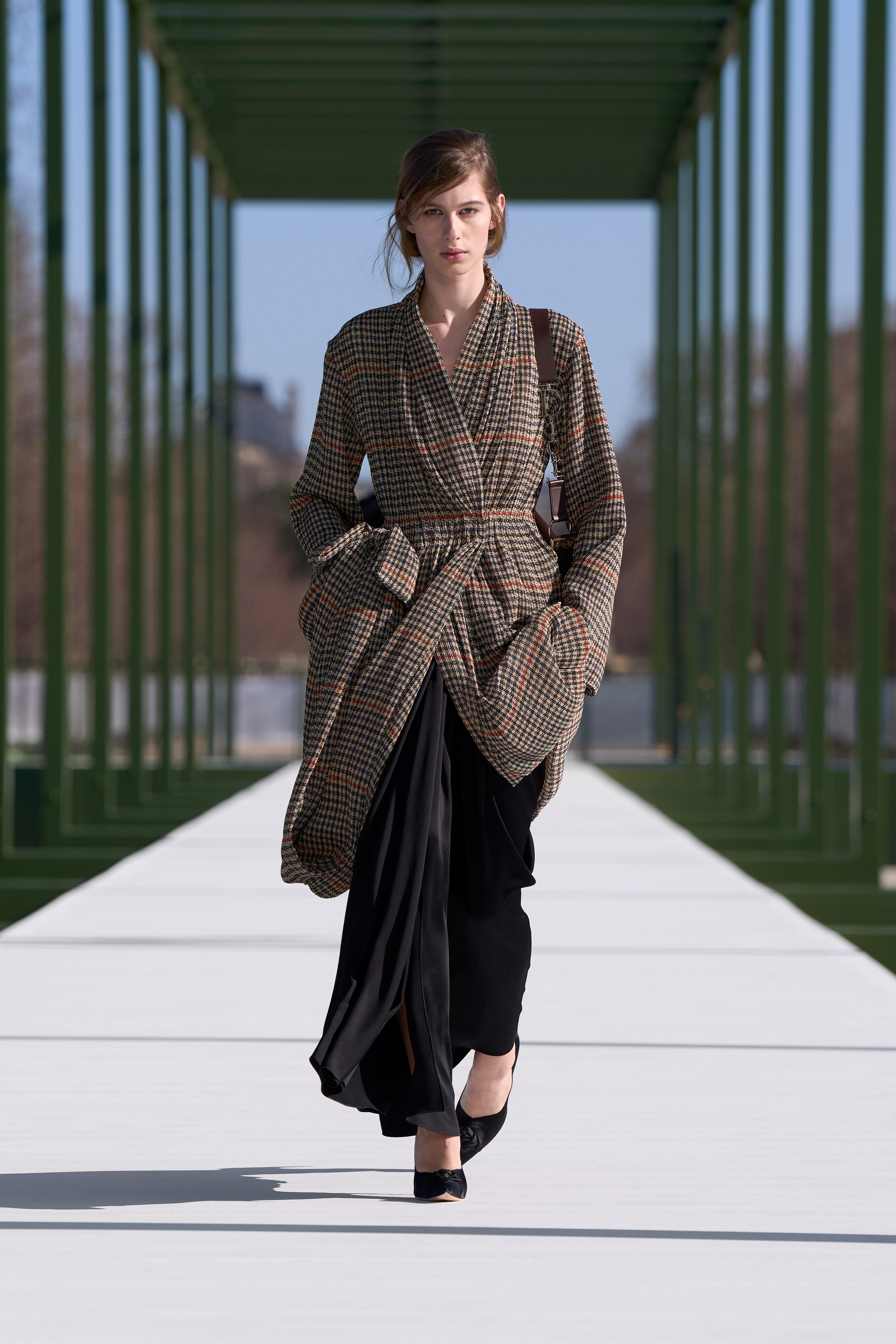
Jonathan Anderson’s Dior show unfolded in a full view where fashion has always loved to place itself, in the Jardin des Tuileries. The collection took its cues from the rituals of walking, watching, and being watched — a tradition rooted deep in the park’s history. Since the 17th century, visitors to the gardens were expected to dress appropriately for public display; a walk was never just a walk. As the house’s press notes remind us, “a walk through the park becomes a performance.”
Anderson leaned into that idea wholeheartedly, and on a bright Parisian afternoon, models crossed a narrow bridge over a pond with artificial water lilies, circling a glass pavilion where the audience sat between two monuments of the city. With the Louvre in one direction and the obelisk of the Place de la Concorde in the other, Dior positioned itself exactly where it has always belonged, at the heart of Paris.
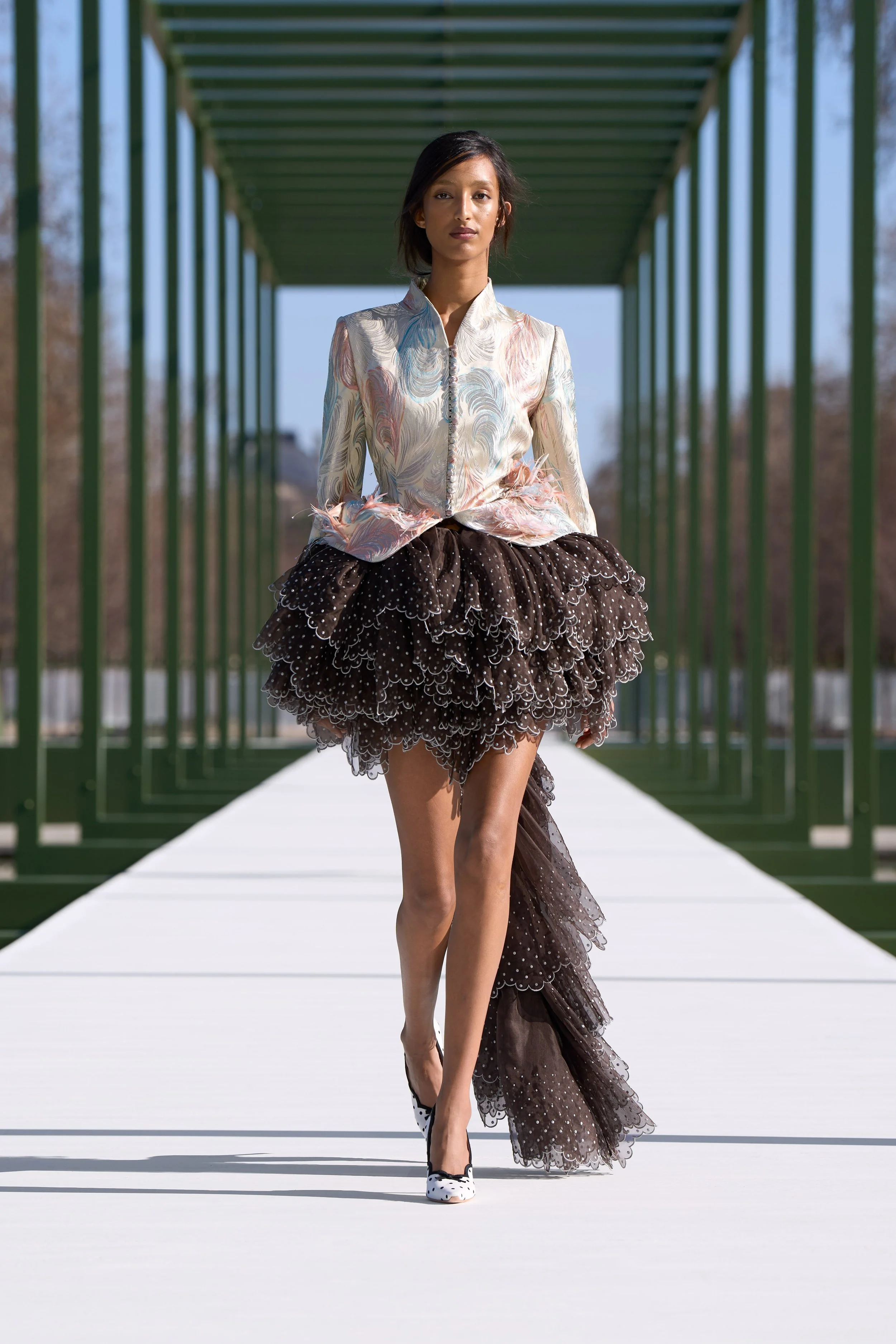
At the centre of the collection was House’s most recognisable symbol: the Bar jacket. But this season, Anderson’s version was hardly the rigid icon of postwar couture. Instead, it appeared softened into a shrunken grey knit cardigan with a curling peplum, worn over a layered tutu skirt edged with scalloped tiers that caught the breeze as the model walked. It was playful, light, and slightly undone. “We’ve taken all the structure out,” Anderson explained backstage. That sense of “letting go” ran through everything. Tailoring curved gently around the body rather than constricting it; trousers were cut loose, coats wrapped like dressing gowns, and traditional menswear checks appeared printed onto delicately pleated silk so that what looked like suiting moved with the ease of a shirt and trousers. The effect was almost disarming. Dior’s historical formality was translated into something fluid and modern.
The Bar jacket itself returned repeatedly, but each time transformed. One version arrived in beautifully patterned lamé, looped at the hip and trimmed with shearling, worn over pale denim embroidered with scalloped motifs derived from Christian Dior’s legendary Juno gown of 1949. Another appeared relaxed and abbreviated, paired with skirts that drifted behind the wearer as though caught mid-stride. Anderson approached Dior’s archive with the lightest touch, mixing it with other historical echoes, which made the collection feel entirely new and not just like another literal homage. We were served the languid silhouettes of Paul Poiret, ballooning trousers that floated around the legs, and frock coats recalling the 18th-century shapes he has long admired. Lace coats with cascading collars and flowered lamé fabrics added a sense of theatricality without turning into costume.
Materiality became a thrilling experience on its own. Silk pleats shimmered like ripples on water; raffia flowers appeared unexpectedly on asymmetric dresses; and textured surfaces — from shearling to lamé — caught the sunlight as the models moved through the open air. Anderson’s fascination with juxtaposition was everywhere: masculine fabrics rendered fragile, ornate decoration paired with denim, couture codes interpreted through everyday garments.
Flowers, a motif inseparable from Dior, appeared through Anderson’s own lens. Instead of roses, he turned to water lilies floating across the Tuileries pond — mostly likely a subtle nod to Monet’s gardens at nearby Giverny and the Impressionist canvases housed just across the Seine. The theme appeared in raffia blossoms, delicate lace constructions, and playful thong sandals shaped like miniature lilies.
All of it reinforced the show’s central premise of clothing as something experienced in motion. These were garments designed not for stillness but for walking — for drifting through the city (and its parks), crossing bridges, and catching glances. “It’s a collection which is fall, but it’s transversal of seasons,” Anderson said, noting that pieces would begin arriving in stores as early as June. The idea of time felt deliberately blurred with seasonal boundaries slowly dissolving.
What lingered most was the sense that Anderson had finally found his rhythm inside the house. He seems to have let go of the anxiety that once accompanied the responsibility of Dior and turned it into confidence. The clothes no longer strained to reconcile heritage and novelty; instead, they moved effortlessly between them.
Standing in the Tuileries as the final looks disappeared across the bridge, Anderson offered a simple conclusion: “I feel relieved.” In the gentle movement of pleats, the ease of tailoring, and the poetry of a walk through a Parisian garden, Dior suddenly feels both lighter and entirely itself.
MATIÈRES FÉCALES
review by FRANCESCO PIZZUTI
all images courtesy of MATIÈRES FÉCALES
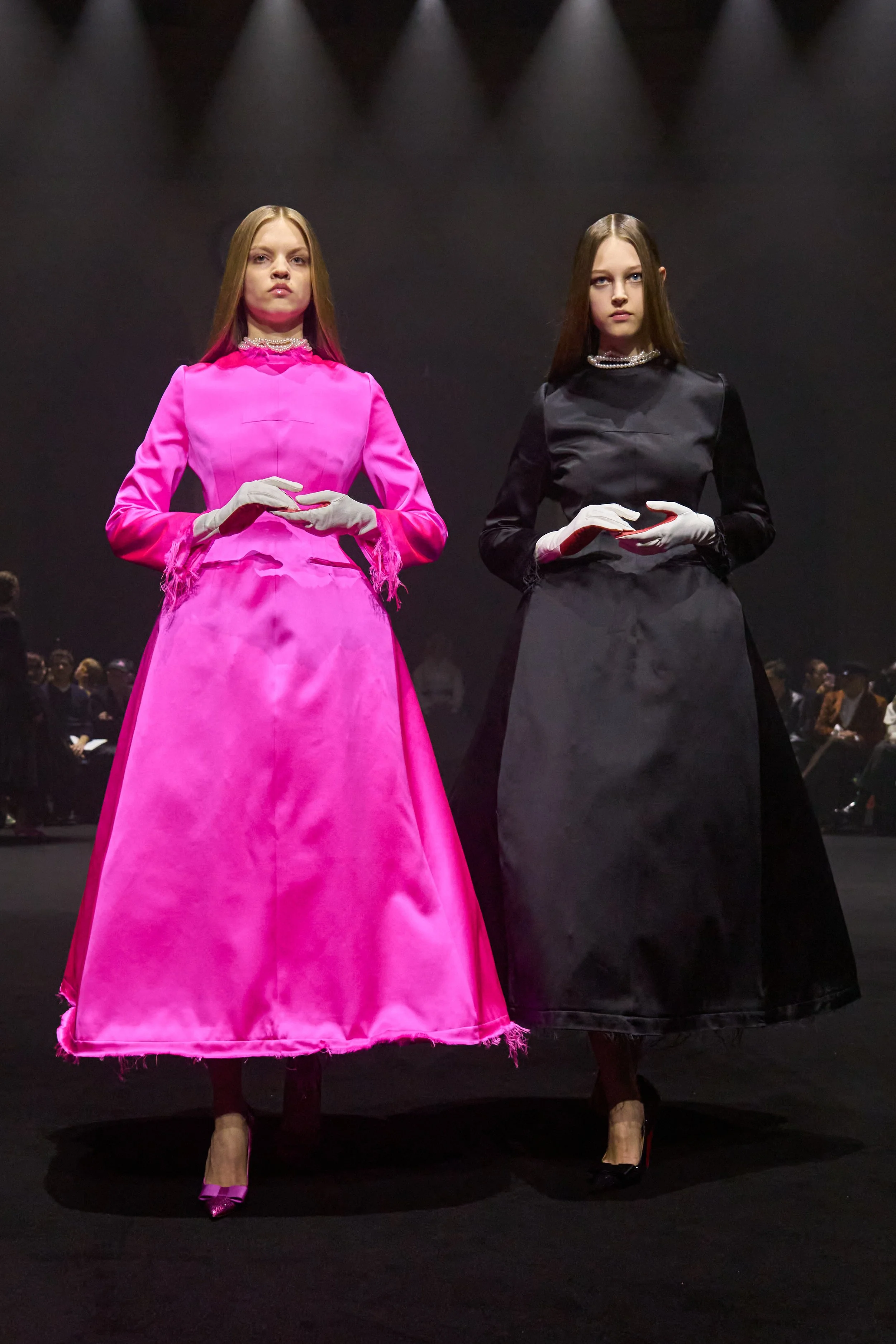
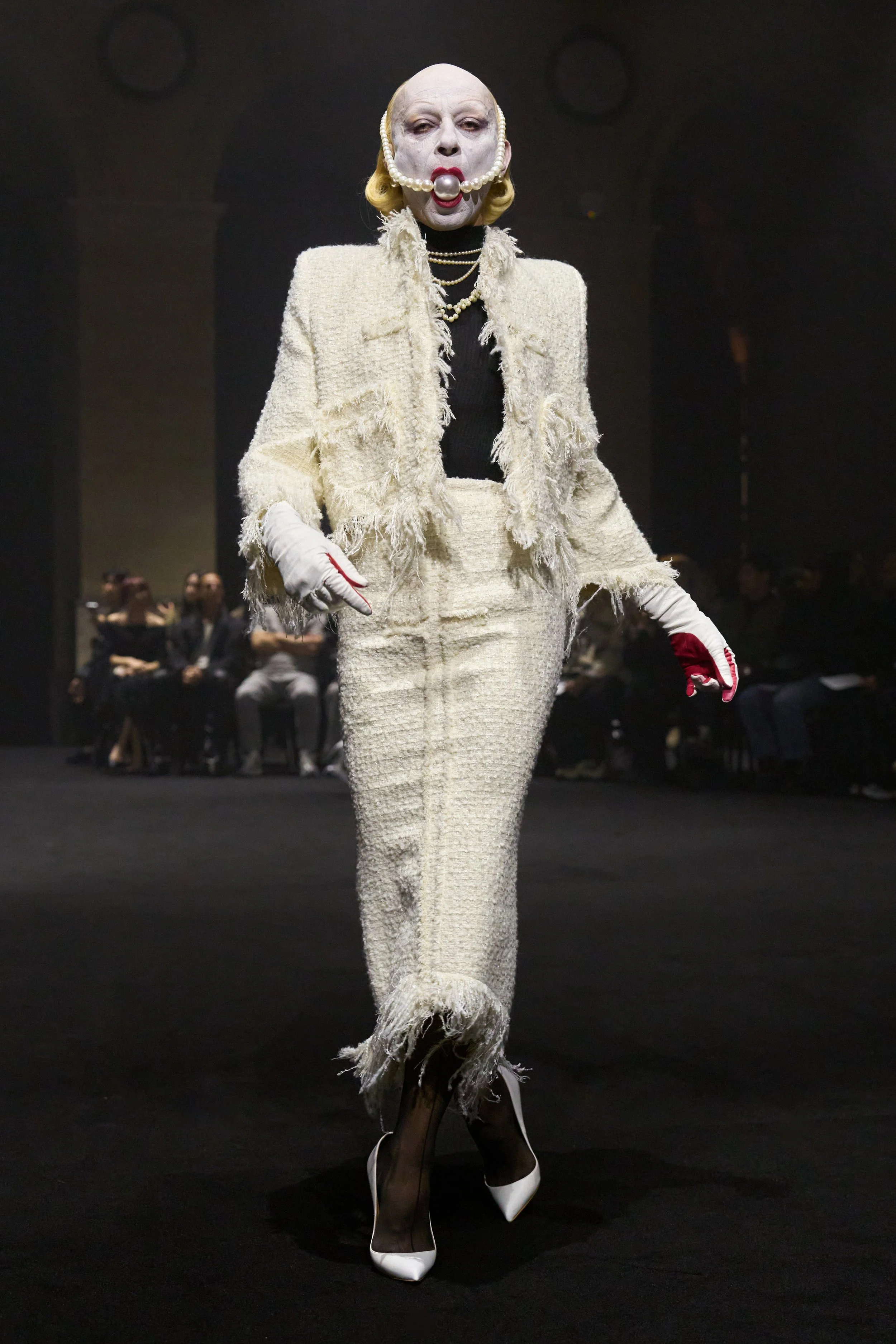
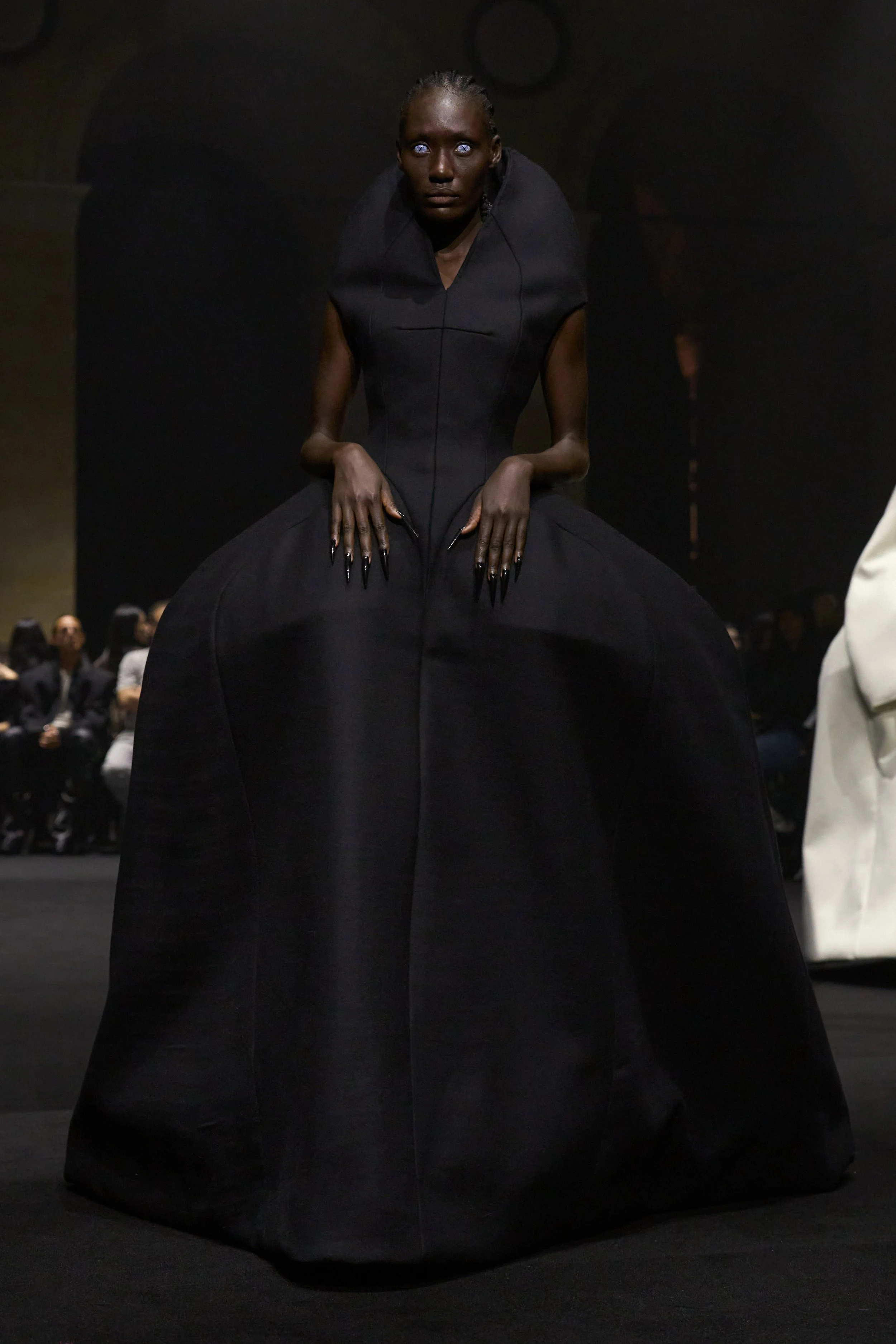
At the Palais Brongniart in Paris, Matières Fécales staged its Fall 26 collection as a performance in three acts. The lights were low, the space nearly blacked out, and the cast (it feels unfitting to call them models) moved more freely, unbound by the usual choreography. Among them: Michèle Lamy, unmistakable, and prosthetics icon Alexis Stone, encased in feline-reminiscent implants that felt both couture and cautionary tale.
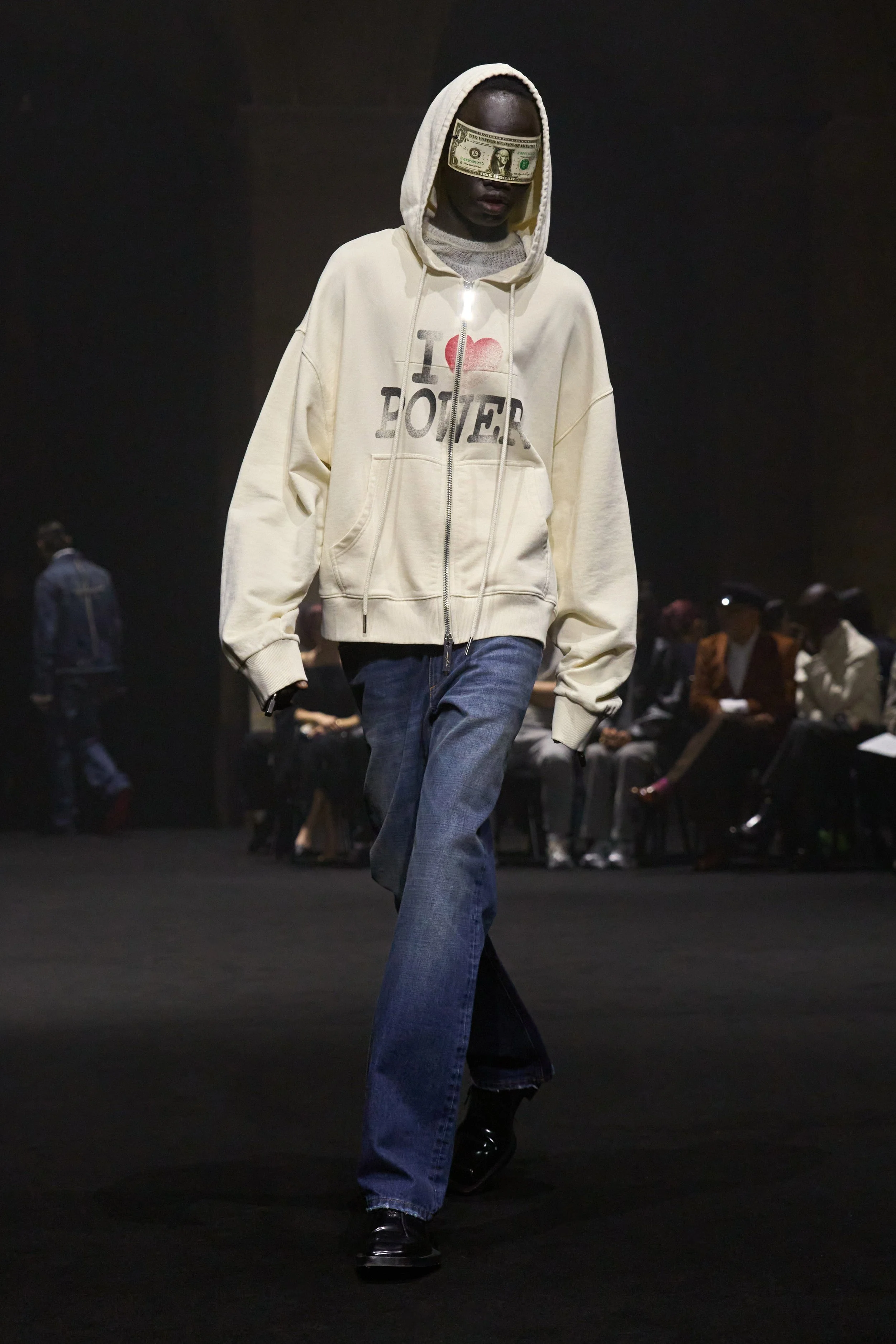
Titled The One Percent, the collection played with status codes. The red-bottom mythology — a nod to Christian Louboutin, with whom the duo collaborated last year — was applied throughout the whole collection. Red appeared — alongside the more obvious shoe bottoms — on the underside of black leather gloves and inside jet-black nails with flashes visible only in gesture. Luxury, here, was warped, fetishised, and teased.
Prosthetics, a long-standing signature of the house, took centre stage. Altered faces, surgical tape, bloodshot eyes; the after-effects of enhancement procedures. Boots resembled naked feet with an anatomic heel in the front, uncanny and unsettling. Plastic surgery, bodily modification, self-optimisation: the taunting and dystopian uniform of the elite.
Crystallised bills obscured eyes, while mother-of-pearl necklaces also doubled as eyewear as well as handcuffs. A man in a tailcoat and top hat, cane in hand, wore currency across his gaze. Greed, blinding; greed, blinded?
Even longevity guru Bryan Johnson appeared in an inspired, yet unsettling, casting choice. Whether the show critiqued or glamorised this unbridled luxury remains deliberately ambiguous. That tension is precisely the point: Matières Fécales doesn’t offer moral clarity. It holds up a mirror — not so distorted these days — and we just can’t look away.
PRESSIAT
review by FRANCESCO PIZZUTI
all images courtesy of PRESSIAT
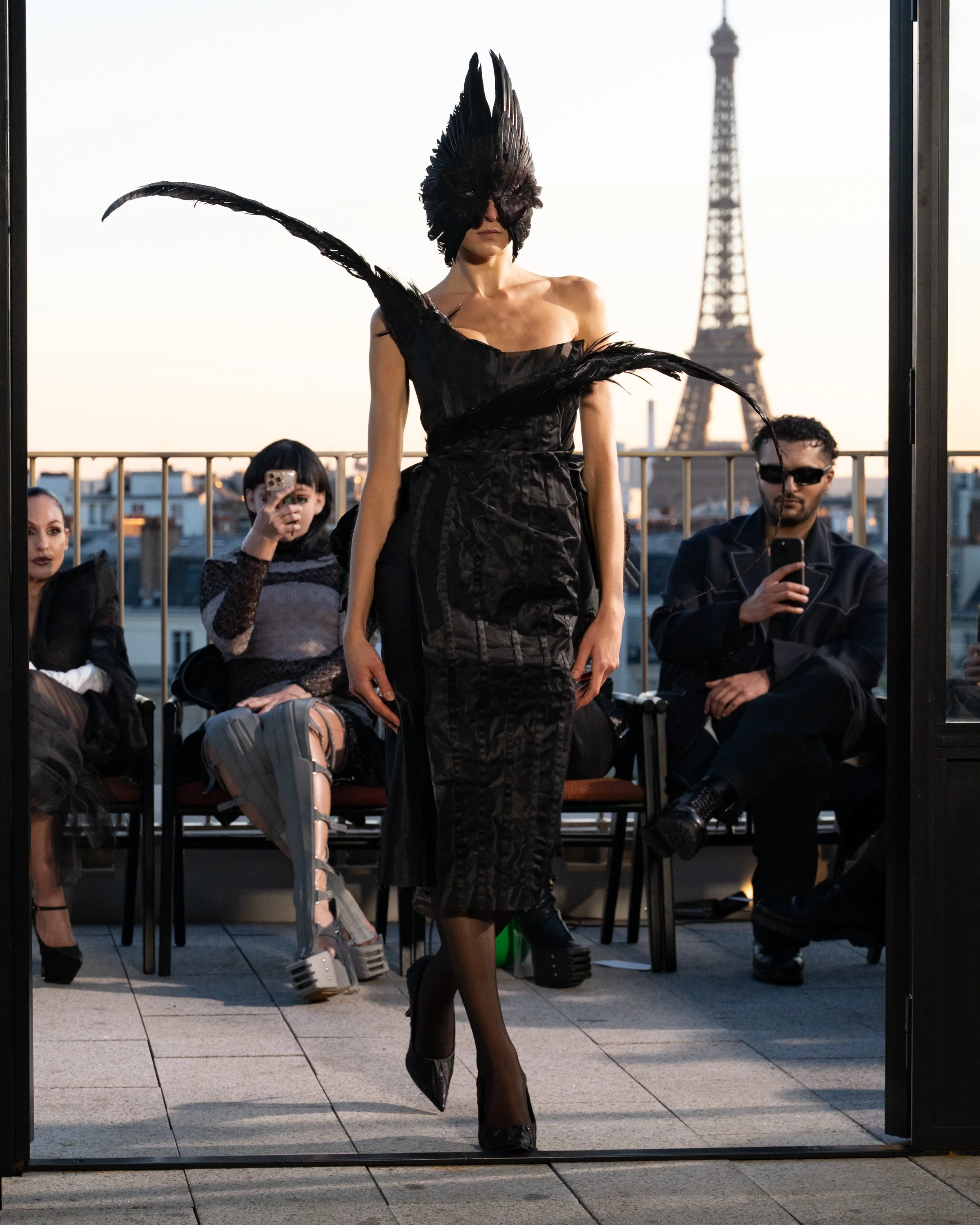
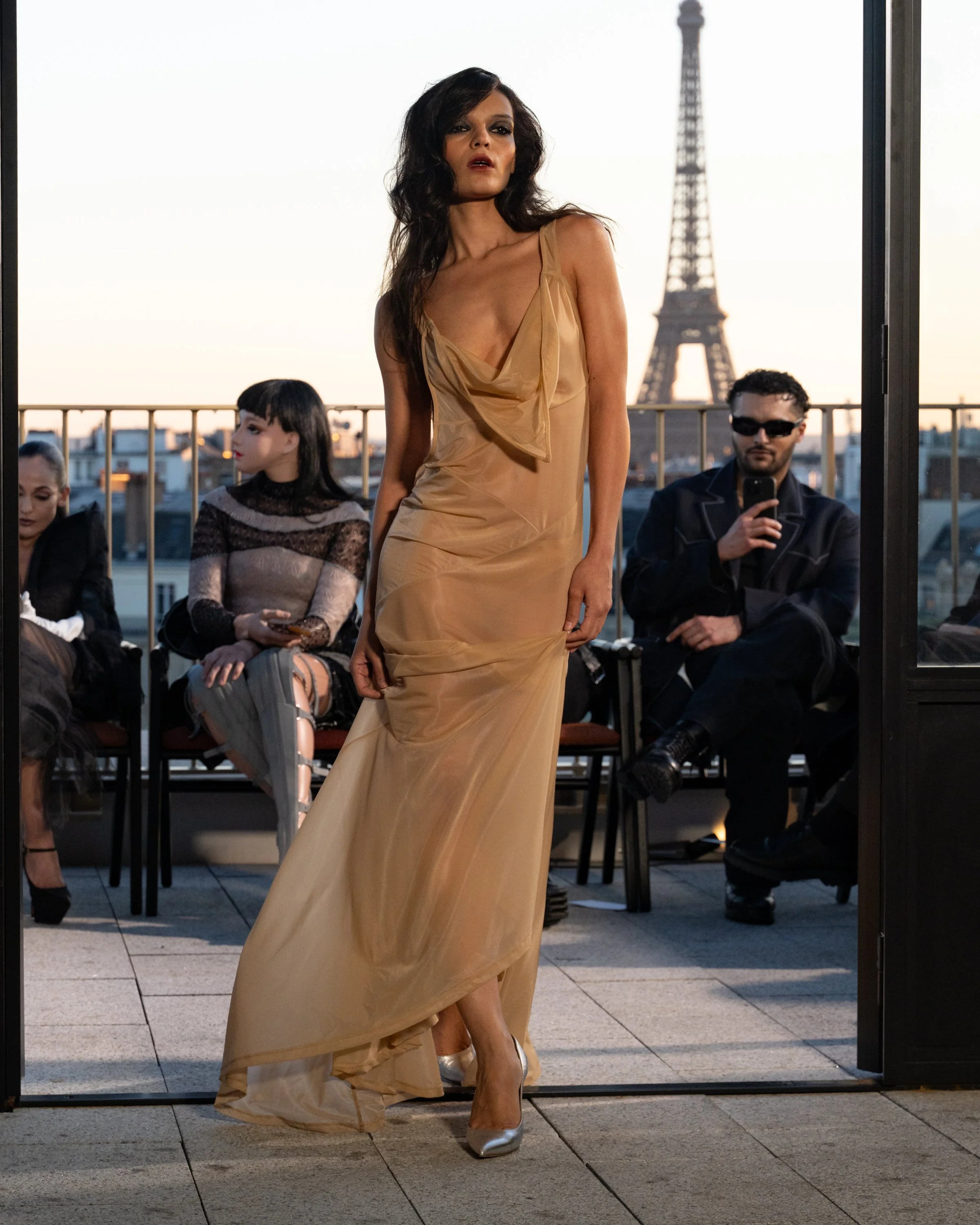
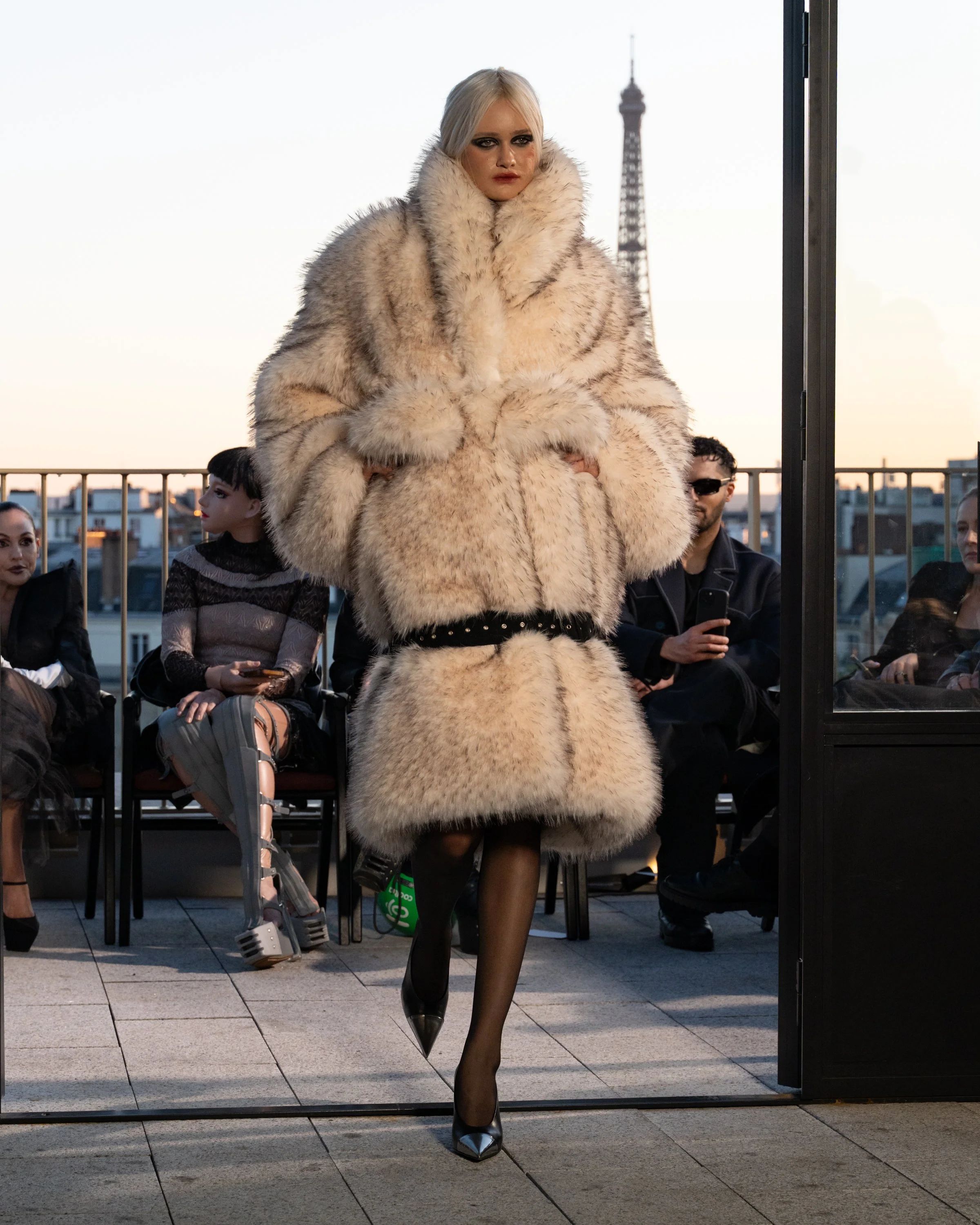
At his Fall 26 show in Paris, Vincent Garnier Pressiat returned to one of fashion’s most persistent archetypes: the “working girl”. But in Pressiat’s telling, she’s far from a commuter with a tote bag. In his words, the idea is “a woman of power who runs the office by day and ignites the tango by night”, which, while promising, occasionally struggles to land between fantasy and functionality.
Skin-toned gowns with asymmetric silk draping clung to the body like liquid, while lace-up dresses emphasized seductive sensuality. Dramatic collars, elongated jackets, and sharply cut coats allowed for captivating proportions and fit. Yet the office component of the concept felt more costumey than a believable wardrobe. Attempts to inject and twist corporate codes with oversized white shirts, ruffled cuffs, and loosely knotted ties at times felt added on rather than integrated.
The result is a collection caught between ambition and instinct. Pressiat’s instinct for seductive silhouettes is undeniable, but forcing them into a workwear narrative only dilutes what he already does best.
ALAINPAUL
review by ANOUK WOUDT
all images courtesy of ALAINPAUL
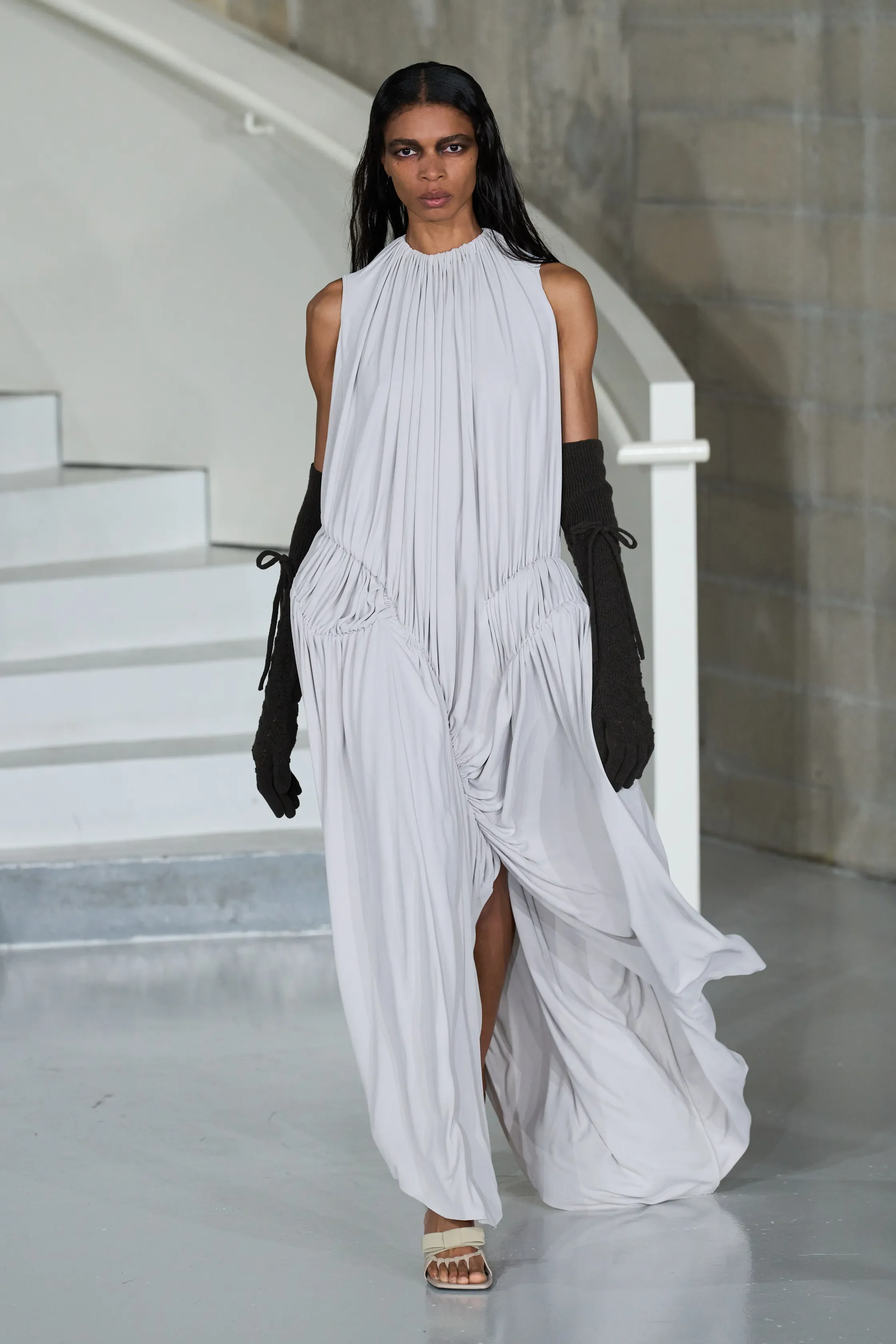
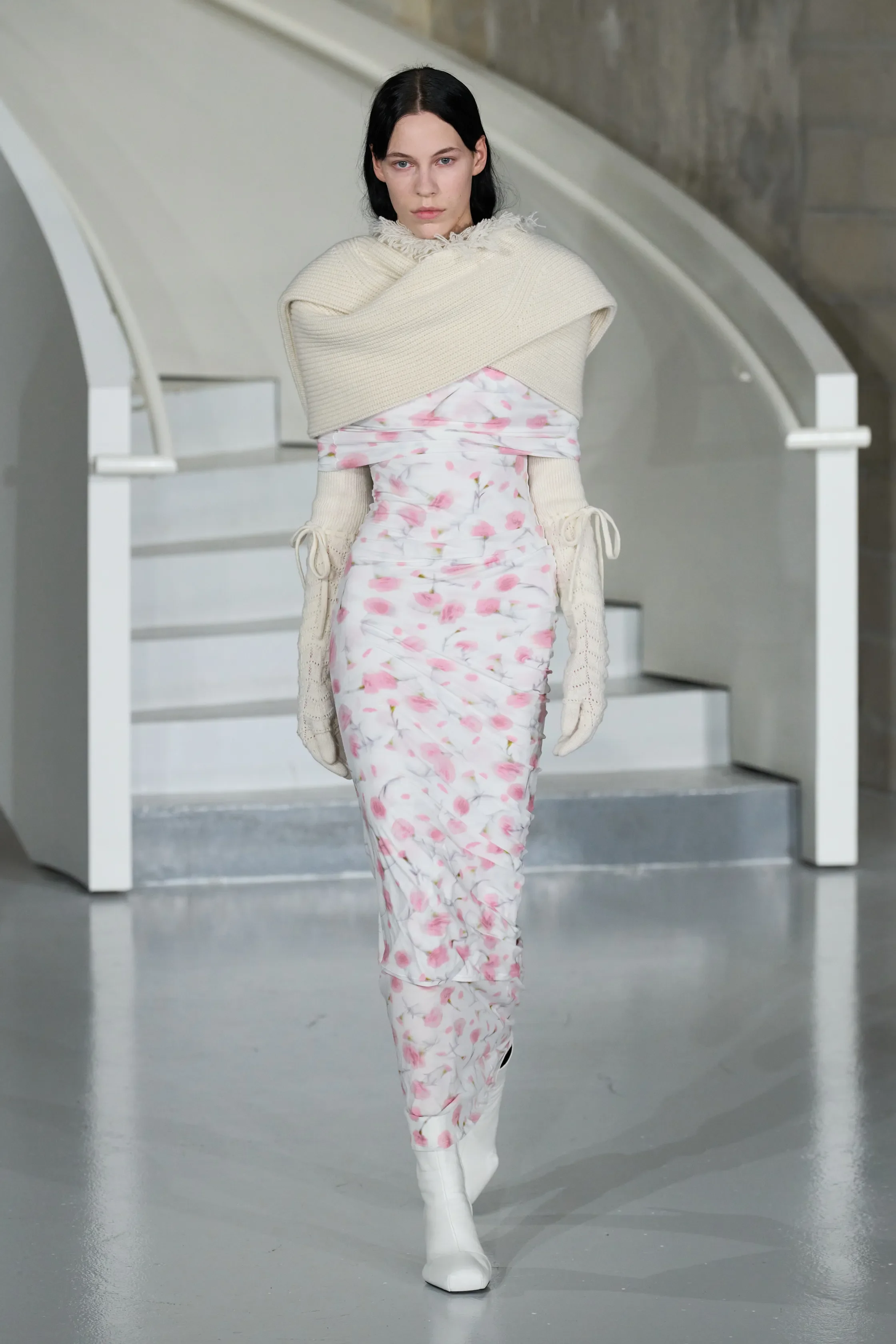
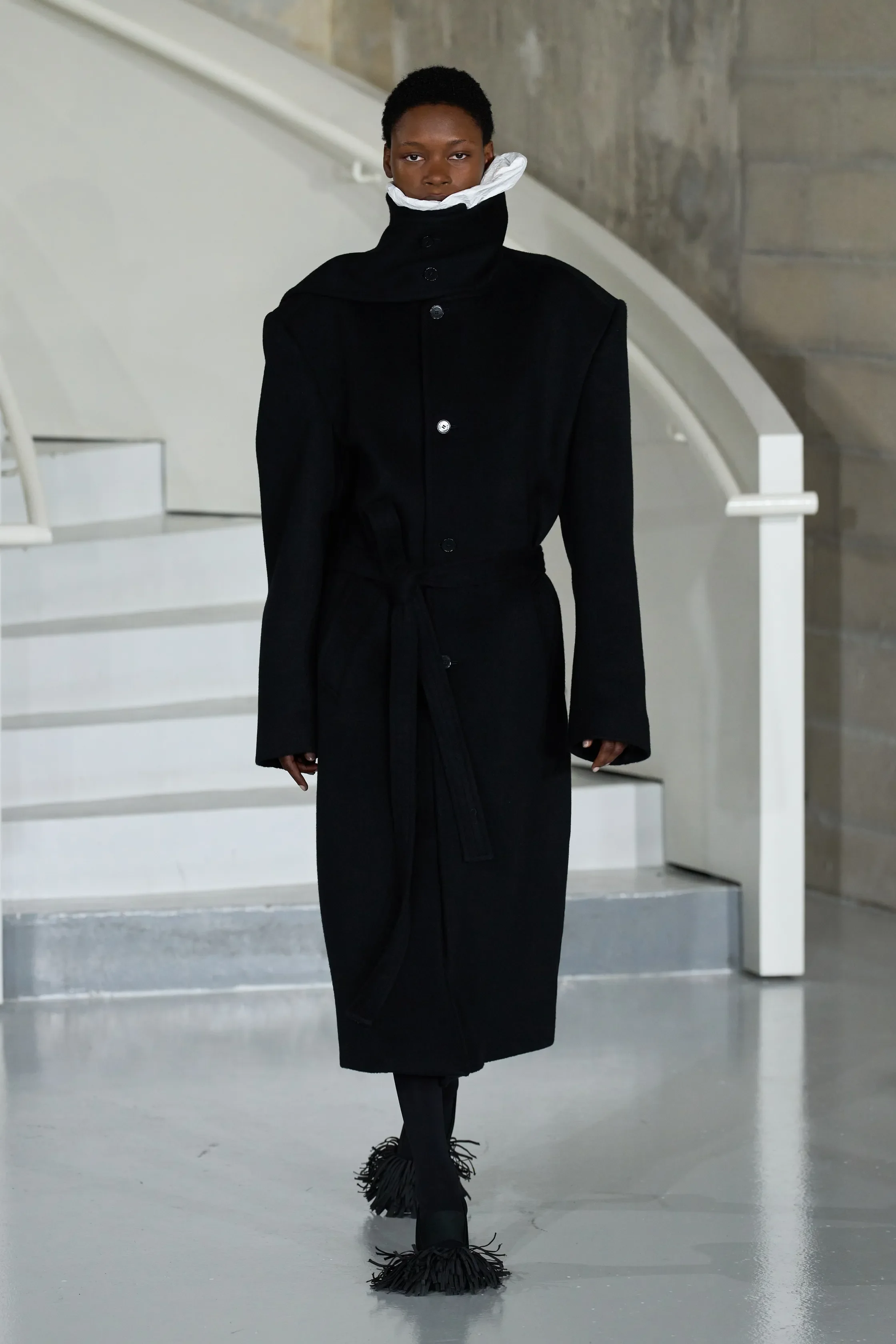
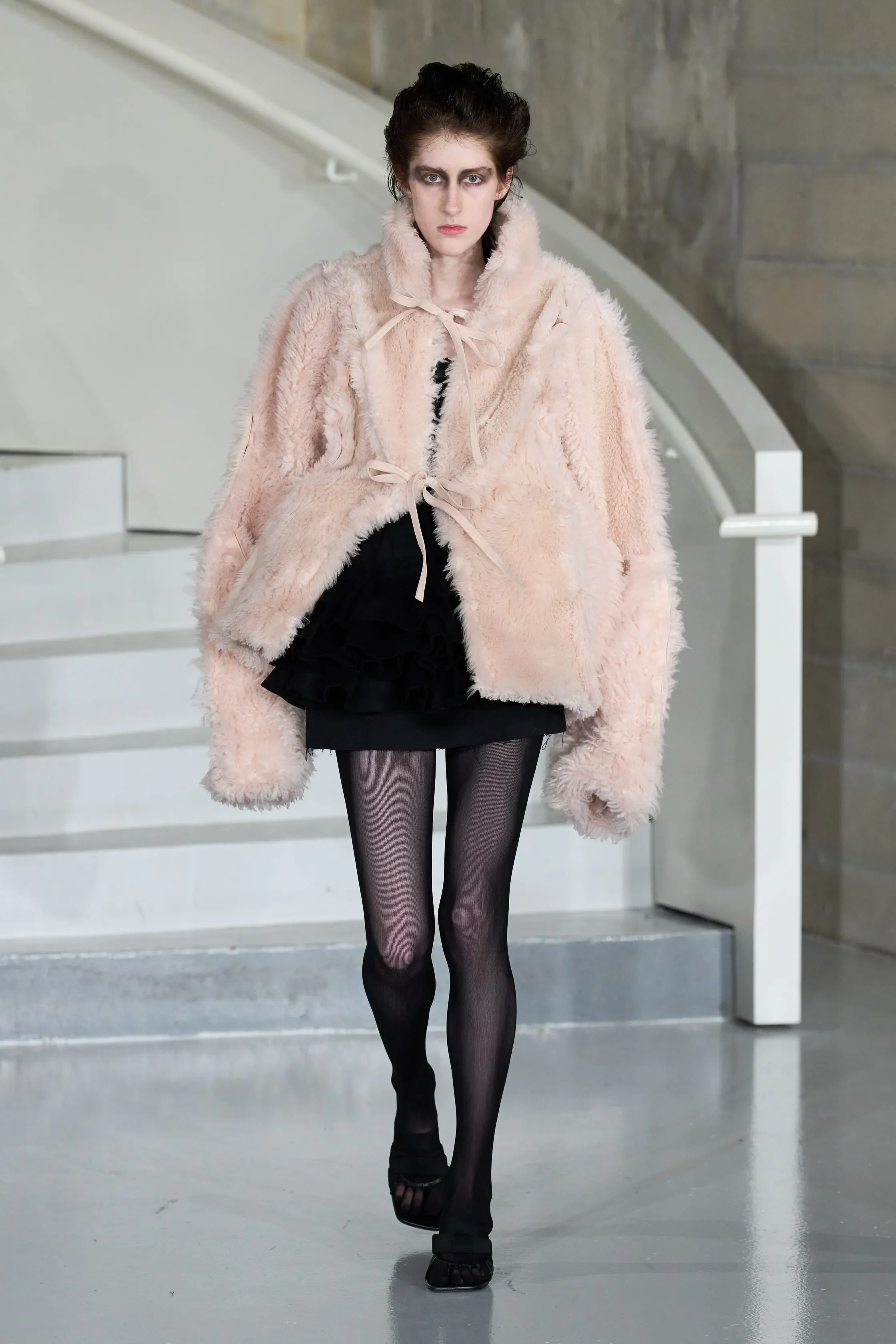
Crisp tailoring meets plushy tenderness in adoring marriage throughout the runway of Alainpaul’s F/W 26. Fabrics ebbed and flowed, driving dancing movements, before being replaced with stark suits, building an intriguing contrast from the show’s very conception. A minimal colour palette paves the way for silhouette to dominate your eye’s focal point, creating ornate asymmetries that flare up your attention– from poofed shoulders to high-neck cowls.
Through its softness, a gothic energy peaked through, emphasised by charcoal-encrusted eyes and ruffled vampiric details that overwhelmed the atmosphere with a Victorian darkness. But with every glimpse of black, there was a soft powder pink coming in to offset it, demonstrating a constant interplay between dark and light. The satins and exaggerated bows imbued intense femininity, highlighting the distinct duality of the collection. Glimpses of watercolour blurred florals also harken back to the brand’s flirty identity while adding to the juxtaposition.
What absolutely stood out the most, however, were the sheer cloaks, acting as an invisible overlay enveloping the looks, exaggerated from last year’s take on the look. Made out of a delicate white tulle, they were ribboned around mimicking every intricacy to form an airy second skin. It’s a motif that we have seen before from Alainpaul, though when paired with the moppy fringed ballerinas and corseted high gloves, it dips into a more experimental edge that we expect to see more of in the future.
SAINT LAURENT BY ANTHONY VACCARELLO
review by MAREK BARTEK
all images courtesy SAINT LAURENT BY ANTHONY VACCARELLO
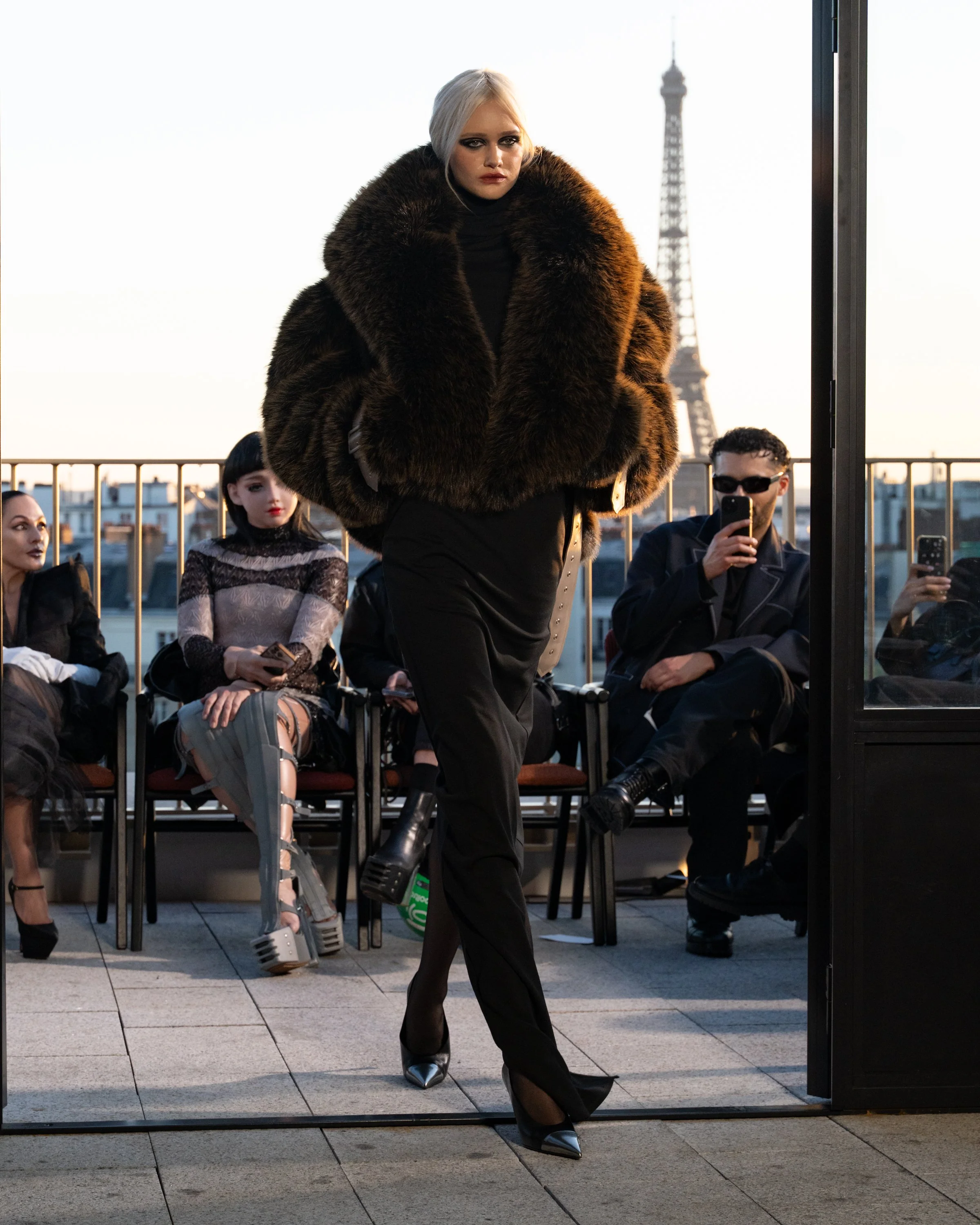
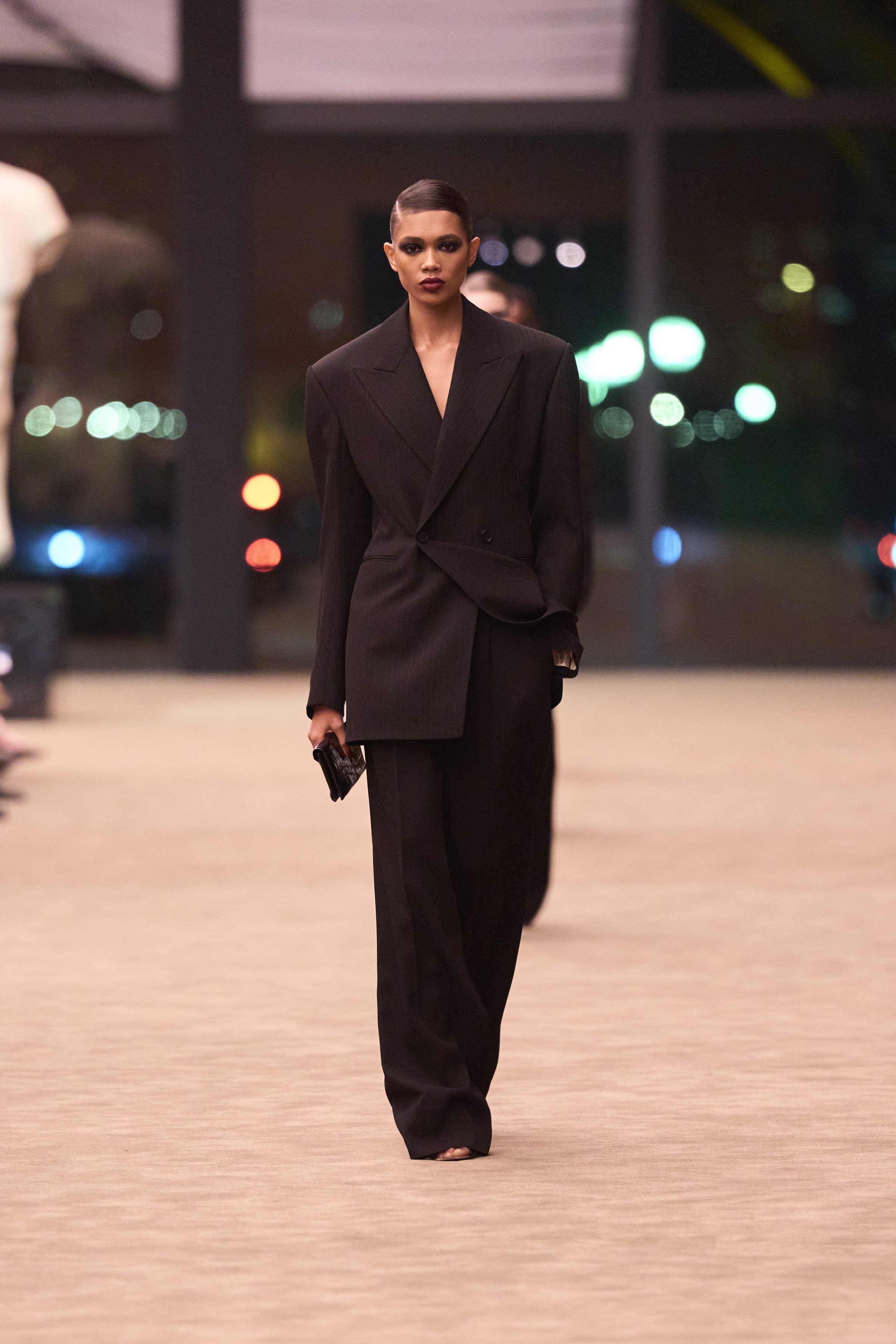
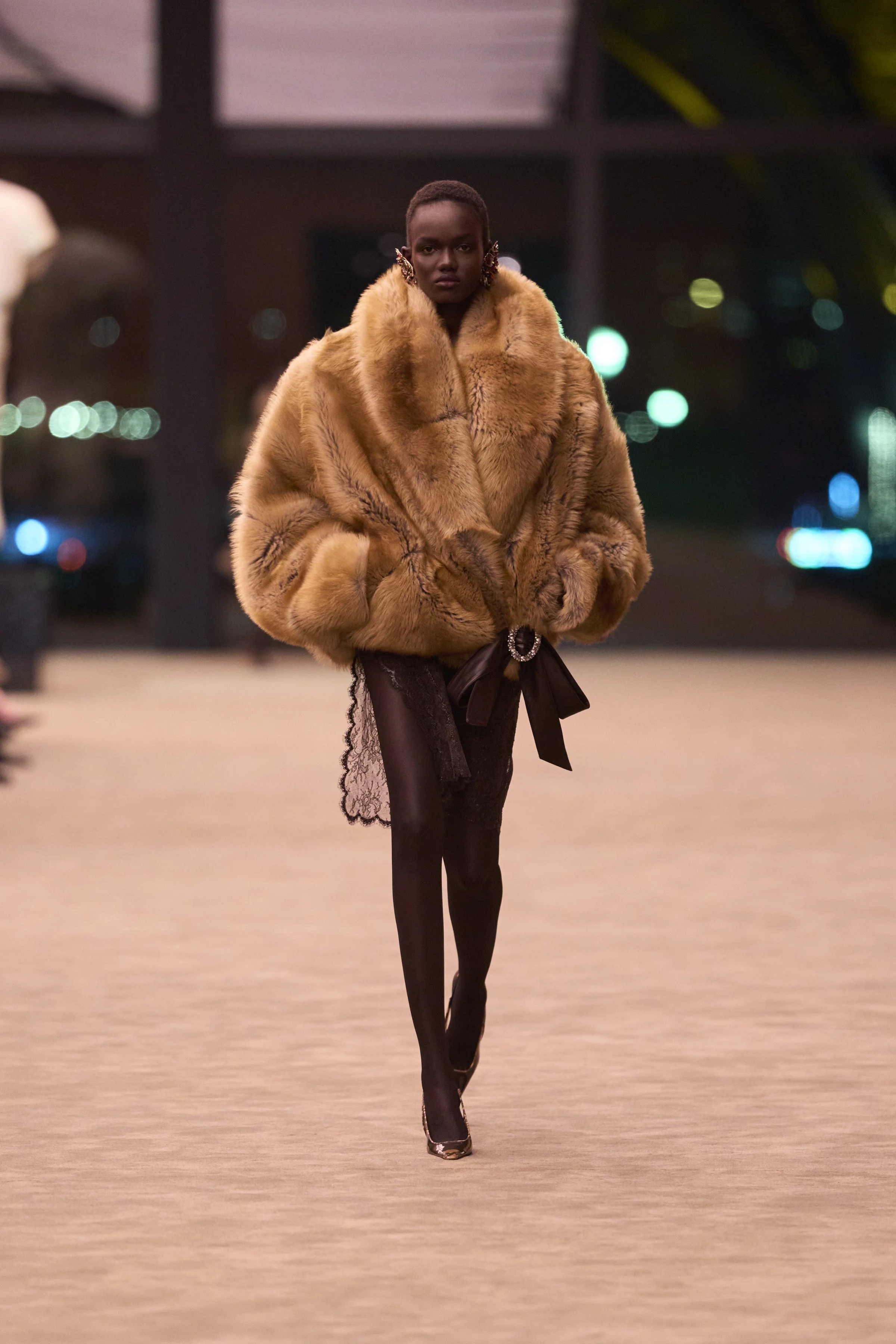
Anthony Vaccarello’s latest outing for Saint Laurent felt not only nostalgic but also as a recalibration of its core language. Tailoring, naturally, led the charge. A succession of sharply cut black suits opened the show, their sloped shoulders and fluid construction giving the iconic tuxedo silhouette an almost nonchalant ease. Sixty years after Yves Saint Laurent introduced Le Smoking, the message remains unmistakable: few houses understand the power of a suit on a woman quite like Saint Laurent.
As the press notes explain, the collection returned to Saint Laurent’s founding ethos: “a simplicity of silhouette – as if created with a few pencil strokes,” allowing cut and fabric to speak louder than embellishment. The repetition of tailoring was deliberate, forming what the house describes as “a collective memory of what Saint Laurent is and stands for.”
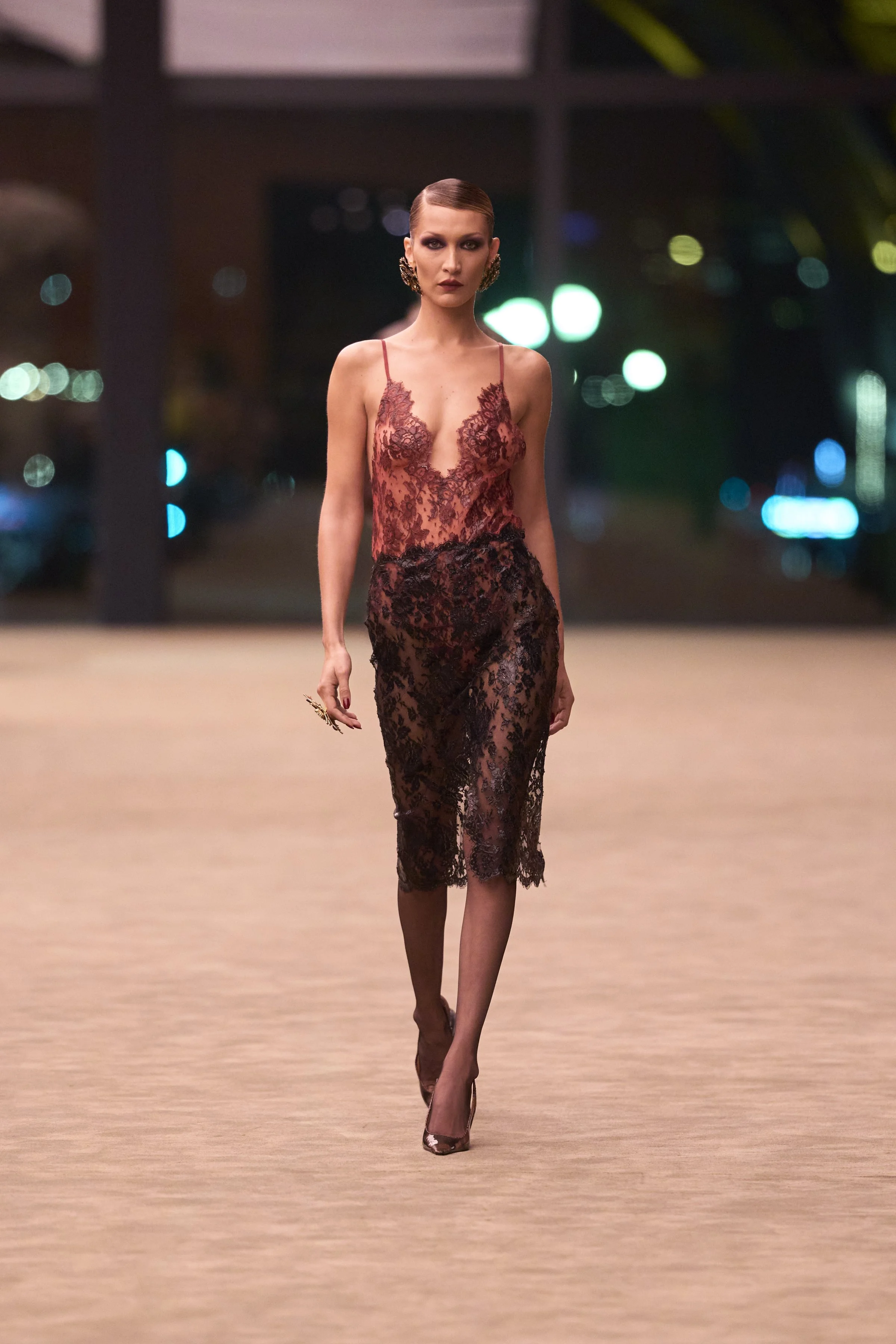
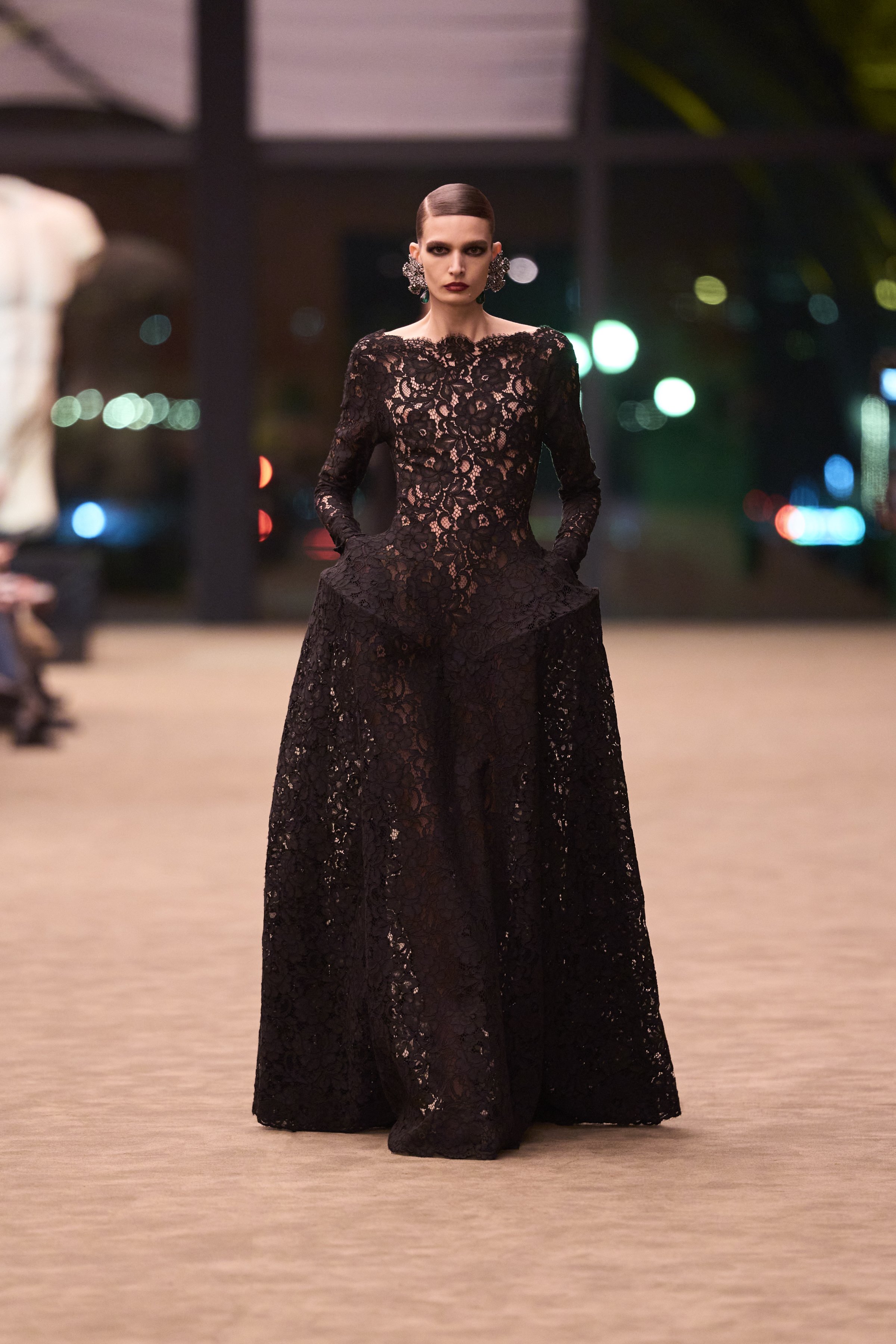
But the show wasn’t solely about discipline. Vaccarello countered the severity of black suits with unexpected sensuality. Sheer lace dresses treated with silicone appeared throughout the collection, their transparency held in rigid form. Fragility and strength traded places when delicate lace behaved almost like armor, while tailoring softened into movement. The result was a subtle reversal of expectation — structure becoming seductive, and vulnerability gaining authority.
Cinematic references hovered in the background. Vaccarello cited actress Romy Schneider as a guiding presence, drawn to the melancholic elegance she embodied in films like Max et les Ferrailleurs. Among other inspirations was also the psychological intensity of writers like Tennessee Williams and Gore Vidal, whose work informed the show’s underlying mood.
Colour entered sparingly but deliberately: deep browns, burnt sienna, teal and French blue punctuated the dominance of black, while sculptural golden dove jewelry added moments of brightness. Meanwhile, the set — a glass-walled modernist residence framed by a view of the Eiffel Tower — reinforced Vaccarello’s fascination with intimacy and spectacle.
If the tuxedo once symbolised rebellion, Vaccarello’s interpretation suggests something quieter but equally powerful. The silhouettes were lean, the gestures composed, yet the impact evident.