
PARIS FASHION WEEK FALL/WINTER 2026: DAY 6
JUNYA WATANABE
review by ANOUK WOUDT
all images courtesy of JUNYA WATANABE
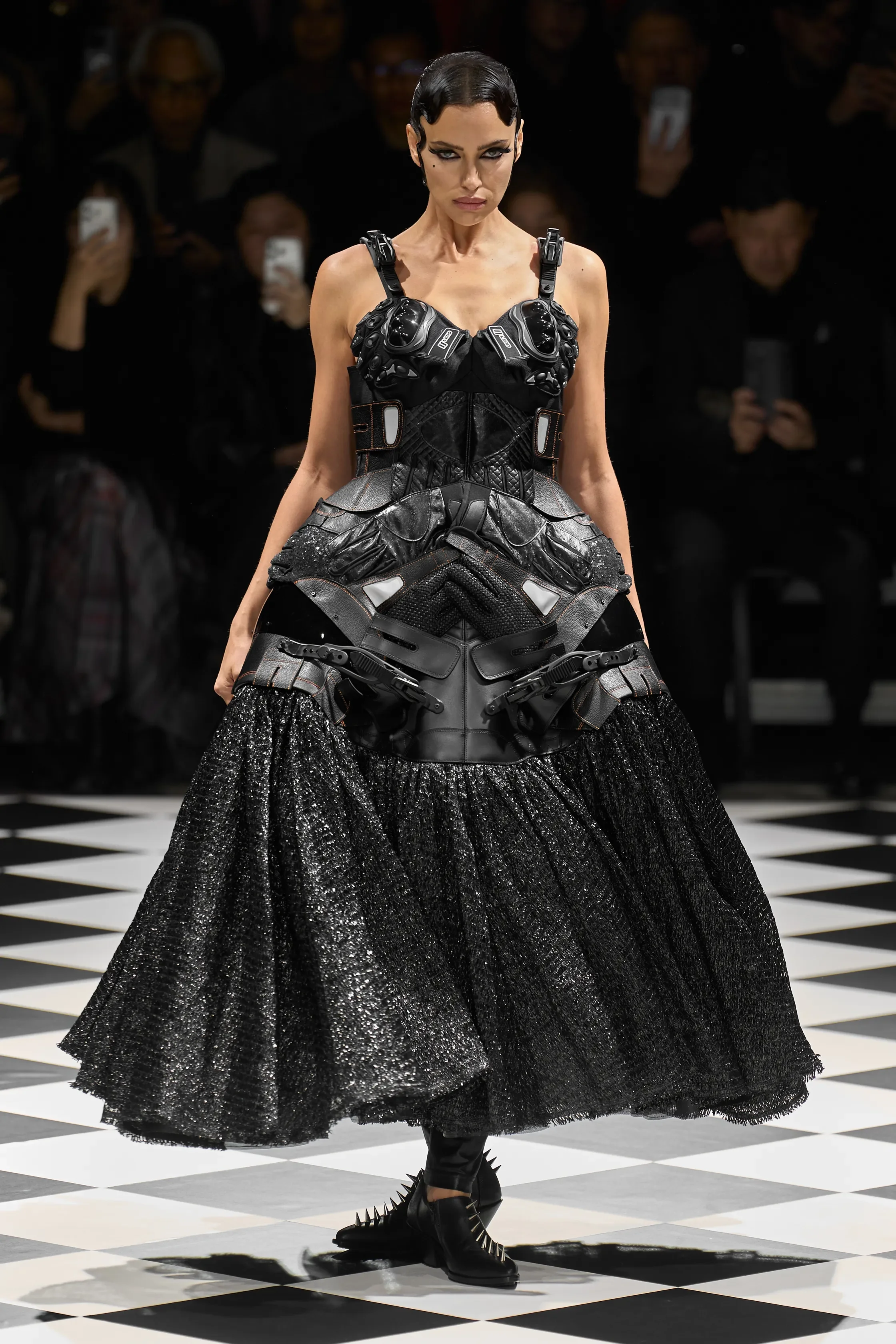
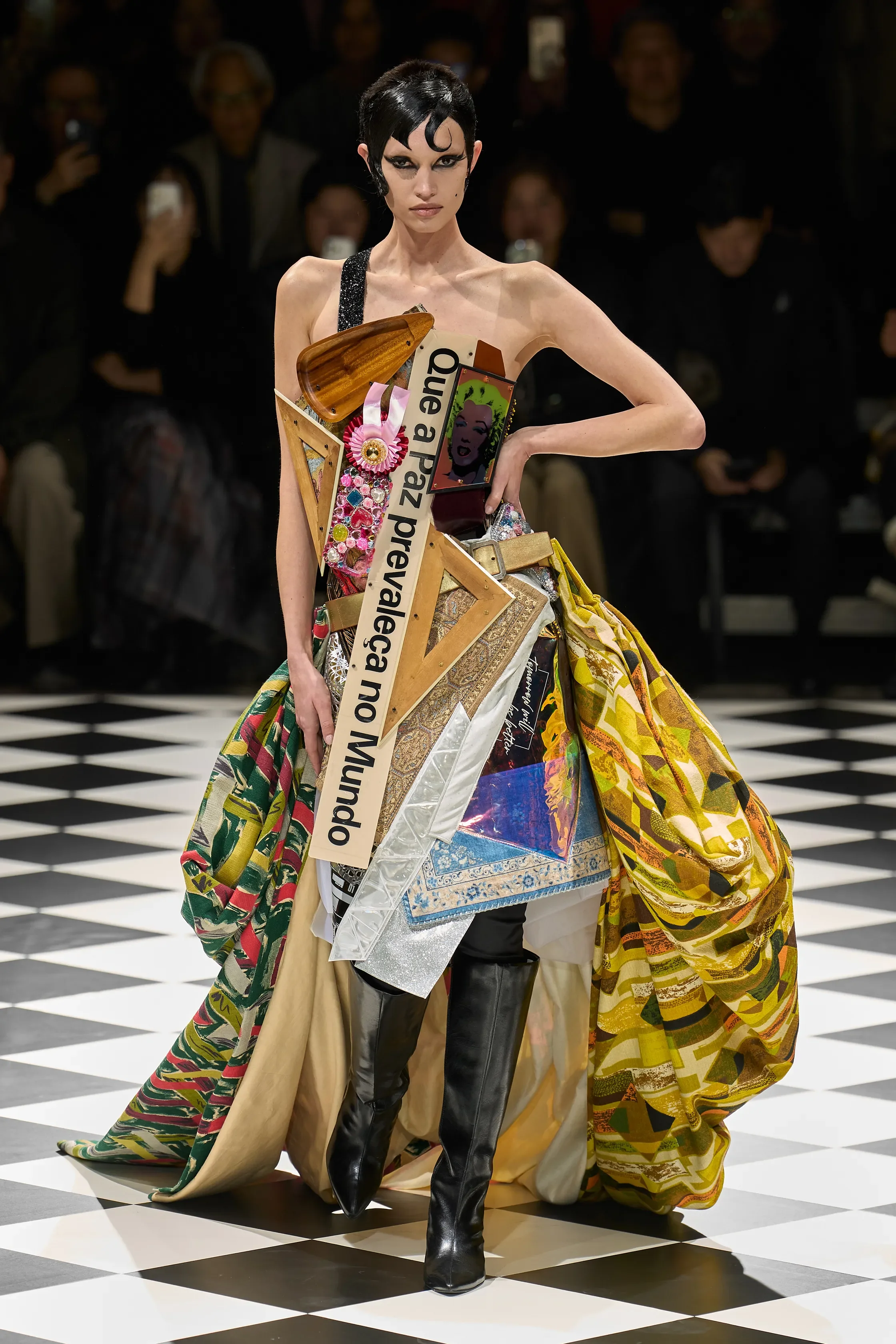
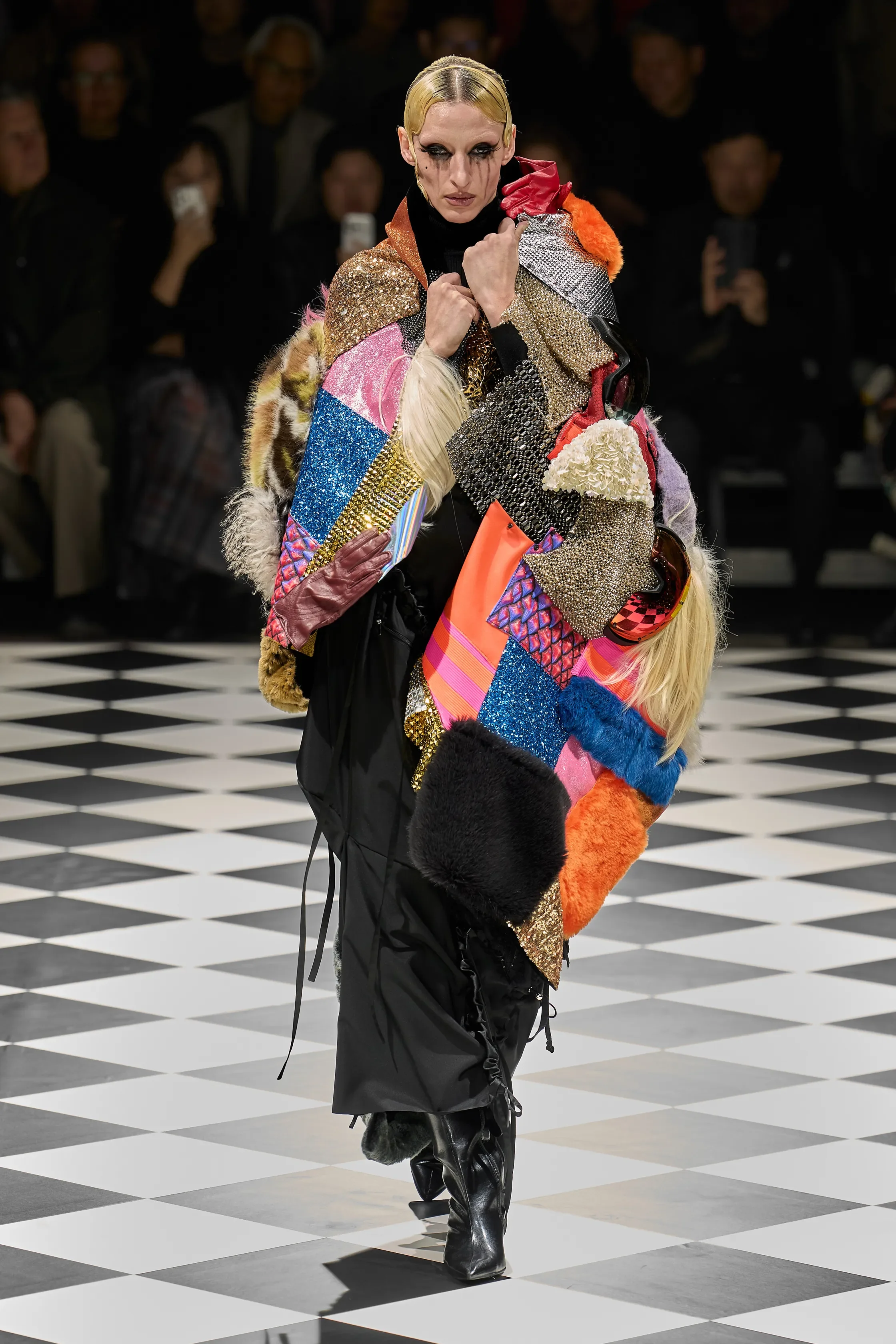
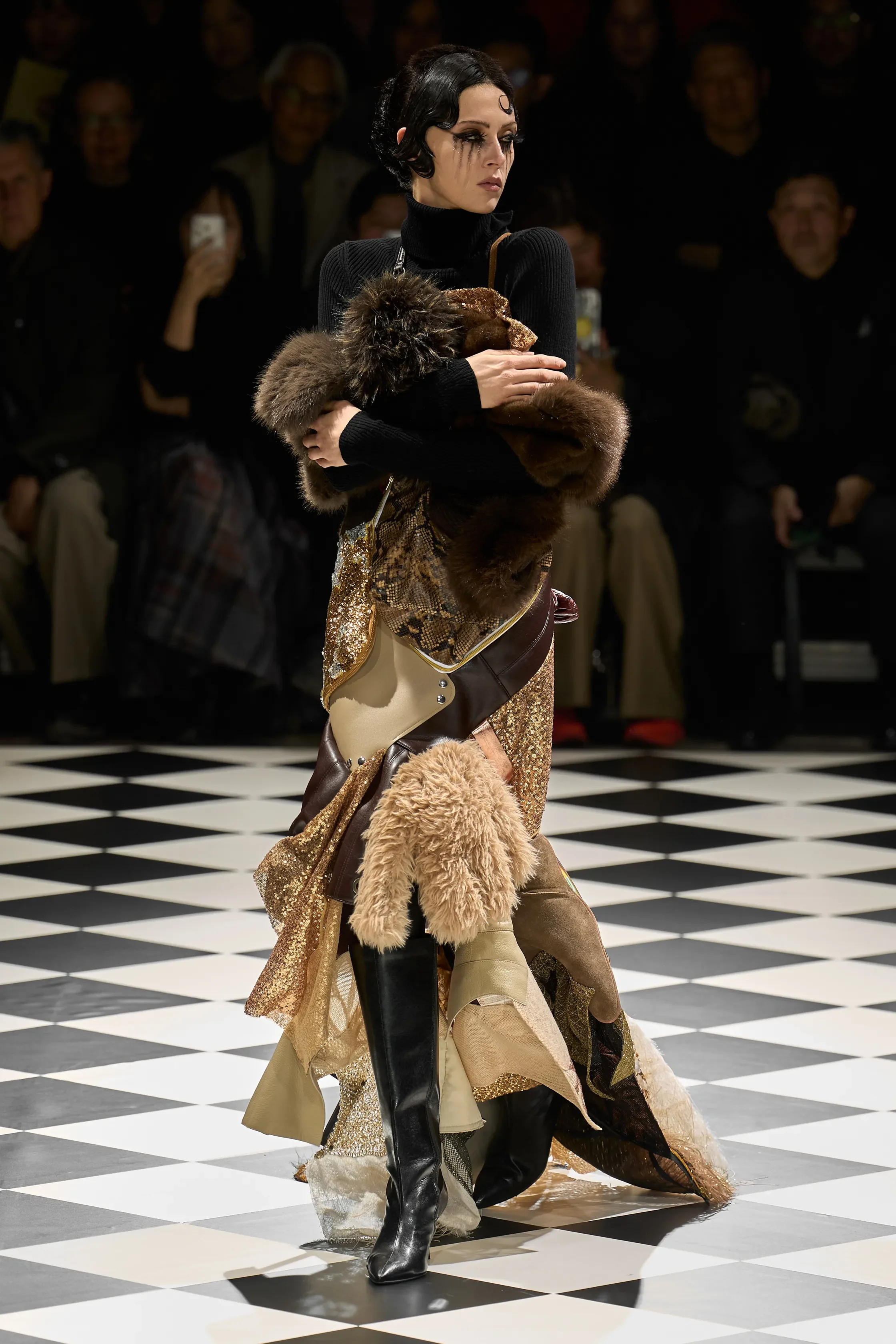
This season, one man’s trash truly was another man’s treasure, and that man is Junya Watanabe. With this collection titled The Art of Assemblage, pieces were all created from salvaged objects reassembled into an up-cycled haute couture. Serving as both a testament to his creativity and a striking commentary on the ridiculed heights of overconsumption, what results is a stunning mosaic of artefacts guided by boundless imagination.
Emerging covered in miscellaneous junk strapped like sculptural armour, Irina Shayk opens the show, dramatically immersing you into their version of dystopia. Motorcycle gloves and protective gear are stitched to form a corseted structure that ultimately gave way to a gown of metallic mesh. This theme tracked among the looks that followed, creating a cast of steampunk-esque characters shielded in all kinds of abstract items. Picture frames, belt buckles, and even motorcycle helmets were attached to fabrics, creating jutting silhouettes that rejected the body’s natural form.
Stuffed animals enter the conversation halfway through the show, also through Irina Shayk— which is quite a strange choice for a designer who usually focuses on model anonymity to highlight the clothes — serving as a fluffy yet cartoonish stole. This whimsy was mirrored through adjacent looks in a Frankenstein of glitters, furs, patterns, and foils brought together through yet another myriad of random objects. Acting as a temporary intermission from the dark sense of edginess that we began with, the show soon returns with a similar sinister energy to bid adieu.
CELINE
review by MAREK BARTEK
all images courtesy of CELINE
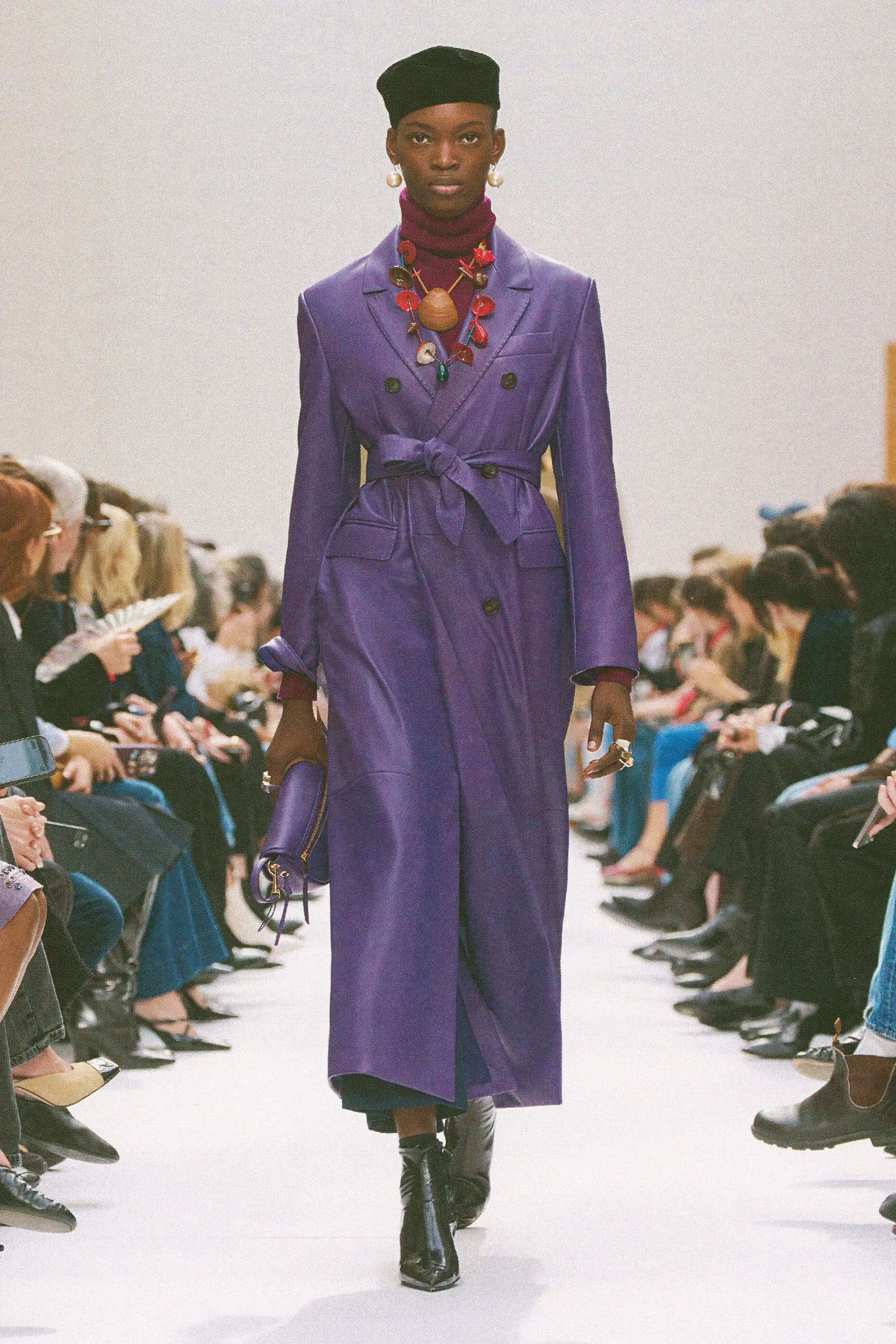
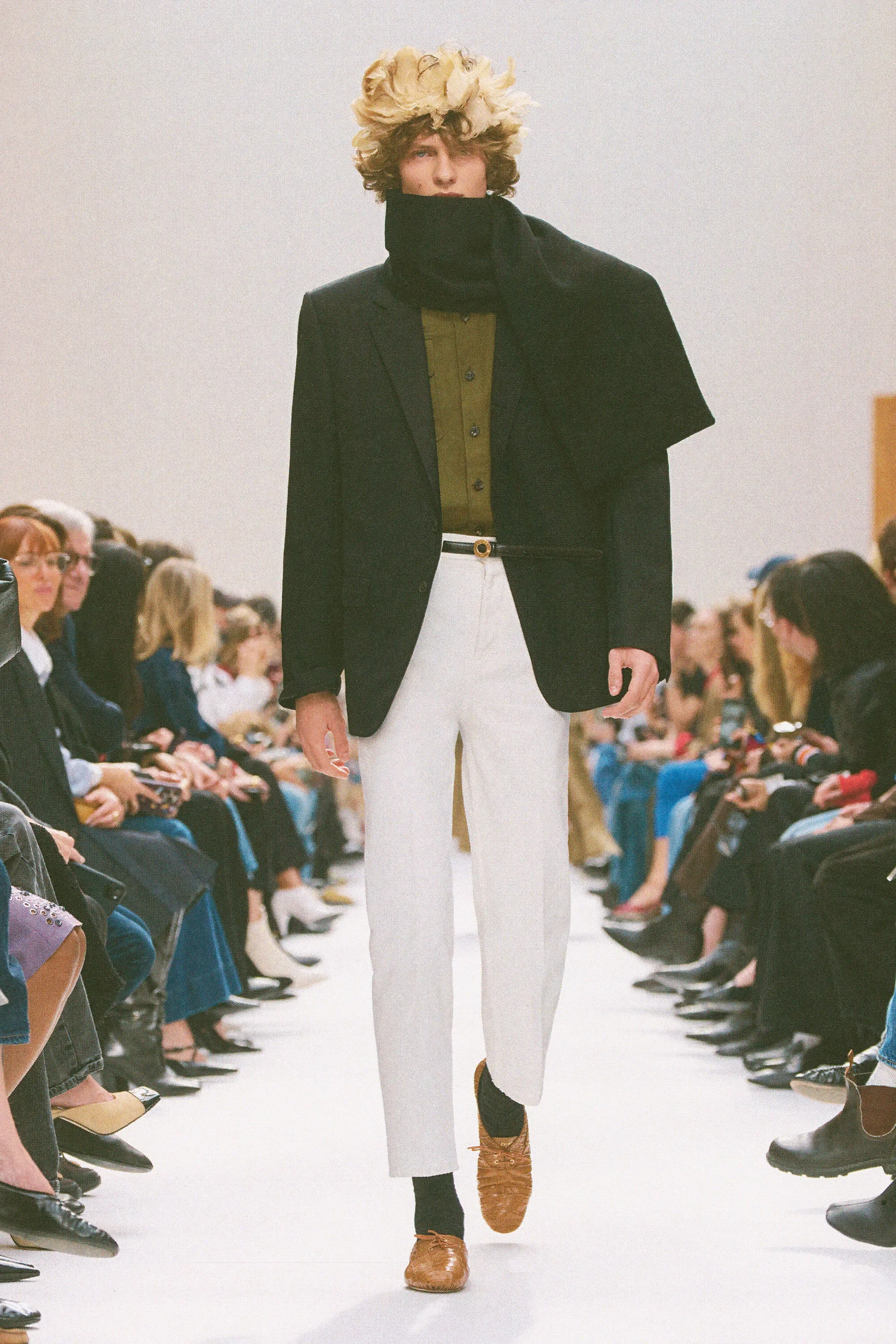
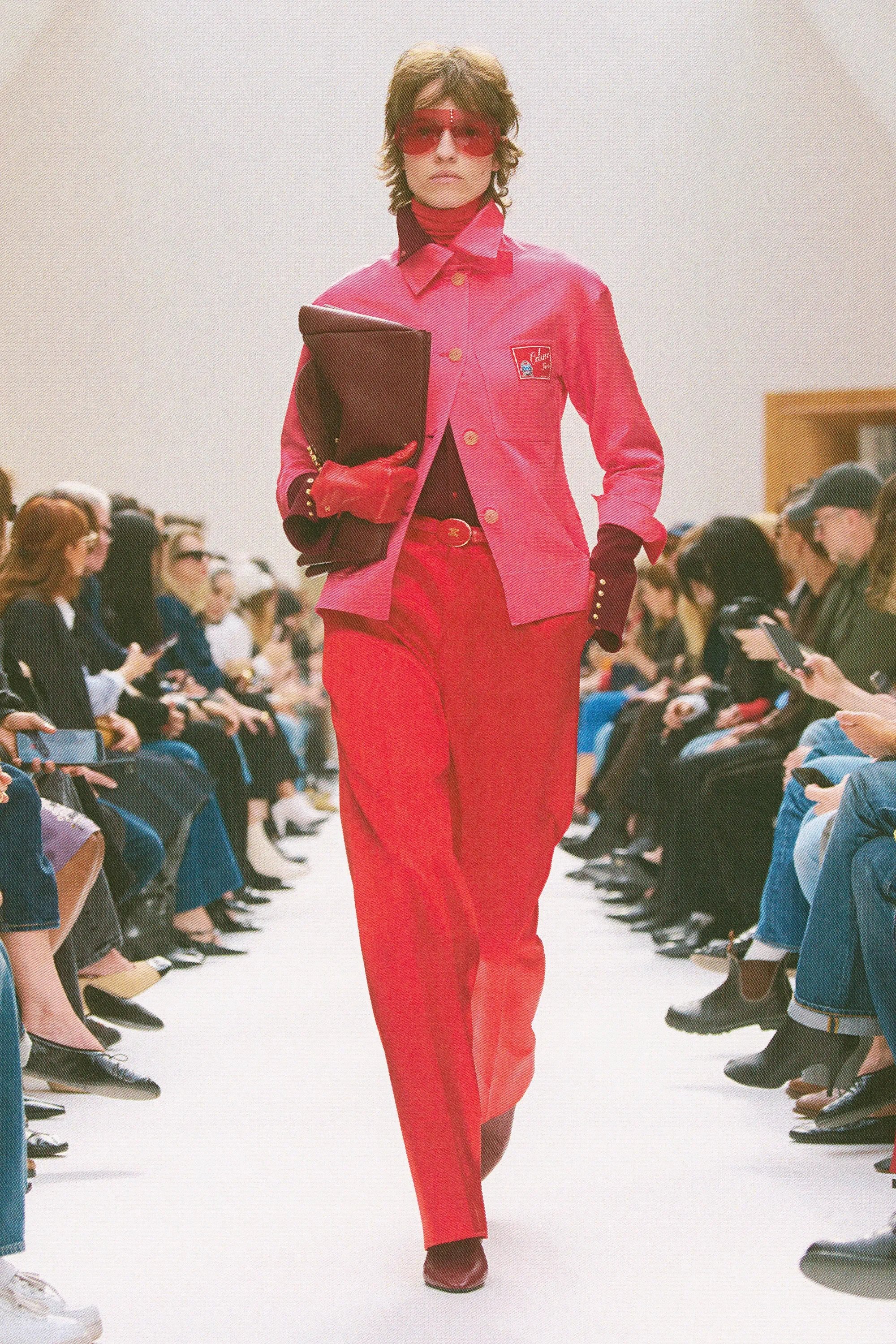
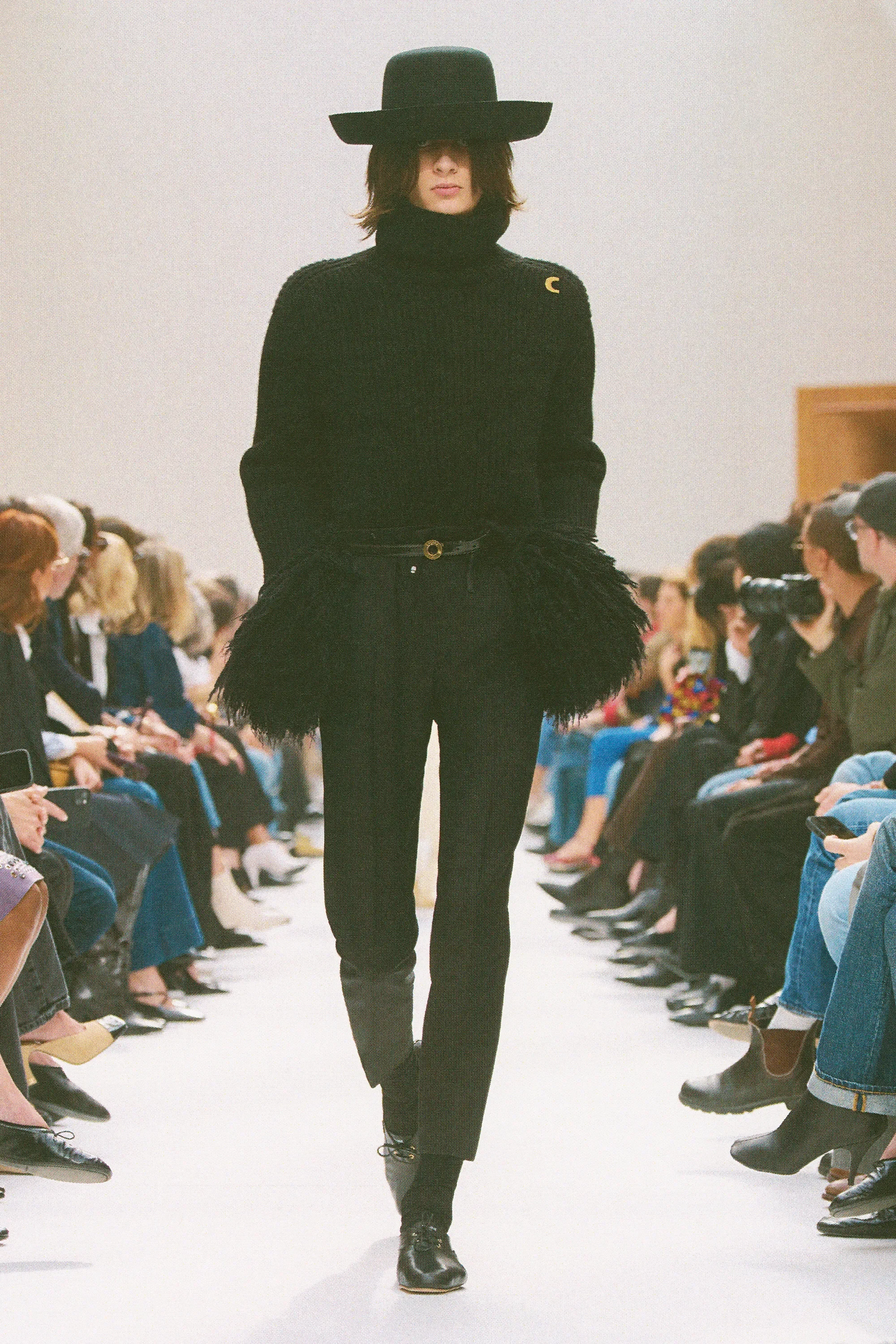
At Celine, Michael Rider is beginning to settle into his rhythm. For his third collection at the house, Rider moved away from the preppy signatures that defined his earlier collections and instead focused on something more precise: clothes built around a sharper, closer silhouette.
“I do think Celine is a place you go to find beautifully cut clothing; a slimmer silhouette,” Rider noted backstage, and the message came through clearly on the runway. Tailoring was pulled tighter to the body, with coats cut neatly at the shoulders and jackets shaped closely along the torso. Cropped trousers and subtle kick flares reinforced the elongated line, while narrow overcoats and streamlined peacoats offered a polished but approachable take on Parisian dressing.
After years dominated by oversized proportions, Rider appears interested in restoring structure without sacrificing ease. His approach to classics isn’t about nostalgia, but attitude. “Classics is one thing, but we like bite,” he explained — a philosophy visible in the small disruptions scattered throughout the collection.
Feathered headpieces sprouted unexpectedly from models’ hair, and satin mufflers were wrapped dramatically across the face, hinting at what Rider described as our “messy inner lives.” The tension between refinement and eccentricity gave the clothes their character.
But what ultimately defined the collection was its wearability. These were not clothes designed to exist only on the runway, but garments that suggested a full wardrobe — pieces meant to step directly into everyday life while retaining that unmistakable Celine sharpness.
HERMÈS
review by VERONICA TLAPANCO SZABÓ
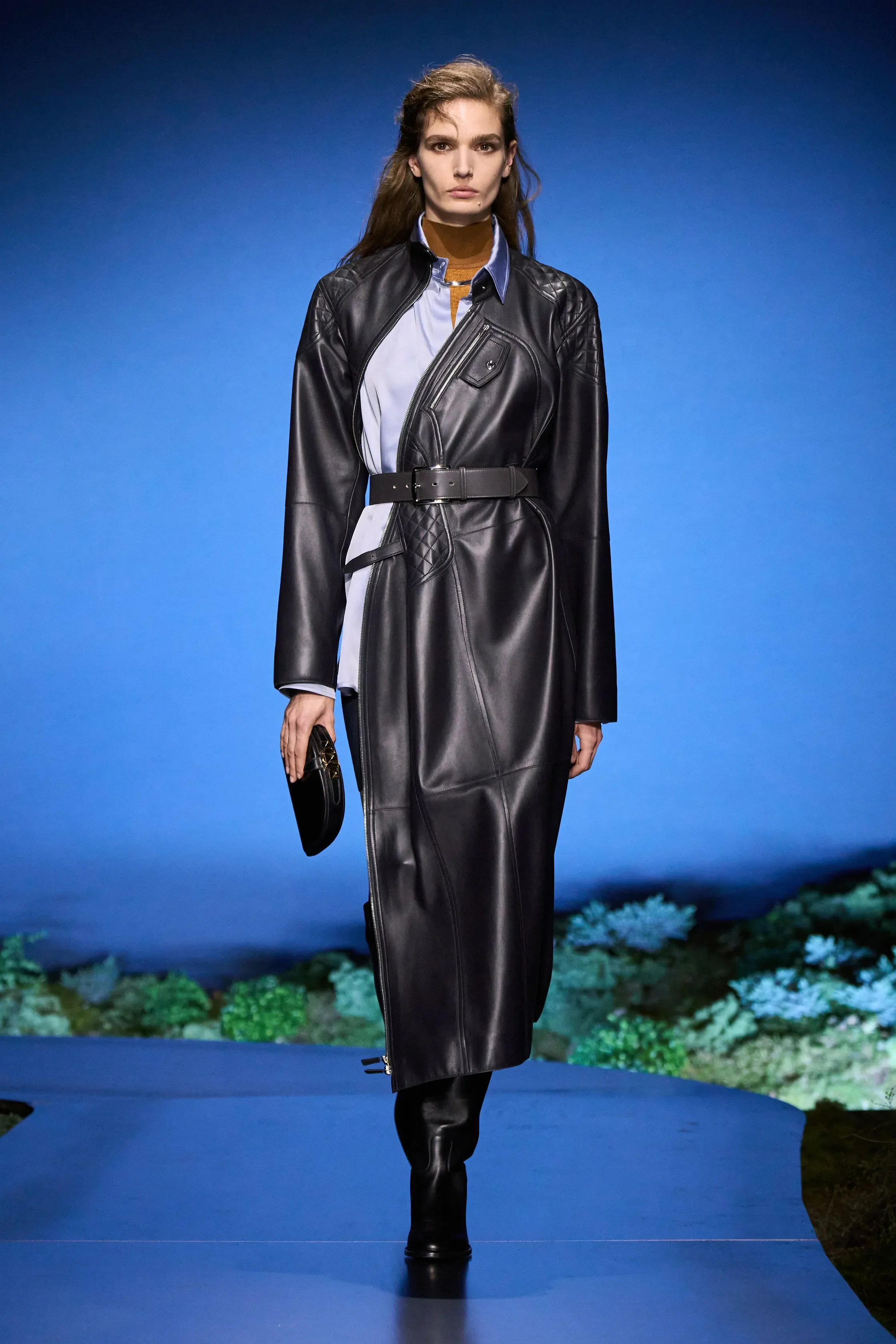
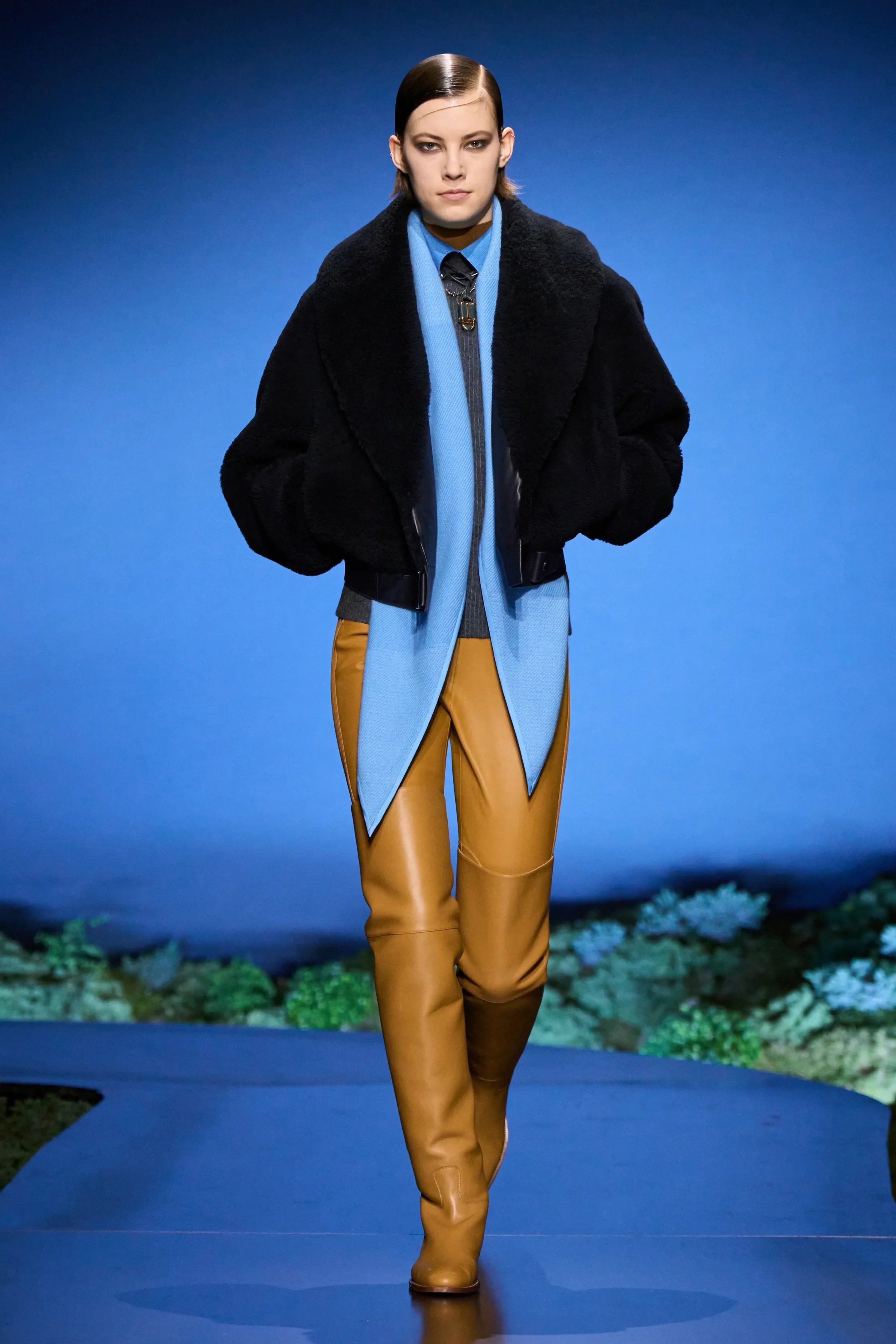
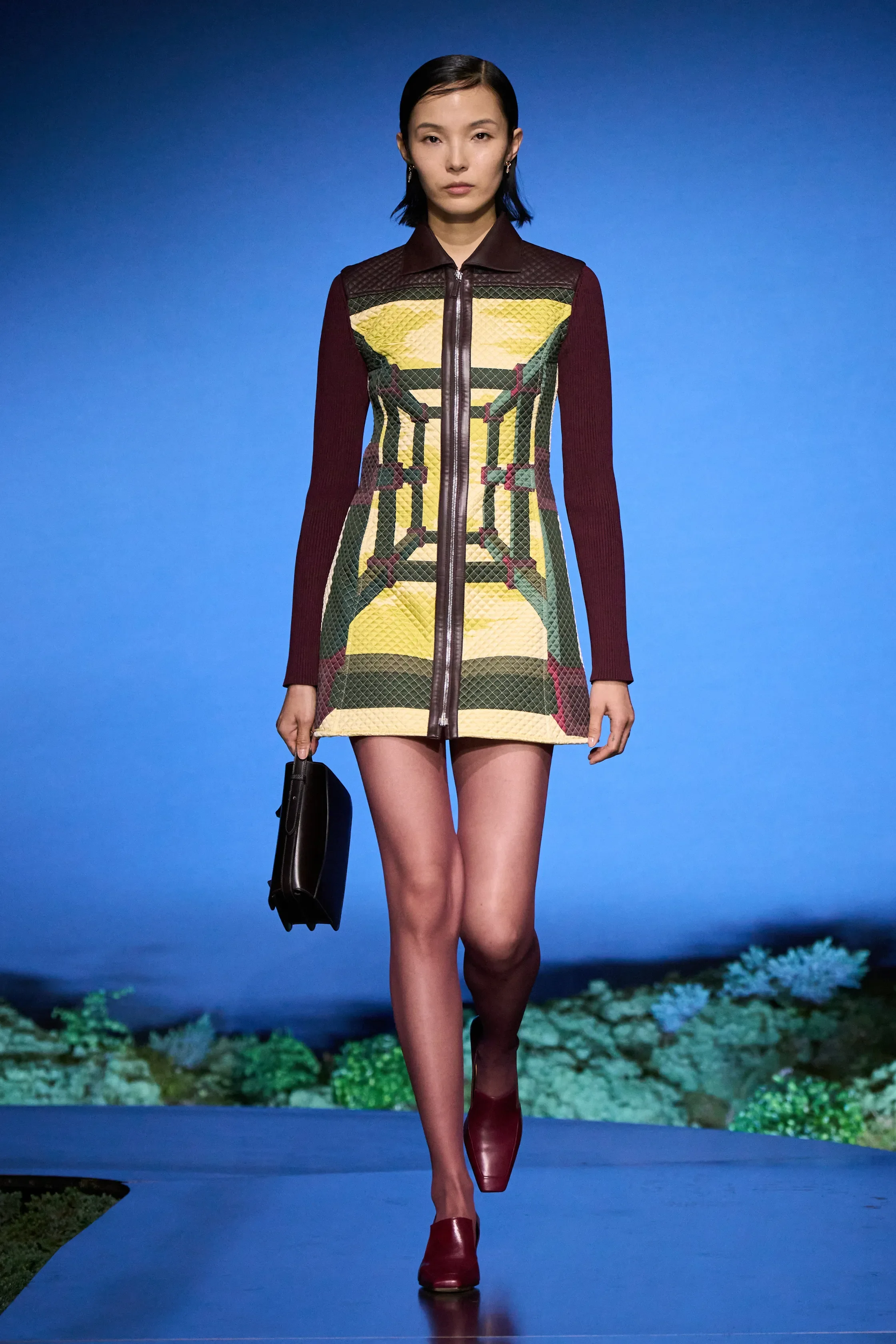
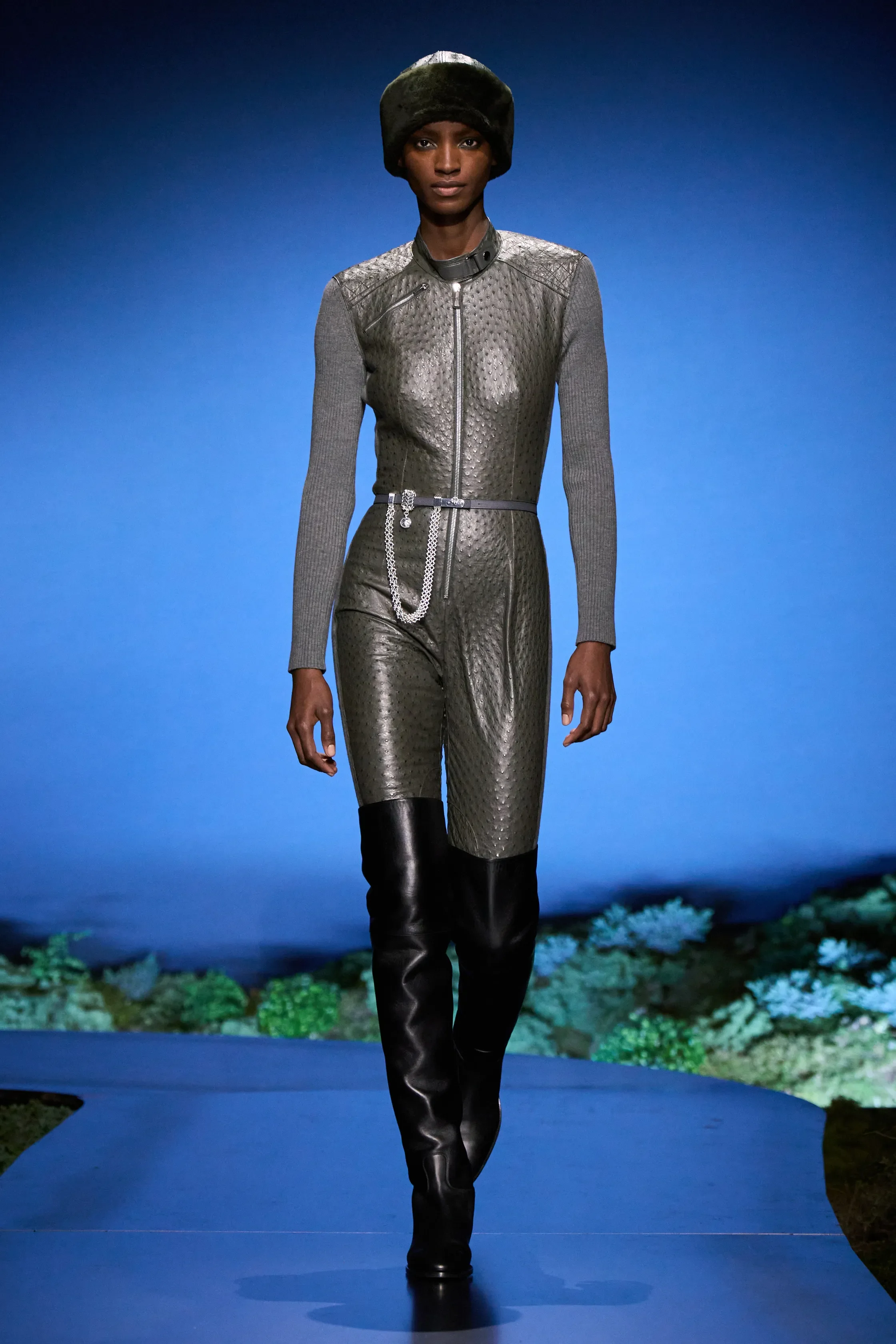
all images courtesy of HERMÈS
There’s a chicness to utility that is not lost on Nadège Vanhee in her latest collection for Hermès, where cinched waists meet boots that crawl up the thigh-high. Each silhouette seems to speak to the one before it, picking up a detail and smoothly passing it along. Take the colours, for instance, a true sense of dégradé unfolds from peach to burgundy, into the profoundest forest greens and navy, before finally settling into black. Vanhee explains that she had the “liminal realm” of twilight in mind for this collection, and the transformative potential it harbours.
One can become anyone in the night just as one can be reborn in the morning, ideally aided by a silhouette as flexible as the character one chooses to inhabit. Zippers perfectly encapsulate this idea of fluidity, gliding open or closed to reveal or conceal according to the wearer’s desires. The equestrian spirit is, of course, very much alive, fittingly so in this year of the horse, with jodhpurs slipped on to conquer new horizons. The collection never strays too far from its utilitarian anchor though, as outerwear remains firmly designed with function in mind, removable collars and chain belts oblige .
ANDREAS KRONTHALER FOR VIVIENNE WESTWOOD
review by ANOUK WOUDT
all images courtesy of ANDREAS KRONTHALER FOR VIVIENNE WESTWOOD
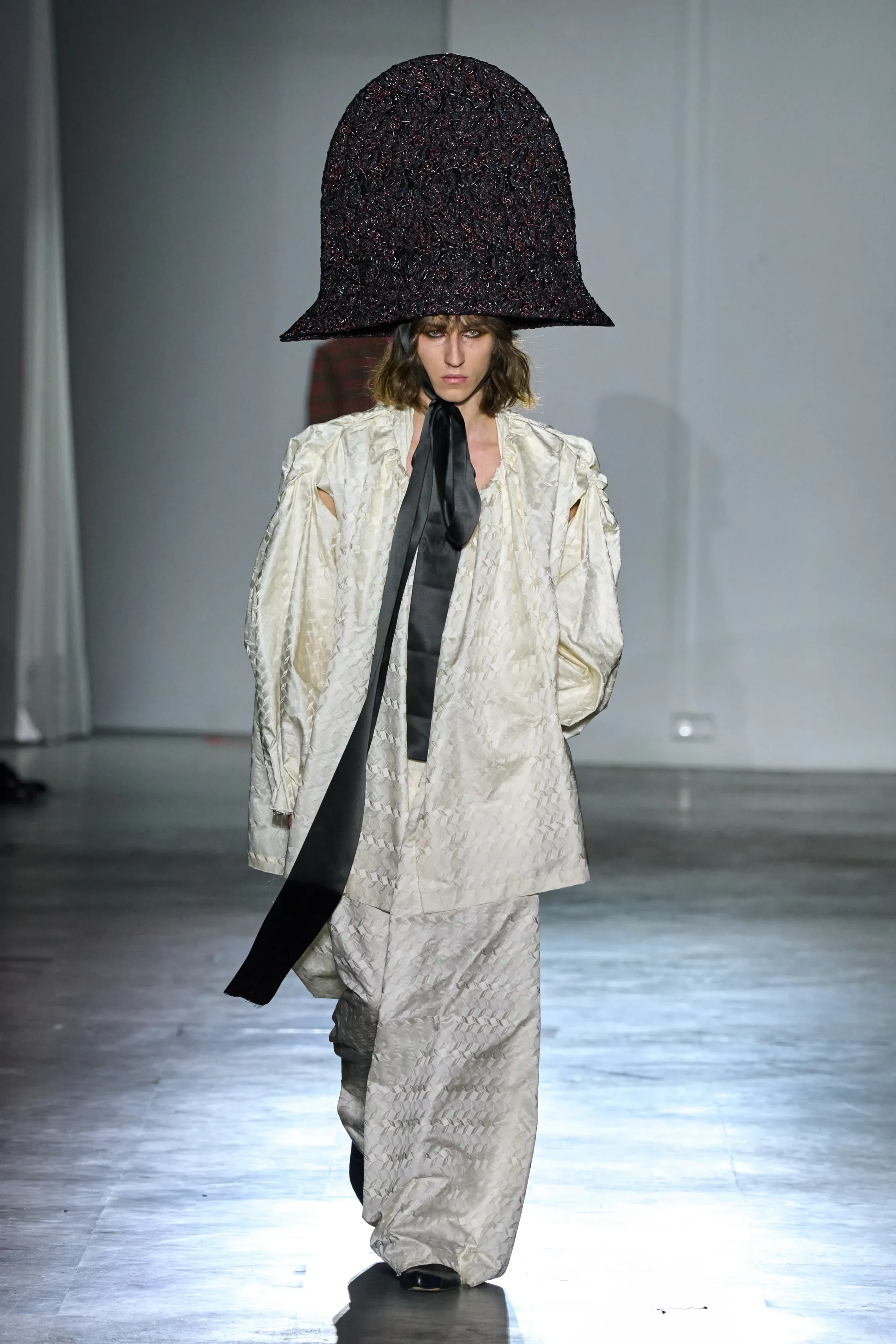
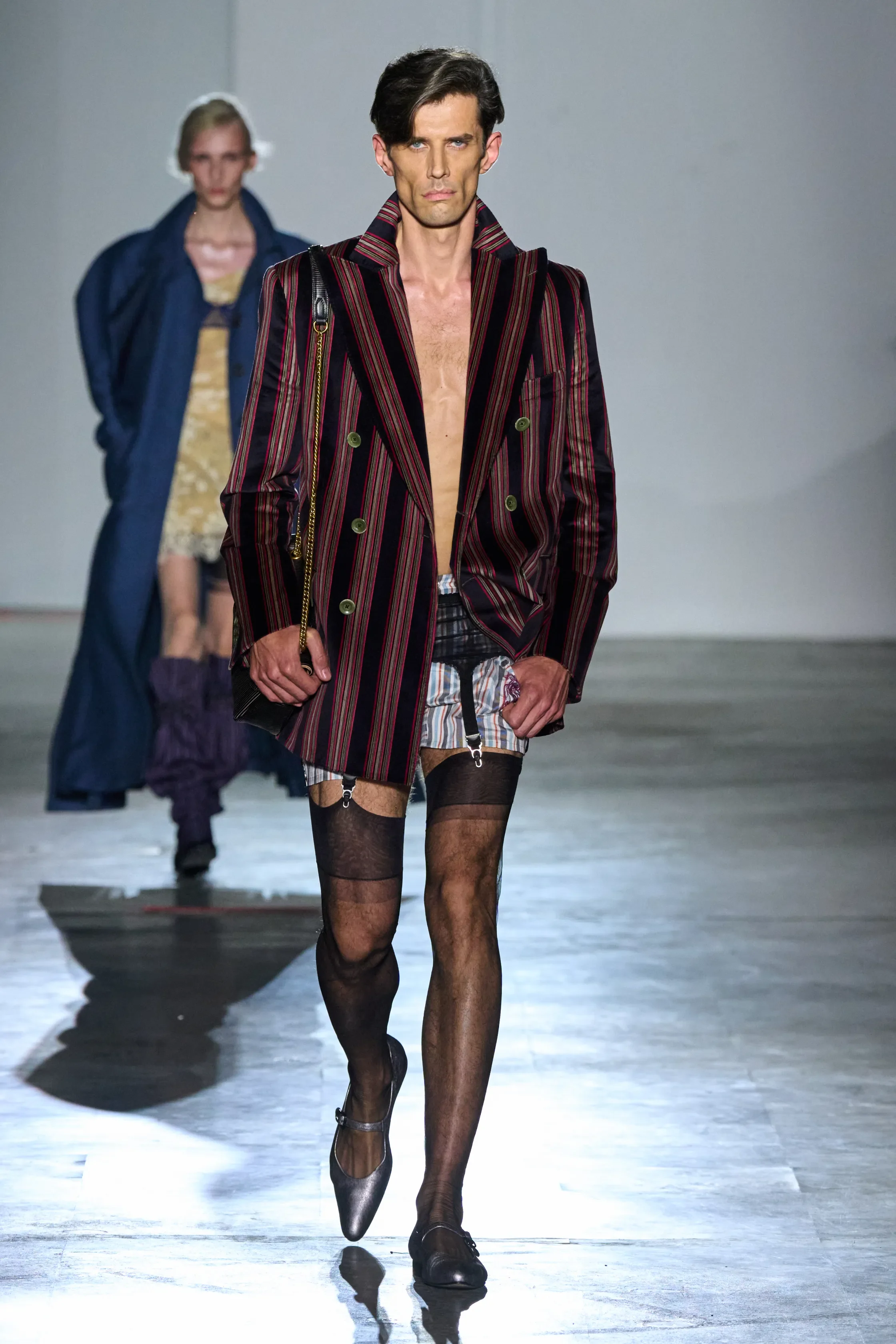
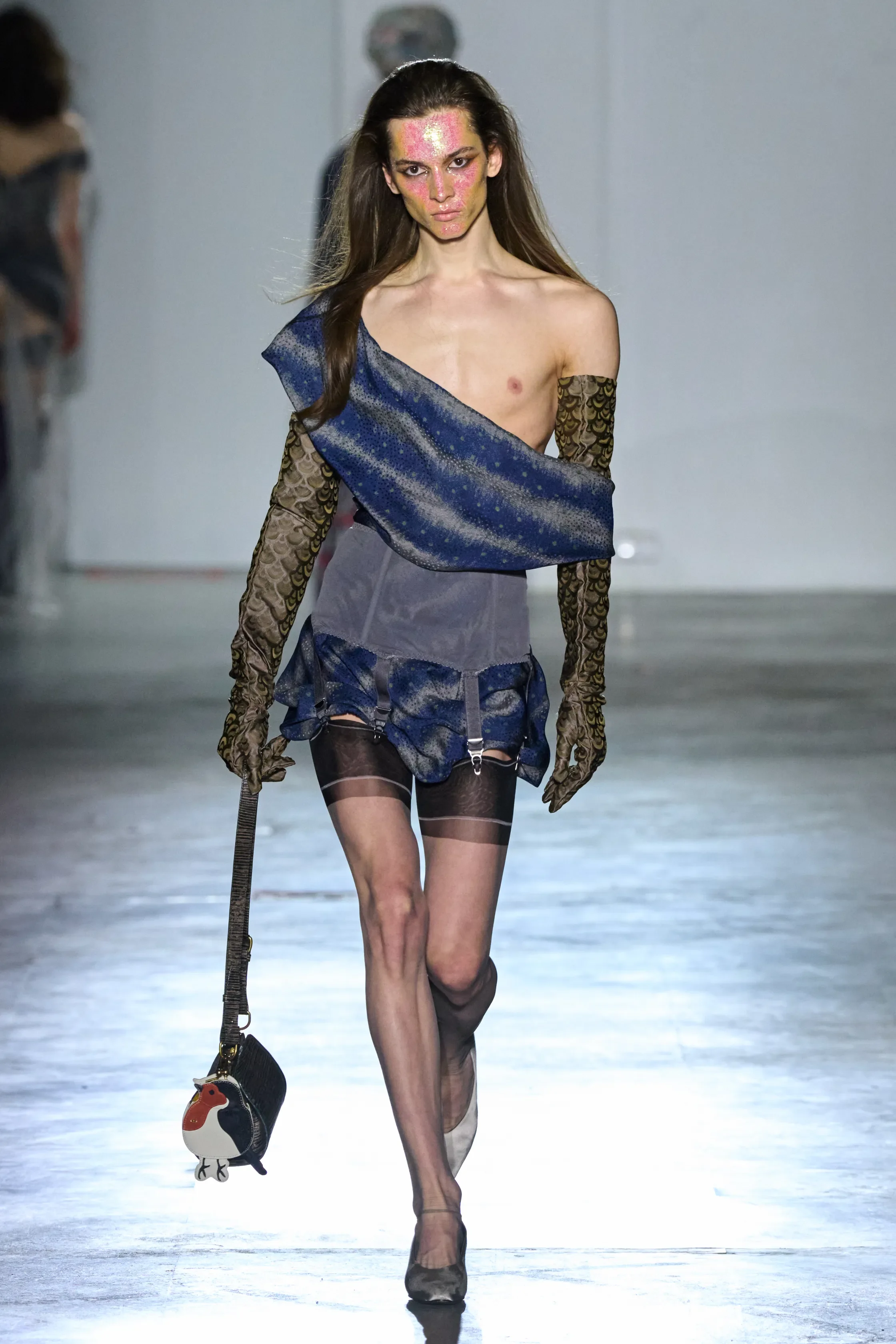
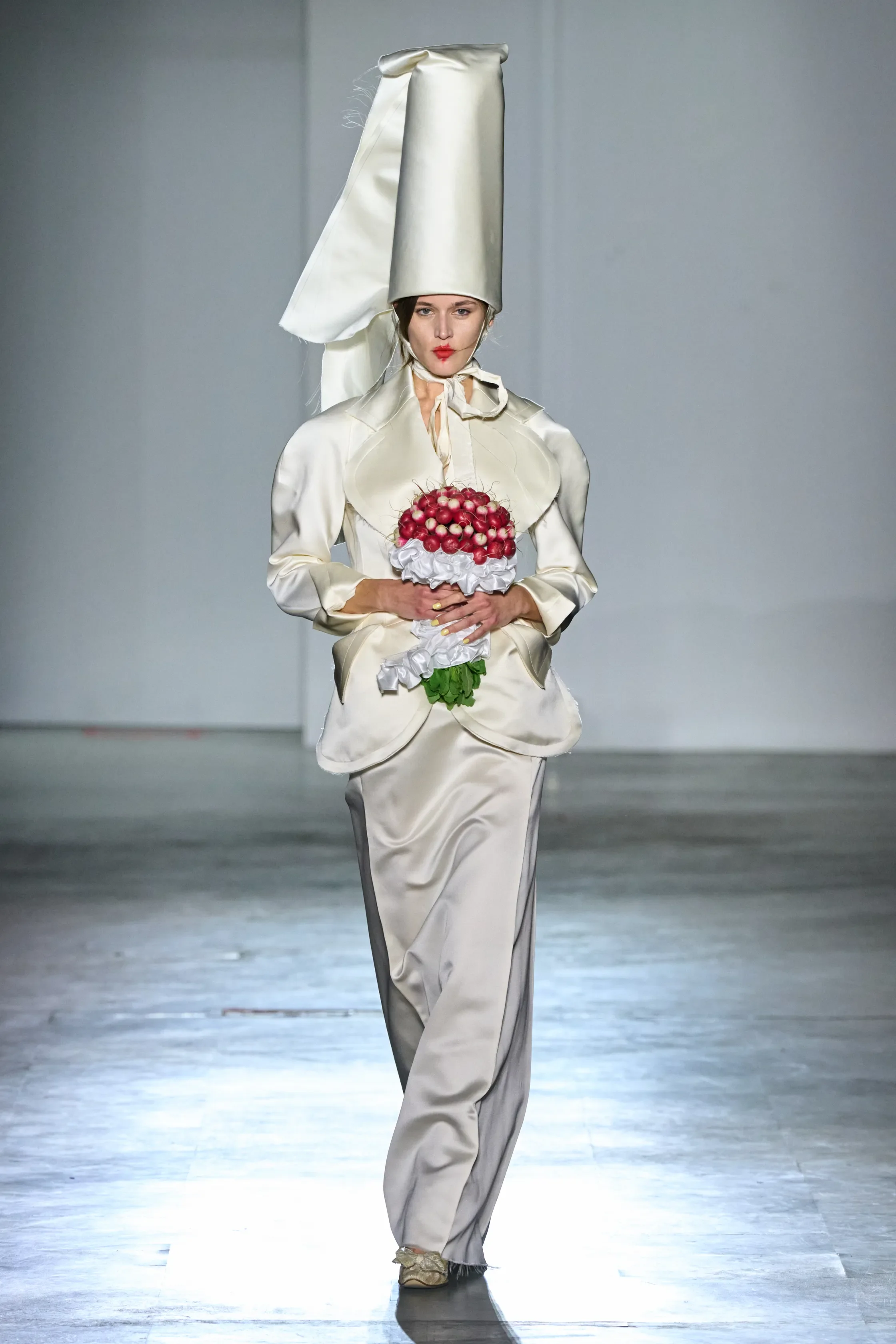
Blending nostalgia, in an undying ode to Vivienne’s legacy, and punky bits of eroticism, Andreas Kronthaler for Vivienne Westwood’s Fall 2026 collection is a perfect melting pot of theatrics and references. Titled Catch the Rhythm, the narrative reads as a personal tribute to influences that have shaped the designer’s 21 years at the helm of his late wife’s brand.
Three main pillars of inspiration make appearances throughout the collection, with the first cited as ‘60s actress Romy Schneider, with whom Kronthaler shares his Austrian heritage. This is reflected through dashes of cinematics and elegantly timeless styling in coiffed chignons and natural makeup that mimics the era’s effortless charm. The second influence comes from Danilo Donati, who imposes a theatrical regality in structured silhouettes that appeared almost Victorian, absolutely fitting the Vivienne Westwood identity. Erotic underwear is also noted as a major inspiration, pictured through lacy undergarments peeking through suits and bright garters flagging attention in multiple looks.
Outside of these upholding features that offered an arc for the collection, there were a lot of other features that stood out amongst the characters. Costume-like hats stood audaciously tall, affixed to heads with drooping satin bows. Plaids and corsets paid homage to the brand’s origins, while oversized drapes of fabric challenged its signature sharp tailoring. White and glittering faces also mimicked Westwood’s Golden Age, though in a messier, more sultry way that gave the collection a DIY edge. Toying with gender and androgyny, dresses came out on men, complete with clacking heels and thigh-high garters that felt playfully provocative. The show ends with a bride and a bouquet of radishes, walking the aisle with another cartoonishly high hat. We are left with the perfect inkling of satire and spectacle that feels fitting, coming from the Vivienne Westwood we have come to know under Andreas Kronthaler.
COMME DES GARÇONS
review by FRANCESCO PIZZUTI
all images courtesy of COMME DES GARÇONS
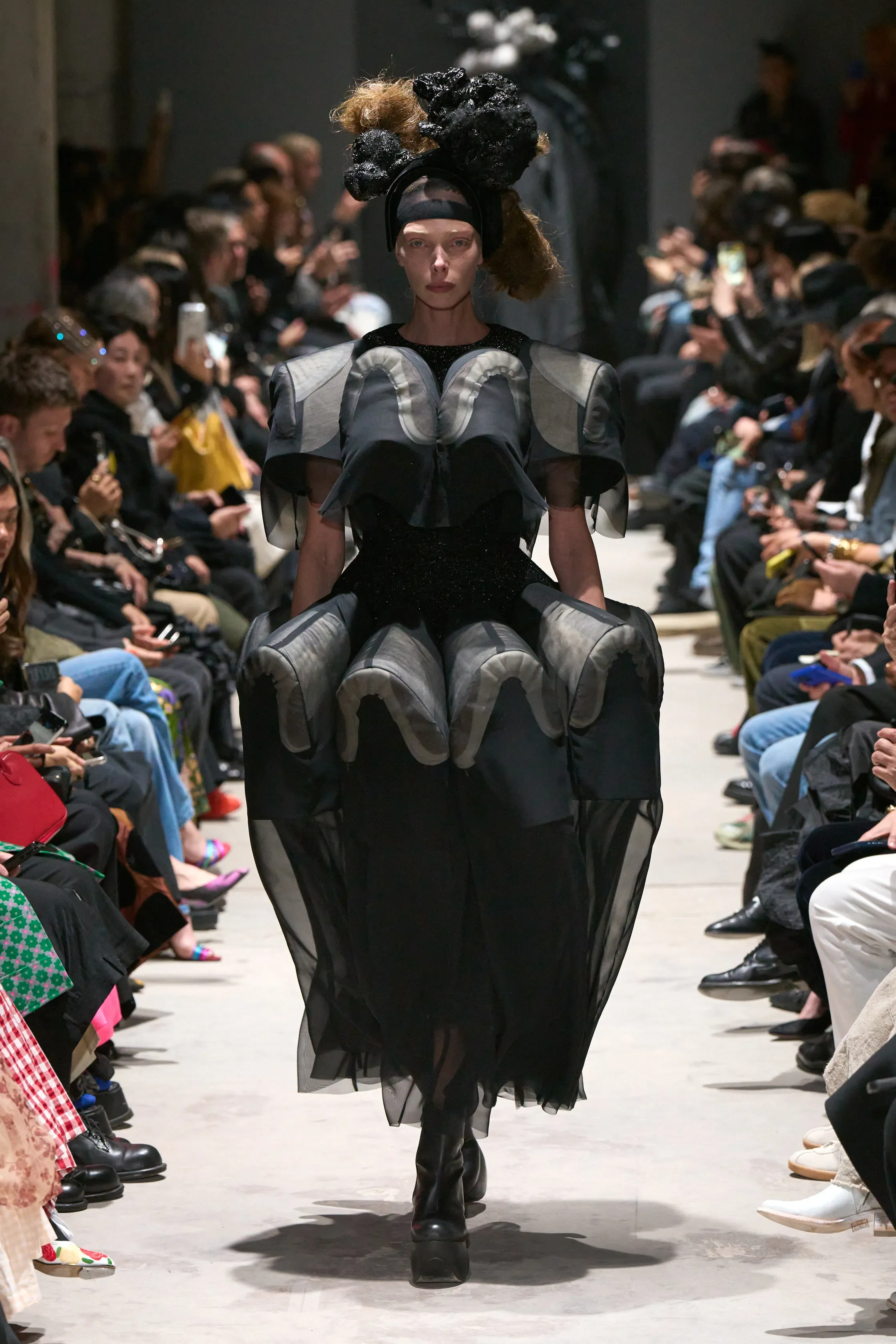
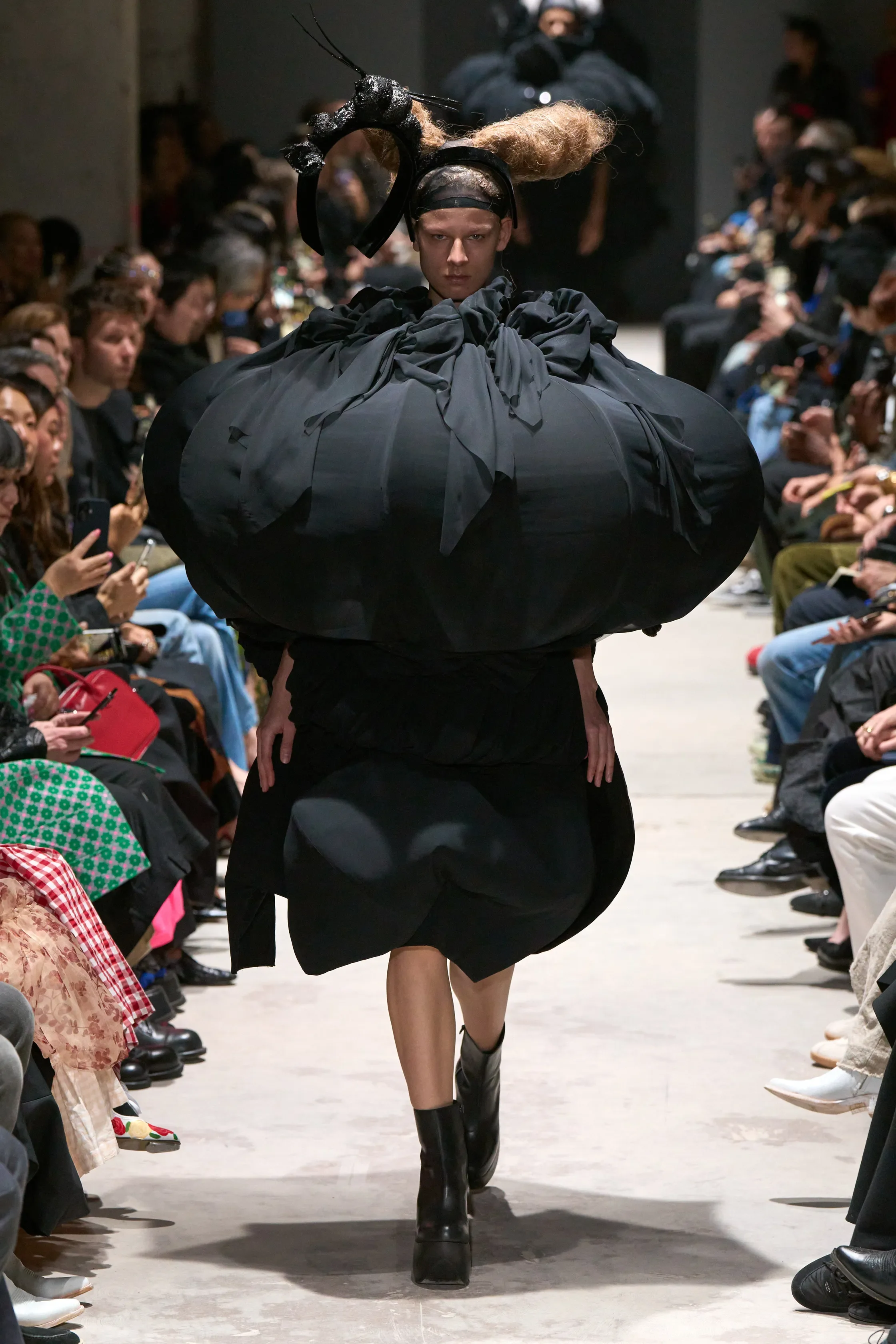
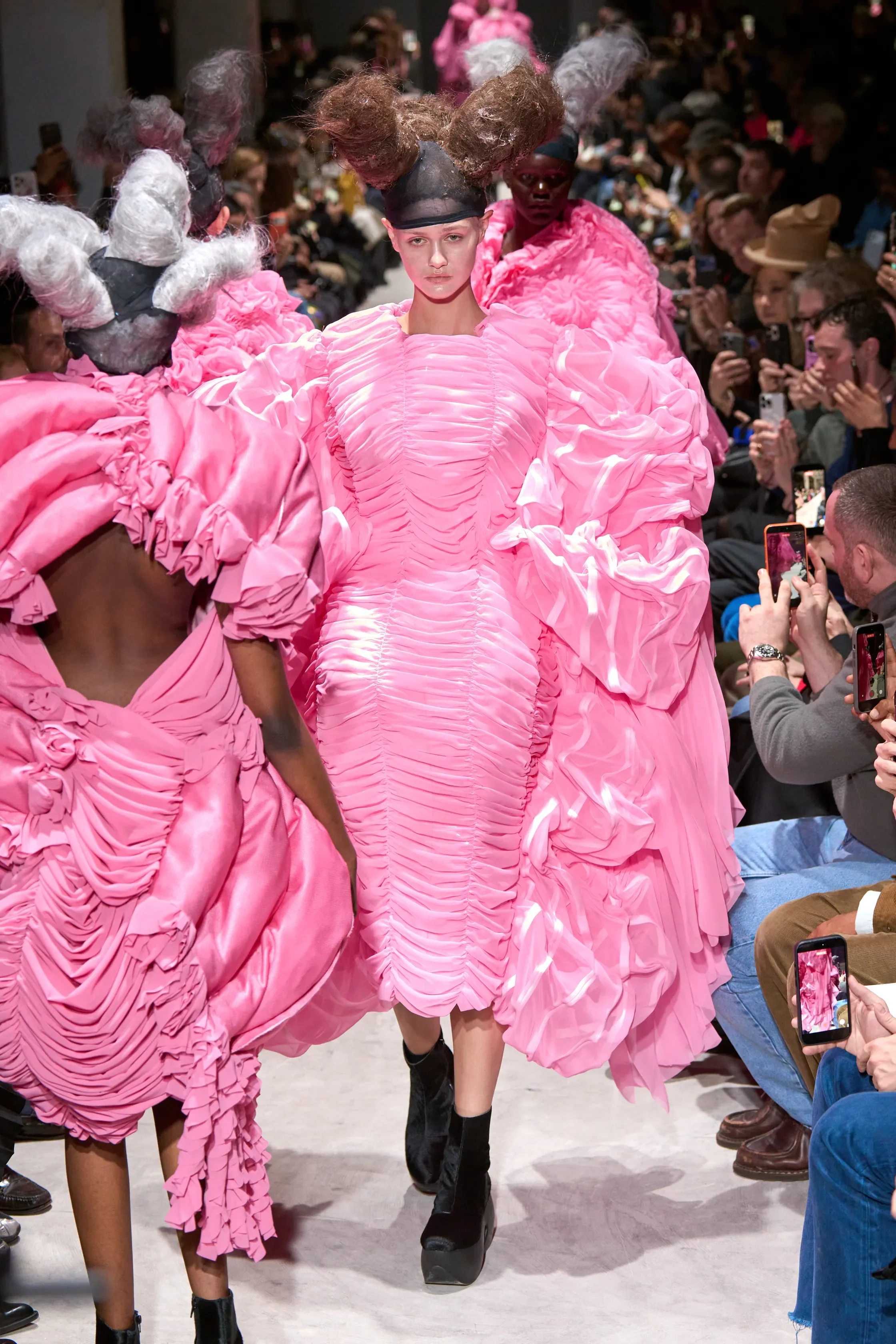
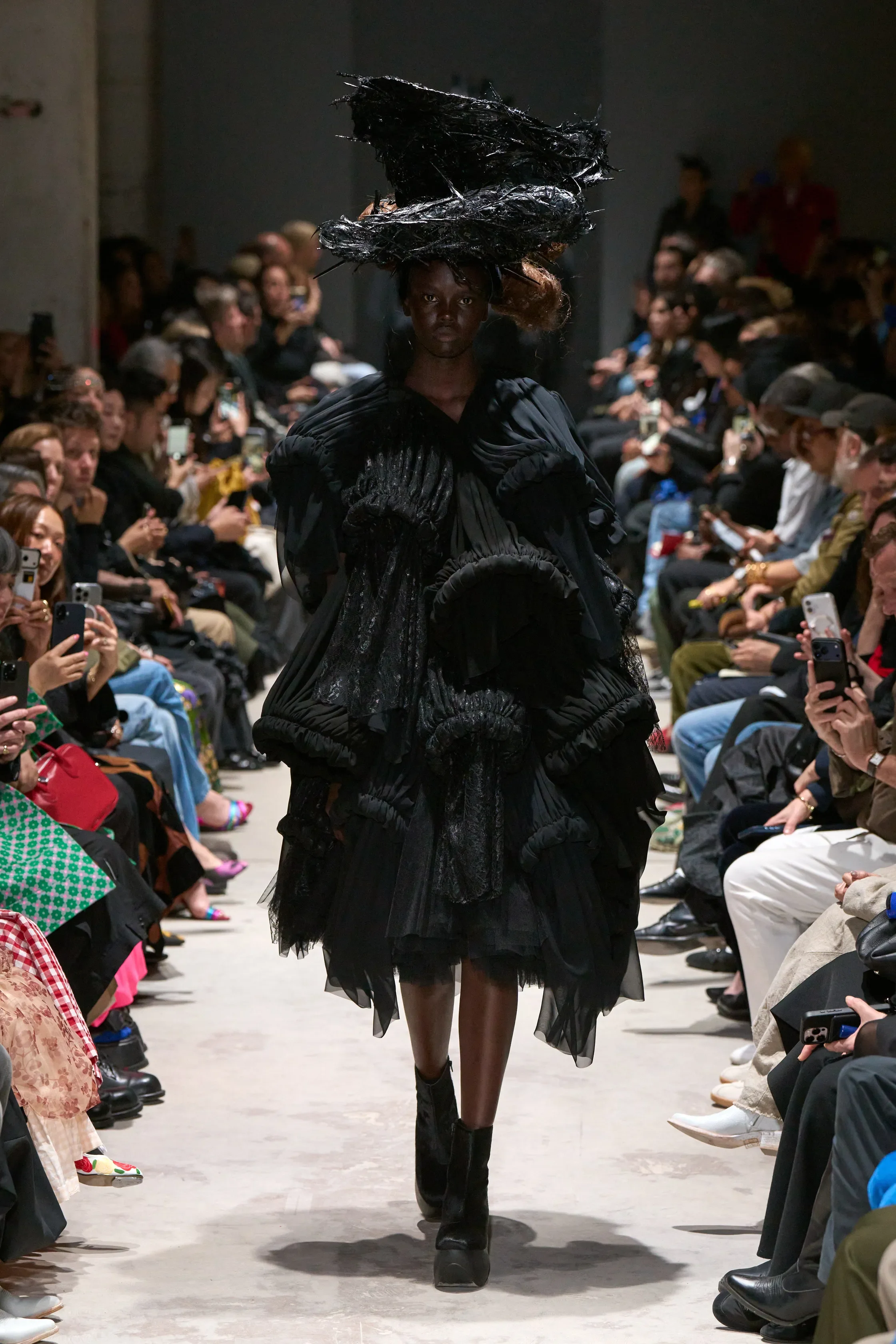
For Rei Kawakubo, black is never just a colour; it’s a position. Titling the Comme des Garçons Fall 26 collection “Ultimately Black” felt almost like a manifesto, a total surrender to the non-colour, but also an active gesture of counteraction — black as counter-colour, Comme des Garçons as counter-fashion.
The silhouettes were in fact anything but obedient. Kawakubo revisited her signature language of lumps and bumps: swollen volumes, bulges, protrusions that ballooned outward like strange organic growths. Shapes exploded into massive, rounded, balloon-like forms, yet were often slightly restrained by a bow or cinched waist, as if to contain the madness.
Black dominated, naturally, but a sudden sequence of fully pink looks broke through the darkness like a surreal fever dream. The distortions didn’t stop at the garments. Headwear echoed the same swelling logic, with bands worn not quite on the head and structures made of sticks or feathers. Even the hair was styled into the architecture of the looks. Fabrics ranged between lace, sequins, chiffon, and cloqué while white padding appeared dimmed beneath black veils, overwhelming with texture these almost post-human forms.
In the age of Ozempic bodies and snatched silhouettes, Kawakubo pushed in the opposite direction; garments that resist the body, mutate it, and stretch fashion into something unsettling, visceral, and defiantly other.
GEORGES HOBEIKA
review by MAREK BARTEK

all images courtesy of GEORGES HOBEIKA
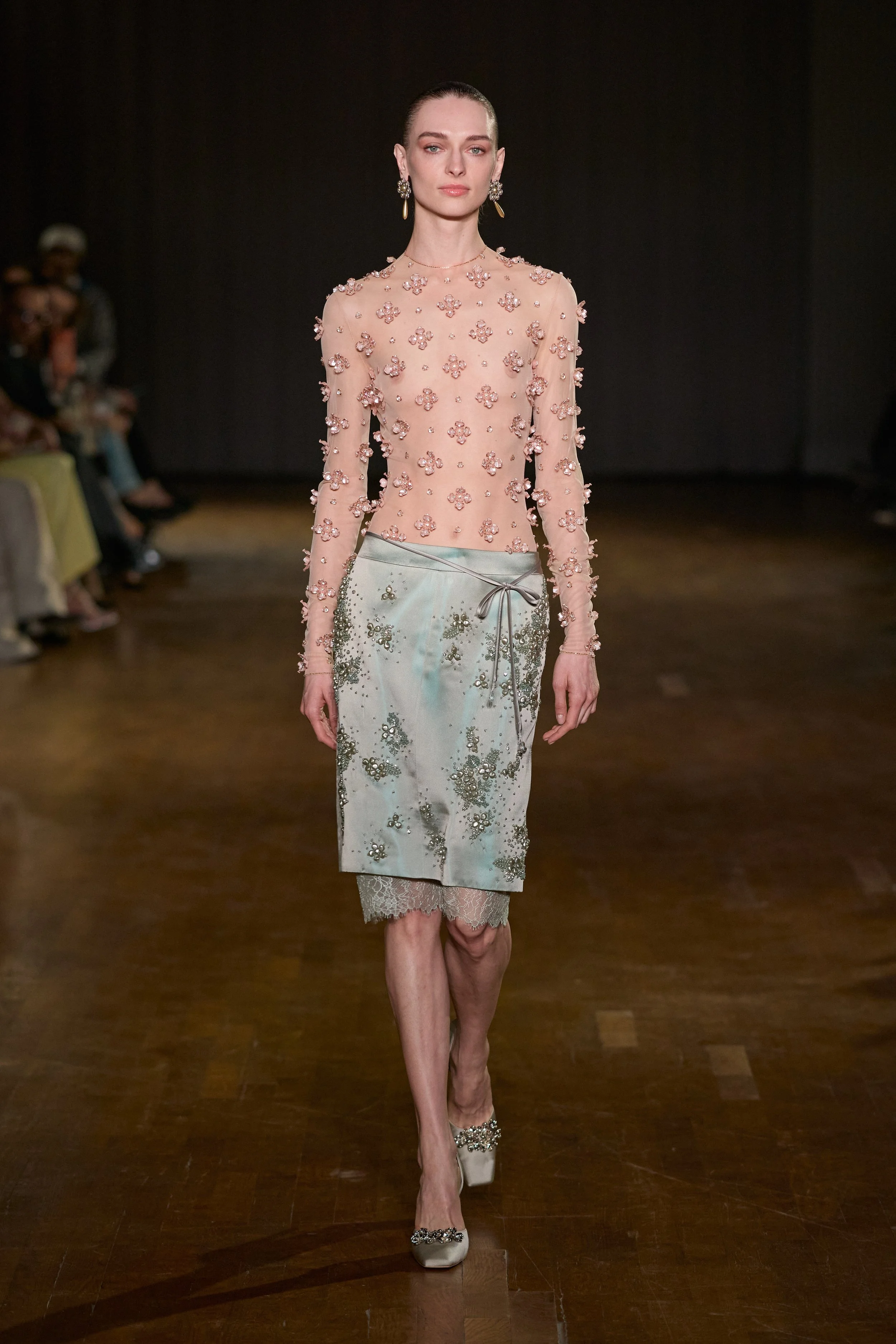
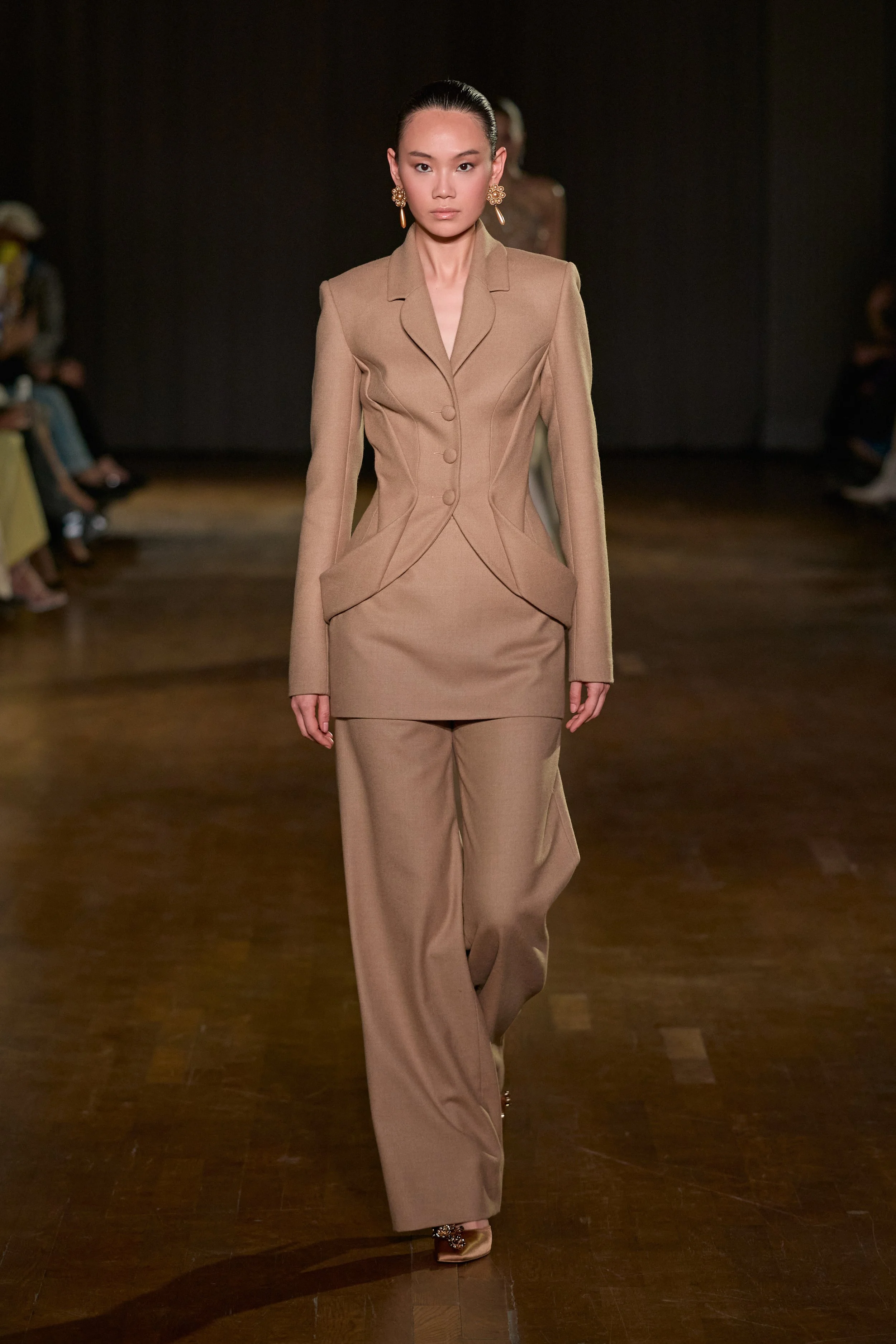
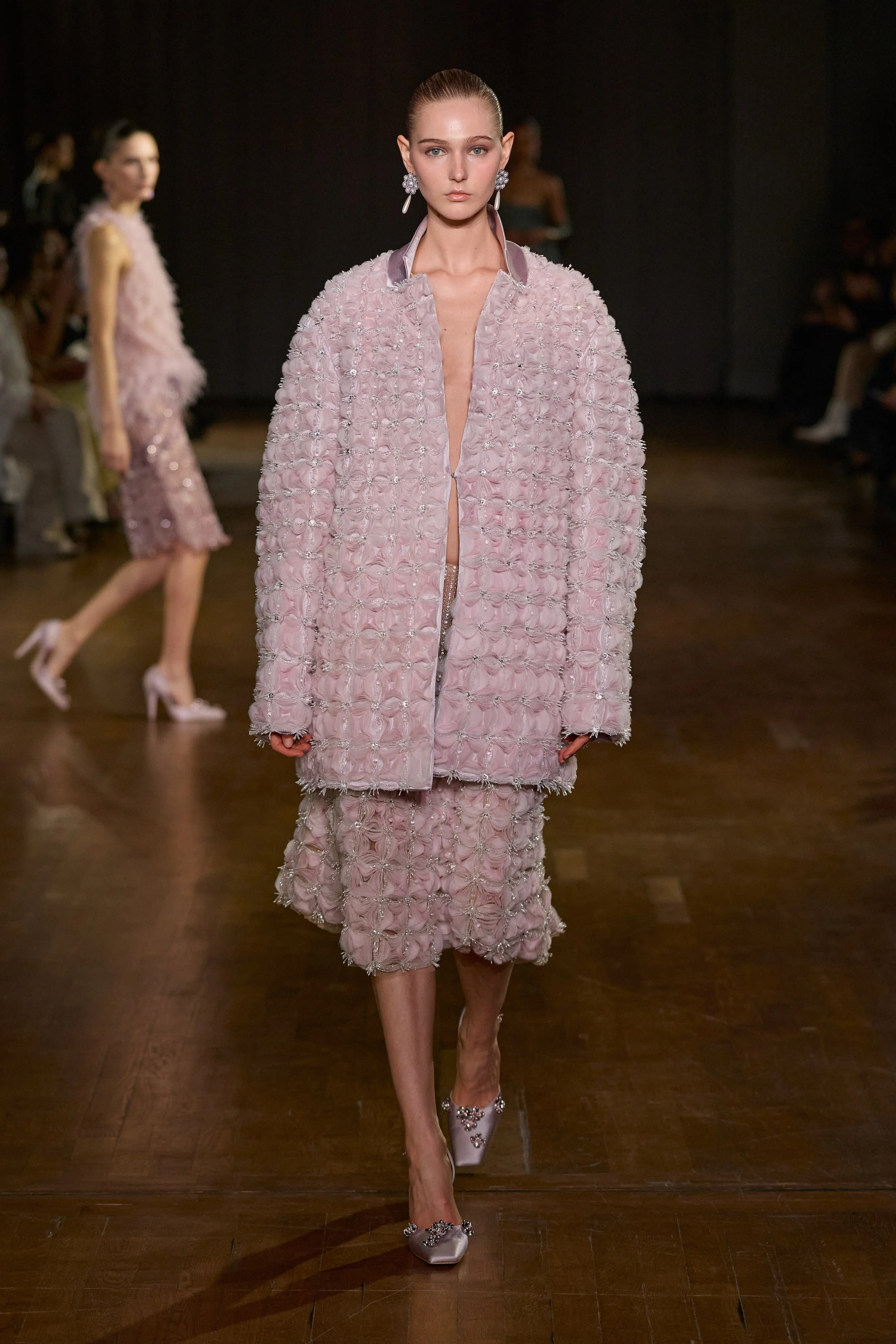
At Georges Hobeika, romance is rarely in short supply, and this season the designer leaned fully into a floral reverie. According to the house, the collection imagines “a wave of petals” carrying its heroine into a dreamlike world where softness, colour and movement mirror the rhythms of nature.
That vision translated into a lineup of flowing silhouettes, delicate fabrics and pale, almost powdered hues. Soft materials skimmed the body, often accompanied by pearl embellishments that shimmered subtly. Florals — long a signature for Hobeika — appeared not as prints but rather as sculptural motifs and textural details, reinforcing the collection’s dreamy atmosphere.
Yet what made the collection resonate most was its balance. Rather than overwhelming the eye with embellishment, many looks allowed the craftsmanship to breathe, letting the delicacy of the fabrics and the fluidity of the silhouettes speak for themselves. In a fashion landscape increasingly obsessed with spectacle, Hobeika’s approach felt refreshingly gentle.
ANN DEMEULEMEESTER
review by ELIANA CASA
all images courtesy of ANN DEMEULEMEESTER
How do you gather rock legends like Jimmy Page and bands such as Palaye Royale in the front row of a fashion show, and even convince Billy Idol to walk the runway? Stefano Gallici certainly can. And he did, for his FW26 womenswear show for Ann Demeulemeester. If that wasn’t enough, the collection made one thing even clearer: Gallici is a designer capable of merging different visual worlds with remarkable ease. In doing so, he reminds us that fashion remains one of the most powerful forms of storytelling. And we—the audience—listened carefully, taking notes.
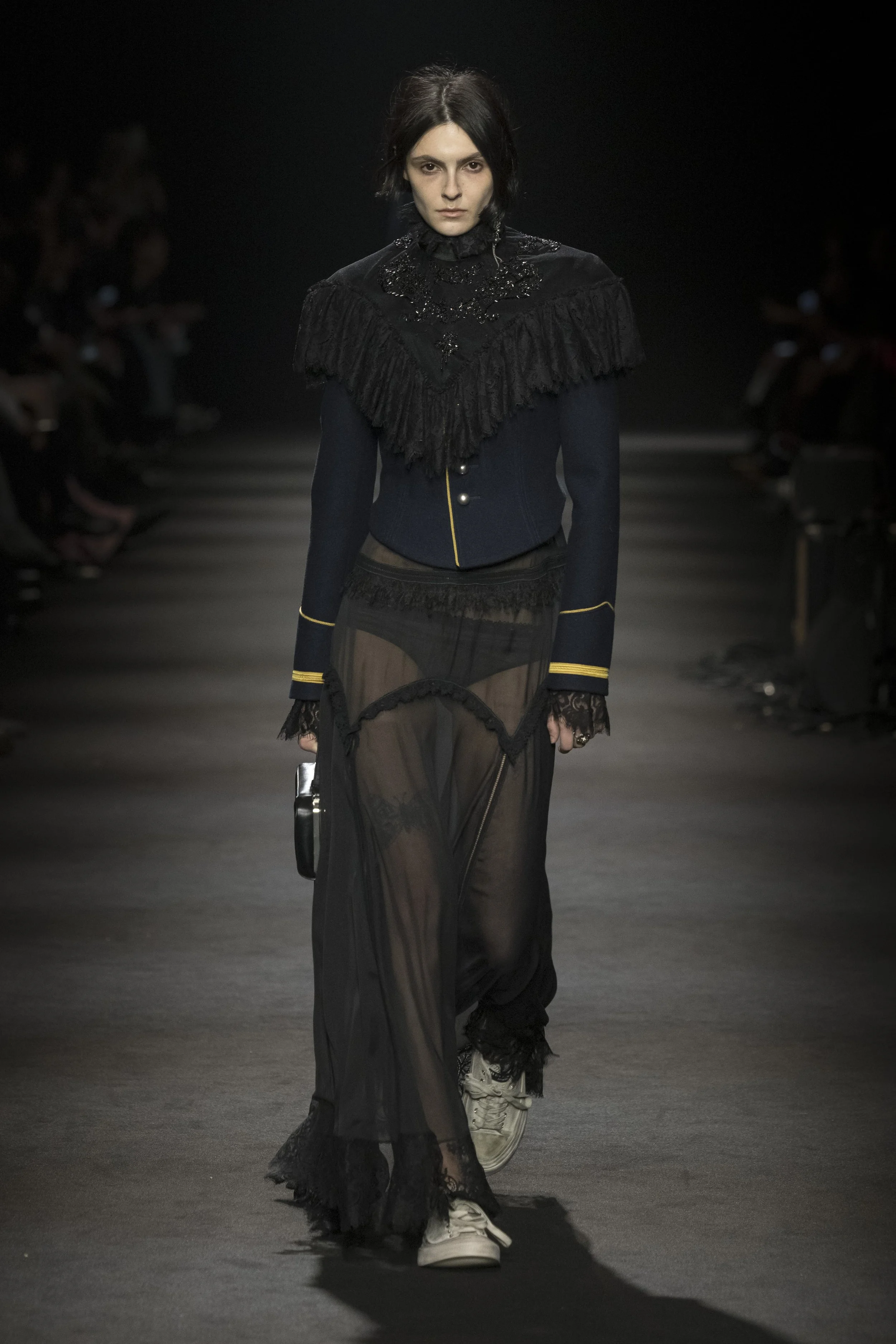
Once again, we were invited to the Réfectoire des Cordeliers in Paris for ‘Dear Night Thoughts’, a show that unfolded like a poem translated into sharp velvets, delicate knits, sheer blouses, leather fringes, and thousands of feathers. Beguiling Junior, the newly formed duo made up of Oli Burslem and Okay Kaya, anticipated the walk of Ann Demeulemeester’s rebel kids with a soundtrack created especially for the show. Gallici is known for curating every detail, and, as always, everything felt perfectly in place.
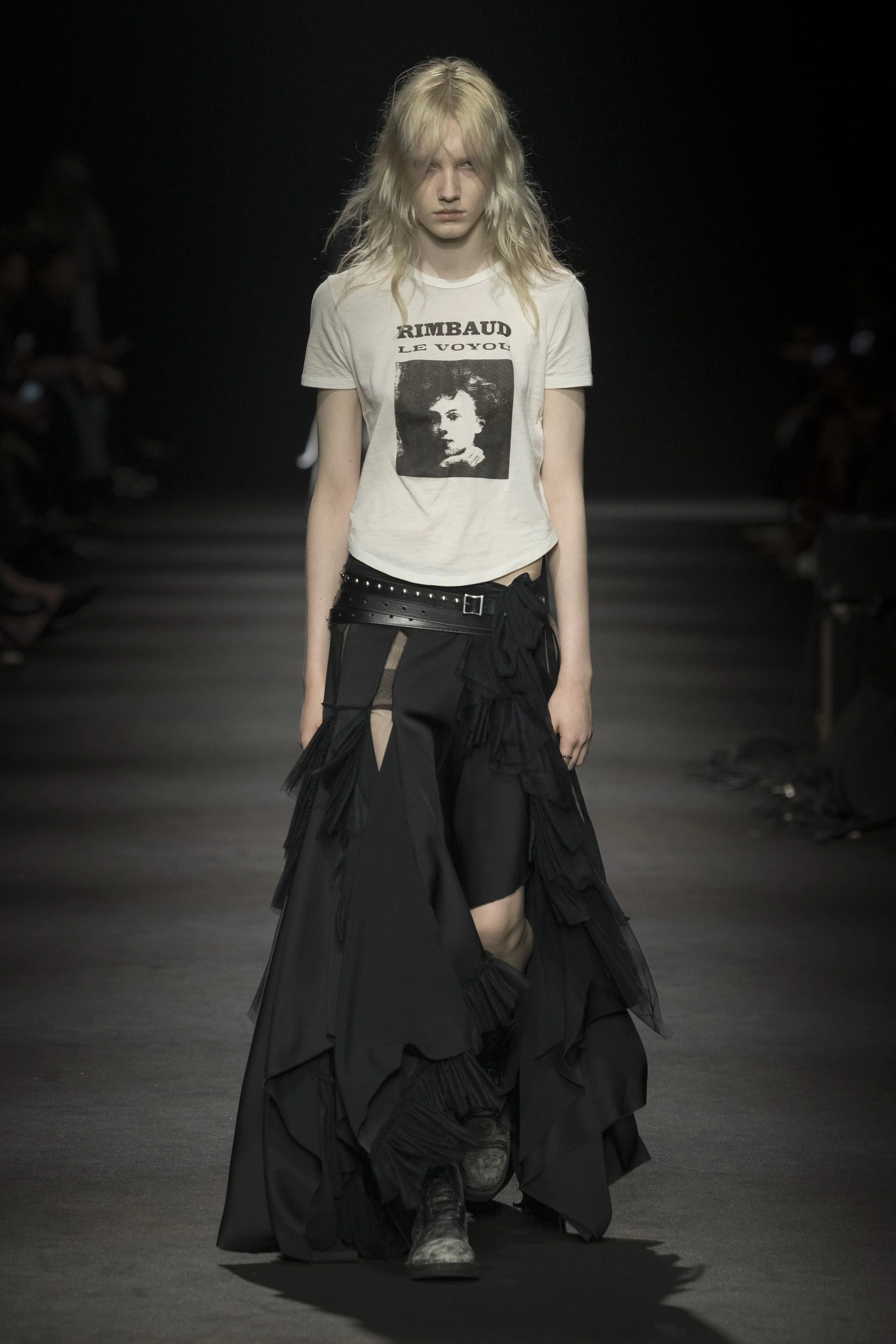
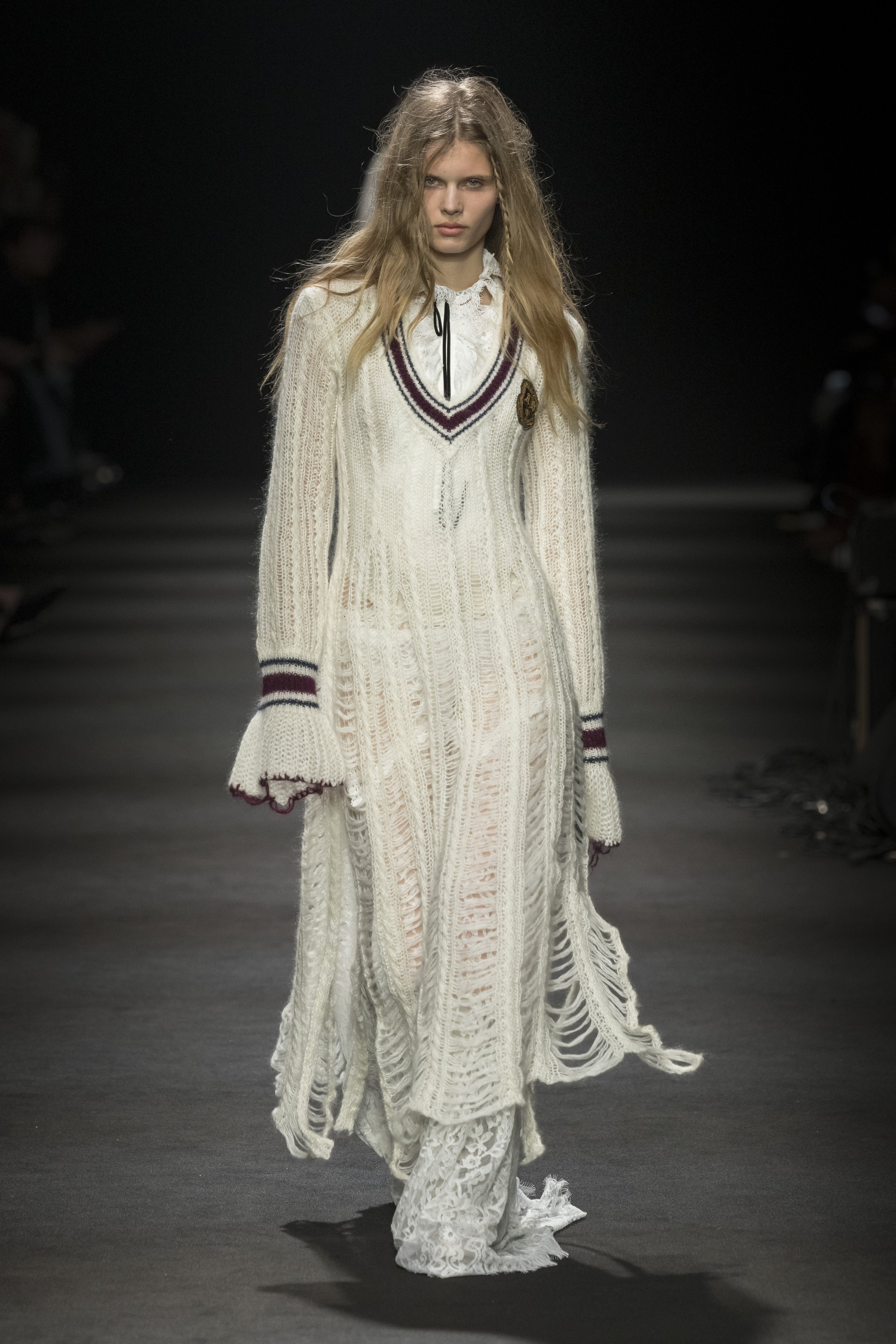
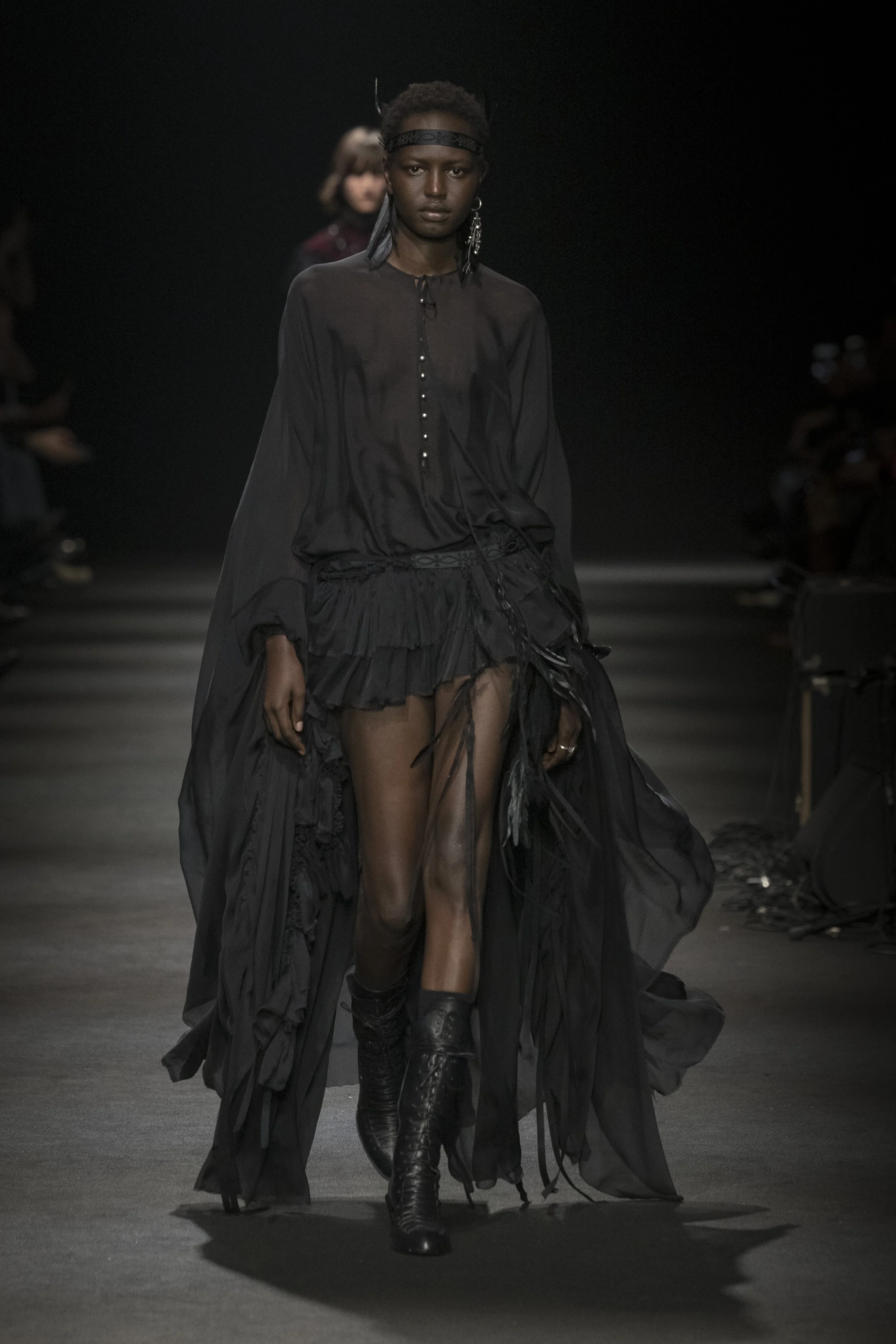
The first looks appeared on the runway revealing the brand’s signature codes and the starting points of the entire collection. Certain elements returned in different iterations: mini capes with feathered edges layered over sheer chiffon dresses or draped atop Napoleon-style blazers. Victorian-inspired ensembles also appeared throughout the lineup, often paired with organza shirts. A T-shirt reading “Rimbaud le voyou” referenced the 1933 critical essay and biography written by Romanian-French existentialist philosopher Benjamin Fondane about the rebellious poet Arthur Rimbaud. Elsewhere, worn school uniforms surfaced in faded shades, while washed-out denim paired with sneakers reflected a more subversive, rock-and-roll-inflected energy. Faded light brown leather pieces interrupted this dark fashion ballad, restoring light on the runway, together with all-white looks evoking a lost innocence, with knits trailing on the floor and delicate feathers fluttering with each step. Watching these girls and boys pass by, we wondered: where were they escaping from? Youth, rebellion, and freedom were there to remind us that, in the end, they might be all we truly have. What are we without the uncertainty of the future, or the nostalgic pull of a past we didn’t cherish enough? Perhaps this sense of being lost is simply a reminder that we are more alive than ever.
Through distressed leather, heavy fur coats contrasted with the lightness of lace and organza blouses, Gallici presented a collection that was not designed to trigger digital clickbait, but rather to act as a mirror, one in which the viewer might recognise fragments of themselves every time in a different light: fresher, tougher, fiercer.
With rare sensitivity, he created an entire wardrobe for those who never quite fit in—the misfits, the rebels, the introverts. Those still wandering through those dear night thoughts, dressed in silver pearls, chains, and rusted leather.
BALENCIAGA
review by FRANCESCO PIZZUTI



all images courtesy of BALENCIAGA
At Balenciaga’s Fall 2026 show in Paris, the house once again proved to know exactly how to be that girl in pop culture. For decades, Balenciaga has lived beyond the fashion world; name-dropped in shows like American Horror Story and worn by celebrities and internet anti-heroes alike. This season, it doubled down on that cultural literacy through an unexpected collaboration with Sam Levinson, the director of Euphoria.
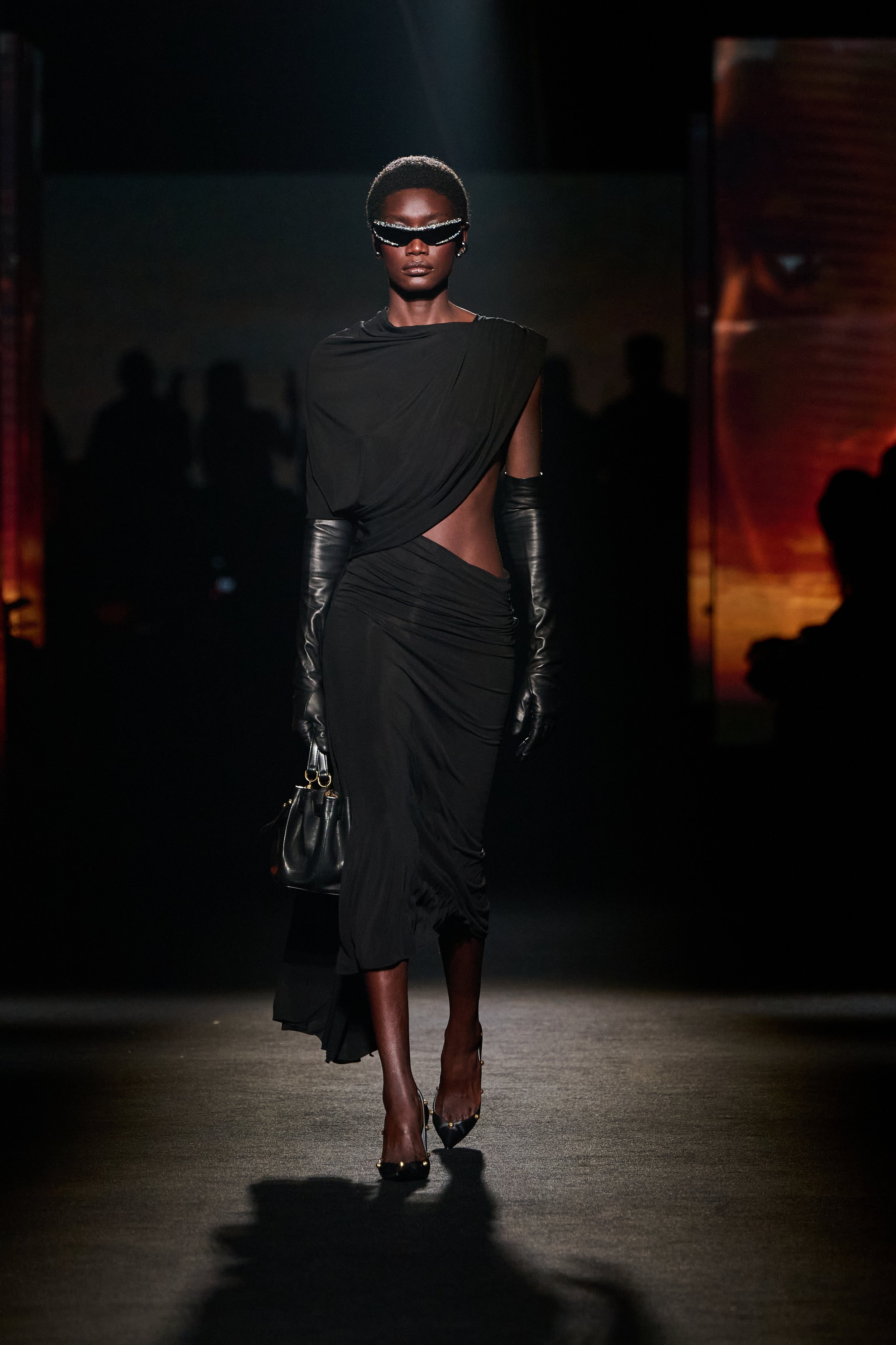
Titled “ClairObscur”, the show unfolded inside a blacked-out set where towering screens and columns flickered with fragments from the series’ upcoming season. As the name suggests, lighting played a central role in shaping the atmosphere of the collection. Moody and intimate, the space was defined by contrasts between light and darkness — mirroring the emotional ambiguity in Levinson’s characters, who move between these two dimensions, always portrayed with neutrality rather than judgment. Piccioli’s Balenciaga feels sculptural and quietly romantic. Black coats dominated with cocoon silhouettes that nodded to founder Cristóbal Balenciaga and dramatic funnel collars framing the models’ faces in a very cinematic way, like wearable spotligths.
Between the structure came softness, in the fluid forms of draped jersey dresses cut with practically no seams — dripping under the dim concert lights. More theatrical moments weren’t missed either, with an eye-catching feather-trimmed coat sweeping the runway, while long glittering gowns caught the light like shattered mirrors. Menswear made the runway too with oversized outerwear, baggier silhouettes, and flashes of prints taken from Levinson’s cinematic universe.
This era of Balenciaga might not be thriving on provocation and memeability as much, with ClairObscur clearly suggesting a pivot inward, toward feeling, but still, remaining well aware of the cultural moment.