
PARIS FASHION WEEK FALL/WINTER 2026: DAY 7
PALOMA WOOL
review by FRANCESCO PIZZUTI

all images courtesy of PALOMA WOOL
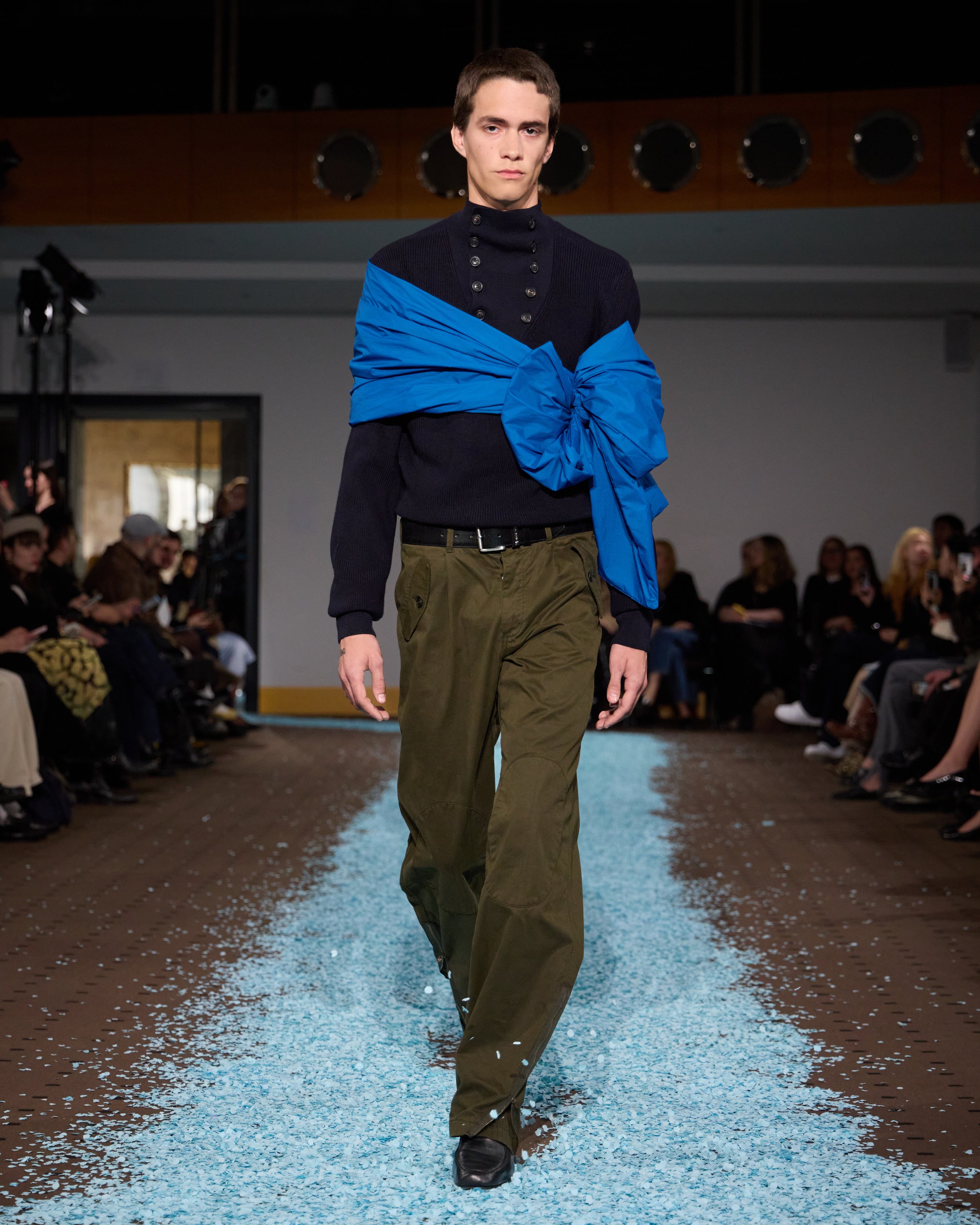
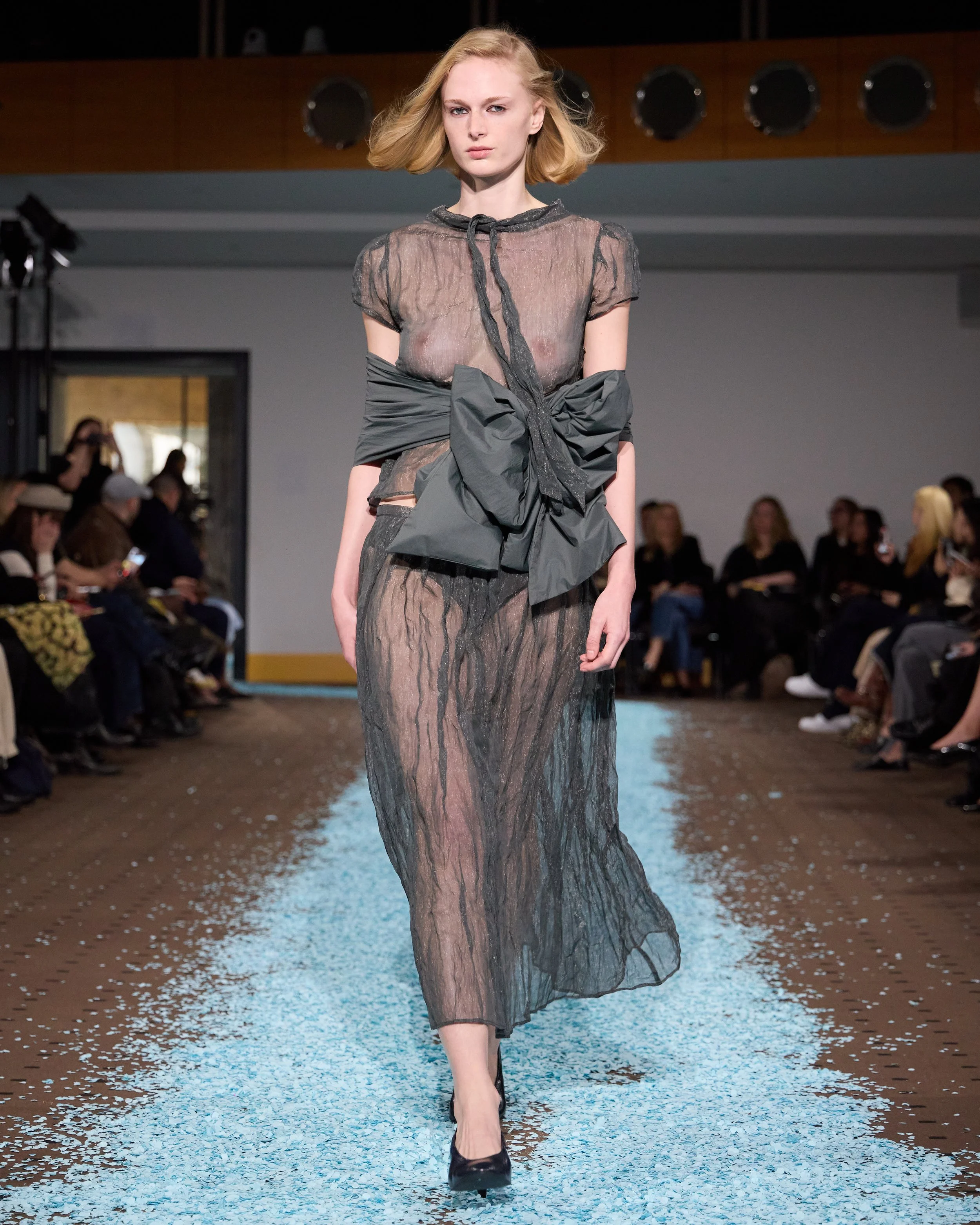
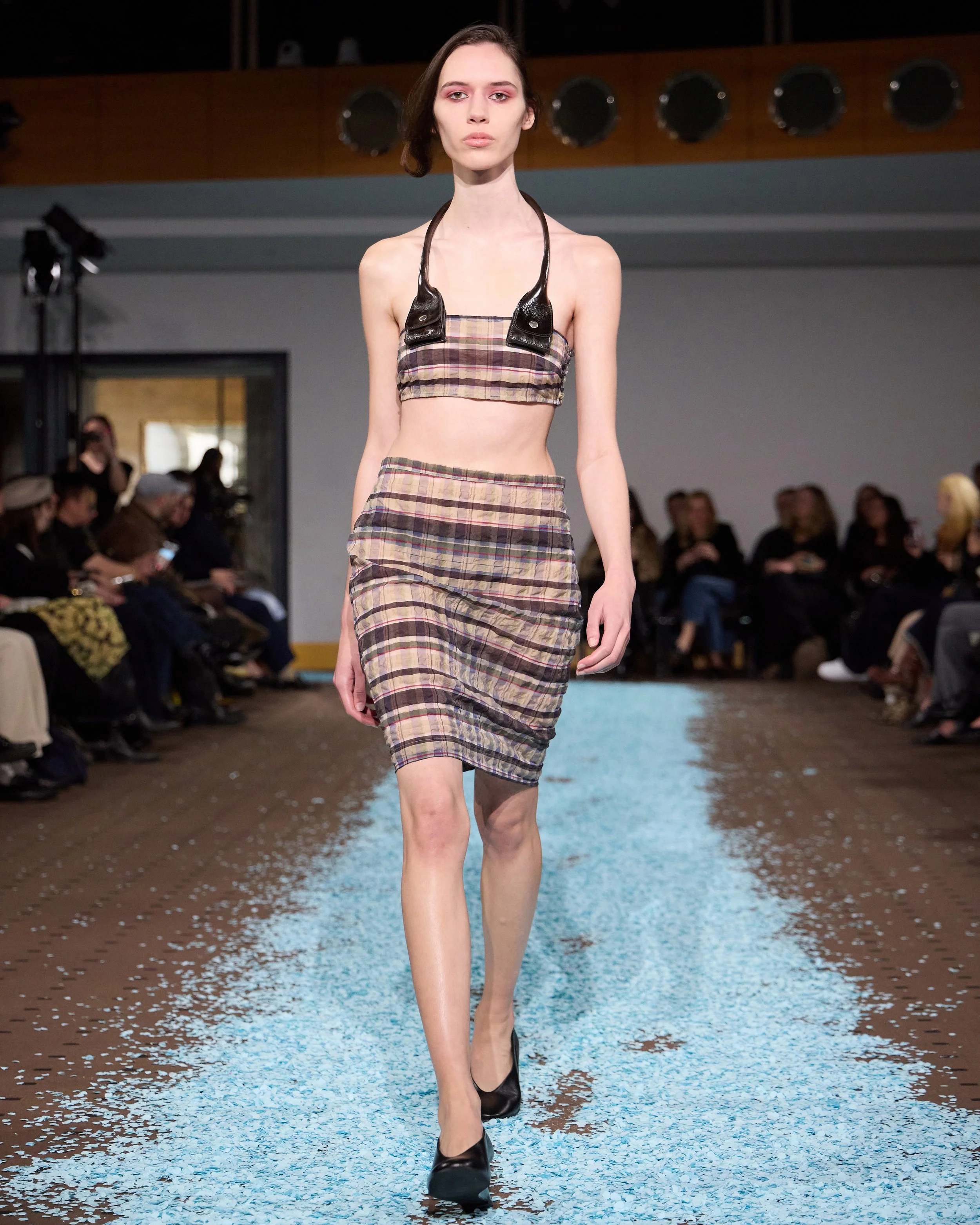
This one was for the cool girls: Paloma Wool’s Fall 2026 was the perfect balance of effortless whimsy and fun as the models walked a Tiffany blue confetti-covered floor, carrying bags stuffed with plush animals. And no, before anyone asks, this wasn’t another Labubu moment.
The stuffed companions idea grew out of a collaboration with blogger Fumiko Imano, who traveled the world solo with a stuffed fox tucked into her bag. What could have been tacky instead read as tender and confident; a small emblem of comfort and independence.
Color set the mood early, beginning with that Tiffany blue runway before unfolding into a palette of earthy greens, browns, and deep blues. Bursts of hot pink and electric blue appeared in stark contrast, in the form of huge bows wrapped around the looks, or leather gloves with acid-toned palms flashing as models walked.
The silhouettes balanced casual with composed. Button-heavy wool sweaters and cropped coats leaned slightly preppy, while striped cotton scarves relaxed more sculptural moments like corseted tops and draped skirts. Asymmetry took center stage. Sweaters buttoned off-center, shirts half-tucked, pocket flaps mismatched. The most intriguing element came from leather bag handles repurposed as shoulder straps on dresses and knits, sometimes hung on one shoulder, sometimes slanted into halter shape straps.
The overall effect? Preppy, playful, and comforting, but with that kind of effortless cool that feels instinctive.
NICCOLÒ PASQUALETTI
review by ANOUK WOUDT
all images courtesy of NICCOLÒ PASQUALETTI
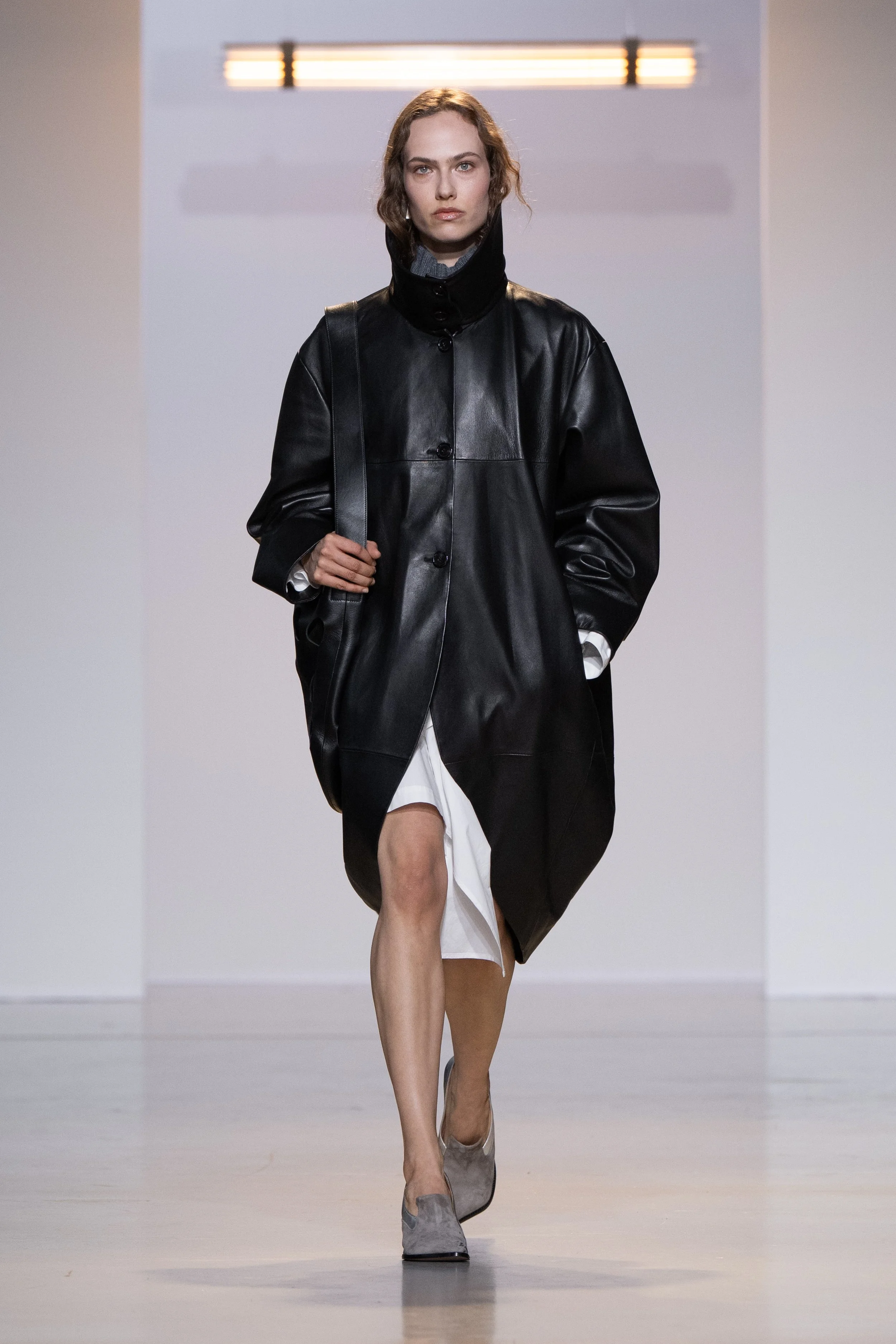
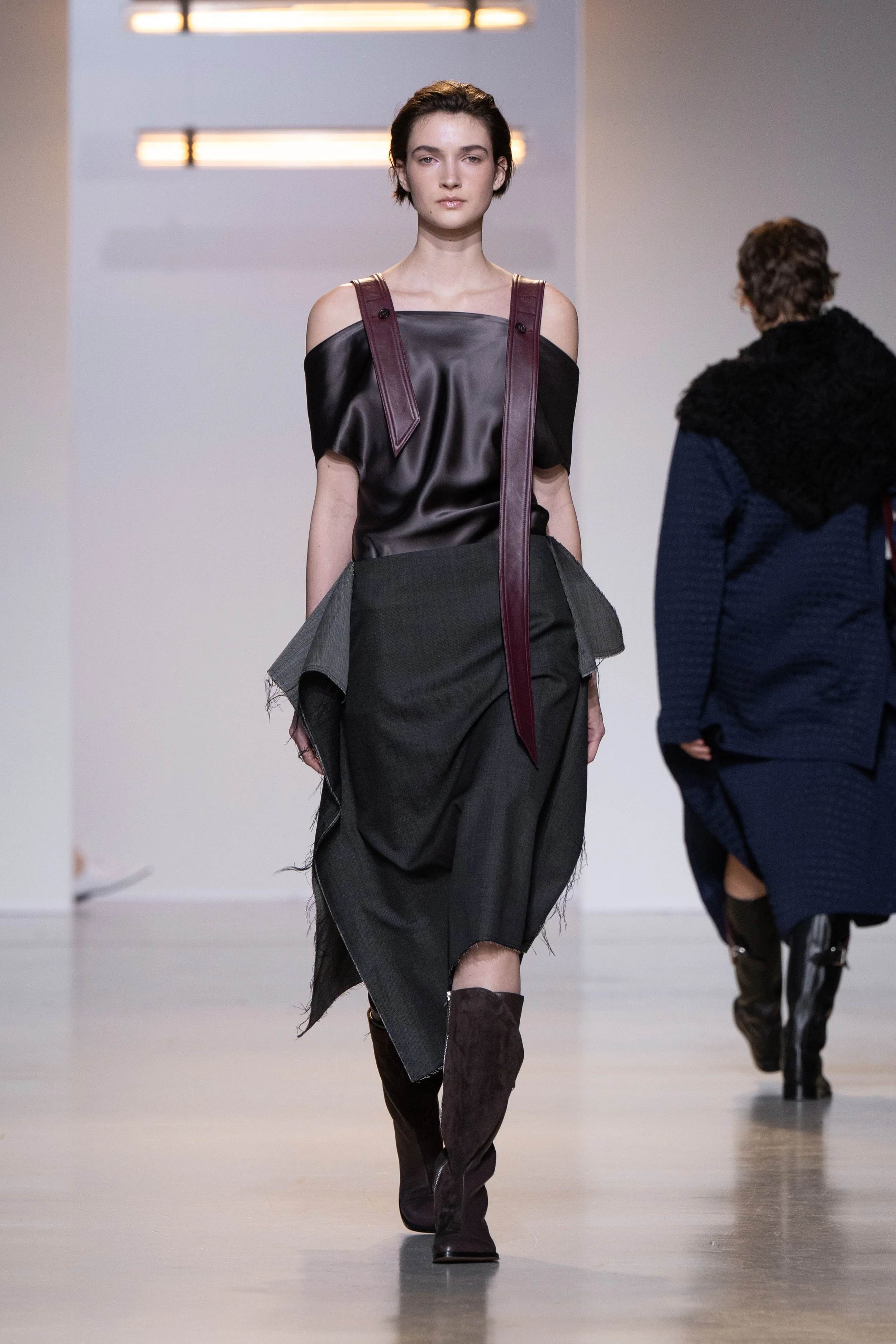
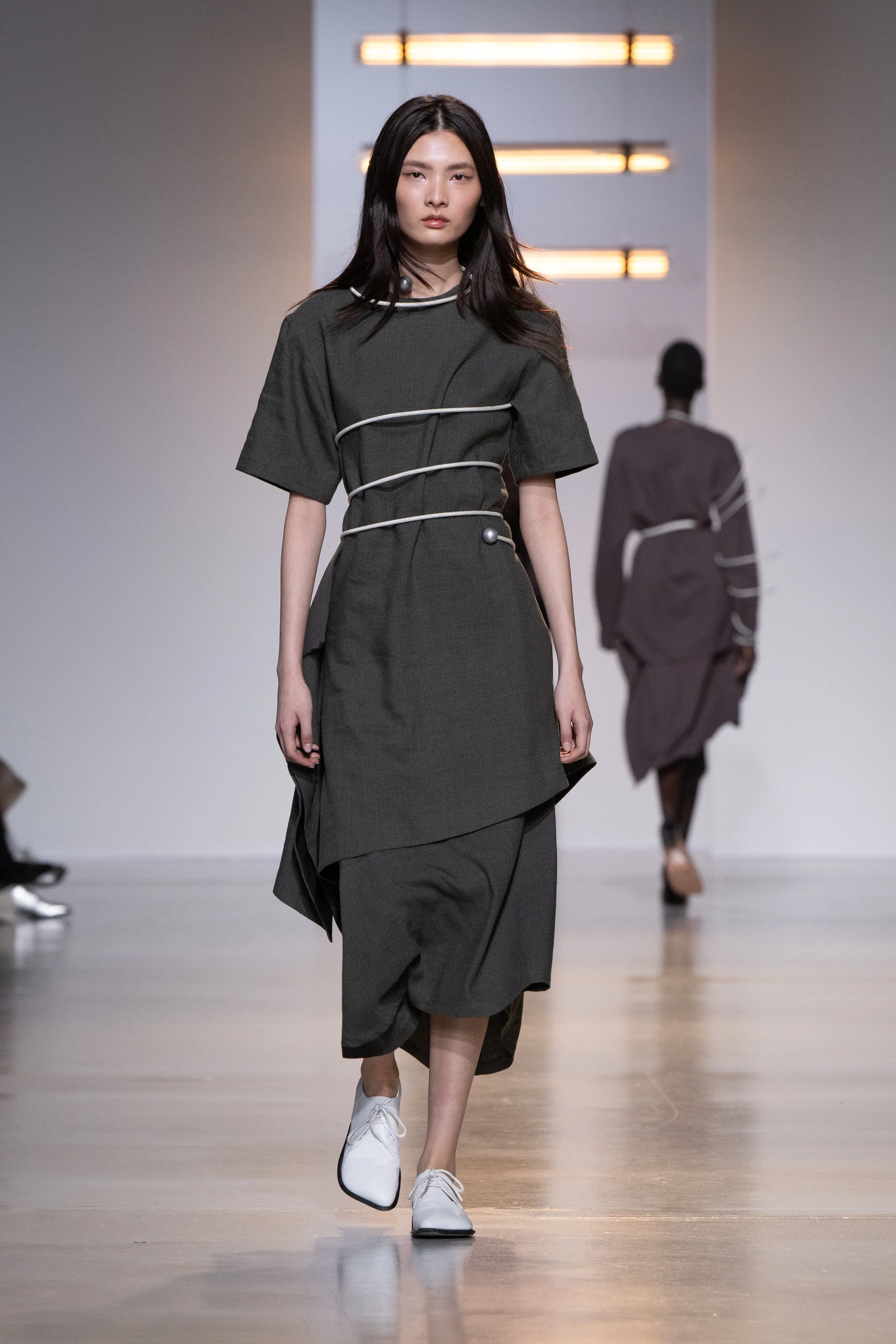
This season, Niccolò Pasqualetti finds itself in a balanced state between a space far from earthly tethers, while being completely entrenched in its soil. This contrast becomes the driving force of the collection, merging otherworldly influences that border on futuristic and intrinsic materials that reflect the beauty of the natural.
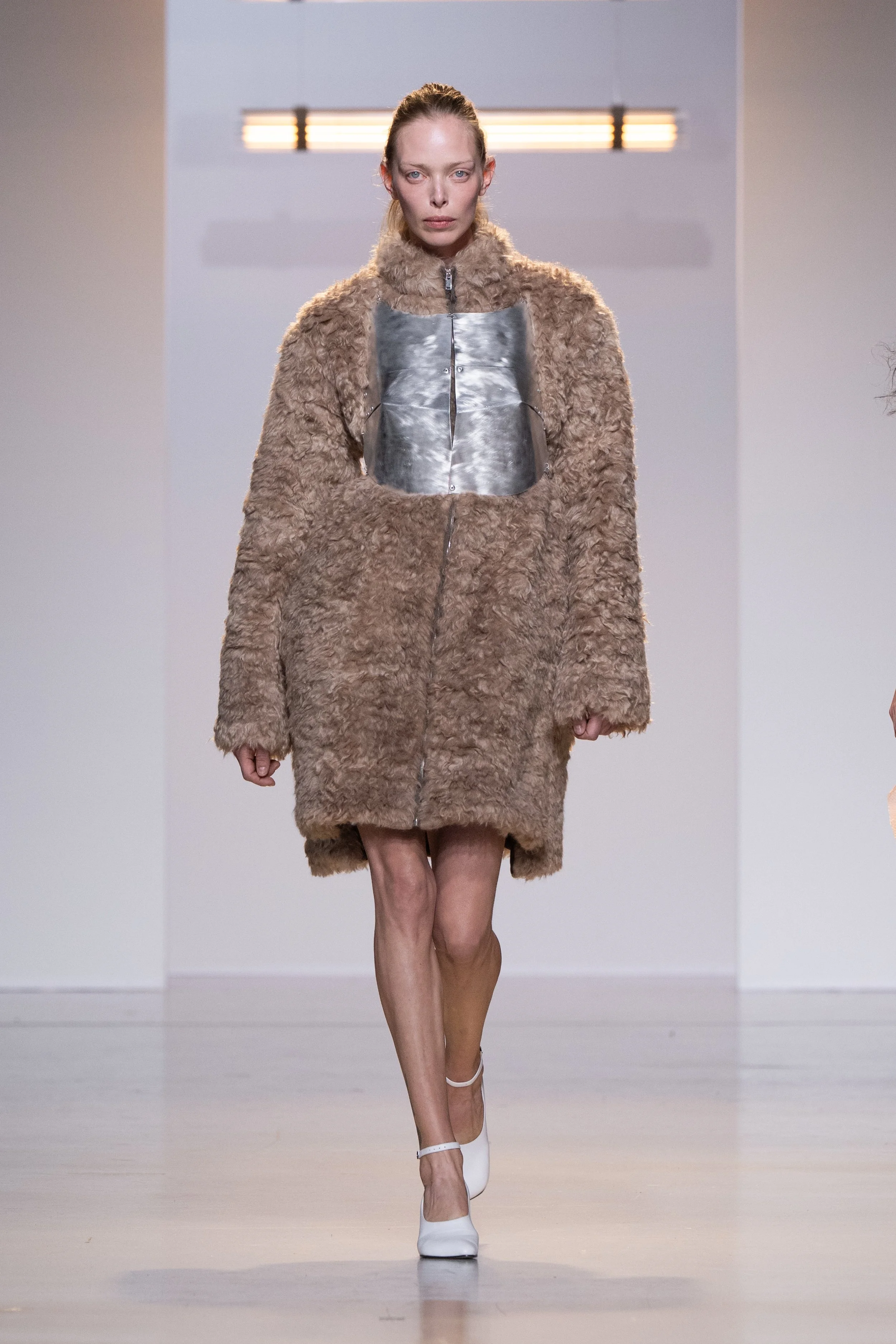
Slouched silhouettes in pebbled calfskins and silvers open the collection, bringing forth loose fabrics that drape in angular cuts of earthy colors. Looks feel wearable, though they bring a touch of an avant-garde edge through thick-cut steel utilized like necklaces or studding lambskin collars. Everything is perfectly billowed and cinched, creating layers that are intentionally placed to create primal textures. The color palette sticks to neutrals, though sometimes exclaiming in bright orange or a deep burgundy. Furs form asymmetrical stoles that once again pay homage to Earth’s natural goods, with sheepskin that is dyed to mimic deer hide.
The ethereal presence enters through thick, wired coils that swivel bodies, ending with metallic silver balls that break up simple base dresses. Another layered piece takes the form of thin cushioned structures interlinked by metal clasps, forming a net that’s wrapped atop simplistic garments. Brutalist influences feel apparent through these architectural pieces and sterile jewelry, emitting a cold rawness that battles with the collection’s soft presence. Finalizing the collection with two looks with silver chestplates seemingly screwed onto furred or silken bodies, he embodies the meeting point of these two worlds, allowing them to stand as a unit.
MAGDA BUTRYM
review by MAREK BARTEK

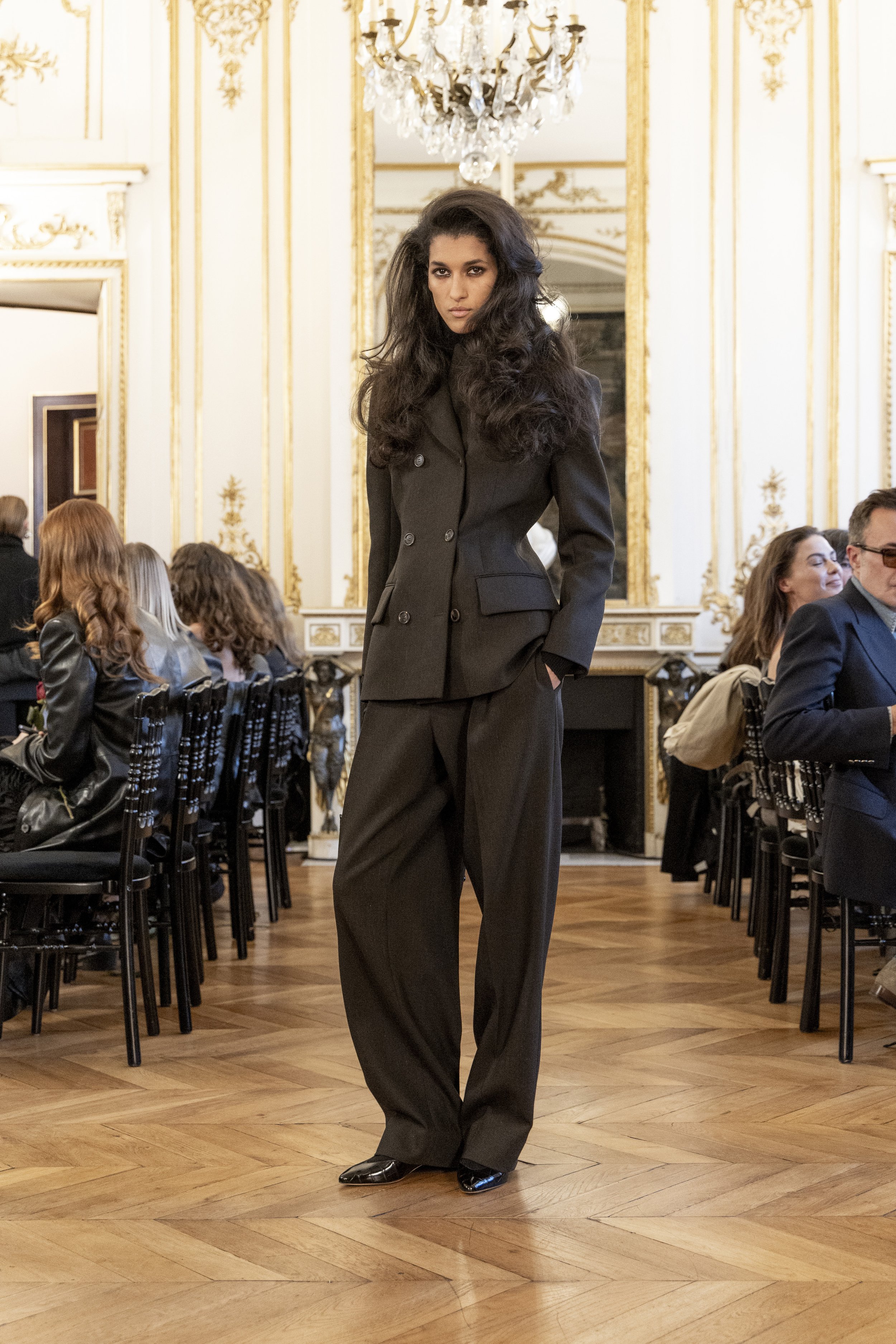
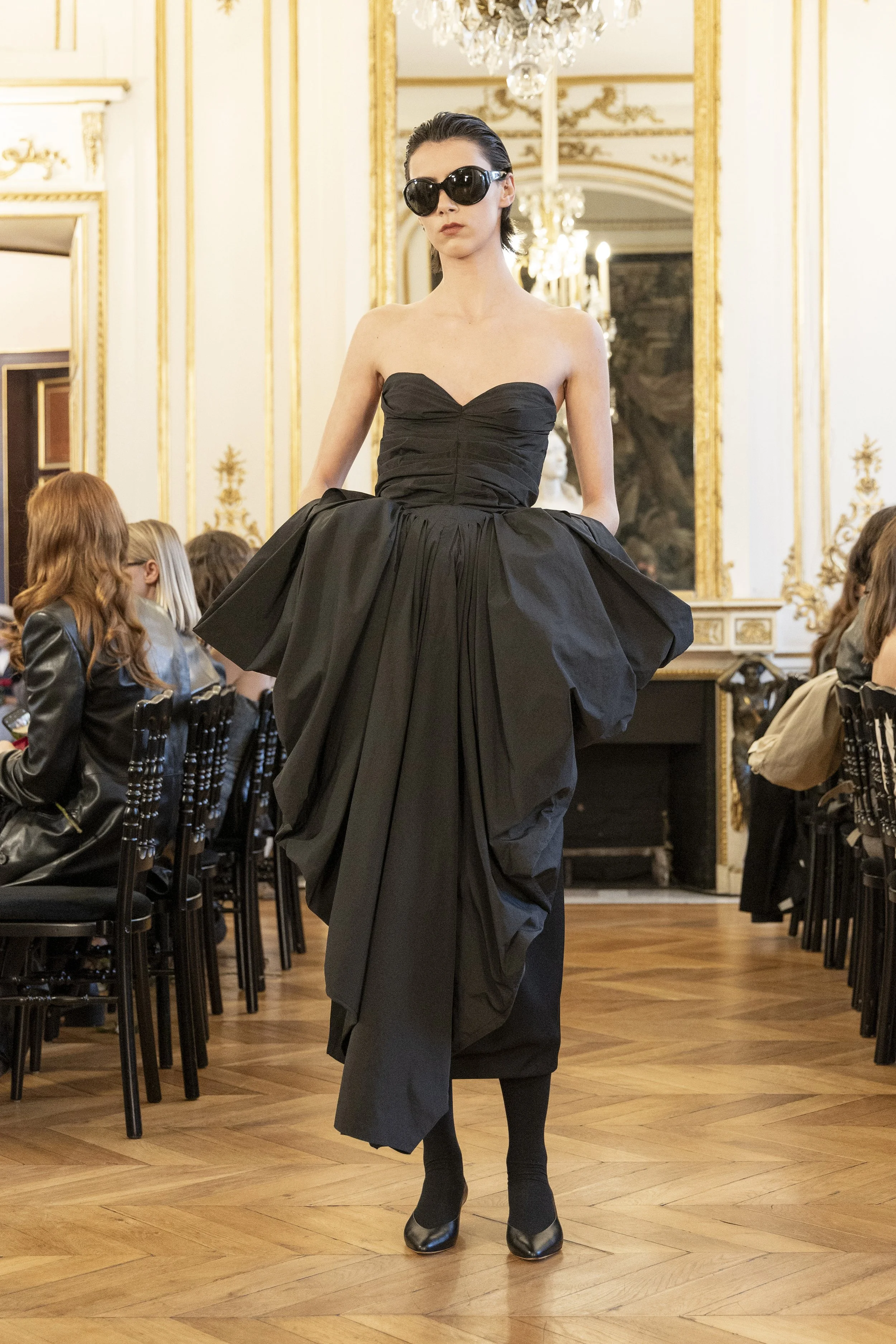
all images courtesy of MAGDA BUTRYM
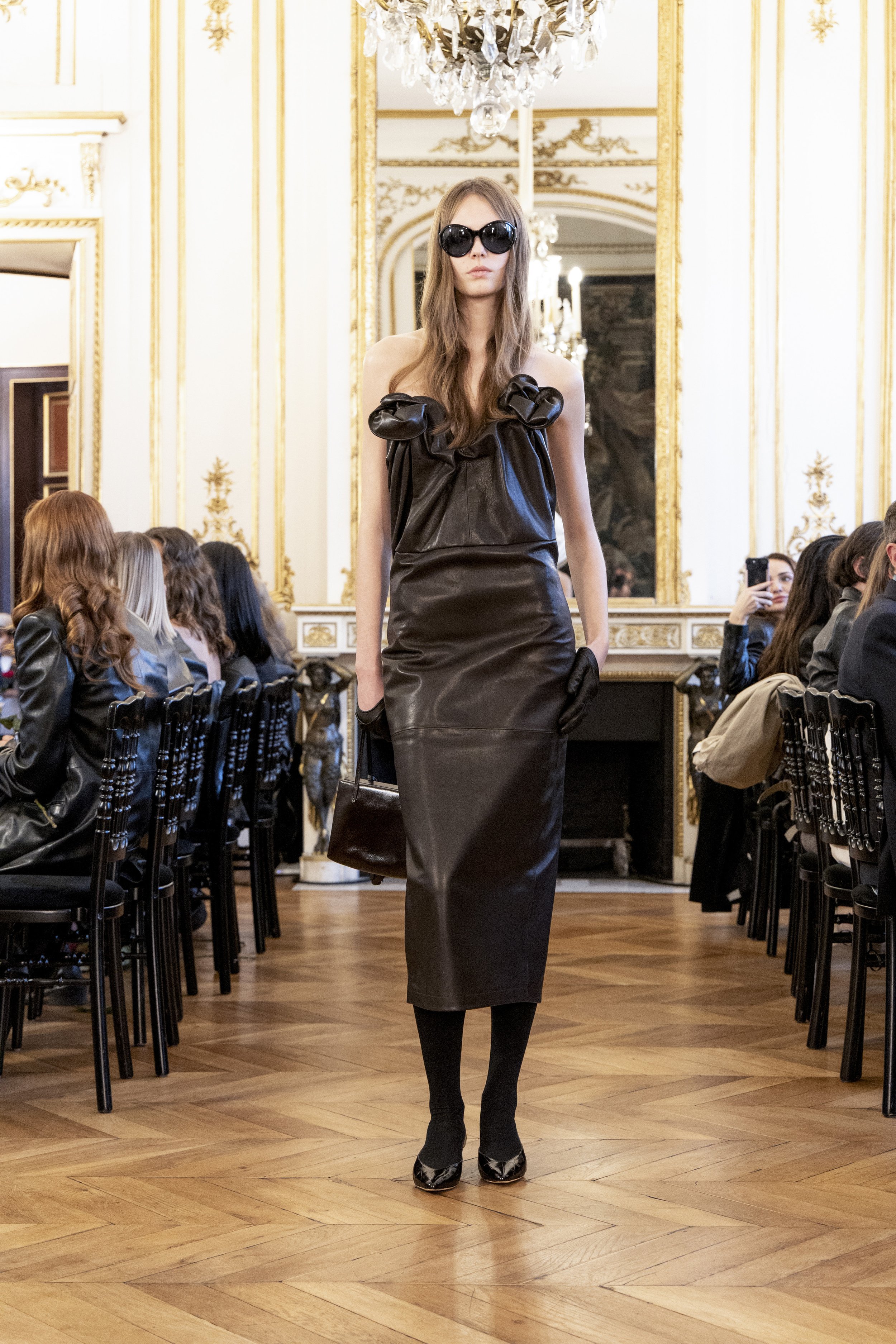
For Fall/Winter 2026, Magda Butrym looked inward. Titled Zima — the Polish word for winter — the collection framed cold-weather dressing as an attitude, balancing protective outerwear with Butrym’s signature sensuality.
Outerwear anchored the lineup. A bathrobe-style leather coat tied at the waist, sharply cut jackets, and elongated coats emphasised the designer’s growing confidence in tailoring. These pieces felt like a natural evolution for Butrym, whose hourglass silhouettes and padded shoulders brought a sharper, more architectural dimension to the brand’s otherwise romantic language. There were moments of experimentation too. One particularly striking look paired a tight leather vest with what appeared to be a puffer mini dress or jacket layered over a skirt—an unusual but compelling mix of structure and volume.
Elsewhere, knitwear took over in a form of monochrome sets combining turtlenecks, cardigans, and tights worn as trousers. While the concept fit the collection’s winter narrative, two nearly identical melange versions, styled with bloomers and tiny shearling-trimmed heels, felt strangely disconnected from Butrym’s usual seductive precision.
Still, the strongest looks reaffirmed what the designer does best: sculptural tailoring, butter-soft leather, and silhouettes that sharpen femininity. Even in a quieter season, Butrym’s vision remains unmistakably hers.
MCQUEEN
review by MAREK BARTEK

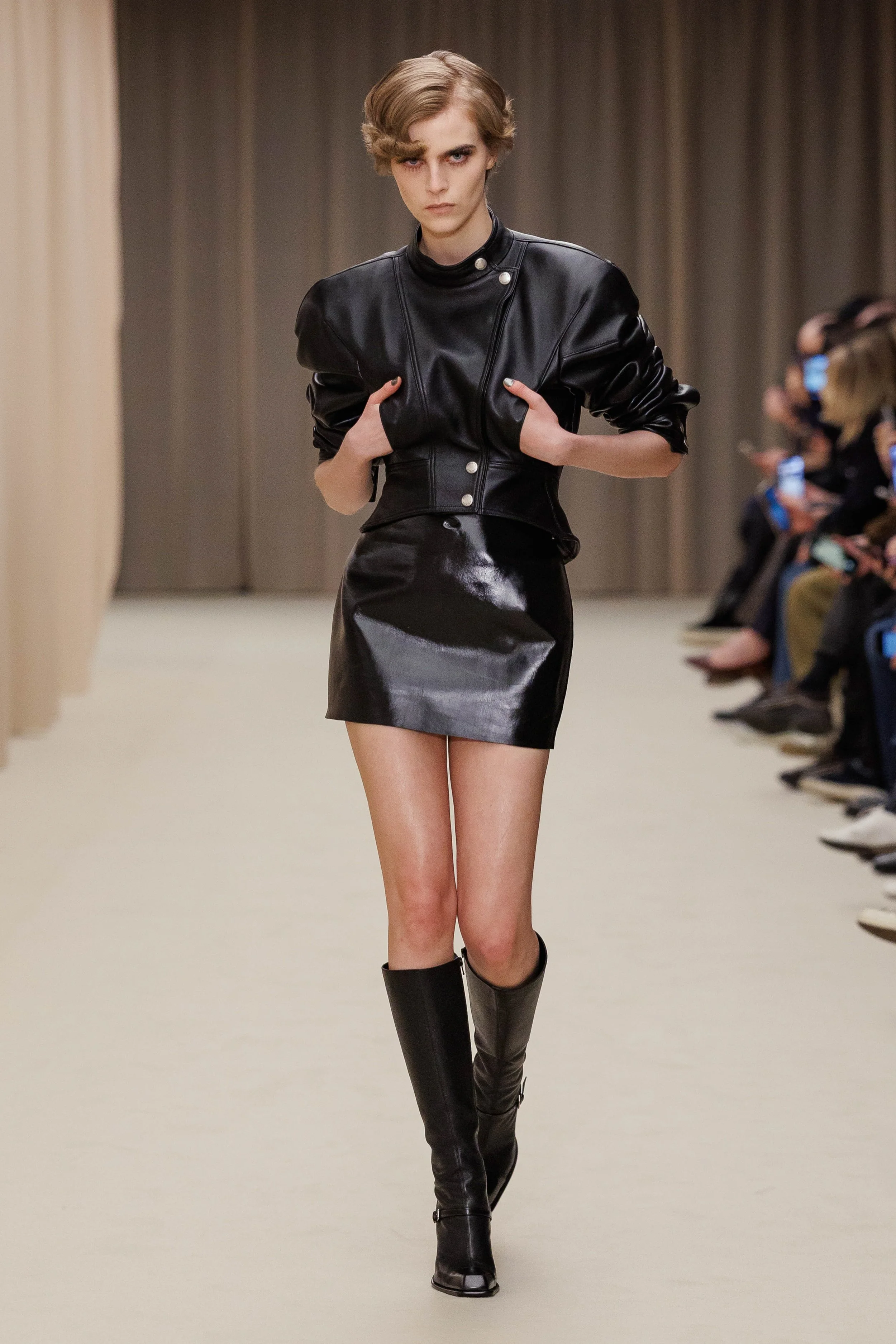
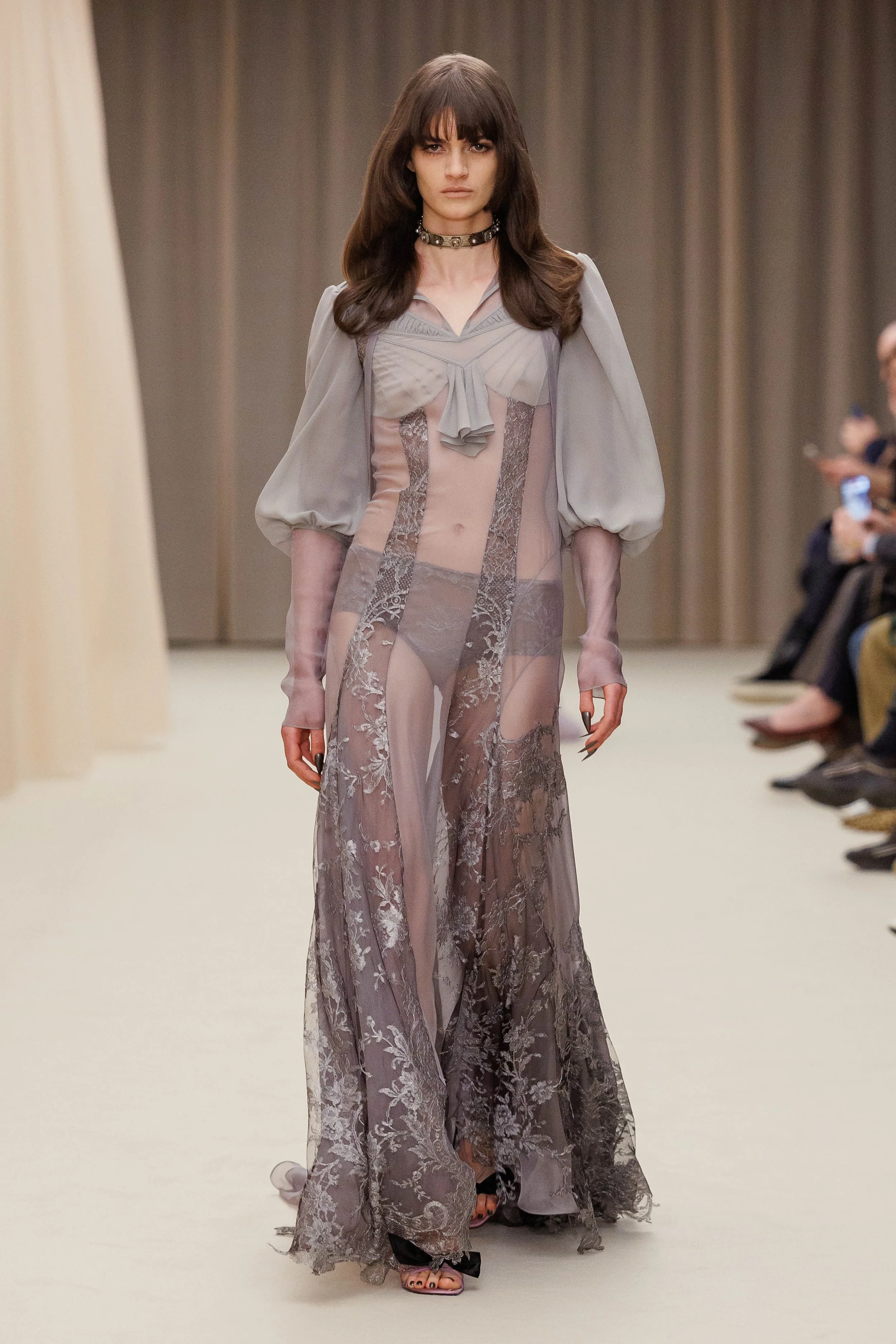

all images courtesy of MCQUEEN
Every so often, I find myself wondering what the founding designers of iconic houses would think of today’s collections — and at McQueen, that question feels especially inevitable. The late Lee Alexander McQueen built a house whose shows were once among the most emotionally charged and anticipated events of the fashion calendar, presenting collections that fused fashion with art, theatre, innovation and social commentary. Following such a legacy is, quite simply, an impossible act.
It’s the challenge currently facing creative director Seán McGirr. For Fall/Winter 2026, he turned his attention to what he described as the psychological tension of modern life, drawing inspiration from Todd Haynes’ 1995 film Safe. “We’re always on; always curating, consuming, performing and being watched,” he noted, framing the collection around the idea that people today “crave something intimate, visceral and real.”
There were moments where that tension translated well. Edwardian-leaning coat dresses with Gothic collars, sharply cut tailoring, and slick leather pieces nodded convincingly to the house’s dark romantic codes. A cropped black leather jacket paired with a miniskirt had real McQueen-esque attitude, while metallic knits and sharp tailoring hinted at the late designer’s fascination with historic structure and armour. A particularly memorable piece was a single-hook jacket fastening just below the bust, inspired by the Spring/Summer 1997 collection.
But McQueen has never been a house built on references alone, and much of the collection felt more referential than distinctively new — echoing the house’s codes without quite igniting them. Mini skirts, lace dresses and cargo-pocket variations nodded to past McQueen motifs without capturing the bite that once made them unforgettable.
The eveningwear proved less convincing, often appearing sheer or loosely constructed where McQueen’s most memorable dresses balanced delicacy with exacting craft. Still, there were flashes of something closer to the brand’s poetic core. The closing look — a soft, almost bridal gown — subtly echoed Lee McQueen’s Spring/Summer 2007 collection, offering a fleeting glimpse of the house’s romantic, slightly haunting spirit.
That being said, the difficulty of the task cannot be ignored. McGirr is navigating one of fashion’s most mythologized archives — a house built not just on clothes, but on ideas, extravaganza and emotional force. For now, his McQueen appears to be searching for its own voice: respectful of the past, but still waiting for the moment when reference turns into revelation.
JEAN PAUL GAULTIER
review by MAREK BARTEK
all images courtesy of JEAN PAUL GAULTIER
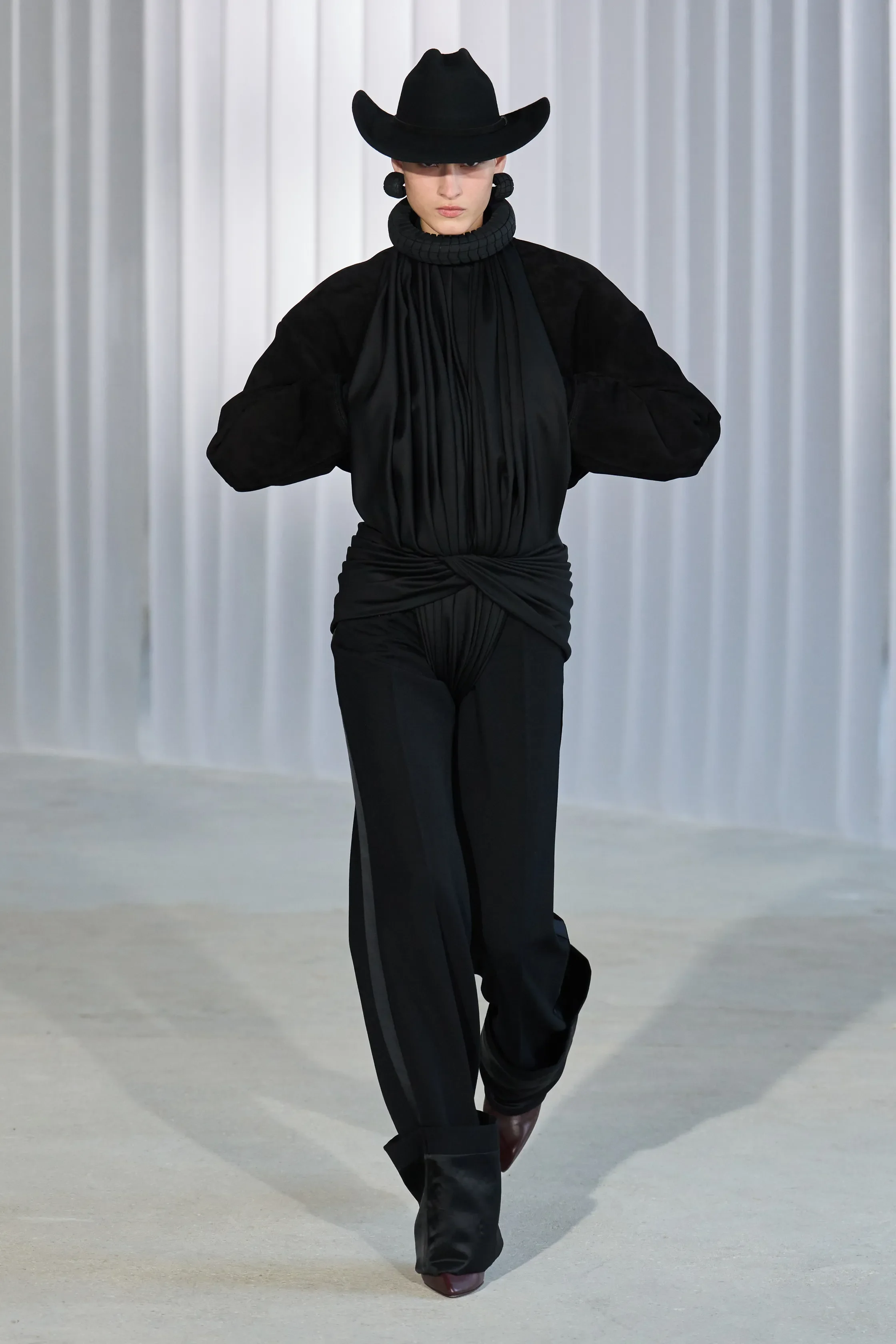
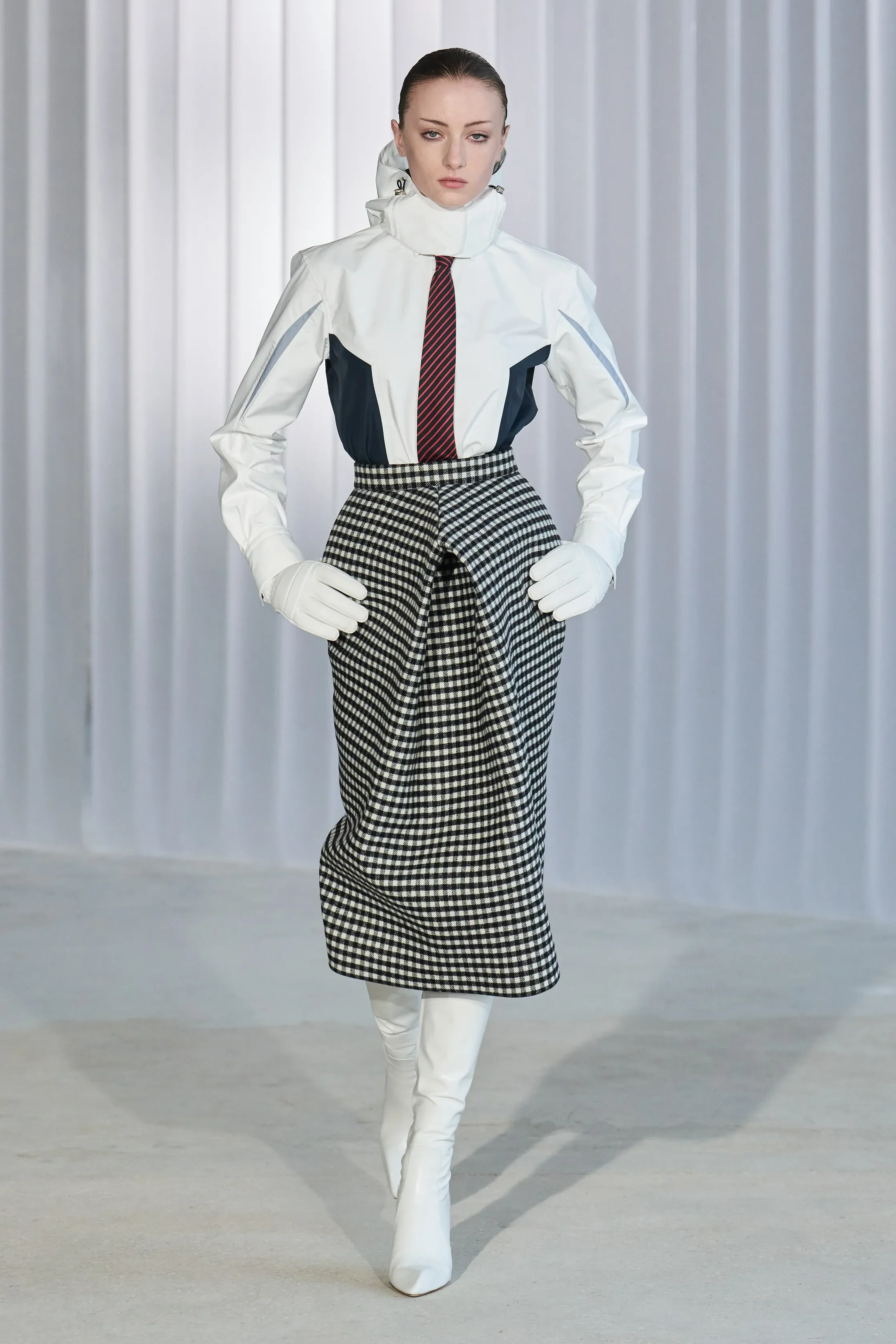
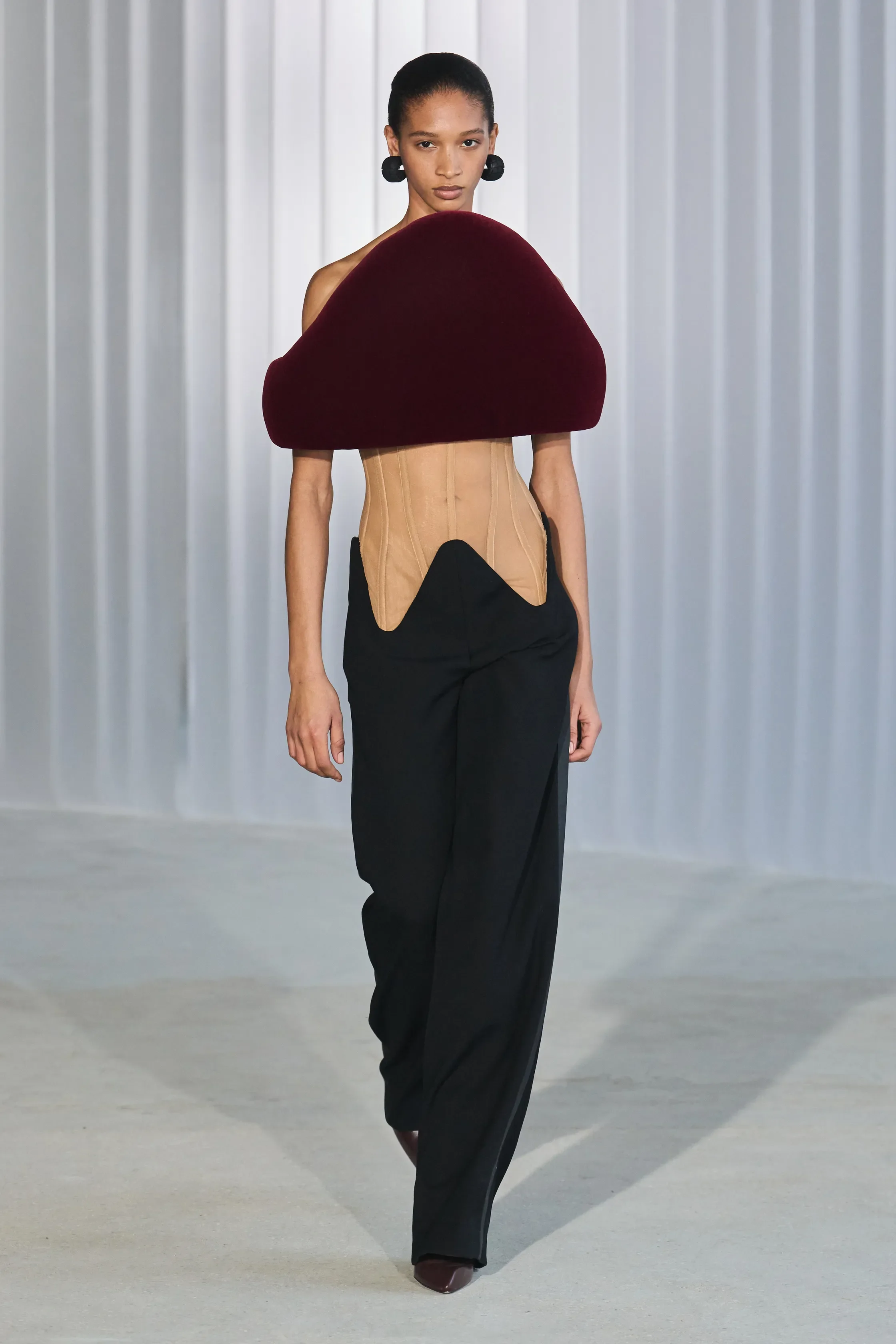
After the turbulence of last season, Jean Paul Gaultier returned with something far more reassuring. For his latest runway presentation at the house, Duran Lantink delivered a collection that finally suggested he may be finding his footing within the formidable universe of Jean-Paul Gaultier.
Gaultier’s work has always thrived on a delicate balance between mischief and technical mastery, and Lantink seemed more aware of that equation this time around. Tailoring became the collection’s backbone, beginning with sharply cut coats and suits that played with proportion and construction. The designer approached the classic suit through the lens of what he described as “Madame Masculinity,” inspired by images of Marlene Dietrich and her famously subversive relationship with menswear.
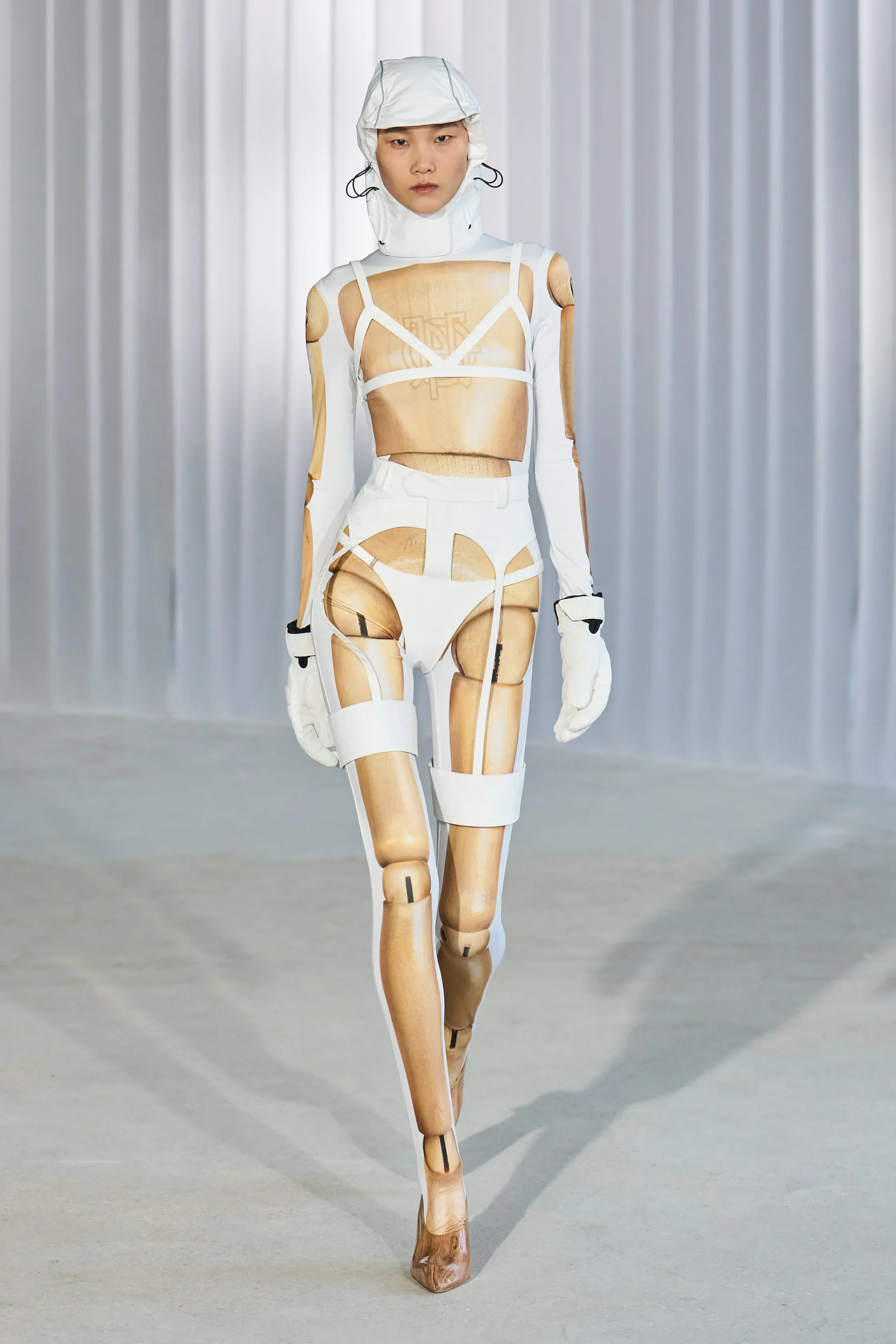
Elsewhere, familiar Gaultier codes appeared in unexpected forms. Anatomy references returned through body stockings printed with articulated wooden mannequin motifs, while corsetry, lingerie elements, and cowboy flourishes collided with sportswear touches like nylon technical pieces and colour-blocked tops. At times the ideas came quickly and in abundance, but the craftsmanship beneath them kept the collection grounded.
Most importantly, the spirit felt right. Where last season’s debut veered toward shock without much clarity, this collection felt more focused — playful, intelligent, and respectful of the house’s irreverent DNA. For the first time since taking the reins, Lantink seemed less like a guest in Gaultier’s world and more like a designer beginning to claim space within it.
LACOSTE
review by SONNY NGO

all images courtesy of LACOSTE
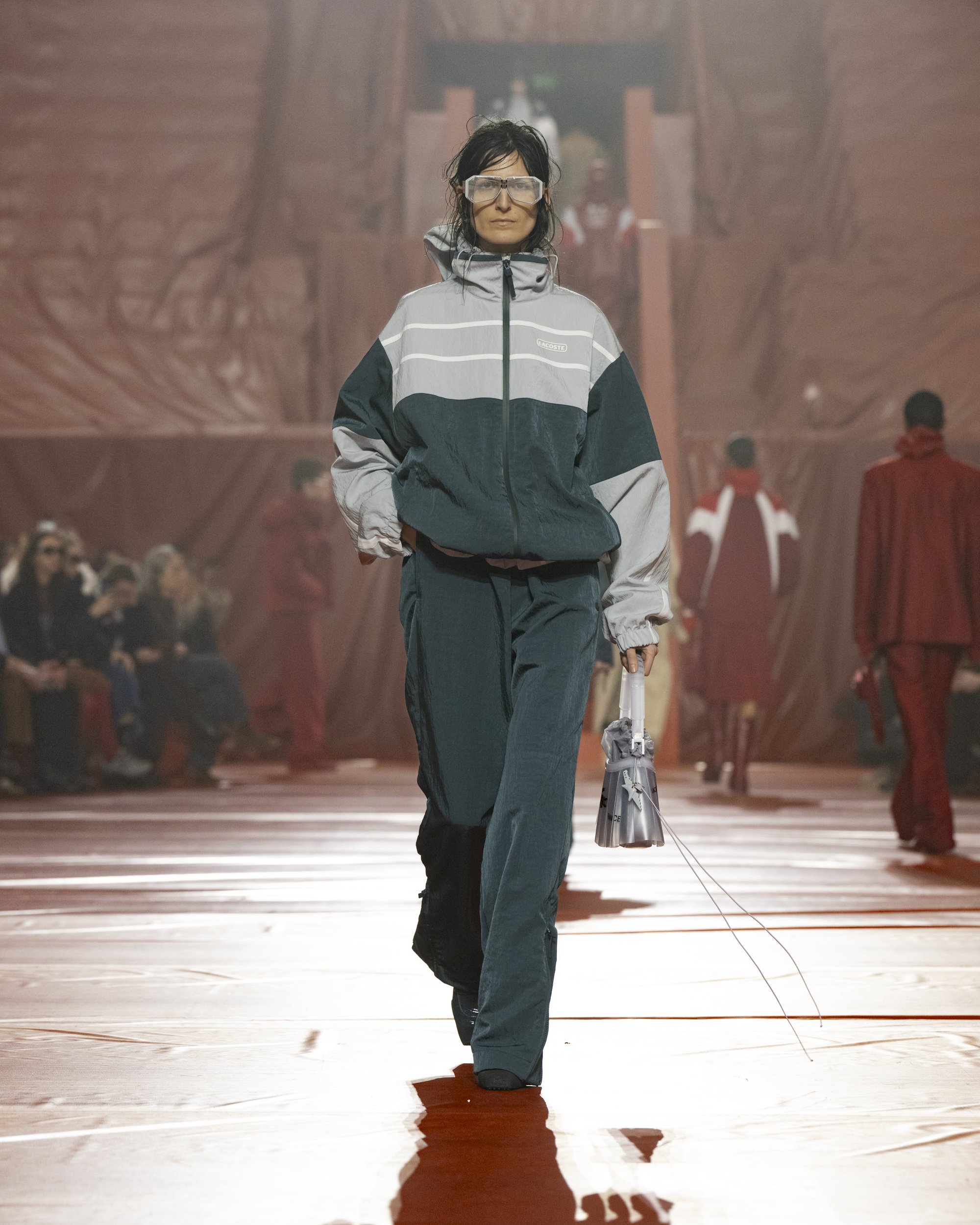
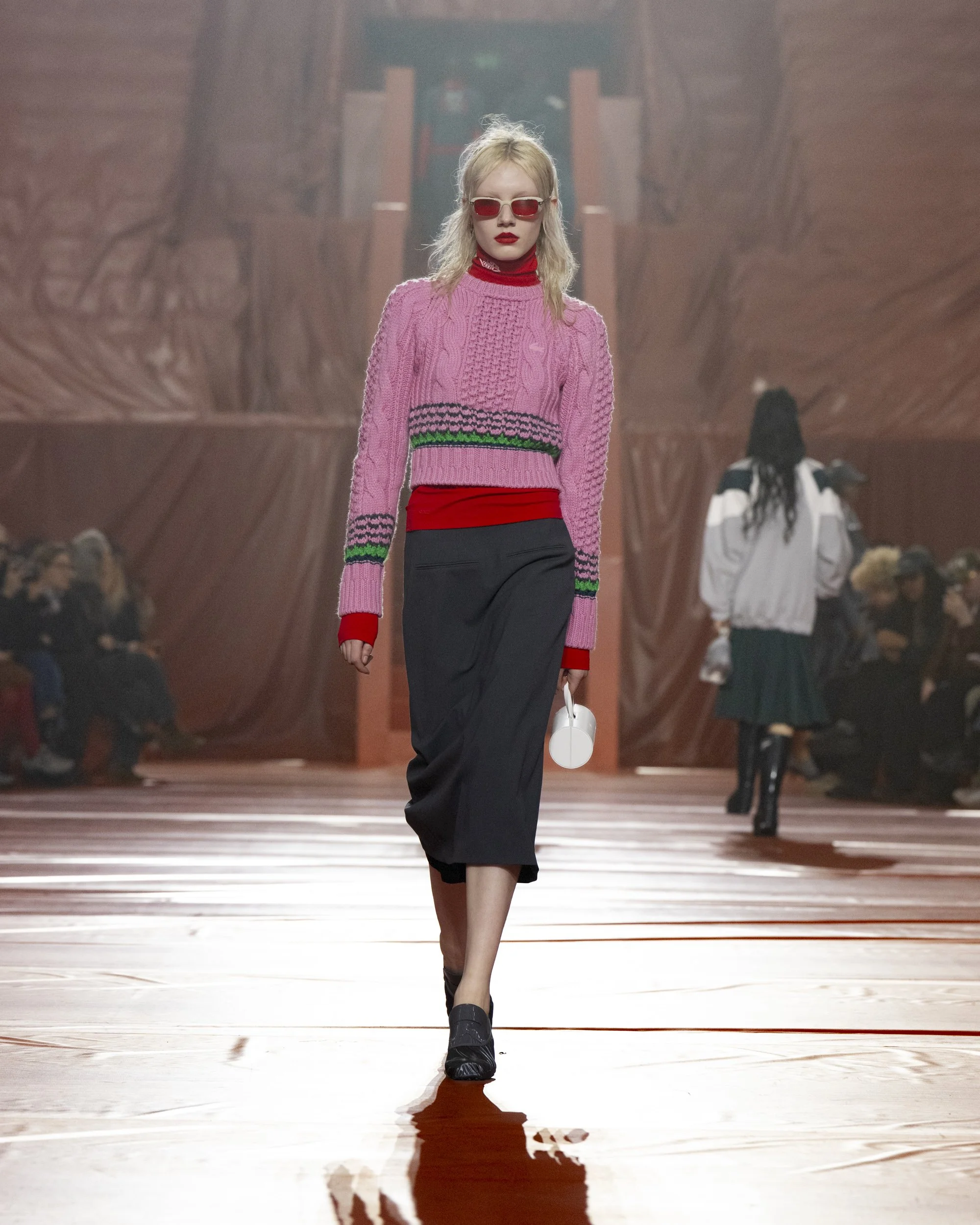
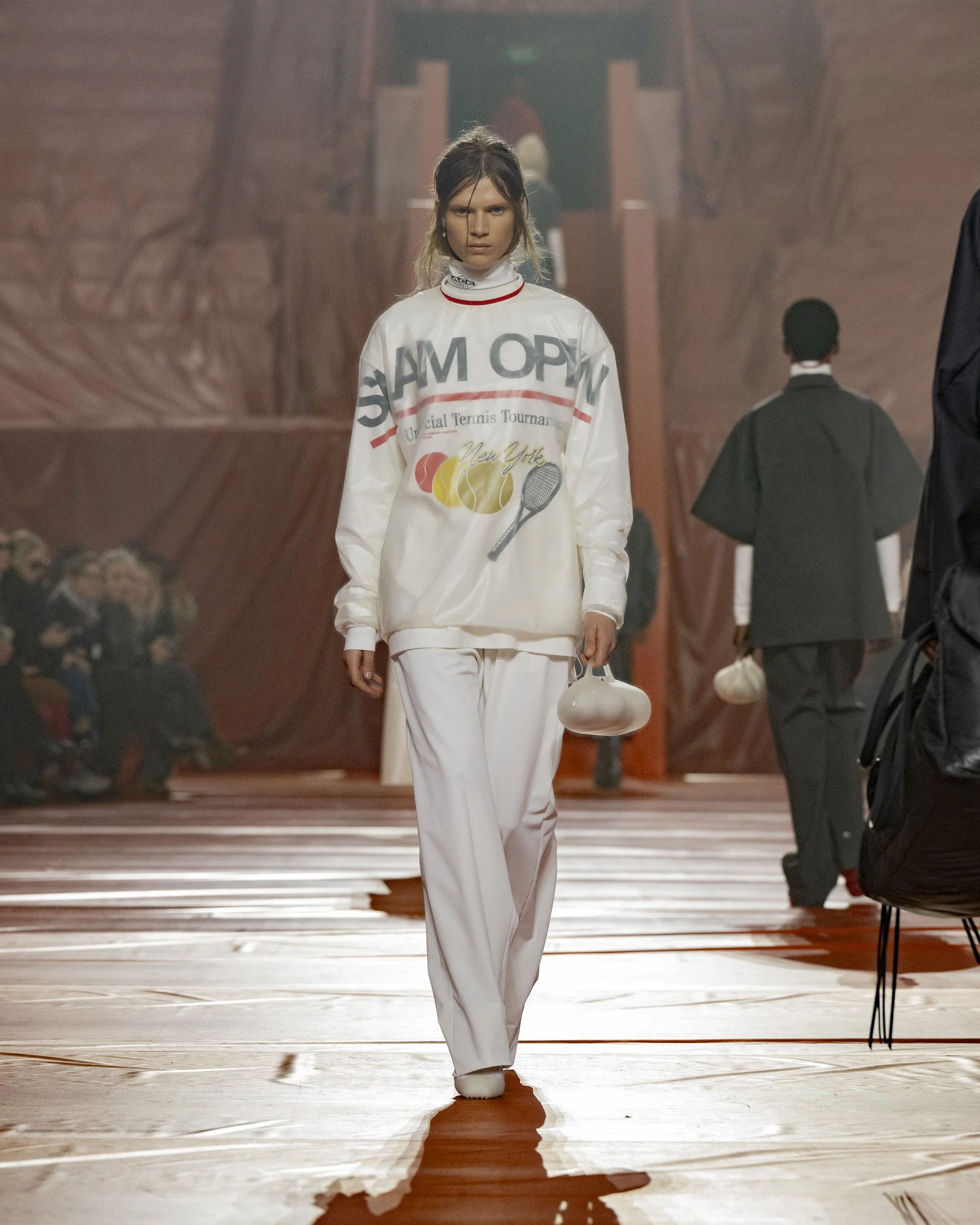
For its Fall/Winter 2026 collection, creative director Pelagia Kolotouros dived into the tennis lore archives: a cloudburst match between René Lacoste and Manuel de Gomar during the Davis Cup in 1923. The major downpour of rain transformed the game’s atmosphere as visitors were clustered together under umbrellas, wearing raincoats, ponchos, and dirt-proof boots. For her fifth collection at Lacoste and back at the Roland-Garros stadium, Kolotourus re-envisioned the court under a draped orange fabric, reminiscing the then rain-drenched clay courts of Deauville.
Inspired by this dramatised image, the collection gravitated heavily towards utilitarian outerwear. The show opened with a plethora of trench-anchored looks created in collaboration with Mackintosh, an expert brand when it comes to waterproof fabric. Kolotouros has a special way of mix-and-matching Lacoste’s sports DNA with the technical aspects: the mini-capsule included a skirt, naturally, a polo, and a combination of a trench and a skirt. That last silhouette was one that particularly caught eye as it also hinted at the Kolotouros’ other inspiration this season: 1980s streetwear in Queens, New York. Edited with refinement, the collection featured tailored trackpants, nylon zip-ups, and caps. In other places, the colour palette included soft pinks, deep reds, and traces of grass-greens. The runway closed with a series of playful graphic designs protected by translucent ponchos, giving the collection a fun little spin, and calling back to the iconic tennis match.