
CHRISTOPHER ESBER
review by TIANA DE HASETH
all images courtesy of CHRISTOPHER ESBER
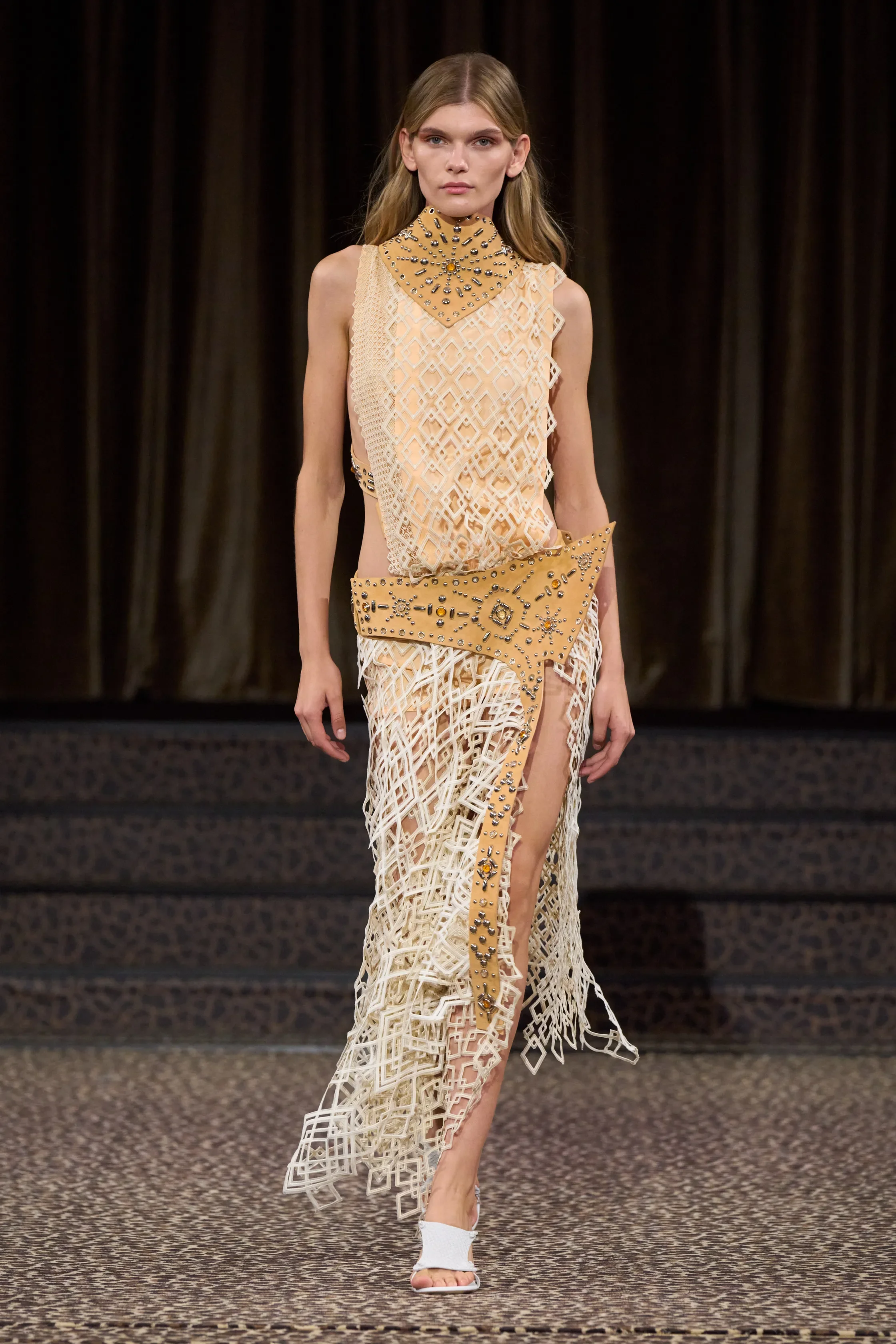
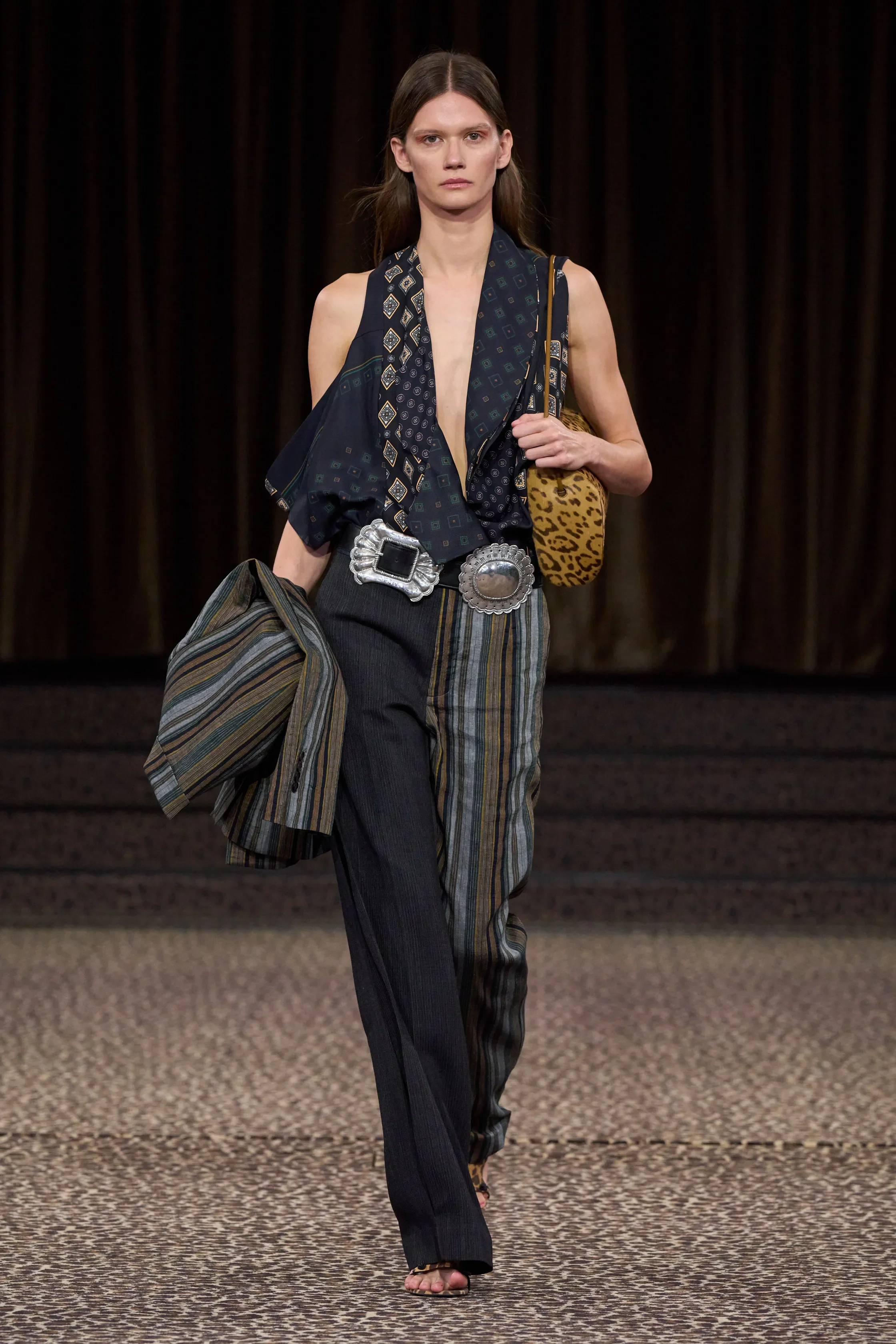
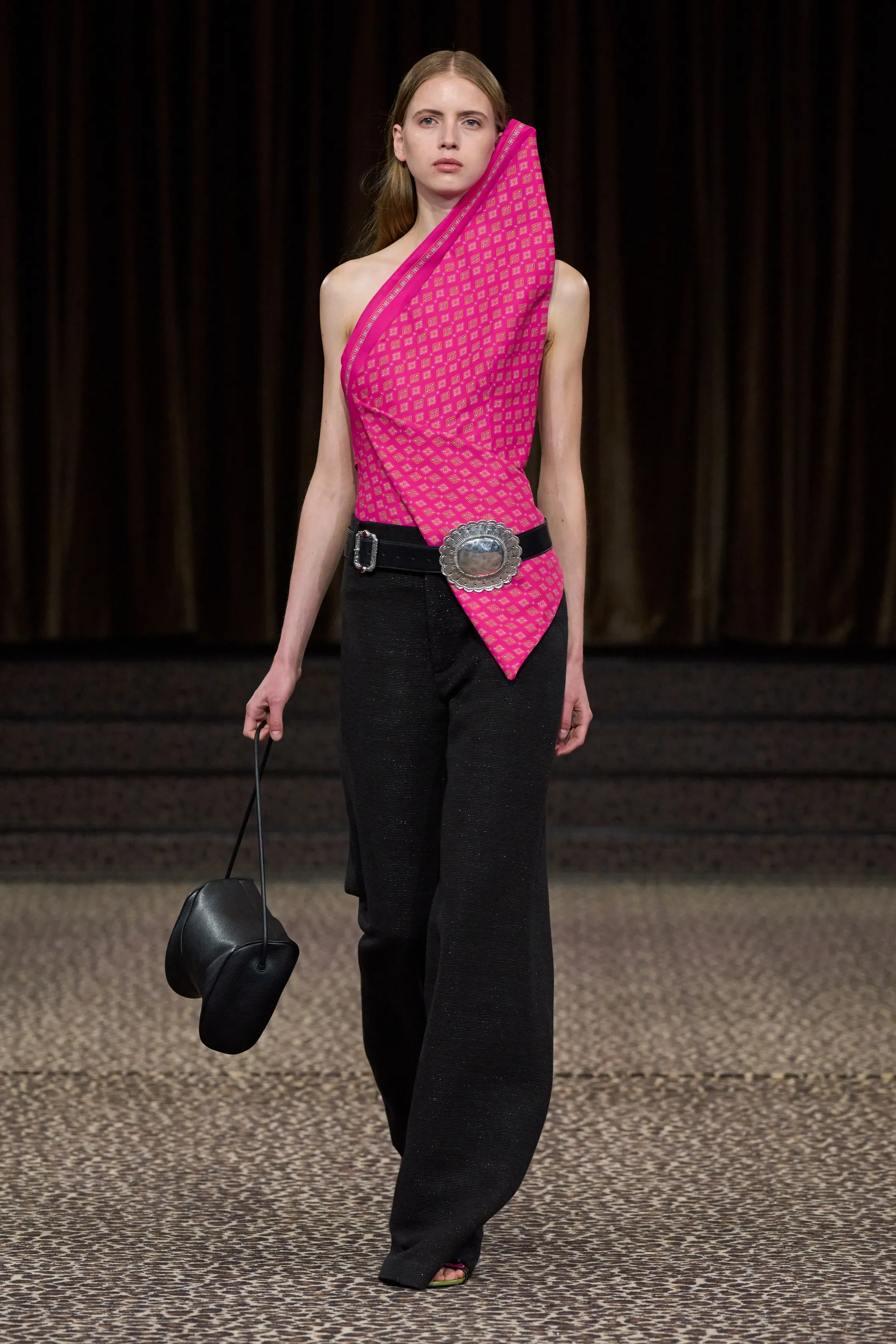
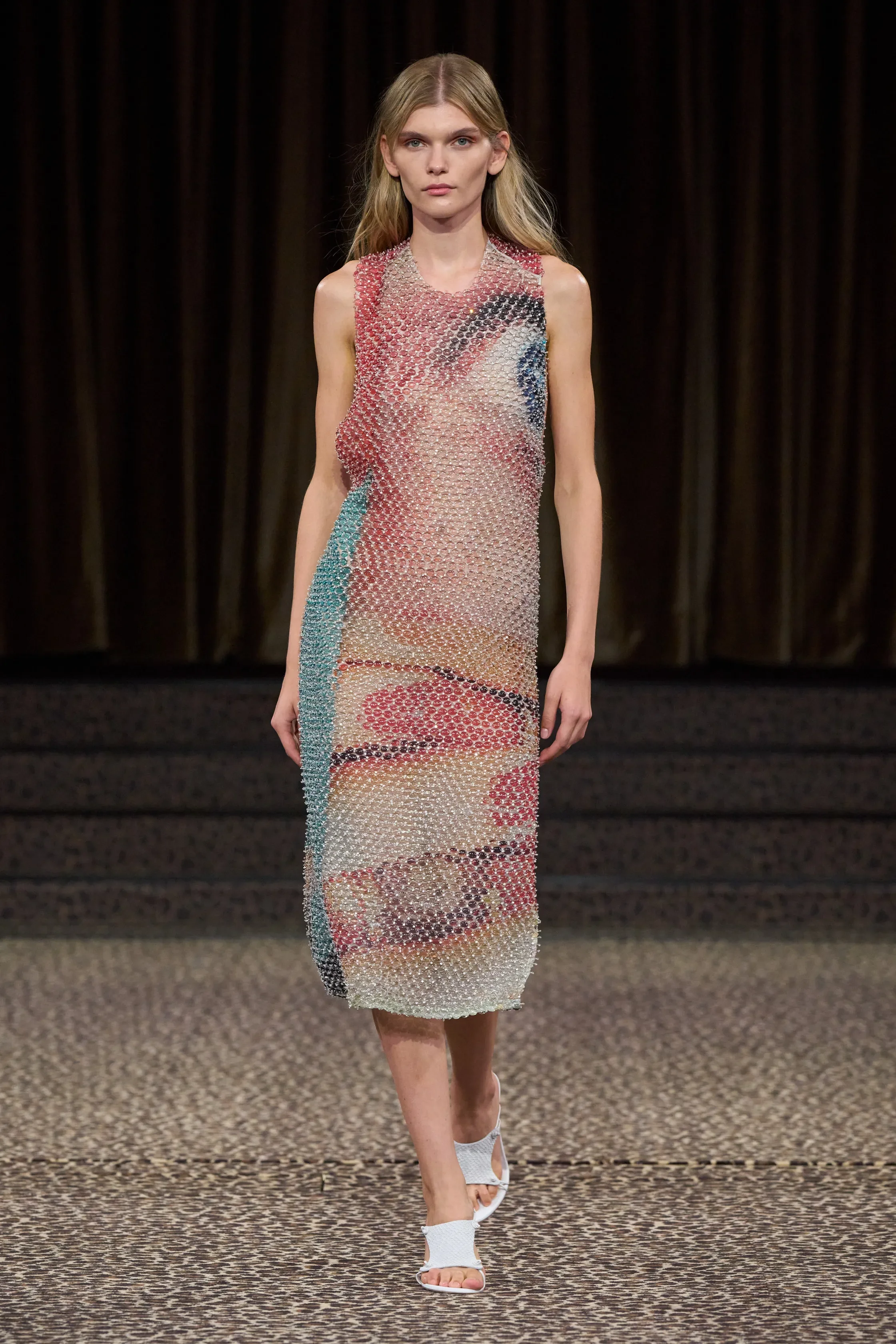
Australian designer Christopher Esber says “Viva Las vegas!” For his Spring Summer 2027 collection, as the designer takes a trip through the American West, embodying the Elvis-era of rock ’n’ roll.
What better way is it to close off fashion week through the swagger of classical menswear? Esber’s vision of the west includes many small details such as pocket squares, belts, big buckles and studs that are translated through a more contemporary lense.
The silhouettes are exaggerated, A- lined and asymmetrical creating a dramatic look for the collection. When you combine the details with the bustier, halter, bodycon dresses and midi skirts, it creates a masculine tone within the feminine sensuality to the wardrobe.
Fabrics like lace and poplin add to the dramatic twist of the western rock n roll, creating a collection that is both rebellious and elegant. While the colours of black, brown, white and green ground the collection with the earthy tones. The buckles silver belts gives it that touch of the “Elvis Presley in Vegas” glamour that is perfect for the finale of fashionweek.
SITUATIONIST
review by DEBORAH DRENOFCI
all images courtesy of SITUATIONIST
For the SS27 collection of Situationist, Tbilisi-based designer Irakli Rusadze not only continued to honour his connection to Georgian heritage, but also played with patterns and structured tailoring in such a way that he stitched the feminine and the masculine into the garments, allowing the woman to be in touch with her masculinity and the man to fully embrace his softness.
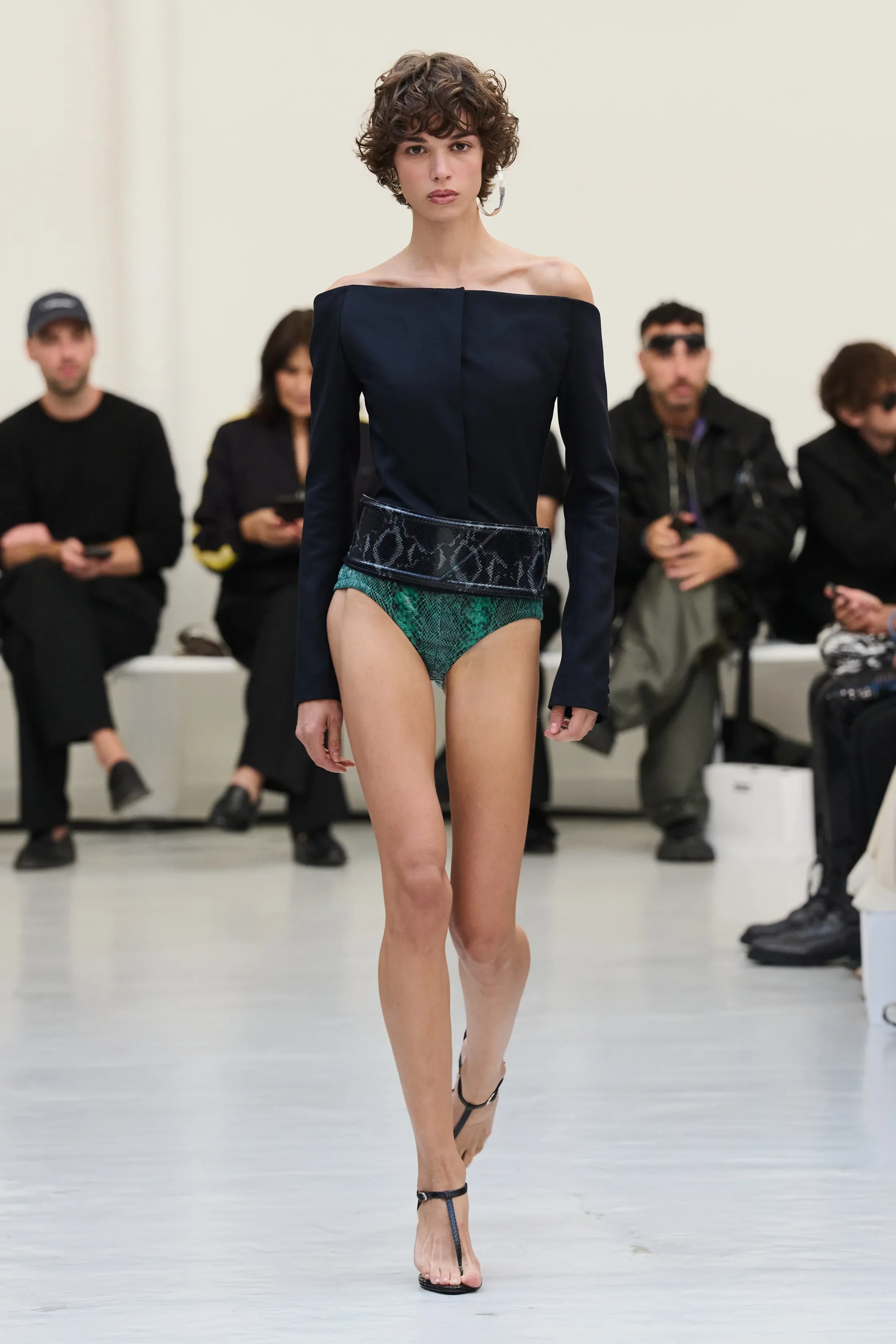
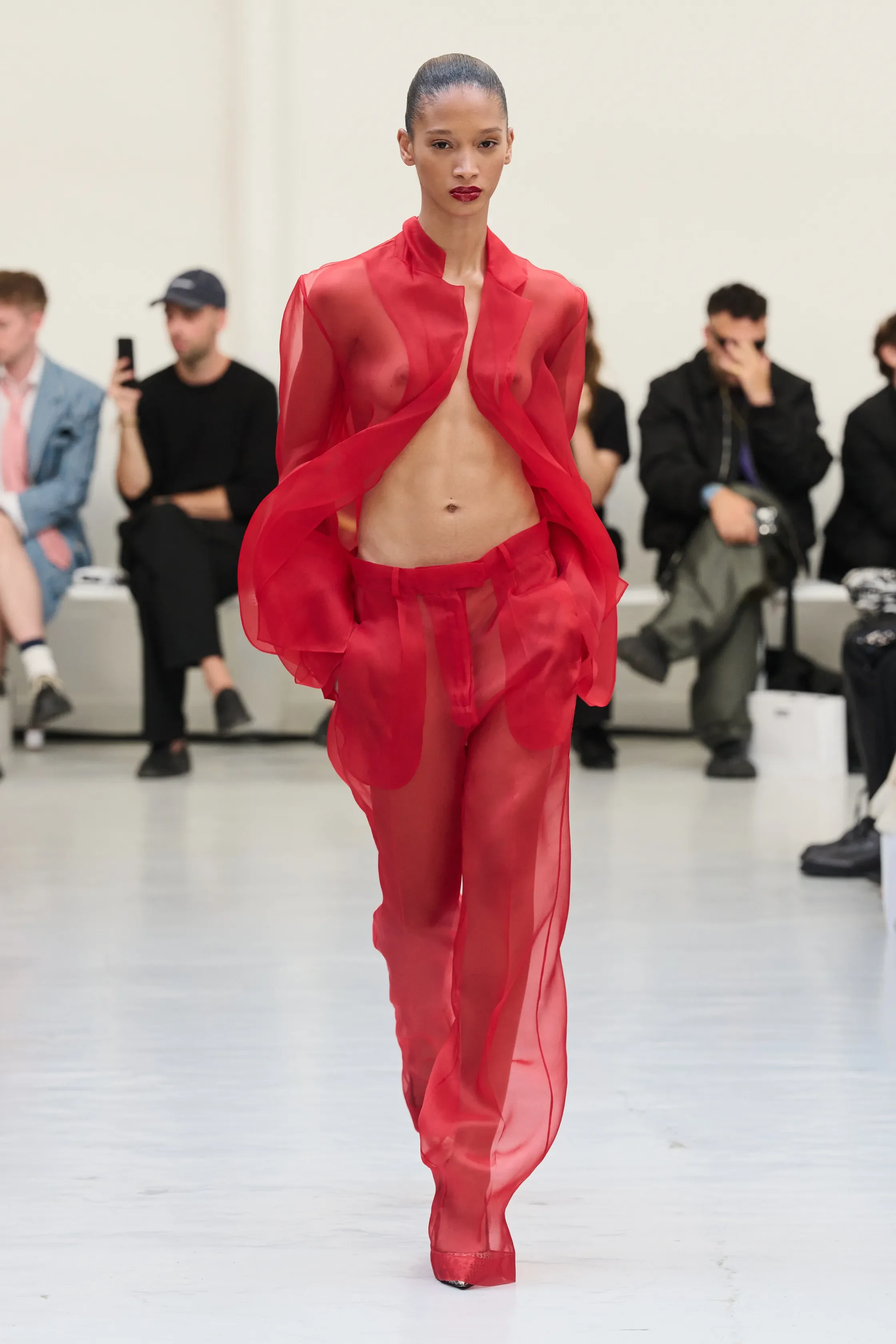
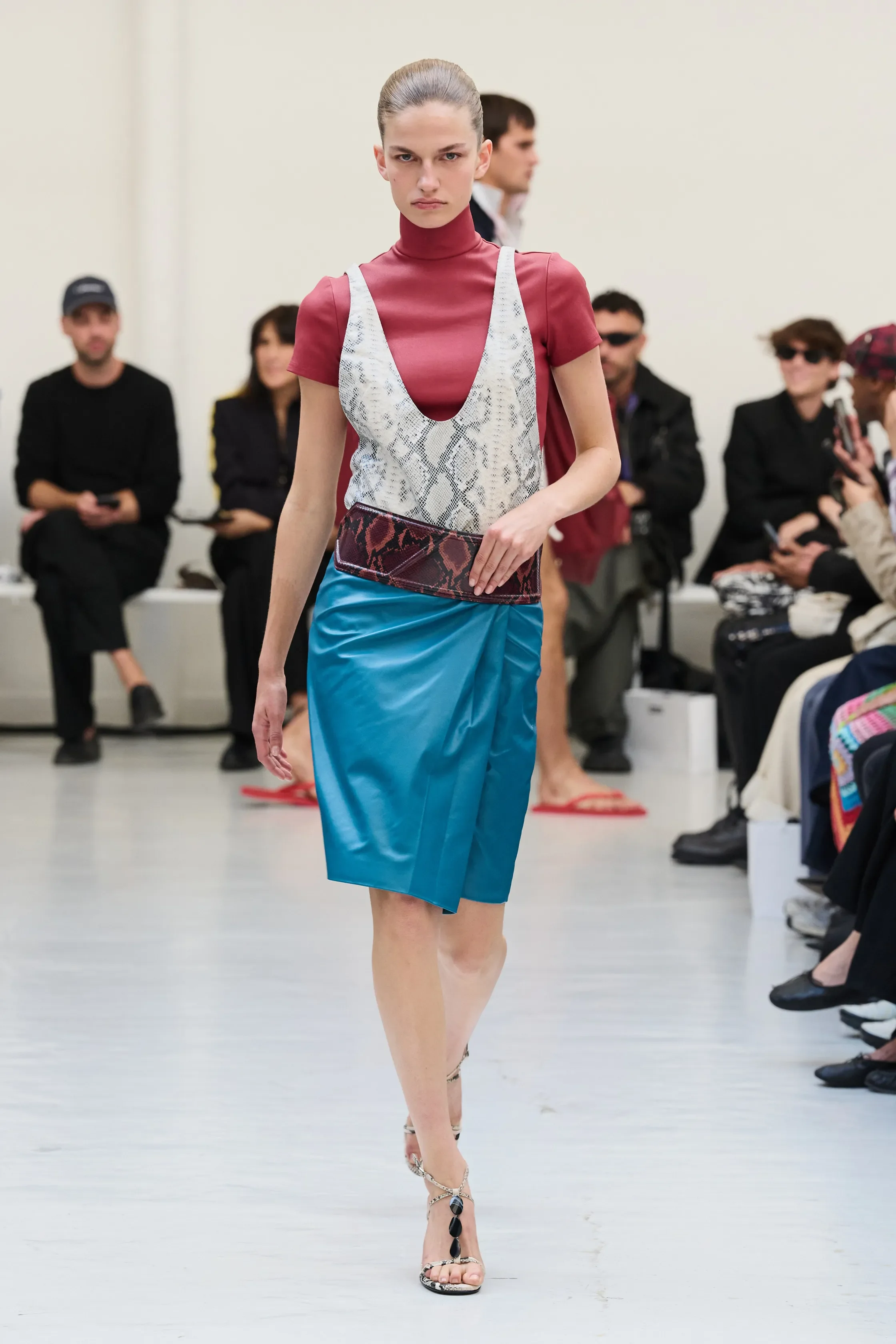
The collection was hand-produced by women artisans. The womenswear held a delicate yet aggressive power. Leather and organza stole the show. Leather came as v-neck tank tops, t-shirts, skirts and outerwear, including a leather turtleneck worn over a shirt with a diagonally cut skirt, half blue, half black. A snake-print bikini came with a thick buckle belt in the same print. Organza blazers added sensuality, zebra print covered trenches and sleeves, and bold epaulettes met fluid draping. Traditional Borjgali earrings appeared throughout the collection.
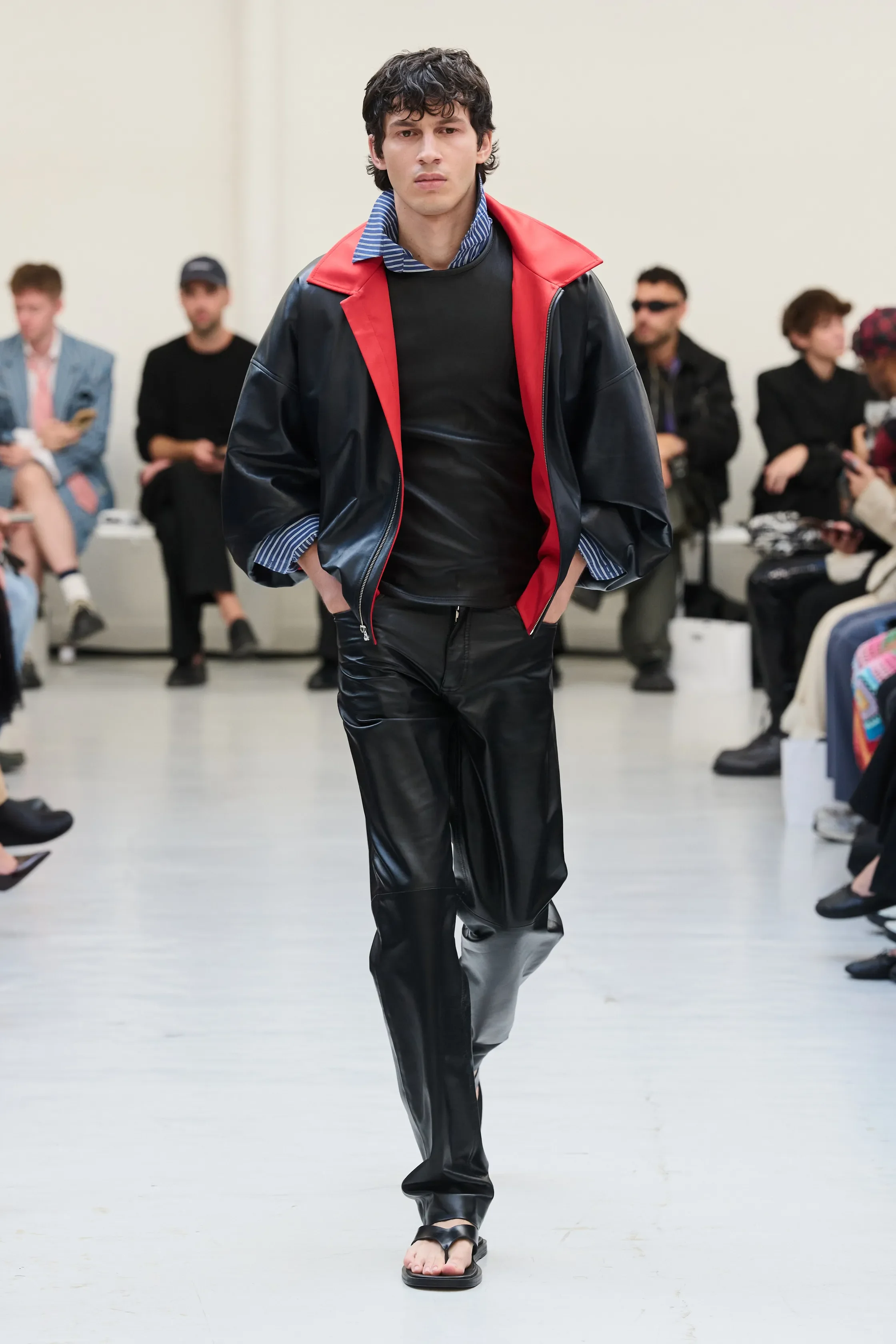
Menswear was quieter, punctuated by pops of colour. Suits came in pale pink and python print, worn open over bare chests. Leather appeared as wide trousers, a sleeveless vest and short shorts in black and burgundy, paired with bright red and blue flip-flops. A beige trench came with a snake-print collar, and an open navy shirt was styled with a long beaded necklace and an oversized red tote. The signature detail was the belt with its round, shell-like buckle, which ran through look after look. Overall, it was a sharp collection - one where strength and softness don't really take sides.
LOUIS VUITTON
review by MAREK BARTEK
all images courtesy of LOUIS VUITTON
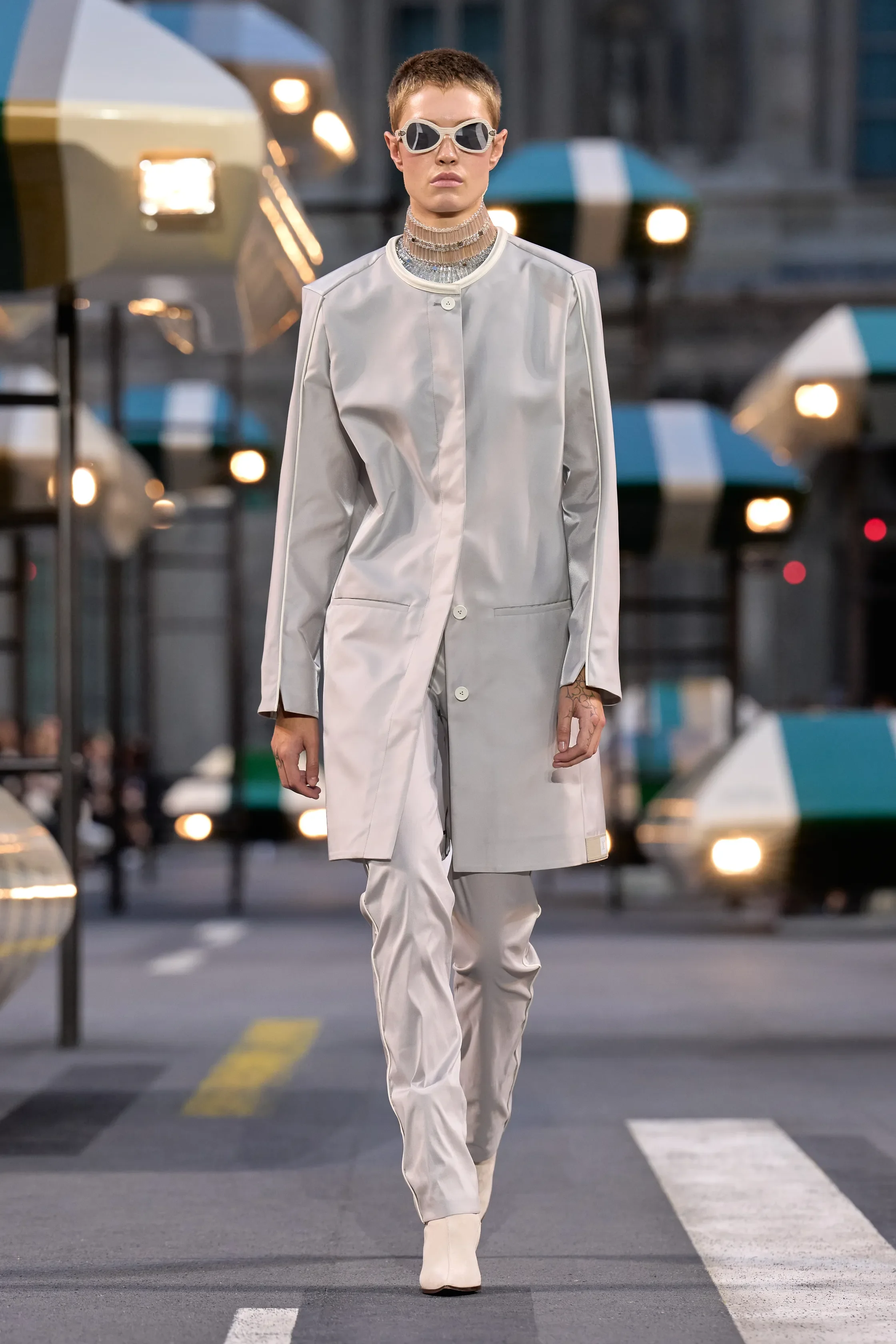
Flying cars might have hovered above the Cour Carrée of the Louvre, but Nicolas Ghesquière’s vision for Louis Vuitton SS27 was surprisingly down to earth. Titled Ergonomie, the collection considered the relationship between clothes and the body in motion, showcasing garments that mould, with structure stripped of its usual constraints.
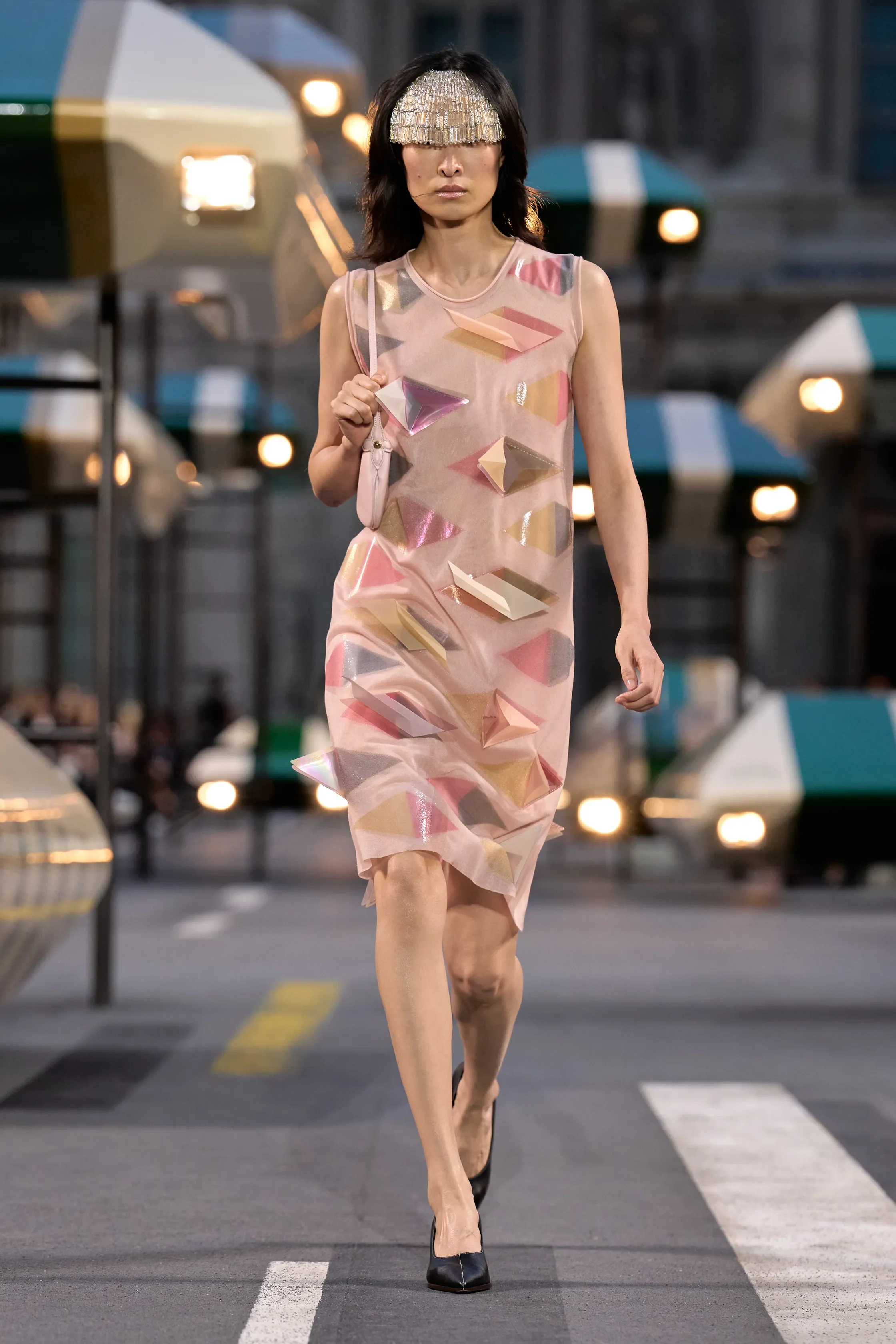
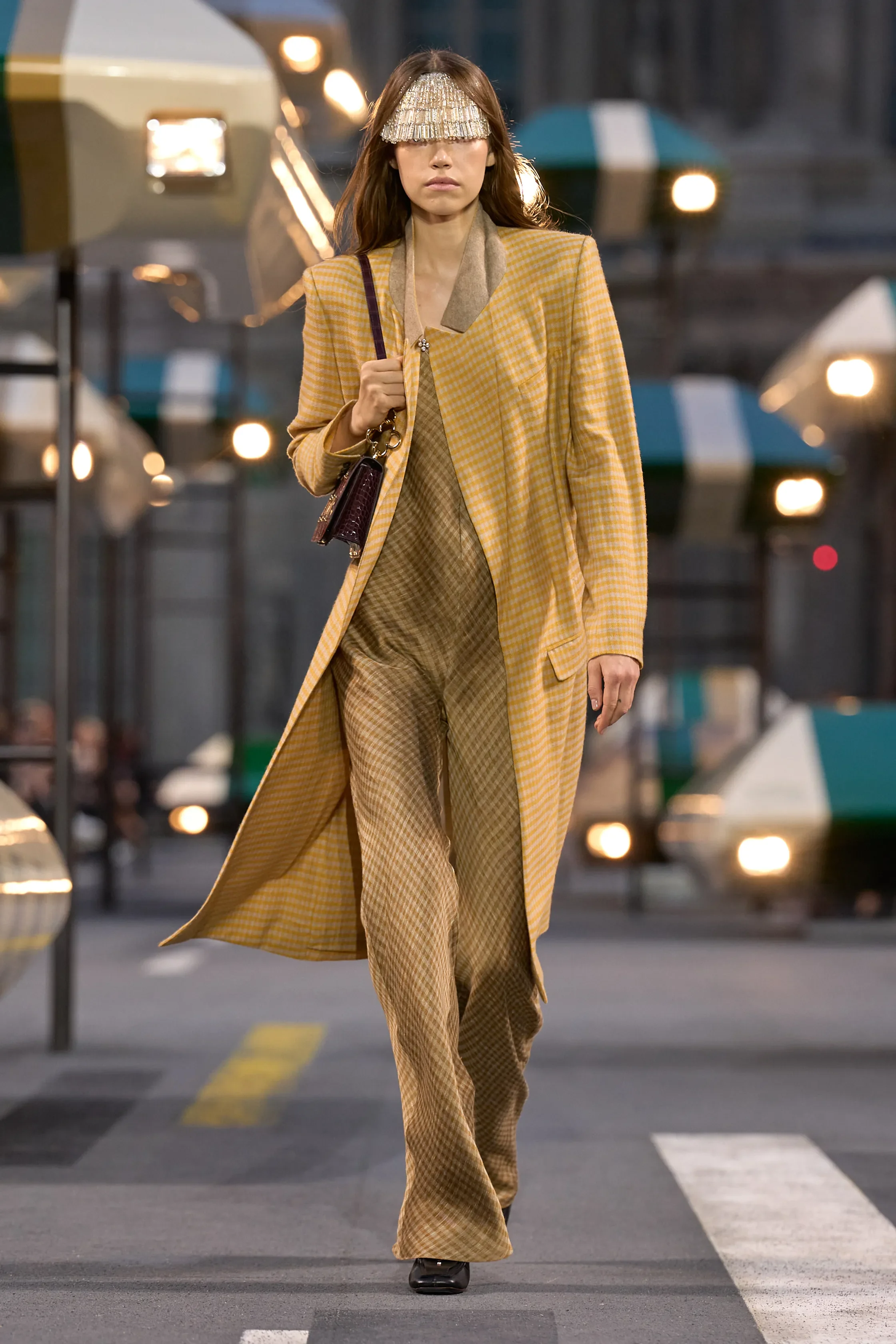
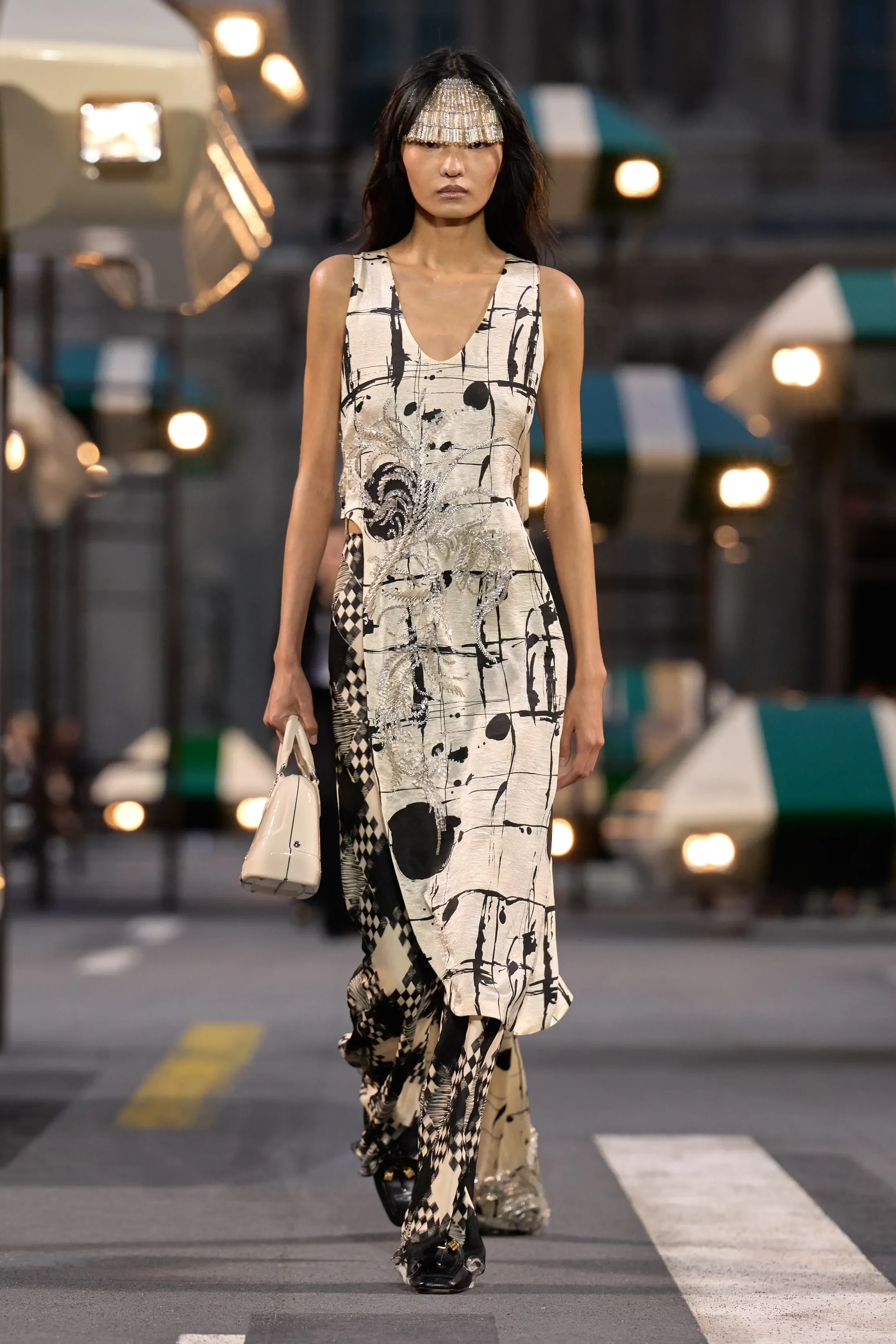
It made for one of Ghesquière’s lightest collections in recent memory. The opening almost-white dresses floated around the body, followed by fluid tailoring and semi-translucent layers and fabrics. The palette remained relatively muted — whites, greys, camel and powder pink — punctuated by acid yellow and those slightly strange diamond patterns. Together with the soundtrack, the flying cars and metallic touches, the show told a retro-futuristic story of an imagined future seen through the lens of the past.
There was plenty of experimentation within all that lightness. Fabrics were gradually more and more manipulated, folded and layered into unexpected shapes, and later looks became increasingly tactile. Around looks 28 and 29, things briefly veered into almost Dune-like territory before the collection moved back towards streamlined tailoring. Peculiar fringed visors added another sci-fi element, and the dress-over-trousers combination of look 47, with its clash of prints, was monochromatically loud, slightly overstimulating and really good. The closing look, less so.
It’s a beautiful collection. But watching it also brought back a question that pops out increasingly watching Louis Vuitton shows: what exactly does Louis Vuitton look like today?
Ghesquière has spent more than a decade building an incredibly specific womenswear vocabulary, while Pharrell Williams is simultaneously constructing an equally distinct — and vastly different — universe in menswear. Both work on their own, but where exactly do they meet? At any major House, menswear and womenswear may have their differences, yet you can still recognise the larger world they belong to. At Vuitton, it increasingly feels like two creative directors running parallel brands, connected by a monogram, luggage and the idea of travel.
Is that freedom the point? Is it possible that two visions pulling in such different directions can ultimately form one coherent fashion identity.