words by DEBORAH DRENOFCI
“Everything in the universe only exists because it is in relationship to everything else. Nothing exists in isolation,” Margaret J. Wheatley once said. So it comes as no surprise that the soul of fashion and the soul of architecture share a strong bond. A special one, even. What makes the connection so interesting is how many ways the two intertwine. Whether historical, cultural, social or technical, their relationship resembles a healthy one, independent enough for each to grow on its own, yet always inspired by the other. This article is a collection of synergies between the two, an observation of how fashion and architecture keep trading the role of muse.

images via PINTEREST
Coco Chanel once said, “Fashion is architecture: it is a matter of proportions.” Beyond proportion, there is structure, and there is silhouette. An architect has to think about the structure of a building so that it stands solid on its foundation. A fashion designer deals with structure in relation to the body. Both have to reckon with weight and gravity to create something that holds its shape, and both turn the flat into the three-dimensional, a plan into a building and a pattern into a garment. In the end, both disciplines create what we could call “shells to live in.” The architect’s shell is made of concrete matter, a house or a building. The designer’s might be a red cocoon dress with a big conical hat. Either way, they are meant to be lived in, and that is their most important common ground.
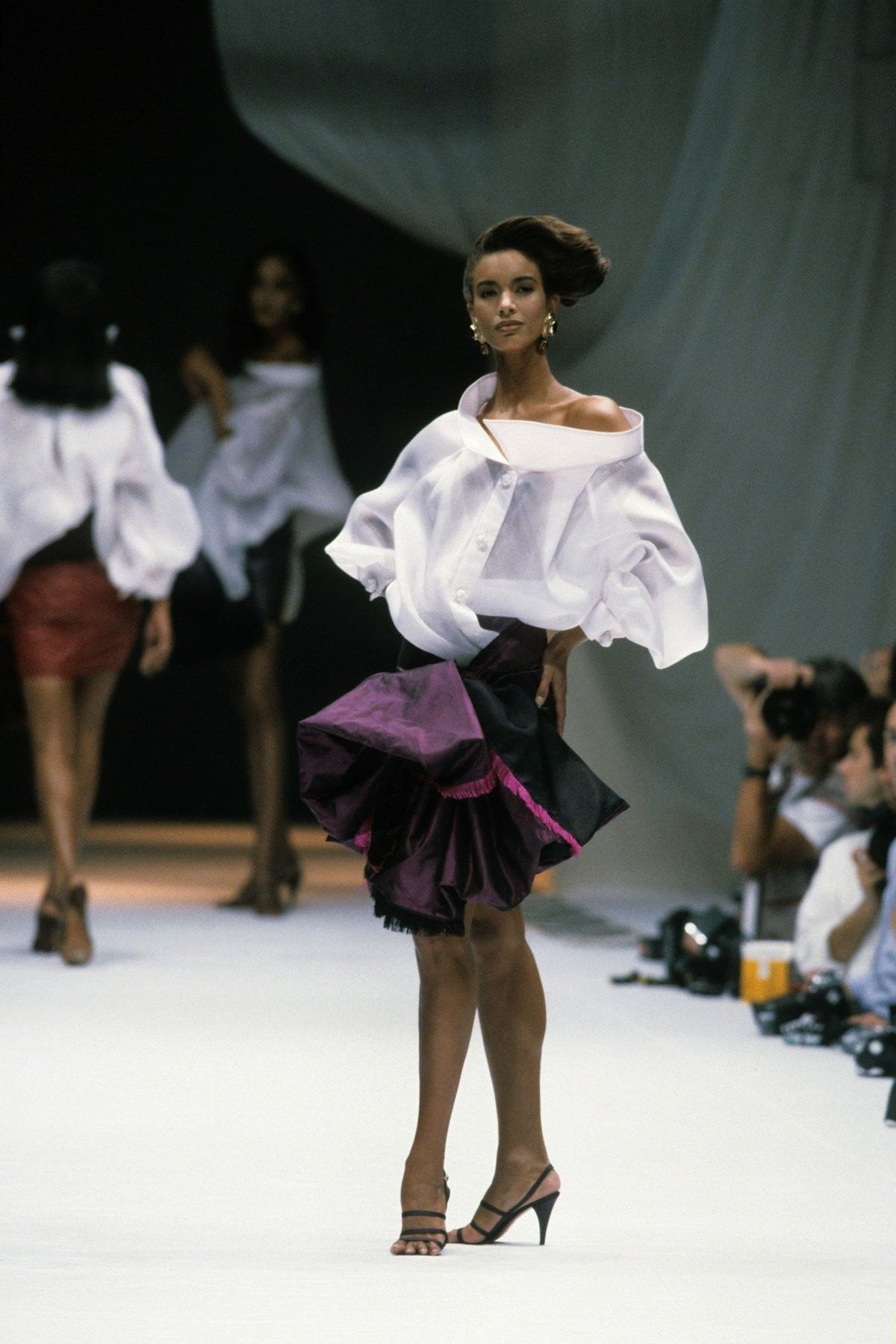
To understand this relationship better, it helps to know that many designers studied architecture first, from Pierre Balmain and Paco Rabanne to Tom Ford and Glenn Martens. Gianfranco Ferré, often called the “architect of fashion,” studied architecture at the Politecnico di Milano, a discipline that followed him throughout his years in fashion. In the seventies he designed under the label Baila before launching his own brand in 1978. His sketches showed real technical skill, with foundation and superstructure drawn with precision and silhouette and proportion approached from an architect’s point of view. Ferré treated a garment like a building. In 1989 he became the first non-French artistic director of Christian Dior. His tenure gave birth to the Lady Dior handbag and left behind a legacy of architectural silhouettes.

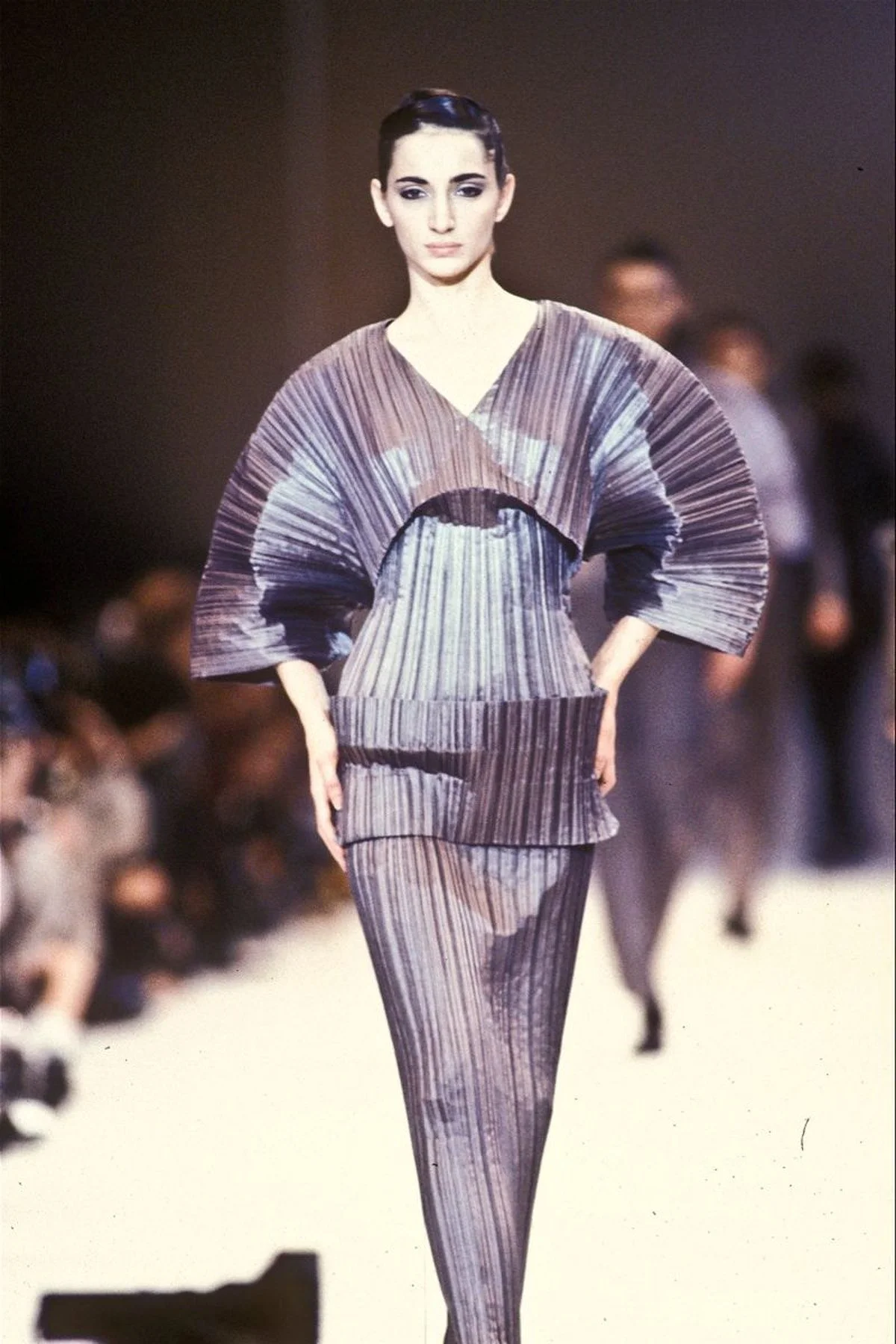
Japanese designer Issey Miyake is another great example. Miyake treated fabric as an architectural material, a merge between sculpture and technology. His signature pleats, for instance, are rooted in architectural principles. One is repetition, the use of similar elements again and again to create rhythm in a building. Another is modulation, building from standardised, repeatable units that make construction easier. Something even more personal connects Miyake to architecture. Born in Hiroshima in 1938, he lived through the bombing of the city in 1945. He never let the destruction of his home become his label, but the spirit of a conscious builder runs through his designs. He once said he would rather “think of things that can be created, not destroyed.” Miyake often worked with architects and designers, Shiro Kuramata among them, who created immaculate boutiques for him. In doing so, he set a benchmark for using architecture to extend a brand’s identity, letting the space tell the story of the clothes before you even touch them.

Virgil Abloh also studied architecture before founding Off-White and becoming artistic director of menswear at Louis Vuitton. He earned his master’s at the Illinois Institute of Technology in Chicago, a campus designed by one of his biggest inspirations, German-American modernist Ludwig Mies van der Rohe, famous for the axiom “Less is more.” One of Mies’s best-known buildings is the Seagram Building in New York, a skyscraper whose bronze I-beams run up the façade, putting the building’s structure on display for everyone to see. The ethos of his architecture was to embrace structure and function as the beauty itself. Abloh’s designs drew on both “less is more” and that same functionality. Just as Mies exposed the frame, Abloh exposed the idea, labelling his pieces with their own names in quotation marks and Helvetica. Abloh’s first Louis Vuitton collection was inspired by another Mies van der Rohe work, the Barcelona Pavilion of 1929. It is a revolutionary design of glass, marble and chrome columns in which the walls float and space flows freely from inside to out.


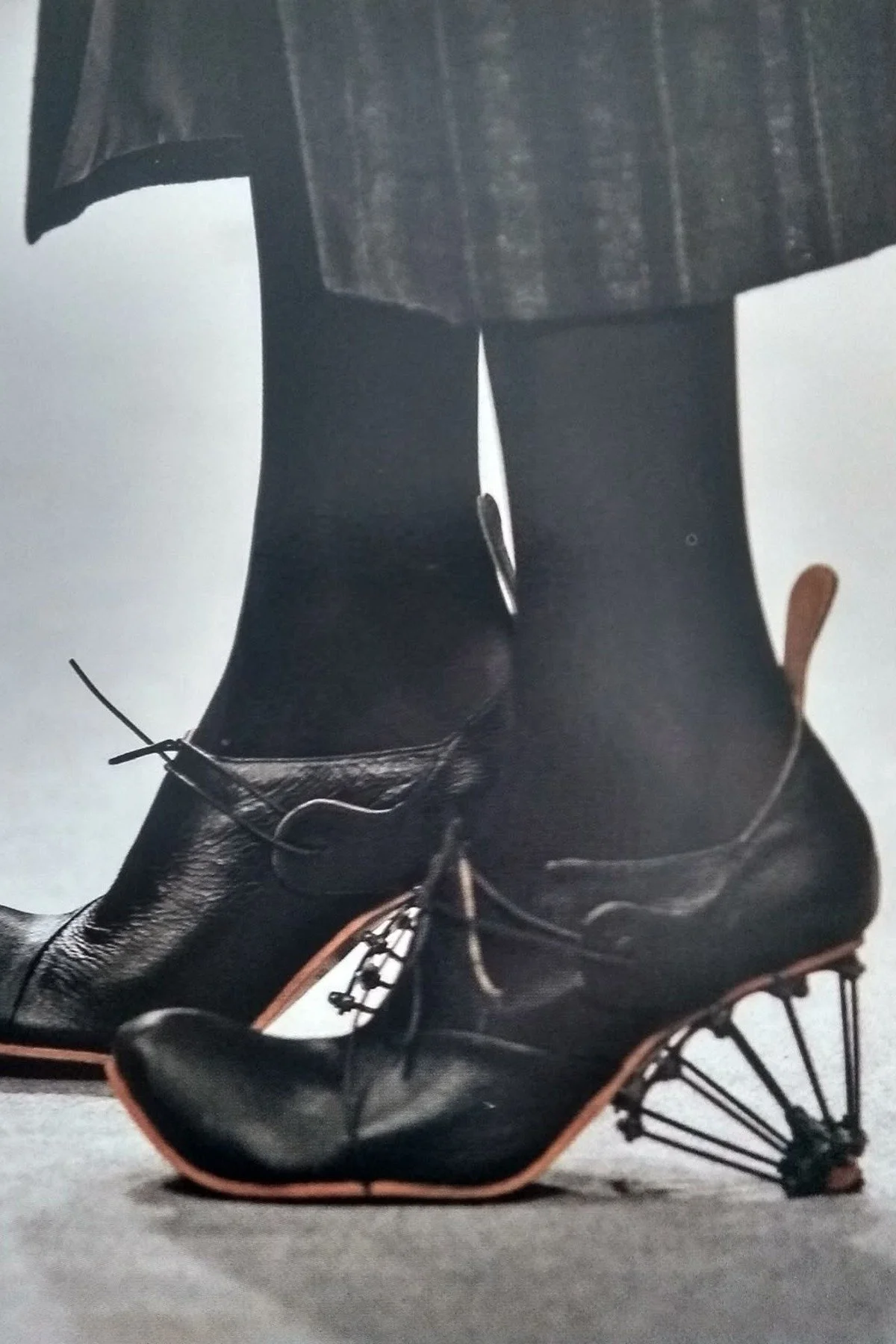
Kei Kagami is another essential name in fashion and architecture. Trained as an architect before moving to London, he is best known for his anthropomorphic shoes. His work connects the body to industrial materials such as stainless steel, glass and mirrors, creating pieces that sit somewhere between footwear and sculpture.

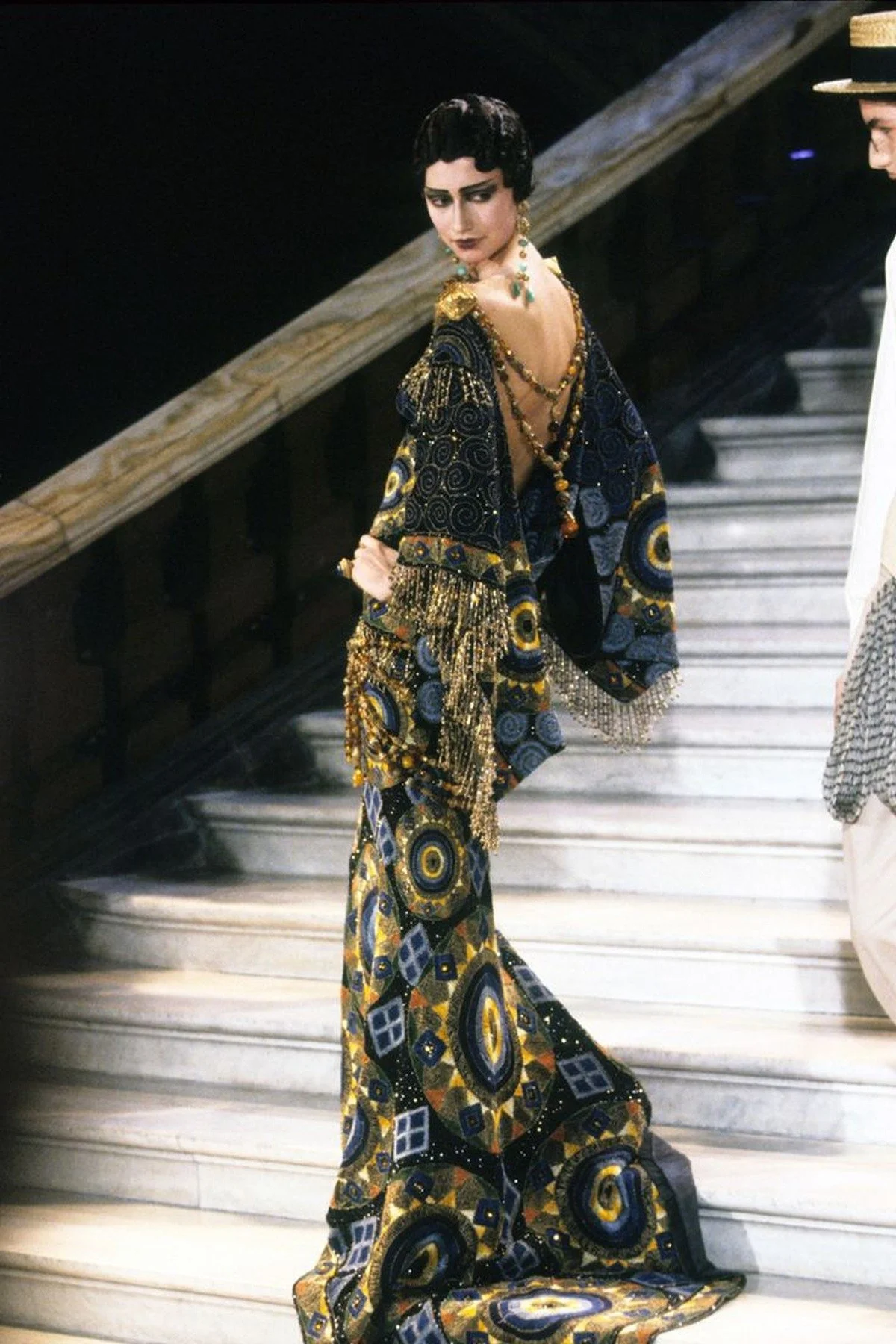
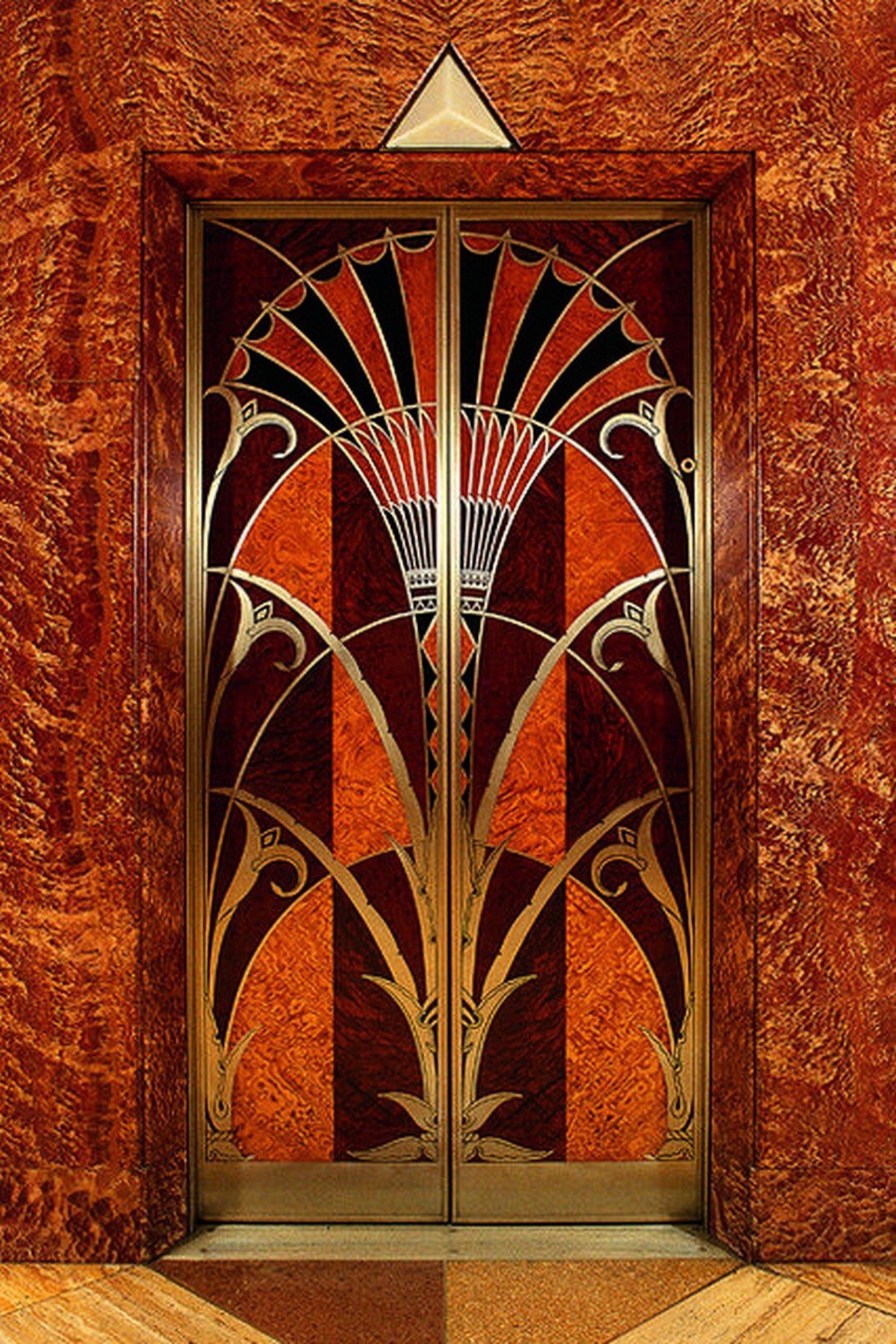
Go back to the 1920s and everything is so Art Deco. The architecture, the fashion, the way of living. It was all about symmetry, luxury and poise. Think The Great Gatsby. Every so often, Art Deco makes a return. Take John Galliano’s Spring/Summer 1998 collection for Dior, a spectacular show that embraced not only Art Deco but also the floral motifs of Art Nouveau. A more recent comeback is Connor Ives’ opera jacket for Spring/Summer 2027, which brings the geometry and glamour of the Jazz Age back to the runway.

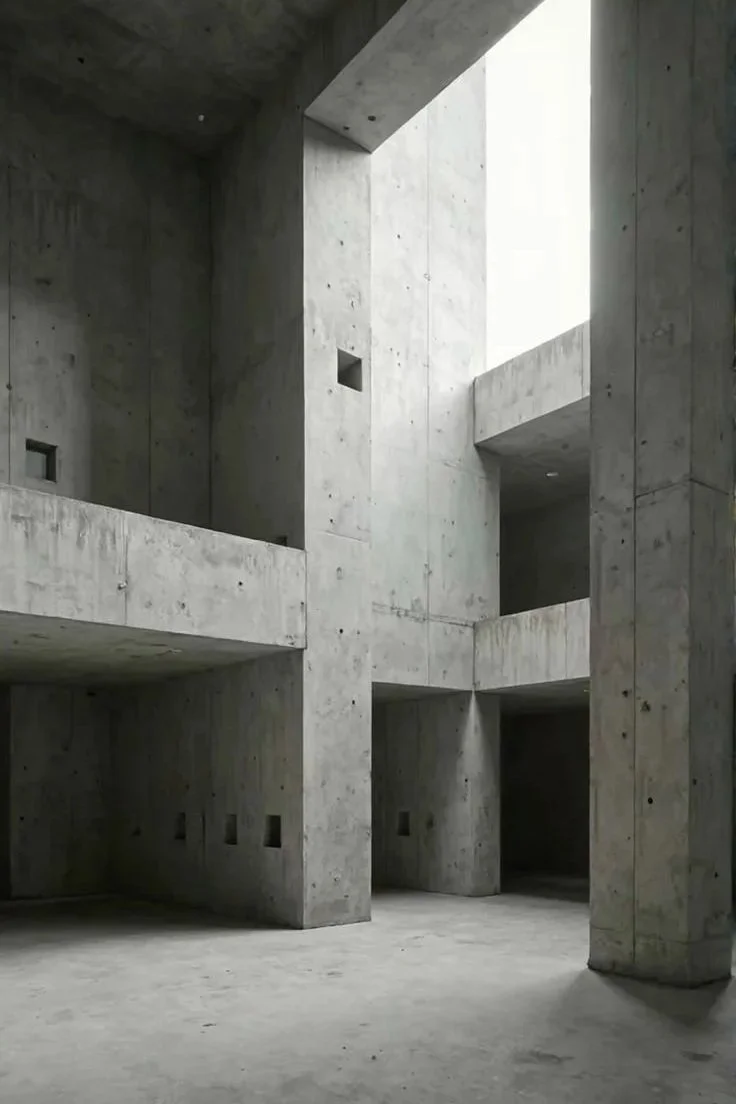
Think of avant-garde fashion like Rick Owens or Ann Demeulemeester, and you’ll find a deep connection to brutalist architecture, which emerged around the 1950s. Brutalism is associated with bold raw concrete, exposed structures and a limited palette. Avant-garde fashion and brutalism share a colourless honesty, a vulnerability left exposed like an unfinished hem, and yet both remain dominant and powerful.

There are many more fascinating meeting points between fashion and architecture. We would like to close this exploration with one of the most meaningful, which brings us back to the “shell” we started with. Fashion and architecture as protectors of women.
In fashion, designers are turning everyday accessories into armour, from blade heels to bracelets that double as self-defence.
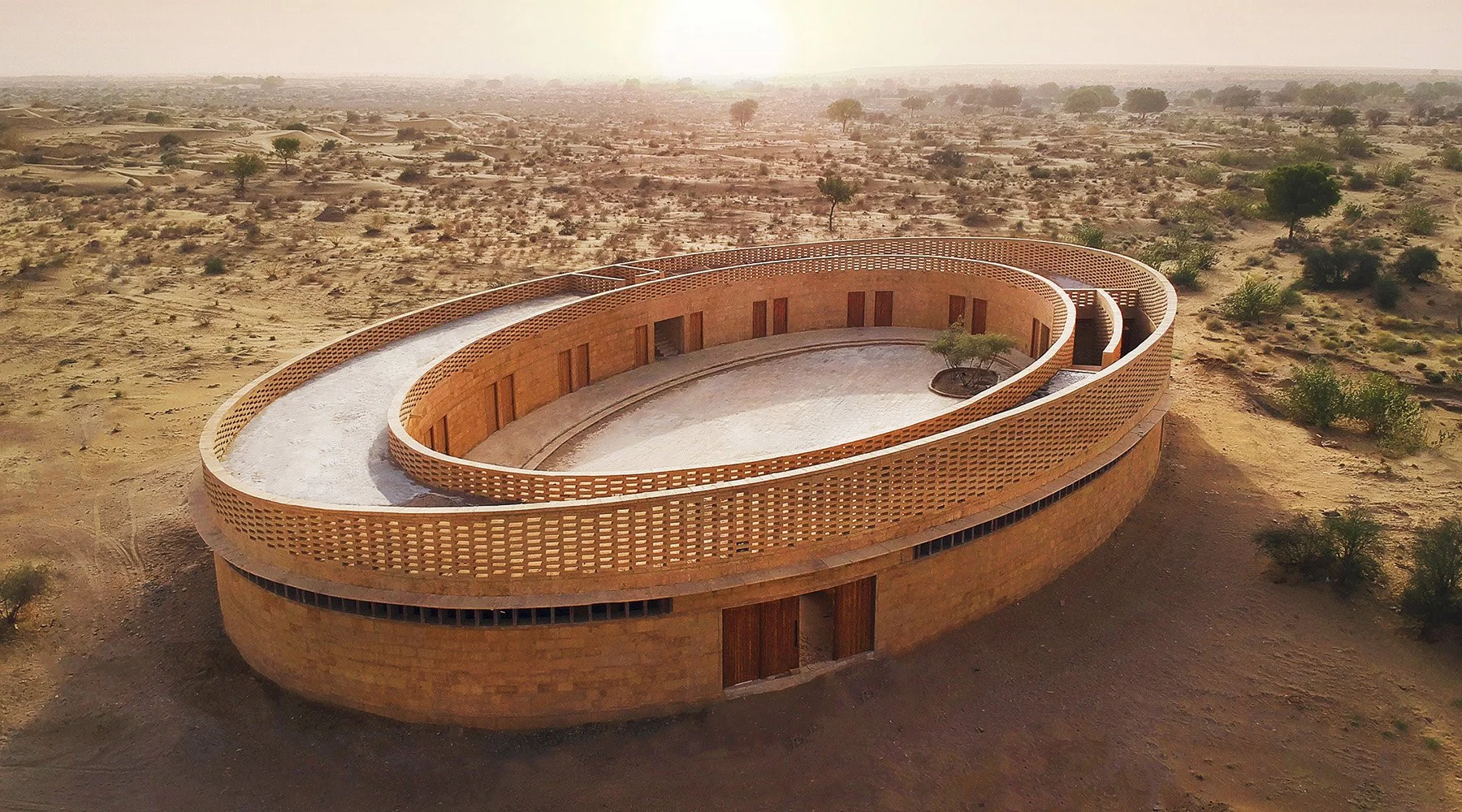
Architecture does the same on a larger scale. In Jaisalmer, India, a region marked by deep gender inequality, architect Diana Kellogg designed the Rajkumari Ratnavati Girls’ School specifically for young women. The building is an oval, fort-like structure of local sandstone, a shape meant to symbolise female strength and infinity. Its high outer walls shield students from the desert winds and give them privacy. At its heart, a vast, sun-filled courtyard gives the girls a space to study, play and be together safely. It blends security with absolute freedom.
A shell, after all, is not only something to live in. It is something to be safe in, and when it is built with care, something to grow in.