words by DEBORAH DRENOFCI
Le City turns 25 on November 10th, 2026, and Balenciaga’s icon has never looked better. More than a bag, Le City is fashion’s translation of timelessness. There is a particular category of enduring items that is very special — revolutionary, even — namely when timelessness, in its motherly demeanor, holds the playfulness of nostalgia close. Because when nostalgia and timelessness co-exist and take care of each other, forever cool is born. And why pass down generational trauma when you can pass on generational swagger instead? A bag for your grandmother, your father, your daughter — even that one neighbour you never quite liked. A rockstar, a busy girl, an all-over-the-place princess, Le City has been there through it all. But to love the present version, one has to look back and give a warm smile to every evolution along the way. After all, haven’t we all been through different metamorphoses to arrive at that elusive je ne sais quoi?
Le City has a marvelous history, and this year it is celebrated through a collaboration with artist Damien Hirst, whose motifs lend Le City a new touch, a two-chapter campaign starring icons old and new, and Le City House, an immersive journey through the bag’s past and present.
images courtesy of BALENCIAGA
Cristóbal Balenciaga was known for his pioneering architectural shapes and silhouettes, which are to this day the pillars of the house he founded. From Michel Goma (1987-1992) to Josephus Thimister (1992-1997), Balenciaga went through different eras, but it was in the so-called Revival era of Nicolas Ghesquière (1997-2012) that Le City was born in 2001, and interestingly enough, it almost did not make it.
The late 90s were a luxurious bubble, the craze of Logomania and a deeply intertwined relationship between status and luxury items and in the midst of all this, Ghesquière designed the first Le City — only back then it did not hold this name. In fact, it was first introduced as the Le Dix Motorcycle Lariat, and throughout the early 00s it was known as the Motorcycle or City bag. The “Le” would only arrive in 2024. Moving away from Logomania, Ghesquière channelled the house’s savoir-faire into a talisman of the quotidian, a bag to serve as a companion through life’s ups and downs. And so it did. The lived-in touch of the Arena lambskin, the slouchy shape that traded structure for adaptiveness, the metal studs and buckles, and the leather tassels hanging from the zipper created what is commonly referred to as an Anti-It Bag, one destined to become the icon of a generation.
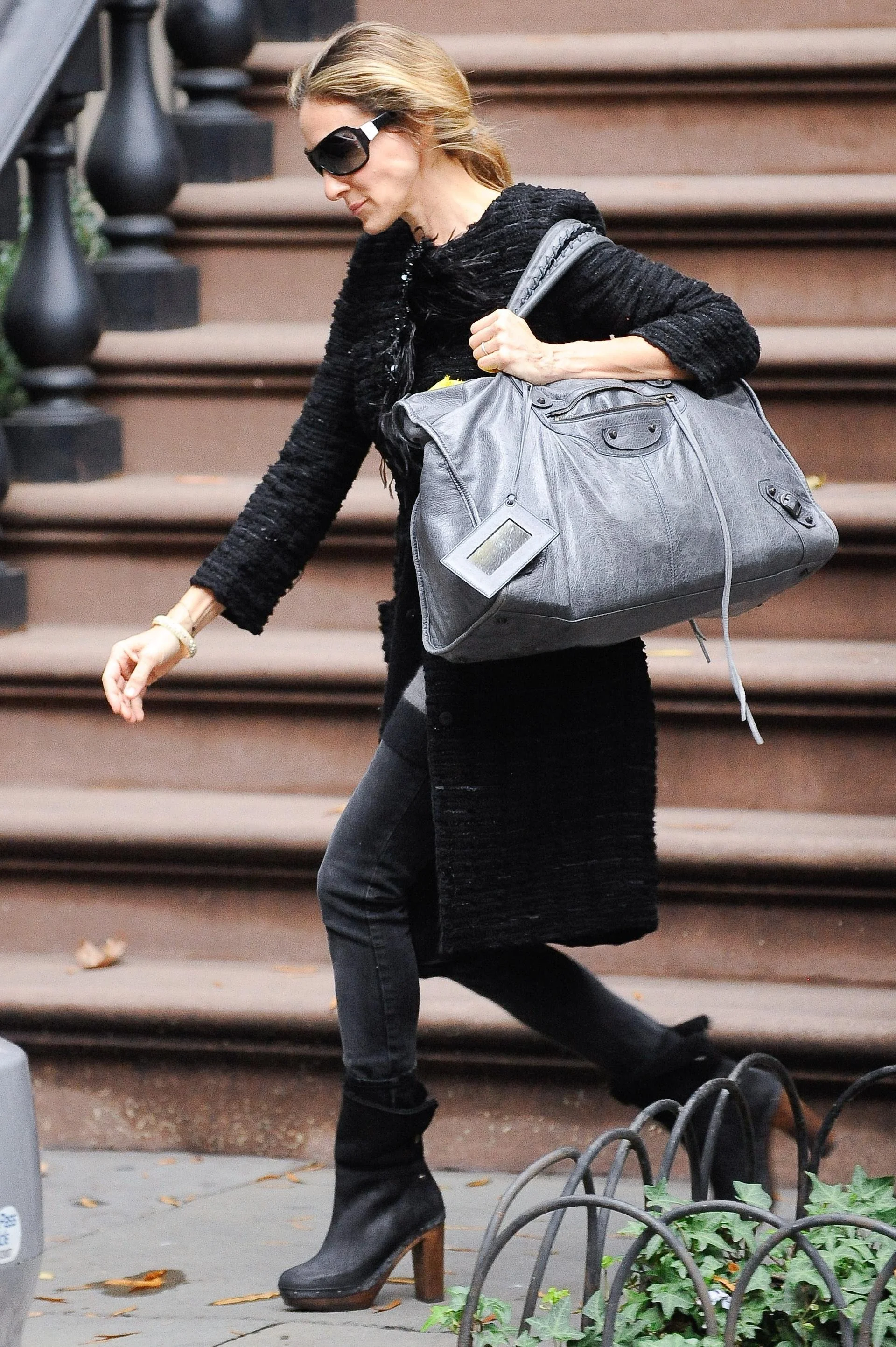
However, Ghesquière’s design was not exactly applauded. Only 25 prototypes were made, and one of them fell into the hands of the one and only Kate Moss. It was she who first felt the chic camaraderie of the bag. And just like that, the bag did not need a campaign to boost sales. Ironically effortless — just like the bag itself — all it took were the fashion icons, from Gisele Bündchen to Sarah Jessica Parker and Nicole Richie, and the flashing paparazzi. In fact, Ghesquière’s version of the bag was featured in only one campaign, photographed by David Sims in 2006. The Olsen twins are also two figures strongly associated with Le City. There are countless pictures of that off-duty diva look — the leather wearing its imperfections, a water bottle spilling out — capturing the very essence of “I have things to do.”
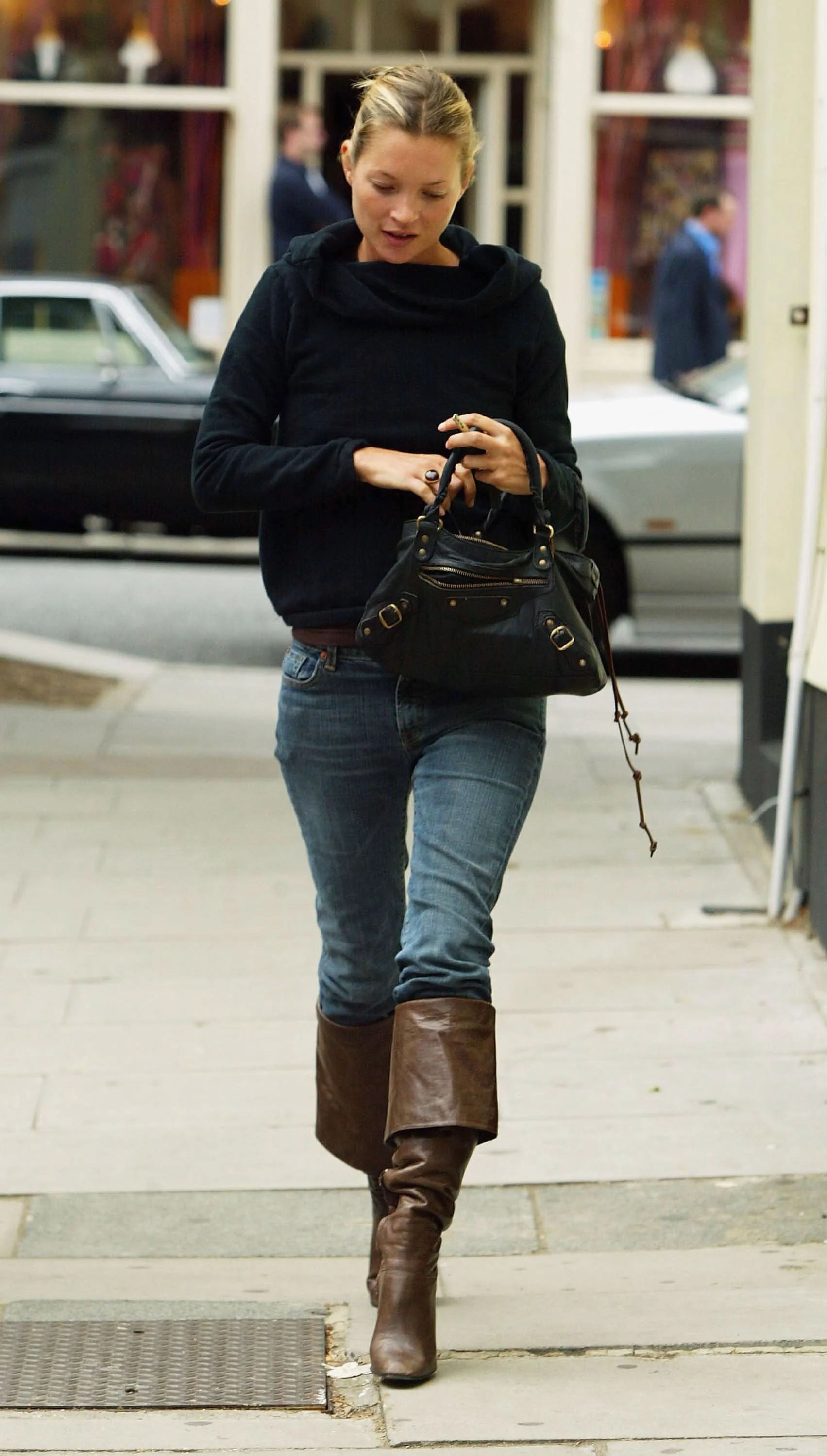
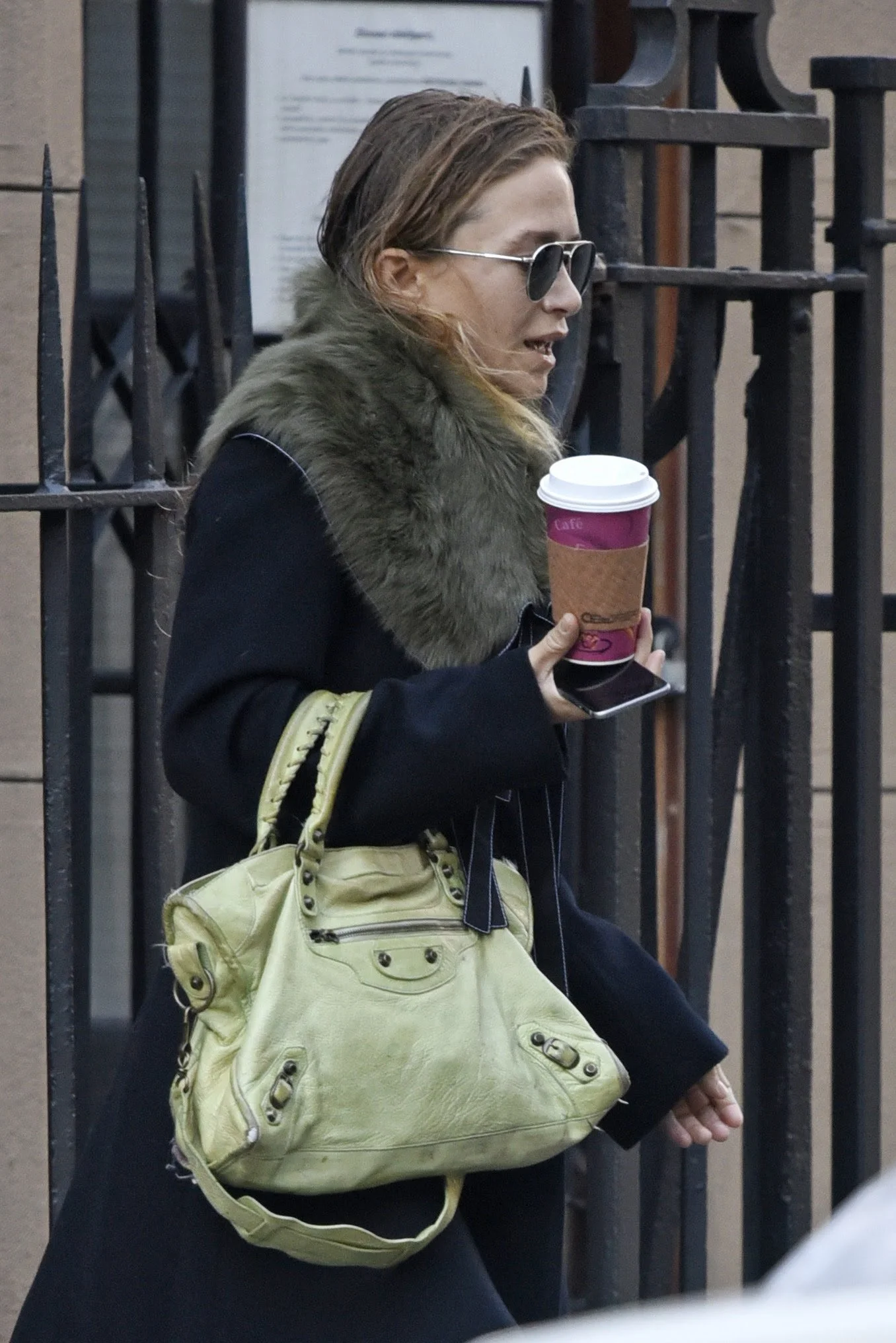
The codes of Le City were later reinterpreted by Demna, first in 2020 with the more structured Neo Classic and then in 2022 with the playful, Y2K-inspired Le Cagole. But it wasn’t until 2024 that the bag returned under the name Le City, through a campaign featuring Kate Moss lensed by Mario Sorrenti. The new version is hand-assembled from 25 leather panels, recreating the layered construction of the vintage original.
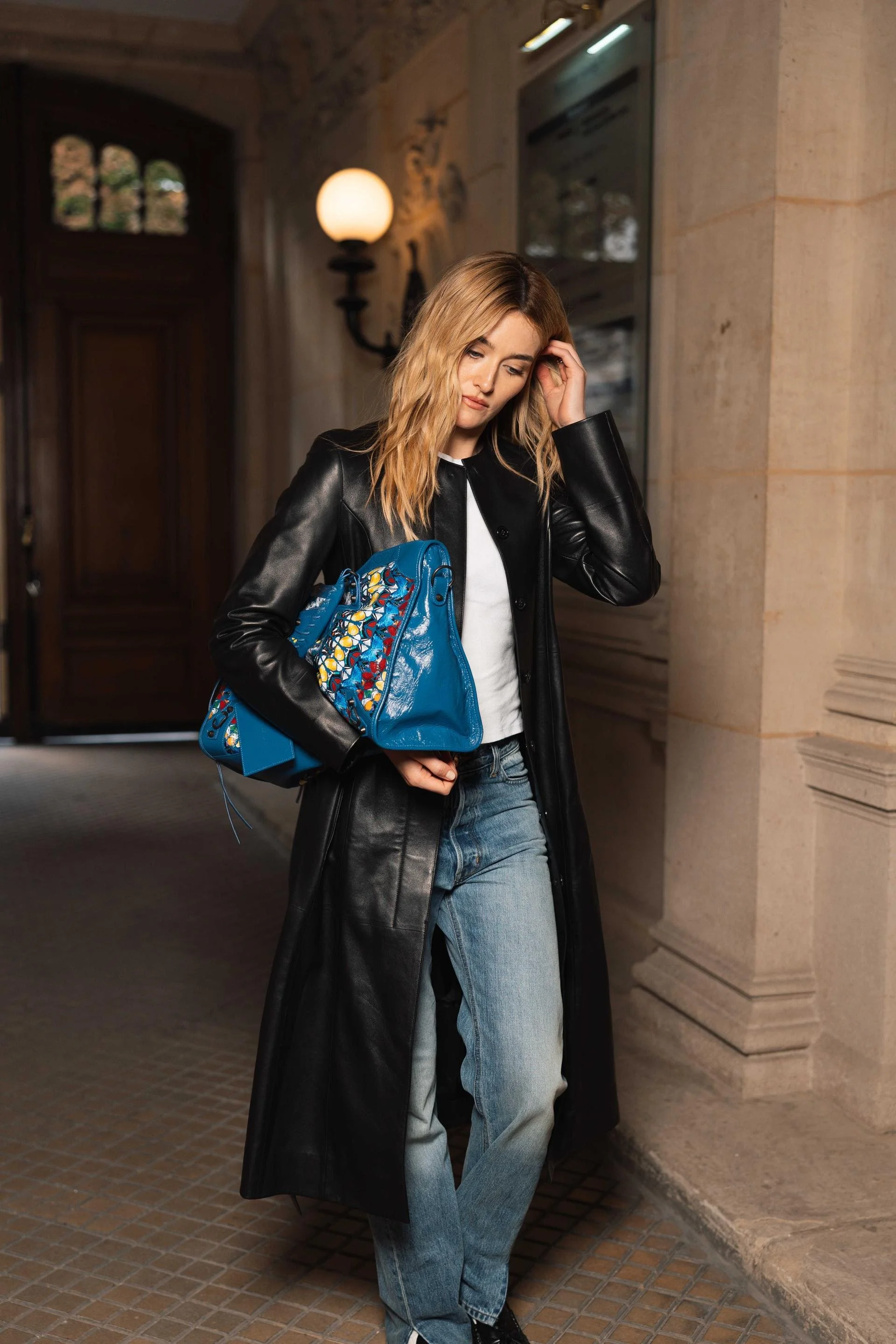
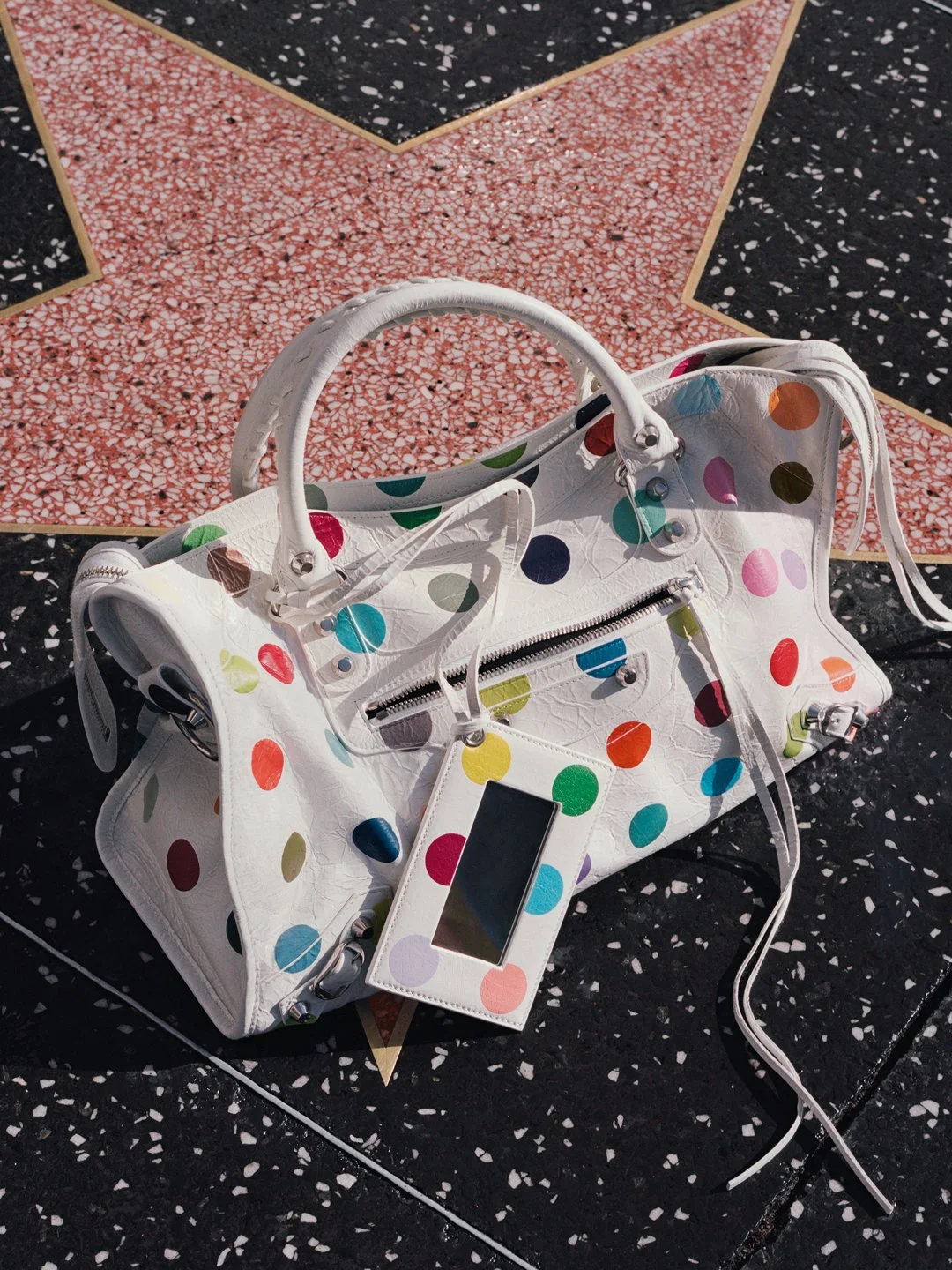
Balenciaga is surely throwing a big party for Le City’s 25th anniversary, a three-part celebration to be precise. First, an exciting collaboration with Damien Hirst introduces a limited-edition collection co-designed with the artist. His colored spot motifs steal the show, arranged into the shape of a butterfly. Other designs include mandalas made of butterfly wings, embroidered patches of his name and well-known works, and his Spin Paintings stretched across the bag. The series covers Le City in mini, small, medium and large, plus wallets, pouches, card holders and micro bag charms.
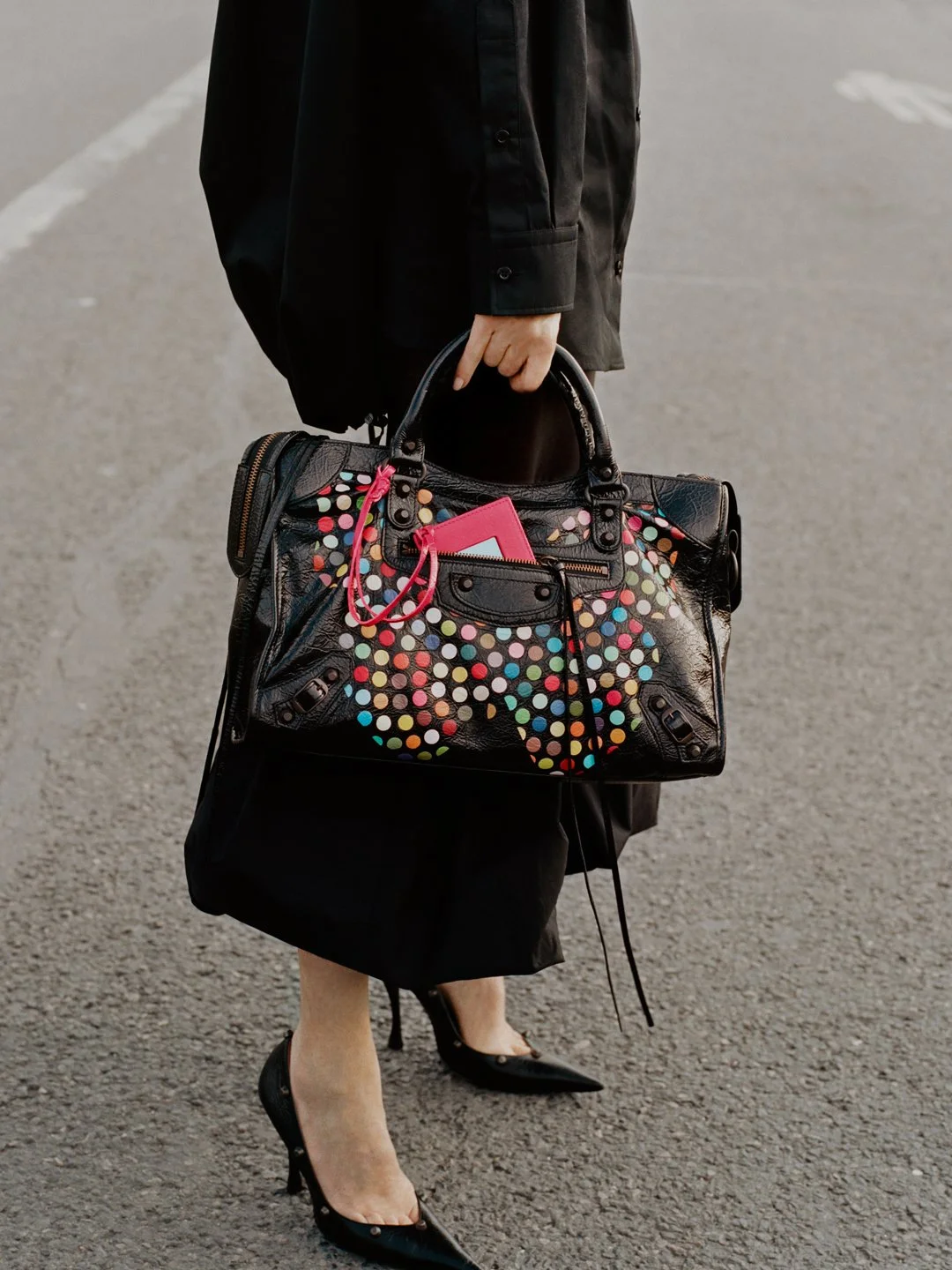
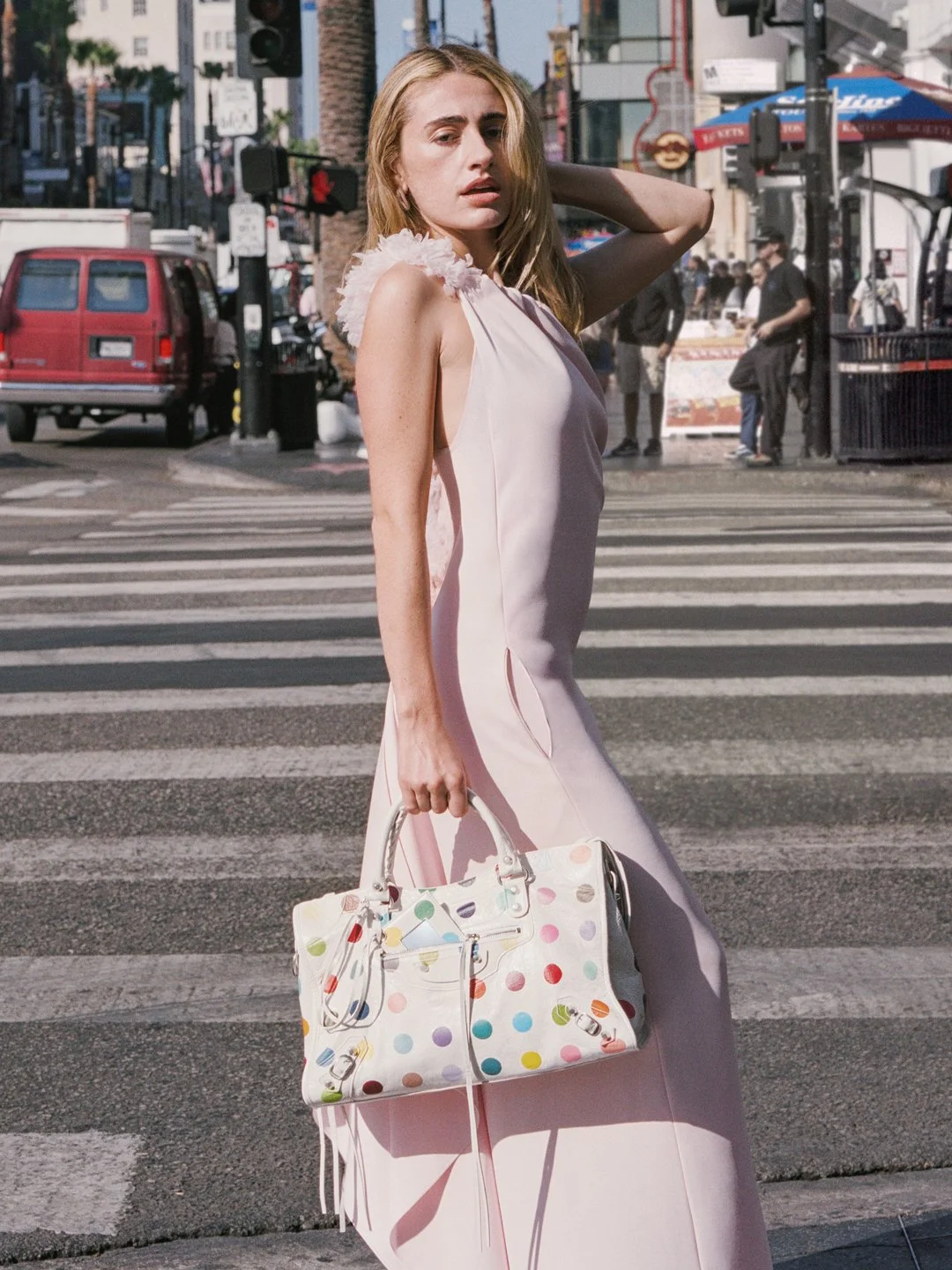
Then there is the anniversary campaign, divided into two chapters, with the second to be announced later. Icons take their Le City bags, including the Hirst editions, to Los Angeles and Shanghai, strolling the streets and visiting landmarks. The whole idea is a nod to the paparazzi photos that made the bag famous. From early adopter Nicole Richie to Rachel Sennott and Cecilia Boey, the faces of the campaign embody the playfulness that has kept Le City bridging generations for 25 years.
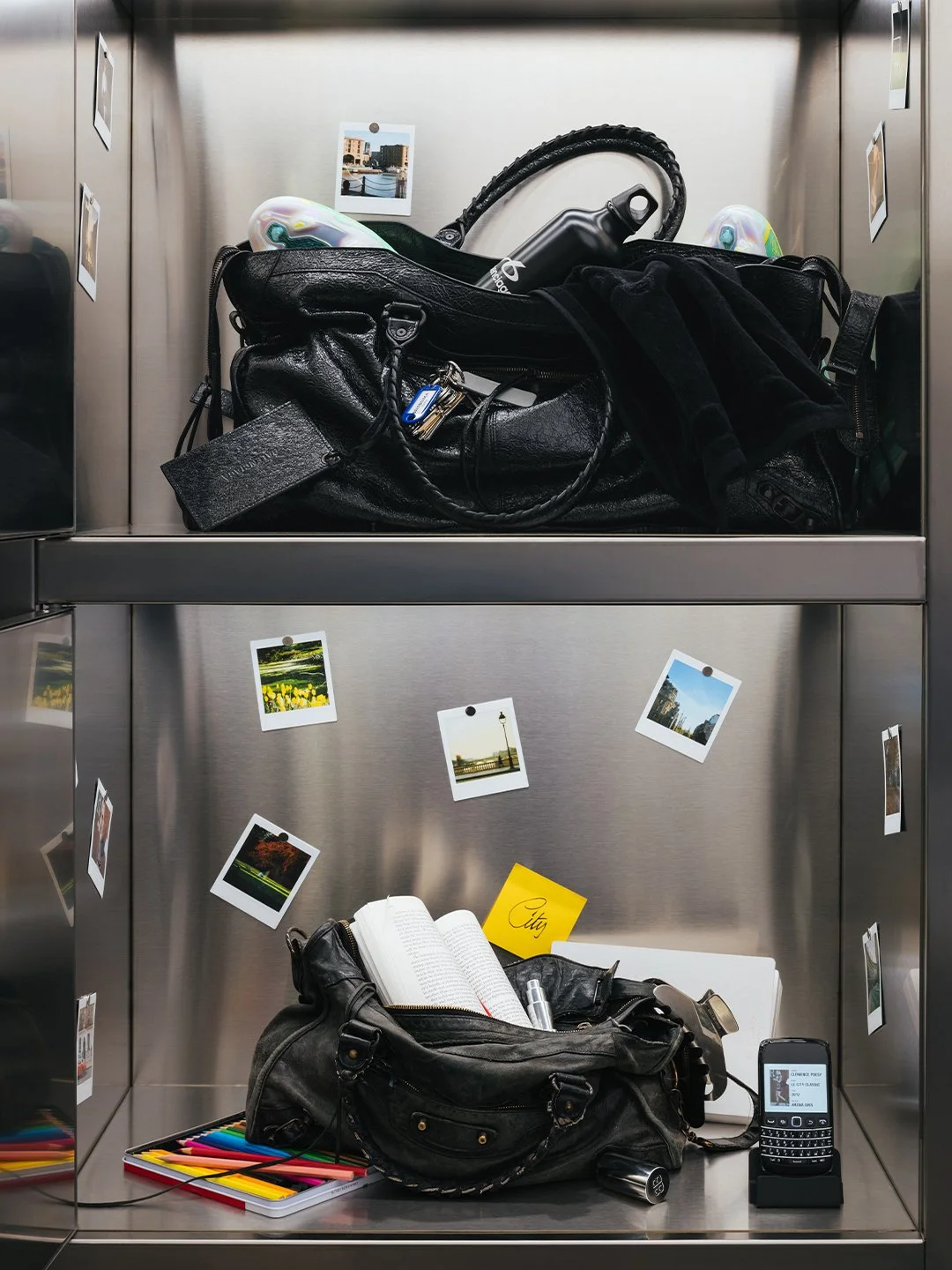
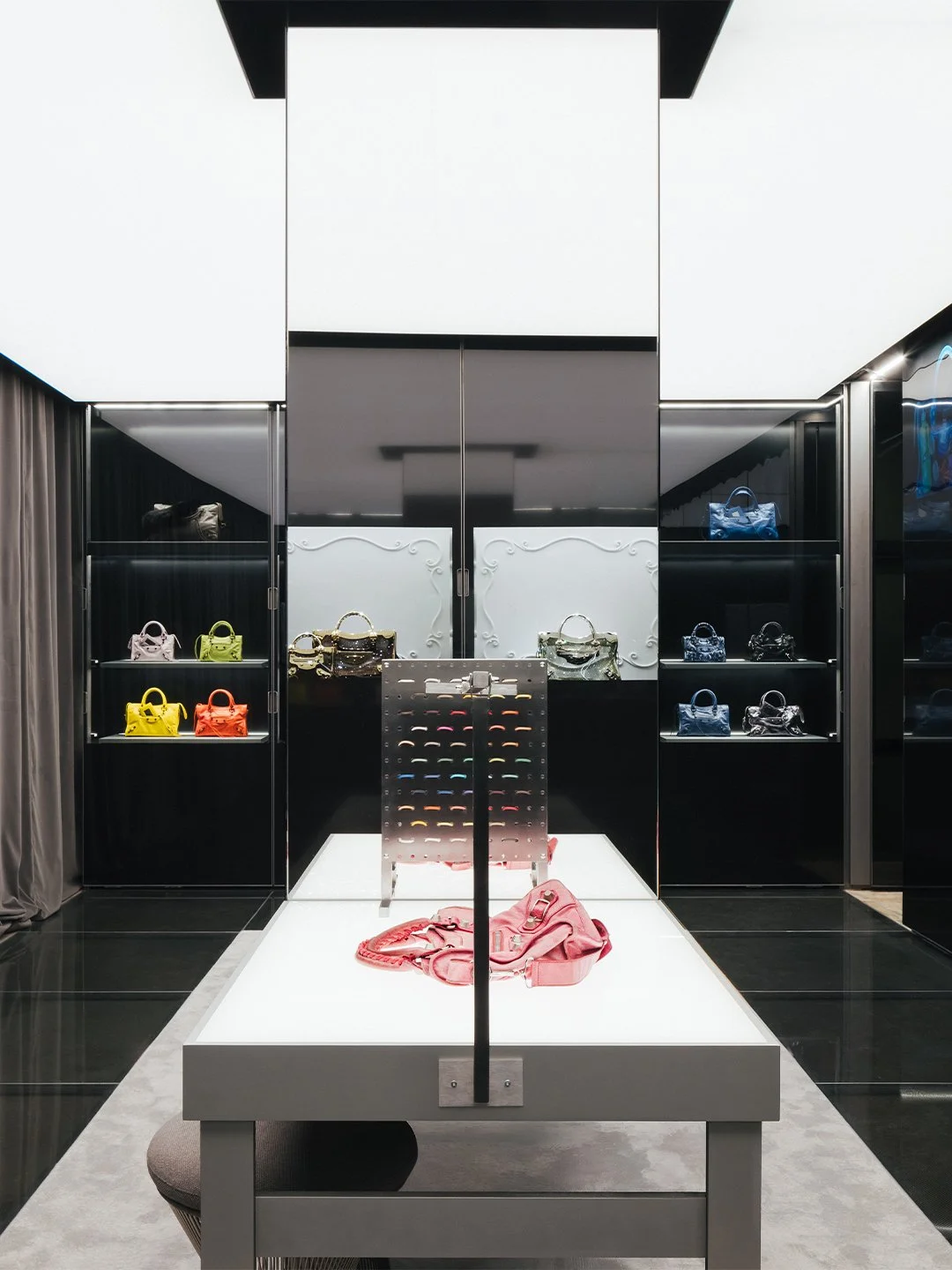
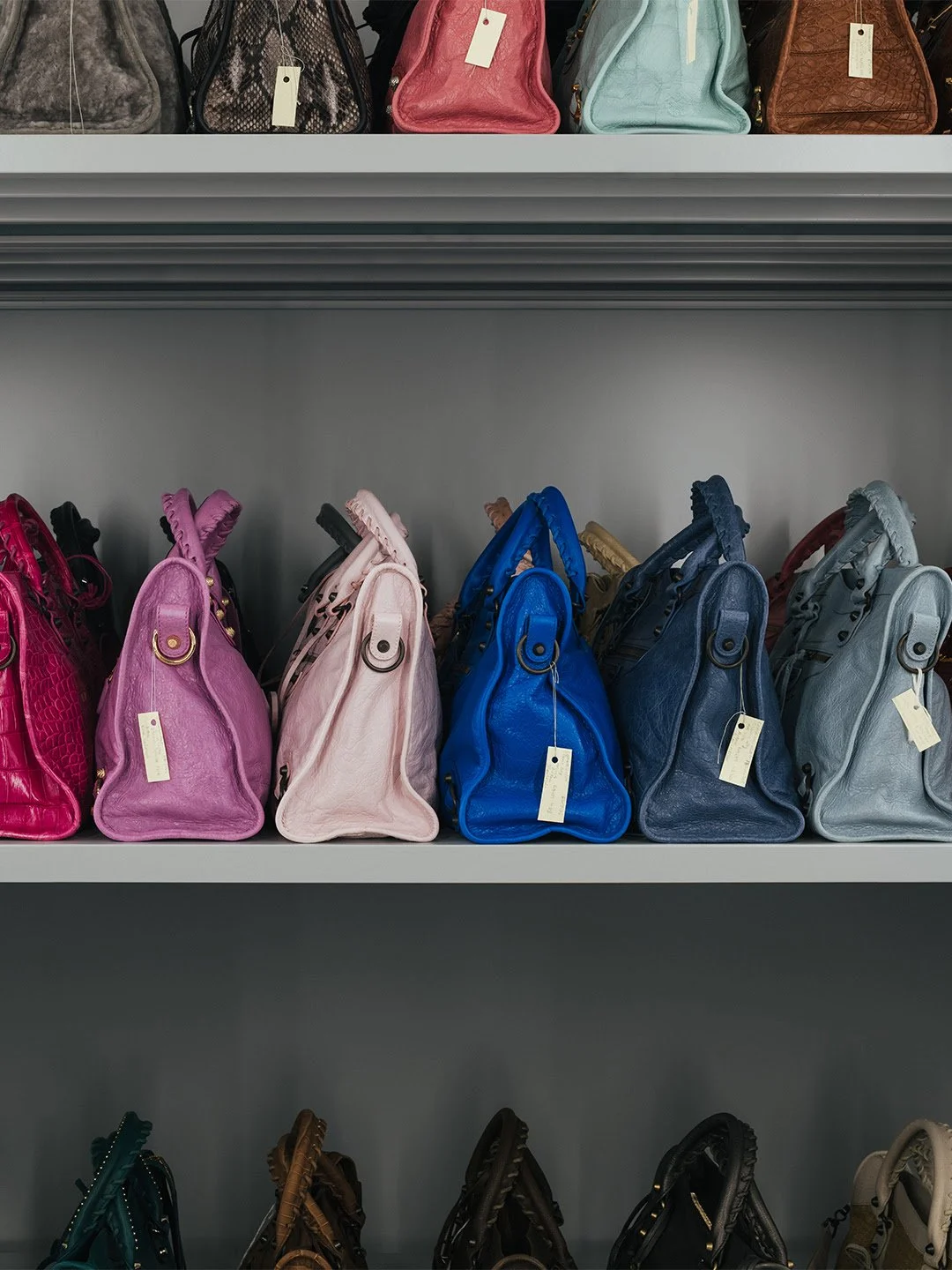
Le City House, on the other hand, is an interactive multi-room experience open to the public in some of the flagships. An archive display and video bring together original designs, editorials and the iconic paparazzi shots from 2001 to today. Moreover, the closets of loyal collectors are opened up, revealing the handwritten notes, gadgets and other stories their bags have carried over the years. The Hirst collection gets a room of its own, while by-appointment salon services keep every era of Le City in working order, from handle re-lacing and charm consultations to mirror etching, hand-painted monogramming and leather care. And for those still searching for their match, a quiz inspired by lifestyle magazines suggests a Le City for everyone. The party kicks off at 10 Avenue George V in Paris from November 10th to 19th, before travelling to New York, Tokyo, Shanghai and Beijing.
Le City is 25! All grown-up and thriving, an icon in its own right — one that transcends generations. A stylish familiar face, comforting in the chaos of the everyday — one that knows how to appreciate the many lives it goes through to become, quite simply, itself.