
WHAT HAPPENS WHEN FOOD BECOMES A FASHION STATEMENT?
words by ANOUK WOUDT
From retail to runway, luxury fashion is seemingly ravenous, with food imagery popping up in all sorts of absurd forms. From French fries to groceries: the banal has become fetishized, and what appears to be playful campiness could teeter on a deeper cultural transition into a state of hyper-consumerism.
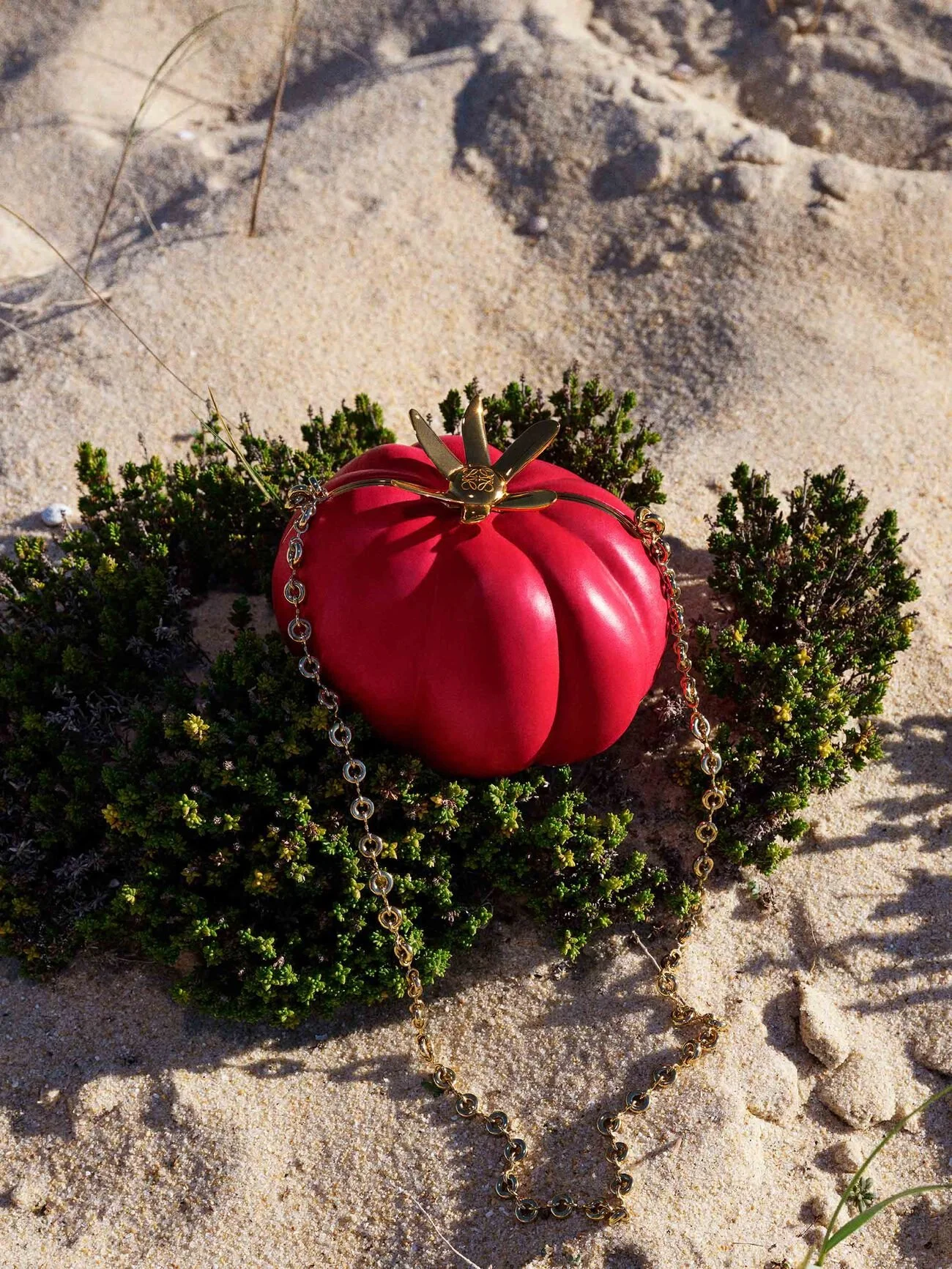
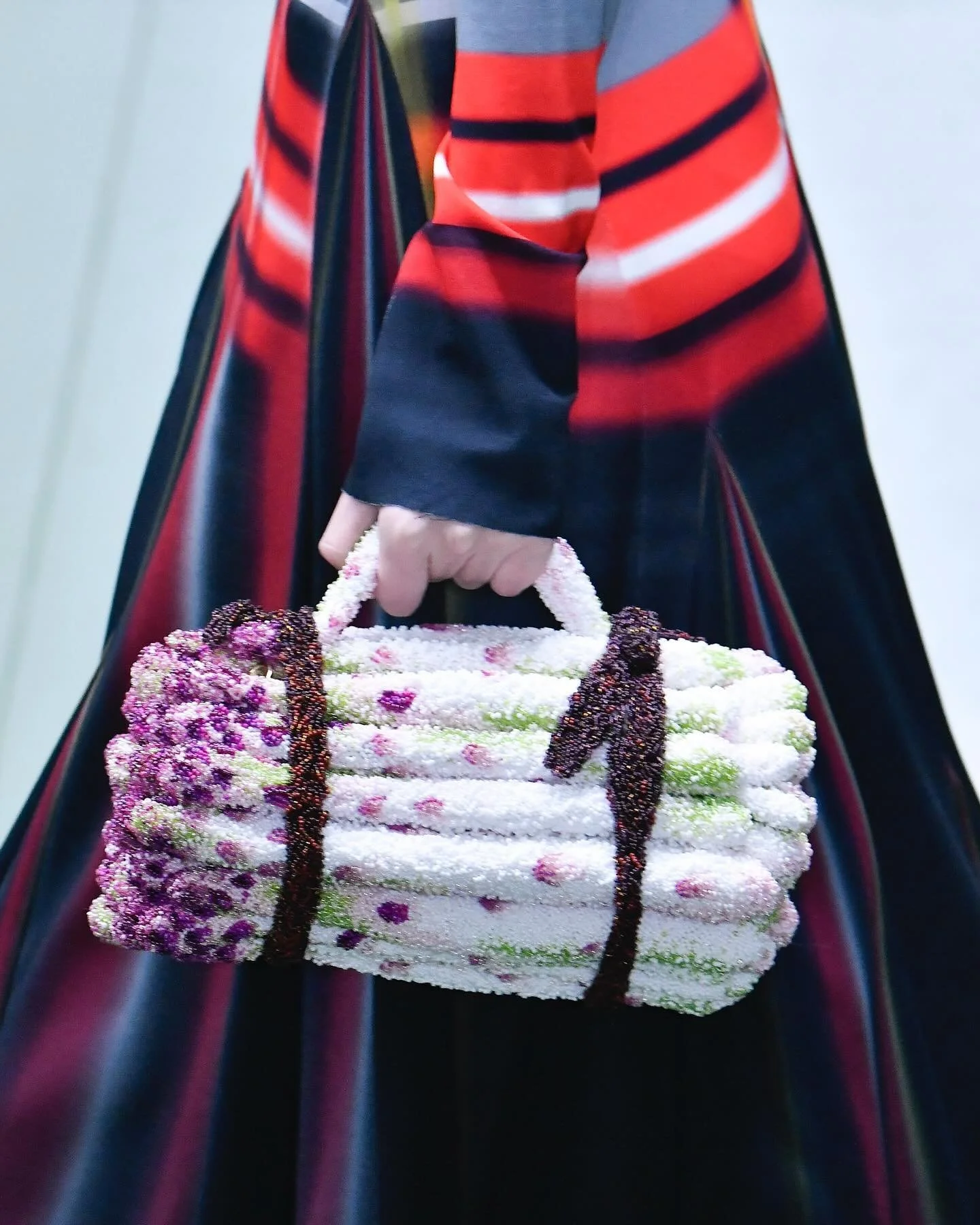
images courtesy of LOEWE
With Loewe’s recent obsession with vegetable-inspired accessories, from unveiling an Heirloom tomato clutch to debuting the beaded asparagus bag that turned heads A/W 2024 womenswear runway, food is definitely in fashion. But this fixation doesn’t end with them. With Balenciaga’s mock hot chip bags retailing for thousands of euros and and the CIFF International Fashion Fair in Copenhagen last week being supermarket-themed, we seem to be we seem to be slowly inflating the worth of our everyday items and experiences, refashioning necessities into luxury indulgences.
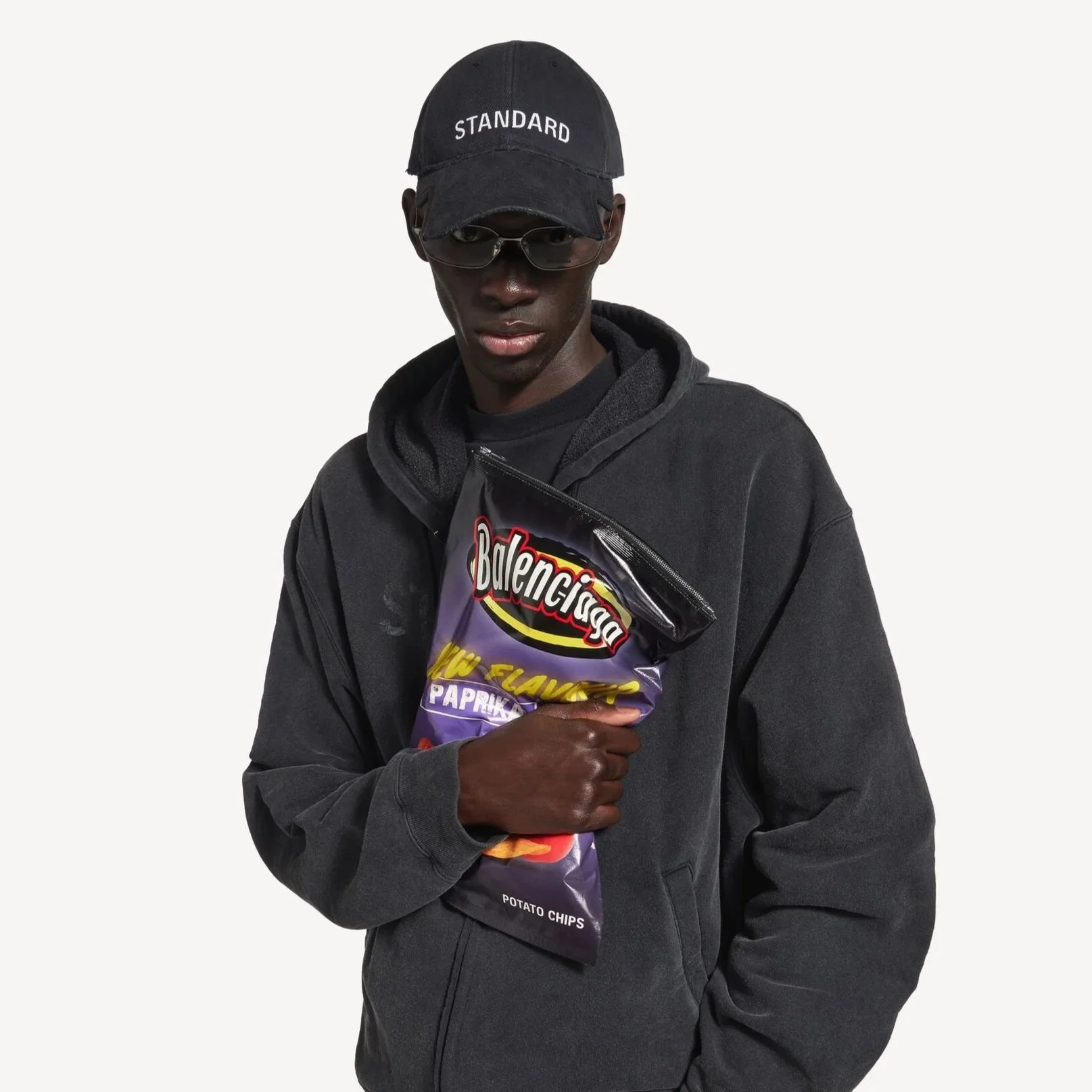
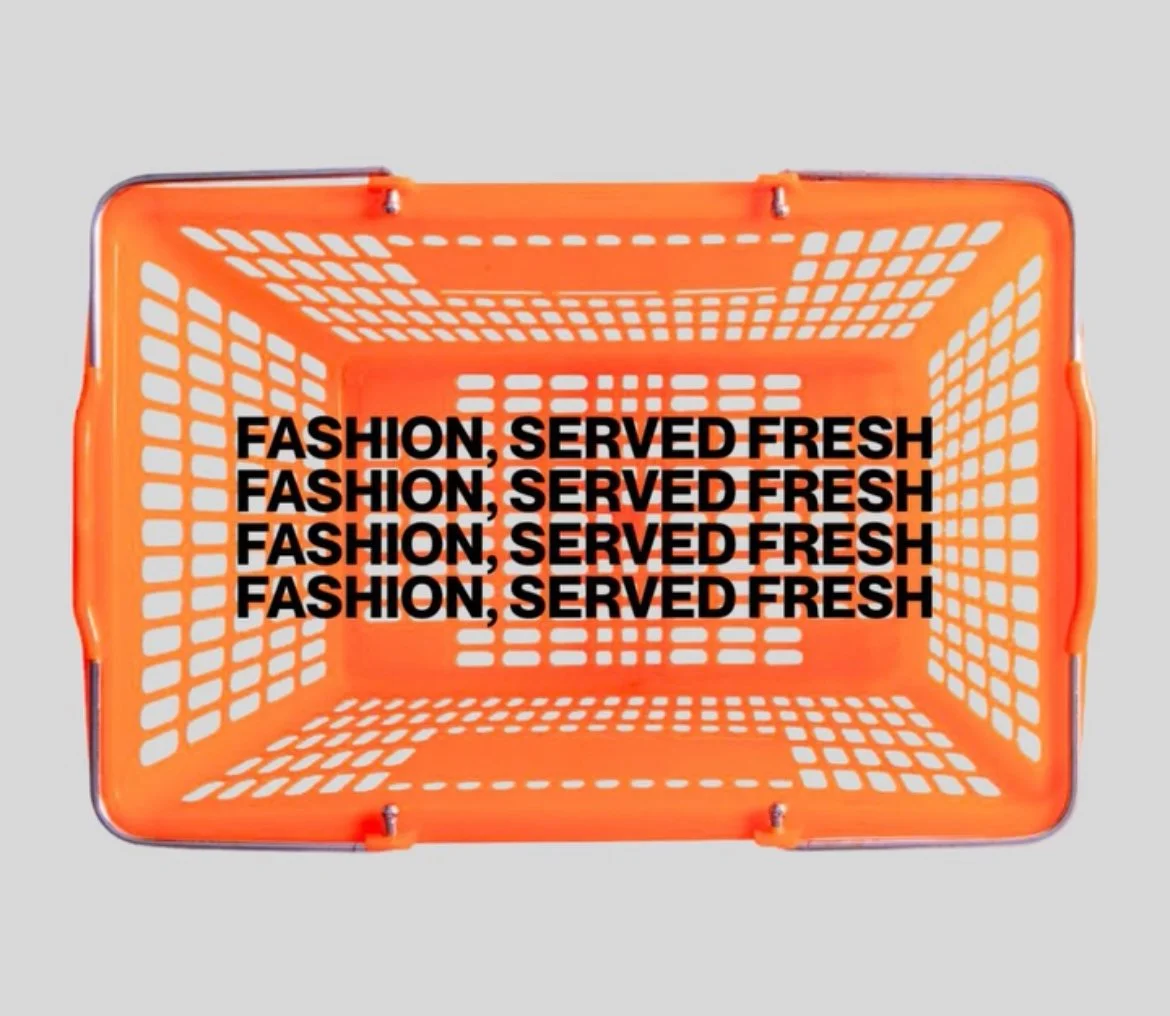
images courtesy of BALENCIAGA and via @ciffdk
Judith Leiber’s crystal-encrusted hot dogs and sandwich bags illustrate this illogical glamour perfectly. Cheap fast food items are being remarked as status symbols, paving the way to an increasingly consumeristic landscape, where the push for “food” as accessories is indicative of a larger phenomenon. It serves as a relentless reminder of our need to consume endlessly, until overindulgence becomes instinct, devouring our subconscious. We are encouraged to eat without hunger, to desire without ever reaching satisfaction.
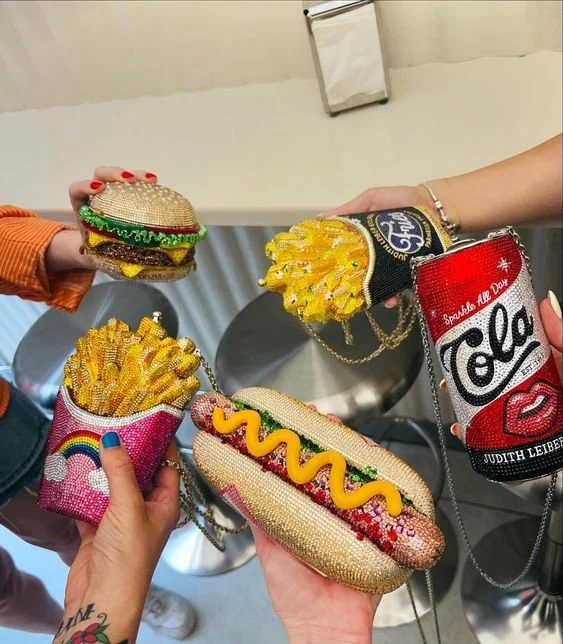
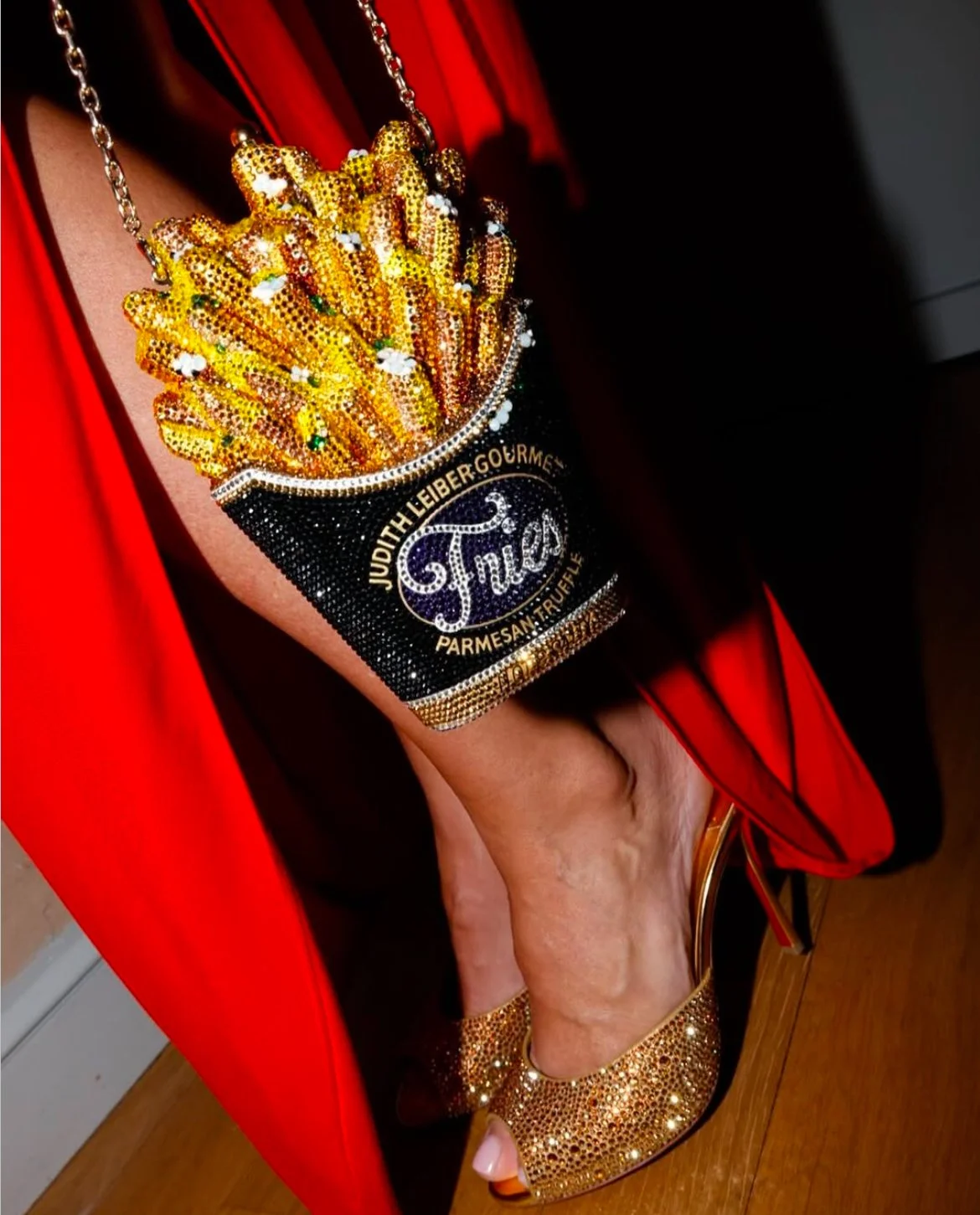
images via @judithleiberny
The “Plastic Thank You Bags” by Telfar last year also made this societal shift unmistakably clear. Grocery shopping, which is typically seen as a mundane task, is elevated to a chic performance – because who has that kind of disposable spending money nowadays?
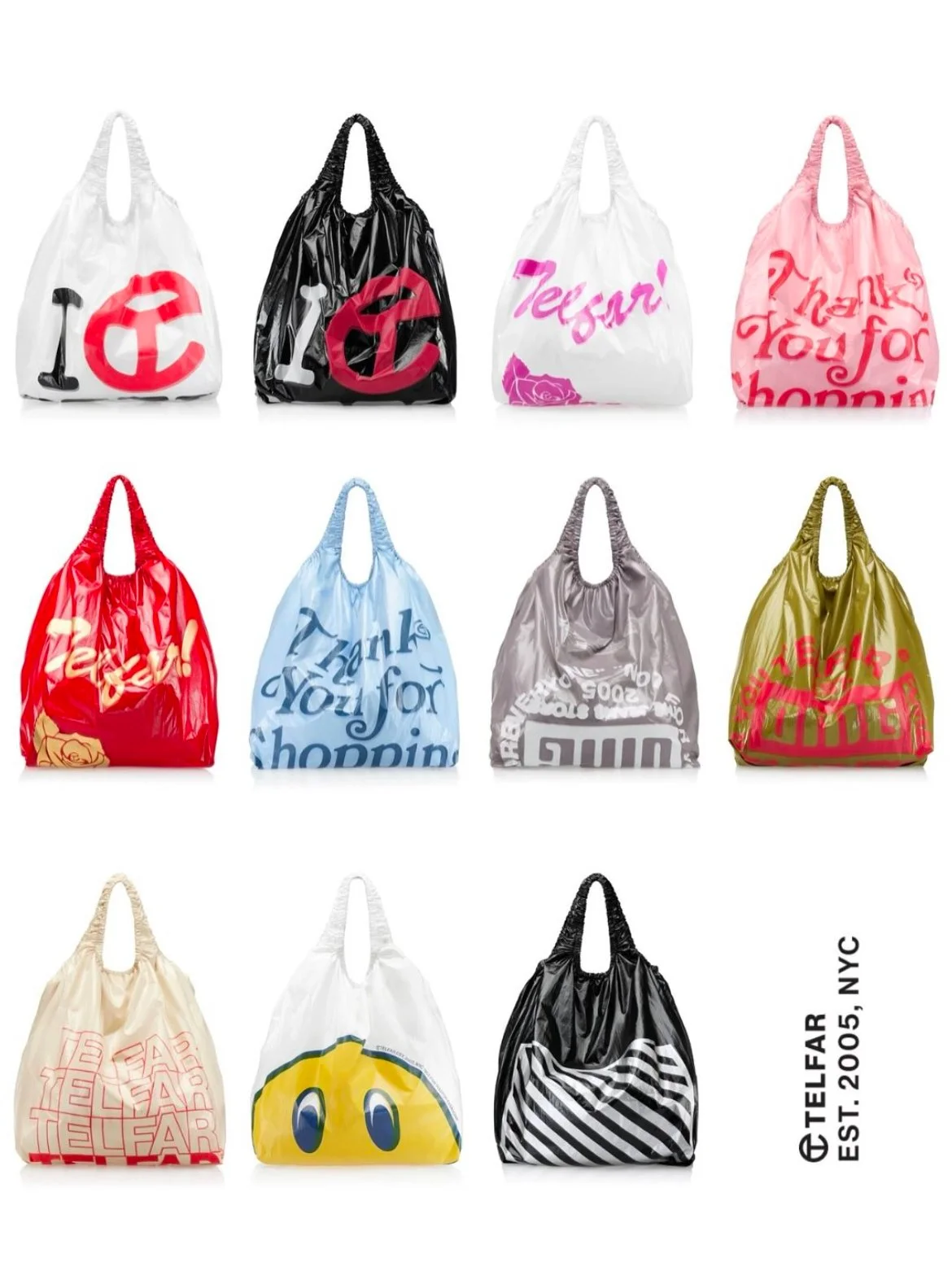
images via @telfarglobal
As food prices continually soar, the ability to buy groceries without a need for calculation quietly signals privilege. Food’s heightened representation in high fashion signifies an end to the affordability of everyday essentials, placing us all at the mercy of a market that keeps us perpetually starved. The basic need to eat being spectalized as an exclusive experience displays the shifting value that we put on the ordinary. As affordability wanes, items that were once attainable become symbols of status. Though this may signal the erosion of the financially-stable middle-class consumer, it matches the market’s appetite for the refreshingly ridiculous.
As everyday grub elevates itself into elegance, we are left wondering how far this state of hyper-consumerism will keep pushing us. Will soon even the humblest items carry an air of pretension with a side of irony, leaving us starving for a seat at the dinner table?
