
WHAT WENT DOWN AT COPENHAGEN FASHION WEEK FW26?
editors ELIANA CASA, MAREK BARTEK and MARIA MOTA
In one of her latest letters, Copenhagen Fashion Week CEO Cecilie Thorsmark wrote: “As we marked Copenhagen Fashion Week's 20th anniversary, what stood out most to me was not only the scale of the week, but the feeling of togetherness.” We returned to one of the richest hubs of creativity and sustainability — and that same sense Cecilie described was utterly felt and shared. More than that, Copenhagen proved to be a democratic stage: we were not merely spectators, but participants, listeners, and creators. At Nicklas Skovgaard, we stood on white chalk “seating” marks on the floor, so close to the models that we could walk with them; at Henrik Vibskov, we watched the show from a theatre auditorium, joining the live performance; at Stem and Han Kjøbenhavn, we engaged directly with the surrounding space; and at Nazzal Studio, we listened to a new (old) story unfold in silence.
As many of us are still recovering from one of the coldest fashion weeks on record, we are now taking a moment to reflect on the brands that left the strongest impression on us.
OPÉRASPORT
review by ELIANA CASA
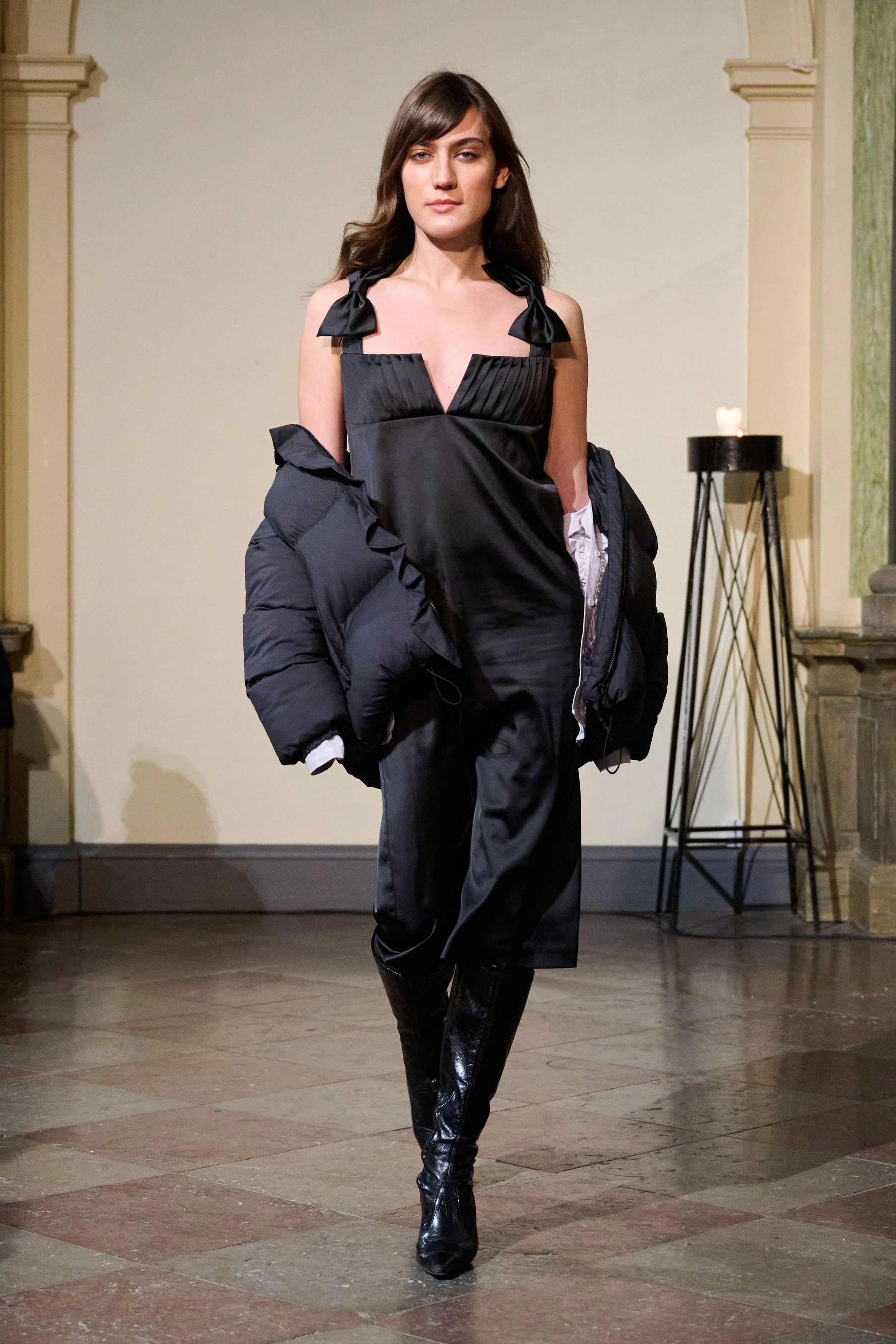
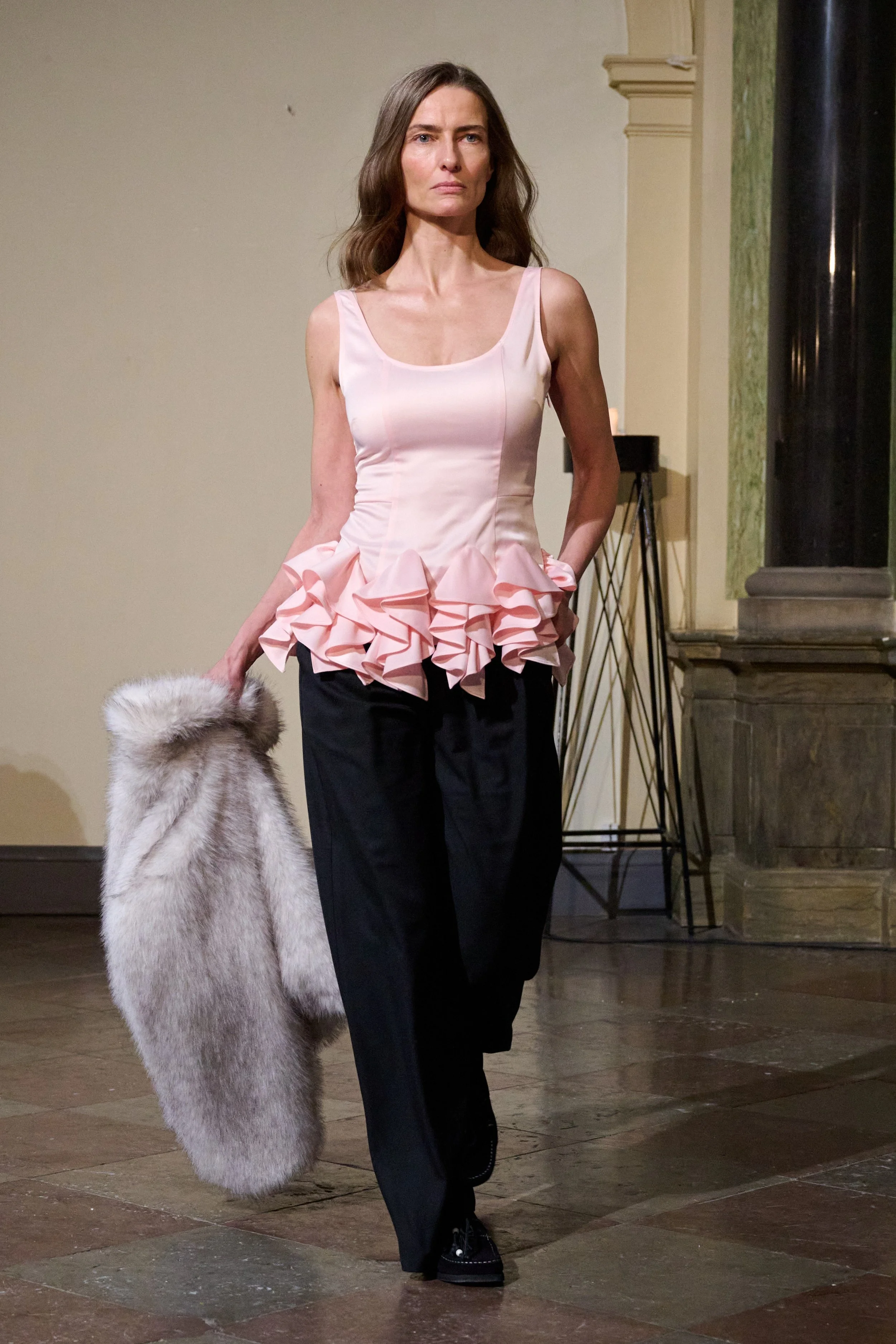
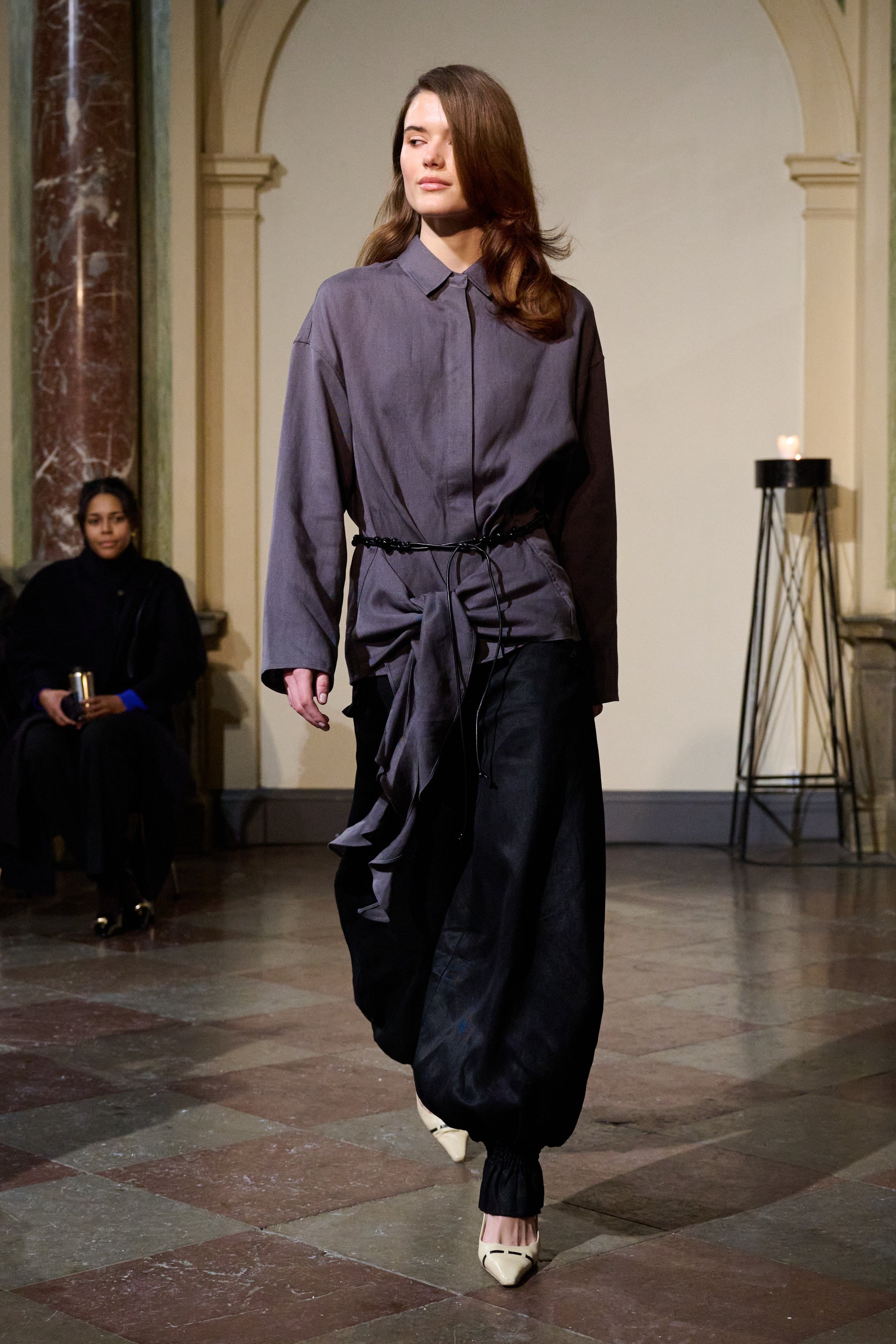
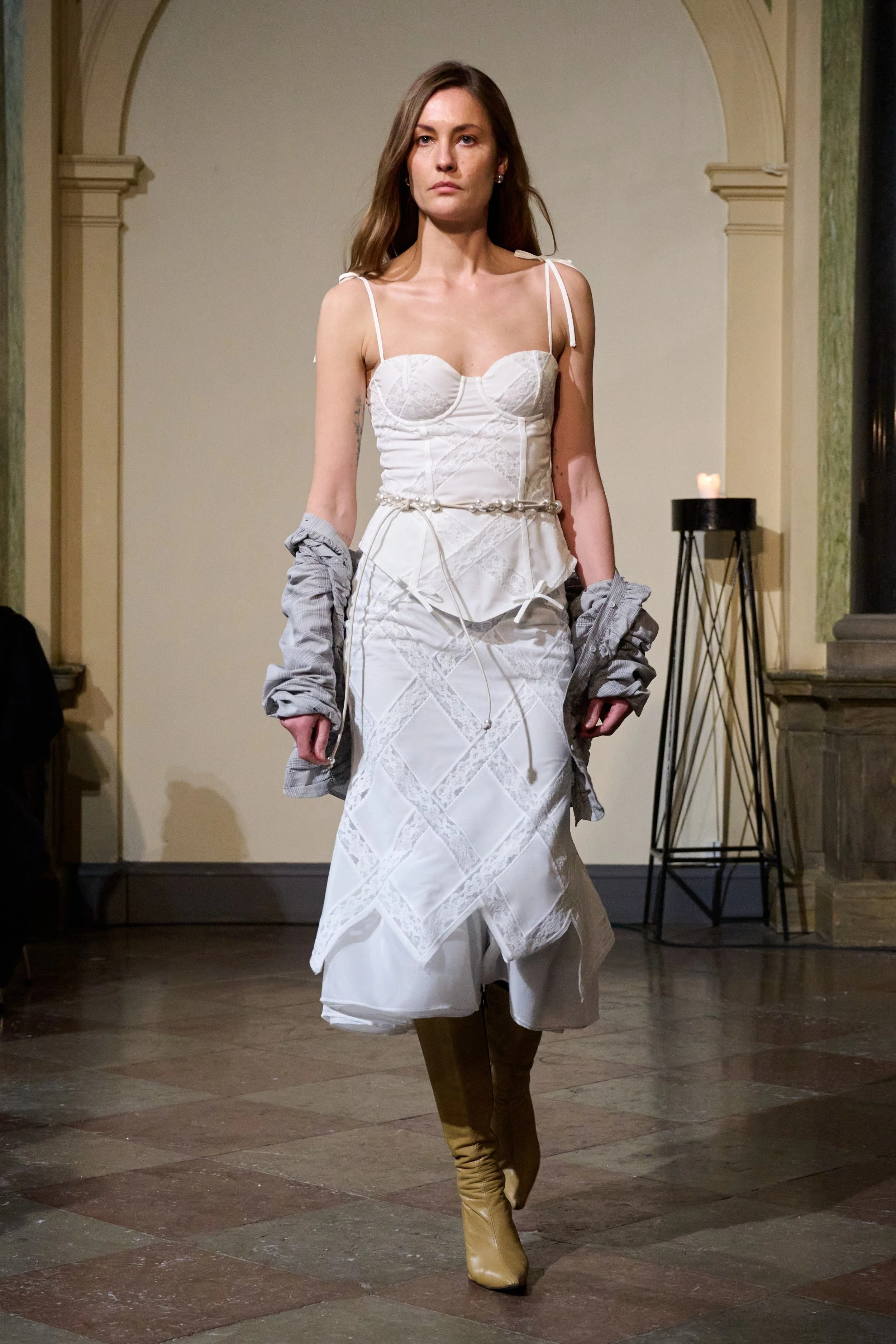
all images courtesy of OPÉRASPORT
Last season, Stephanie Gundelach and Awa Malina Stelter brought the fashion crowd to Frederiksberg Badene’s swimming pool for the OpéraSPORT SS26 collection. This season instead, we were invited inside one of the most historic buildings of Copenhagen, H.C. Andersen Slottet. And if you’ve been around enough to follow the brand, you know that every location holds a meaning, or as the designers confessed backstage: ‘We want to find a place that reflects the collection every season’. After a trip to Venice, the designers returned inspired, not only by the elegance of the city in the dark, but most importantly by the palazzo’s architecture: opulent, sculptural and intimate. After reading H.C. Andersen’s writings about Venice, it all clicked: “It was as if the sea itself carried the city upon its waves, and as if the sky had cast its glow down to be reflected in its canals.” – H.C. Andersen, Improvisatoren (1835)
Reflections of the city were translated into rigorous sculpted tailored jackets interrupted by the lightness of recycled satins layered sometimes as chic flower-printed scarves on top of pants, or in tops with fur hemlines. Laces and ruffles appeared like playful twists to interrupt, or perhaps highlight the brand’s contemporary elegance in a modern love letter to Venice. Outfits were, finally, completed with the first-ever collaboration with British brand Clarks - launching early October 2026.
STEM
review by ELIANA CASA
all images courtesy of STEM
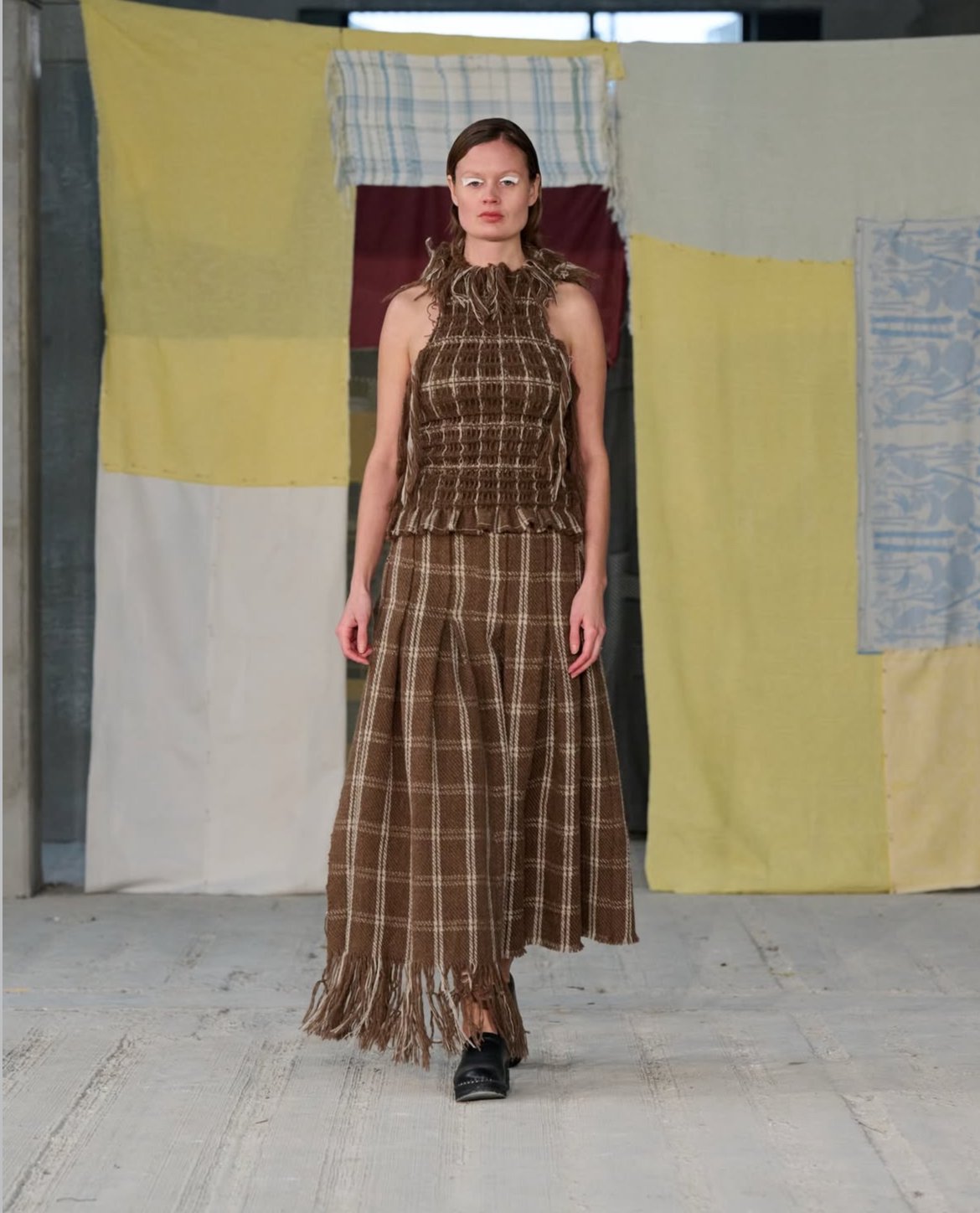
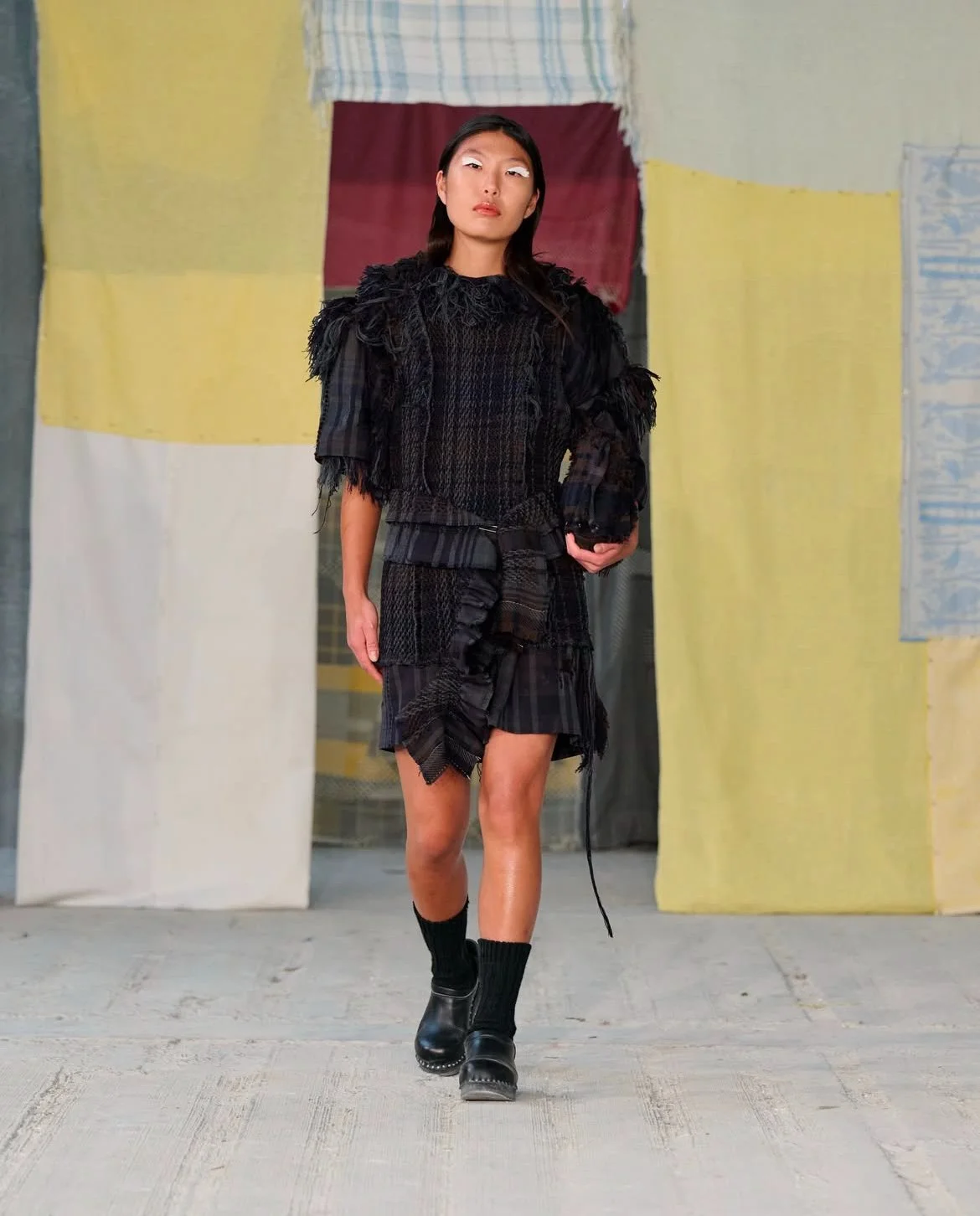
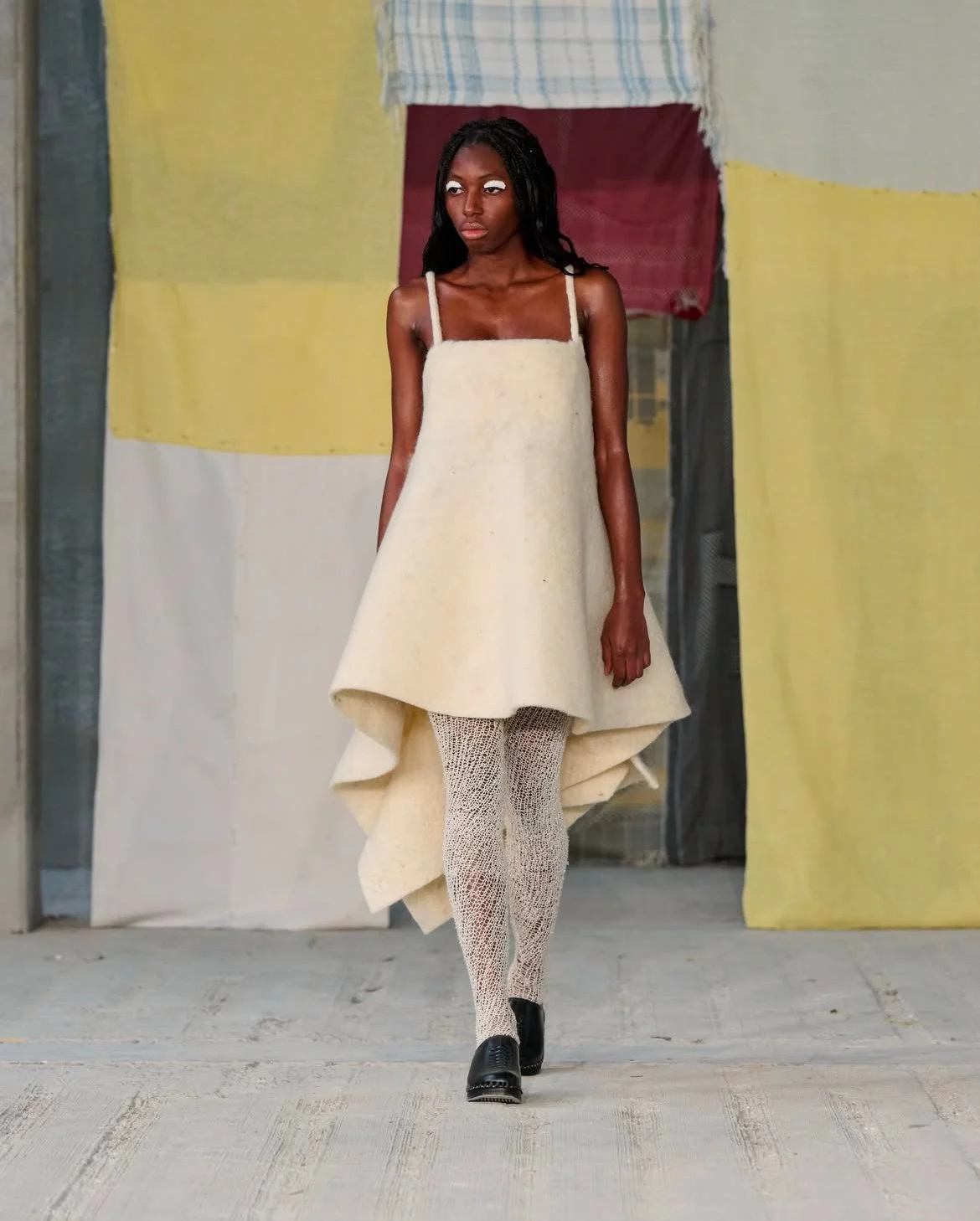
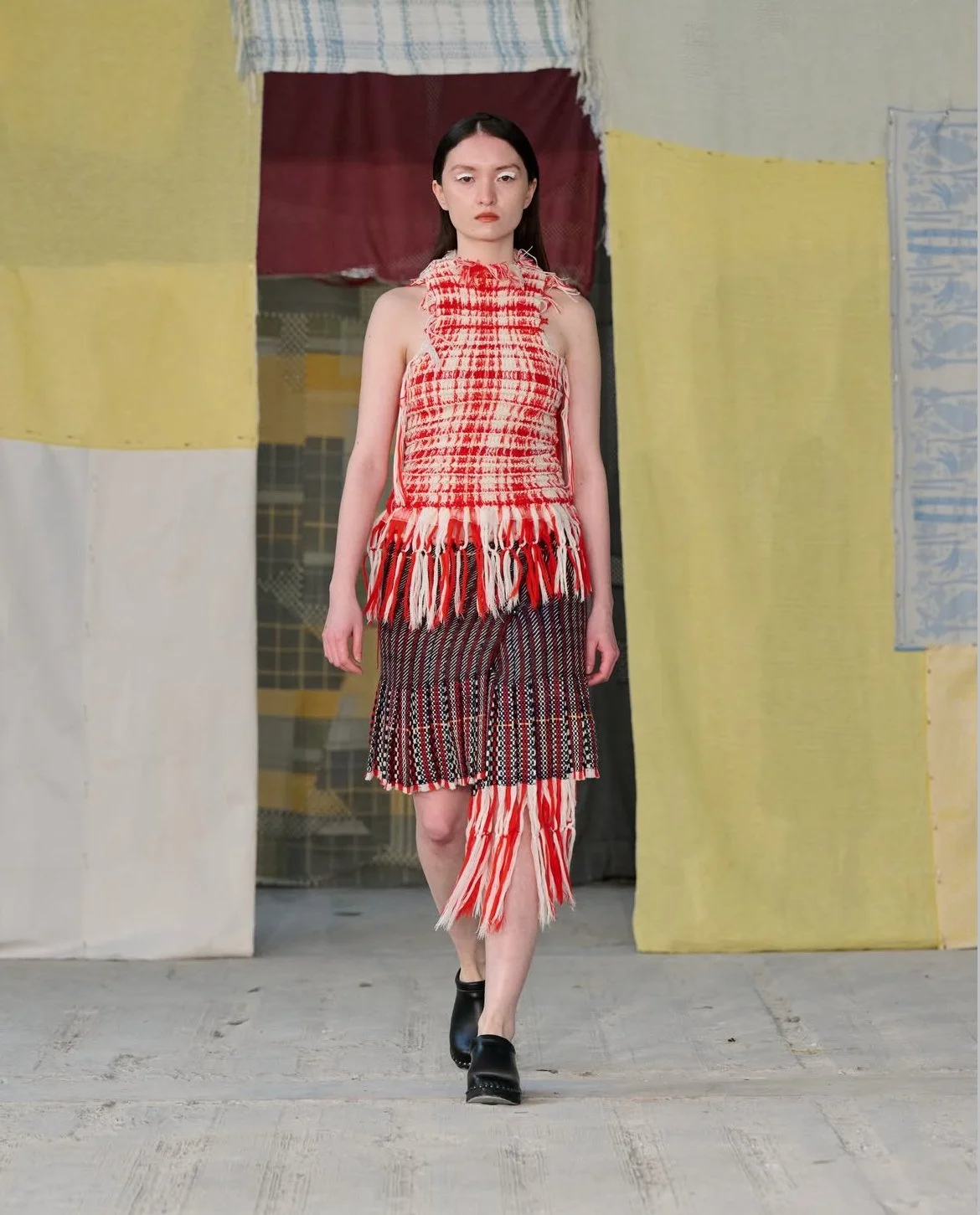
In the midst of the chaos of fashion week day 1, Stem invited us to slow down and ‘to wool’ - quite literally. Upon arrival, we were welcomed in an open space, where pieces of recycled fabric served as canvas. At the centre, a long wooden table appeared where some of the guests participated in a wool workshop with Hedestrik, while others were warming up with hot herbal tea offered at the entrance. Models were walking around the space, almost like passengers or observants. For Stem’s fifth edition, fashion was presented as a collaborative act of care, a ritual - or as designer and founder Sarah Brunnhuber stated on the brand’s pamphlet enclosed with a Danish woollen lace: ‘An ode, an address, and an action’. Danish wool is the starting point for Sarah - or better, the encounter with Berit, a shepherd in Denmark, and two locally spun wool with which she initiated the whole process. Those two pieces of wool opened endless possibilities on how fibres can be twirled, challenging their tenacity, and as Sarah commented, opening to an unexpected softness in other parts. After many handwoven and industrial experiments, the conceited collection was unveiled in dresses and tops with wool fibres hanging from them, combined together with techniques such as needle felting and pleating. We engaged with the space around us with all our senses, while the brand quietly invited us to feel the clothes with our hands, and not just with our sight; to not consider them as a product but as a process, in which we all took part in.
FORZA COLLECTIVE
review by ELIANA CASA
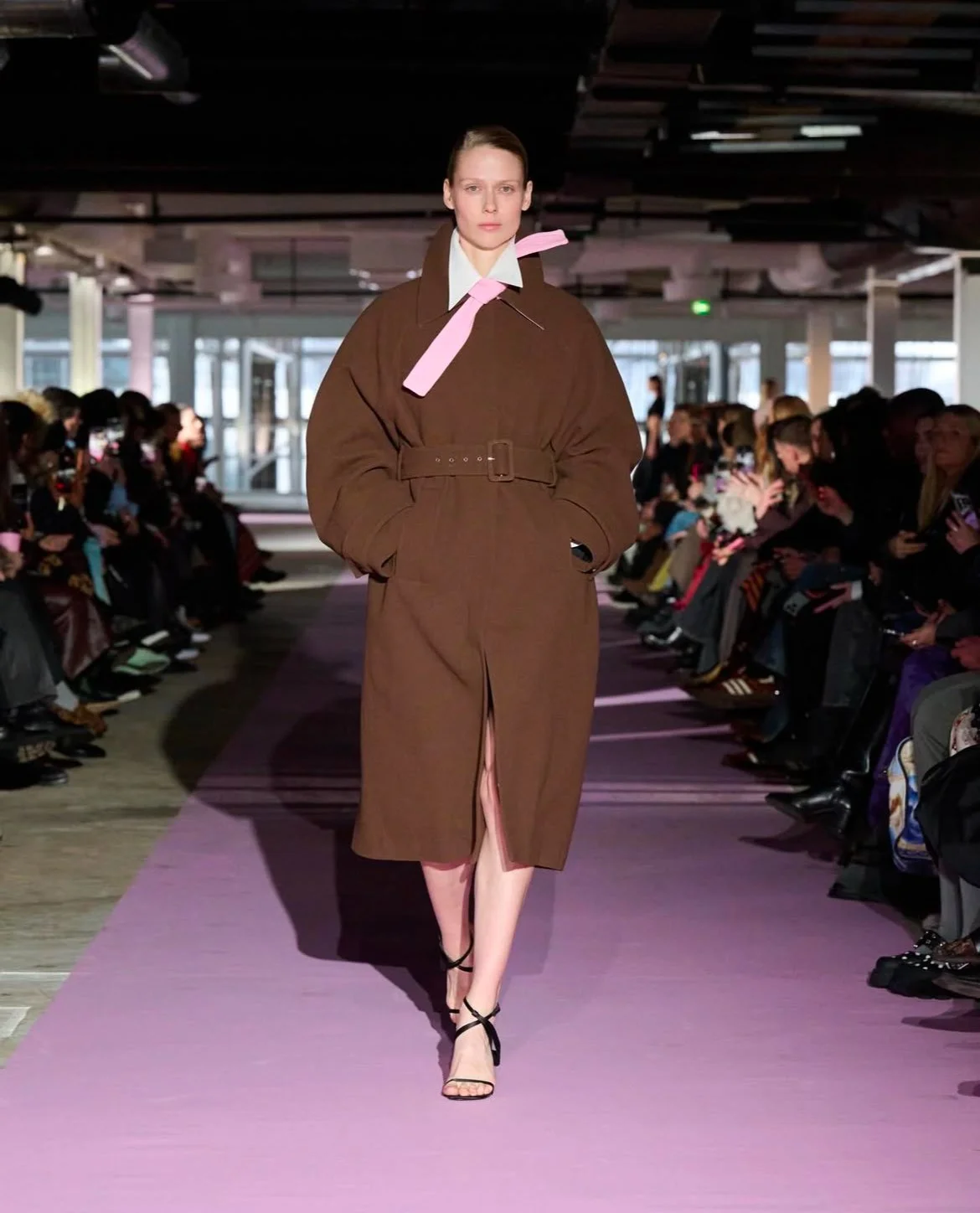
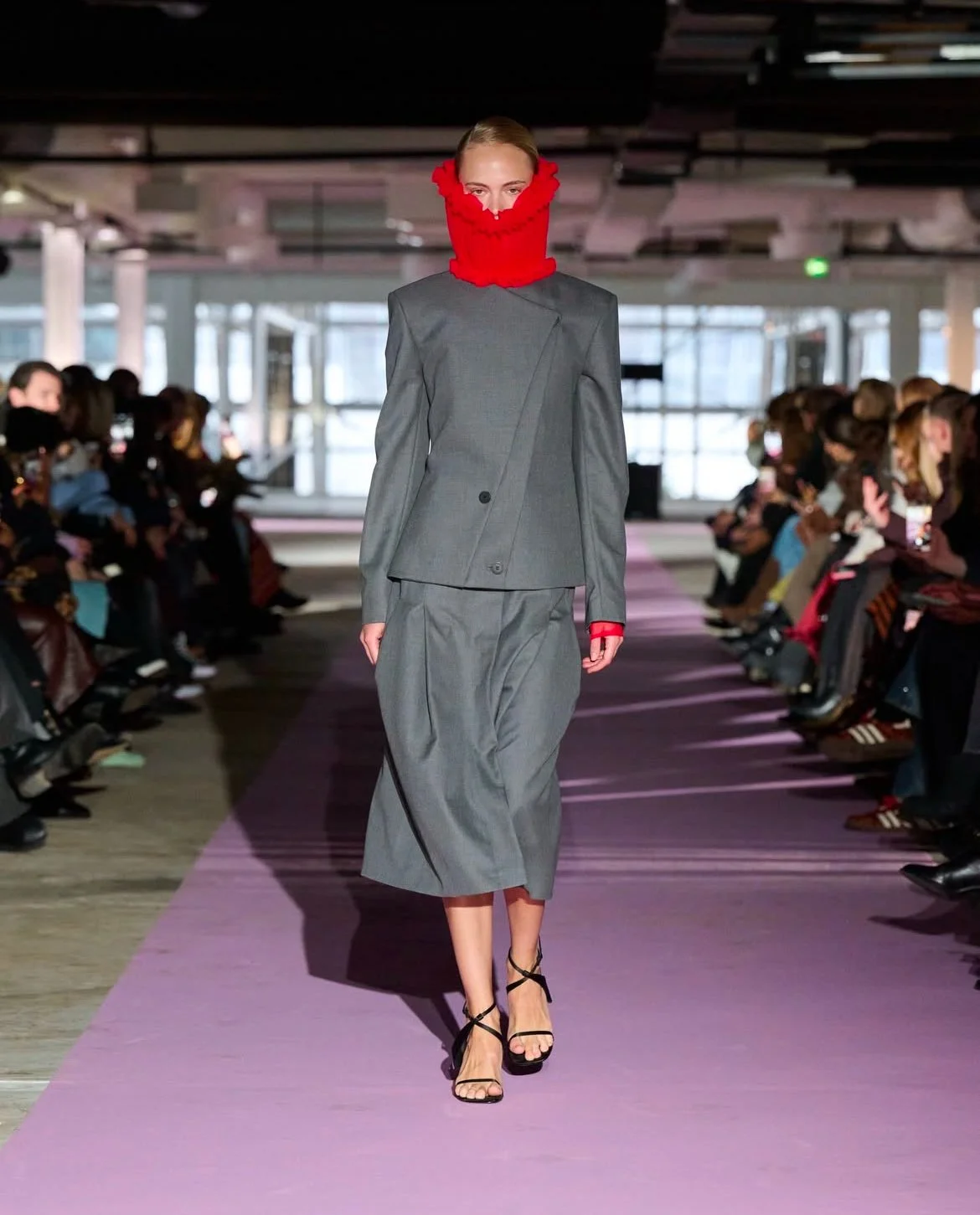
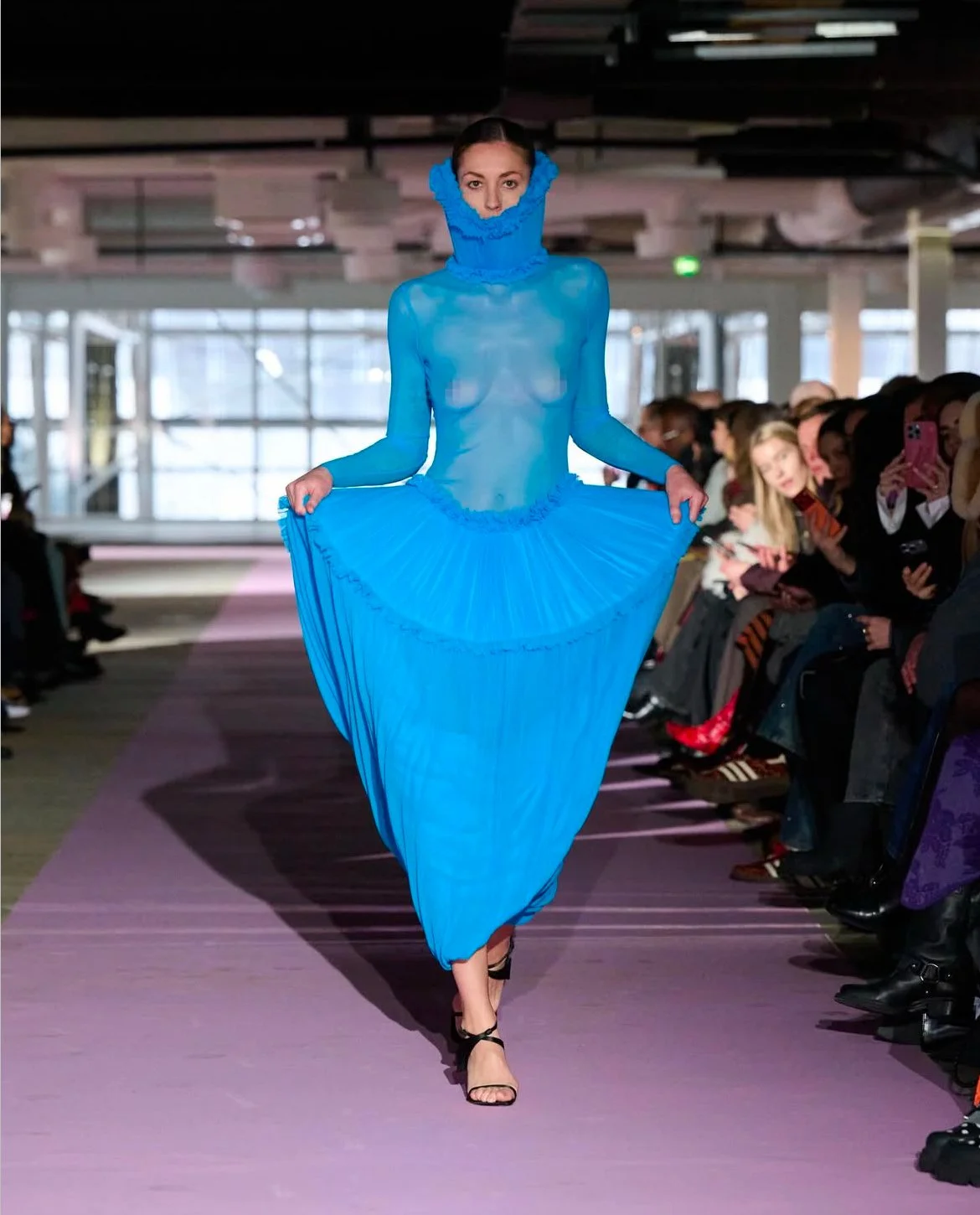
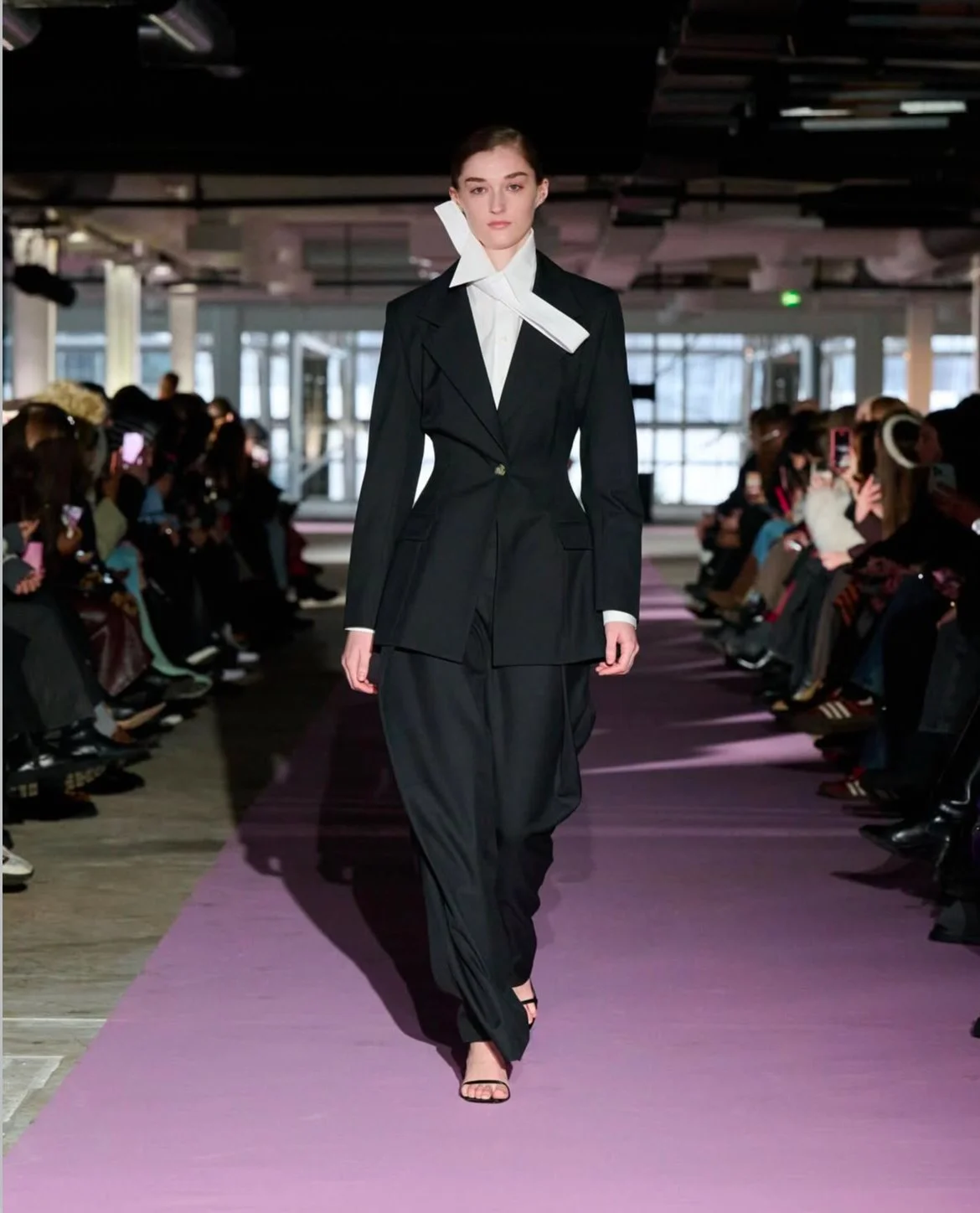
all images courtesy of FORZA COLLECTIVE
For FW26, Kristoffer Kongshaug made his CIFF debut, transitioning from the New Talent showroom to a full runway presentation. The collection explored a dialogue between structure and softness, drawing inspiration from the Baroque period while incorporating a minimalistic 90s sensibility aligned with Forza Collective’s vision. Extravagant collars — high-neck pleats, ruffles, and ascot styles — took centre stage, layered over sheer fabrics and draped backs that balanced sensuality with unmistakable elegance. Signature details, from circular cutouts to deconstructed bra cups and draped suit pants suggesting skirts, emphasised architectural lines and thoughtful construction. The colour palette added subtle refinement and cohesion, blending delicate shades of white, light blue, and pink with striking accents of red, black, and deeper blues. Set in a 200-meter-long industrial space with a lavender runway carpet, the intimate audience felt fully immersed in each look. As Kongshaug confessed backstage, “It was very fun to work with these shapes,” and the collection translated that joy into a modern reinterpretation of historical elegance.
STUDIO CONSTANCE
review by MAREK BARTEK
all images courtesy of STUDIO CONSTANCE
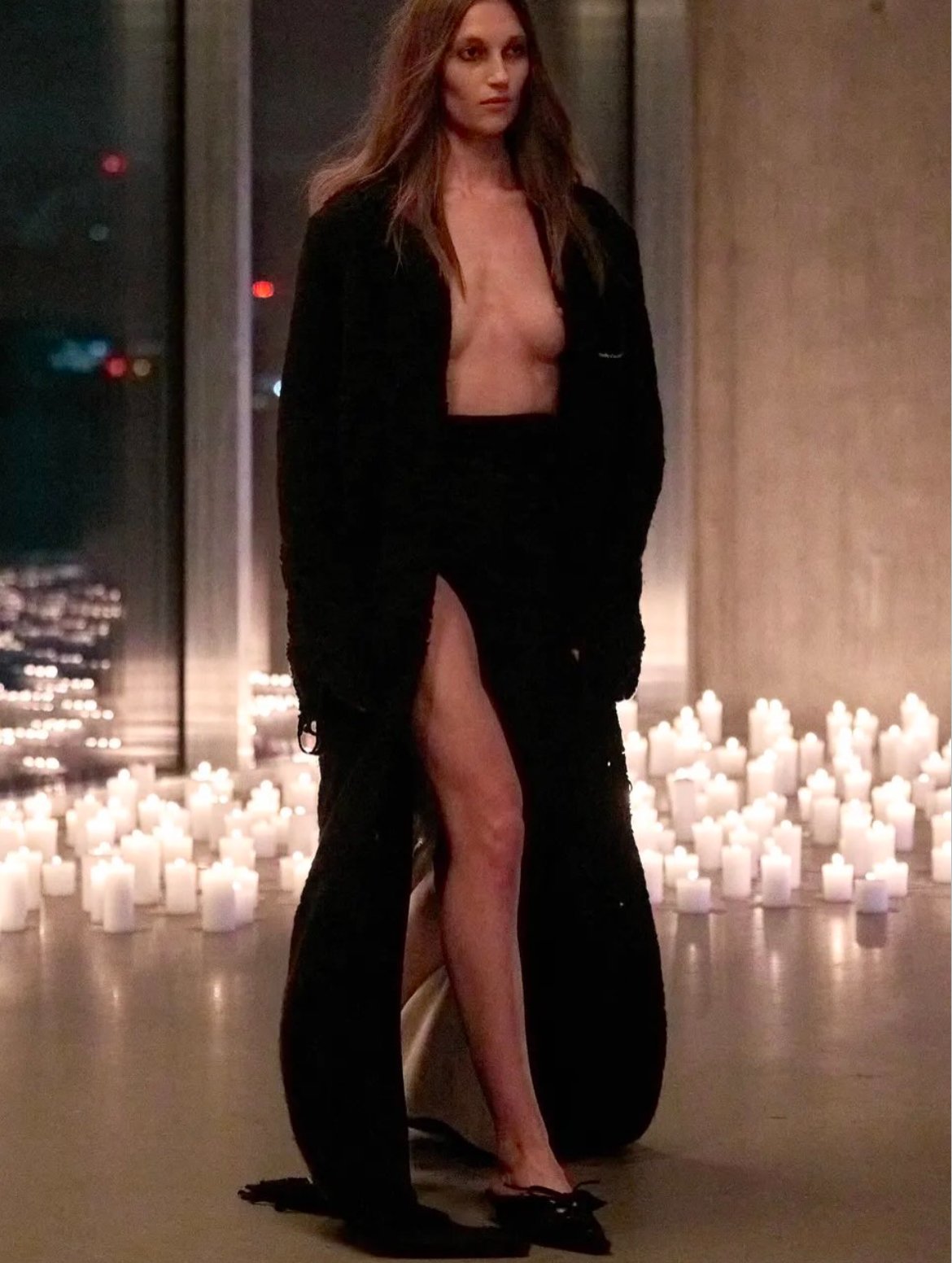
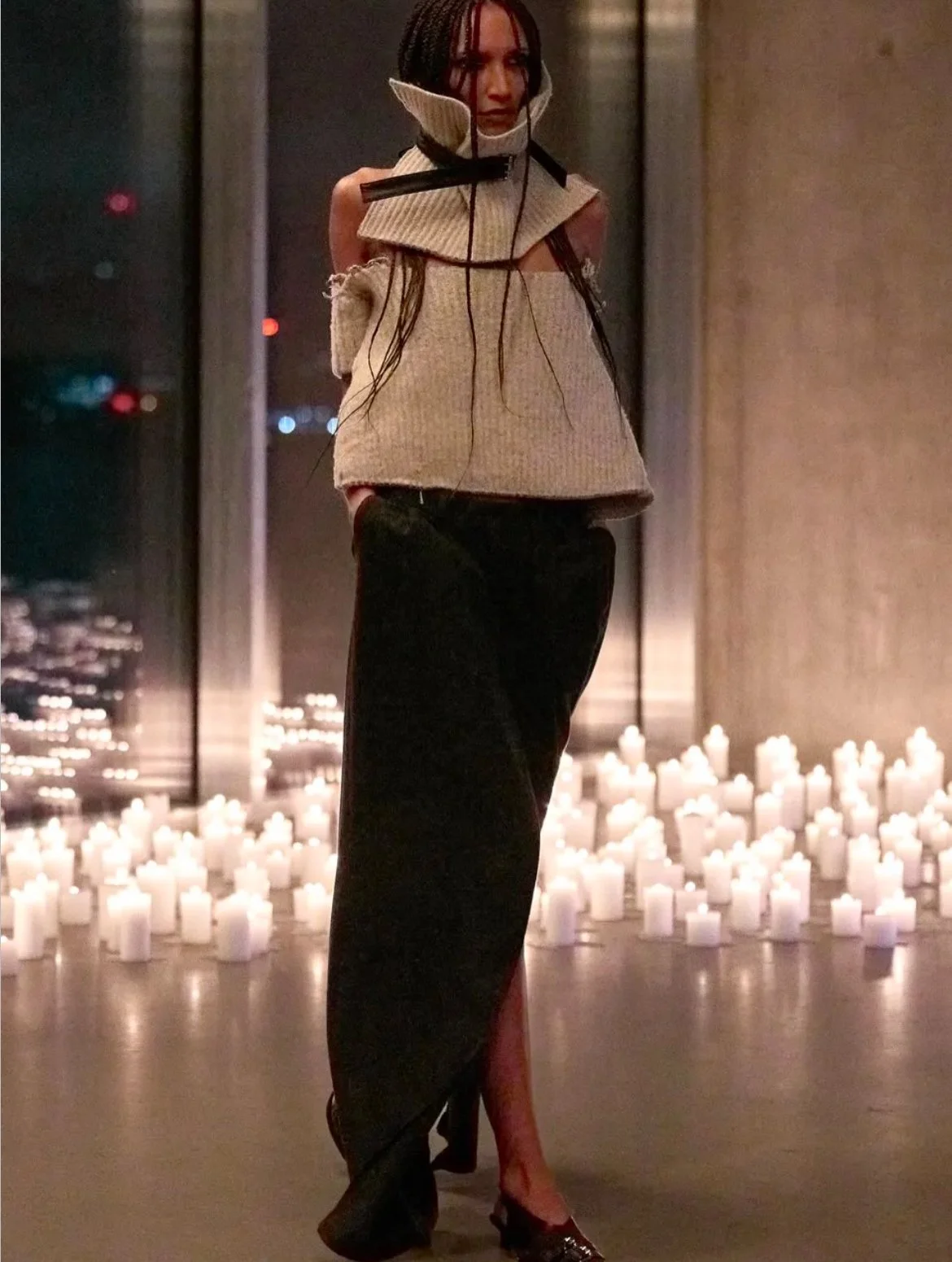
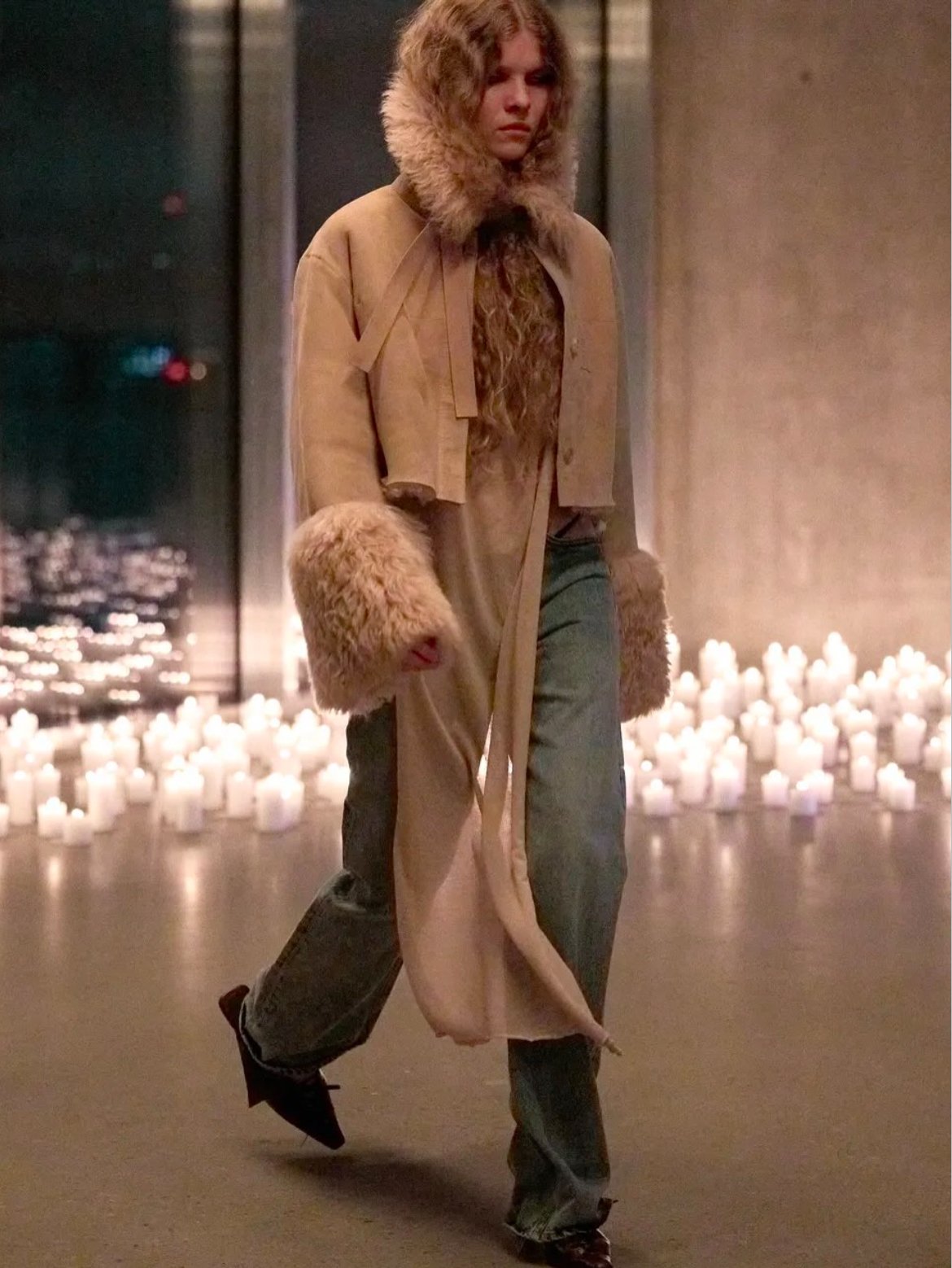
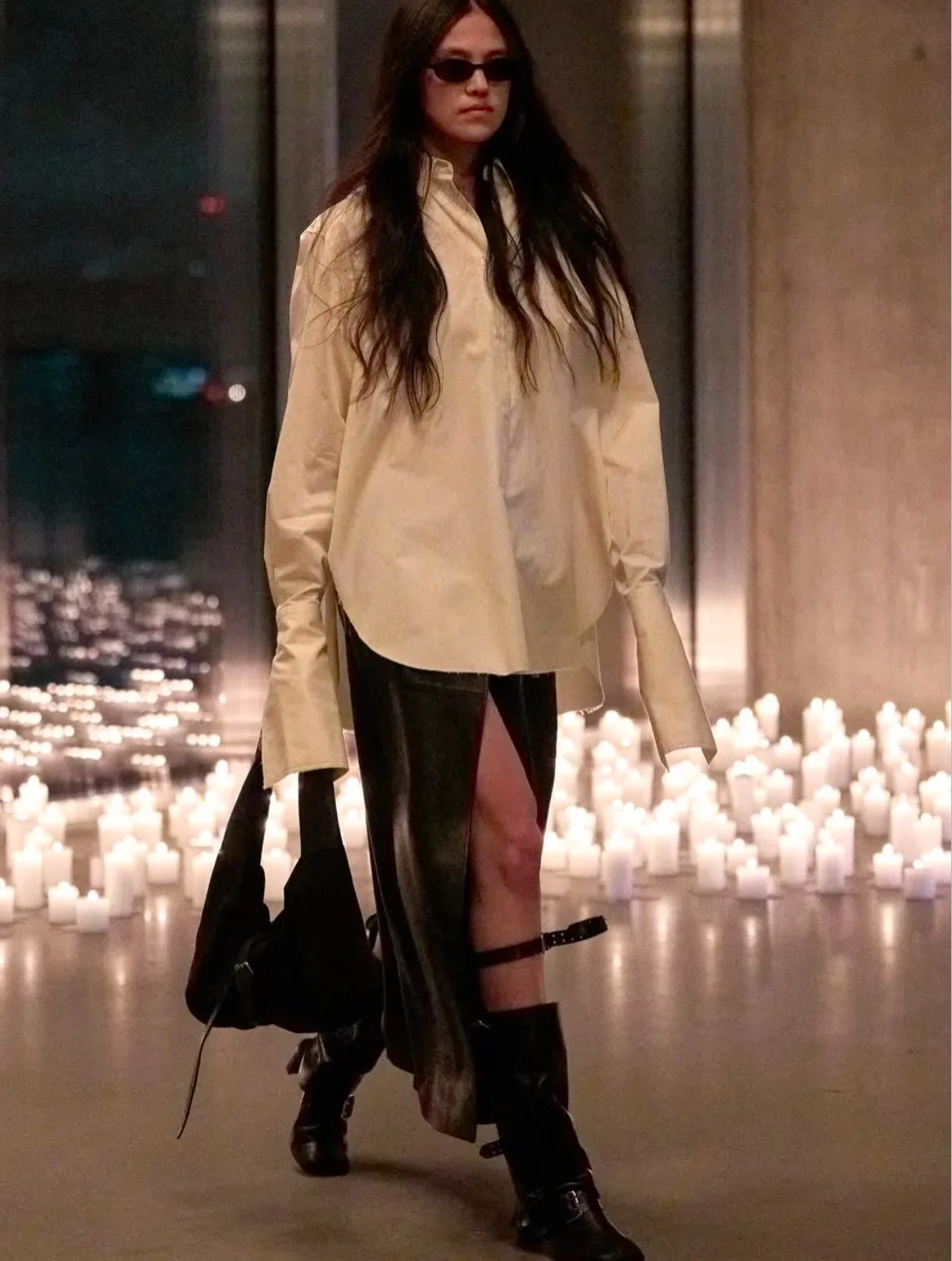
Studio Constance returned to the runway this season with its first show in Copenhagen, and Rebecca Dovenryd Almberg made it clear she’s most definitely not here to play into safe Scandinavian minimalism – something she shared with us backstage of Stockholm Fashion Week last May. Staged at BIG HQ, full of concrete, raw wood and glass, the setting perfectly matched a collection that leaned into that strength with a bite.
Where last year’s Stockholm presentation focused on layered “emotional armour,” this season sharpened that theme into something more exposed and confrontational. Low-slung bumster silhouettes, sheer laddered tops resembling cut-up hosiery, and jackets worn bare underneath brought a sense of deliberate provocation, but never without construction behind it.
Shearling, now firmly a Studio Constance signature, returned in multiple forms, grounding the collection in something tactile and protective — especially fitting for Nordic winter. Even at its most revealing, the collection still felt built, structured, and intentional. Almberg’s vision of empowerment isn’t polished or pristine. It’s raw, physical, and unapologetically worn on the body.
ANNE SOFIE MADSEN
review by MAREK BARTEK
all images courtesy of ANNE SOFIE MADSEN
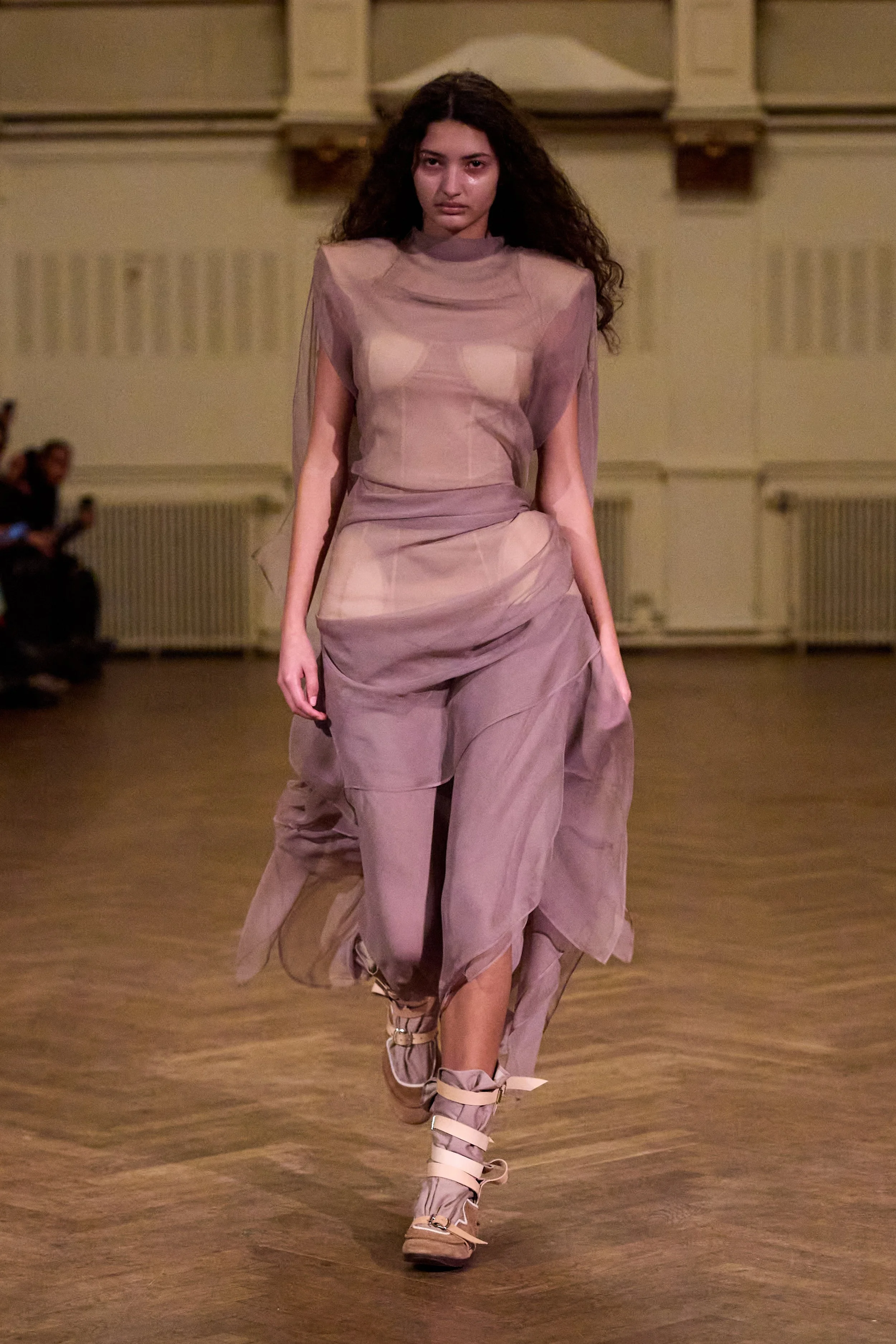
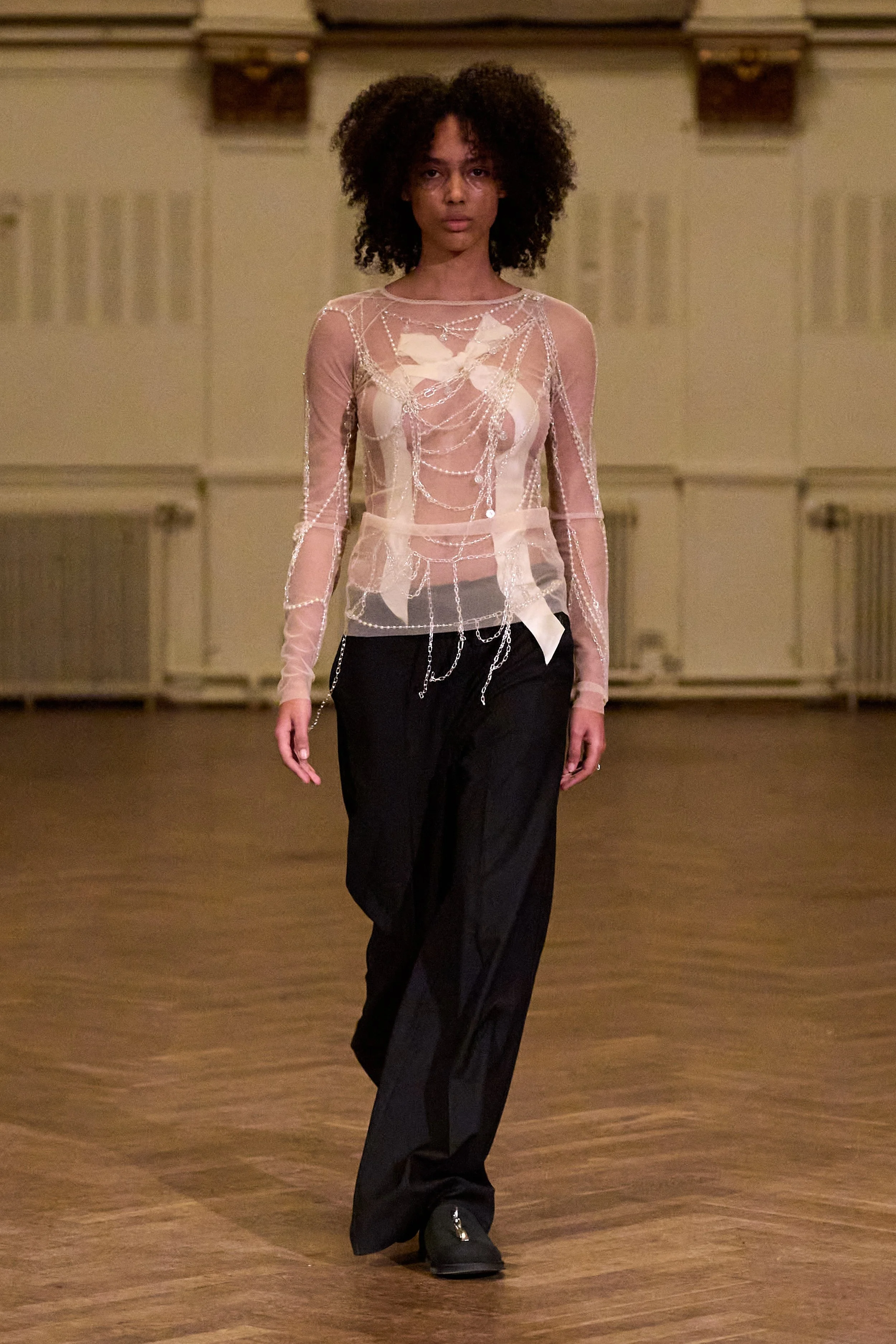
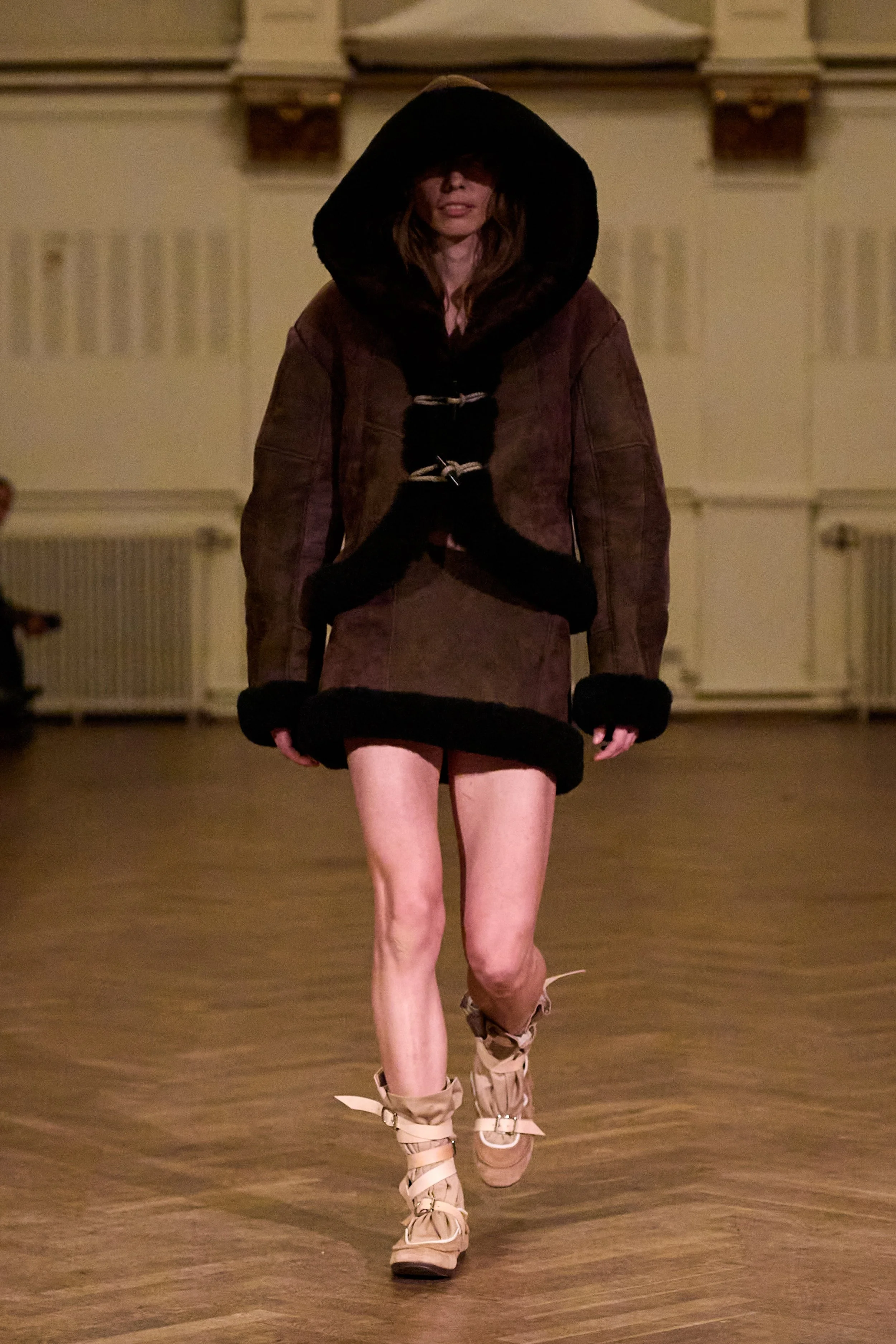
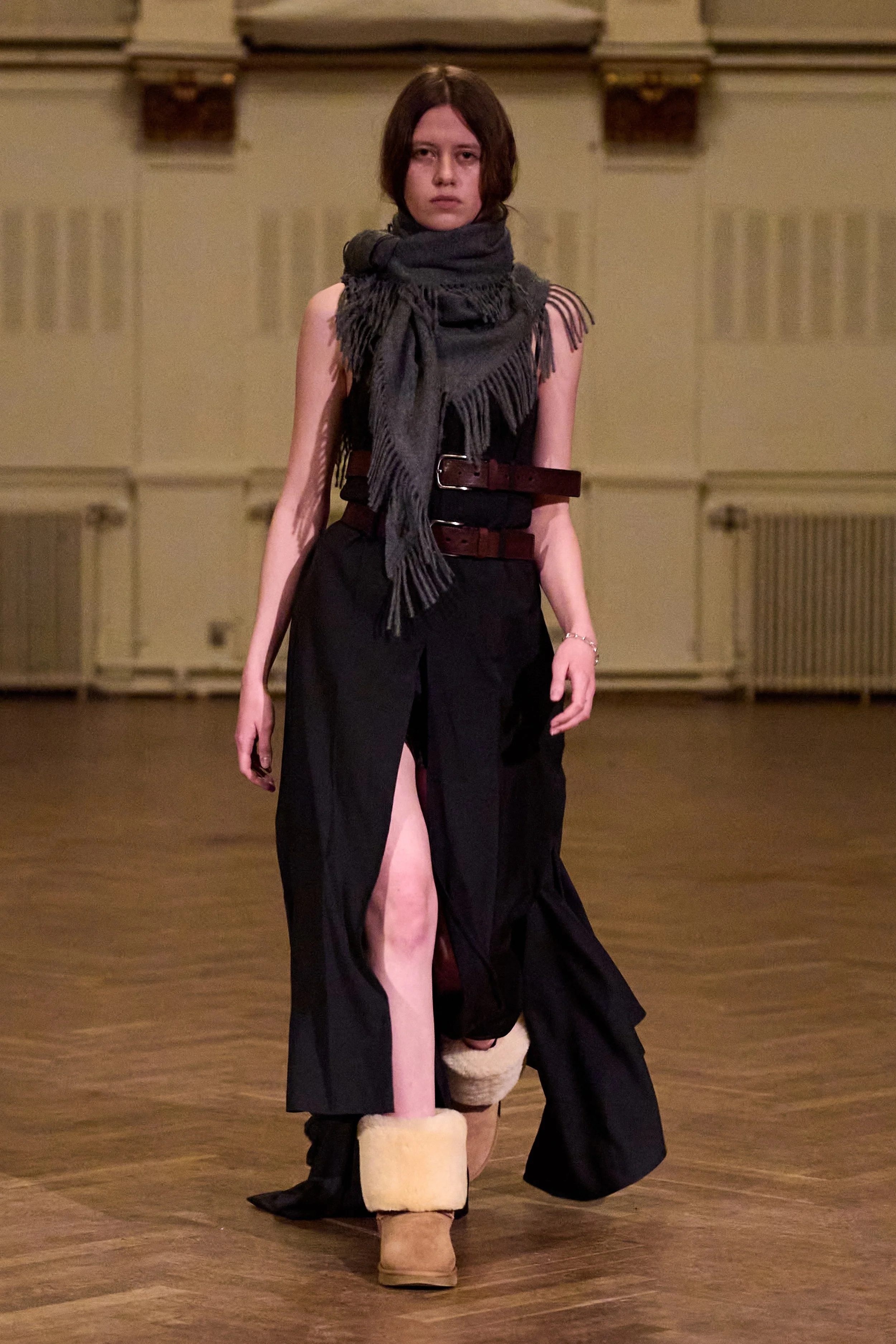
“We called the collection Ghostly Matters, and I think that it came from this idea that the present is haunted by futures that we promised, but we can no longer believe in,” said Anne Sofie Madsen right after her Autumn/Winter 2026 show. Partially reflecting on the realities of the political feud of Greenland, the collection unfolded in a space inspired by an abandoned Renaissance theatre, where low lighting, chandeliers and focused spotlights made every silhouette feel slightly unreal — sharpened further by a live performance from Copenhagen band Wedding.
At the core was shapewear: garments built around compression, concealment, and the strange in-between space where the body becomes both visible and abstract. The tension played out through sculptural proportions. Shoulders were exaggerated, shapes cinched, and skirt suits had that grunge chic to them. Duffle coats – reminiscent of those worn by British soldiers during World War II – were reworked into something almost ceremonial. Roses appeared throughout, although they didn’t feel necessarily romantic. They felt fragile — airbrushed, appliquéd, or treated in silk techniques, like traces left behind. Draped wool scarves became dresses, and layers of tulle and silk played with both softness and ideas of structure. Footwear came via a runway partnership with UGG, transformed into medieval-like boots, clawed clogs and bow-detailed styles, while Pandora jewellery was integrated directly into garments, veiled under tulle and used to shape the silhouettes.
HAN KJØBENHAVN
review by ELIANA CASA
all images courtesy of HAN KJØBENHAVN
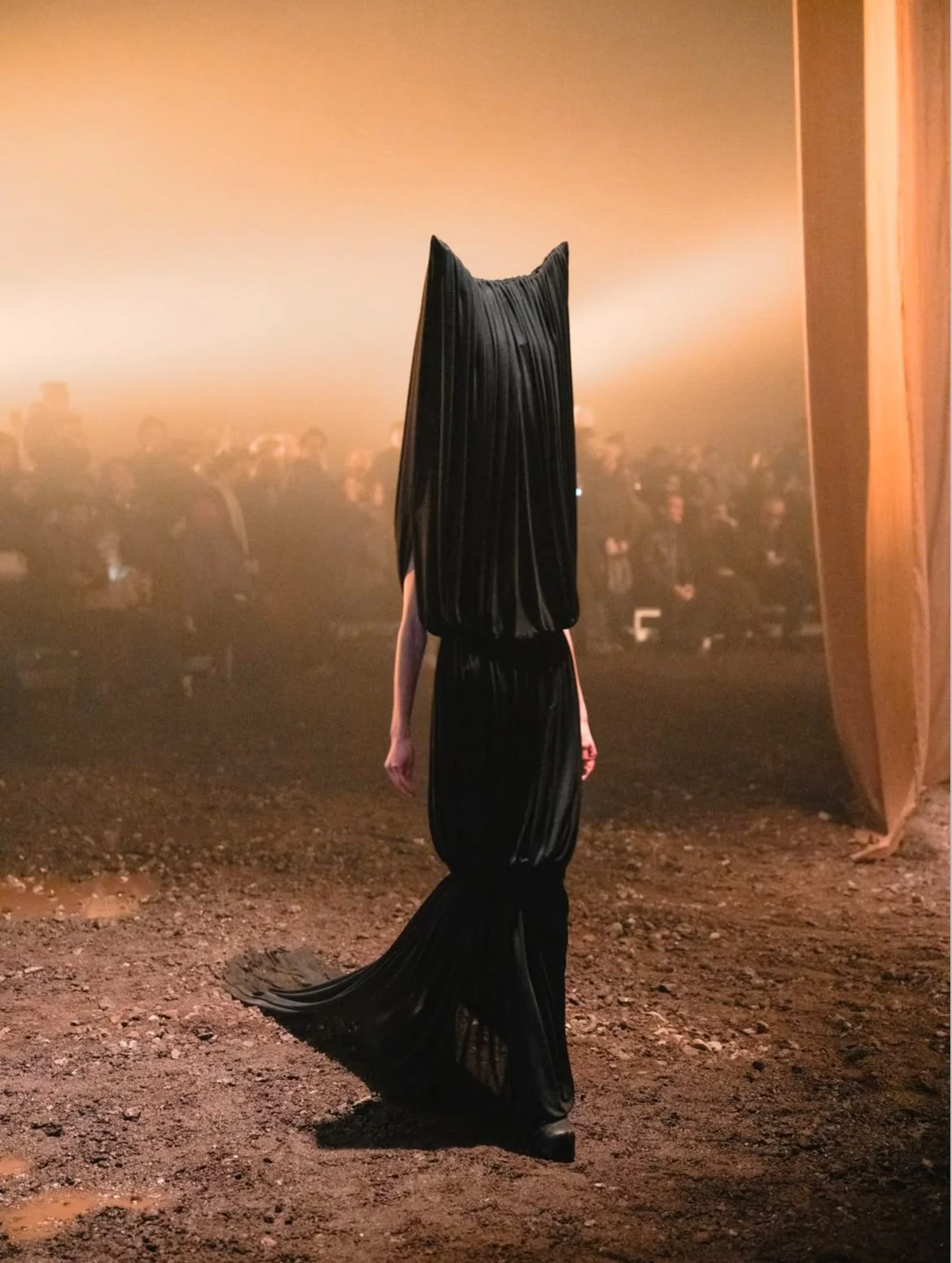
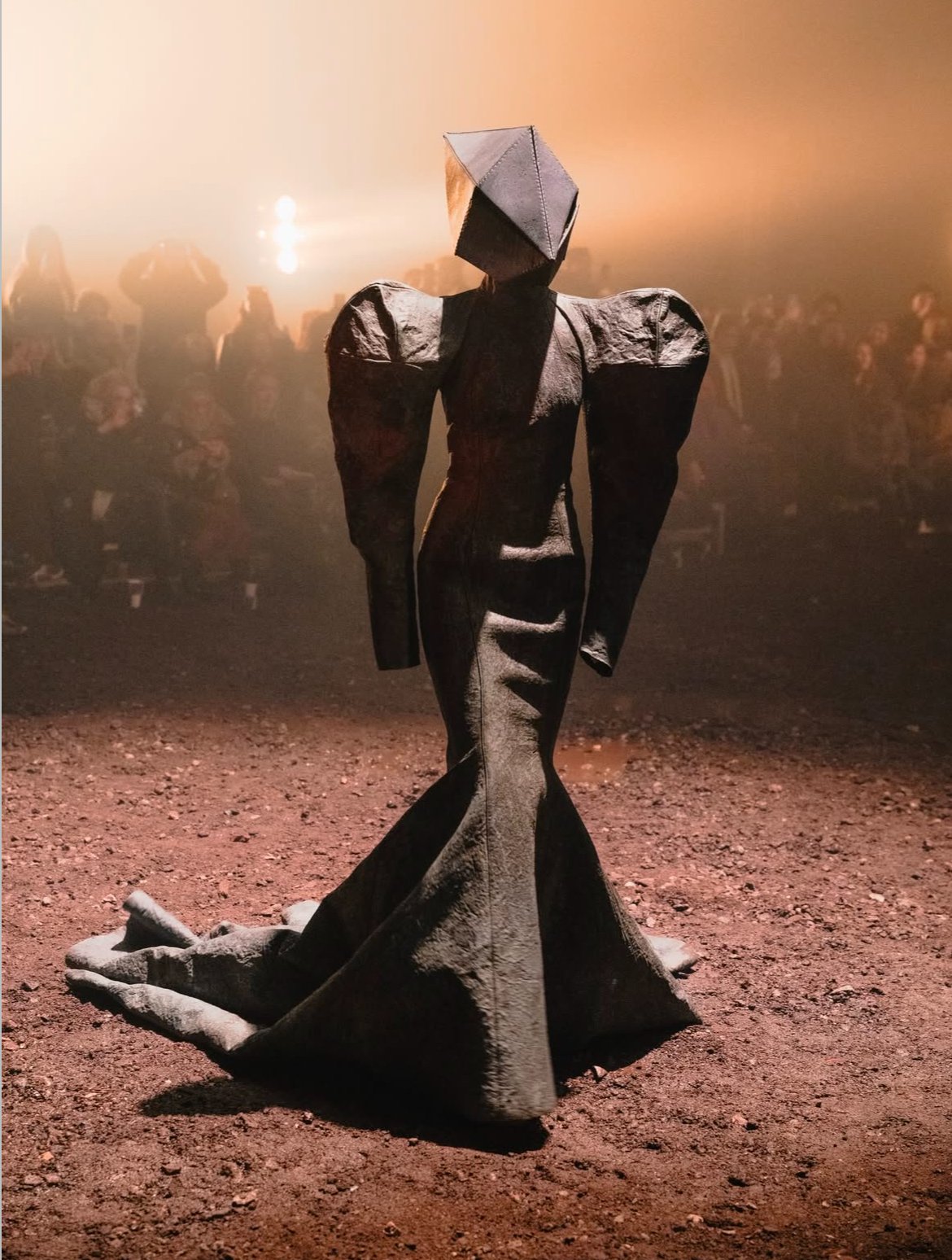
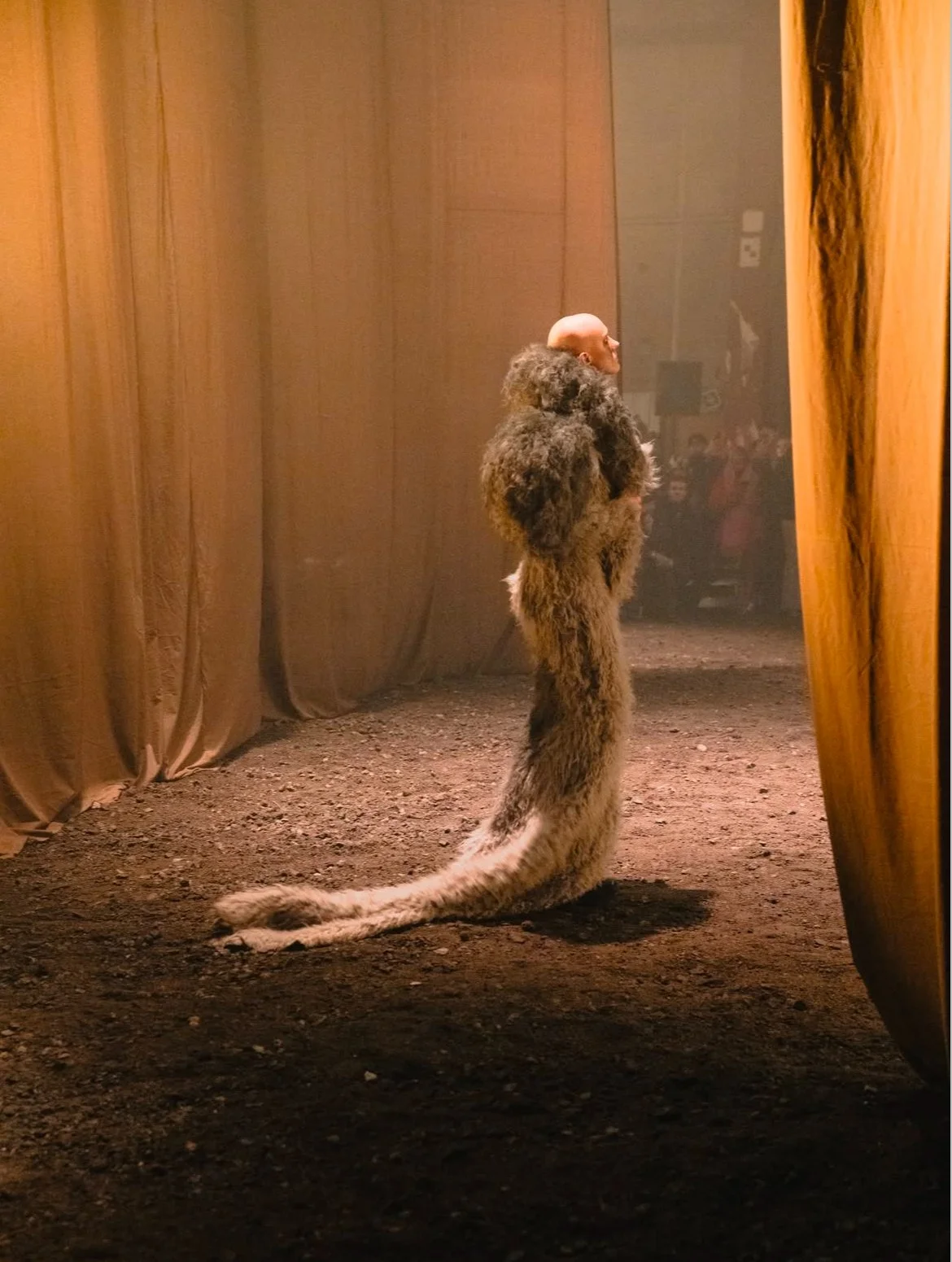
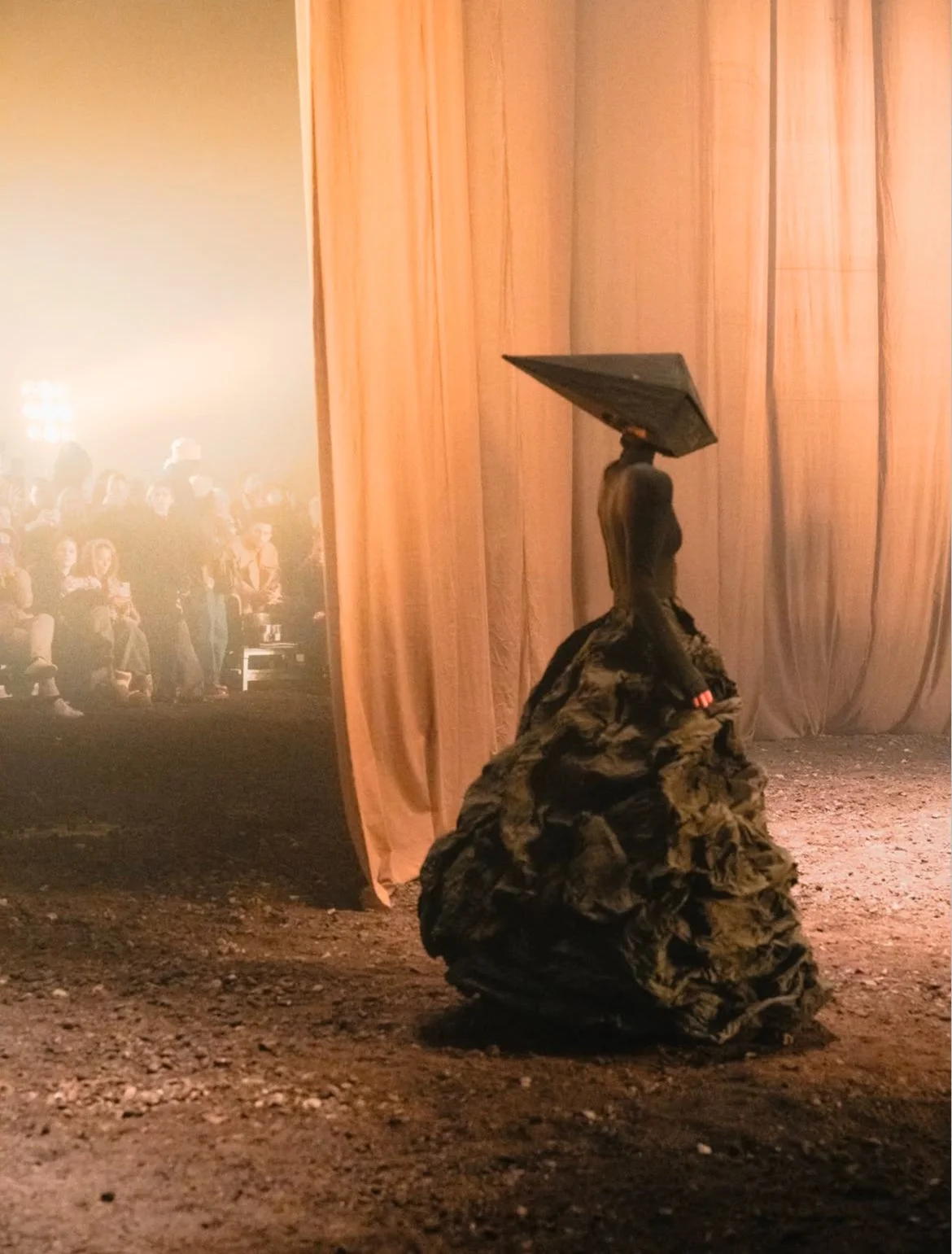
Who can gather an entire fashion crowd in a -7°C industrial building somewhere in the middle of Copenhagen without a single complaint? Han Kjøbenhavn can, and he certainly did. Once again, we were asked to engage physically with the space around us for Corrosion, the only couture collection from this FW26 season. As we reached our seats on mud-slick soil (my Tabi are still recovering), a beam of light traced the curve of a circular, see-through curtain, illuminating the empty setting… and leaving us to wonder who would step in. As the music began, the first model emerged in a long black veiled dress, the headpiece dissolving into a tail that swept the floor, merging seamlessly with the mud. More models followed, clad in sculptural black and grey pieces, some exaggerating the hemlines, others the sleeves, shoulders, skirts, or hoods. They wandered like lost souls, never interacting with each other, while five original tracks by Danish artist D1MA were performed live for the first time, and reinforced each movement.
‘Corrosion’ manifested in the dark, gothic makeup and hair, the slow, almost painful “zombie” walks of the models, and the claustrophobic masks some wore—making us question how they could navigate high heels in ultra-tight dresses with their eyes covered. Han Kjøbenhavn challenged the audience, forcing us all into a state of discomfort, and as silence fell over the room, it became clear: we don’t need an answer, this was exactly the point.
THE GARMENT
review by MAREK BARTEK
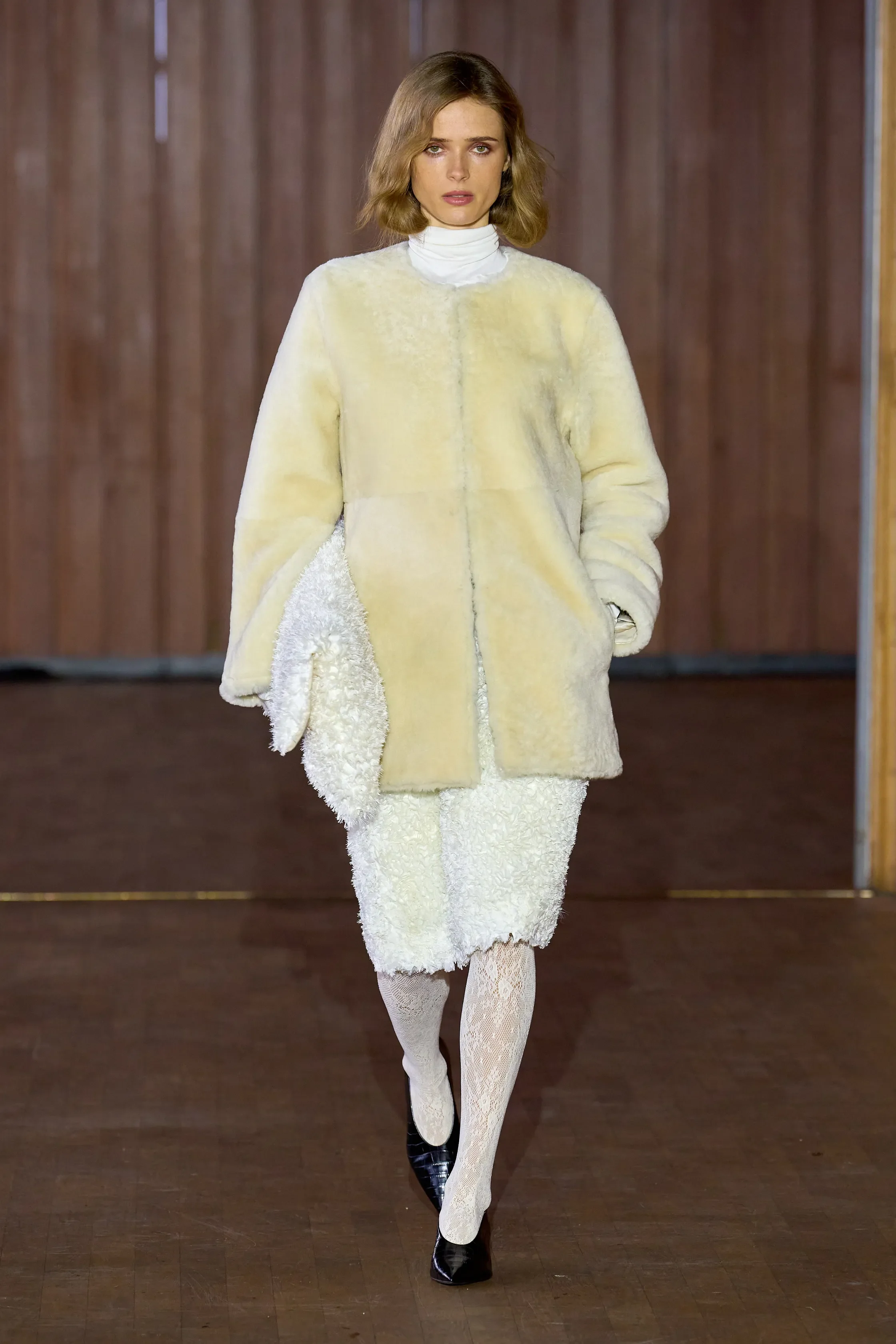
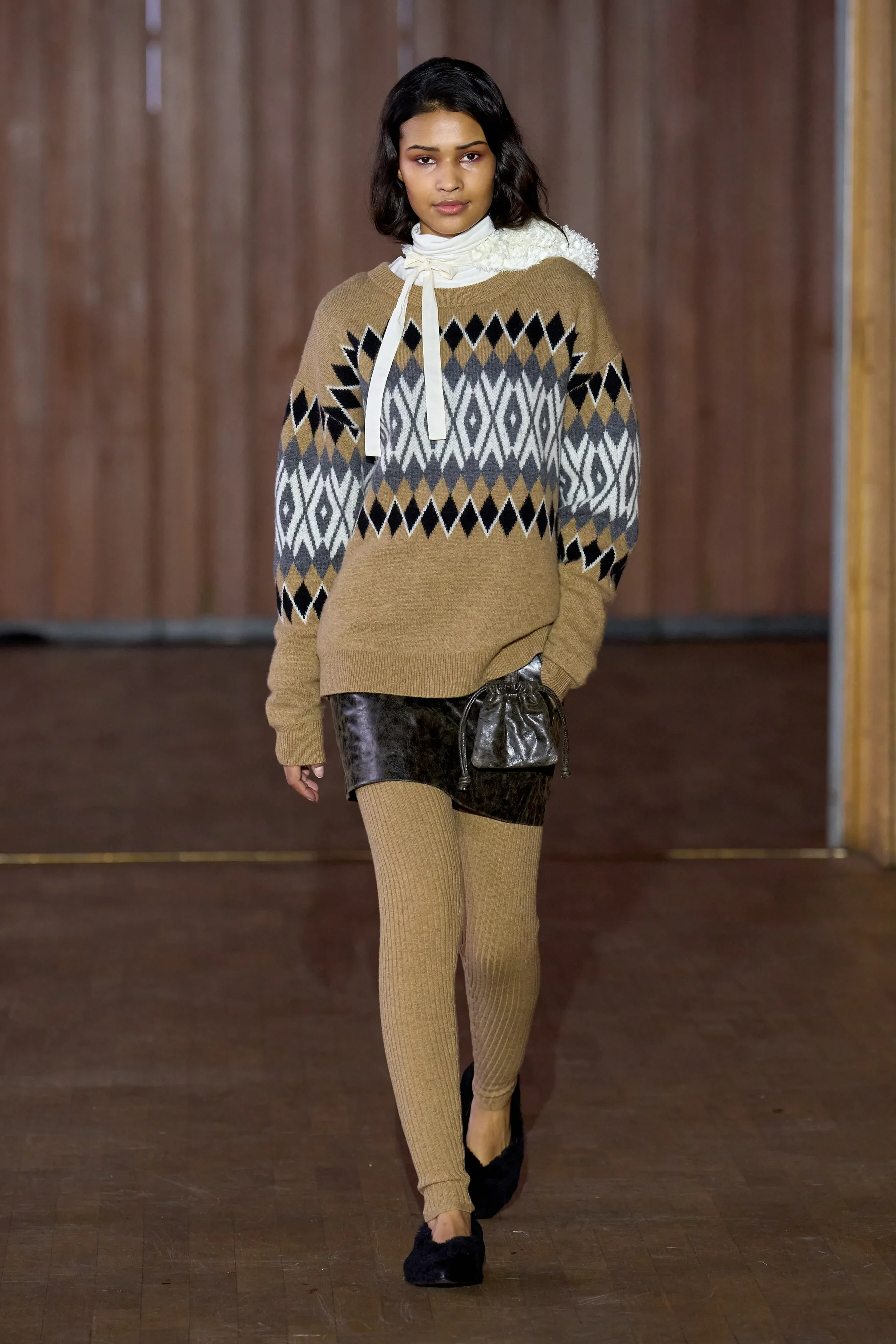
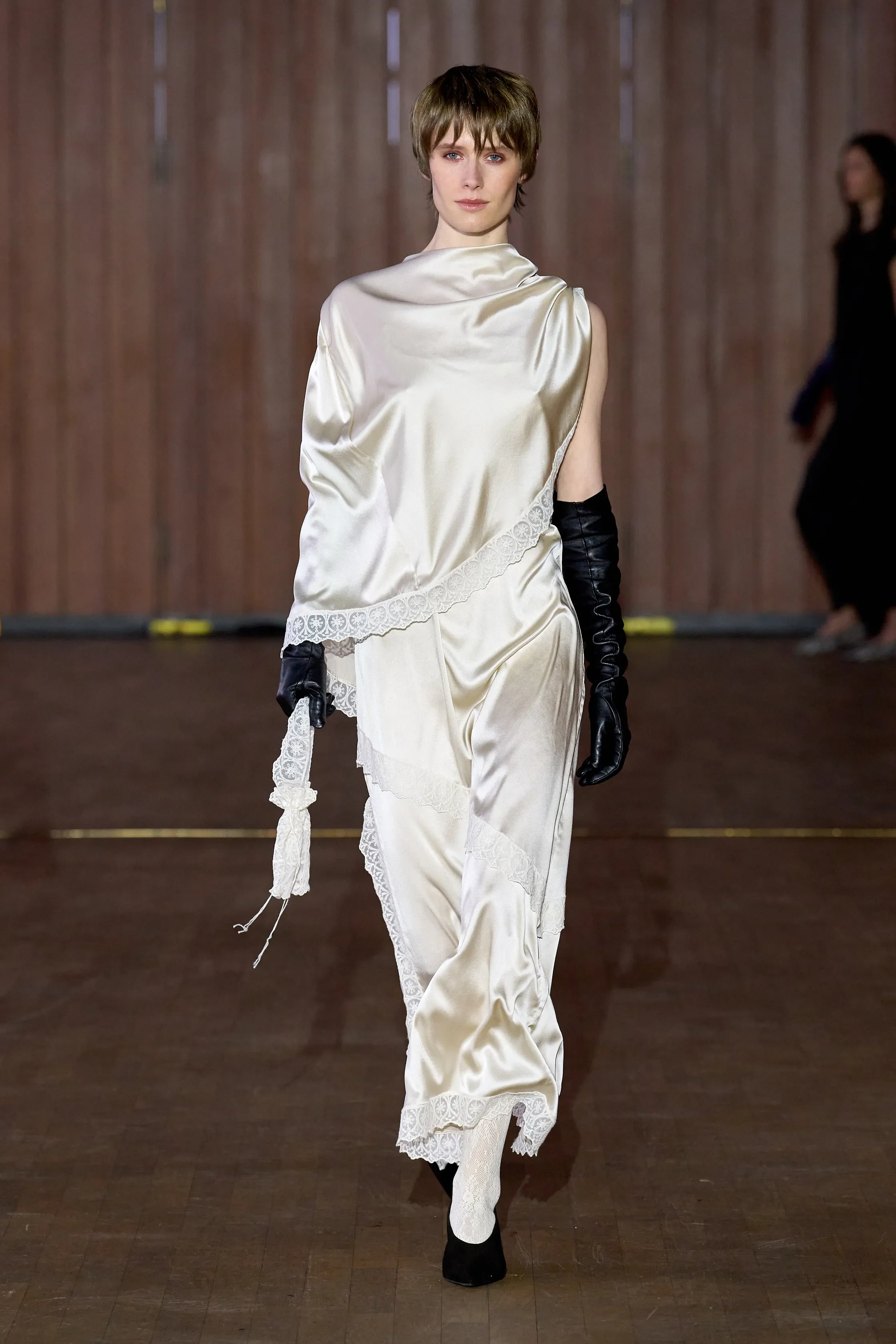
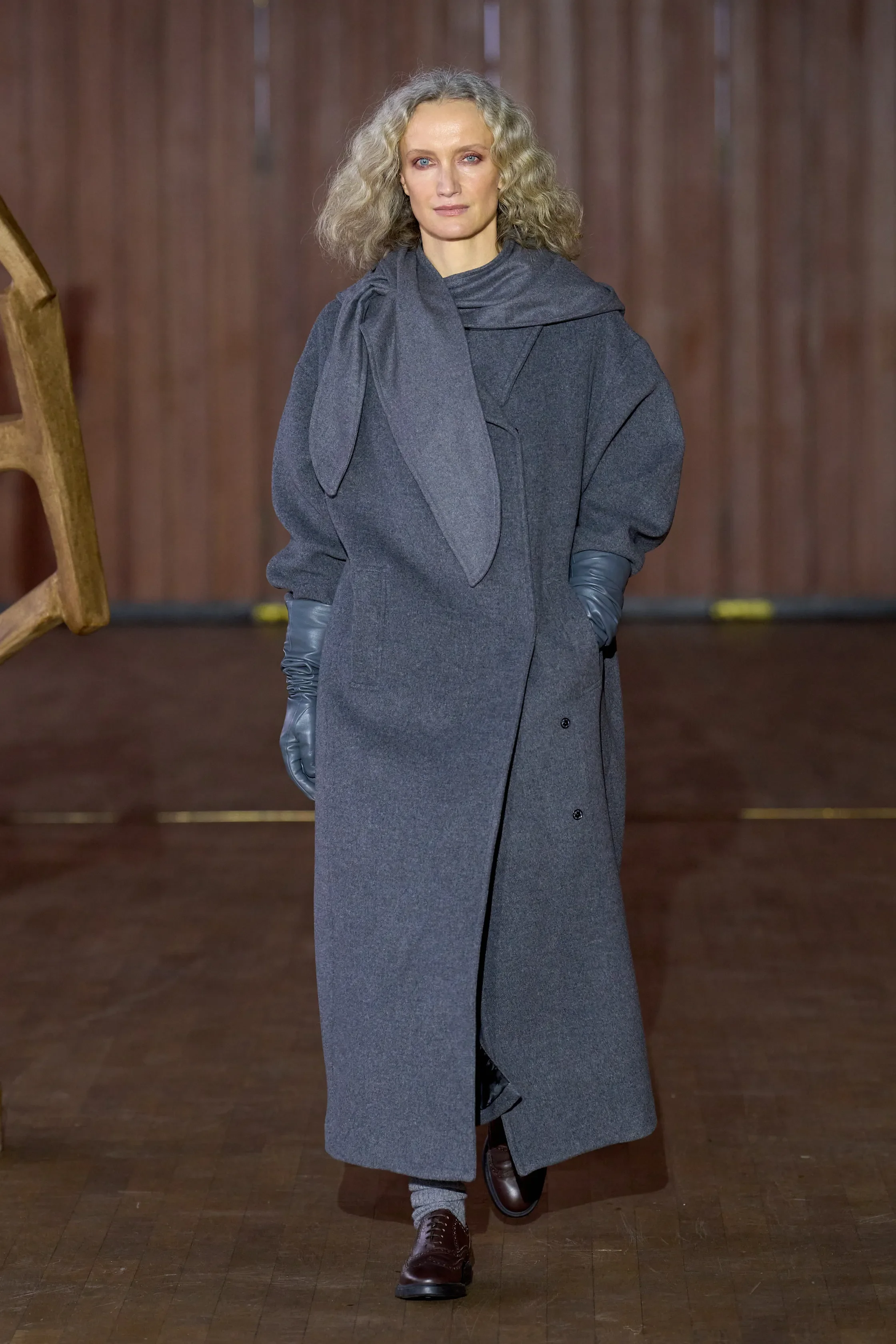
all images courtesy of THE GARMENT
The Garment presented its Fall/Winter collection at Copenhagen’s Langelinie Pavilion, a 1958 modernist landmark that set the tone for a season rooted in Scandinavian classics. Charlotte Eskildsen leaned into clean structure and ease, introducing a wardrobe that felt built for real life — polished, practical, and smartly styled.
Outerwear took on the lead role. Cape coats, long coats and softly torqued capes appeared throughout, often paired with matching scarves. Fabrics did much of the work: double-face wool, leather, faux fur, and a layered raw-edged textile designed to mimic fur added depth without feeling forced. The opening look — a navy cape coat styled with wide white trousers — was paired with the brand’s first shoe offering. Including loafers, this step definitely reinforced the collection’s everyday focus.
Elsewhere, the mood shifted into something slightly less casual. Ski-inspired knits and clingy silk dresses introduced a more playful contrast, while leather bombers and tweed trousers brought the collection back to its strongest point: classic pieces with a slightly offbeat edge. All in all, the collection stayed true to The Garment’s language of wearable, structured, and designed for a woman on the go.
HENRIK VIBSKOV
review by ELIANA CASA
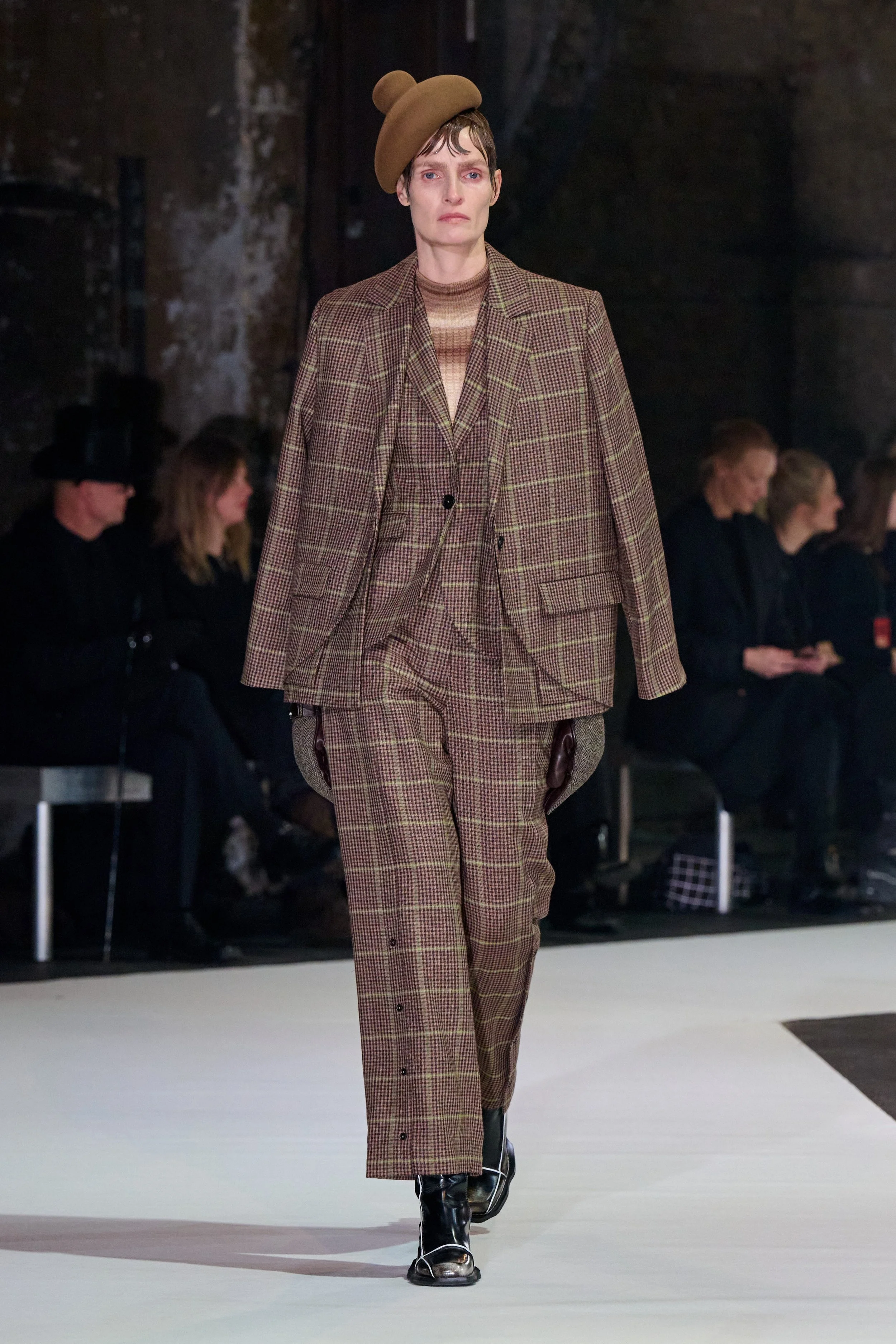
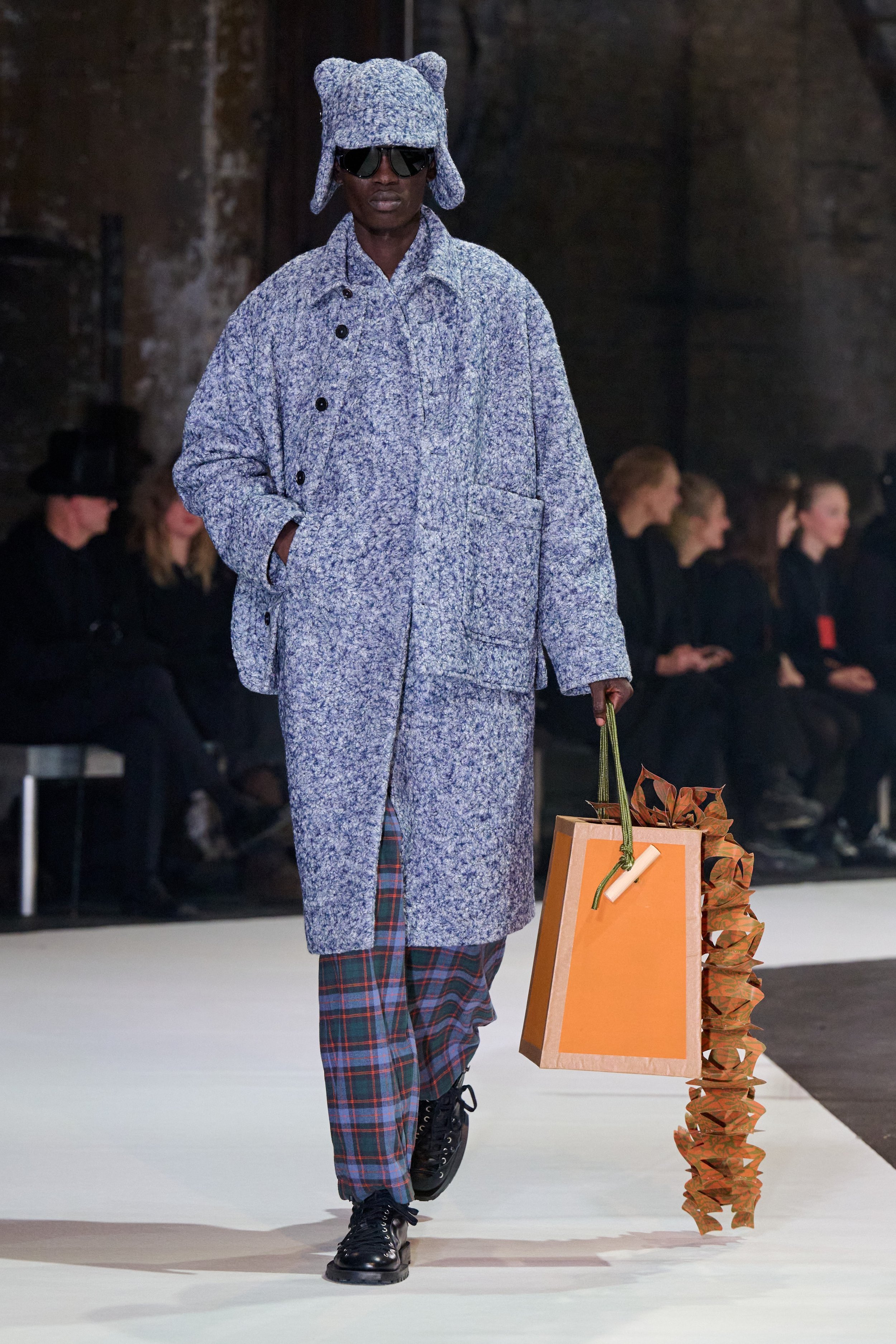
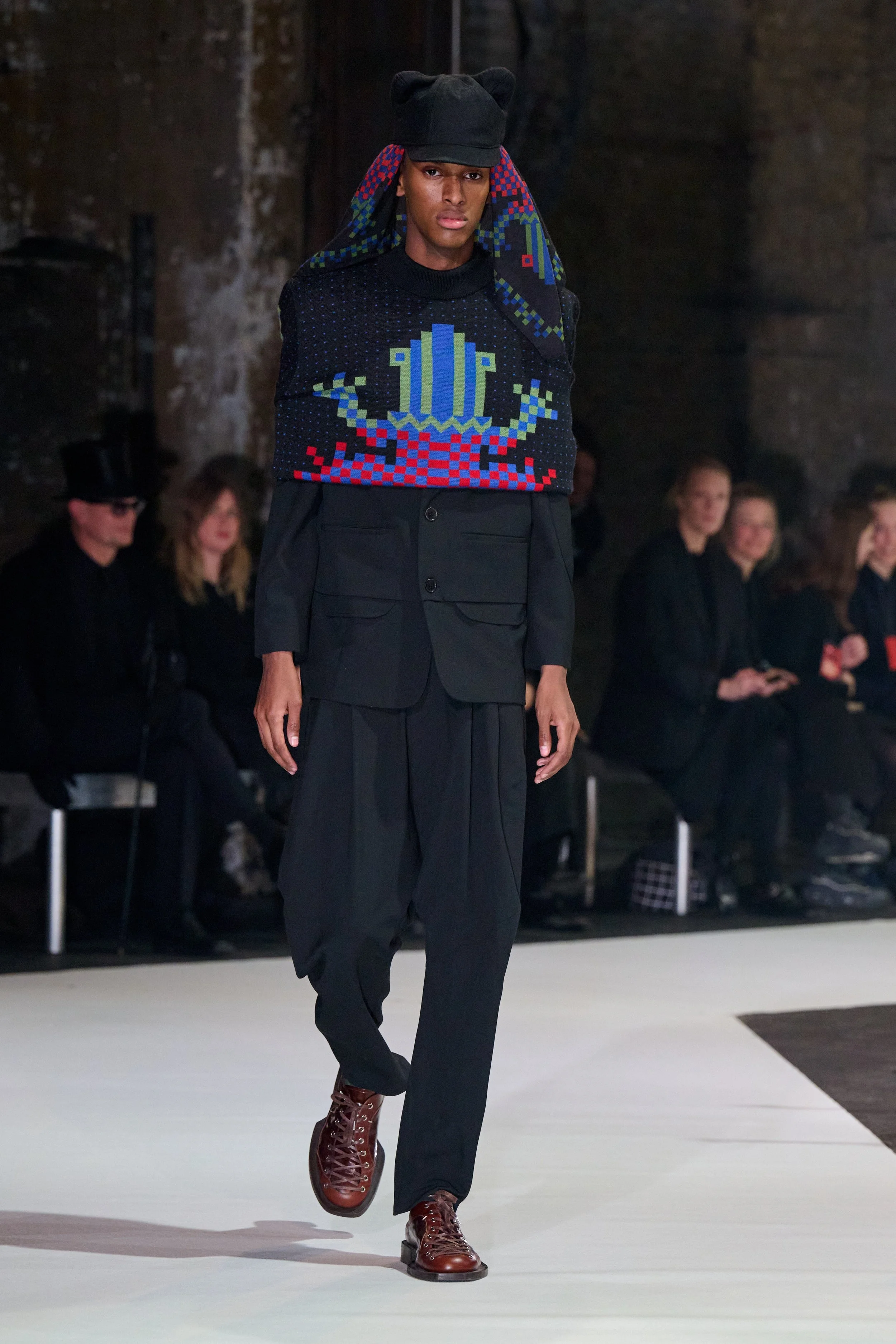
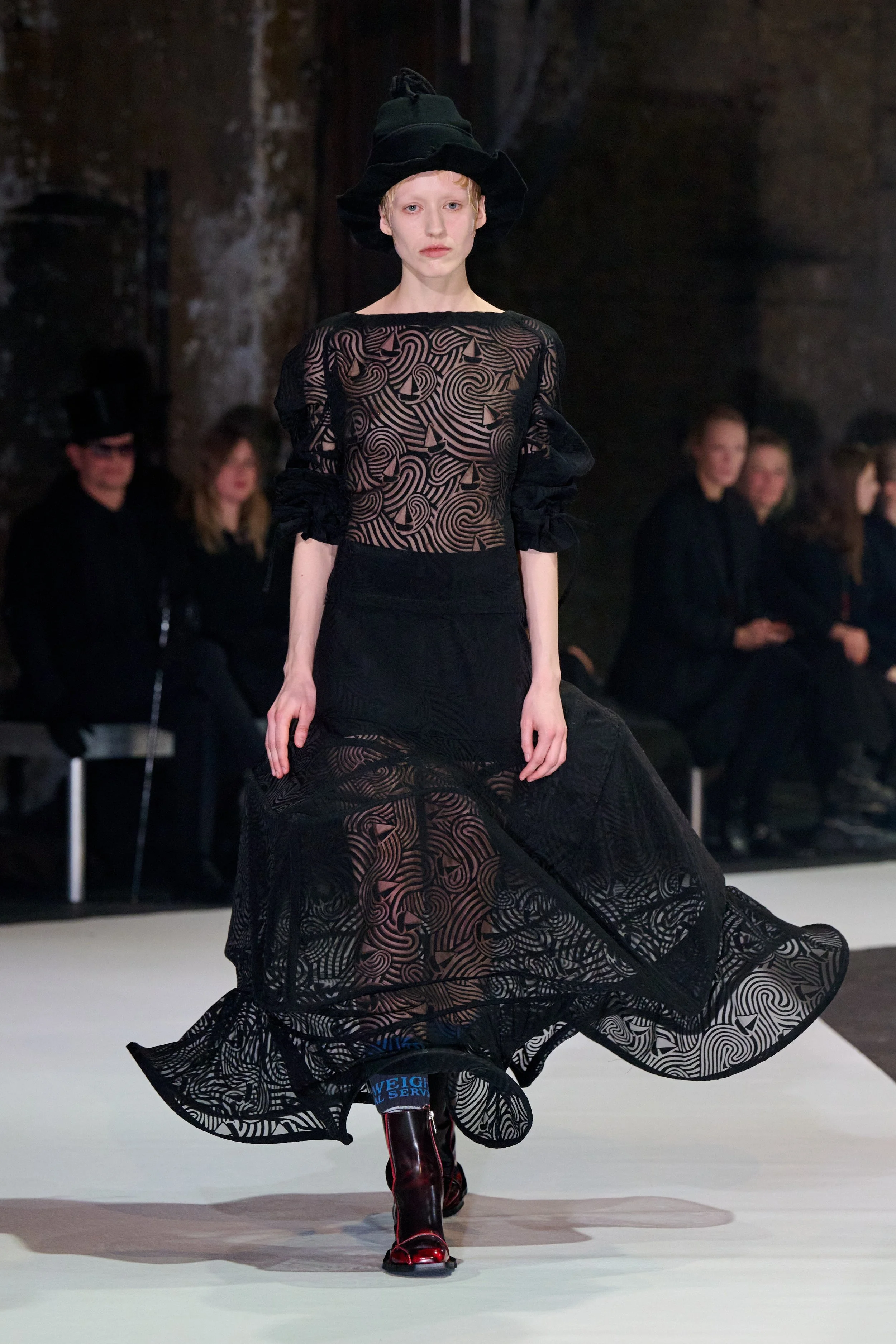
all images courtesy of HENRIK VIBSKOV
Henrik Vibskov invited us to be spectators of his FW26 collection at Østre Gasværk Teater, filled with 900 guests. The moment I laid eyes on the pamphlet and read the title, “Frog Carry Frog”, I thought to myself: “Typical Henrik.” The show began with a behind-the-scenes glimpse: through the see-through curtains, we could see Henrik’s studio designers in white coats helping the performers settle in the middle of the stage. They all wore the same uniform and carried ladders. As the first model stepped in, the performance truly began. The models moved to different rhythms, forward, backward, performing what Henrik later described backstage as “ladder fitness”. Confusion filled the room, but after all, how can fashion tell a new story if it doesn’t challenge us? Right backstage, I had to ask him: “Why?” He explained that the collection was inspired by one of his recent journeys to a small Danish island, where he saw beautiful fire-bellied toads (I had to Google them too), which sparked reflections on our current world, the film Magnolia, and social structures.
Some models paused their walks to collect orange bins, continuing unbothered, while others lifted them from the ladder wells, reducing the performers’ workload. “Some frogs carry each other,” Henrik told me backstage. “Perhaps it reflects the political moment we live in, and reminds us how we must care for, help, and lift each other together.”
The devil was in the details: layered outfits featuring mycelium-inspired patterns and etched toad-skin textures, tailored suits informed by frog faces, eyes, and webbed feet. Every piece hinted at metamorphosis. Through human lenses, Henrik reminded us that victory is only meaningful when shared, with those who help, carry, support, and collaborate, challenging today’s individualistic, capitalistic mindset. Hierarchy is cancelled in this ritual of loading and unloading society’s weight. And as soon as Henrik came out together with all his colleagues and gave his last bow, the message was crystal clear: we can carry much more together than we ever could alone.
BAUM UND PFERDGARTEN
review by ELIANA CASA

all images courtesy of BAUM UND PFERDGARTEN
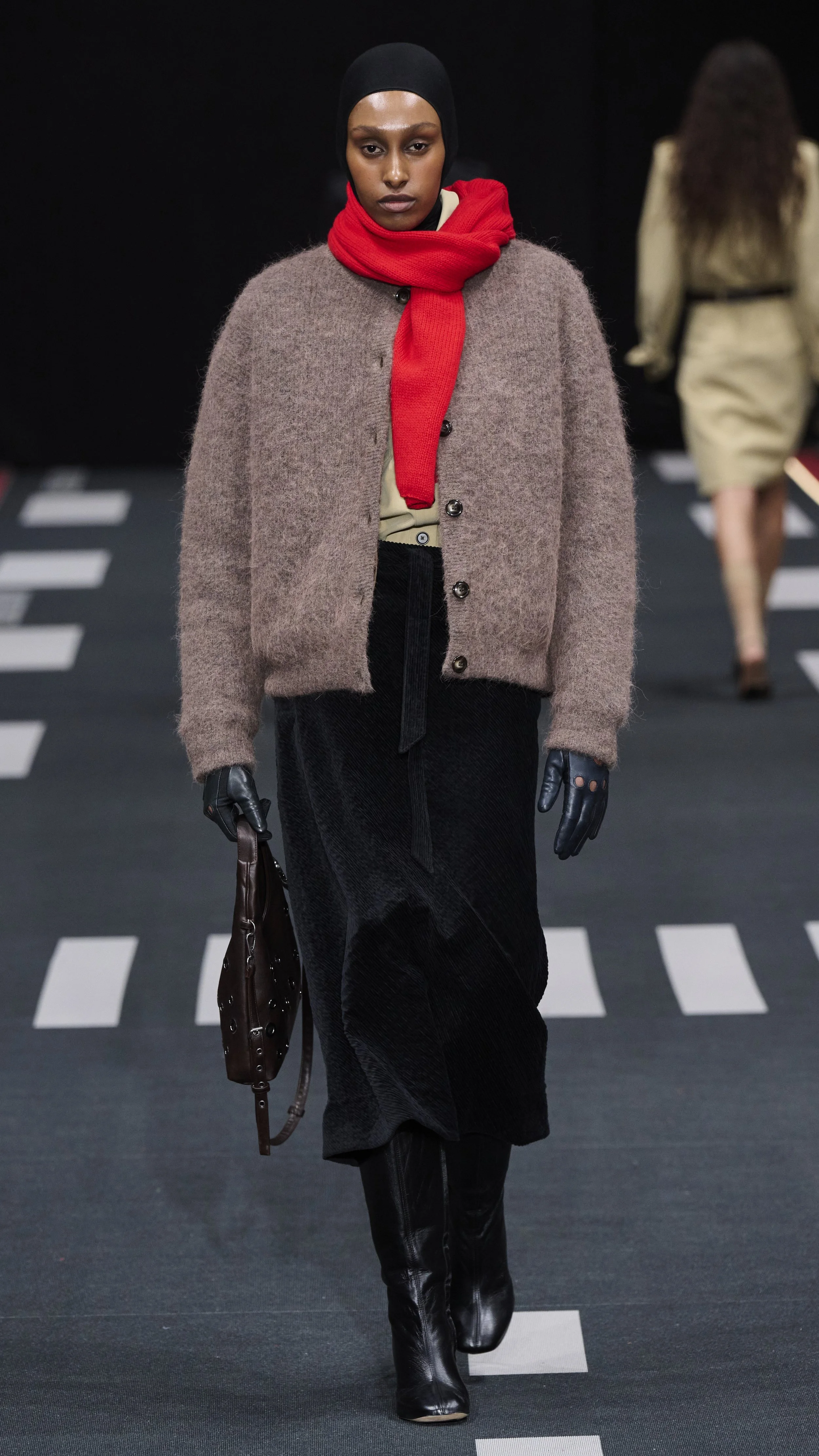
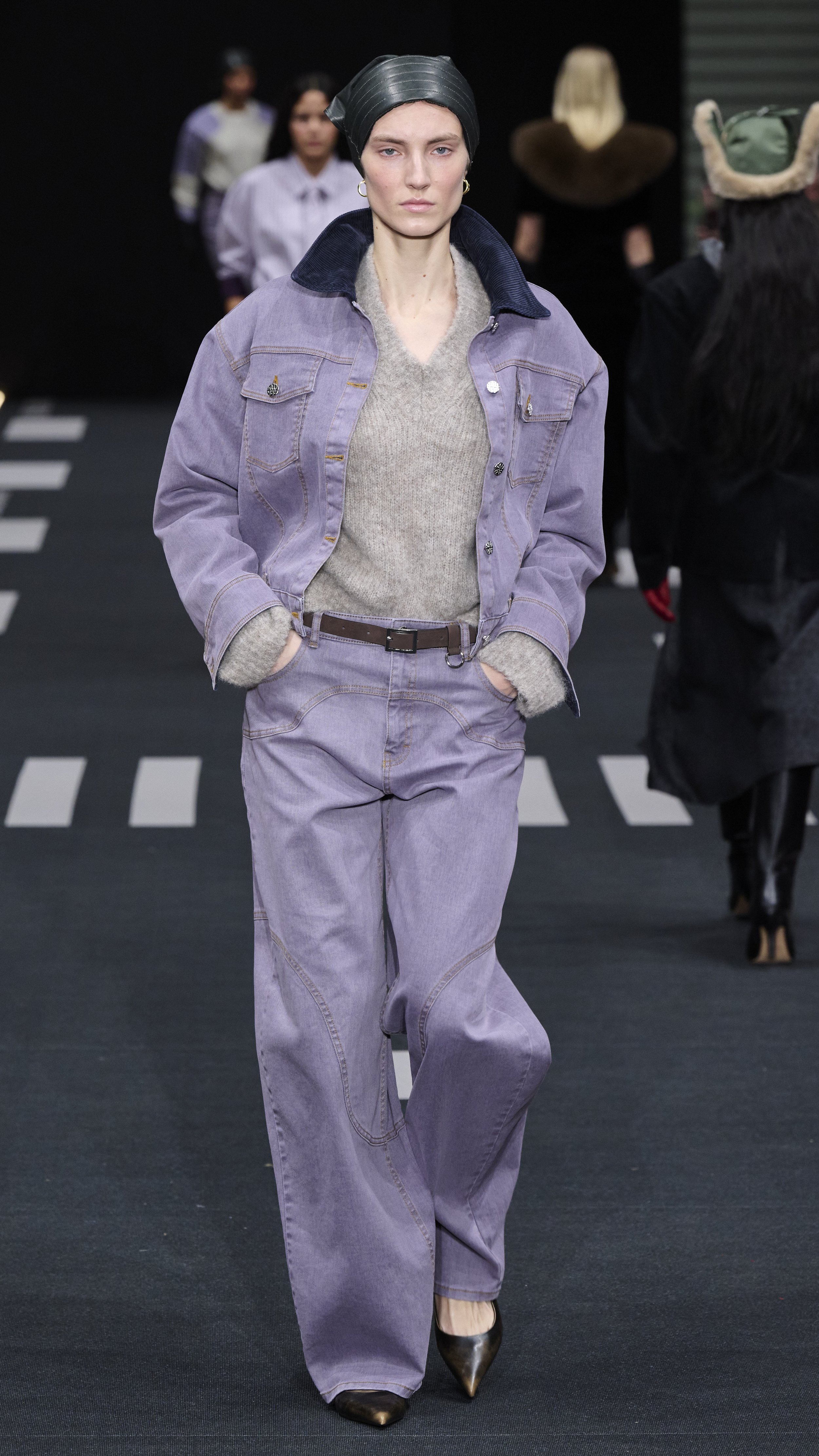
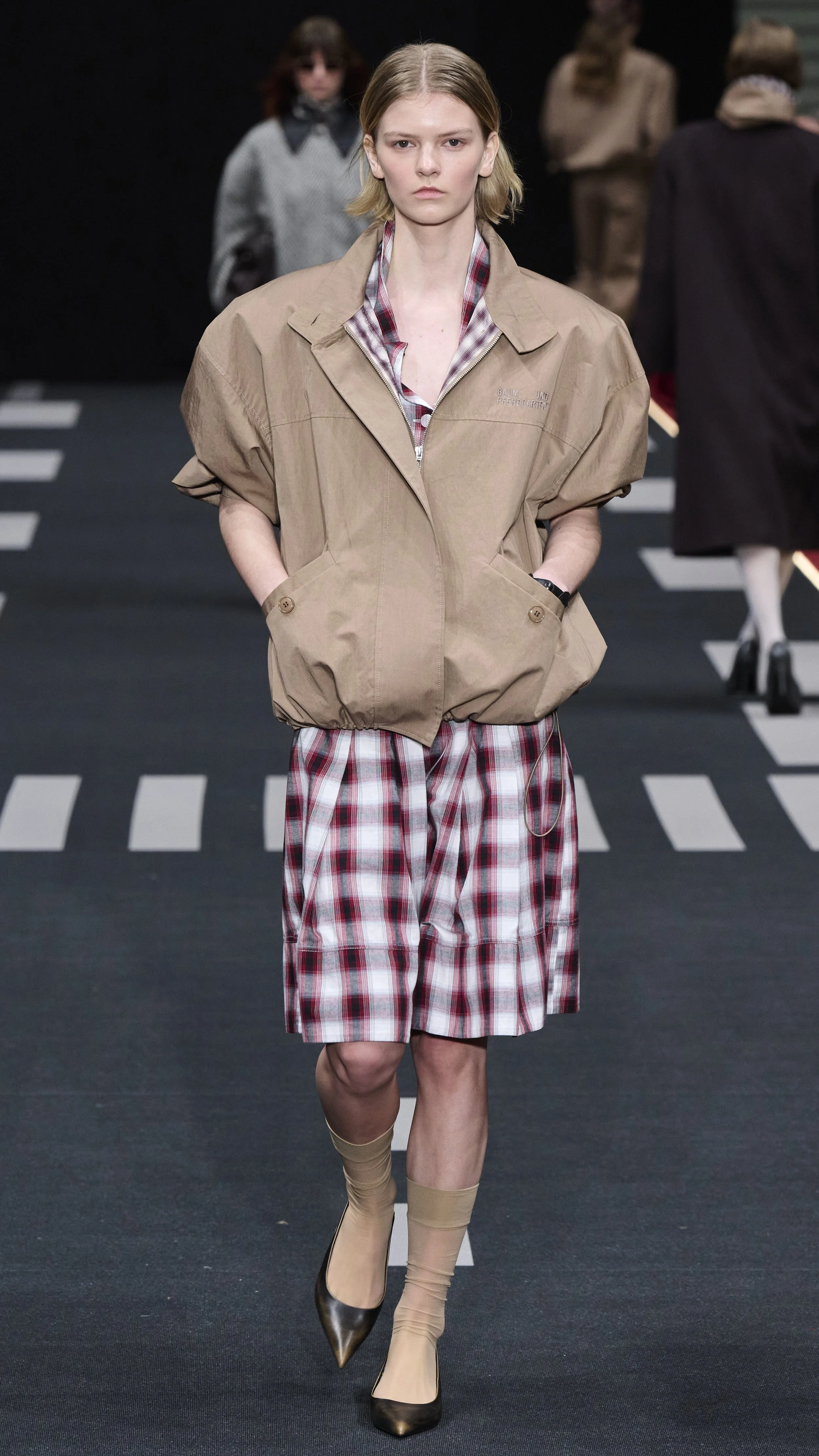
Some muses quietly shape entire generations, almost unnoticed, without ever receiving the spotlight they deserve. In the case of Baum und Pferdgarten, pioneering aviator Amelia Earhart became the starting point of the FW26 collection, “Airborne”, drawing inspiration from her wardrobe — a woman who moved effortlessly between worlds in her Lockheed Electra 10E. To amplify the historical reference, the show opened with a performance by the Sankt Annæ Music Academy girls’ choir, and as the voices amplified, the first model appeared on a real landing-strip runway. Wearing a leather set complete with an aviator jacket with a fur collar and matching trousers, the tone was set for the rest of the collection.
The looks were deeply layered with mechanical workwear references, forming a new Baum und Pferdgarten aviation uniform that suggested functionality and protection, contrasted by softer velvet dresses, scarves styled on bags or worn around the neck, fur pieces and floral elements. Distressed leather and rigid denim formed the foundation of the collection, while a light-brown fur coat with leather detailing stole the scene entirely. Designers Rikke Baumgarten and Helle Hestehave transported us back in time for an evening, yet the collection felt more modern than ever — honouring one of the many women in history who fought for a seat at the table, or in this case, attempted to become the first woman to circumnavigate the world.
AIAYU
review by MARIA MOTA
all images courtesy of AIAYU
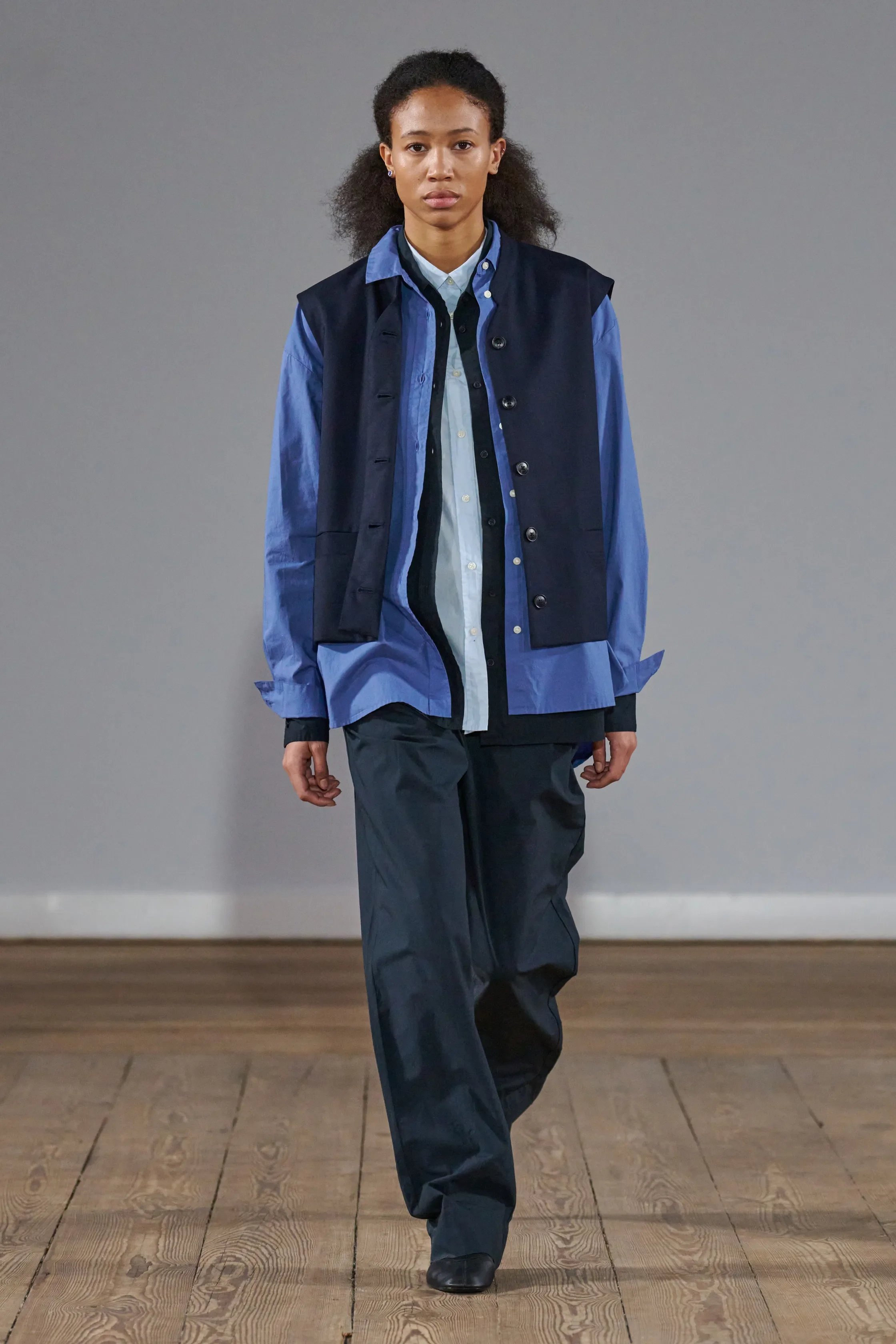
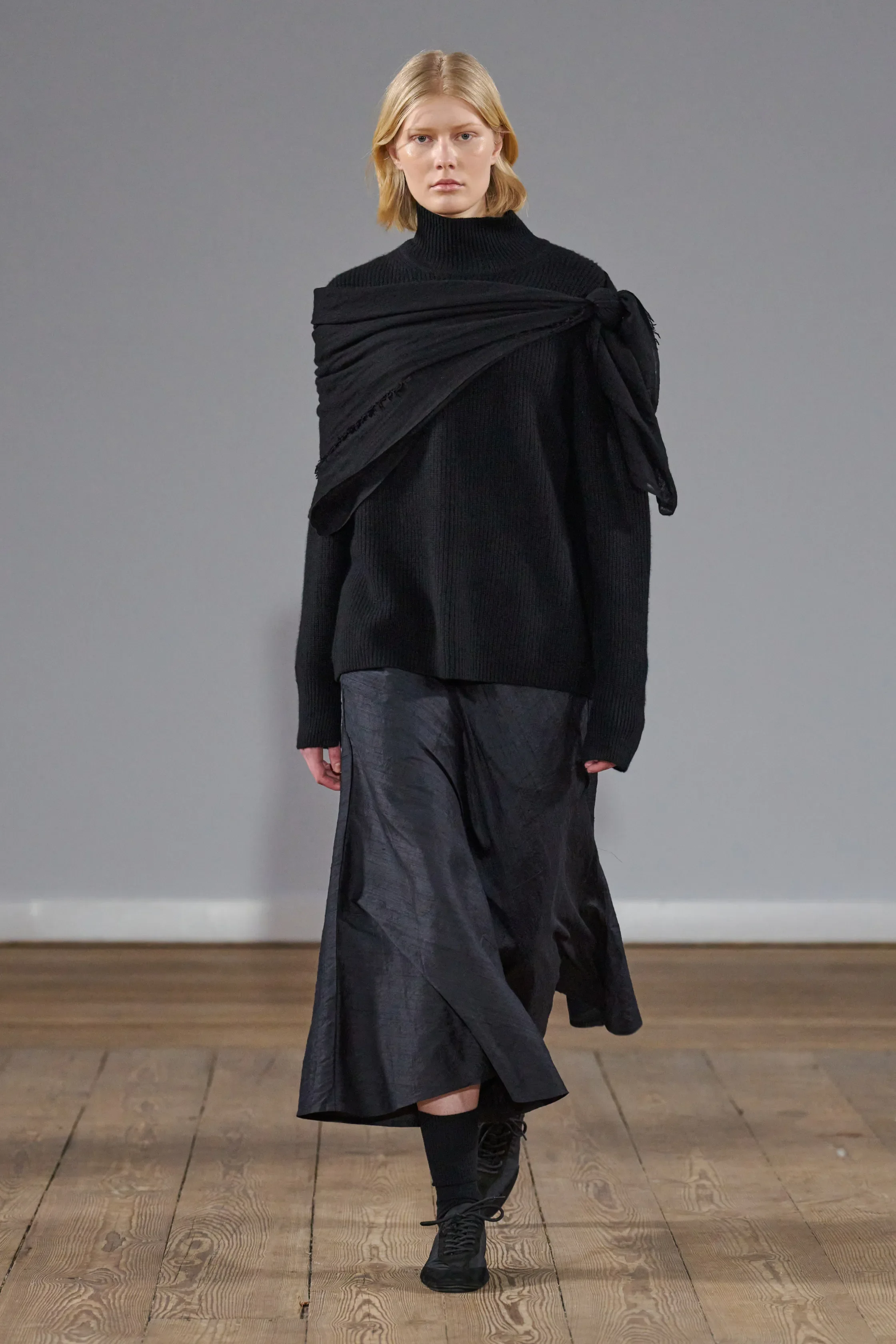
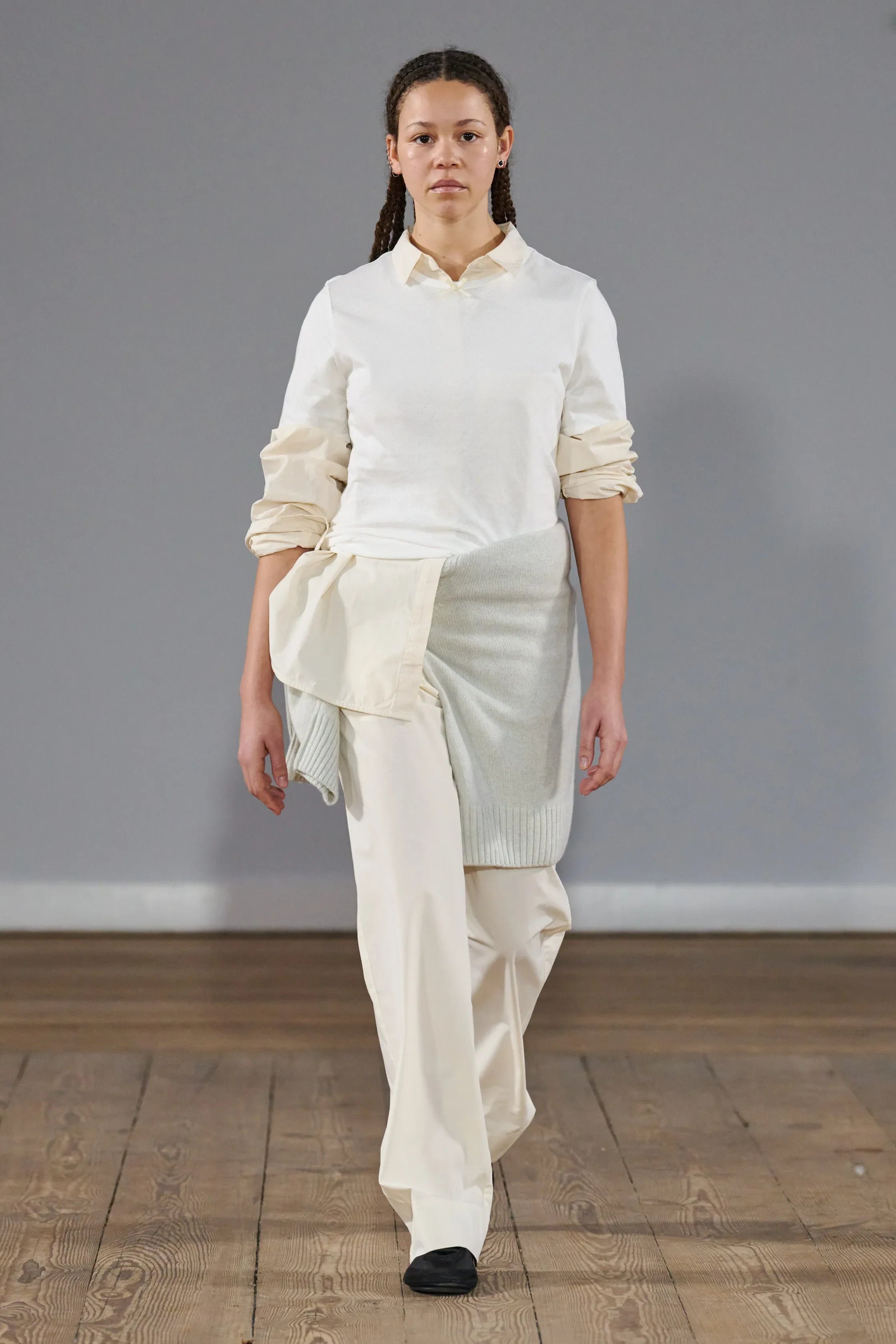
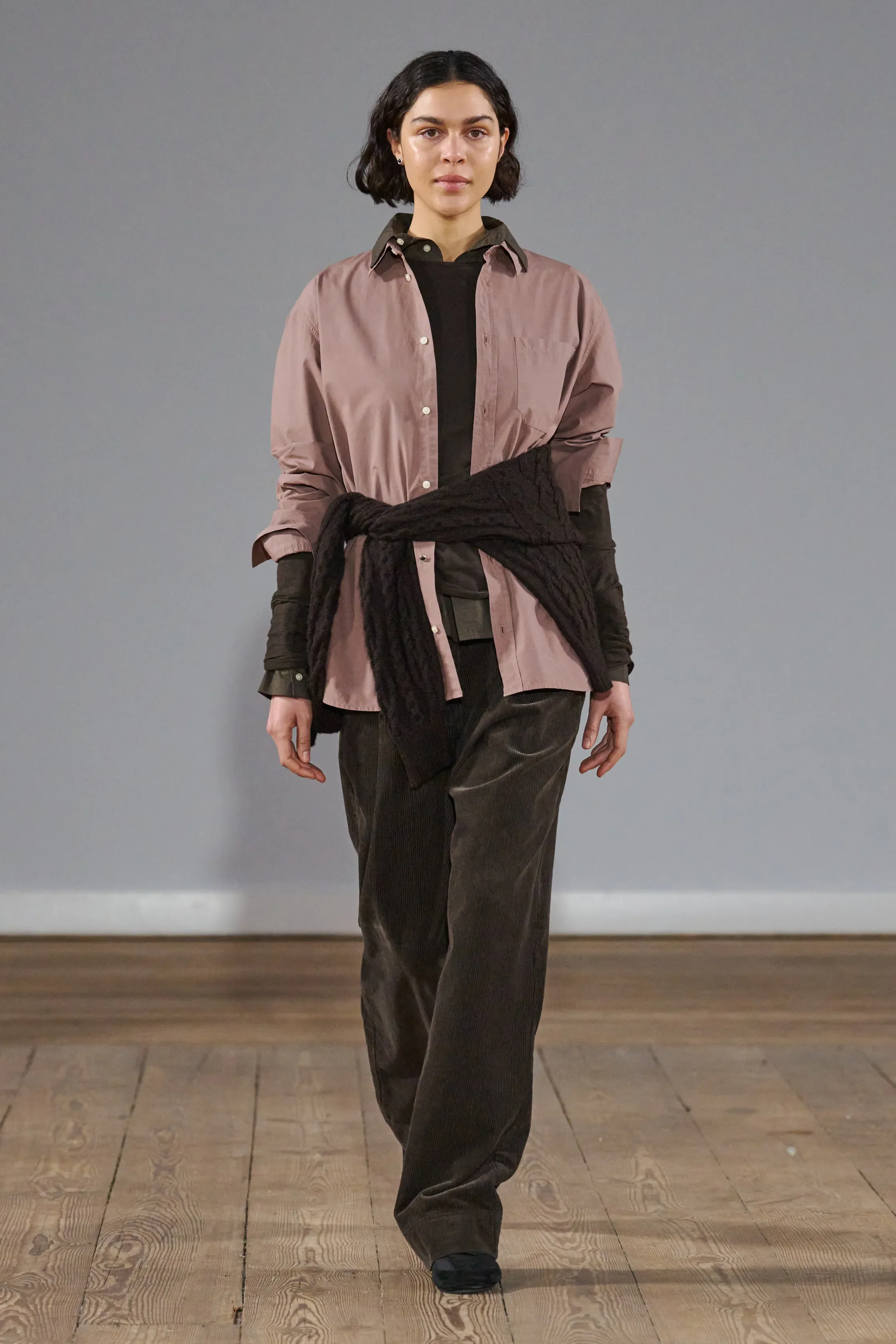
Aiayu’s Fall/Winter 2026 collection, “Between One and Many,” explored the space between individuality and togetherness. Models moved through a flowing formation in natural colour transitions that blurred one look into the next, creating a cohesive palette that emphasised unity without erasing each piece’s character. Layering and movement were central, as familiar silhouettes returned in new combinations, reflecting Maria Høgh Heilmann’s philosophy of design as a continuous dialogue season after season, rather than separate collections. Timeless shapes, considered materials, and the textures and tones of nature remained at the foundation of aiayu.
A standout element was the collaboration with Copenhagen-based jewelry brand Corali. Signature buttons, handcrafted from recycled sterling silver, were treated as miniature works of jewelry integrated into garments. Caroline Vogel, founder of Corali, shared: “What began as a shared curiosity about the button as an object evolved through a mutual respect for materials and craftsmanship into a small series of truly special pieces.” These buttons not only added a precious detail to the pieces but were designed to move from one piece to another over time, reinforcing Aiayu’s focus on longevity, adaptability, and thoughtful design.
RAVE REVIEW
review by MAREK BARTEK
all images courtesy of RAVE REVIEW
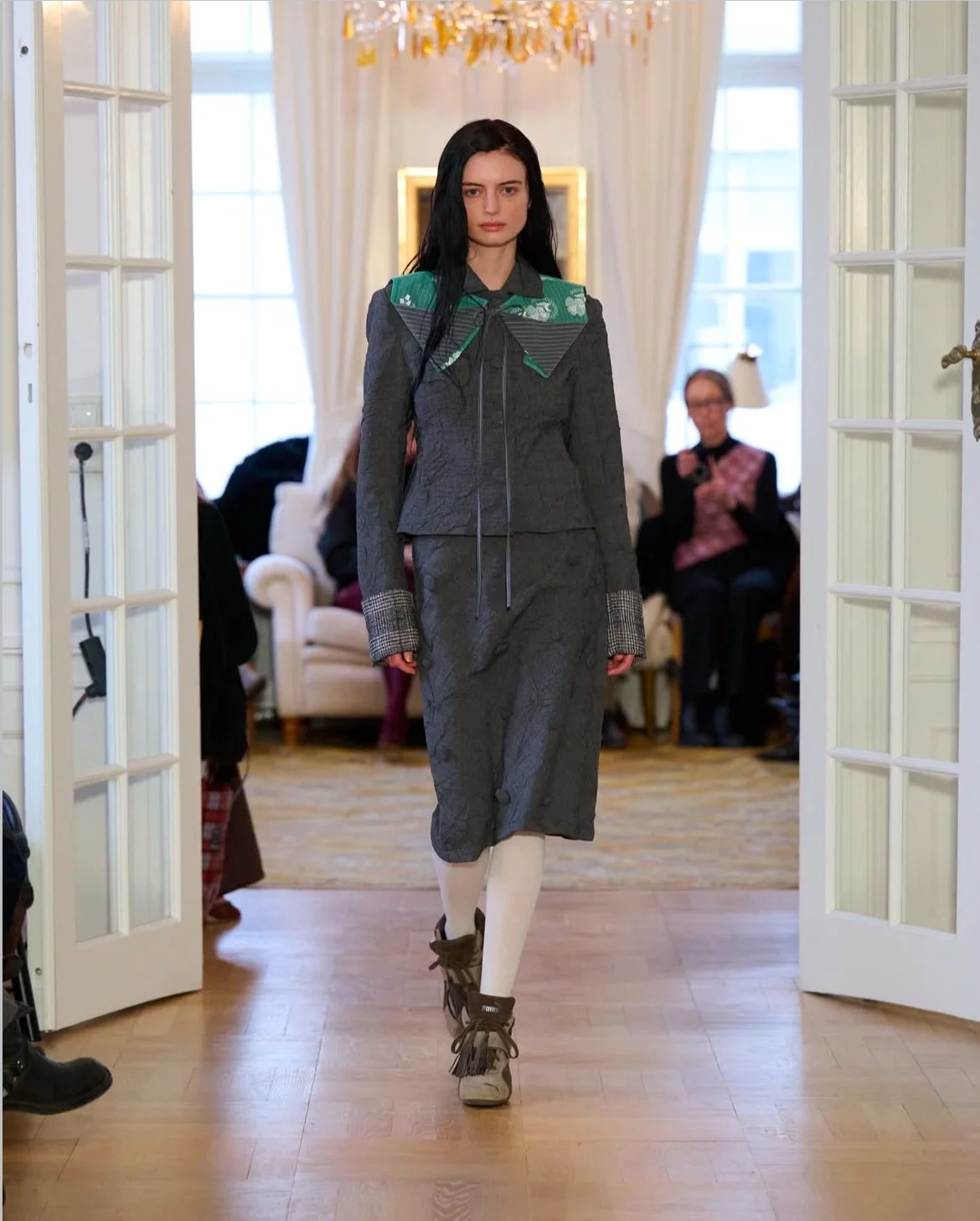
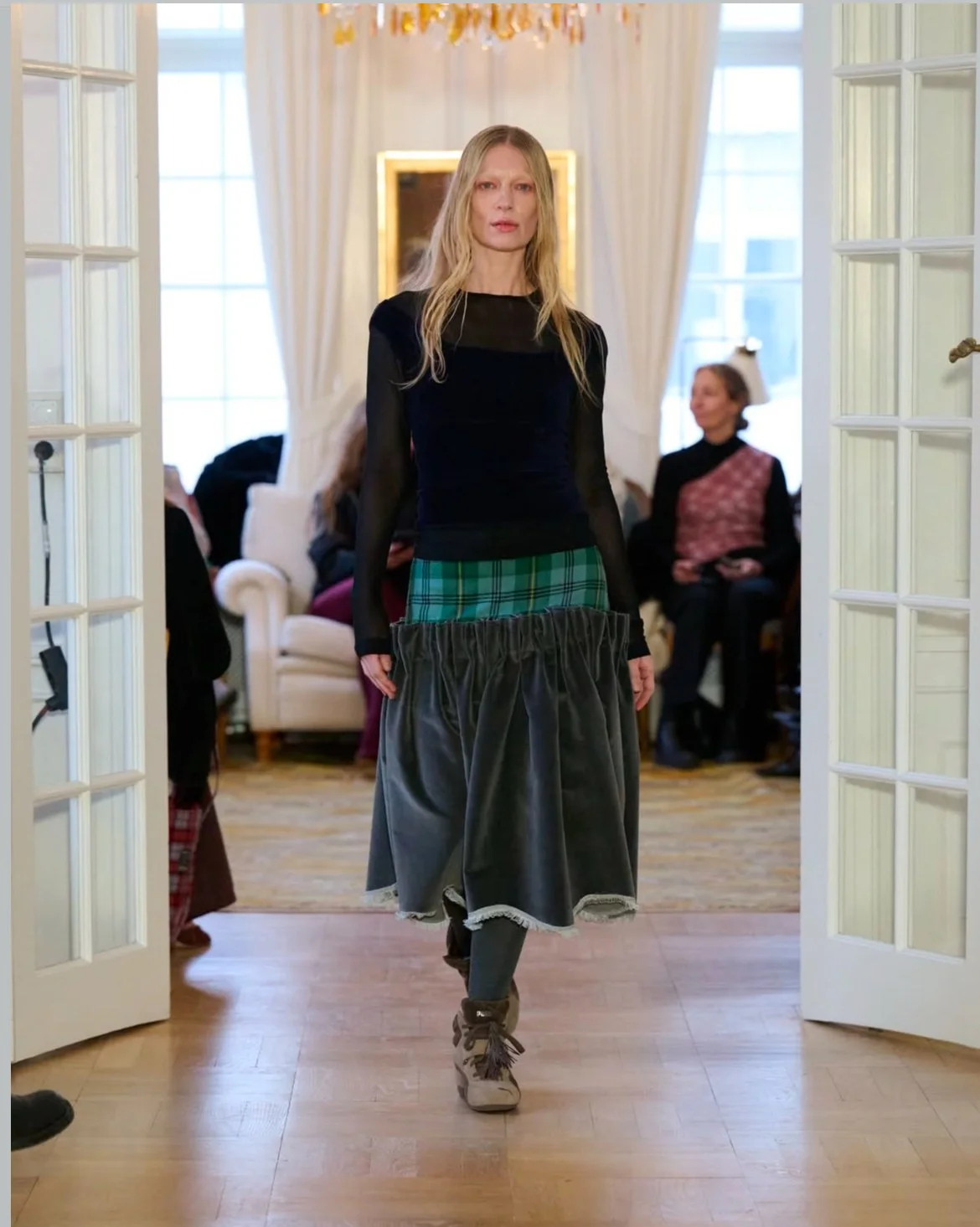
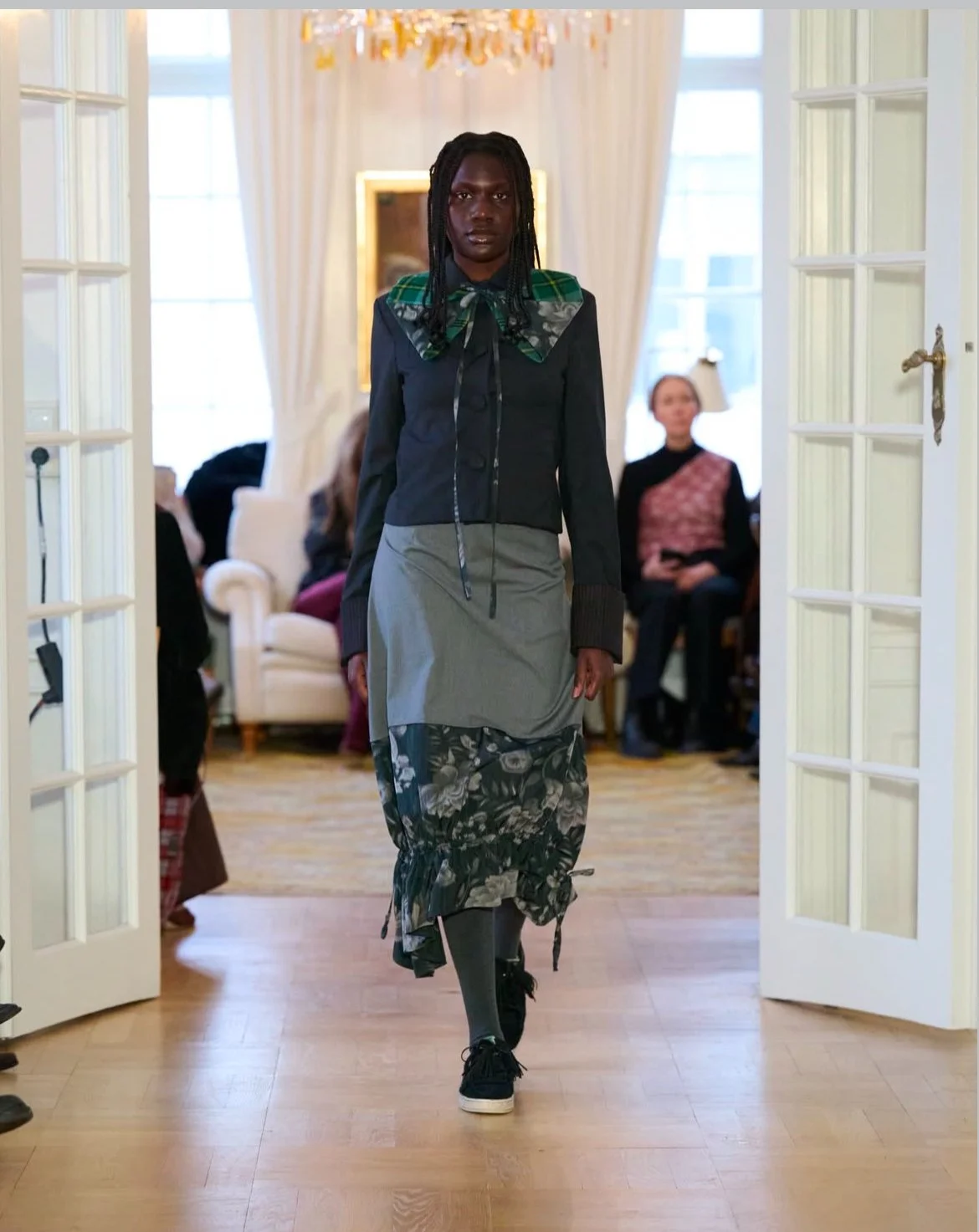
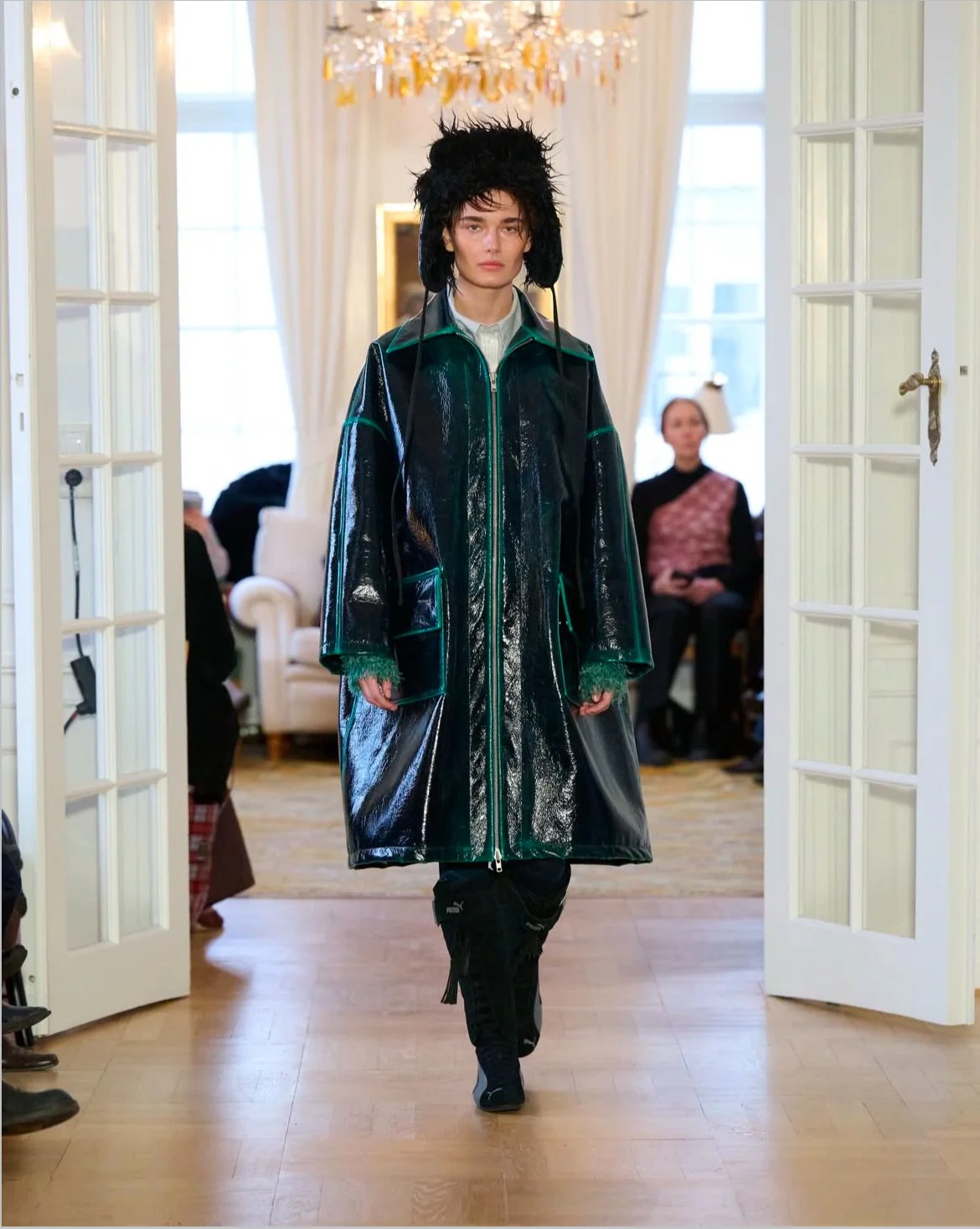
At the Swedish Embassy in Copenhagen, Rave Review delivered its strongest collection to date. Designed by Josephine Bergqvist and Livia Schück, the Autumn/Winter 2026 show marked a clear moment of arrival — playful in reference, but remarkably mature in execution.
Titled Child Play, the collection explored childhood – but not as nostalgia. “We were playing with the idea of the child’s way of seeing the world,” Schück explained, an approach that translated into freedom rather than just pure naïveté. Scale felt slightly off, proportions intentionally exaggerated, and garments designed to adapt to the body. Oversized collars, adjustable waistlines, long sleeves meant to be folded, and abundance of buttons that allowed silhouettes to shift reinforced the idea of clothing as something lived in and interactive.
A skirt suit opened the show, setting the tone of structure for the collection, while knitwear, tailored pieces, and reworked classics brought in the lightness. Interiors remained central to the brand’s language, but here they felt fully animated. Upholstery fabrics, tufted details, piped seams, and lampshade-like skirts brought domestic materials onto the body with confidence.
Presented in collaboration with PUMA, the show was imaginative without excess, and emotional without sentimentality. A great allegory of a brand growing up without losing its sense of play.
NAZZAL STUDIO
review by ELIANA CASA
all images courtesy of NAZZAL STUDIO
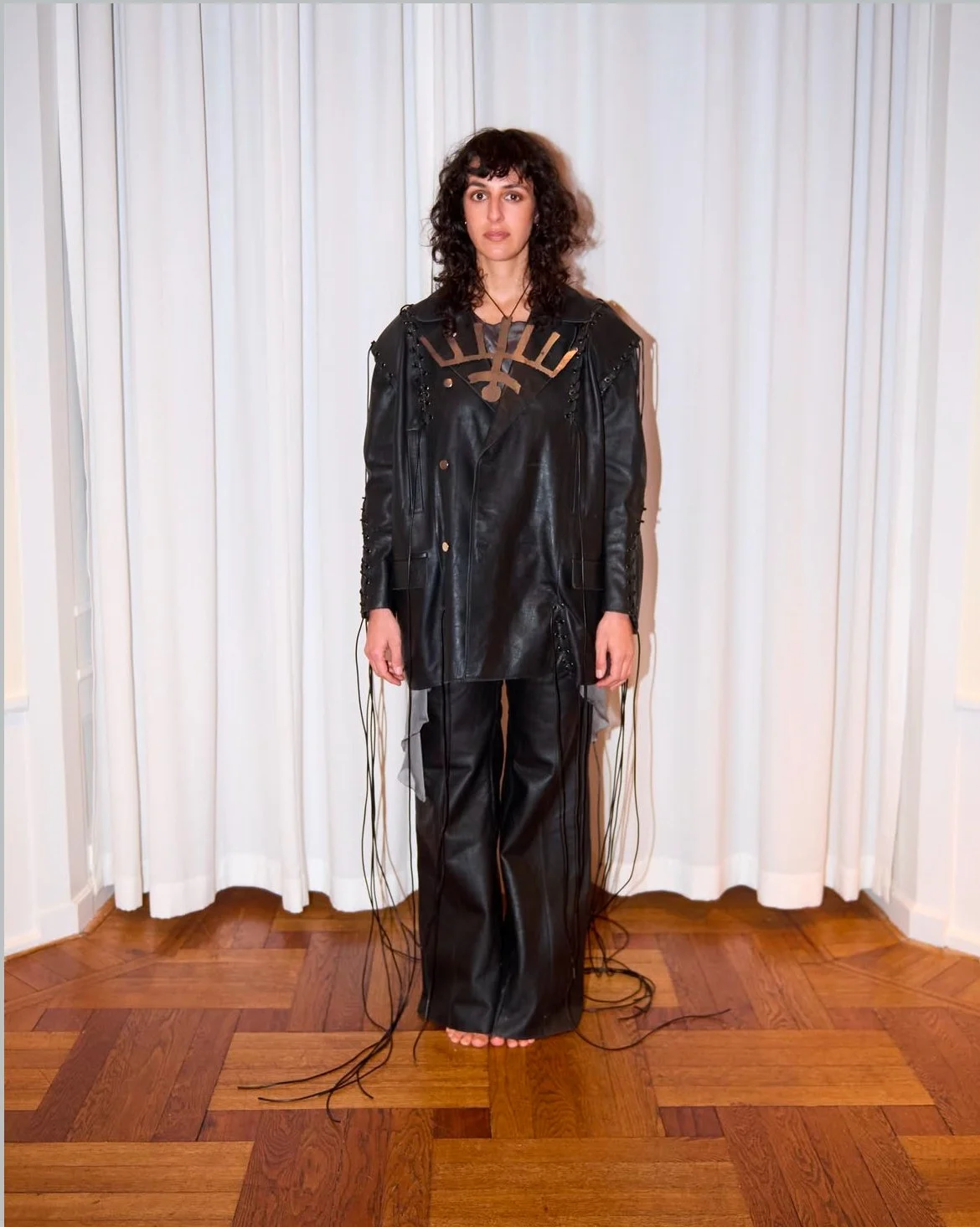
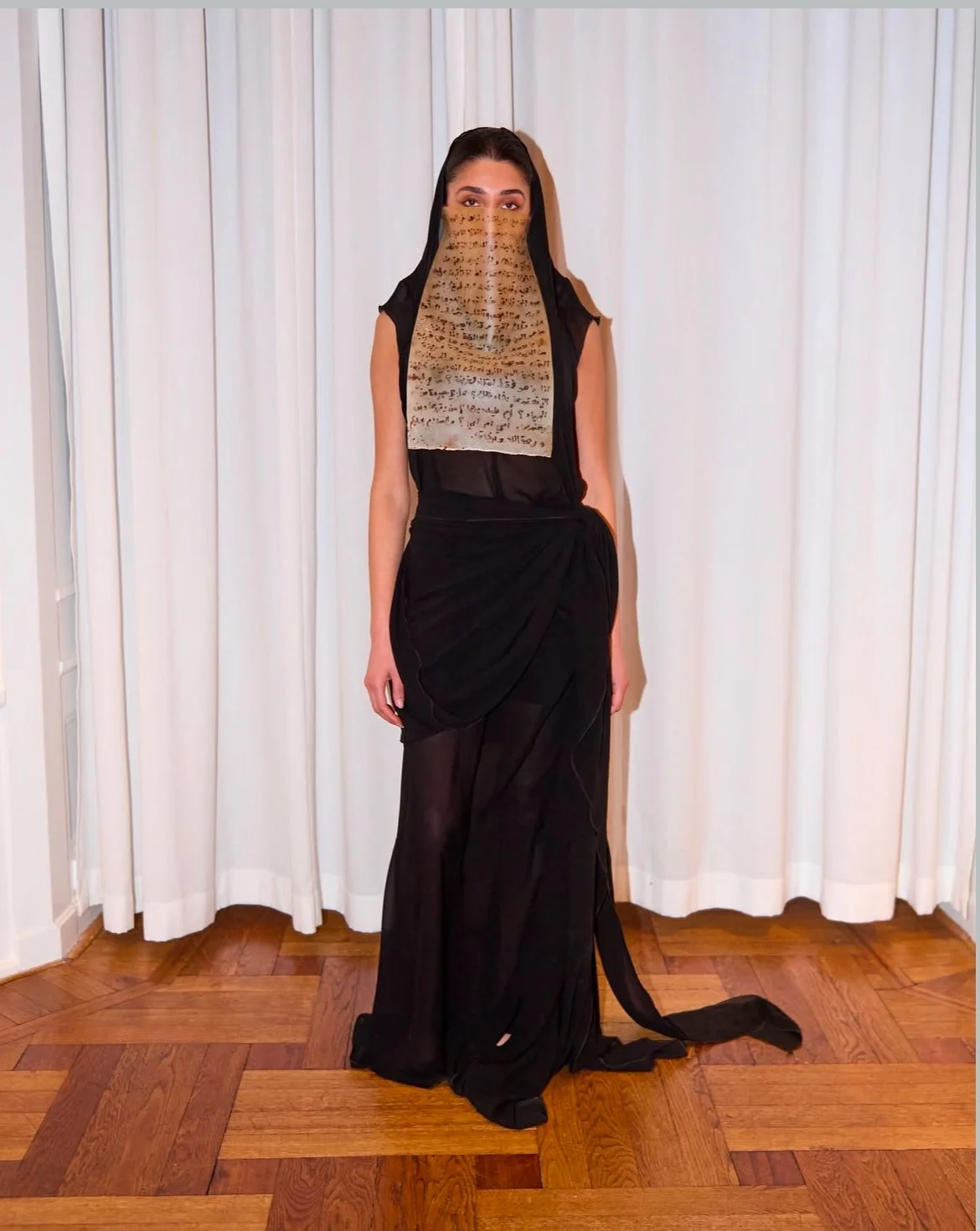
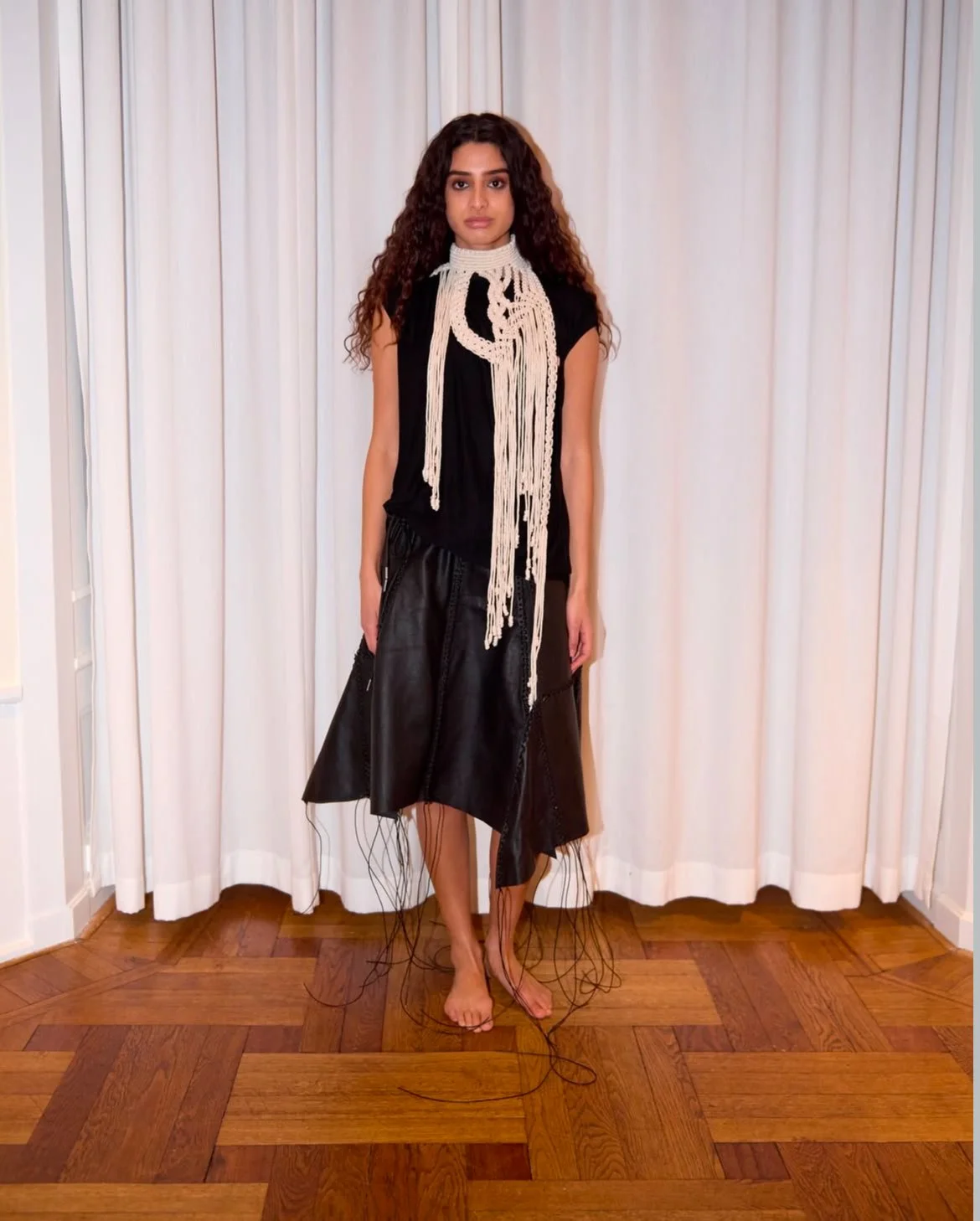
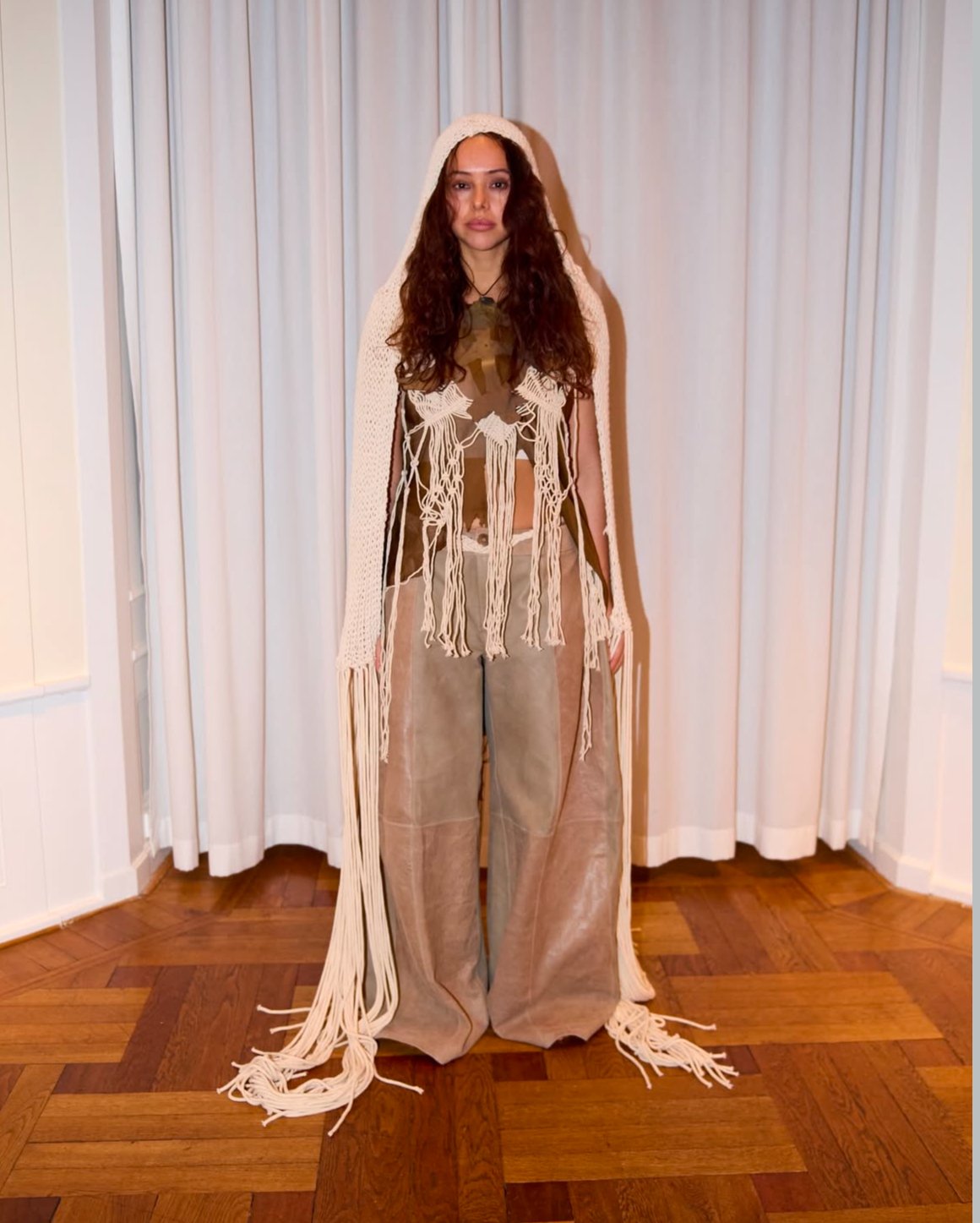
Fresh out of her university years, Palestinian designer Sylwia Nazzal, founder of Nazzal Studio, proved to be a welcome, and much-needed, addition to the official Copenhagen Fashion Week schedule. The FTA Franca Sozzani Debut Talent Winner 2024, and the first Palestinian brand ever to show on these runways, carried that significance with quiet elegance throughout the entire presentation. Crafted in collaboration with artist Jad Maq, “Al-Najah | il”, meaning Survival, posed an essential question: “When you’re stripped away from city life, what’s left? What instincts remain within us?”.
The collection explored the spirituality of Bedouin heritage, a study of how communities survived and created life in one of the driest landscapes on earth. As the models emerged, Bedouin henna tattoos appeared on natural latex, an extremely complex and time-consuming process, Sylwia explained. The collection stripped back to essentials, echoing the instinctive and raw wisdom of Bedouin culture. Textures and silhouettes suggested utility, while Palestinian Tatreez motifs surfaced across skirts, keffiyeh veils, and flowing, floor-grazing robes reminiscent of the abaya. With each look, silence settled over the room - a sense of nostalgia emerged, a reminder that survival can be both physical and spiritual. After the show, I asked Sylwia how she felt. With a candid, human smile she replied: “It was so nerve-wracking to showcase for the first time, but I’m grateful I did — I want to share my heritage with as many people as possible.”
NICKLAS SKOVGAARD
review by MARIA MOTA
all images courtesy of NICKLAS SKOVGAARD
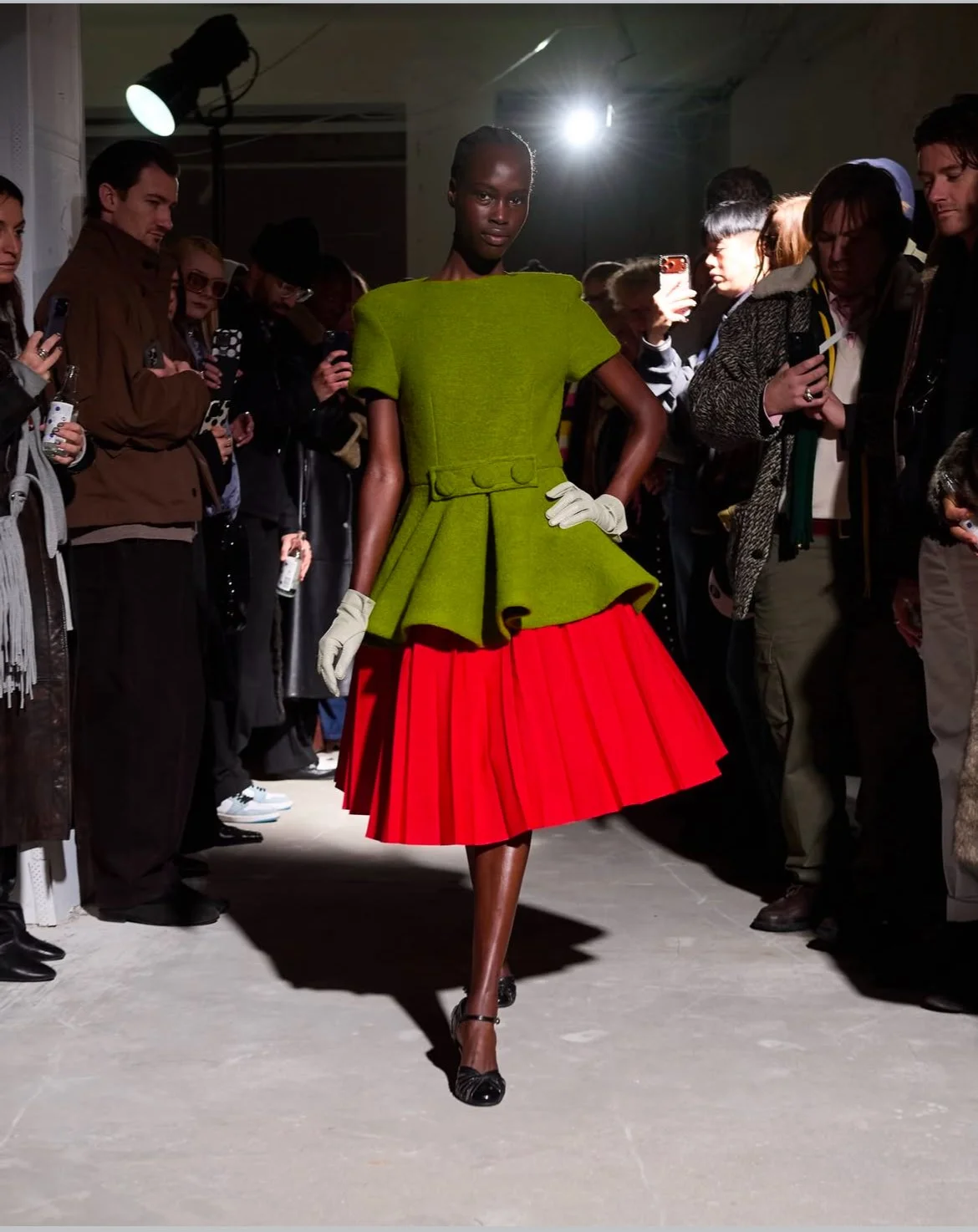
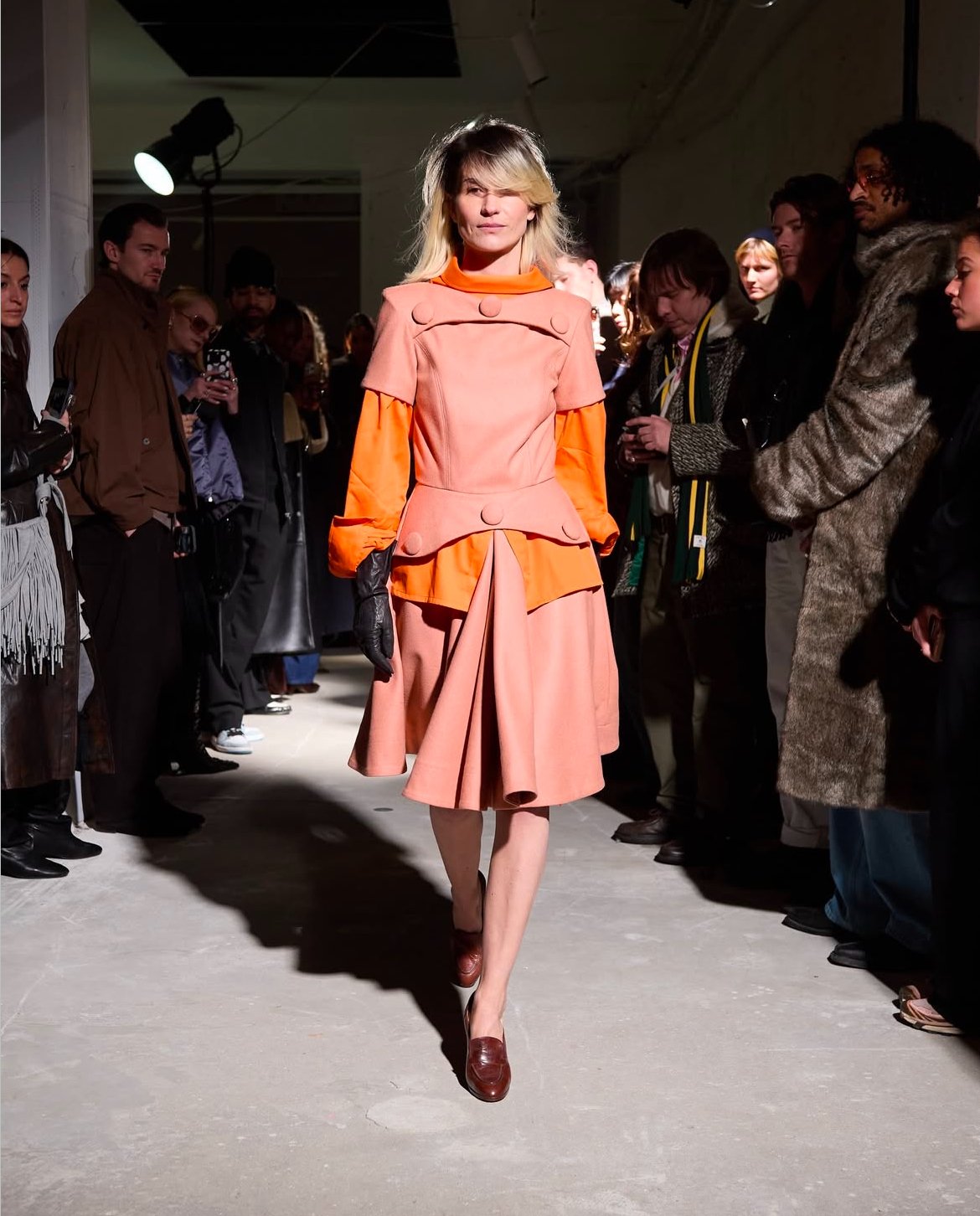
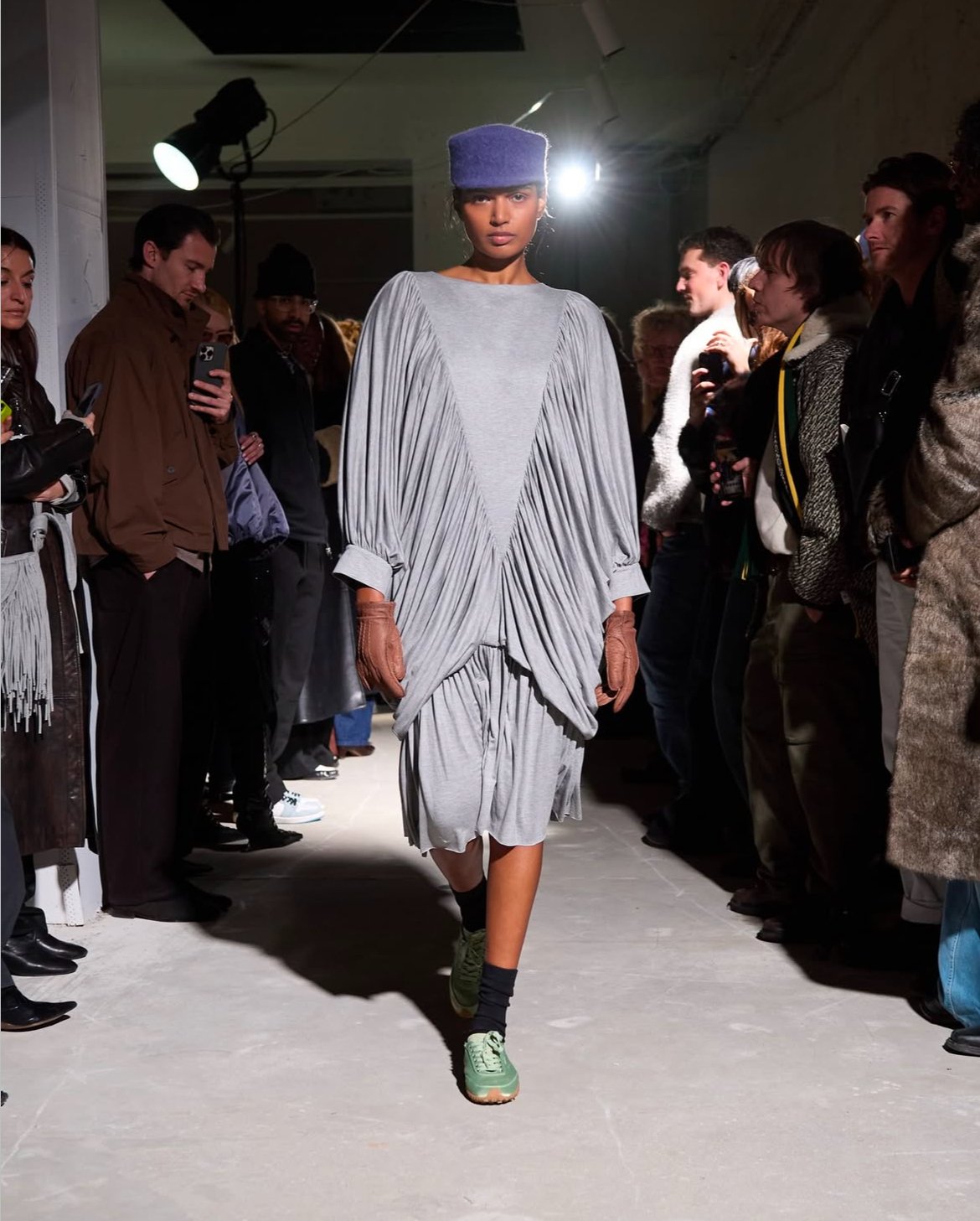
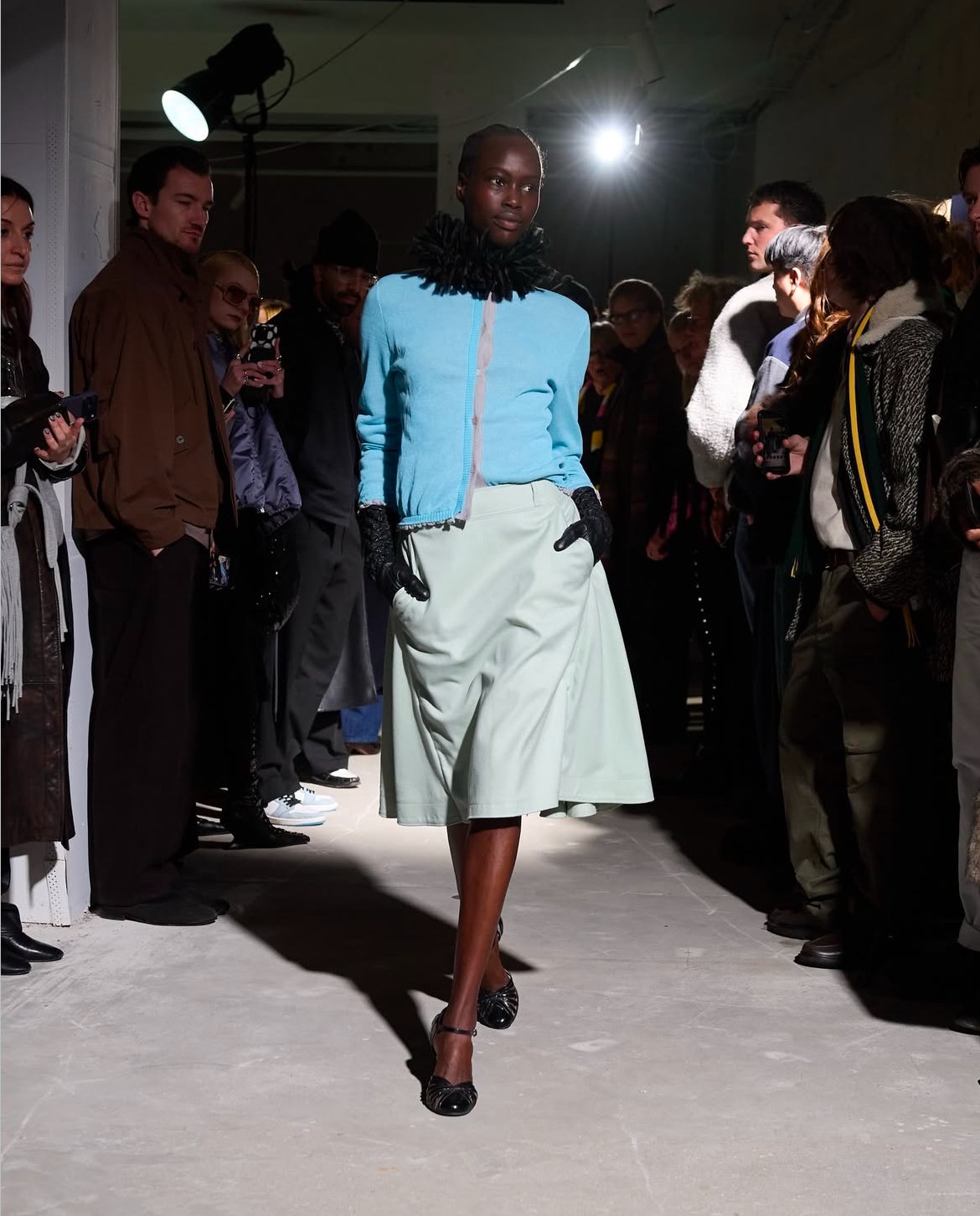
For FW26, Nicklas Skovgaard, sharpens focus. Coming off a year of major milestones, from an LVMH Prize finalist spot to a new atelier, the Danish designer presented a collection rooted in cinema, identity, and evolution. Drawing on the 1937 film Mille, Marie og Mig, Skovgaard explored duality and transformation, using colour, silhouette and styling to examine how clothing can shift between restraint and glamour, fantasy and function. A new collaboration with HOFF brings sneakers into the mix, grounding the collection and reinforcing Skovgaard’s belief that practicality and romance don’t have to cancel each other out. We explored the collection in depth in our interview at the link here.
PAOLINA RUSSO
review by ELIANA CASA
all images courtesy of PAOLINA RUSSO
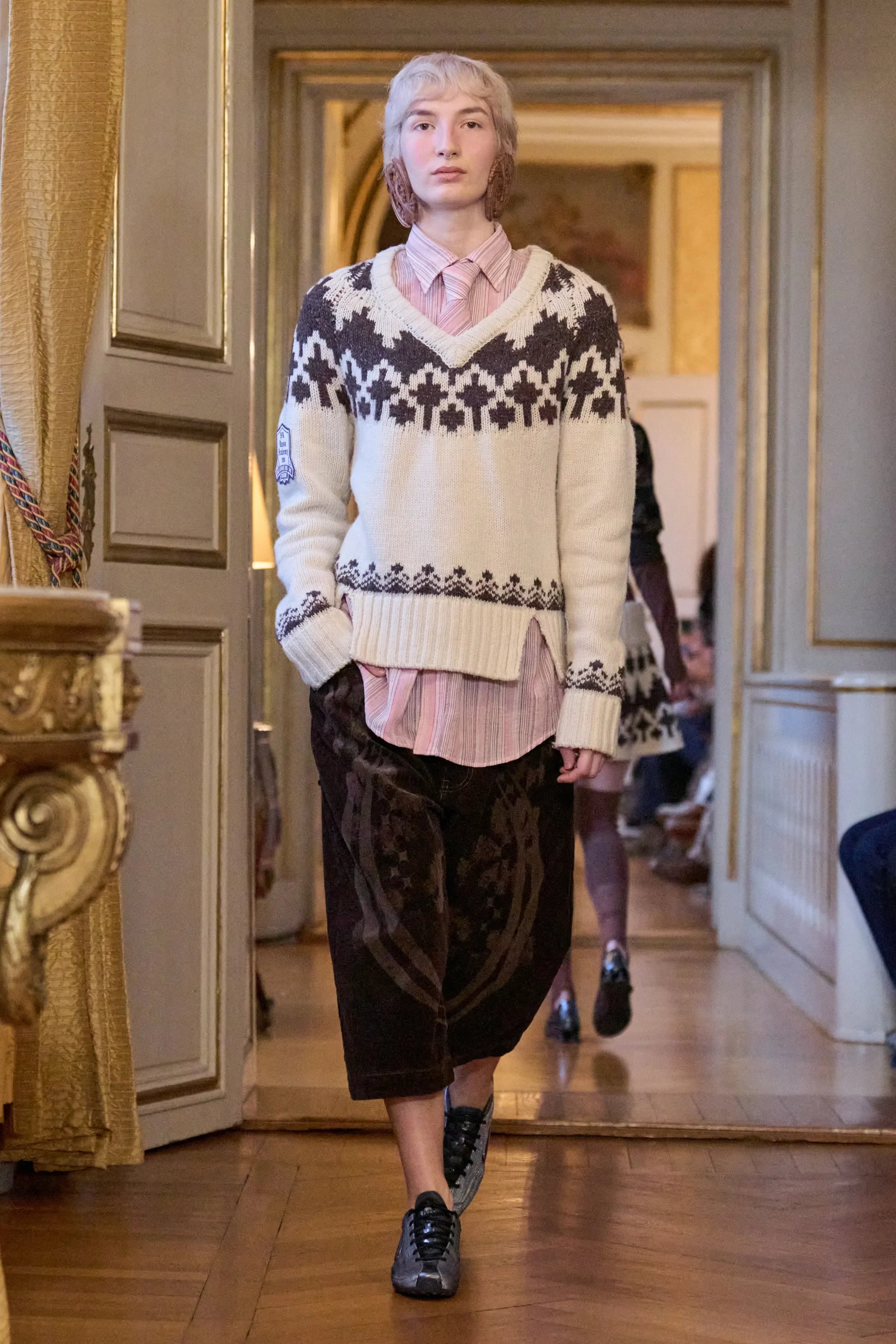
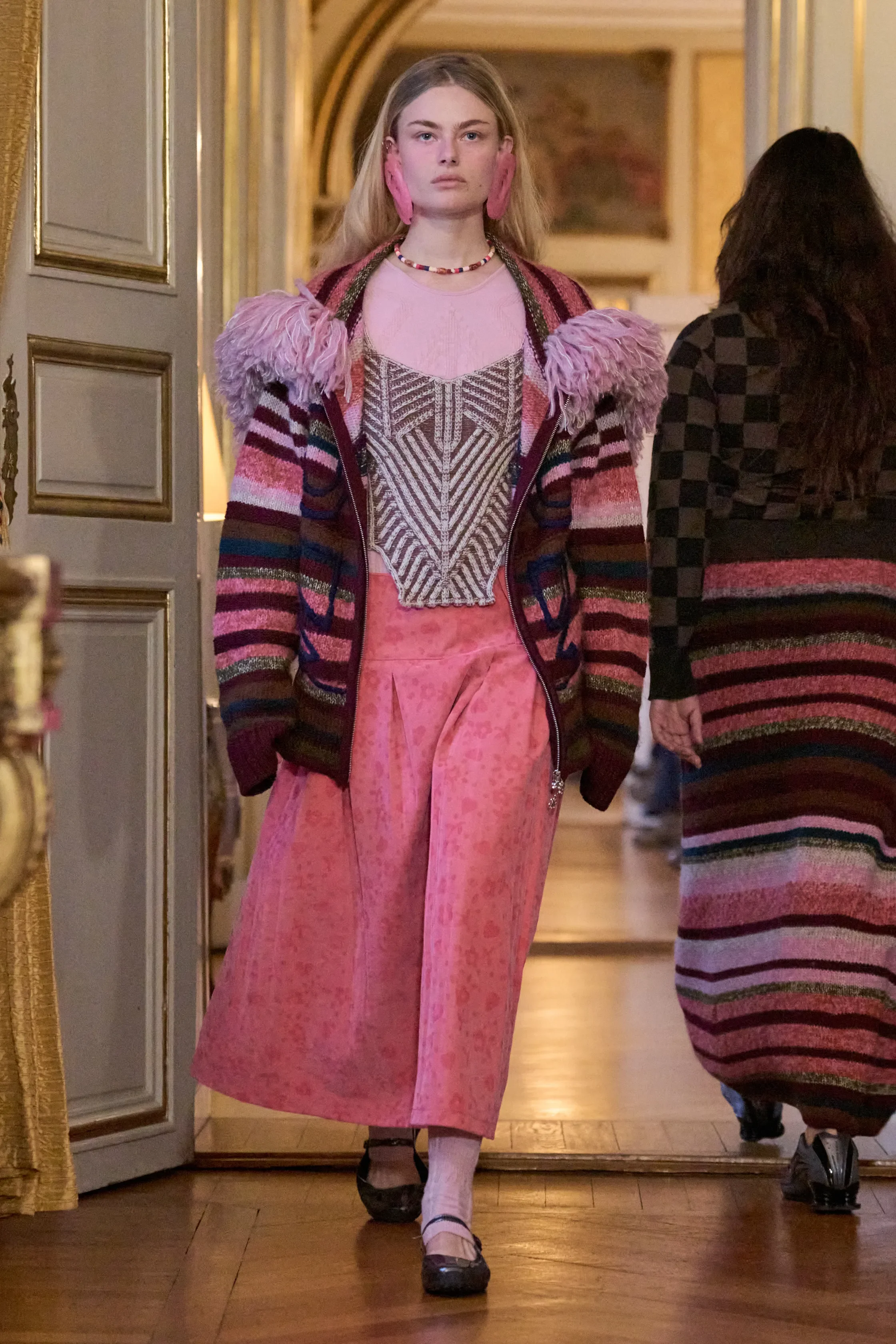
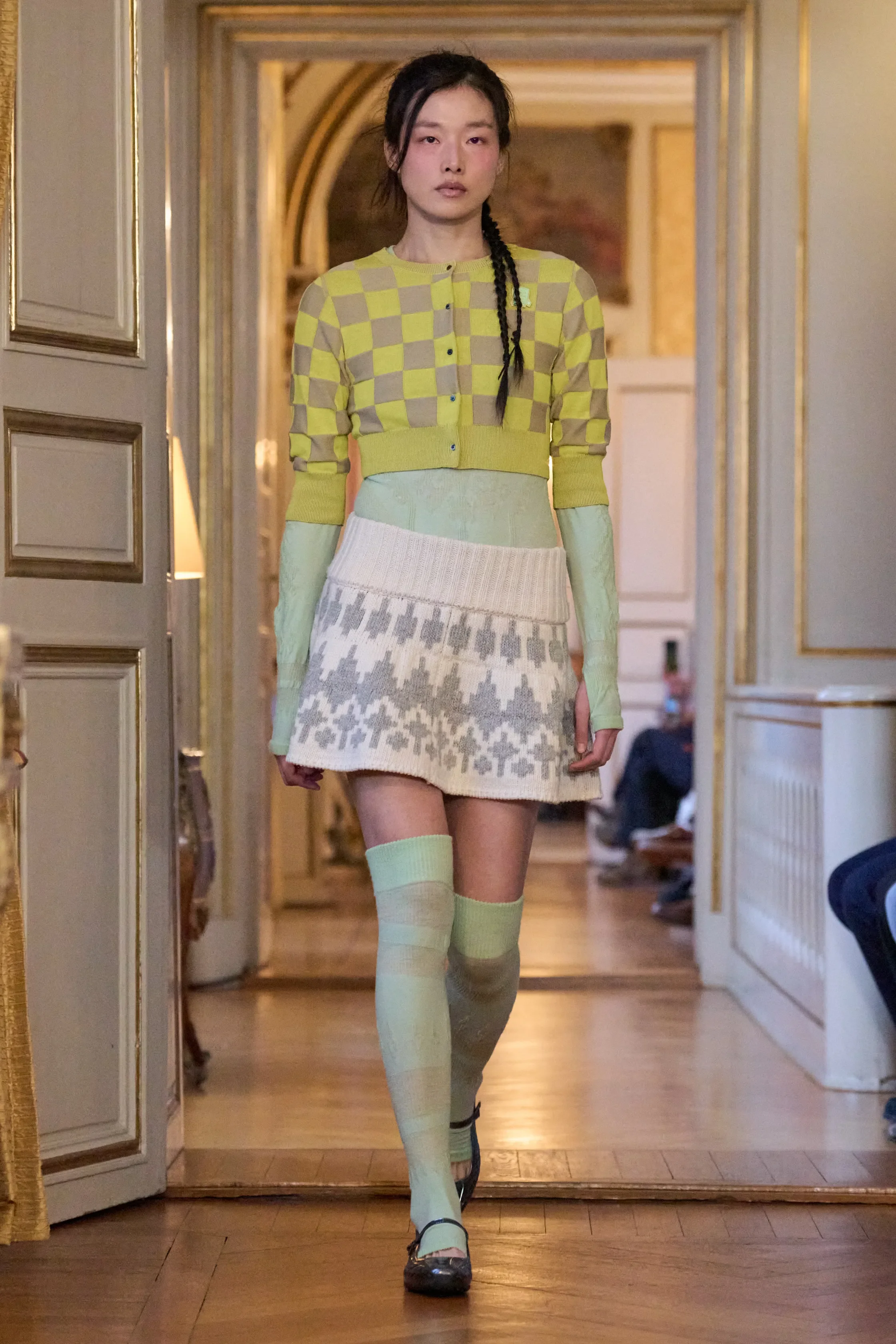
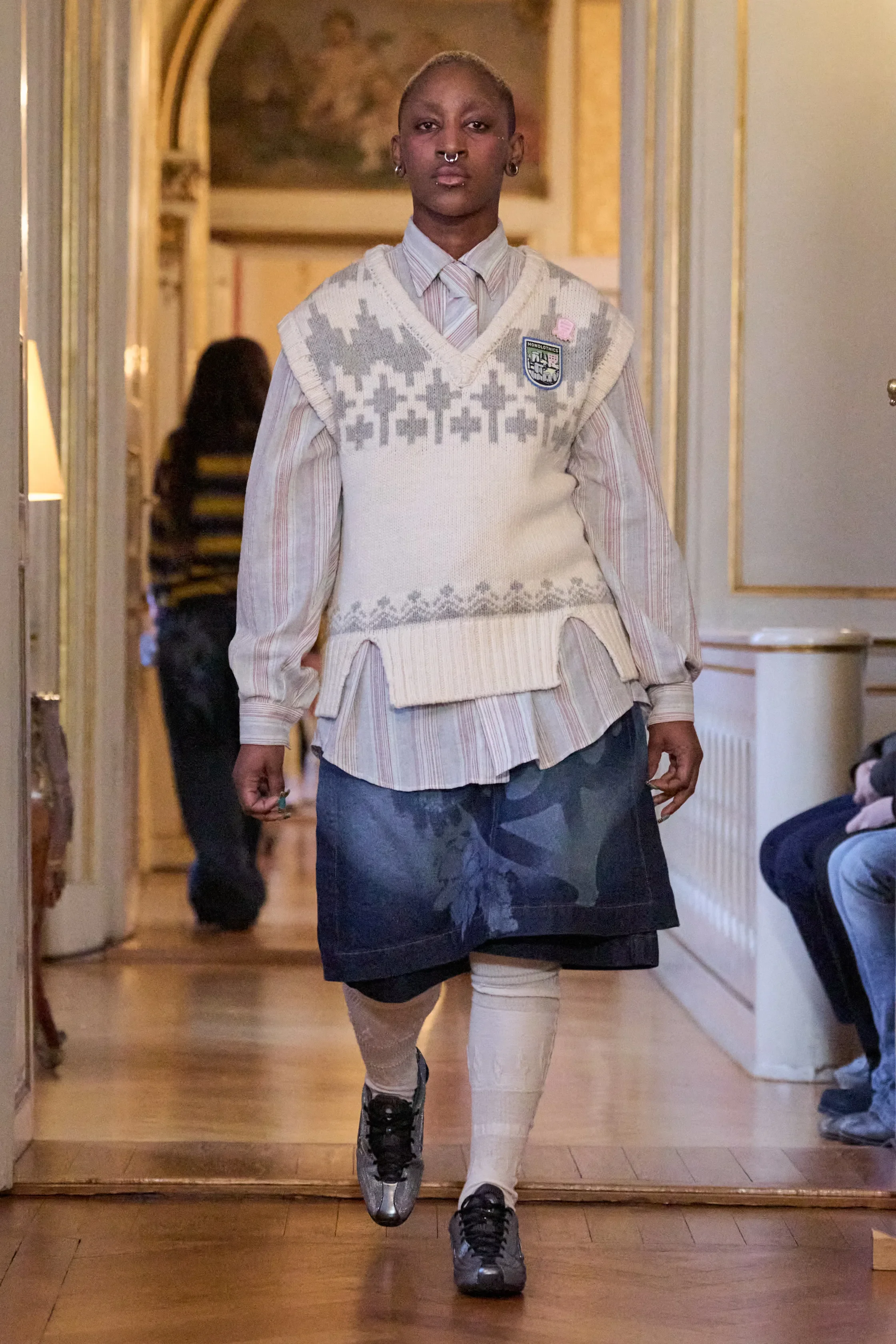
Inside the 17th-century Thott Palace, home to the French Embassy, Paolina Russo traded the scale of the runway for intimacy. Guests moved through gilded baroque rooms for a show that felt more like someone's memory. Then OKLOU began to play: delicate, haunting, and deeply personal. For FW26, Paolina Russo imagines a heroine on her first trip abroad, those years where everything feels like an experiment, and memories are set in stone: bus tickets are kept, napkins folded carefully into pockets, foreign coins treasured for no practical reason. The silhouettes echoed this in-between state. Familiar archetypes: school uniforms, knitwear, outerwear, were reworked with a sense of curiosity rather than nostalgia. Pieces felt collected rather than assembled, as though gathered across different places and moments in time. Against the palace’s historical and traditional weight, the collection captured the fleeting intensity of youth, where you can simply be everything you want.
SUNFLOWER
review by ELIANA CASA
all images courtesy of SUNFLOWER
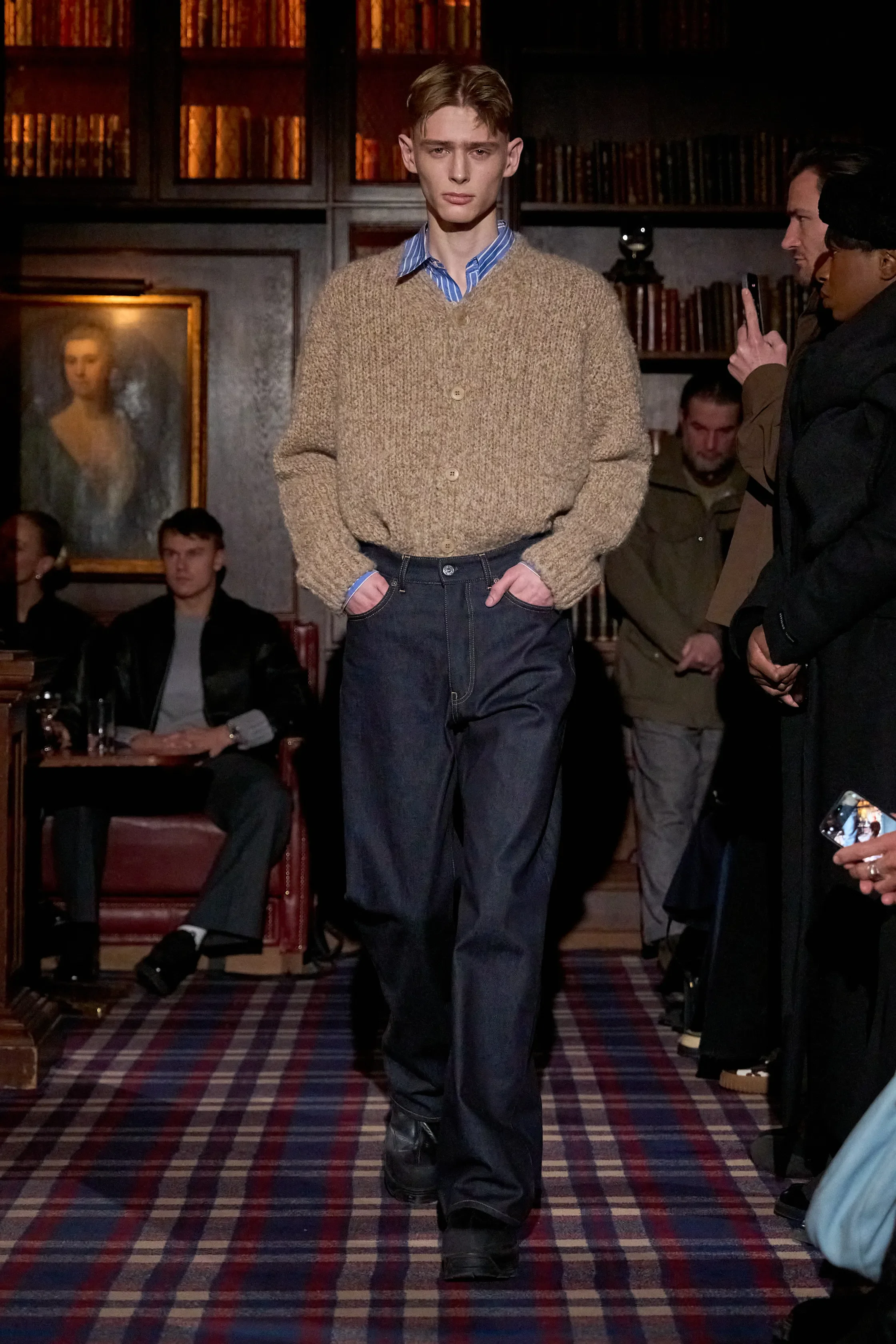
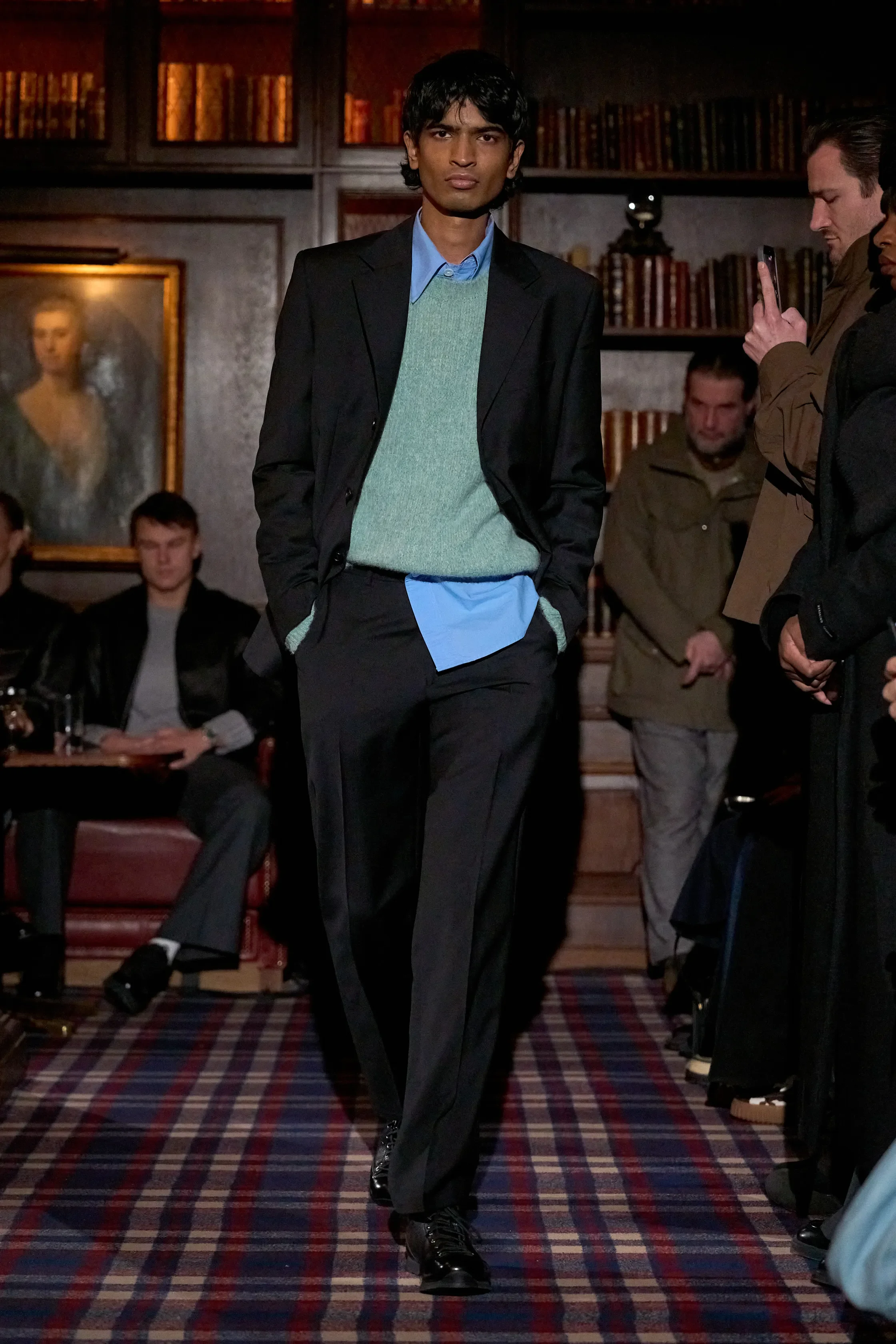
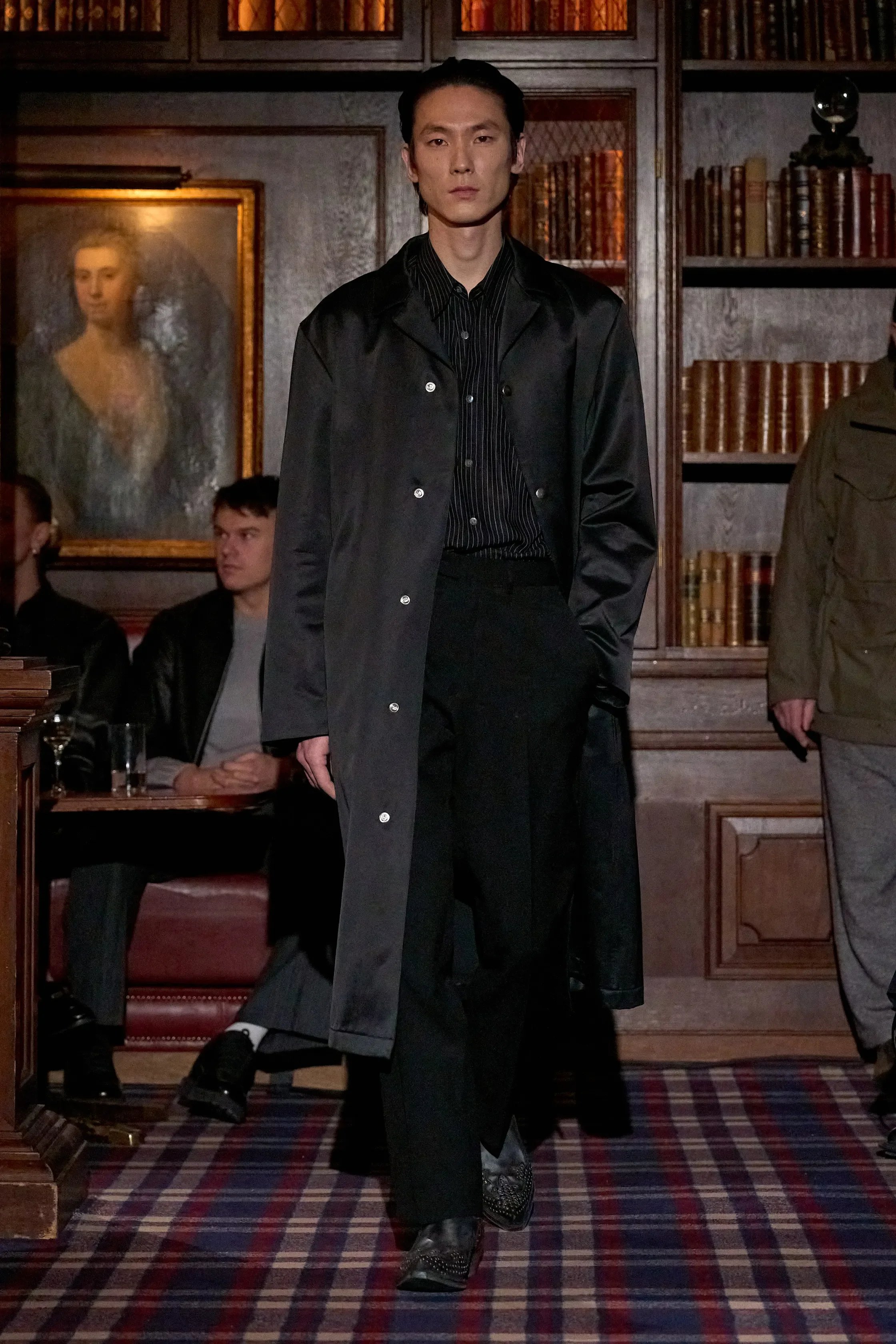
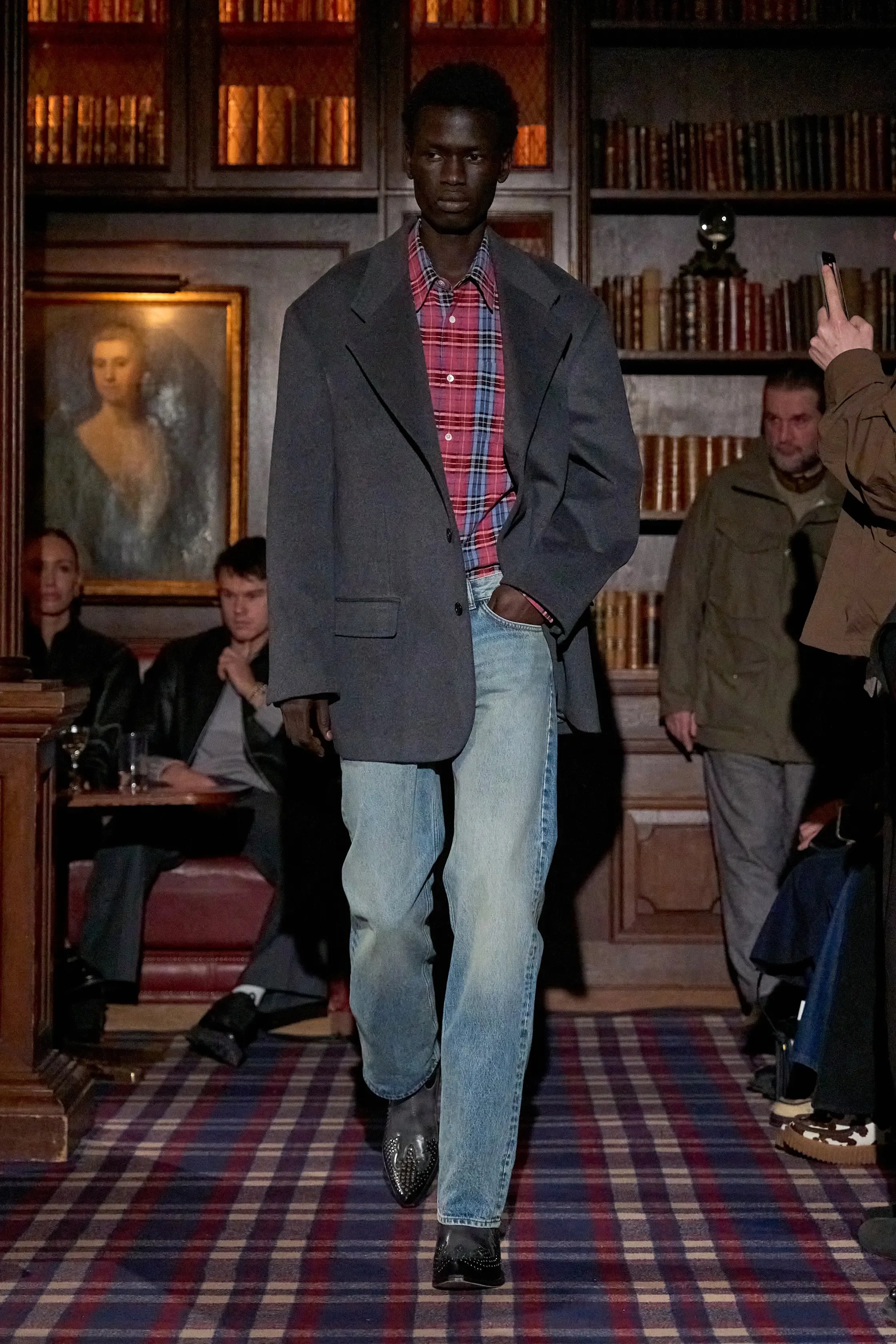
Sunflower’s AW26 collection unfolded in the intimate Library Bar at Hotel Plaza, Copenhagen, where warm wood corners framed an immersive show. Models drifted through the space, moving with calm deliberation, while Soho Rezanejad and August Rosenbaum’s live piano and vocals wove through the room. Textured knits, corduroy suits, and long coats felt lived-in rather than performative: garments were built for presence and endurance. The collection emphasized subtle confidence and timelessness, turning the library into a cinematic stage where every detail was attentively noticed and the ritual of the show became as important as the clothes themselves.