
WHY MEN'S SWIMWEAR IS SHRINKING
words by FRANCESCO PIZZUTI
It seems like this summer, the speedo is finally expanding beyond the well-delimited perimeters of Fire Island to become a collectively enjoyed summer piece!
Jokes aside, it does feel like in the last few years the world has rediscovered that men have beautiful legs, and after decades of hiding behind cargo shorts, baggy jorts and below-the-knee swim trunks, we are finally going back to the peak of men’s slut potential: the 1980s.
We’ve all gladly noticed men’s shorts getting shorter and shorter season by season. Now, that silhouette evolution is making its way into swimwear, with speedos and micro boxer briefs becoming significantly more desirable.
But why is that? And how did high-fashion help forward this visual shift?
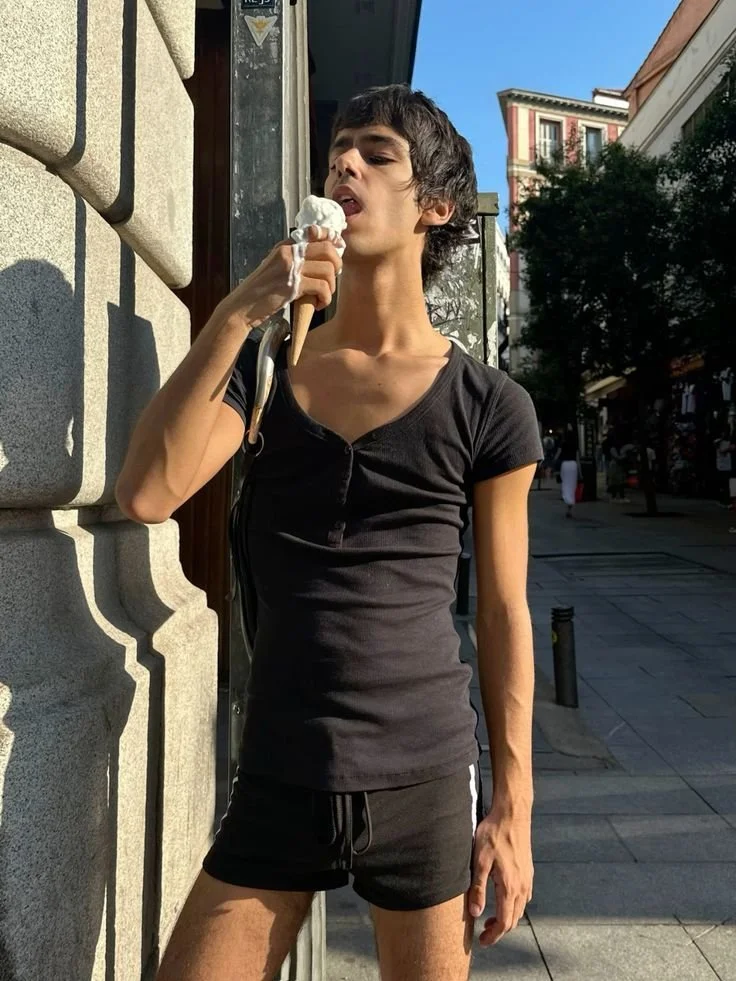
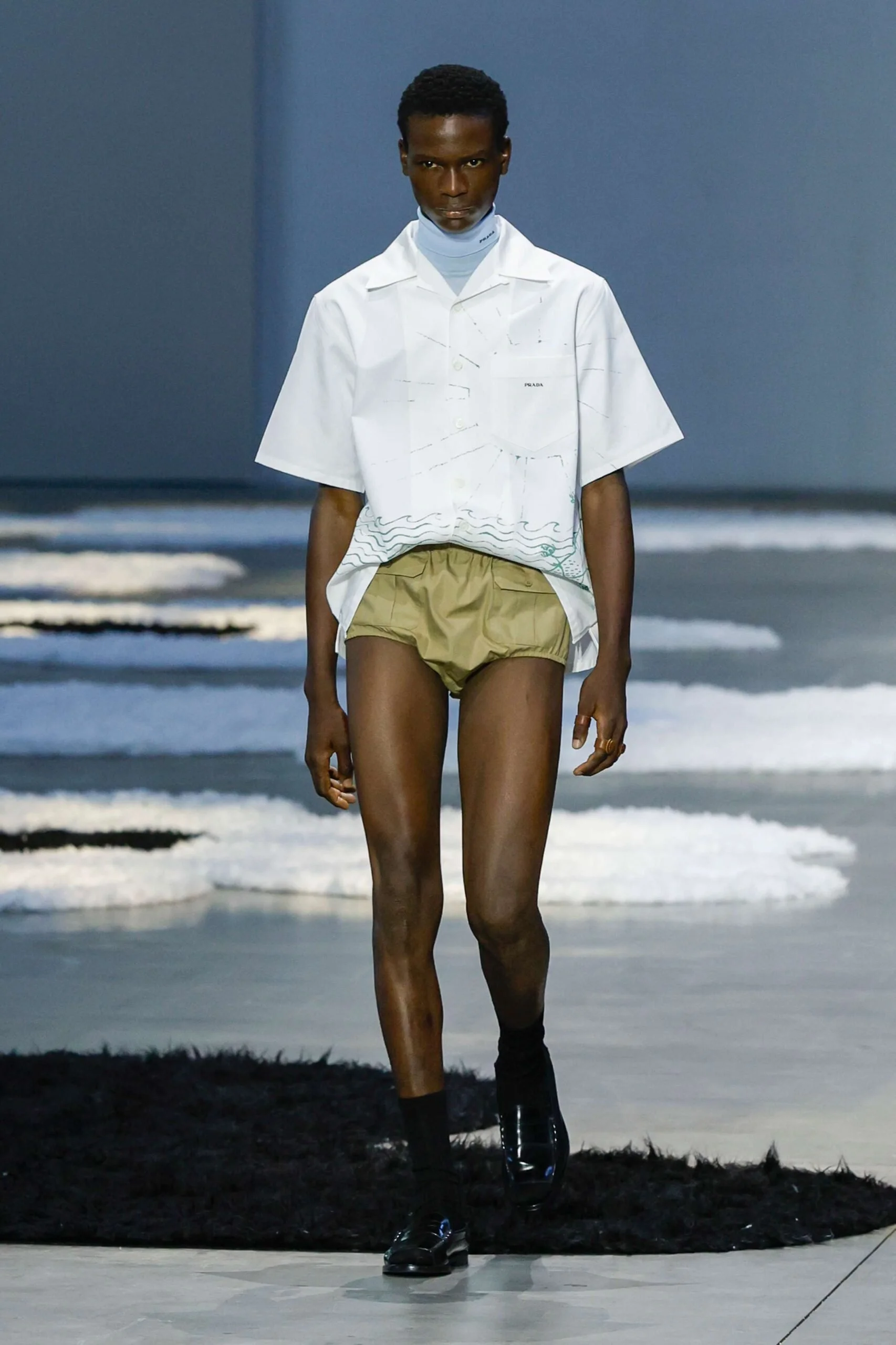
images via @vitocardalda on Instagram and courtesy of PRADA
With this change in length and silhouette happening in and outside actual swim environments, it seems as if contextual dressing is becoming increasingly more blurry in favour of a freer fashion dialogue. Men’s swimwear and regular streetwear seem to be in a closer, more open conversation with each other than they were before, a fluidity that can perhaps be seen in menswear at large — with men’s fashion shows increasingly incorporating womenswear codes and female models — and that is now taking an interesting form in this specific dynamic.
Speedos are making a comeback at the same time as men's beauty standards are becoming increasingly body-conscious. Unless you were an Italian middle-aged man who never stopped wearing one every summer, chances are you abandoned yours after childhood. Today, however, the garment returns in a very different cultural context. We live in an era of hypervisibility, where the male body is constantly photographed, evaluated and performed. The rise of gym culture, skincare, looksmaxxing and social media has produced a renewed attention towards the male physique, and swimwear trends are naturally reflecting that shift. Smaller silhouettes don't simply expose more skin; they celebrate the body as something intentionally styled, contained and presented.
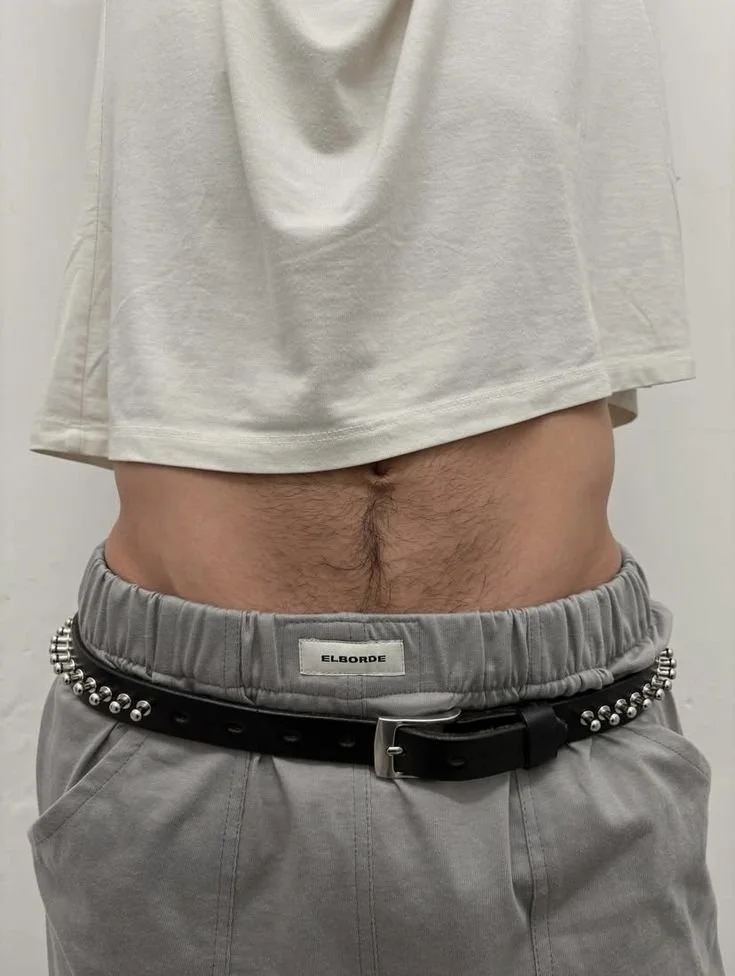
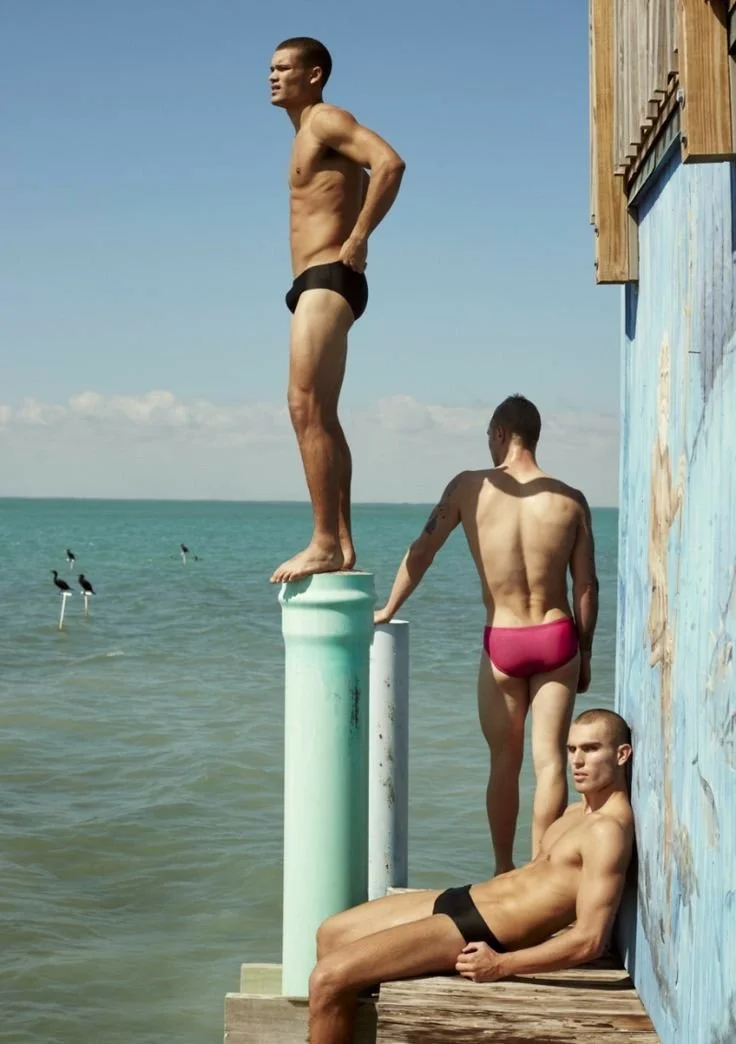
images via @mrleonardolara on pinterest
At the same time, fashion remains deeply nostalgic. Every summer, luxury brands return to the same imaginary Mediterranean holiday: the Amalfi Coast, Sicily, Saint-Tropez or some idealised Italian seaside where time slows down and getting dressed means putting on as little as possible. These collections romanticise a kind of effortless masculinity that has long existed across Southern Europe, where tiny swim briefs were never particularly controversial. There is something liberating about that image. After years dominated by oversized board shorts and heavy swim trunks, the appeal of wearing something lighter and closer to the body suddenly feels fresh again.

image via @oct6vion on pinterest
To get back to my opening statement, for a lot of gay men, of course, speedos never actually disappeared. They remained a staple of queer beach culture, particularly in destinations like Fire Island or Mykonos, where they became almost a visual shorthand for confidence and sexuality. Outside those spaces, however, they were often treated as either ironic or overly revealing. High fashion has been playing an important role in changing that perception. With luxury brands beginning to embrace shorter silhouettes, the speedo and micro-shorts are becoming part of a broader conversation around contemporary menswear, to the point where even straight men are starting to catch up.
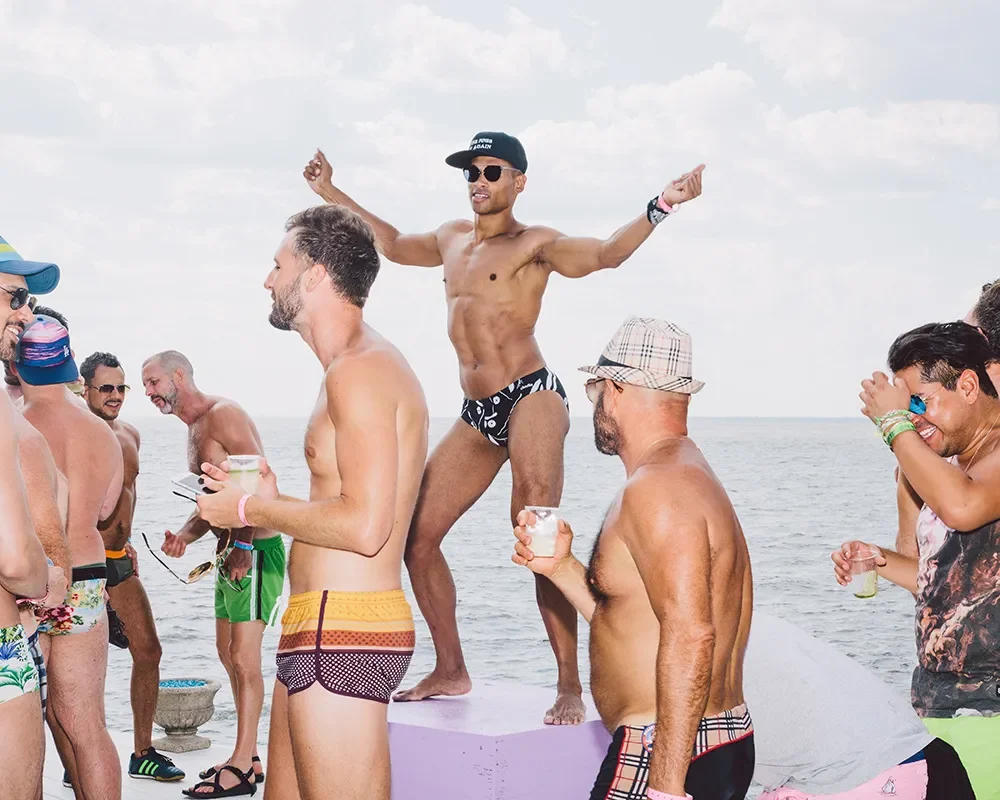
photo credit: NATHAN BAJAR for VICE MAGAZINE
The runway has undoubtedly accelerated this shift. Dolce & Gabbana's Spring/Summer 2027 collection put tan muscular legs front and centre through ultra-short tailored shorts that celebrated a distinctly Mediterranean, traditionally masculine sensuality. The body felt like the collection's focal point. Dries Van Noten approached the same exposed silhouette from a slightly different perspective, a different masculinity. In his latest show, microshorts were more relaxed, yet still seeking to be looked at, embellished with glitter or eccentric graphic motifs and styled beneath oversized, half-tucked shirts, producing something softer.
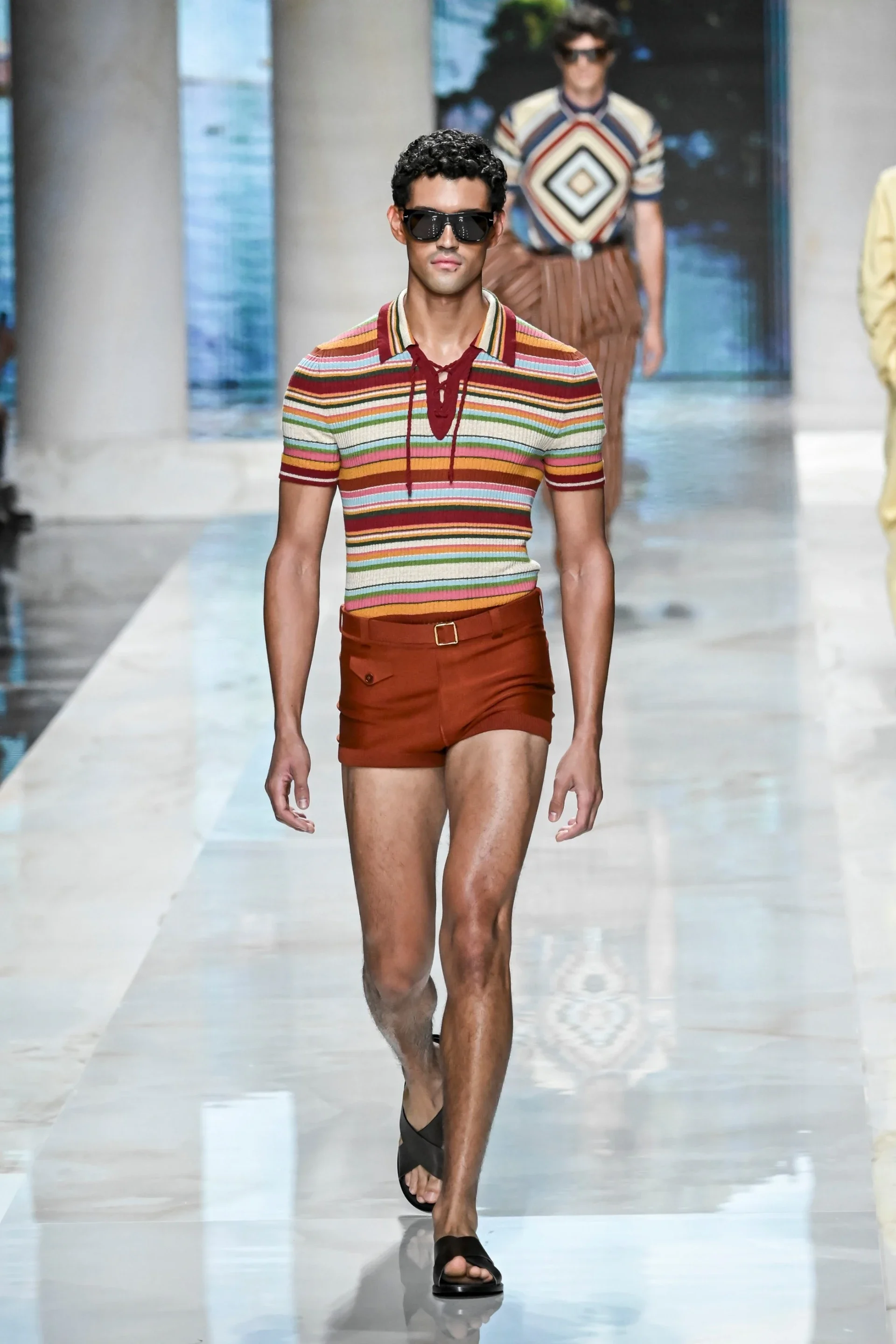
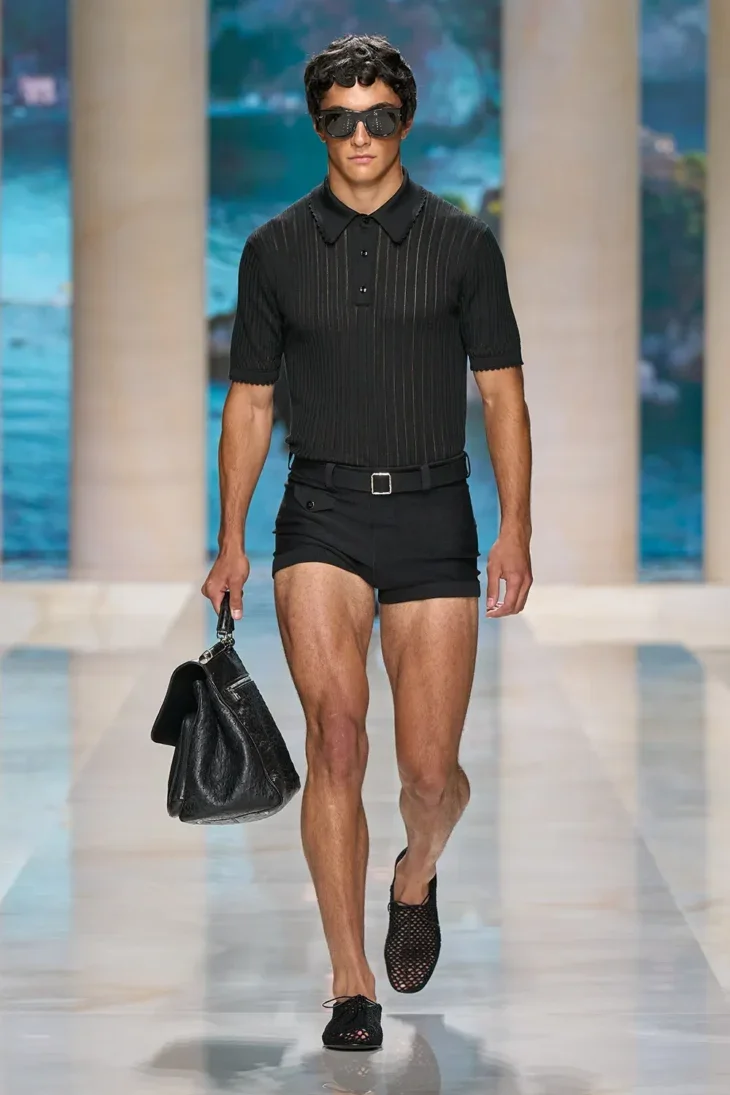
images courtesy of DOLCE&GABBANA
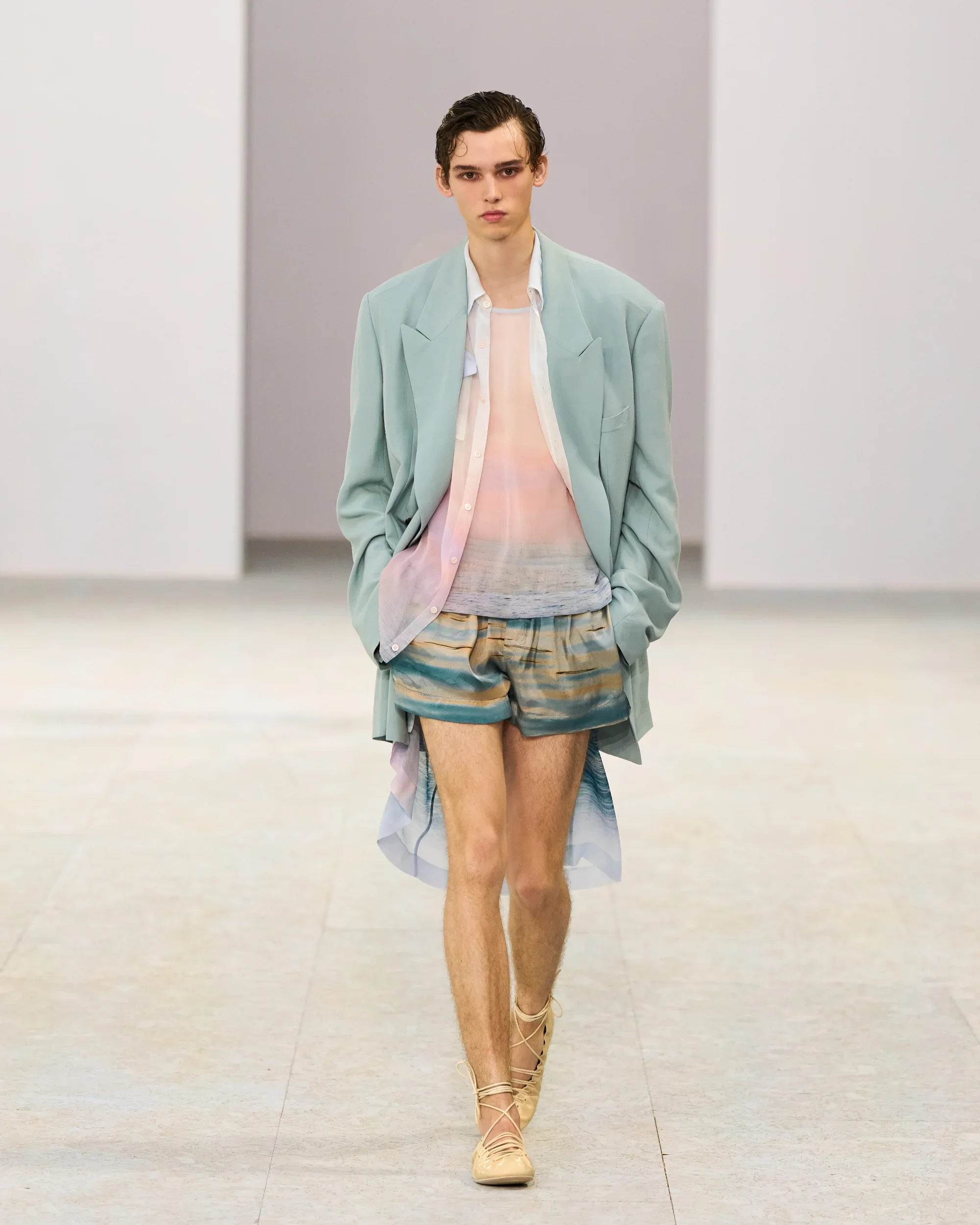
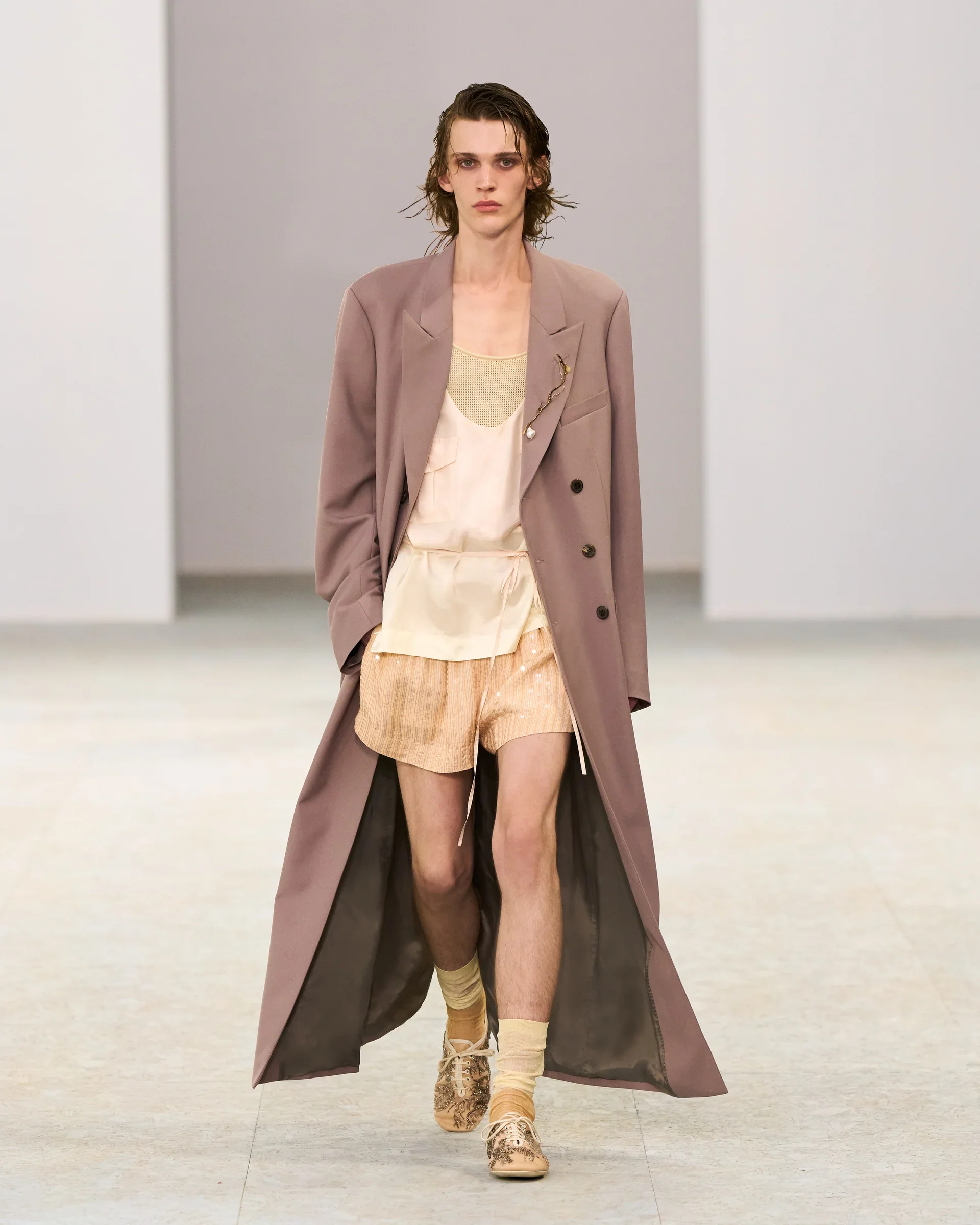
images courtesy of DRIES VAN NOTEN
Prada has also been exploring this territory for several seasons. Spring/Summer 2026 featured exaggerated bloomer-like shorts that referenced vintage athleticwear while recalling the proportions of classic European swim briefs. Gucci's Spring/Summer 2025 menswear collection similarly generated conversation through its unapologetic embrace of short shorts, helping normalise proportions that only a few years ago would have felt quite daring for everyday menswear.
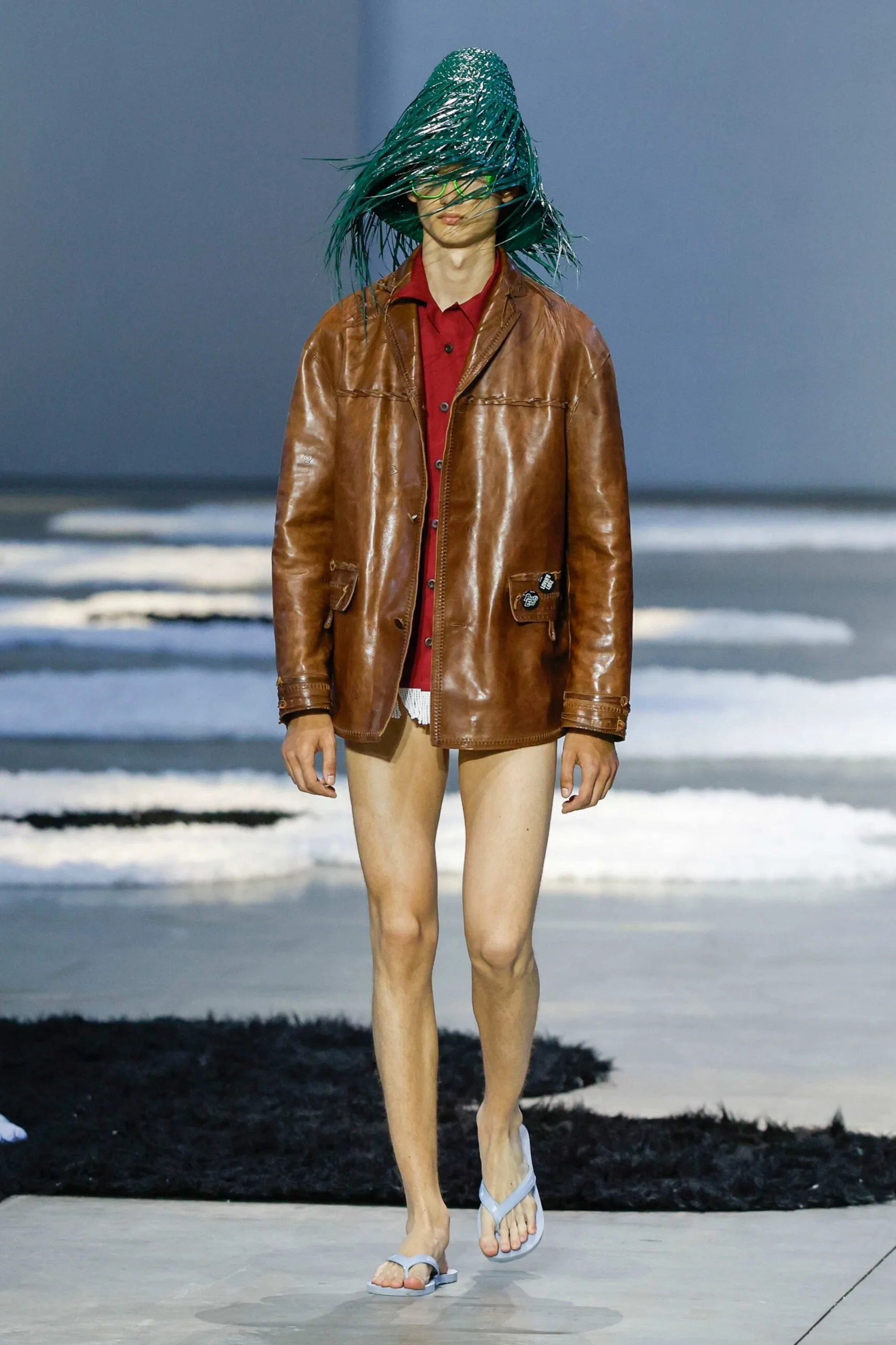
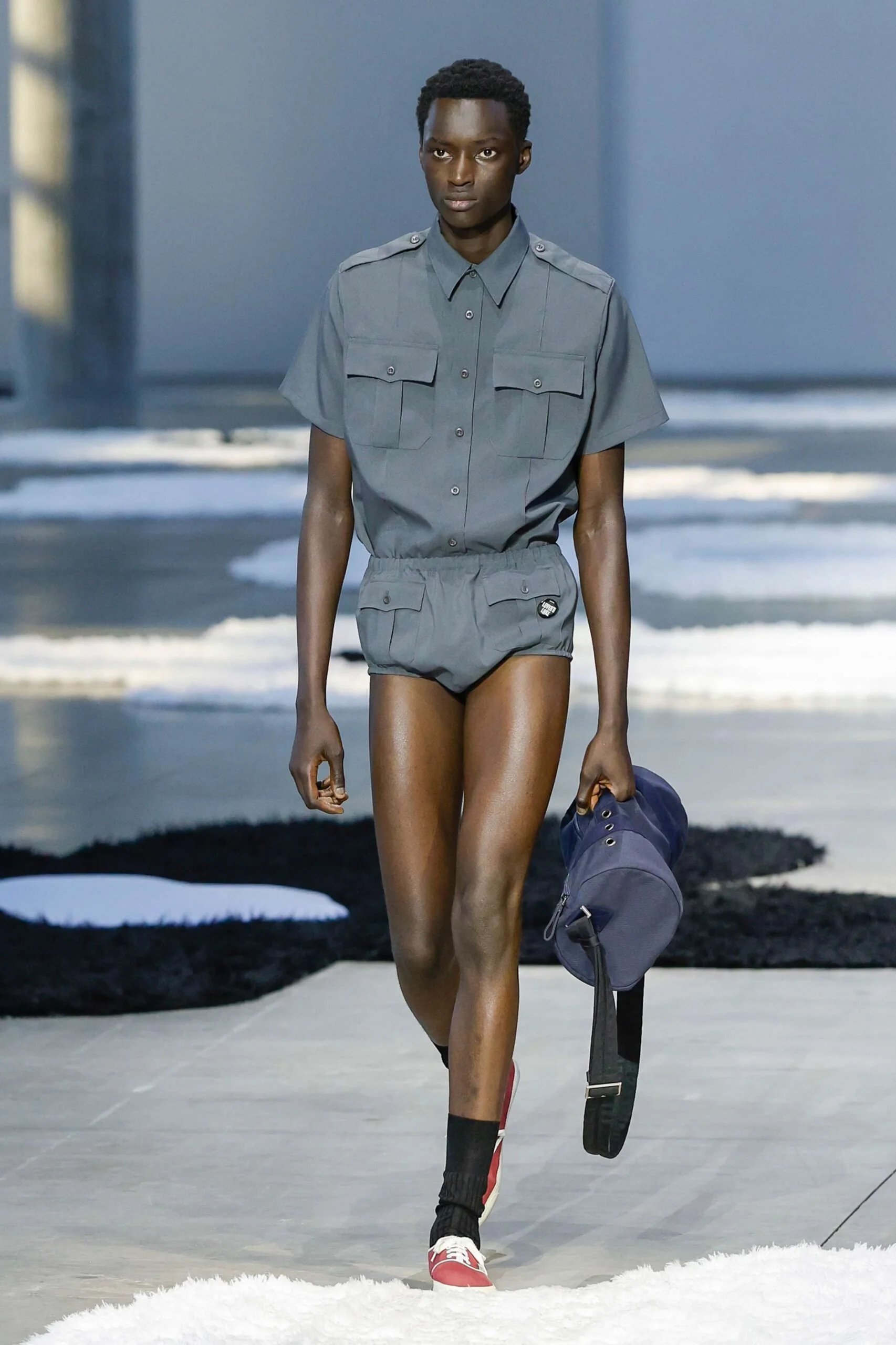
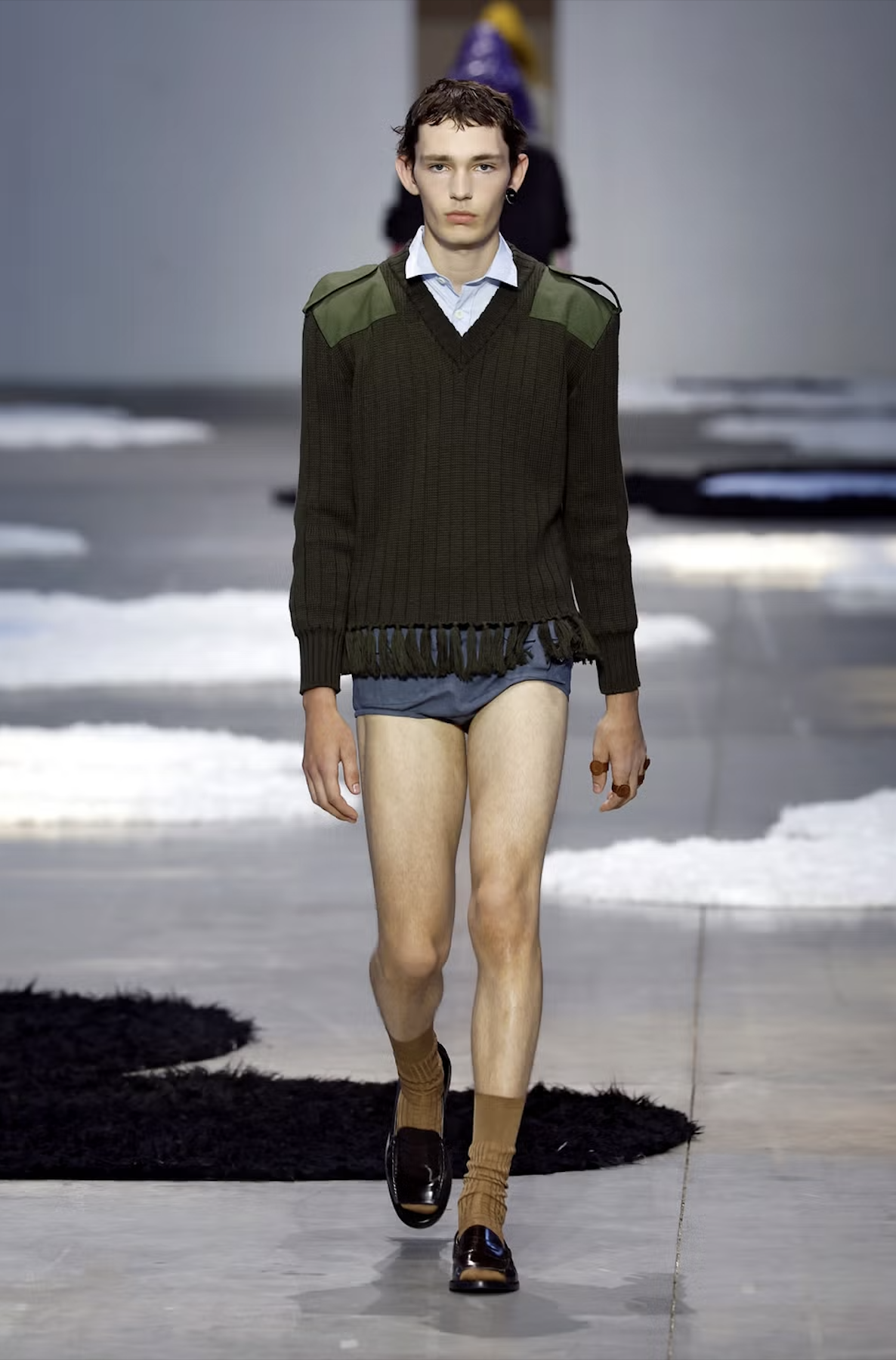
images couresty of PRADA
What's particularly interesting is that all of these collections arrive at similar silhouettes while proposing completely different masculinities. Dolce & Gabbana approaches the micro-short through the lens of classic Italian machismo and overt sensuality. Yet it’s precisely this that makes it quietly subversive. Although the silhouette is traditionally associated with womenswear — short, tighter, and deliberately revealing — it is recontextualised in the context of overt, traditional masculinity, producing an interesting contrast. Prada and Dries Van Noten, meanwhile, interpret the same abbreviated proportions through a more fluid and androgynous lens.
That dialogue between different expressions of masculinity is precisely what eventually filters into everyday dressing, affecting and establishing new visual norms that slowly and with different implications have been entering the mainstream. The result is a summer wardrobe where speedos, swim briefs and impossibly short shorts are celebrated as the next logical step, and we are ready to embrace it with open arms — or legs!
