
WOULD ALEXANDER MCQUEEN MAKE IT IN TODAY’S HYPERSENSITIVE CULTURE?
words by ANOUK WOUDT
Today, we celebrate the birthday of Lee Alexander McQueen — one of fashion’s most legendary figures. His work transcended physical fabrics; he was audacious, at times aggressively so, but it absolutely enthralled audiences, leaving him forever cemented as one of the greats. But as we reflect on the oversensitive climate of today and our obsession with “cancel culture”, we can’t help but wonder if McQueen would be received differently had he debuted today.
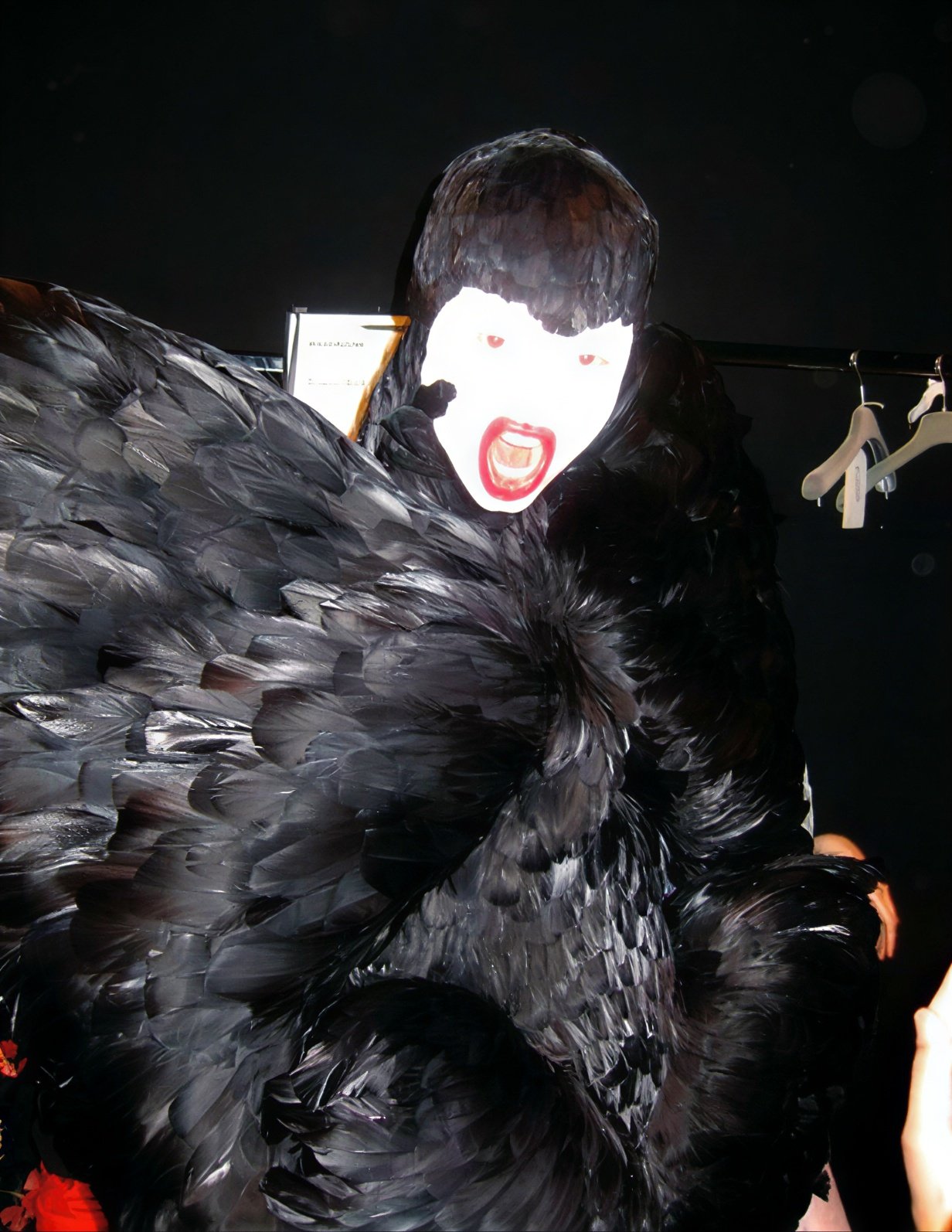
image via @sandramachado1 on pinterest
cover image via @hrvend18 on pinterest
Since his earliest runway shows, McQueen has always had a distinct appetite for shock.
Starting from his 1992 graduate collection at CSM, Jack the Ripper Stalks His Victims, he immediately found his place as fashion’s enfant terrible. Inspired by Victorian prostitute killer Jack the Ripper, the collection is a rendition of his victims portrayed in all of their gory glory. In a particularly unsettling detail, some looks incorporated locks of McQueen’s own hair sealed into the garments. Merging erotica and violence, the collection embodied a narrative that can be quite difficult to swallow for the general public, especially for those who have faced similar traumas.
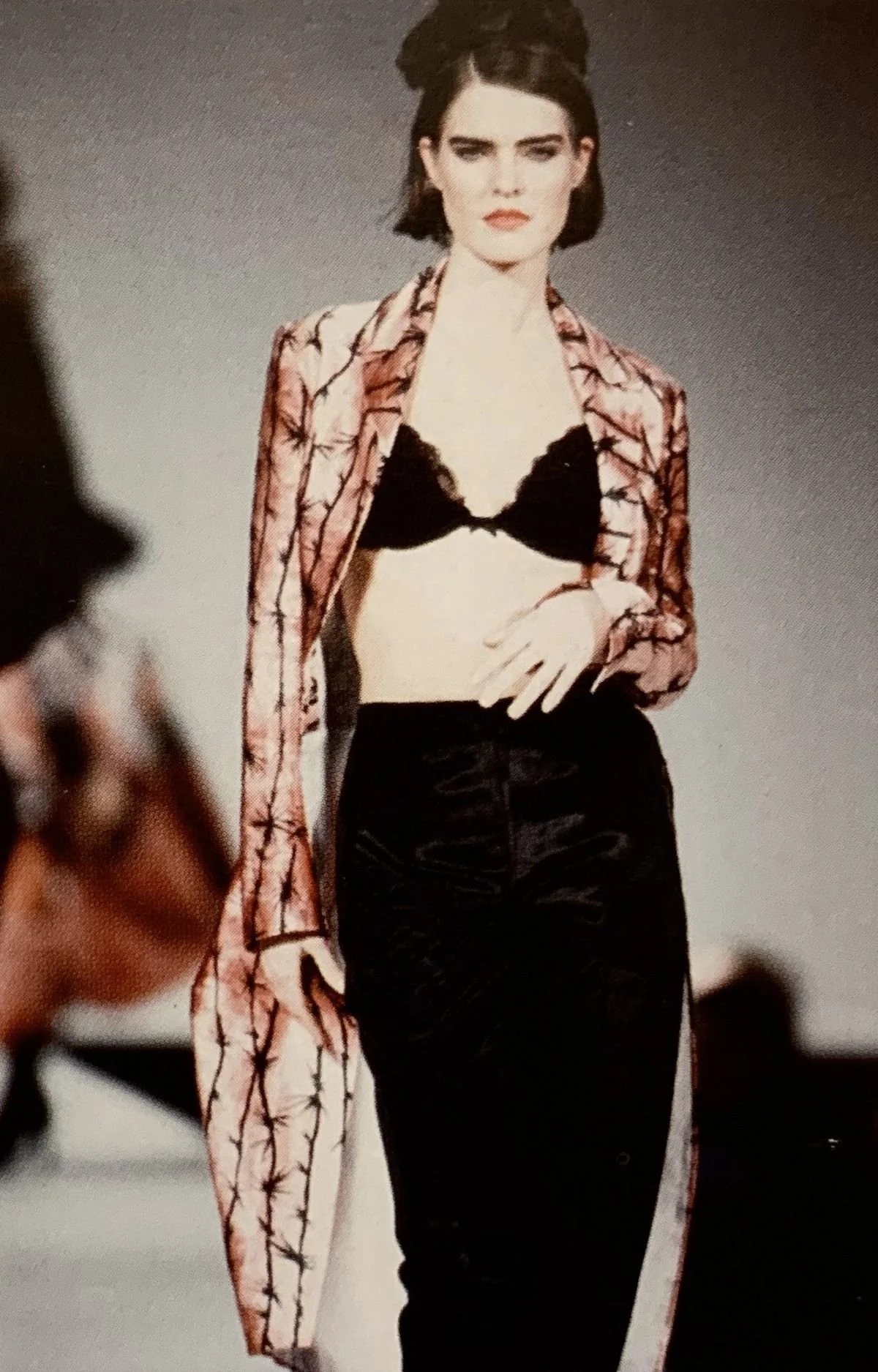
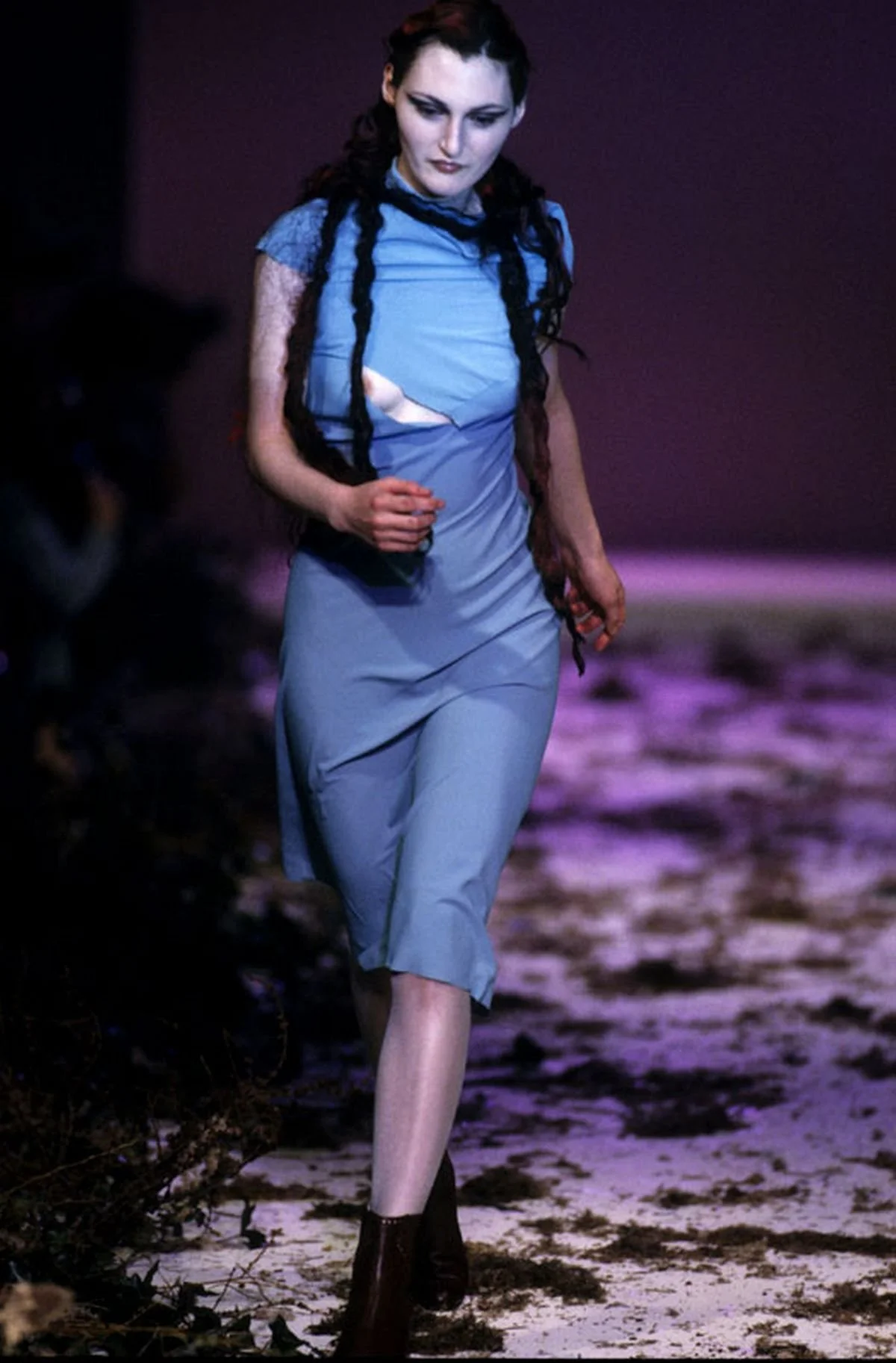
images via @figandwasp @changmi_roze on pinterest
Macabre storytelling continued to define his work from that point on, becoming an essential part of his identity as a designer. The height of his controversy — while also referenced as the launching point of his career — came with his Fall 1995 collection, violently titled Highland Rape. Guided by his ancestry, the collection focuses on England’s historical “rape” of Scotland, which was simultaneously connected to the domestic abuse he saw his sister suffer at the hands of her husband. All together, the pieces paint a picture of the violence Scottish women have faced, showing models in tattered clothes and exposed breasts, with a dishevelled look that created a deeply unsettling energy. The show had already sparked outrage at the time, with many viewing it as a misogynistic glorification of violence, marking him as couture's biggest provocateur.
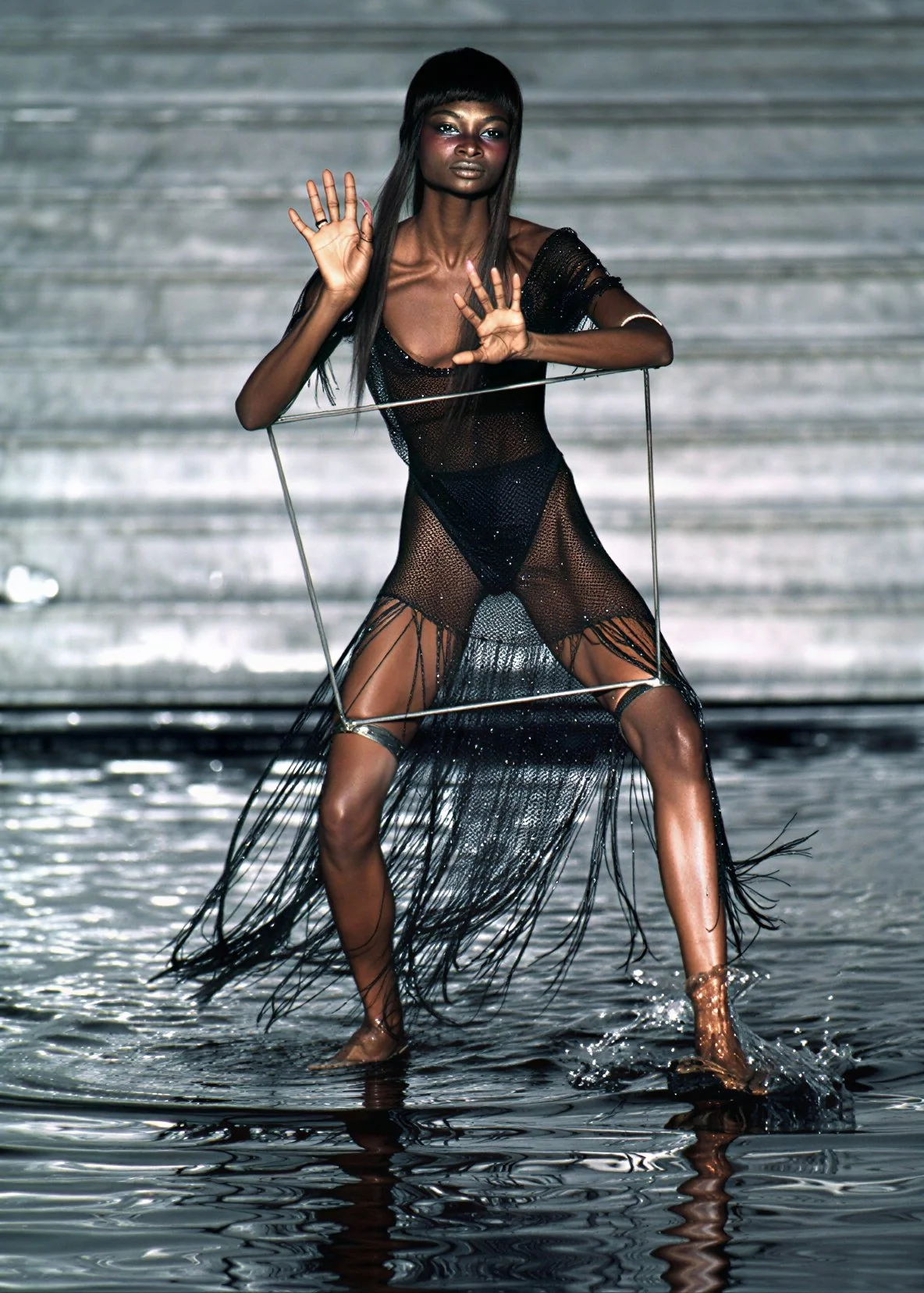
image via @lusslust on pinterest
Controversy struck yet again at Spring/Summer 1997’s La Poupée, when black model Debra Shaw appeared shackled to a metal frame. Despite the outrage over how evocative this image was of slavery, Shaw went on to describe her experience as positive. In addition, McQueen cleared up any issues, claiming the look had no racial motivation, and its purpose was only to restrict movements to appear more puppet-like, as the show’s theme describes. With that in mind, if portraying one of the only black models in the show in chains generated a heated debate back then, we can only imagine the scrutiny McQueen would come under if it happened today, when runways have gotten more diverse, and we have grown more perceptive not only to the amount of diversity but also the way it is portrayed.
Spring 2001’s Voss marks yet another one of McQueen’s most shocking shows. Held within a mirrored box, the show was set in a padded environment, simulating a psychiatric institution. Received with overwhelming positivity at the time, it did raise some eyebrows for romanticising mental illness, with models styled to look unhealthy and portray a nervous breakdown.
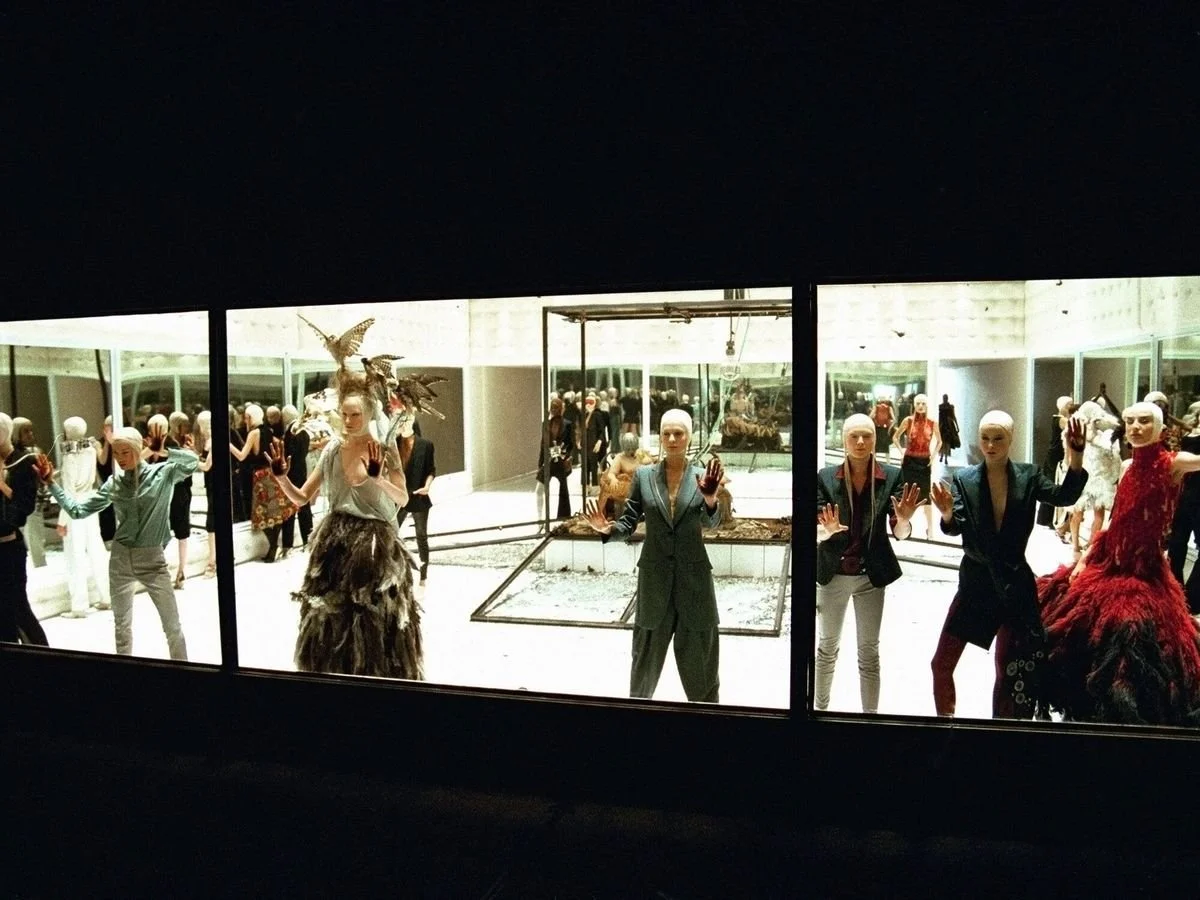
image via @fashionstudiesjournal on pinterest
All of these shows touch on topics that are growing increasingly sensitive, especially with references to sexual abuse and rape. Following the #MeToo Movement and everything Epstein-related, abuse is not something to be satirised or taken lightly. And considering that it caused a disturbance even in the era when “times were different” and everyone was just a tad tone deaf, we can only imagine the field day Twitter (or sorry, “X”) would have, sending the whole Internet into a frenzy.
But, as they say, all press is good press. Sure, criticism would definitely have increased in today’s climate, but it is also interesting to note that Highland Rape remains one of McQueen’s most talked-about shows. The conversations it sparked allowed for his name to be propelled into the fashion zeitgeist. And though it might not seem the most exemplary way to further one’s career, within a year of that show, McQueen was the head of Givenchy.
Even decades later, the truth is that controversy still sells, and his legacy has definitely lived to inspire many designers of today. From Coperni’s SS23 spray-on dress – a reference to his SS 1999 robot-sprayed dress – to Myat’s FW26, which featured a model breaking through a glass box (so very Voss), his influence through performance art is definitely present. Even with big up-and-coming designers, like Dilara Findikoglu and Matières Fecales, the seeds of McQueen are blossoming through their dark gothic elegance that lives for a spectacle.
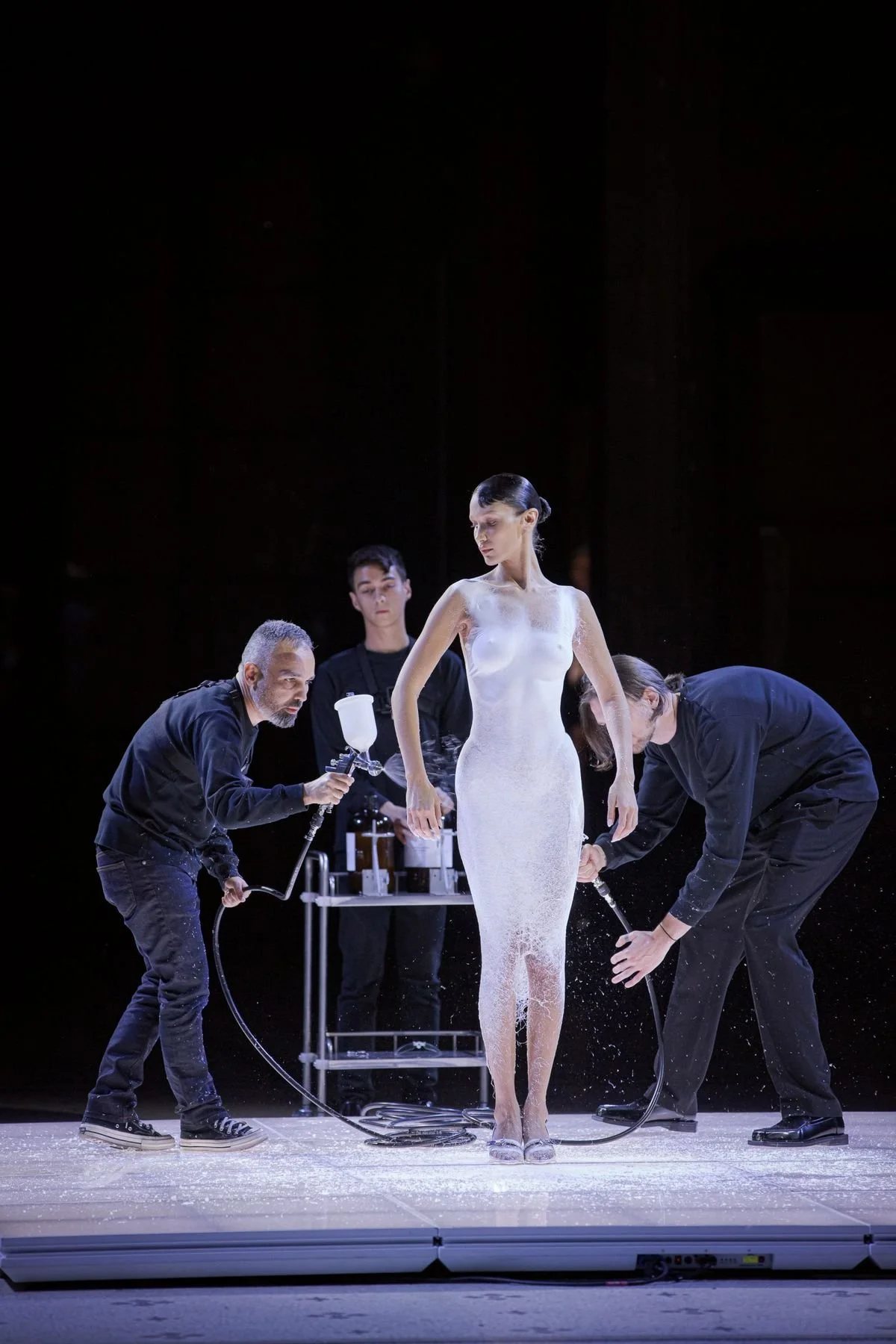
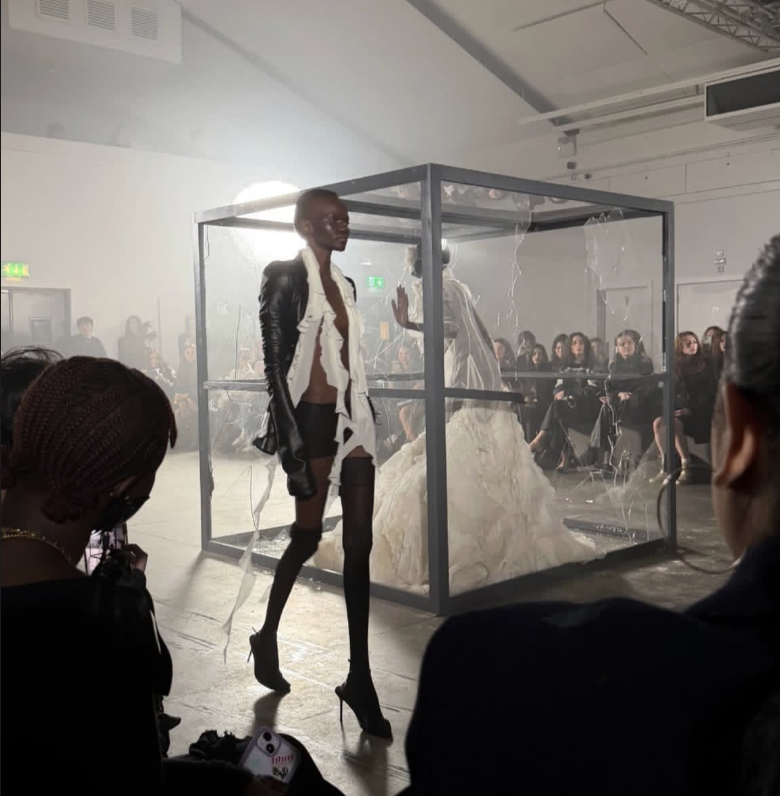
images via @dezeen and @ericmyat
Today, more than sixteen years after his unfortunate passing, McQueen’s influence shows no signs of slowing down, reaching even the latest generations of designers who have only just graduated from fashion school. Some of these names include Maxwell Bressler, an avant-garde designer who debuted this past season at NYFW, and, of course, some promising fellow CSM grads: Ida Immernoff, Matthew David Andrews, Jada Tudor, and Myah Hasbany, to name a few.
All of this to say, Alexander McQueen might have toyed with the limits of controversy – sometimes crossing them – but despite this, he would have been received the same way: in a delightful mix of pure disgust and absolute adoration, precisely as he had always intended.
