
IN CONVERSATION WITH REMI AND NOOR ALFALLAH
interview by JANA LETONJA
photography SELA SHILONI
Dynamic, visionary, and refreshingly fearless, Remi and Noor Alfallah are redefining what it means to be modern film producers. Through their company RNA Pictures, the Los Angeles–based sisters have quickly emerged as two of the industry’s most exciting creative forces — championing daring, emotionally intelligent cinema and amplifying bold new voices. Their latest feature, Dead Man’s Wire, directed by the legendary Gus Van Sant, received a thunderous 13½-minute standing ovation at its world premiere at the Venice International Film Festival. The film is set for a wide release on 16th January via Row K.
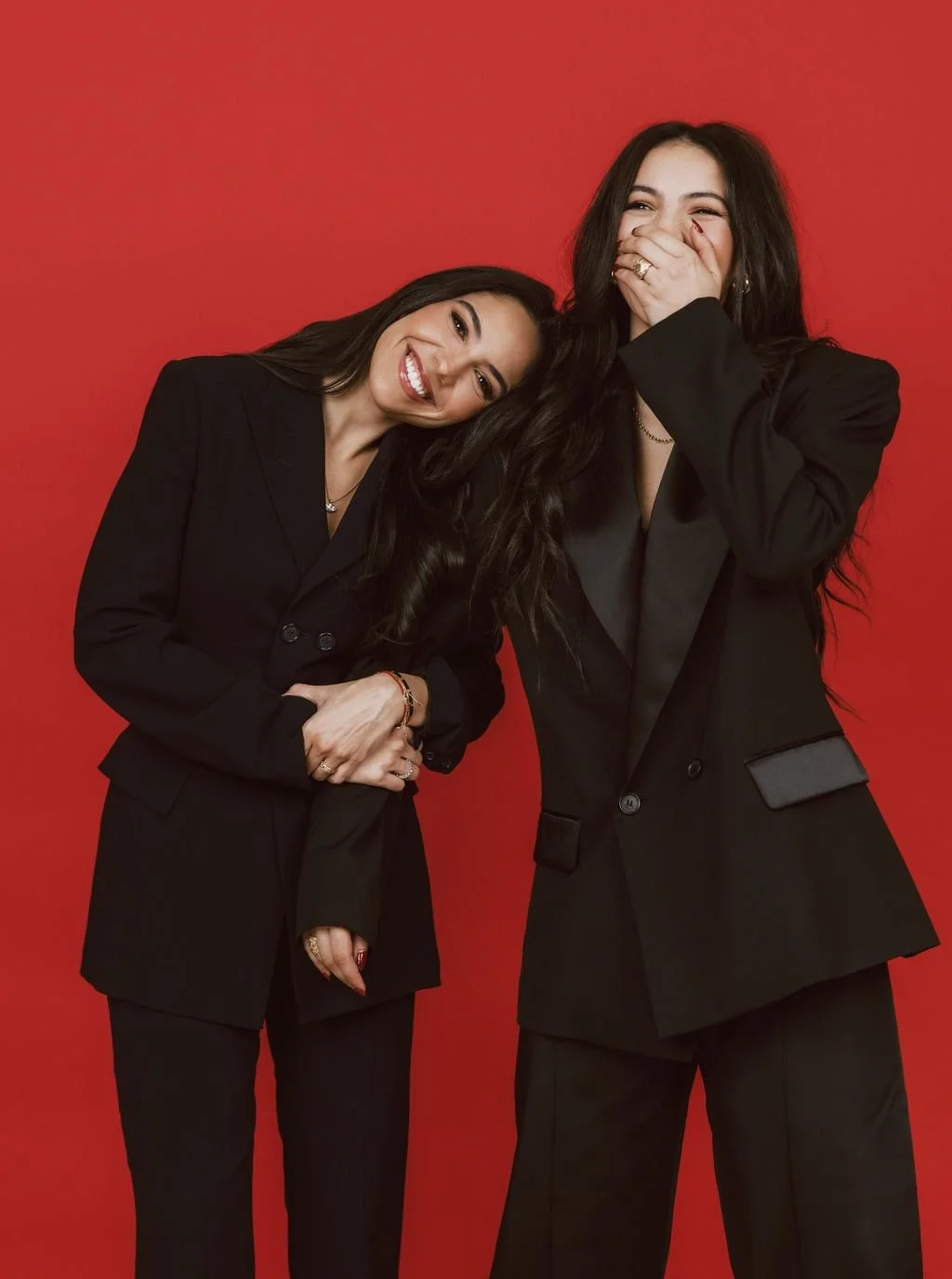
You’re being compared to the Safdie Brothers — but as a sister producing duo, you’ve built something uniquely your own. How would you describe your creative chemistry?
Remi: I hope the Safdie Brothers don’t see this. Does this mean you already see an amicable-ish split in our future? In all seriousness, I think our creative chemistry is mostly rooted in our pace. We work very quickly and often make decisions or creative calls without thinking things into the ground and I think that while for some that sounds rushed, for us it’s more that our initial impulse is what works and ends up being correct. We’re also siblings, and most people with sisters close in age will understand there is just a fierce, strong bond that can’t be put into words. Of course, with that can come fierce disagreements, but for the most part it means even if I don’t see her vision right now, I have enough faith to know that at some point I will and vice versa. We don’t often question large decisions, but more so the small day-to-day stuff that maybe doesn't matter as much, like she will scold me for sending an email at 3am and I will be agitated with her about using talk-to-text feature without checking before sending. I would also describe it as “I’m scared of her and she’s scared of me,” and that combo works to our advantage.
Noor: I hope they don’t see this either. Luckily, I feel like the majority of times our taste is aligned. Sometimes Remi will like things that are more heavy in theme than I would like. Sometimes I will usually push harder on something I’m more passionate about or have a bigger role in. Sometimes Remi will question why I like something. Even if I don’t agree with her, I’ll support and get behind whatever she’s into.
What does collaboration between the two of you actually look like on a day-to-day basis? Are there moments of creative disagreement, or do you always find yourselves aligned?
Remi: I guess I kind of spoke to this, but there are rarely moments of creative disagreement because the beauty of having two of us and also us being siblings is that if I don’t necessarily love an idea or see something in it, she might flag the thing I’m failing to see. I think trusting that we both have our best interests in mind means that for those big creative decisions we often make a call and then both run with it full steam ahead. We love true stories as seen with some of our films, we love new filmmakers with a lot of our upcoming films being feature debuts, and we also are very talent driven. Our relationships primarily lie with actors and directors, so finding projects with specific talent in mind has helped us align creatively when we maybe otherwise wouldn’t be. I get more into the more creative calls and Noor can make the call that closes the deal. It’s always good to have a closer. That’s not to say we don’t argue- we argue most days about why one of us missed a zoom, why one of us shushed the other on a zoom, you know, the usual sister stuff. We may argue about our answers in this article, so thanks Numéro Netherlands.
Noor: We’ve had some blow out arguments, but we are usually creatively aligned. We’re good at putting the pieces together so if Remi finds a cool hot script, I can help on the financing side or talent side, or sometimes I will find a great script and give it to Remi to help support it.
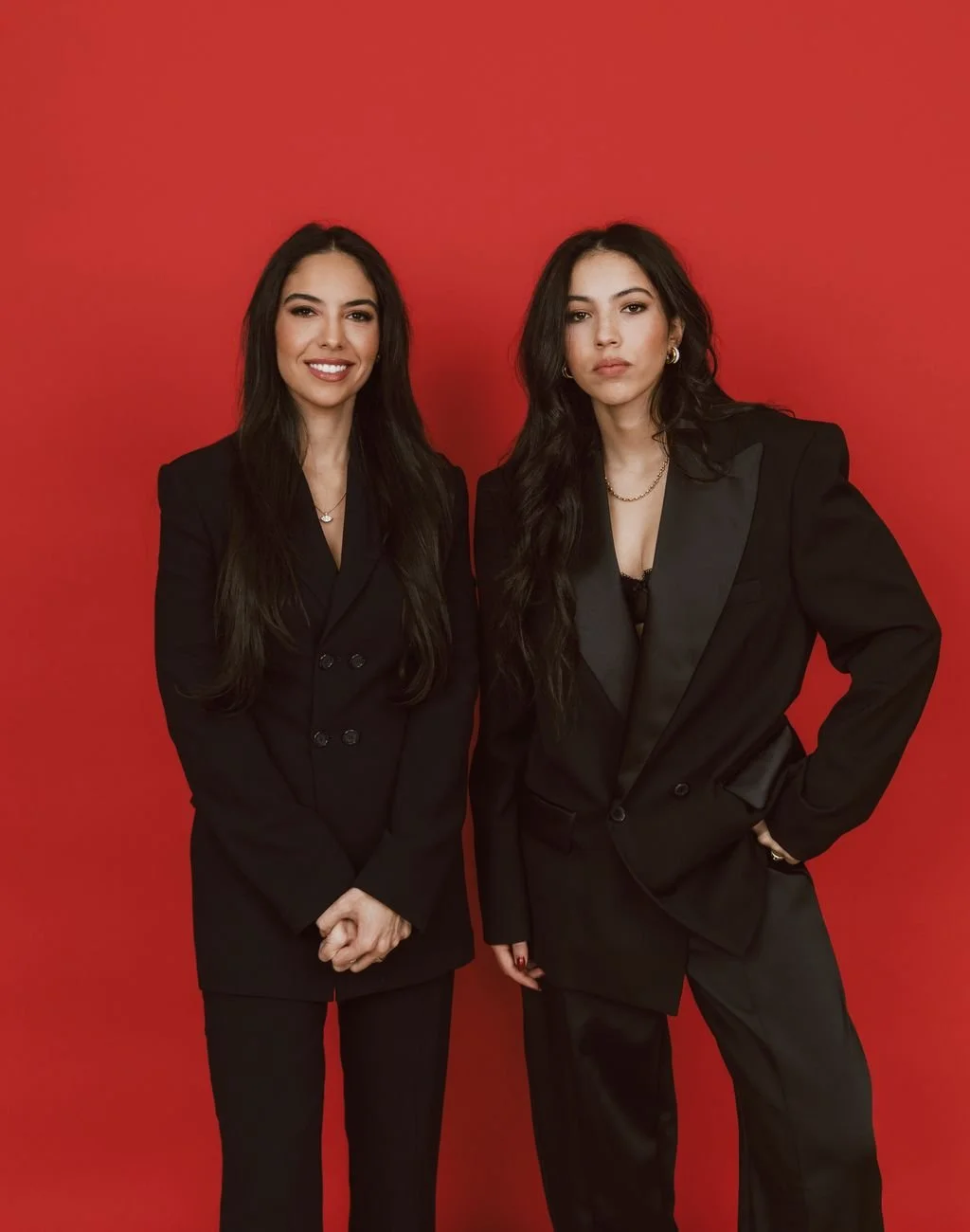
What inspired you both to launch RNA Pictures, and what kind of stories define the company’s DNA?
Remi: When we decided to work together and had our first overall deal, I had just moved back from New York and working at SNL, and Noor was working at a production company on the Sony Lot. I had been swayed by my sister and honestly my entire family to come and start something with Noor because it felt like the natural progression of our careers and lives. We have always been so entwined and who else would I want to start something with? She’s the smartest, most well versed, soulful person I know, and I also knew she would never do me dirty because my mom would kill her. We had worked on a few shorts in college and always enjoyed our time together, so when we were offered to work together, it only felt right to create our own creative banner that we could stake in the sand. True stories are a big thing for us. The truth is so freeing and sharing the truth, big or small, is freeing creatively. We also love movies with a lot of heart. The genre can fluctuate, but leaving a theater feeling really moved or changed by a character or their story is important to us. But like DNA, it changes slightly with each generation, so the generations of our company will adapt and improve as we refine our taste and step more into who we are as women, as adults.
Noor: This is the first time she has ever called me smart. I call her smart because she had a high GPA in school and always scored higher than me if we were in the same class. Coming up with our company name RNA was hard because we can’t really change it and once we make it, we make it. So, it’s Remi Noor Alfallah, RNA pictures. I like pictures better than films because it’s the way they use to refer to films. And RNA copies genetic instructions from DNA, and we have the same DNA because we’re related, etc. We first made RNA when we had our POD deal at Imagine Entertainment. That’s when it was first formed. Then we were working on movies independently and some together, and Remi thought we need to put our stamp on our movies we are a part of and help come to fruition. Right now, it’s still just us, but our goal is to eventually expand and grow our company as we take on more films.
How do you balance being sisters and business partners. Where does family end and filmmaking begin?
Remi: We don’t. I don’t even mean that in a bad way, but our family is extremely close and somewhere along the way, when we started working as individuals, me at SNL and Noor at Lynda Obst Productions, work just became the newest thing we would openly discuss together. Then you add deciding to start a production company together and naturally most lunches or dinners include us talking about work. I think half of it is a result of being siblings and our family being involved in everything all the time, and the other half is that we like what we do, so it’s also enjoyable to be able to sit down for lunch or dinner and tell them about the cool new feature we’re working on, or ask our family their opinions on comparisons for films, etc. I definitely think I prefer and need a family/business boundary more than Noor does, but I understand having it both ways.
Noor: I have no boundaries unfortunately when it comes to work and family. I like to blend it all together and Remi gets mad at me. She says we need to keep it separate. It comes so natural to us. We’ve been business partners since we were kids, we don’t even have to allocate roles. And I allow everyone an opinion on what I’m working on. Mom, dad, sister brother, Al, etc. I can’t wait for my son Roman to give me his opinion too.
Dead Man’s Wire received an incredible 13½-minute standing ovation at Venice International Film Festival. What was that moment like for you both?
Remi: Those moments, not that I’ve had many of them, but the idea of them in general is so odd. Gus is such a talented director, and the cast is incomparable. I mean we got Colman, Dacre, Myahala, Al and a Skarsgard. It’s amazing. I think it was such a wonderful moment for the people who worked so hard on the film to take it in. To have 13.5 whole minutes to take it in in fact. I also think that those festivals also promote that kind of press and that sense of competition amongst the films, so while I love it and hope to have numerous standing ovations, I think we should cap it. Like letterbox, there should be a star system at the end. You rate it, you leave. But of course it was spectacular, and to be there together and get to have some of our loved ones with us? Nothing like it. Also, Venice is just so beautiful, so the successful premiere was really just the cherry on top.
Noor: It’s surreal. It feels good to feel like we were part of something great that made another person feel something.
The cast is extraordinary — Al Pacino, Bill Skarsgård, Colman Domingo. What was the biggest challenge, or joy, in assembling and producing such an ensemble?
Remi: It takes a village right. There were some genius producers involved who truly shepherded this project and were able to make it what you see today. For us, working with someone like Gus, whose work we’ve admired for so long, was a career pinch me moment. ‘My Own Private Idaho’ was one of my favourite films growing up. Being a part of his filmography was the biggest joy. Seeing how he works and building that relationship with him was a highlight to put it lightly.
Noor: And of course, any movie we produce, I want Al to be in. Who wouldn’t?
The film is already being discussed as an Oscar contender. How do you both navigate the balance between art and awards?
Remi: Obviously, we just choose awards. Joking, I don’t think we really have to navigate that yet. Of course, there’s a certain shininess that certain projects have that make them feel different to others. It doesn’t always mean we want to produce them ourselves, but I do think the more projects we get exposed to and work on, the more we can spot the ingredients that make things no brainers for awards, or see that long term vision a little more clearly. I’m not going to lie and say we don’t think about it, we do. For now, we are focused on working with interesting filmmakers. Working on scripts that make us feel terrible in our guts if we don’t do them. Hopefully that path will naturally bring us back to awards, and more importantly, the after parties.
Noor: I think awards are great because they amplify the art, they help a film reach people who may not have found it. Awards are meaningful because they shine a light on films that might provoke conversation or connection. Sometimes I’ll find a film that’s already in the works and has everything in place, but I love the script so much that I try to get involved in any way I can, even small, just to be part of something I know will be amazing.
You’ve both emphasised the importance of championing visionary filmmakers. How do you identify a story or voice worth backing?
Remi: We come from a background that is very mixed and as a result we very much have our own unique set of beliefs and values. We think so many stories are worth telling and everyone truly has a story to tell, even if they think they don’t. We always say we look for projects that make us a little nervous, in a good way. If something feels unpredictable, or like it couldn’t have come from anyone else’s brain, that’s usually a sign we’re onto something. We’re not interested in chasing trends or trying to guess what people want. People don’t even know what they want for themselves. It’s up to people like us to make things that get people to say “Wow I didn’t know I needed that, but I did”. A filmmaker’s voice is worth backing when their vision feels lived-in, when you can tell they didn’t choose the story so much as the story chose them. You can feel that urgency in the writing. Of course, a sense of humour helps. We try not to take ourselves too seriously. At the end of the day, we’re here to make movies. As everyone says, “We’re not curing cancer,” unfortunately. I would much rather be doing that.
Noor: I just trust my gut. I know what I like. I think when you read a script and have any bit of connection to the story and makes you feel something, you know.
The role of the producer has evolved, especially for women. What does being a “modern producer” mean to you?
Remi: It’s so true. I speak to a lot of my friends who are not in the film industry and they don’t really know what a producer does aside from the sound bites I give them when they ask. I feel like in previous generations, there were producers whose work was celebrated and acknowledged, but now I don’t think this younger generation, if they’re not in film, have that knowledge and that’s because producers aren’t as celebrated as they used to be. For us, producer means being everything at any time. Does a project need development start to finish? Notes calls, multiple rough drafts, helping a writer get representation, attaching cast, director, finding money, the whole nine? Or do you have a project and now you need help with an attachment you may not have direct access to that we may know? Or have you already shot the film and now you just need to secure funding for post production? The needs can range, and of course our joy is in the projects we develop and work with from the ground up, but if you are really passionate about a project at any stage, we will find a way to help or be involved if it’s a story we think deserves to be seen. Being a woman is the best gift in this way, because women can often be so good at multitasking, at being emotionally in tune with their own needs and everyone else's, at just reading a room and a vibe. Women are the most creative, nurturing, and wonderful people we work with, to me.
Noor: I think it’s changed a lot because it’s not just one producer anymore from start to finish. It takes a lot nowadays to get a movie made, especially an independent movie which is the space we’re in. My belief is there’s always enough room for everybody, so if anyone can contribute even something small to help get a film made, why not.
How do you see the next decade of independent film evolving, and where does RNA Pictures fit into that evolution?
Remi: I have no idea. And I think if anyone says they do have a clue, it’s maybe worth not believing them. The thing people don’t tell you about the film industry in general, and even more about indie film, is that it truly is the wild west. There are no rules for how things get done, there’s no one way to make a film happen. RNA Pictures will always stick to being talent driven and focusing on projects that are entertaining, but shake up the industry in one way or another. RNA Pictures will be here for a long time, it is really just the start and I think soon we will be operating at all levels, in all mediums.
Noor: I’m hopeful that the indie film space is coming back, but it’s going to be fueled by companies that take creative risks and champion filmmakers rather than formulas. I think that as long as people crave experiences, people will still want to go to the movies.
Beyond film, are there other mediums or stories you’re eager to explore — perhaps Television?
Remi: TV is so much fun, we’ve worked on developing a few shows. We actually had a deal with 20th a few years back that got kind of halted by the writers strike, but yes we definitely love television. I think our goal is to create a television show independently, the way we do with our films, and film it in its entirety before we take it out to a buyer. That way we retain as much control over the creative process and team as we can for as long as we can; and it makes sense, especially with the indie feature space the way it is, you never know if even an a-list project will get picked up, so why wouldn’t television made the same way have the same if not better odds? The chance to have multiple seasons, expand worlds.. I think indie investors will get a taste and realize it’s a new frontier. I also love music so much- music docs, music biopics, working with new musicians on bringing their worlds to life in films. So any musicians out there looking to make the jump to film or try their hand at acting, call us.
Noor: Also, if I’m getting specific, my dream project that I’ve loved since I was 16 years old has now been adapted from a book into a television series and I'm still trying to get it made. It’s called ‘Wonderland Ave’ by Danny Sugerman and it’s a beautiful coming of age true story. If anyone reading this is interested in helping me get it off the ground, email me.
Finally, what can you share with us about your upcoming projects?
Remi: Well, ‘Dead Man’s Wire’ is out in theaters since December and January, depending on where you are, so of course getting that out is our focus right now. In regards to other stuff, we have a lot in the pipeline shooting early this year that we can’t announce yet, but will be announced in the coming weeks. If it were up to me, I would talk all about them right now, but for some reason I always seem to get in trouble for prematurely saying things or posting about things, so I will just say “watch this space” in a sarcastic way.
Noor: There are a few things in motion that we are really excited about. We can’t talk about them publicly until the ink is dry, so they are still under wraps, but they’re dynamic, fun and stacked. Very creatively energising.
