
IN CONVERSATION WITH 54 ULTRA
interview by JANA LETONJA
54 Ultra is an artist whose rise feels both organic and perfectly timed. The musical project of New Jersey songwriter and producer JohnAnthony Rodriguez, he has spent the past few years building a world of his own, blending his Puerto Rican and Dominican roots with indie, soul and pop influences ranging from Blood Orange and Steve Lacy to George Michael. Following the momentum of tracks like Heaven Knows, sold-out shows across the UK, Europe and US, and his crossover collaboration with ANOTR, Talk To You, which reached the UK Top 3, his trajectory has accelerated quickly. This year brought a Coachella debut, appearances at Lollapalooza and Reading & Leeds, select US dates opening for Thundercat, and an official signing with Interscope Records. Now, with the bilingual Tell Me introducing another dimension to his synth-laced, nostalgic sound, 54 Ultra is entering his biggest chapter yet, with new music, bigger stages and an increasingly global audience ahead.
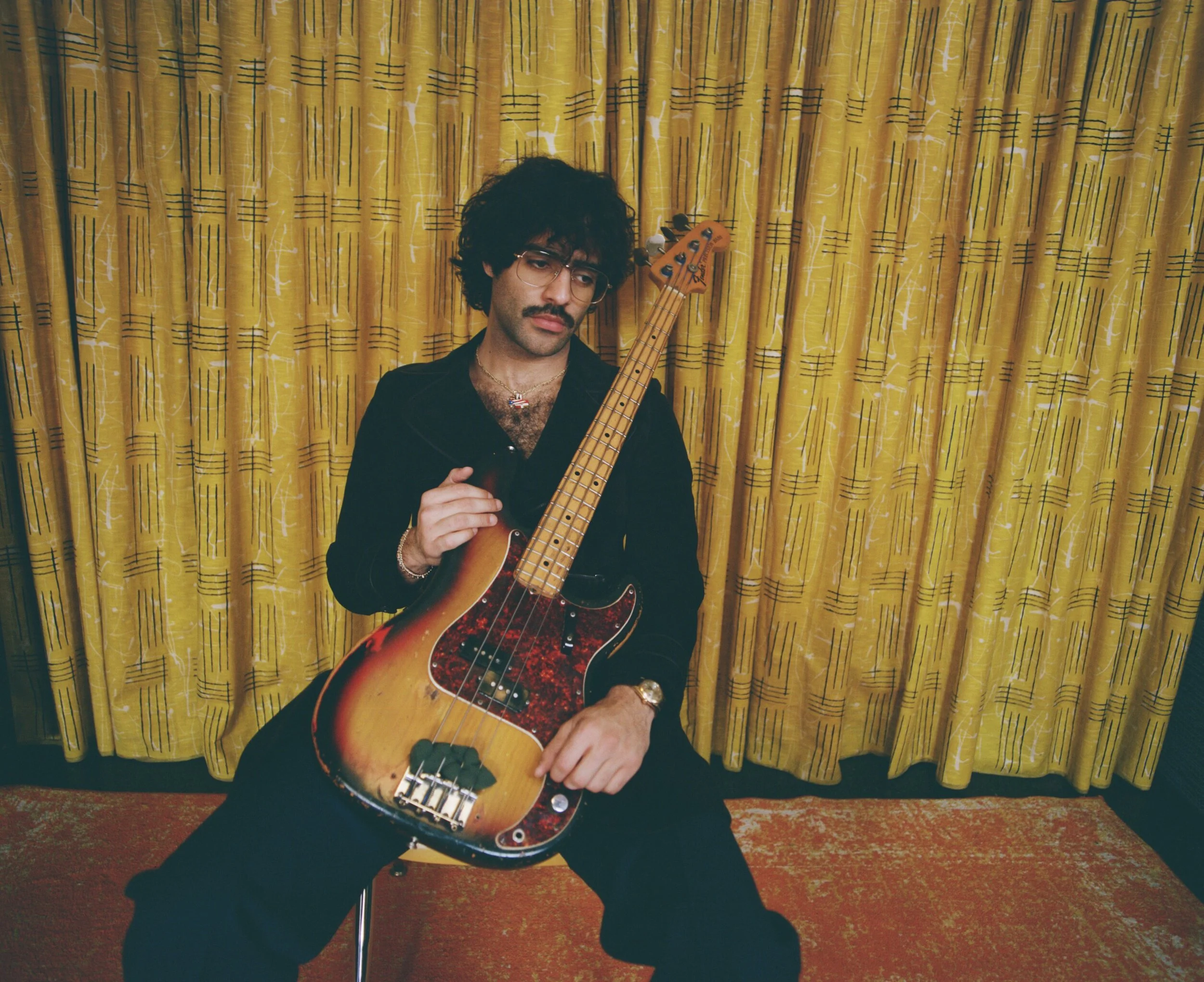
image courtesy by 54 ULTRA
Talk To You has become a real crossover moment for you. How did the collaboration come about and what’s your experience of that been? Did you have any sense when you and ANOTR made the song that it could travel as far as it has?
ANOTR reached out to us initially. They told me they’d seen me on Instagram and thought I had a cool voice. Oz, Oguzhan Guney, told me he loved the music, and they had a house in upstate New York to record in for a couple of weeks, so they invited me, Jackson and Billy Cave to go there. We only worked on three songs that weekend, and we made that one in just a day. We made it with love and it was fun. It was pure, no judgement, just fun making a song. When it was done, we were like, "Okay, now this is a good song." I didn't really understand the scale of their career or their reach, so once we finished it, they told me they were going to test it at a show in New York that weekend.
You’ve now performed the track in some pretty huge settings. Has seeing thousands of people react to it changed your relationship with the song at all?
Yeah, I think so. Even from watching the videos remotely, seeing everybody react to it over time as it became viral while it was unreleased, and then the reception when it released, and now being able to see it in person in Amsterdam, Coachella and Lollapalooza and things like that, it's very special.
Before 54 Ultra, you were producing hip-hop for other artists and worked with people like Kali Uchis. What did producing for other people teach you about what you eventually wanted your own music to sound like?
I think I'm still learning how to do it, but separating the artist from the producer internally. I think working with people almost teaches you things psychologically, and how to react musically to other musicians. It teaches you to listen more to what everybody else in the room is doing, as opposed to feeling tunnel vision on what you want to do.
Before music became your full-time world, you were working at a car dealership and performed in a salsa band. What do you remember about that time of your life? Were you already convinced this was where you were heading?
What I remember was being really hungry and really wanting it. I was working 40 hours a week, and then I'd go home and write songs. I'd record songs in my car before I went to work in the morning. I'd skip out on a shift to record a song and whatnot. It was a fun time. I was still playing shows. I remember I'd play in Brooklyn, go out that night, and show up to work the day after in the same outfit I had the day before. I'd leave my car at the dealership and take the train into New York. I'd perform, get home at 5am, or sleep in my car at the dealership. I did that like three times. I'd wake up, brush my teeth, and just go and change my shirt, maybe. But it's all part of the grind.
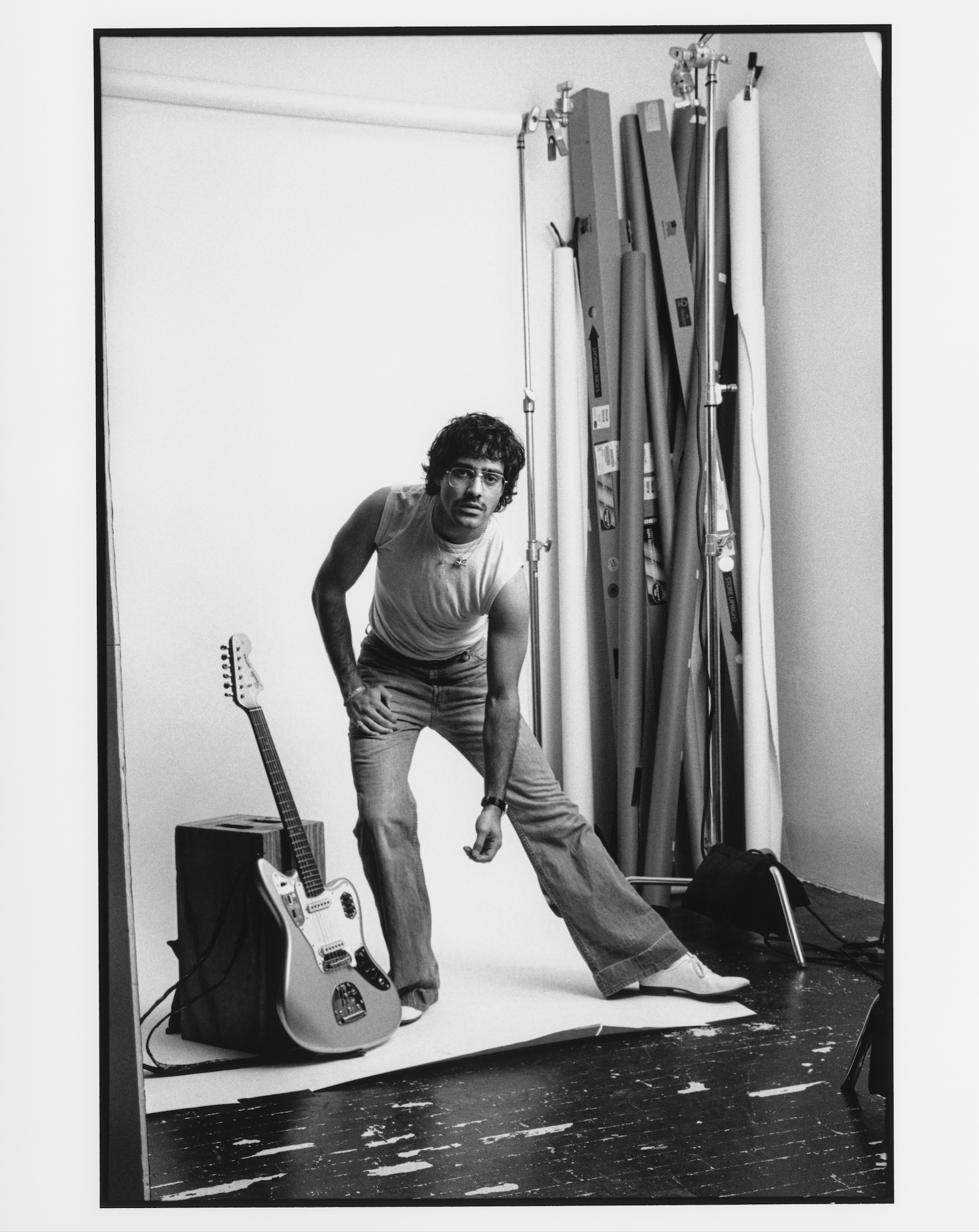
image courtesy by 54 ULTRA
Your music draws on that Latin musical heritage without feeling like it needs to sit neatly inside a particular genre. How conscious are you of bringing those influences into the music versus simply letting them emerge naturally?
It used to be subconscious, and then when I started to get into more Latin music, or when I was singing in a salsa band, I realised that, whether it was true or not, I found similarities in what I was doing with what had been done already. So then I figured, "What if I make this intentional?" It started in 2023, and I was like, "Oh, what if I put Latin percussion on a bedroom pop-sounding situation?" And then what I was calling bedroom pop was soul music, really. Then it kind of evolved into what people are calling it now. But I didn't go in with the intention initially of being like, "Oh, this is soul, Latin soul." After I learned it, then I intentionally was. It depends on the song also. It's a good mix of intention and kind of randomness.
You’ve mentioned artists like Bad Bunny and the way he’s challenged expectations around genre, language and identity. Has his success changed what feels possible for a new generation of Latin artists?
Absolutely. He's defined what success is for Latin artists, and also to be embraced by Americans and English speakers. Even as controversial or not as the Super Bowl was, there were still people that had never been exposed to that energy and enjoyed it. As much as people probably didn't like it, there's more that did like it. And that's inspiring for anybody from any culture, or anybody who had any type of an immigrant situation or diaspora situation too.
You’ve built a remarkably broad audience independently, including sold-out dates across the US, UK and Europe. Was there a particular show or city where you first realised the music was connecting beyond your immediate world?
In early 2024, I did a show in New York in January. I remember half of them came from Texas, Chicago and Virginia, and that's when I was like, "Okay, it's starting to spread." But aside from that, on tour, I think when I played in Mexico City, that was a nice moment, or when I played in Puerto Rico and people were recognising me and singing my music and talking to me in the street. That was a nice moment of, "Okay, I grew up coming here and now people are recognising me here at the airport and stopping me and stuff." That was a good moment.
As the audiences and stages get bigger, what are you determined not to lose about the way you’ve made music up to this point?
It's about being humble and understanding the job of what I'm tasked to do. Even when I played to five people, it felt huge. So even if I played to 20.000 people, it'll still feel approachable. Technically, I did do that, actually, when I opened for Kali Uchis one show. And that scale didn't do anything. I did the same job that I would have done to five people, the same way. And it worked that way. I didn't know anybody was there at all. It was so dark, I couldn't see until after I was done, and then they were cheering. I was like, "Oh, it's actually pretty big.” So I want it to be bigger. I would love to do 10.000 people, because once it gets so big, it still feels personal.
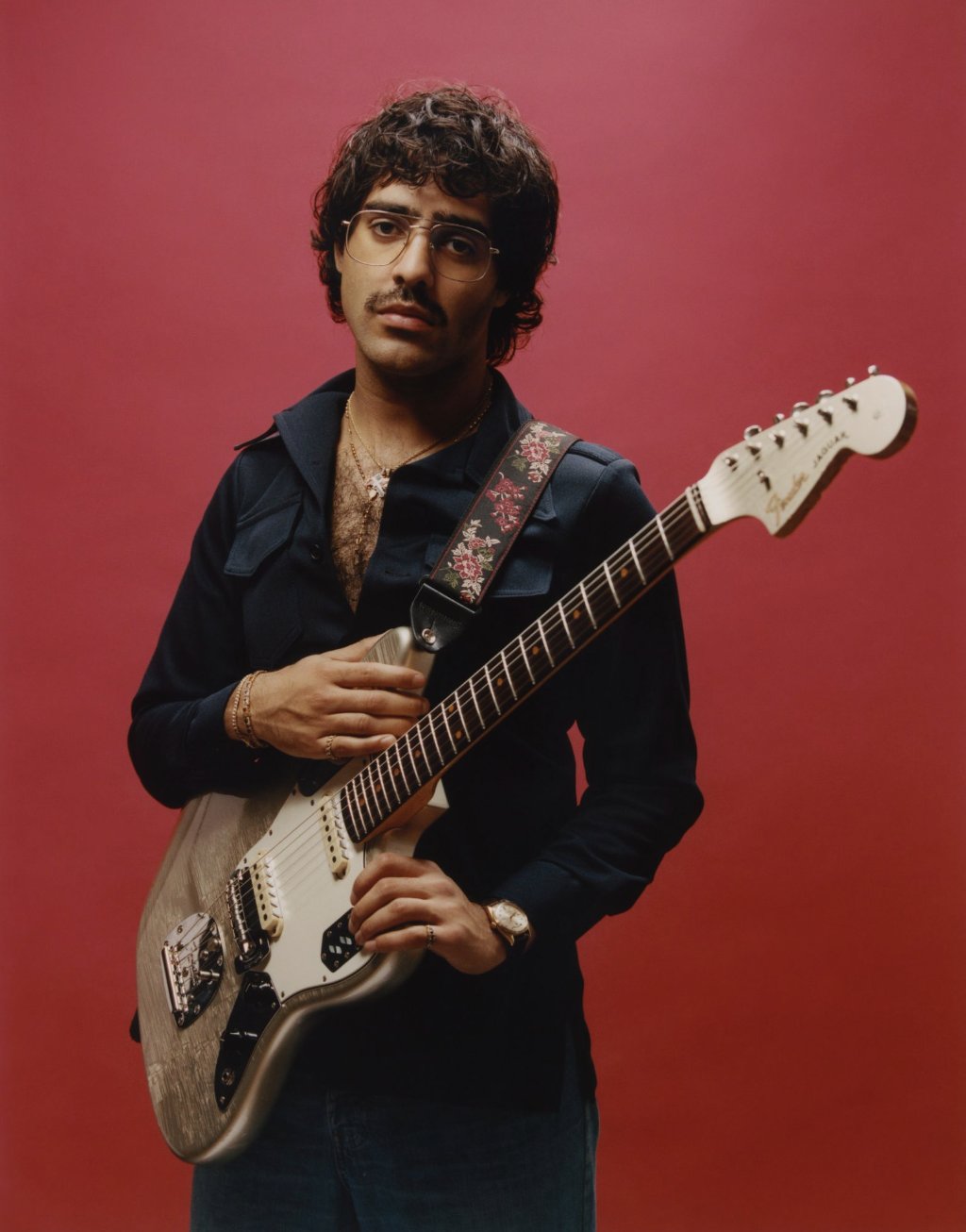
photography by MAX TARDIO
With more new music and touring ahead, does the next phase feel like an expansion of the world you’ve already created, or the beginning of something different?
I think it's going to be an expansion for sure. I learned a lot in my year of touring now and I'm excited. Every show that I do, I try to do something better than the one before, and I've been applying that mentality the whole time. And the music is the same way. All the songs that have helped my recognition now are from when I was 20 or 22. They're all pretty old. Now, whatever I release is going to be from my current brain. So I hope people like it, but I think it's going to be good. It's going to be a new world and it's still familiar, but refreshed a little bit.
Finally, if we spoke again a year from now, what would you hope had changed for 54 Ultra, and what would you hope had stayed exactly the same?
Nothing, I mean, I'm happy with what's going on. I'm happy to grow. So in a year, I just hope I'm still happy and consistent and healthy and able to continue to entertain people. And what would I want to stay the same? Continuing that passion, I guess. You still have the same joy performing to five people as you would to 20.000. That'll definitely stay. And then I hope the energy is more grand, and I hope I have a bigger reception.