
IN CONVERSATION WITH ARTHUR WAGENAAR
interview by NIA TOPALOVA
Arthur Wagenaar, a graduate of the Royal Academy of Art, The Hague, was selected as the winner of Lichting 2026, marking the 20th anniversary of the platform for upcoming Dutch creatives. Wagenaar was selected by the jury to present his collection alongside nine other graduates, in front of a crowd of industry professionals and press in the passage of the Rijksmuseum. His collection draws on the repetitive and dedicated labour of monastic life, highlighting the importance of process while translating historical references into a contemporary, fashion-forward collection.
What made you look at figures such as Hildegard von Bingen, Simone Weil, Friedrich Nietzsche and Titus Brandsma as inspiration for your work?
I am searching for stories or memories in the individual which have been forgotten or dismissed over time, facing complex values like ‘morality’, ‘calling’ or ‘virtue’ in the present time and the role I play as a designer. For me, these individual thinkers practiced, although very different from each other, their own creative will.
What I mean by this, is that during their life they all had an experience (for the mystics more in a vision-like sense) which raised questions that they could not explain into (rational) words but had to explain in the creative (irrational) sense. I understood that a creative process is not so different from a mystic's quest to translate God's visions or messages into words. For example, Hildegard von Bingen translated her experiences and visions into art, poetry, and songs/ chants.
Another example is in pure luck. I found out about Titus Brandsma, because I walked by his memorial church twice when going to the train-station in Nijmegen to go to KABK. I was very satisfied, a Mystic who studied and lived in my hometown! His enlighting and tragic life and work is a powerful story to me, which I wanted to share in a iconographic way on my clothing. Praising individuals that should be seen as modern-heroes of our time.
How did monastic life become a starting point for your collection?
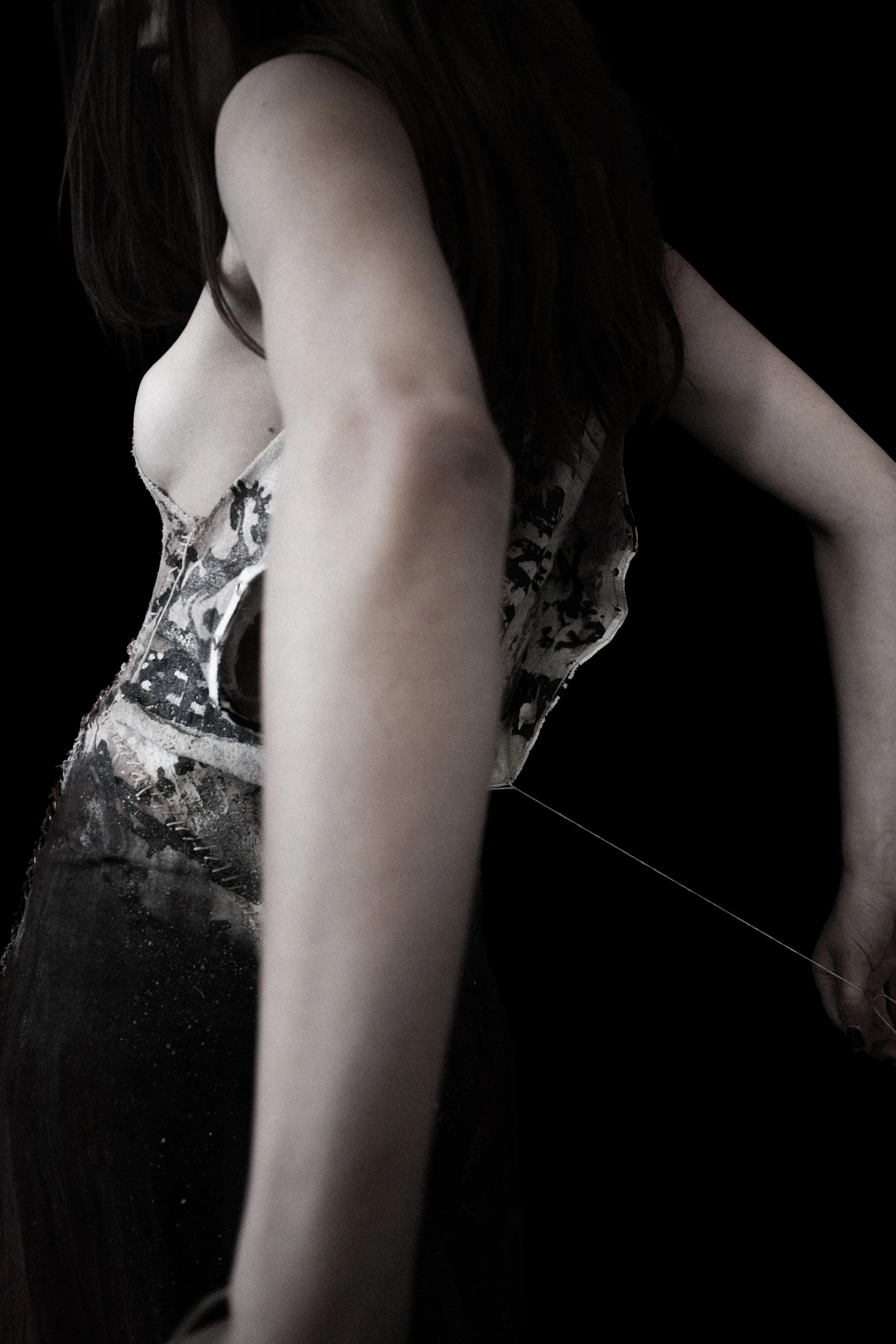
Last year around this time I was struggling with finding a direction of the whole collection. The drive of perfection and the endless stream of content on social media, had a significant influence on my own creative will and imagination. I was looking for a rather inwards approach that was faithful to my own ideas and imagination. I stumbled on the work of Meister Eckhart (~1260-1328) that was brought to me by the words of Gerard Visser, who raised the question of “Can we really leave nothing untouched these days?” Genuine creativity requires an open space, a form of “nothingness,” where ideas can emerge over time. A position in which this ‘open place’ can form is in the attitude of “Gelassenheit”, translated in Letting-go, this Attitude is theologised by philosopher Meister Eckhart, whose main goal was to keep a breathing space for your own self and creativity. I visualised this into how monks work: the endless routines and dedicated labour, highlighting the importance of process over perfection.
When you talk about moving away from quick inspiration and social media references, what changed once you focused solely on the repetition of your own creative ideas instead?
Good question, I think from the beginning when I started at KABK I already was very much against the use of social media or Pinterest as inspiration ‘markets’. One of my teachers was Ellen Vos, who said in her first class: “do not use Pinterest, I have seen all those boring and flat images already.” I took that very serious, and so I just threw myself into one individual only. After my third year I was trying to understand how I design and create, and what direction or ’group’ I was attached to. I think I was very fragile in that moment to outerwords influence and content from places such as Instagram. When I detached myself from this, I was still very doubtful if my own (then) ’small’ ideas would work and grow. I think I needed my teachers in 4th year the most then. For example, my design teacher Lilian Driessen encouraged me to go further and be faithful to this. Now, after the creation of the collection, I see its fruition and power to go further with this direction.
The jury at Lichting described the collection as creatively extraordinary although they also noticed commercial potential in it. How does the idea of selling your clothes sound to you when so much of the collection is concerned with a slower and more personal approach to making them?
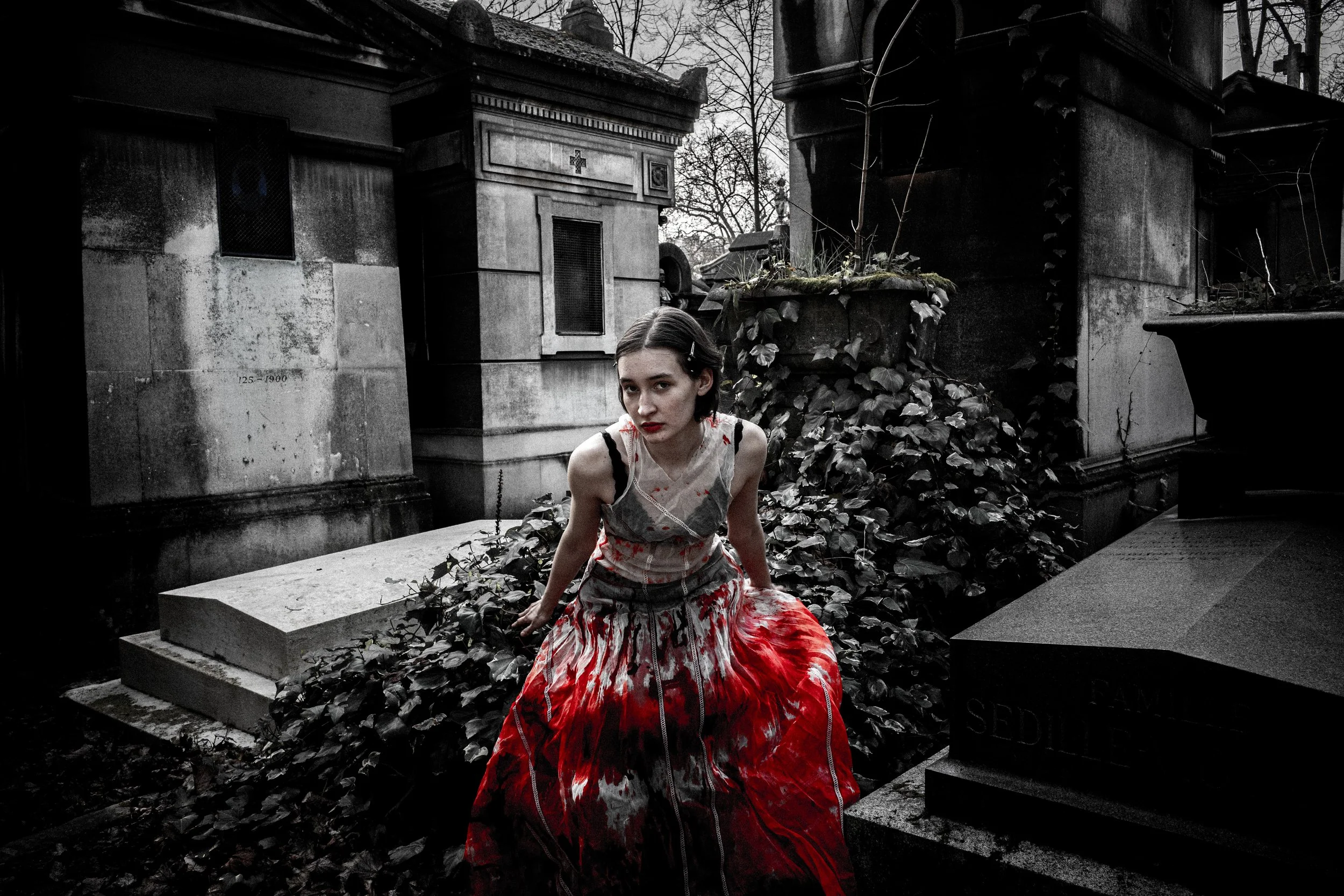
I think more designers concern themselves now with trying a slower approach to their work and commerce. I hope more people in this industry allow a breathing-place to appear in their practice. It is personally a huge compliment to hear, that my collection has commercial potential, because that is of course an important factor of why I can make the clothing in the first place. I think for me it is too early to start a brand on my own. I want to observe and learn more from the inside of the fashion Industry now, to see where I could fit in and work from there. It would be a dream if I could, for example under my creative direction at a brand, make clothing that has the same intensity as what I showed with this collection. Imagine dresses with a big portrait of Lou Andreas-Salomé!
What does a day of working on a collection like this look like for you when the process is based on returning to the same ideas and techniques over a long period of time?
Making very small steps: with each choice you make at one garment, you see and think how this can also happen at another garment. This happened over a long period, I think from starting my internship around Summer of 2025 until showday at KABK, 28th of may. When I ended my internship I could fully concentrate on my graduation collection, which was working all-day everyday on it.
How do you decide which parts of your research should remain hidden and which ones you want to be visible in the finished collection?
We had to make a thesis during the designing and making of our collection. You start in pure chaos. In that period everything influences you, and you should create landmarks in that chaos where you can move to if you feel lost again. Nietzsche in Thus spoke Zarathustra has this beautiful line about it: “You must have chaos within you to give birth to a dancing star”. What ends visible in the collection is not knowable in the beginning of a creative process, the parts that are most important just attach to you longer than other ones. For me, the most important creative ‘relic’ is the Turin Shroud, which it has been for years now.
How did the idea of repetition develop throughout the making of the collection, and did working in that way change the garments you ended up producing?
The starting-point of most the looks stayed the same: I used the same patterns or materials in different looks. But through repetition of handstitching, dyeing with ink, or using paper, different ideas of my concept became relevant in certain looks. Although having the same repetition of routines everyday, you cannot change your day-by-day subconscious mind or even your concsciousness. Your creative Will and imagination do the work to create difference in the looks.
How did you feel after winning Lichting 2026, and what has changed in the way you think about yourself as a designer since graduating and immediately receiving this kind of recognition?
I could not really believe it. I am very self-criticizing and put myself down quickly, this was a kind of wake up call that I should be much more confident in my work, and be less doubtful about its relevance and intensity. A week after I see also how sharing my work and designs can be a satisfying moment, rather than a self-pitying moment.
How much of the meaning of Monnikenwerk depends on the viewer understanding the references behind it, and how much do you want the clothes to communicate without that context?
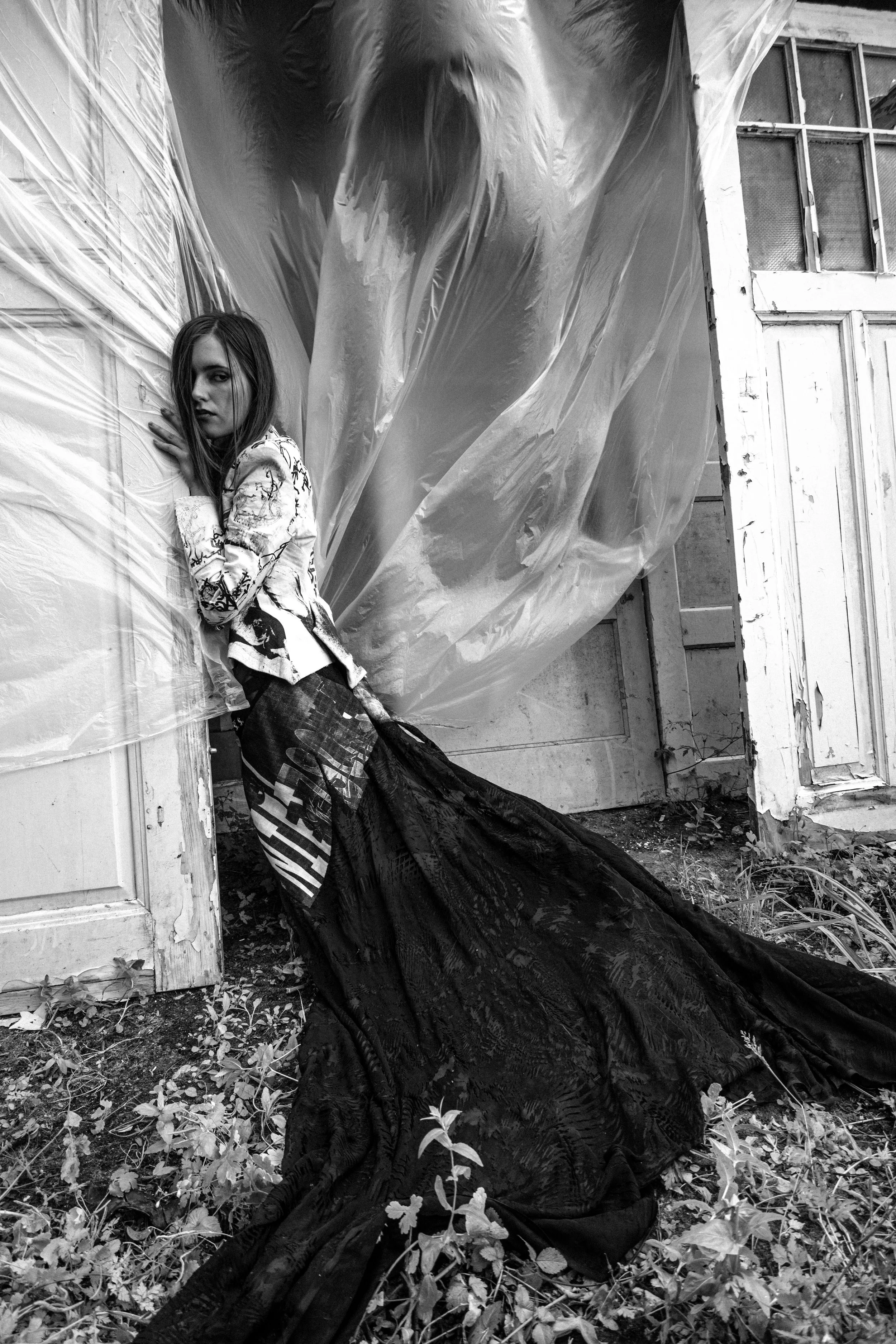
Difficut to answer, the name of the collection first was something much less clearer than Monnikenwerk/ Monk’s Practice. I changed it on purpose to Monnikenwerk because everyone has a certain defintion attached to that term. This is I think why the title is so important to a collection, it is in some ways a closed or open door for someone who sees it for the first time. With an approachable name like that, I was trying to ‘lure’ people in to see more interior work of the whole collection. For this reason I made this big iconographic portraits with name for example. But ultimately, the story or meaning should be irrationally felt (also without any knowledge of context) by wearing or looking at the clothing. In the end, the clothing should be wearable and should stand on their own without any context, rather aesthetics and function.
Where does the research take you from here, and is there something you’ve encountered while making Monnikenwerk that you already know you want to pursue further?
I am always learning and studying, different things will come to my point-of-interest which then will also reflect in my work. For example, right now I’m learning a lot about the physician and mystic Robert Fludd (1574-1637), but at the same time being intrigued by the photographs of Larry Burrows and W. Eugene Smith. In the end, creativity starts with curiosity.
