
IN CONVERSATION WITH BIRVA PANDYA
interview by JANA LETONJA
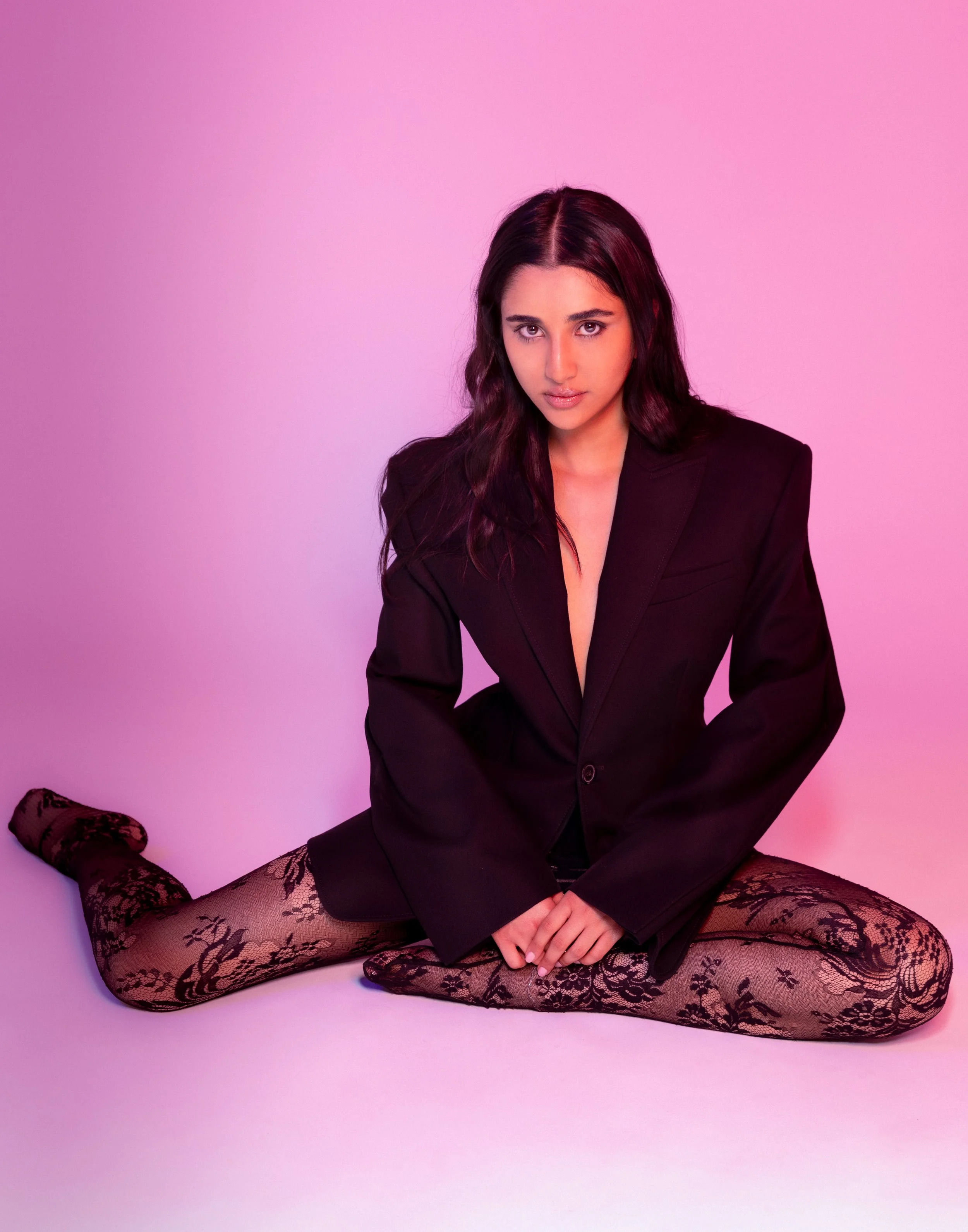
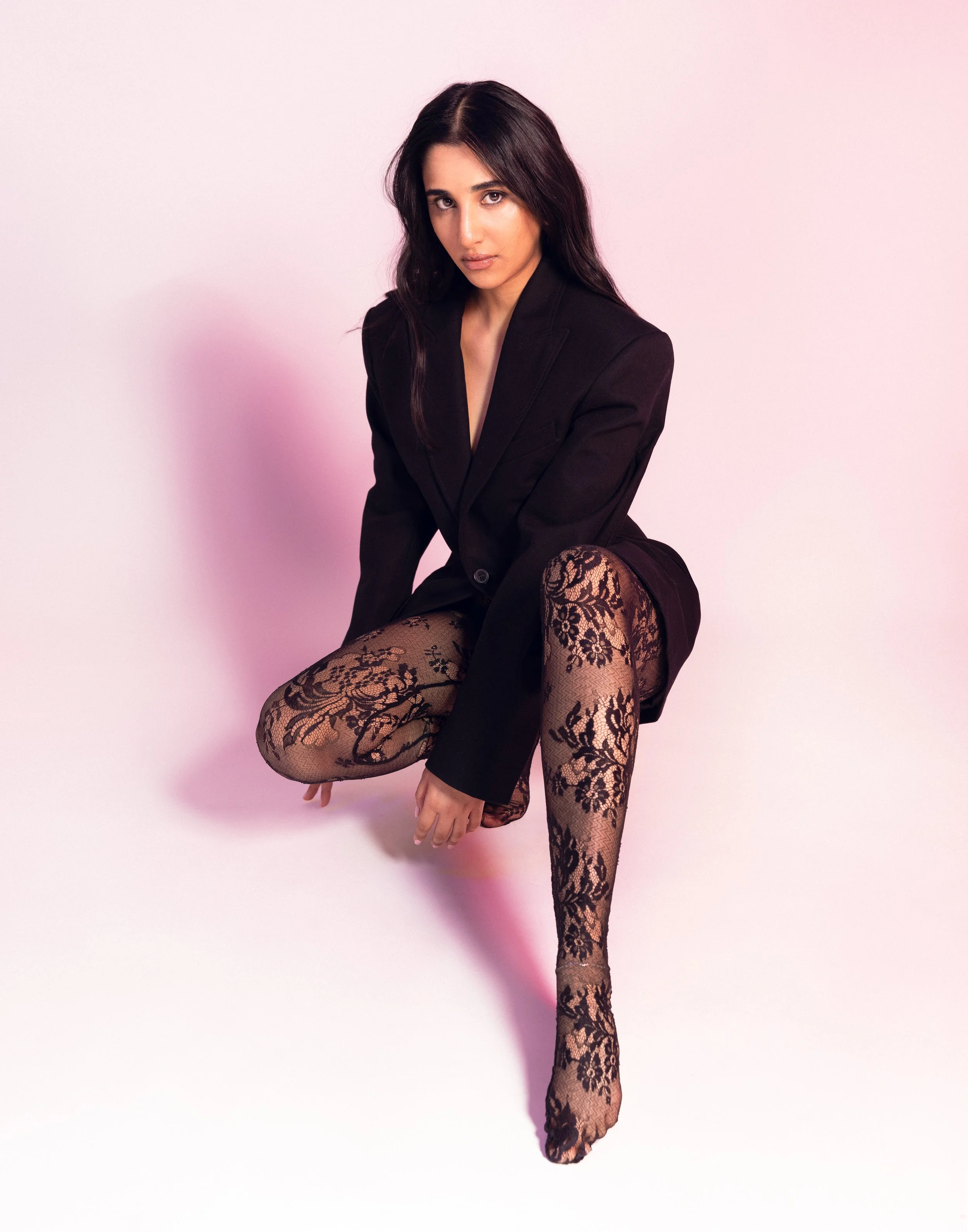
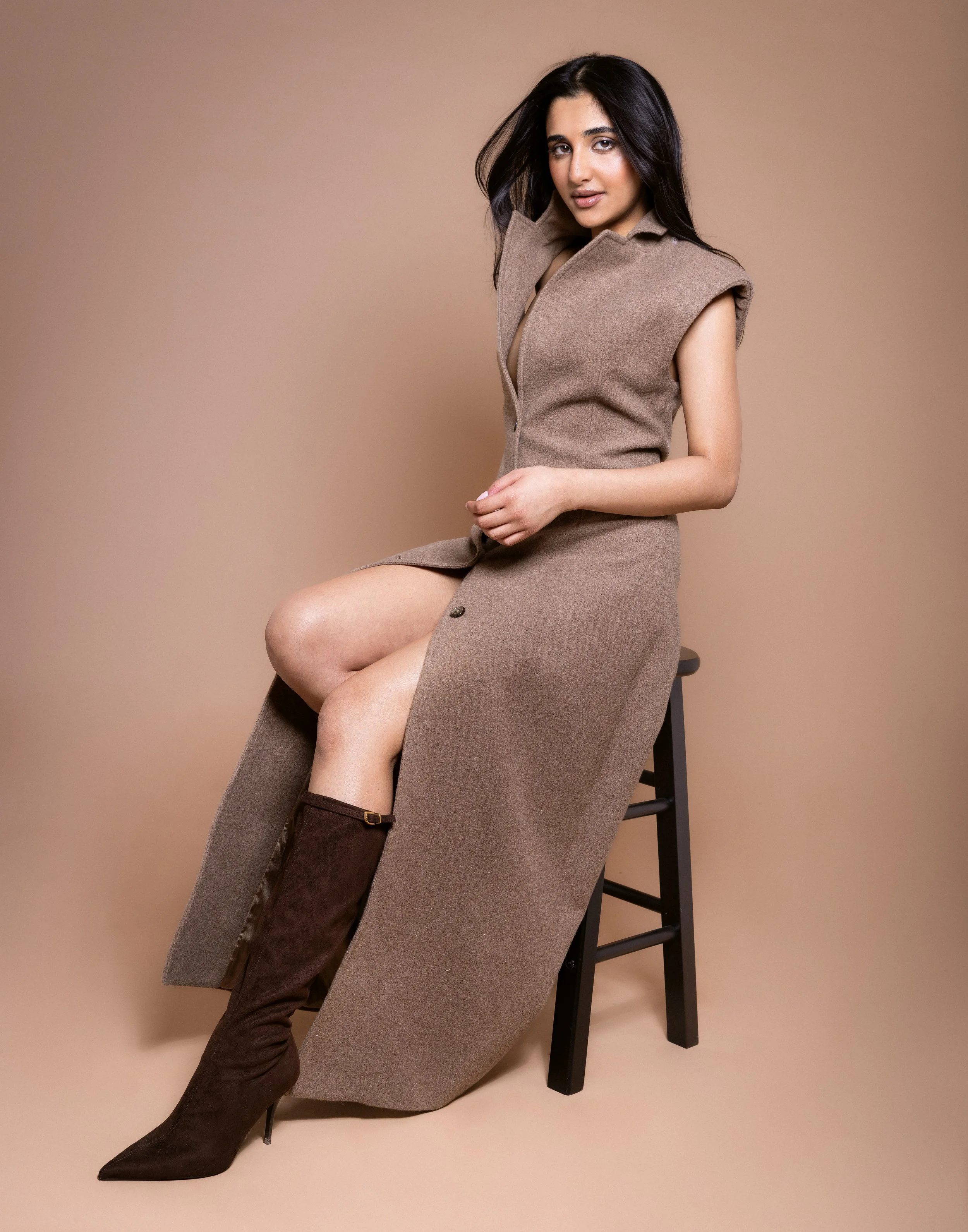
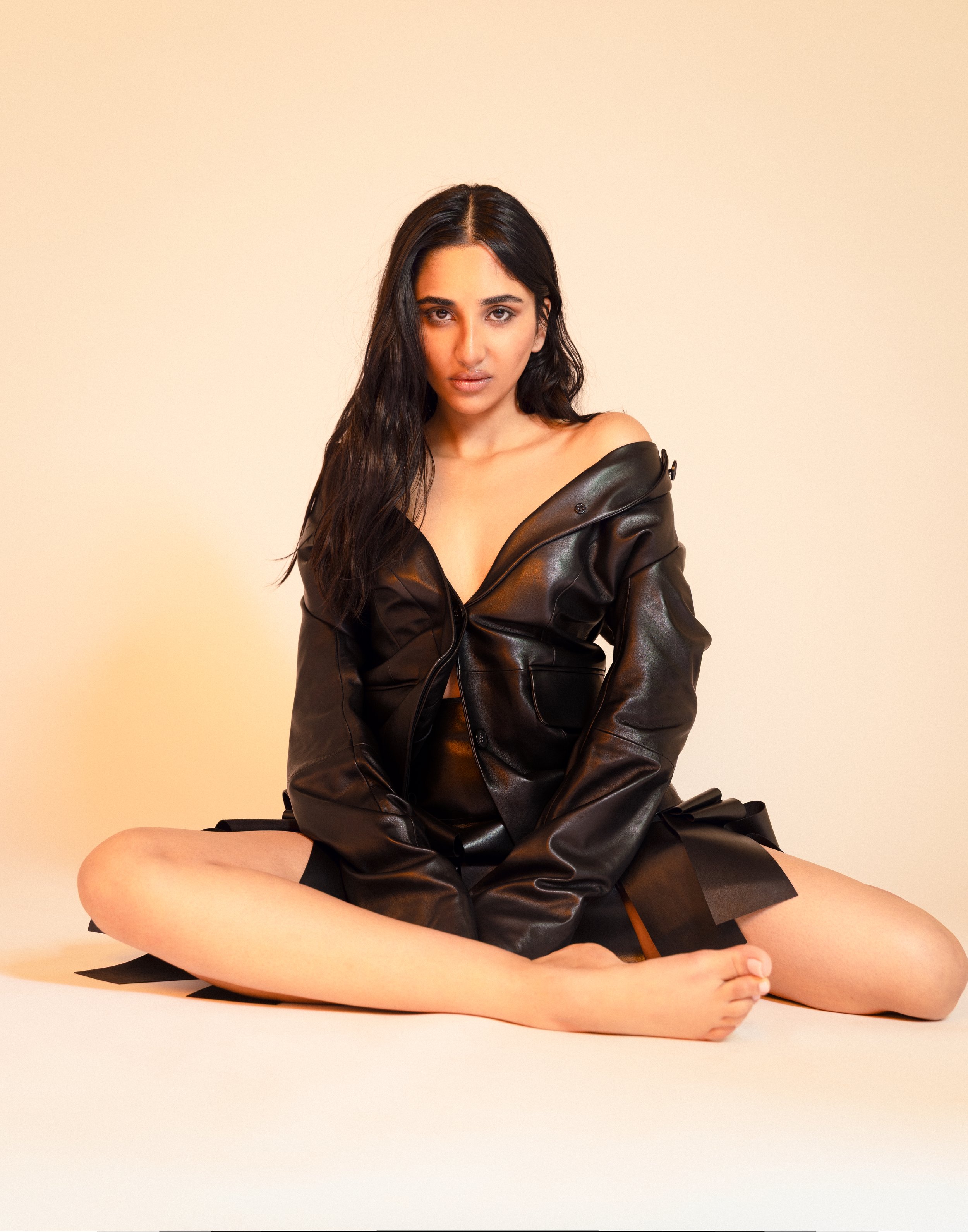
Birva Pandya is an Indian-Canadian actress making a powerful mark on television with her role in Hulu’s The Testaments, the highly anticipated spin-off to The Handmaid’s Tale, set to premiere on 8th April. Set 15 years after the original series, the new chapter expands the dystopian universe while introducing a new generation of voices, including Birva’s. Her previous television credits include MGM+’s The Institute, NBC’s Transplant, and The Umbrella Academy. Beyond acting, Birva is a trained dancer and singer, having studied at the Shaimak Davar International Dance School.
What drew you to The Testaments and this next chapter of The Handmaid’s Tale universe?
I studied The Handmaid’s Tale in high school, so I was very familiar with the novel and already a big fan of the series. When I first received the audition for The Testaments, it was under a working title, so I had no idea it was connected to that universe. What struck me was how deeply I connected to the material. I taped for it immediately, and it felt incredibly easy, which for me is always a sign that something fits.
I loved not knowing the world it belonged to because I had so much fun creating it in my head during the audition stages. There was so much room for creativity and imagination. I was inventing all the rules my character followed. It wasn’t until later that I realized I was auditioning for the sequel to such a beloved and important story, which made it feel incredibly full-circle. I remember thinking of my high school English teacher. It was such a proud moment to tell him, when I finally could, that I was joining The Handmaid’s Tale universe.
How does stepping into a world that already has such a devoted global fanbase shape your approach?
Once I got the role, I felt incredibly honored. The Handmaid’s Tale is such an important and globally loved story, and as a Canadian, it’s something that has felt especially present. At the same time, I really wanted to approach The Testamentswith a blank slate. This is a new generation, a different time, and a new perspective within Gilead. For these girls, this world is all they’ve ever known.
To honor that truth, I felt it was important not to be influenced by what I already knew about the original series. That instinct actually began in the audition process. Not knowing what the project was initially gave me the freedom to explore the character and world without limitations. I chose to continue treating it as an entirely new project and trusted that this approach would offer a fresh perspective while still staying true to the larger story. I’m really glad I made that choice. It felt like a leap of faith. It could have been the wrong decision, but ultimately, it allowed me to remain creatively open.
What can you share about your character and her place in this new generation, 15 years later?
Miriam is part of this new generation of young women who have been entirely raised within Gilead’s structure. She’s navigating the immense pressure surrounding marriage and stepping into adulthood. There’s a sense of routine and order in her life, and she finds comfort in that. She believes in the system because it’s all she’s ever known.
Marriage disrupts the predictability she relies on, and she wants to assert as much control as she can over this transition to ensure she’s set up for the best life available to her. At the same time, she’s navigating friendship while also competing with her peers. There’s a very human, relatable layer to her, even within such a rigid world.
When we first started filming, I was a bit daunted, but those nerves faded within a few days. I felt very aligned with Miriam quite quickly, and I think that mirrors her character arc in the show as well. Throughout the season, she really finds her footing and her place among her friends, which becomes a foundation for her even as she struggles.
Did you feel any pressure joining a story that carries so much cultural impact?
I didn’t see it as pressure so much as an opportunity and an excitement to be part of something bigger than myself, and to help tell a story that feels necessary. The Testaments continues to confront very real and difficult subject matter, but through a fresh lens and a younger perspective.
From the beginning, I felt optimistic because I believe this new chapter will resonate deeply, especially with younger audiences who may see themselves reflected in these characters in a new way. More than anything, I felt grateful. Grateful to be part of the experience and to work alongside such extraordinary talent.
How does The Testaments differ tonally or emotionally from the original series?
What really stood out to me when I first read the scripts was how youthful the tone felt. The Testaments leans into the element of girlhood, the intimacy of friendship, the quiet emotional moments, and the inner dialogue of these young women.
There’s also an unexpected lightness at times, a natural humor that emerges from their relationships and relatability. It reminds you that even within such a rigid and oppressive system, their spirit can’t be erased. That resilience and refusal to lose themselves feels like its own quiet power. While the larger themes connect it to the original series, the levity and emotional intimacy are what I truly fell in love with.
What themes in the series resonate most strongly with you personally?
Sisterhood is such a powerful thread in this series, and I truly felt that off-screen just as much as on-screen. I’ve grown incredibly close to the women in this cast and to our crew. It genuinely felt like a second family.
The friendships between these girls are central to the story, and because that bond was so real in our own experience filming, I think audiences will genuinely feel that chemistry on screen.
What have you learned about yourself as an actress through all your diverse roles?
I’ve realized how fortunate I’ve been in the people I’ve had the opportunity to work with over the years. I always go into a project with the goal of learning as much as I can from everyone on set. I deeply value collaboration, it brings me back to the sense of community I experienced doing theatre growing up, and why I fell in love with performing in the first place.
So much of my process happens on set and through living in the space. I’ve also learned how important it is for me to bring a piece of myself into every character I play. Even if it’s something subtle, that personal connection makes the character feel fully dimensional and allows me to truly inhabit their world.
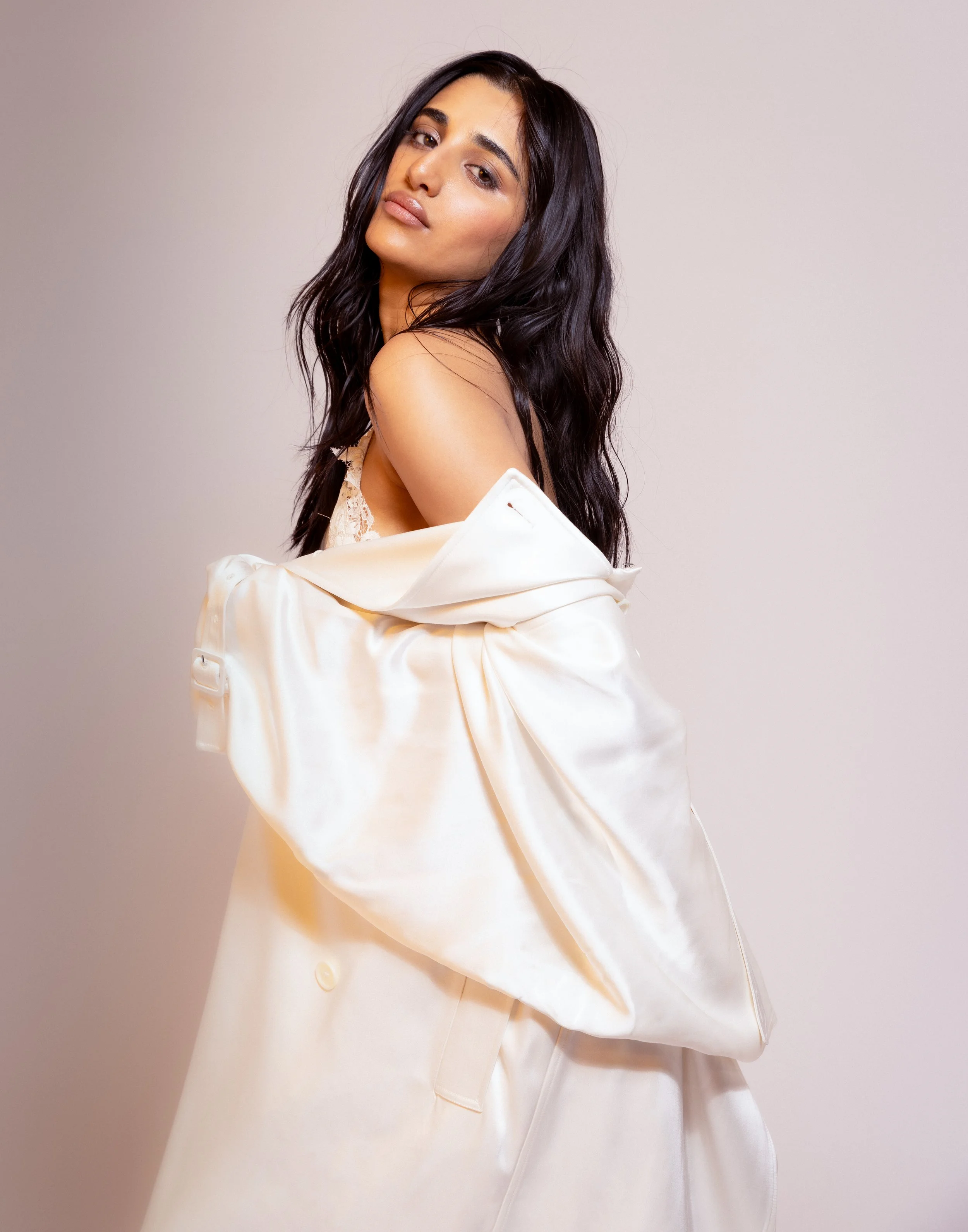
As an Indian-Canadian performer, how important is representation in the projects you choose?
Representation means everything to me. I grew up surrounded by Bollywood films and music. There was always a mix of movies from different eras playing in our house. Seeing performers who looked like me made acting feel possible.
My sister and I would constantly recreate scenes and dance numbers, there are so many home videos of us doing that. Those memories are incredibly special because they planted the seed that this career was something I could pursue.
I’m hopeful to see even more representation across Hollywood and the global film industry as a whole. What excited me about The Testaments is how diverse the cast is. It brings a fresh and authentic perspective to a story that already carries so much cultural weight.
You’re also a trained dancer and singer. Does movement or music inform the way you approach acting?
Absolutely. I attended a performing arts high school where dance and movement were integral to our drama training. That foundation taught me how to feel grounded and free in my body, which is so important on camera.
Music is also a huge part of my process. I love creating playlists for characters I’m auditioning for or playing. Listening to certain songs on set can instantly transport me into the right emotional space. It’s almost like a portal into my character’s inner world.
How do you balance vulnerability and strength in complex female characters?
For me, vulnerability and strength go hand in hand. I don’t see them as opposites. I think the willingness to be open and to feel deeply is where real strength comes from.
When I’m building a character, I always try to anchor her in something truthful from my own life. With Miriam, vulnerability came naturally because she’s at such a transitional point. At the same time, I was very aware of creating the protective outer layer she’s had to develop to survive in Gilead.
Is there a dream genre or role you hope to explore next?
I’m really drawn to character-driven stories, something grounded and layered. I love roles that explore relationships in nuanced ways.
On the other hand, it’s always been a dream of mine to do a satirical comedy and work in that realm, since it’s so different from what I’ve done in the past. I genuinely love performing and am open to being surprised. For me, it’s less about the genre and more about the depth of the character and the people I get to collaborate with.
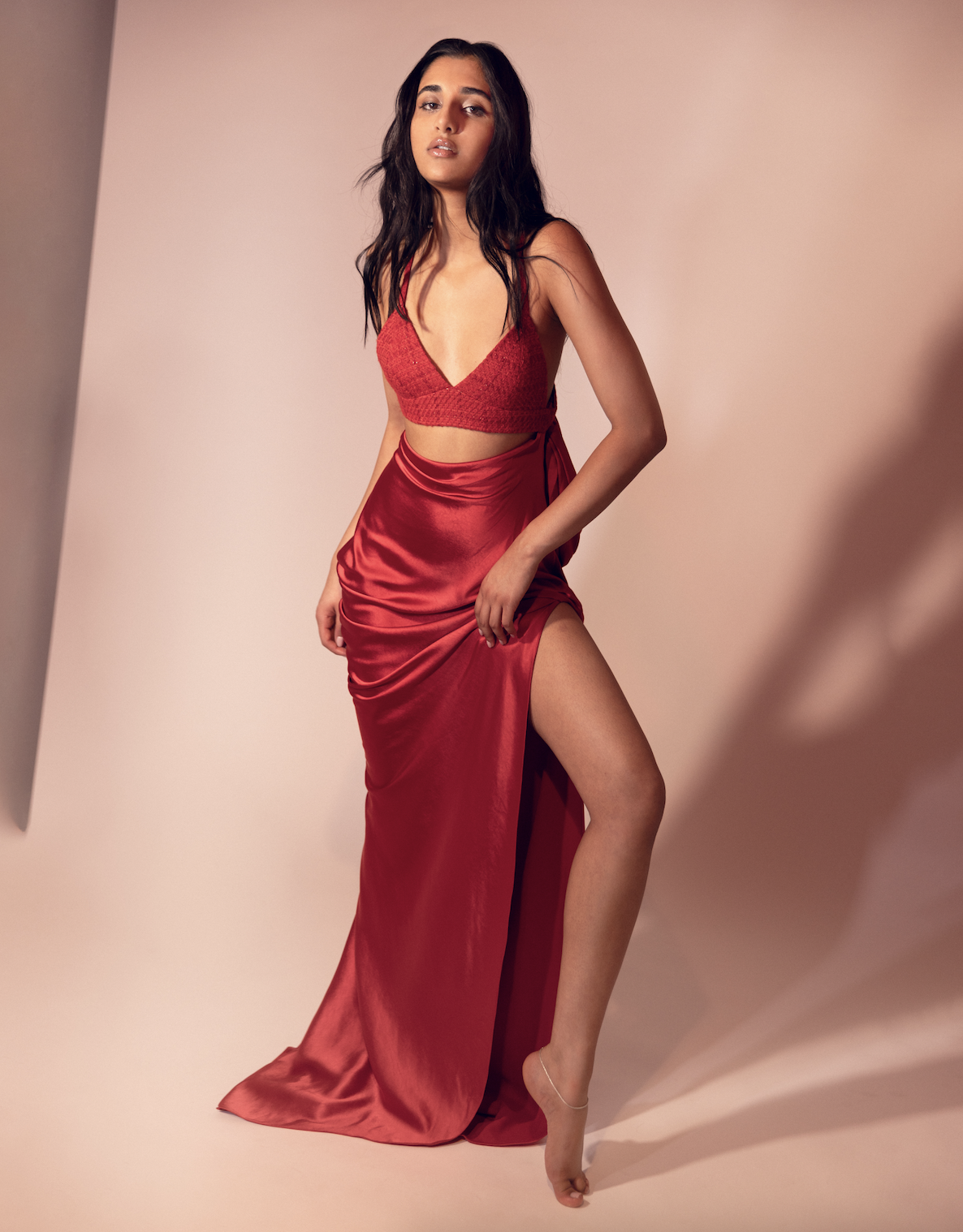
TEAM CREDITS:
photography TIZIANO LUGLI
styling ADENA ROHATINER & RIKKI MENLO
makeup CARISSA FERRERI
hair BRADLEY LEAKE
