
IN CONVERSATION WITH BRAD ALEXANDER
interview by JANA LETONJA
Brad Alexander is quickly emerging as one of the most compelling new faces to watch, with a breakout year ahead across major global productions. He stars as Garth in The Testaments, the highly anticipated sequel to The Handmaid’s Tale, based on Margaret Atwood’s acclaimed work, bringing a magnetic screen presence to a story already steeped in cultural impact. With additional roles in a forthcoming Netflix project from Charlie Brooker and appearances in You, Brad is transitioning from modelling into acting with striking confidence, positioning himself as a talent on the cusp of major international recognition.
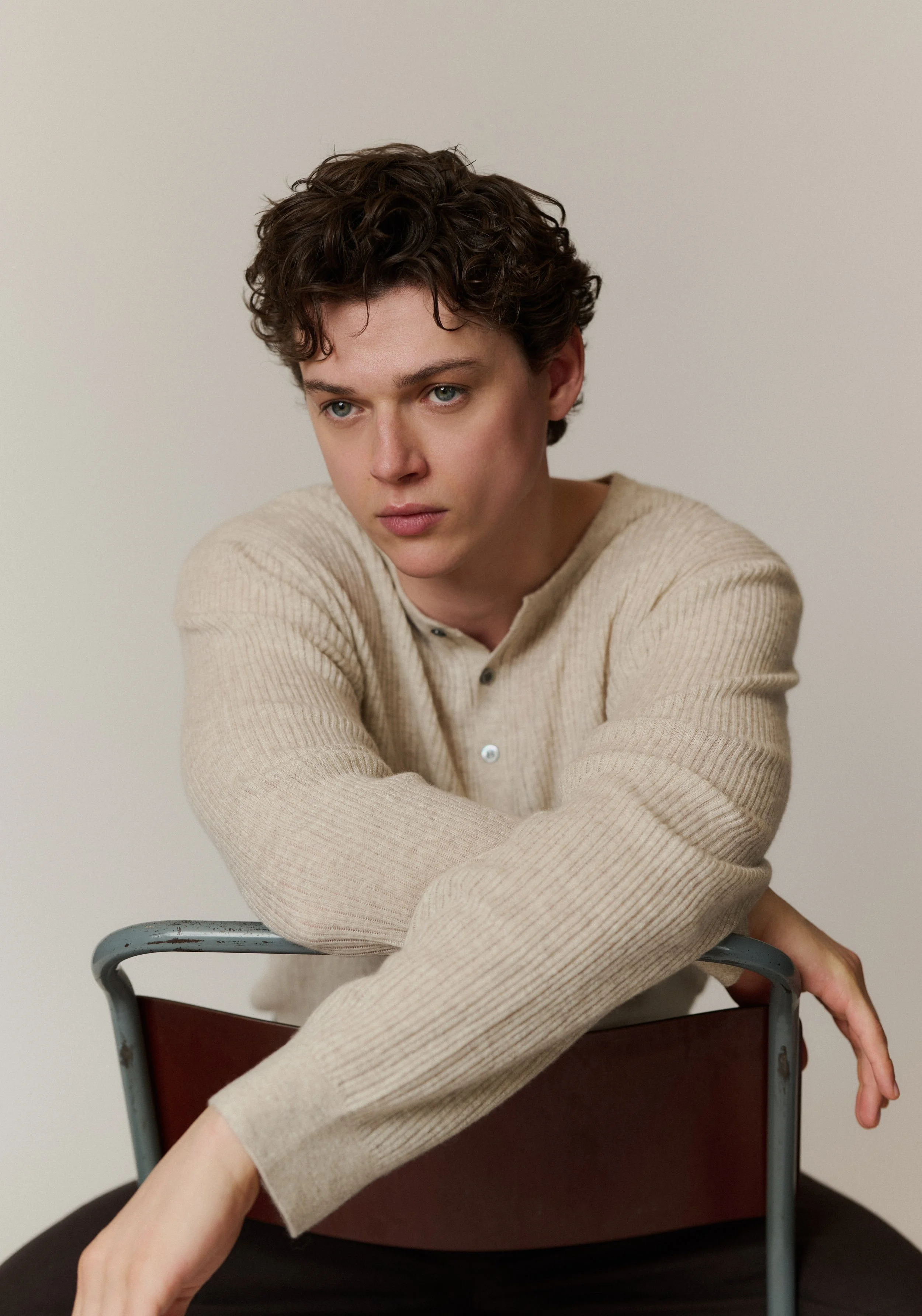
What drew you to the role of Garth in The Testaments?
I think the complexity. Every performer in this universe has the additional task of constantly demonstrating the weight of this authority bearing down on them, on top of fulfilling their character’s identity and circumstances. That appears especially true for Garth, whose allegiances seem to be manifold and mysterious. Performing him feels like a constant tightrope walk of competing influences that he’s just helplessly vulnerable to. He just struck me as really intriguing off the page.
How did you prepare for entering such a well-established and impactful world?
I had already seen and enjoyed The Handmaid’s Tale, so I definitely wasn’t going in blind. Picking up both novels was step one for kind of steeping myself in the tenor of the world Atwood set up. I read around some feminist literature for the first time. I did gun training, dialect training, I filled in some gaps of Garth’s background under the team’s direction. And then the shoot day comes, and you sort of drop all that and just try to have a real experience. It’s a really valuable thing to have multiple seasons of a show to set a tonal and stylistic precedent. And then, importantly, understand where and why our show differs.
What can you share about your character and his place in the story?
We meet Garth in his position as a Guardian, a fairly low-ranking soldier-type role in the theocratic regime of Gilead. It’s his and all men’s determination in this explicitly patriarchal arrangement to become a Commander, a valued member of this society’s elite. It seems Garth has grown up in this world and, on some level, wants everything it can offer him. But a painful event in his family’s history seems to have shattered his understanding of the system he grew up in. He is tasked with the protection of Agnes McKenzie, the prized daughter of a high-ranking commander, whilst simultaneously and covertly ushering in a new recruit, Daisy, on behalf of Mayday, the rebellious uprising. His charged interactions with these chaotic new influences in his life push him to question his allegiances, his goals, and his limits.
How does The Testaments expand on the legacy of The Handmaid’s Tale?
I think it serves as an important new perspective on the secondary victims of this societal arrangement. It’s easy to appreciate the devastating personal consequences of being a Handmaid in a regime such as that. It’s less easy to appreciate why the ostensibly privileged women and girls of this world are also profoundly restricted and victimised. The more subtle consequences of that are really fascinating to see manifest and develop, I think. More so, there are characters and stories within The Handmaid’s Tale that intersect and overlap with ours, possibly providing a satisfying sense of closure or completion to some.
How did working on this series challenge you as an actor?
It’s a really special position to be in. As a regular, it’s evident from day zero that you’re helping to provide the architecture of the story, not just the paint, to a certain extent. It’s a case of going deeper. Constructing something coherent, considered. The challenge here was being bold enough to rise to that and have strongly held convictions about the character and his circumstances. It was only through the generosity and openness of Bruce and Maya/Gianna that I was comfortable enough to do that. I’m really grateful to them and really happy with how it turned out.
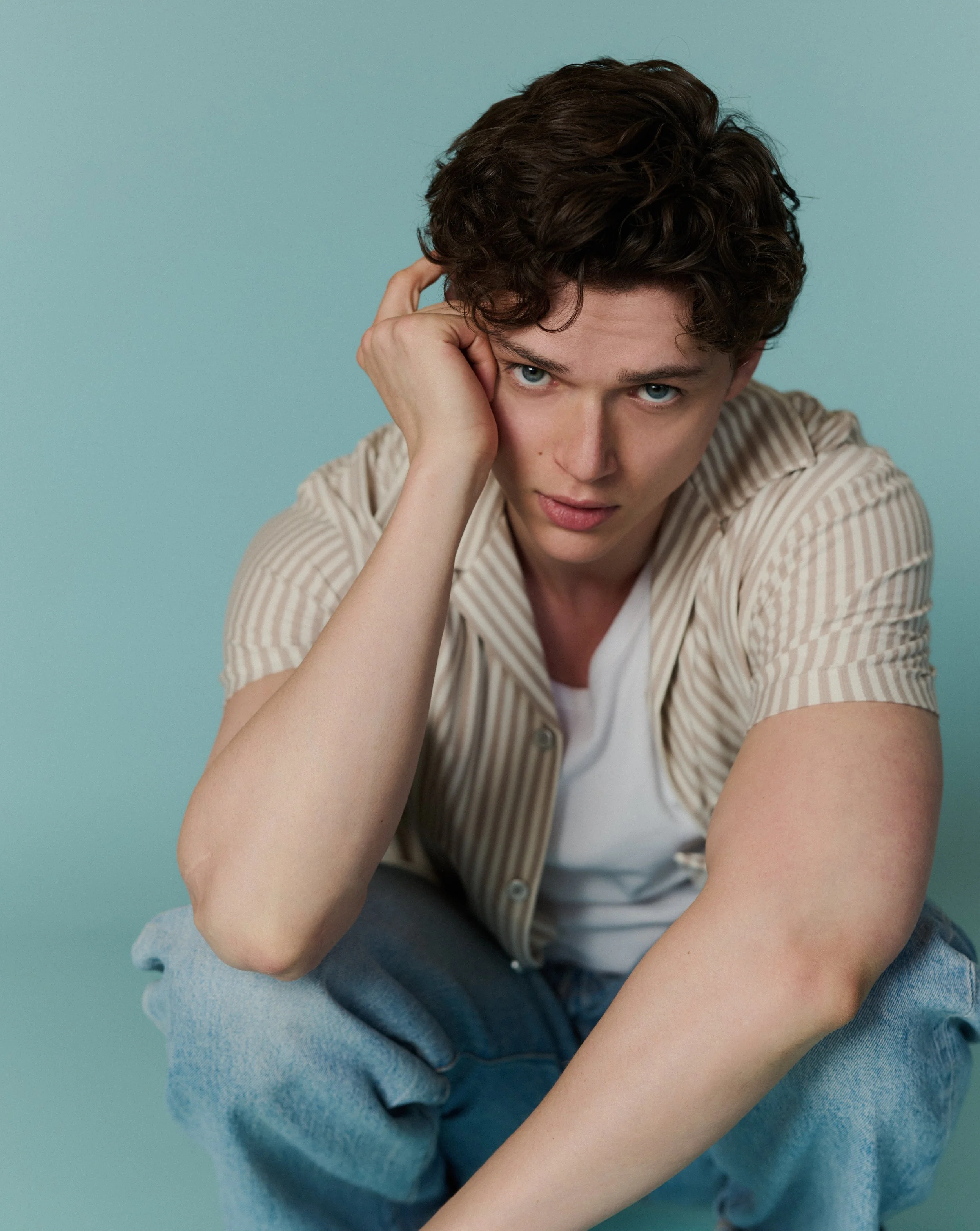
You started your career as a model. What inspired your transition into acting?
I suppose that’s true. Though they don’t feel especially connected. I’ve wanted to act my entire life. It just felt, and kind of was, ludicrously unrealistic. The real moment of change occurred when I dropped the notion of success or even failure in relation to acting. Understanding that to do it, really in any capacity, is its own success. Because I simply enjoy it above all else. Once that lesson settled in, nothing else really mattered. I did it for its own sake, and that’s still true today.
How has your background in modelling influenced your screen presence?
I guess there’s something to be said for the cinematic quality of a given performer’s face or vibe. But I think of them as quite separate pursuits. I’m extremely grateful to modelling for allowing me to travel the world, to build a rich collection of experiences, and for giving me some cool pictures I would eventually send to talent agencies. Just a general comfort in front of the camera was the most valuable transferable skill.
What can you tell us about your upcoming Netflix project with Charlie Brooker?
Unfortunately, not a whole lot. It came literally one day after wrapping on The Testaments so I was whisked into it fairly quickly and chaotically. It’s Charlie using a different skill set that some might be familiar with. It’s genius, as he is, and it’s also fairly mental. Could not be less Garth. I can’t wait until we get to say more about it.
What kinds of characters or stories are you drawn to?
As an audience member, the material I find myself most attracted to is dark, comic. Grounded, real, philosophical, raucous. As a performer, though, I’m trying to stay as open as possible. Ultimately, in my capacity as an actor, these are not ‘my’ stories. I want to expand my facilities as much as possible in service of whatever’s put in front of me. Ideally, with any role, I just want to feel like I have a strong and original idea that I’m passionate about, and that the creators feel the same way.
How do you stay grounded as your profile continues to grow?
It’s a really good question. I have definitely felt the temperature shift a bit. The notion that you or anyone is in any way interested in what I have to say beyond the words of my character is a little crazy. It seems to be a game of extremes, feeling either deeply self-conscious or absurdly arrogant. It always comes back to the process. I just want to keep my head stuck in the material, not anywhere else.
What inspires you creatively outside of acting?
Novel experiences. People and cultures. Nature, music, books. Meditation. Obviously, I watch a hell of a lot of TV and film. I enjoy singing, too.
What’s next for you as your career continues to accelerate?
I suppose time will tell. Not knowing is part of the fun. As with all actors, once the job is over, I am once again unemployed. But this time enjoying being back on the audition grind. Reading some really interesting material, making new connections. Ready and willing for whatever comes next.
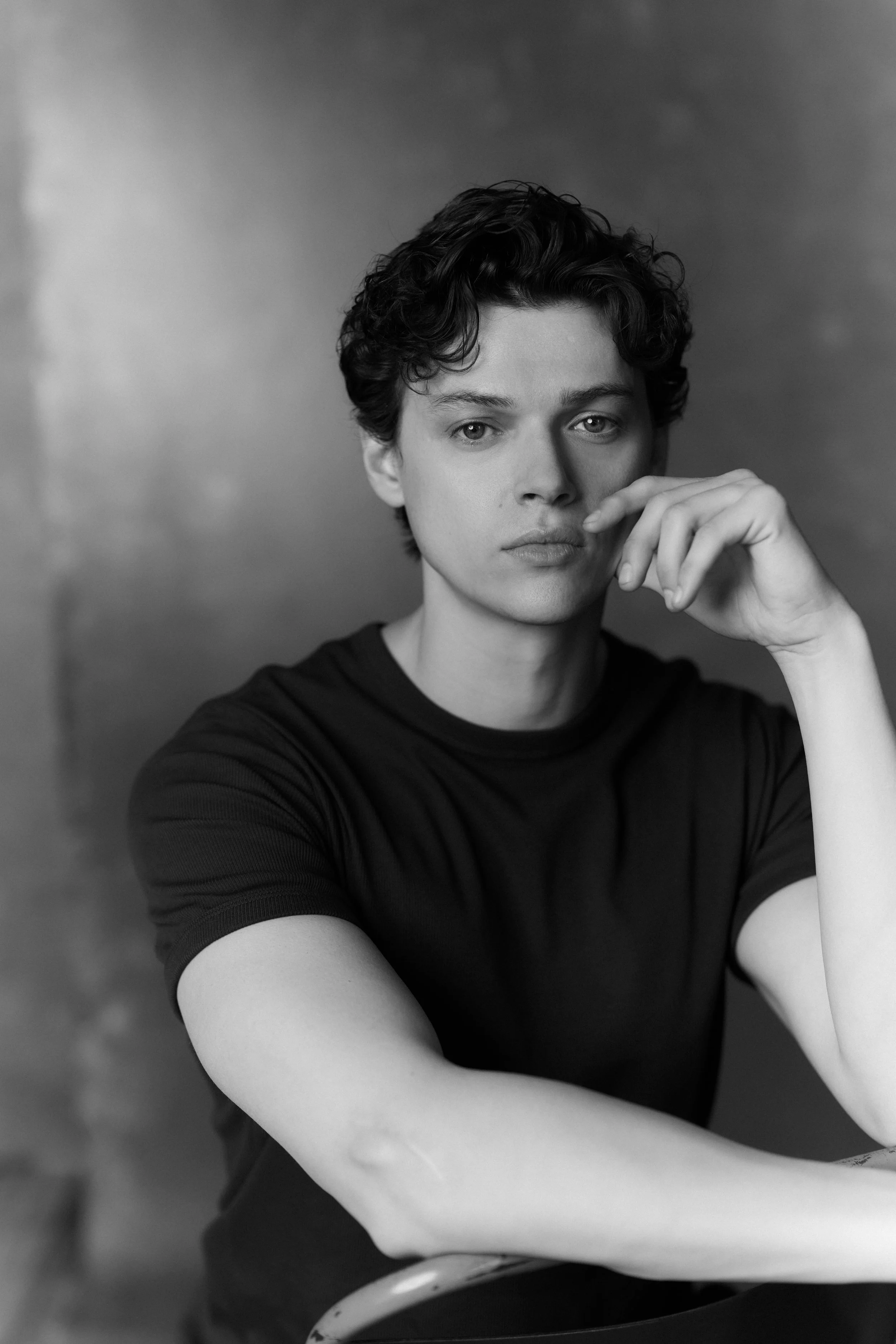
TEAM CREDITS:
photography PIP
