
IN CONVERSATION WITH BRITTANY INGE
interview by JANA LETONJA
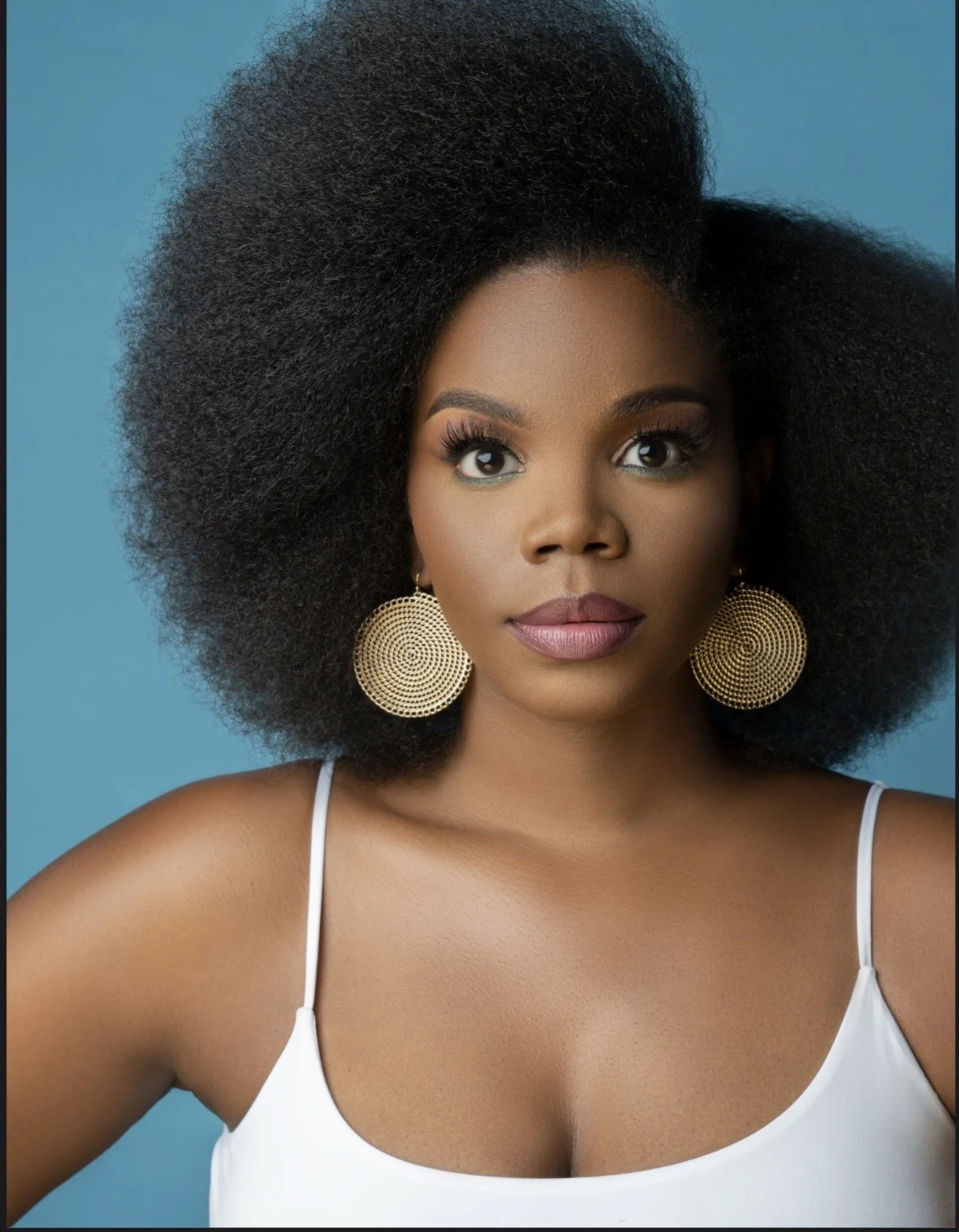
Brittany Inge is a multi-hyphenated artist—actor, writer, singer, and aspiring director—whose career moves fluidly between Broadway, television, and film. With a foundation in music and storytelling, she brings emotional intelligence and nuance to every role she inhabits. Currently, Inge appears on CBS’s ‘Elsbeth’ as Julia Payne-Wagner, a brilliant software engineer whose personal and professional entanglements add depth to the hit series, and in a recurring role on BET+’s 3-time Emmy nominated show ‘The Ms. Pat Show’. From her Broadway debut in ‘Home’ to acclaimed screen work in ‘Boomerang’, ‘Atlanta’, and ‘The Hate U Give’, she is a powerful, grounded voice shaping stories with heart, honesty, and intention.
Your role on ‘Elsbeth’ adds personal stakes to a crime-solving series. What excited you about stepping into Julia’s world?
The thing that excited me most about stepping into Julia’s world was that I knew she’d be a vital part of Captain C. W. Wagner’s world, played by the phenomenal Wendell Pierce. He is someone I have watched and admired for years. I jumped at the chance to not only work alongside him, but to have the opportunity to learn from him. And let me just say, the experience did not disappoint. Beyond that, I was excited by Julia’s career as a software engineer because we need more Black women in tech represented onscreen.
Julia is both technically brilliant and emotionally complex. How do you find the balance between those sides?
I don’t approach the role with a need to balance between those two sides, per se. I think the natural nuance of humanity creates that balance for me and for the character. Julia, like all of us, is many things. Different facets of her personality, intellect and emotions reveal themselves depending on the ‘who, what, where’ of her environment. I try to lean into Julia being multi-faceted, while keeping her as grounded and honest as possible.
‘The Ms. Pat Show’ blends humor with deeply personal themes. What has playing Ashley meant to you?
Portraying Ashley has been very important, and at times, eye-opening for me. I don’t take lightly what the visibility of a character like Ashley means in the Black community and the LGBTQIA+ community. What I’m most proud of is that while our show is undeniably funny, we are essentially using laughter to help the medicine go down easier. Every episode has something meaningful to say, every character is dealing with an issue or circumstance that someone watching can relate to. We use the show to address a variety of topical issues, while reflecting love, laughter and lessons back to our viewers. It’s always my hope that audiences are moved enough to apply those lessons, as needed.
Ashley’s coming-out storyline resonated with many viewers. How did you approach that with care and authenticity?
Truthfully, the care and authenticity were both present in the writing. Huge shoutout to our amazing writers and our showrunner, Jordan E. Cooper. My job was to bring their thoughtful words to life alongside my amazing castmates, and more specifically, alongside Ms. Pat. She and I had to get acquainted very quickly during Season 1 so that we could inform our interactions, and especially Ashley’s coming out story, with our shared, complicated history. I remember being at the grocery store a few years ago and a young woman approaching me about the show. She shared that when she was a teenager, her mother put her out for being gay. Now as an adult, she and her mother watch ‘The Ms. Pat Show’ together. She singled out Ashley’s storyline as being the catalyst for some healing conversations she and her mother had about their past difficulties. That moment alone made clear to me the story’s authenticity and relatability. Another thing I appreciate in the storytelling is how unapologetically femme Ashley is in her self-expression. She takes on a form of Black lesbianism that is very common, but not represented enough onscreen, in my opinion.
Making your Broadway debut in ‘Home’ was a major milestone. What did that moment represent for you?
Wow. It was a dream come true, to say the least. I am of the belief that great actors are made on stage. I am a theatre girl to my core. It’s how I honed my craft and really fell in love with acting, and it is a space to which I am always looking to return. All of that being said, making my Broadway debut was a lifelong dream realized. Even more exciting was the opportunity to do so in such a monumental play. ‘Home’ is Samm-Art Williams’ magnum opus. It features only 3 actors, minimal props, minimal set design and over 40 "characters". It’s a huge undertaking and I was as terrified as I was excited. My experience doing that show revealed to me what I’m truly made of as an artist. Theatre performers are athletes. The amount of discipline and stamina needed to make it through 8 shows a week is tremendous.
You’ve worked across stage, network TV, streaming, and film. How does your process shift between mediums?
That’s a great question. I think the biggest shifts are in my pre-work preparation practices and post-work wind down practices. As far as the actual work of acting and storytelling, I don’t have many shifts in my approach across the mediums. I focus on telling the truth, staying grounded and making sure I’m listening to my fellow actors. However, the way I prepare and rehearse for the stage is a bit more intense and physically-involved than the way I prepare and rehearse for TV and film. All of the mediums have their own particular brand of energy exertion, so I’m usually exhausted at the end of any work day. However, I have found that I am more “ritualistic” in how I wind down after stage work, versus TV/film work.
You’ve spoken about acting as a form of healing. Can you expand on what that means to you?
I believe the stories we tell have the power to heal and impact, not only the audiences they reach, but also the artists who bring them to life. The work of an actor very often involves exposing, confronting and healing different parts of ourselves in order to bring characters to life effectively. A big part of acting involves looking inward so that we can tell our characters’ stories as truthfully as possible. What’s more healing, and revealing, than that?
You’re now developing a podcast focused on financial literacy for artists. Why is that advocacy so important to you?
Yes, the ATM Podcast, which stands for Actors Talking Money. It’s an online conversation I started with my friend and fellow actor, Tiffany Black. Over a year ago, we got together and became financial accountability partners. As we were in the process of reading books and learning all that we could about personal finance, we found that a lot of the literature and podcasts were geared towards people with corporate careers, bi-weekly income and 401k match programs. No one in the financial literacy lane is speaking to the very unique financial peaks and valleys we experience as artists. Also, not enough artists are encouraged to learn about financial literacy, in general. So many of us are conditioned to believe we’ll focus on our money once we “make it big”. But what if that day never comes? And beyond that, if you aren’t managing the money you have now, you won’t know what to do when those larger checks eventually roll in. These were the conversations Tiffany and I had amongst ourselves for months before we decided to make them public. We are looking forward to sharing the ATM conversation with an even broader audience this year. Stay tuned.
What do you wish more creatives understood about sustaining a long-term career in this industry?
Oh, I wish more creatives understood that longevity is bred by diversity. You have to diversify your skill sets, your income streams and your network/community. I don’t believe we can achieve longevity by only doing one thing or only earning one income or telling the same kinds of stories over and over. Diversifying is how folks like Debbie Allen and Salli Richardson Whitfield are sitting on careers spanning 4 or 5 decades. That’s the goal.
As someone interested in directing, what kinds of stories are you eager to tell from behind the camera?
I love this question. I am eager to tell the stories of unsung heroes. I love biopics and films inspired by real events. Films like ‘Remember the Titans’ or ‘What’s Love Got to Do with It?’ are examples of the kinds of stories I’d love to tell from behind the camera. A person, event or community doesn’t have to be famous or well known to be worthy of having their story told. I am passionate about sharing inspiring stories of truth, strength, challenge and triumph.
How do you stay creatively energized outside of work, whether through music, movement, or play?
I stay creatively energized outside of work by seeing a lot of theatre. It’s like church for me. The theatre is where I go to get my artistic soul nourished. It reminds me why I chose to become an actor. I can always count on leaving a theatrical experience with enough encouragement, zest and inspiration to continue on my artistic path.
TEAM CREDITS:
talent BRITTANY INGE
photography ANDREW MICHAEL PHILLIPS
