
IN CONVERSATION WITH CARLO GIORDANETTI
Interview by Samo Šajn
After breakfast in the Swatch store Amsterdam, we sat down with Carlo Giordanetti, CEO of the Swatch Art Peace Hotel and a long-time driving force behind Swatch’s global art initiatives. As Swatch unveils its latest Destination Art release celebrating the spirit of Amsterdam, he reflects on the brand’s deep connection to art, creative exchange and what lies ahead for Swatch’s artistic journey.
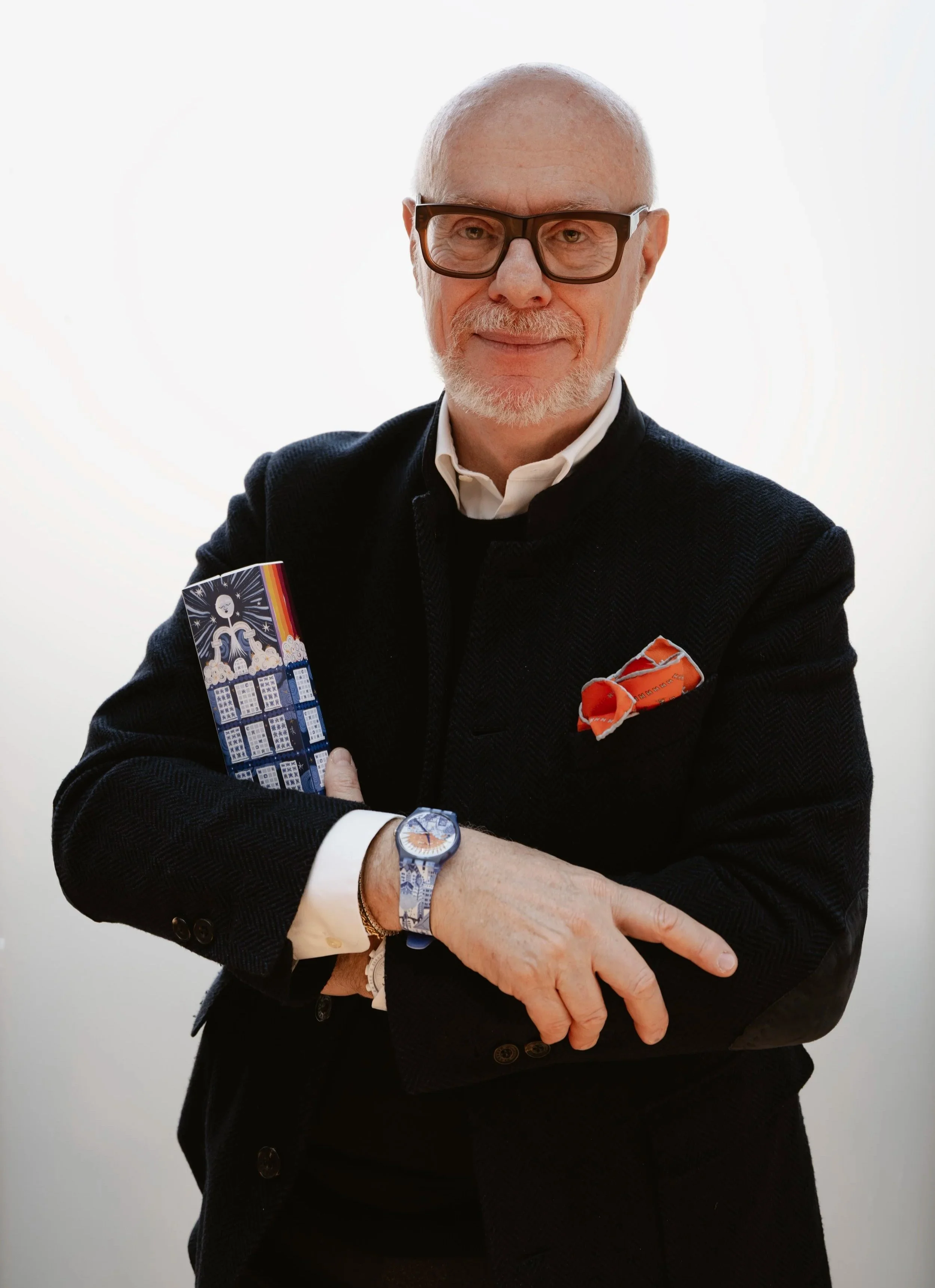
Swatch has supported art since the 1980s. How has the role of art within the brand evolved over the years?
It is true, we started very early. In the beginning it was about challenging artists to express themselves on a very small surface and about being different by exploring many styles. We worked with street artists but also with major museums and institutions. Over time the relationship changed. Today we see artists as people who ask the right questions and push us to try things we have never done before. With Enzo, for example, it was not just about a dial design but about combining expressive elements with technical ideas like the calendar wheel and glow in the dark details. Opening the Swatch Art Peace Hotel in Shanghai 15 years ago was a turning point. The artists there do not design watches. We get inspired by their world and give them visibility in return. It is a true exchange and very much a win win relationship.
As CEO of the Swatch Art Peace Hotel, you work closely with international artists. How does that dialogue shape projects like Destination Art?
In Shanghai you meet artists from many cultures and backgrounds, so it becomes a window onto different creative languages. That openness influences everything we do. For Destination Art we collaborate with artists who are connected to the city itself, but the dialogue we have at the residency keeps us curious and open minded. Sometimes we even ask resident artists for their perspective. What matters is that the conversation is about art, not about watches. That is the luxury Swatch allows itself. The residency does not produce watches, but it brings the right creative energy into our universe.
Destination Art celebrates cities through wearable design. What makes Amsterdam especially inspiring for this series?
Amsterdam has always been important for Swatch. The Netherlands and the Benelux were key markets early in our history, so there is a strong connection. In 2018 we collaborated with the Rijksmuseum, which marked an important step in our art journey. Amsterdam also reflects the Swatch spirit. It is open and accessible but has a very clear identity. There is a romantic side with the canals, the biking culture and the lifestyle. When you are here, you truly feel you are in Amsterdam. That uniqueness resonates with us, and the watch became the perfect expression of that feeling.
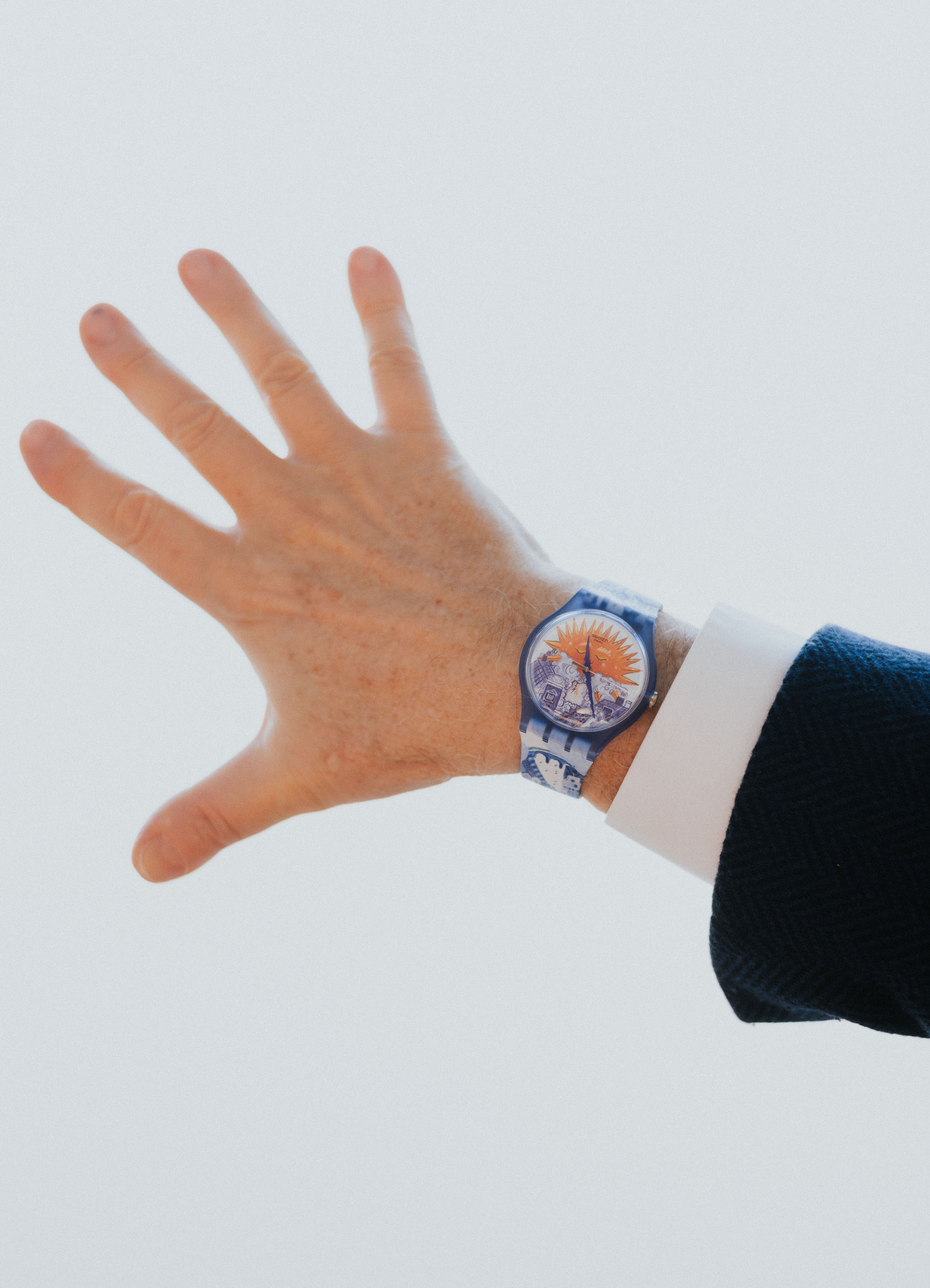
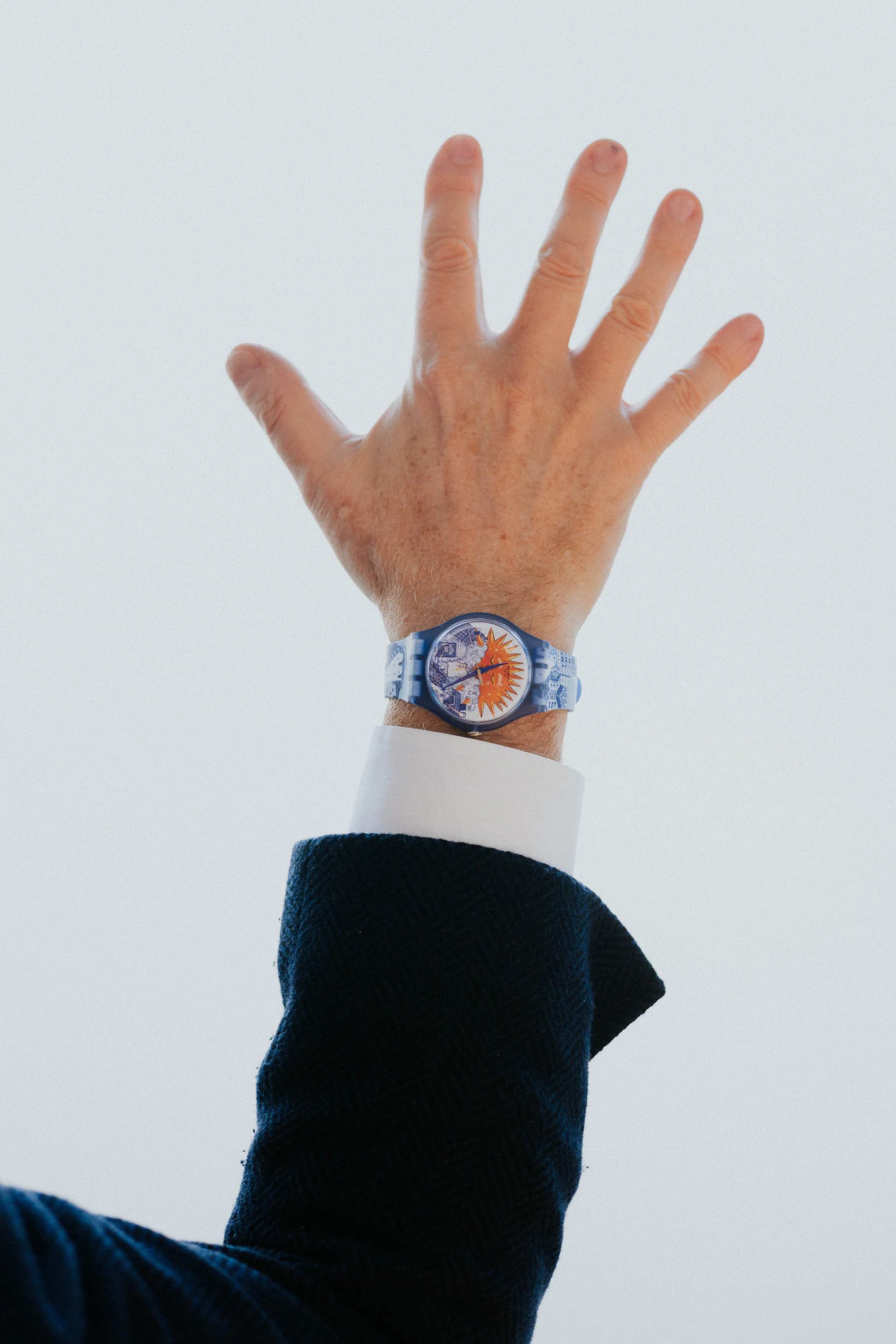
Enzo translated canal houses, shifting skies and cycling culture into a watch. What stood out to you most when you first saw the design?
For me it was immediately the canal houses. Even as a child I collected the little KLM ceramic houses, so that white and blue image stayed with me from my first visit to Amsterdam. I love that aesthetic. After that first emotional reaction, I appreciated the technical creativity like the calendar wheel and the glow in the dark elements. But the houses were the first thing that really resonated with me.
Swatch balances playfulness with serious artistic collaboration. How do you maintain that balance?
It comes naturally because it is part of who we are. When you try to force it, it does not work. For example, working with the Solomon R. Guggenheim Museum is serious and prestigious, but once they understood the Swatch spirit, the collaboration became a success. We respect our partners and the artworks, but we always bring our own code and a certain lightness. Treating serious topics with a bit of a twinkle in the eye is something people appreciate about Swatch. That small emotional twist makes the project feel alive.
Looking ahead, how do you see Swatch’s art initiatives evolving?
We have just launched an Artistic Intelligence project called AI-DADA, which allows people to create their own Swatch design in a digital environment. It is built only on Swatch’s own history, more than ten thousand designs and countless artworks and campaigns, so it is nourished by our archive. It shows that AI responds to what you ask of it and becomes a mirror of the creative process. At the same time we are celebrating 15 years of the Swatch Art Peace Hotel with five artists creating a special collection launching in September. We began the year with museum masters like the Guggenheim, Pollock and Monet, and now we are moving toward young contemporary artists with completely different languages. Next year, we may even explore a project that merges visual art and music, so there is a lot to look forward to.
