
IN CONVERSATION WITH CHIARA KING
interview by JANA LETONJA
British content creator and actress Chiara King has spent years navigating the world of online visibility. Now, she’s turning that experience into fiction. With an established digital following and an intimate understanding of the pressures that accompany life online, she makes her move into acting with The Influencer Project, a documentary-style psychological thriller from the producers of The Blair Witch Project. Exploring the increasingly fragile boundary between authenticity and performance, the film confronts internet fame, privacy, obsession and the very real dangers of turning yourself into a public product. For Chiara, the subject is particularly personal. She isn’t simply portraying influencer culture from the outside, she has lived within it. As the lines between our digital and private selves become harder to distinguish, we speak with her about performance, identity, ambition and the price of being seen.
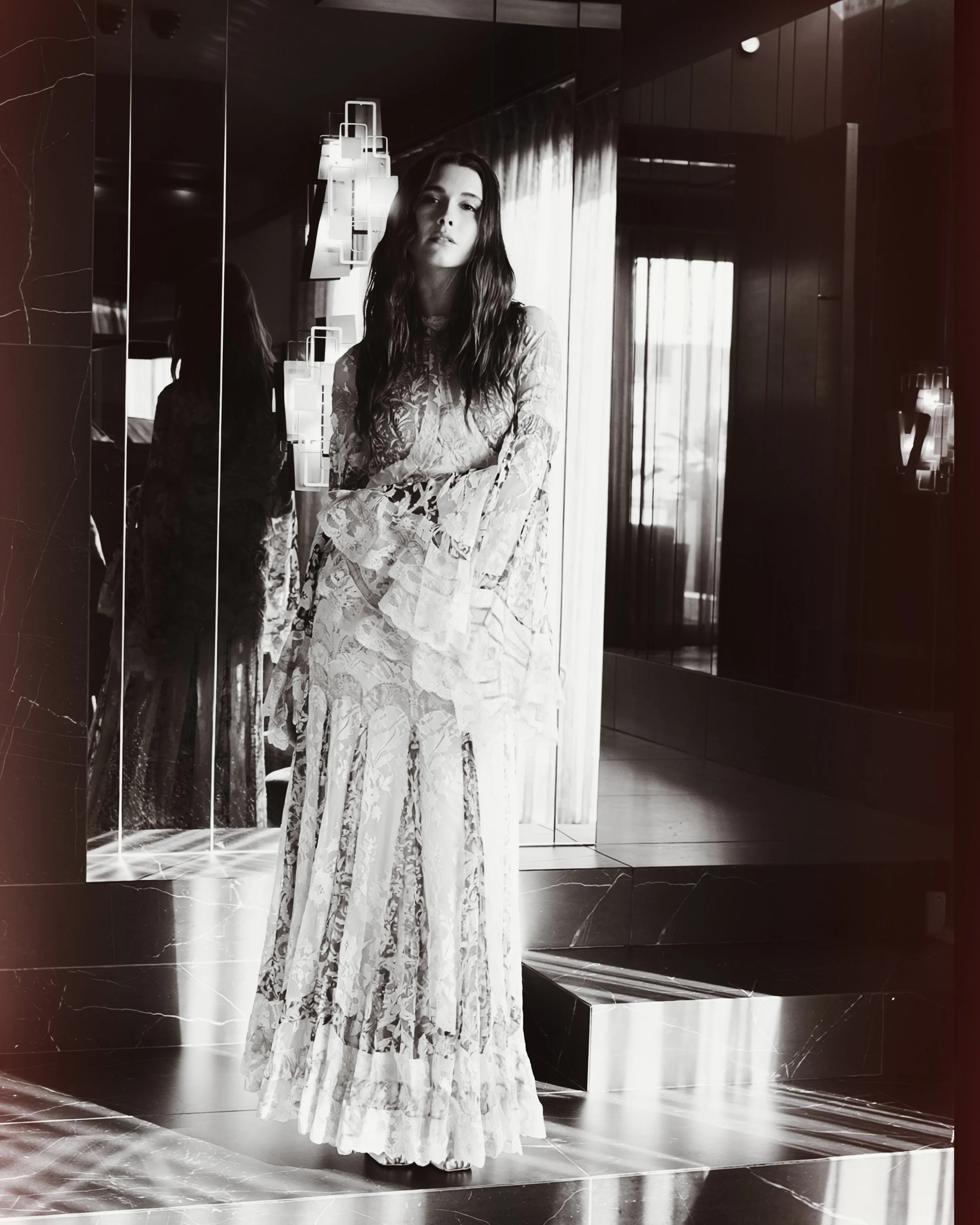
dress ZIMMERMANN
shoes CHARLES & KEITH
You’ve spent years building a career online. What made The Influencer Project feel like the right project for your transition into acting
Firstly, I felt like a thriller/horror was something that no one has seen from me before, and it’s also so different from my online content which is what I wanted. The Influencer Project was the perfect opportunity to show people a completely different side of me, a side that is scared, fearful, under physical strain and out of the box from my usual day job. I was pushed into the deep end with some emotionally and physically draining scenes but I absolutely loved every single moment. I felt like The Influencer Project was the perfect transition for me and to show my acting skills that are not just humour and comedy.
Because you’ve actually lived within influencer culture, how much of your own experience informed the way you approached the character?
I know exactly what it’s like to be trolled, to be hated on and sent death threats. It’s quite scary to know how exposed I am to this kind of stuff daily. The character “Chiara King” is someone definitely much tougher and stronger than I am. She faces fear head on and doesn’t let herself be the victim. I myself have struggled standing my own ground so it’s actually been a really empowering experience taking on this tougher side. I’ve learned a lot about myself and about her. My own experience with a stalker was also pivotal to my performance. It happened only a few months before filming, so stepping into this role could be incredibly triggering and stressful at times. I worked closely with my therapist and life coach to find ways to safely step in and out of the very real fear I was tapping into while on set.
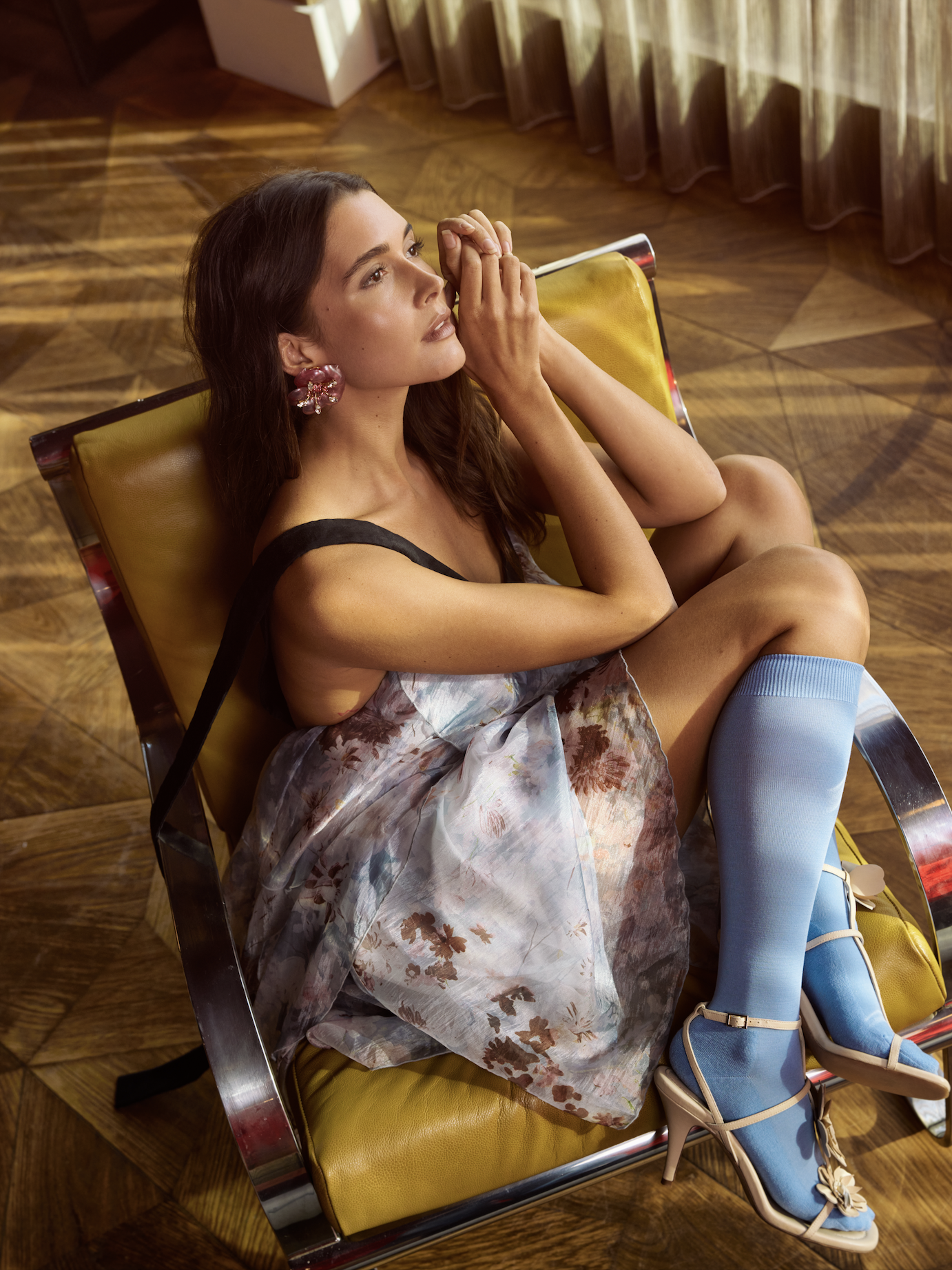
dress AJE
socks FALKE
shoes ZIMMERMANN
earrings MIU MIU via 4element
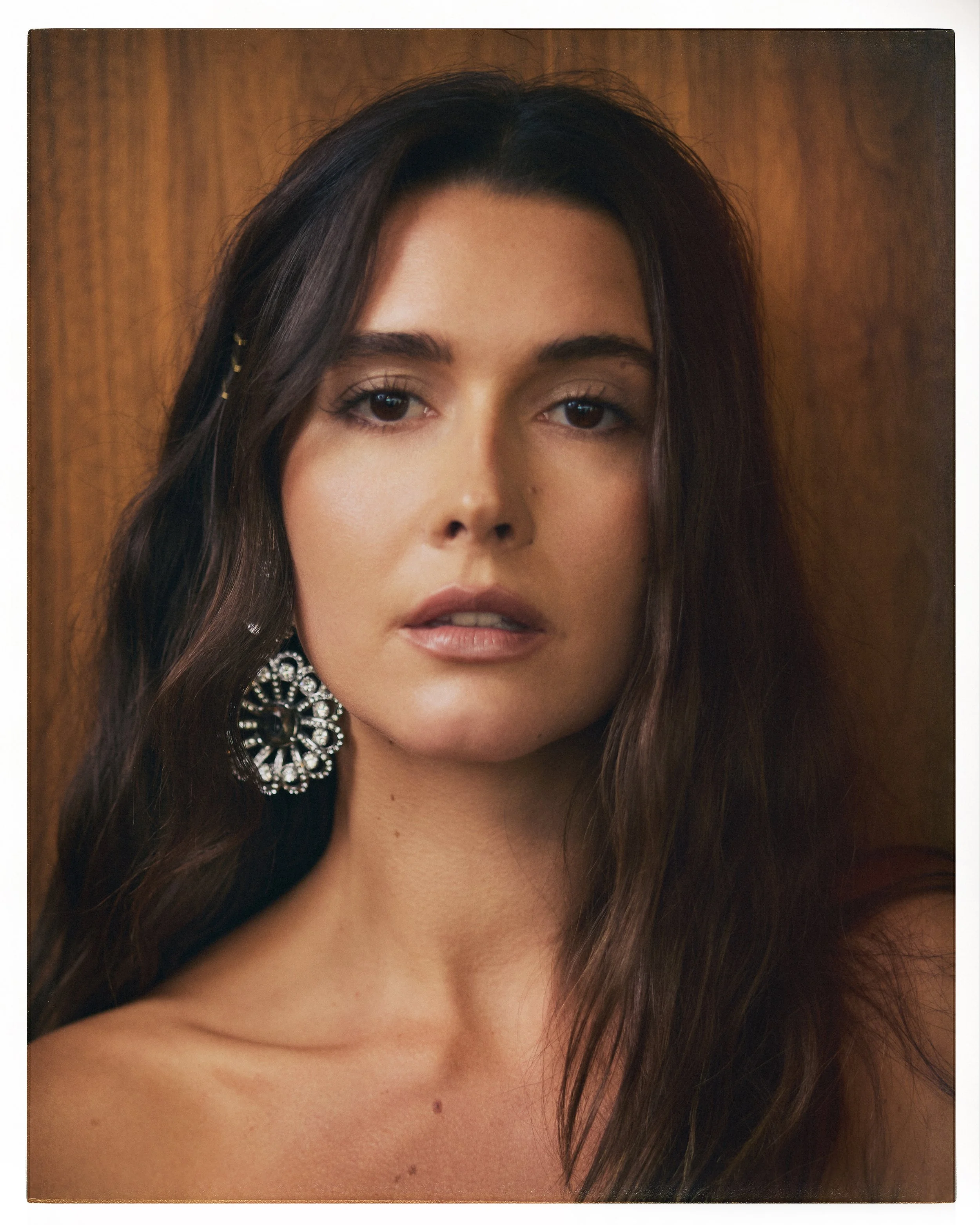
earrings MIU MIU via 4element
The film asks where reality ends and performance begins online. After years as a creator, do you think you always know where that line is for yourself?
To be honest, I’m still figuring that out. I feel like as much as social media is “fake”, there is an element of it which will always hold some sort of truth, especially with my kind of content. I feel like that line definitely didn’t exist in the past, I would post everything about my personal life and eventually it became performative and exhausting. I was also being exposed to thousands of people’s opinions and that isn’t normal. In the last year and a half, I’ve taken a step back posting all about my personal life and I’ve found I’m much happier.
When your personal life becomes part of your professional identity, how difficult is it to preserve something that belongs only to you?
It’s so difficult because when I’m happy, especially when it comes to love, all I want to do is share it with the world, but I’ve had to ask myself the question, am I really sharing this because I want to share this or because I want to be validated? I realised that some of the best things in life are kept private. This is just my experience though and it’s different for everyone.
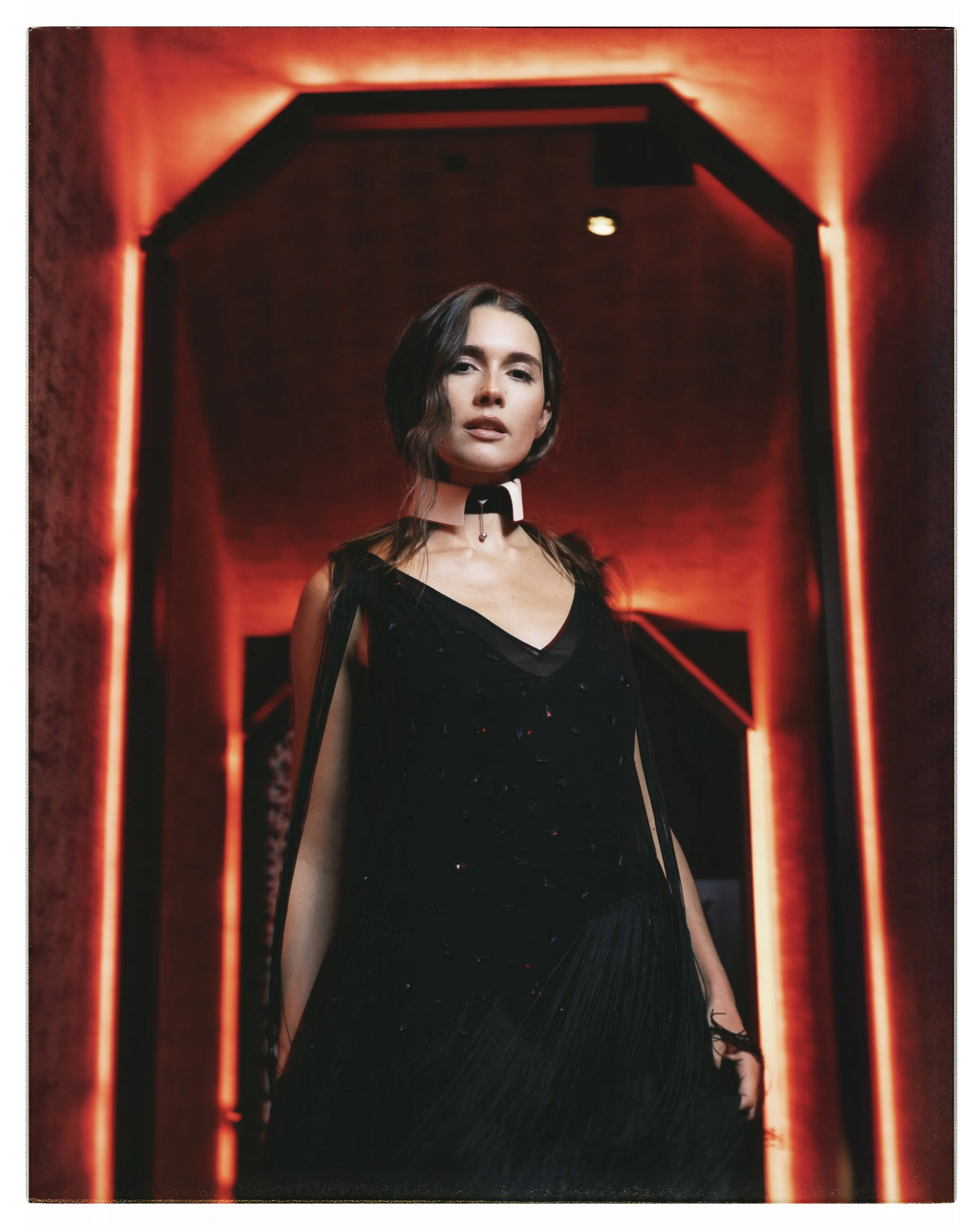
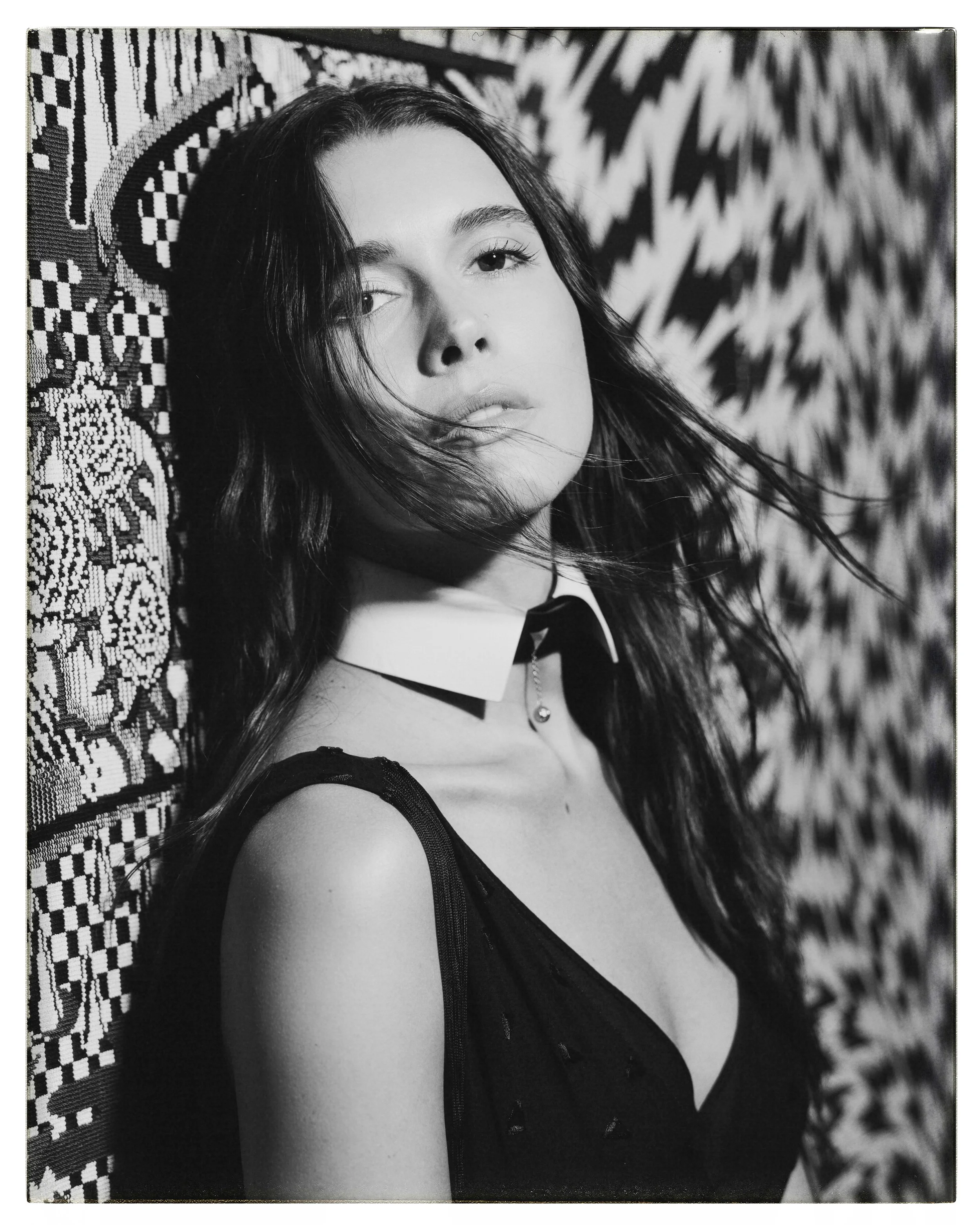
full look FENDI
Social media encourages people to appear authentic while simultaneously curating almost everything they show. What does “authenticity” mean to you now?
Authenticity to me is being real about the good, the bad and the ugly. I’ve moved away from feeling like I need to dramatize my life for views and started sharing more of the things that are genuinely happening whether that’s painful periods, family relationships or moments when I’m struggling. For me, though, vulnerability is even more powerful than authenticity. The things we’re often most afraid to share are usually the things that make other people feel less alone. That kind of connection has always been at the heart of what I do.
The film examines the psychological cost of internet fame. What do you think people outside that world misunderstand most about being constantly visible?
I think people assume social media is easy because from the outside it can look incredibly glamorous. What they don’t see is the pressure to be constantly online. There’s always this fear that if you stop posting, people will move on and forget about you. Even on amazing trips or at incredible events, I can spend most of my time filming, editing and posting rather than actually experiencing where I am. I’m incredibly grateful for those opportunities, but there’s a strange reality to creating a life online sometimes you’re so busy capturing the moment that you forget to actually live it.
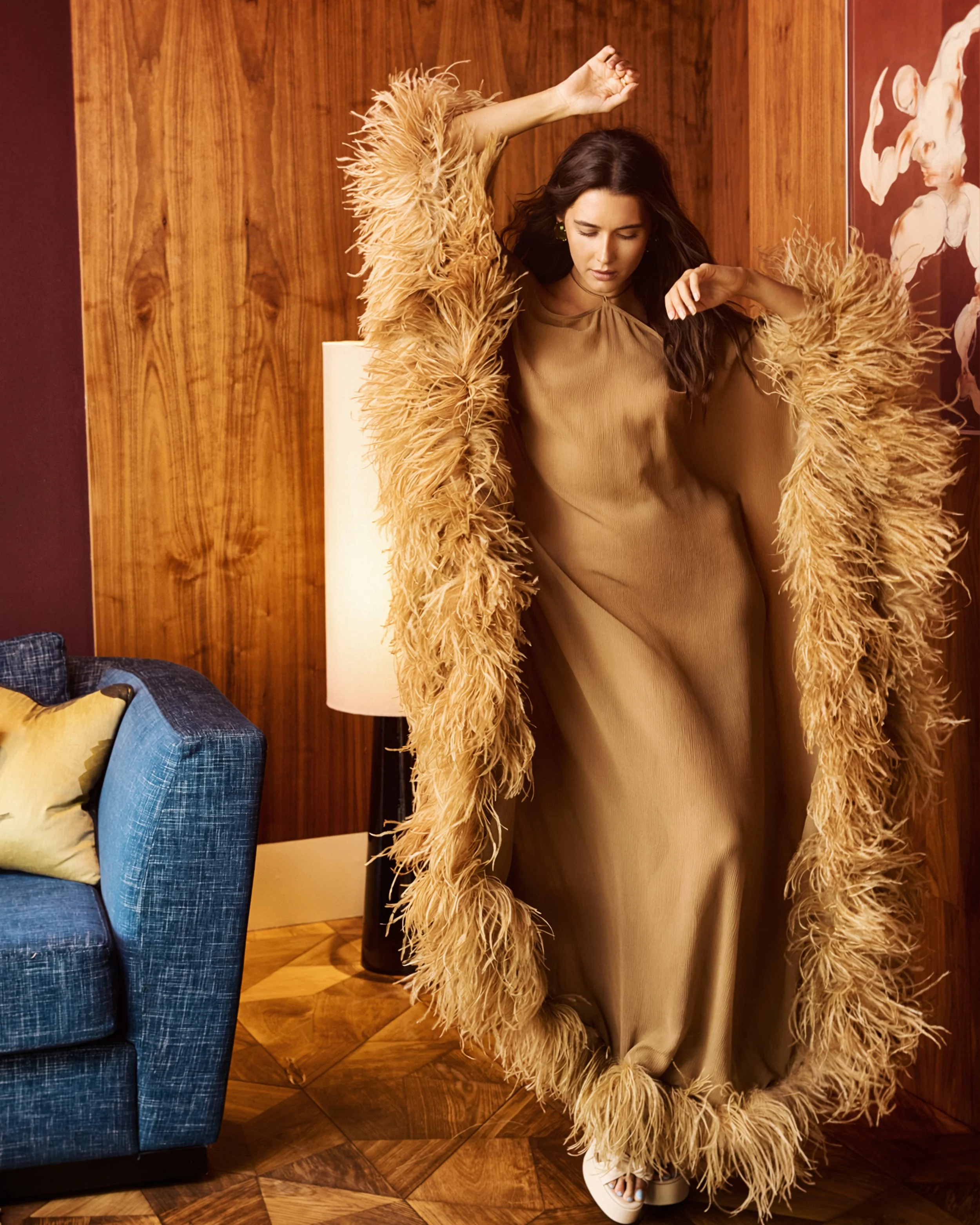
dress TALLER MARMO
shoes CHARLES & KEITH
earrings SAINT LAURENT via 4element
rings THOMAS SABO
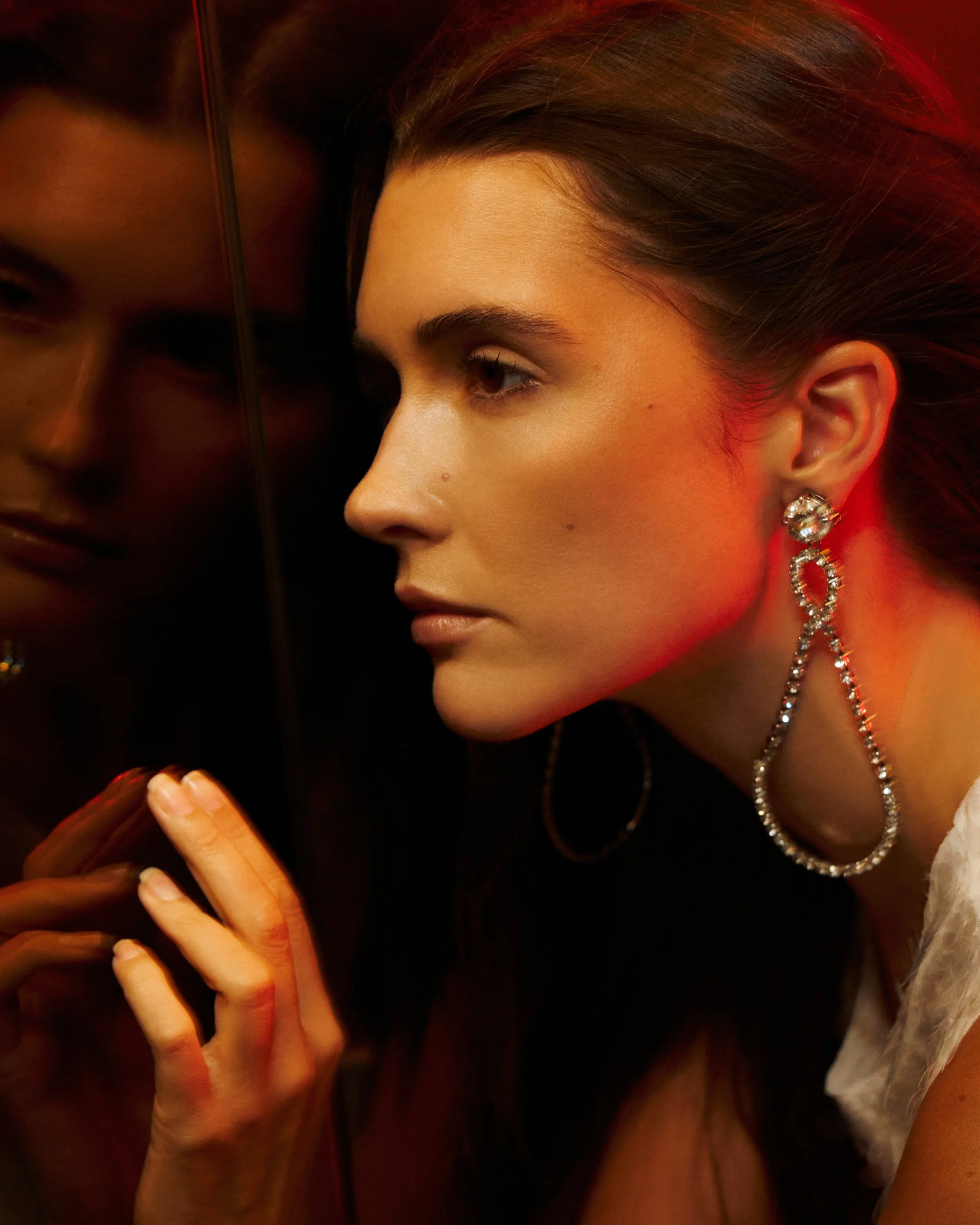
dress NORMA KAMALI
earrings MIU MIU via 4element
Privacy and personal safety are increasingly important conversations for creators. Have you had to establish stronger boundaries as your platform has grown?
Absolutely. As my platform has grown, I’ve had to become much more conscious of the boundaries I put in place, particularly around sharing my location. Because of a personal experience with someone, I no longer post where I am in real time. I think we sometimes forget how precious privacy is until it’s compromised.
There’s an addictive quality to attention online—the numbers, comments, views and constant feedback. How have you learned not to let those metrics define your self-worth?
I’ve needed a lot of therapy over this exact topic. And if I’m being completely truthful, I’m still working on it. Even now, if a video doesn’t perform well or a photo doesn’t get the likes I expected, it can affect me in a way I’ve never really experienced with anything else. My mind immediately goes to I’m failing, people don’t like me anymore, I’m becoming irrelevant, brands won’t want to work with me. I can feel myself drop into a funk, and it can even affect how I show up with my family and the people I love. I think what makes it particularly difficult is that this is my job, so the numbers aren’t entirely meaningless. Views, engagement and relevance do have an impact on the opportunities I’m offered.
There’s this underlying fear that if I stop posting or people stop watching, someone else can very quickly take my place. It sounds absurd when you say it out loud, but I think a lot of creators feel it and perhaps don’t always admit it. What I’m learning is that there’s a difference between my work having value and those numbers determining my value as a person. This is my job, it isn’t my entire identity, even though the two can feel incredibly intertwined when so much of your life is part of what you share. So I’d be lying if I said I’ve reached this enlightened place where I don’t care about likes or views. I absolutely still care. I’m just trying to get better at remembering that a number on a screen can tell me how a piece of content performed, but it shouldn’t get to tell me how I feel about myself.
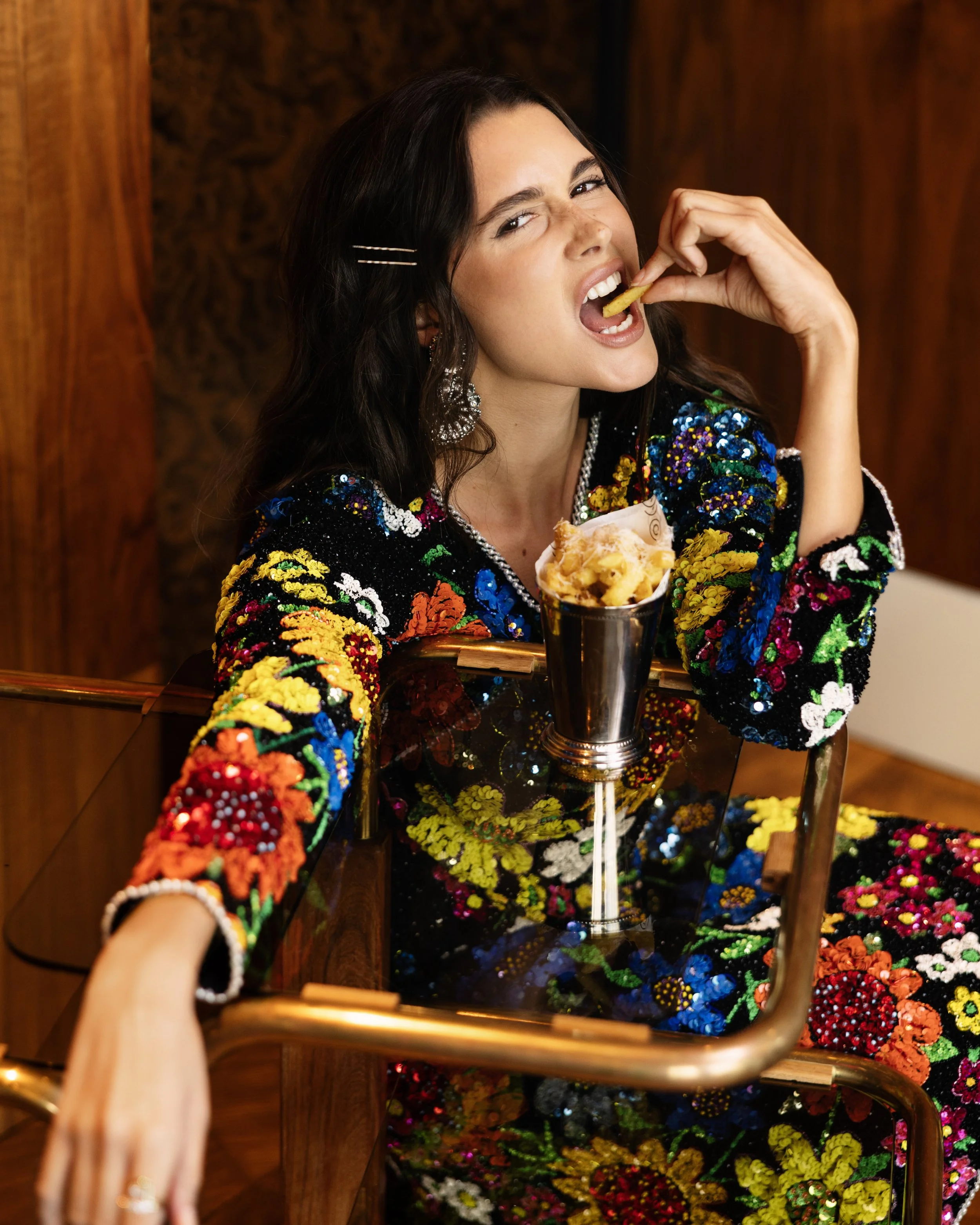
dress ASHISH
earrings MIU MIU via 4element
rings THOMAS SABO
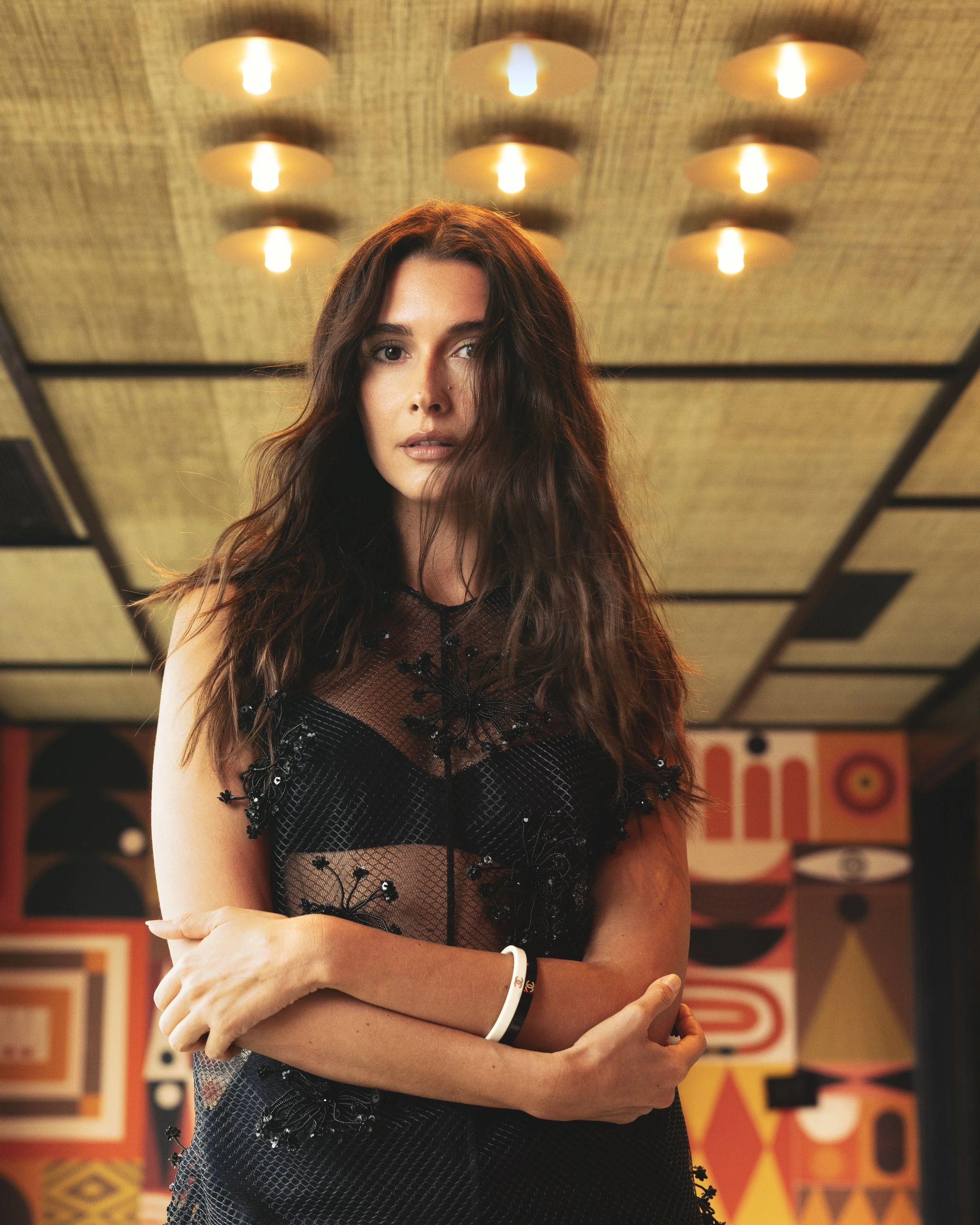
top and trousers DAVID LAPORTE
bra COU COU INTIMATES
bangles CHANEL via 4element
Do you think social media has changed our relationship with validation, particularly for young women?
100%. I think social media has completely changed our relationship with validation, especially for young women. I was 13 when I first got social media, and almost immediately I started comparing myself to the women I saw online and questioning why I didn’t look like them. There has always been pressure on women to look a certain way, but social media has amplified it to an unhealthy level. We’re constantly shown certain beauty standards being rewarded with likes, attention and validation, and it’s very easy to start believing that we need to look that way to be valued. I’m still learning not to compare myself, so I certainly don’t have it all figured out. I just wish young women could know their worth before the internet gets the chance to define it for them.
Do you think we’re approaching a point where audiences will become tired of perfection online and start craving something genuinely less curated?
Yes, I think we’re already seeing that shift. People are tired of content that feels overly curated or performative they want real, funny, messy and relatable. That’s what I try to bring to my own content, and I think it’s why women connect with it. The more authentic, the better. More of that, please.
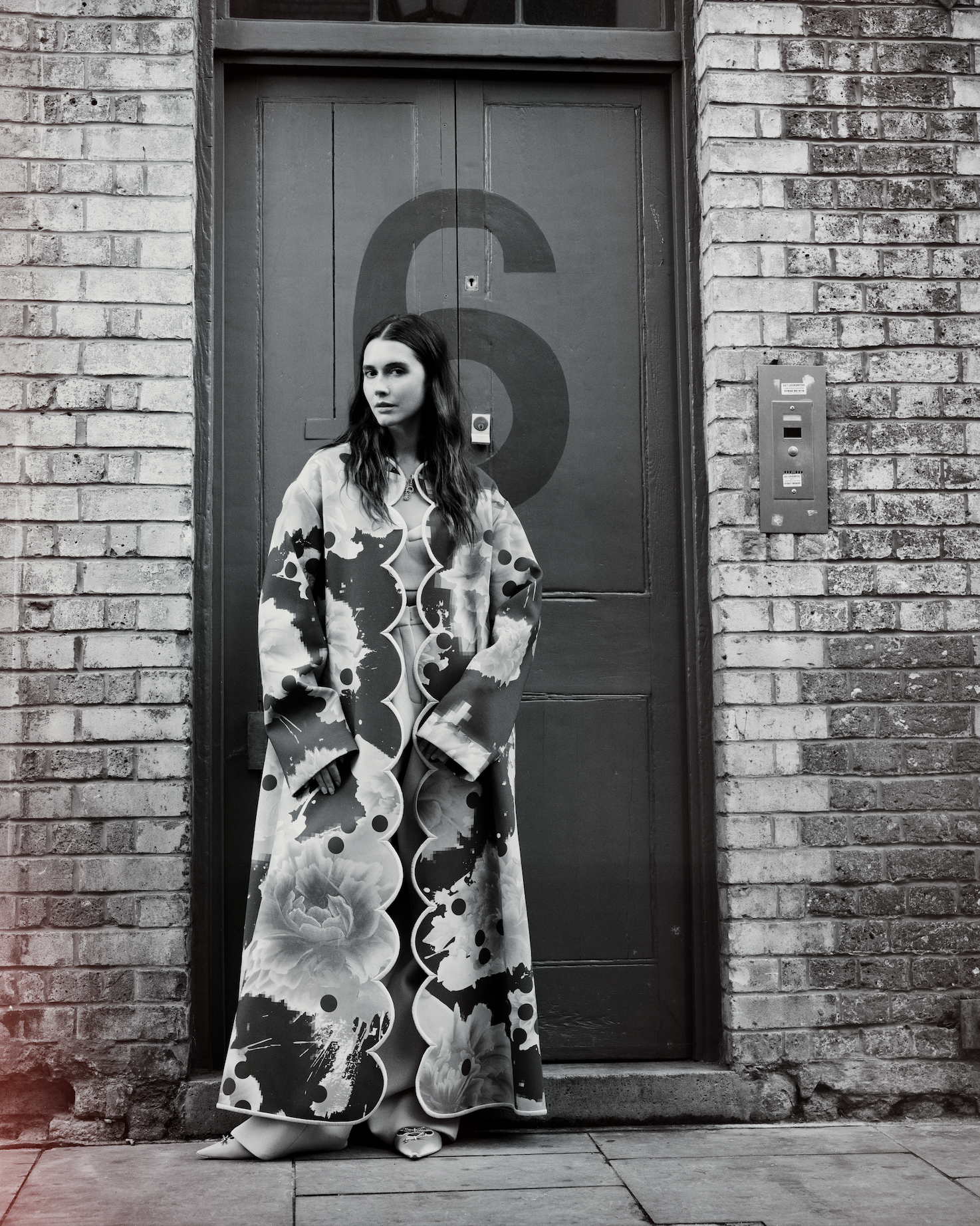
full look CLEAS IVERSEN
shoes ROGER VIVIER
Now that you’re moving further into acting, are there particular kinds of characters or filmmakers you’re interested in exploring next?
Absolutely. I’d love to play a woman in her twenties who is getting everything wrong, a modern Bridget Jones-type character. She’s messy, lazy, her love life is a disaster, but she’s funny, real and incredibly relatable. A heartfelt rom-com like that would be so much fun. On the other end of the spectrum, I’d love to explore a sweeping, emotional love story like About Time or The Time Traveler’s Wife, a love that feels all-consuming but is intertwined with loss. There’s something so powerful about those stories that stay with you long after they’re over and I’d love the opportunity to play a character who gets to experience that depth of love and heartbreak.
Ultimately, after watching The Influencer Project, what do you hope audiences question about their own relationship with social media, and how much of themselves they’re willing to give away in exchange for attention?
More than anything, I hope people think twice about how much of themselves they give away online, especially their location. Whether you have 200 followers or two million, it only takes one person with bad intentions to make you feel unsafe. I’ve experienced that firsthand, and it completely changed my relationship with social media and privacy. Social media can be an incredible place for connection, creativity and laughter, but it can also expose us in ways we don’t always consider. If there’s one thing I hope people take away from the film, it’s to protect yourself. Be conscious of what you share, don’t post your location in real time, and remember that you don’t owe the internet access to every part of your life.
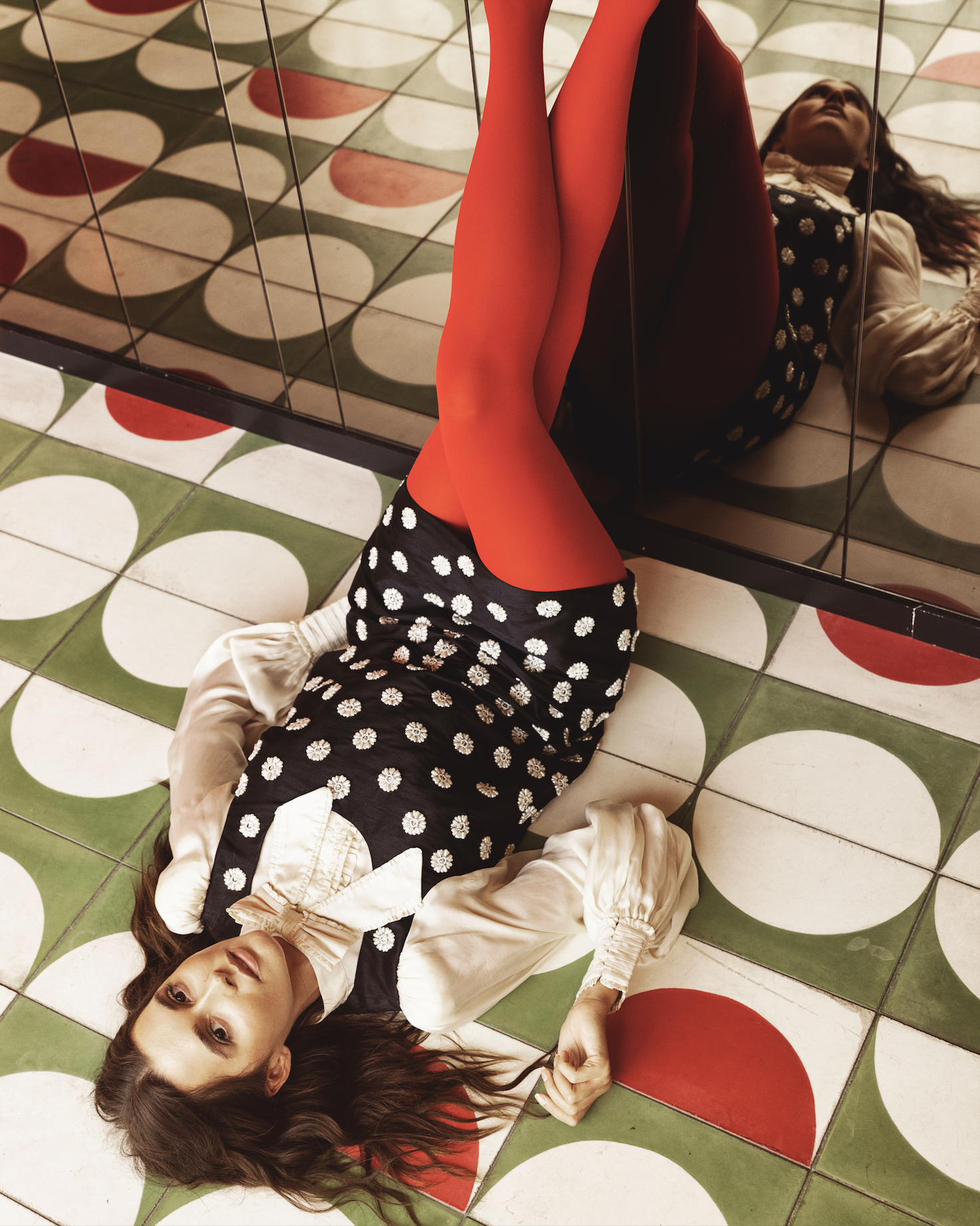
dress QUEENS OF ARCHIVE
tights FALKE
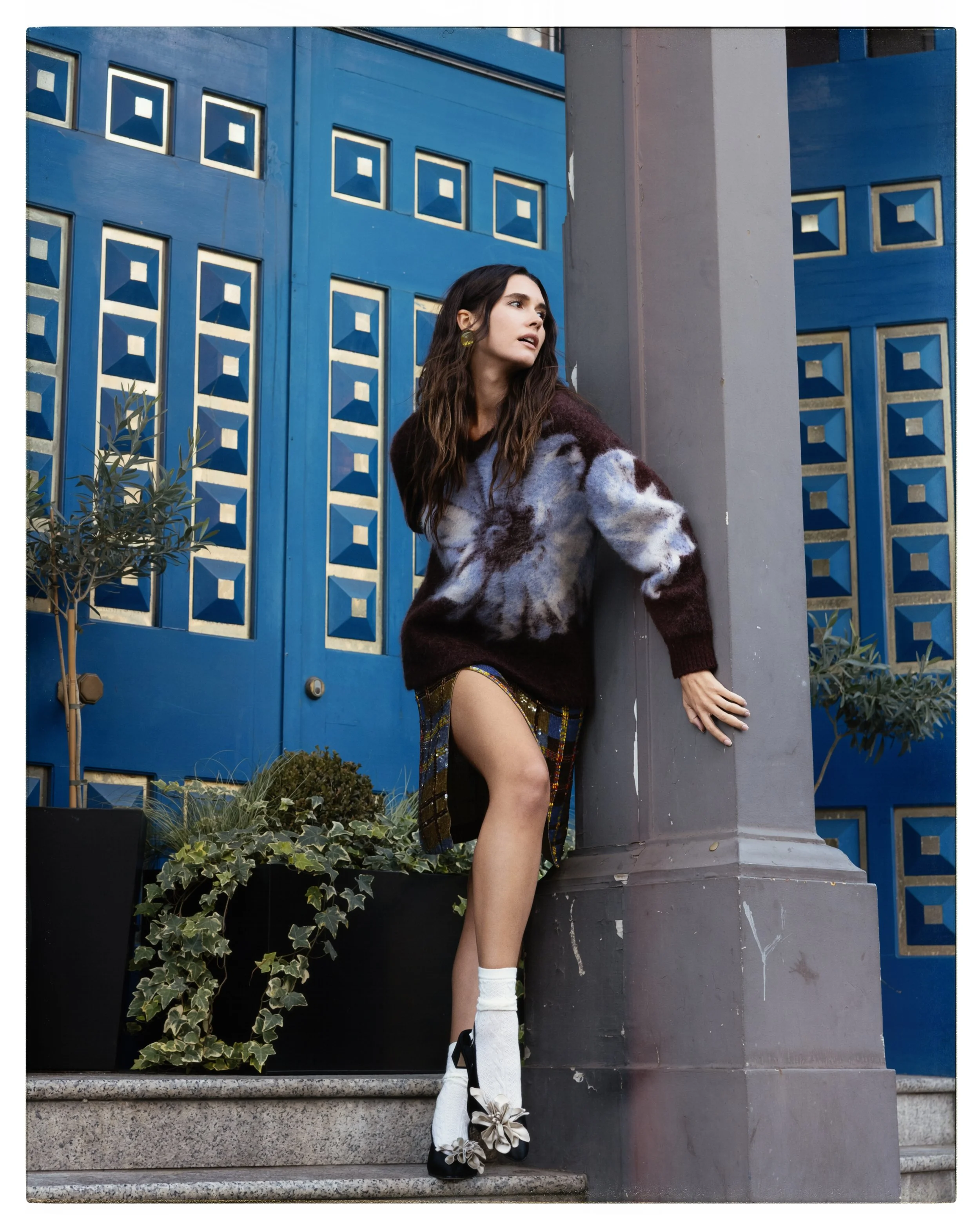
sweater PH5
skirt ASHISH
socks FALKE
shoes JIMMY CHOO
earrings SAINT LAURENT via 4element
TEAM CREDITS:
talent CHIARA KING
photography STEPHANIE PISTEL
styling KATE SINCLAIR
makeup BROOKE SIMONS at CAREN AGENCY using PRADA BEAUTY
hair MICHELA OLIVERI at CAREN AGENCY using GHD HAIR and GHD HAIR PRO
styling assistant GABRIELA ESPADAS
lighting direction LUKE JOHNSON
post production STEPHAN LESGER
location AETHOS SHOREDITCH
editor TIMOTEJ LETONJA
editorial director and interview JANA LETONJA