
IN CONVERSATION WITH DANCE SPIRIT
Interview by Samo Šajn
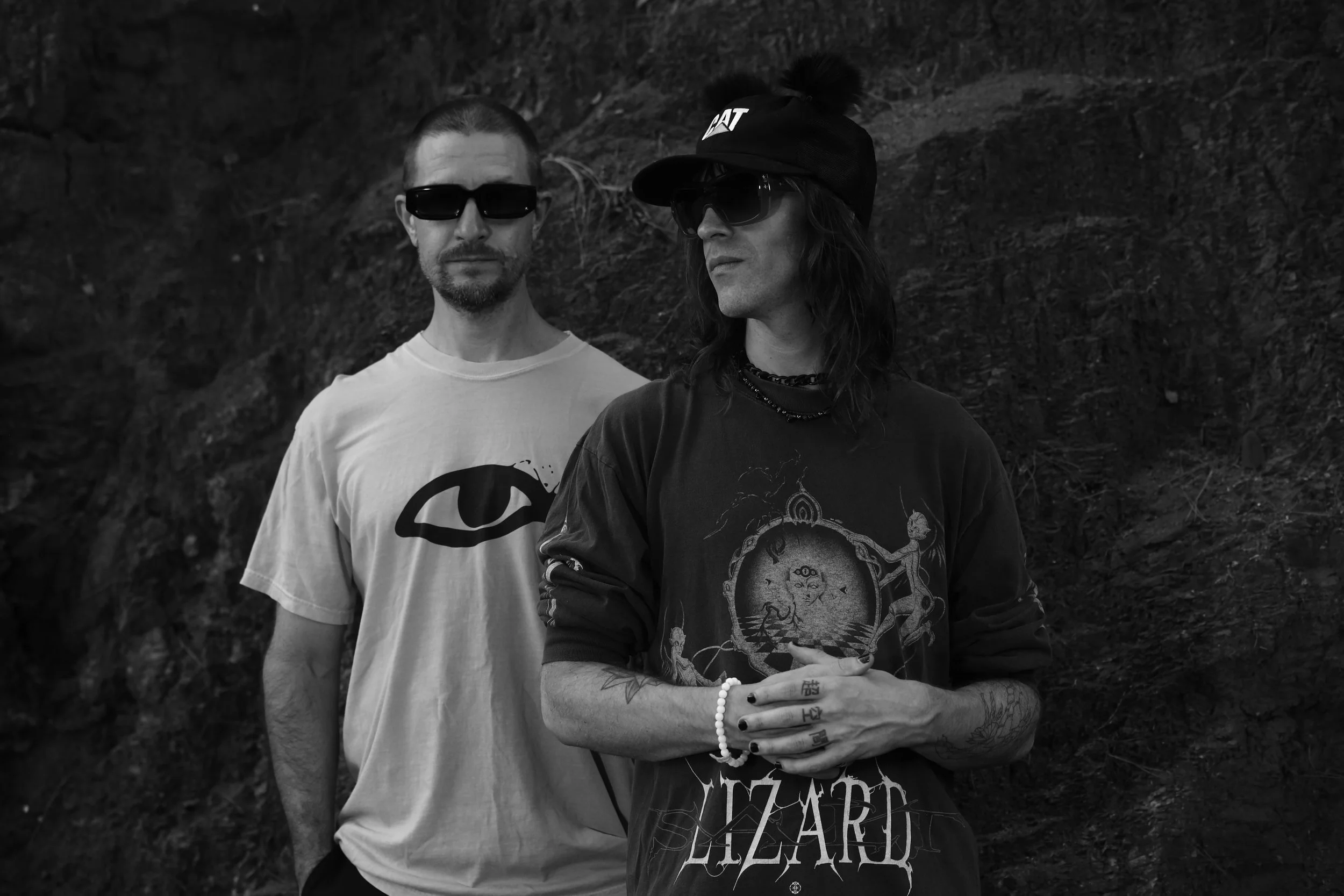
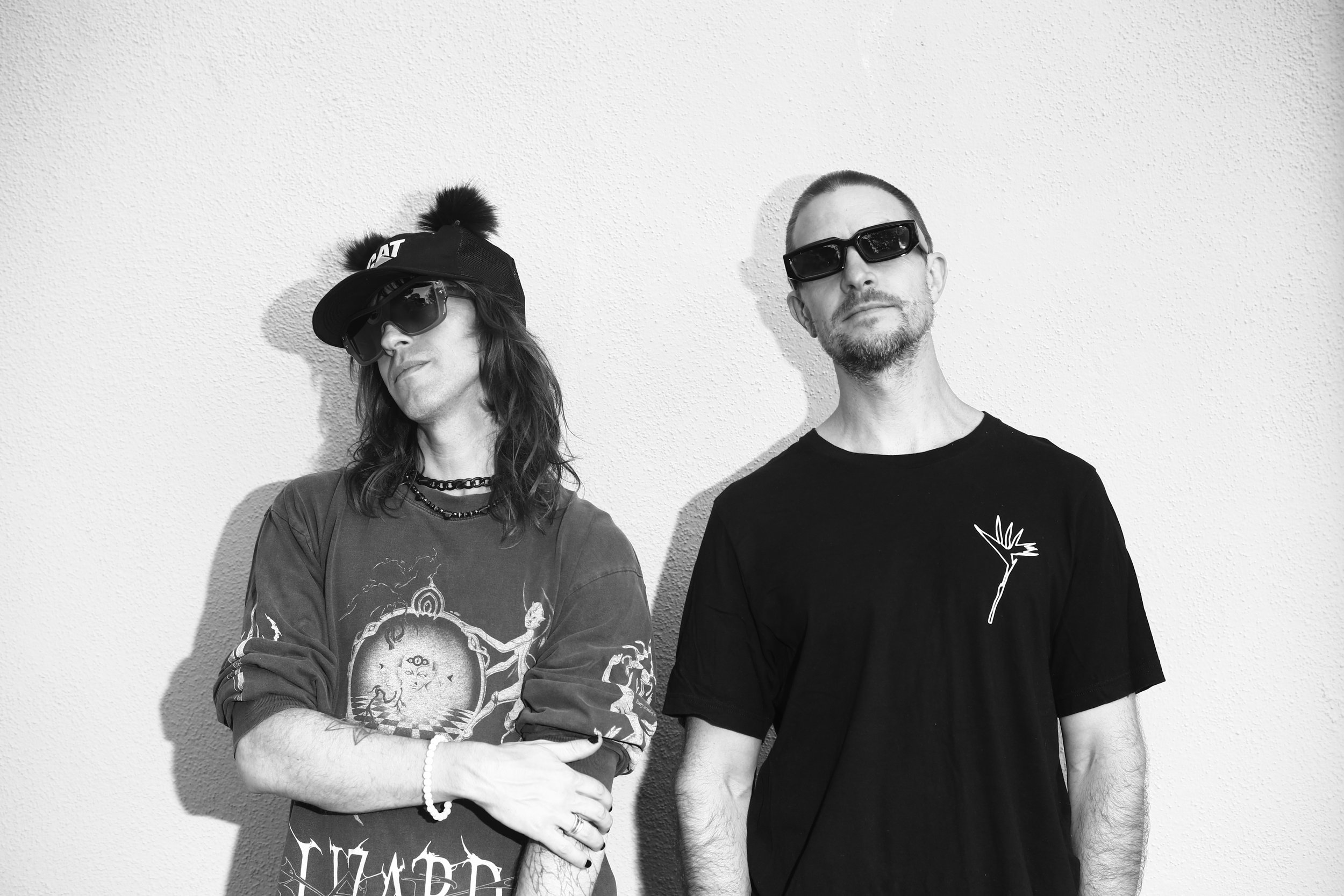
After six years apart, Los Angeles electronic duo Dance Spirit are finding their way back to each other and their music. Christopher Mohn and Reagan Denius return with Lunatic, an album completed six years ago and finally set for release on September 25. Left untouched since its creation, the record captures a defining period in their journey and now marks a new chapter for the duo.
Lunatic was finished just before the pandemic but is only being released six years later. When you listen to it now, what does it bring you back to?
Reagan: I think at this point in the process of getting ready to release the album, it’s stopped bringing me back to the past and instead makes me look forward to the future. Obviously, there are lots of memories involved in making it, from collaborating with our friend Purdy Lites on visual content and music videos to everyone who helped us film the video for the title track, “Lunatic”: Brian Clark, Love Tribe and Hunt and Gather, Meg Sutherland, and even Mikey Lion from Desert Hearts makes an appearance.
Energetically speaking, however, it now represents a stepping stone toward getting back into the world of creating together with Chris as Dance Spirit. There’s an excitement about all the new art we can make after improving ourselves individually over the last few years, mentally, emotionally and artistically.
Chris: Listening to Lunatic six years after we were originally going to release it has been very emotional and nostalgic for me. It’s interesting to look back and hear what we created, how we created it, and who we were as a duo and as individuals at the time. Because of the way we make music with machines and melodies, I think there’s a timelessness to this album, which makes releasing it six years later much easier.
You’ve described hearing the album again as like opening an old journal. Was there anything about that version of yourselves that surprised you when you returned to the music?
Reagan: We had an extreme tenacity to get stuff done, pushing ourselves relentlessly to make art and help the local Los Angeles scene in our own way. Besides the music, we ran a quarterly zine called Space Cadet, focusing not just on DJs and producers in the LA scene, but also promoters, partygoers, visual artists, fashionistas and more. We published eight issues over two years.
We also threw “pre-parties” called Space Camp at the warehouse where our studio was located, focusing on ambient, electronica, IDM and downtempo sounds. One of the most shocking things was opening the label folder after so many years and seeing that everything was there for the album, ready to go. We could pick up exactly where we left off.
Chris: The thing that surprised me was realizing how much more I’m enjoying my solo work right now. It wasn’t until I went back and listened to this album that I could really appreciate what Dance Spirit is and understand my own journey as a solo artist.
That’s not to say I’m not proud of this work. I’ve just progressed beyond a lot of what this album has to offer. At the same time, this is an album, not simply a dancefloor offering. Even though there are lots of dancefloor moments, I believe it’s more of a journey through electronics, melodies and sounds.
The album was created during a period of burnout and growing tension between you. How much of that emotional state do you think made its way into the music?
Reagan: I feel like the title track, “Lunatic,” is the main song that captures a bit of that. Since some of the music was made before the burnout phase, I don’t feel like there’s much of a “burnout” vibe encoded in the music’s energy. The main theme is the moon and the shadow, whereas our first album focused on the sun and being in the light. Not that Lunatic is dark, but it’s a bit “colder,” while The Sun Also Rises is “warmer,” musically speaking.
Chris: I’m not too sure how much of that emotional state made it onto the album. A lot of it was completed before we started pulling away from each other. I think subconsciously there’s a lot of tension and emotion in the music, and I can hear Reagan going in one direction and me going in another. I’m not sure if anybody else would hear that, but looking back, you can see that there was a split or a big fight looming.
You eventually went your separate ways, both creatively and personally. What did those six years apart teach you about each other and about your own creative process?
Reagan: It was honestly one of the healthiest things that could have happened to both of us, even though it took a while to get through the initial pain and emotions: anger, grief, resentment and frustration.
I knew I still wanted to pursue music and art. At the time, I was developing a style that Chris was encouraging, so I could release music that didn’t fit the Dance Spirit vibe under my Robotek Reagan persona. I decided to go back to my creative roots: sci-fi, anime, video games, abstract 3D art and a sci-fi story I began writing in high school. I eventually adapted that story into a new world called The Void Space Institute™.
Up through the end of Dance Spirit, I had rarely been on my own as an artist. I had pretty much always been collaborating with others. The last six years have really been a journey of discovering who I am as an artist and individual, and what I have to offer. It’s given me time to work on myself, overcome my shortcomings, get in touch with my own happiness and learn how to overcome suffering in life. Who am I now? I’m a catboy named Robotek Reagan from Beyond the Void :3
Chris: The last six years were pretty hard on me creatively. There was a long stretch of imposter syndrome and an identity crisis, which, looking back, I think was normal given the situation.
I focused on poetry for a few years before returning to music. I developed my craft as a poet, self-published a couple of books and became more involved in the local poetry community in Los Angeles. My return to music really happened in 2024, when I started my own label, Point Line and Plane.
It’s been a really good journey for me to grow apart from Reagan, emotionally and creatively, so I could find my own style and groove. Although a lot of my work still lives in obscurity in my studio, I’m always creating and moving forward. I’m really happy about my solo work, just as I’m happy about the Dance Spirit stuff.
Coming back together must have required a certain amount of forgiveness and understanding. What made you both feel that the time was right to return to Dance Spirit?
Reagan: It took me a couple of years to stop thinking about things so much and to transmute the emotions from years of work, burnout and a breakup. But behind it all, I always wished for Chris’s personal success on his solo journey.
We eventually started running into each other at parties here in LA, slowly broke the ice, hugged it out and started talking more. I don’t think either of us expected to get Dance Spirit back together. Up until recently, this has kind of been an exercise in throwing noodles at the wall to see if they stick.
After a couple of recent studio sessions together, things are starting to feel more real. We’re booked for our first “reunion” live set on October 3 at DISTRIKT’s decompression party in Downtown LA, and we’re hosting an album launch party at Bar Franca on September 25. It feels like Dance Spirit is actually becoming a part of our lives again, and we’re excited to see where it goes.
Chris: Coming back together wasn’t easy. It took many years. We would run into each other on the dancefloor and be polite, but I still had a lot of animosity toward Reagan, as well as hurt and bitterness.
Last fall, I needed to record a studio mix for Goldcap’s podcast, and Reagan was the only person I could think of who could help me do it the way I wanted. I asked him for a favor, he said yes, and that was the beginning of us mending fences.
We’re two completely different people at this point, but there’s still a very healthy creative synchronicity between us. At one point Reagan and I were so similar, and now we’re very different. I think we can appreciate and lean into those differences. Creatively, they actually allow us to balance each other out and make better art and music.
You made the decision not to rewrite or modernize Lunatic, even though six years have passed. Why did you decide to leave the album exactly as it was?
Reagan: One of the biggest reasons is that we already had a full package ready to go, with over an hour of music video content. The thought of updating the music and having to redo all the video content seemed like a major undertaking.
Honestly, the music is still just as good. Listening to the album again after six years moved me to tears, and I believe in the music we made here. The single and remix packages we’ve released have allowed us to reimagine things on our own terms as more developed artists. As they say, “If it ain’t broke, don’t fix it!” Now we’re ready to get back into the studio and make some new music.
Chris: I don’t think it was necessarily important to leave the album the way it is. It’s just that it was finished and done, and if it ain’t broke, don’t fix it. Easy peasy.
The album explores ideas of duality, from light and darkness to freedom and restraint. Did those themes take on a different meaning for you after everything you went through?
Reagan: Thematically, I feel like we’ve always tried to capture a balance between light and dark in our music. We have darker, harder grooves and tunes that never saw a release but made it into our live performances.
I think the most impactful and emotionally provocative art understands how to play those dualities off each other to create moments of extreme beauty and emotion. Maybe it’s a result of transmuting the suffering we experience in life into something people can relate to, because we all have both light and dark in us.
Chris: Dance Spirit has always been an esoteric project, and the balance between light and dark, night and day, moon and sun are all things that I’ve consciously brought into my visual art over the years. It’s part of my visual language, and I’ve extended those same philosophies into Dance Spirit. If you look at our body of work, it’s a theme that we subconsciously and conceptually express.
You’ve known each other and worked together for many years. Looking back, how has your relationship as collaborators changed, and what have you learned about creating together?
Reagan: Chris and I actually had a conversation about this after working in the studio together this past weekend. I think one of the best things is that this time around, we’re really embracing our differences and the strengths that come with them, instead of trying to conform ourselves to “the same.”
I have a tendency to be headier and more cerebral, while Chris is much more body-music-driven, so he brings a nice restraint to my tendency to get SUPER weird and crazy. We’ve both been cracking the code on different styles of music over the past six years and have developed new engineering and production techniques, so it’s exciting to see how this will fit together in our new productions.
Chris: Honestly, we’ve been working with each other for 20 years. We met in 2006. What I’m learning right now, as the collaboration takes shape again, is that Reagan is the mind of the music and I am the body of the music. We come together and balance each other out to give it soul.
Lunatic is also a fully DIY project, from the music and visuals to releasing it through your own imprint, Koukan. What does having complete creative control mean to you at this stage?
Reagan: Complete creative control means we can do whatever the freak we want! Obviously, we both have to agree on it. There’s no waiting to get a demo approved or wondering how long it will take to get released. A late release means it’s on us and us alone.
We can move at our own pace. Right now, we’re planning to release monthly and have already mapped out our Dance Spirit releases through January. In December, we’ll take a pause from original Dance Spirit music to release an EP of Lunatic remixes by friends. Expect some exciting collaborations in the future as well!
Chris: Having complete creative control gives us the freedom to express ourselves however we want, although we’ve pretty much always been given creative control with other labels.
I enjoy collaborating with artists who aren’t necessarily in the scene because it lends a different aesthetic to what we’re bringing into dance music culture. That’s why working with Purdy Lites to create all this amazing CRT imagery was essential to the aesthetic of the album. Having the liberty to creatively do what we want gives us a lot of freedom to be expressive.
After everything that happened, what does Lunatic represent to you now: the end of a chapter, the beginning of a new one, or something in between?
Reagan: All of the above! It’s the end of a chapter of grief, the end of a chapter of character refinement, not that that should ever stop, and the end of a chapter of weirdness between friends. It’s also the beginning of a new era for us as Dance Spirit. We’re excited to be back at it.
Chris: For me, the release of Lunatic marks a new beginning and a new chapter for Dance Spirit, as well as for Reagan’s and my brotherhood. Regardless of what’s happened in the past, we’re both really excited to be working with each other again.
I had no intention of actually making new music with Reagan, but after the last couple of sessions touching up old work and preparing releases, I’m really excited to collaborate on new material. We both bring a lot more to the table now. If we really focus and get down to it, I think we can make amazing new music on top of all the old stuff we’re going through.
