
IN CONVERSATION WITH DEVON RODRIGUEZ
interview by MAREK BARTEK
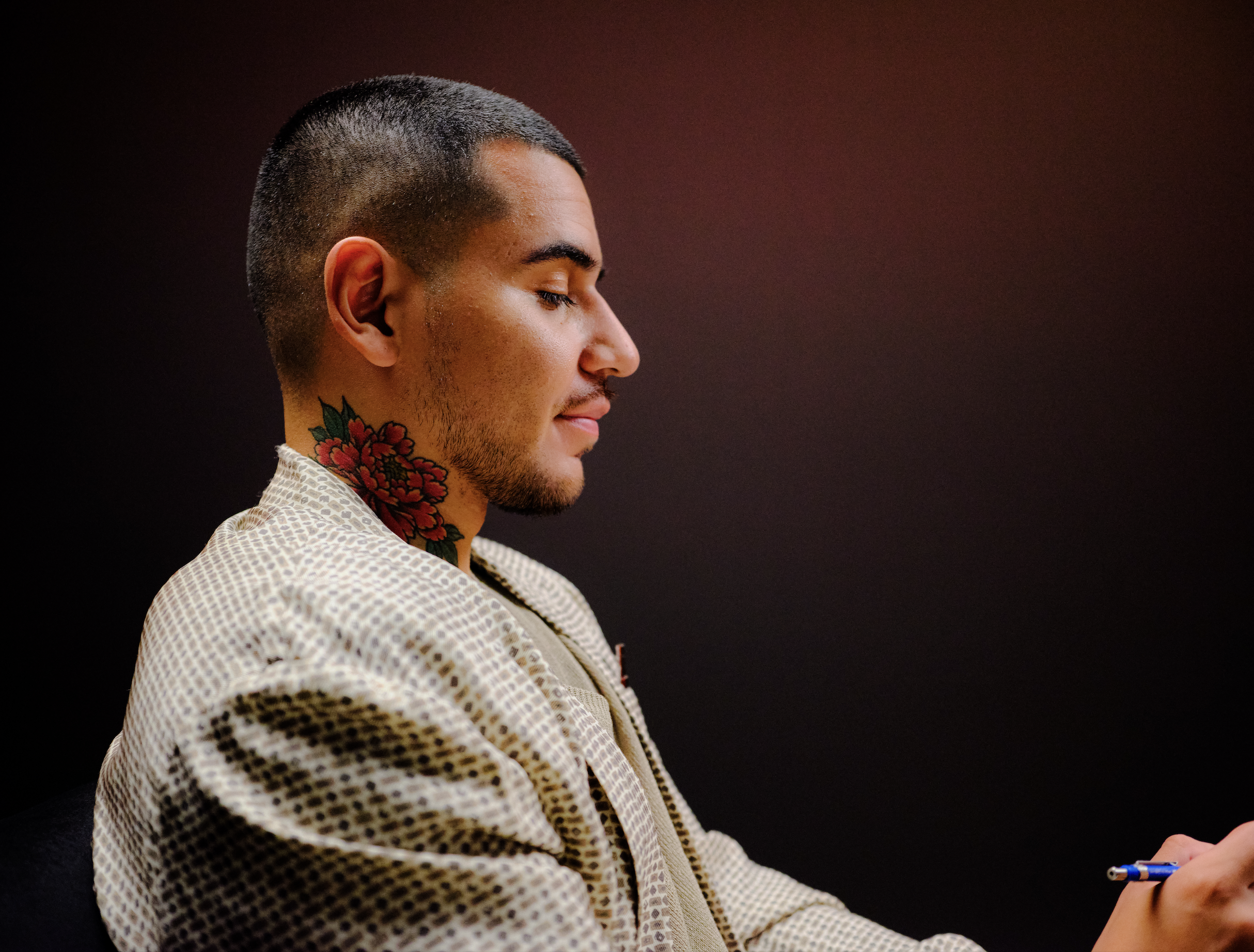
The journey to success of New York-born and -based artist Devon Rodriguez wasn’t necessarily traditional. Rodriguez spent the beginning of his career on the subway, drawing portraits of everyday commuters and posting his process on social media, unsure if this would ever bring him his dream career. Fast forward to today, and Rodriguez is an established and well-respected artist, drawing portraits of celebrities while interviewing them. For the launch of Armani Beauty’s I Will campaign, Rodriguez sat down with Jonathan Bailey, Carlos Sainz and J Balvin to not only draw their portraits but also talk about ambition, commitment and insecurities that the public usually doesn’t see.
all images courtesy of ARMANI BEAUTY
For Armani Beauty’s I Will series, you drew portraits while having conversations with Carlos Sainz, J Balvin and Jonathan Bailey. You’ve been doing series like this on your social media but this was the first time working in collaboration with a brand. What initially made you say yes to this project, and what did you want to discover about the people sitting opposite you?
What drew me in was the idea behind I Will. So much of my journey has come from committing to something before I knew where it would lead, so that message felt personal. I also appreciated the opportunity to bring my way with people into the world of Armani Beauty. When someone sits across from me, I’m curious about the person behind the accomplishments. What shaped them? What did they have to overcome? What keeps them going? Their careers might be very different from mine, but we can connect through those experiences.
Was there something that surprised you about each of them that someone watching from the outside might never guess?
What interests me about meeting people at that level is discovering how much exists beyond the image you already have of them. With Carlos, there’s a person behind the focus and precision you associate with racing. With J Balvin, there’s a person behind this huge creative presence. With Jonathan, there’s a person beyond the characters people feel they know. I went into each conversation curious about that. Drawing someone gives you a reason to slow down and pay attention to the smaller things like their expressions, their humour, the way they respond when a question matters to them.
Was there a moment in these conversations when something they shared changed how you saw or drew them?
It’s usually a gradual shift for me. As someone opens up, I start noticing expressions I wouldn’t have caught at first. Their face relaxes, their eyes change, or a smile appears when they talk about something they love. That influences what I want to capture. A portrait can be technically accurate, but I want the person to recognize something of themselves in it, too.
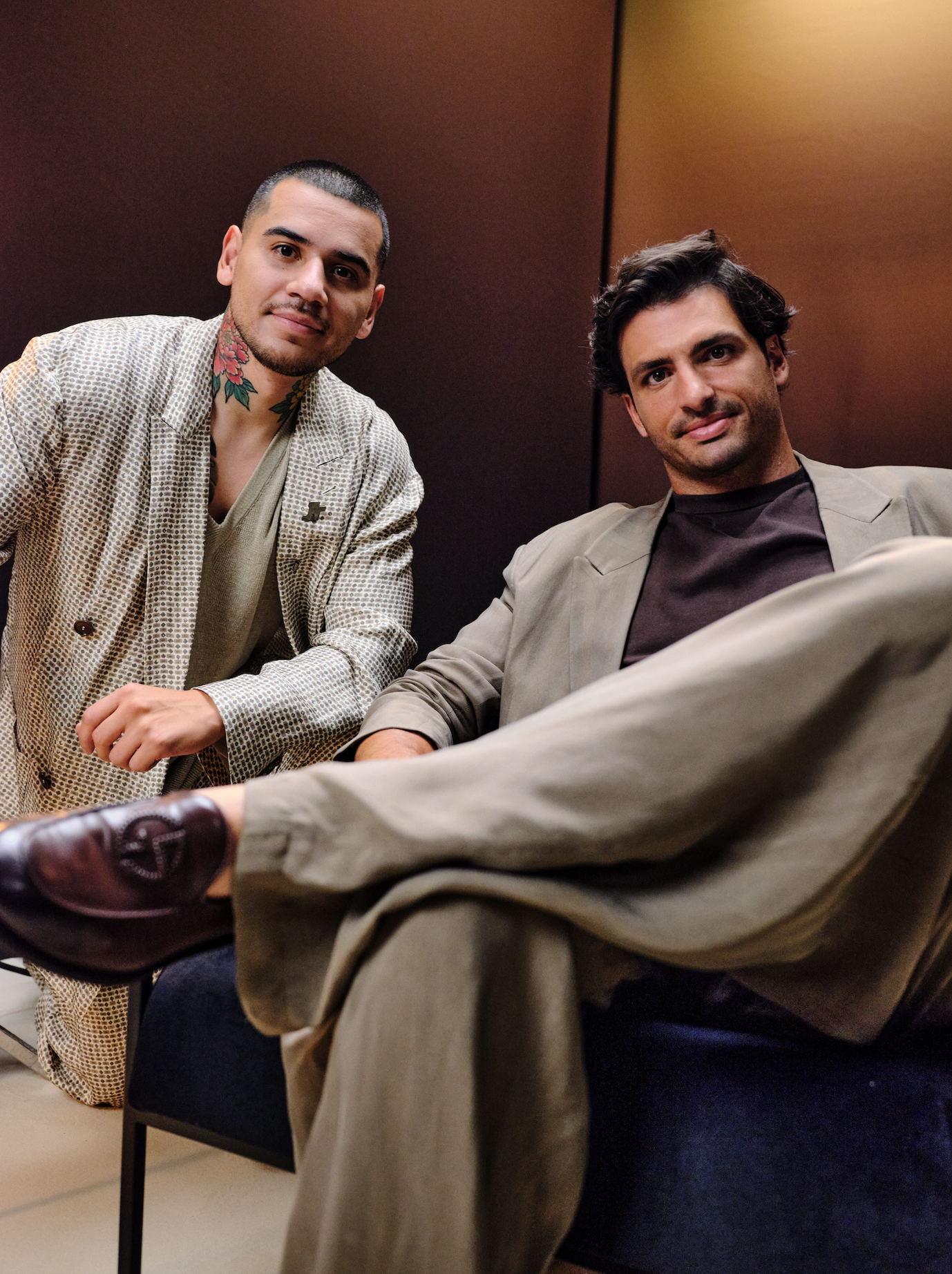
These are three people who work in very different worlds. Did you recognise something they all have in common through their stories?
The common thread I kept thinking about was their commitment. Their work is very different, but each career takes years of effort that the public doesn’t ever see. I relate to that as an artist. People might see a finished portrait or a successful video, but there are years of practice and thought behind it. Being around people who are accomplished in other fields reminds me how much we share through the process of getting better at something because we just love it so much.
Was there something one of them said that stayed with you afterwards, or made you think differently about your own journey?
What stayed with me was a broader thought about how much of a person’s journey remains invisible once they become successful. It made me reflect on my own beginnings, drawing on the subway and trying to improve without knowing whether it would become a career. When opportunities get bigger, I want to keep that same curiosity and willingness to learn. I never want success to make me feel like I’ve finished growing.
You’ve drawn strangers on the subway and some of the world’s most recognisable faces. What has that taught you about the gap between how people present themselves and how they want to be seen?
It’s taught me to stay curious beyond a first impression. On the subway, you might see someone for a few seconds and assume you understand them. With a famous person, you might arrive with an entire image built from their work and what you’ve seen online. In both situations, there’s so much you don’t know. Giving someone a portrait can create this beautiful moment where they feel seen. That has shaped how I approach people, everyone deserves care and attention, whether millions of people know their name or nobody does.
Social media has given artists a way to build an audience without waiting for the art world’s approval. In your experience, what freedom does that create, and what pressure comes with knowing which work gets the most attention?
Growing up in the South Bronx, I didn’t have a clear path into the art world. Social media allowed me to share my work directly, reach people around the world, and build a career from those connections. That freedom changed my life.
The pressure is that you can see immediately what gets attention, and it becomes tempting to let those numbers guide every decision. I try to ask myself whether I still care about the work when I put the numbers aside. I want to keep improving as an artist, a creative, exploring new ideas, and making things that mean something to me. Building an audience gives me the opportunity to do that, and I want to use it well.
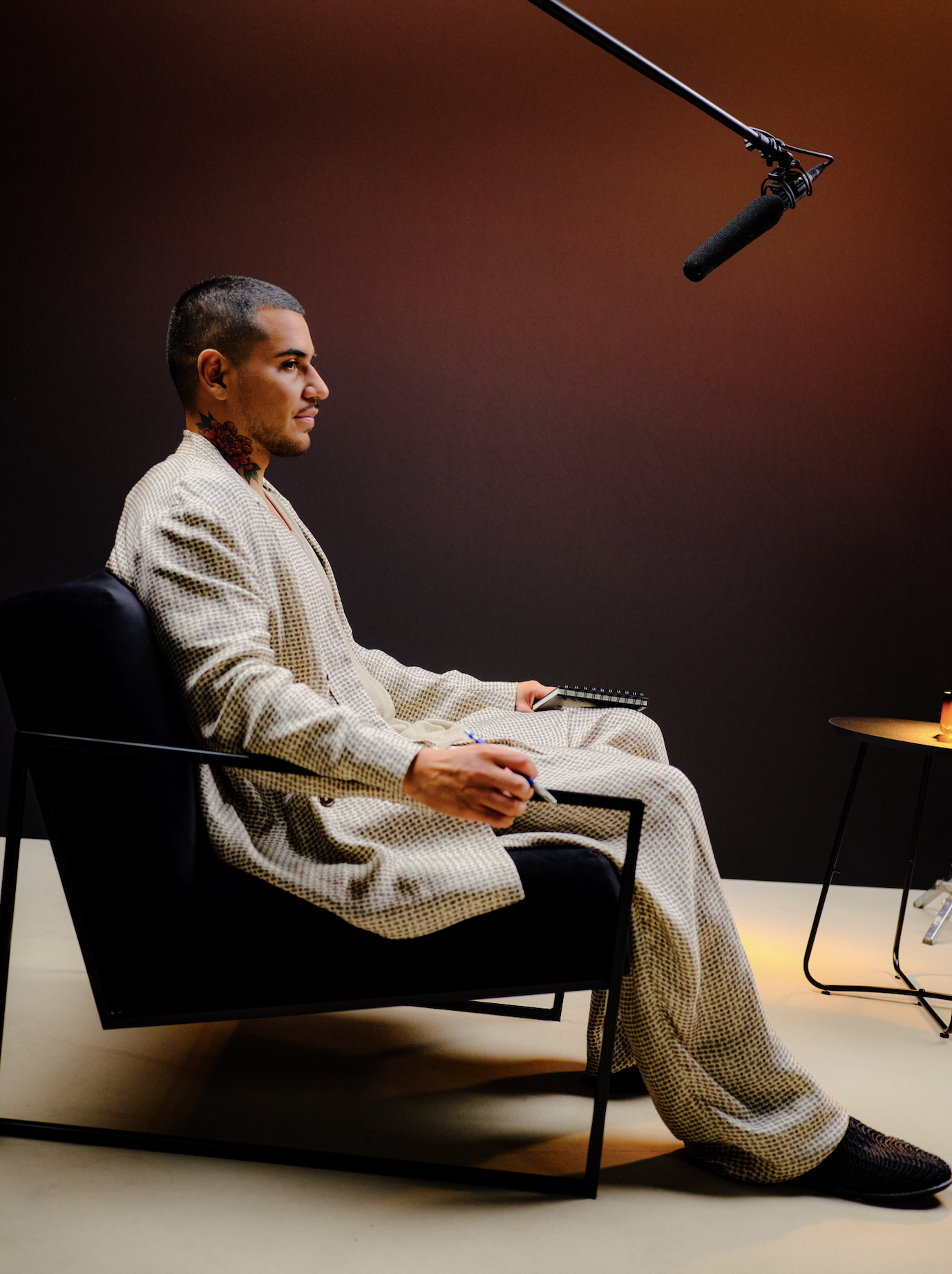
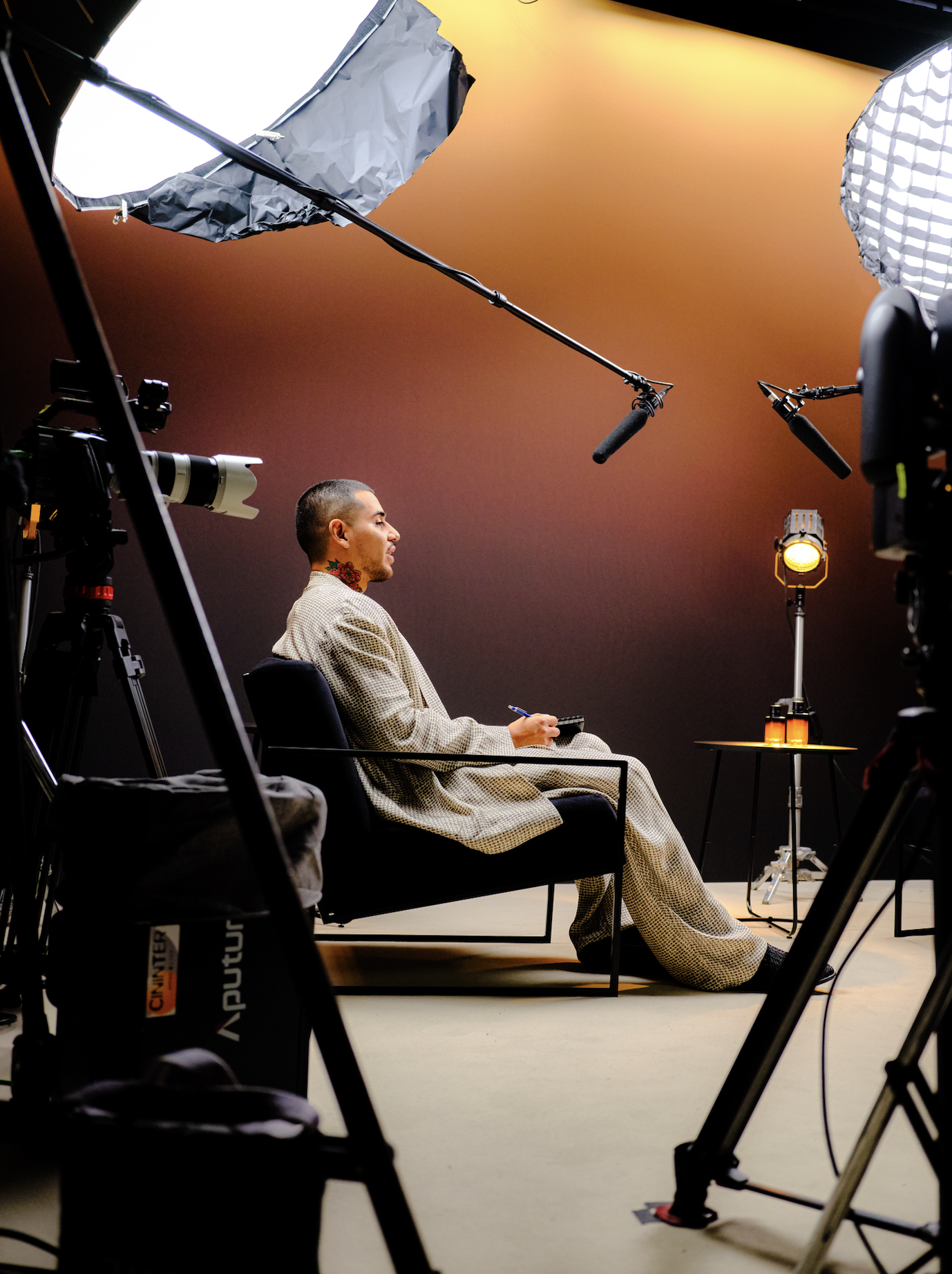
The name I Will sounds like a promise to yourself. Looking back, have there been moments when you committed something before you had much evidence it would work out?
When I first applied to the High School of Art and Design, I wasn’t accepted. My drawings weren’t ready yet and that really hurt me because I wanted it so badly. Or so I thought I did. I spent the next six months practicing very hard, applied again, and was accepted for tenth grade. That experience taught me that I could respond to disappointment by doing the hard work.
I felt something similar when I started interviewing people. I was an artist learning how to interview people and I didn’t have all the skills. I kept showing up and trying to learn through experience. Eventually, that led to conversations with people like Oprah Winfrey. No way I could have predicted that when I started.
Which decision in your career felt hardest to explain to other people at the time, but makes complete sense to you now?
Taking drawing on the subway seriously. It wasn’t an obvious career plan. I was spending hours drawing people during their everyday lives, and there was no guarantee that it would lead anywhere. But it taught me how to observe, and find something meaningful in an ordinary moment. Eventually, sharing those portraits became the foundation of my career. Looking back, those train rides were shaping both my art and the way I connect with people.
You’ve invited people to speak openly about their doubts. Do you have an insecurity of your own that success hasn’t necessarily made disappear?
Maybe it’s the feeling that I still have to do more. When you care deeply about your work, there’s always something you can improve, and sometimes that makes it hard to appreciate how far you’ve come. I can reach a milestone and immediately start thinking about the next thing.
Writing my memoir, Work in Progress, helped me pause and look at my life more honestly. I could see the distance between the kid I was in the Bronx and the person I am today. I’m learning to give myself credit while still being focused on what comes next.
A portrait and a fragrance can both express something about a person without words. If you could capture one part of your own story in a scent, what would it be?
I’d probably go back to drawing at my grandmother’s place in the Bronx, the smell of pencil shavings and a sketchbook I’d been working in all day. She gave me the space and support to take art seriously. Something warm and woody would bring me back to that.