
IN CONVERSATION WITH DIEGO CALVA
interview by TIMOTEJ LETONJA & JANA LETONJA
words by JANA LETONJA
DIEGO CALVA continues to emerge as one of the most compelling actors of his generation, building a career defined by emotional depth, versatility and fearless performances across international film and television. After breaking through globally with his standout role opposite MARGOT ROBBIE and BRAD PITT in Babylon (2022), he has continued his momentum with acclaimed performances in projects ranging from On Swift Horses (2024) to The Night Manager (2026). With multiple major projects having been just released and still on the horizon, including Club Kid, Her Private Hell, Drama King and Baton, Diego is carving out a unique space in global cinema, balancing independent storytelling with large-scale international productions while continuously challenging himself through emotionally complex and transformative roles.
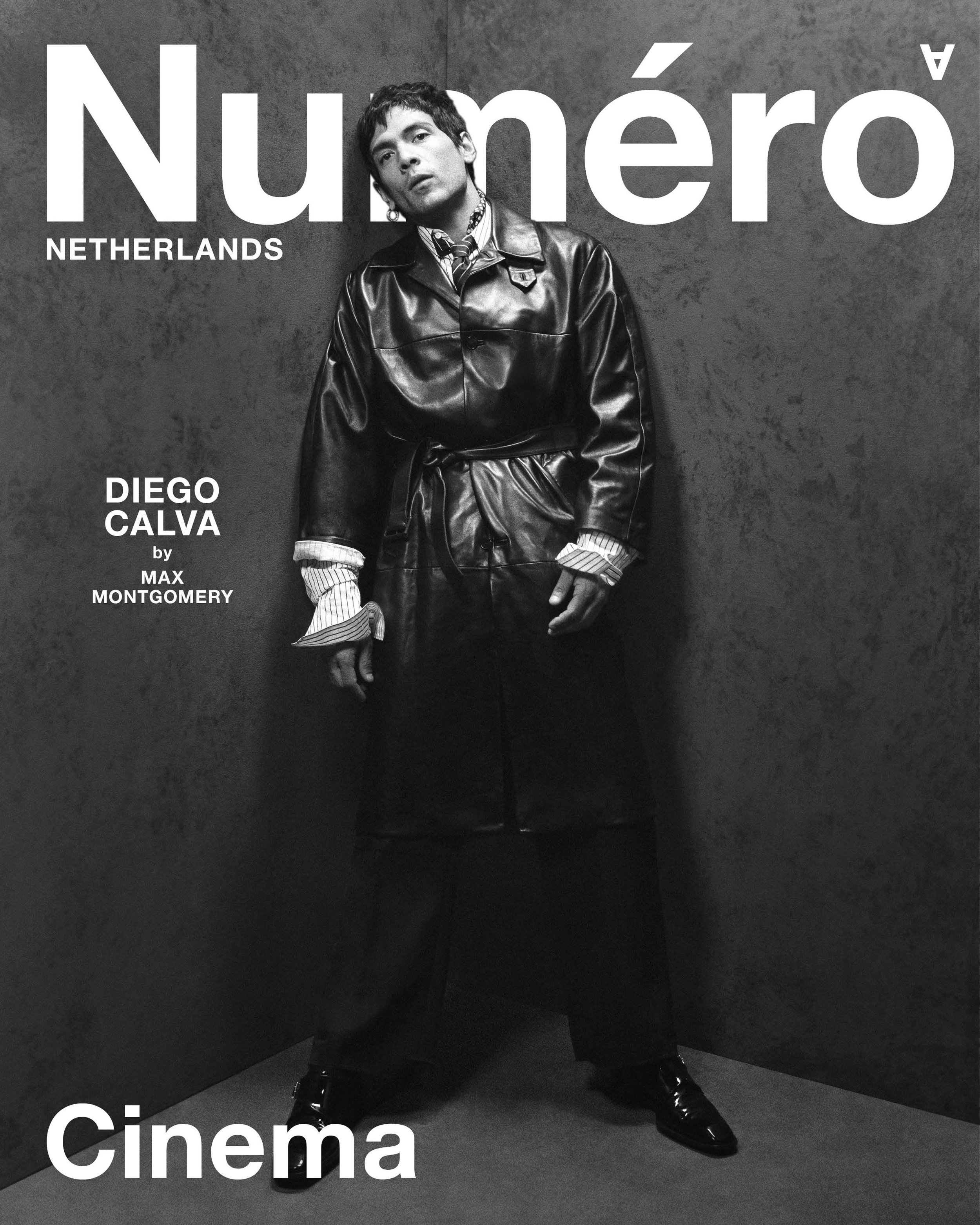
This year, you arrived at Cannes with two films inhabiting very different cinematic worlds: Her Private Hell and Club Kid. What did it mean to experience those projects existing in dialogue with one another within the same festival?
I think if I had to create a link between the two projects, it’s actually that they’re very different. On one hand, we had NICOLAS WINDING REFN, who is a well-established director, coming back after ten years. In a way, he’s completely free because he doesn’t have to prove anything to anyone. He has his place in cinema already. Then we have JORDAN FIRSTMAN’S first feature film, and he’s completely free at the same time. I think the connection between the two projects was the freedom I witnessed in both directors.
Having both films at the festival was really special. It was Jordan’s breakthrough moment, his first film, and it became one of the most talked-about films at the festival. At the same time, everyone was eagerly anticipating Nicolas’s return. I just feel really honoured. I think things aligned in a very beautiful way for me this year, and I’m hoping to come back many more times.
Your recent work repeatedly engages with questions of identity, performance, desire, reinvention and social construction. Do you see acting itself as an exploration of identity or, perhaps, as a process of dismantling it?
No, at least in my case. I never took formal acting lessons. I started acting first and then began preparing myself. I studied clowning, improvisation and other techniques, but I never attended a traditional acting school. My body is my instrument, and I have to keep working on it. Acting, for me, has been a form of liberation. Before being naked in front of a hundred people on a movie set, I was the guy who was too shy to take off his shirt at the beach or even around my partner.
Acting became a way of making peace with myself. At the same time, I found in acting a place of calm. I feel at home when I’m acting, if that makes sense. Sometimes I joke that they pay me to stay alive, do laundry and eat healthy, because once I hear “action,” I’m free. I’m in a safe space.
Life is hard. I don’t know what’s going to happen out on the street today, but I know what’s happening on a movie set. I can prepare for the unexpected because I’ve already imagined it. Acting is home for me. It’s liberation. It’s a mirror. More than anything, it’s the place where I feel truly free.
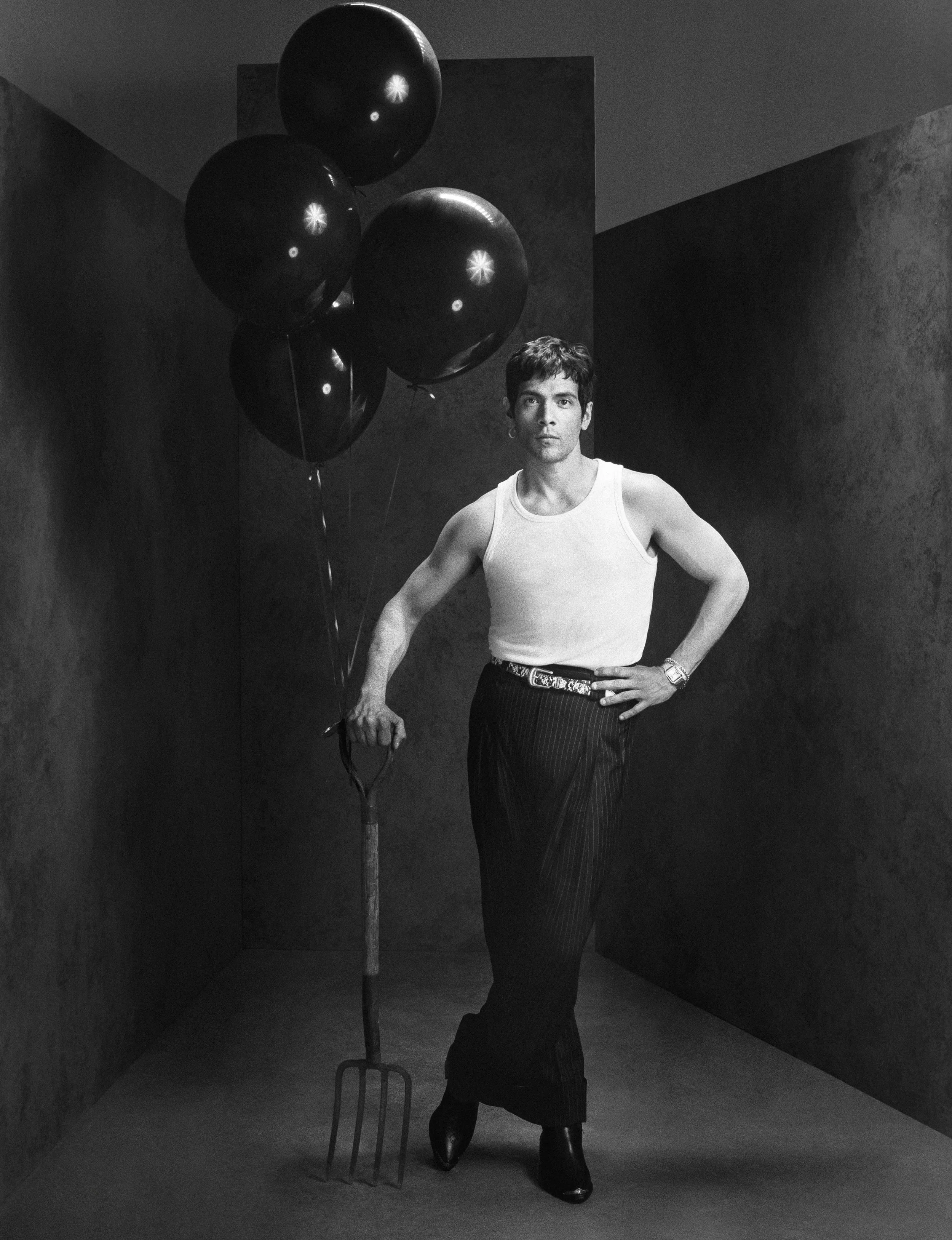
tank top COS
trousers KODY PHILLIPS
belt and boots AMIRI
earring and watch CARTIER
bracelet DAVID YURMAN
bracelet JOHN HARDY
Looking back on Babylon, do you think that film altered not only the scale of your career but also your relationship to ambition, visibility and the mythology of cinema itself?
I’ve loved movies for as long as I can remember. I’ve always wanted my life to be connected to cinema. People often think Babylon is special because it changed my career, and of course it did. My life and career were completely different after Babylon. But what makes it truly special for me is that it was another mirror.
My first film, I Promise You Anarchy (2015), was almost metafictional. My real friends were in it. The poem featured in the film was written by one of my best friends. Ten years later, Babylon felt similarly personal because I had worked so many different jobs before becoming an actor. I wanted to be a director. I was the coffee guy, the driver, the props assistant, a production assistant, part of the art department. I followed almost exactly the same path as my character in Babylon. We both just wanted to get onto a movie set.
After Babylon, I also started thinking more about representation and visibility. At the beginning of your career, you’re simply grateful to be working. But eventually people start asking questions about Mexican representation, Latino representation, and what that means. I wasn’t fully aware of how important representation was to me growing up. Seeing the careers of DIEGO LUNA and GAEL GARCÍA BERNAL allowed me to dream. Watching the actors from Three Amigos (1986) win Oscars year after year showed us that someone from Mexico could stand on that stage and be celebrated.
Twenty years ago, it was still difficult to imagine a Mexican or Latino actor leading a film on the scale of Babylon or sharing scenes with Margot Robbie. It feels surreal even now. But for the generation before me, it was almost impossible. Many of those actors told me that twenty years ago they were playing farmhands, labourers or nameless workers. Now Diego Luna is leading a Star Wars series. Things are changing.
Because of that, I think we have a responsibility. I think much more carefully now about the stories I want to tell and the characters I want to portray. Sometimes you have to step back from certain projects and ask yourself whether you’re contributing to meaningful representation or to misrepresentation. That awareness has become very important to me.
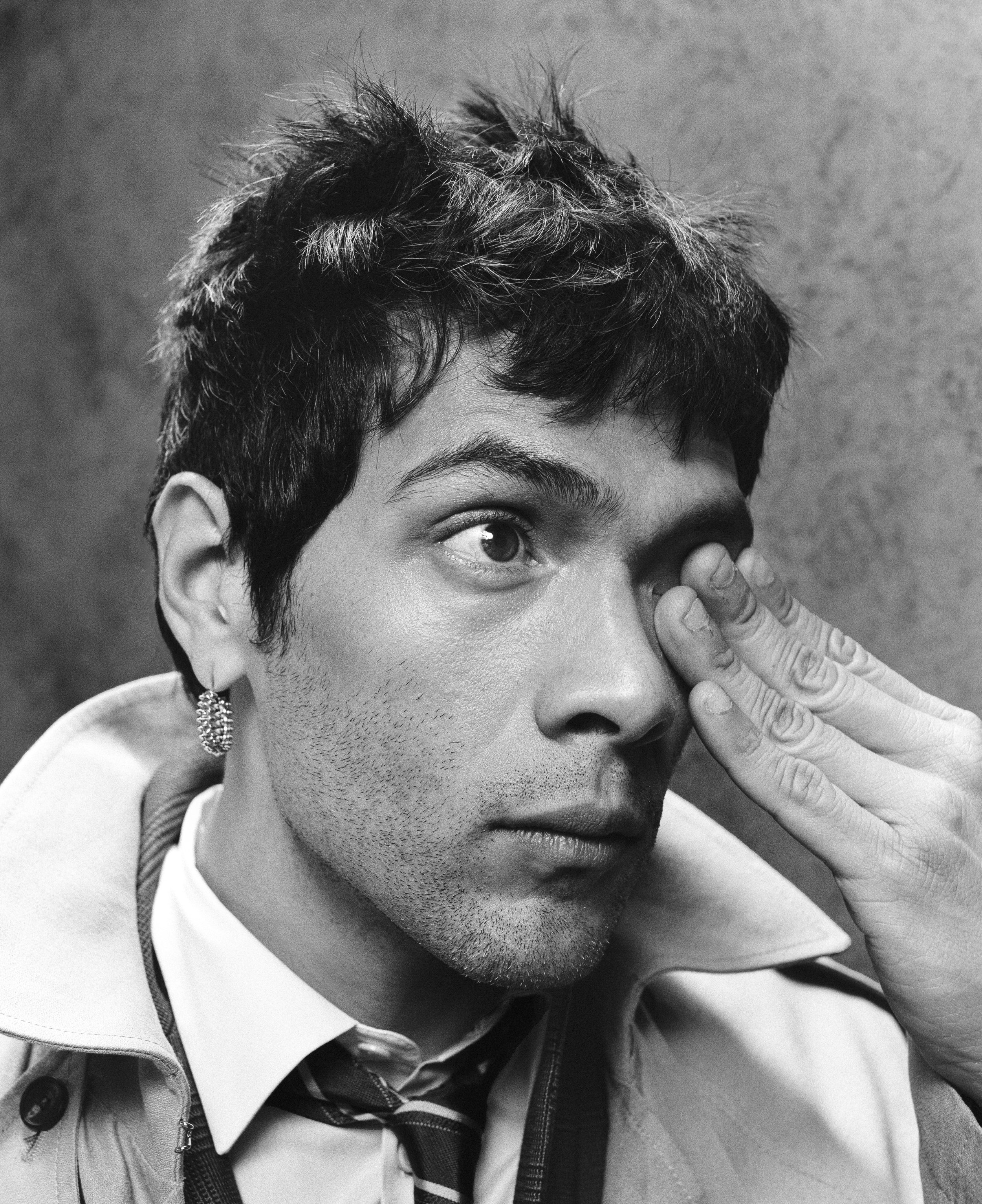
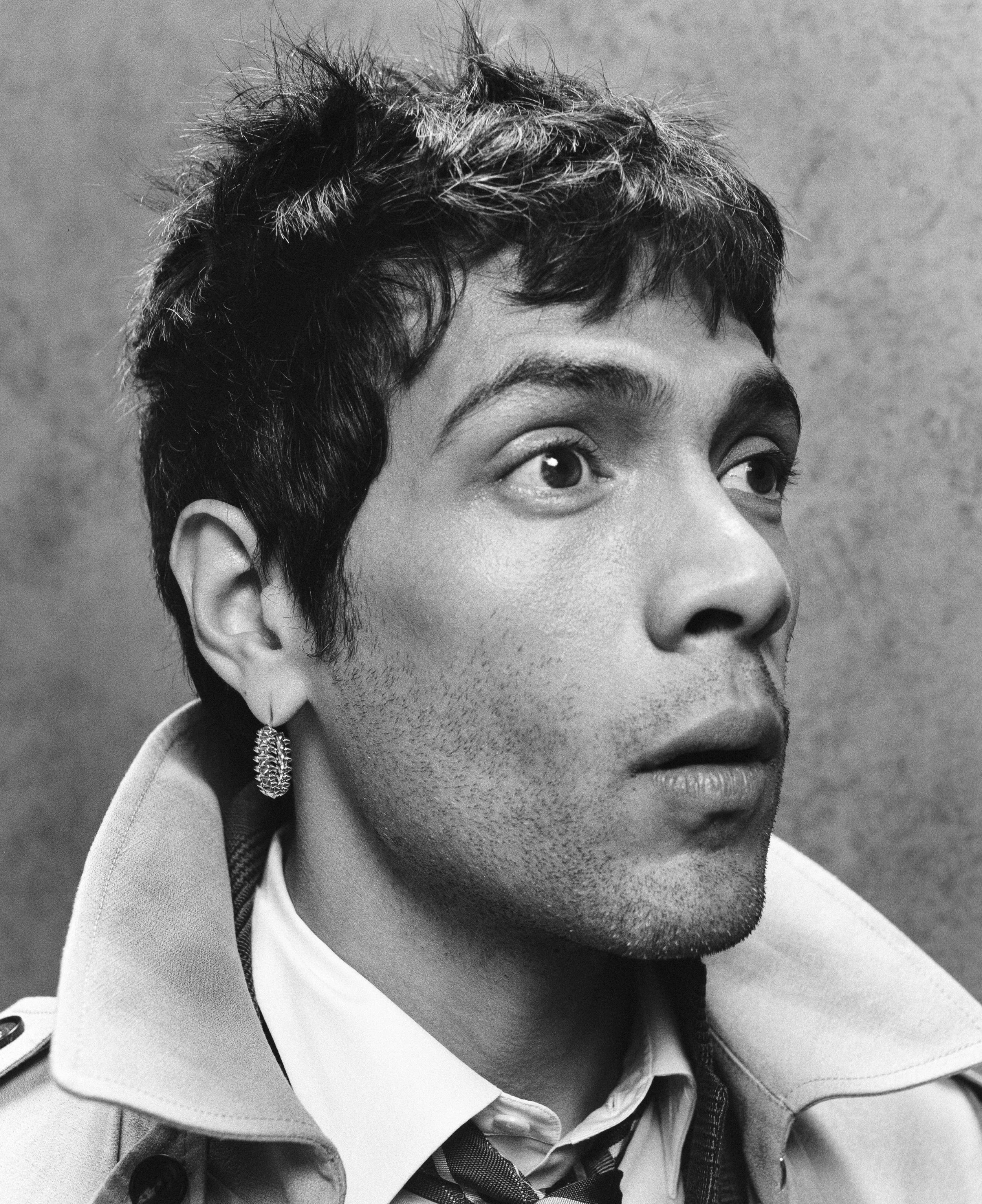
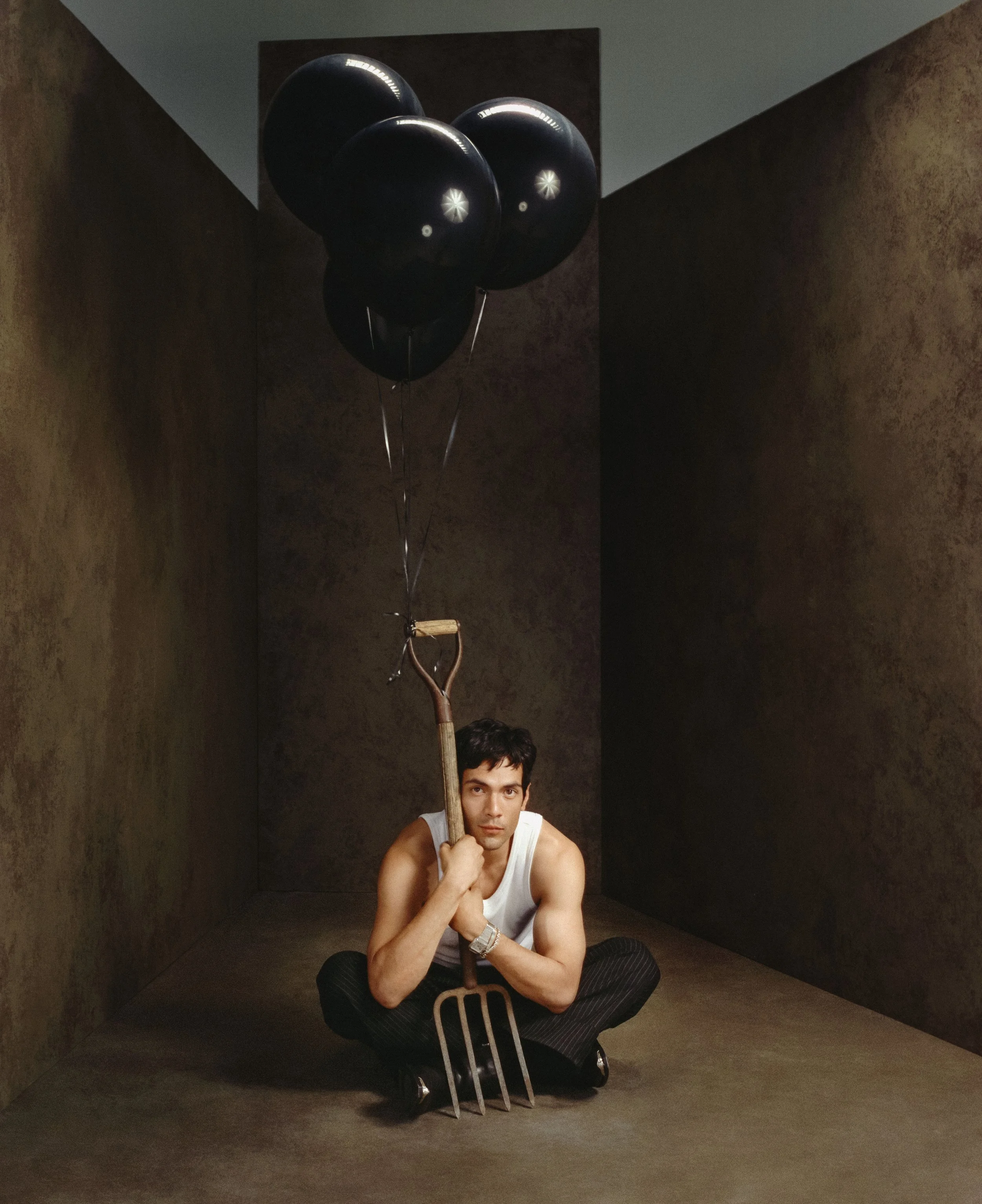
suit, shirt, tie and shoes FERRAGAMO
earring and watch CARTIER
bracelet DAVID YURMAN
bracelet JOHN HARDY
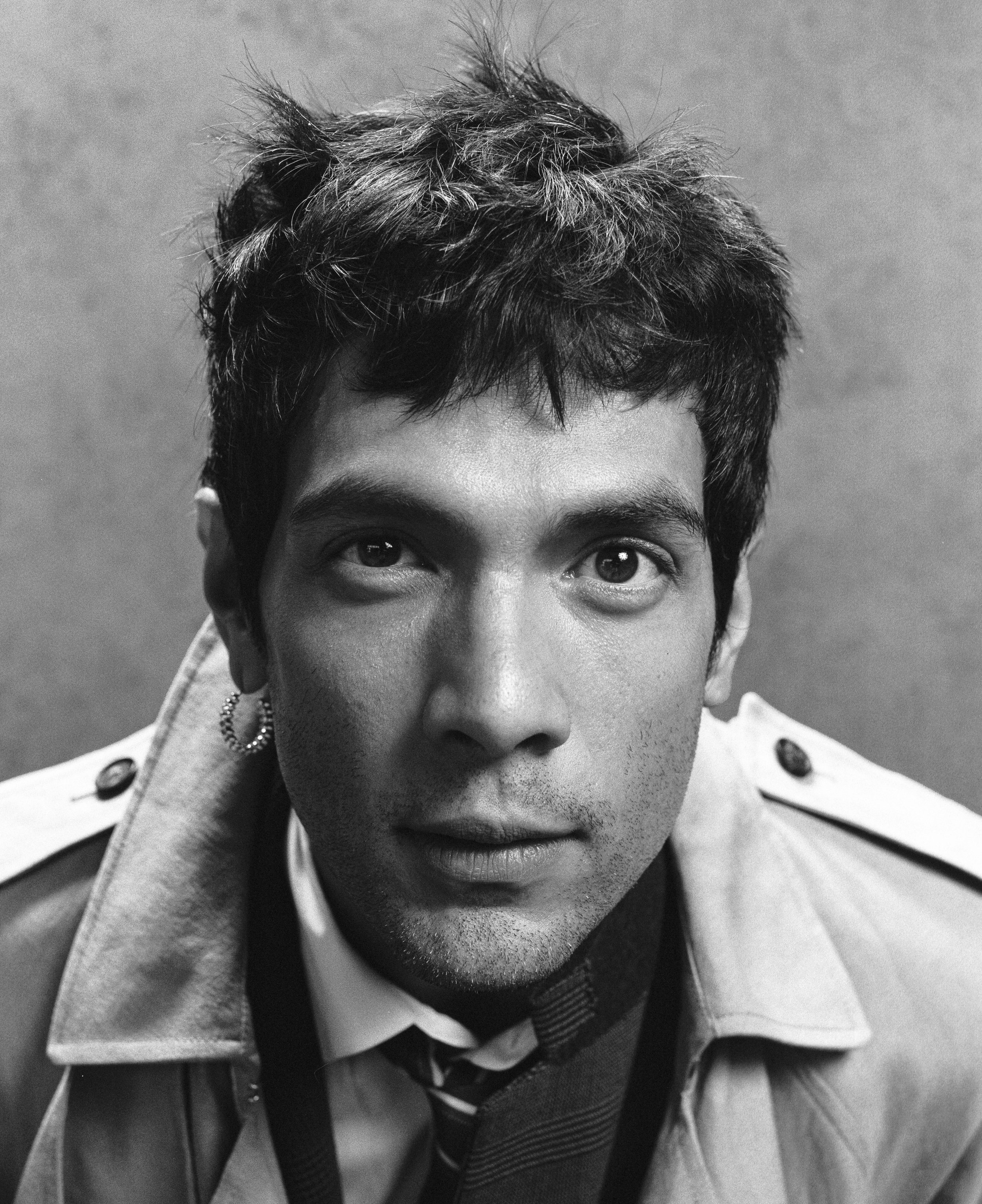
Many of your performances are strikingly vulnerable without becoming performatively exposed. How do you think about vulnerability as a creative tool? Is it something you protect, control or surrender to?
I think vulnerability is the essence of everything. Before even saying that you are putting your heart, your brain or your soul into something, all of those things really mean that you are putting yourself into it, your whole identity. And that is vulnerable.
I used to hate actors when I wanted to be a director. I thought of them as these props that talk. But now I understand why actors need so much acceptance, approval and space to play. If you are alone in your house, you can create that space by yourself. But being part of a film or a show means being part of a big machine. It is not all about you, and it is not all about the director. Everyone is important in that machinery. But as an actor, you are not working with a tool like a hammer or a camera. You are really putting yourself into it. So if you find that liberation, like, for me, being naked in front of everyone and feeling safe, that is vulnerability. In my opinion, I surrender to it because I realised it is a superpower. It makes me feel more confident because I am able to fail and to lose.
In a way, I choose my characters because of failure. I love characters who fail because I think those characters are about to learn something. If they simply win, where is the message? Sometimes they need to win, of course, but even then I want them to lose something. You really need to lose things, people, situations or even time in order to reach a new level or a different moment. I like characters who are in the middle of a transition. At the same time, I also love characters who do not change. I have been able to work in supporting roles, and that is amazing, too, because the whole movie is not on your back. You are part of something bigger than yourself, and you know your purpose.
Once again, I feel safe because I know when I need to shine or when I need to be scared or when I am simply part of the whole story. I also enjoy not being the lead because it gives me room to create someone really different from myself. I do not have to be handsome. I do not have to be sexual. I can be weird or quirky. I can play.
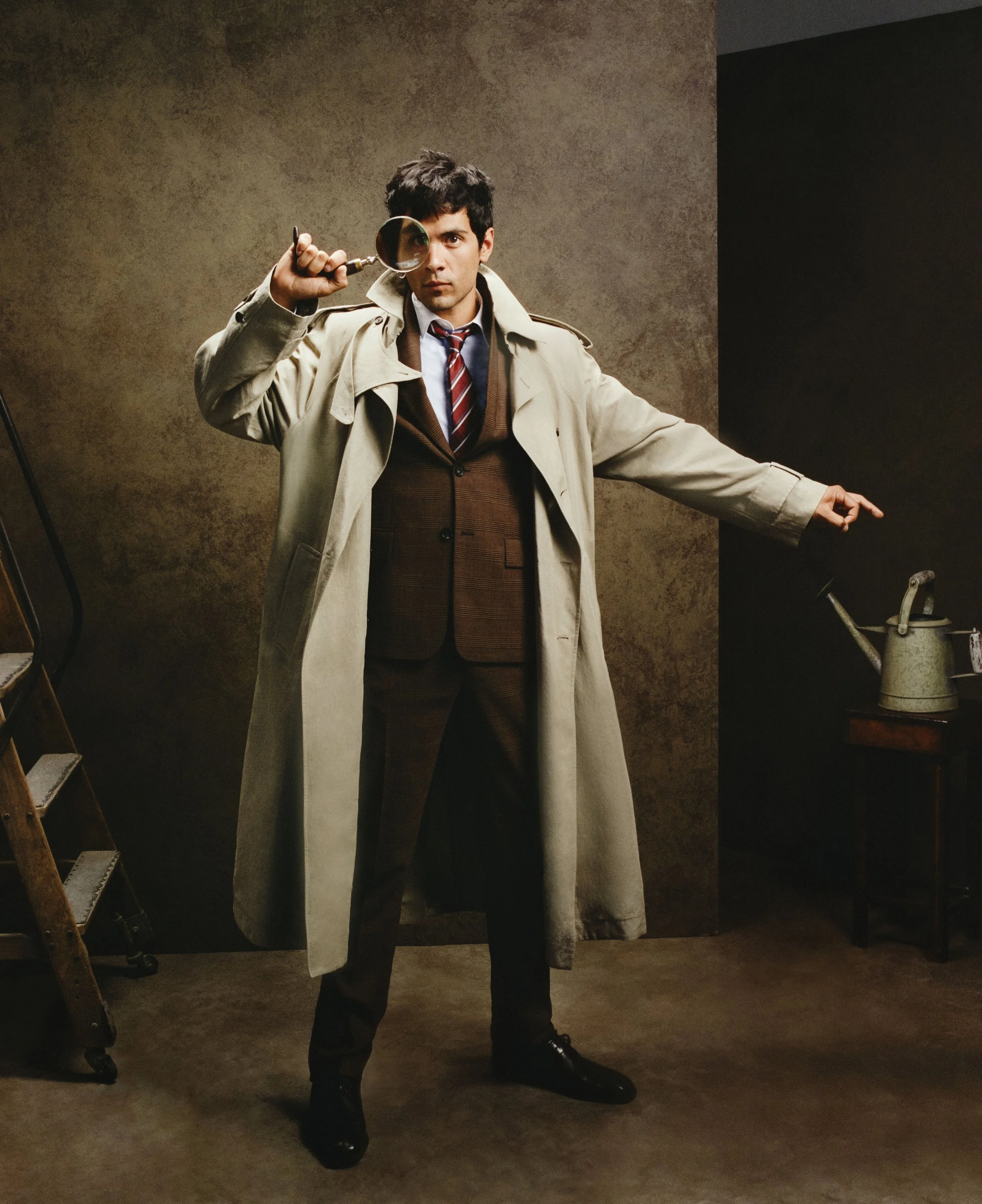
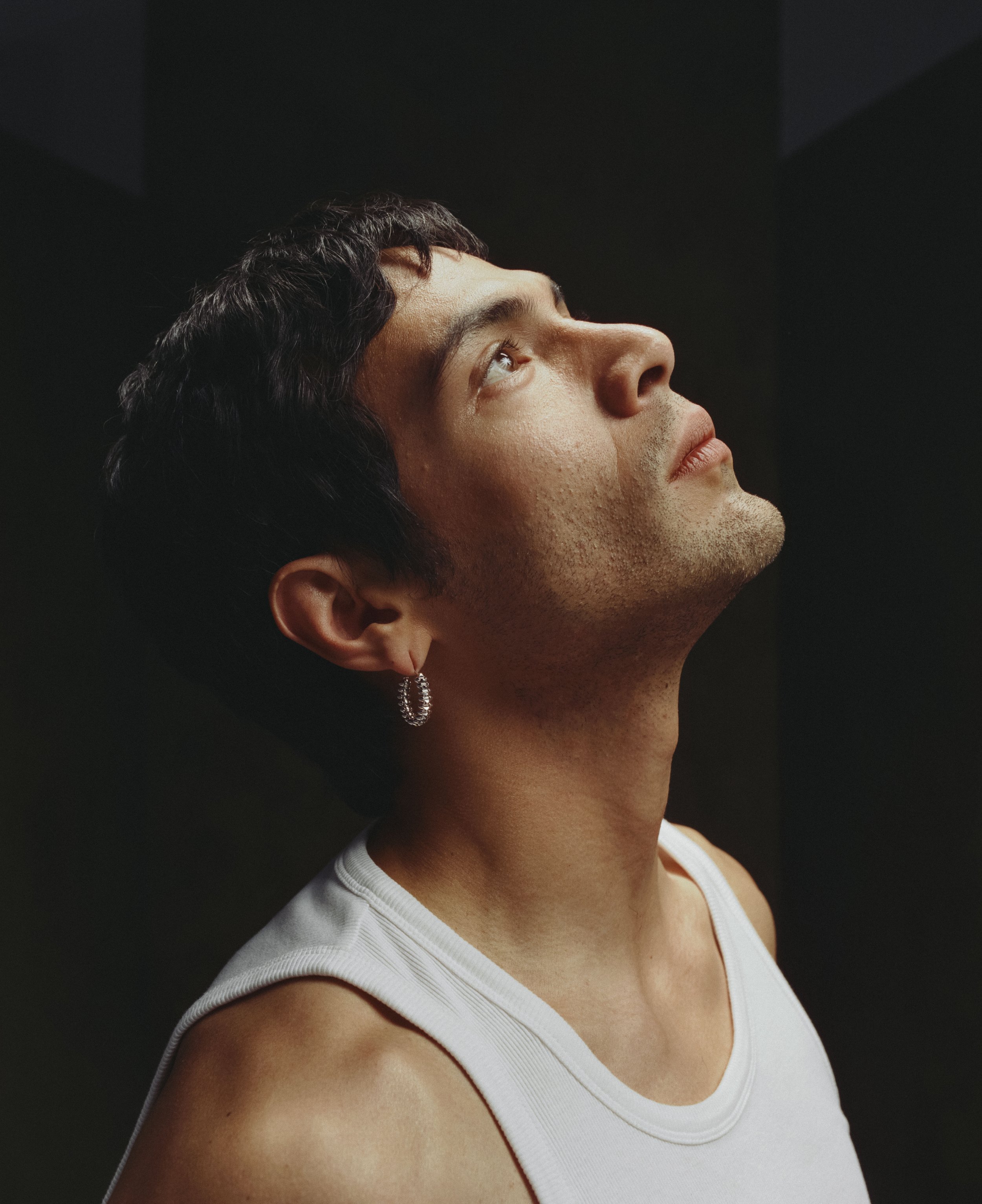
suit, shirt, tie and shoes FERRAGAMO
earring and watch CARTIER
bracelet DAVID YURMAN
bracelet JOHN HARDY
Mexican cinema has historically balanced intimacy, political consciousness, surrealism and emotional realism in fascinating ways. How has your growth as an artist within that cinematic tradition shaped your understanding of storytelling?
Coming from Mexico, first of all, we come from what some people call the “Third World,” so I guess we have to be political. How could you tell a Palestinian story today that is not political? How could you tell a love story in Mexico City that is not political? We do not have that luxury. Sometimes we cannot afford the idea of not being political. At the same time, there are many different kinds of movies in Mexico. There is horror, there are romantic comedies, and not everything has to carry a statement. But I grew up with a beautiful generation of filmmakers who cared deeply about Mexican politics, Mexican life and the Latino experience.
What I am trying to say is that we have our own story, almost a mythological story. Our ancestors are still very present. Our relationship with death, for example, is beautiful and very different from the rest of the world. But we are also influenced by America and capitalism now, so that contrast is already surreal. There is no way I could not be influenced by that. Even if you think about Los olvidados (1950), there is a surreal moment in that movie. If you think about Amores perros (2000), there is something surreal in one of the stories too.
Years ago, there was this idea of magical realism, which is not exactly surrealism. It is a literary genre from Mexico, Colombia and Latin America. GUILLERMO DEL TORO is the king of that. He mastered something that I think is very important, and that is why Mexico has this surreal, political but beautiful way of telling stories. Sometimes we have to wrap the message in fantasy or surrealism, almost like wrapping a gift. But deep inside that film, there may be something very political. If you think about Frankenstein (2025), Pinocchio (2022) or Pan’s Labyrinth (2006), all of those films contain very deep political messages.
Mexico’s relationship with the Spanish Civil War is also very close because we welcomed many immigrants from Spain, even after colonisation. So Mexico is not only surreal, it is warm and open. It opens its hands to everything, and that creates so many contrasts. We have Chinese communities connected to the railroads, the Spanish Revolution, Americans, the French. It is a whole mix.
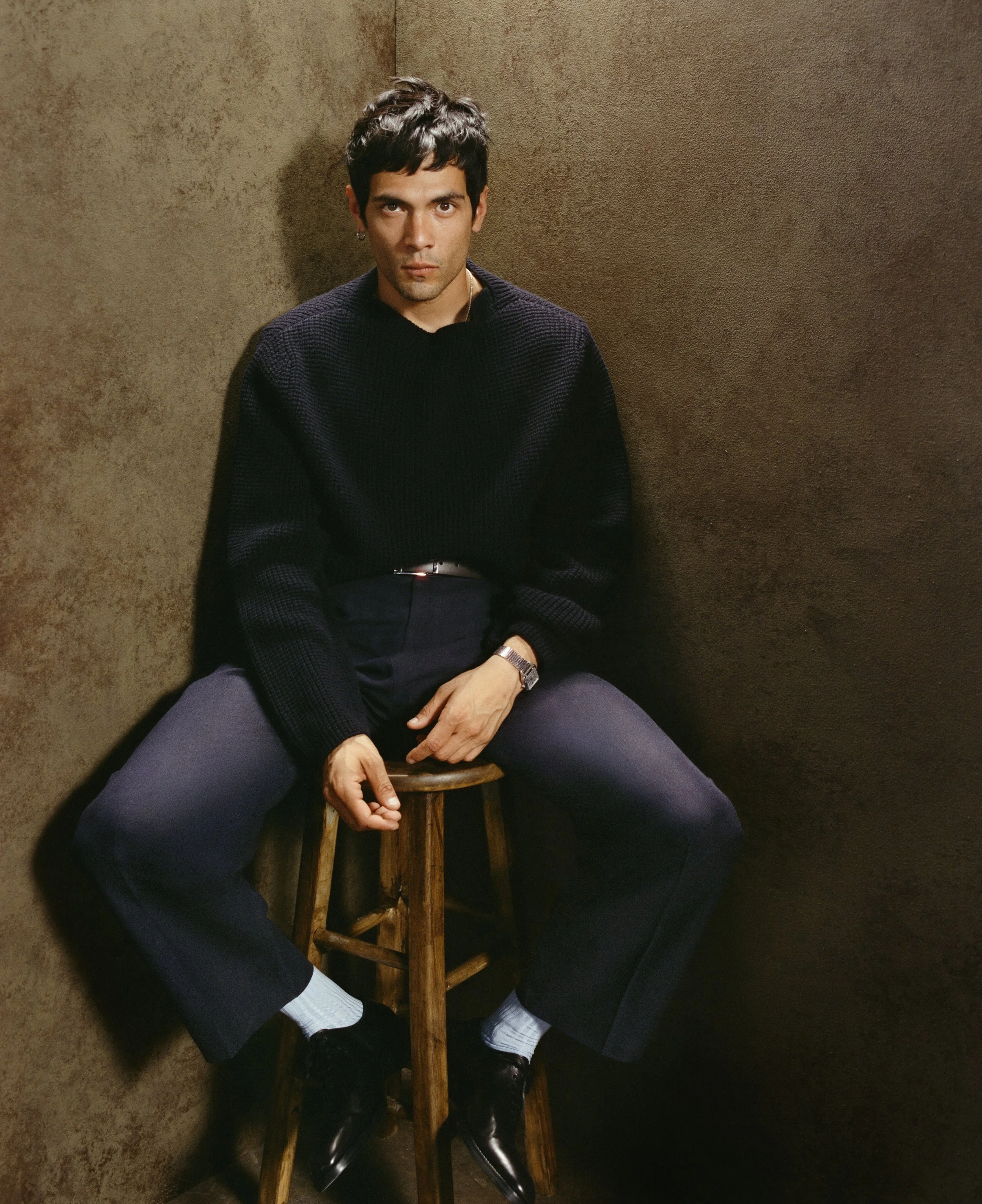
sweater, belt, trousers and shoes FERRAGAMO
socks LONDON SOCK CO.
earring DIEGO’S OWN
chain JOHN HARDY
watch CARTIER
Since you’re a big cinema lover, what is one movie that you remember, from whenever in your life, that somehow changed you or really mesmerised you?
I always answer Peter and the Wolf (2006), because that was maybe my first love in cinema when I was growing up. But if I do not have to name my favourite, I would say Law of Desire (1987) by PEDRO ALMODÓVAR.
I remember I had moved out of my mother’s house during this teenage revolution, probably in a completely controlled environment, but that was my rebellion. I was living on the rooftop of a friend’s house in a small room. I had moved with just my computer and some clothes, and I was going through my first important breakup. I was writing poems, listening to The Cure, and feeling very sadly special. Then I watched that movie, and the way Almodóvar portrayed obsession really affected me. ANTONIO BANDERAS’S character is completely driven by love. He only wants to love the other man. He is completely obsessed, but in a way that is sweet, dangerous, cruel, egocentric and obsessive all at once. At the same time, he would give his life for that love.
There is a moment near the end when the other character has been trying to get away from him, but Antonio’s character finally catches him. He locks them both in an apartment. He injures himself, they fight, and then the other man calls the police. Antonio says something like: “I do not care. Let me love you for five minutes, and then I will turn myself in.” In that moment, the other character realises that nobody is ever going to love him the way this man does, but he has already called the police. It is such a tragic moment because, in the end, they actually connect and fall in love, but they are going to be separated because the police are coming. It is such a tragedy, almost Greek in a way, but also completely contemporary.
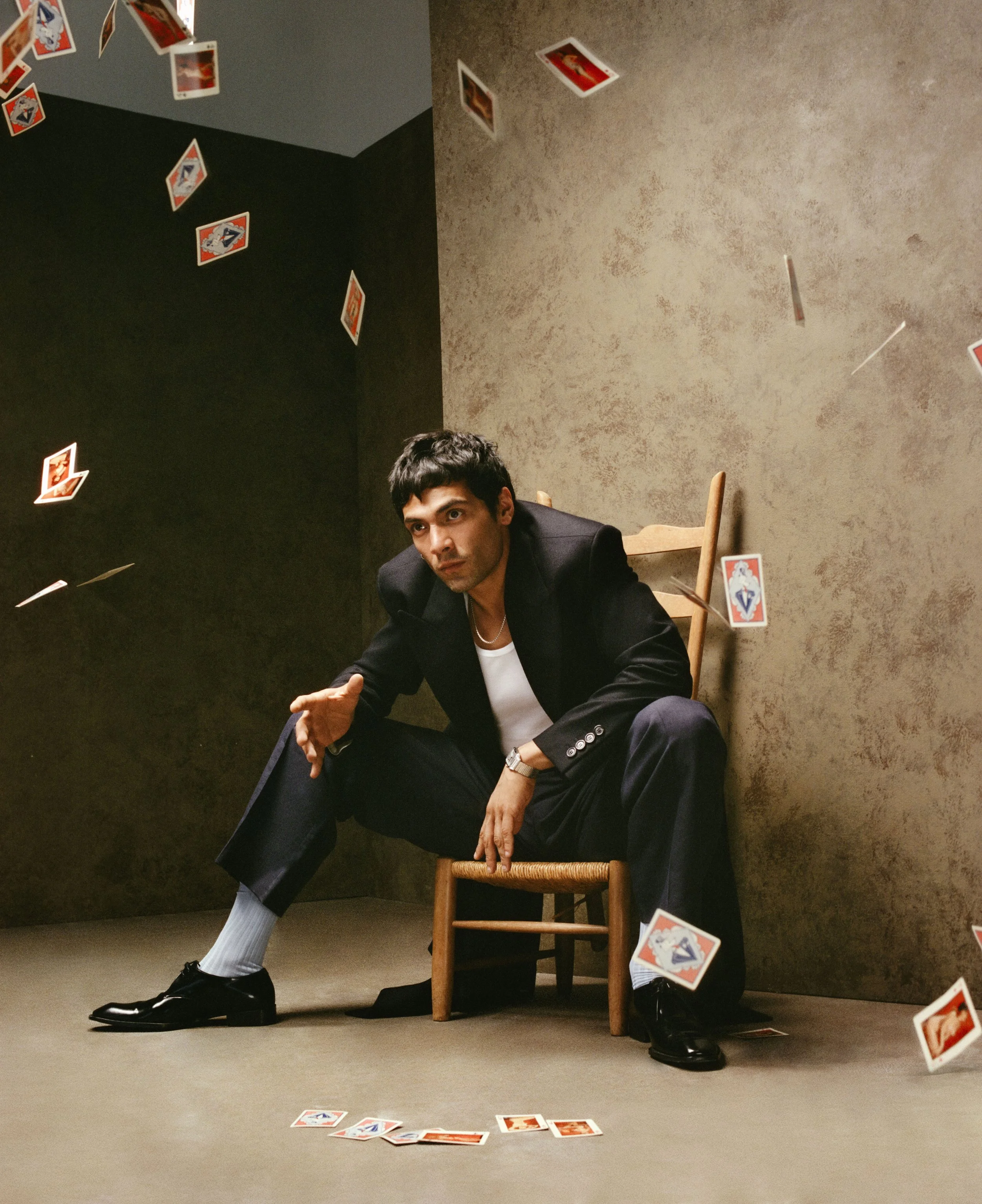
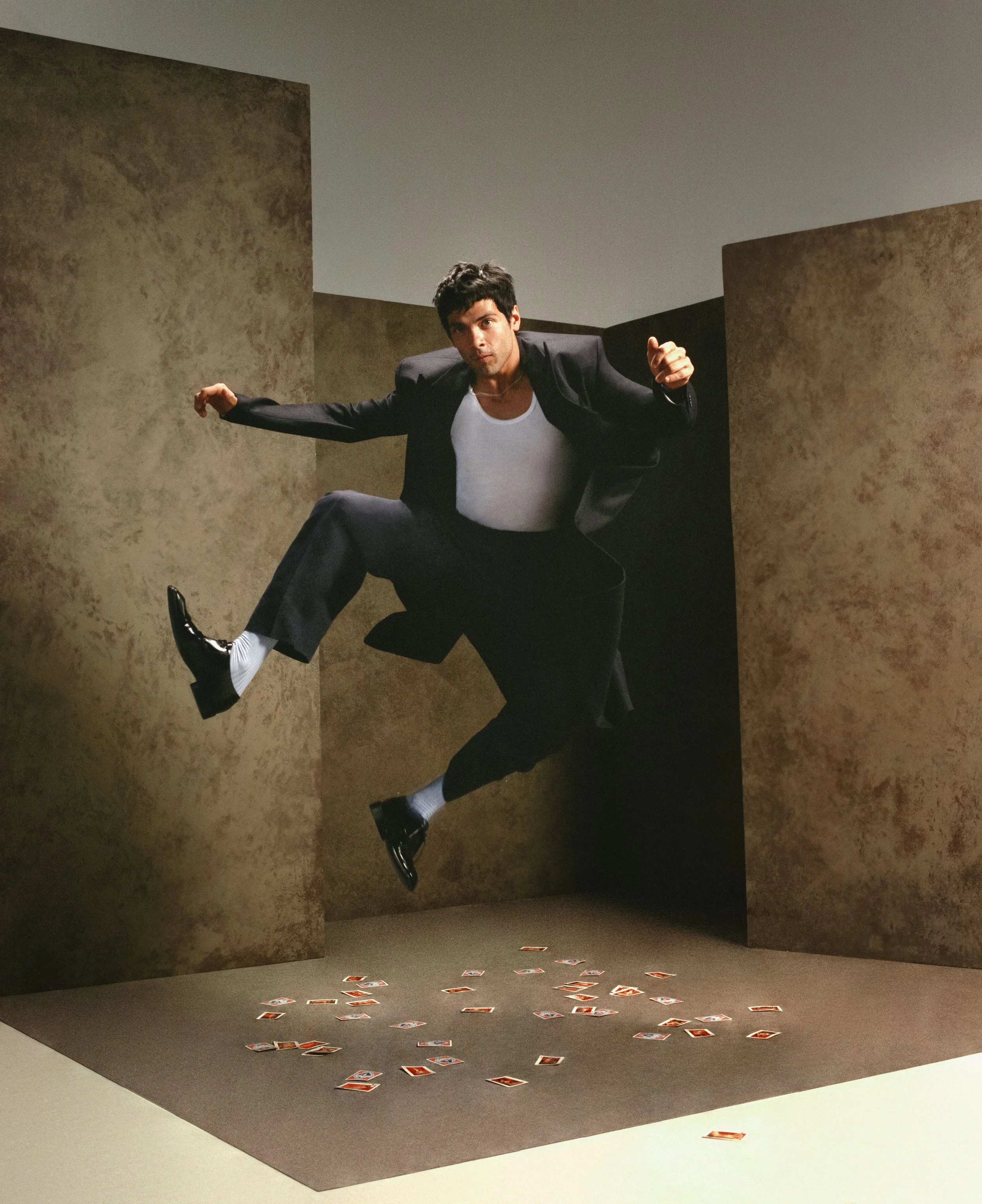
coat and shoes SAINT LAURENT
tank top CALVIN KLEIN
trousers FERRAGAMO
socks LONDON SOCK CO.
earring DIEGO’S OWN
chain JOHN HARDY
watch CARTIER
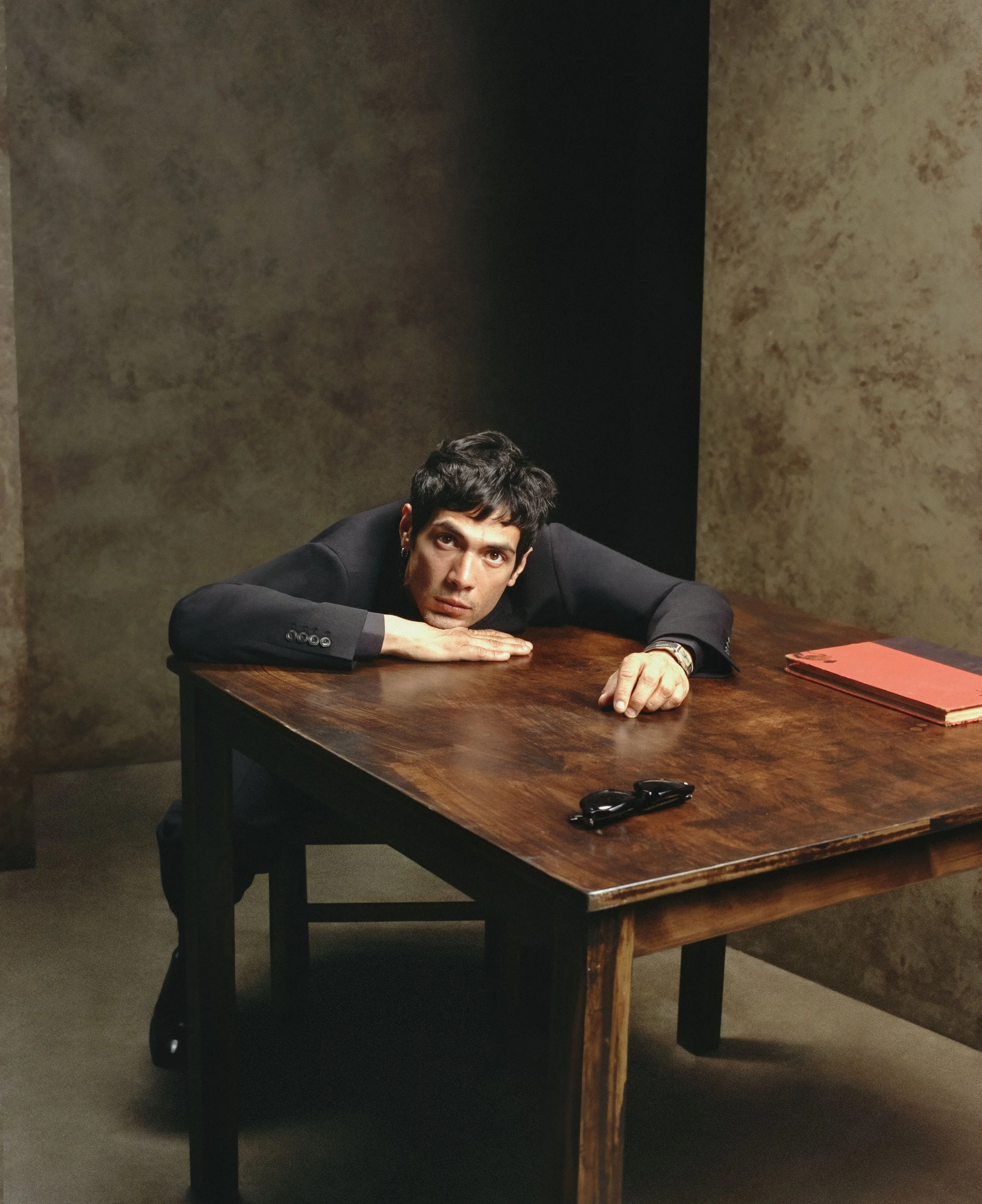
Winning Best Actor at the Havana Film Festival early in your career offered recognition before international visibility arrived. Did that moment change your understanding of what kind of actor you wanted to become?
Not at all, because I wasn’t actually there. I never received the prize. My friend LUCAS EDUARDO, who was my co-star in I Promise You Anarchy, went to Havana while I went to Costa Rica for another film festival. But it was important because when I went back to college after making my first movie, people kind of laughed at me. They would say: “You’re already an award-winning actor. What are you doing here trying to become a director?”
Of course, it felt great. It was like getting a small taste of what an actor’s life could be. I had made this really punk-rock movie, and somebody loved it. I Promise You Anarchy is still one of the most special films of my career. Alongside Babylon, it’s one of the two projects I would put at the top because they changed my life. They also have a deep personal importance to me because they both talk about me in a very metafictional way.
Club Kid explores performance, chosen identity and the instability of adulthood through a very contemporary lens. What interested you intellectually or emotionally about the world Jordan Firstman created?
With I Promise You Anarchy, I was able to tell the story of my teenage years: my friends, my streets, my city, the way I experienced Mexico City, the music I listened to, my mistakes, my good decisions, my family, my trauma, everything. That’s what Jordan did with Club Kid. He created this very specific universe — New York City in the early 2000s, the electronic music scene — but at the same time, it’s incredibly universal. My grandmother is going to love the movie without knowing who The Chemical Brothers are, and my friends in Mexico City are going to love it because they’ll see themselves in it. It’s also a coming-of-age story for adults, or maybe for late adults. I’m a 30-year-old adolescent. I still don’t know anything.
What really drew me in was that it was a unique script and Jordan is a unique director. He was incredibly open with me. He told me exactly why he wanted to tell this story. When somebody is that personal and vulnerable that quickly, I want to meet them at the same level. I opened up to him, too, and shared stories from my own life.
There was a period during my teenage years, after a lot of mistakes, when movies genuinely saved my life. You know those moments when you can go one way and become one person or go another way and become someone completely different? I was very close to becoming somebody else. Then there was a person in my life who cared about me and told me that life was more beautiful than I thought, that there were things I simply couldn’t see yet. I based my character partly on those people. Some stayed in my life, some didn’t, but they all helped shape who I became and helped me make important decisions. They were like angels, if you want to call them that.
That was really why I wanted to be part of the movie. I had seen Jordan in Rotting in the Sun (2023) and loved the film. I knew Jordan’s work, but not extensively. More than anything, it was about meeting someone and asking, “Why do you need to tell this story?” When a director truly needs to tell a story, I want to be part of it.
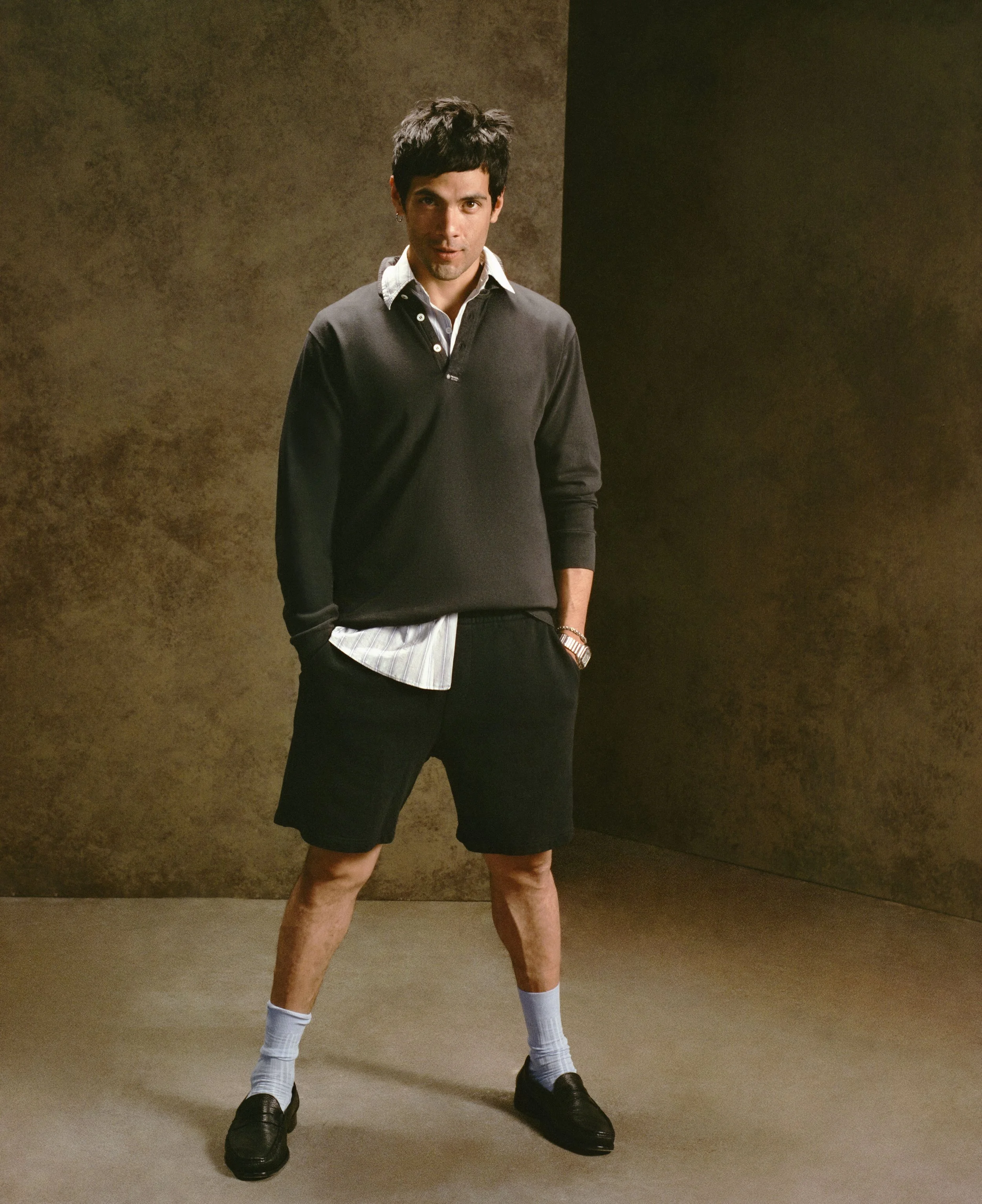
shirt, polo, and shorts PRADA
loafers BRUNO MAGLI
socks LONDON SOCK CO.
watch CARTIER
bracelet JOHN HARDY
earring DIEGO’S OWN
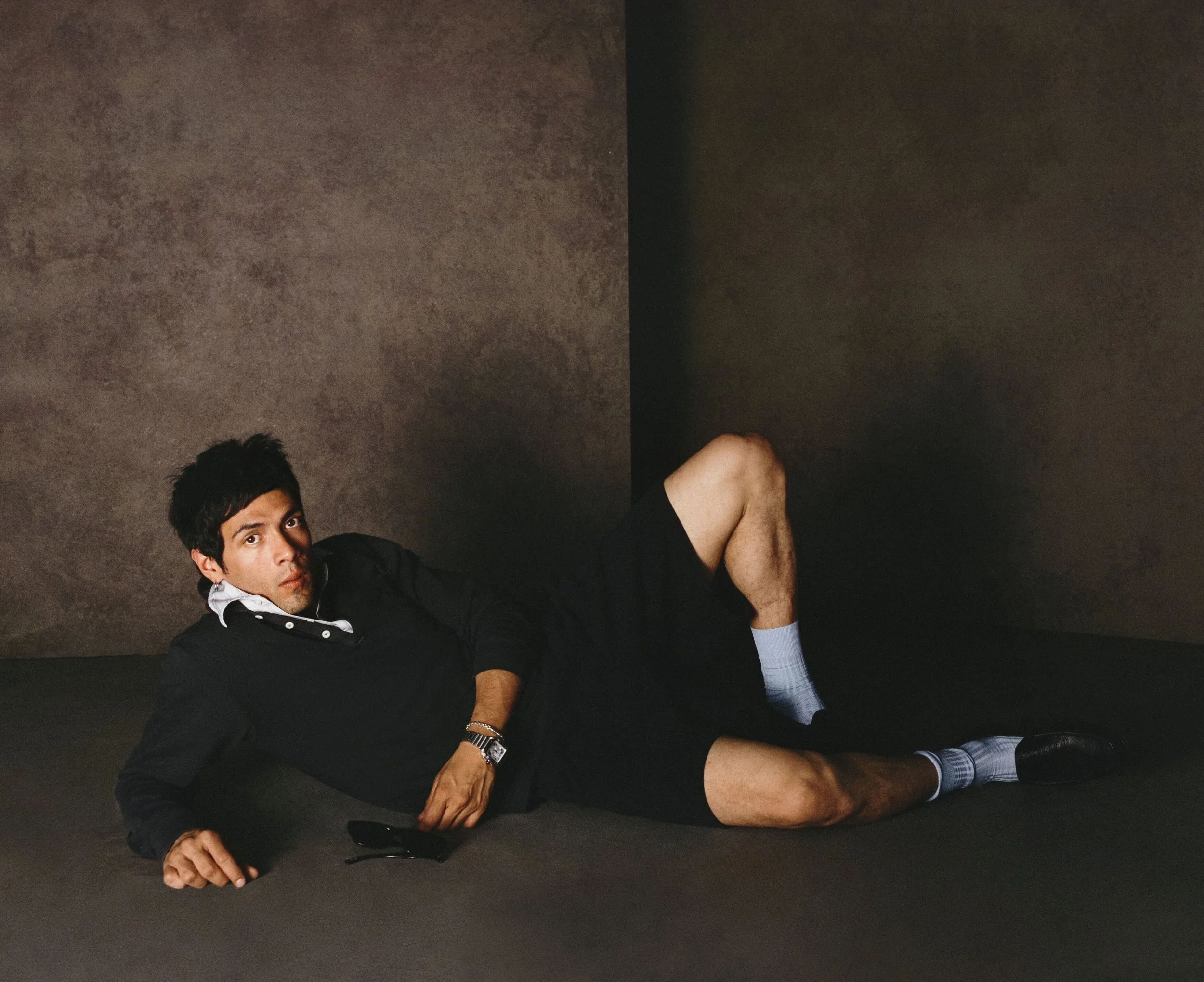
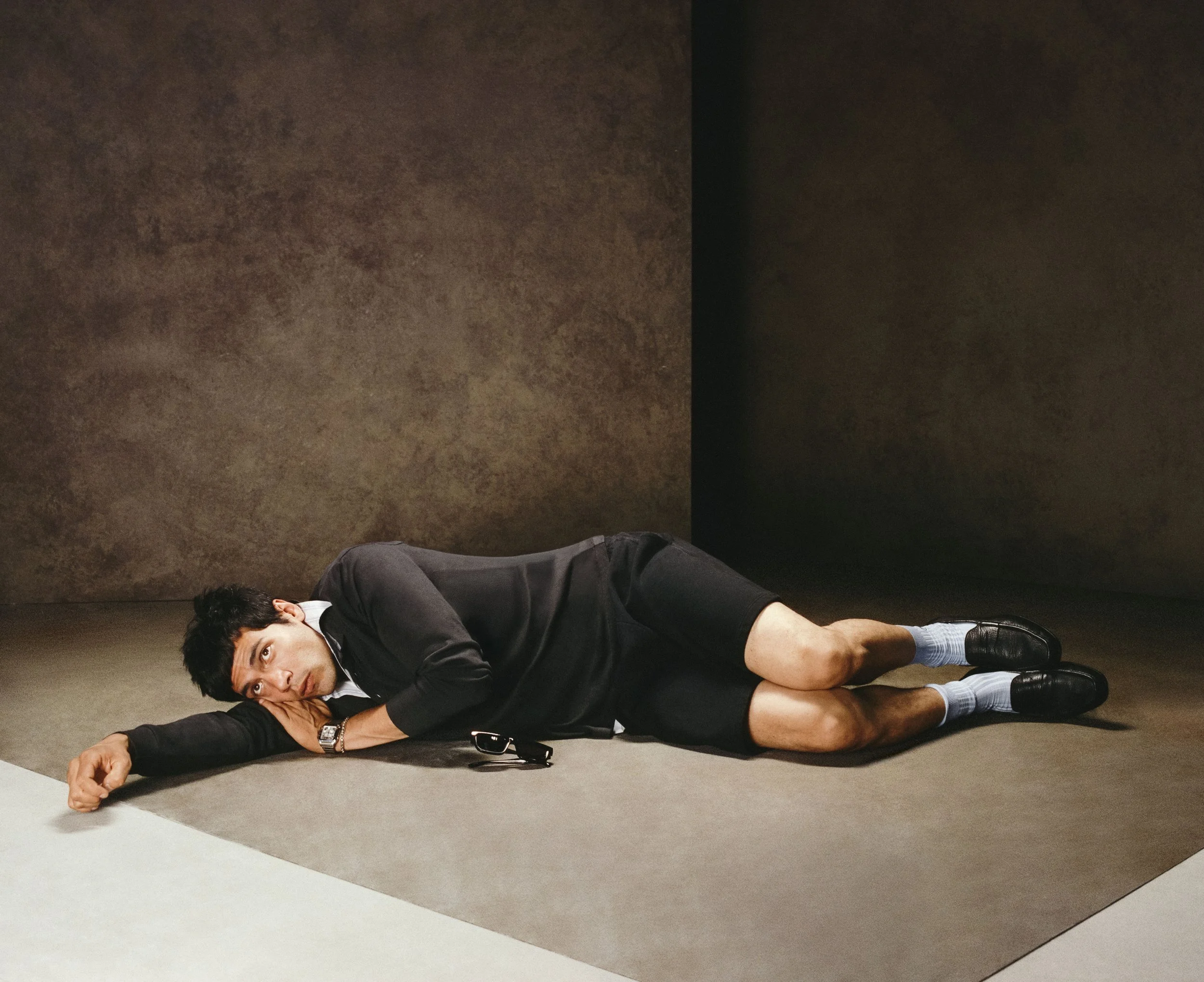
Nicolas Winding Refn’s work often exists in a space where psychology, violence, beauty and obsession collapse into something almost dreamlike. Did working on Her Private Hell demand a different acting language from you?
As an actor, I like to think that I don’t have a fixed process. I don’t have a strict method. I’m not orthodox with myself. I like to adapt depending on the character, the director, the story and the nature of the project. Working with Nicolas, I tried to bring the best of myself, but I was also learning. I still want to direct one day, so having filmmakers like DAMIEN CHAZELLE, Jordan or Nicolas essentially giving you one-on-one lessons is incredible. I spent a lot of time watching him and trying to steal everything I could.
Nicolas is very methodical. He has developed a specific process. Sometimes he would have the entire crew listen to the same song on repeat all day long. Eventually, it starts to feel like a mantra. He’s also a master of lighting. He can change your entire expression through shadows and light, so sometimes you don’t have to do anything. For actors, that’s often the hardest thing. We feel safe when we’re talking or moving. But standing completely still and looking into a camera can be terrifying. Nicolas might have you do that for ten minutes until you move your eyes in exactly the right way and he says, “Got it.” You have to trust him completely.
At the same time, my experience on the film was incredibly free. My character moves at a different rhythm than everyone else. He’s the only one speaking very quickly and operating at a completely different speed. Nicolas also allowed me to improvise and deliver the lines however I wanted. So he has those two sides: “Be still. Don’t do anything.” And then, “Okay Diego, now go play. Show me what you’ve got.”
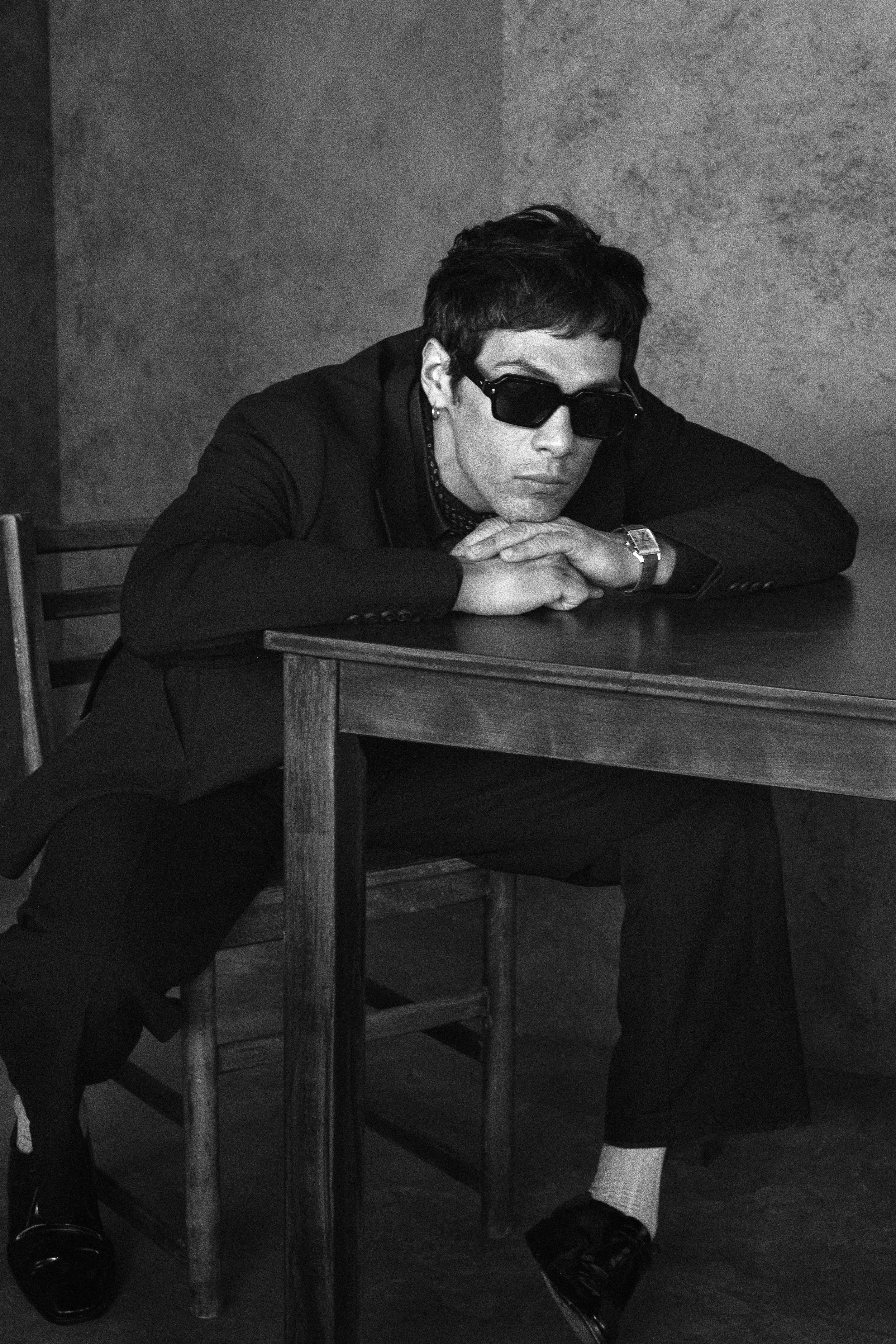
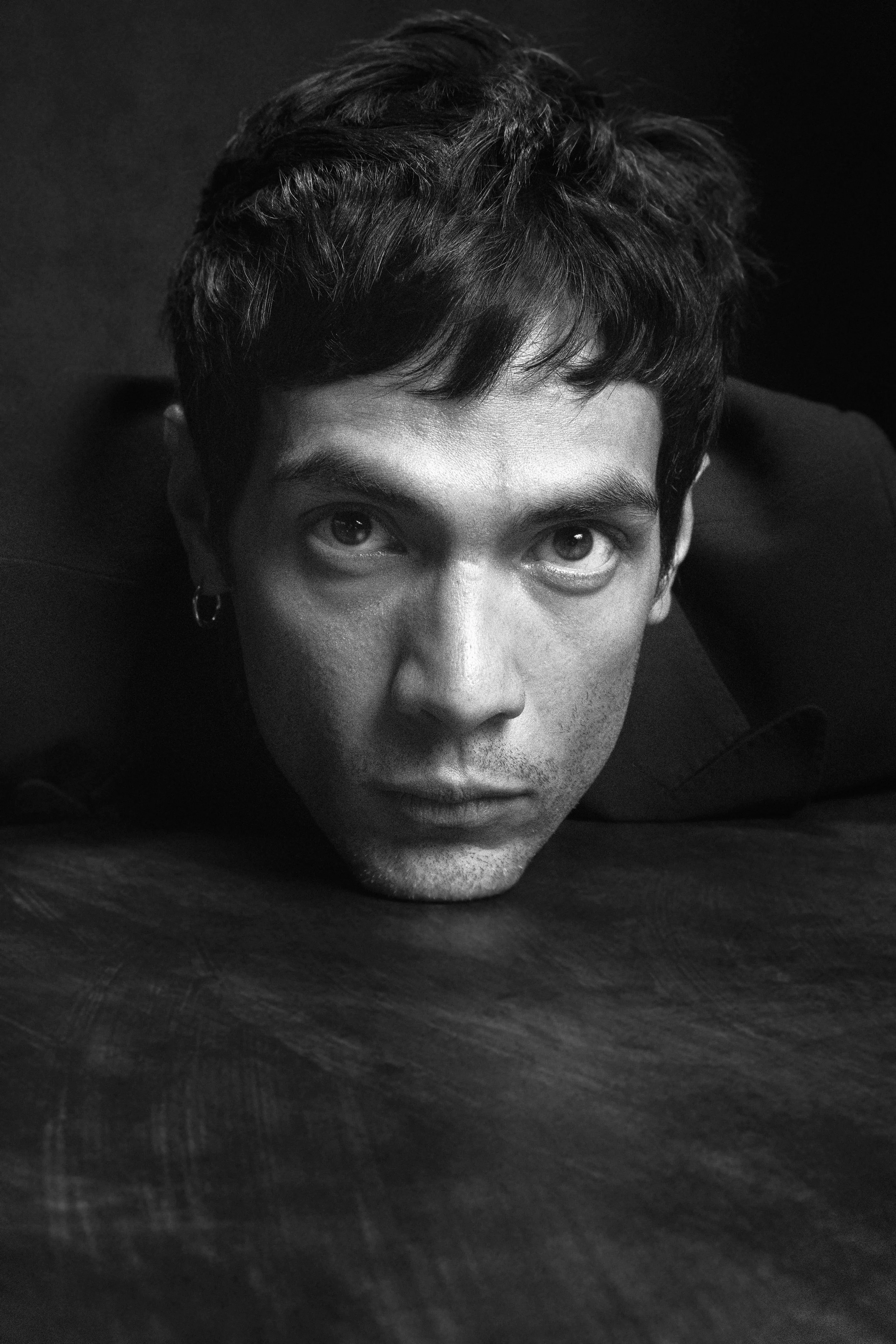
blazer REISS
shirt DOLCE & GABBANA
neck scarf TODD SNYDER
trousers HELMUT LANG
shoes YSL
socks LONDON SOCK CO.
sunglasses LE SPEC
earring DIEGO’S OWN
watch CARTIER
Looking toward the future, are there artistic territories — philosophically, emotionally or politically — that you feel you have not yet explored as an actor but are eager to confront?
Absolutely. Politically, I always want to return to Mexico and make films there. That’s very important to me. I want to be part of this new generation of voices, because many of the people I studied with are about to direct their first films, and I know they have something meaningful to say. If I’m in a position where my name on a project can help raise financing or attract attention, then I want to use that. I want to support this new generation of Mexican and Latino filmmakers. I’m also about to make a film in Colombia about Los falsos positivos, which is a fascinating and tragic chapter of Colombian political history. I want to be part of stories like that.
As an actor, I still want to transform. I still want to challenge myself. I’m fascinated by obsession. I’m fascinated by failure. I love characters that audiences hate to love and love to hate. Those are the characters I’m most interested in exploring.
Outside of acting, what forms of art, literature, music or philosophy most deeply nourish your creative imagination?
Before I wanted to be a director, I was writing with my best friend, BRUNO. Reading was a huge part of my life. My mother is a publisher, and my father dedicated much of his life to reading and studying, so I grew up surrounded by books and art.
Later I discovered painting, and now it’s become a form of therapy for me. I tend toward depression. I’ve dealt with addiction. Art is my healthiest way of exploring myself and understanding myself more deeply. To me, that’s already a philosophy. I think every art form ultimately comes from poetry. Poetry exists in music, in cinema, in acting and in everyday life. It’s that special element that allows art to connect you not only with yourself but with someone on the other side of the world.
So whether it’s music, poetry or painting, that’s what nourishes me. What matters most right now is that when I’m painting, writing or acting, I’m not thinking, I’m simply being. And that’s a pleasure. That’s something I care deeply about. The possibility of disappearing for a moment.
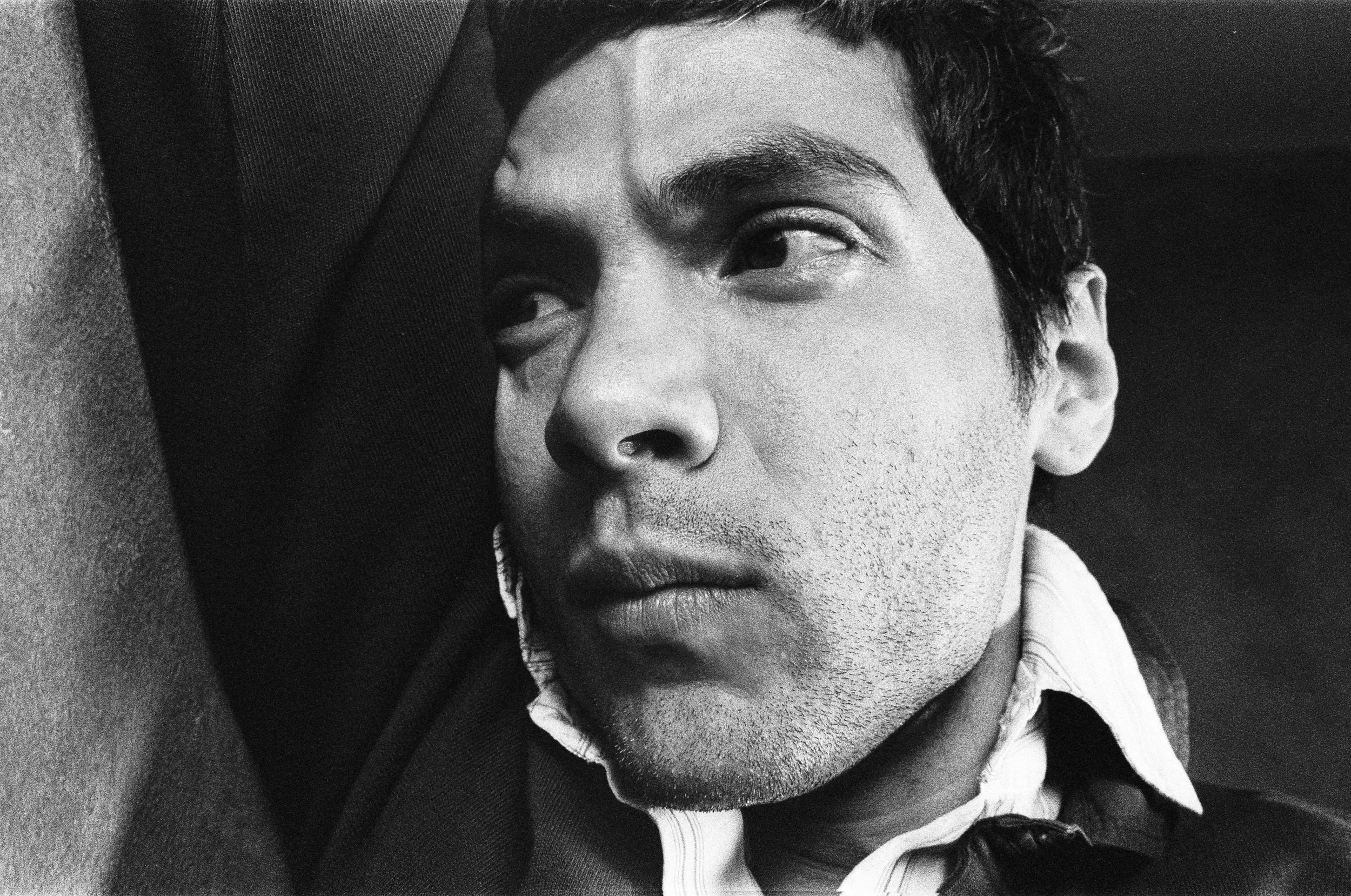
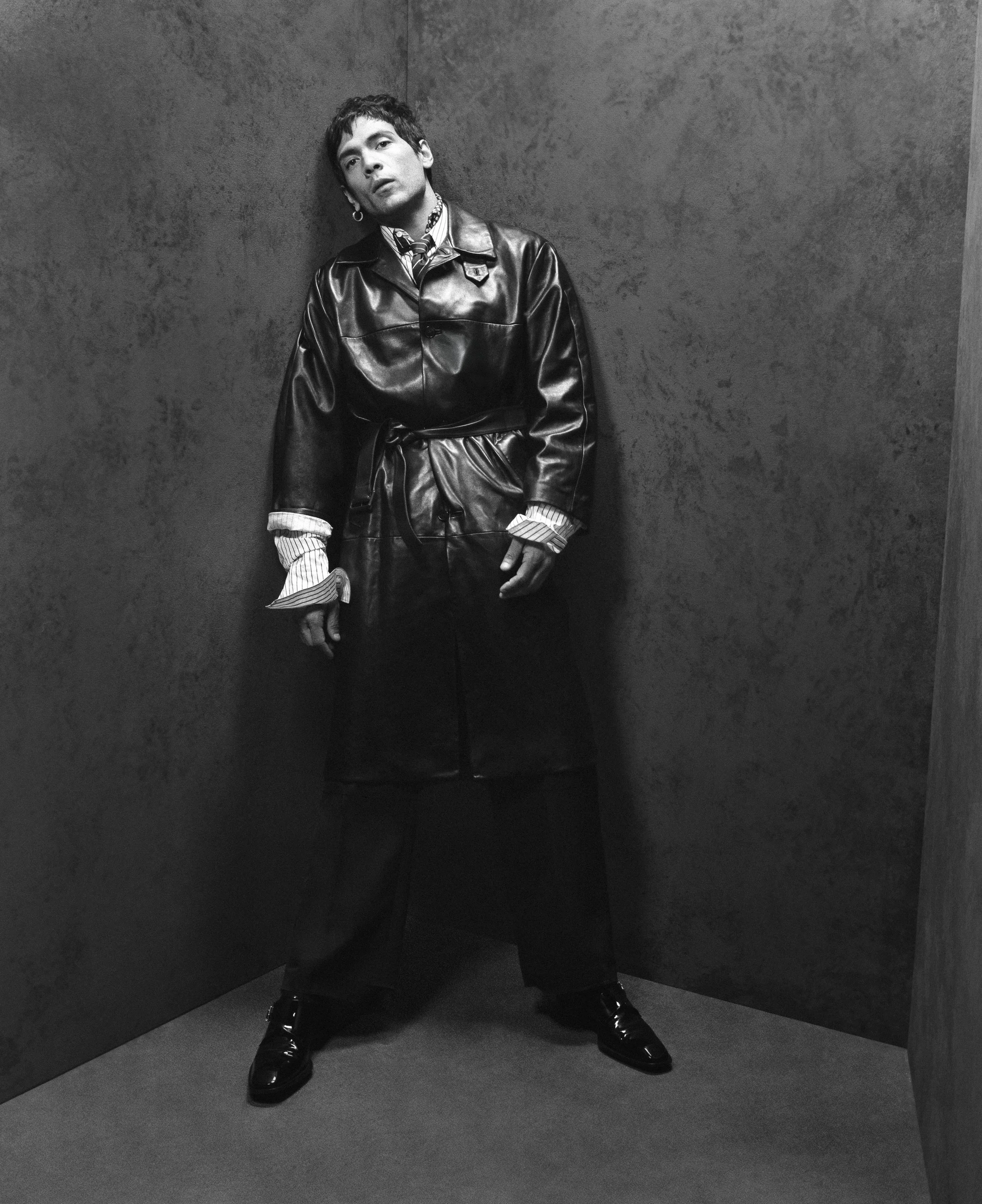
shirt, trench coat, tie, scarf and shoes YSL
trousers HELMUT LANG
earring and watch CARTIER
bracelet DAVID YURMAN
bracelet JOHN HARDY
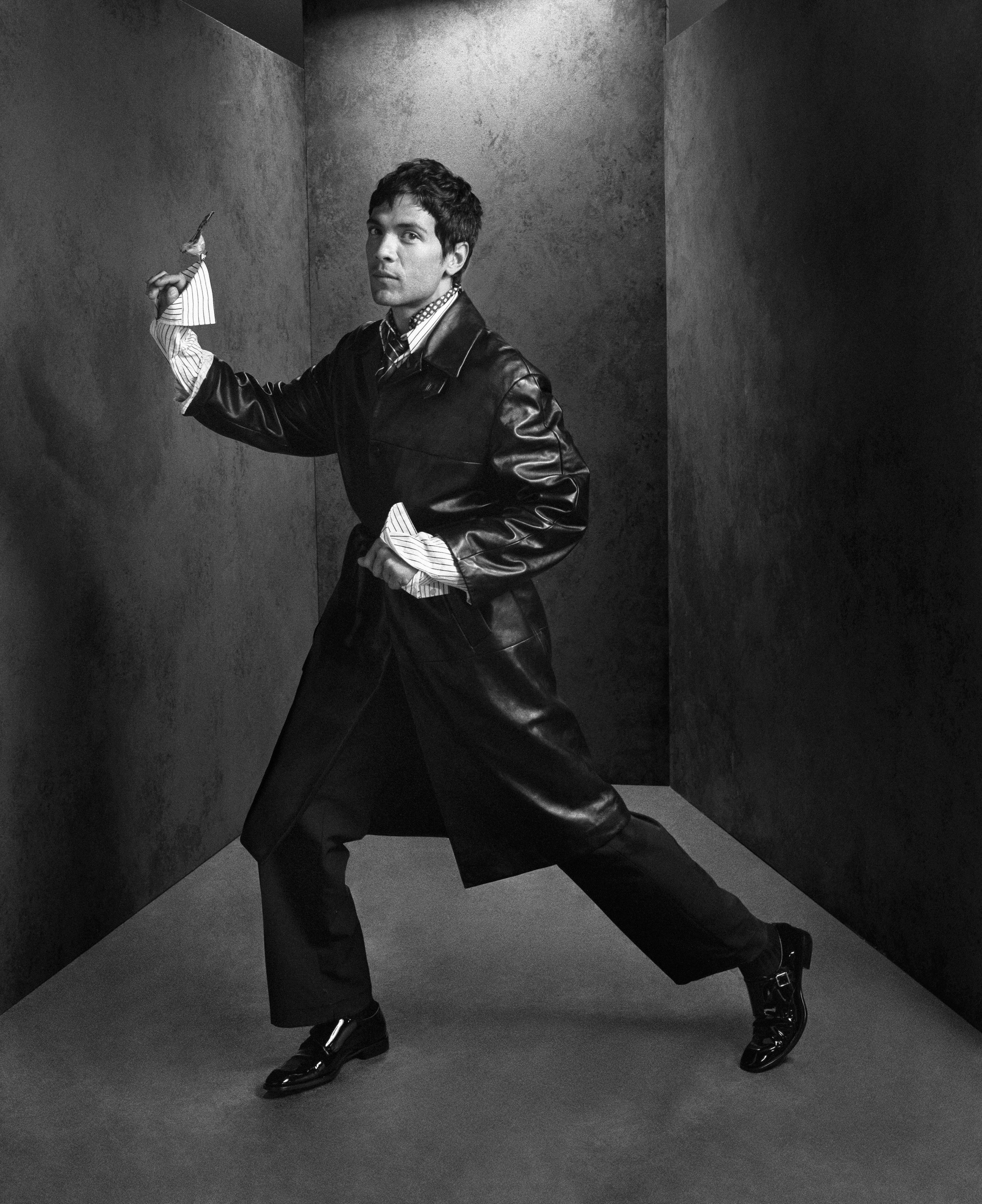
Having just come out of Cannes, surrounded by global cinema in its most concentrated form, what conversations about the future of film are exciting you most right now?
First of all, filmmaking is still a very young art form. It doesn’t have thousands of years of history behind it. We’re only a little over a century into cinema’s existence. I sometimes think movies are finally entering their teenage years.
I’m very interested in seeing what happens as cinema continues to mature. We’re living through a moment where conversations around political correctness, representation and social responsibility are influencing art in profound ways. Sometimes those conversations create tension, but I think they are also pushing art toward a new level of maturity.
It’s a bit like adolescence. You begin to understand that there are rules in the world, but you also have to figure out your own identity, sometimes in opposition to those rules. I think cinema is in that stage right now. There are rules that need to be challenged, and there are statements that still need to be made.
TEAM CREDITS:
talent DIEGO CALVA
photography MAX MONTGOMERY
styling ILARIA URBINATI at THE WALL GROUP
hair and makeup HEBA THORISDOTTIR at THE REX AGENCY using BEAU DOMAINE and GA.MA ITALY PROFESSIONAL
set design KRZYSZTOF KATUS
photography assistants GRACIE NEWMAN and ALEX MOURA
styling assistant MIA FAIGUS
studio SUNBEAM STUDIO
editor and casting TIMI LETONJA
interview TIMI LETONJA and JANA LETONJA
cover design ARTHUR ROELOFFZEN
