
IN CONVERSATION WITH DOUGRAY SCOTT
interview by JANA LETONJA
Emmy and BAFTA Award-winning Scottish actor and producer Dougray Scott has long been one of the most compelling and versatile talents in film and television. Known for his powerful screen presence and ability to bring depth and intensity to every role, Scott has built an impressive career spanning decades, from standout performances in ‘Ever After’, ‘Enigma’, ‘Ripley’s Game’, ‘Hitman’, and ‘My Week with Marilyn’ to iconic turns in ‘Desperate Housewives’ and Irvine Welsh’s acclaimed ‘Crime’. Following recent projects including ‘Vigil’, ‘A Town Called Malice’, ‘Sherlock & Daughter’, ‘The Crow Girl’, and ‘The Hack’, Scott continues to dominate screens with a string of high-profile upcoming releases — ‘Summerwater’ and ‘Crookhaven’ — and is set to lead the upcoming action-thriller ‘The Invisible’.
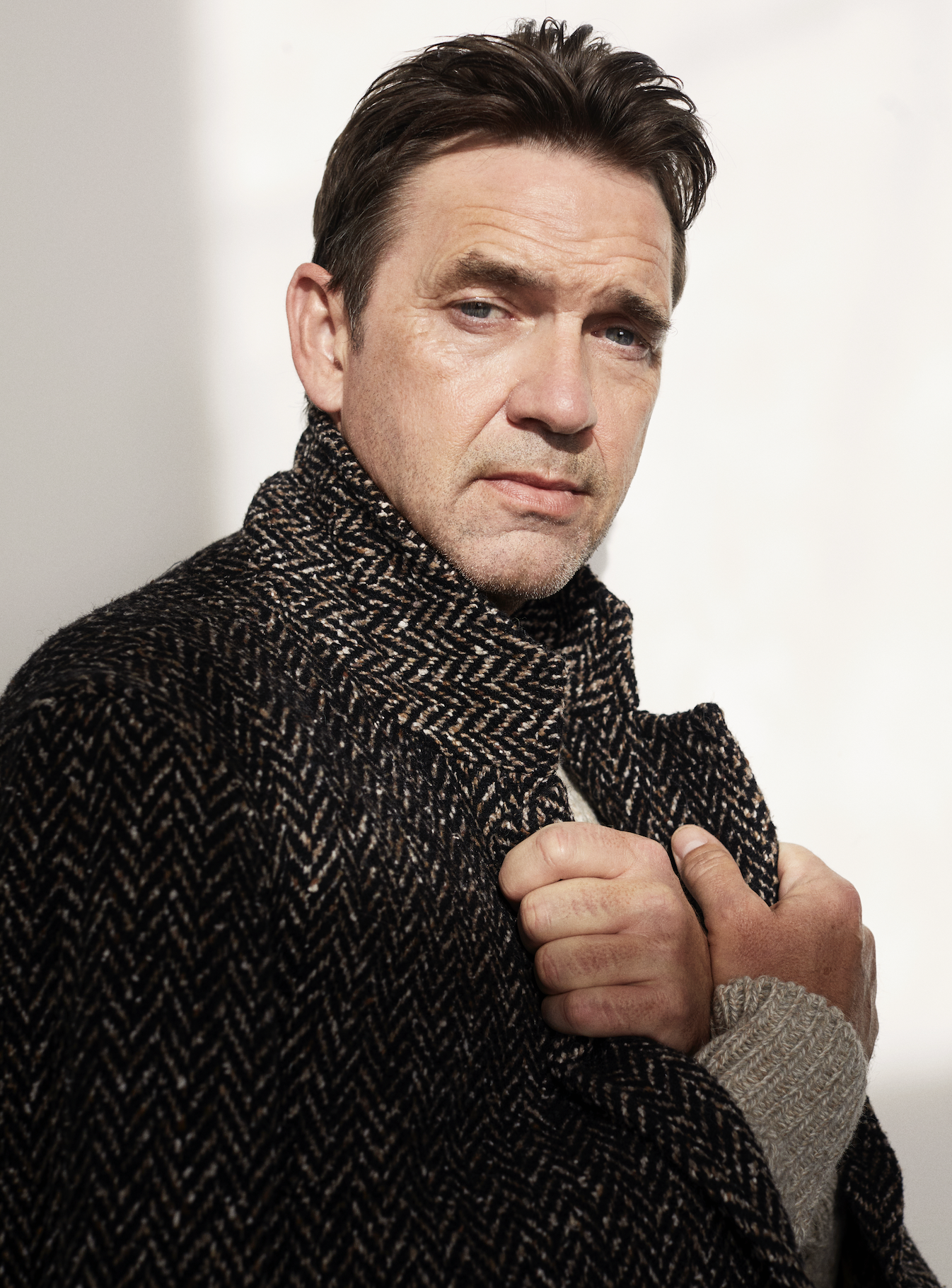
You’ve had such a dynamic and diverse career across film and television. What continues to drive you as an actor after all these years?
I think I’m still curious about other people’s lives. When you get attached to a project, whether it’s an Irvine Welsh or a Sarah Moss novel adapted by John Donnelly, or whether it’s playing Gordon Brown, you’re given an opportunity to look through the window of their lives, and it just allows you to have an excuse to learn something more about life and see the world through different lenses. I’ve always been intrigued by that. I love that exploratory journey you take as an actor into someone else’s world. I’m reading books, some just for pleasure, and some because “that’s a really good story, maybe I can do something with that”, and you get a chance to really delve into another era, another background, someone else’s experience in life. I just find that really fascinating.
‘The Hack’ has just been released to critical acclaim. What initially drew you to that story and character?
Well, I was a huge admirer of Gordon Brown, politically. He was brought up about seven miles away from where I was brought up – some of my early childhood I was there – and he was always someone that I looked at and thought “You’re different. You’re different from all the rest of them. There’s something pure.” And when I say “puritanical”, I mean it in the truest sense of the word, that there is a pureness about him, there’s something unsullied about him, something untarnished about him, and there’s something just so pure of spirit about his desire to make other people’s lives better. I was always struck by that when he was a Chancellor, and also when he became Prime Minister, and I just thought he was a good man.
I met him a couple of times. When they asked me to play Gordon Brown, I thought “How can I do that?” because he looks different to me. So when I agreed to do it, we had prosthetics and various make up. I went to meet him and spoke to him for quite a long time, and he has this charity which is just incredible. It’s really about providing basics for people who are poor, people who can’t afford essentials like shampoo, soap and washing-up liquid, all the things most of us take for granted. It’s called the Multibank charity. I went and saw him give a lecture for about two hours, and he was talking about his charity, and I just thought “This is what he does with his life.” He doesn’t go off on book tours and make tens of millions of pounds. All he cares about is improving other people’s lives, because he understands that in this society we are polarised in many respects, financially, economically, as well as politically. I just thought “There goes a great man.” And so that is why I wanted to do it.
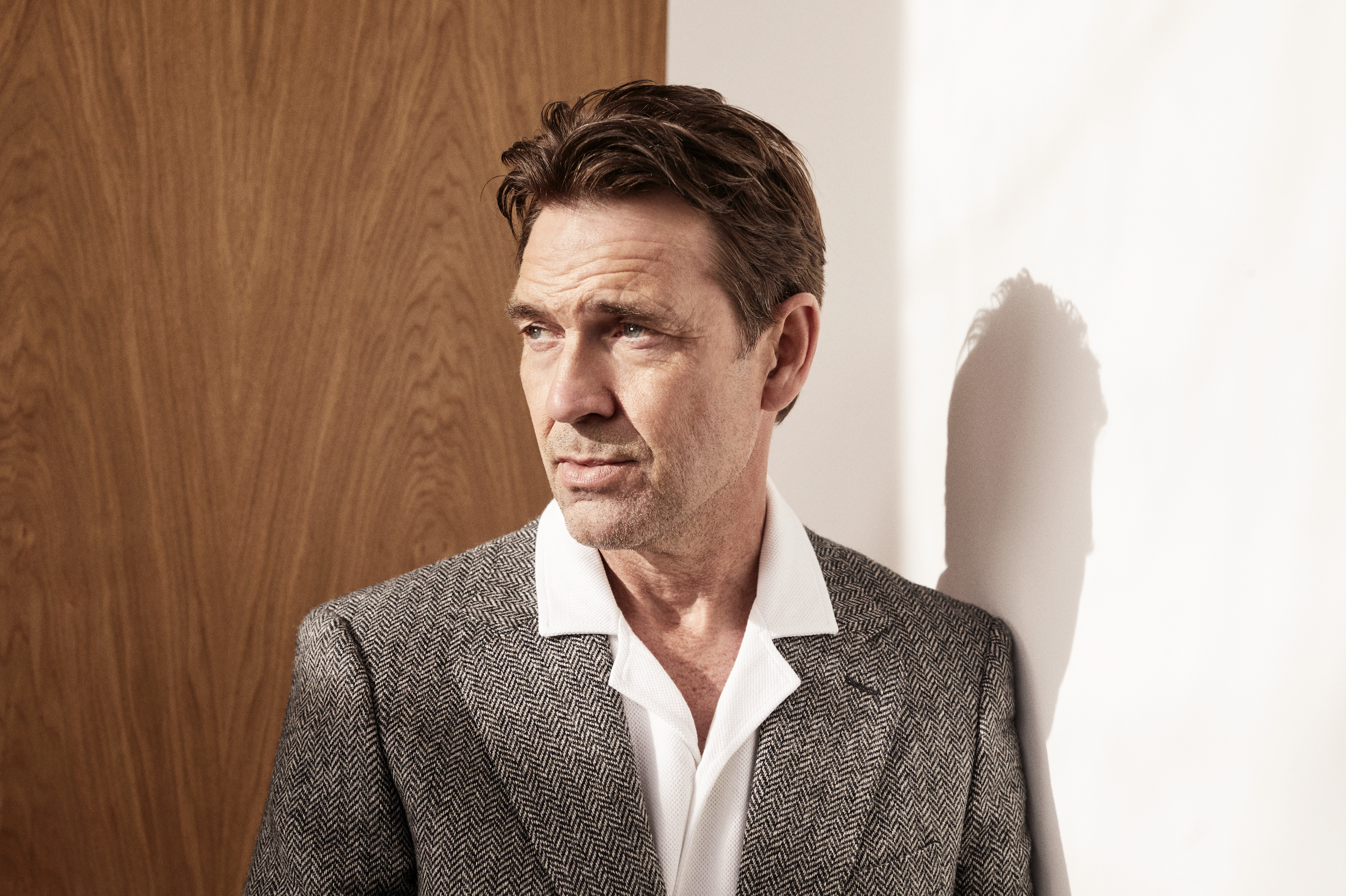

You’re about to lead the new action-thriller series ‘The Invisible’ for ITV Studios. What can audiences expect from this project?
I think it’s a great cast, Abbie Cornish and me. It’s really well written, it’s based on a book by Deon Meyer, this South African writer who is a brilliant thriller writer. And Jozua Malherbe, who directed it, is a brilliant director. I had a great time. It’s really well written. It’s an action about corruption in South Africa, and without revealing too much, it’s just really well constructed. My character is interesting. He explores the dark side of things, shall we say. I really enjoyed doing that, and I think it’ll be a really great series.
Many of your roles explore the darker or more complex sides of human nature. What is it about these layered characters that attracts you?
I think that people have complexities within their nature, within their personalities, are just more interesting to play. The first thing to say is that they’ve been written really well, and that’s what attracts me in the first place, if the writing is really good. So, not all the characters I play are dark, but they dip their toe into darkness that’s for sure. But not all of the time. It’s interesting playing someone with an edge, even if they’re a good person. Every human being is so complex that I just like to find the difference within them, the good and the bad. That’s what attracts me to character work as an actor.
‘Summerwater’ and ‘Crookhaven’ are both highly anticipated. Can you tell us a bit about your roles in those series?
In ‘Crookhaven’, I play Caspian Lockett, and he is the head of Crookhaven, which is a school for crooks, for young spies. He plucks these young people from troubled backgrounds and he trains them to be spies. He sends them out into the world. It’s been in his family for generations and he is incredibly good at it. But of course, every series has to have a story, and in our story, his wife has disappeared. Throughout the course of the series, you understand what’s happened and if she has been taken by this nefarious force or has something else happened to her. He comes up against this group called the Nameless, and he takes a lot of risks, and perhaps puts a lot of people in danger when he perhaps shouldn’t have. I think ultimately he has a very good heart, but he’s complex. He’s like a posh Fagin really, he’s very fruity.
In ‘Summerwater’, I play David Campbell, a doctor. He’s had a life that causes him to reflect on quite a lot, especially given what’s happening to him in the present when our story starts, and given his relationship with his wife, Annie, played by Shirley Henderson, who is amazing. It’s a story about regret, shame, guilt, self-preservation and love, and about what causes us to remain in situations that we perhaps might not have otherwise. He is an interesting character because he is, in some ways, a narcissist, but in other ways, he finds an aspect of himself that I think even surprises him at the end. He pulls aspects of himself out that I don’t even think he thought existed, so it makes him very interesting. Ultimately, it’s a love story between him and his wife. I don’t want to give the story away, what’s happening to him and his wife, but they’re faced with some very challenging circumstances.
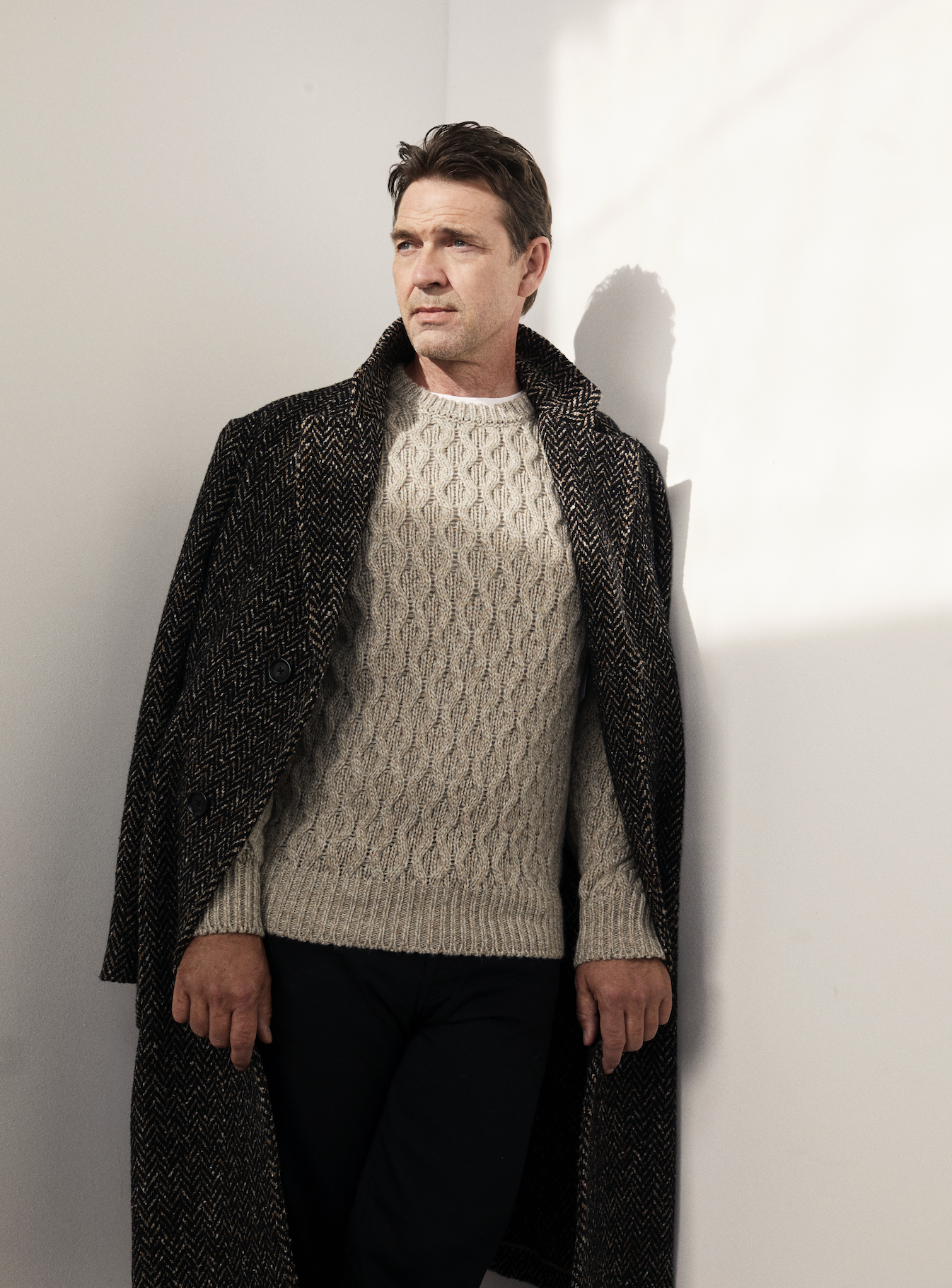
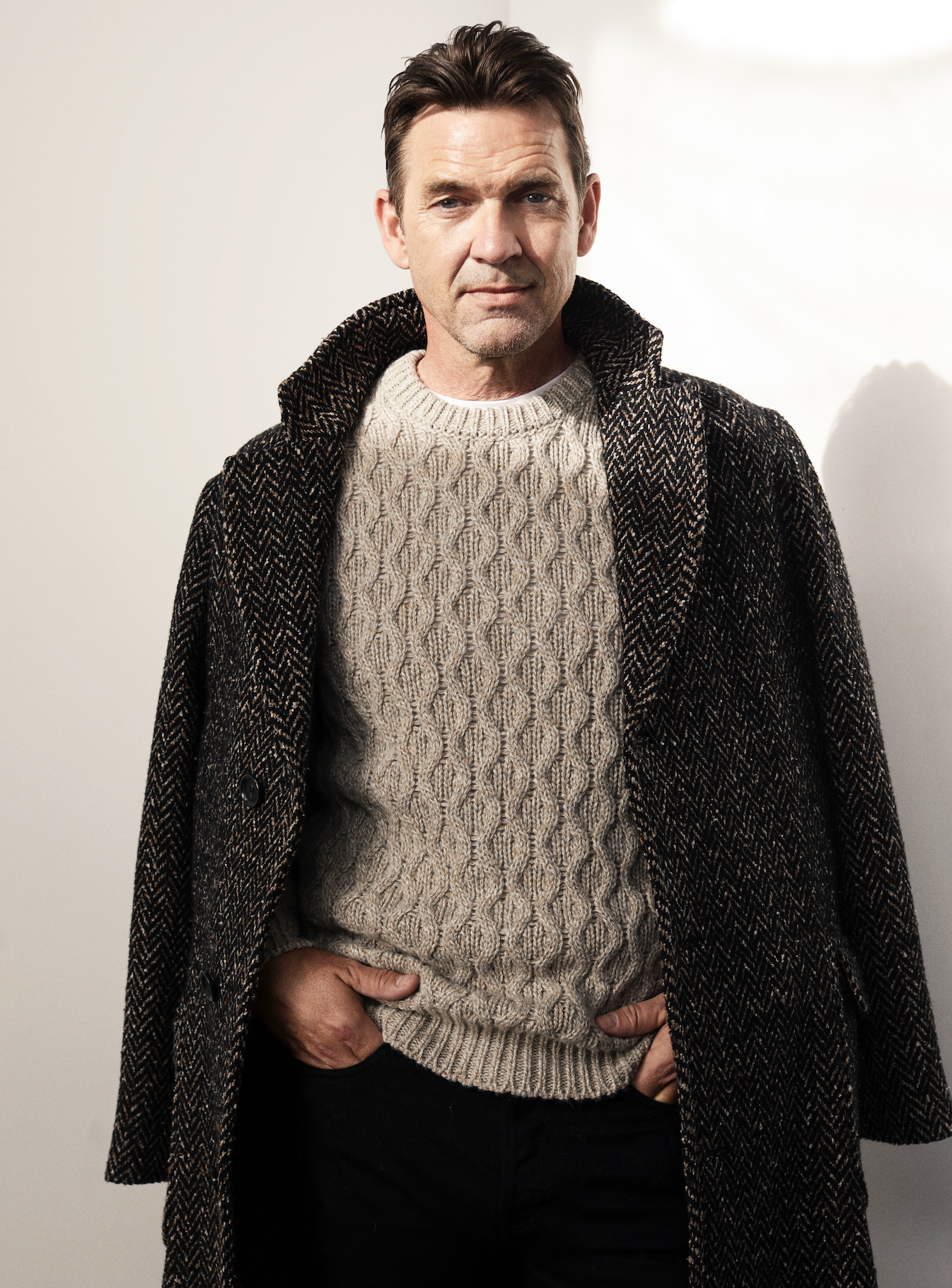
You’ve worked on everything from major Hollywood productions to deeply personal British dramas. How do you choose your projects today?
I think you just respond to the writing and the character. Sometimes you read things, and within five minutes you have no interest in exploring them. I was sent a script recently and I thought “I can’t see myself…I don’t want to have anything to do with this story.” For someone who is supposedly drawn to dark pieces, some pieces are just too dark.
Looking back, what stands out as a turning point in your career, a role or project that changed how you approached your craft?
I can’t really separate anything, because everything led on to something else. I did a play when I was twenty-three, twenty-four, at the Traverse Theatre in Edinburgh, which then transferred to the Hampstead Theatre, and it did really well. I was playing this gay waiter in Canada, and it was quite an ‘out there’ play, but it did really well. Then that led to people perhaps being aware of me, and then I did some TV. I did the ‘The Crow Road’, which was adapted by Bryan Elsley from Iain Banks’ novel and that did well. I think ‘Twin Town’ was a turning point in many respects, because that was quite a dynamic character, so it made an impact and led to me going to America, to Hollywood.
Everyone has an ego to a certain extent. I don’t mean that in a bad way. I mean that you have to have some sort of self-belief because it’s such a tough industry. I’ve had that bloody-mindedness within me since I was a kid, and that has served me well through difficult periods. The honest answer is you never feel like you’ve arrived anywhere; you’re always on a journey and you end up at the end of the line. You end up dead, that’s what you end up as. It’s the only certainty we have. But I’m still learning, I still feel that I can do this, that, different things, and so it’s never really been a job to me. I’ve always felt very privileged and grateful to do what I do.
Television has evolved massively in recent years. Do you feel it offers greater creative freedom for actors now than film?
Some films offer more creative expression, and some TV shows offer more creative expression. A TV show gets six or eight hours to explore a character, so yes, you’ll have more scope, and you’ll be able to delve into different aspects of their life over a period of more time. But, if a film is really well written, it becomes a more nuanced, more edited version of that person’s life, and if it’s done really well, then it can have the same impact. It’s just the skill to be able to tell that story in an hour and forty minutes as opposed to six or eight hours.
As both an actor and producer, how does being behind the camera influence your work in front of it?
It just requires a lot more energy. You’re obviously involved in the whole production side of a TV show if you’re producing. I’ve produced movies as well as acted in them. It’s challenging because, ultimately, what you’re doing is telling a story that you want other people to see. If you make the TV show or the movie really well, then you’ve been part of something that maybe changes someone’s life, and makes them feel less alone or connects them to other people, and maybe gives them recognition that their life is valid and important and worth having someone tell a story about. So for me, it’s all about story, and being behind the camera and in front of the camera is challenging, but, again, I’m grateful that I get the opportunity to do that.
You’ve won both Emmy and BAFTA Awards. How do those recognitions shape your perspective on success and longevity in this industry?
I think you win it and it’s great, but then you move on and people forget, I’m sure, pretty quickly. Although whether it has a bearing on your career, I don’t know. It’s nice to be recognised, but ultimately your recognition, or my enjoyment out of a project, comes out of having achieved something. I’m not the greatest at looking at my own work, but sometimes you have to. I feel the most satisfaction when I’ve actually finished filming on set, and that’s what drives me, that’s enough for me. I don’t need to see the finished product in order to feel. That’s someone else’s job then, the editors and the director, they bring it all together. I love that journey of preparation and of filming on set, that really excites me, drives me.
Outside of acting, you’ve been known to have a deep passion for storytelling. Are there any personal stories or projects you’re hoping to bring to life soon?
There are many projects I’m involved in that I haven’t brought to life yet, but you don’t want to jinx them because they’ve not been green lit quite yet. They’re on the verge of being green lit, and, not that I’m superstitious, but you just want to hold back from talking about them.
There are many different stories that, as you grow and get older, you want to tell. Some of them you want to be involved in from an acting point of view, and others you just want to tell that story. I just love storytelling.
TEAM CREDITS:
photography DAVID REISS
styling HOLLY MACNAGHTEN
grooming LUCY HALPERIN
