
IN CONVERSATION WITH EIZA GONZÁLEZ
interview by JANA LETONJA
EIZA GONZÁLEZ has cemented her status as one of the most dynamic and globally resonant performers of her generation. A proud Mexican actress and multifaceted artist, she has built a formidable career across film, television, and music while simultaneously commanding the fashion and beauty world. Fresh off wrapping the next season of Netflix’s global hit 3 BODY PROBLEM, and with an exciting slate ahead, including Guy Ritchie’s IN THE GREY, NEON’s I LOVE BOOSTERS, and MIKE & NICK & NICK & ALICE, she stands at the centre of a powerful, genre-spanning moment. From action to sci-fi to auteur-driven cinema, EIZA is not just working, she’s defining scale.
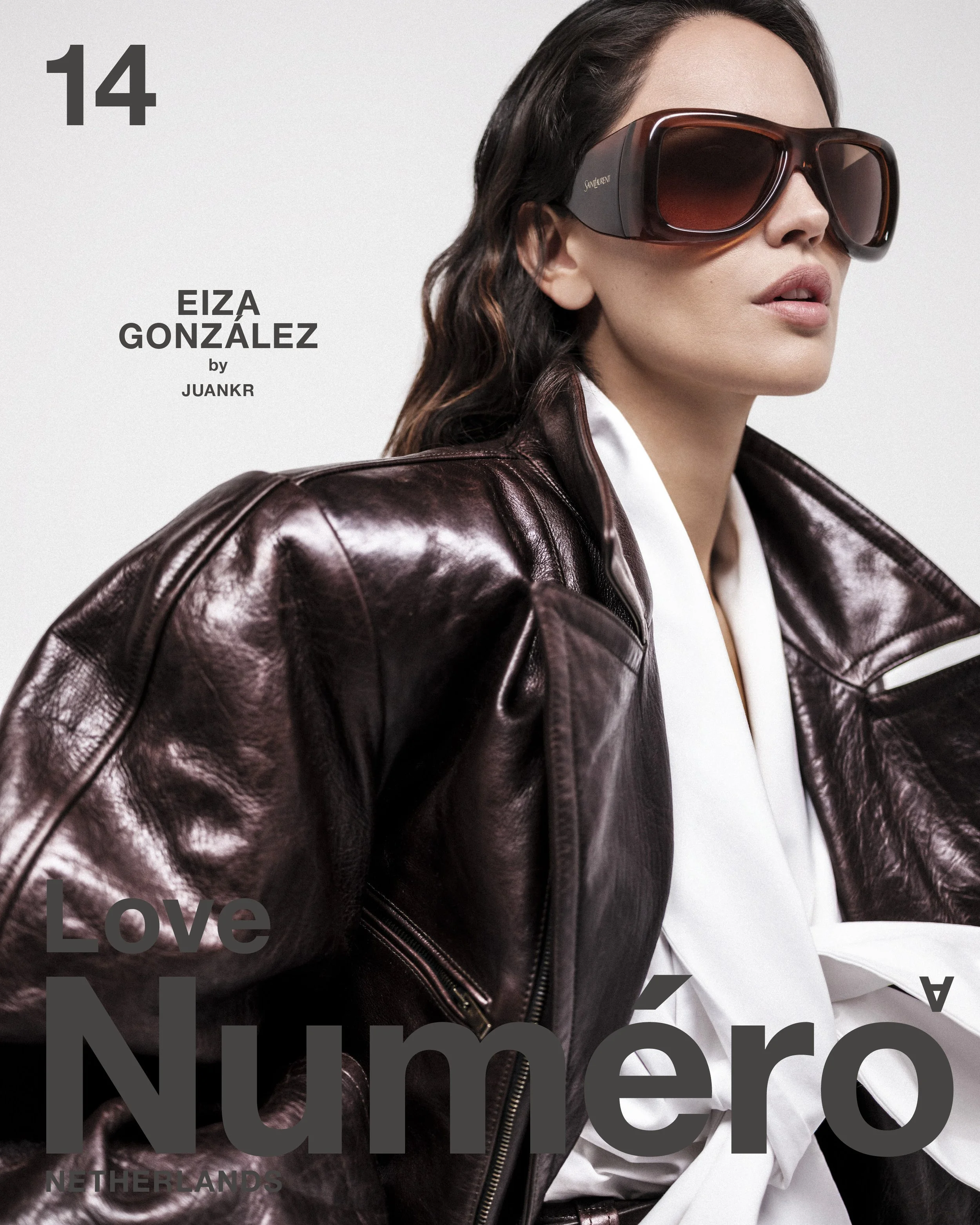
You’ve just wrapped the next season of 3 BODY PROBLEM. How does this new chapter expand your character’s journey?
It’s an incredible progression for Auggie. Because the character is an amalgamation of different figures from the books, I didn’t know which storyline from THE DARK FOREST I would end up embodying. The direction the writers chose is really exciting.
This season was challenging in the best way. Every episode required something new from me, and it pushed me outside my comfort zone. DAN, DAVE, and ALEX WOO write complex characters who never follow the path you expect. You think you know where they’re going, and then they take a completely different turn.
I think audiences will be very surprised by Auggie’s journey. It’s honestly my favourite character arc I’ve ever experienced.
The first season became a global phenomenon. How did that response impact you personally?
It’s always complicated because you have expectations, and people have expectations. When I was embarking on this character, it wasn’t one of those roles where you just know the character is going to be loved. She wasn’t necessarily that way. Auggie was always a very complicated character. She’s written in a way that I personally gravitated toward, which is that she’s not wanting to be liked. She’s not a character aiming, or written, to be liked. She’s a character who is complicated and going through internal chaos.
That chaos, for me, was very pivotal because I’d never played something like that before. I’d been in projects where the arc, especially in TV shows, relies on the length of the story. But I’ve been in a lot of movies, where the arc happens within the first two hours, within the movie.
So I had to really be patient and trust the process because she was so internally complex and, I think, misunderstood. Especially because women in STEM are not worried about being liked, they’re worried about breaking through in science and finding the result or the response that could change the world. I think all the female characters are that way in the show. And I think it’s an unusual type of character for audiences in this day and age, when people are often watching love stories and becoming obsessed because they’re your typical exciting, likeable characters — girl meets boy, boy meets girl. Those characters are, in a way, meant to be liked. And that’s amazing, and I love that, and there’s an audience for that, but I think we’ve accustomed audiences in general to want to watch likeable characters.
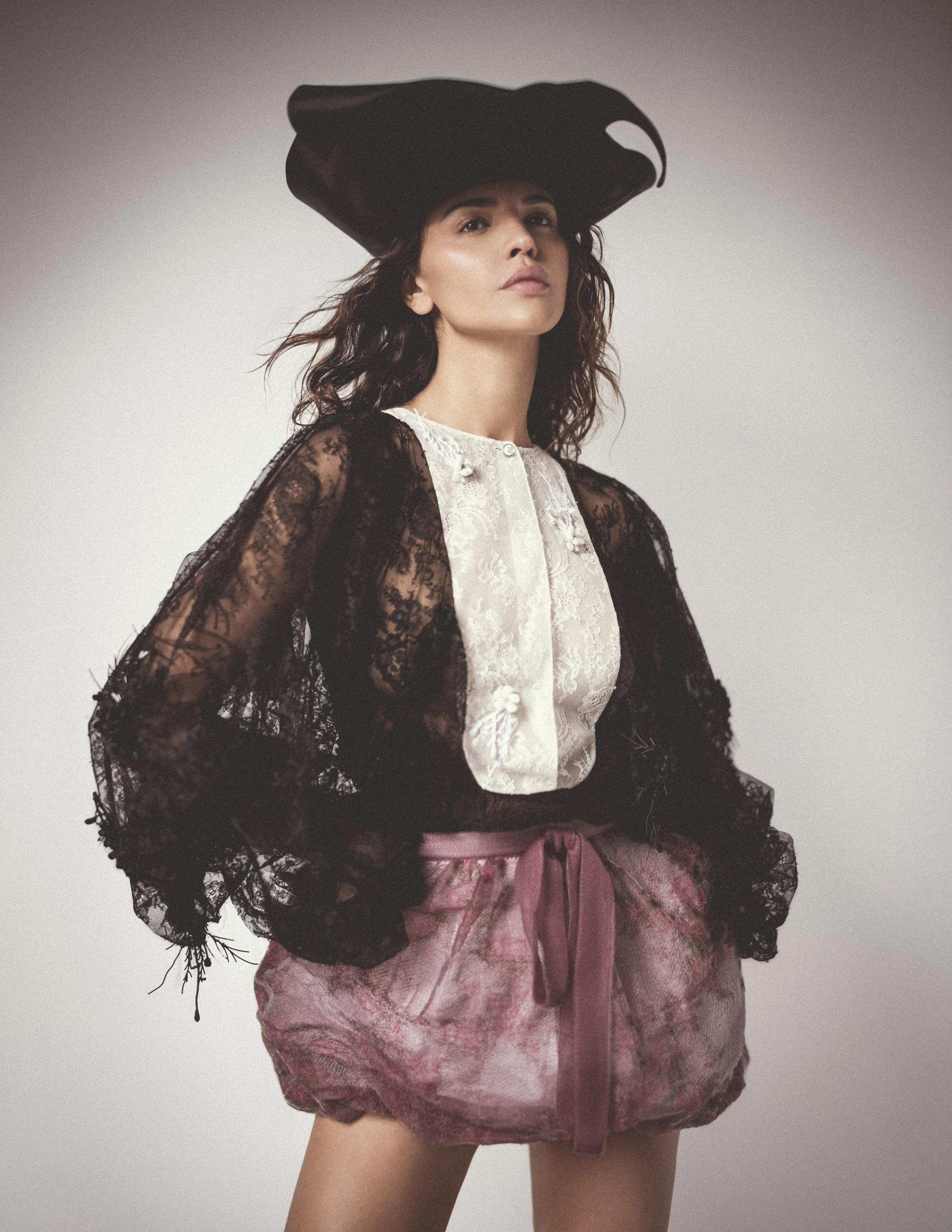
full look DIOR
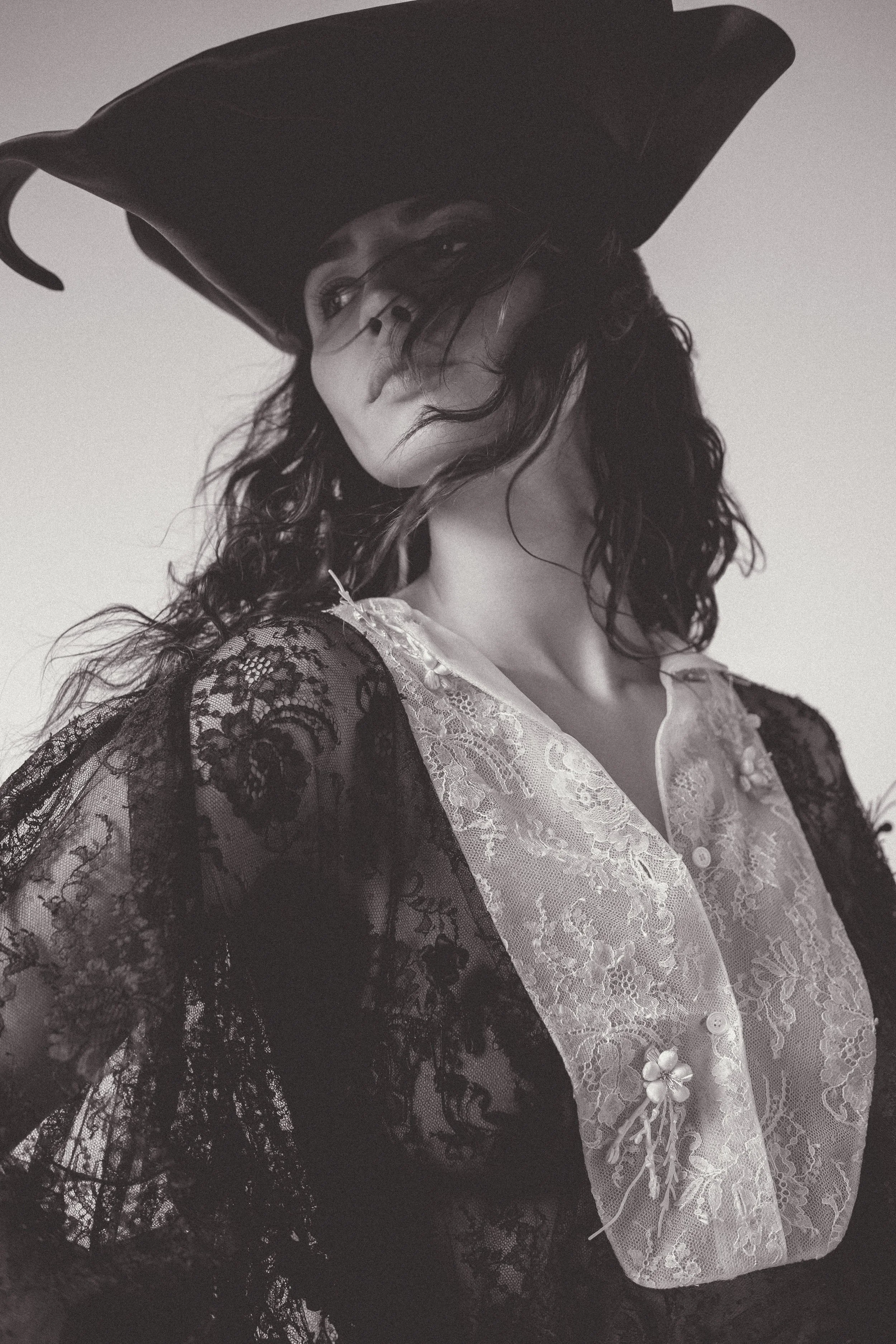
You’re reuniting with GUY RITCHIE again for IN THE GREY. What keeps drawing you back to collaborate with him?
He’s incredible. I truly have nothing but great things to say about GUY RITCHIE. He’s demanding in a way I really respond to; he pushes me, challenges me, and asks something different of me every time. Every role I’ve done with him has been completely distinct and has required a different skill set. What I value most is that he trusts me to explore. He lets me search for the character with him — the personality, the energy, the rhythm of it. He’s wonderful to work with, and he does remarkable work.
What I admire about GUY is that he’s constantly creating. He moves from project to project with real momentum, but without self-importance. He’s scrappy, focused, and deeply committed to the work. I connect to that because I’ve had to build my career in a similar way, by showing up, doing the work, and making the most of every opportunity.
As a woman of colour, I haven’t often had the luxury of picking and choosing. So my mentality has always been: do the best you can with what’s in front of you, and let that create the next opportunity. There are no small jobs to me. Of course, there are dream scripts and dream directors, but if those opportunities aren’t coming to you, all you can do is keep working.
What makes our collaboration especially meaningful is how it started. On THE MINISTRY OF UNGENTLEMANLY WARFARE, I wasn’t the obvious choice; he didn’t really know me. But I cared so much about that role. I love period pieces, and I love stepping into moments in history that shaped the world. Growing up, I never really saw myself in those stories, so getting the chance to play in that space meant a lot to me.
I’ve worked hard to expand what I can do, learning languages, learning accents, pushing beyond the limits people want to place on me. So when GUY gave me that opportunity, I was hungry to prove that I could do more than people expected. For a Mexican woman to step into that world with an English accent and a completely different kind of role was huge for me. It mattered deeply.
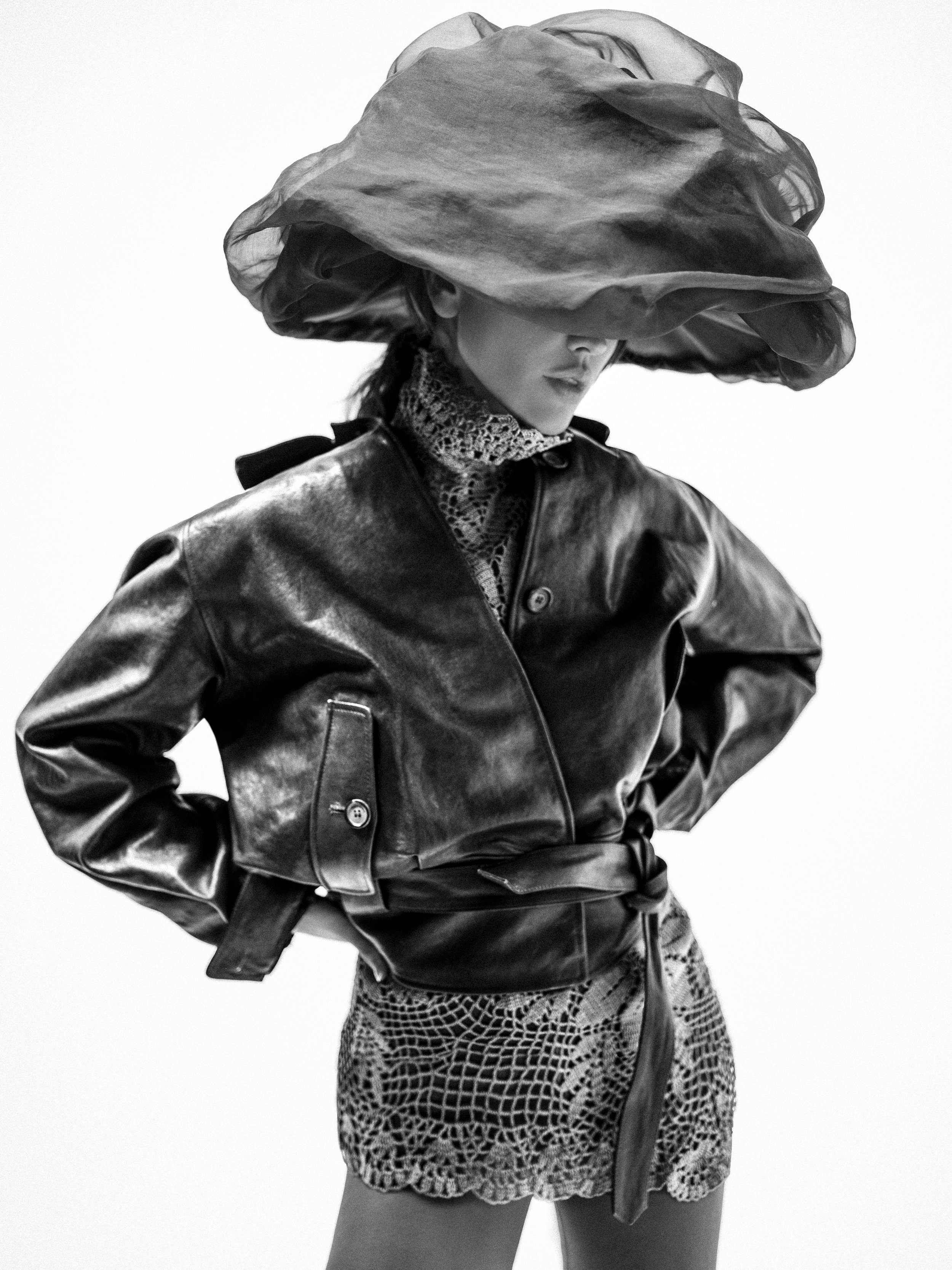
full look MAGDA BUTRYM
I LOVE BOOSTERS, which is premiering this May, brings you into BOOTS RILEY’s bold creative universe. What excited you about that project, and what can you share with us about it?
BOOTS is wonderful. I’m very director-driven, and I remember watching SORRY TO BOTHER YOU and being completely blown away. It’s such a mind-bending, genre-defying film, but it also has a real political voice and purpose. BOOTS is one of those people who just feels unequivocally smarter than everyone in the room. He’s incredibly thoughtful and passionate, and he has this revolutionary spirit. He pushes against the system, but in a creative, artistic, and very intelligent way. Sometimes you’re watching his work, and it takes a second to catch up, and then suddenly the message clicks, and it’s brilliant.
So when I LOVE BOOSTERS came around, I immediately raised my hand and said, “I’ll play anything.” I just wanted to step into his world. He’s the kind of director who lets actors experiment and push boundaries, and he doesn’t put people in boxes. In an industry where people often see me for a very specific type of role, he gave me something completely different.
I’ve been lucky to work with a few directors who see something in me that others don’t. They allowed me to step outside what I might typically be cast as, and BOOTS was very much the same. With I LOVE BOOSTERS, he just said, “Go for it. Try things.” That freedom is incredibly rewarding as an actor.
Another special part of the experience was working with such an incredible group of women. I don’t often get to work on projects led by mostly women, and I realised how much I thrive in that environment. I admire all of them deeply; they’re all such powerful, talented artists shaping amazing careers.
We spent so much time together outside of work, too. We’d sit by the fireplace at the hotel with a glass of wine and just talk about our experiences in the industry, what we’ve learned, the challenges we’ve faced. Those conversations meant a lot to me. That kind of bonding and support really stays with you, and honestly, it gave me a lot of strength to keep moving forward in this business.
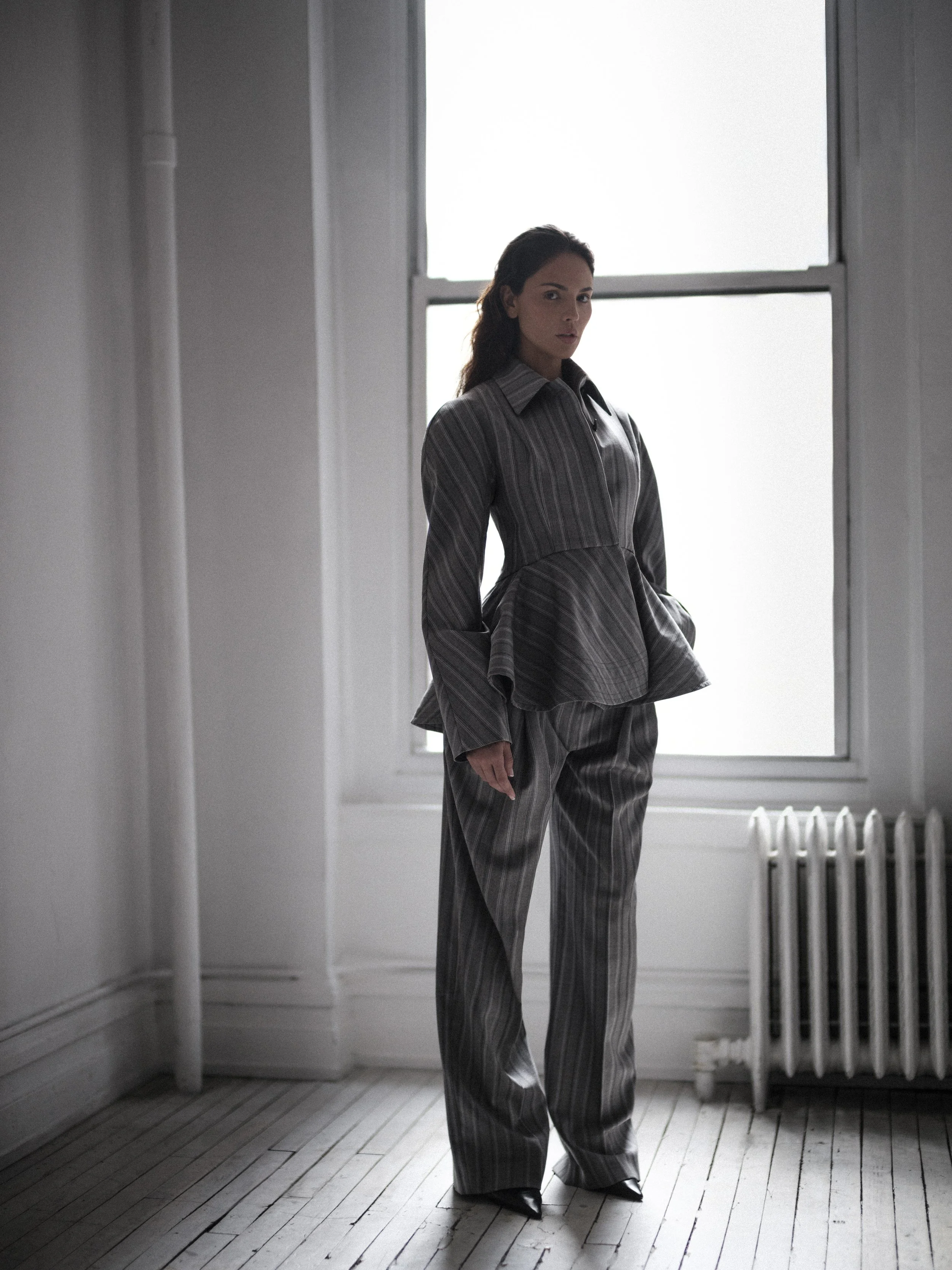
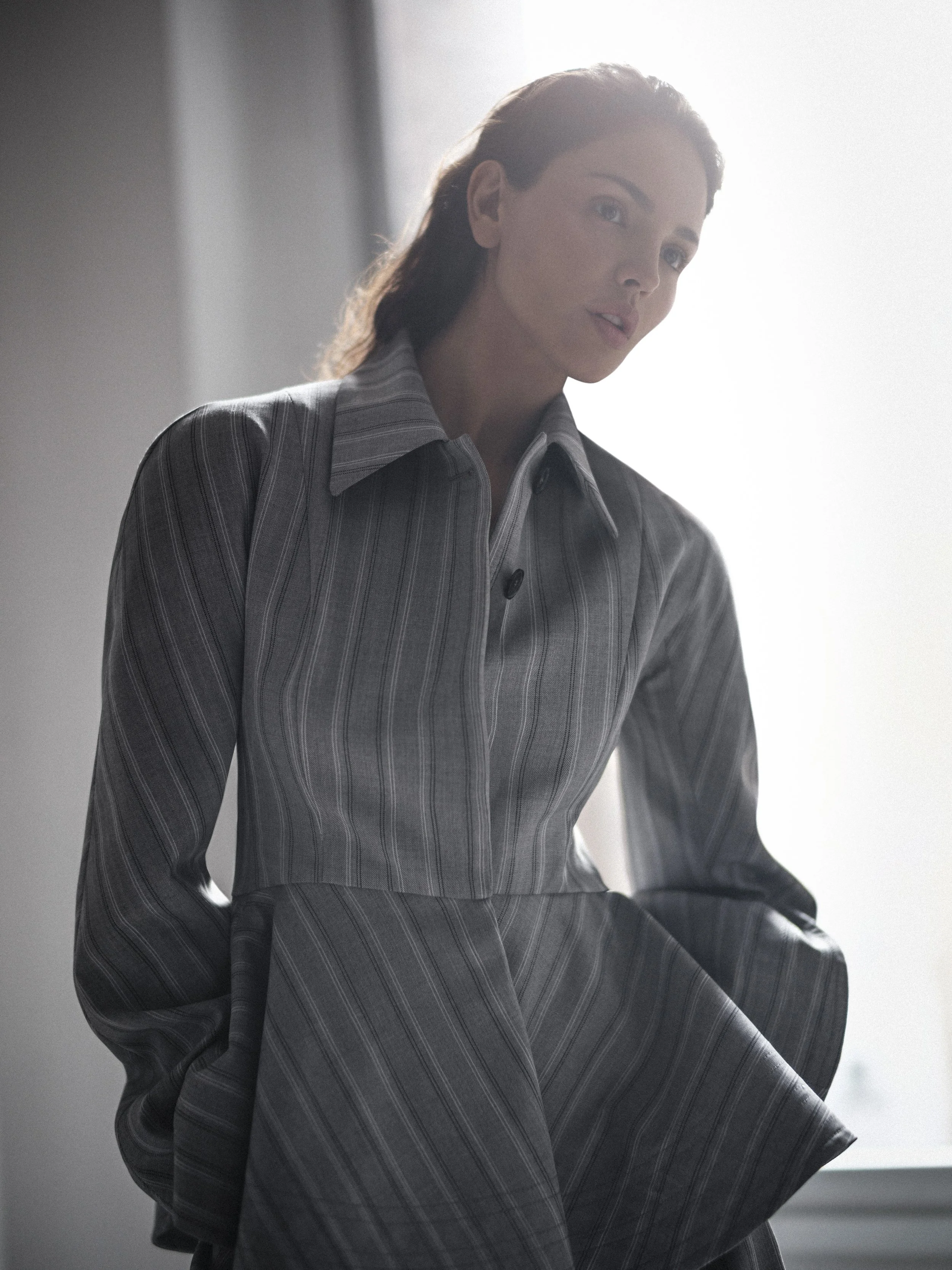
full look STELLA MCCARTNEY
shoes JIMMY CHOO
With MIKE & NICK & NICK & ALICE being a comedy, how did it feel to jump into a more comedic role and play off the ensemble? What was the casting process like? Was there any improv while shooting, or did it stay pretty close to the script?
It was completely different. The casting process started with a conversation with the director about my vision for Alice — who she was to me, what she could bring to the story, and how I wanted to give her an inner life beyond what was on the page.
BENDAVID was wonderful. I had seen his animated series and thought he was incredibly talented. I immediately understood his vision, and I think everyone else did too. I was especially excited to work with JAMES MARSDEN and VINCE VAUGHN. I was eager to learn from both of them.
I went into the project wanting to absorb as much as possible and really push myself. That year was about taking on roles that challenged me and pushed me outside my comfort zone, and this definitely did that. I had so much fun with it.
Funny enough, I went straight from MIKE & NICK & NICK & ALICE to I LOVE BOOSTERS, and in a way both have comedic elements, though in very different styles. I wouldn’t call myself a comedy expert, but I loved doing it and would absolutely do more. I’d even love to do a romantic comedy or a love story, something light and uplifting.
You have multiple SXSW premieres this year. Does that kind of momentum feel like a turning point?
I don’t think about it like that anymore. I don’t like to think in terms of turning points. Early in my career, I made some mistakes in that regard — thinking, or letting people guide me into thinking, “This would be a good move,” or whatever. But I don’t think that’s important. The turning point is whether you’re enjoying your job, whether you’re enjoying the project or the character.
I think in my early twenties, I was more focused on whether it was giving me momentum in the industry. Right now, I’m just focused on hoping the right people are watching. I’m excited that these roles allow me to show something I haven’t done before, and I hope the right people are watching and see something in me. That’s what feels motivational to me, because that opens up opportunities to play other types of characters.
So, it’s a conscious choice to play characters that feel a bit out of my comfort zone, and therefore expand my career into different areas. That’s really my motivation.
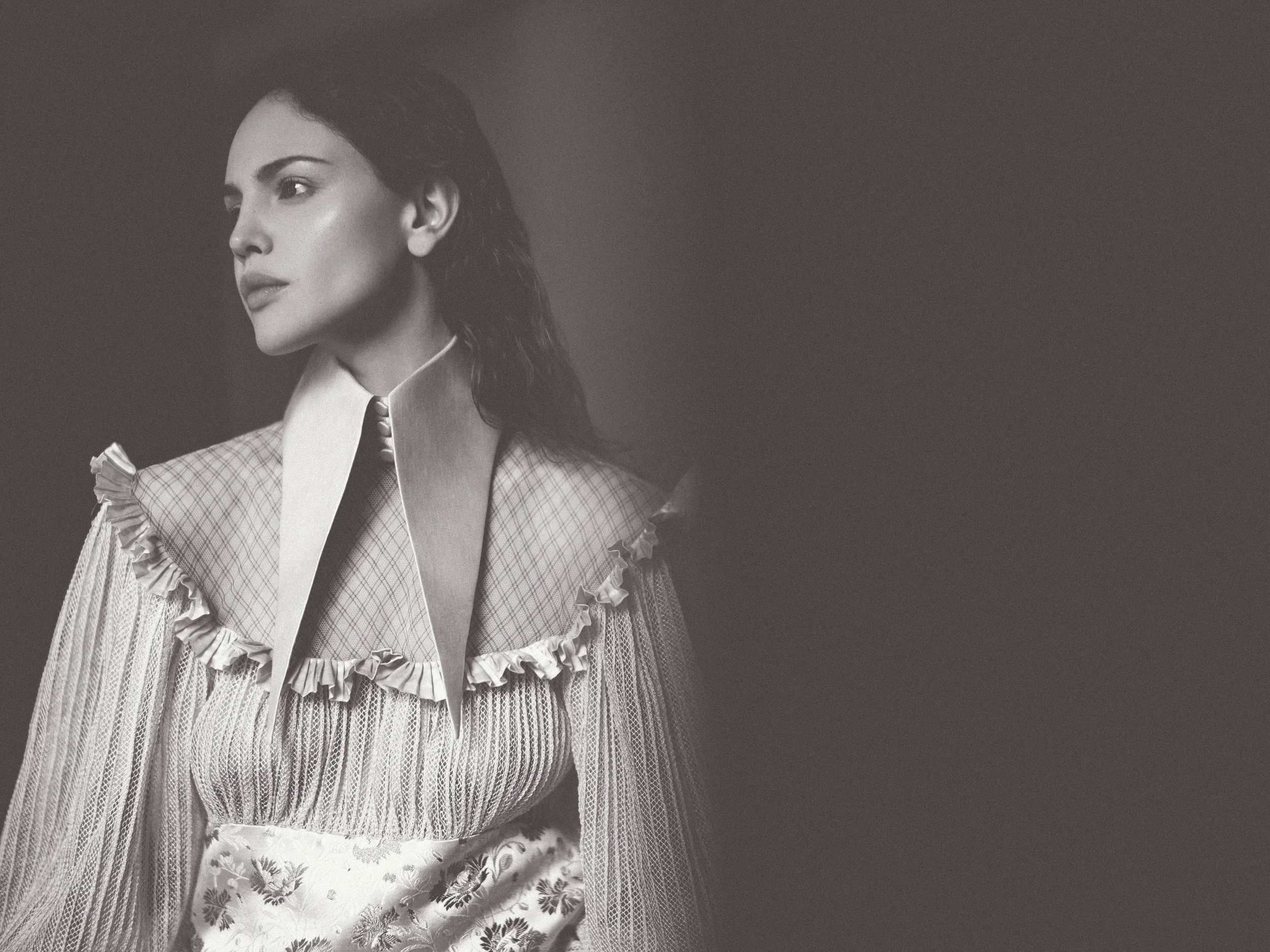
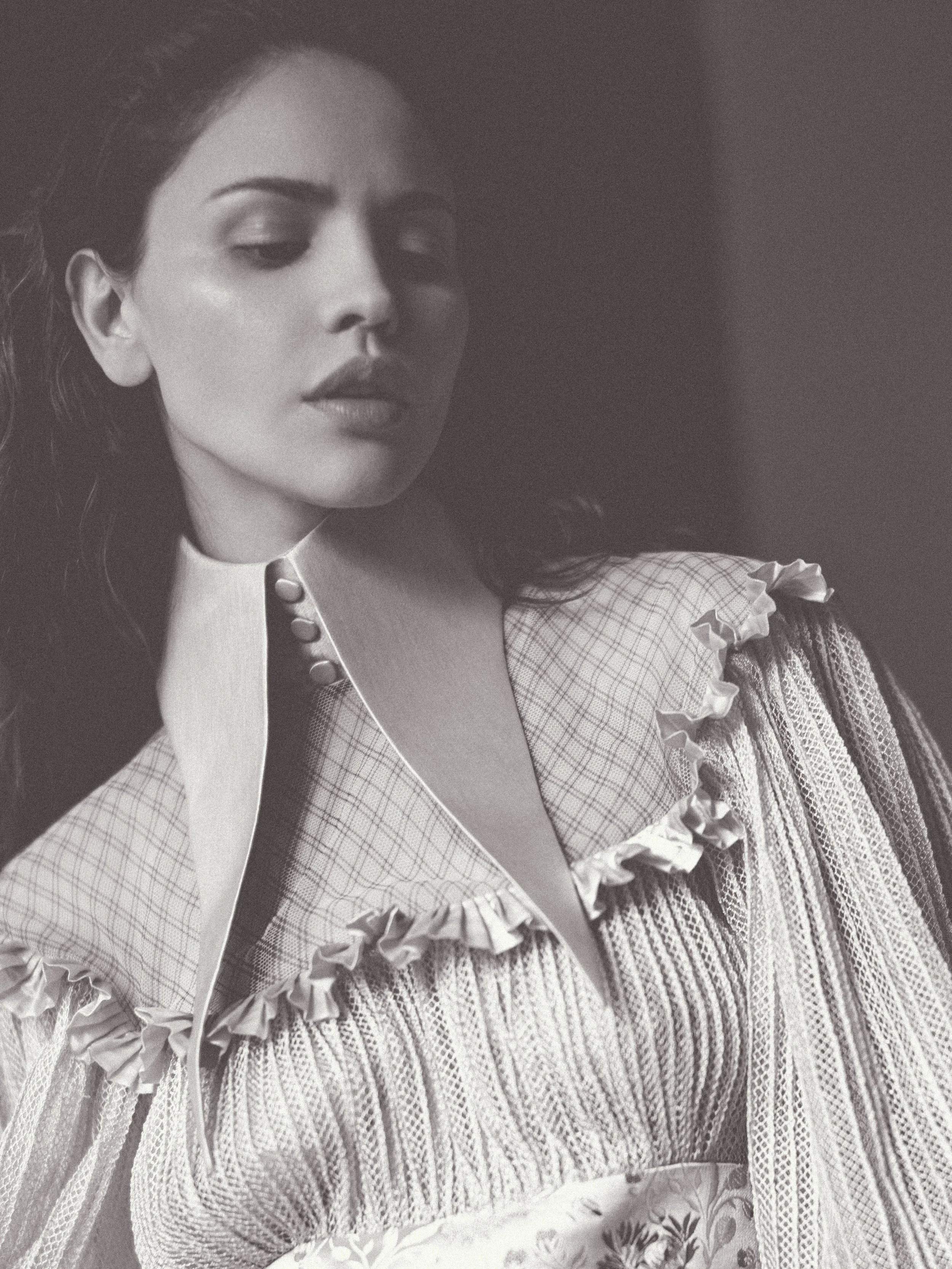
full look LOUIS VUITTON
You move seamlessly between action, sci-fi, comedy, and drama. How important is genre fluidity, and how do you choose projects at this stage?
As I said before, I do, and I don’t get to choose. I’m still at the mercy of an industry where, again, I am still a minority. But I can also be conscious and self-aware enough to acknowledge that within those minorities, I am definitely in a privileged position. I do get more opportunities than some of my peers, and for that I’m very grateful. I have friends who I could objectively say are ten times more talented than me and are not getting those opportunities, because they’re not getting that foot in the door, whether because they don’t have a certain privilege or whatever it may be.
I’m self-aware enough to say both things. That I am lucky in some ways, and also that I am not choosing most of the time. And anyone saying they are, to be honest, is kind of lying, because we may be getting opportunities, but we still have to fight for them. I still have to fight to be the choice.
And then sometimes it’s magical. A director calls you and says, “It’s you.” And that really motivates you to keep going, because you think, “Wow, someone saw me. Someone recognised me. Someone recognised my effort.”
But when it comes to a creative choice, when I do get the chance to make one, and if I’m lucky enough to have a couple of options, as I do now at this stage of my career, I just ask myself, “What is going to push me to feel really motivated tomorrow when I wake up and go to work on this material? What is fascinating to me?”
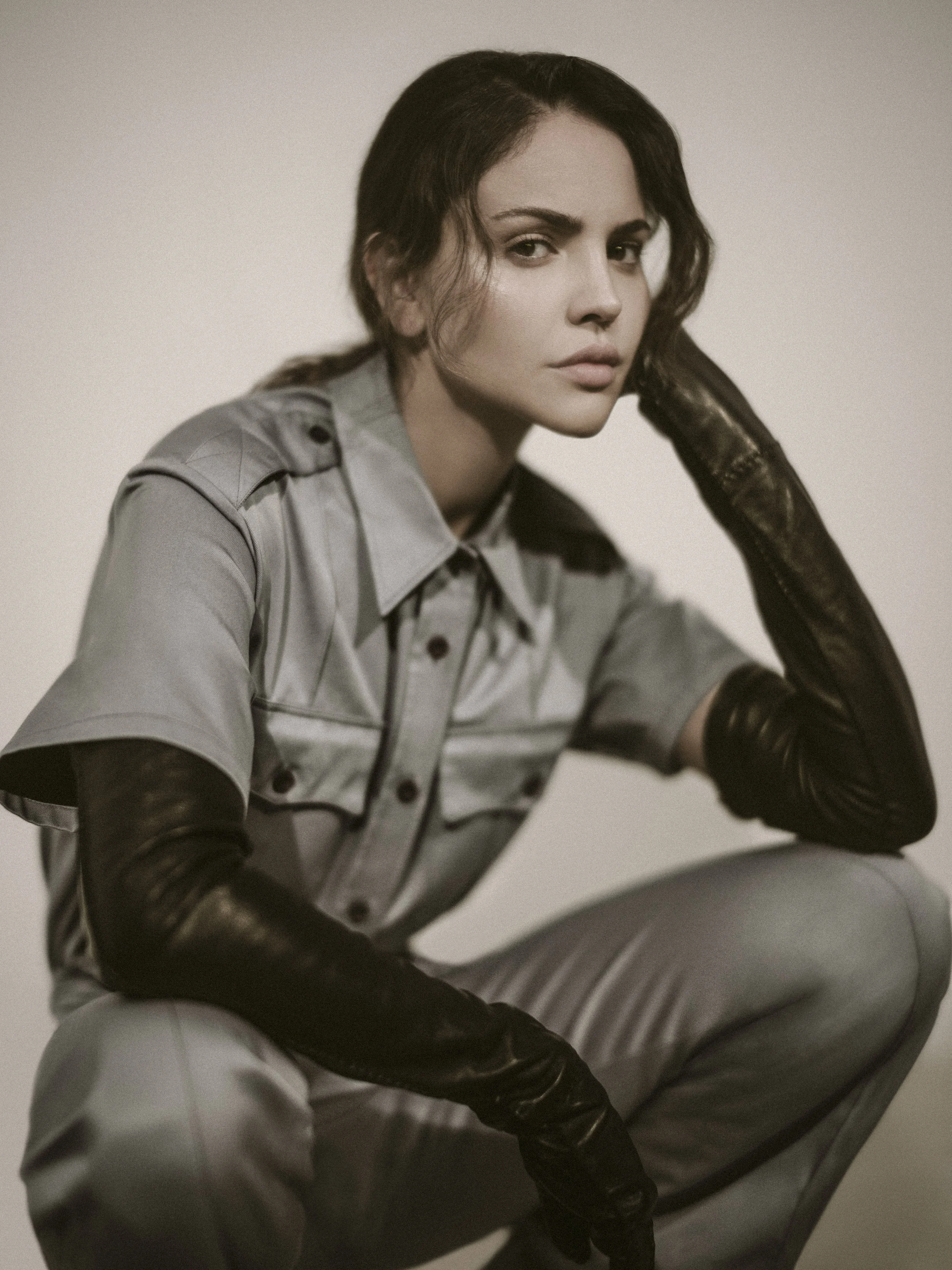
full look PRADA
As a Mexican artist working globally, how do you carry your cultural identity into your projects?
I think you are who you are. The fibres of your DNA are so embedded in where you were born and raised culturally. And I think that brings something really special.
When I watch French actresses, or actresses who are doing work in English and are perfect in English, like MARION COTILLARD or ALICIA VIKANDER, there is still a subtle DNA that translates into the performance without them even wanting it to. I think that’s the beauty of where you come from as an actor. You have to really embrace it and not fight it.
Of course, there are roles where you have to completely strip yourself of that, because transformation is the job of an actor, and the greatest of them all do it. But I do think there is a quality that comes with your origins that makes you a special type of artist.
You see it with people like PEDRO PASCAL, OSCAR ISAAC or PENÉLOPE CRUZ. For me, PENÉLOPE is one of the greatest of them all. When I watch her, I’m so utterly transfixed by her performances. There is something very Spanish about her, even when she’s acting as an Italian woman, for example, there are mannerisms, there is a way she processes things that comes from the cultural zeitgeist she was raised in. And I’m not distracted by it at all; it adds a layer to the performance that makes it so juicy.
I’ve learned with time not to try to dispose of that, but to integrate it into the performance, because that’s my superpower. That’s something someone else doesn’t have. If I’m reading against other nationalities, I’m adding a layer that can’t be replicated. And they have their own version of that too.
So, it’s about finding your identity as an artist and as a performer. I think that’s really crucial. Sometimes it takes time to get there, especially when you’re growing up and trying to figure out who you are. Some people find it really quickly. That was not necessarily the case for me.
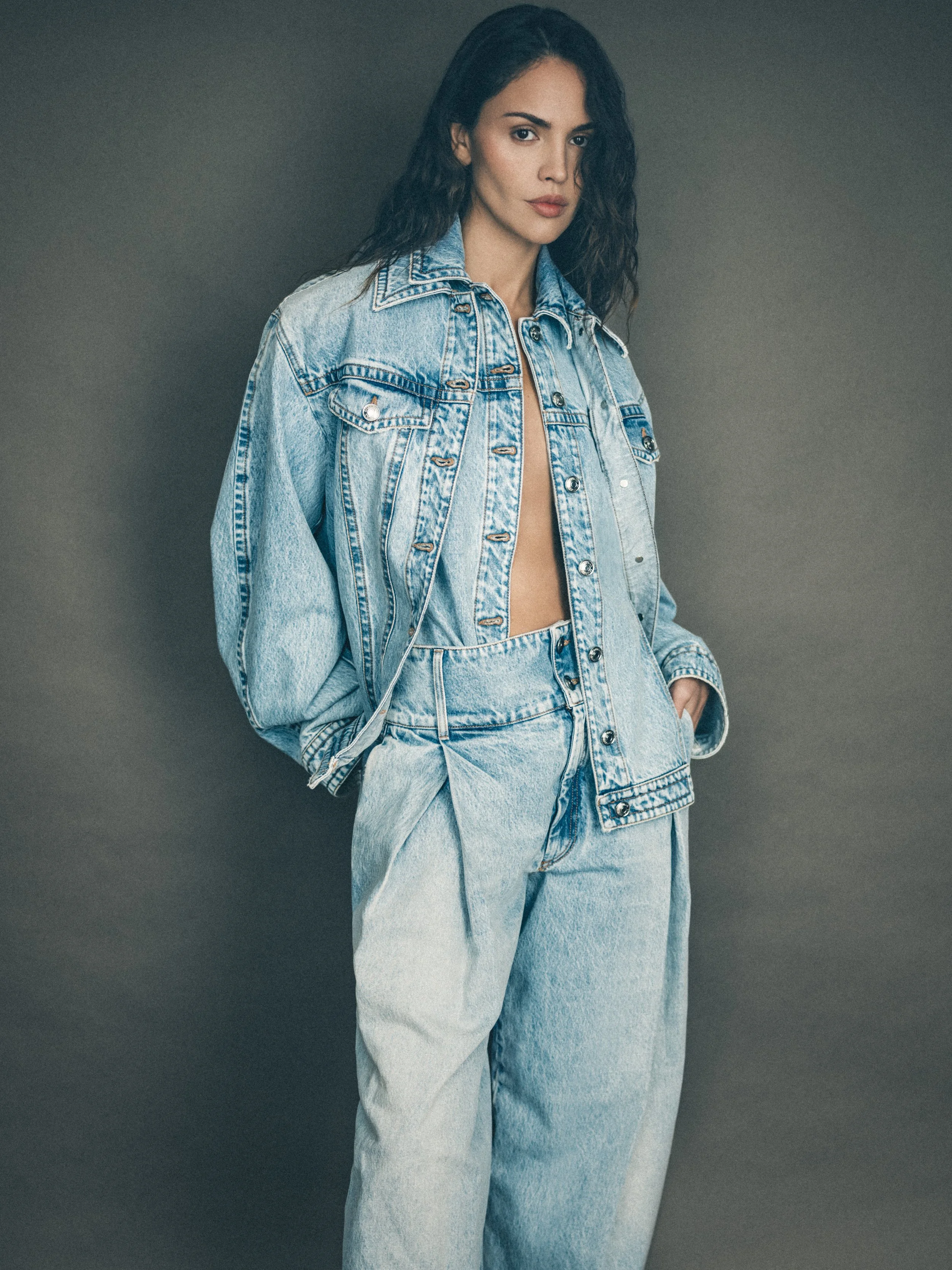
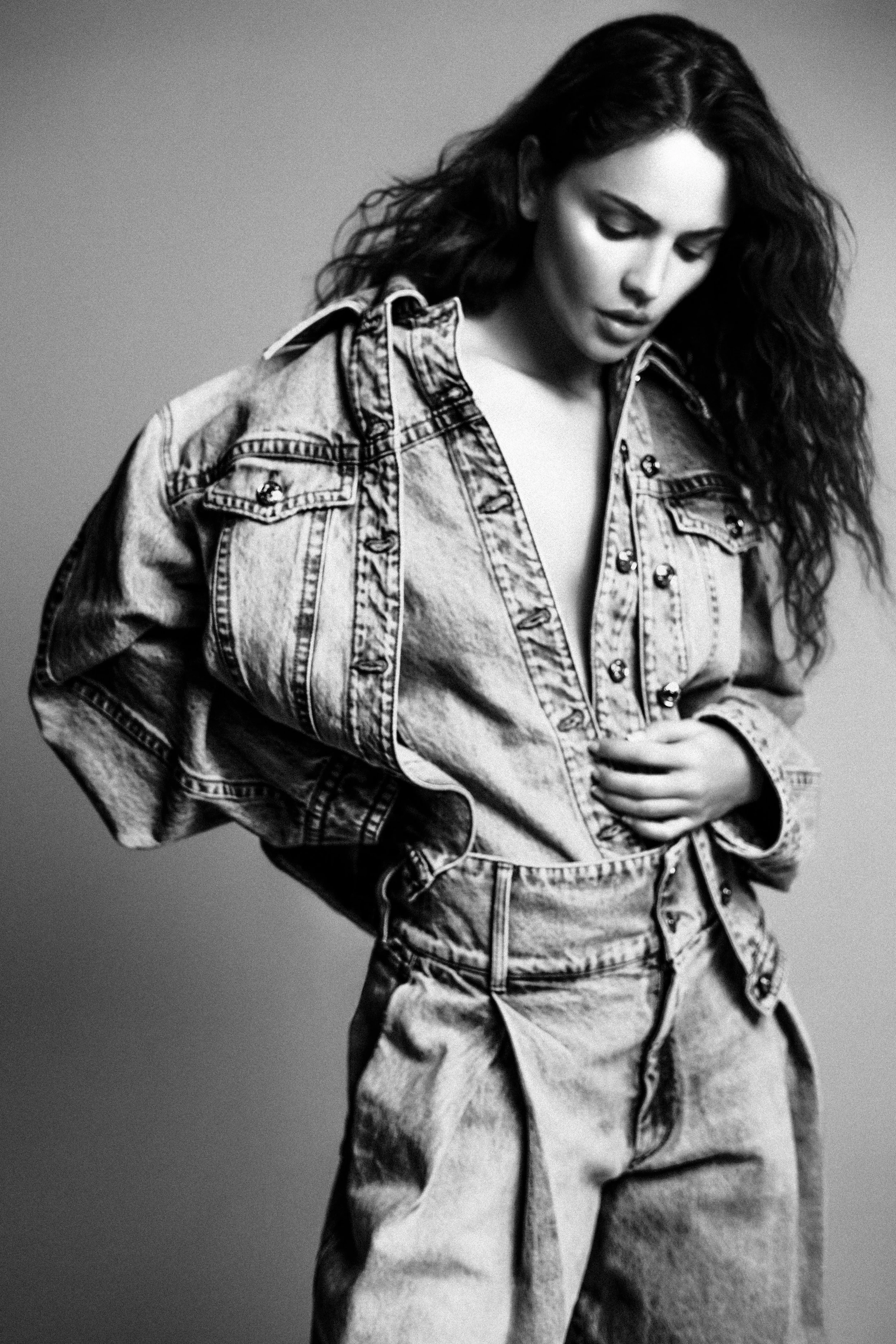
full look SPORTMAX
You’ve become a fashion fixture on major red carpets. How does style function as part of your storytelling?
Style is super important. Style, in the sense of character identity, is huge. Your style is who you are. It’s a big part of your personality.
A huge part of my career, and one of the things I adore and enjoy the most, is working in tandem with stylists and costume designers, because they can say so much through clothes. I put a lot of effort into that. I work very hand in hand with costume designers.
I’ve always thought that style is important on camera — who she is, the way she moves, how clothing changes your body and your performance. Then there’s obviously style off camera. And I just find it really fun when you’re doing red carpets and premieres to push boundaries and bring a bit of the movie into the premiere.
I think the red carpet allows people to see you in a different light and change the perception of who you are. And then sometimes I just want to be a blank canvas and show myself as I am and let the vision lead the way. It all comes down to mood. But I think playing with style is very important. We play characters for a living, so it’s hard to fully separate that from your real life because we’re artists and we always like to create a moment.
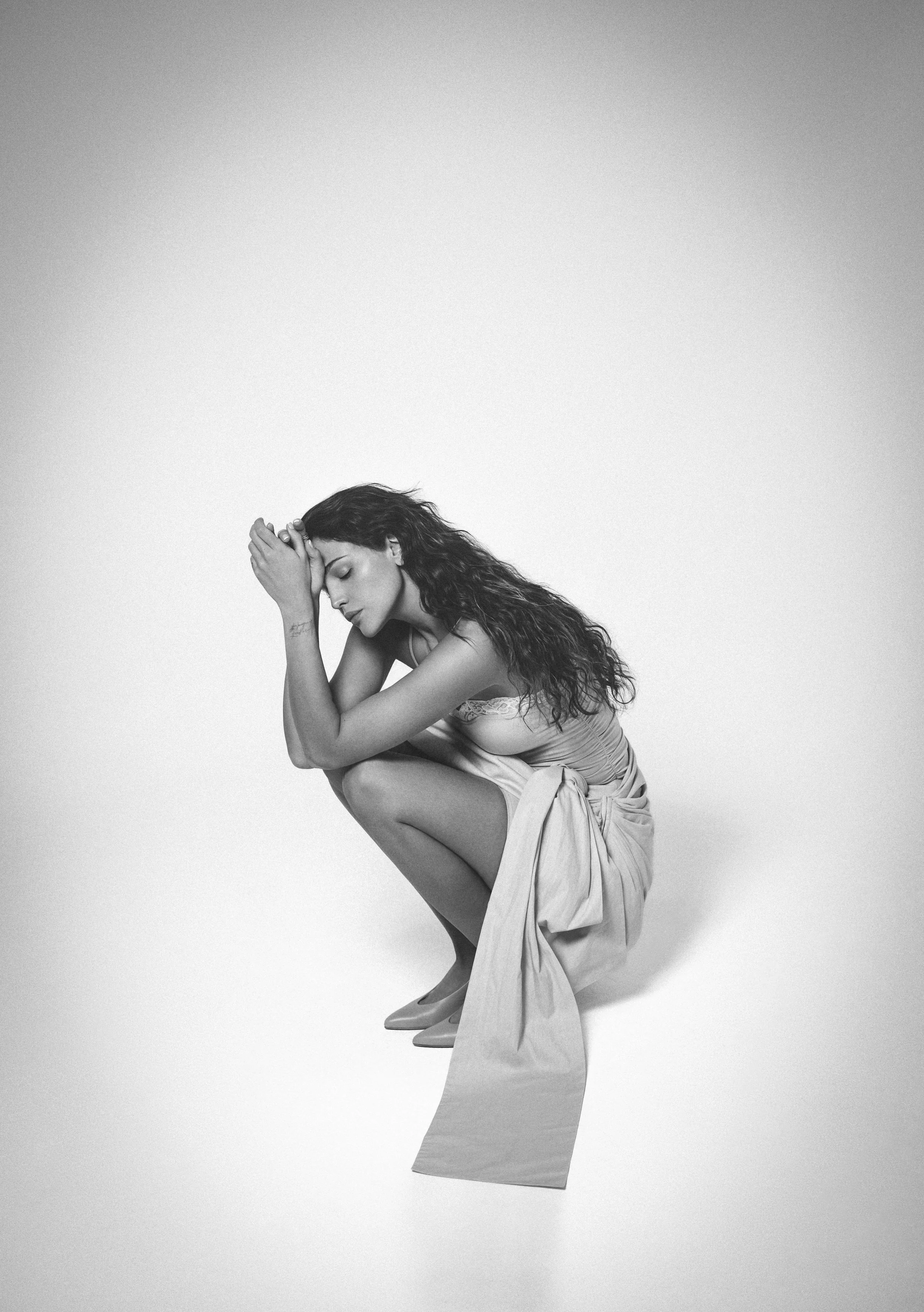
full look CHLOÉ
jewelry DAVID YURMAN
Social media allows you to connect directly with fans. How do you balance publicity with privacy?
I’m no different from anyone else. This new world of social media is challenging. I think everyone is struggling with it in general. It’s very demanding, and every year it becomes more and more about your personal life.
I love social media because it allows me to connect with people around the world. That’s the most amazing quality of it. Now I can talk to fans in countries I might never have imagined having direct access to. I can connect with them. That’s beautiful.
The rest, for me, is on my own terms and what I feel is enough to share. I don’t feel the need to follow some status quo of what I should or should not be doing. Most of my time, I’m not really spending it on social media. I’m working, reading scripts, developing projects. I go on it when it’s necessary to post or share, or when I feel like it, if I’m having a good time with my friends and want to share a photo.
I also think it’s nice to show that there’s a human being behind the celebrity. That’s one of the beautiful things it’s brought. When I was growing up in the nineties, all we had were magazines and little interviews here and there. I had no clue what BRITNEY SPEARS did on a daily basis or what her kitchen looked like. Now we can all know what anyone’s house looks like. That’s just so crazy to me.
But at least it allows some humanity to come through. I like that I can share things like my physical journey or advocate for causes, and show up in different ways. I can say, “Hey, I’m here. I’m totally human. I’m going through the same things you’re going through.” I want people to feel that I’m not some unattainable, aspirational person they need to look up to. I want them to feel like I’m their friend in a way, just someone who happens to do a particular job.
With such an intense filming schedule across multiple projects and countries, how do you unwind and recharge when you finally have time off?
I find a lot of solace in normality, because I’ve never really had that in a consistent way. So being able to go back home and have a schedule is very important to me when I’m off.
Keeping a normal life, waking up, going to work out, running errands. I don’t like having assistants. A lot of people don’t know that. I like still taking responsibility for the ropes of my normal life. I wake up and think, “Okay, I’ve got to meet the contractor at my house, do this, do that.” If I need to pick something up, I pick it up myself. I like being normal, and honestly, I do live a very normal life. Nobody really cares about me when I’m walking down the street, which is nice. I’ve managed to have a career where I still get to live quite normally. I don’t live at the level of fame some people do, but I get to do amazing work, and that to me is sort of the dream.
That’s how I unwind, going back to reality and remembering that this is the real world. We just happen to do an amazing job, but we’re still citizens of the world. I really enjoy living in that normalcy.
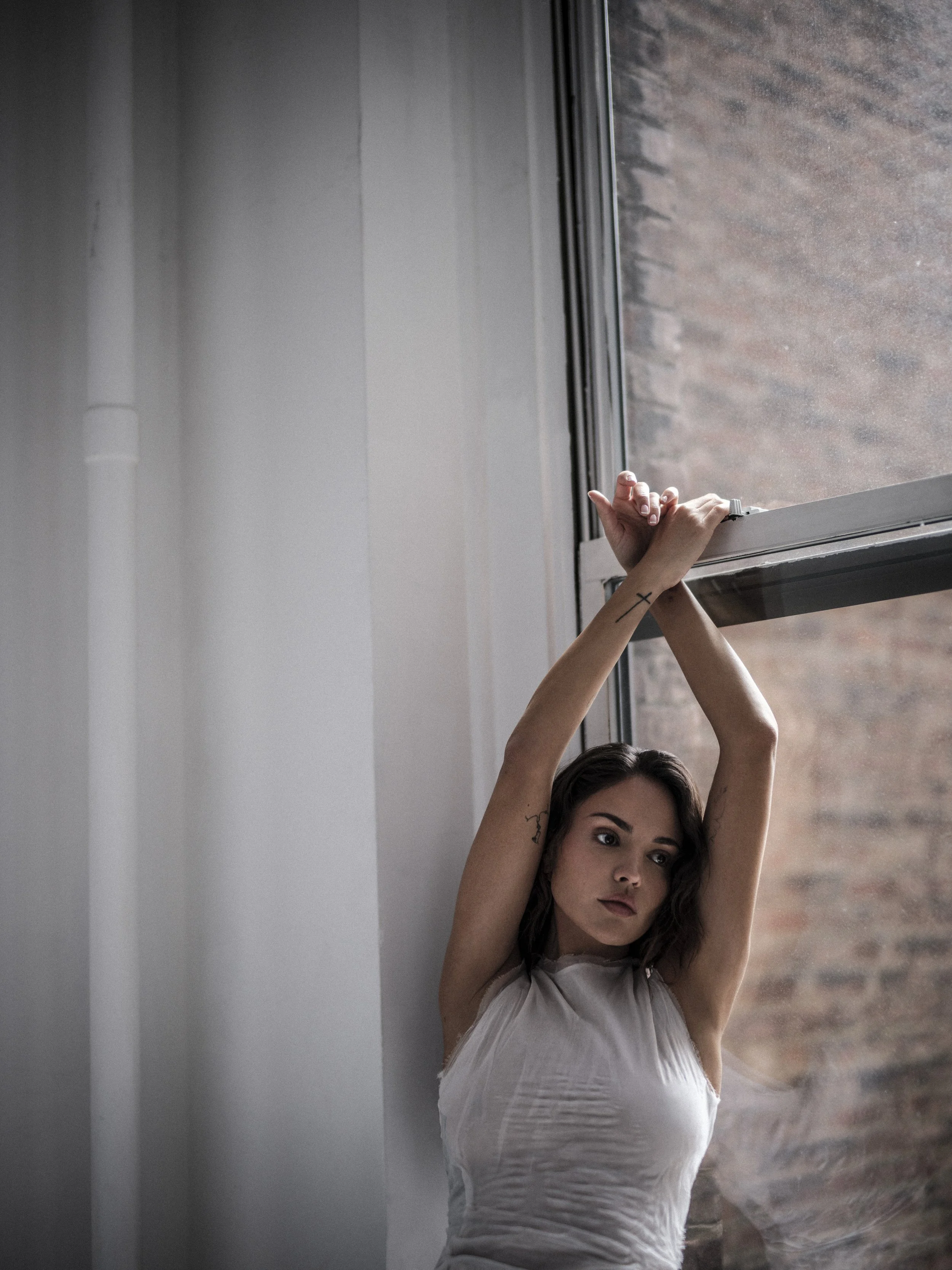
full look MARGIELA
As the theme of our issue is LOVE, what does that word represent to you at this stage of your life — not just romantically, but spiritually, creatively, and personally?
Love is so profound in my life right now. It’s actually quite crazy. I’ve gotten to an age where I value love in such a different way. What I understood as love for many years as a young woman has completely evolved.
Starting with the romantic side, I have such a stable, kind, beautiful, larger-than-life relationship. And that encompasses real life, not just a simple “I love you, you love me,” but really thinking on the bigger scale of life and adulting in the best possible way, with maturity. I’m so grateful for that because it has rebalanced my entire life and my relationship with love in general.
And when it comes to platonic love, with my friends, that’s changed too. My friendships have always been very stable. I’ve had really long relationships and friendships. For me, friendship is so important to the DNA of who I am. My community, my chosen family, is pivotal for me. For a long time, that was more present in my life than romantic love. That’s where my foundation is.
And I think the love I have for my career has evolved, too. It has gone from desire and wanting approval from it to something much deeper. Now the love I feel for my career runs deep. It’s more about asking, “How can I dig deeper?” It’s no longer about outside reassurance. It’s about disconnecting from the outside and going inward, how am I battling my own demons on the day? How can I learn? How can I be present enough to absorb what I’m living and push deeper, but also detached enough to still be surprised?
That’s a beautiful love relationship. Our business is very complicated and volatile, really high highs and really low lows. And loving the chaos that comes with it is very important, because then there’s no expectation. There’s just acceptance of the situation.
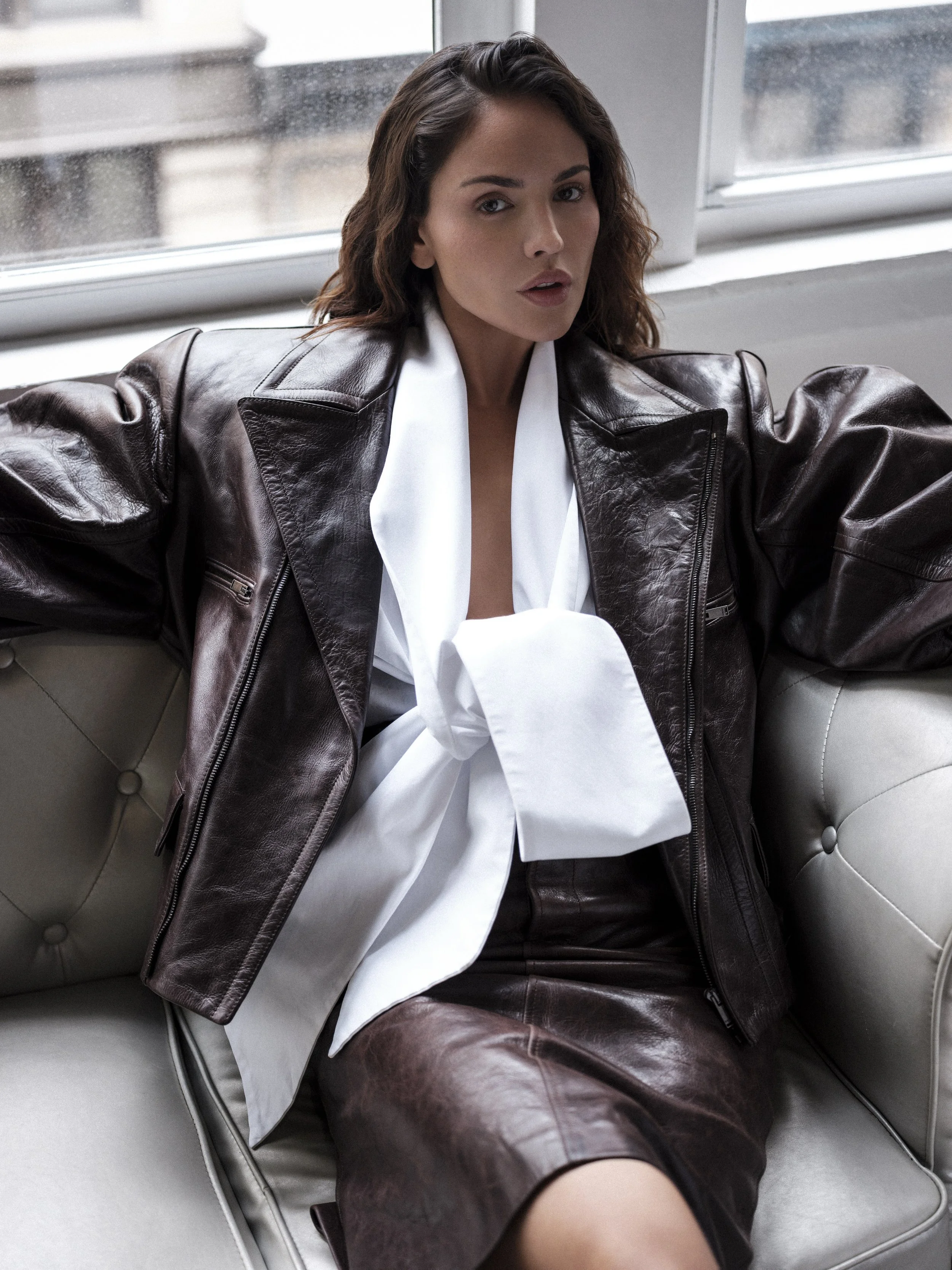
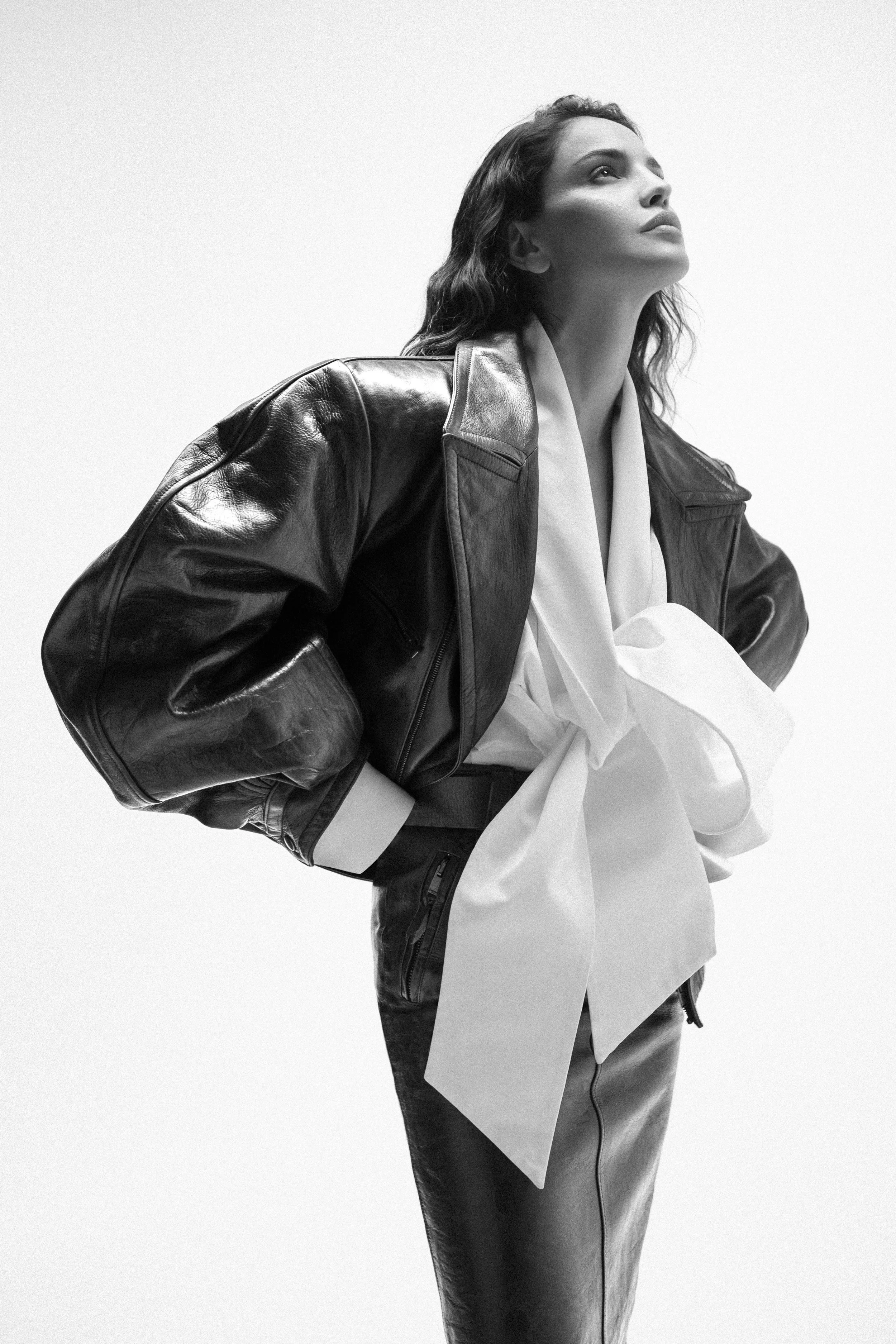
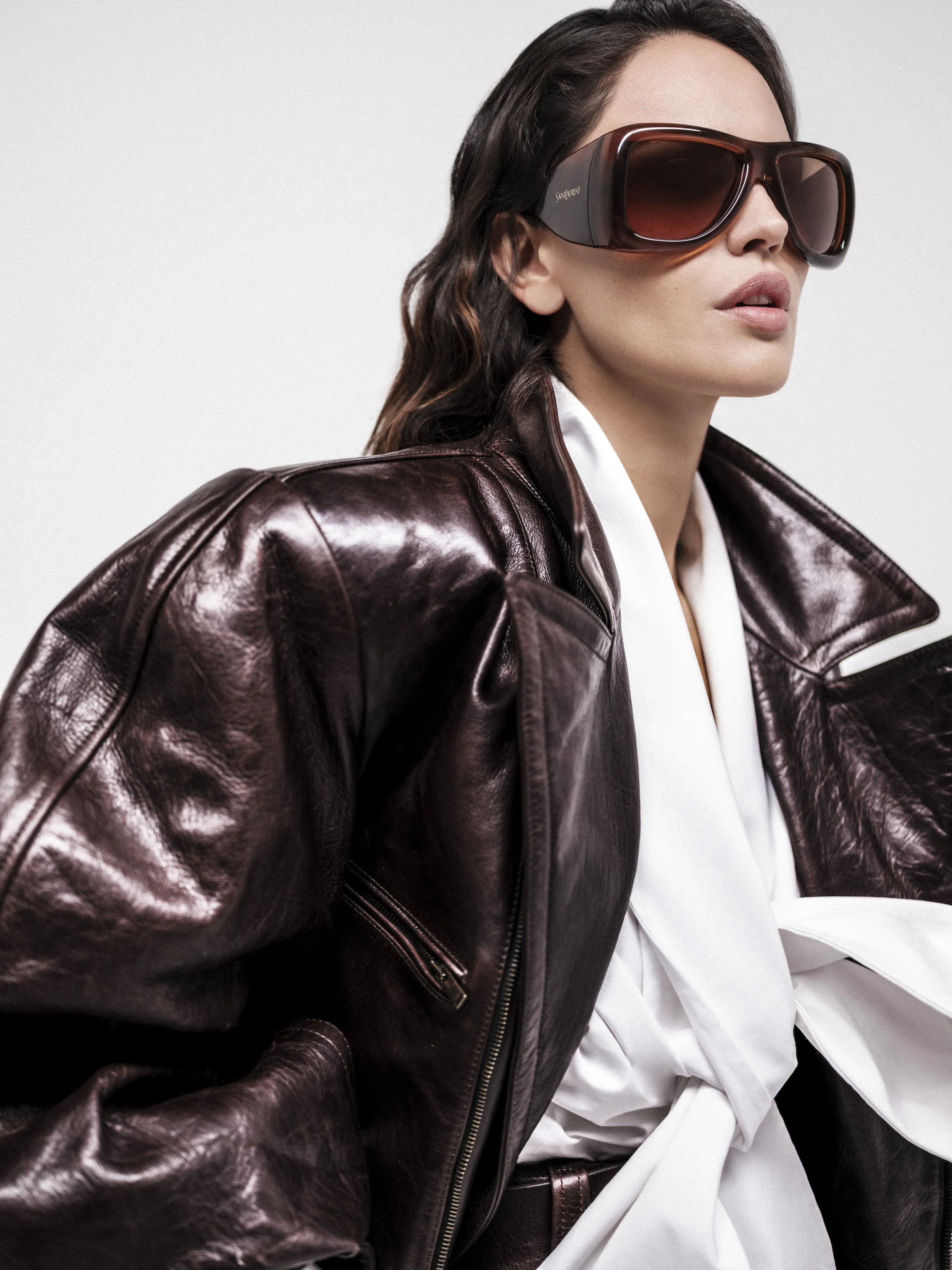
full look SAINT LAURENT BY ANTHONY VACCARELLO
TEAM CREDITS:
talent EIZA GONZÁLEZ
photography JUANKR
styling SARAH GORE REEVES
makeup MIA JONES at FORWARD ARTISTS using WESTMAN ATELIER
hair DANIELLE PRIANO
production SAIK PROD.
creative producer ALEJANDRO MUÑOZ
photography assistant BEKA MAGLAKELIDZE
styling assistants ANDREA AGUIRRE and B DOMINGUEZ
studio BLONDE STUDIOS
special thanks to FOTOCARE
editor TIMI LETONJA
interview JANA LETONJA
cover design ARTHUR ROELOFFZEN
