
IN CONVERSATION WITH ELDER ISLAND
interview by MAREK BARTEK
British trio Elder Island is entering a new chapter with the release of Hello Baby Okay. Paying tribute to their Bristol club culture upbringing, the album explores themes of happiness, love, and reinvention to the rhythm of electronic music. Marking a moment of creative release and renewed freedom, the project sees Elder Island letting go of expectation in favour of experimentation and the joy of simply making music. Alongside the album, the band has also announced an extensive UK, European, and US tour, bringing Hello Baby Okay to stages across the world later this year.

all images courtesy ELDER ISLAND
Hello Baby Okay feels noticeably more euphoric and emotionally open than your previous work. What shifted personally or creatively that made you want to “turn everything on its head”?
There was an uncertain time after the previous album campaign where we felt lost, both within the music industry and where we were creatively. We took some time to reset, to create new intentions and then we started to write. From the outset we wanted to make something playful and fun. It felt like a “comeback” for us and, as such, we wanted it to feel positive and joyful.
How did stepping away from the pressure — and slowing down instead — change your relationship with music?
It gave us time to nurture a better perspective, to work out what was important to us, and to remember why we started the band in the first place. The importance of our friendship for one, and also our love of making music. You can get very wrapped up in everything else and not get to spend time on actually making music. We needed to step away from keeping up with external demands and clear a time to focus on the music, eliminate the time constraints and feel free to enjoy the process. We want to make music that connects with people and that takes time and care so that's what we gave to this new album.
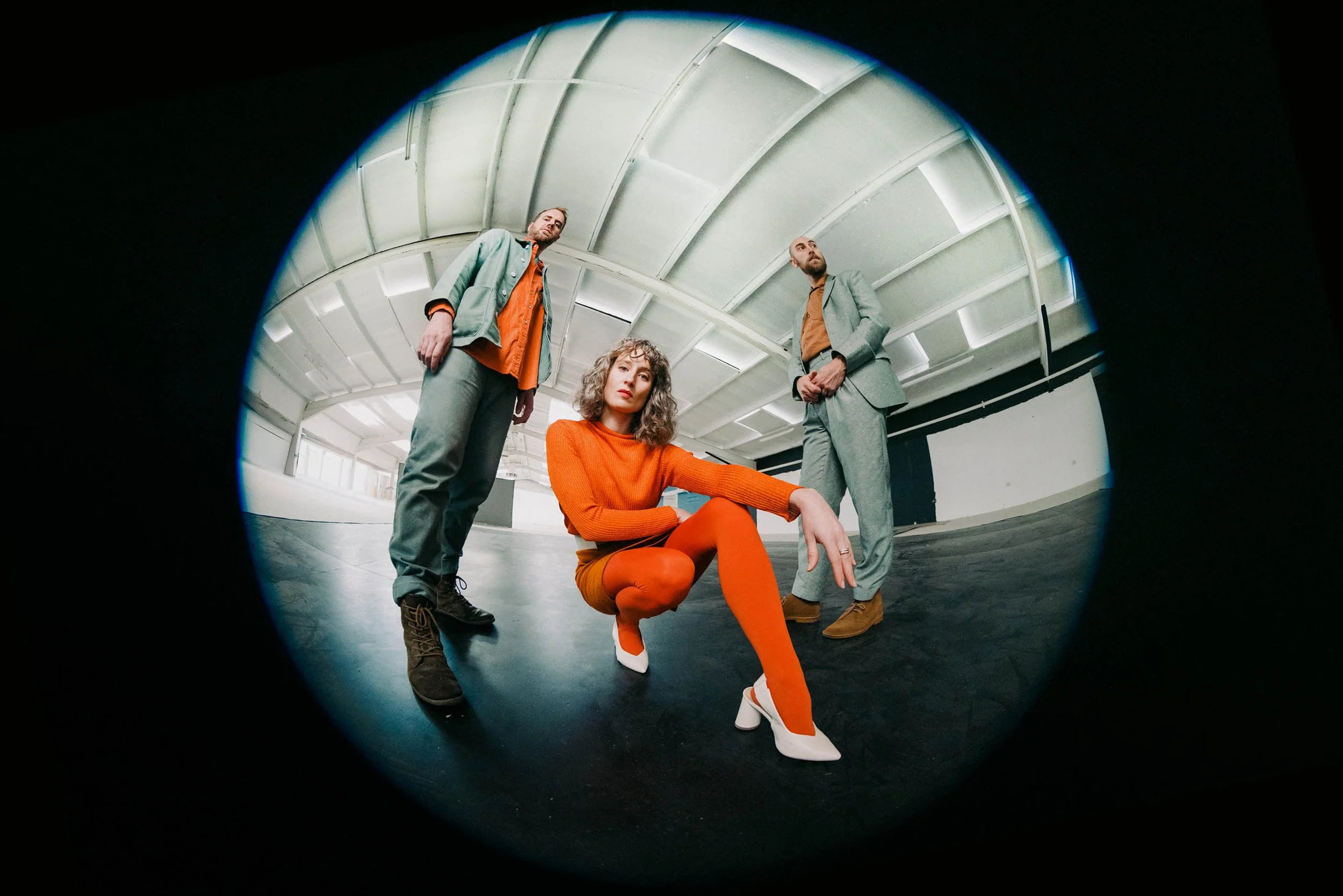
Bristol club culture seems deeply embedded into the DNA of the record. Do you think growing up around dance music changed the way you understand and approach songwriting?
Definitely! We've all grown up partying together in Bristol, and have a shared love of dancing. This ethos is transferred into the tracks, especially those on the new album. Our songs start life during live sessions and these are reminiscent of the looped dynamic, motion and movement of a DJ set, freeform in flow. Eventually they are given a more rigid structure of verse and chorus, but they often retain the essence of a dance track. It’s a journey, building with gradual momentum towards a giddy release.
In the lyrical sense, the album also feels more direct and less layered conceptually. Was it scary to let the songwriting become more emotionally transparent?
I don't know if scary is the right word. If anything, it felt more liberating. The time we gave ourselves for this album really helped us pull back the conceptual layers naturally. We realised things don’t have to be complicated. People enjoy good songs with clear messages.
Ordinary Love references both Casablanca and Lord of the Rings, which is not exactly the most expected combination. How do those very different cultural references end up existing in the same emotional universe for you?
It's really a song about conquering desires and making “good decisions” when it comes to love. In Casablanca, Humphrey Bogart's character Rick overcomes his desire for Ilsa and chooses to help her escape with her husband. The Lord of the Rings reference is more an observation – people always fancied the exciting, troubled or aloof characters like Aragorn, Legolas and Frodo but as your outlook changes and matures you realise that really the steady dedication that Sam shows throughout the book and film is by far the better choice in love.
A lot of electronic music today feels obsessed with nostalgia, but Hello Baby Okay seems to have escaped the trap of the past even with all the club and disco references. How did you avoid making something purely retrospective?
Maybe it’s in the blend? I guess we’re never really trying to make something that sounds like it's from a specific time period. We like to use equipment and instruments from different ages, but it's a real mix. Recording through 50/60s microphones, playing analogue synths, but also using newly released digital drum machines. We like to listen to a broad range of music and this ranges exponentially in genre and time period. This all gets poured into the tracks.
You all come from backgrounds in fine art, photography and graphic design. Do you see Elder Island as a band, or more as a full visual world that just happens to exist through music as well?
That's a great way of putting it. Yes, more like a full creative project than just the music. When we first set up Elder Island that was our intention – to find an output for all our creative skills and approach Elder Island as an all encompassing output. The two continually fuel each other, visuals > music, music >visuals.
Snapshot is described as your first true love song. Why did it take until the third album to approach the topic of love in such a direct way that you finally feel okay calling this song a love song?
Layers of comfort I think, feeling comfortable in love to say how you feel, feeling comfortable in the songwriting process to write it and feeling comfortable in yourself to release it.
You’ve said your music was sometimes pigeonholed into this “coffee-shop playlist” space, while your live shows are actually much more energetic and club-oriented. Does that misconception ever frustrate you?
It can be frustrating at times, but at the end of the day that's how a lot of people have found us, just stumbling across our music in some café or on a playlist, and that's a beautiful thing.
In a way, as a reaction, we've pushed our live shows to be more energetic and club-oriented. We want people to walk in thinking they know what to expect, and then leave feeling like they discovered a completely different side to us.
We love it when a live act doesn't just recreate the record note for note. There's something special about hearing a song you know inside out, but reimagined for a live setting. It keeps it exciting for the band and for the audience. That's what live music is all about.
The album keeps returning to ideas of joy, connection and hope, which almost feels rebellious these days. Do you think optimism has become underrated in music and culture?
Positivity can have an edge of the uncool about it, but being “cool” was never really high up on our agenda. Joyous, happy tracks often are undervalued because on the surface they don't hold the depth of something that's engulfed in sadness but in reality uplifting tracks are often harder to get right. There’s the danger of going too far and making something saccharine or lacking substance. There's nothing wrong with troubled songs which are an amazing outlet for processing difficult issues surrounding us but this time, especially in a time of growing uncertainty and unease, we wanted to make more of a medicine, something that could cheer and lift up the listener. “An effervescent counterpoint to the current times.”