
IN CONVERSATION WITH ERIKA LUST
interview by EMMA CLARKSON
Barcelona-based adult film director and founder of the eponymous production company, Erika Lust has become an icon in the pornographic film industry. Known for her independent, sex-positive films, which revolve around female and non-male pleasure, she gained recognition early on after her first ever X-rated film, The Good Girl won a prize at the Barcelona International Erotic Film Awards. Two decades later and Lust has become a reference point within the industry for transparency, fair labour, inclusive storytelling, and diversity of cast and crew. Working within an industry notorious for catering to a patriarchal gaze, Lust's eye and ethos has created a corner of the genre where the performative mechanics of traditional porn are replaced with authentic and aesthetic depictions of intimacy. Through her platform X-confessions - where people can anonymously submit their desires - and collaborations with guest directors, Lust produces films which respond to the very real sexual appetites of her audience.
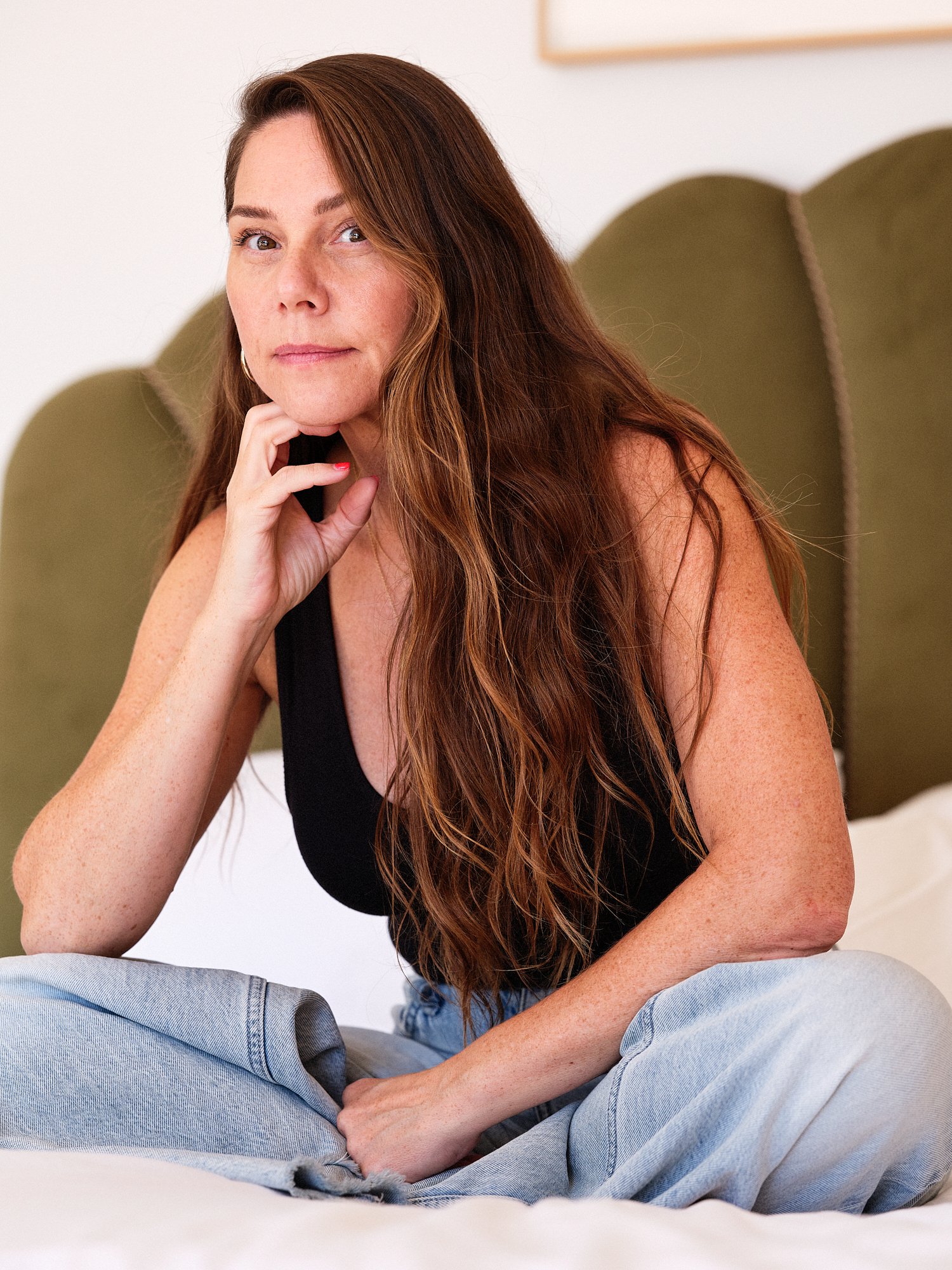
image courtesy of ERIKALUST, photographed by JAHEL GUERRA ROA
It has been twenty years since you made The Good Girl. I would love to go back to basics and ask about your journey from studying political science in Sweden to the Erika Lust that we have come to know today?
If I look back to when I was a young adult and I was trying to figure out who I was, porn helped me to understand myself. That was my reality and I think it is a reality for many people. You see the press and the media reproducing the same story all the time, that porn is shady, exploitative,horrible, misogynistic, racist, that it's addictive and it's bad, bad, bad.
Porn can be wonderful. It's like food. Food can be medicine and food can be poison. It's just food. Porn can be wonderful and porn can be shitty. It depends on what it is, how you make it, and what you consume. We have to realise that not all porn is bad porn.
Porn acts as a sexual education for a lot of people, particularly for people who don't fit into the system, who don't feel that the heteronormative education is for them or those who have other curiosities that are just not covered. So then where do you go? Little by little you construct an idea of what you like and what turns you on.
During my political science studies, I found a book by Linda Williams called Hard Core: Power, Pleasure, and the "Frenzy of the Visible". Williams was a film professor and she analysed pornography as a genre. I learned how porn tells stories about sexuality, about masculinity, femininity and that there's a dominant porn, but there is also an alternative porn. Through Williams, I was introduced to other early alternative adult filmmakers like Annie M. Sprinkle and Candida Royalle.
Had you already developed your attraction to film as a medium at this point and you were looking at porn through this lens or were the two indistinguishable?
I loved film. I have always loved film, theatre, and the arts. My little sister was a ballerina so I had access to the theatre from an early age. My understanding or interest came from the gendered aspect of film. Laura Mulvey, the male gaze, and the growing understanding of how media is constructed. From there, it's still a long story to how I actually decided to make that first film. I never believed film was something I would ever be able to work in. When I moved to Barcelona, I couldn't find a job related to my studies. Political science was considered just something you do before your Master's. I had friends working in advertising and they hired me as a runner. I started out in the most basic role in film production and felt like, wow, I would like to do more work like this.
I signed up for a film school, and it was there I started to think about making a short film. The ideas I had in my head had so much to do with female sexuality, but it wasn't clear that it was going to be a pornographic film at all. I wasn't interested in the typical victim narratives that most of my female friends were doing at all. The distressed sex workers, the trafficking, those kinds of perspectives. I was really interested in pleasure. I wanted to see what could happen if we had permission to see that.
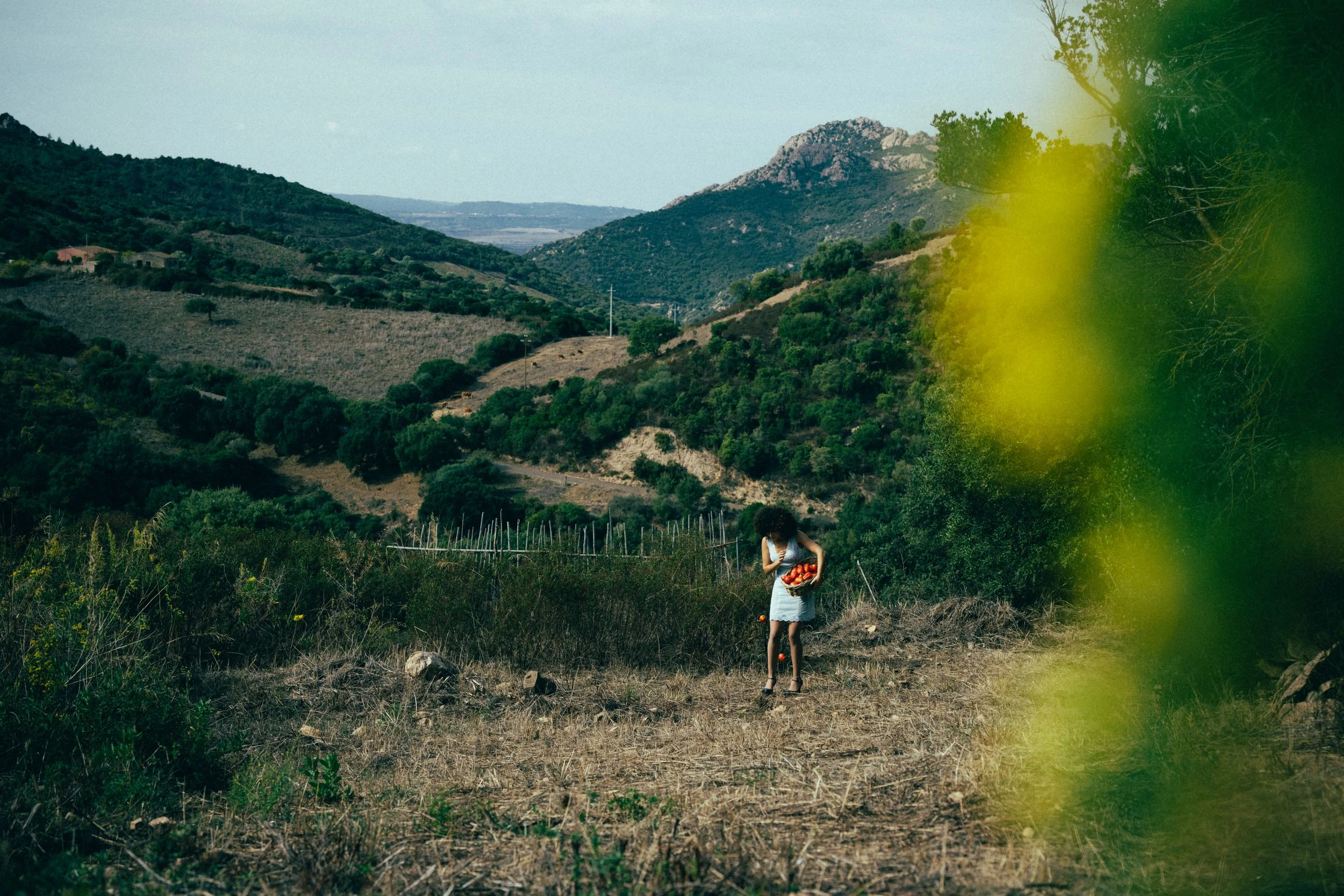
image still from My Hot Italian Summer, photographed by MÓNICA FIGUERES, courtesy of ERIKALUST
How was it to make that transition from a conventional film background into the adult film industry? Did you encounter any sense of hierarchy or judgement that placed mainstream cinema above erotic film, professionally speaking?
Yes and it is still there today. Even though I have developed as a filmmaker, I work with decent budgets, great film crews, and the films we make are beautiful, I still have people asking me all the time when I will make a real film. As a filmmaker, I struggle with that. I have tried to get some films into film festivals but there is a stigma with me being Erika Lust. I’ve tried to apply with my real name as well and I get feedback that they don't accept pornography. I'm not even allowed to pay to get the submission in.
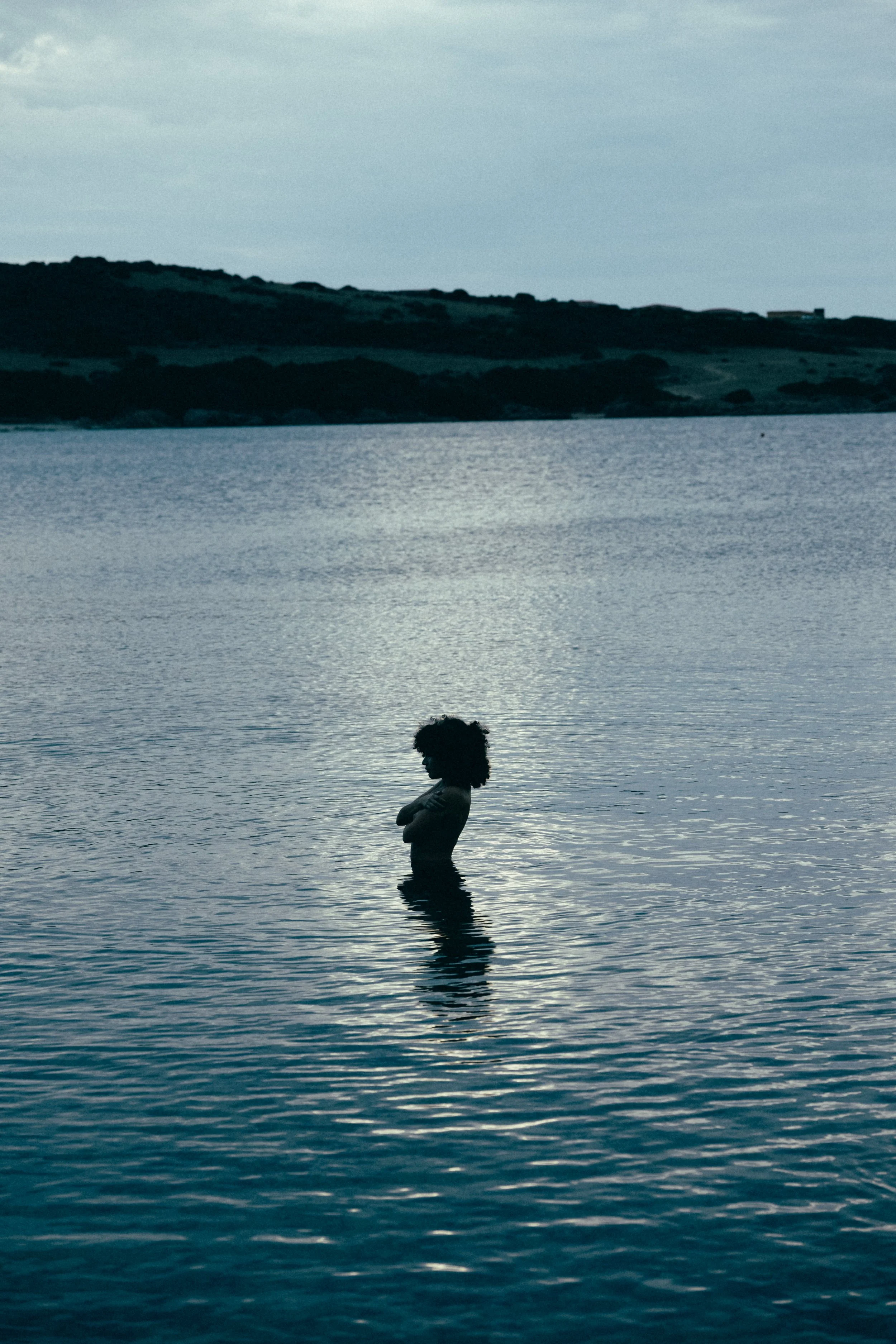
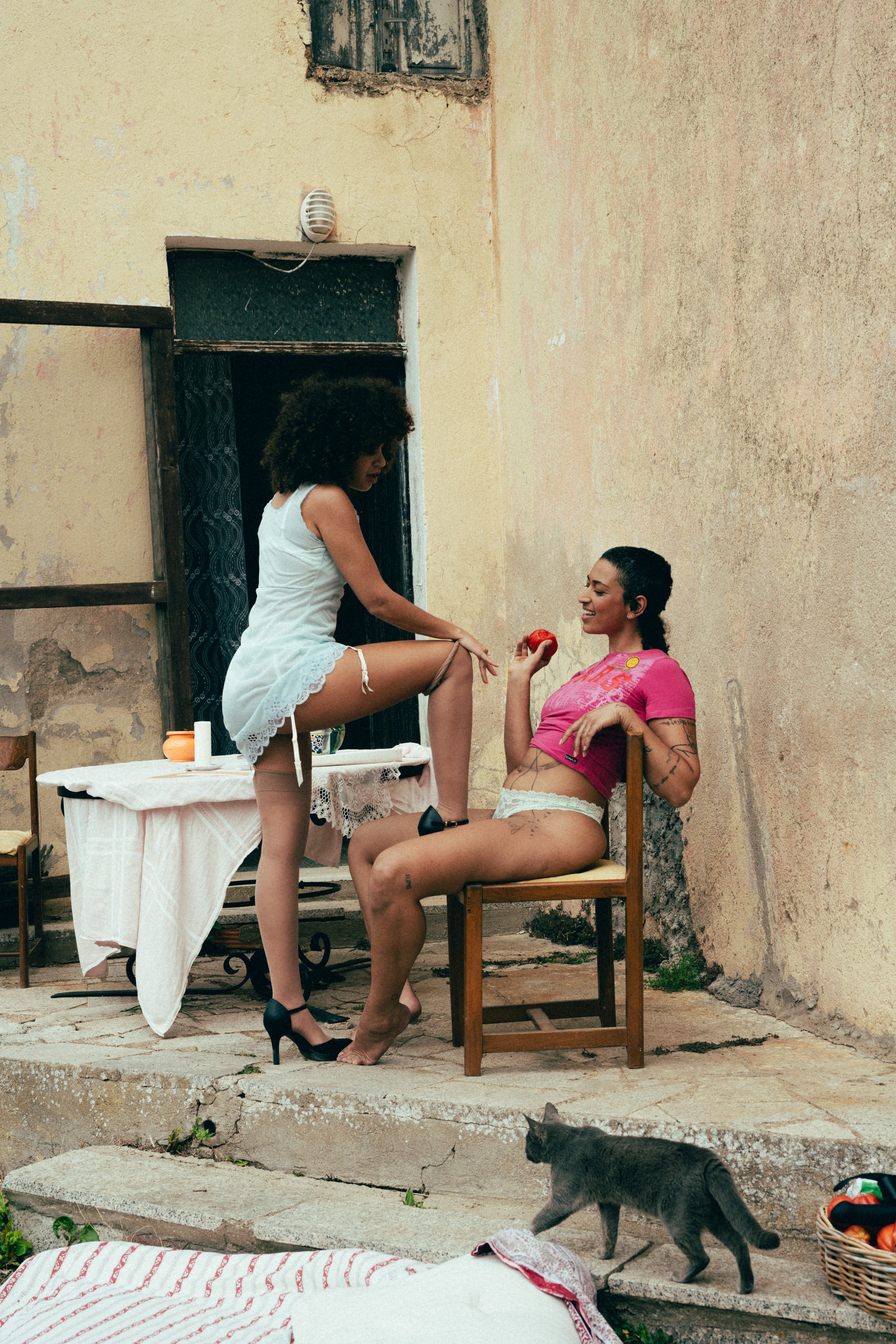
image stills from My Hot Italian Summer, photographed by MÓNICA FIGUERES, courtesy of ERIKALUST
Yet, Gaspar Noe's Love premiered at Cannes in 2015 and featured more than a couple of explicit un-simulated 3D sex scenes. So it's interesting where that distinction is drawn. I saw your account was recently deleted from Instagram as well. Can you tell me a little about that? Was this the first time?
I'm not allowed to be on Instagram. I'm not allowed to get a film into a festival. The world is shrinking!
The first time I got banned was on Facebook in 2008. In Spain, we had a conservative government yet again discussing our right to abortion. I posted an illustration which said "My Pussy, My Rules." They suspended my account and sent an email saying I was promoting self-harm.
This time around, I took a screenshot of why they took my Instagram profile down. They took everything, all the back up accounts, and the reason was most likely a post in which I'm not wearing any clothes but I have a big towel over me. There's no real nudity, everything is covered. The caption read: "Skinny dipping again in my Mediterranean after what feels like months of rain and grey skies here in Spain. Finally salt on my skin and sun on my soul." The reasoning they gave me this time was “sexual solicitation”.
Yet porn companies like Vixen and Blacked have Instagram accounts with millions of followers. They show big breasts in bikinis but I guess it's the thing the heteronormative patriarchy likes. They enjoy that sexuality because it's catered for them. But if there's a woman having a good time and feeling pleasure, all of a sudden they feel triggered.
I've seen it all. I've tried to open an account on YouTube so many times with very soft, beautiful cuts. All these other companies have accounts, but I could never. They always suspend mine on Vimeo, on Dailymotion, on YouTube. It's been impossible.

image still from XConfessions Soulsex with John and Annie, photographed by ADRIANA ESKENAZI, courtesy of ERIKALUST
That sounds incredibly frustrating, existing creatively in this limbo between conventional film and the mainstream adult content that caters to the powers that be. So if porn is, as you said before, like food, I'd love to know what are the ingredients that make an Erika Lust film?
It's definitely the process of how we work, and who is working on the film. I have very few men on my set or in my crews, and all the creative roles are filled by women. Sometimes men are on set in supporting roles, I call them electricians. I need to know that the people on my set will come first from a place of respect.. The set needs to feel absolutely safe.
But I would say it begins even before, with the ideas. We have XConfessions, where people can send in their anonymous fantasies. The team and I read through them and pick the ones we like or have something special and we create a film around that initial idea. The creation of characters is obviously very important. When I create characters, I always try to play with gender, understanding that if something were to change in that dynamic, interesting things might happen. Through film, you have this great opportunity to empathise with people, to understand people better, to open up minds, and if we do that well, we can inspire people and break stereotypes.
It’s a whole process of care, how we gather the heads of every department, how we make mood boards, how we find inspiration. There's definitely an aesthetic quality to it, storytelling, things like quirky ending scenes that people can identify with an Erika Lust film.
When you look back, do any specific films in your portfolio jump out at you as milestone projects? Ones perhaps where your mind or perspective on a matter was changed or where you added something to your practice that has since become a permanent feature?
I have many of those, I love to challenge myself and my own ideas. One movie I made with an actress named Kasumi really pushed my boundaries. It's called Kasumi's Party and it's a gangbang film. She's with five men, and I had never shot anything like that. I had a very stereotypical idea of porn gangbangs as something that always felt like multiple men preying on the woman, punish-fucking her for being a slut. I never liked it and was always very against it but then I met Kasumi, and she changed my mind completely. The film we made is instead a very celebratory festive experience where she is very much in charge.
Another film I really, really love is Safe Word. It came out during the pandemic and it hasn't been screened that much because there were no festivals that year. It's a multi-episode series about a powerful woman who understands her submissive side and what really draws her in. It's quite an interesting work, and I'm very proud of it. Nina Hartley, who's an amazing performer, was also in the cast and that really gives it weight.
There's another film called Soul Sex with John and Annie about a couple who are in their seventies and I loved how that really showed something very different.
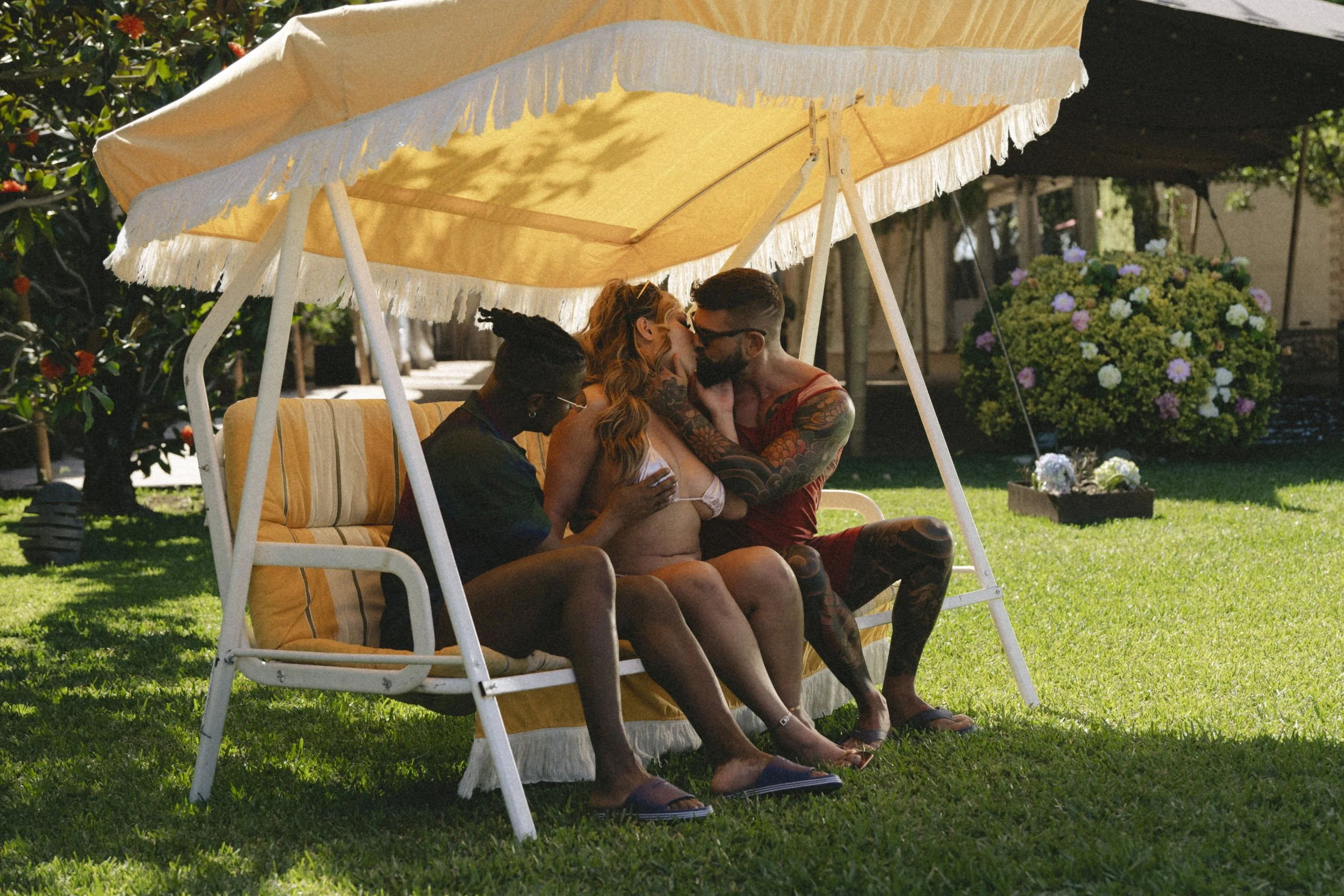
image still from Kazumi’s Party, photographed by MÓNICA FIGUERES, courtesy of ERIKALUST
There’s a lot of labels like ethicalporn or feministporn out there – or female gaze. The gaze, as we know it, has been reclaimed, rejected, and subverted in so many ways, it can be hard to know which one you're maintaining. As your work has evolved, how has the way it bears these labels changed since you first set out?
When I first started out, I talked about Porn for Women. Now that feels ancient just like that whole Sex and the City era. I remember back then thinking that they call it porn and they say it's for everyone, but it's not really. Over the years it became clear to me that the work was definitely not for women. I became more aware of the queer narrative in porn and of the necessity to work with guest directors. We have now worked with over 100 guest directors from different sexualities and identities. It’s something that brings perspective and it’s absolutely needed.
I sometimes use the term “feminist porn” because we could say that it's feminist porn, but really it's porn made by feminists.
“Ethical porn” is a label that’s well-liked by the press because it makes the distinction between the “good” and the mainstream pornographers. But the reality is that the industry has been working very hard to become more professional. All porn should be ethical porn, that is just the baseline in how things should be done.
As far as the gaze goes, it is important to understand that most of what we have seen and most of the media created has been through a male gaze. It has been created by a director or creator who has lived in a male body, and has that vision of the world. Then the audience engaging is expected to be a male audience, too, especially in pornography. When we burst that bubble, when the creators are women and others, when we put another main character who is in charge of their sexuality, it doesn't necessarily mean that they’re going to objectify the man. It's not a flip, it's a change of perspective. It's still a process, and I think we need to feel free to play with it. Sometimes we succeed, sometimes we don’t.
As a paid platform, it must have been difficult to compete with so many free porn platforms in the past. Paying for sexual content is becoming more mainstream – in 2025 OnlyFans saw 1.6 Billion USD in net revenue. Have you felt this shift in attitudes regarding paying for content?
Lots of things have happened since COVID, especially with OnlyFans becoming more and more popular. For me, paid porn is the only way of creating ethically and I wish that people would understand that they don't even have to be subscribers to support the project. Just signing up for a newsletter is supporting the project.
The funny thing is that OnlyFans content has been considered more ethical as it's made directly by the creators themselves. However, as the porn industry matured and put rules like the Bill of Rights or required health results in place etcetera, creator porn is a little bit like the Wild West.
I can't speak too much about it because I'm not part of it, and I don't want to openly criticise it either because that just feels wrong. But I do know that many of these creators who might have been working for themselves before, now have become small porn companies, without the rules. Things are moving around and I think it's important that we talk about it and keep exploring what “ethical” really means.
There is reportedly a sex recession affecting the younger generations today with lots of the conversations pointing at porn and online explicit content as responsible for skewing expectations or providing a virtual alternative, albeit insufficient, to intimacy. What is your take on this?
We are so worried about the youth. I hear it in the media all the time that kids are watching porn, they are learning from porn. But we never say, if they're doing that, then we need adequate sex education. We need to educate and help them. We need to support them. Instead, we just talk about everything that is so bad about porn.
I think that young people today are struggling with the digital world quite a lot. They are obsessed with it because it is addictive. More than porn, it's social media. Judging porn this way allows us to redirect the attention away from the ones in power and not talk about all the negative aspects of social media.
What we do see is a reaction to that. A lot of young people want to gather in real life, go to parks, attend events or have access to screen-free spaces where they can read a book and not be glued to a screen.There is definitely this analogue feeling coming back. You can also see they are looking for the 90s and the aesthetics of it.
Speaking of analogue, you have a book coming out soon!
Yes! It’s Lust: Pleasure, Performance, Power. It is part memoir, part my reflections after two decades as a filmmaker on sexual politics and how the two connect. It's coming out in the UK in November and in October in the US. I’m excited and nervous as I've never been so public before c but I just wanted to tell my own story in a way I never had the chance to before. I wanted to give a fuller image of who I am and why I made some of the decisions I made. I wanted a book that talks about the impact of pornography but at the same time dares to talk about it in a complex way, without either judging or celebrating it, holding multiple truths at once. We used to be quite good at looking at different perspectives but now it feels like we have lost it. We’ve gotten completely polarised, and we live in our small bubbles that keep us disconnected.
So what's next for Erika Lust? Are you going to do a book tour?
Films are always what’s next for me. Films are what I live and breathe for and what I love. I have a very interesting short film that I'm working on at the moment. It's in post-production now and I have high hopes for it. I'm also filming two kink films at the end of the month with Eva Oh that I'm really looking forward to.
As for the book, we are still discussing exactly what that will look like but keep an eye out as I will definitely be in a book store near you soon!