
IN CONVERSATION WITH ERWIN WURM
interview by ELISABETH BERGER WALDENEGG
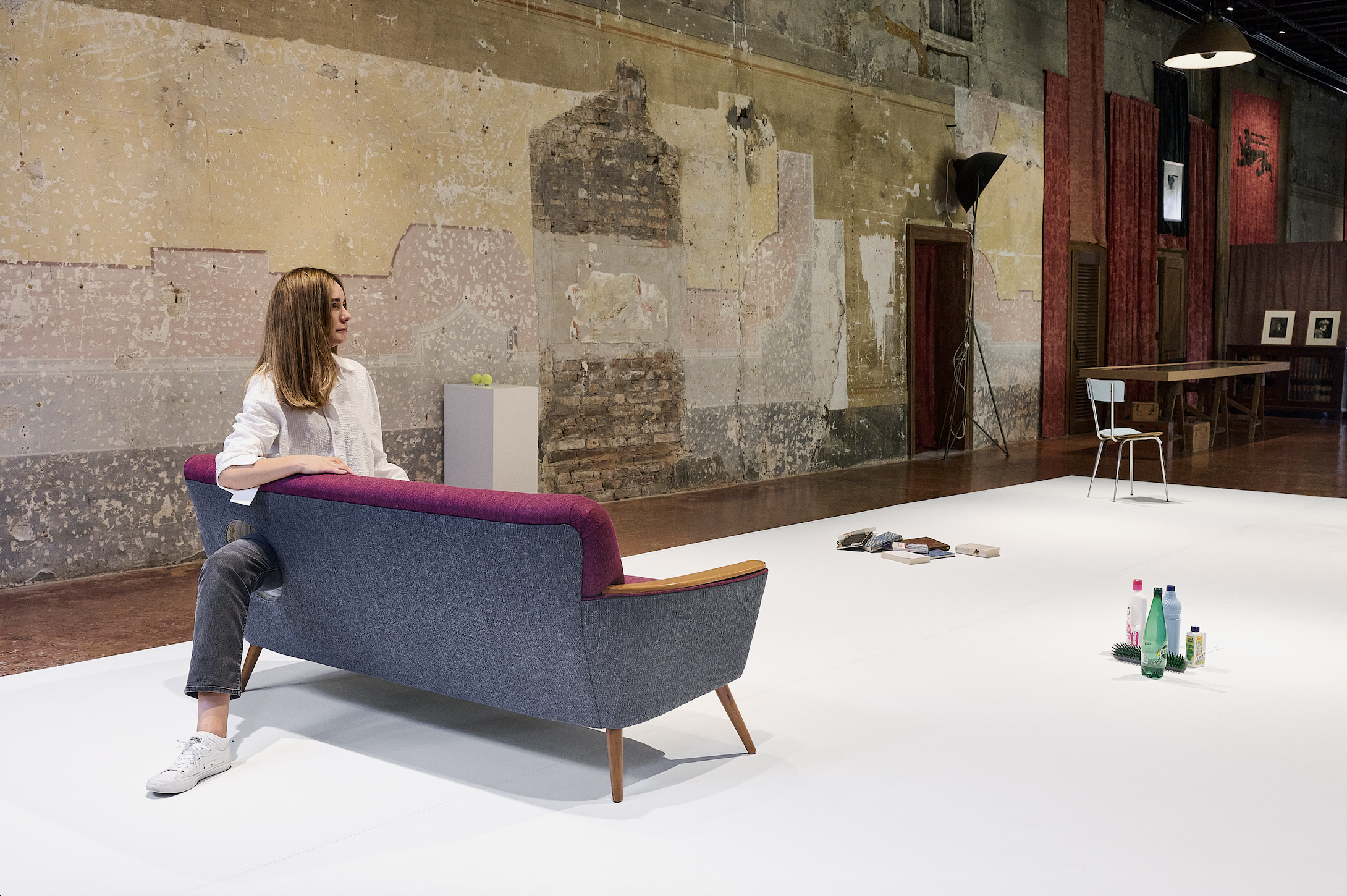
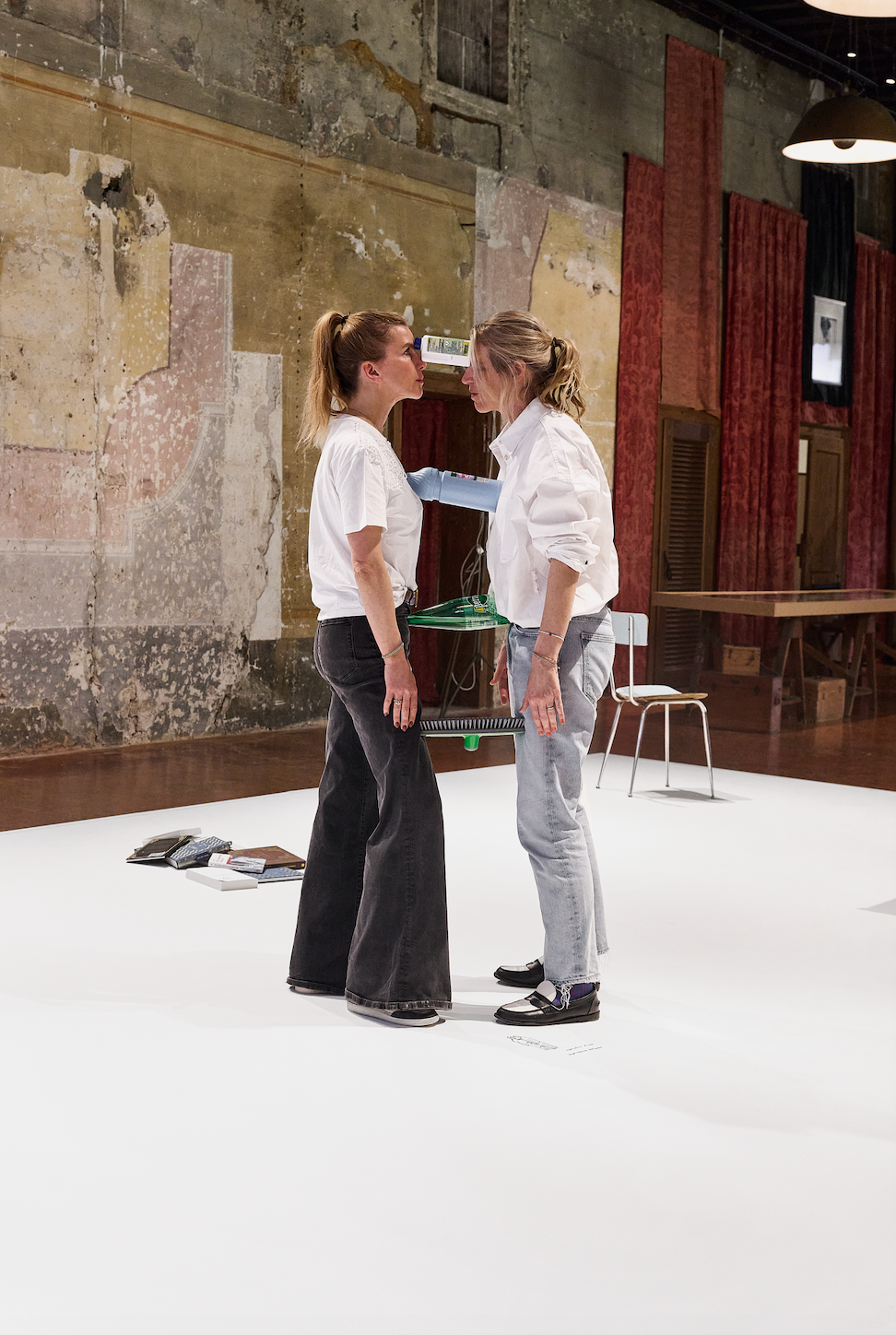
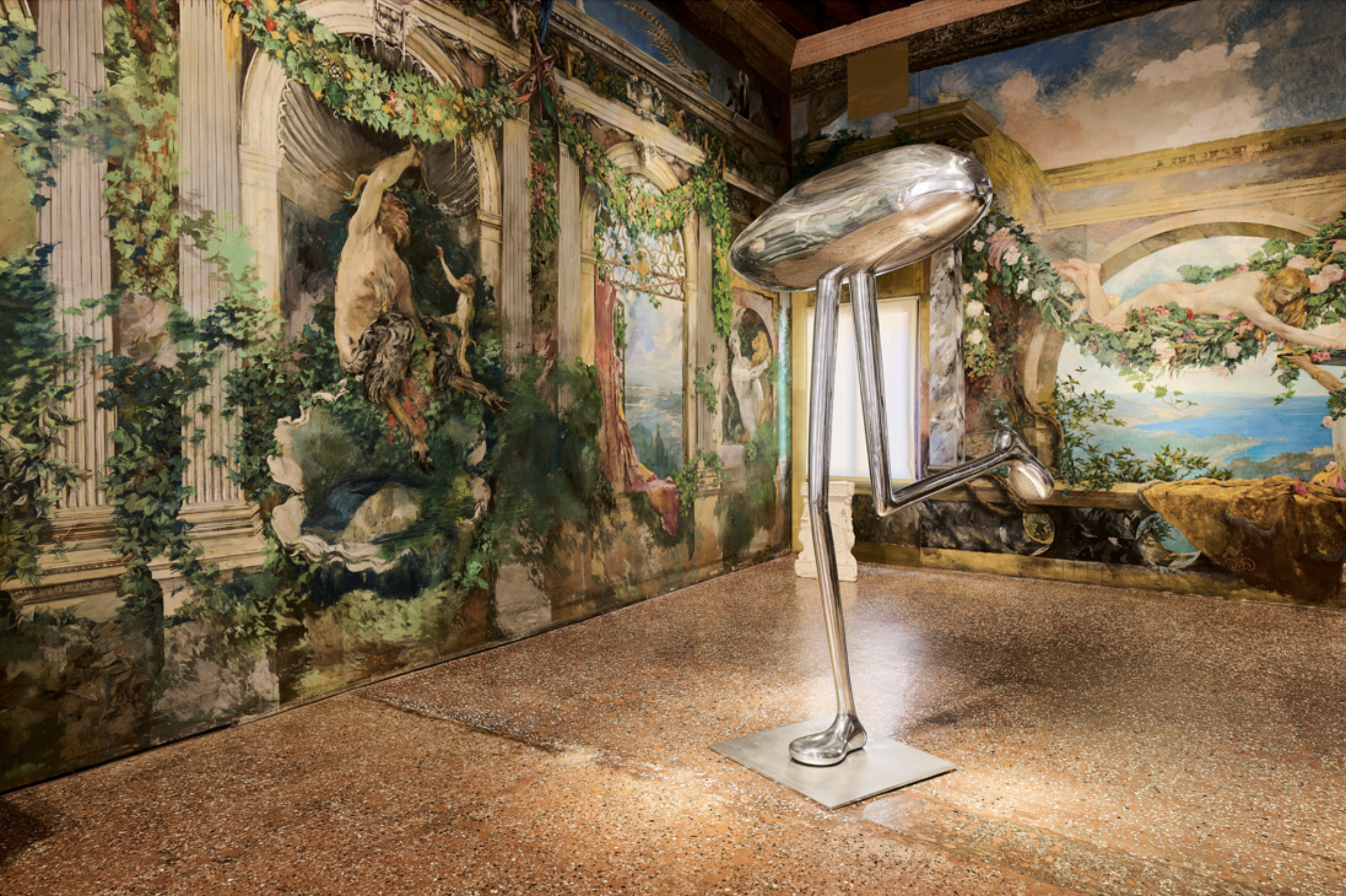
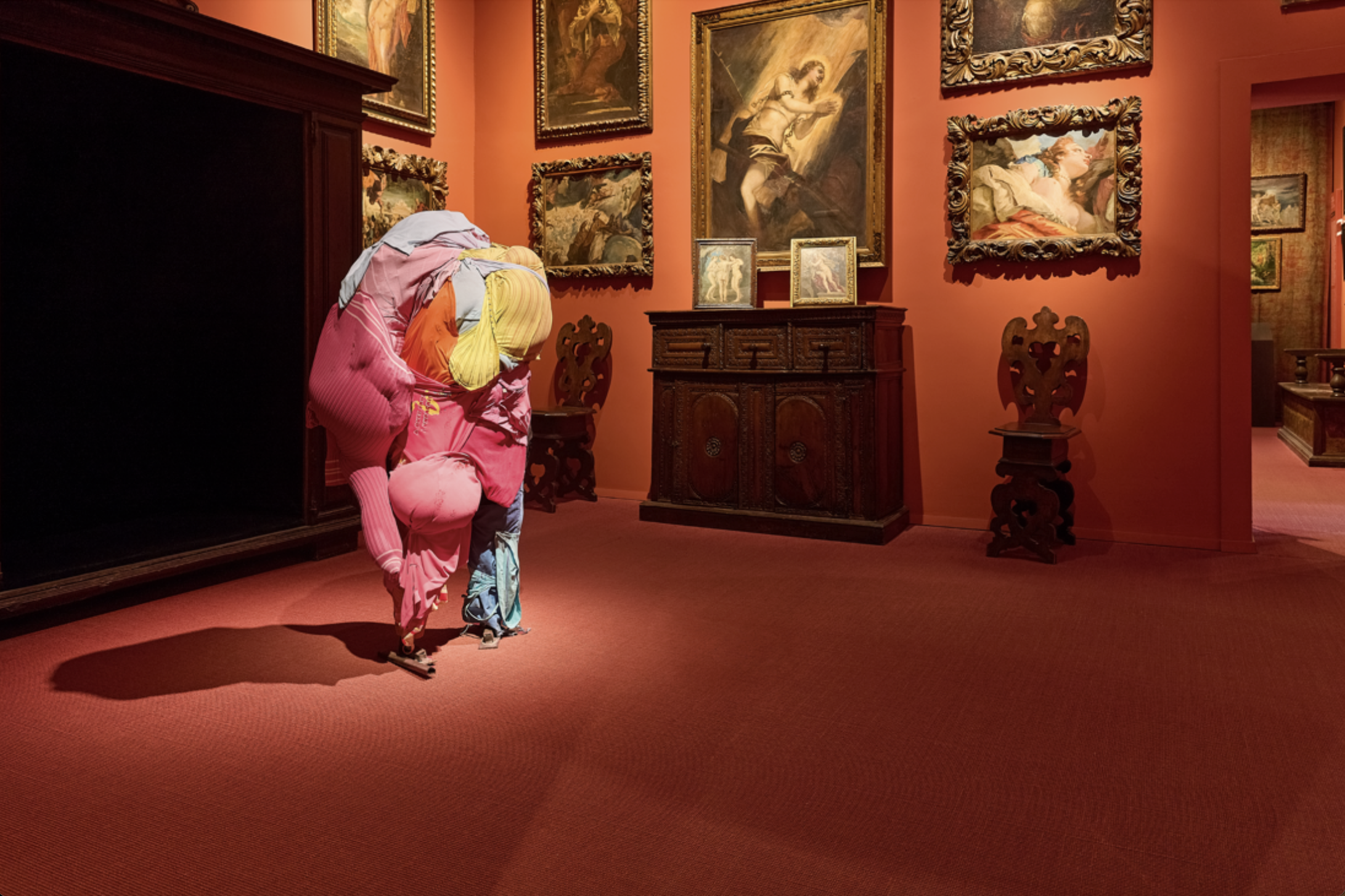
On the second floor of the Venetian palazzo that gives Museo Fortuny its name, a visitor stands completely still, staring into the middle distance, a chair wedged between his legs. For a short while, the man has become an Erwin Wurm sculpture. Since 1996, the Austrian artist has been handing out instructions for his One Minute Sculptures - handwritten, with quick cartoon sketches beside them - that turn the audience into the work itself. The same absurdity runs through almost everything he creates, from the bloated Fat Cars and Fat Houses to the squeezed-thin Narrow House. At his country estate outside Vienna, Wurm talks to us about how he got here, about absurdity and humour, about the ideas and the seriousness behind the work, and about where he sees the art world going. Dreamers, his current exhibition in Venice, is on view at Museo Fortuny until 22 November 2026.
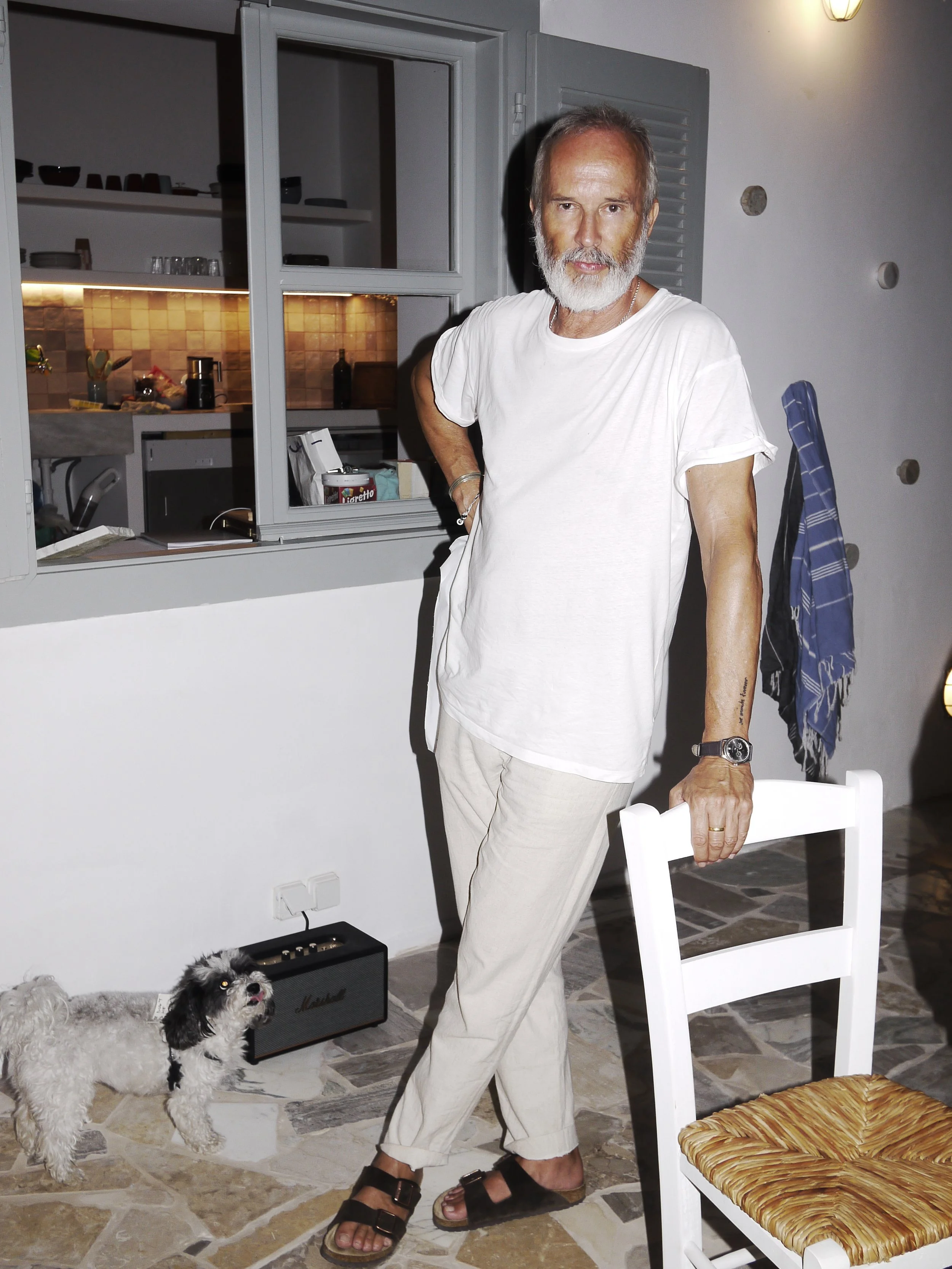
photography by LOTTERMANN AND FUENTES
Your One Minute Sculptures have given people the chance to become sculptures themselves, if only for a moment. When you look at people today they are constantly staging themselves on social media in a highly idealised, perfect way, do you see this as something similar to your One Minute Sculptures, or opposite?
It's something completely different. The One Minute Sculptures came about as a detour. I wanted to become a painter, but during the entrance exam I was placed in the sculpture class. At first it was a huge disappointment but after a while I thought to myself: perhaps this is an opportunity too. A sculpture has various parameters — two- and three-dimensionality, shell and skin, mass, volume, material, time. After about seven years of research, the One Minute Sculptures grew out of that: ephemeral sculptures that need a person to bring them to life with a mundane everyday object. Those brief psychological and, at times, philosophical moments fascinated me. It all began in 1997, when nobody had a mobile phone yet. If visitors wanted to take something home, a member of the museum staff would take a Polaroid.
Would it be fair to say the viewer has thereby become part of the work themselves? And where do you draw the line regarding your authorship?
The viewer has gone from being the observer to the observed, from active to passive. Over time, I began placing pedestals for people to stand on; after all, a sculpture is elevated in the classical sense. If someone wants to "perform" one of my sculptures, it's almost like a musical score. The instructions are written or drawn out, and you have to follow them. If you don't, that's perfectly fine. But then it's no longer one of my sculptures.
Many people see some of your artworks as humorous. Is humour a tool you work with?
I'm not a joke-teller, and humour doesn't particularly interest me in my work. What interests me is the concept of the absurd and the paradoxical. From this perspective, you see something different than when you always look at things from the usual angle. You don't see a chair as a normal chair. Sometimes people laugh, probably out of uncertainty. Sometimes they don't find it funny at all. Sometimes they even find it gruesome.
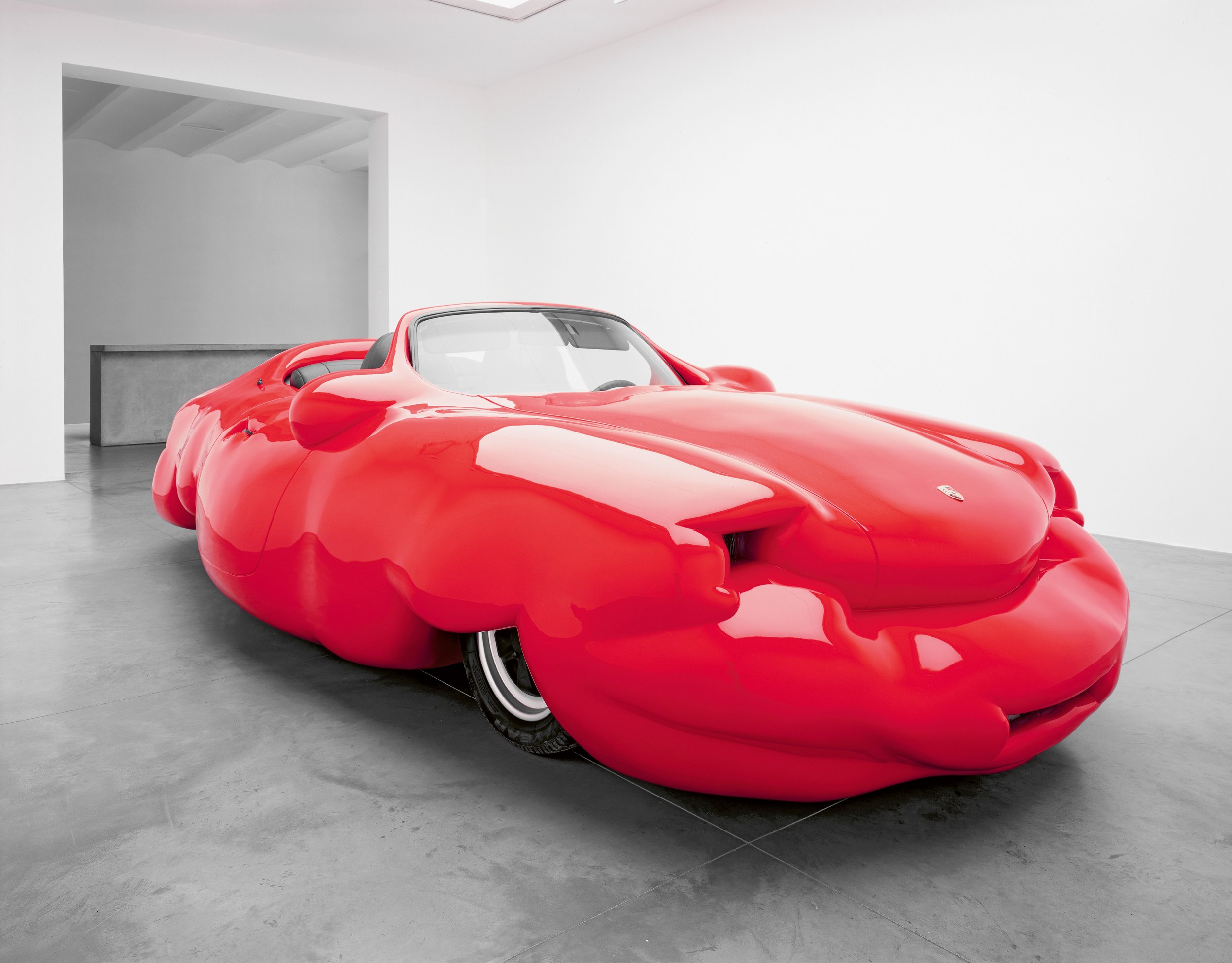
image courtesy of ERWIN WURM
At what point does something strike you as absurd?
That's something everyone has to decide for themselves. Everyone has stuck a pencil up their nose at some point in their “pencil-holding career.” But two pencils in two nostrils — that's a step further, and completely absurd, because it's a far cry from what we experience on a daily basis. I need the absurd above all in everyday life. We live in an absurd world, more so than we'd like. When you look at the world through this lens of absurdity, you see more, or see things differently. Things tend to catch your eye.
Sometimes you take beautiful ideals, such as a car, and distort them. What does beauty mean to you?
That's difficult, because beauty is always contingent on time and society. Every society defines it differently. But beauty is always something that brings us joy: when we see the very best of it realised, we feel happy. Of course, there are certain standards that almost everyone finds equally beautiful, so it comes close to having universal validity. But in truth, beauty is subjective.
You've been heavily involved in the world of fashion, and you've collaborated with various brands and magazines. Do you treat a supermodel or a luxury label the same way as, say, a gherkin?
I came to fashion via the concept of clothing — the idea that it is our second skin. If you look at early Greek, Egyptian or Roman bronzes, imposing sculptures with great volume, they were all depicted with a thin bronze skin. Inside, they were hollow. A skin therefore defines mass and form; that is a sculptural element. I applied that to the idea of a second skin. And with clothing, fashion immediately comes into the picture.
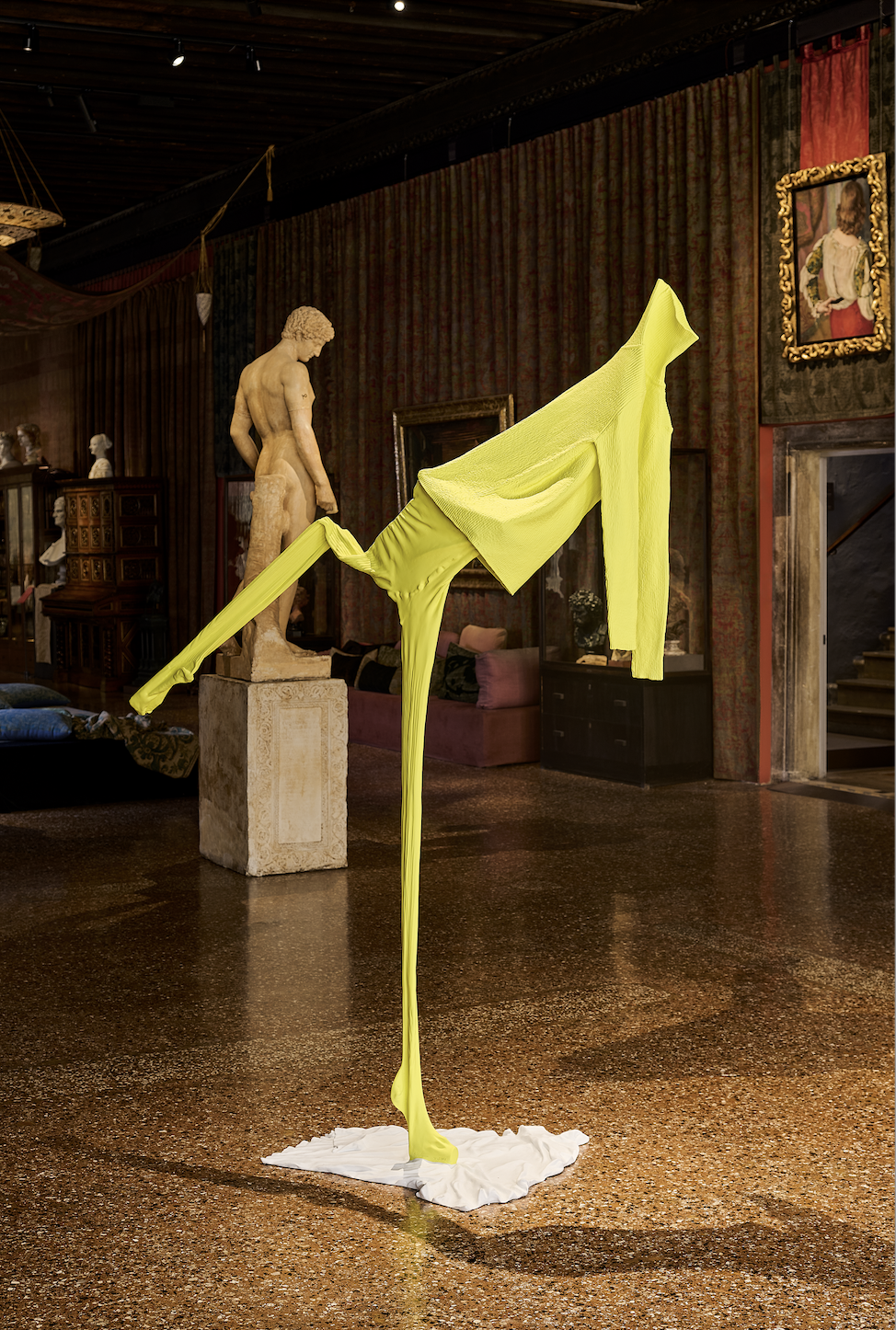
photography by MARKUS GRADWOHL
Almost 30 years ago, I was "exploited" by a French fashion magazine. They recreated the One Minutes exactly as they were, for a perfume advertising campaign. After that, many fashion and advertising photographers approached me. They wanted me to contribute ideas while they took the photos. They wanted to take it away from me. Out of concern for my authorship, I began accepting invitations from major magazines, right up to US Vogue with Anna Wintour and Interview magazine. I photographed the One Minutes with models and with ordinary people, to show: I am the author. This is my work.
Despite huge international success, you've stayed in Austria. What keeps you here?
It's the nonsense that keeps me here. This is my quarry, where I find the material for my work. I exhibit all over the world, and that's going well. But I need this Austrian quirkiness, this offbeat, absurd quality. It's no coincidence that there's a tradition here of writers like Elfriede Jelinek and Thomas Bernhard, of Viennese Actionism, of Expressionists such as Kokoschka and Schiele. That's where I feel at home. My country does get on my nerves at times, bad politics, but here I get to experience everything first-hand.
Many of your works explore the themes of excess and overconsumption. At the same time, they have become highly sought-after collector's items — often bought by the very people who live this kind of life of overconsumption. Isn't there an irony in that?
Yes, that is ironic. But I don't go around pointing fingers and preaching. My art is a reflection of our times: we buy so much, and at the same time throw away twice as much. Our population keeps growing, yet we insist more and more on individuality. It's actually becoming unsustainable. Depicting that is simply fascinating. Whether someone buys it is secondary. I'm glad when someone does, because several people make a living from it. What matters to me is that my work reaches the public, that it finds its way into collections and museums.
Do you have an artistic role model?
I developed an interest in literature very early on. I always spent my pocket money on books, especially those on philosophy. Those were my own private worlds, to which no one else had access. And then, at some point, art came into the picture. "Role model" sounds like "I want to be just like that person". After a while, I no longer felt that way. But there are artists who fascinate me and spur me on to improve. Picasso, for example, is an incredibly brilliant artist. But there are many — not just contemporary artists, but going right back to the artefacts of early humankind.
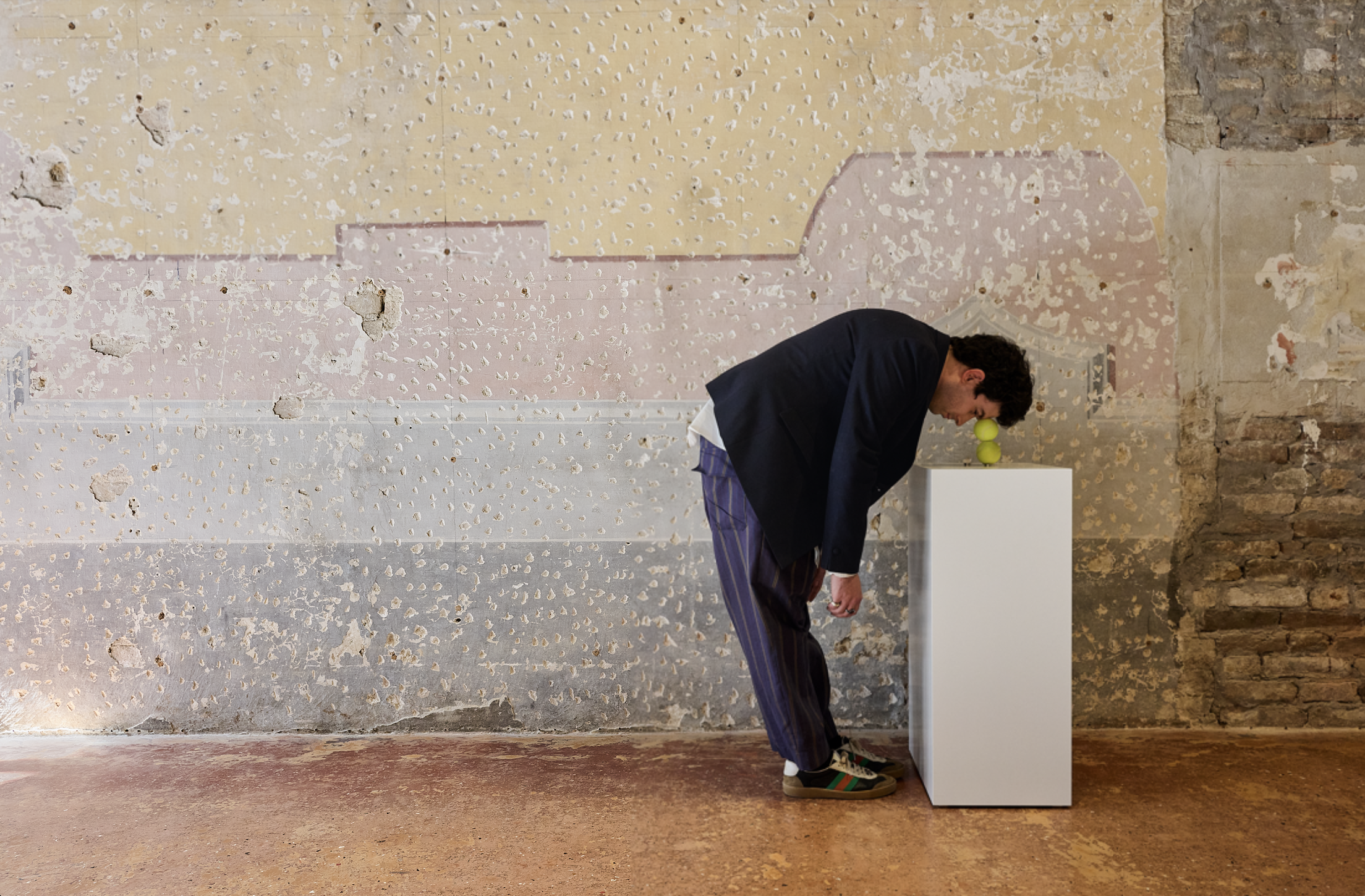
photography by MARKUS GRADWOHL
You say it's all about success. Do you tend to base the success of a work on what the viewers say?
Every work of art receives feedback. At the beginning, you seek it out. You hope for positive comments from people you've specifically chosen: a curator, a museum professional, a critic. But at some point that fades away, and in the end one question remains: how do I use my work to give direction to my life? A good idea alone is by no means enough; you have to keep developing. Art is not a one-off event — a whole, multi-layered body of work emerges. I was born in 1954. When I think back to 1972, I see how different the world has become. What we aspired to as young people back then is the opposite of what we have today.
Is there sometimes anything that has, sadly, been lost in the art world since the beginning of your career?
There's far too much talk of money. This investment mindset didn't exist in the 1970s. Back then, artists were still proud to be so radical and avant-garde that they didn't sell a single painting. Today, everything is defined in purely monetary terms, and in the process, an essential element is lost. I'm delighted that I can continue to develop my work. That is the greatest luxury and the greatest joy: to see that it is accepted and ends up in museums, now in over 100 worldwide. And the fact that collectors want to live with it is the most wonderful thing of all.
photography by MARKUS GRADWOHL
