
Interview by Samo Šajn
GiGi FM returns to dance in the video for “La Verità”, a single from her debut album, Ventus in Anima, out 29 January. Directed by Jaś Miszewski, the video uses movement and masked figures to explore how power shapes what we believe. We spoke with GiGi FM about bringing that idea to the screen and how poetry, field recordings and her approach to DJing shaped the album.
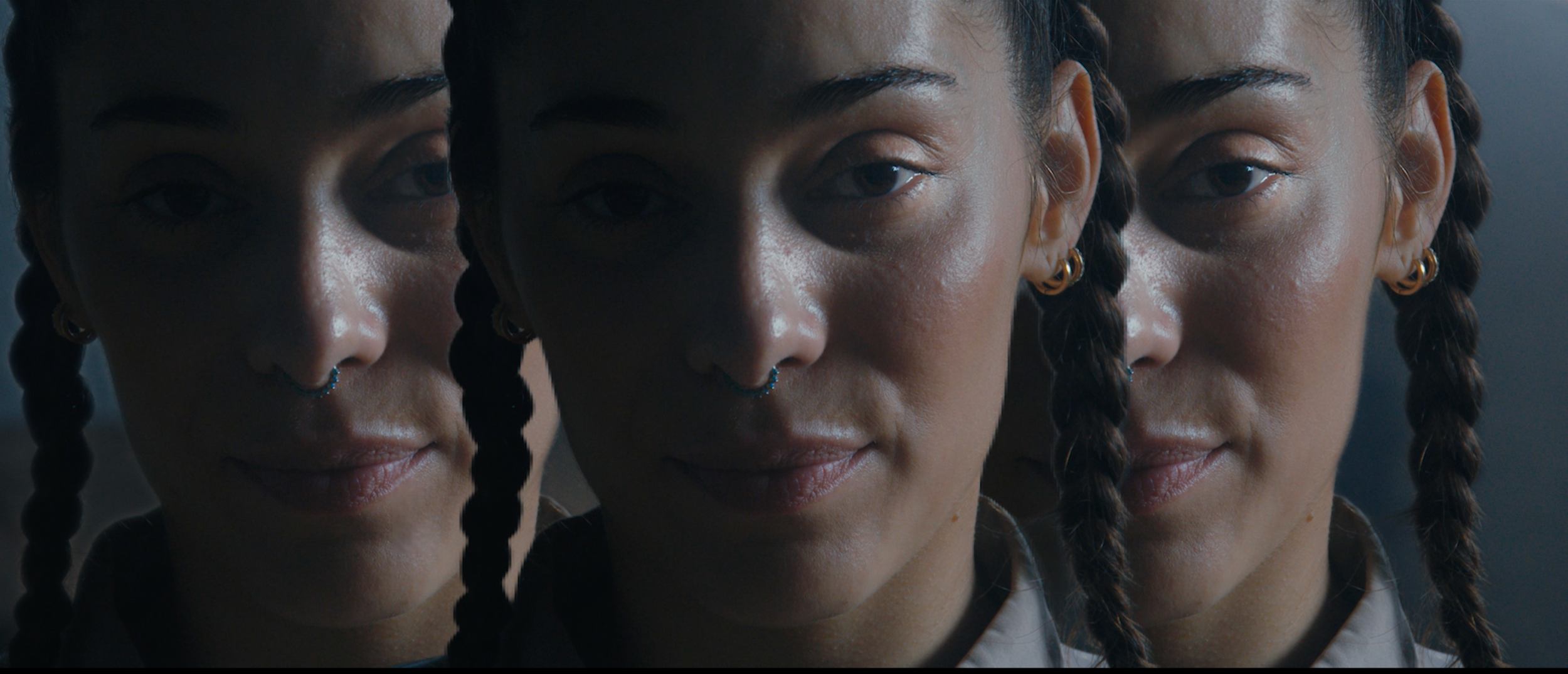
Your new single, “La Verità”, explores how power and the stories we grow up with shape what we believe. What first made you want to write about that?
I’ve always been fascinated by how much of what we believe to be true is shaped by what we’ve inherited from our families, society, culture, politics and the environments we grow up in. With the rise of the far right and everything happening in the world today, I think it’s becoming increasingly important to question these things. We trust our beliefs so deeply that sometimes we forget to question where they actually come from, especially in a world where misinformation, ideology and the manipulation of public perception make it increasingly difficult to distinguish truth from fiction.
With “La Verità”, I wanted to question power, the narratives imposed on us and our own responsibility in maintaining them. I wanted to take a serious look at the gap between the values we claim to uphold and the way we actually behave. It’s easy to believe in justice, solidarity or integrity in theory, but what happens when acting on those values becomes uncomfortable? When it might cost us something personally, socially or professionally? Do we still stand by them or do we find ways to justify looking the other way? I explored this from a different angle in my first single, “Do You Know”, through questions of silence and complicity. Sometimes we become so attached to being right or to protecting our own interests that we end up defending the very beliefs and structures that prevent us from seeing clearly. I think there’s something deeply political, but also very personal, about having the courage to question our own certainties.
You drew on George Orwell’s political fables for the video, which follows you through a world of masks and shifting identities. What did the masks represent to you?
The masks were made by one of my best friends, Louise Pons, with whom I’ve spent nearly a decade having conversations about perception, identity and the different roles we adopt throughout our lives, sometimes without even realising it. So bringing her creations into this world felt particularly meaningful. For me, they represent conformity, the roles we take on to function within society and the way individuality can gradually disappear into collective obedience.
I was particularly interested in Orwell’s Animal Farm and how a movement that begins with ideals of equality and liberation gradually reproduces the very structures of oppression it originally opposed. Language becomes a tool of manipulation, rules are rewritten to serve those in power and the sheep repeat slogans without questioning what they’re actually saying. I find that image of collective obedience incredibly disturbing, especially when you start recognising similar mechanisms in our own society. We’re constantly encouraged to fit into certain roles, follow established paths and accept particular ways of living as normal. But who decides what normal is? And at what point do we start confusing conformity with our own free will? I wanted the video to be a surreal reflection of the political and social reality we’re already living in, including that uncomfortable question of whether we’re always aware of the masks we’re wearing ourselves.
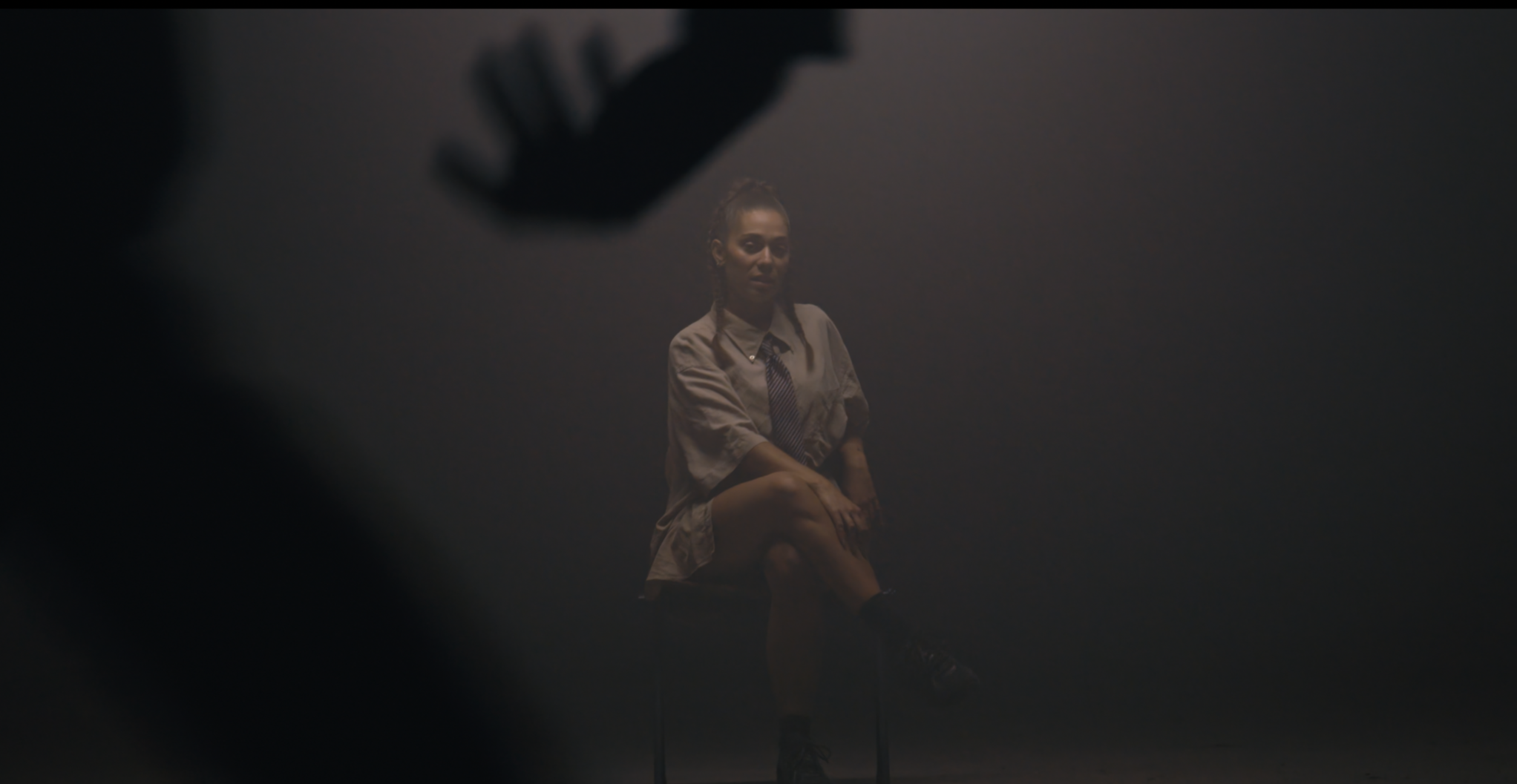
You developed the idea for the video before bringing it to director Jaś Miszewski. How did the concept evolve once you started working together?
I actually had a pretty clear vision from the start. The lyrics were my starting point, and I already had quite specific ideas about the characters, symbolism and movement. I first brought all of this to Manuela Cassuto, who’s a good friend of mine and produced the video. She immediately understood the world I had in mind and knew who we should work with to make it happen, which is how Jaś came into the picture.
What I really appreciated about working with Jaś was his ability to take some of my more elaborate ideas and figure out how to make them work on screen without losing what I was trying to express. We developed the visual world together, and he really understood the melancholy and that slightly unsettling feeling running through the track. I think that was important because behind all the political symbolism, there’s something very human and emotional too. That’s what I love about collaborating. You can have all these ideas swirling around in your head, some of them very detailed, and it takes people who understand what you’re imagining to help bring them into the real world. It’s such a special feeling when something you’ve been carrying around in your imagination finally comes to life.
You’ve said that returning to dance for the video made it especially personal. How did your training as a dancer shape the way you approached the performance?
Dance has never really been something I could separate from the rest of my artistic life. I started with piano, singing and dancing when I was very young, and they’ve always been interconnected for me. I’ve always felt that movement can express things that words don’t necessarily have access to yet. Sometimes your body understands or processes something before your mind can articulate it. As dancers, we’re trained to develop an extraordinary amount of control over our bodies, but I’m equally fascinated by the instinctive, raw and sometimes rebellious side of movement.
For “La Verità”, I wanted to make the struggle against conformity physical. There’s this tension between the body being disciplined into following what society expects of it and its instinct to resist, to break away and find its own freedom. I wanted to feel that conflict in my body, that sense of being constrained by something and fighting to break free. I love how movement, music and visual storytelling can communicate different layers of the same idea, sometimes revealing something none of them could quite express alone.
Your debut album is called Ventus in Anima. What does the title mean to you, and how does it connect to the music on the record?
I think of Ventus in Anima as “wind of the soul”. What fascinates me about wind is that you can’t see it, but you can see everything it moves. I think so much of what shapes us as human beings happens invisibly, through memories, emotions, relationships and experiences. I also love that wind never really stays still. It can be gentle or completely shake things up, and I think our inner lives are a bit like that too. We’re constantly moving and changing, whether we’re aware of it or not.
I didn’t initially set out to make an album. It began as a very introspective and cathartic period of creating, writing and researching, almost an exploration of myself through music, psychology and philosophy. I spent a lot of time trying to understand the different layers of who I am, what I’ve inherited, what I want to carry forward and what I need to let go of. Eventually, I realised that all these pieces were part of a bigger story. The record moves through different chapters of questioning, resilience, memory, family, love and, finally, surrender. I wanted it to feel cyclical, as though you could reach the end and naturally return to the beginning. I don’t think becoming yourself is something you ever really finish. We’re constantly changing, questioning and rediscovering ourselves, and I think there’s something beautiful about learning to love who we are in the present, knowing that we’ll keep changing.
On the album, your voice moves between spoken poetry and whispered phrases. How did you bring your writing into the production process?
To be honest, I don’t really think about bringing writing into my music. It just happens. I’ve always had a big imagination and loved diving into concepts, research and storytelling. For me, every piece of music has its own personality, almost like a person with a history, emotions and a story to tell. I’ve always loved going down these little rabbit holes of curiosity when creating. Sometimes it’s a few words, a synopsis, an entire poem, pages of research or simply cathartic thoughts. Those words are part of the tune’s identity.
I’ve been using my voice as an instrument for years to create textures, melodies or rhythmic elements. I love exploring what the human voice can do and become. But allowing people to hear and understand my words is something different, especially when they come from deeply personal experiences. I think something has shifted in me over the years. Through my own personal work, confronting difficult experiences and learning to feel less shame around vulnerability, I’ve become more comfortable sharing things I might once have kept to myself. It feels really good to be able to share those parts of myself now.
The album brings together dub-influenced electronics and field recordings. What drew you to those sounds, and how did you bring them together on the record?
I think it’s precisely the relationship between all these different pieces that defines the album’s identity. I never set out with a fixed sonic formula. I was exploring different emotions, memories and musical languages, and eventually these pieces started revealing connections with one another. I’ve always had a soft spot for dub, dub techno, ambient music and that beautiful warmth you find in so much electronic music from the late ’80s and ’90s. I love that period.
Field recordings are particularly special to me because they capture fragments of time and space. I see music as an attempt to grasp the ungraspable, taking something intangible, like a memory or a feeling, and somehow making it tangible through sound. Field recordings give those imaginary worlds a connection to something that really existed. Throughout the album, there are fragments of my own life, including recordings of my family, bits from Napoli, a melody sung by my father and sounds from my travels in Japan.
You approach your DJ sets as stories. How did that way of thinking shape the way you put the album together?
Actually, I don’t think the approach is fundamentally that different from how I build my DJ sets. I always write a synopsis or have a story that I want to tell through my sets. They’re journeys that people experience live, and there’s this incredible exchange happening in real time. You respond to the dance floor and the crowd responds to you. The story evolves as you’re telling it. With an album, it’s more intimate in a way. You’re exposing a piece of yourself, your heart and your soul, without knowing who’s going to listen to it or how they’re going to experience it. Then people get to make that music their own, to bring it into their lives and give it their own meaning.
With Ventus in Anima, I wanted the album to unfold as one complete journey, where each piece has its own identity but also belongs to something bigger. There are different chapters, from questioning and travelling through memory to eventually surrendering. I wanted the ending to connect naturally back to the beginning, almost like a continuous cycle. I love the idea that someone could listen to the whole album more than once and discover something different each time, depending on where they are in their own life. I don’t think music needs to tell everyone the same story. Even if the starting point is deeply personal, once you share it with the world, it opens up a dialogue with other people’s experiences.
