
IN CONVERSATION WITH HARRIET CUDDEFORD
interview by TIMOTEJ LETONJA
If you don’t live under a rock, you’ve probably seen Bad Bunny’s groundbreaking Super Bowl Halftime Show — a performance that went way beyond just entertainment, and proudly centred Puerto Rican and Latin American culture on one of the biggest stages in the world. Instead of just throwing show for show’s sake, it was more a love letter: proud, political, joyful and unifying. Behind that vision was creative director Harriet Cuddeford, who helped turn the field into a living landscape — and a story that we won’t be able to forget.
photography by DANIELA MATOS
This performance reframed the Super Bowl Halftime Show as a living landscape rather than a stage. At what point did you realise the field itself could become the narrative engine of the show?
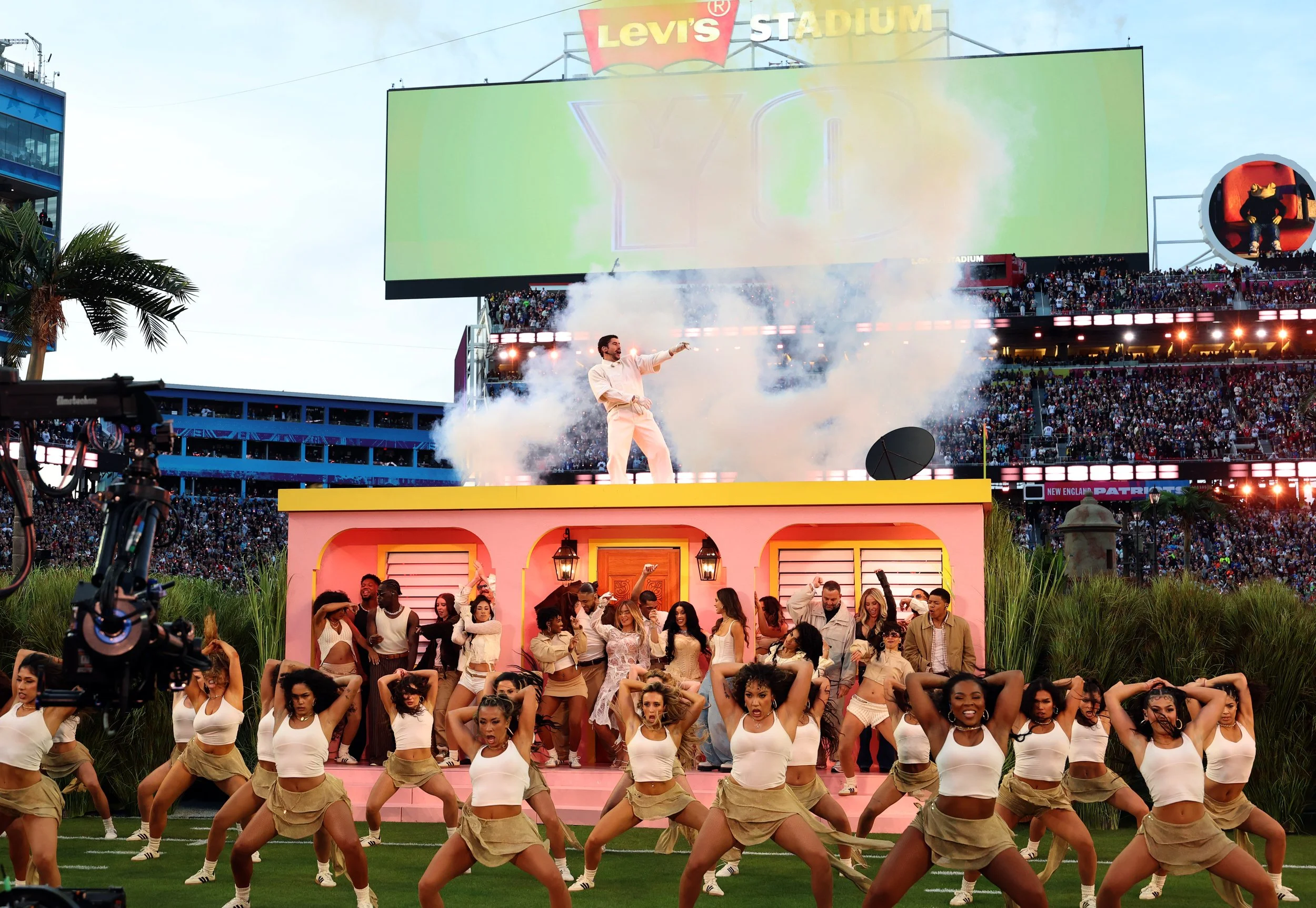
From the start of the creative process, the feeling was to create a journey which would happen from one end of the field to the other. Very quickly, the idea of creating a giant immersive field of grass and crops to house the journey became a very clear central concept. The journey and the field went hand in hand. This was the North Star, and everything from there on out was very intentional, as we explored what would unfold and what would be discovered with in this living landscape, on Benito’s path to the touchdown.
The idea of pastizal - grassland shaped by labour, memory, and time feels deeply poetic. How did you translate something so intimate into a spectacle viewed by hundreds of millions?
It was created with a deep reverence for Puerto Rican culture and landscape, and from our side, a curiosity to learn everything we could and be as accurate as possible to give the most authentic representation possible.
It also required a lot of listening and learning with the SBHT design team, production designer Yellow Studio, art director Leticia Leon, Bruce Rodgers and family, who have many years of experience of how to load things on and off the field in a very short amount of time.
By listening to and collaborating closely with these different teams, we found a way to safeguard the authentic integrity and intimacy of the concept within the rigid parameters of the SBHT show.
all images via GETTY IMAGES
Rather than building upward, the show unfolds horizontally, as a journey across the field. What did that spatial decision unlock creatively?
It unlocked scale for us, in that it allowed a huge show for the live audience. We were in a challenging stadium with no roof, no rigging, and a height restriction of 10ft for rolling carts with set on them. Things like palm trees and powerlines had to hinge upwards once on the field. It wasn’t an option for us to build upwards, but this challenge became one of our greatest strengths.
Most crucially, it gave us the ability to create many different constantly evolving chapters. Live TV is normally so restrictive that you get trapped in one or two sets/looks. It felt so exciting to be able to play with the idea that we could constantly uncover new parts of Benito’s world over the 13 minutes and keep surprising people. It was so creatively expansive to be able to travel into new environments, and this was supportive to Benito, having so many different things he wanted to say, and so much variation within the set list.
The way that we designed the cameras with Hamish Hamilton + Dylan Sanford from The SB team really supported this. They were so collaborative and innovative in how they departed from the way an SBHT show is traditionally shot and instead allowed us to reveal worlds one by one, really live inside each of them and then contextualise these within the giant landscape.
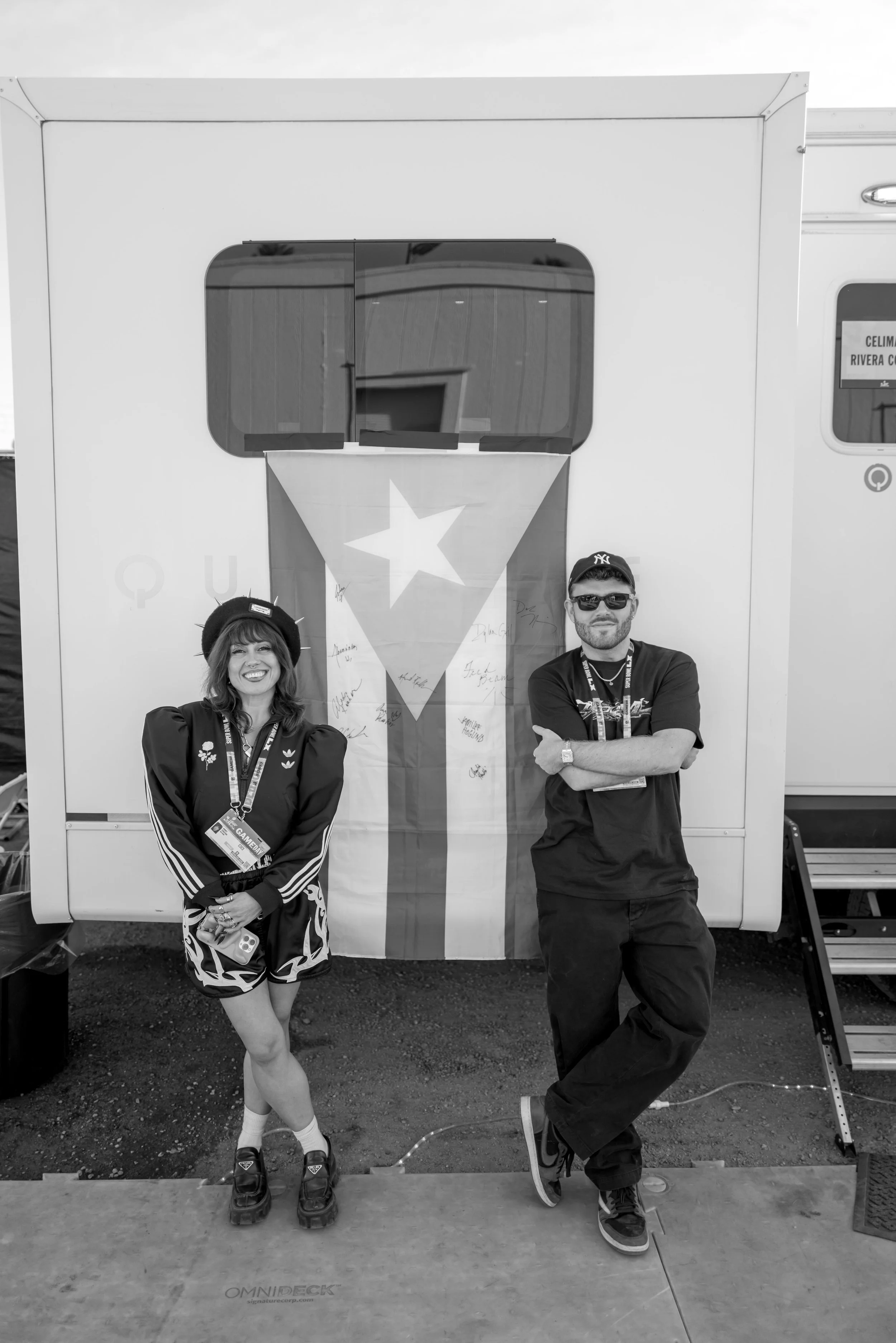
HARRIET CUDDEFORD and LIAM LUNNISS, photographed by ABDUL CHOUDRY
Puerto Rico is present not as an abstract reference but as a lived environment. How did you approach representing the island without turning it into symbolism or nostalgia?
As I mentioned above, this project was approached with a deep reverence, respect and curiosity to learn about Puerto Rican culture, from the creative team. We went to PR, spent time with Benito and his team, hired as many Puerto Ricans as possible, and deeply researched. Personally, I cared very deeply that we were never bringing Benito anything which didn’t feel aligned with how we would want his homeland and culture represented. For the most part, we managed, but if ever there was a misstep, he and his team were across everything and heavily involved to make sure everything was as authentic and accurate as possible.
You saw Benito’s Puerto Rico- full of love and authenticity.
The casita has become an emotional anchor in Bad Bunny’s live language. What did it mean for you to begin and end the show there?
La casita felt important as a first stop after the sugar cane to really help us anchor into the world Benito had created across the DTMF album cycle. It’s something his fans know so well and is a profound symbol for home, memory and heritage.
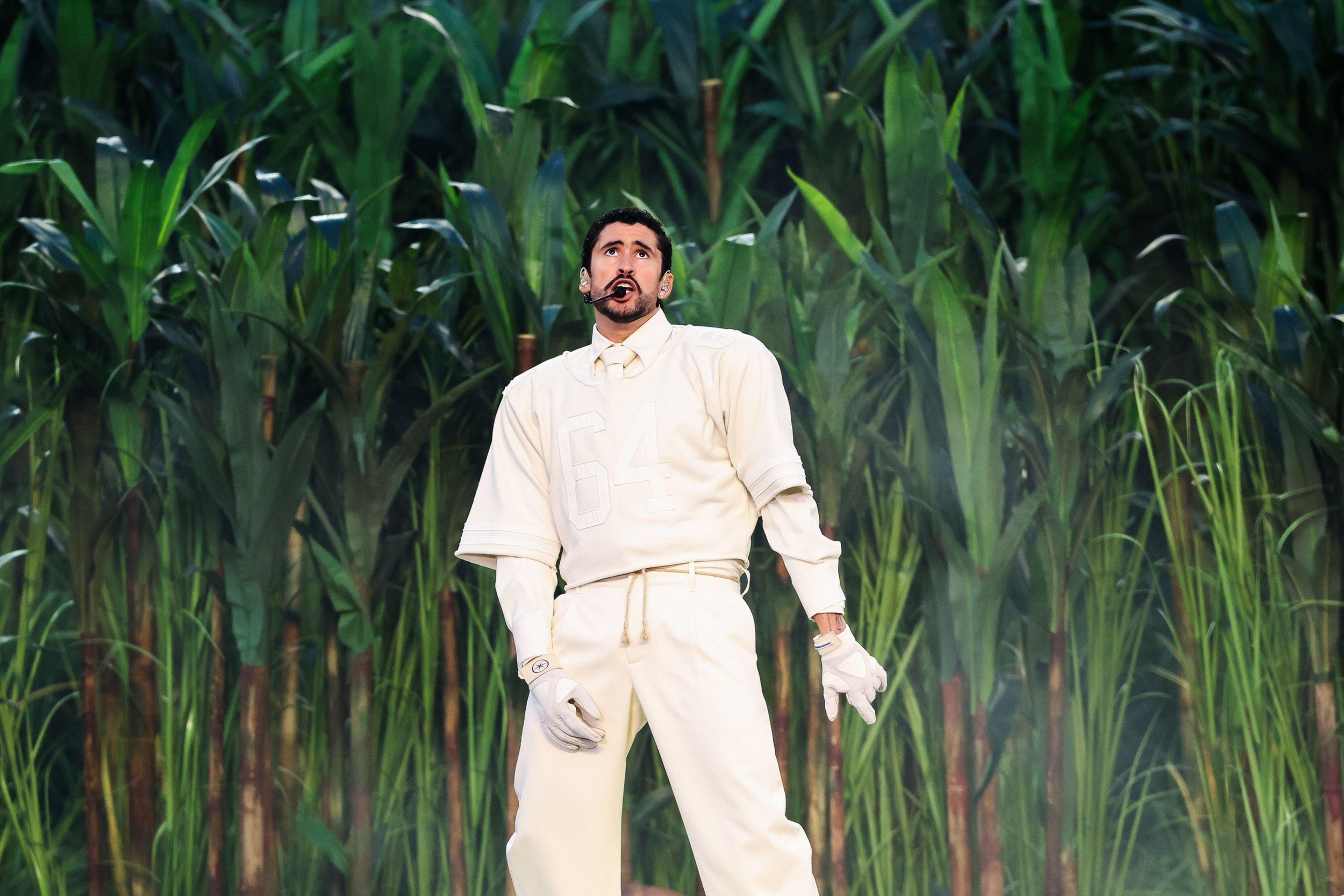
image via ALAMY
Did working with non-performers change the rhythm or emotional tone of rehearsals?
It did, in a few ways. We felt a duty of care to make sure that anyone not from the performance world felt taken care of and helped to navigate through what could have been an overwhelming experience. We had people of all ages and some people who came from PR who spoke little English. We had one producer on the creative team called Lourenca Alencar, who did a beautiful and dedicated job of making sure everyone was well taken care of, rested and felt comfortable .
Everybody that were hired did an amazing job, we are lucky that they all naturally took to being part of rehearsals and such a big production. Liam Lunniss, my associate, was brilliant with working with this section of the cast, performance coaching them to help them feel comfortable.
Their excitement and enthusiasm at being part of this really raised the vibration in rehearsals and on stage a lot.
One of the most rewarding parts of creating the show was working with these “non performers”, experiencing their joy and excitement as they took part. Benito’s message about following your dreams and making them real was really being lived out day to day in our rehearsals and live during the show. I think this is part of why the show resonated so much; it was real. The feelings were all real.
I can’t really remember any show I’ve worked on where the team making it regularly cried with joy at heartfelt moments we were experiencing daily.
images via ALAMY
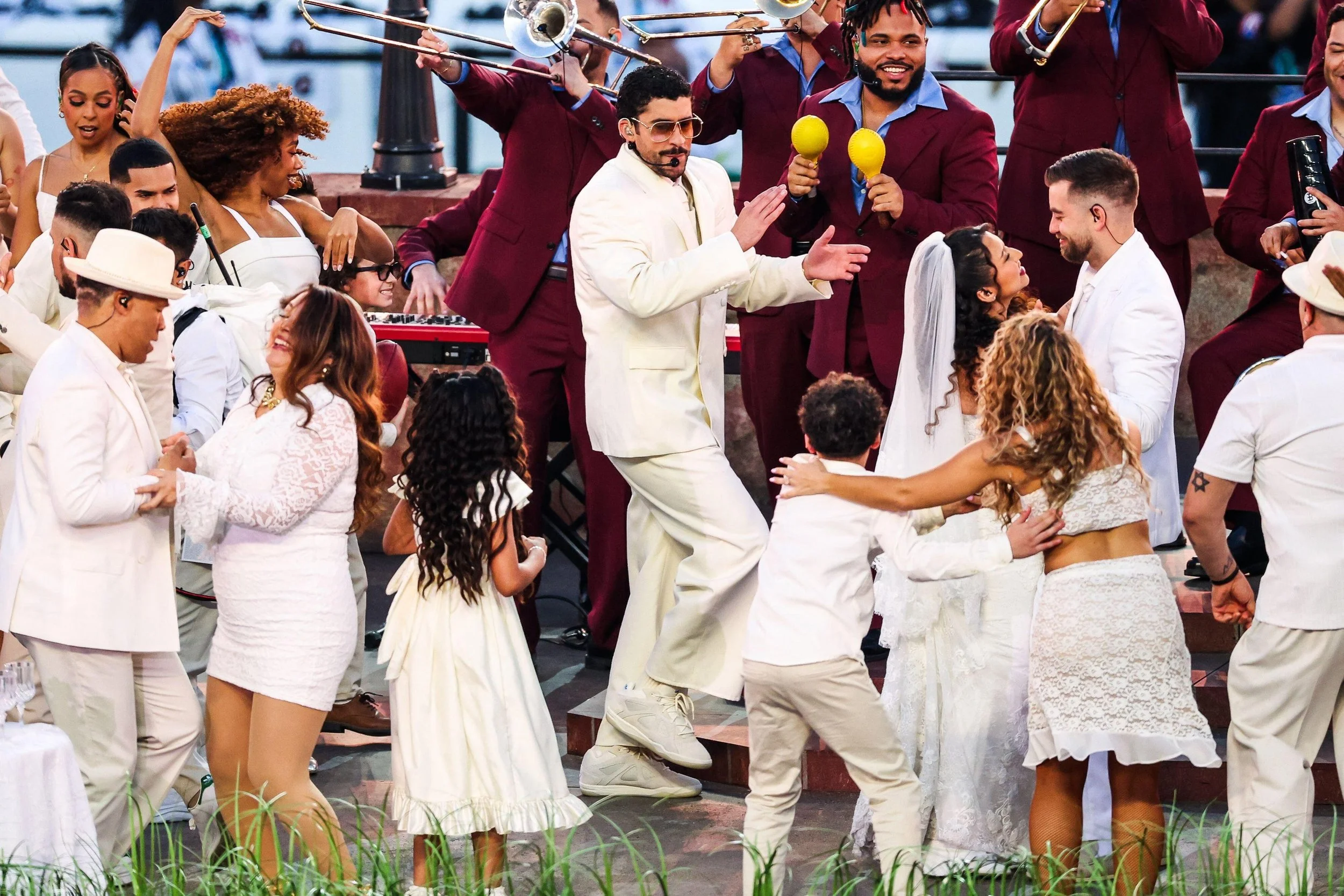
The scattered structures, the wedding, auto shop, power lines function almost like chapters. How did you decide which moments of daily life deserved architectural form?
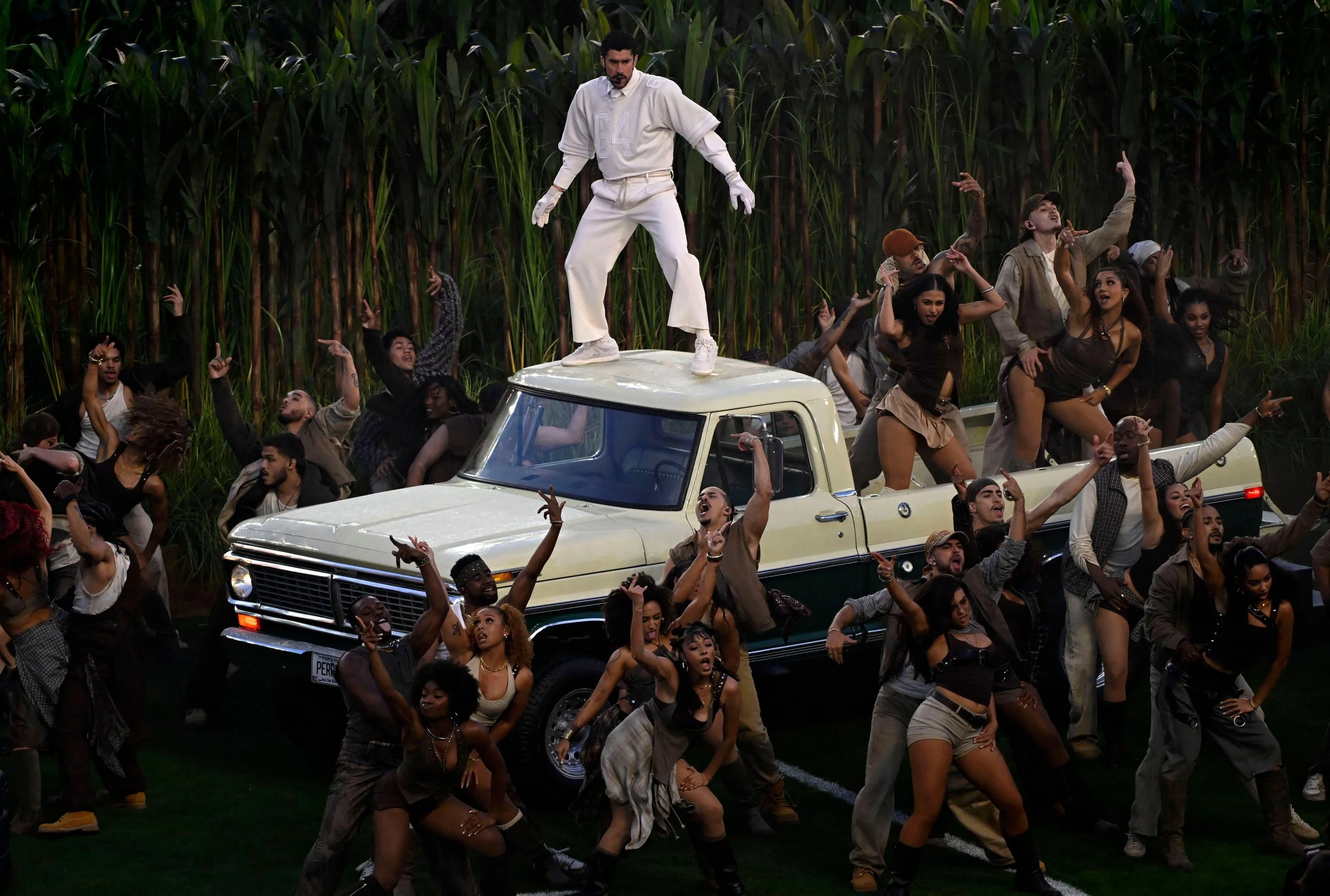
The auto shop felt like a real tenet of Latino life and culture, and when we heard the Gasolina sample in the track, it felt like it really deserved its place in the performance. From a performance perspective, creating a stage from a truck also felt dynamic and a great basis to create staging pictures for choreo.
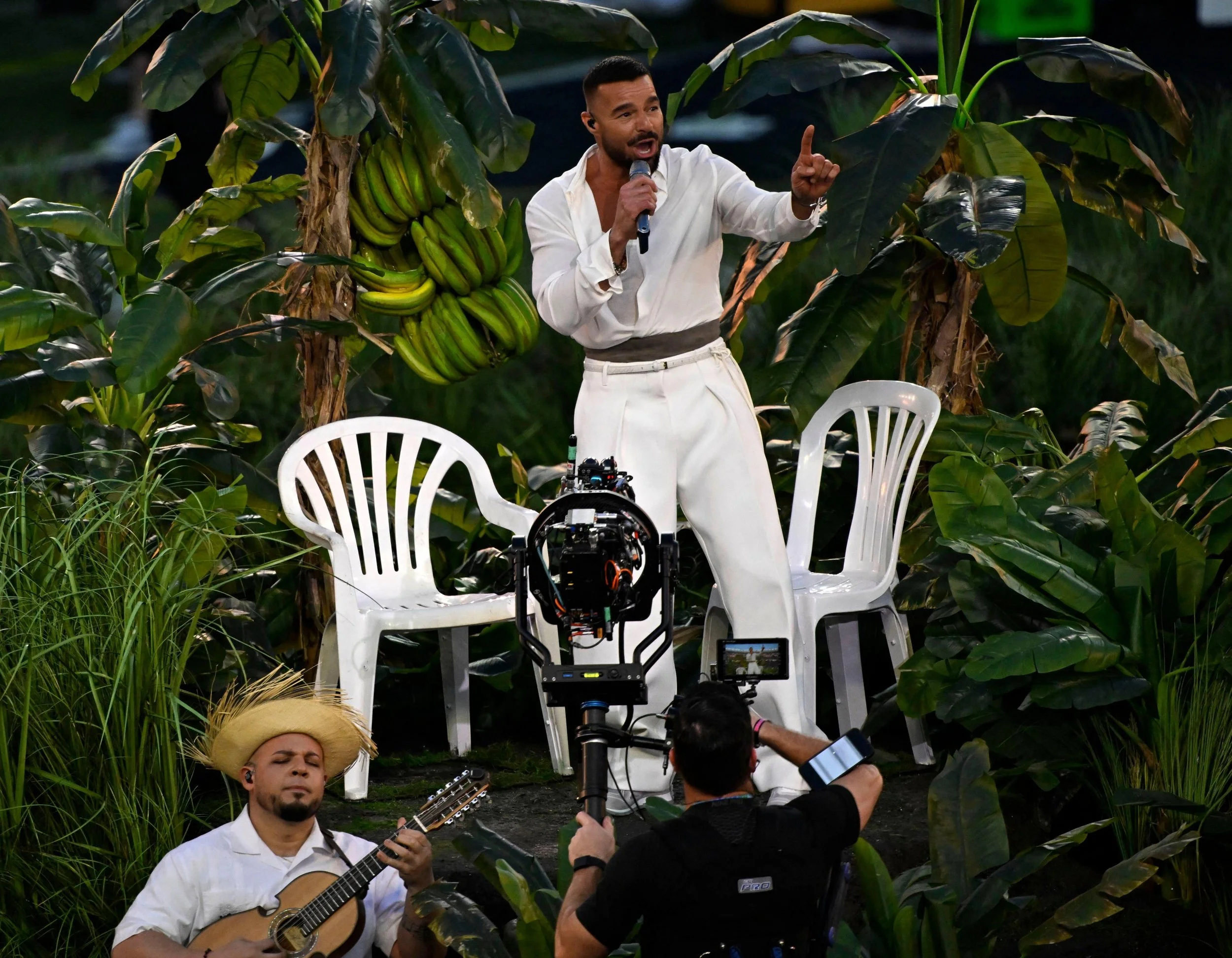
The wedding felt like the best way to explore. Themes of love, family, joy, Latino community, dance, music and joy collectively. There is a plaza in San Juan, where people regularly get married, that we visited with Benito’s team, which was a major source of architectural inspiration.
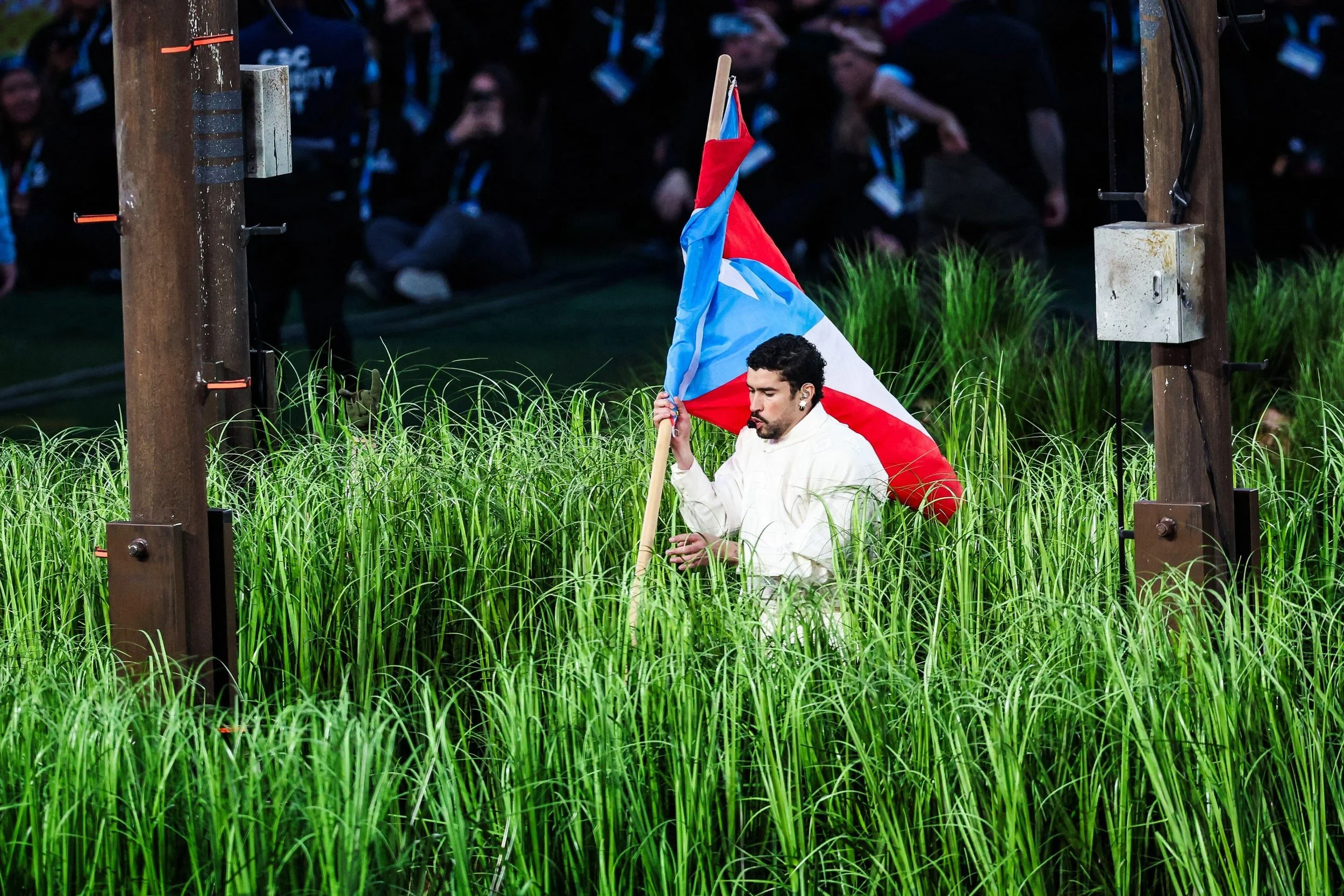
The power lines represented the ongoing electricity crisis in Puerto Rico and were a powerful statement.
What were the biggest technical challenges in creating a landscape that performers could move through seamlessly in real time?
Charm Ladonna, our choreographer, is a SB master having done many half time shows. She is incredibly talented not only at choreo, but also at moving performers around the space and on and off the field, so this happened seamlessly.
The fact that we were shooting each chapter individually gave us some forgiveness in being able to accomplish challenging transitions off camera.
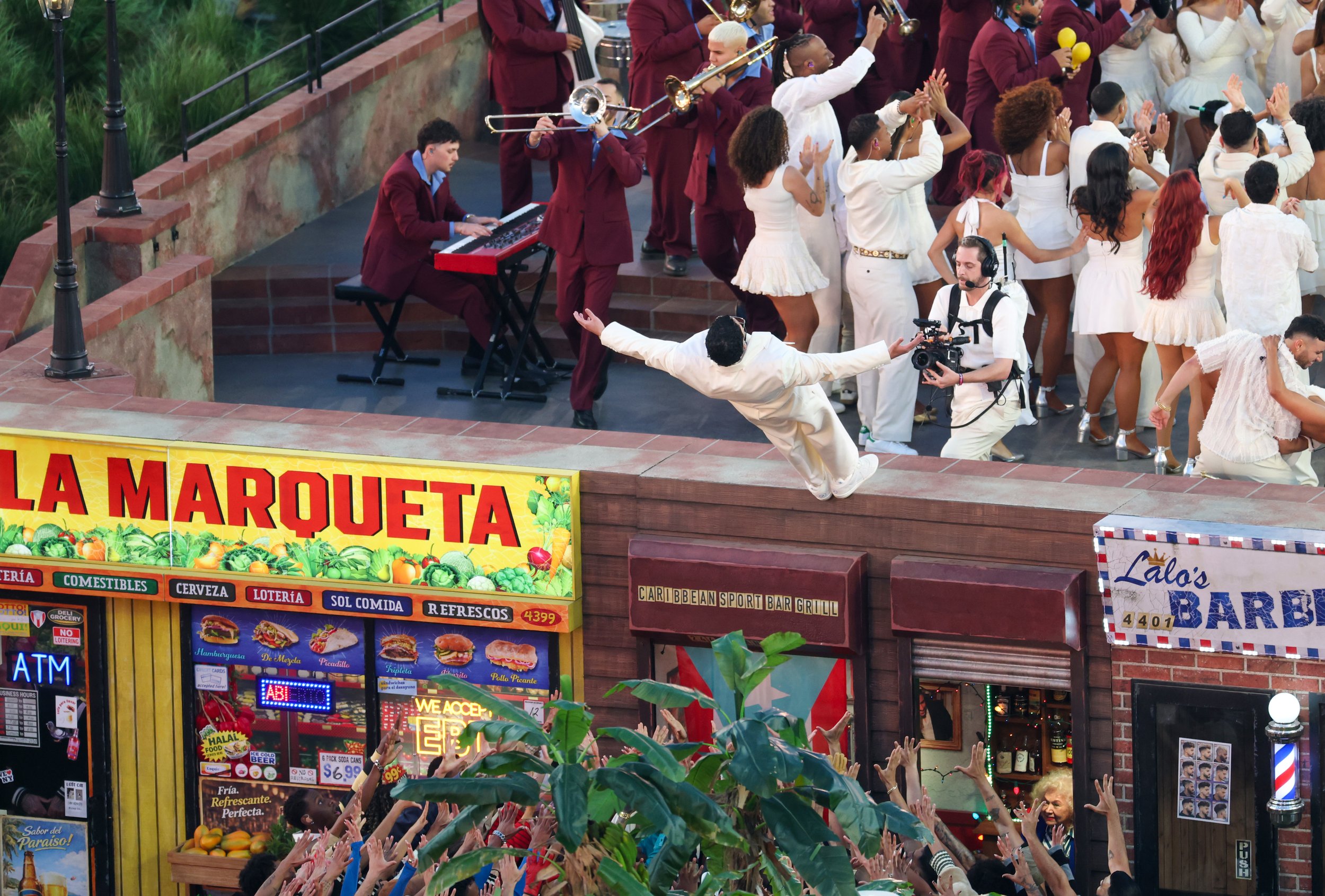
Moving Benito seamlessly in real time was potentially more challenging, as he needed to get up and down from various structures, largely on camera. I loved this challenge, and I feel like the way we managed to transition him and move him around the space was very fun. It helps that he’s incredibly agile and down for most things; he really went for it with the stunts e.g. falling through the floor, jumping backwards off a building, scaling a power line.
The camera work made the performance feel cinematic rather than broadcast. How closely did you collaborate with the camera team during the design process?
A lot of the concept of the camera work was designed in conjunction with the story and design of the show. It was always very interwoven. Everything was storyboarded with shots from very early in the process, and a lot of those storyboards represented things like the Spike Lee shot, overheads, steadicam work, the moment Benito turned and broke the fourth wall in the sugarcane when he looked through the row. I worked a lot with creative consultant Ferran Echegary on this.
The SB camera team came on board and were phenomenal in turning these ideas into reality, building on them, suggesting other amazing ideas and striving hard and innovating to bring it to life.
We also had a great camera consultant, Greg Ohrel, an MV director, who directed the pre-shoots and had lots of great ideas.
images via ALAMY
With over 80% of the cast being Latino, representation felt structural rather than symbolic. What does that visibility mean to you personally?
It is non-negotiable and essential. Benito is Latino, and this was a moment in history for Latino people. It was integral that representation was structural, both on and off screen as far as possible, across the entire team. This was a cornerstone of the entire project and was taken very seriously.
Looking back now, what image or moment best captures the heart of this performance for you?
There are so many, but I think Benito, the huge cast holding flags of all the Americas, all joyful, celebrating , with “ the only thing stronger than hate is love” message on the screen in the background, feels like it really sums up the essence of what was at our heart.