
IGNACY LISS has built his career across film, television and theatre, bringing different forms of storytelling into his work. A graduate of the Aleksander Zelwerowicz National Academy of Dramatic Art in Warsaw, he is currently part of the ensemble at the Polish Theatre in Warsaw. In 2026, his performance in Proud earned him the Best Actor Award at the Series Mania Festival in Lille, where the series also received the Grand Prix.
In Proud, Liss plays Filip, a character at the centre of a story about family, identity, love and prejudice. Through its characters and their relationships, the series explores questions surrounding LGBTQIA+ lives alongside themes of acceptance, resistance and belonging, creating a story that reaches beyond the intimacy of its central relationships.

In Proud, you play Filip, whose life takes an unexpected turn when, after the death of his sister, he becomes responsible for caring for her daughter. As he is suddenly placed in a role he may not have imagined for himself, the way he relates to family, responsibility and his own identity begins to shift. What was your starting point when you first approached the role?
I usually begin by thinking about a character’s appearance, especially the haircut. I believe hair has a certain power and can help you enter a role. For Filip, the first step was bleaching my hair. But the most important part was working on his relationship with his sister’s daughter. That relationship became the key to developing the character. A lot of the rest came from imagination and from the stories you hear from other people. Working with such a young actress also meant being completely focused, confident and prepared for anything. That helped me stay present in the moment.
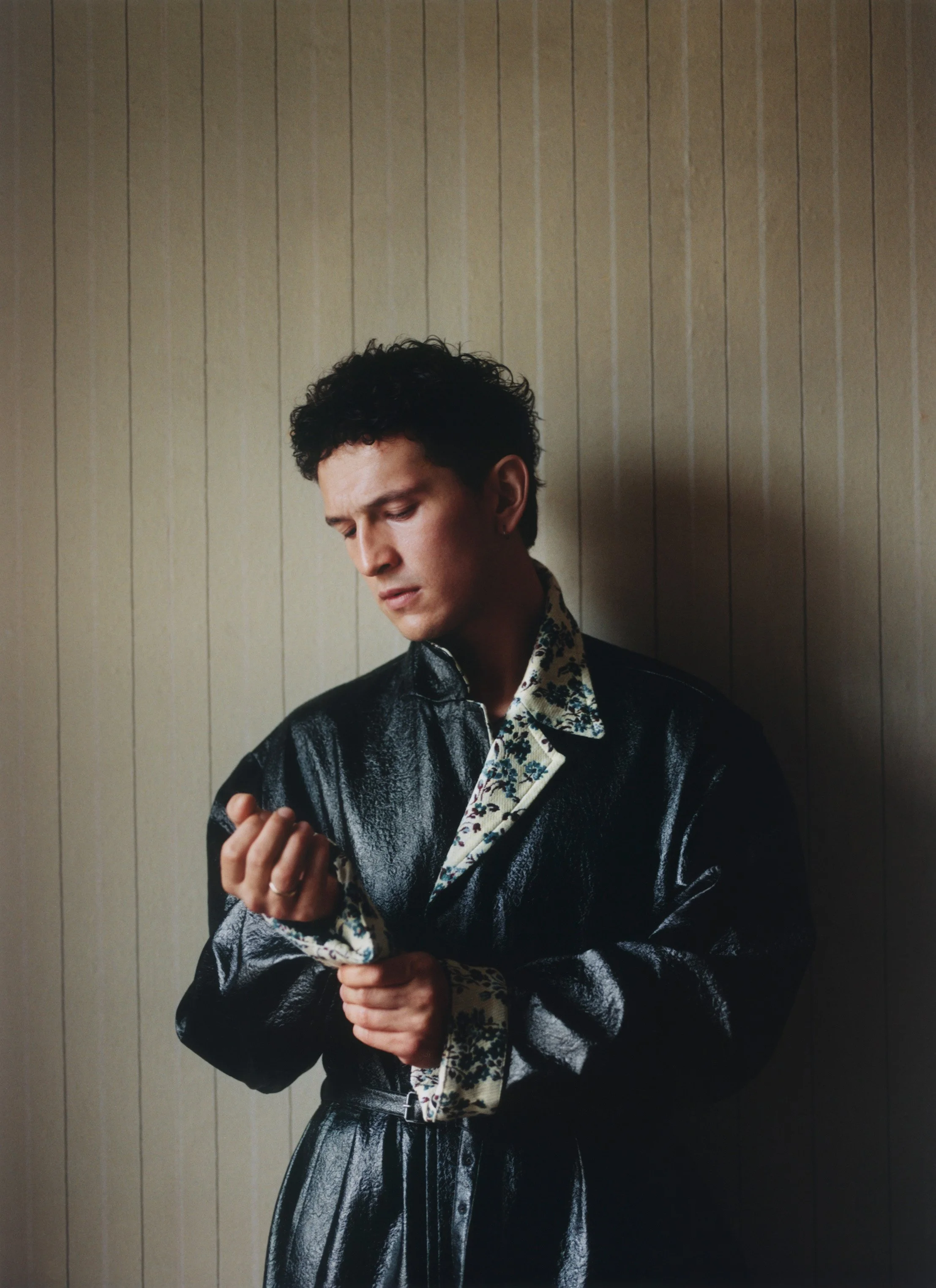
jacket DRIES VAN NOTEN via DH VITKAC
Throughout the series, Filip finds himself navigating a new sense of responsibility while also confronting different ideas of family, intimacy and belonging. His relationship with the people around him gradually begins to challenge the way he sees himself. What interested you most about exploring this part of his journey?
When I read the script, what interested me most was the fact that Filip is gay in Poland and is trying to adopt his niece. LGBTQIA+ people in Poland are still fighting for their rights, and I wanted to be supportive of that community. I thought it was important, politically and socially, to show an audience that this kind of situation could happen in Poland: a man who has to fight for the right to raise a child and who faces constant judgement. The story moved me. It was also a great opportunity to follow a character over several episodes and watch him change, become a father figure and grow into adulthood.
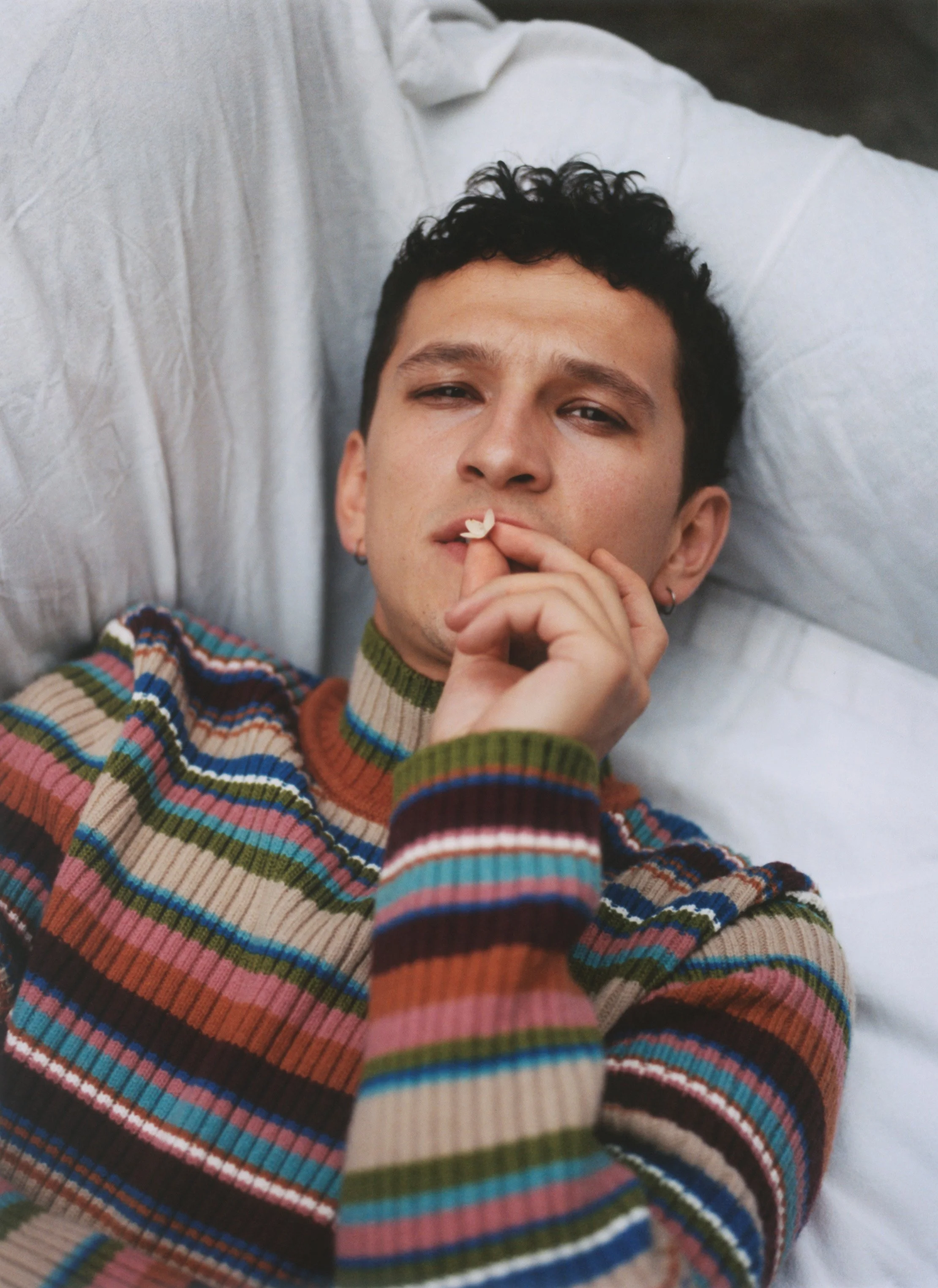
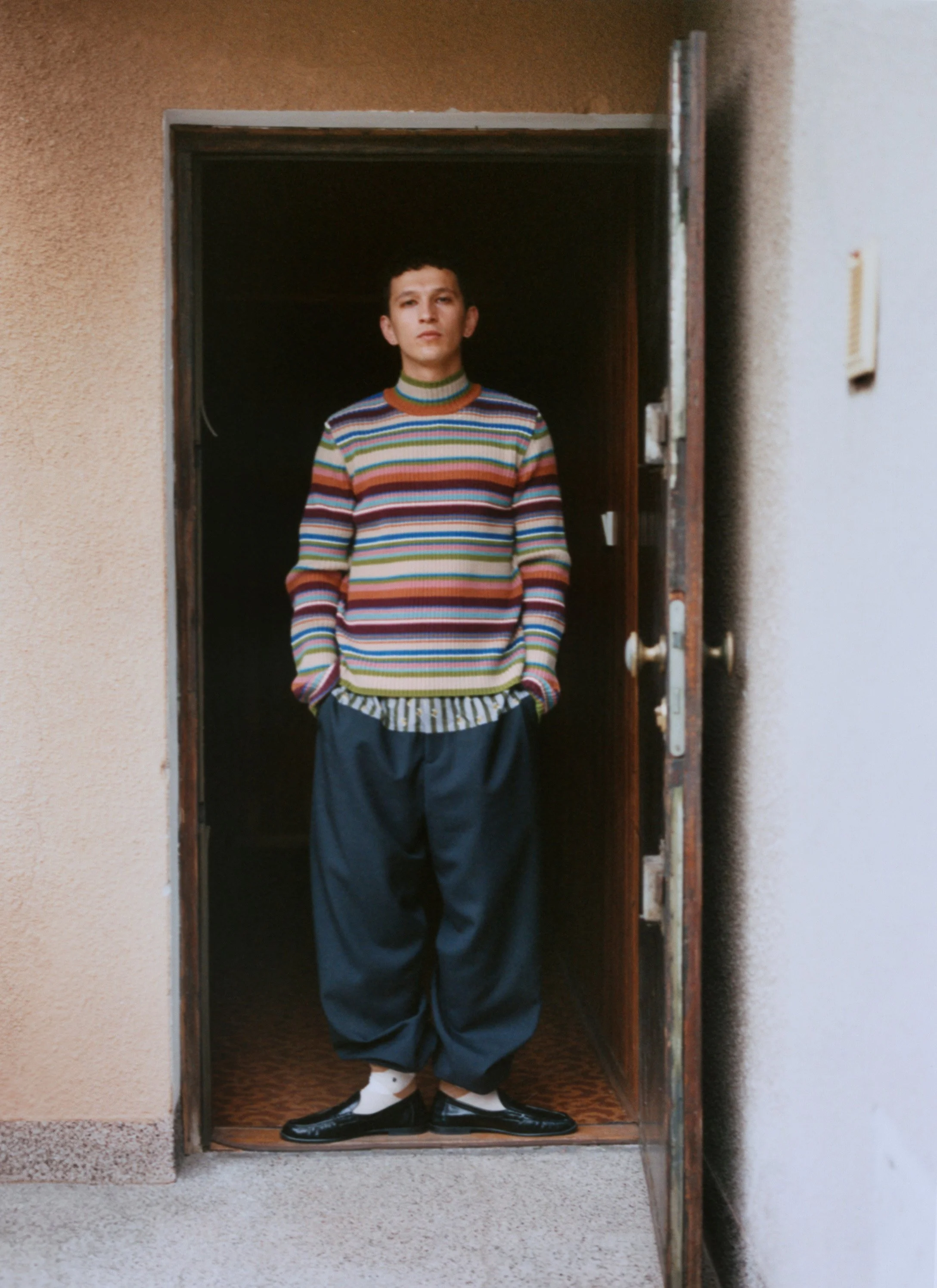
sweater and trousers DRIES VAN NOTEN via DH VITKAC
shoes YVES SAINT LAURENT
Filip’s journey is also shaped by the people he encounters, and many of the changes in his life emerge through those relationships rather than through his own words. As an actor, how did working with the other performers influence the way you understood and played those relationships?
I found out I was going to be a father about a month before we started shooting Proud. My wife told me she was pregnant while I was preparing for the role, so I began working on Filip knowing that I would soon become a father myself. In a way, the series became a kind of training. I was learning about strollers and all the things you need to do with a baby, and then, after filming, I was doing those things in my own life with our son. It also made me realise how privileged I was: I could become a father without being afraid of judgement or having to fight for the right to have my child with me. That helped me understand Filip’s emotional experience. The other actors were important, too. There is a saying that the people around a king make him a king. Even when you play the lead, everything depends on the cast. Everyone in Proud was special, and I think the smaller roles were cast just as well as the larger ones.
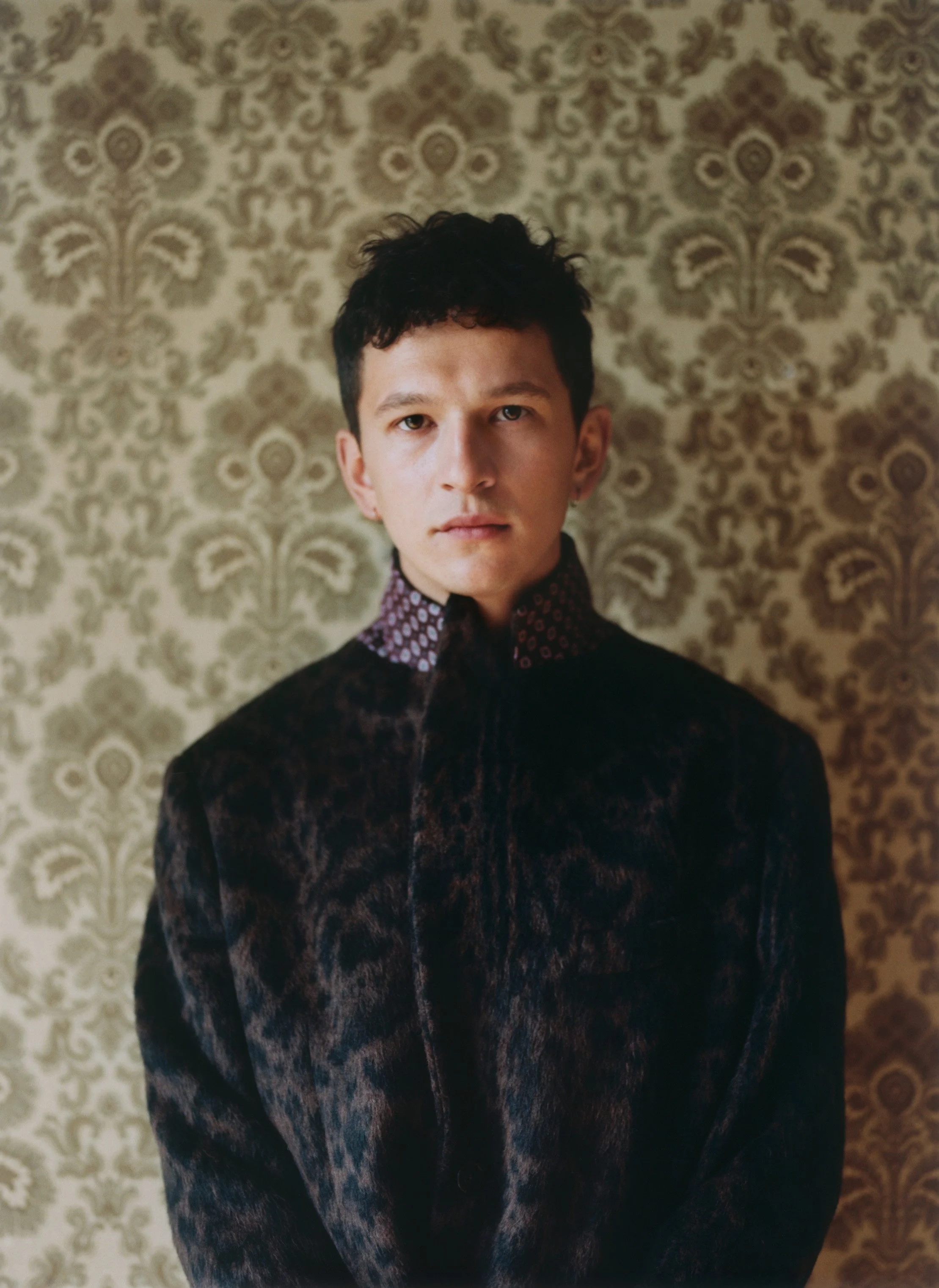
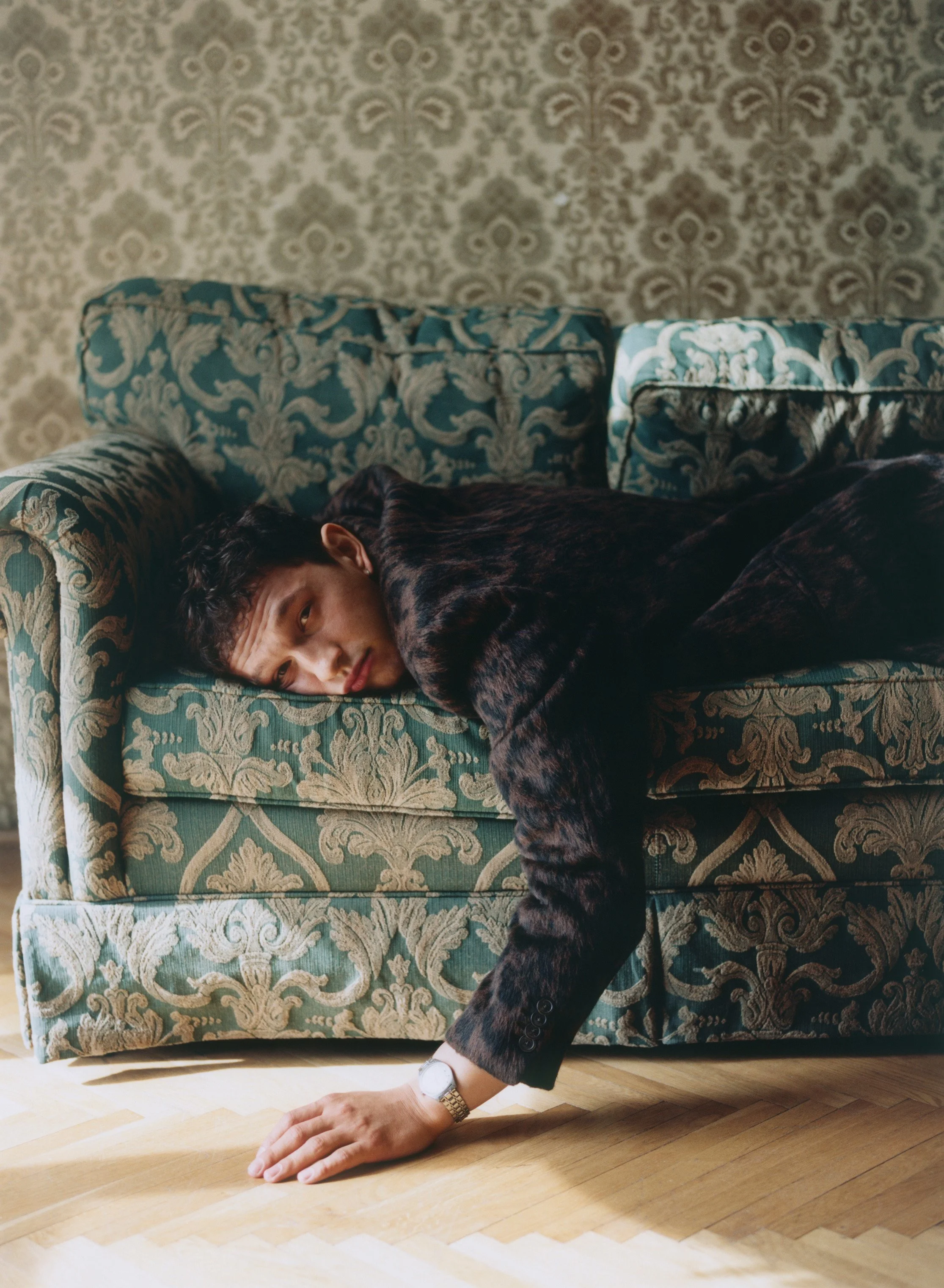
coat ETRO via DH VITKAC
The series also explores homophobia not only through explicit acts of prejudice but through everyday attitudes and behaviours that can easily become normalised. As an actor, how did you approach those moments without reducing them to a single idea of what prejudice looks like?
I could only imagine how those situations might feel, but I was aware that it would be important for many people in Poland to see this character. I wanted to show the audience how ridiculous prejudice can be. For Filip, the most important thing is his daughter. His love for her gives him the strength to fight the system. He goes through all the assessments and procedures, but he refuses to let other people’s opinions define him. It may sound simple, but I believe in the power of true love. It makes him strong enough to be himself.
Taking on a character whose experiences may differ from your own requires observation, imagination and empathy. When you entered Filip’s world, what did the process of exploring his perspective reveal to you about acting itself?
I understood more than ever that empathy is the essence of acting. I don’t think you can be a good actor without being empathic. Filip’s story was delicate, and I felt there was a very fine line I could easily cross if I didn’t approach it with care. The writing was strong, and the character needed to be treated with love, intimacy and sensitivity. I also thought about people I know from the LGBTQIA+ community. When I was about sixteen, a gay friend of mine was trying to adopt his two brothers after their parents died, and my mother helped him. Stories like that stayed with me. After the series was released, people shared their own experiences of struggling with the system. Knowing they felt safe enough to tell me those stories made me feel that we had done something meaningful. That connection between empathy and acting will stay with me.
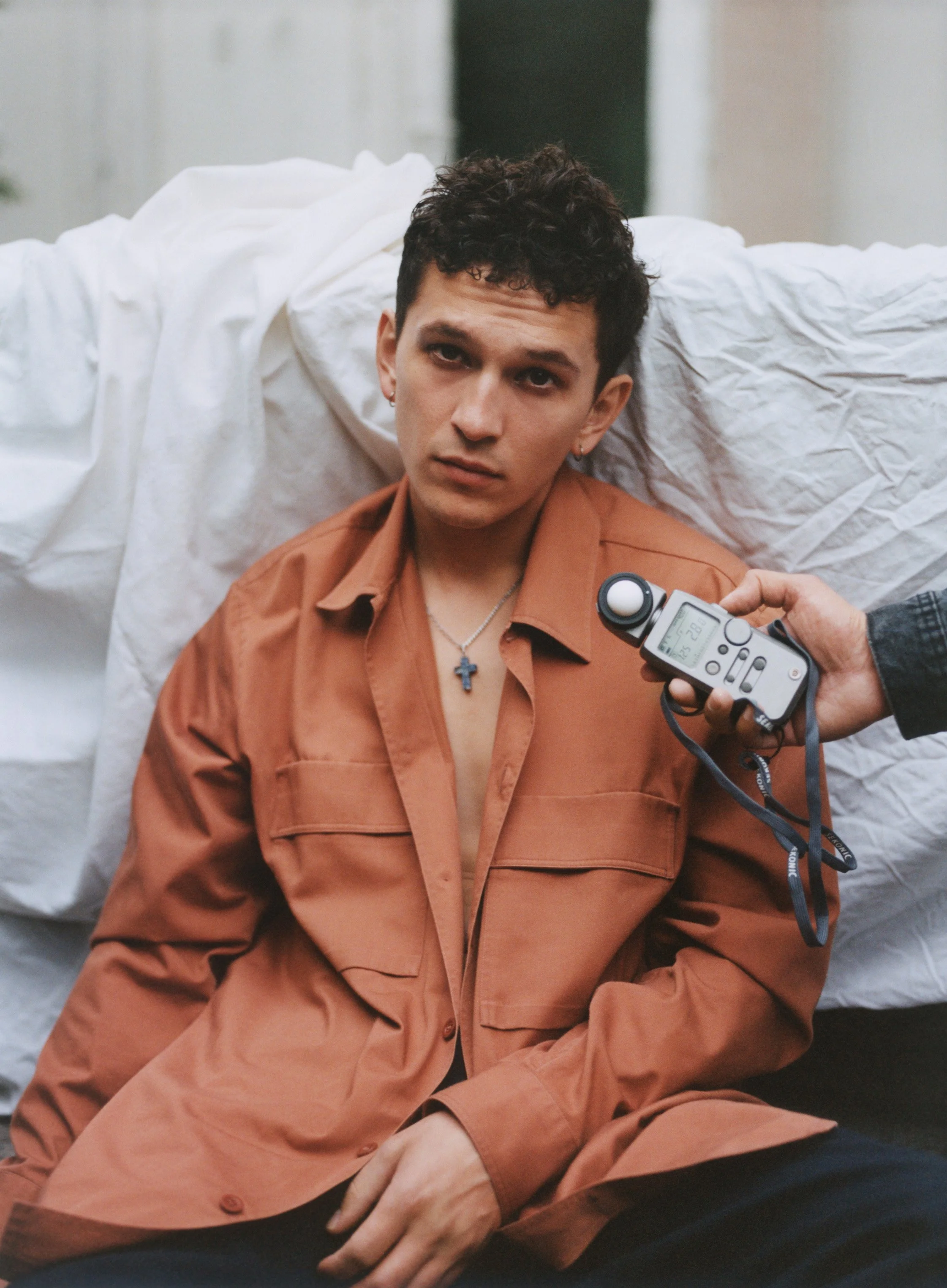
shirt ACNE STUDIOS
Your performance in Proud was recognised with the Best Actor Award at Series Mania in 2026, while the series received the festival’s Grand Prix. How did it feel to see this particular work and this particular character recognised in that way?
It was the first award I had ever received, and it happened in France rather than Poland, which made it especially exciting. I was surprised because I had actually left and was called back. I realised I might receive something, but I didn’t know it would be the main acting award or that Proud would win the Grand Prix. It means a lot to have the feeling that your work has been seen and that someone believes you are a good actor. In this industry, you face rejection all the time. Often, nobody tells you that you did well; you simply hear what went wrong. So being recognised in that way made me feel genuinely grateful.
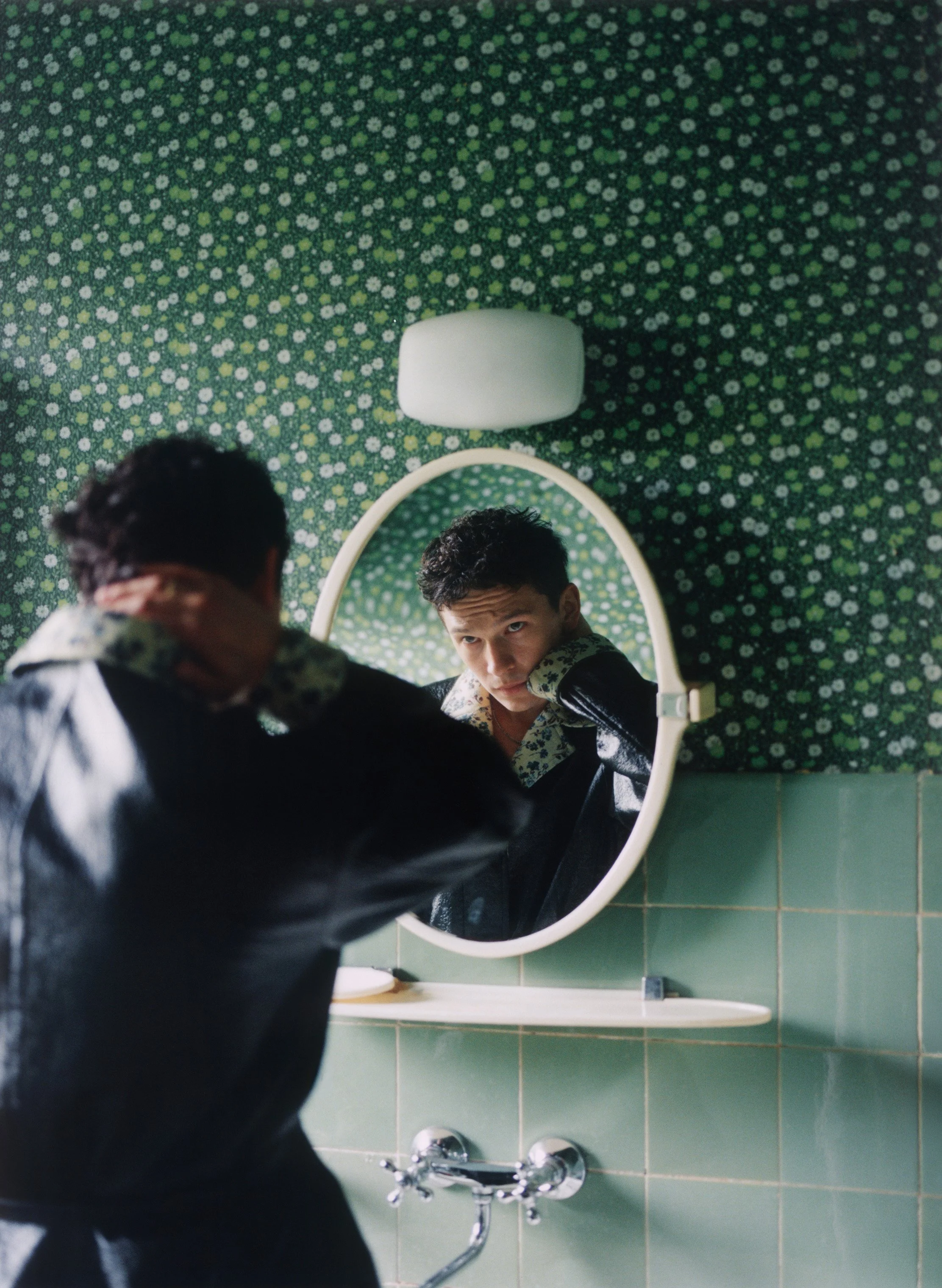
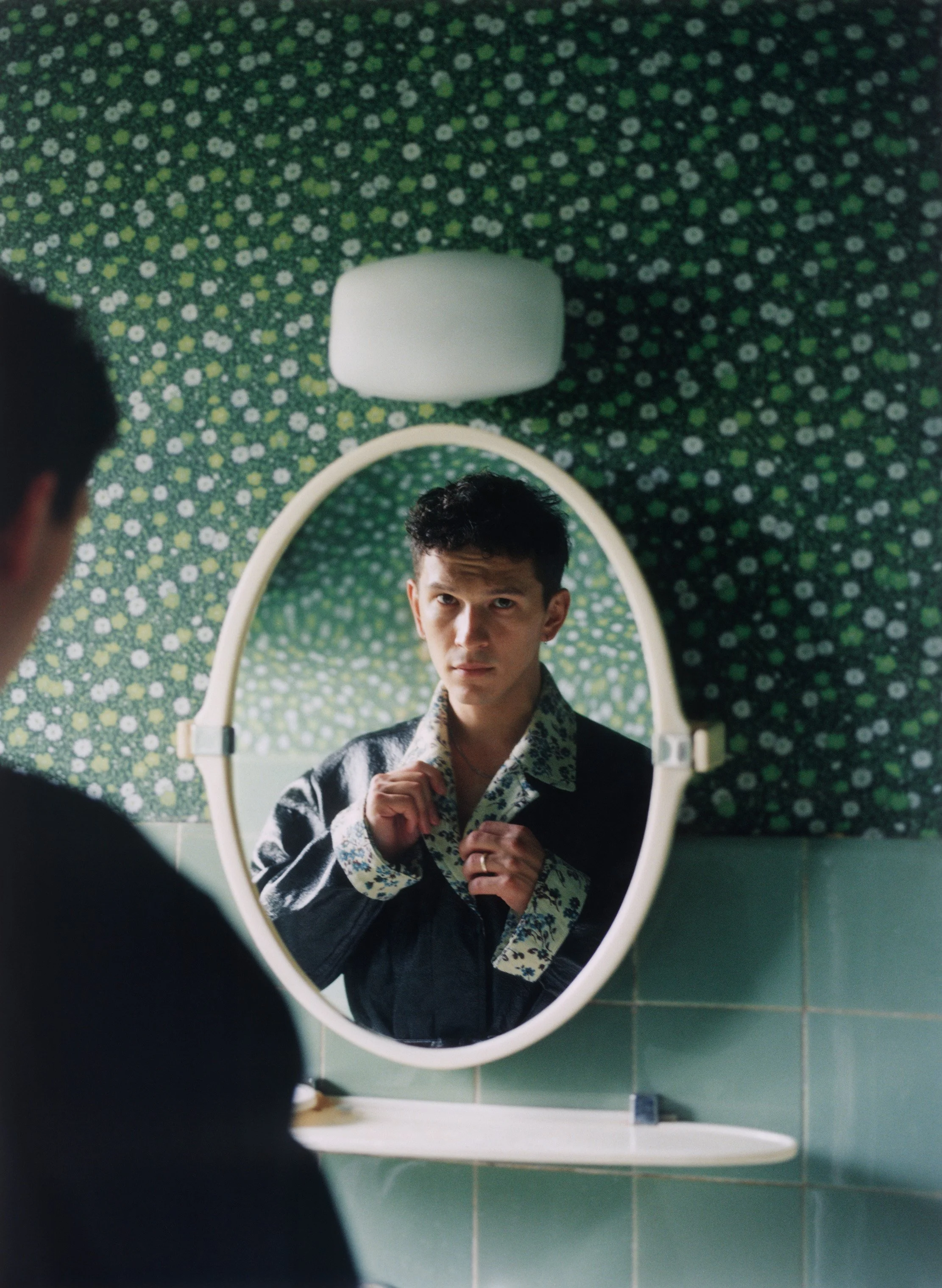
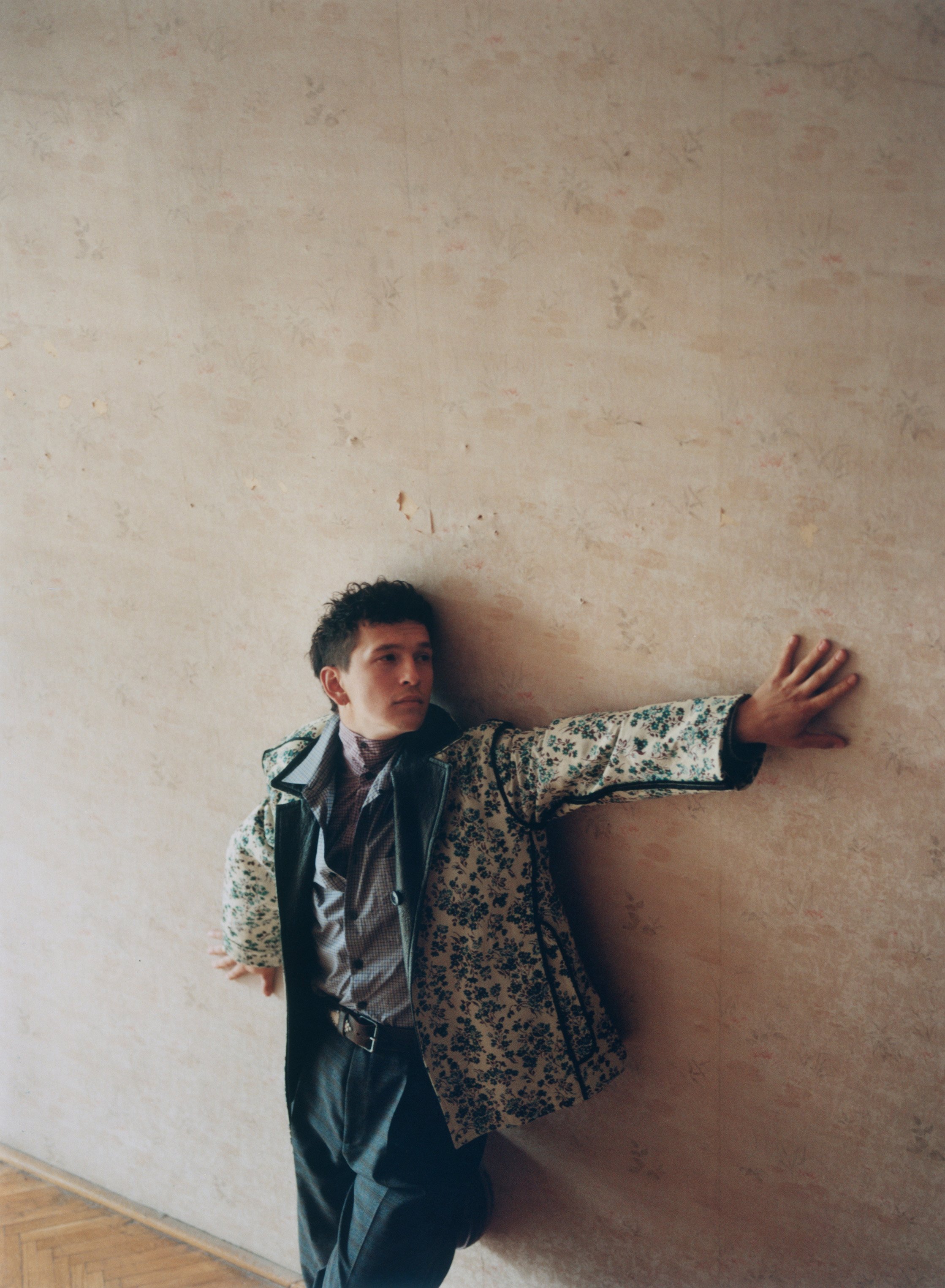
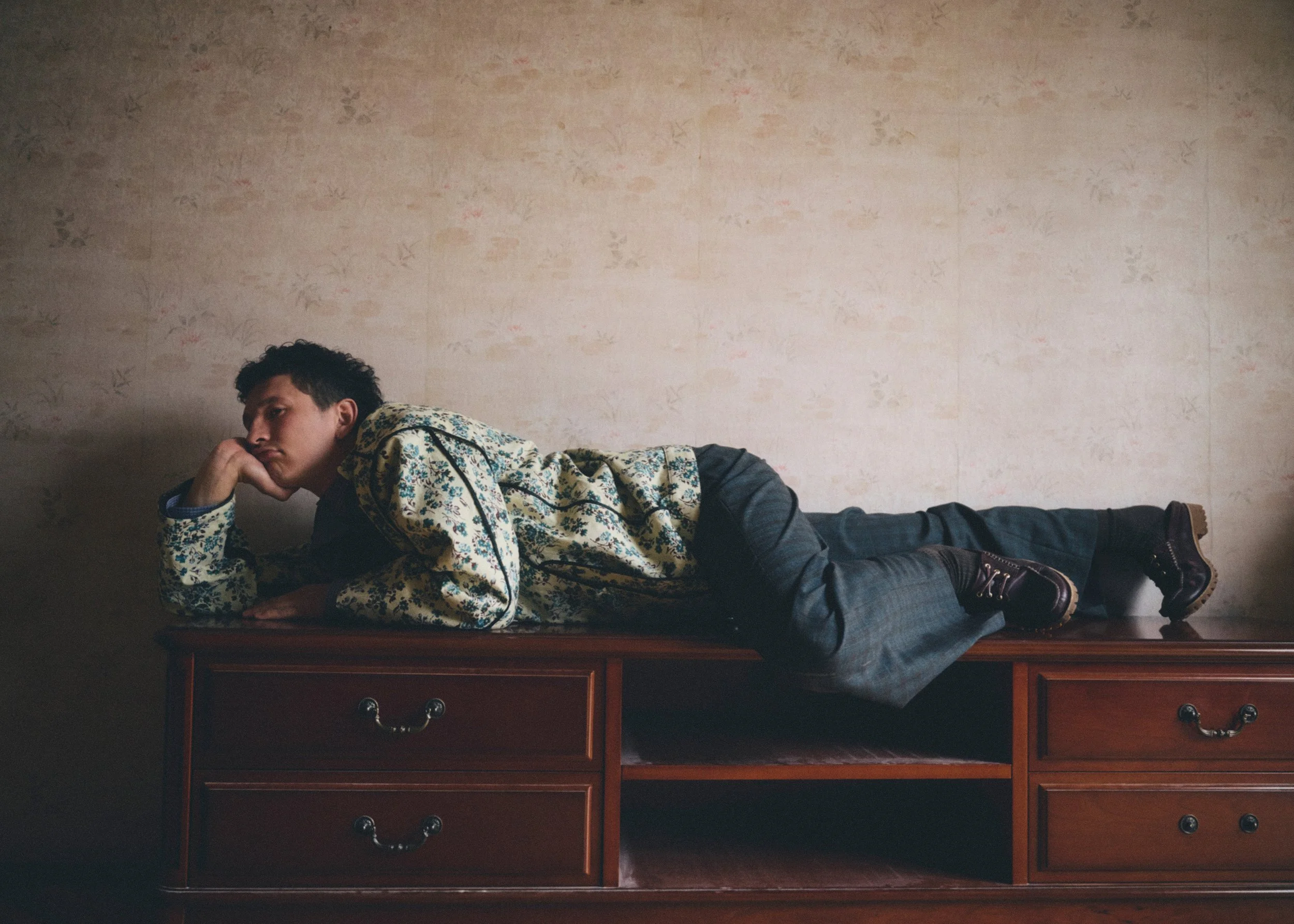
trousers and jacket DRIES VAN NOTEN, via DH VITKAC
Do you have any rituals that help you stay focused and present while navigating the uncertainty of an acting career?
I'm still working on it. I run a lot and exercise, and it's really good for my mind. For example, I've gone two months without working, just living my life with my son, and you can go a little crazy because you don't know when the next project will come.
Right now, I know I'm starting a new project in a month, so I feel calmer. But it's strange because one day you're at a festival, receiving an award, feeling like the world is yours, and the next day you don't know what you're going to do tomorrow. You're playing PlayStation or trying to read a book, but you fall asleep. It's unhealthy.
I've been thinking about this a lot, especially over the summer, because that's exactly what happened to me. I still love this job, but you have to be strong and confident. It's difficult when you're not sure when you're going to work again, even though you know you probably will.
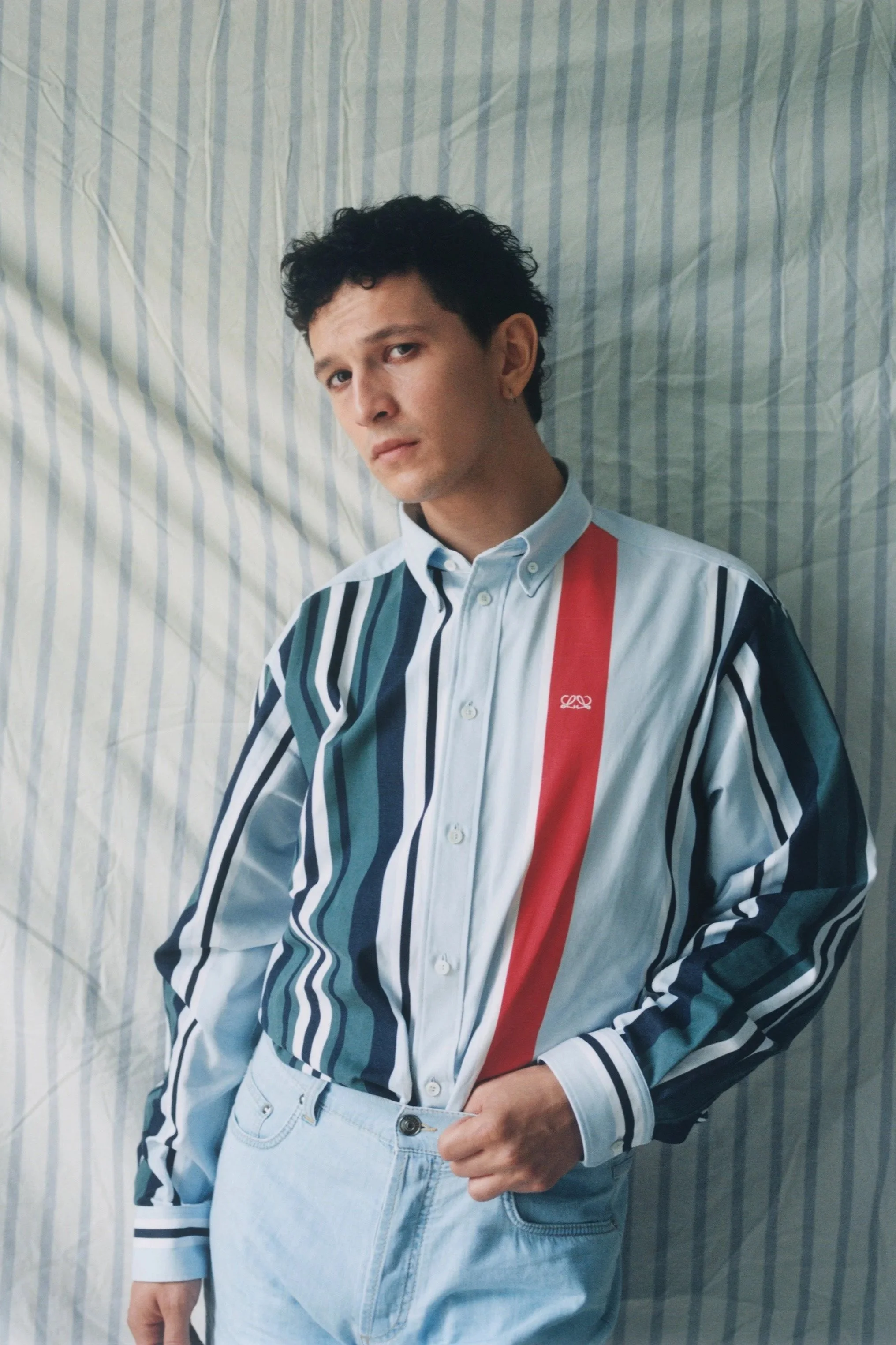
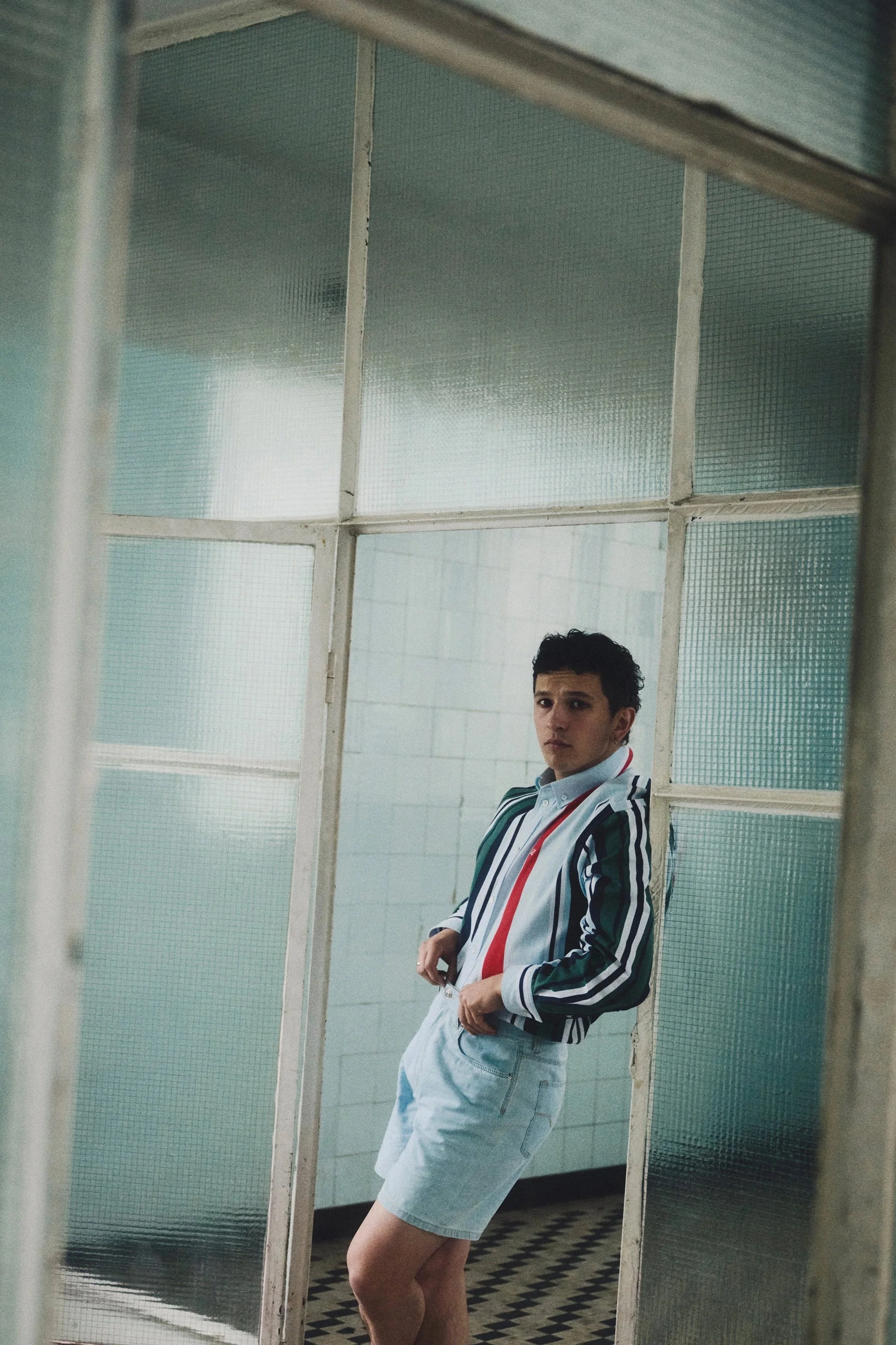
shirt LOEWE
shorts VERSACE
You have built your career across film, television and theatre, and you are currently part of the ensemble at the Polish Theatre in Warsaw. What does each of these spaces allow you to explore as an actor that the others cannot?
For me, theatre is like a workshop. You can experiment, make mistakes, search for things and keep developing your skills because there is always another rehearsal. It also pushes me to read, whether that means the classics, new books or contemporary plays. I see it as a way of educating myself. I don’t always love the plays I’m in, but even working on something that doesn’t immediately appeal to me can help me grow. In film and television, you draw on the skills you already have and need to be focused, because a scene is recorded and becomes part of the finished work. My heart is with film. I love making films, and I really believe in the value of theatre.
Your filmography moves between very different worlds, from Forgotten Love to Photosensitive and now Proud. When you encounter a new character, what is it that makes you want to enter that particular world?
I look for the moral or intellectual value of a project. It doesn’t always have to be the leading role; sometimes I just want to help bring an idea to life. I’m interested in the script, the director’s vision and what they are trying to communicate through the film or series. Of course, actors sometimes have to take work for financial reasons, and not everyone has the luxury of choosing between many roles. But when I can, I try to choose projects whose ideas I believe in. For me, acting is a mission. I don’t want to work on something I strongly disagree with. I think artists have a responsibility to help people understand reality and one another, and that responsibility matters even in difficult times.
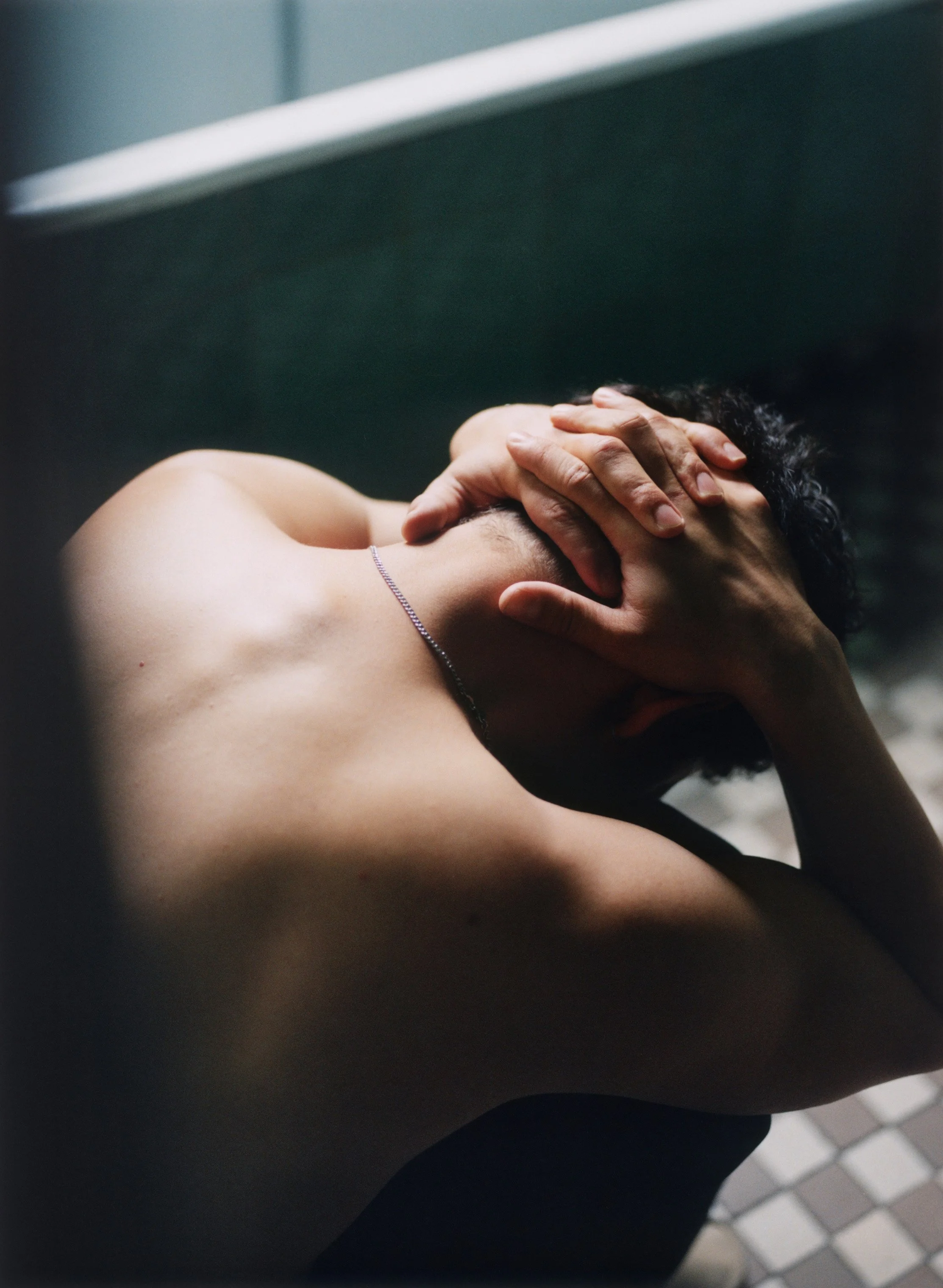
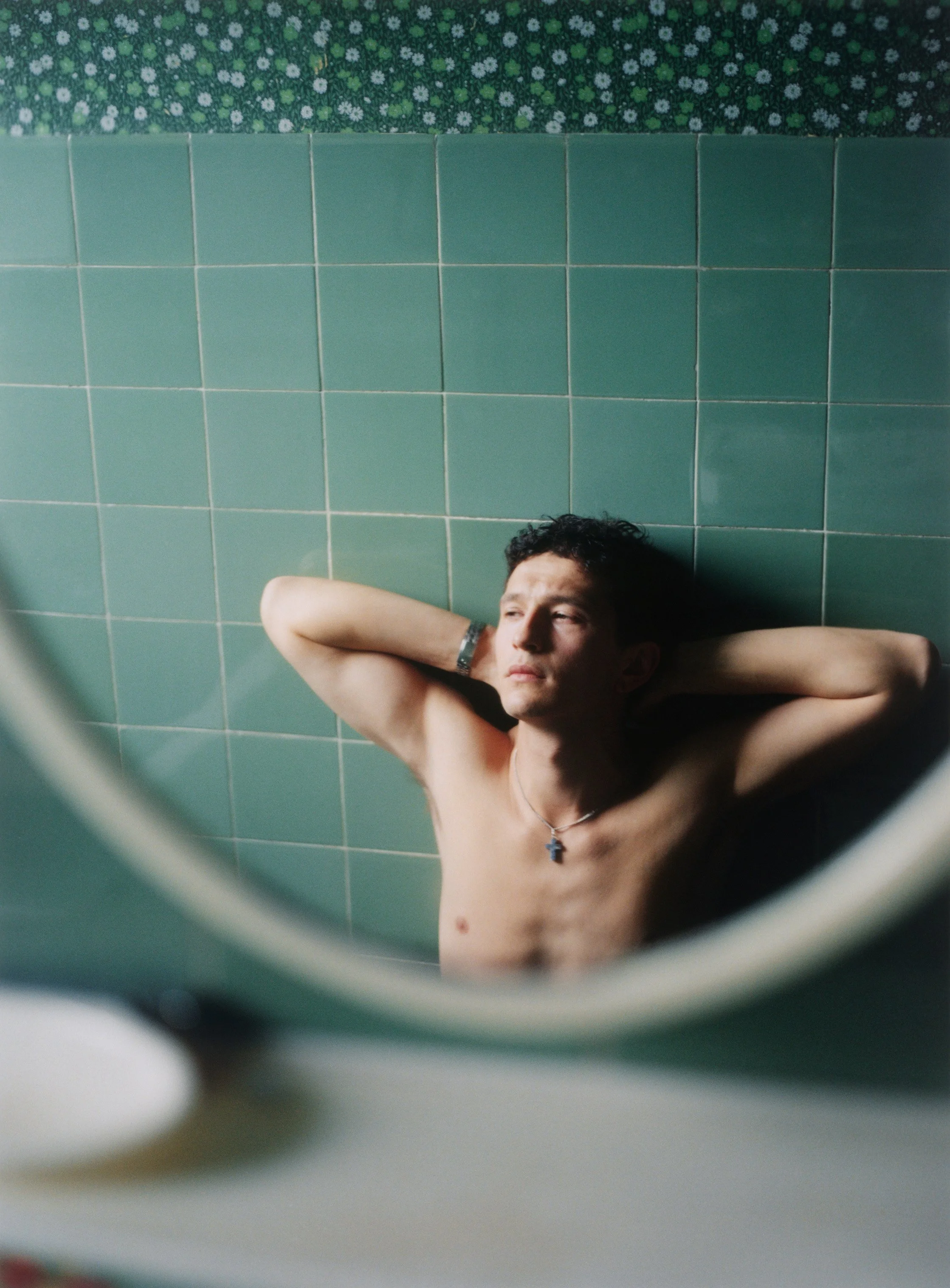
Coming from the Aleksander Zelwerowicz National Academy of Dramatic Art and now working professionally across different forms, your relationship with acting has continued to evolve through experience. Is there a particular part of the craft that you find yourself increasingly interested in today?
I keep coming back to the idea that acting requires empathy and a willingness to keep learning. Theatre helps me challenge myself with roles that may not naturally fit me, while film and television ask me to use my skills with precision and focus. I’m also increasingly aware of the value of the stories we choose to tell. I want to be part of projects that have something meaningful to say and that can help us understand other people and the world around us.
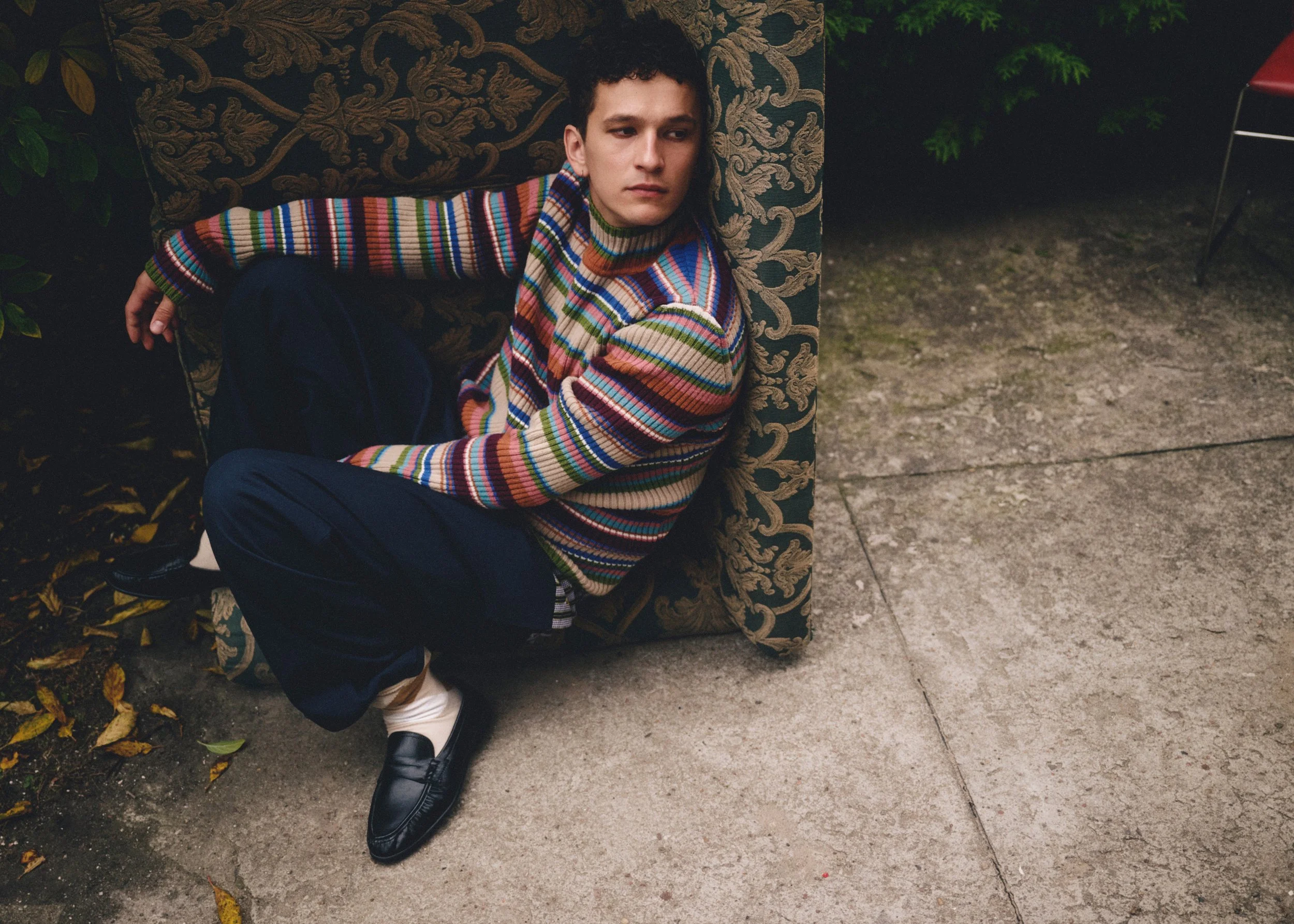
sweater and trousers DRIES VAN NOTEN, via DH VITKAC
shoes SAINT LAURENT
Recognition can bring a role to a wider audience, but the work itself often begins long before anyone sees the finished performance. Looking back at Proud, is there a particular moment from making the series that has stayed with you?
My relationship with the young actress who played my niece has stayed with me. Something magical happened during filming: we became so close that she treated me like a father. It was strange because I knew the work would end and that we would not see each other in the same way afterwards, but the connection was real. She would put her fingers in my mouth, and her parents, who were behind the camera, would reassure me that it was all right. It became even more meaningful because I had just found out I was going to be a father myself.
The stories people shared with me after the series also stayed with me. A friend told me about his partner, with whom he had been in a relationship with for fifteen years. His partner was taken to hospital, and because they were not legally recognised as a couple, my friend struggled to get information about what had happened to him. Thankfully, they are still together, but the experience showed how painful and unfair the system can be. Stories like his made me understand how important Proud was for some people. I’m also still close to the director and producer; I had never met people like them in my career before.
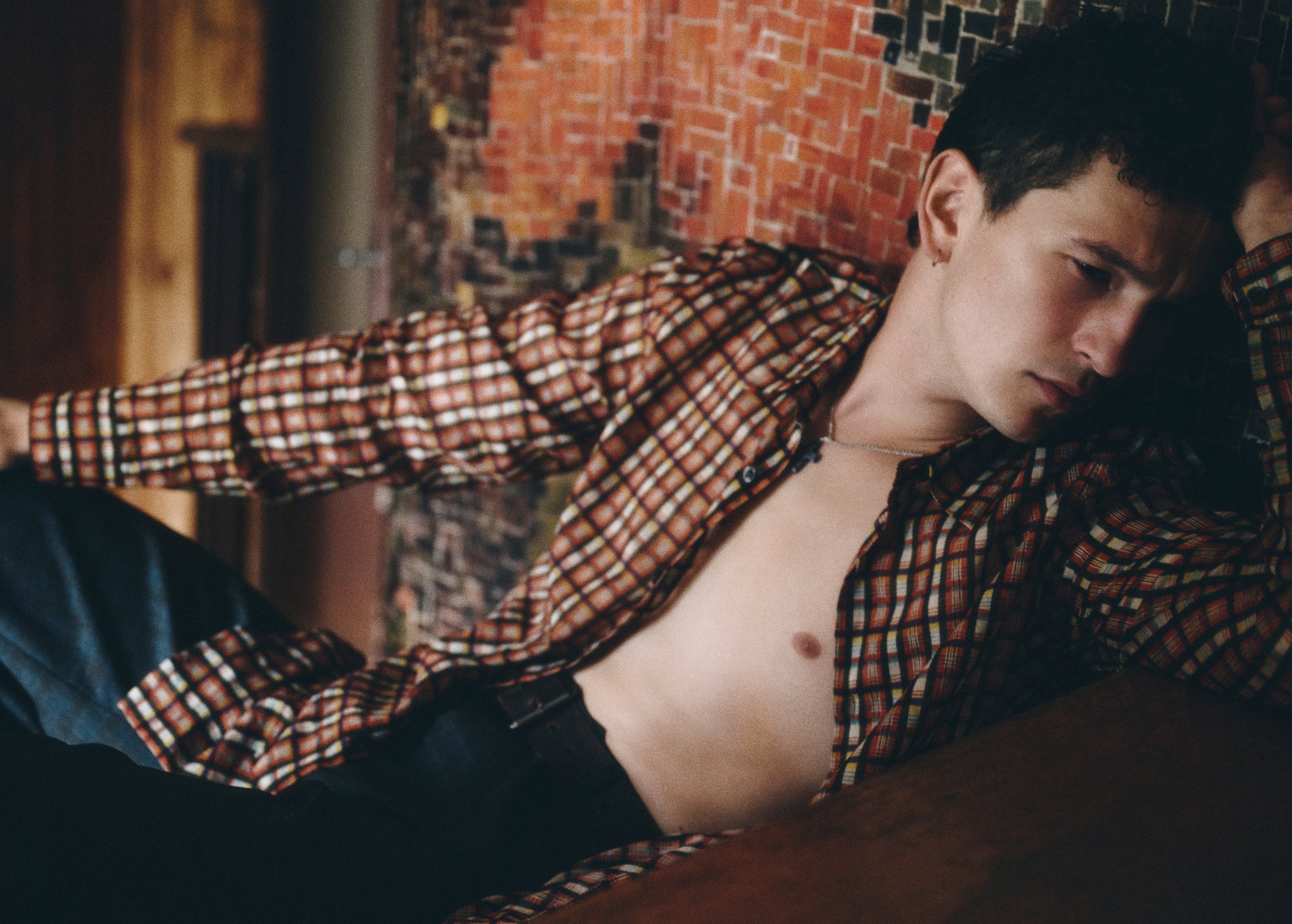
full look DRIES VAN NOTEN
Is there a film that has stayed with you over the years, or one that changed the way you think about life, acting or cinema?
Manchester by the Sea stayed with me. I watched it when I was about seventeen and just beginning to think seriously about becoming an actor. Casey Affleck’s performance made a strong impression on me, especially the way the film gradually reveals what the character has been carrying. I also remember Crash, with its interconnected stories and the way it addresses social and political issues. When I was younger, Moulin Rouge! made me want to fall in love and sing to someone, and I loved fantasy and science fiction, especially The Lord of the Rings, Game of Thrones and Star Wars. I also love Snatch and the work of directors such as Guy Ritchie and Quentin Tarantino. I’m drawn to filmmakers who are confident enough to play with cinema and have fun with the form. More recently, the movie that has stayed with me the most is definitely Coward.
TEAM CREDITS:
talent IGNACY LISS
photography DOROTA SZULC
styling DAGMARA LOJEK
makeup and hair MARIANKA YURKIEWICZ
production KAROL KOTARSKI
retouching and final grade PATRYCJA GACKA
1st assistant OTTO SOT
2nd assistant WIKTOR PAWLIŃSKI
grip equipment
lab BROOKLYN DARKROOM
prints KACPER RZYWICKI
editor TIMI LETONJA
interview LEANDRO DA SILVA and TIMI LETONJA
cover design ARTHUR ROELOFFZEN
