
interview by JANA LETONJA
With an impressive career spanning acting and producing, Jaime Ray Newman has established herself as a multifaceted force in Hollywood, combining compelling on-screen performances with a passion for bringing meaningful stories to life behind the camera. Currently captivating audiences in Netflix’s hit drama The Hunting Wives, she is preparing for another exciting chapter as the series returns for its highly anticipated second season on November 26. She will also appear as Amelia Hunt in Netflix’s The Murder of JonBenét Ramsey, arriving December 10th, further demonstrating her versatility as a performer. Beyond acting, Jaime is an Academy Award-winning producer who co-runs New Native Pictures with her husband, filmmaker Guy Nattiv. Their latest collaboration, The Liberation, featuring Carrie Coon and Lily James, marks another significant addition to her growing portfolio of ambitious projects. The film, being distributed via Bleecker Street, will release on January 8, 2027 in the US.
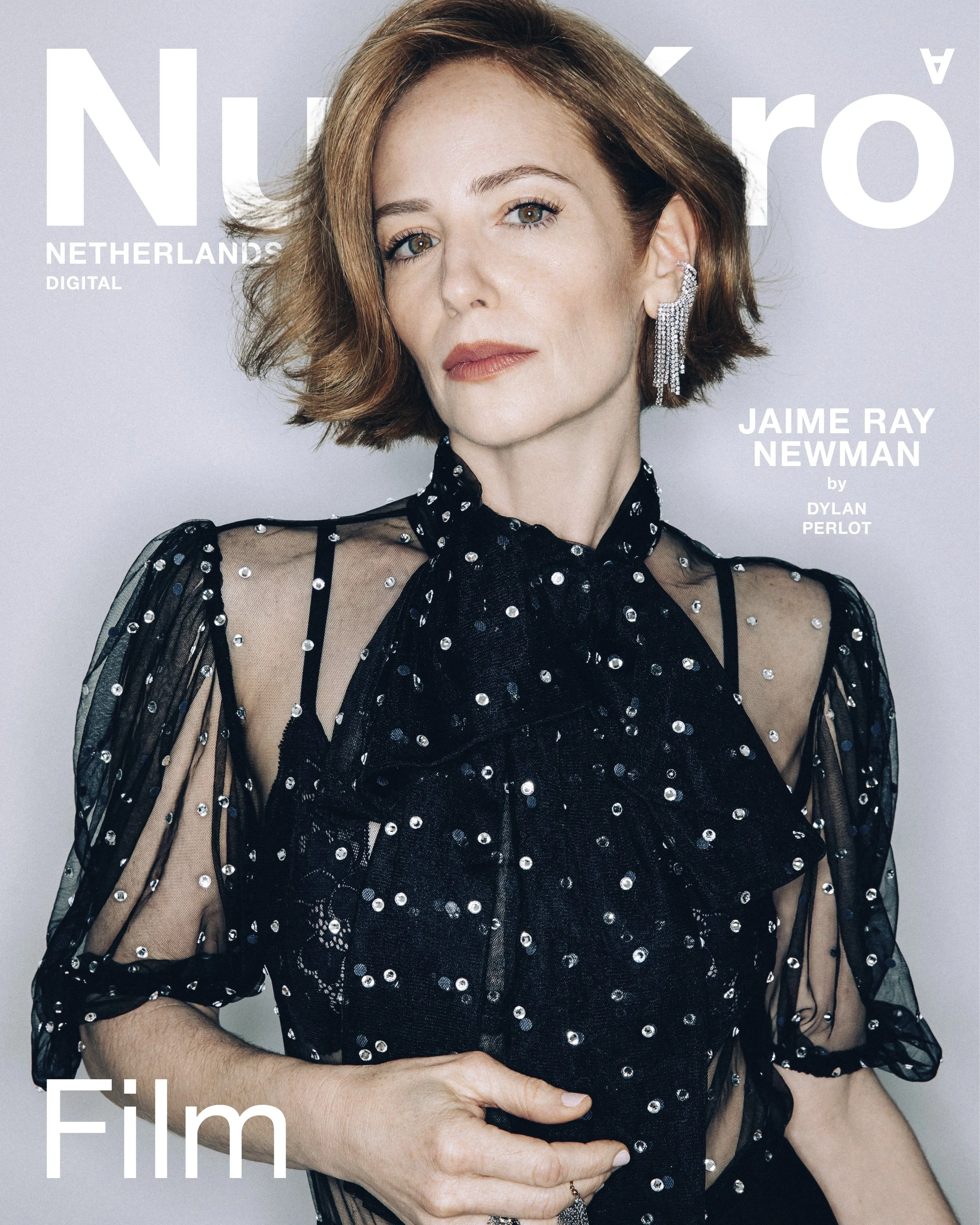
bodysuit BRONX AND BANCO
earring NADRI
You’ve built an impressive career both in front of and behind the camera. Looking back, how has your relationship with storytelling evolved, and what continues to inspire you to explore new creative challenges?
I’ve wanted to be a performer since I was eight years old, but my dream was always to star in a sitcom. Instead, I somehow ended up building a career in dark dramas. As an actress, I’m open to a wide spectrum of roles, whether it’s popcorny fun, and full of escapism like The Hunting Wives, or something much heavier like The Murder of JonBenét Ramsey. I want to stretch my wings as wide as possible. But as a producer, because it takes so many years developing and working for free before bringing a project to fruition, I’m much more selective with how I spend my time.
In terms of inspiration, my favorite time of year is October through December when we get to go see all the Academy screenings. That’s always my date night with my husband, seeing movies from all around the world. Whenever we’re in a creative rut, we go see a movie from Spain or South Korea or Brazil to get reinvigorated, and we remember exactly why we push so hard to make our art.
Hollywood is an industry that constantly evolves, particularly in terms of opportunities for women. What have been some of the most defining moments in your career, and how have they shaped the creative choices you make today?
I have been lucky enough to work professionally in this business since I was 22. Though ironically, in an industry that is notoriously harsh towards women as they age, I’ve found my biggest success in my late 40s on a show about women rediscovering themselves emotionally, sexually and professionally. What I love about this business is that there are no rules. You can be successful as long as you’re continuing to build, and you’ll eventually land something that sticks. I think that there have never been so many opportunities for women of all ages. I just worked with Dale Dickey on The Hunting Wives, who’s having a total revitalization of her career after Widow’s Bay, and June Squibb has released multiple films in her 90s. As long as you can hold on to the rollercoaster, there’s always hope to find that role or project that sticks.
You’ve portrayed a wide range of characters throughout your career. What qualities attract you to a particular role, and how do you recognize a story that feels personally meaningful?
The honest answer, an audition lands in my inbox from my amazing kick ass agents and manager. I’m able to be a little more choosy for the first time in my career, but typically I go in and audition, wait wait wait, and say “bring it on!” if I’m lucky enough to get the job.
After I did the Hulu mini series Dopesick, people said, “Wait you were in Dopesick? Who were you?” That’s the biggest compliment I can get. Since I cut my hair short, I’ve worn a lot of wigs on screen. Wigs are my “gateway drug”. I settle on hair first, then I can start to enter into the person I’m playing. I love running the gamut between someone glitzed up with a full face of makeup and high heels, to someone more scrappy, bare, and raw like in The Liberation. It’s a freedom you earn as you get older and care less about being “desireable”, and more about creating something human, even if it’s considered a comedy, or heightened reality. I really do love playing women as far from myself as possible. And give me an accent, I’m in heaven.
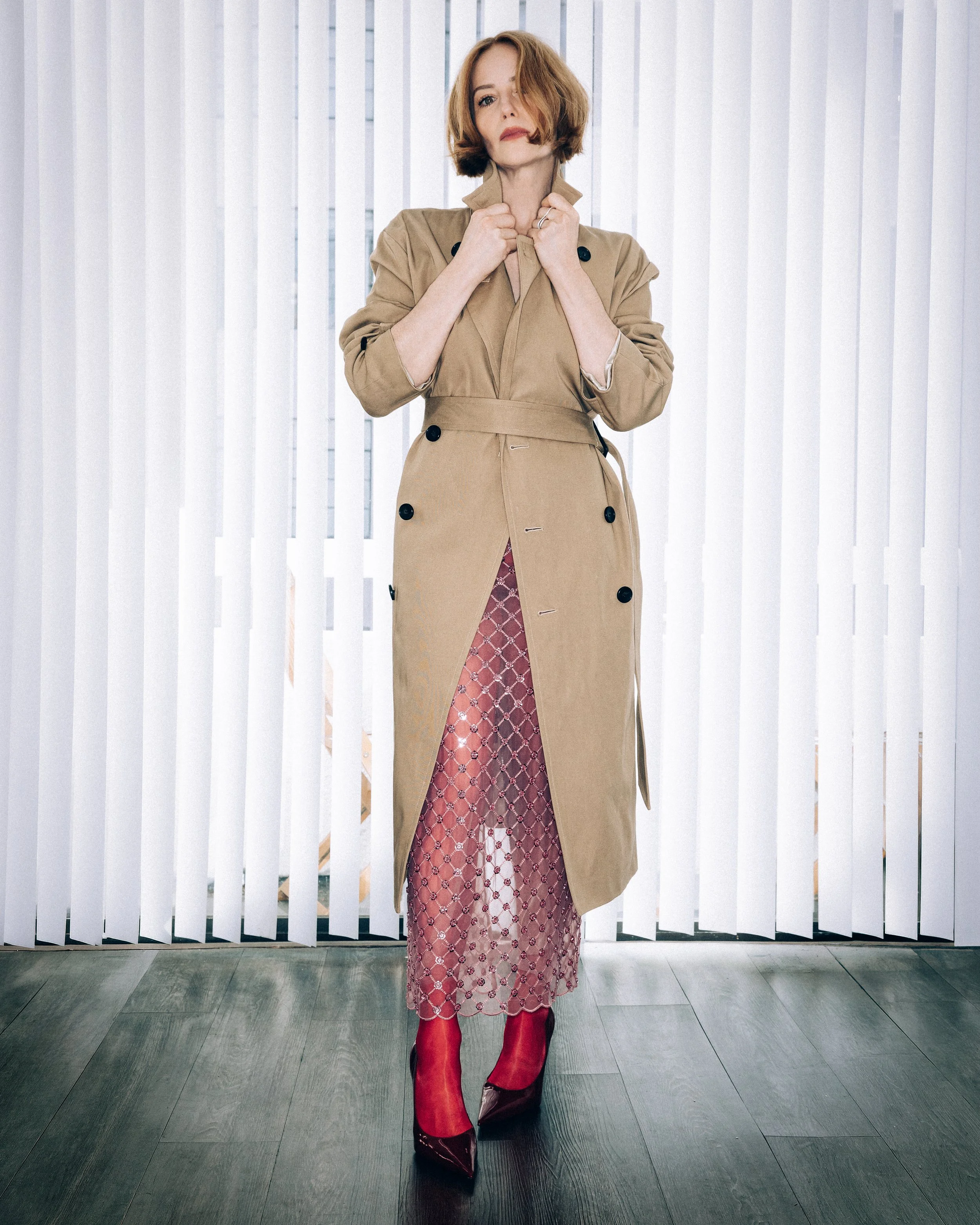
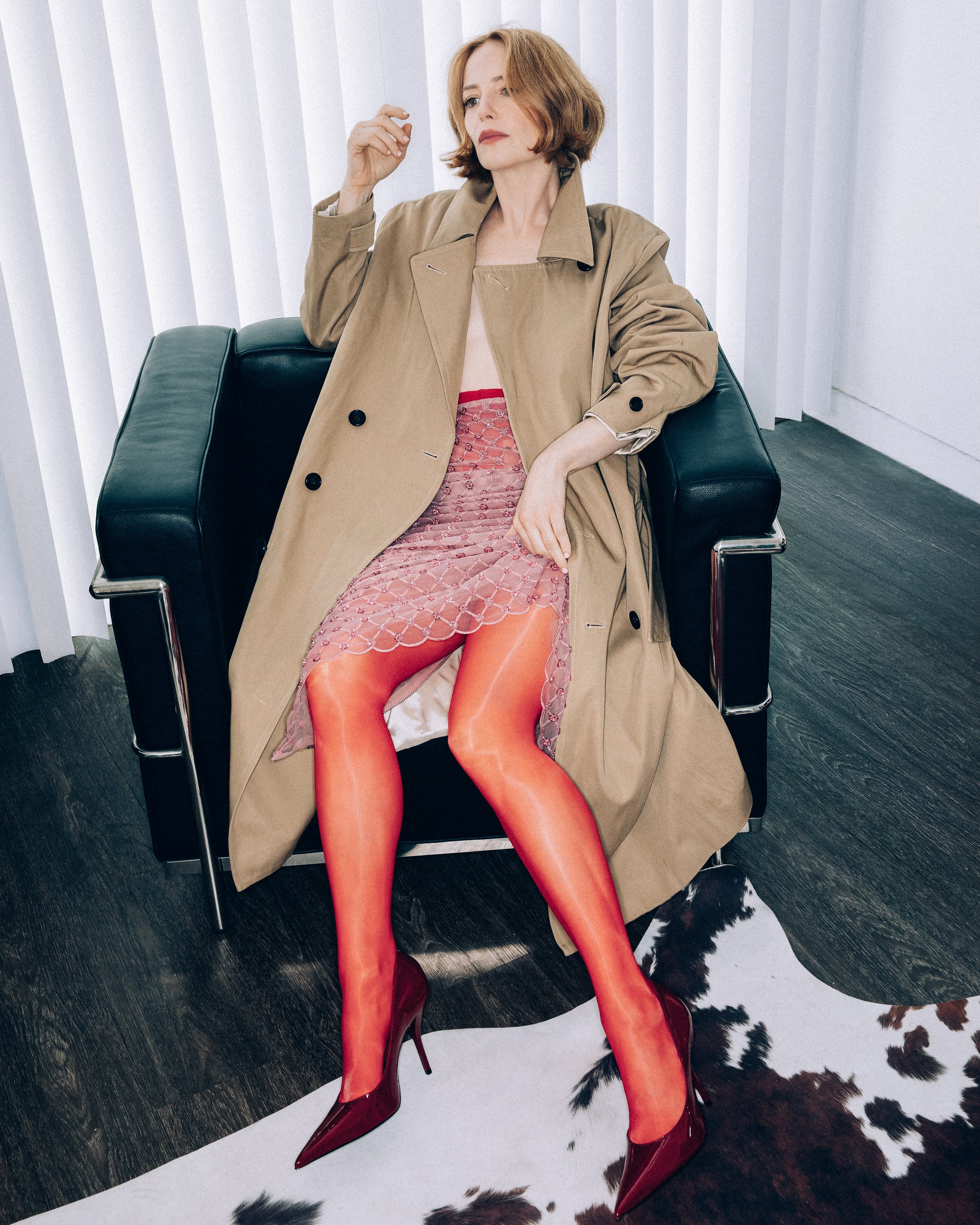
trench coat VINCE
skirt BRONX AND BANCO
pumps SCHUTZ
The Hunting Wives became one of Netflix’s most talked-about series, attracting an enormous audience during its first season. What do you think makes its combination of glamour, suspense, complicated relationships, and dark secrets so irresistible to viewers?
I think that studios are waking up to the fact that women spend money and want to see themselves depicted on their screens. A combination of escapism, aspirationalism, and nonstop drama is something we all need more of in our lives. I think it hit a perfect middle ground between liberals and conservatives, gay and straight people, and the ingredients created a perfect soup. People tell me they’re obsessed with the show daily, and it’s so exciting to now watch it grow. It truly is a Cinderella story.
With the second season arriving, how does your character evolve, and what new aspects of her personality or motivations are you most excited for audiences to discover?
In season two, Callie gets a real fleshed-out storyline. You see a lot more of her relationship with her husband, and Callie realizes there’s a bigger world outside of Margo. In a show created by Rebecca Cutter, our showrunner, no one stays happy too long. But it leaves Callie on a mission for revenge. I don’t know what season three entails, but I think she will be on a mission to seek justice.
I had so much fun playing Callie’s full range of emotions in season two. Every day on set was a new adventure. The wig has even more extensions, the make-up is even more bumped up for Callie’s reality show, the clothes are sexier, and the emotions are amplified to the extreme.
The series explores themes of power, desire, ambition, and the complicated dynamics between women. Which of these themes resonates most strongly with you, and how do they influence your approach to your character?
Not since middle school have I had relationships with women like I do in The Hunting Wives. At times I drew on memories of middle school bullies to inform my work. Thankfully, my relationships with female friends are much healthier now. This show was the total cosplay version of what those relationships could look like, so I got to use my imagination a lot. Though I do have two daughters in elementary school, and sometimes stories from their own social dynamics really remind me of certain situations in The Hunting Wives. The show is like high school, but with oil money.
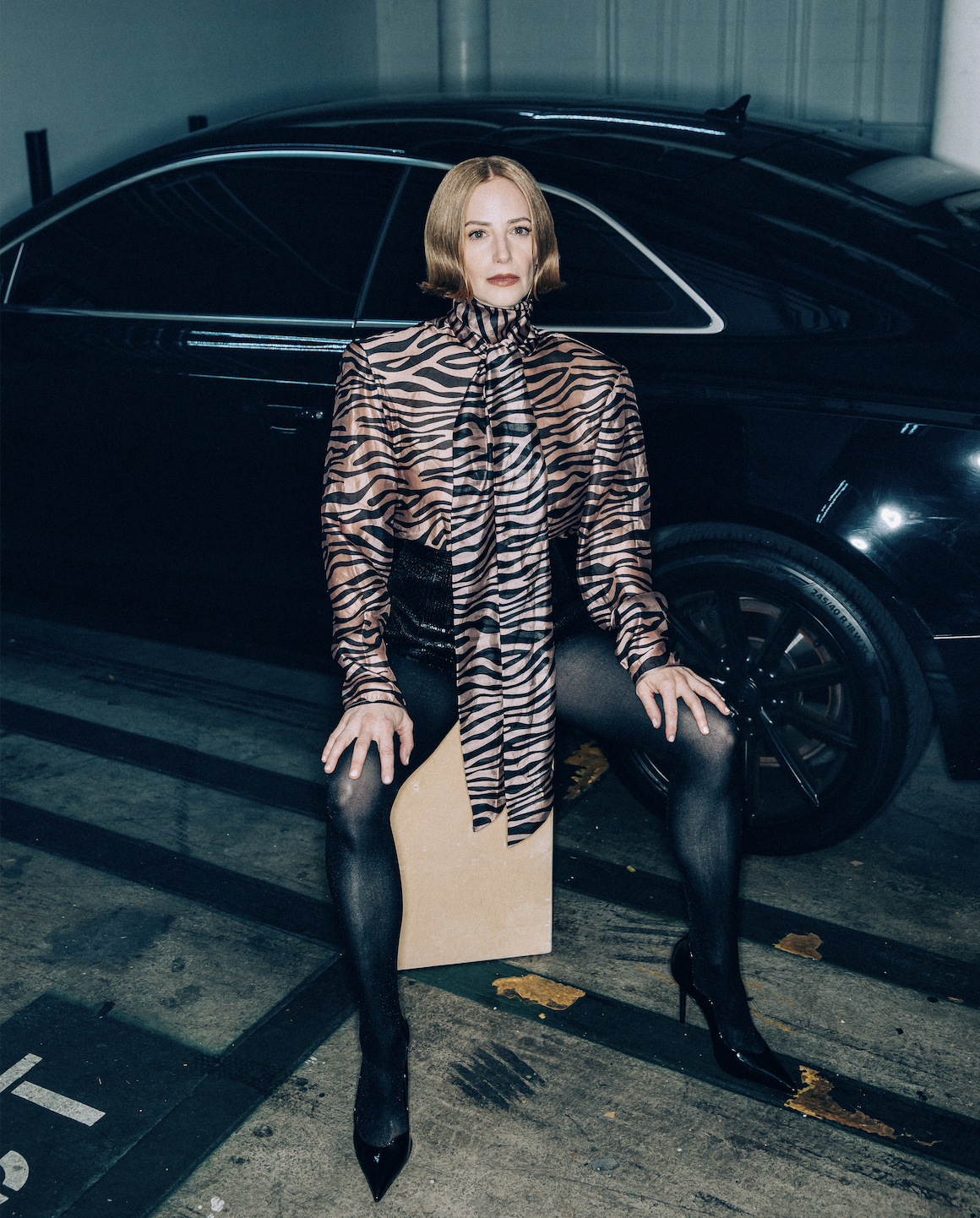
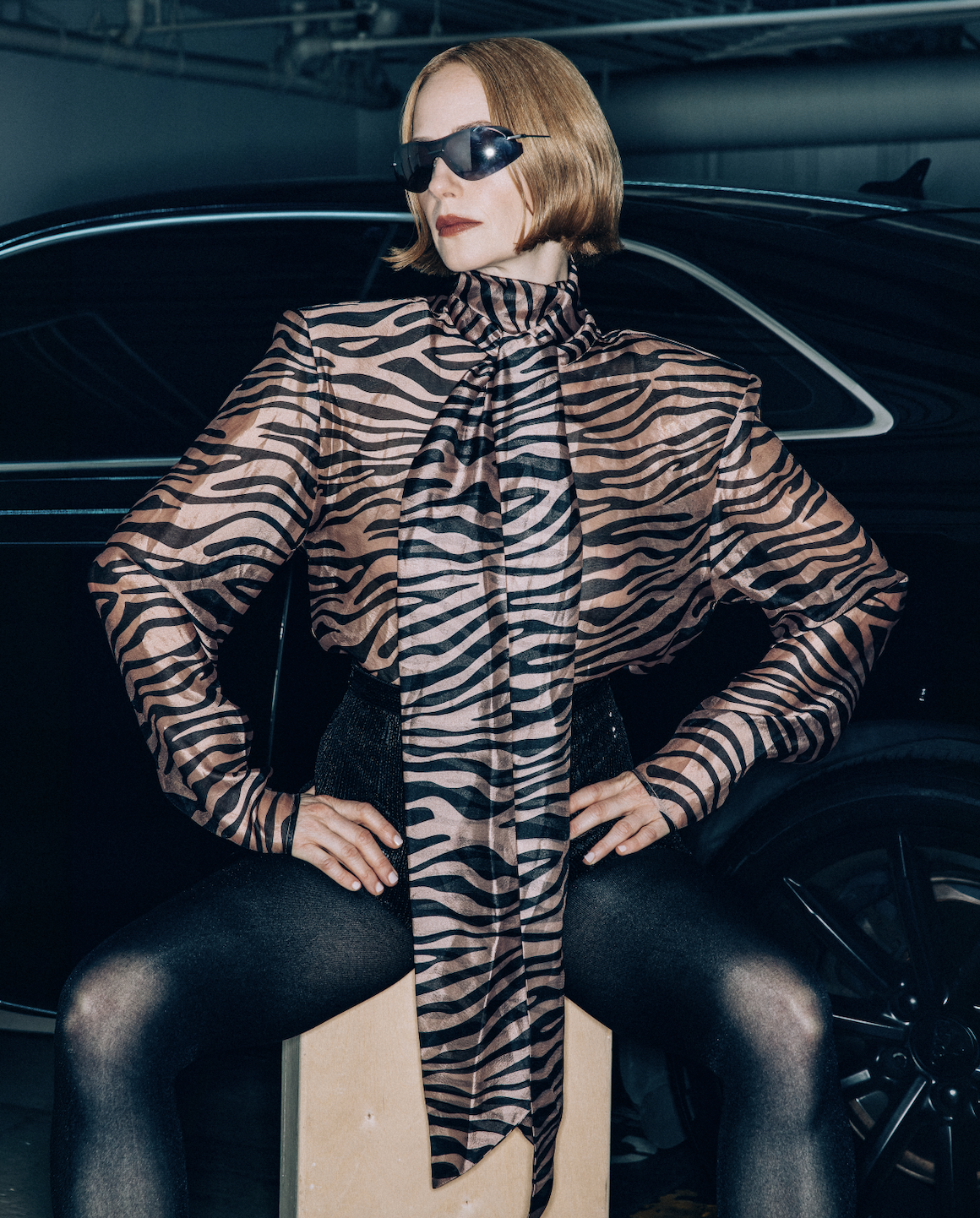
blouse and shorts BRONX AND BANCO
pumps SCHUTZ
sunglasses CUBITTS
You’re also appearing as Amelia Hunt in Netflix’s The Murder of JonBenét Ramsey, arriving this month. What attracted you to the project, and what can you share about your character and her place within the story?
Well, I just auditioned, unsure of where it would lead, but when I was offered the role, how could I not desperately want to work with Melissa McCarthy, Clive Owens, and that whole incredible cast? Melissa McCarthy gave one of the most extraordinary performances I’ve ever been lucky enough to witness. She came to set every day so full, so deeply in it, and always kind. She reminds me a lot of Carrie Coon and how she approached emotionally complex work on The Liberation. Melissa remained so lovely while simultaneously immersing herself into such deep grief for six months. I don’t think I’ve ever experienced something like that.
My character is based on a real person, Patsy Ramsey’s best friend. In the real story, Patsy was at my character’s house on the night of JonBenét’s murder. My husband and I tried to help solve the case, and eventually it broke the friendship apart. We were later accused of maybe murdering JonBenét, and it all just got so dark.
What’s interesting is that this project shows how we as bystanders are at fault for sensationalizing and exploiting this horrific situation. It’s a little bit of “shame on us”, and gives a lot more empathy to the family. To this day, no one knows what happened to her. The murder was never solved. But for me, I got to work with my heroes while hopefully humanizing their story.
You’re an Academy Award-winning producer, an achievement that reflects another important dimension of your career. What initially inspired you to move into producing, and what do you find most fulfilling about developing projects from behind the scenes?
I met my husband and producing partner 17 years ago. We were set up by a mutual friend because I was interested in producing, and I was a fan of his work, as he had already made three features. We later acquired the rights to the real story behind the feature length version of SKIN. Guy moved to the States, he wrote the script, and no one wanted to make it. So the first thing we produced together was the short film SKIN. Never in our wildest dreams did we imagine it would go on to win the Oscar.
What I love about producing is that it’s the exact opposite of acting. As an actor, you’re completely dependent on other people giving you jobs and sending you what they think is right for you, whereas as a producer, it’s completely up to my discretion what I work on. It’s a much clearer reflection of my taste, and I’m always working on 10 or 12 projects at a time. Every morning I’m scavenging for new projects, and whether or not I have an acting gig that day, I always have work as a producer. So the careers work in tandem with each other. My 8-year-old told me she wanted to become an actress one day, and I said, “Great! But you’ll also need to be a director and a writer and a producer.” There are very few people these days who can be only actors, but I love that my 20+ year career can now sustain both.
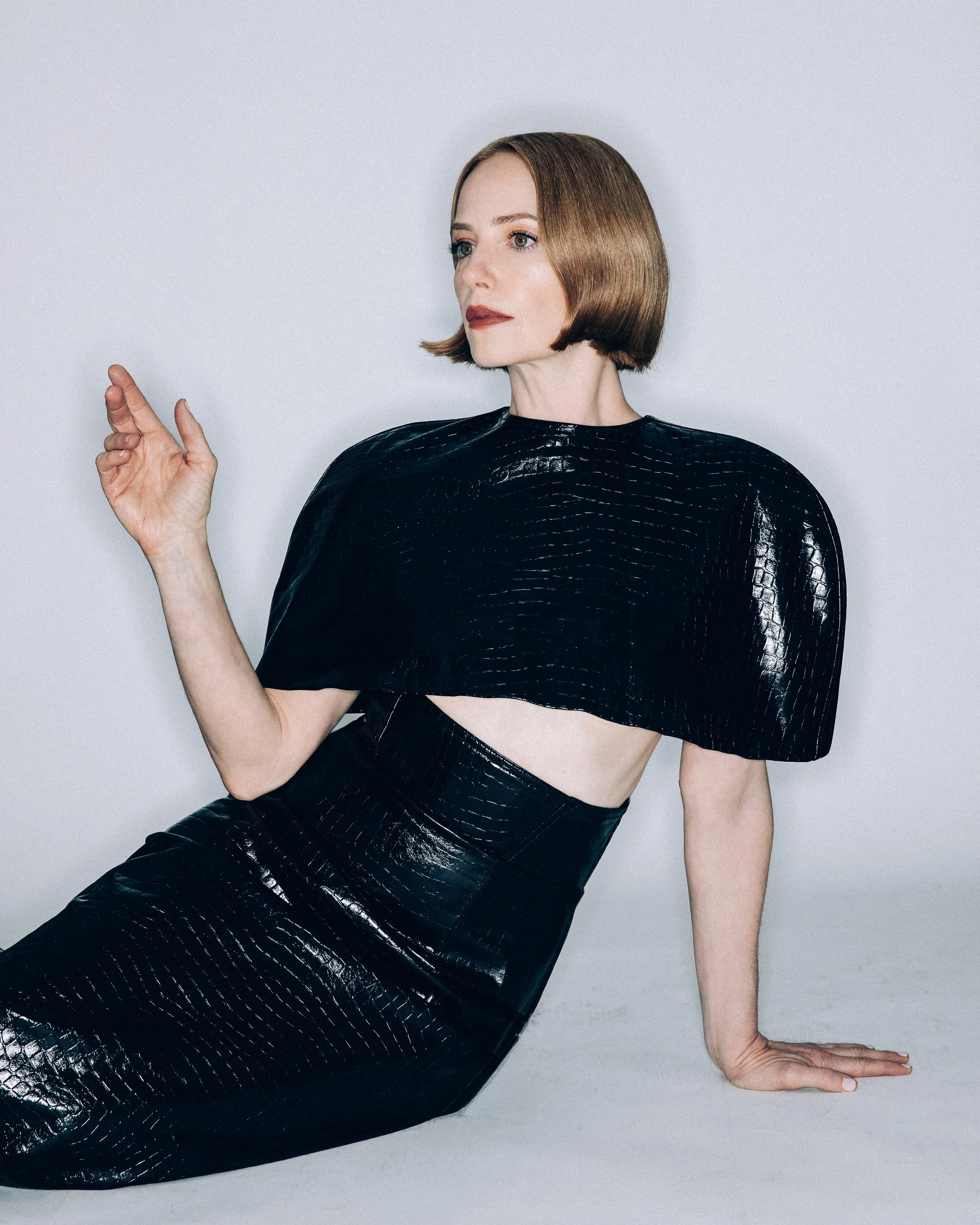
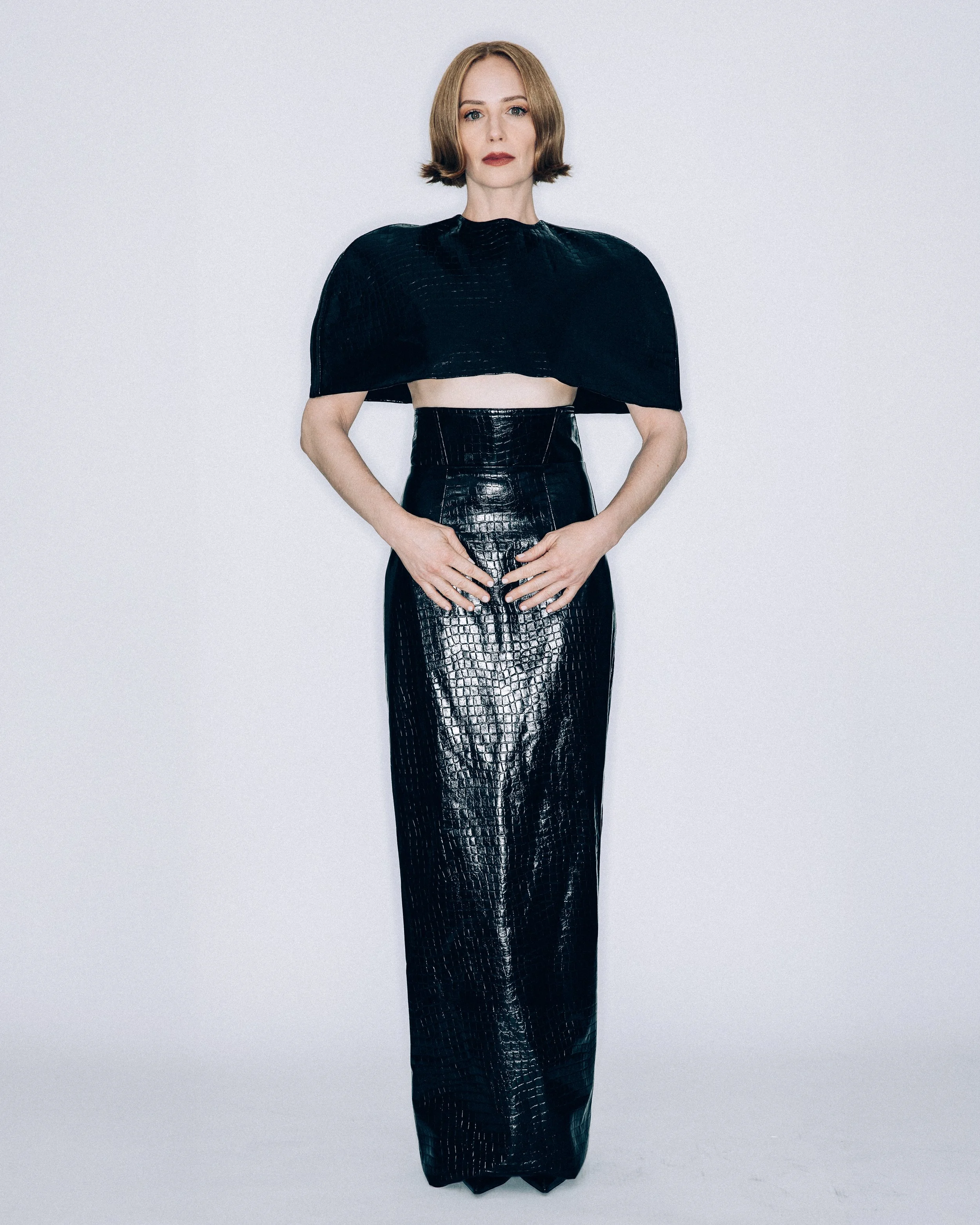
top and skirt BRONX AND BANCO
boots SCHUTZ
Your upcoming film The Liberation, which you are producing and appearing in alongside Carrie Coon and Lily James, represents another exciting creative collaboration. How has it been bringing this film to different festivals and starting to see the incredible reaction from all different kinds of audiences to this personal story?
When Guy and I first met in 2009, on our very first date, he told me the story of his grandma. She was a Holocaust survivor who never dealt with the pain of her PTSD, and it led her to eventually leave her family to join a commune in the woods in the 1980s. It took many years to make the film, and it’s an incredibly emotionally overwhelming feeling to now have that story out there, but it’s so amazing to see the reaction to Carrie’s performance. It’s a hard film for Guy’s family to watch, but it’s also been very very cathartic for them. They’ve had many conversations about her and how to process her journey in a more empathetic way. It’s been an extraordinary experience watching brilliant actors like Carrie Coon, Lily James, Bella Ramsey, Odessa Young, and Tracey Letts do their thing. I would jump up and down at the monitor watching them work.
As a producer, you have the opportunity to influence which stories reach audiences. What kinds of narratives are you most passionate about championing, and how do you hope New Native Pictures will continue to evolve?
Guy and I have pretty specific taste. We love true stories, we love difficult material, we love more B-side material. We always joke that our company should be called B-Side Pictures. We would love for everyone to see our films, but we have taste that’s very specific to us. There’s no better experience than walking out of a theater and talking about a movie the whole drive home, or throughout an entire dinner. Those are the movies we hope to make. Movies that provoke, elicit conversations, and encourage people to see things from new perspectives. We aren’t afraid of making very small movies, and we’d certainly love to make much bigger movies that reach a wider audience, but it has to have a certain level of provocation.
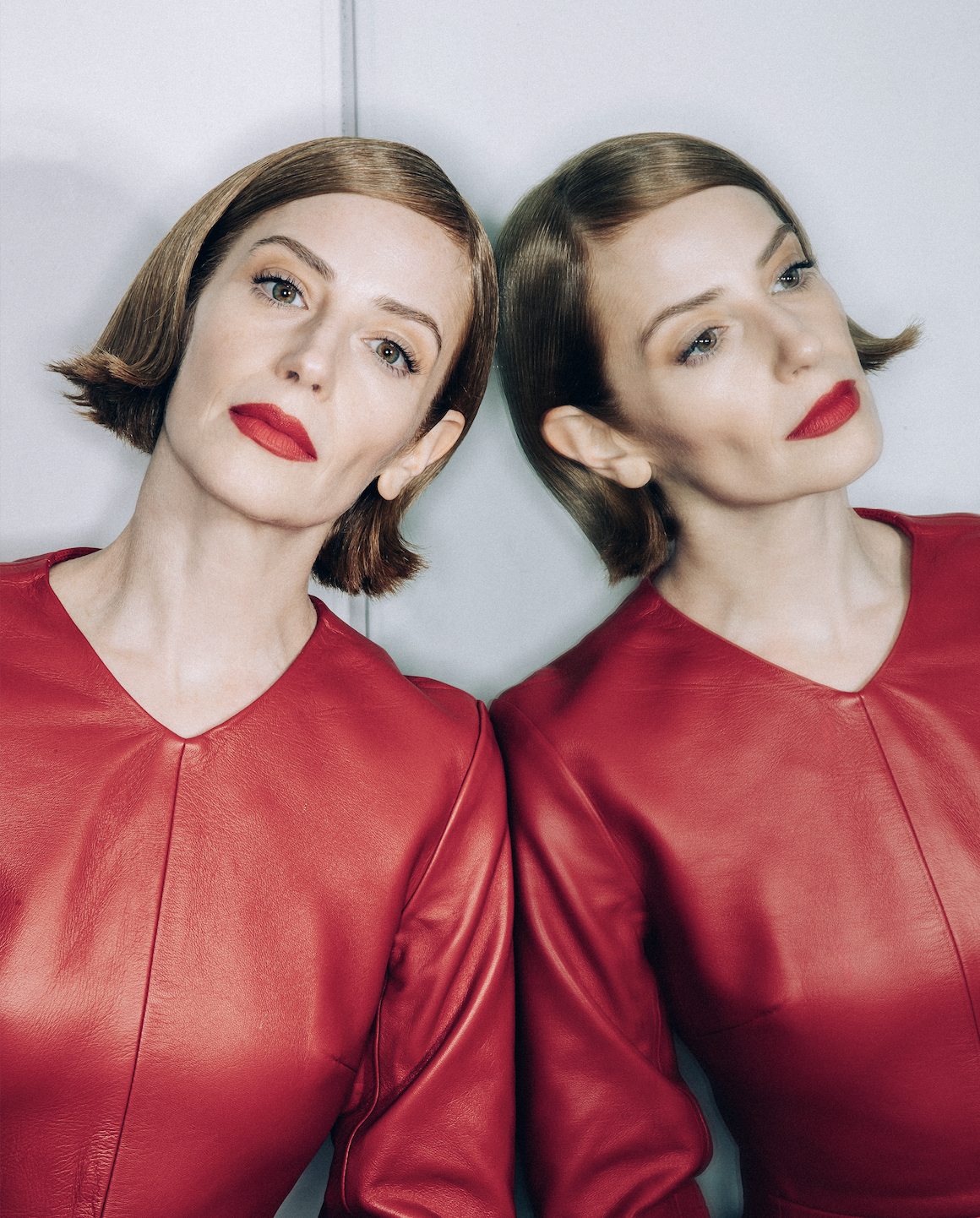
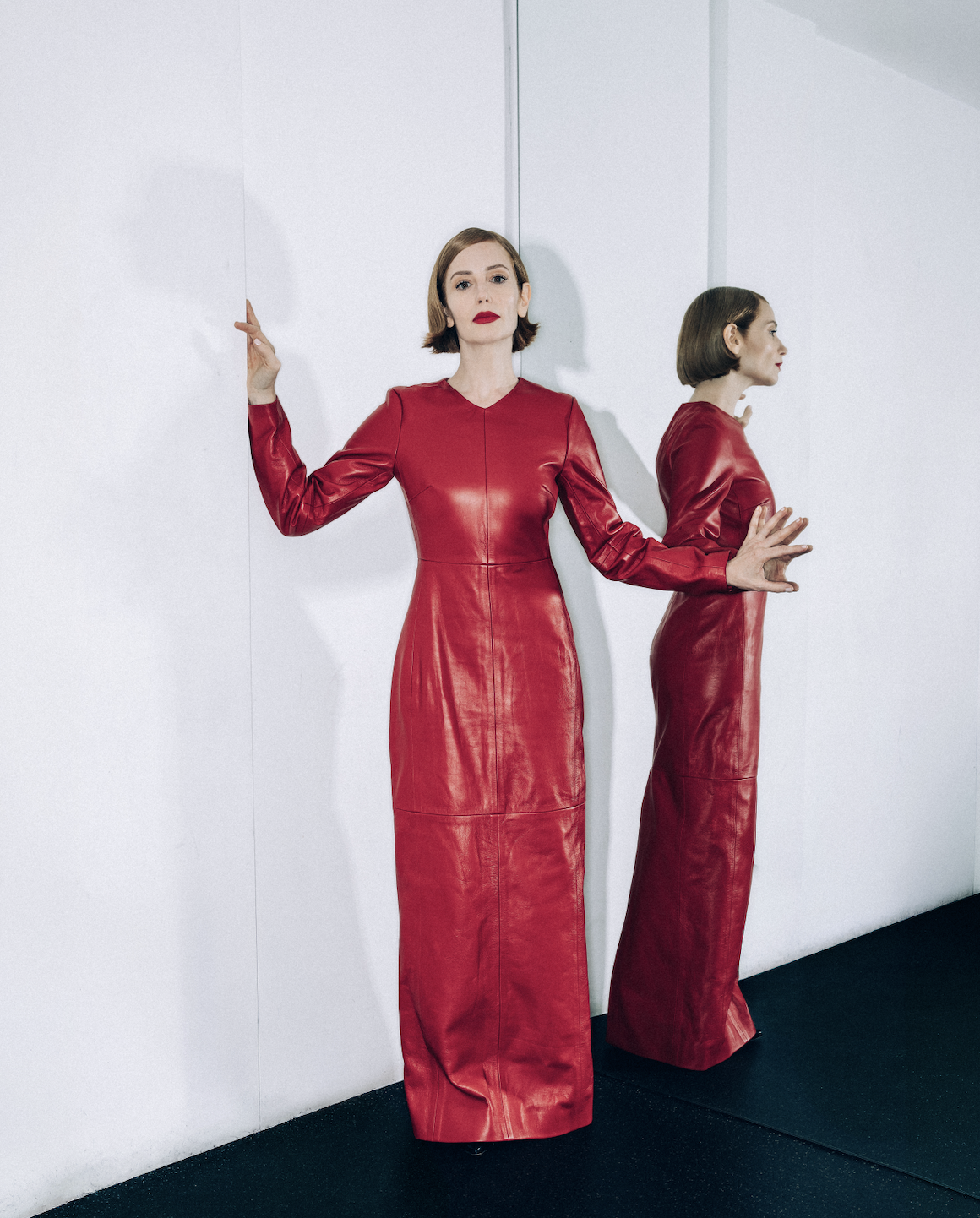
dress RÙADH
Balancing acting, producing, running a production company, and family life requires extraordinary dedication. How do you maintain a sense of balance and make time for the things that inspire you outside your professional world?It’s basically impossible. Truthfully, I always feel like I’m hanging on by my fingernails. When you add kids into the mix, it’s very very hard to juggle everything and not come up short on something. Every single day. I’m very lucky that I get to juggle all of this, but it’s really hard. Leaning on people and asking for help is the only way to do it. But I know I wouldn’t be a good mom if I didn't also work, and I wouldn't be good at my job if I didn’t have my family to ground me. I’m a better actress and producer because I have kids. It took Guy and I many years to grow our family, we really struggled to have kids, but now that I’m in the throes of the daily grind between motherhood and career, I have a lot of empathy for people who are doing it without help. I’m constantly asking people for support, and there’s definitely a reason we’re supposed to raise kids in a village.
What have been some of the most valuable lessons you’ve learned about resilience, creative independence, and trusting your instincts throughout your journey in Hollywood?
I remember when we broke up with our first IVF doctor after years of getting nowhere and we moved on to another, he said, “As long as you don’t stop trying, you will have a child.” I feel like that has remained my philosophy on both life and movies. If you just stay on the ride, despite the heartbreak and frustration, because you love your art, then you’ll make your art. Nobody else will care as much as you do, so you have to wake up every morning and keep going. Keep trying new approaches, do that audition a little differently, make another phone call. I’m constantly trying new tactics to get things made and keep improving my work. Nothing is ever easy, for anyone in this business, so as my therapist says, “Put your big girl pants on and go to work!”
With several major projects marking an exciting new chapter in your career, what does success mean to you today, and what kind of creative legacy would you ultimately like to build through your work?
I want my kids to see that we tried to make art that meant something to us, even if the route was frequently shaky and unclear. That through our work we tried to create conversation and debate, to allow people to think and feel. And with tenaciousness and grit, we somehow cobbled together this life as artists. If that inspires them to do the same, we’ve won. They also may decide to become a plumber or accountant or math teacher with much more job stability, and that is also a win.
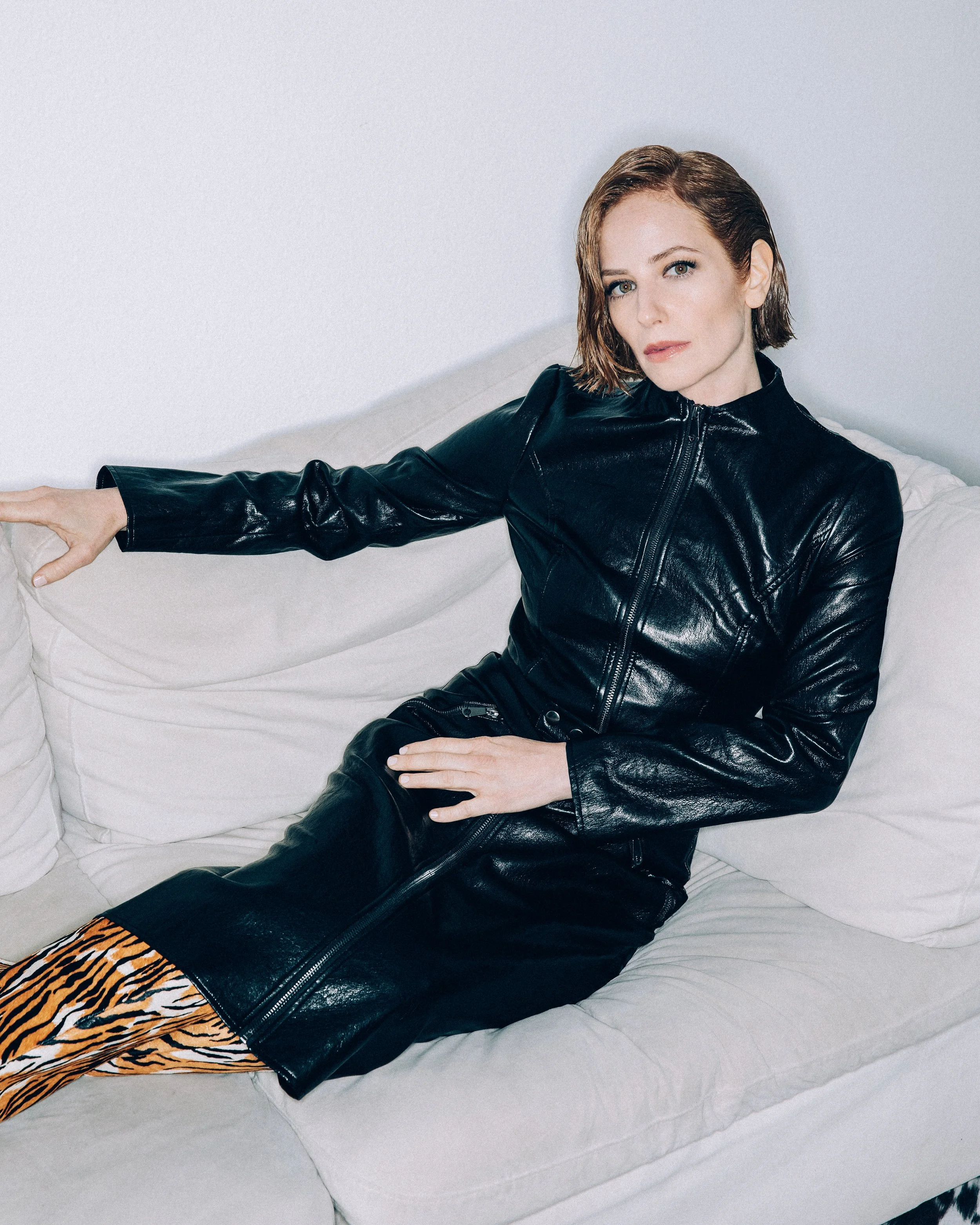
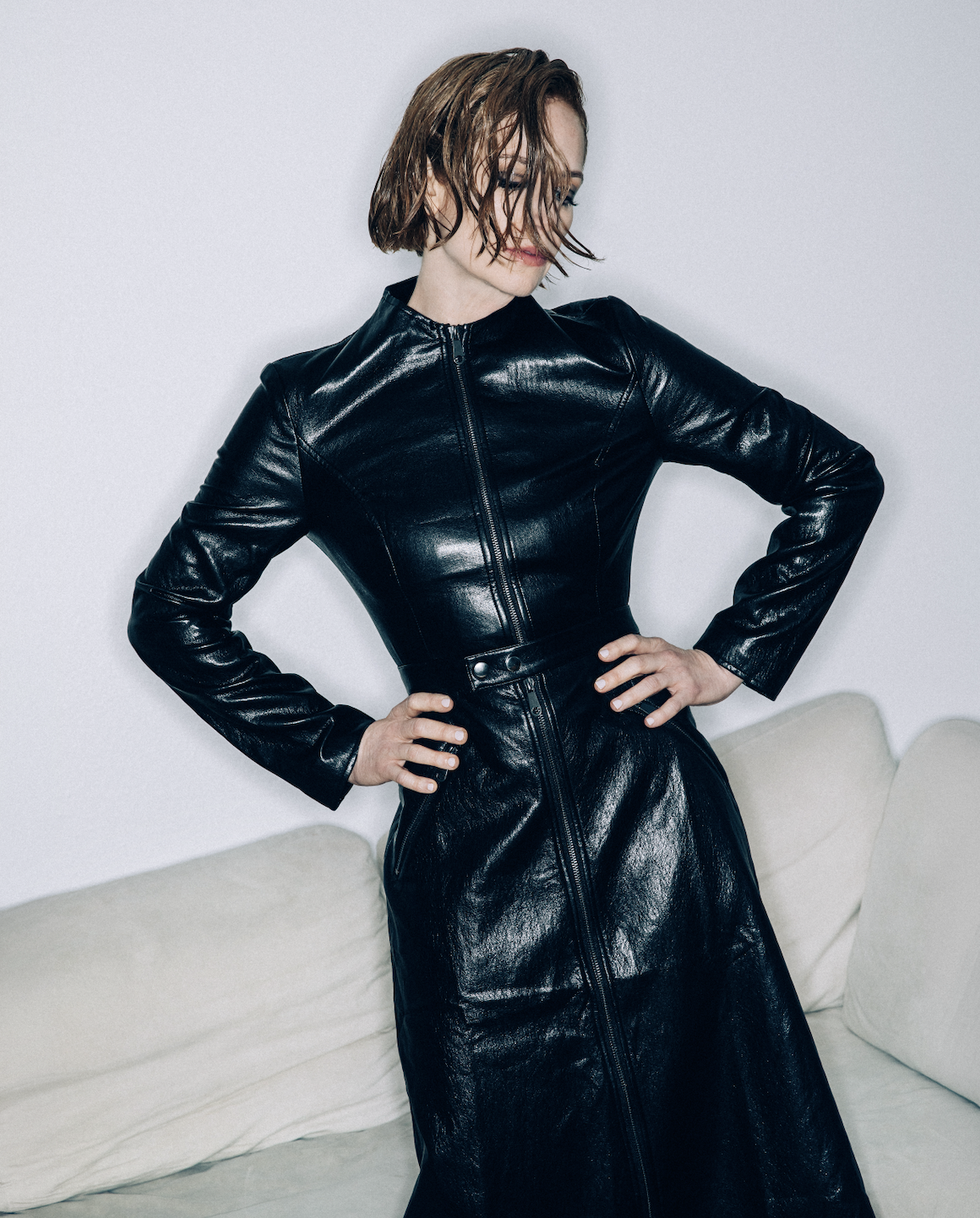
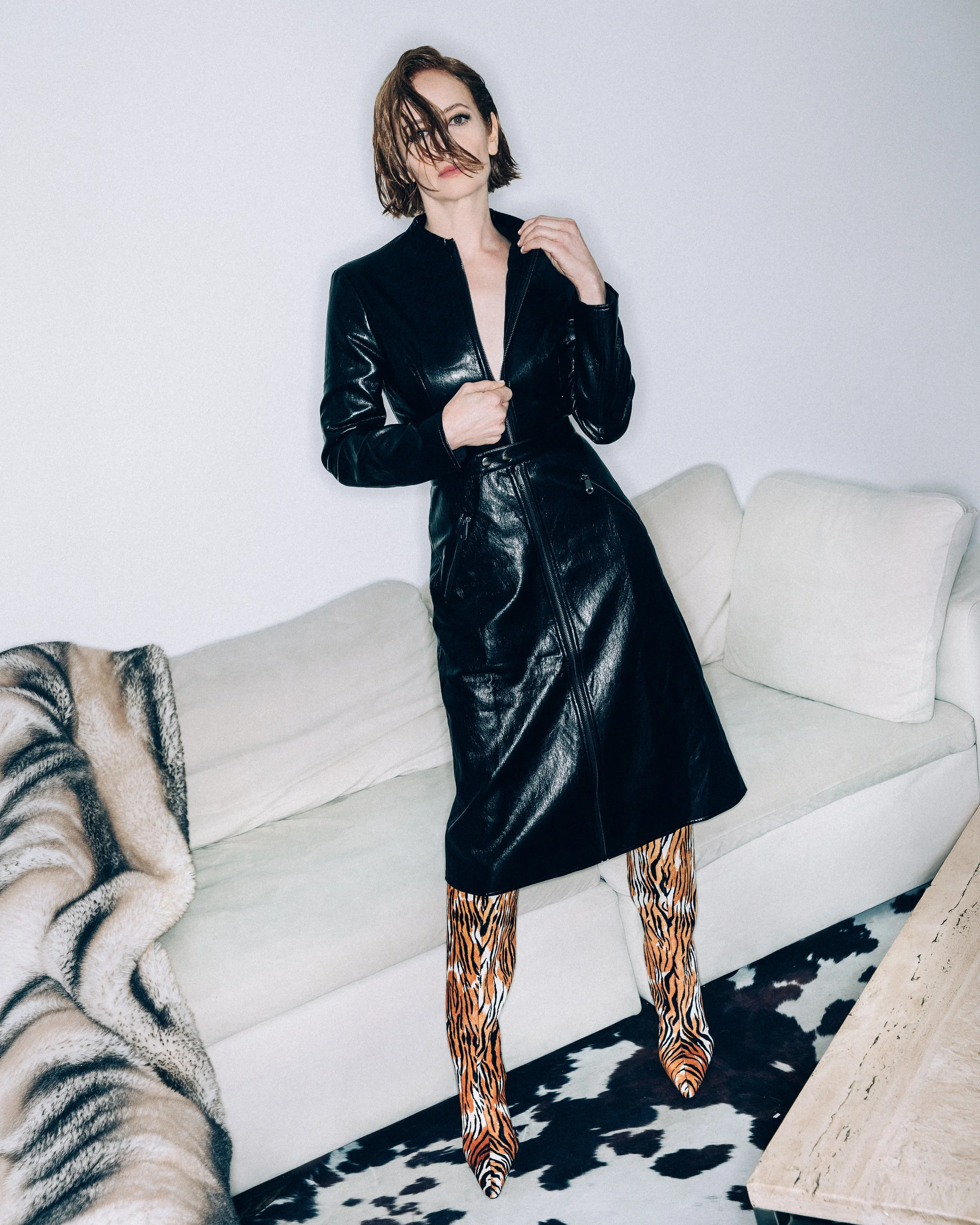
jacket and skirt LNA
boots SCHUTZ
TEAM CREDITS:
talent JAIME RAY NEWMAN
photography DYLAN PERLOT at ANOMALOUS AGENCY
styling TARA AQUILINA
makeup AMBER DREADON at A-FRAME AGENCY
hair GEORGE COZMA at THE WALL GROUP
editor TIMI LETONJA
editorial director and interview JANA LETONJA
cover design ARTHUR ROELOFFZEN
