
IN CONVERSATION WITH JAMAICA VAUGHAN
interview by JANA LETONJA
photography by CIBELLE LEVI
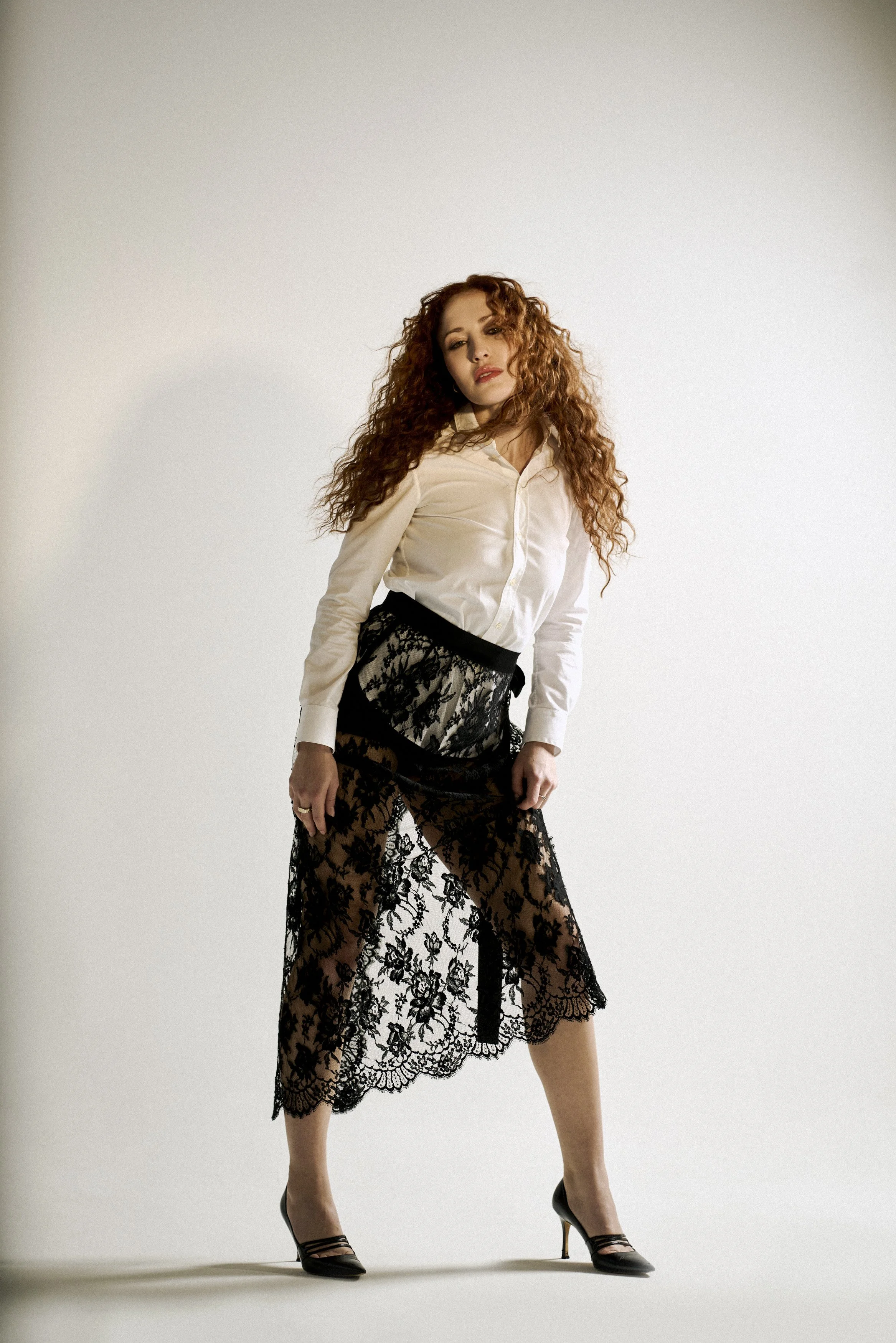
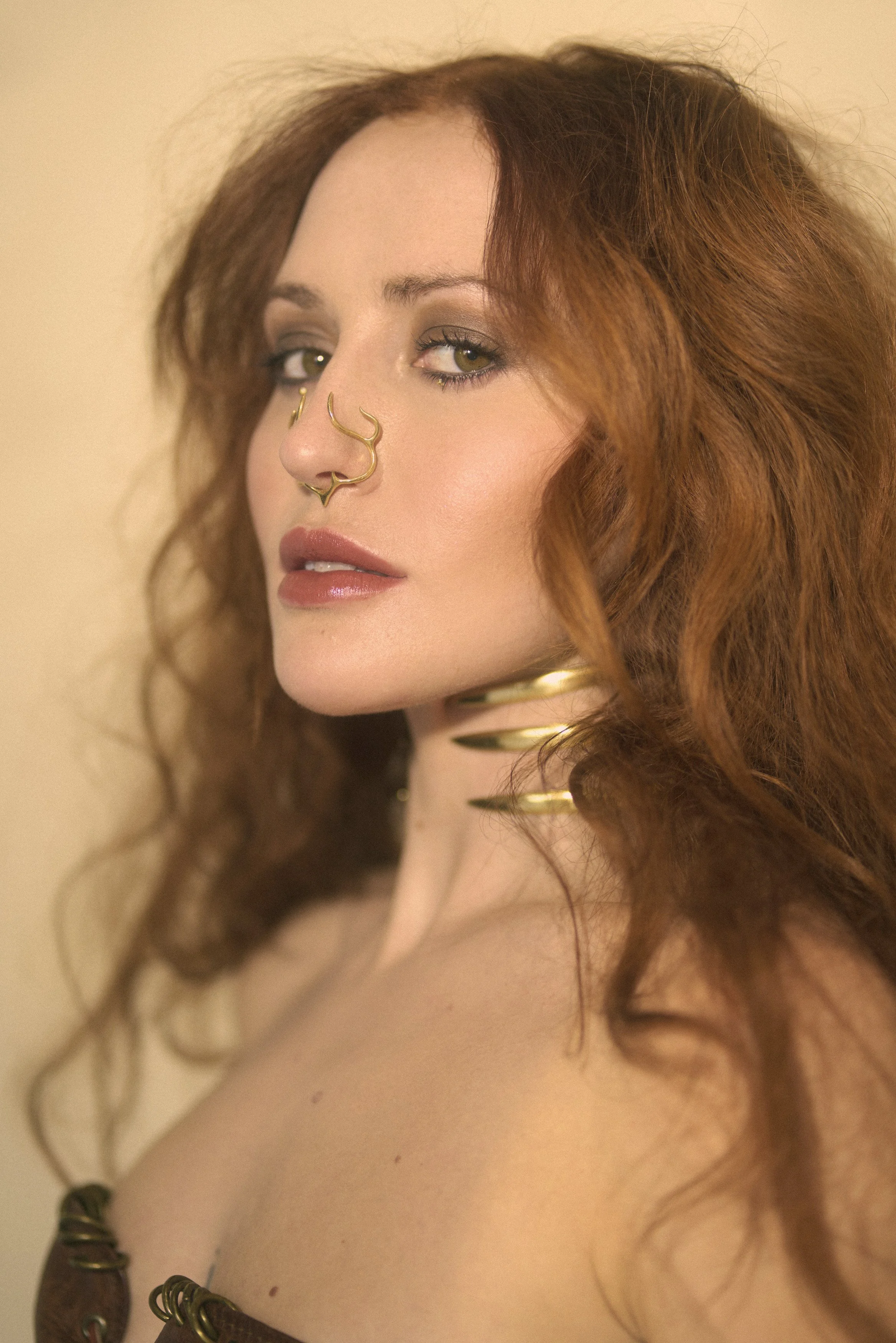
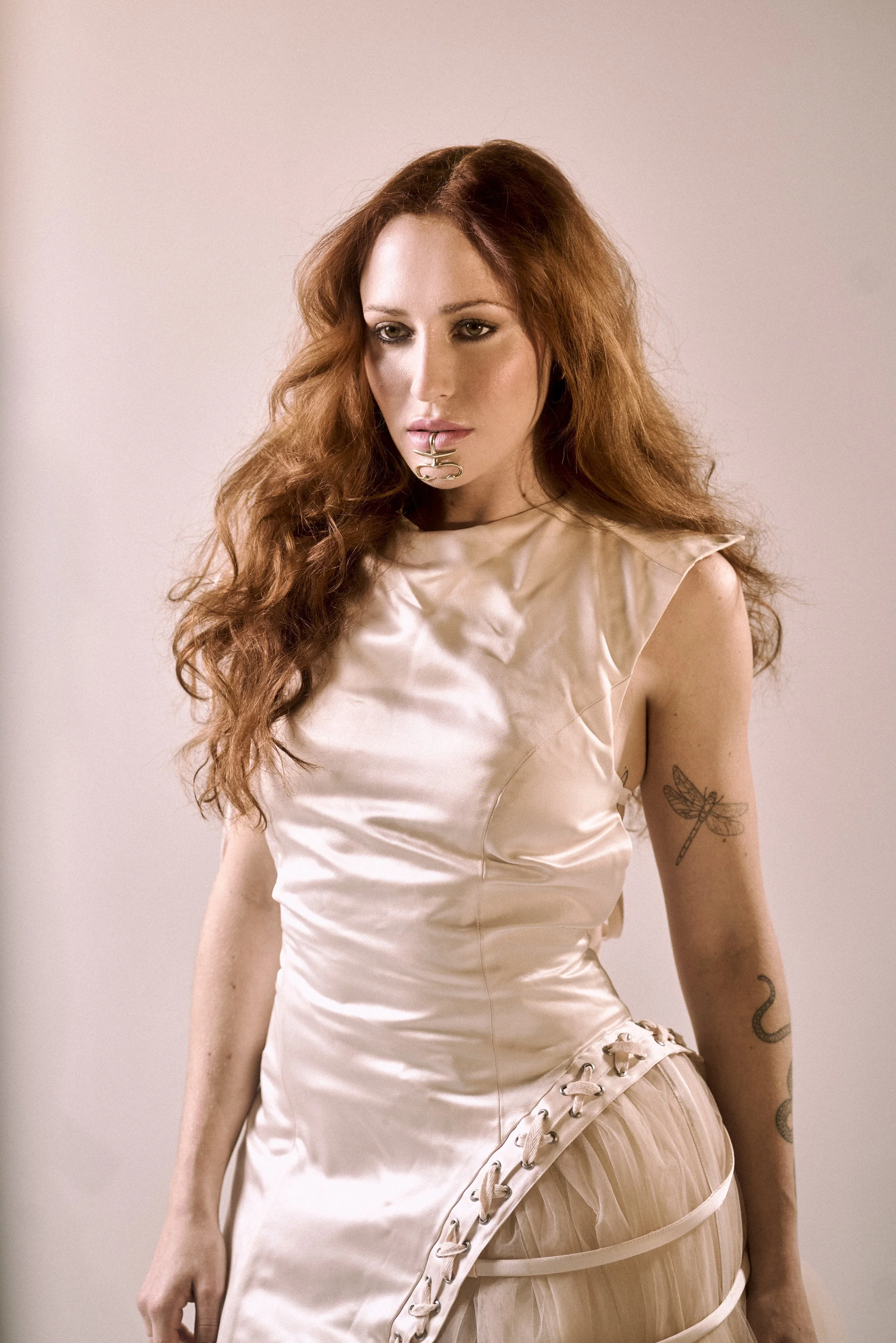
Jamaica Vaughan, an actor on the rise, brings fierce intelligence, physical power, and emotional nuance to Hilara in ‘Spartacus: House of Ashur’, which premiered on 5th December on Starz. As Ashur’s elevated house slave and quiet strategist, Hilara lives at the razor’s edge of influence in a world where bodies are currency and power is performance. For Vaughan, who merges classical training, martial arts discipline, and her own bisexual identity, the role becomes a study in soft power, survival, and the subversive ways femininity can bend a brutal system.
What first drew you to the role of Hilara in ‘Spartacus: House of Ashur’, and when did you realize she was more than just a supporting character?
When I first read Hilara, something clicked. My very first intimacy scene revealed how nuanced her femininity is, how she softens, uplifts, and strategically supports Ashur’s masculinity in a way that allows him to rise toward his potential. I realised intimacy wasn’t written as decoration, it was a tool Hilara consciously wields for survival, for influence and for connection. But it was my scene with Achillia in Episode 2 that made me understand she was far more than a supporting character. That moment in the ludas ignited something dangerous and fierce inside her. It showed me that, beneath all her softness, Hilara has teeth. She will fiercely protect the people she loves, even if she only has a sliver of power to do it. It made me ask myself “Would you kill for those you love?”
‘Spartacus: House of Ashur’ reimagines ancient Rome as a heightened world driven by spectacle. How did you prepare to step into a society where entertainment and violence are inseparable?
For me, it was about understanding Rome not as a setting, but as a brutal chessboard. Everyone in this world is a pawn, a threat or a potential sacrifice. Life and death function primarily as spectacle, which the show articulates so powerfully. So preparation became about internalising those stakes. Every conversation has political consequence. Every gesture exchanges power. Every choice costs someone their body, their status or their life. It was such a privilege to act within a society of such high stakes.
You’ve described Hilara as the “glitch in the system.” What does that mean to you, and how did it shape your performance?
Hilara is the one person in Ashur’s world who loves him without ulterior motive. She steadies him, tempers his volatility, and gives him the emotional clarity to reach his potential. That’s the “glitch”, she introduces genuine care into a system built purely on force and transaction, quietly influencing power despite having none of her own.
Hilara is close to power but never fully part of it. How did you navigate that tension between visibility and vulnerability?
Hilara is close enough to power to influence it, but she is still legally and socially owned. Claudia Black introduced me to the term Sacred Prostitute, and it reframed everything. Hilara’s sexuality becomes a kind of spiritual offering, something that elevates Ashur while also putting her at risk. She allows herself to be truly vulnerable because it’s the only way she can be seen as more than an object, even though that vulnerability is always dangerous in this society.
In such a patriarchal world, how does Hilara weaponize care, seduction, or emotional labor in ways the men around her don’t expect?
I approached Hilara as someone who transforms sex into worship, investing her divine feminine energy into uplifting the divine masculine. She uses seduction not as manipulation, but as strategy, as survival, and as a way to create space for herself within a system that refuses to see her humanity. She coaxes Ashur into his highest potential, softening him when he's volatile, sharpening him when he's insecure. She knows how to steer him, not forcefully, but with an almost invisible guidance.Her power lies in how underestimated she is. Men expect seduction, they don't expect emotional mastery.
You’ve had martial arts training since childhood. How did that inform the way Hilara moves, stands, and holds space?
My martial arts training helped me find a physical stillness layered with restraint and ferocity. Hilara moves like a quiet animal, observant and calculating. There’s a locked-up violence in her shaped by years of trauma, which gives her physicality a constant tension rather than overt force. I wanted her body to read as strong, capable and sensually powerful, a woman who could erupt if pushed far enough, even if she hasn’t fully allowed herself to believe in that strength yet.
Hilara is a bisexual character navigating a complex love triangle. How did your own bisexual identity shape your interpretation of her desires and relationships?
Being bisexual myself helped me understand Hilara’s pull toward tension rather than safety. Masculine chaos is familiar to her, so ambition and struggle feel more attainable than peace. Messia offers a feminine love that truly sees and values her, but in this world that kind of care has no real power to change her fate, leaving Hilara caught between desire, survival and longing.
What did you want to express about queerness, especially between two women, in a world that commodifies bodies?
I wanted to show that in a world where bodies are commodified, genuine connection between women becomes quietly radical. Queer intimacy offers softness, safety, and emotional refuge rather than transaction or performance. That tenderness feels almost rebellious in a society that constantly fetishises female bodies.
You’ve been acting since age seven. How did your upbringing across Perth, Auckland, and Sydney shape your creative voice today?
Growing up across Perth and Auckland really grounded me, especially working on Kiwi and Australian sets that value collaboration and humility. New Zealand crews in particular are incredibly supportive and keep things real, which taught me that a set thrives on trust, playfulness and collective care. That mindset shaped how I approached intimate and emotionally challenging scenes with safety and openness for everyone on set.
As an actor on the rise, what kinds of roles or stories are you most excited to pursue next?
I’m most drawn to characters that balance physical intensity with psychological depth. Being exposed to stunt work on ‘Spartacus: House of Ashur’ sparked a real passion for the physical side of storytelling, while the heightened world and language opened my appetite for epic, demanding roles. At the same time, I’m especially interested in vulnerable, psychologically nuanced characters, particularly women who are often underestimated- and exploring what happens when they’re pushed to their limits.