
IN CONVERSATION WITH JANE SCHOENBRUN
interview by SONNY NGO
With their narrative feature-length debut We’re All Going to the World’s Fair (2021) and their breakout film I Saw the Tv Glow (2024), Jane Schoenbrun has formed a distinct perspective on filmmaking and telling queer stories. Their latest Cannes-premiering Teenage Sex and Death at Camp Miasma starring Gillian Anderson and Hannah Einbinder continues their trilogy on horror and desire. But unlike their previous two entries, Schoenbrun shares how this film was created from a happier, more liberated place.
Ahead of the film’s release, set for August 20th and later to be exclusively available on MUBI, we caught up with the writer-director in a roundtable interview. We talk about their complicated relationship with horror, telling honest stories, and exploring what it means to come into yourself.
all images courtesy of CINEÁRT
Horror is something you’re drawn to, but also very afraid of. At the same time, it’s liberating for you. How does that work?
I’ve always loved all the different kinds of horror movies since a really young age. I was the kind of kid who wanted to get scared, my favourite day of the year was Halloween. I wanted to live in a world that felt a little more unsafe, magical and nocturnal than the very boring suburban daylight that I was growing up in. The Texas Chain Saw Massacre (1974) ruined my day, like that scared me to the bone. I felt bad afterwards. But so many horror movies are replete with joy. I don’t watch them to feel bad. I watch them because there is some kind of thrill. It’s a feeling of adrenaline, right? The same feeling you get while riding a roller coaster, where you know there is actual safety but you’re exploring something dangerous from within that safety.
And then it’s such a ritualised genre. When I watch a slasher movie, I not only know what is going to happen, I know the order that it’s going to happen; and I know who is going to get killed first and last, and who is going to survive. That tells me there is something libidinal in the genre, almost like a mating ritual. To me, it’s fear and desire. These two things that are very powerful in a Freudian sense. I think [Alfred] Hitchcock understood this when he made Psycho (1960). When we watch the shower scene, the reason it imprints in such a powerful way is because he is tapping both parts of our brain: the subconsciousness that is afraid and the one that desires.
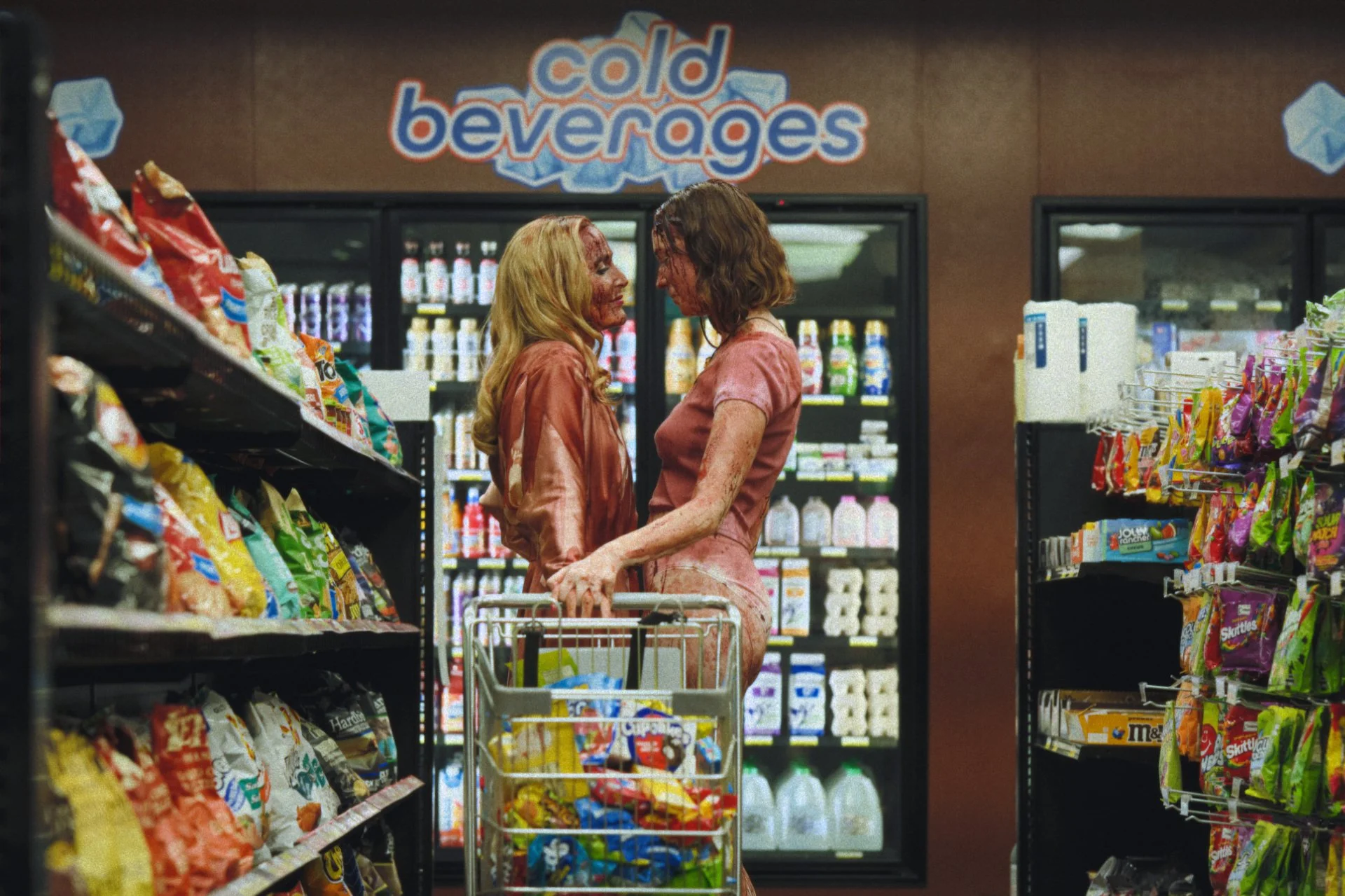
My goal with this movie was to complicate that relationship between fear and desire, or to start from a place where the two of them aren’t strange bedfellows. The film can have fun with that.
To touch on that part about fear and desire, I loved how you deconstructed typical horror conventions about desires in the film. How has this film helped you explore your own desires and what have you learnt from deconstructing those conventions?
Every narrative film I’ve made so far has been made from a process I would call early gender transition. I think now I’ve moved past that transition in my own life, I am six years on HRT. I don’t feel like I’m going through adolescence in the way that this movie was very much made from within reflecting on queer adolescence. I feel settled. I feel like I’ve speed run and caught up to what an adult version of myself can be in the right body and identity.
But those first three films [including Teenage Sex and Death at Camp Miasma] were created from the process of becoming myself. And the first two, even though they were made after I had come out and begun transition, they didn’t really talk about transition itself. They talked about getting to the point where such a thing might be possible. This is the first film I made from a more liberated place and from a happier place; from the place of this thing that I had always been really disassociated from or that always felt obliquely wrong and unreal about myself was starting to heal. Along with that, I was starting to feel comfortable in my body and sexuality and identity in a way that I never had before. There was a lot to overcome with that.
The film is also trying to talk about the trauma one must work through. It’s an incredibly vulnerable thing to start to think about sex in a way that feels healthy at the age of 32 or 34. My goal was the same with the previous two films, which was to represent that in a way that felt honest. That felt like I wasn’t trying to explain something that I was the sage about, but to capture feelings that I was experiencing while I was experiencing them. In this case, learning how to be sexually present in a post-transition life. Very early on, I knew that the best way for me to do that was through the slasher genre and sort of taking these conventions: all of the gender anxiety and sexual repression and desire, all that Freudian soup. I wanted to take that and evolve those conventions to speak about what I had gone through: this experience of coming into myself.
You were also part of Castration Movie, an ongoing drama film series by Louise Weard. How does it feel to be part of this new wave of trans independent directors and how do you think this film can leave a legacy on reshaping underground movies?
I just try to be honest as a filmmaker. I also really, really care about film culture in a wider sense. Getting to meet Louise, Avalon [Fast], Alice [Maio Mackay], Vera [Drew], and all of these filmmakers who are making honest trans work, and often work that I look at and see a ton of myself in or my obsessions within, that’s really moving to me. Film community is also really important to me. The ways in which groups of people are collaborating and working with each other and shouting each other’s work out or the creation of a scene: something that can be greater than the sum of its parts and can be looked back on like the French New Wave or whatever film movement. That’s all so exciting to me.
But I also think it’s dangerous, right? Because if I start overthinking this, I’m just not doing the work in the way I’ve learned to do, which is to be really honest and true to what the antenna is picking up. I mean, I look at the work and I do see commonalities, but I also think we’re all incredibly different filmmakers chasing different styles of filmmaking. The means of production, methods, and stories we’re telling are all very different, as they should be. I think my big wish is for a greater diversity of movies to be made, because so much of it feels homogenised. I so often watch things that feel like they’re speaking from one small perspective of how the world can be experienced. Perhaps what I’m proudest of in this movement is that that’s starting to open up a bit. I just hope it gets resources and the audience it deserves to keep growing.
The film references so many more things than just the slasher genre. What references inspired this film, and how does Gillian Anderson’s character – whose look references the forties – break with such an oppressive time?
For me, it’s not about reference baseball. I’m not like, “How many Easter eggs can I put in the movie?” Movies are so fluent in all the genres they’re speaking from, both the ways in which genres have constructed their own set of languages, codes and signifiers and also in being interested in the practices and realities that went into the creation of those myths. There’s this idea in this film that everything is a remake of something. Perhaps the cultures of the 1980s, or even the set of a movie like The Burning (1981), went a long way towards creating the conventions of those genres we take for granted. I think the movies are interested in that. If they are leaving references, or footnotes as I like to think of them, it’s to write some kind of thesis on how these things are creating our culture.
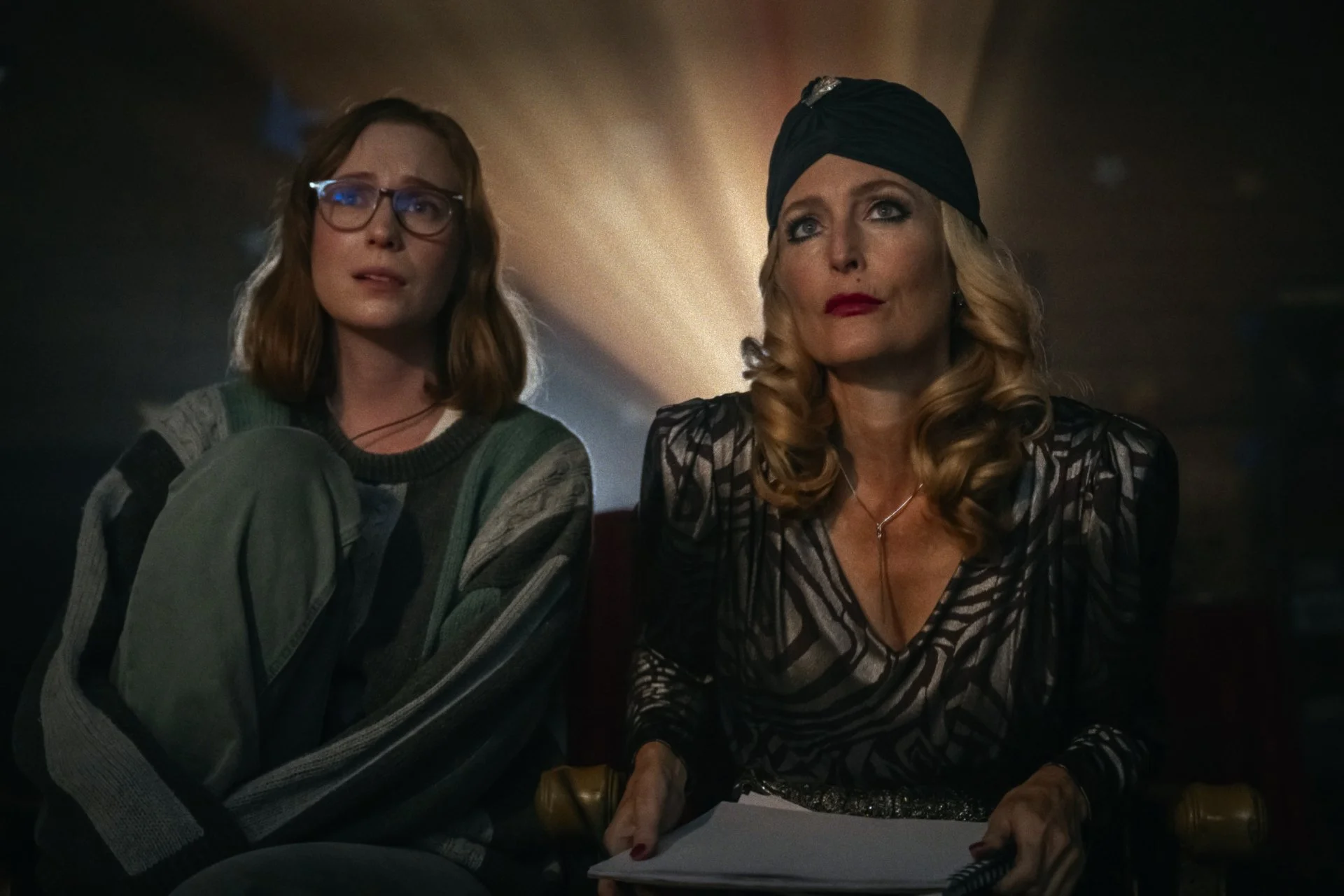
In terms of Gillian’s characters, we looked at a lot of classic Hollywood forties noir. I think for Gillian there was also a lot of seventies there, like Jane Fonda in Klute (1971) energy coming through. Obviously, the film very knowingly references Norma Desmond and Sunset Boulevard (1950) from the jump. I watched a lot of hagsploitation movies in the lead up to making this film. I thought about these tropes and I kind of knew what the structure of the genre would imply, like the fake-out that Gillian’s character has early in the film where she kind of presents herself like the kooky, scary one and then laughs at Hannah's character. This was all just a fun little game I was playing. The film is trying to subvert your expectations on who that character might be; to bring her down to a level that might be more empathetic or rich than simply have her be this trope of the femme fatale or final girl.
One of the key arcs of the movie for me is the way Hannah’s character starts as this complete outsider looking in. She’s the straight man. She’s the one being like “Oh this is like this in a movie.” Then by the end, she has sort of learnt how to enter the movie on a certain self-conscious degree. And Gillian’s character maybe comes down to earth a little bit. She enters this movie as this fantastic larger-than-life idea and leaves the movie very much like a human being.