
IN CONVERSATION WITH JEFF WILBUSCH
interview by JANA LETONJA
Jeff Wilbusch is quickly emerging as one of the most compelling international talents to watch. This spring, he stars opposite Camila Morrone in Netflix’s highly anticipated horror-thriller Something Very Bad Is Going to Happen, produced by the Duffer Brothers and premiering on the 26th of March. Packed with tension, psychological twists, and unsettling turns, the series features Jeff in a standout performance as Jules, a role that further cements his reputation for emotional depth and quiet intensity. Known for his acclaimed work in Unorthodox and David E. Kelley’s The Calling, he brings a uniquely global perspective to his craft, shaped by growing up across Europe and speaking five languages.
Something Very Bad Is Going to Happen lives up to its title. What first drew you to the role of Jules?
Jules has so many layers. He feels to me like an iceberg. There’s so much underneath that you don’t see. There’s this force in him waiting to explode. And I’ll stop there, because I want people to watch it.
Without giving anything away, how would you describe Jules at the start of the series versus where he ultimately ends up?
When we first meet Jules, he’s frozen in time, stuck. He needs to deal with his shit, as his wife Nell, played by the great Karla Crome, tells him. But when Rachel arrives, she stirs everything up, and that forces Jules to face his demons. He ends up very, very far from the place where we first meet him.
Horror thrillers rely heavily on atmosphere and restraint. How did you build tension in your performance?
Honestly, it starts with Haley Z. Boston’s writing. The way Haley built the story, what she reveals, when, and how, already does a lot of the work. Jules can’t reveal what he doesn’t know, at least not consciously. So my job was to become him, to understand him enough that I can follow his behavior and his contradictions, why he scares people, why he’s the outcast, the “weird one” in the family. And to play that truthfully, without explaining it.
Working with the Duffer Brothers brings certain expectations. What was it like stepping into their creative world?
It honestly felt like being drafted into the NFL as an actor. And suddenly getting to play with the best. The Duffer Brothers have the eye, the instincts, the taste. And Haley Z. Boston wrote an incredible show. It’s a real gift to be part of something like that.
Jules is a complex character. What was the biggest challenge in portraying him authentically?
Jules has a secret past, something people think they understand, but they really don’t. And Jules also knows things about the other characters that they don’t realize he knows.
So the challenge was when do you show which part of Jules? What do you cover, and what do you uncover, without giving anything away, but still letting the audience feel the truth underneath it.
You’re known for performances that feel very internal and grounded. Is that something you consciously aim for?
I’m very drawn to characters with a noisy inner world and a quiet façade. I’m always looking for that.
And I’m drawn to good writing, real depth, detail, relationships that feel lived-in. If the writing has that, you can go very deep, and the result kind of takes care of itself.
Growing up in Europe and speaking five languages, how has your international background influenced the way you approach acting?
I got my degree in economics in the Netherlands, then studied acting in Germany, where I did a lot of repertory theater. All of that shaped me as an actor. It stretches you in every way, and honestly, it’s great preparation for a film set.
Language is such a powerful tool in storytelling. Does speaking multiple languages change how you think about dialogue and silence?
It opens up my world. It gives me more to work with. Instead of having one rhythm and one musicality in my head, I have multiple ones in my mind and in my body.
And it includes silence. Different cultures, and different languages, treat silence differently. Even the way you think shifts.
So yes, different languages have different rhythms, intonation, humor, cadence, and a different relationship to silence. Being able to understand emotion through multiple languages gives me more colors to paint with.
How do you personally decompress after working on something psychologically intense?
I’m really into horseback riding. I do it literally every day. Horses are magical. They’re healing. Being out at the ranch, in nature, seeing the mountains, feeling the wind on my face. And connecting with another being the way you do when you ride, it’s grounding.
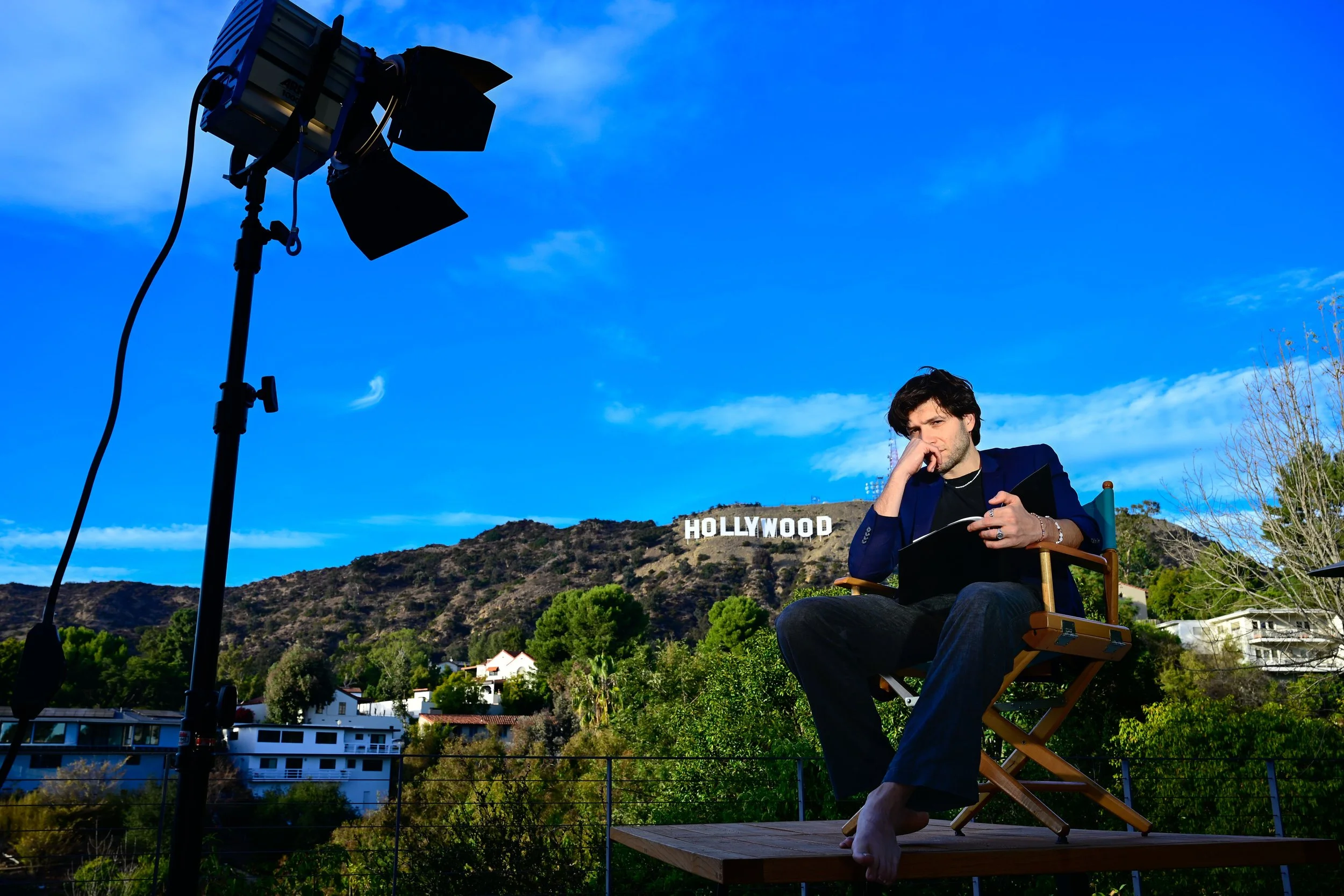
Audiences first fell in love with you in Unorthodox. How do you reflect on that role now, looking at where your career has taken you?
I loved playing Moishe in Unorthodox. That role will always be special to me. And Jules, same. I feel a strong connection to both.
It feels full circle, because I do feel similarities between the projects and the characters, even though they’re so different and the worlds are so far apart. And at the same time, this also feels like a first, in a different way. Unorthodox did too, if that makes sense.
What kind of stories are you most drawn to telling at this stage of your career?
I’ve noticed that regardless of genre, when the writing is personal, when it’s honest and risky, it becomes universal. It becomes human. Those are the stories we all connect to. You can feel when something really mattered to the writer. You feel it on the page. The personal is universal. And I really feel that in this project.
And for me, I’m always drawn to characters with strong inner forces driving them through conflict.
Fashion often plays a role in character identity. How did wardrobe help you step into Jules?
A big shout-out to our costume designer, Courtney Mitchell, and her team. Courtney didn’t compromise, she fought for the character in every detail. Early on, she sent me her vision board for Jules, and that really supported me. It kind of kicked in the whole process of creating him, his vibe, his shape, how he moves through the world. I’m really grateful to her.
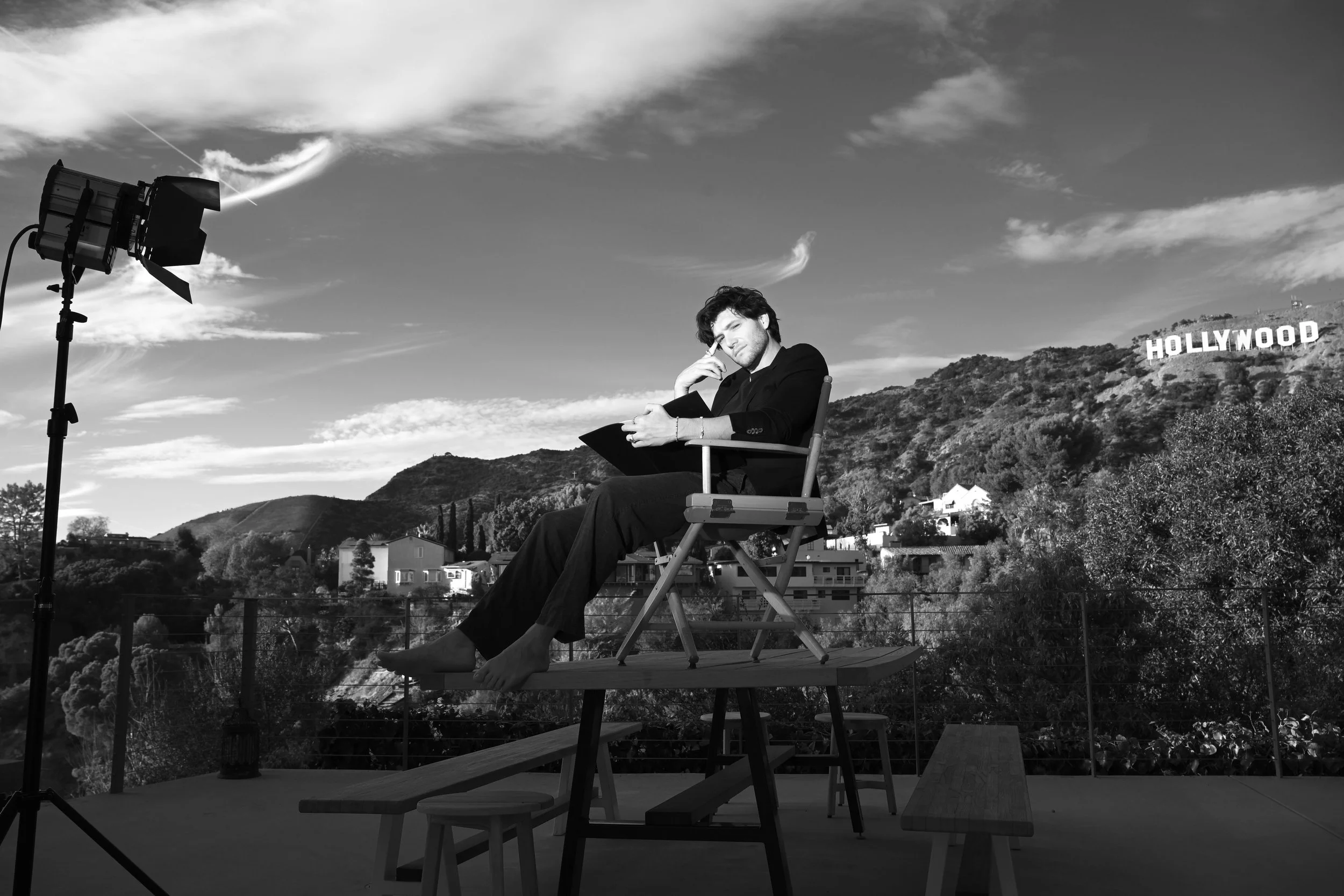
TEAM CREDITS
talent JEFF WILBUSCH
photography ALFONSO CAMPOS
editorial director and interview JANA LETONJA
editor TIMOTEJ LETONJA
