
IN CONVERSATION WITH JEREMY IRVINE
interview by JANA LETONJA
Jeremy Irvine stars in ‘Return to Silent Hill’, the highly anticipated psychological horror inspired by the iconic video game Silent Hill 2, arriving in cinemas worldwide on 23rd January. Co-written and directed by Christophe Gans, the film marks the third chapter in the ‘Silent Hill’ cinematic universe, expanding a franchise that has grossed more than $156 million worldwide. Known for emotionally grounded performances in films ranging from ‘War Horse’ to ‘The Railway Man’ and ‘Mamma Mia! Here We Go Again’, Jeremy continues to explore complex inner lives across genre, scale, and tone.
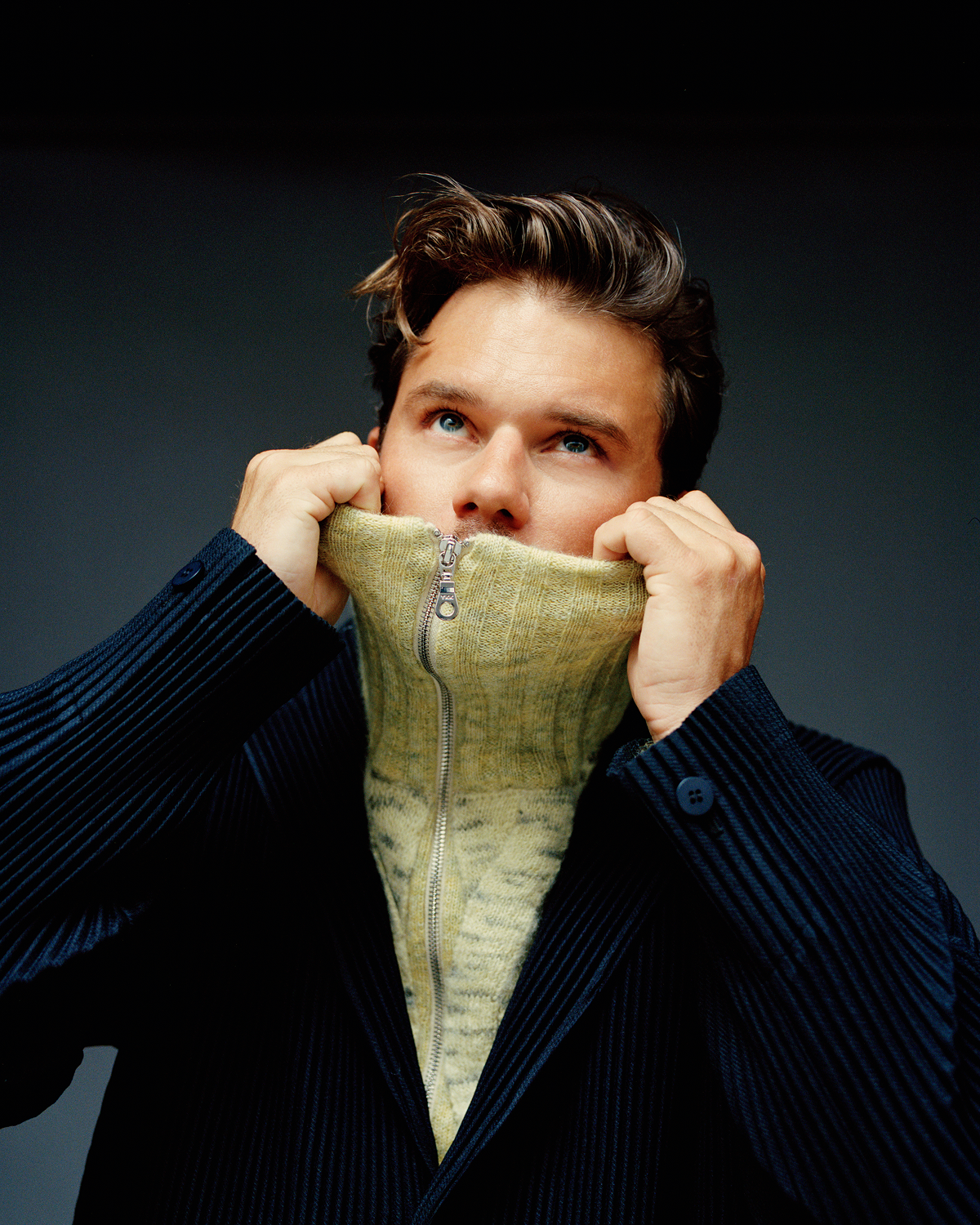
‘Return to Silent Hill’ is rooted in grief and psychological unease. What was your emotional way into James as a character?
I was quite aware that when you’re playing a video game, the character is often a bit of a blank slate onto which you, as the player, project your own emotions. But in a movie, James needed a lot more emotional depth and nuance, I suppose, compared to the character in the game. I really tried to heighten his emotions and make him a more real, rounded, real-life character. That was my approach.
The film is inspired by ‘Silent Hill 2’, which has a devoted fan base. How did you approach honouring that legacy while making the role your own?
Sort of similar to the first question, but I myself was a big fan of ‘Silent Hill’ as a teenager. I played the games a lot when I was about 14 or 15. I remember them having this really melancholic, atmospheric, almost quite depressing feeling. It was that feeling that stayed with me, that I remembered from the game. So, that’s what I tried to bring into my portrayal of James in the film. Hopefully, that’s the same thing that fans of the game like too, and I think that’s what we were trying to go for when making the film.
‘Silent Hill’ itself feels like a character. What was it like working within such an atmospheric, psychologically charged world?
We actually didn’t use a lot of CGI, and there was very little green-screen work. Most of the sets were built and were all real. We had all the fog in the fog world, and the ash, and all that sort of stuff, so it was very atmospheric. And I think, especially because my character is in every scene, it did end up seeping into your bones a bit. I definitely felt at the end of the job that I needed to go and clear my head. It was quite a depressing, dark place to stay in my head for that long.
Horror often relies on restraint as much as fear. How did you calibrate subtlety versus intensity in this role?
Well, I think there are moments for lots of different emotions with James in this movie. We get to see flashbacks, which is nice, so we get to see the happy times as well as this horrible place that he goes to in his own head. I had mapped out how I wanted to play it before stepping on set, and then you’re really in the director’s hands, because they know how it’s all going to come together. So you trust your director to tell you if what you’re doing is too much or not enough.
Many of your performances centre on vulnerability. What draws you to characters who wear their inner lives so close to the surface?
I guess it’s just more interesting to play those sorts of people. To play stoicism, and to just be completely stoic for a whole movie, I don’t think that would be as interesting for an actor. It’s nice to play people who are flawed, and maybe not as strong as they first seem.
This film arrives alongside very different projects like ‘Leopardi & Co.’ and ‘Turbulence’. How do you choose such varied roles?
There’s only so much choice you get as an actor, and what I try to do is look for things that are different. I did this horror movie, and then the script for ‘Leopardi & Co’ came through, which was a romantic comedy. ‘Turbulence’ is action. I like to have a complete change of pace, really, and just try to do lots of different things. It keeps things interesting. It keeps life interesting.
You’ve played romantic leads, soldiers, musical icons, and now a deeply haunted man. How has your relationship with leading roles evolved?
Well, you always dream of playing leading roles, and I feel very lucky to get to do that. It might not always be the case, so I’m just enjoying it while it lasts. I don’t know how much longer I’ll be playing leading roles, so it’s nice to be doing them. I feel very lucky.
Having been part of major studio films and beloved franchises, what keeps you creatively curious at this stage of your career?
Like I was saying, it’s about trying to do lots of different projects that are hopefully quite varied. I spend most of my time at the moment working on a TV series that’s a period piece set in the 1700s, which is very different from a job like this, so I just try to do different things all the time if I can.
How do you decompress after inhabiting such an emotionally heavy role?
Well, not very well sometimes, would be my answer to that. Sometimes it takes a while. But I think it’s important to remember, and I’m very strict with myself about this, that it’s just a job. It’s not real.
At the end of the day, I get to go to work, play make-believe, and have a lot of fun. There are some really heavy scenes, especially when you have to cry and so on. You know it’s not real, but your body doesn’t, so you get a bit of a comedown from those roles, and those scenes, afterwards. But it’s my job, and you learn to get quite good at switching it on and off, I think.
Looking back at ‘War Horse’ as your breakout role, what do you recognise in yourself now that you didn’t then?
I was incredibly stressed on that film. It was an amazing opportunity to be thrown in at the deep end like that with a director like Steven Spielberg. I do remember feeling under enormous pressure, but now I just go to work and try to have fun. I enjoyed it back then as well, but I’m much less stressed these days. I find I’m a better actor when I’m more relaxed.
With so many projects releasing across film and television, what kind of stories are you most eager to tell next?
You know, I have a simple way of telling if a script is good. I get this funny reaction. If I finish a script and get goosebumps at the end, that tingly feeling, then it doesn’t matter what genre it is or what it’s about. I just think, wow, that made me feel something. Those are the roles I try to chase. Whether I get the role or not is a different matter.
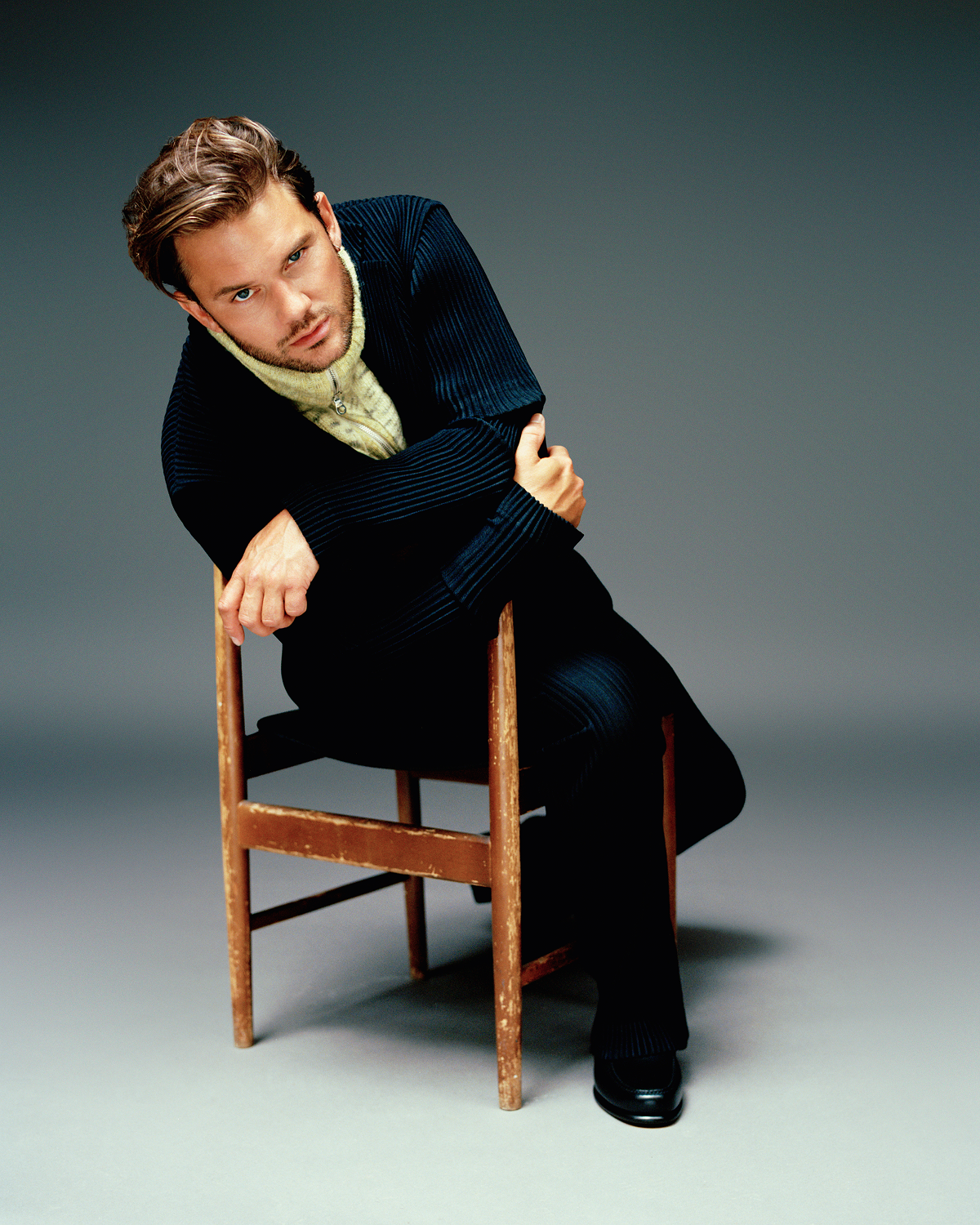
TEAM CREDITS:
photography OTTO MASTERS
styling LYLA CHENG
grooming AMANDA GROSSMAN
